What's inside
- Quick picks: best homemade liquid laundry detergent for he washers
- What Is the Best Homemade Liquid Laundry Detergent for HE Washers?
- Quick Comparison: Homemade Liquid Laundry Detergent Ingredients
- The Recipe: Homemade Liquid Laundry Detergent for HE Washers
- Mistakes That Cause Residue and Poor Cleaning With Homemade Detergent
- Frequently Asked Questions
- Conclusion
As an Amazon Associate I earn from qualifying purchases. This post may contain affiliate links at no extra cost to you.
Quick picks: best homemade liquid laundry detergent for he washers
| # | Product | Where to buy |
|---|---|---|
| 1 | Arm and Hammer Super Washing Soda | Check on Amazon |
| 2 | 20 Mule Team Borax | Check on Amazon |
| 3 | Fels-Naptha Laundry Bar | Check on Amazon |
| 4 | Zote Laundry Bar | Check on Amazon |
| 5 | OxiClean Versatile Stain Remover | Check on Amazon |
What Is the Best Homemade Liquid Laundry Detergent for HE Washers?
Homemade liquid laundry detergent is a detergent that is made at home, from a few simple ingredients, rather than bought in a bottle, and it is the choice of a household that wants to save money, reduce plastic waste, or avoid the fragrances and dyes in commercial detergents. A homemade detergent for an HE washer must be low-suds, because an HE washer uses little water, and a detergent that foams too much will cushion the clothes, leave residue, confuse the sensors, and can overflow, and it must be made with ingredients that dissolve fully, because undissolved powder will leave residue on clothes and in the machine.
A homemade liquid detergent is made by dissolving soap and washing soda in hot water, with borax for extra cleaning power, and then diluting it to a liquid that can be poured into the washer. The recipe in this guide uses six ingredients, each of which is a real product that can be bought, and each of which has a job: the soap cleans, the washing soda softens the water and lifts dirt, the borax boosts the cleaning power, the castile soap adds a gentle clean, and the optional booster removes stains. The detergent is made in a large pot, cooled, and stored in a jug, and it is used at a small dose, because a little goes a long way in an HE washer.
This article is a recipe and ingredient guide, not a review of bottled detergents, and the six products below are the ingredients, not finished detergents. A household that makes its own detergent should know the limits: homemade detergent does not have the enzymes, the brighteners, or the stain removers of a commercial detergent, and it may not clean as well on heavily soiled loads, and some washer makers warn that homemade detergent can leave residue and may affect the warranty, so a household should check its washer manual before using it, and should test it on a small load first, and should use it at the right dose, not more.
Each product below is a real ingredient for homemade liquid laundry detergent, described with its strengths, its trade-offs, and the job it does in the recipe, followed by the recipe itself, the mistakes that cause residue and poor cleaning, and answers to the questions home makers ask most. No prices are given in this guide, because prices change with the retailer, the sale, and the region, and a price written here would be wrong within weeks. Instead, the guide describes what each ingredient offers and what to check, so that a buyer can compare them at a retailer and judge them on their purity rather than on a number that will have changed.
Quick Comparison: Homemade Liquid Laundry Detergent Ingredients
| Ingredient | Type | Job | Strength | Watch out for |
|---|---|---|---|---|
| Arm and Hammer Super Washing Soda | Washing soda | Water softener; lifts dirt | Essential; softens hard water | Irritates skin; wear gloves |
| 20 Mule Team Borax | Borax | Cleaning booster | Boosts stain removal | Keep away from children and pets |
| Fels-Naptha Laundry Bar | Bar soap | Main soap; stain remover | Best stain removal; dissolves well | Strong scent; grate finely |
| Zote Laundry Bar | Bar soap | Main soap; gentle | Gentle; good for sensitive skin | Pink dye may stain whites |
| Dr. Bronner's Pure-Castile Liquid Soap | Liquid soap | Gentle soap; fragrance-free option | Gentle; no dyes | Costs more per load |
| OxiClean Versatile Stain Remover | Oxygen booster | Stain and odour remover | Best for stains and smells | Not for wool or silk |
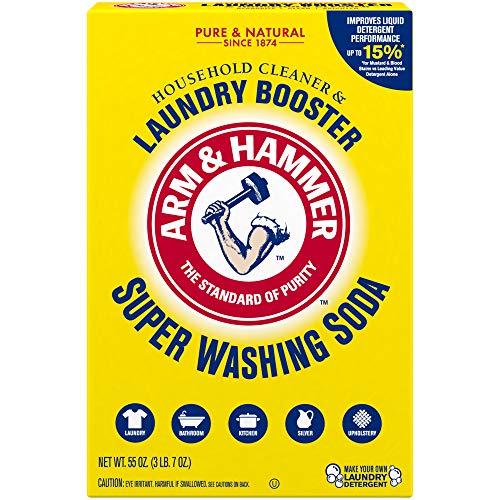
Arm and Hammer Super Washing Soda
a pure washing soda that softens hard water and lifts dirt, and the most important ingredient in homemade liquid laundry detergent.
Arm and Hammer Super Washing Soda is a pure washing soda, which is sodium carbonate, and it is the most important ingredient in homemade liquid laundry detergent. Washing soda softens hard water, which means it stops the minerals in hard water from interfering with the soap, and it lifts dirt and grease from clothes, and it helps the soap work better. Without washing soda, a homemade detergent will not clean well in hard water, and it will leave residue on clothes, because the soap will react with the minerals in the water instead of cleaning the clothes.
The strength of this ingredient is its power and its purity. Washing soda is a simple, pure chemical, with no fragrances, dyes, or fillers, and it is cheap, and a box will last for many batches of detergent, because only a cup is needed per batch. It softens water, it lifts dirt, and it helps the soap dissolve, and it is the ingredient that makes the difference between a homemade detergent that cleans and one that does not.
The trade-off is that washing soda irritates the skin, and it should be handled with gloves, and it should be kept away from the eyes, and it should be stored where children cannot reach it. It is also not the same as baking soda, which is sodium bicarbonate, and it is stronger, and it should not be confused with it, because baking soda will not soften water as well, and a recipe that uses baking soda instead of washing soda will not clean as well.
For a household that makes its own liquid laundry detergent, Arm and Hammer Super Washing Soda is the first ingredient to buy, and the one that should never be left out. It is the ingredient that makes the detergent work, and it is the one that a household should always have on hand.
Strengths:
- Softens hard water; helps soap work
- Lifts dirt and grease from clothes
- Pure; no fragrances, dyes or fillers
- Cheap; a box lasts many batches
Trade-offs:
- Irritates skin; wear gloves when handling
- Not the same as baking soda; do not substitute
- Keep away from children and eyes
Who it fits: Every household that makes its own liquid laundry detergent.
Check price on Amazon: Arm and Hammer Super Washing Soda

20 Mule Team Borax
a natural borax that boosts cleaning power and removes stains, and the best cleaning booster for homemade detergent.
20 Mule Team Borax is a natural borax, which is sodium borate, and it is the cleaning booster in homemade liquid laundry detergent. Borax boosts the cleaning power of the soap, it removes stains, it softens water, and it deodorises clothes, which means it removes smells, not just covers them, and it is the ingredient that makes a homemade detergent clean almost as well as a commercial one on everyday loads. A cup of borax per batch is enough, and it dissolves fully in hot water, so that it leaves no residue.
The strength of this ingredient is its versatility. Borax cleans, it softens water, it removes stains, and it deodorises, and it is cheap, and a box will last for many batches, because only a cup is needed per batch. It is a natural mineral, with no fragrances or dyes, and it has been used for laundry for over a hundred years, because it works, and it is safe when it is used as directed, in the small amounts used in a detergent recipe.
The trade-off is that borax must be kept away from children and pets, because it is harmful if it is eaten, and it should be stored in a sealed container, out of reach, and it should be handled with care, and it should not be used on wool or silk, because it can damage delicate fibres. A household with small children should store borax where they cannot reach it, and should never leave it out on a counter.
For a household that makes its own liquid laundry detergent and wants it to clean well on everyday loads, 20 Mule Team Borax is a good ingredient to add. It is the booster that makes the difference between a detergent that cleans and one that only smells clean.
Strengths:
- Boosts cleaning power and stain removal
- Softens water and deodorises clothes
- Natural mineral; no fragrances or dyes
- Cheap; a box lasts many batches
Trade-offs:
- Keep away from children and pets; harmful if eaten
- Not for wool or silk
- Store in a sealed container out of reach
Who it fits: Households that want their homemade detergent to clean well on everyday loads.
Check price on Amazon: 20 Mule Team Borax

Fels-Naptha Laundry Bar
a traditional laundry bar soap with strong stain removal, and the best main soap for homemade liquid detergent.
Fels-Naptha is a traditional laundry bar soap, and it is the main soap in homemade liquid laundry detergent. The bar is grated finely, dissolved in hot water, and mixed with washing soda and borax to make a liquid detergent, and it is the soap that does most of the cleaning, because it lifts dirt and grease from clothes, and it removes stains, especially grease and oil stains, better than most other bar soaps. A single bar will make several batches of detergent, because only a third of a bar is needed per batch, and it is cheap, and it has been used for laundry for over a hundred years.
The strength of this ingredient is its stain removal and its value. Fels-Naptha is one of the best stain removers available, and it is cheap, and a bar will last for many batches, and it dissolves fully in hot water, so that it leaves no residue, provided it is grated finely and dissolved fully before it is added to the washer. It is a simple soap, with no dyes or fragrances that will irritate sensitive skin, though it does have a strong, clean scent of its own.
The trade-off is the scent and the grating. Fels-Naptha has a strong scent, which some households like and some do not, and it must be grated finely, with a cheese grater or a food processor, before it is dissolved, because a bar that is not grated finely will not dissolve fully, and it will leave residue on clothes and in the machine. A household that does not want to grate soap should choose a liquid soap, such as Dr. Bronner's, instead.
For a household that makes its own liquid laundry detergent and wants the best stain removal, Fels-Naptha is the best main soap to use. It is the soap that will remove grease and oil stains, and it is the one that has been trusted for laundry for over a hundred years.
Strengths:
- Best stain removal of any bar soap
- Cheap; a bar makes several batches
- Dissolves fully when grated finely
- Simple soap; no dyes
Trade-offs:
- Strong scent; some households dislike it
- Must be grated finely or it leaves residue
- Grating takes time and effort
Who it fits: Households that want the best stain removal from their homemade detergent.
Check price on Amazon: Fels-Naptha Laundry Bar

Zote Laundry Bar
a gentle laundry bar soap that is kind to sensitive skin, and the best choice for a household with allergies or sensitive skin.
Zote is a laundry bar soap, and it is the main soap in homemade liquid laundry detergent for a household with sensitive skin or allergies. The bar is grated finely, dissolved in hot water, and mixed with washing soda and borax to make a liquid detergent, and it is the soap that does most of the cleaning, because it lifts dirt and grease from clothes, and it is gentler than Fels-Naptha, because it has a milder formula, and it is the soap that a household with sensitive skin should choose, because it is less likely to irritate the skin.
The strength of this ingredient is its gentleness and its value. Zote is cheap, and a bar will last for many batches, because only a third of a bar is needed per batch, and it dissolves fully in hot water, so that it leaves no residue, provided it is grated finely and dissolved fully before it is added to the washer. It is a simple soap, with a mild scent, and it is the soap that a household with a baby, or with allergies, or with sensitive skin, should choose, because it is the gentlest bar soap available for laundry.
The trade-off is the dye. Zote is pink, and the pink dye can stain white clothes, if the soap is not dissolved fully, or if too much is used, so a household that washes white clothes should dissolve the soap fully, and should use the right dose, not more, and should test it on a small load first, to make sure it does not stain. A household that washes mostly white clothes should choose Fels-Naptha, which is white, instead.
For a household with sensitive skin, or with a baby, or with allergies, that makes its own liquid laundry detergent, Zote is the best main soap to use. It is the gentlest bar soap available, and it is the one that will clean without irritating the skin.
Strengths:
- Gentle; good for sensitive skin and babies
- Cheap; a bar makes several batches
- Dissolves fully when grated finely
- Mild scent; no harsh fragrances
Trade-offs:
- Pink dye may stain whites if not dissolved fully
- Must be grated finely or it leaves residue
- Less stain removal than Fels-Naptha
Who it fits: Households with sensitive skin, babies, or allergies.
Check price on Amazon: Zote Laundry Bar
Dr. Bronner's Pure-Castile Liquid Soap
a gentle liquid castile soap with no dyes, and the best choice for a household that does not want to grate bar soap.
Dr. Bronner's Pure-Castile Liquid Soap is a liquid soap made from plant oils, and it is the main soap in homemade liquid laundry detergent for a household that does not want to grate bar soap. The soap is already liquid, so it does not need to be grated or dissolved, and it is mixed with washing soda and borax and water to make a liquid detergent, and it is the soap that does most of the cleaning, because it lifts dirt and grease from clothes, and it is gentle, because it is made from plant oils, with no dyes, and it is available in a fragrance-free version, which is the one a household with sensitive skin should choose.
The strength of this ingredient is its convenience and its gentleness. A liquid soap does not need to be grated, which saves time and effort, and it dissolves instantly, so that it leaves no residue, and it is gentle, because it is made from plant oils, and it is available fragrance-free, which is useful for a household with allergies or sensitive skin. It is a simple soap, with no synthetic detergents, and it has been made the same way for over seventy years.
The trade-off is the cost. A liquid castile soap costs more per load than a bar soap, because it is more expensive per ounce, and a household that makes a lot of detergent will spend more on soap than a household that uses a bar soap. The soap also reacts with hard water, and it can leave a residue, if the washing soda is not used to soften the water first, so a household with hard water should always use washing soda with it, and should use the right dose, not more.
For a household that makes its own liquid laundry detergent and does not want to grate bar soap, Dr. Bronner's Pure-Castile Liquid Soap is the best choice. It is the most convenient soap, and it is the gentlest, and it is the one that will save time on every batch.
Strengths:
- Already liquid; no grating needed
- Dissolves instantly; leaves no residue
- Gentle; made from plant oils
- Fragrance-free version for sensitive skin
Trade-offs:
- Costs more per load than bar soap
- Reacts with hard water; needs washing soda
- Use the right dose; more is not better
Who it fits: Households that do not want to grate bar soap.

OxiClean Versatile Stain Remover
an oxygen-based stain and odour remover, and the best booster for stains and smells in homemade detergent.
OxiClean Versatile Stain Remover is an oxygen-based stain remover, and it is the booster in homemade liquid laundry detergent for stains and smells. It is a powder that dissolves in hot water and releases oxygen, which breaks down stains and removes smells, without chlorine, and without dyes, and it is the ingredient that makes a homemade detergent clean almost as well as a commercial one on stained loads. A scoop per load, or a cup per batch, is enough, and it dissolves fully, so that it leaves no residue, provided it is dissolved in hot water first.
The strength of this ingredient is its stain and odour removal. OxiClean removes stains that soap alone cannot, such as grass, blood, wine, and coffee, and it removes smells, such as sweat, smoke, and mildew, not just covers them, and it is safe for colours, because it has no chlorine, and it is safe for most fabrics, because it is oxygen-based, not bleach-based. It is the ingredient that a household should add when a load is stained or smelly, and it is the one that will make the difference between a load that is clean and one that is still stained.
The trade-off is that it is not for wool or silk, because oxygen bleach can damage delicate fibres, and it should not be used on leather, and it should be dissolved in hot water before it is added to the washer, because a powder that is not dissolved will leave residue. A household that washes wool or silk should leave it out, and a household that washes stained cotton should always add it, because it is the best stain remover available for a homemade detergent.
For a household that makes its own liquid laundry detergent and wants it to remove stains and smells, OxiClean Versatile Stain Remover is the best booster to add. It is the ingredient that will clean stained loads, and it is the one that will remove smells that soap alone cannot.
Strengths:
- Removes stains soap alone cannot
- Removes smells, not just covers them
- Safe for colours; no chlorine
- Oxygen-based; safe for most fabrics
Trade-offs:
- Not for wool or silk
- Must be dissolved in hot water first
- Costs more than soap alone
Who it fits: Households that want their homemade detergent to remove stains and smells.
Check price on Amazon: OxiClean Versatile Stain Remover
The Recipe: Homemade Liquid Laundry Detergent for HE Washers
To make homemade liquid laundry detergent for an HE washer, grate one third of a bar of Fels-Naptha or Zote, or use a quarter cup of Dr. Bronner's liquid soap, and dissolve it in four cups of hot water in a large pot, stirring until it is fully dissolved, with no lumps or pieces left. Add one cup of washing soda and one cup of borax, and stir until they are fully dissolved, and then add a gallon of hot water, and stir well, and let the mixture cool overnight, so that it thickens into a gel, and then pour it into a jug or a bottle, and label it, with the date it was made, and store it where children cannot reach it.
Use a quarter cup per load for a normal load, and half a cup for a heavily soiled load, and never use more, because more detergent does not clean better, and it leaves residue, and it can cause smells, and it can overflow an HE washer, which uses little water. Pour the detergent into the washer drum, before adding the clothes, so that it dissolves fully, and do not use the detergent dispenser, because the gel can clog it, and do not add fabric softener, because softener coats the clothes and makes them less absorbent, and it can leave residue in the machine.
Add a scoop of OxiClean to a stained load, dissolved in hot water first, and add a cup of white vinegar to the rinse, if the household wants a natural fabric softener, because vinegar softens clothes and removes residue, without coating them, and it is safe for an HE washer, provided it is used in the rinse, not in the wash, and provided it is white vinegar, not apple cider vinegar, which can stain. Test the detergent on a small load first, and check the clothes for residue, and if there is residue, use less detergent, and dissolve it more fully, and run an extra rinse.
Store the detergent in a sealed jug, out of reach of children, and use it within a few months, because it has no preservatives, and it can go off, especially in warm weather, and if it smells bad, or if it has mould, throw it away and make a fresh batch. A batch made with the recipe above will last for about thirty loads, depending on the dose, and it will cost far less per load than a commercial detergent, and it will use less plastic, because it is stored in a reusable jug, not in a disposable bottle.
Check the washer manual before using homemade detergent, because some washer makers warn that homemade detergent can leave residue and may affect the warranty, and a household that is worried about the warranty should use a commercial HE detergent instead, or should ask the washer maker before using a homemade detergent. Homemade detergent does not have the enzymes, the brighteners, or the stain removers of a commercial detergent, and it may not clean as well on heavily soiled loads, and a household that washes heavily soiled loads, such as work clothes or sports kits, should add OxiClean, or should use a commercial detergent for those loads, and a homemade detergent for everyday loads.
Mistakes That Cause Residue and Poor Cleaning With Homemade Detergent
The most common mistake is using too much detergent. A homemade detergent is concentrated, and a little goes a long way, and a quarter cup per load is enough for a normal load, and half a cup is enough for a heavily soiled load, and more detergent does not clean better, and it leaves residue on clothes and in the machine, and it can cause smells, and it can overflow an HE washer, which uses little water. Use the right dose, not more, and if there is residue, use less, not more.
The second mistake is not dissolving the soap fully. A bar soap that is not grated finely, or that is not dissolved fully in hot water, will leave residue on clothes and in the machine, because the soap will not dissolve in the washer, and it will stick to the clothes. Grate the soap finely, with a cheese grater or a food processor, and dissolve it fully in hot water, with no lumps or pieces left, before adding it to the washer, and pour the detergent into the drum, before adding the clothes, so that it dissolves fully.
The third mistake is using a regular detergent dose in an HE washer. An HE washer uses little water, and a detergent that foams too much will cushion the clothes, leave residue, confuse the sensors, and can overflow, and a homemade detergent must be low-suds, which means it must be made with soap, washing soda, and borax, not with a commercial detergent, and it must be used at a small dose. A household that uses a commercial detergent in an HE washer should use an HE detergent, and a household that makes its own should use the recipe in this guide, at the right dose.
The fourth mistake is never cleaning the washer. A washer that is never cleaned will build up detergent residue, mould, and mildew, and it will smell, and it will leave smells on the clothes, and a homemade detergent, which has no preservatives, can go off, and it can leave more residue than a commercial detergent. Run the self-clean cycle regularly, as the manual says, usually once a month, and use a washer cleaner, or a hot water cycle with no clothes, to clean the drum, and throw away any detergent that smells bad or has mould.
Frequently Asked Questions
Is homemade laundry detergent safe for HE washers?
Yes, if it is made low-suds and used at the right dose. A homemade detergent made with soap, washing soda, and borax is low-suds, because it has no foaming agents, and it is safe for an HE washer, provided it is dissolved fully and used at a quarter cup per load, not more. A household should check its washer manual first, because some makers warn that homemade detergent can leave residue and may affect the warranty, and should test it on a small load first.
Can I use homemade detergent on heavily soiled clothes?
Yes, but add a booster. Homemade detergent does not have the enzymes or the stain removers of a commercial detergent, and it may not clean as well on heavily soiled loads, such as work clothes or sports kits. Add a scoop of OxiClean, dissolved in hot water first, to a stained load, and use half a cup of detergent, not a quarter cup, and if the load is still dirty, wash it again, or use a commercial detergent for that load, and a homemade detergent for everyday loads.
Why does my homemade detergent leave residue on clothes?
Usually because too much is used, or because the soap is not dissolved fully, or because the water is hard and the washing soda is not used. Use a quarter cup per load, not more, grate the soap finely and dissolve it fully in hot water, with no lumps, and always use washing soda, because it softens hard water, and without it the soap will react with the minerals in the water and leave residue. Pour the detergent into the drum before adding the clothes, so that it dissolves fully.
How long does homemade liquid laundry detergent last?
A batch will last for a few months, if it is stored in a sealed jug, out of reach of children, and in a cool place, because it has no preservatives, and it can go off, especially in warm weather. A batch made with the recipe in this guide will last for about thirty loads, depending on the dose, and if it smells bad, or if it has mould, throw it away and make a fresh batch, because a detergent that has gone off will not clean, and it can leave smells on the clothes.
Can I use vinegar as a fabric softener with homemade detergent?
Yes, white vinegar can be used in the rinse, as a natural fabric softener, because it softens clothes and removes residue, without coating them, and it is safe for an HE washer, provided it is used in the rinse, not in the wash, and provided it is white vinegar, not apple cider vinegar, which can stain. Add half a cup to the rinse, and do not use fabric softener, because softener coats the clothes and makes them less absorbent, and it can leave residue in the machine.
Is homemade detergent cheaper than buying detergent?
Yes, far cheaper per load. A batch made with the recipe in this guide costs a fraction of the cost of a commercial detergent, because the ingredients are cheap, and a box of washing soda, a box of borax, and a bar of soap will last for many batches, and a batch will last for about thirty loads. A household that makes its own detergent will save money, and it will use less plastic, because it is stored in a reusable jug, not in a disposable bottle, though it takes time to make, and a household that values time over money may prefer to buy a commercial detergent.
Can I use homemade detergent in a front loading HE washer?
Yes, if it is low-suds and used at the right dose, and if the soap is dissolved fully, because a front loader uses little water, and a detergent that foams too much will cushion the clothes, leave residue, confuse the sensors, and can overflow. Pour the detergent into the drum, before adding the clothes, not into the dispenser, because the gel can clog it, and leave the door open between loads, so that the seal dries, and run the self-clean cycle regularly, as the manual says.
Conclusion
The best homemade liquid laundry detergent for HE washers is the one that is made low-suds, used at the right dose, and dissolved fully. The six ingredients in this guide — washing soda, borax, Fels-Naptha, Zote, Dr. Bronner's castile soap, and OxiClean — will make a detergent that cleans everyday loads well, at a fraction of the cost of a commercial detergent, and with less plastic waste. Grate the soap finely, dissolve it fully, use a quarter cup per load, add OxiClean for stains, use white vinegar in the rinse, check the washer manual first, and the detergent will wash well, use less water, and save money for years. This is a recipe and ingredient guide, not a review of bottled detergents, and the ingredients are the products, not finished detergents.


