What's inside
- Key Takeaways
- Quick Picks
- How did we narrow six pod machines out of a crowded shelf?
- How do the best pod coffee and espresso machines compare side by side?
- Which capsule system should you commit to: Vertuo or Original?
- What actually separates a good pod espresso from a mediocre one?
- How do you build a calm morning routine around a pod machine?
- What should milk drinkers do when no pick here steams milk?
- How long do pod machines last, and what wears out first?
- Should you worry about the taste of coffee from aluminium capsules?
- What does a realistic pod coffee corner look like at home?
- How do you get a stronger or gentler cup from the same capsule?
- When is a pod machine the wrong purchase altogether?
- Which mistakes do pod machine buyers keep making?
- Final Recommendation
- Frequently Asked Questions
- Related Guides
As an Amazon Associate I earn from qualifying purchases. This post may contain affiliate links at no extra cost to you.
cottageverdict.com is reader-supported. When you buy through links on our site, we may earn an affiliate commission.
Where to buy: every machine in this guide is sold through Amazon, and the names in the Quick Picks table and the detailed reviews link straight to each listing, where you can check price on Amazon and confirm which capsule system you are buying into. Shoppers comparing the best pod coffee and espresso machines usually start with a simple wish — a proper coffee before the kettle has even thought about boiling, with no scale, no tamper, and no sink full of grounds afterwards. What complicates the wish is that the word pod hides two genuinely different ecosystems, and picking the wrong one matters far more than picking the wrong machine inside the right one.
The split runs through this whole list. Nespresso Vertuo capsules are the larger, dome-shaped pods read by a barcode on the rim; the machine spins them and adjusts itself, brewing everything from a single espresso up to a full mug of coffee. Nespresso Original capsules are the smaller foil thimbles that have been around for decades, pushed through at high pressure in the classic espresso style, and they come from a much wider field of roasters. Four of our six picks drink from one well and two from the other — actually three and three once you count the independent capsule machines — so the first real decision is which library of drinks you want to live with.
After that, the differences become wonderfully mundane: how much counter the machine steals, how large a mug fits under the spout, whether the water tank lifts out or slides sideways, how loud the pump is at six in the morning, and how the used capsules are handled. None of that sounds glamorous, yet those are the details that decide whether a pod machine becomes a beloved daily habit or an appliance that migrates to the back of a cupboard by spring. This guide weighs those details pick by pick, then walks through the buying logic, the daily routine, and the mistakes that send people back to the coffee shop queue.
One promise about how this guide is written: every pick below was chosen because it does something specific well, and each review names the household it suits and the one it would frustrate. Pod coffee is a compromise by design — you trade a measure of ultimate cup quality for speed, cleanliness, and consistency — and the right machine is the one whose side of that bargain matches your mornings.
Key Takeaways
- Decide the capsule family first: Vertuo brews coffee and espresso from barcoded pods, while Original machines make espresso-style drinks from a far wider range of capsules.
- The Nespresso Vertuo Pop+ by DeLonghi is the friendliest all-rounder here, pairing a compact body with the full spread of Vertuo drink sizes.
- Short on counter? The Breville Nespresso Essenza Mini is barely wider than a paperback and still delivers genuine high-pressure espresso.
- Third-party capsule machines from CUSIMAX and CHULUX undercut the big names on features per pound spent, with larger tanks than you might expect.
- None of these machines steams milk on its own, so latte households should budget counter space for a separate frother.
- Capsule cost per drink, not the machine ticket, is the number that shapes your yearly spend — do that arithmetic before falling for any single model.
Quick Picks
| Pick | Badge | Why it earns its place |
|---|---|---|
| Nespresso Vertuo Pop+ by DeLonghi | Best Overall | The friendliest entry into the Vertuo world, with one-touch brewing across the full range of drink sizes in a body that suits smaller kitchens. |
| Breville Nespresso Essenza Mini | Best for Tiny Counters | A genuinely small Original-line machine with a 19 bar pump and two programmable cup sizes, built for kitchens where counter space is rationed. |
| Nespresso CitiZ by DeLonghi | Best Classic Original Machine | The long-running Original-line favourite, with a 19 bar pump, fast heat-up, and a sturdier, more grown-up feel than the budget minis. |
| Nespresso Vertuo Next by DeLonghi | Best Looking Vertuo | The design-led Vertuo machine, in a creamy white and gold finish here, offering the same barcode-read brewing in a body made to be looked at. |
| CUSIMAX Espresso Machine for Nespresso Capsules | Best Value Original Compatible | An independent Original-capsule machine with three brew sizes, a 27.1 fl oz tank, 30 second heat-up, and automatic capsule ejection. |
| CHULUX Compact Espresso Machine for Nes Pods | Best Budget Compact | A small, quick capsule machine with a 1400W boiler, 20 bar Italian pump, one-button brewing, auto-eject, and a 24 oz removable reservoir. |
How did we narrow six pod machines out of a crowded shelf?
Pod machines live or die on repeatability, so our first filter was consistency of extraction: does the twentieth capsule taste like the first, or does the machine drift as it warms up and scales up? Models known for temperature swings and half-hearted pump pressure were cut early, because a convenient machine that makes mediocre coffee is just an expensive way to be disappointed faster. Every survivor here uses a proper high-pressure pump or the Vertuo centrifugal system, both of which produce a stable, crema-topped cup when fed a fresh capsule.
Our second filter was daily friction. We favoured machines that heat up in about half a minute, that eject spent capsules into a bin instead of leaving them dripping on the drip tray, and that let you fill the tank without dragging the whole unit out from under a wall cabinet. Small kitchens punish tall tanks and rear-filling designs, so footprint and tank access carried real weight in the ranking, roughly equal to drink quality itself.
Finally, we checked the capsule ecosystem behind each machine: how many drinks the system offers, whether independent roasters sell into it, and whether the pods are easy to recycle where you live. A machine is a ten-year relationship with a capsule catalogue, and the catalogue deserved as much scrutiny as the hardware. The six below are the ones we would hand to six different households, each matched to a different morning.
We also weighed what ownership feels like after the novelty fades: how often the tank and bin demand attention, whether the drip tray rinses clean or harbours stale coffee in its corners, and how the machine sounds in a quiet house. A pod machine is used half-asleep more often than any other appliance you own, and its manners at that hour — a civilised pump note, a lever that does not fight back, a cup light would be nice but a predictable routine is essential — shaped our ranking as much as anything that happens in the cup.

Nespresso Vertuo Pop+ by DeLonghi — Best Overall
The Pop+ is the machine we would put in most kitchens, because it removes nearly every decision except which capsule to drop in. Vertuo pods carry a barcode around the rim, the machine reads it, and the spin-based extraction adjusts water volume, temperature, and rotation speed to match — an espresso capsule becomes an espresso, a mug capsule becomes a full mug, and nobody in the household needs to learn a single setting. Heat-up takes about thirty seconds, the tank holds 25 fluid ounces and sits to the side where it is easy to grab, and the whole unit is compact enough to live permanently on the counter rather than being fetched from a cupboard.
What lifts the Pop+ above cheaper Vertuo models is how finished it feels in daily use. The lever opens and closes with a satisfying mechanical certainty, spent capsules drop cleanly into the internal bin, and the cup support adjusts so a tall travel mug does not force you to remove the drip tray and brew onto the counter. The crema the system produces is thick and persistent, closer in spirit to a well-poured filter coffee topped with foam than to a traditional espresso’s thin cap, which suits the longer drinks most households actually make.
There are honest limits. Vertuo capsules come only from Nespresso and its licensed partners, so the bargain-basement third-party pod market that Original owners enjoy simply does not exist here, and per-drink costs sit higher as a result. There is no milk steaming on board, either. But as a one-button route to varied, consistent coffee, nothing else on this list is quite as frictionless.
Living with the Pop+ week to week, the detail owners mention most is the used-capsule rhythm: the bin swallows a sensible number of pods before it asks for attention, and the drip tray slides out for a rinse without dismantling half the machine. The water tank’s side position sounds like a footnote until you have owned a rear-tank machine wedged under low cabinets, at which point it becomes the feature you would not give back. Add the way the machine shrugs off back-to-back drinks during a family breakfast — second and third cups arriving at the same temperature as the first — and the Pop+ makes a quiet, cumulative case for itself that no single specification captures.
- Capsule system: Nespresso Vertuo, barcode-read pods
- Water tank: 25 fl oz, side-mounted and removable
- Heat-up time: about 30 seconds
- Brews espresso through to full mug sizes
- Automatic capsule ejection into an internal bin
- Adjustable cup support for taller mugs
Strengths
- One-touch brewing that reads each capsule and sets itself
- Compact footprint that suits galley kitchens and office corners
- Thick, stable crema on both short and long drinks
Trade-offs
- Vertuo pods cost more per drink than Original capsules
- No third-party capsule market to shop around in
- Milk drinks need a separate frother or a saucepan and patience
Best for: households that want coffee and espresso from one machine with zero learning curve.
Not suited for: bargain hunters who plan to feed a machine on cut-price compatible capsules.
Check price on Amazon for the Vertuo Pop+ before you decide.
Breville Nespresso Essenza Mini — Best for Tiny Counters
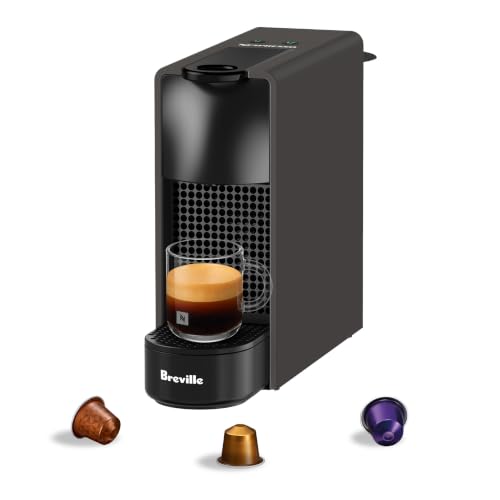
The Essenza Mini exists for the kitchen where the toaster already fights the kettle for territory. It is one of the narrowest espresso machines sold by a major maker, a slim wedge of a thing that can live in the gap beside a microwave without apology. Yet the specification refuses to behave like a compromise: a 19 bar pump, a heat-up of roughly 25 seconds, and two programmable buttons for espresso and lungo, so your preferred cup volume becomes the machine’s default rather than a daily negotiation.
Because it belongs to the Original line, the Mini drinks from the deepest capsule library in the business. Every supermarket own-brand pod, every independent roaster’s aluminium capsule, every decaf and single-origin experiment fits its slot, which transforms the running-cost picture compared with Vertuo ownership. The espresso it makes is the classic style — short, intense, capped with a hazelnut crema — and it lands in the cup with a consistency that embarrasses machines twice its size and price.
The compromises are the ones physics demands. The water tank is small, so a household brewing six lungos a day will refill it often, and the used-capsule container fills quickly too. Tall mugs need the drip tray flipped or removed, and there is no room in the design for anything resembling milk equipment. Treat it as a specialist — a tiny, excellent espresso tap — and it is hard to fault.
The Mini also travels well, in the domestic sense: it is light enough to move to a holiday let, a caravan, or a spare room when guests arrive, and undemanding enough that nobody needs instructions beyond which button makes the bigger cup. Owners in studio flats often pair it with a small handheld frother and report that the combination covers ninety percent of their coffee life. Its economy of means is the appeal — everything on the machine earns its place, and nothing on it pretends to be what it is not.
- Capsule system: Nespresso Original
- Pump pressure: 19 bar
- Heat-up time: about 25 seconds
- Two programmable cup sizes: espresso and lungo
- Ultra-slim footprint for narrow counters
- Removable tank and capsule container for easy emptying
Strengths
- Smallest serious espresso machine on this list
- Full access to the huge third-party Original capsule market
- Programmable volumes remember how you take your coffee
Trade-offs
- Small tank means frequent refills in busy households
- Capsule bin fills after a handful of drinks
- No provision for milk or for tall mugs without adjustment
Best for: solo espresso drinkers and small flats where every centimetre of counter is contested.
Not suited for: families brewing back-to-back milky drinks all morning.
Check price on Amazon for the Essenza Mini before you decide.
Nespresso CitiZ by DeLonghi — Best Classic Original Machine
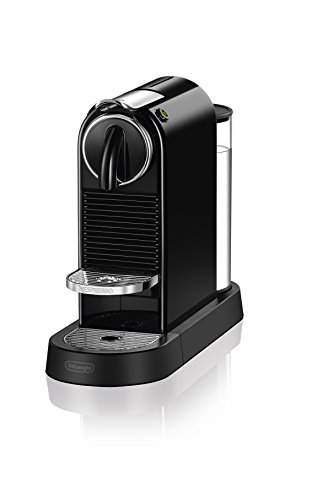
The CitiZ has been on sale, in one finish or another, for longer than most pod machines manage to exist, and that longevity tells you something about the design. It takes the Original formula — 19 bar pump, fast heat-up, espresso and lungo at the touch of a button — and wraps it in a taller, more substantial body with a folding cup support that lifts away for a taller glass. Where the Essenza Mini feels like a clever miniature, the CitiZ feels like a small appliance in the ordinary, reassuring sense: planted, quiet in its movements, unlikely to skitter across the worktop when you close the lever.
In the cup, it is the reference Original experience. Extraction is even, the crema holds together until the last sip, and the machine recovers between drinks quickly enough that making two espressos in a row does not mean the second one runs cool. The tank is sensibly larger than the Mini’s, which changes the rhythm of ownership more than any specification suggests — refilling becomes a twice-a-week job rather than a daily chore.
Age shows in a couple of places. There is no Bluetooth, no app, no descaling countdown theatre, and the styling is firmly mid-2010s. The capsule bin and drip tray are adequate rather than generous. But buyers who want the Original system in its most proven, least fussy form keep choosing this machine for a reason, and that reason is that it simply works, morning after morning, year after year.
One underappreciated CitiZ virtue is how it behaves in a shared kitchen. The controls could not be simpler, the lever has a positive, mechanical feel that survives years of hurried mornings, and the machine forgives the occasional budget capsule from an unfamiliar brand without jamming or sulking. In offices and house shares, that tolerance matters. It also holds its value and its looks better than most small appliances, partly because the design was never chasing a fashion cycle in the first place.
- Capsule system: Nespresso Original
- Pump pressure: 19 bar
- Fast heat-up, ready in well under a minute
- Espresso and lungo buttons
- Folding cup support for taller glasses
- Larger tank than the mini machines in this guide
Strengths
- Proven, durable design with a long production history
- Steady extraction and quick recovery between drinks
- Tank size that suits a two-person espresso habit
Trade-offs
- Styling and features feel dated beside newer rivals
- No smart functions or drink customisation beyond volume
- Still no milk steaming without a separate device
Best for: Original-line loyalists who value a proven machine over novelty.
Not suited for: gadget lovers who want app control and custom drink profiles.
Check price on Amazon for the CitiZ before you decide.

Nespresso Vertuo Next by DeLonghi — Best Looking Vertuo
Some pod machines are bought despite how they look; the Vertuo Next is bought partly because of it. The finish on this version — creamy white with gold accents — is aimed squarely at kitchens where the coffee machine sits in photographs as much as in use, and the slim, rounded body genuinely earns its place on an open counter. Under the styling sits the full Vertuo system: barcoded capsules, centrifugal extraction, and a drink range that runs from a short espresso to a generous mug of coffee without any setting-tweaking from you.
Daily behaviour is polished. The machine wakes quickly, reads the capsule, and gets on with it, and the one-button interface means guests can operate it without a tutorial — a small mercy during busy weekend mornings. The resulting coffee carries that characteristic Vertuo crema, dense and long-lived, and the machine handles the longer coffee capsules particularly well, producing mugs that taste brewed rather than merely stretched.
Two cautions deserve airtime. Early production runs of this model had a reputation for lever and sealing niggles, so buying from a seller with an easy returns route is sensible, and the design’s elegance comes with a tank that is not the largest in the Vertuo family. Running costs follow Vertuo rules: official capsules only, priced accordingly. As a style-forward way into the system, though, it remains the one visitors will ask about.
The Next rewards owners who entertain. A guest who wants a long coffee gets one, properly brewed from a mug capsule rather than a lungo stretched with hot water, and the machine’s looks do half the hosting by themselves. Keep an eye on the drip tray after several long drinks, since the bigger Vertuo sizes produce more overflow than espresso-only machines, and empty the capsule container before a big weekend rather than during it. Treated that way, it is a sociable machine that happens to photograph beautifully.
- Capsule system: Nespresso Vertuo, barcode-read pods
- Finish: creamy white and gold
- One-touch brewing across espresso and coffee sizes
- Centrifugal extraction for a thick crema
- Slim, rounded body designed for open counters
- Automatic capsule recognition and ejection
Strengths
- The most decorative machine in this roundup
- Full Vertuo drink range with zero setup
- Guest-friendly single-button operation
Trade-offs
- Vertuo-only capsules keep running costs higher
- Tank capacity is modest for heavy coffee households
- Early units had lever complaints, so buy with returns cover
Best for: style-conscious kitchens that want Vertuo convenience as a counter centrepiece.
Not suited for: high-volume households that would empty a small tank before breakfast ends.
Check price on Amazon for the Vertuo Next before you decide.

CUSIMAX Espresso Machine for Nespresso Capsules — Best Value Original Compatible
CUSIMAX builds its case on specification per pound. This machine accepts Nespresso Original capsules and answers the usual complaints about the format in order: the tank holds 27.1 fluid ounces, which is generous for the class; heat-up is around thirty seconds; and it offers three brew sizes rather than the traditional two, giving you a middle option between a short espresso and a full lungo that many drinkers find is exactly where their taste lives. Used capsules eject automatically into a container instead of waiting to be fished out of the brew chamber.
The energy-saving behaviour deserves a mention too, because pod machines spend most of their lives idle. A machine that drops into a low-power state between drinks rather than holding its boiler at temperature all day will quietly save real electricity across a year of ownership, and it also tends to suffer less scale build-up in hard-water areas. The CUSIMAX leans into that frugal, practical character throughout — nothing about it is theatrical, and that is rather the point.
Where the savings show is in finish and refinement. The body plastics feel workmanlike rather than luxurious, the pump note is more audible than the Nespresso-badged machines here, and the brand’s long-term capsule-machine track record is shorter than DeLonghi’s or Breville’s. If your priority is a capable Original machine with a big tank and an extra cup size, without paying for a famous badge, it makes a persuasive case.
For renters and first-time buyers, the CUSIMAX has another quiet advantage: it asks for nothing special. No app account, no proprietary cleaning ritual beyond ordinary descaling, no accessories ecosystem to fall into. It sits on the counter, accepts the same capsules as the famous machines, and gets on with making coffee. That plainness, combined with the larger tank and the third cup size, is why we rate it the value pick even though its badge carries less shine.
- Capsule system: Nespresso OriginalLine capsules
- Three brew sizes
- Water tank: 27.1 fl oz
- Heat-up time: about 30 seconds
- Automatic capsule ejection
- Energy-saving standby behaviour
Strengths
- Bigger tank than most Original machines at this level
- Third brew size fills the espresso-to-lungo gap
- Auto ejection keeps the brew area tidy
Trade-offs
- Finish and pump refinement trail the big brands
- Shorter track record than DeLonghi or Breville machines
- No milk system, as with every pick here
Best for: value seekers who want Original capsules without the brand premium.
Not suited for: buyers who prize quiet pumps and premium materials above specification.
Check price on Amazon for the CUSIMAX capsule machine before you decide.

CHULUX Compact Espresso Machine for Nes Pods — Best Budget Compact
The CHULUX makes its pitch to the smallest kitchens and the tightest budgets in this guide, and it does so with a specification sheet that refuses to read like an apology. A 1400 watt boiler handles heating, a 20 bar Italian pump handles extraction, and the reservoir holds 24 ounces and lifts out for filling at the tap — a combination that covers the fundamentals properly. Brewing is a one-button affair, spent pods eject automatically, and the machine shuts itself off afterwards rather than sipping power all day.
In practice, this is the machine for a first flat, a home office desk corner, a caravan, or a spare-room coffee point where a full-size appliance would be absurd. It occupies roughly the footprint of a hardback book stood upright, warms up fast, and produces a hot, crema-topped espresso from any Original-style pod you feed it, including the supermarket capsules that keep running costs gentle. The auto shut-off is more than a convenience in a desk setting; it is the difference between a machine you trust and one you unplug nervously every evening.
Expectations should be set by its station in life. The build is light, the water tank is sized for a couple of drinkers rather than a family, and nobody would mistake its pump note for the hushed thrum of a premium machine. Longevity at this end of the market is always the open question. But judged as an inexpensive route into pod espresso — small, fast, and honest about what it is — the CHULUX earns its place on this list.
The CHULUX also suits the second-machine role better than anything else here. A pod unit in a home office ends the trail of mugs through the house and the negotiations with the main kitchen machine, and its auto shut-off means it never simmers away forgotten until midnight. Students, homeworkers, and grandparents who want one good espresso without a countertop ceremony are its natural audience. It is not built to serve a dinner party, and it does not pretend otherwise.
- Capsule system: Nes pods (Original style)
- Heating: 1400W boiler, fast heat-up
- Pump: 20 bar Italian pump
- Reservoir: 24 oz, removable
- One-button brewing with auto-eject system
- Auto shut-off for safety and energy saving
Strengths
- Genuinely compact body for desks and tiny kitchens
- Strong pump and boiler specification for the class
- Auto shut-off suits office and rental settings
Trade-offs
- Light build compared with the branded machines
- Tank suits one or two drinkers, not a crowd
- Pump is audible during extraction
Best for: first flats, desk corners, and anyone starting pod espresso on a budget.
Not suited for: busy family kitchens needing tank capacity and hushed operation.
Check price on Amazon for the CHULUX compact machine before you decide.
How do the best pod coffee and espresso machines compare side by side?
| Pick | Capsule system | Tank | Heat-up | Standout trait |
|---|---|---|---|---|
| Nespresso Vertuo Pop+ by DeLonghi | Vertuo | 25 fl oz | About 30 seconds | Barcode-read one-touch brewing |
| Breville Nespresso Essenza Mini | Original | Compact tank | About 25 seconds | Slimmest body in the guide |
| Nespresso CitiZ by DeLonghi | Original | Mid-size tank | Under a minute | Proven long-running design |
| Nespresso Vertuo Next by DeLonghi | Vertuo | Modest tank | Fast | Design-led white and gold finish |
| CUSIMAX Espresso Machine for Nespresso Capsules | Original | 27.1 fl oz | About 30 seconds | Three brew sizes, auto eject |
| CHULUX Compact Espresso Machine for Nes Pods | Original style | 24 oz | Fast | 1400W boiler, 20 bar pump |
Which capsule system should you commit to: Vertuo or Original?
This is the decision the whole purchase hangs on, and it is really a decision about libraries. Original capsules are an open ecosystem in practice: Nespresso sells its own, but so do speciality roasters, supermarkets, and discount brands, in aluminium and in compostable formats, across every roast level from pale Scandinavian to near-black Italian. If you enjoy variety, chase offers, or simply resent paying full price for coffee, the Original system will make you happier over a decade of ownership.
Vertuo answers with range of drink size rather than range of roasters. Its capsules brew a true spread, from a 40 ml espresso to a 414 ml mug, and the barcode system means each one arrives at the volume and temperature its blender intended. For households split between an espresso drinker and a mug-of-filter drinker, that flexibility can end the two-machine compromise. The trade is exclusivity: pods come from one catalogue, at one price level, and if that catalogue ever drops your favourite blend, there is no alternative supplier waiting.
Think about your actual week. If ninety percent of your drinks are espressos and lungos, Original gives you more choice and cheaper drinks. If your mornings genuinely alternate between a short shot and a long coffee, Vertuo’s one-machine answer is worth its capsule premium. Either way, commit with your eyes open, because switching systems later means a new machine, not just a new box of pods.
What actually separates a good pod espresso from a mediocre one?
Pressure is the number printed on every box, but temperature stability is the quality you taste. A pod machine that pushes water through at a wandering temperature will alternate between sour, under-extracted shots and flat, over-heated ones, and no capsule quality can rescue it. The machines in this guide hold their extraction temperature steadily across back-to-back drinks, which is why their results cluster so much closer to café espresso than the watery output of the cheapest capsule machines.
Crema deserves a word of demystifying. On an Original machine it forms the way it does on a traditional espresso machine, from emulsified oils under pressure, and a good one is hazelnut-coloured and persistent. Vertuo’s crema is created differently, whipped up by the spinning extraction, and arrives thicker and paler — closer to the head on a well-made filter coffee. Neither is fake, exactly; they are signatures of two extraction methods, and most drinkers develop a preference within a week.
Finally, freshness of the capsule itself matters more than machine heroics. Aluminium capsules keep coffee remarkably stable for months, but once a box is open and sitting beside a warm machine, use it within a few weeks. Store pods in a cool cupboard, not on top of the boiler, and your modest machine will outperform a fancy one fed with stale capsules every single time.
How do you build a calm morning routine around a pod machine?
Start the night before. Fill the tank in the evening, empty the capsule bin while the kettle of habit is still in hand, and leave a cup on the warmer or beside the machine. Morning-you, half awake, then performs three actions: capsule in, lever down, button pressed. The routine’s beauty is its brevity, so protect it — the moment a pod machine demands daily fiddling, it has failed at its only job.
Keep a small rotation of capsules rather than a monument. Two or three blends open at once — a reliable everyday espresso, a decaf for evenings, and one interesting guest — covers nearly every situation without a drawer of half-forgotten boxes quietly ageing. Note which blends each person in the house actually finishes; pod drawers everywhere are graveyards of variety packs bought in optimism.
Descale on the calendar, not on the machine’s complaint. In hard-water regions, a descale every three months keeps heat-up fast and temperature honest, and it takes less time than a single trip to a coffee shop. Rinse the drip tray and capsule bin weekly, wipe the outlet where coffee emerges, and your machine will taste the same in year three as it did in week one.
What should milk drinkers do when no pick here steams milk?
Accept the two-appliance truth early and plan the counter for it. Every machine in this guide is an espresso and coffee maker only, so a household that drinks lattes daily needs a plan: a standalone electric frother, a French press used as a manual frothing jug with warmed milk, or the saucepan-and-whisk method that works better than pride suggests. The standalone frother is the honest recommendation for daily use, because it heats and foams in one jug while the espresso brews, keeping the whole drink under two minutes.
Sequence matters more than equipment. Start the milk first if your frother takes a minute, then brew the espresso onto it or under it depending on the drink; espresso that waits grows stale and bitter at the edges, while frothed milk waits comparatively gracefully for half a minute. For cappuccinos, aim for glossy, pourable foam rather than stiff peaks, which belong to a different era of coffee.
If milky drinks are truly the household’s main event — two or more lattes every single morning — it is worth asking whether a pod machine plus frother is the right architecture at all, or whether a bean-to-cup machine would serve you better. Pod systems win on speed, cleanliness, and counter space; they concede the milk round. Buy them for what they are good at.
How long do pod machines last, and what wears out first?
A well-kept pod machine should give five to ten years of daily service, and the components that decide its lifespan are mundane: the pump, the seals around the brew chamber, and the heating element’s coating of scale. Pumps rarely die young unless they are run dry repeatedly; seals perish slowly and announce themselves with drips into the capsule bin; scale is the one killer entirely within the owner’s control. This is why the descaling refrain runs through this guide — it is not fussiness, it is the whole longevity game.
The capsule mechanism itself is tougher than it looks. Levers and piercing plates handle thousands of cycles, and the failures that do occur usually trace back to a crushed or third-party capsule forced into a chamber it did not quite fit. If a pod resists, stop, remove it, and try another; brute force converts a two-penny problem into a repair bill. Machines that eject capsules automatically, like several picks here, reduce this risk by keeping the chamber clear between drinks.
Budget honestly for the whole relationship: capsules weekly, descaler a few times a year, a replacement drip tray or tank perhaps once. Against that, set the café spending the machine displaces. For most households the arithmetic is not close, and a machine that lasts seven years will have paid for itself many times over before its pump ever thinks about retiring.
Should you worry about the taste of coffee from aluminium capsules?
Capsule coffee had a reputation problem in its early years, earned honestly by stale commodity blends sealed into pods as an afterthought. The modern market is a different country. Roasters now design blends specifically for capsule extraction — shorter contact time, high pressure, small dose — and the aluminium capsule is an excellent storage vessel, keeping oxygen away from the grounds until the second the machine pierces it. A fresh capsule from a serious roaster will beat a bag of beans that has sat open in a kitchen for a month, which describes most home bean storage.
That said, the dose ceiling is real. A capsule holds roughly five to seven grams of coffee, and no engineering can turn that into the double-shot intensity a café pulls from eighteen grams. Pod espresso is a slightly gentler drink by construction, and drinkers who love syrupy, heavy shots should know it before buying. Lungo and Vertuo mug capsules, working at volumes the format suits, often impress sceptics more than the straight espresso does.
The practical advice is to taste across the catalogue early. Order small quantities of several blends, brew them identically, and note which ones your household reaches for when nobody is performing discernment. Your everyday capsule should be the one that disappears fastest, not the one with the most romantic tasting notes on the sleeve.
What does a realistic pod coffee corner look like at home?
Forget the styled photographs with trailing plants and marble everything. A working pod coffee corner needs four things within arm’s reach: the machine, a home for the capsules you are actually drinking this month, a small bin or recycling bag for the spent pods, and room for the cup you use most. Everything else — syrup bottles, matching canisters, a framed print about coffee — is decoration that the morning routine will route around. Arrange for the routine first and decorate what is left.
Capsule storage deserves one practical thought: drawers and carousels that hold pods by the dozen look tidy and make choosing a blend a small pleasure, but they also tempt households into keeping six blends open at once, all quietly ageing. A compromise that works is a small countertop holder for the current everyday blend and a cupboard for the rest, still in their sleeves. The machine stays fed, the coffee stays fresh, and the counter does not become a pod showroom.
Power and water complete the picture. Pod machines draw a brief but heavy load while heating, so a socket that is not already sharing a strip with a kettle and a toaster saves occasional tripped breakers during the breakfast rush. And keep the descaler where you will actually see it — beside the capsules, not in a garage box — because maintenance that requires an expedition simply does not happen.
How do you get a stronger or gentler cup from the same capsule?
Pod machines look fixed, but you hold more levers than the buttons suggest. The simplest is volume: most Original machines let you program the cup buttons, so an espresso button set a touch short produces a ristretto-style drink — more intense, less bitter — while a longer setting stretches the same capsule toward a gentler, thinner cup. Programme it once with your favourite capsule in place, using the cup you actually drink from, and the machine remembers your preference every morning afterwards.
Temperature is the second lever, and it is mostly about the cup. Espresso landing in a cold ceramic cup loses several degrees instantly and tastes duller for it; running a blank shot of hot water through the machine first warms both the brew path and the cup, and the difference in the glass is larger than many capsule upgrades. Vertuo owners can use the same trick by brewing a small water-only cycle into the mug before the real capsule goes in.
The third lever is the capsule itself. Within any catalogue, blends are roasted along a spectrum, and moving one step darker usually adds perceived strength more honestly than doubling up capsules, which over-extracts and turns bitter. If you consistently want two capsules’ worth of coffee, the format is telling you something: choose a machine and capsule size built for longer drinks rather than fighting the small ones.
When is a pod machine the wrong purchase altogether?
Honesty requires naming the households this format will disappoint. If your pleasure in coffee is the ritual — weighing beans, dialling in a grinder, watching a shot develop — a pod machine removes exactly the part you love and leaves you with a button. If your household drinks six or more coffees a day, capsule costs accumulate into a sum that would fund an excellent bean-to-cup machine within a couple of years, and the waste stream of spent pods grows from a handful into a sack. And if you are chasing the last few percent of cup quality, the small capsule dose sets a ceiling no machine in this guide can break.
There is also the question of taste loyalty. Pod systems ask you to marry a catalogue. Drinkers who love exploring a new roaster every month will feel the walls of any capsule library, even the broad Original one, within a season. For them, pods work best as a second system — the weekday convenience machine beside a slower weekend setup — rather than as the only coffee source in the house.
For everyone else, the format’s bargain is genuinely good: café-adjacent coffee in under a minute, with no skill, no mess, and no sink archaeology. The six machines above simply represent six different ways to take that bargain, and the rest of this guide exists to help you pick the version your household will still be happy with in year three.
Which mistakes do pod machine buyers keep making?
Buying the machine before tasting the capsules is the classic error. The hardware is a one-off decision, but the capsule catalogue is a subscription you renew weekly for years, so brew a friend’s machine, order a small mixed box, and confirm you love at least two blends before committing to a system. A discounted machine tied to coffee you merely tolerate is the most expensive coffee you will ever drink.
Letting the tank run dry mid-brew ruins a capsule and, repeated often, does the pump no favours. Most machines here will stop rather than damage themselves, but the drink is lost either way. Glance at the tank when you empty the capsule bin; the two habits belong together and together they prevent nearly every pod-machine annoyance.
Storing capsules in a pretty jar on a sunny windowsill undoes the manufacturer’s careful packaging in about a fortnight. Light, heat, and air are coffee’s three enemies, and a display jar delivers all of them. Keep pods in their sleeves, in a drawer or cupboard, and let the machine be the only decorative object in the arrangement.
Skipping descaling until the machine slows to a dribble is the final common failure. Scale insulates the heating element, so drinks drift lukewarm and sour long before the machine actually stops, and owners often blame the capsules for what is really a maintenance debt. Three or four descalers a year, matched to your water hardness, keeps every pick in this guide tasting as intended.
A quieter mistake is matching the machine to the wrong drink entirely: buying an espresso-only Original model for a partner who drinks long mugs of coffee, or a Vertuo for a purist who only ever wants a short shot. The machines cannot stretch beyond their systems, so write down the three drinks your household actually makes in a week and buy for those, not for the drinks you imagine making at dinner parties twice a year.
Final Recommendation
If the household drinks a mixture of espresso and longer coffees and wants the least possible friction, start with Nespresso Vertuo Pop+ by DeLonghi. It reads its own capsules, brews every size in the Vertuo catalogue, and asks nothing of you beyond keeping the tank filled. It is the machine we would hand to a busy family without a second thought.
If your heart belongs to classic espresso and your counter is small, the contest is between Breville Nespresso Essenza Mini for minimal footprint and Nespresso CitiZ by DeLonghi for a more substantial, proven build. Both drink from the vast Original capsule library, which keeps every future coffee cheaper and more varied. The remaining three picks serve narrower briefs — style, value, and the tightest budgets — and serve them well.
Whichever direction you take, buy the capsule system, not the machine’s launch discount, because the system is what you will taste every morning for years. Choose the library you want to live inside, keep the tank full and the descaler handy, and a pod machine will repay you with the easiest good coffee of your life — starting tomorrow, before you are even properly awake, which is precisely when good coffee matters most.
Frequently Asked Questions
Can pod machines make a drink as good as a café espresso?
A well-chosen pod machine gets remarkably close on consistency, because the capsule removes grind, dose, and tamping from the equation — the three variables home baristas get wrong. A great café still wins on peak quality, fresh beans, and a skilled hand, but on a Tuesday morning the pod machine’s repeatability often beats the average home attempt with a manual machine. The gap narrows further when you use fresh, good-quality capsules and descale on schedule.
Are Vertuo and Original capsules interchangeable?
No, and the machines will not even accept each other’s pods. Vertuo capsules are larger, dome-shaped, and barcoded; Original capsules are the small foil thimbles used since the system began. A Vertuo machine spins its pods and brews coffee as well as espresso, while an Original machine uses pump pressure for espresso-style drinks only. Choose your system first, then choose the machine inside it.
How much does pod coffee cost to run compared with beans?
Per drink, capsules cost more than beans bought by the bag — that is the convenience tax, and it is real. Original-system owners can soften it considerably with third-party and supermarket capsules, which is a major reason the format remains popular. Vertuo owners pay the official catalogue price but gain drink-size range. Either way, both undercut a daily café habit by a wide margin, which is the comparison that matters for most households.
Do I need to descale a pod machine if I use filtered water?
Filtered water slows scale down; it does not stop it, unless the filter is a true softening system. Most jug filters reduce some minerals while leaving enough behind to coat a heating element over a season. Descale two to four times a year depending on your water, watch heat-up time as an early warning, and your machine will hold its temperature — and therefore its flavour — far longer.
Can these machines make iced coffee and cold drinks?
Yes, within limits. Brew a double espresso or a strong Vertuo shot directly over a glass full of ice, and the rapid chilling locks in flavour surprisingly well; add cold milk and you have a credible iced latte in under two minutes. None of these machines chills the drink itself, so the ice does the work — use plenty, and brew stronger than you would for a hot drink, because melting ice dilutes as it cools.
What happens to used capsules — can they be recycled?
Aluminium capsules are recyclable through the manufacturer’s collection schemes, which provide bags or drop-off points and recover both the metal and the grounds. Third-party capsules vary: some are aluminium and join the same schemes informally, others are plastic or certified compostable, so check the packaging of whichever brand you settle on. Emptying the bin into the recycling bag weekly keeps the habit painless.
Related Guides
If your coffee corner is still coming together, these companion guides round out the picture: Best Coffee Beans for Automatic Espresso Machines, Best BBQ Grills That Last Long, Best Black Friday Grills.


