What's inside
- Key Takeaways
- Quick Picks
- How did we judge beans for machines that do everything themselves?
- How do the best coffee beans for automatic espresso machines compare at a glance?
- Why does bean oiliness matter so much inside an automatic machine?
- How fresh is fresh enough for a bean-to-cup machine?
- How should you dial in a new bag on a fixed-parameter machine?
- What role does robusta really play in these blends?
- What do roast dates and best-before dates actually tell you?
- How does water change the taste of the same beans?
- Decaf and half-caf: can automatic machines handle the switch?
- How much should you actually spend per bag?
- What should you do when a new bag tastes disappointing?
- Which bean mistakes quietly ruin automatic espresso?
- Final Recommendation
- Frequently Asked Questions
- Related Guides
As an Amazon Associate I earn from qualifying purchases. This post may contain affiliate links at no extra cost to you.
cottageverdict.com is reader-supported. When you buy through links on our site, we may earn an affiliate commission.
Where to buy: each bag below is sold through Amazon, and the names in the Quick Picks table and the detailed reviews link straight to its listing, where you can check price on Amazon and confirm the bag size and roast before ordering. Choosing the best coffee beans for automatic espresso machines sounds like a flavour question, and it is — but only after it is a machinery question. A fully automatic machine grinds, doses, tamps, and brews with no human hand in the loop, which means the beans you pour into its hopper have to behave: feed evenly, grind consistently, and keep their oils where they belong instead of lacquering the burrs and brew unit.
That machinery question eliminates a whole shelf of fashionable coffee. Very dark, glossy beans — the kind that shine in the bag — carry their oils on the surface, and inside a superautomatic those oils coat the grinder, clump the grounds, and eventually produce the gummed, rancid off-flavours owners blame on the machine. At the other extreme, very light roasts can taste thin and sharp when a home machine’s brew temperature and pre-infusion are fixed by software. The sweet spot, and the territory every pick in this guide occupies, is the medium to medium-dark band: developed enough for sweetness, dry enough on the surface to keep the machine clean and happy.
Freshness is the third leg of the stool. Automatic machines reward beans that are weeks from roasting rather than days — a bag needs a short rest after the roast so excess gas escapes, or the puck puffs and extraction runs uneven — yet they punish bags that have sat in a warehouse for a season. The six blends below are the ones we would pour into a hopper without a second thought: four from Lavazza, whose entire business is built around exactly this use, one from Starbucks, and one from Gavina, each with a different roast level, oil profile, and flavour centre of gravity.
A final framing thought before the bags themselves: an automatic machine is a small café that never improvises, and like any café it is defined by its house bean. Choose that bean with the machine’s mechanics in mind — dry surface, developed roast, freshness you can maintain — and the equipment you already own will taste noticeably more expensive than it did last week.
Key Takeaways
- Surface oil is the enemy inside a fully automatic machine: choose medium to medium-dark roasts with a dry, matte finish to protect the grinder and brew unit.
- Lavazza Super Crema is the benchmark hopper bean — an arabica and robusta blend built for thick crema and forgiving extraction.
- All-arabica drinkers should start with Lavazza Espresso, the smoothest and sweetest bag on this list.
- Robusta in a blend is not a flaw: it brings crema, body, and caffeine, and Italian espresso tradition has relied on it for generations.
- Buy bag sizes your household finishes within about a month of opening, and never top up a hopper over stale beans.
- Rest fresh beans a week or so after roasting before loading the hopper, so degassing does not disturb the puck mid-extraction.
Quick Picks
| Pick | Badge | Reasons it belongs in the hopper |
|---|---|---|
| Lavazza Super Crema Whole Bean 2.2 lb | Best Overall | The reference hopper blend: a medium roast of arabica and robusta with a dry surface, hazelnut sweetness, and crema that survives milky drinks. |
| Lavazza Espresso Barista Gran Crema | Best for Milk Drinks | A medium espresso roast blended for richness and crema, aimed at drinkers whose mornings run through lattes and cappuccinos. |
| Lavazza Espresso 100% Arabica 2.2 lb | Best All-Arabica | A medium roast made entirely from arabica, for drinkers who want sweetness and clarity without robusta’s bass notes or extra caffeine. |
| Lavazza Crema E Aroma Whole Bean | Best Bold Traditional | An intense, earthy medium roast with a long-lasting crema — the old-school Italian bar profile, in a hopper-friendly whole bean format. |
| Starbucks Espresso Roast Whole Bean 18 oz | Best Familiar Dark Roast | The café-chain dark roast in whole bean form: 100% arabica, deeply caramelised, and available in an 18 oz bag that suits smaller households. |
| Gavina Old Havana Espresso Whole Bean 32 oz | Best Cuban-Style Value | A medium-dark, 100% arabica espresso in the Cuban tradition, sold in a generous 32 oz bag ground fresh by your machine for cafecito-style drinks. |
How did we judge beans for machines that do everything themselves?
Our first test was the palm test, the oldest in the coffee trade: pour a handful of beans into a dry hand, close it, open it, and look. Beans suited to automatic machines leave the skin nearly clean, with at most a faint sheen. Beans that leave a visible oily print were rejected for this guide no matter how fashionable the roaster, because that surface oil migrates onto burrs, feed chutes, and brew screens, and a home superautomatic gives you no easy way to scrub it back off. Every pick below passes the palm test comfortably.
Second, we weighed roast development against what fixed-parameter machines can extract. A superautomatic typically brews at a set temperature with a short pre-infusion and a pump profile you cannot adjust, so beans need to give up their sugars readily. Underdeveloped, very light roasts tend to taste sour and thin under those conditions, while properly developed medium roasts — where the sugars have caramelised through the bean, not just browned on its surface — taste sweet and round. Development, not darkness for its own sake, was the quality we hunted.
Finally, we considered the blend architecture. Robusta has a poor reputation in speciality circles and an excellent one in Italian espresso bars, where it contributes the thick, persistent crema and the bass-note body that arabica alone struggles to deliver at home-machine pressures. The blends here use it in different proportions, from none at all to a substantial minority, and part of this guide’s job is matching that proportion to your taste rather than declaring a winner in the abstract.
We also checked each blend’s tolerance for the way automatic machines actually live: hoppers refilled without ceremony, grind settings left alone for months, brew units cleaned when the machine insists rather than when the calendar suggests. A bean that only tastes right under café discipline is the wrong bean for this category, however beautiful its best cup might be. The six survivors are the ones whose tenth hopper-load tastes like their first, in a machine maintained the way real households maintain things — approximately, and with good intentions.
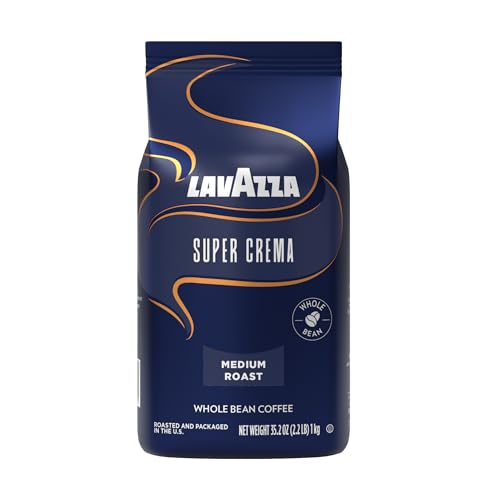
Lavazza Super Crema Whole Bean 2.2 lb — Best Overall
If a fully automatic machine could choose its own beans, it would choose something very like Super Crema. The roast is a true medium — the beans emerge matte, with no surface oil to speak of — and the blend pairs arabica’s sweetness with enough robusta to lay down the thick, tawny crema the name promises. In the cup it is forgiving in the way home coffee needs to be: a little long or a little short on the shot, ground a notch coarser or finer than ideal, it still lands somewhere pleasant, tasting of hazelnut, brown sugar, and a gentle cocoa finish.
That forgiveness is engineered, not accidental. Lavazza blends for the automatic-machine market first and foremost, and Super Crema’s roast curve is built so the sugars extract easily at the temperatures home machines actually reach. Milk drinks are its home ground: a cappuccino made with it tastes like the coffee is still in charge, which is not something every smooth blend manages once six ounces of steamed milk arrive.
The 2.2 pound bag suits households that drink coffee daily and get through it in three to five weeks; slower households should decant half into an airtight jar kept in a cool cupboard and work from the hopper in smaller loads. There is no exotic single-origin story here, and the flavour ceiling is deliberately mainstream. As an everyday hopper bean, that restraint is exactly the point.
A word on storage for this specific bag, since its size is its only real demand: the blend keeps its character well when the unopened portion waits somewhere cool and dark, ideally decanted into a canister with a one-way valve or simply rolled tight in its own bag with the air pressed out. Owners who freeze a portion should freeze it once, in a sealed single-use amount, and thaw it sealed so condensation forms on the bag rather than the beans. Handled that way, the last week of a Super Crema bag tastes close enough to the first that most households will never spot the join.
- Roast: medium espresso roast, dry matte surface
- Blend: arabica and robusta
- Bag size: 2.2 lb whole bean
- Flavour centre: hazelnut, brown sugar, cocoa
- Crema: thick and persistent, robusta-assisted
- Suited to: fully automatic and bean-to-cup machines
Strengths
- Benchmark behaviour in grinders and brew units
- Crema and body that hold up through milk
- Forgiving extraction window for fixed-parameter machines
Trade-offs
- Flavour profile is classic rather than adventurous
- Big bag asks for sensible storage in smaller households
- Robusta content will not please arabica purists
Best for: most automatic-machine households, as the default hopper bean against which others are judged.
Not suited for: drinkers hunting bright, fruity, light-roast character.
See the current listing first: Check price on Amazon for the Super Crema bag today.

Lavazza Espresso Barista Gran Crema — Best for Milk Drinks
Gran Crema is the blend in Lavazza’s Barista line aimed at drinkers who take their espresso long on company — milk company, mostly. It is a medium espresso roast with a blend architecture tilted toward richness: the shot it produces is dense, sweet, and heavy enough in the cup that a latte made from it still tastes unmistakably of coffee rather than of warm milk with ambitions. The crema is abundant and slow to break, which matters more than aesthetics when you are pouring steamed milk through it all morning.
Surface oil stays on the right side of the line for automatic machines. The beans carry a deeper roast sheen than Super Crema without crossing into the glossy territory that gums up a brew unit, so a hopper of Gran Crema is a reasonable long-term arrangement rather than a treat to be rationed. Extraction is stable across the bag, and the flavour — dark chocolate, toasted cereal, a low, pleasant bitterness — stays composed even when a machine’s shot runs a few seconds long.
Straight-espresso purists may find it a touch broad-brushed; this is a blend tuned for generosity rather than detail, and its subtleties are of the comfort-food kind. But households whose drinks cabinet is really a milk programme with espresso support will find it the most satisfying bag on this list, and it doubles gracefully as a moka-pot and French-press coffee on weekends.
Gran Crema also earns a mention as the blend in this guide most likely to please a mixed household — the espresso drinker, the cappuccino drinker, and the teenager discovering coffee through very milky drinks can all be served from one hopper without anyone feeling like the compromise candidate. That diplomatic quality is worth money in a real kitchen, where the alternative is two bags open at once, both ageing, and a low-level domestic argument conducted entirely through sighs at the machine.
- Roast: medium espresso roast
- Blend: arabica with robusta for body and crema
- Bag size: 2.2 lb whole bean
- Flavour centre: dark chocolate, toasted grain
- Surface oil: light sheen, hopper-safe in normal use
- Suited to: milk drinks from automatic machines
Strengths
- Coffee flavour survives generous amounts of milk
- Rich, stable crema for cappuccino work
- Roast level stays safe for grinders and brew units
Trade-offs
- Less delicate than the all-arabica pick here
- Sheen means hopper cleaning should not be skipped
- Straight shots emphasise richness over nuance
Best for: latte and cappuccino households that want the coffee to stay in charge of the cup.
Not suited for: black-espresso drinkers chasing delicate, high-note flavours.
See the current listing first: Check price on Amazon for the Gran Crema bag today.
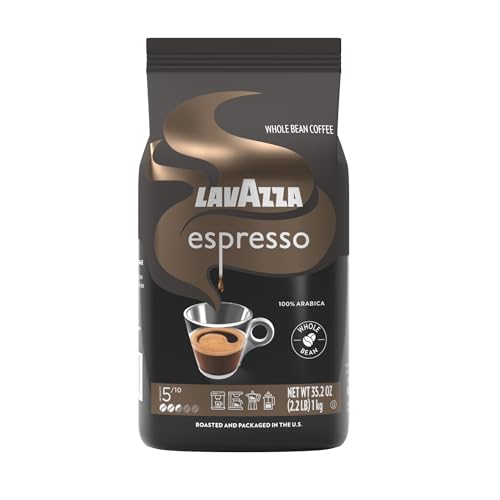
Lavazza Espresso 100% Arabica 2.2 lb — Best All-Arabica
This is the bag for the drinker who has tasted robusta, understood its purpose, and politely declined it. Made entirely from arabica and roasted to a balanced medium, Lavazza Espresso produces the sweetest, cleanest cup in this guide: red fruit and caramel up front, a softer crema than the blends manage, and a finish that stays sweet rather than turning ashy. In a fully automatic machine it behaves impeccably, with a dry surface that keeps the grinder clean and a grind consistency that suits the fixed doses these machines deliver.
Arabica-only blends ask slightly more of the machine and the drinker. The crema will be thinner — that is physics, not failure — and the shot rewards being brewed at the shorter end of the machine’s settings, where its sweetness concentrates. Drunk black, as espresso or a short lungo, it is the most refined coffee here; drowned in a large latte, its delicacy gets politely lost, and the Gran Crema or Super Crema will serve that drink better.
Caffeine sits lower than in the robusta-bearing blends, which some households count as a feature: an after-dinner espresso from this bag is a gentler proposition. The 2.2 pound format keeps the per-cup cost sane for an all-arabica product. If your automatic machine exists to make black coffee well, start here and only move if you find yourself missing heft.
If you brew this blend as a lungo, keep the cup on the shorter side of the machine’s lungo setting and taste before lengthening it; arabica’s sweetness lives in the first part of the extraction, and the final portion adds bitterness faster than it adds pleasure. Owners of machines with a dedicated aroma or pre-infusion setting will find this is the bag that rewards using it — a gentler start to the shot seems to coax out the caramel notes that are this blend’s whole reason for existing.
- Roast: medium, balanced development
- Blend: 100% arabica
- Bag size: 2.2 lb whole bean
- Flavour centre: caramel, red fruit, gentle cocoa
- Crema: lighter and softer than the robusta blends
- Suited to: black espresso and short drinks
Strengths
- Sweetest, cleanest cup in this roundup
- Dry beans that keep automatic grinders spotless
- Lower caffeine suits evening espresso
Trade-offs
- Thinner crema than robusta-assisted blends
- Delicacy disappears under large volumes of milk
- Rewards shorter shots; less forgiving of over-extraction
Best for: black-coffee drinkers who want arabica sweetness from an automatic machine.
Not suited for: big-latte households that need body to punch through milk.
See the current listing first: Check price on Amazon for the Lavazza Espresso bag today.
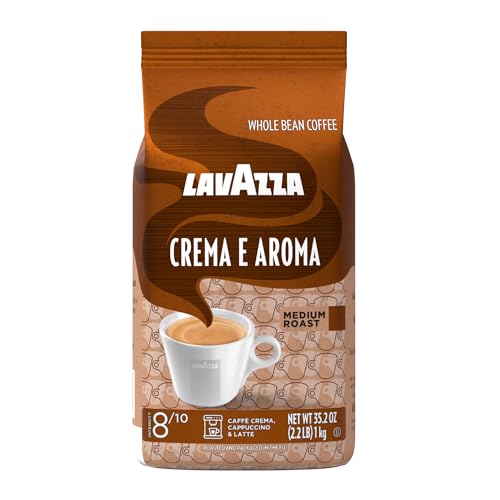
Lavazza Crema E Aroma Whole Bean — Best Bold Traditional
Crema E Aroma is the traditionalist of the Lavazza shelf: a medium roast blended for intensity, with an earthy depth and a crema that outlasts the conversation. Where Super Crema is hazelnut and hospitality, this bag is darker in spirit — woodsmoke’s polite cousin, bitter chocolate, a savoury weight in the mouth. Drinkers raised on southern Italian bar espresso will recognise the profile immediately and feel at home; it is the coffee of small cups drunk standing up, with sugar, between errands.
For automatic machines, its virtues are practical as well as sensory. The roast stays within the safe band for hopper use, the beans grind evenly, and the blend’s assertiveness covers a multitude of machine sins — a slightly cool brew unit or a shot that runs long still produces something characterful rather than something thin. It is also the blend here that most improves a mediocre milk drink, because its bitterness gives steamed milk something to push against.
The same assertiveness divides opinion. Delicate palates may find the earthiness heavy across a whole bag, and this is not the coffee to serve a guest who loves bright, modern espresso. Buy it because you know you love the old profile, or buy a smaller quantity first if you are merely curious. For its intended audience, few bags at any price are as satisfying.
Crema E Aroma has one more traditional use worth knowing: it makes an outstanding base for sweetened coffee drinks of the Mediterranean kind — espresso poured over a spoonful of sugar and stirred to a syrup, or lengthened into a shakerato with ice. The blend’s bitterness is an asset in those preparations rather than a flaw, giving the sugar something structural to balance. In an automatic machine it also produces the most convincing ristretto of the six, short and dense enough to coat the tongue.
- Roast: medium, intense and earthy profile
- Blend: arabica and robusta
- Bag size: 2.2 lb whole bean
- Flavour centre: bitter chocolate, earth, toasted nuts
- Crema: notably long-lasting
- Suited to: traditional short espresso with sugar
Strengths
- Most assertive, characterful cup in the guide
- Covers minor machine extraction faults gracefully
- Crema persists through slow, social drinking
Trade-offs
- Earthy intensity will divide the household
- Not a match for bright, modern espresso tastes
- Can dominate delicate milk drinks
Best for: lovers of the classic southern Italian bar profile.
Not suited for: drinkers who prefer light, fruity, or delicate espresso.
See the current listing first: Check price on Amazon for the Crema E Aroma bag today.

Starbucks Espresso Roast Whole Bean 18 oz — Best Familiar Dark Roast
Starbucks Espresso Roast is the flavour a generation learned to call espresso: a dark roast of 100% arabica, taken far enough that the sugars caramelise into molasses and the finish carries that signature, faintly smoky sweetness. In an automatic machine it produces a heavy, low-acid shot that stands up to the largest milky drinks on a home menu, and its familiarity is a genuine virtue in households where one person’s coffee taste was formed in a café queue and is not negotiating.
The automatic-machine caveat matters most with this pick, so let us be precise. This is the darkest roast in the guide, and dark roasts carry more surface oil than medium ones. It is not the glossiest bean on the market, and plenty of superautomatics run on it happily, but it earns a condition: clean the grinder and brew unit on the manufacturer’s schedule rather than whenever you remember, and avoid leaving beans sitting in a warm hopper for weeks. Treated with that modest discipline, it behaves; neglected, it will glaze the works faster than any other bag here.
The 18 ounce bag is the other half of its appeal. Households that drink two coffees a day will finish it while it is still fresh, which no 2.2 pound bag can promise them. If your machine’s drinks are mostly big, milky, and café-style, this is the honest, available-everywhere answer.
Households choosing this bag should know its best trick in an automatic machine: the double-shot milk drink. Because the roast is dark and low in acid, a double dose under a generous pour of steamed milk reads as intensity rather than harshness, which is precisely the café drink most home drinkers are trying to recreate. Just keep the maintenance bargain — a dark bag in the hopper is a standing appointment with the cleaning tablet, and owners who honour it report none of the gumming horror stories the format warns about.
- Roast: dark, deeply caramelised
- Blend: 100% arabica
- Bag size: 18 oz whole bean
- Flavour centre: molasses, caramelised sugar, low acid
- Surface oil: highest in this guide — clean on schedule
- Suited to: café-style milk drinks
Strengths
- Familiar café flavour profile at home
- Bag size suits slower households and freshness
- Low acidity is gentle on sensitive stomachs
Trade-offs
- Darkest, oiliest beans here — maintenance matters
- Delicate flavours are roasted past recognition
- Arabica-only crema is thinner than the blends’
Best for: café-style drinkers who want the familiar dark roast in a freshness-friendly bag size.
Not suited for: owners who never clean their brew unit and need a low-maintenance bean.
See the current listing first: Check price on Amazon for the Starbucks Espresso Roast bag today.

Gavina Old Havana Espresso Whole Bean 32 oz — Best Cuban-Style Value
Gavina’s Old Havana carries a family roasting story that runs from Cuba to Los Angeles, and the coffee tastes like its heritage: a medium-dark roast of 100% arabica built for the intense, sweetened espresso style of the Cuban café. Brewed strong and short in an automatic machine, it gives a syrupy, low-acid shot with dark sugar and cocoa notes that takes the traditional spoonful of sugar — or a proper espuma whipped from the first drops — exactly as intended. Few bags in this guide have as clear a cultural point of view.
The 32 ounce bag is the value proposition, and it is aimed at households that drink espresso daily and in numbers. Per ounce it undercuts most of this list, and because the roast is medium-dark rather than pushed to glossiness, the beans remain reasonably hopper-friendly — though, as with the Starbucks pick, a medium-dark bag earns a regular wipe of the hopper and a brew unit cleaned on schedule. Decanting half the bag into sealed storage keeps the second fortnight tasting like the first.
Outside its tradition, expectations should adjust. This is a comfort roast, not a speciality showcase; its pleasures are sweetness, weight, and nostalgia rather than identifiable farm notes. But for cafecito drinkers, for coladas shared among friends, and for anyone whose espresso ideal was formed in a Miami ventanita queue, Old Havana in the hopper is the closest a home automatic machine gets to that counter.
Old Havana rewards one small ritual when it lives in an automatic machine: stir the hopper gently when you refill it. Larger bags can settle so that smaller beans and fragments drift downward, and a light stir keeps the dose uniform across the bag’s life. It is a ten-second habit borrowed from café practice, and with a 32 ounce bag that may live in the kitchen for a month, it quietly protects the consistency that made you like the first cup.
- Roast: medium-dark, Cuban espresso tradition
- Blend: 100% arabica
- Bag size: 32 oz whole bean
- Flavour centre: dark sugar, cocoa, low acid
- Also suited to: moka pots as well as automatic machines
- Suited to: cafecito and sweetened espresso styles
Strengths
- Strong value in a large, everyday bag
- Syrupy, sweet shot built for cafecito
- Roast stays short of the greasy zone
Trade-offs
- Comfort profile rather than speciality complexity
- Large bag needs decanting for smaller households
- Sweetness-first style may taste soft to bitter-coffee lovers
Best for: cafecito households and high-volume espresso drinkers watching the per-cup cost.
Not suited for: tasters chasing single-origin complexity and bright acidity.
See the current listing first: Check price on Amazon for the Old Havana bag today.
How do the best coffee beans for automatic espresso machines compare at a glance?
| Pick | Roast | Blend | Bag | Best use |
|---|---|---|---|---|
| Lavazza Super Crema Whole Bean 2.2 lb | Medium, dry surface | Arabica + robusta | 2.2 lb | Everyday hopper, all drinks |
| Lavazza Espresso Barista Gran Crema | Medium | Arabica + robusta | 2.2 lb | Lattes and cappuccinos |
| Lavazza Espresso 100% Arabica 2.2 lb | Medium | 100% arabica | 2.2 lb | Black espresso, short drinks |
| Lavazza Crema E Aroma Whole Bean | Medium, intense | Arabica + robusta | 2.2 lb | Traditional bar-style shots |
| Starbucks Espresso Roast Whole Bean 18 oz | Dark | 100% arabica | 18 oz | Café-style milk drinks |
| Gavina Old Havana Espresso Whole Bean 32 oz | Medium-dark | 100% arabica | 32 oz | Cafecito, high-volume homes |
Why does bean oiliness matter so much inside an automatic machine?
A manual espresso setup forgives oily beans because every part of it can be scrubbed by hand in minutes. A fully automatic machine hides its grinder, chute, and brew group behind panels, and some brew units are sealed units the owner is told never to open. Surface oil from dark beans migrates onto all of it, one invisible layer per hopper load, until grounds begin sticking in the chute, doses drift lighter, and old oil turns rancid enough to flavour every shot with a stale, fishy edge that no fresh bag can cover.
The fix is mostly in the buying, which is why this guide screens for it so hard. Medium and medium-dark roasts with dry surfaces keep the machine’s internals clean for months at a time. If you do fall for a darker bag, shorten the maintenance interval to match: empty and wipe the hopper each time it runs out, run the machine’s cleaning cycle when it asks rather than snoozing it, and never store beans in the hopper of a machine that sits in a warm kitchen all summer.
Manufacturers know this, which is why several superautomatic manuals quietly warn against oily beans by name. Heed the warning in the spirit it is given — not as a ban on dark roasts, but as a reminder that inside a sealed machine, the bean is also a maintenance decision.
How fresh is fresh enough for a bean-to-cup machine?
Beans need a short rest after roasting, because freshly roasted coffee releases carbon dioxide for days, and gas trapped in the puck disrupts extraction — shots run fast, crema looks pale and bubbly, and flavour reads hollow. For automatic machines, which cannot adjust their way around a gassy puck, beans roughly one to four weeks from the roast are the practical sweet spot: settled enough to extract evenly, young enough to taste alive.
The other end of the timeline matters more in real kitchens. Once a bag is open, the clock runs in weeks, not months, and a hopper is the worst storage vessel in the house — warm, lit, and ventilated. Load the hopper with what the household drinks in a week or so, keep the rest sealed in a cool, dark cupboard, and resist the small economy of topping up fresh beans over old ones, which guarantees that every dose is a blend of fresh and tired coffee.
Bag size is therefore a freshness decision disguised as a value decision. This guide includes a 32 ounce bag and several 2.2 pound bags because daily drinkers finish them in their prime; a household drinking two cups a day should look at the 18 ounce pick and feel no shame about it. The cheapest coffee is the one you finish while it still tastes like itself.
How should you dial in a new bag on a fixed-parameter machine?
Automatic machines offer fewer dials than manual ones, but the dials they offer matter: grind setting, drink strength or dose, and cup volume. Change one at a time, and give each change a full day of drinks before judging it, because a grinder retains a dose or two of the previous setting and the first cup after an adjustment is always a liar. Start with the manufacturer’s middle grind, brew the machine’s standard espresso, and taste for the two failure modes — sour and thin means under-extracted, bitter and ashy means over-extracted.
For a sour shot, grind finer or raise the strength setting, which increases the dose the machine packs into its puck. For a bitter one, go coarser or shorten the cup volume so less water strips the harsh compounds from the grounds. Adjust the grinder only while it is running, a rule borrowed from café practice that protects the burrs from being forced together on trapped beans.
Write the winning settings on the bag with a marker. It sounds fussy until the household rotates three blends and nobody remembers that the Gavina liked a notch coarser than the Lavazza. Machines remember nothing about beans; the note on the bag is the machine’s memory, outsourced to you.
What role does robusta really play in these blends?
Robusta is coffee’s bass section: less aromatic complexity than arabica, but more body, more caffeine, and — crucially for espresso — far more of the compounds that build a thick, stable crema. Italian blending tradition treats it as an instrument, not a filler, using ten to thirty percent to give a blend its crema and its backbone while arabica carries the flavour. Three of the blends in this guide follow that tradition, and their crema advantage over the all-arabica picks is visible in the cup within seconds.
The quality spread within robusta is enormous, which explains its divided reputation. Carefully grown and processed robusta, of the kind serious Italian blenders buy, tastes of cocoa and toasted nuts; commodity robusta tastes of rubber and regret. When a blend from an established roaster includes robusta, assume the former until the cup tells you otherwise — and judge by the cup, not by the species prejudice that speciality marketing has taught the last decade of drinkers.
Practical consequences follow. Robusta-bearing blends deliver a stronger caffeine effect per cup, which matters for the after-dinner drinker, and they forgive milk generously. All-arabica bags answer with sweetness, clarity, and a gentler evening profile. Neither is the correct choice in the abstract; they are two different drinks wearing the same name.
What do roast dates and best-before dates actually tell you?
Coffee packaging speaks two languages. A roast date tells you when the beans left the roaster, which is the only honest starting point for judging freshness; a best-before date tells you when the manufacturer stops guaranteeing the product, which for nitrogen-flushed whole beans can be a year or more after roasting and says almost nothing about how the coffee tastes today. Neither is a lie, but they answer different questions, and the drinker who confuses them will pass over fresh coffee and buy stale coffee with equal confidence.
Large Italian blenders — Lavazza among them — typically print best-before dates and pack their beans in valve bags flushed to keep oxygen out, a system that preserves a well-roasted blend far better than sceptics assume. The coffee inside is not at its first-week peak, but blends designed for this distribution are roasted and rested to taste right across a long window, which is precisely why they behave so consistently in home machines. Consistency across months is a feature these brands engineer on purpose.
The practical rule is to buy from sellers whose stock visibly turns over, store the bag properly once opened, and judge by the cup in front of you rather than by date arithmetic alone. A best-before bag bought from a busy shelf and finished within a month of opening will outperform a roast-dated bag that spent that month open in a sunny hopper every single time.
How does water change the taste of the same beans?
Espresso is mostly water, and an automatic machine’s fixed recipe means the water’s character shows up in the cup undiluted by technique. Very hard water mutes acidity and sweetness alike, leaving coffee tasting flat and chalky while it quietly armours the boiler in scale; very soft or distilled water swings the other way, producing sharp, hollow shots because extraction needs a modest mineral content to work against. The same bag of beans can taste like two different coffees in two different postcodes, and both owners will blame the roaster.
Most households land in an acceptable middle without trying, but two situations deserve action. If your kettle furs up within weeks, your machine is scaling at the same rate, and a softening filter in the tank — several picks’ manufacturers sell them — protects both flavour and boiler. If your tap water is heavily chlorinated, a simple carbon filter jug used for the tank removes the swimming-pool note that otherwise survives brewing intact.
Whatever you use, keep it consistent. Dialling in a bag, as described earlier, is really dialling in a bag-plus-water combination, and changing the water mid-bag restarts the experiment. Coffee people call this controlling variables; everyone else can call it not moving the goalposts on a blend that was doing nothing wrong.
Decaf and half-caf: can automatic machines handle the switch?
They can, with one mechanical caveat worth knowing. Decaffeinated beans are slightly more brittle and often a touch oilier at the same roast level, because the decaffeination process changes the bean’s structure before roasting. In a hopper-fed automatic, a full-time decaf habit works fine with the usual cleanliness discipline, but households that alternate between regular and decaf in the same hopper will taste the crossover in both directions — the morning shot carrying a whisper of last night’s decaf, the evening cup livelier than intended.
The elegant solution, where the machine allows it, is the bypass doser: most fully automatics include a chute for pre-ground coffee, intended exactly for the occasional different coffee. A small hand grinder or a fresh retail bag of ground decaf, dosed per cup through the chute, keeps the hopper loyal to one bean and the decaf genuinely decaf. It is the one circumstance where pre-ground coffee is the connoisseur’s choice rather than a compromise.
Half-caf households can simply blend at the hopper: half regular beans, half decaf beans of a similar roast, shaken together before loading. The two coffees in this guide’s style — medium roasts with dry surfaces — have natural decaf counterparts in the same brands’ ranges, and matching roast levels matters more than matching labels, because the grinder setting that suits one will then suit the mixture.
How much should you actually spend per bag?
The honest way to price coffee for an automatic machine is per cup, and the arithmetic surprises people in both directions. A 2.2 pound bag contains roughly a kilogram of beans; at the ten to twelve grams a home machine doses per drink, that is somewhere around eighty to ninety coffees. Even the most expensive bag in this guide therefore lands at a per-cup bean cost that a café would consider a rounding error, while the bag’s sticker can look steep beside supermarket coffee that produces half the pleasure across the same number of mornings.
What the extra money buys in the mid-priced blends here is not exotic flavour so much as insurance: consistent roasting from batch to batch, beans screened for the defects that jam grinders and sour cups, and blends engineered for exactly the machine sitting on your counter. Budget bags gamble on all three, and the gamble shows up as the occasional bag that simply never tastes right no matter how the machine is adjusted.
The genuine waste in home coffee is not the price of the bag but the coffee thrown away — stale hoppers emptied in frustration, variety purchases abandoned after two cups, shots poured out because nobody dialled the new blend in. A household that buys one suitable bag, finishes it fresh, and repeats will spend less across a year, and drink better coffee, than one chasing novelty at twice the budget.
What should you do when a new bag tastes disappointing?
Before concluding anything about the coffee, give the machine a fair chance to be innocent. Run its rinse and cleaning cycles, empty the grounds container and drip tray, and brew two cups to waste — the first carries the previous blend’s retained grounds, and the second is the honest sample. A surprising share of disappointing bags are actually disappointing transitions, and the third cup is the one the roaster intended you to taste.
If the third cup is still sour, bitter, or flat, work the short diagnostic from the dialling-in section: one variable, a day of patience, a note on the bag. Also check the calendar — a bag in its first days after roasting may simply need rest, and a bag opened six weeks ago has told you a different story than the one you bought. Both problems resolve without returning anything.
Only after those steps should the bag itself stand accused, and even then it may be a mismatch rather than a failure: a delicate all-arabica will always disappoint a drinker who wanted café darkness, and vice versa. That is what the flavour centres in this guide’s comparison table are for. Buy the next bag by the profile you discovered you like, and the disappointment becomes the most useful coffee purchase you made all year.
Which bean mistakes quietly ruin automatic espresso?
Storing beans in the hopper for a month is the most common and the most invisible. The coffee does not spoil dramatically; it simply fades, week by week, until the household concludes that the machine has gone off or the brand has changed its recipe. Load a week at a time, keep the bag sealed in a cupboard, and the mystery of the fading machine almost always solves itself.
Buying beans by roast name alone — assuming every bag labelled espresso suits an espresso machine — ignores the oil question entirely. Some speciality espresso roasts are taken dark and glossy for flavour reasons that make sense in a café with a scrubbed grinder and make no sense inside a sealed home unit. Turn the bag over, look at the beans through the window if there is one, and run the palm test before the hopper ever sees them.
Switching blends without adjusting anything, then blaming the new coffee, wastes good beans. A denser, darker bag may need a coarser grind; a fresher bag may need a day or two of rest before it extracts calmly. One change at a time, a day of patience, and a note on the bag will rescue most supposedly disappointing purchases.
Freezing opened beans in and out of the freezer is the final quiet error. A sealed bag frozen once, thawed once, and used promptly can work; a bag that commutes between freezer and counter collects condensation and freezer flavours with every trip. For the bag sizes in this guide, a cool cupboard and a sensible drinking pace beat the freezer’s false promise of suspended animation.
Grinding through a whole bag on the factory setting and never touching the dial deserves a dishonourable mention of its own. Machines ship with a middle grind chosen for an average bean that may not exist, and each blend in this guide has a setting where it sings. Five minutes of adjustment across the first two days of a bag is the cheapest flavour upgrade available to an automatic-machine owner — cheaper than a new machine, cheaper than a pricier bean, and permanent once you write the result on the bag.
And a word for the hopper lid left ajar after a refill: it seems like nothing, yet it turns the hopper into a chimney for aroma and an open door for kitchen moisture. Click it shut every time, the way you would close a jar, because that is exactly what the hopper is.
Final Recommendation
If you want one bag that will satisfy a whole household and behave beautifully in the machine, make it Lavazza Super Crema Whole Bean 2.2 lb. It is the blend this category is effectively built around, and its balance of sweetness, crema, and grinder manners is why it anchors the list. Milk-first households should step sideways to Lavazza Espresso Barista Gran Crema, while black-coffee drinkers who want the sweetest, cleanest shot should choose Lavazza Espresso 100% Arabica 2.2 lb.
The remaining picks serve clear briefs: old-school intensity, the familiar café dark roast in a smaller bag, and Cuban-style value by the ounce. None of them will harm a well-kept machine, and each will taste like itself if you respect the two house rules — dry surfaces, fresh bags, loaded a week at a time.
An automatic machine is only ever as good as what is in its hopper, and the hopper is the one part of the system entirely under your control. Fill it thoughtfully, keep it fresh, and let the machine do the rest — because the quiet pleasure of this whole category is pressing one button at dawn and being handed, reliably, a coffee that respects both the bean and the person still waking up to drink it.
Frequently Asked Questions
Can I use oily dark roast beans if I clean the machine often?
You can, and many owners do, but go in with open eyes about the workload. A glossy bean demands a wiped hopper at every refill, brew-unit cleaning on the manufacturer’s schedule rather than an approximate one, and a grinder that gets its accumulated residue cleared before it hardens. If that rhythm sounds like a chore you will abandon by the second month, the medium roasts in this guide will make you happier and your machine cleaner.
How long should beans rest after roasting before going in the hopper?
For most blends, somewhere between a week and two weeks after the roast date is the comfortable window for automatic machines. Younger than that, escaping gas disturbs the puck and shots taste hollow and run fast; older than a month or so from opening, the aromatics fade no matter how the bag is stored. Roaster bags without a visible roast date are usually packed to be sold within a sensible window, so buy from stock that turns over quickly.
Why does my machine’s crema look thin with all-arabica beans?
Crema is built from emulsified oils and the gas released during extraction, and robusta produces considerably more of both than arabica does. An all-arabica shot naturally wears a thinner, paler cap, and that is a difference in style, not a sign of failure. If the shot tastes sweet and balanced, the crema is doing its job; chase flavour first and let the blends in this guide handle the foam theatrics when you want them.
Should I adjust the grinder for every new bag?
Expect to, yes — a notch in either direction is normal when density or roast level changes. Adjust only while the grinder runs, change one variable at a time, and judge the result across a day of drinks rather than the first cup, which still contains grounds from the previous setting. A note on the bag recording the setting that worked turns the next purchase of the same blend into a no-thinking refill.
Is it better to buy smaller bags more often?
For freshness, almost always, provided the household actually drinks the coffee at a steady pace. Smaller bags are finished inside their prime weeks, while a large bag’s final third is often a shadow of its first. The exception is the high-volume household, which moves through a 2.2 pound or 32 ounce bag quickly enough that size never becomes staleness. Match the bag to the drinking rate, not to the per-ounce price alone.
Can these beans be used in a portafilter machine or moka pot too?
Every bag here is whole bean coffee, so it will work anywhere beans are ground — a portafilter machine, a moka pot, a French press, or a filter brewer. The blends were chosen and judged for automatic machines, where their roast level and dry surfaces matter most, but nothing about them is exclusive to that format. The Gavina and Crema E Aroma, in particular, have long second lives in stovetop pots.
Related Guides
To complete the coffee corner or plan the outdoor cooking that follows it, keep reading: Best Electric Milk Frothers, Best Barbecue Grills, Best Briquettes and Lava Rocks for Gas Grills.



[…] your coffee corner is still coming together, these companion guides round out the picture: Best Coffee Beans for Automatic Espresso Machines, Best BBQ Grills That Last Long, Best Black Friday […]