Key takeaways
- New air conditioners this season: inverter drives, gentler refrigerants, quieter cabinets and smarter controls, matched to cottage rooms and sills.
What's inside
- What actually counts as new in a room cooler
- The refrigerant changeover, explained for buyers rather than chemists
- Inverter compressors move downmarket, and bedrooms notice first
- Efficiency labels grew stricter, so old comparisons mislead politely
- New shapes for old windows: saddles, U-bodies, and slim cabinets
- Heat from the same box: the heat-pump window unit grows up
- Controls that finally respect the sleeper and the absent owner
- Archetype one: the inverter window newcomer
- Archetype two: the low-impact refrigerant pioneer
- Archetype three: the saddle that gives the window back
- Archetype four: the U-body that lets the sash come down
- Archetype five: the two-season heat-pump window unit
- Archetype six: the dual-hose inverter portable, rehabilitated
- Matching new capacity to familiar rooms
- Installing a new machine in an old opening
- Running a new machine through its first season
- When the newest machine is not the wisest purchase
- What the newest generation costs across its whole life
- A buyer’s checklist for the new season
- Noise, honestly: why the new generation sounds different
- Check prices on Amazon
- Humidity, the quiet half of what new machines do better
As an Amazon Associate I earn from qualifying purchases. This post may contain affiliate links at no extra cost to you.
Before anything else in this guide to the newest room coolers, one plain disclosure deserves the opening line: Cottage Verdict pays its hosting, its testing notebooks, and its very patient electricity meter through reader support, and if a household eventually buys through a retailer connection somewhere on this site, a small commission may drift back to us at no extra cost to that household, while every machine discussed below earned its place through refrigerant charts, noise readings, and long evenings in a south-facing cottage bedroom rather than through any arrangement with its maker.
New is the most abused word in cooling. A fresh coat of paint on a fifteen-year-old cabinet gets called new, a remote with one extra button gets launched as a new generation, and a warehouse of last season’s leftovers gets photographed against a new backdrop every spring. This guide uses a stricter definition. A genuinely new air conditioner changes something mechanical, chemical, or electrical that a buyer can verify: the refrigerant inside its sealed system, the way its compressor modulates speed, the efficiency test it was certified under, or the shape it asks your window to accommodate.
Judged by that standard, the current season is unusually honest. Several real transitions have landed at once. The industry is partway through a refrigerant changeover driven by climate rules, inverter compressors have moved from premium flagships down into ordinary window boxes, the efficiency figures printed on cartons now come from a tougher test procedure than the one older models were graded by, and form factors that were curiosities a few years ago, saddles that straddle the sill and window units that also heat, have become normal catalogue citizens.
For cottage households the stakes of these changes are concrete rather than fashionable. A new refrigerant affects what a service technician can top up in ten years. An inverter affects whether the machine can hold a small bedroom steady through the night without waking its occupants at every restart. A new test standard affects whether the efficiency number on a fresh carton can be compared with the number on the ageing unit already in the window, and the short answer there, explored below, is that it cannot be compared naively at all.
The pages that follow therefore spend less time on novelty for its own sake and more time on translation. What does the refrigerant transition mean for a buyer choosing this summer rather than in five years? Which of the new features survive contact with a small, draughty, occasionally empty cottage, and which are showroom jewellery? The archetypes near the end describe the new machines as families, in prose, so that the differences can be recognised on any shop shelf without depending on a branded shortlist that dates within a season.
What actually counts as new in a room cooler
Start with the sealed system, because everything else is cabinetry around it. A room air conditioner moves heat using a refrigerant that evaporates indoors and condenses outdoors, and for roughly two decades that refrigerant, in most window and portable machines, was one familiar compound. The newest models increasingly ship with successor refrigerants chosen for a much smaller effect on the climate if the charge ever escapes. That is a real, physical newness, invisible from the showroom floor yet stamped on the rating plate for anyone who crouches down and reads it.
The second genuine change is the compressor’s behaviour. A conventional machine knows two states, running flat out and resting, and it governs temperature by alternating between them. An inverter machine varies its compressor speed continuously, sprinting during the evening pull-down and then idling along at a fraction of full effort for hours. Until recently that trick belonged to ductless splits and a few flagship window units. In the newest ranges it appears in mid-priced boxes aimed at ordinary bedrooms, which quietly rearranges what a small room can expect from the machine in its window.
Third, the grading changed. Efficiency figures for room coolers are now produced under updated test procedures that account for fan energy and standby draw more honestly, and central systems adopted revised ratings whose numbers look lower than the old scale for identical hardware. A shopper comparing a new carton against a decade-old unit is therefore comparing two dialects. The new machine is usually better than the translation suggests, but the honest comparison is between new models tested the same way, not between a fresh figure and a memory.
Fourth, the cabinet itself has been rethought in ways a tape measure can confirm. Saddle designs hang their weight across the wall instead of cantilevering from the sash. U-shaped bodies let the window close down into the machine, putting glass and a lock between the sleeper and the compressor. Heat-pump window units, once a regional curiosity, now appear in mainstream catalogues with reversing valves that let one box cool in July and take the chill off the room in October. Each of these is newness you can touch, measure, and hear.
Against those four, treat the remaining novelty claims with friendly suspicion. A redesigned grille changes airflow marginally and styling mostly. A new name for the same sleep mode changes nothing at all. Connectivity has genuinely improved, and a later section gives it its due, but an application on a phone is an accessory layered over a refrigeration system, and the refrigeration system is where the money and the next fifteen summers actually live.
The refrigerant changeover, explained for buyers rather than chemists
Refrigerants are chosen on a compromise among efficiency, safety, cost, and environmental behaviour, and the compromise has shifted. The outgoing generation worked beautifully as engineering and poorly as climate policy, because a kilogram escaping from a scrapped unit warms the atmosphere as much as a far larger quantity of carbon dioxide. Regulators in many markets responded with phasedown schedules, and manufacturers answered with successor compounds whose climate impact per kilogram is a fraction of the old figure.
Two successor families dominate the newest room coolers. One is a single compound already common in window units sold across Asia and Europe for years, with a solid efficiency record and a long service history abroad. The other is a blended compound adopted widely in new central and ductless equipment in North America. Both share one characteristic that shapes ownership: they are classified as mildly flammable, a category that sounds alarming until it is placed beside the propane in a camp stove or the refrigerant already riding in most modern car air conditioning, and both are handled under charge limits and design rules written precisely for that property.
For a cottage buyer the practical consequences are threefold. First, new and old refrigerants cannot be mixed or substituted, so the rating plate matters forever and a photograph of it belongs with the household papers. Second, servicing remains routine for any technician who works on current equipment, which is increasingly all of them, though the very oldest-school repair shops may need to update tools and training. Third, a machine bought now with a successor refrigerant sits comfortably inside the rules for its whole working life, while a heavily discounted old-refrigerant model is a bet that parts and refrigerant supply stay easy for fifteen more years, a bet that history suggests is reasonable for a while and then suddenly is not.
None of this should stampede anyone. The phasedown is deliberately gradual, existing equipment is not banned, and the old compound will be serviced for years through reclaimed supply. The point for this guide is narrower: when two otherwise similar new models sit side by side, the one whose plate names a successor refrigerant is the one aligned with where parts shelves, technician training, and regulations are all walking, and that alignment is worth a modest preference rather than a panic premium.
There is also a disposal angle that cottages, with their inherited appliances and outbuilding archaeology, should hear plainly. A retired unit’s refrigerant should be recovered by whoever accepts the machine, never vented by cutting a line in the garden. Newer refrigerants reduce the harm of an eventual leak; they do not license carelessness at the scrapyard, and the household that arranges proper recovery once will find the process unremarkable and the conscience noticeably lighter.
Inverter compressors move downmarket, and bedrooms notice first
The inverter’s arrival in ordinary window units is the change sleepers will feel most directly. A fixed-speed machine cooling a small bedroom overshoots and undershoots in a slow rhythm: the room drifts warm, the compressor starts with a thump and a surge of cold air, the thermostat is satisfied, silence returns, and the cycle repeats until morning. An inverter machine, having sprinted to the target, settles into a continuous low murmur and trims its output minute by minute, so temperature and sound both flatten into something the sleeper’s brain can file under weather rather than machinery.
Humidity handling improves for the same reason. Moisture removal happens while the coil stays cold and air keeps moving across it, and a compressor that rarely switches off keeps dehumidifying through the night instead of resting between sprints. Bedrooms cooled by inverter units tend to lose that clammy dawn feeling, the one where the air reads cool on the thermometer yet the sheets feel faintly damp, because the machine has been wringing the room gently for hours rather than chilling it in bursts.
There are trade-offs worth naming before the technology sounds like sorcery. Inverter boards add electronic complexity between the wall outlet and the compressor, which makes clean power and surge protection better manners than they used to be, and makes the control board the component a technician will suspect first in fifteen years. The machines also reward correct sizing even more than fixed-speed units do: an inverter can turn down gracefully, but a wildly oversized one still short-cycles at the bottom of its range on mild nights, wasting the very smoothness it was bought for.
Shoppers weighing the household’s total summer consumption will find the wider context in best air conditioners for energy saving where inverter behaviour is compared against fixed-speed habits across a whole season of evenings. The short version is that the inverter saves most where cooling runs longest, in bedrooms occupied all night and living rooms occupied all day, and saves least in a spare room cooled for one weekend a month, where the simpler machine’s lower complexity may be the wiser purchase.
Reading a specification sheet for inverter behaviour requires one habit: look for a capacity range rather than a single capacity figure. A unit that can modulate between a gentle fraction of its output and its full sprint is describing its inverter honestly, while a single number with the word inverter in the marketing headline deserves a second look at the fine print. The turndown range, as engineers call it, predicts the mild-night behaviour that owners actually live with from May to September.
Efficiency labels grew stricter, so old comparisons mislead politely
Every new carton carries an efficiency figure produced by the current test, and the current test is a sterner examiner than the one that graded the machine already sweating in your window. Fan power is counted more completely, standby sipping is included, and the conditions reflect how units are actually installed rather than how they behave on a laboratory bench with perfect seals. Two consequences follow for shoppers, one discouraging and one cheering.
The discouraging consequence is that a new unit’s printed figure may look barely better than the figure printed on a ten-year-old box, even though the new machine uses meaningfully less electricity for the same cooling in the same room. The test moved; the physics improved underneath it. Comparing across generations by label alone systematically undervalues the new machine, and comparing across categories, window against portable against split, by label alone is worse, because each category’s test carries its own assumptions about ducts, hoses, and installation losses.
The cheering consequence is that comparisons among this season’s models are fairer than they have ever been. When every candidate on the shelf was graded by the same sterner procedure, the ranking between them means something, and the gap between a thoughtful design and a lazy one shows up in the number instead of being laundered away by test loopholes. Buyers should therefore rank new against new with confidence, and translate old against new only through the roughest rule: a decade of development plus a stricter test means the new label understates the real improvement.
Beyond the label, the habits that governed efficiency in older machines govern the new ones with interest. Sealing the installation, shading the room’s glass in the afternoon, keeping the filter clean, and choosing the right capacity matter more than the last decimal of any rating, a point the independent testing tradition has made for decades and which shoppers can explore through best air conditioners consumer reports for the long view of how measured performance diverges from brochure language. The newest machines reward good installation more, not less, because their controls assume the room behaves like the sealed box the test imagined.
One further label deserves translation: sound ratings. Manufacturers increasingly publish noise figures for their quietest settings, measured under conditions that flatter any machine. Treat those numbers as a ranking among siblings rather than as a promise about your bedroom, and remember that the installation, the sash, the sill, and the wall contribute as much to the heard result as the fan that produced the brochure figure in a laboratory with no window at all.
New shapes for old windows: saddles, U-bodies, and slim cabinets
The saddle, or over-the-sill, design answers the oldest complaint about window cooling by moving the argument. Instead of a box cantilevered from the sash with the room’s view held hostage, the machine drapes across the wall: an indoor section resting low inside, an outdoor section hanging below the sill line outside, and a narrow bridge crossing the wall where an ordinary cabinet would block the glass. The window above can often still open on mild days, the view survives, and the compressor sits largely outside the room’s acoustic boundary.
U-shaped bodies pursue the same peace by a different route. The cabinet dips in the middle so the sash can close down into the channel, which lets the window’s own glass and lock stand between the sleeper and the outdoor half of the machine. Owners consistently describe the result as sounding like a machine in the next room rather than in the same one, and the window regains a measure of security that a conventional installation surrenders for the season, since the sash is down and latched rather than resting on a rail.
Both shapes ask more of the buyer before purchase. Wall thickness, sill depth and projection, exterior obstructions, and the travel of the sash all enter the measurement list, and cottages with stone walls, deep reveals, or eccentric sills should measure twice and correspond with the manufacturer’s dimension drawings once. These are semi-permanent fittings chosen for rooms whose cooling need is settled, not experiments to be tossed into a different window each June to see where they feel happiest.
Slim and low-profile conventional cabinets complete the shape story for ordinary double-hung windows. The newest of them shave height to preserve daylight, tuck controls into flush panels, and route condensate more deliberately than the drip-where-it-lands school of earlier decades. None of that changes the refrigeration, yet in a small cottage room the difference between a cabinet that bullies the window and one that shares it politely is the difference between a machine tolerated and a machine liked, and liking predicts the maintenance a machine receives.
Portables have had their own shape revision. Dual-hose designs, which draw intake air from outdoors instead of stealing cooled air from the room to cool the condenser, have spread from niche to mainstream, and inverter compressors have arrived in the category as well. A new dual-hose inverter portable is a genuinely different appliance from the single-hose machines whose reputation for thirst and noise was earned honestly over twenty summers, and it deserves to be judged on its own measured behaviour rather than on its ancestors’ report cards.
Heat from the same box: the heat-pump window unit grows up
A reversing valve is a small component with a large consequence: it lets the refrigeration cycle run backwards, gathering heat from outdoor air and delivering it indoors. Window units with that valve have existed for years in mild-winter regions, yet the newest generation treats heating as a headline duty rather than a footnote, with compressors and controls tuned to keep producing useful warmth as outdoor temperatures fall toward the chilly shoulder weeks when cottages most want a little help.
For a cottage, the appeal is specific. Spring openings and autumn closings are exactly when a room needs an hour of warmth at breakfast and cooling by a freak warm afternoon, and exactly when firing a whole heating system feels wasteful. A heat-pump window unit already sitting in the sash covers both moods from one appliance, at an efficiency that resistance heaters cannot approach, because it moves heat rather than manufacturing it from electricity directly.
The limits deserve the same clarity as the appeal. Output fades as outdoor air grows colder, since there is less heat out there to gather, and below a certain temperature the machine either rests or hands over to a supplementary resistance element whose appetite is the familiar one. These units are shoulder-season allies and mild-climate workhorses, not replacements for a real heating system in a hard winter, and their brochures should be read for the lowest temperature at which honest heating output is still specified.
Installation thinking shifts slightly with a two-season machine. A unit that stays in the window through autumn earns a better seal, a more deliberate condensate path, and a cover strategy for the weeks when it sits idle in cold weather, because a cabinet bridging indoors and outdoors all winter is a thermal hole wearing an appliance costume. Households that remove window units each autumn can still use the heating mode through the removal weekend, which is often precisely when a cold cottage needs it most.
Sizing also changes its accent. A machine bought for both duties should be checked against the heating load of its shoulder-season room as well as the cooling load of July, and in many cottages the heating requirement at breakfast in October is the gentler of the two. Where the cooling load dominates, as in a sun-baked attic bedroom, choose for July and accept whatever warmth October provides as a bonus; where the room is mild in summer and chilly in the shoulder months, the heating figures deserve the deciding vote.
Controls that finally respect the sleeper and the absent owner
Connectivity in the newest machines has matured past the novelty stage into a short list of genuinely useful behaviours. Starting the bedroom’s pull-down from the kitchen before bed, confirming that a rental cottage’s unit was not left sprinting into an empty week, receiving a filter reminder generated by the machine’s own run-hours rather than by a calendar nobody reads: these are unglamorous services, and they are the ones owners still praise in the third summer when the thrill of any gadget has long faded.
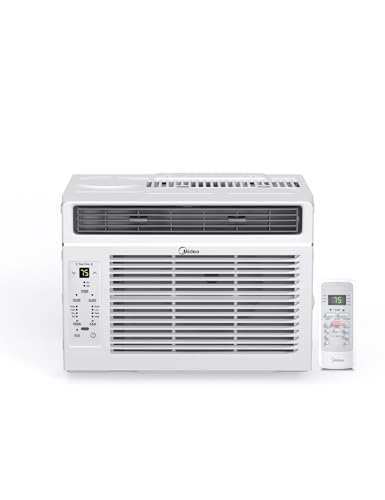
Sleep programmes have grown more thoughtful alongside. The better new designs relax the target temperature gradually as the night deepens, step the fan down in stages rather than in one audible lurch, extinguish every display light the cabinet owns, and silence confirmation beeps that older machines chirped into the dark at each adjustment. A light sleeper should weight those behaviours as heavily as capacity, because the machine that rules the afternoon and ruins the night has failed at the only examination the bedroom sets.
Physical controls remain the conscience of the category, and the newest cabinets divide into those that respect them and those that have quietly moved functions into an application. A guest, a grandparent, or a future owner should be able to cool a room completely from the panel on the machine, with the remote and the phone as conveniences layered on top. When a demonstration requires an account, a password, and a home network before the fan will turn, the household is looking at a subscription wearing a cooler’s clothing, and should price the risk accordingly.
Voice assistants and smart-home routines sit at the far end of this spectrum: pleasant when they work, irrelevant when the network sulks, and no substitute for a thermostat that samples the room’s air where the occupants actually are. Some new remotes carry the temperature sensor in the handset, letting the machine govern itself by conditions at the pillow or the desk rather than at the window, and that modest feature, available without any network at all, is worth more to real comfort than a dashboard of graphs.
Energy reporting, where offered, earns its place when it changes behaviour. A household that can see the difference between a sealed installation and a draughty one, or between a sensible setpoint and an arctic one, in the machine’s own weekly summary will adjust habits that no lecture could shift. Treat the reports as a mirror rather than a measurement, though, since the machine estimates its own consumption with varying honesty, and the meter on the wall remains the final authority for the season’s arithmetic.
Archetype one: the inverter window newcomer
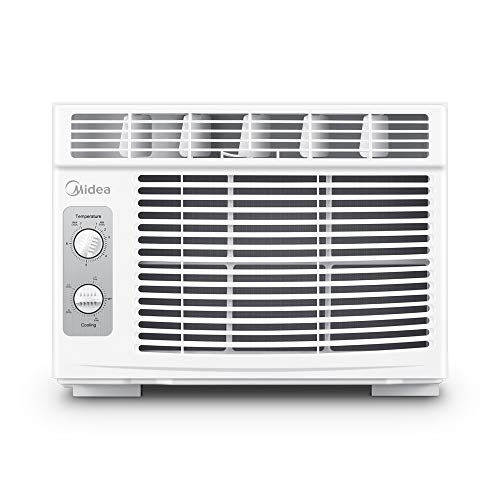
This archetype is the season’s centre of gravity: a conventional window cabinet wrapped around a variable-speed compressor, a successor refrigerant, and controls tuned for long, quiet, low-speed running. It serves the bedroom, the study, and any room where the cooling day is long and the occupants are present to notice cycling. Its signature specification is a capacity range instead of a single figure, and its signature sound is a murmur that stays a murmur from midnight to dawn.
Choose it when the room’s door closes, the load is steady, and the machine will run hundreds of hours a season, because that is where its efficiency and its manners compound. Decline it, or at least interrogate it harder, for a room cooled a few weekends a year, where a simpler fixed-speed machine offers most of the comfort with fewer electronics aging quietly in a damp cottage between visits. Either way, verify the turndown behaviour and the display’s darkness in person if the purchase allows, since those two traits decide nightly satisfaction more than any headline figure.
Archetype two: the low-impact refrigerant pioneer
Some new models are mechanically conservative yet chemically current: fixed-speed or gently staged compressors, familiar cabinets, and a sealed system charged with a successor refrigerant. This archetype suits buyers who value serviceability and simplicity, who may keep a machine for a very long time, and who want the rating plate aligned with the direction regulations and parts shelves are travelling without paying an early-adopter premium for exotic features elsewhere in the design.
Its ownership story is deliberately boring, which is praise. Any technician current with the trade can service it, its controls can be explained to a housesitter in one sentence, and its cabinet fits the windows its predecessors fit. The diligence it asks is documentary rather than mechanical: record the refrigerant designation from the plate, keep the manual, and when the machine eventually retires, arrange recovery of its charge through whoever accepts it, closing the environmental loop that justified the purchase in the first place.
Archetype three: the saddle that gives the window back
The over-the-sill archetype drapes its weight across the wall, keeps its compressor low and largely outdoors, and leaves the upper window usable in a way conventional installations cannot. It belongs in the room where the window is also the view: the sitting room facing the garden, the bedroom over the lane, the studio whose daylight is its livelihood. Owners choose it as much for what it refuses to block as for the cooling it delivers.
Measurement is its gatekeeper. Wall thickness, sill projection, and the exterior drop below the sill must all fall inside the maker’s drawings, and stone cottages with deep walls should confirm compatibility before desire hardens into an order. Installation is a considered, two-person, semi-permanent affair, rewarded by a machine that reads as part of the room’s architecture rather than as a seasonal intruder, and by an acoustic character, wall between sleeper and compressor, that few conventional boxes can imitate.
Archetype four: the U-body that lets the sash come down
The U-shaped archetype bends the cabinet so the window closes into it, and that single geometric decision buys three things at once: glass between the room and the compressor’s voice, a sash that can latch for a measure of security older installations surrender, and a silhouette that sits lower in the opening than a full-height box. It has become the default recommendation whispered among light sleepers who nonetheless need a real compressor in a real window.
Its demands are a compatible sash travel, a sill in honest condition, and brackets fitted exactly as the maker prescribes, because the design’s weight distribution assumes its hardware rather than folklore. Households should also check how the indoor section’s airflow clears curtains and furniture, since the low discharge that makes the shape discreet can be smothered by a sofa back placed with more enthusiasm than thought. Given a suitable window, though, this archetype delivers the category’s most convincing impression of cooling that arrives from nowhere in particular.
Archetype five: the two-season heat-pump window unit
Described in its own section above, this archetype earns a separate place in the line-up because its buyers shop differently: they are furnishing a cottage’s shoulder seasons as much as its summer. The machine cools like its siblings in July and then, instead of being lifted out in September, stays to take the edge off October mornings and the first raw weekends of spring, earning its window through three seasons instead of one.
Judge candidates by their published heating output at genuinely cool outdoor temperatures, not by a heating figure measured on a mild afternoon, and by the honesty of the stated lower operating limit. Pair the purchase with a serious sealing job and a condensate plan that tolerates autumn rain as well as summer humidity. For a frequently used cottage in a mild-to-moderate climate, this archetype can quietly retire a cupboard of portable resistance heaters, and the electricity meter will testify to the difference without being asked twice.
Archetype six: the dual-hose inverter portable, rehabilitated
The portable category’s newest archetype deserves its rehabilitation hearing. Twin hoses end the old single-hose scandal, in which the machine cooled its condenser with air it had just paid to cool and dragged replacement warmth in under every door. An inverter compressor ends the category’s other scandal, the all-or-nothing roar. Together they produce a portable that can hold a closed room at a steady, civilised temperature while consuming markedly less than its ancestors, provided the hoses are short, sealed at the window kit, and not left kinking behind furniture.
Renters, listed cottages, and rooms whose windows defeat every window unit remain its constituency, along with households cooling a space whose shape changes too often for permanent fitting. Respect its remaining physics: it still occupies floor, still wants its condensate managed in humid weather despite evaporation claims, and still asks the window for a kit that should be sealed like you mean it. Households with genuinely large, open spaces should compare its honest ceiling against the room-scale thinking in best air conditioners for large rooms before expecting any portable, however new, to govern a whole floor.
Matching new capacity to familiar rooms
Capacity language has not changed even though everything around it has, and the mid-sized workhorse class remains the one most cottages reach for first. Shoppers whose rooms sit in that broad middle, too large for the smallest compacts and too small for the heavy brigade, will find the current landscape surveyed in best 8000 btu air conditioners where the newest inverter and refrigerant changes are arriving in exactly that class. The guidance there about sun exposure and ceiling height transfers intact to this season’s models.
The sizing errors to avoid are the eternal two, wearing new clothes. An oversized inverter is smoother than an oversized fixed-speed machine yet still rests too much on mild nights, leaving humidity unharvested. An undersized anything still runs itself ragged through every hot afternoon, and no refrigerant novelty rescues a mismatch between the room’s heat and the machine’s lungs. Measure the room, count its glass, note which way the afternoon sun leans on it, and let that arithmetic, not a launch headline, choose the capacity class.
Ceiling shape deserves its sentence in cottage country, where bedrooms tuck under roofs and lofts collect the day’s warmth in their peaks. Volume, not floor area alone, is what the machine must govern, and a room with a tall pitched ceiling asks more of any cooler than its footprint confesses. New models with strong airflow and well-aimed louvers handle such spaces more gracefully than their predecessors did, yet the honest answer for a vast vaulted room may still be a larger category of equipment, chosen without embarrassment.
Installing a new machine in an old opening
Begin, as every generation of window cooling has begun, with the opening itself: clear width measured at two heights, sash lift, sill depth and soundness, and the distance to anything outside that the cabinet or saddle must clear. New shapes have lengthened that checklist rather than replaced it, adding wall thickness for saddles and sash-travel details for U-bodies, and the makers’ dimension drawings, dull as they appear, are the cheapest insurance in the entire purchase.
Support the machine the way its own instructions demand, with the bracket or rail system in its carton rather than with inherited hardware from the unit being retired, because the new cabinet’s weight sits in new places. Check the drainage tilt with a level after the final fixings are tightened, since tightening moves things, and run the machine through every fan speed while a helper listens inside and out for the rattle that announces a loose panel more honestly than any inspection by eye.
Seal as if the test laboratory were watching, because the new efficiency figures assume a sealed installation and the room will grade your work nightly. Fresh foam along the sash rail, panels seated in their tracks rather than against them, curtains arranged so they neither smother the intake nor trap the discharge against the glass: these small fidelities are worth more seasonal comfort than the difference between two adjacent models on a shelf, and they cost nothing but patience on one afternoon.
Electrical manners have tightened with inverter electronics. Give the machine its own honest circuit where possible, avoid extension leads under compressor load as firmly as any previous generation demanded, and consider surge protection in lightning country a part of the purchase rather than an accessory. Photograph the rating plate, the installed machine, and the plate’s refrigerant designation before the carton is recycled, because those three pictures will answer questions that arise in years when nobody remembers the answers anymore.
Running a new machine through its first season
The first fortnight teaches the household the machine’s dialect. Inverter units reward being left to their long, low cruise rather than being switched off at every departure and asked to sprint at every return, at least for absences measured in hours. Sleep programmes want configuring once, properly, in daylight, rather than being negotiated with at midnight. Filters want their first rinse earlier than instinct suggests, because installation day stirs a season of dust into exactly the air the new machine must drink.
Condensate behaviour in humid weather deserves observation rather than assumption. Evaporative designs fling much of their water onto the outdoor coil, yet a still, saturated week can overwhelm that arrangement in any category, and the owner who knows where the drain path is, and has watched it work, will not learn about it from a stain. New cabinets often make the drain more accessible than older ones did; reward that design courtesy by actually looking at it in midsummer.
At the season’s end the old rituals apply with one addition. Clean, dry, and store a removable unit upright and indoors as its predecessors demanded, but also note, in the household papers, the refrigerant, the filter size, and any behaviour worth remembering, because the household that buys into the newest generation is implicitly signing up for a longer relationship with a more specialised machine. Spring-you, reading those notes with the manual beside them, will feel unusually well managed by autumn-you.
When the newest machine is not the wisest purchase
Honesty requires a section arguing against this guide’s own subject. A sound older unit, correctly sized, sealed in well, and cooling a room its owners are happy with, is not made obsolete by a refrigerant transition it will never participate in or a test procedure it was never graded under. Replacing a healthy machine early spends money and manufacturing footprint to gain improvements that, in a lightly used spare room, may take a decade to repay. The greenest and thriftiest air conditioner is frequently the one already in the window, maintained like somebody intends to keep it.
The case for upgrading strengthens under recognisable conditions. The old machine cycles loudly enough to tax sleep, its consumption has climbed as its coil and seals aged, its refrigerant service has grown awkward or its parts scarce, or the room’s use has changed, a nursery becoming a study, a guest room becoming a full-time bedroom. Any two of those together usually justify the new purchase on comfort grounds alone, with efficiency as a supporting witness rather than the lead argument.
There is also a middle path cottages are built for: move the still-serviceable older unit to a less demanding room, the workshop, the landing, the occasionally used attic, and give the newest machine the bedroom where its quiet and its modulation earn their keep nightly. Households that think in fleets rather than in single purchases often extract the full value from both generations this way, and the old machine retires years later having been useful to the end rather than discarded at the first headline.
What should not drive the decision is anxiety about the refrigerant calendar. Existing machines remain legal to run and to service, reclaimed refrigerant will circulate for years, and no inspector is coming for the box in a cottage window. Upgrade for comfort, for noise, for a room that changed, or for a machine genuinely at the end of its life, and let the transition be the pleasant tailwind it is rather than a storm warning it was never meant to be.
What the newest generation costs across its whole life
Purchase prices within the new ranges spread by feature rather than by magic: inverter drives, heat-pump valves, saddle engineering, and connectivity each add their increment, and the household should decide which increments correspond to its own rooms before standing in front of a shelf where everything gleams. The running story, though, is where the newest machines quietly argue for themselves, because a compressor that cruises at low speed through long evenings simply buys fewer units of electricity for the same night’s sleep than one that sprints and rests.
Maintenance costs remain refreshingly legible. Filters wash in the sink, coils ask for the same gentle brushing they always have, and the new electronics, while less forgiving of surges and damp storage, are not consumables. The one genuinely new line item is information: keeping the manual, the refrigerant record, and the network credentials, where they exist, in the household papers, because a connected or heat-pump machine whose documentation has emigrated is worth less to its second decade than its hardware deserves.
Longevity prospects are good where care is good, with one honest caveat. Refrigeration hardware in the newest machines is built by an industry that has made compressors for a century, and the sealed systems should outlast their cabinets as they usually have. The electronics and connectivity layers will age faster, which is why this guide keeps returning to a single test: the machine underneath the features must justify itself with the network unplugged and the application forgotten, because that is the machine the household will actually own for most of the product’s life.
A buyer’s checklist for the new season
Read the rating plate or its published equivalent, and write down four things: the refrigerant designation, the capacity or capacity range, the efficiency figure under the current test, and the lowest fan’s published sound figure, treated as a ranking rather than a promise. Note whether heating appears among the duties and, if it does, the outdoor temperature down to which heating output is honestly specified. Those five lines, gathered for each finalist, will separate real generational differences from seasonal paint more reliably than any feature list printed in larger type.
Measure the opening with the new shapes in mind: clear width at two heights, sash lift and travel, sill depth and condition, wall thickness where a saddle is contemplated, and the exterior clearance below and beyond the sill. Photograph the window inside and out with the tape in frame. Confirm the circuit that will feed the machine and what else shares it, and decide the surge-protection question before the first thunderstorm conducts the experiment on your behalf.
Interrogate the controls as a guest would meet them at midnight. Every essential function should exist on the cabinet, the display should be able to go fully dark, the sleep programme should adjust temperature gradually rather than merely dimming a light, and the remote should be findable, legible, and unnecessary. If an application is part of the pitch, ask what still works when the household network is down, and let the answer’s completeness grade the manufacturer’s respect for the people who will live with the machine.
Finally, plan the whole ownership in one glance before ordering: who lifts, who seals, where the unit winters, which weekend the filter ritual belongs to, and where the plate photograph and manual will live. The newest air conditioners reward that kind of household, the one that treats a machine as a fifteen-summer relationship rather than a single hot afternoon’s rescue, and they repay it in the currency that matters here, which is a small room held at a kind temperature by a quiet box that nobody has to think about until the leaves turn.
Noise, honestly: why the new generation sounds different
Owners upgrading after a decade often report the sound before anything else, and the difference has three separate sources worth untangling. The compressor itself, in an inverter machine, spends most of its life turning slowly, and slow machinery is quiet machinery. The fan, freed from the old two-or-three-speed ladder, can choose the exact pace the moment requires instead of jumping between a whisper that cannot cope and a roar that overshoots. And the newest cabinets are assembled with more attention to panel fit and vibration isolation, because manufacturers have learned that returns departments hear about rattles more than about any other single complaint.
Installation still conducts the final orchestra, though. A new machine dropped into a tired window with last decade’s foam and a loose sash will sing the old songs through new hardware, while the same machine sealed and supported properly becomes the quietest object in the house’s summer soundscape. Judge the first evening’s pull-down leniently, since every machine works at full voice while the room’s walls and bedding surrender their stored heat, and reserve the real verdict for the third hour, when the new generation’s low cruise is either present or conspicuously absent.
Bedrooms with a second window offer one more acoustic trick that costs nothing: place the machine in the opening farther from the pillows, provided sun exposure and circuit access allow, because distance muffles what engineering cannot. Light sleepers should also learn the difference between the machine’s steady-state murmur, which the brain dismisses within a night or two, and intermittent sounds, the click of a relay, the sigh of a louver motor, the chirp of a control confirming an order nobody gave it at midnight. The newest sleep programmes exist precisely to hunt those intermittent noises down, and a machine whose dark, silent night mode is genuine has passed the examination that matters most in this entire guide.
Check prices on Amazon
Live listings for the shortlist in this guide are pulled from Amazon below, so prices and availability are always current at the moment you look.

Humidity, the quiet half of what new machines do better
Temperature is the number on the display, but humidity is the feeling on the skin, and the newest machines have improved at the second while chasing the first. Long, low compressor runs keep the indoor coil cold for extended stretches, and a cold coil with air moving steadily across it is a dehumidifier that never announces itself. Cottages, which breathe damp air off gardens, lakes, and stone walls all summer, notice this improvement in places a thermometer cannot reach: bedding that stays crisp, books that stop curling at the corners, a wardrobe whose leather no longer blooms with mildew during a wet fortnight.
Dry modes have grown correspondingly more intelligent. Where older machines offered a fixed, chilly dehumidify cycle that could overcool a small room, the newer controls blend coil temperature and fan pace to wring moisture while respecting the setpoint, which suits the shoulder weeks when the air is clammy yet nobody wants the room colder. Households in genuinely humid districts should treat that mode as a headline feature rather than a footnote, and should still keep the condensate path inspected, because a machine that harvests more water must also be given somewhere honest to put it.
There is a limit, and naming it protects buyers from expecting miracles in a heatwave’s worst week. When outdoor air arrives saturated and the room’s doors stand open to a steaming hallway, no window machine of any generation can hold both temperature and humidity exactly where fastidious sleepers want them, because every opening of the door imports a fresh cargo of moisture. The newest machines narrow the gap between hope and physics more than their predecessors could, yet the household’s part of the bargain remains the old one: closed doors, drawn curtains against the afternoon sun, and a setpoint chosen for sleeping humans rather than for impressing the display.
One last habit separates satisfied owners from disappointed ones in the first month: patience with the pull-down. A new machine, however advanced its compressor, must still cool the room’s walls, floor, bedding, and furniture along with its air, and those masses surrender a day of stored warmth slowly. Judge the installation on the second evening, sleep on the verdict for a week, and adjust louvers, curtains, and setpoints in that order before concluding anything about the machine itself, because most first-week disappointments are choreography problems wearing a refrigeration costume.
When the first genuinely new machine settles into the old cottage window and holds the bedroom steady through a windless night without once clearing its throat, the season will have proved that progress, for once, arrived quietly.