Our Top Picks


What's inside
- The skin is the instrument every fan is really playing
- Where fans stop working: heat, humidity, and the honest ceiling
- Evaporation as a technology: when a fan really does chill its air
- Placement: the difference between a breeze and a system
- Noise, sleep, and the sound of moving weather
- Running costs and the economics of almost-cooling
- Archetype one: the tower evaporative cooler for dry heat
- Archetype two: the bladeless tower fan with a polished stream
- Archetype three: the misting fan for porches and thresholds
- Archetype four: the high-velocity air circulator
- Archetype five: the generous ceiling fan over the bed or table
- Archetype six: the personal evaporative box for one sleeper or one desk
- Archetype seven: the classic pedestal fan, still earning its keep
- Pairing fans with the cottage itself: shade, shutters, and timing
- Cleaning, maintenance, and surviving the winter cupboard
- Choosing among the archetypes without a showroom
- Airflow figures, blade counts, and other numbers that mislead politely
- Renters, guests, and rooms where nothing may be installed
- Children, older sleepers, and animals: the vulnerable critics
- When the fan is not enough: recognising the line honestly
- Troubleshooting the complaints fan owners actually file
- Check prices on Amazon
- A last evening test before any money moves
As an Amazon Associate I earn from qualifying purchases. This post may contain affiliate links at no extra cost to you.
Honesty opens this guide because the topic invites exaggeration: Cottage Verdict is funded by its readers, and when someone eventually purchases through a retailer connection somewhere across this site, a small share may return to support further cottage cooling guides without raising that person’s price, while not one fan described below can refrigerate a room the way a compressor does, and every claim here is limited to what moving, misted, or evaporated air truly does to human skin.
A fan cannot lower the temperature of a room. That sentence deserves to stand alone near the top, because everything honest in this category is built on it. A fan moves air, and moving air strips away the thin layer of warmth that clings to skin, accelerates the evaporation of perspiration, and persuades the body that the room is kinder than the thermometer insists. The room itself stays exactly as warm as it was, and in a sealed space the motor’s own heat nudges it fractionally warmer.
And yet people swear, truthfully, that the right fan feels like air conditioning. The feeling is real even though the mechanism differs, because comfort is a property of skin rather than of air. A well-aimed stream of fast air can deliver the sensation of several degrees of cooling, an evaporative machine can genuinely chill the air it blows in a dry climate, and a fine mist settling on forearms on a porch can reproduce the shiver of stepping into a cooled shop. This guide exists to separate those real effects from the marketing weather that surrounds them.
Cottages make this category matter. Many small houses cannot take window units in every room, many renters may not install anything at all, and many bedrooms need help only on the dozen hottest nights of the year, when a full cooling appliance would be machinery out of all proportion to the problem. A fan that honestly feels like relief, chosen with clear eyes about physics, fills those nights gracefully and then spends the winter in a cupboard rather than in a window.
The pages below proceed in the order a careful buyer should think. First the physiology of why moving air convinces skin, then the hard boundary where fans stop helping and begin merely stirring heat, then humidity, placement, noise, and running costs, and finally the archetypes themselves, described as families of design so the reader can recognise each one in the wild and know exactly what sensation it can and cannot sell.
The skin is the instrument every fan is really playing
Human beings do not sense air temperature directly in the way a thermometer does. Skin reports the rate at which heat leaves the body, which is why a tiled floor feels colder than a wooden one at the identical temperature and why a breeze through a doorway changes a room’s character without changing a single number on the wall. Fans exploit that reporting system with complete legitimacy: they are not cooling the cottage, they are accelerating the cottage dweller.
Still air insulates. Left undisturbed, the body warms the layer of air touching it and then sits inside that self-made blanket, shedding heat ever more slowly as the blanket approaches skin temperature. Moving air strips the blanket away continuously, replacing it with room air that feels fresh by comparison, and the skin reads that constant renewal as coolness. The faster and more evenly the air moves, the stronger the reading, up to the point where the stream becomes a gale nobody can sleep beside.
Evaporation multiplies the effect. Perspiration is the body’s own cooling plant, and it only works when moisture can leave the skin’s surface. Airflow carries that moisture away and invites more to follow, which is why a fan after physical work feels miraculous and why the same fan aimed at a person who is not warm or lightly perspiring feels merely draughty. The fan is best understood as an assistant to the body’s system rather than a replacement for the weather.
Clothing, bedding, and hair all mediate the sensation. A stream that delights bare shoulders in the afternoon may annoy the same person at midnight when a sheet has slipped and the air finds one ankle with sniper consistency. Good fan buying therefore thinks in terms of adjustability: many speeds, a gentle lowest setting that stirs rather than blows, and oscillation that shares the stream around a room instead of pinning one occupant in a personal wind tunnel.
Age and health tune the instrument further. Older skin perspires less efficiently, children overheat and chill faster than adults, and anyone whose circulation runs poorly will feel a strong stream as discomfort sooner. The fan that feels like air conditioning to a healthy gardener at noon may feel like a draught in a sickroom at dusk, and households choosing for vulnerable sleepers should weight gentleness and control above theatrical power.
Where fans stop working: heat, humidity, and the honest ceiling
Moving air cools skin only while the air remains cooler than the skin it crosses. As room temperature climbs toward and beyond skin temperature, the stream’s gift shrinks, and in extreme heat a powerful fan can begin to behave like the fan inside a convection oven, delivering heat to the body faster than stillness would. Public health guidance in several countries makes this point during heatwaves, and cottage households without any compressor cooling should take it seriously rather than as a footnote.
The practical response is partnership with water and shade. A fan combined with a dampened shirt, a cool shower before bed, or a bowl of water for wrists and feet keeps evaporation supplied even when perspiration alone falls behind. Drawing air from the coolest available source, a shaded north window or a stone-floored pantry doorway, gives the stream a head start that no speed setting can manufacture from hot room air alone.
Humidity draws the second boundary. Evaporation slows as the air approaches saturation, which is why a fan in a coastal August feels less magical than the same fan in dry upland heat, and why evaporative machines, discussed among the archetypes, belong to dry climates and sulk in damp ones. Bedrooms in muggy districts will recognise the terrain mapped in best air conditioners for humid climates where moisture, not temperature alone, decides whether a night feels bearable.
Night changes the calculation in the sleeper’s favour. Outdoor air usually cools after dark even during hot spells, and a fan placed to pull that night air through the cottage performs a different job from one merely stirring the day’s accumulation. The distinction between circulating room air and ventilating with outdoor air is the single most underused idea in this whole category, and it costs nothing beyond a window opened at the right hour and a fan aimed with intent.
There remains a class of nights when no fan suffices: the still, saturated heatwave night when the building itself has stored a day of sun and radiates it back until dawn. Honest guides should name that limit plainly. On such nights the fan’s role becomes harm reduction, moving what air there is across dampened skin while the household waits for the weather to break, and the experience argues for real cooling in at least one refuge room the following spring.
Evaporation as a technology: when a fan really does chill its air
Evaporative cooling is the one fan-adjacent technology that genuinely lowers the temperature of the air it delivers. Water drawn through a wet pad or membrane evaporates into the passing stream, and evaporation consumes heat, so the air leaves measurably cooler than it entered. The effect is not a trick of perception; a thermometer placed in the outflow registers the change, which is more than any ordinary fan can claim.
The catch is written in the same physics. Every litre of water evaporated into the room stays in the room as humidity, so the machine trades dryness for coolness in exact proportion to its success. In an arid district that trade is a bargain, since the added moisture soothes skin and throats while the temperature falls. In a damp cottage by the sea the same trade curdles within the hour, leaving the room cooler for a moment and clammy for the evening.
Ventilation is the evaporative machine’s non-negotiable partner. A window or door must stand open on the room’s far side so the humidified air can leave rather than accumulate, which means the device cools a through-draught rather than a sealed box. Households that run one behind closed doors, as instinct suggests from years of compressor habits, watch its effect die as the room saturates, and conclude wrongly that the machine never worked at all.
Water quality and hygiene govern the ownership experience. Pads and reservoirs in warm water grow things, and a neglected tank perfumes the room with a swamp note that no cooling can excuse. Weekly emptying, drying, and cleaning through the season, plus pads replaced on the maker’s rhythm, separate the owners who praise these machines from those who sell them in September with feeling. The chore is small; the consequence of skipping it is not.
Ice compartments and chilled bottles, offered on many models, add a brief flourish rather than a transformation. The stream feels colder while the ice lasts, and on the worst evening that flourish has genuine morale value, yet the underlying exchange remains evaporation. Buy the machine for its pads, its tank capacity, its airflow, and its manners, and treat the ice drawer as a garnish that occasionally earns its place on a brutal afternoon.
Placement: the difference between a breeze and a system
A fan’s position matters as much as its power, because air obeys the path it is given. Placed in a corner and aimed at the opposite corner, a stream crosses the room’s diagonal, touches the most occupants, and sets the whole volume slowly rotating. Placed beside a bed and aimed along it, the same machine becomes a personal appliance. Neither is wrong; the error is expecting one arrangement to perform the other’s job.
The window exhaust arrangement is the cottage classic. As outdoor air cools in the evening, a fan set in or before a window on the house’s warm side blows indoor air out, while a window opened on the cool side admits replacement air that drifts through the rooms between. The cottage exhales its day. Run for the hours around dusk, this simple system can drop indoor temperatures by margins no circulating fan can approach, because it trades the building’s air rather than merely stirring it.
Height placement shapes who benefits. Warm air stratifies near ceilings, so a tall tower delivers its stream at body level where it is wanted, while a short fan on the floor spends its strength on ankles and rug edges. Conversely, a floor-level circulator aimed upward can break the stratification itself, mixing the room so the warm layer stops hoarding itself above the wardrobe. Knowing which problem the room has, stillness at body level or layering overhead, selects the machine and its posture.
Oscillation deserves a more thoughtful verdict than it usually receives. A sweeping head shares comfort democratically and prevents the one-spot wind tunnel that dries eyes and scatters papers, yet it also means each occupant receives the stream only in passes, with warm intervals between. For a single sleeper a fixed, gentle aim often feels cooler than a grand sweep, while a family room genuinely occupied in four chairs earns its oscillation honestly.
Doors are part of the machine. A closed door turns any fan into a one-room appliance regardless of its strength, and a door wedged open a hand’s width can carry a surprising share of a through-draught between a cool hallway and a hot bedroom. Households mapping their evening airflow with doors deliberately set will get more cooling from the fan they own than neighbours get from a stronger fan blowing against a shut house.
Noise, sleep, and the sound of moving weather
Every fan trades in sound, and the exchange rate differs by design. Blade shape, motor type, cabinet resonance, and the turbulence of guards and grilles all contribute, so two machines with similar airflow can occupy entirely different places in a bedroom’s affections. The specification that matters is the noise at the speed the household will actually use at night, which is rarely the top speed printed largest on the box.
Many sleepers welcome a steady fan note as a mask against cottage sounds: the owl, the plumbing, the partner’s breathing, the lane outside. That masking is a genuine benefit and one reason fans earn bedside places that silent cooling does not. The welcome depends on steadiness, though; a fan that surges, rattles in its oscillation arc, or clicks as it sweeps will be evicted by the second night regardless of its daytime charm.
Sleep-focused households will find the neighbouring considerations in best air conditioners for bedrooms where the same law holds that the best night machine is the one nobody notices after midnight. Fans obey that law with unusual purity, since their whole output is sensation; a fan that announces itself has failed at the only job it has, while a fan that disappears into the feeling of a cool pillow has succeeded completely.
Timers and night modes shape the small hours kindly. A fan that steps down after the sleeper’s first deep cycle, or stops entirely when the room reaches the cool of four in the morning, prevents the familiar dawn chill that sends people fumbling for blankets in August. Remote controls earn their batteries here, because a speed change accomplished without leaving the bed preserves the sleep the fan was bought to protect.
Children’s rooms add a safety verse to the noise chapter. Guards must defeat curious fingers, cabinets must resist climbing ambitions, and cords must travel where small hands and feet cannot negotiate with them. Bladeless and tower designs found early favour in nurseries for exactly these reasons, and any archetype considered for a child’s room should pass the household’s own inspection before its airflow is even discussed.
Running costs and the economics of almost-cooling
A fan’s appetite is modest to the point of comedy beside any compressor’s. Even a strong machine run all night consumes a small fraction of the electricity a cooling appliance draws for the same hours, which is why fans remain the first answer in cottages watching a meter and why they can be left running for a pet, a ripening pantry, or a room of seedlings without a household summit about the bill.
That thrift has a shadow side worth naming: because fans cost so little to run, they get left running in empty rooms where they cool nobody at all. A fan’s entire benefit lands on skin; an empty room gains nothing from stirred air except a warmed motor. The discipline of switching off when the last person leaves is the category’s only real efficiency rule, and households that keep it can run their fans with a clear conscience all summer.
Energy-minded readers comparing strategies across the whole cottage will find the wider ledger in best air conditioners for energy saving where ventilation timing and fan assistance sit alongside compressor choices. The recurring lesson there applies here with force: the cheapest cooling is the cooling that happens at the right hour, with night air, shade, and airflow cooperating before any machine is asked to perform heroics.
Purchase economics favour durability over novelty. A fan’s working life is measured in summers of nightly service, and the difference between a machine that survives three seasons and one that survives ten dwarfs any difference in their tickets. Bearings, build, cleanability, and the availability of a human being who can repair the thing all belong in the value calculation, particularly for cottages far from shops, where a failed fan in a heatwave is not replaced by a casual drive.
Storage is part of the cost too, paid in cupboard space rather than money. Towers and circulators store gracefully; large pedestals dismantle into awkward gardens of parts; evaporative machines demand drying and cleaning before they are put away, on penalty of a springtime smell. The household that chooses with its actual storage in mind avoids the January discovery that the fan has spent the winter behind the bicycles, wearing the bicycles.
Archetype one: the tower evaporative cooler for dry heat
This archetype stands in the corner like a slim column, drawing room air through wetted pads along its back and returning it from a vertical grille, cooler and moister than it arrived. Its tank lasts an evening or a night depending on size and setting, its oscillation shares the chilled stream, and in a dry climate it produces the closest thing to genuine air-conditioned air that any machine without a compressor can offer.
Its conditions are strict and have been stated plainly above: dry air to begin with, a window or door open for the humidified air to escape, and an owner willing to keep tank and pads clean. Meet those conditions and the machine transforms a parched bedroom; ignore them and it becomes a humidifier with ambitions. Geography, more than budget, decides whether this archetype belongs in a given cottage at all.
Choose it for inland valleys, upland villages, and anywhere the summer air arrives thirsty. Expect to refill the tank as part of the evening ritual, to feel the room’s humidity rise gently as its temperature falls, and to drain and dry the machine at the season’s end with the same care given to any appliance that holds water. Within its climate it is not a compromise; it is the correct technology wearing a fan’s clothing.
Archetype two: the bladeless tower fan with a polished stream
The bladeless tower hides its impeller in its base and delivers air through a smooth vertical slot, producing a stream that feels unusually even, without the chopping pulse that bladed machines impose on the air. Nothing about the design cools the room; the entire achievement is in the quality of the sensation, a continuous silken pressure that many sleepers find closer to the feel of conditioned air than any gusting alternative.
Safety and cleaning built its reputation as much as airflow did. With no accessible spinning blades it suits households with toddlers and cats, and its surfaces wipe clean in seconds rather than demanding the guard-off scrubbing session conventional fans schedule twice a summer. Filtration on some designs adds a further quiet benefit in dusty cottages, though filters are consumables and their replacement rhythm belongs in the ownership plan.
Its premium is real, and the honest buyer should know what the premium purchases: refinement, quiet at low speeds, safety, and looks that sit comfortably in a finished room. It does not purchase more cooling than a well-made conventional tower of similar output. Households buying the sensation itself, knowingly, tend to stay pleased; households buying an imagined compressor tend to feel deceived by physics rather than by the machine.
Archetype three: the misting fan for porches and thresholds
A misting fan adds a ring of fine nozzles at its guard, atomising water into the airstream so that droplets evaporate on skin and in the air immediately around the sitters. Outdoors, or on a porch open enough to count as outdoors, the effect is startling: a table that was uninhabitable at noon becomes the household’s favourite address, and the sensation genuinely resembles stepping repeatedly through the door of a cooled building.
The boundary of its kingdom is the threshold. Indoors, mist that fails to evaporate lands on floors, books, bedding, and tempers, and the humidity it adds defeats the body’s own cooling exactly as the evaporative chapter warned. Even on the porch, placement matters: the mist should reach people as a vanishing coolness, not as weather, and a fine adjustment of distance and nozzle setting separates the delightful installation from the one that dampens the bread.
Water supply shapes the ownership story. Reservoir models carry their evening with them and suit rented porches; plumbed models serve permanent outdoor kitchens and ask for winter draining in frost country. Nozzles clog in hard-water districts with the reliability of a natural law, so a household choosing this archetype accepts a small ritual of vinegar, spare nozzles, and inspection as the rent for its noon-time miracle.
Archetype four: the high-velocity air circulator
The circulator is the blunt instrument of the family: a compact, powerful fan in a tilting barrel or cage, built to throw a coherent jet of air across a whole room or up a stairwell. It does not pretend to be furniture. Its stream is narrower and stronger than a tower’s, designed to bounce off a far wall or ceiling and return as a general stirring that evens the room’s temperature from corner to corner.
That talent makes it the great accomplice of every other cooling strategy. Beside a single cooled room it pushes relief down a hallway; at a stairwell’s foot it persuades night air to climb; in a workshop or kitchen it delivers a working breeze to a person who is generating their own heat and needs it carried away. Households that already own some cooling often find a circulator multiplies its reach more cheaply than any second appliance.
Its manners are the trade. The same focus that throws air twenty feet makes a poor bedside companion at full strength, and its voice at speed is a working voice rather than a lullaby. Choose it where power and aim are the brief, angle it off walls rather than directly at faces for general circulation, and let gentler archetypes handle the pillow hours. Used as directed by its nature, it is the hardest-working machine in this entire guide.
Archetype five: the generous ceiling fan over the bed or table
The ceiling fan is the oldest resident of this category and still, in the right room, the most convincing. Its broad blades turn slowly overhead, moving a large volume of air at low velocity, so the whole room receives a gentle, even pressure of moving air rather than a localised blast. Lying beneath one at night, with the stream arriving from everywhere and nowhere, is the fan experience that most often earns the comparison this guide is named for.
Direction matters with the seasons. In summer the blades should drive air downward so the stream lands on the occupants; in winter many designs reverse, drawing air up so warm air pooled at the ceiling washes down the walls without a draught on the people below. A cottage room with a ceiling fan therefore owns a small climate system for both halves of the year, provided the ceiling height lets the blades work at a safe and effective distance.
Installation is the archetype’s toll. The mounting must anchor to structure, not plaster, the electrical box must be rated for a fan’s weight and motion, and a wobble born of a careless fitting will announce itself forever at certain speeds. Renters and the drill-shy are excluded, which is precisely why the portable archetypes flourish; but for owners with a suitable ceiling over a bed or a long table, no floor machine matches the ceiling fan’s combination of coverage, quiet, and disappearance from the room’s floor plan.
Archetype six: the personal evaporative box for one sleeper or one desk
At the family’s small end sits the personal evaporative cooler: a compact box with a little tank, a wetted pad, and a fan scaled to serve the person directly in front of it. It asks to be judged by that scale. Aimed across a pillow or a desk from arm’s length, in dry air, it delivers a noticeably chilled stream to exactly the skin that ordered it, while the rest of the room remains gloriously unbothered and unhumidified.
Disappointment with this archetype is almost always a failure of scale in the buyer’s imagination. It will not cool a bedroom, rescue a sitting room, or impress anyone sitting beyond its short reach, and in humid districts its small gift shrinks further. Within its honest compass, though, it serves students, night workers, and single sleepers in dry climates with an efficiency of means that larger machines cannot imitate: a little water, a little power, one cool person.
Hygiene discipline scales down but does not vanish. The small tank still grows a film if neglected, the pad still wants replacing on schedule, and the box still needs drying before its winter in a drawer. Owners who treat it as a tiny appliance rather than a novelty get seasons of service; owners who store it wet in August meet it again in June as a smell with a fan attached.
Archetype seven: the classic pedestal fan, still earning its keep
No survey of this family is complete without the pedestal fan, the adjustable-height, oscillating, three-speed fixture of a million summers. Its stream is honest and broad, its height reaches over beds and sofas, its parts are understood by every repair shop on earth, and its price of admission has kept it the default answer for households that need moving air in several rooms across a season and intend to carry it from one to the next.
Its weaknesses are equally familiar: a footprint that trips the unwary, a guard that collects the summer’s dust in full view, and a voice that, in cheaper examples, includes a hum with ambitions. Yet a well-made pedestal remains the benchmark against which fancier archetypes must justify themselves, because it performs the central trick, a strong adjustable stream at body height, without ceremony or fragility.
For larger rooms where a household is comparing honest airflow against the running costs of portable compressor cooling, the survey in best affordable portable air conditioners for 500 square feet sets out when a room crosses the line where fans should yield. Below that line, a pedestal or two, placed with the intent described earlier in this guide, will carry a cottage through most summers and all but the worst nights of the rest.
Pairing fans with the cottage itself: shade, shutters, and timing
The most effective fan in the world cannot outwork a building that has spent the day collecting heat with enthusiasm. External shade is the fan’s senior partner: a shutter closed against the afternoon sun, an awning over the west glass, or a vine doing the same work in green, each degree kept out of the room is a degree no evening breeze must remove. Cottages in hot districts were designed around this partnership long before electricity, and their thick walls and small windows are instructions, not limitations.
Timing is the second partner. The household that opens windows the moment outdoor air drops below indoor, sets the exhaust fan in the warm-side window, and closes up again before the morning sun reverses the flow, harvests a nightly harvest of coolth that no machine can synthesise at noon. A simple thermometer indoors and out turns that timing from folklore into measurement, and many households find the ritual itself becomes one of summer’s small satisfactions.
Internal heat discipline completes the trio. Cooking moved outdoors or into the cool of the morning, lamps chosen for cool running, and doors to sun-baked spare rooms kept shut all reduce the load the evening’s airflow must carry. None of these measures costs anything, and together they routinely deliver more comfort than the difference between a modest fan and a magnificent one, which is a truth the magnificent fan’s advertising rarely volunteers.
Bedding and clothing deserve their line in the strategy. A fan’s stream works on skin, so the household that sleeps under a heavy duvet in August has insulated itself against its own appliance. A single sheet, natural fibres that let moisture travel, and nightwear that leaves arms and neck available to the breeze multiply the fan’s effect exactly as surely as a higher speed would, and without the noise.
Cleaning, maintenance, and surviving the winter cupboard
Dust is the fan family’s universal tax. Guards, blades, tower slots, and circulator cages all harvest the passing summer, and a dirty fan moves less air, sounds rougher, and distributes its harvest back into the room with every run. A monthly vacuum of accessible surfaces and a deeper clean at the season’s shoulders keep any archetype performing as it did in its first week, and the work is measured in minutes rather than afternoons.
Evaporative members of the family add water chores to the dust chores, already described but worth repeating as a single rule: nothing that holds water gets stored wet. Tanks emptied and dried, pads removed and dried or replaced, reservoirs wiped and left open to the air for a day before the cupboard claims them. That one rule prevents nearly every story of a fan ruined by its own winter.
Mechanical kindness extends any fan’s life. Oscillation mechanisms dislike being forced by hand, bearings prefer a machine stored out of damp, and cords forgive being coiled loosely while resenting being wound tight around a hot motor housing. A fan put away clean, dry, and loosely coiled is a fan that starts its next season as a familiar friend rather than as a small investigation.
Safety checks belong to the same spring ritual. Guards secure, screws present, cords unchewed by cupboard life or mice, plugs intact, and any machine that smells hot, sparks, or stumbles at start-up retired to professional judgement rather than to one more season of optimism. Fans are humble appliances, but they run unattended beside sleeping people, and humility is no argument against respect.
Choosing among the archetypes without a showroom
Begin with climate, because climate eliminates more candidates than taste ever will. Dry heat admits the evaporative archetypes to full citizenship; humid heat restricts them to porches and personal scale, and pushes the household toward strong honest airflow, ceiling coverage, and night ventilation. A buyer who starts anywhere else, with colour or novelty or a neighbour’s enthusiasm, risks importing a machine whose physics belong to another valley.
Continue with the room’s one true job. A sleeper needs gentleness, darkness of display, and a timer; a porch at noon needs mist; a hallway needs a circulator’s thrown jet; a desk needs the personal box’s short, chilled reach. Naming the job in a single sentence before shopping disciplines the entire purchase, because every archetype in this guide is excellent at exactly one or two jobs and merely present at the others.
Then interrogate the ownership, not the performance. Who cleans the tank, who stores the pedestal, who climbs to the ceiling fitting, who hears the machine at night and has the casting vote on its voice? The fan that survives a household is the one whose chores fit the people available to do them, and the history of abandoned appliances is mostly a history of chores assigned to nobody.
Finally, hold the honest ceiling in view while spending. Money in this category buys refinement, quiet, safety, and build, all genuinely worth having; it does not buy refrigeration, and any product story implying otherwise should be read as entertainment. The household that spends knowingly on sensation, and pairs the purchase with shade and timing, ends the summer feeling clever rather than courted, which is the correct emotional outcome of buying a fan.
Airflow figures, blade counts, and other numbers that mislead politely
Manufacturers quote airflow in volume per hour or per minute, measured under conditions that flatter the machine and describe no room anybody lives in. The figure has comparative value inside one maker’s range and almost none across makers, because the shape of the stream matters as much as its size: a narrow jet with a grand number may touch one chair beautifully while a broader, humbler stream serves a whole bed. Shoppers should treat the printed volume as a rough family resemblance, never as a promise about their own evening.
Blade counts invite similar superstition. More blades can smooth a stream and quiet its note at a given speed, fewer blades can move air with a satisfying directness, and neither arrangement repeals the basic exchange between speed, noise, and volume. The guard’s design, the motor’s balance, and the cabinet’s stiffness influence the lived experience more than the arithmetic of the impeller, which is why two fans with identical blade counts can feel like different species.
Speed settings deserve reading as a night specification rather than a power contest. A machine with three speeds where the lowest is still a gale will fail a bedroom no matter how heroic its top setting feels in a shop at noon. The households that stay pleased are those that chose for the gentlest useful setting first and treated everything above it as reserve for the pull-down hour before bed, when noise matters less and speed matters more.
Reach claims, the distance a stream supposedly remains perceptible, translate loosely into real rooms because furniture, curtains, and warm walls all tax a travelling breeze. A jet that crosses an empty hall in a test may surrender halfway across a furnished bedroom. Planning placement with the room’s actual obstacles in mind, and preferring a machine whose stream can be aimed rather than merely enlarged, protects the buyer from arithmetic that was never about their cottage.
Energy labels on fans are mercifully simple compared with cooling appliances, yet the same caution applies: the figure describes the machine, not the outcome. A slightly thirstier fan that the household loves and runs correctly will outperform, in comfort delivered per coin, a thriftier fan that annoys its owners into disuse. In a category where every machine sips, behaviour remains the efficiency that reaches the meter, exactly as it does for its compressor cousins.
Renters, guests, and rooms where nothing may be installed
Fan cooling is the renter’s native technology, since nearly every archetype in this guide arrives by carrying rather than by construction. No sash is surrendered, no bracket is screwed, no landlord is consulted, and at the lease’s end the whole system leaves in the same car as the kettle. For households in furnished lets, seasonal work cottages, and rooms whose tenancy is measured in months, that reversibility is not a compromise but the entire point.
Guest rooms present the friendlier version of the same problem. Visitors arrive with unknown tolerances for noise, draughts, and machinery, and a fan with simple controls, a gentle lowest speed, and a remote that cannot be mislaid inside the bedding serves them better than any cleverer device. A host’s sixty-second explanation at the door, plus a machine that forgives experimentation, will carry most guests through most heatwaves in good humour.
Shared houses add diplomacy to the specification. A fan audible through a thin wall becomes a neighbour negotiation, a tower borrowed nightly from a communal landing becomes a rota dispute, and the household that assigns each hot room its own modest machine avoids both frictions at once. In shared cottages the cheapest peace treaty is duplication: two humble fans in two bedrooms outperform one magnificent fan and the argument about whose turn it is.
Caravans, boats, and garden rooms extend the renter’s logic to smaller, stranger spaces. Low-voltage and battery members of the fan family serve off-grid nights, personal evaporative boxes suit a bunk’s dimensions, and the governing questions shrink to power supply, stability in a moving or crowded space, and whether the machine can be secured against the knocks of a small life lived close to its furniture.
Children, older sleepers, and animals: the vulnerable critics
A nursery concentrates every caution in this guide into one small room. The stream should never pin a sleeping infant in a fixed draught, the machine should sit beyond the reach that arrives suddenly one morning, and its noise should be the steady, featureless kind that small ears file under safety. Parents often discover that the fan’s greatest nursery service is indirect: cooling and calming the adult who rocks the chair at two in the morning, in a room kept gentle for them both.
Older sleepers benefit from airflow while tolerating less of its theatre. Joints stiffen in a direct cold stream, dry eyes protest a night of aimed air, and the remedy is indirection: oscillation on a slow sweep, a circulator bounced off the ceiling, or a ceiling fan’s general pressure rather than any machine’s personal jet. The household choosing for grandparents should audition the lowest setting from the actual pillow, with the actual bedding, before declaring victory.
Pets vote with their feet and are worth watching during the first evenings. Dogs seek the stream’s edge and arrange themselves along it with surveyors’ precision, cats divide between fascination with oscillation and deep suspicion of towers, and caged or tanked animals must never be placed where a fan can chill or dry their small climate beyond its keeper’s intent. A machine’s success in a pet household is partly zoological, and the animals will publish their review by where they choose to sleep.
Illness changes the brief again. A feverish patient may beg for a stream that a healthy sleeper would call a gale, while a chesty cough wants the room’s air fresh but its occupant undraughted, a combination achieved by exhausting at the window and letting replacement air drift rather than blow. Fans serve sickrooms well precisely because their effect is adjustable by aim and distance minute by minute, in a way fixed cooling rarely matches.
When the fan is not enough: recognising the line honestly
There is a temperature of disappointment in every fan household, the evening the machine runs at full voice and the room remains a negotiation nobody wins. Recognising that evening as information rather than failure matters, because it marks the boundary where the household’s money belongs in shade, in a cooled refuge room, or in a frank rearrangement of where people sleep during the worst fortnight of the year.
Sleeping downstairs is the oldest of those rearrangements and still among the best. Heat rises, ground floors stay kinder, stone flags forgive what wooden upper floors cannot, and a household that moves its bedding to the coolest room for the heatwave’s peak often discovers the fan it already owned becomes adequate again in the new geography. Pride has kept more people awake in hot attics than any shortage of machinery.
Heat illness draws a harder line that no purchase should be asked to blur. Confusion, nausea, a headache that will not lift, or skin that has stopped sweating in serious heat are medical signals, not comfort problems, and they outrank every archetype in this guide. The fan’s role in such an hour is to assist while help, water, and a genuinely cool place are arranged, and households in hot districts should know that sentence before they need it.
For the ordinary run of summers, though, the line sits far above most nights, and that is the balanced truth this guide has been circling: a fan chosen by climate, placed with intent, and partnered with shade and timing covers the great majority of cottage discomfort, leaving a small residue of brutal nights that justify either endurance or a compressor. Knowing which nights are which is the whole art, and it is learned in one season of honest attention.
Troubleshooting the complaints fan owners actually file
A fan that seems weaker than its first summer usually carries the evidence on its own surfaces. Dust loading on guards and blades can strangle airflow quietly, a tower’s intake hidden behind a curtain starves it politely, and a circulator pushed into a corner loses the return path its jet depends on. Cleaning and repositioning restore most lost performance, and they should always be attempted before the machine is accused of ageing or the household shops for its successor.
Wobble and rattle report looseness in the order a detective would wish: something that was tight is tight no longer. Pedestal bases work their fasteners loose across a season of oscillation, tower cabinets develop a sympathetic buzz at one particular speed, and a guard clip half-seated will sing against its rim all night. Running the machine while a hand rests lightly on each suspect part finds the talkative joint in minutes, and a screwdriver usually ends the conversation.
Oscillation that grinds, sticks, or sweeps unevenly asks for mercy rather than force. The mechanism is a small gearbox living a harder life than the motor, and hauling the head around by hand to aim it, a habit every household develops, spends that gearbox early. Aim by moving the whole machine where possible, let the sweep do its own travelling, and treat a dying oscillation as a reason to fix the fan in its kindest position rather than as a death sentence for the rest of it.
Evaporative machines file their own distinct complaints: a stream that smells faintly of pond, a cooling effect that faded across a month, a tank that empties suspiciously fast. The answers live in the water chapter of this guide: pads fouled or scaled, a reservoir kept warm and stale, a room sealed until its humidity strangled the exchange. Each symptom is the machine reporting its maintenance honestly, and each yields to the cleaning ritual performed with slightly more faithfulness than the household had been managing.
A fan that trips a protective plug, smells of hot electrics, or falters and surges without being asked leaves the realm of troubleshooting for the realm of retirement. Unplug it, keep it unplugged, and let a technician or a replacement inherit its duties. Machines that move air beside sleeping people earn long lives through care, but they do not earn second chances with electrical faults, and no hot night justifies negotiating with that rule.
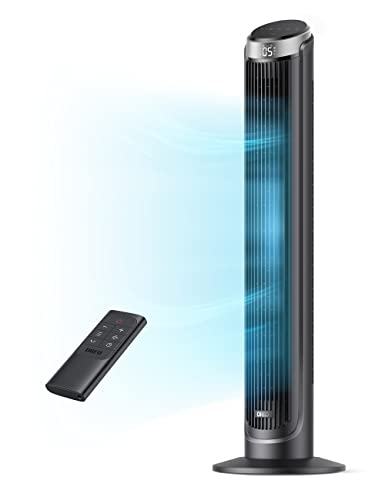
Check prices on Amazon
Live listings for the shortlist in this guide are pulled from Amazon below, so prices and availability are always current at the moment you look.



A last evening test before any money moves
On the next hot evening, before ordering anything, run the experiment this guide has been quietly recommending all along. Open the cool-side windows as the outdoor air turns, set whatever fan the household already owns to exhaust from the warm side, dampen a shirt or a sheet’s edge, and sit in the resulting stream with a thermometer’s evidence in hand. Most households learn more from that hour than from a week of listings: how their cottage breathes, where its air wants to travel, and how much of the problem was ever the fan at all.
Whatever the test reveals becomes the shopping list, written in the household’s own evidence rather than in anybody’s catalogue. Perhaps the answer is an evaporative tower for the dry bedroom, a misting ring for the porch’s noon hour, a circulator to marry the two, or simply the discovery that the old pedestal, aimed with new intent, had another summer in it. Each of those endings is a success, because each begins with the building and the skin rather than with the box.
And on the stillest night of the year, when the stream finds your shoulders and the room finally loosens its grip, you will not care what the thermometer calls it, because your skin has already delivered its verdict.