Our Top Picks
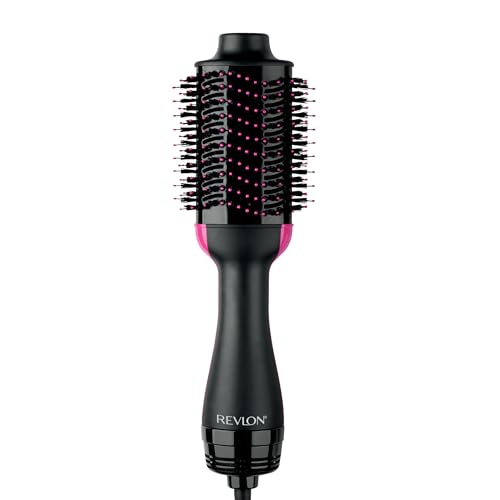 REVLON One-Step Volumizer Hair Dryer and Styler1.0 VOLUMIZER4.1 x 11.4 x 10.1 inches1.6 poundsCheck on Amazon
 Wavytalk Blown Away Ionic Hair Dryer with Diffuser600 g10.3 x 7.8 x 3.3 inches1.37 poundsCheck on Amazon
 Conair InfinitiPRO Hair Dryer with Diffuser & Concentrator1 Count (Pack of 1)8.37 x 3.47 x 11.92 inches1.46 poundsCheck on Amazon
 Conair Double Ceramic Hair Dryer with Diffuser &1 Count (Pack of 2)3.75 x 8.56 x 12.27 inches1.8 poundsCheck on Amazon
 Hooded Hair Dryer Attachment w/A Headband Integrated ThatLarge (Pack of 1)2 x 4 x 6 inches0.2 poundsCheck on Amazon
 Red by Kiss 3000 Ceramic Tourmaline Professional Hood1 Pcs Set15 x 12.5 x 12.5 inchesCheck on Amazon
What's inside
- Coarse hair plays by different drying rules
- Wattage, motors, and why airflow beats raw heat
- Heat settings, speed settings, and honest control
- Ionic, tourmaline, and ceramic: translating the box language
- Concentrator nozzles: the smoothing instrument
- Diffusers: drying waves and coils without wrecking them
- Weight, balance, and the long-session problem
- Noise: the household negotiation nobody mentions
- Cords, storage, and the electrical fine print
- A drying routine built for coarse strands
- Durability, filters, and keeping full power for years
- Price tiers and where the money shows
- Special cases: very long hair, relaxed hair, and grey strands
- Questions that come up again and again
- Brushes and hands: the dryer’s working partners
- Sectioning strategy for very dense hair
- Humidity, seasons, and keeping a finish alive
- Salon habits worth borrowing at home
- Reading a dryer specification sheet like a stylist
- When coarse hair is also fine in quantity, and other mixed cases
- Sustainability, repairability, and the long view
- A first-week plan with a new dryer
- What to do on the mornings when time runs short
- Check prices on Amazon
- Matching the dryer to the head of hair in front of you
As an Amazon Associate I earn from qualifying purchases. This post may contain affiliate links at no extra cost to you.
Reader support keeps this hair guide independent: some links on the page are affiliate links, so a purchase through one may earn the publisher a small commission at no extra cost to the person buying. The comparisons below draw on published manufacturer specifications, technical documents, and aggregated owner feedback rather than salon folklore or sponsored claims.
Coarse hair plays by different drying rules
Coarse hair is a statement about the diameter of each individual strand, not about how much hair a person has. A coarse strand is measurably thicker than a fine one, with a fuller medulla at its centre, and it behaves accordingly under heat and airflow. It holds more water after washing, resists reshaping while damp, and shrugs off the gentle warmth that would style finer hair into obedience within minutes.
Thickness of the overall head of hair adds a second challenge on top of strand diameter. Many people with coarse hair also have plenty of it, so a dryer must move air through dense sections that shield inner layers from the airstream. The outer canopy can feel bone dry while the hair near the nape remains cool and damp, a mismatch that leads to frizz later when the hidden moisture escapes unevenly.
Texture complicates the picture further. Coarse hair may grow straight, wavy, curly, or tightly coiled, and each pattern asks the dryer for something slightly different. Straight coarse hair wants smoothing tension plus directed air. Wavy and curly coarse hair wants diffusion that dries without blasting the pattern apart. A dryer that serves this whole family needs power in reserve, honest heat control, and attachments that genuinely change how air arrives.
This guide works through those requirements in the order a buyer should weigh them: motor strength and wattage first, then heat and speed settings, the ionic and tourmaline features printed on every box, the nozzles that decide where air lands, and the practical matters of weight, noise, cord, and care that determine whether a dryer stays in daily service or migrates to the back of a cupboard.
Wattage, motors, and why airflow beats raw heat
Wattage describes how much electrical power a dryer can draw, and in conventional models that figure correlates strongly with both heat output and fan strength. Full-size dryers for home use commonly sit somewhere between roughly sixteen hundred and nineteen hundred watts in markets with higher-voltage supplies, while some regions cap household appliances differently and achieve comparable performance through motor efficiency rather than sheer draw.
For coarse hair, the useful lesson hides inside that range. A dryer near the upper end, paired with a well-designed fan, pushes a strong column of air that penetrates dense sections and evaporates water quickly. Speed matters because every minute saved under the nozzle is a minute of heat the hair never has to endure. A weak dryer run for half an hour can stress hair more than a strong dryer finishing the same job in twelve focused minutes.
Motor type explains much of the difference between models that share a wattage figure. Traditional universal motors, often labelled AC, are heavier and louder but deliver strong torque and long service lives; salons favour them for exactly those reasons. Newer digital or brushless designs spin far faster, move impressive air volumes from a compact body, and weigh noticeably less, at a higher purchase cost and with electronic controls instead of simple switches.
Airflow figures, where manufacturers publish them, deserve more trust than wattage alone. Some brands quote air speed at the nozzle, others quote volume per minute, and the two measures resist direct comparison across brands. The practical translation is simpler: coarse, dense hair needs a dryer whose highest speed setting feels forceful at a forearm’s distance, not merely warm and breezy at the grille.
Heat without horsepower is the worst combination
A dryer that produces fierce heat but feeble airflow forces an ugly bargain. The user holds the nozzle close and keeps it still, cooking the outer layer while the interior stays damp. Coarse strands tolerate heat better than fine ones, yet repeated stationary blasting still roughens the cuticle, fades colour, and leaves ends feeling straw-like over a season of daily styling.
Strong airflow reverses that bargain. Moving air strips moisture mechanically as well as thermally, so a moderate heat setting paired with a vigorous fan often dries coarse hair faster than a scorching setting paired with a weak one. When comparing two dryers in a shop, run both on their highest speed with heat off if possible, and judge the push of air against your palm before judging warmth at all.
Stylists who work with coarse textures lean on that principle constantly, and readers curious about salon-grade hardware will find a brand-focused discussion in best babyliss hair dryers, where professional motor choices are weighed for home bathrooms as well.
Heat settings, speed settings, and honest control
Separate controls for heat and fan speed matter far more for coarse hair than a single combined dial. Independence lets the user pair high airflow with moderate heat for the bulk of drying, then raise heat briefly for a stubborn section, then drop heat again for the finish. Combined controls force compromises at every stage, locking the strongest air to the hottest temperature even when the hair only needs one of the two.
Three heat levels plus a cool setting covers nearly every coarse-hair routine gracefully. Low heat suits diffusing delicate curls and drying the hairline. Medium heat handles most of the rough-dry phase for straight and wavy textures. High heat, used in moving passes with a concentrator, smooths resistant sections and seals a blowout. The cool setting then locks the arrangement by bringing strands back toward room temperature while they lie in their intended direction.
The cool shot button deserves its reputation when it delivers genuinely unheated air. On some models the button merely reduces heat, leaving air lukewarm and far less effective at setting a style. Manufacturer descriptions usually clarify whether the feature cuts the heating element entirely, and that small print is worth hunting for before purchase.
Temperature consistency separates thoughtful engineering from brute force. Better dryers monitor output and modulate the element so air temperature holds steady instead of swinging between scorching and tepid. Even without electronic monitoring, a well-spaced element and steady fan produce calmer heat than a cramped barrel where the element glows in pulses. Coarse hair forgives many things, but repeated temperature spikes at close range are not among them.
Reading temperature claims with a cool head
Some listings advertise maximum air temperatures as a selling point, as if hotter automatically meant better for thick hair. In practice, air cools rapidly with distance, so a figure measured at the grille says little about the temperature arriving at hair held a hand’s breadth away. Technique governs the real exposure: constant motion, sensible distance, and section size each matter more than a headline number.
Heat protectant products form the other half of this conversation. A leave-in spray or cream applied to damp hair adds a sacrificial layer that distributes heat and reduces direct cuticle stress. No dryer, however clever its sensors, makes protectant pointless on coarse hair that gets styled several times a week, because cumulative exposure, not any single session, drives most damage.
Readers whose hair already shows breakage or colour fatigue should pair this guide with the gentler routines collected under best blow dryers for damaged hair, where lower-heat strategies take priority over drying speed.
Ionic, tourmaline, and ceramic: translating the box language
Ionic technology is the phrase printed largest on most dryer packaging, and it describes a generator that emits negatively charged ions into the airstream. Those ions help water droplets on the hair surface break into smaller particles that evaporate and absorb more readily. The visible result for many coarse-haired users is a smoother finish with less static flyaway, particularly in dry winter air or heated rooms.
The honest version of the claim needs a boundary. Ions do not repair damage, permanently change texture, or substitute for adequate airflow. Their contribution shows up at the margins of frizz and drying time, and users with very resistant hair sometimes notice little difference. Treat ionic output as a welcome supporting feature layered on top of a strong motor, never as the reason to forgive a weak one.
Tourmaline enters the story as a mineral coating or component inside the barrel and grille. When heated, tourmaline naturally emits negative ions and far-infrared energy, so manufacturers combine it with ceramic elements to produce gentle, evenly distributed heat. A tourmaline-ceramic dryer often feels less harsh at a given setting than a bare metal element design, which suits coarse hair that is also colour-treated or chemically relaxed.
Ceramic itself earns its place through heat evenness. A ceramic-coated element or housing spreads thermal energy so the airstream lacks hot spots that scorch one ribbon of hair while neighbouring ribbons stay damp. Infrared-leaning heat also penetrates the strand slightly differently, warming from within the hair mass rather than only blasting the surface, which some users experience as faster drying at a kinder temperature.
Titanium occupies the opposite pole. It heats quickly, holds high temperatures steadily, and transfers heat aggressively, which can serve very thick, resistant hair in skilled hands. The same aggression punishes hesitation, so titanium-barrel dryers reward users who keep the nozzle moving and punish anyone who parks it on one section while reaching for a brush.
Switchable ions and other refinements worth noticing
A few designs let the user reduce or disable ionic output. That option sounds obscure until volume enters the wish list: ions smooth and compact the hair, which is ideal for a sleek blowout but counterproductive on a day when the goal is lift at the roots. Coarse hair that tends to fall flat near the crown, despite its strand thickness, can benefit from that small switch more than from another heat level.
Removable intake filters belong in this section because they protect every internal feature at once. The rear grille of a dryer inhales lint, dust, and stray hairs during every session. A filter that twists off for rinsing keeps airflow at full strength month after month, while a sealed intake slowly strangles the fan until a once-powerful dryer feels mysteriously tired.
Concentrator nozzles: the smoothing instrument
The narrow concentrator is the attachment coarse hair depends on most for a smooth finish. By flattening the airstream into a blade of air, it directs the flow down along the strand direction, encouraging the cuticle to lie flat while a brush supplies tension. A wide, stubby concentrator diffuses that blade and suits rough drying; a slim, elongated one delivers the precision that resistant edges and fringes demand.
Fit and rotation matter in daily use. A nozzle that spins freely on the barrel lets the user angle the blade without twisting the wrist into awkward positions, while a nozzle that wobbles or detaches when hot quickly becomes a drawer ornament. Magnetic attachment systems, offered on some modern designs, solve both problems elegantly, snapping into alignment and rotating with a fingertip’s pressure.
Technique decides whether the concentrator smooths or merely dries. The blade should travel from roots toward ends, following the brush, never blasting upward against the cuticle direction. Working in sections no wider than the brush keeps tension even. Coarse hair rewards this patience visibly, because its thick strands hold a shape once dried thoroughly in position, and punish shortcuts by springing back toward their natural pattern within the hour.
Dual concentrators in the box, one wide and one narrow, signal that a manufacturer understands varied routines. The wide head speeds the early rough-dry stage across the whole head, and the narrow head finishes each section with polish. A single mid-width nozzle can do both jobs adequately, yet specialists will feel the compromise at both ends of the routine.
Diffusers: drying waves and coils without wrecking them
A diffuser spreads the airstream across a broad bowl studded with prongs, so air arrives gently from many directions at once. For wavy, curly, and coiled coarse hair, that gentleness preserves the pattern that a direct blast would shred into frizz. The bowl cradles a curl cluster while the prongs lift roots slightly, building volume without separating strands from their neighbours.
Bowl depth should match hair length and density. Shallow diffusers suit shorter waves, while deep bowls gather long, heavy curls without crushing them against the grille. Very dense coarse hair may need a diffuser with longer prongs that reach through the outer canopy toward the scalp, drying the slow interior layers that otherwise stay damp long after the surface feels finished.
Diffusing technique runs cooler and slower than blowout technique. Medium or low heat, modest airflow, and a scrunching motion that cups sections in the bowl for half a minute at a time will set the pattern with minimal disturbance. Hovering the diffuser near the roots first, before touching the lengths, reduces the halo of frizz that appears when wet ends get moved around too early.
Some dryers include a diffuser engineered for their own barrel shape, while universal attachments promise to fit almost anything with a stretch collar. Universal options vary wildly in security; a diffuser that pops off mid-session onto a hard floor may crack, and one that seals too tightly can overheat the barrel. Checking the collar design against your shortlisted dryer’s nozzle diameter avoids that small misery.
Combs, picks, and other attachments in the box
Wide-tooth comb attachments appear in many boxes aimed at textured hair. They stretch and lengthen curls during drying, detangle under airflow, and help straighten coarse hair that will later meet a flat iron. The teeth need enough sturdiness to survive dense sections without snapping, and enough spacing to glide rather than rake.
Straightening picks serve a related purpose for shorter cuts and for lifting roots on afro-textured hair. Their value depends heavily on tooth material and heat resistance, because an attachment sits directly in the hottest part of the airstream for minutes at a time. Flimsy plastic that softens or warps under that duty fails quickly, and owner feedback tends to report such failures bluntly and early.
Anyone whose hair sits at the opposite end of the texture spectrum can compare notes in the guide filed at best blow dryers for fine thin hair, where the priorities reverse and gentleness outranks penetrating power at every step.
Weight, balance, and the long-session problem
Coarse hair extends drying sessions, and extended sessions turn grams into grievances. A dryer that feels perfectly manageable during a two-minute shop demonstration can ache the shoulder badly by minute fifteen of a real blowout, especially when the other hand holds a round brush aloft at the same time. Published weights, usually quoted without cord or attachments, still allow fair comparison between shortlisted models.
Balance matters as much as the scale figure. A dryer whose motor sits in the barrel carries its mass high and forward, tipping the nose down during use. Designs that place the motor in the handle shift the centre of gravity into the grip, and many users find that arrangement kinder over a long session even when the total weight matches a barrel-motor rival gram for gram.
Handle shape and button placement complete the ergonomics. Buttons that sit exactly where fingers grip invite accidental setting changes mid-pass, a frustration reported across many brands. Recessed sliders or buttons positioned for deliberate thumb movement avoid that trap. A handle that grows warm during a long session signals heat migrating where it should not, and that detail deserves weight in any decision.
Households where several people share one dryer should consider the smallest hands and the weakest grip in the family, not only the primary stylist. Teenagers learning to dry their own thick hair, or an older relative with reduced hand strength, will use a balanced mid-weight dryer willingly and avoid a heavy salon cannon entirely, leaving it pristine and unused in its box.
Noise: the household negotiation nobody mentions
Dryer noise shapes when and where hair gets dried more than most buyers admit. Early-morning routines in a flat with sleeping children, late-night wash days in a shared house, and calls taken from a home office all collide with a tool that can approach the volume of a vacuum cleaner at full speed. Manufacturers rarely publish decibel figures, so owner reports and retailer demonstrations carry the evidence here.
Motor architecture influences the character of the sound as much as its volume. Traditional motors produce a lower roar, while high-speed digital motors add a higher-pitched whine layered over the rush of air. Some people tolerate one profile far better than the other regardless of measured loudness, which makes an in-person listen, even briefly, a genuinely useful step before committing.
Designs with insulated housings and carefully shaped air paths can soften noise without surrendering airflow, though such engineering usually lives at the premium end of the market. For coarse hair the trade needs care: a quiet dryer achieved by throttling the fan betrays the primary mission, because dense sections will simply take longer and absorb more heat in the process.
Cords, storage, and the electrical fine print
Cord length quietly determines where styling happens. A short cord chains the user to the socket’s immediate neighbourhood, which may lack a mirror, a shelf for brushes, or elbow room for a blowout. Longer cords, around two and a half to three metres on salon-oriented models, free the routine to happen where the light and space actually are. The cord’s thickness and swivel fitting at the handle decide whether it tangles into a permanent spiral over time.
A hanging loop sounds trivial until the dryer needs a home in a small bathroom. Loops let the tool live on a hook inside a cupboard door, off the counter and away from sink splashes. Folding handles, common on travel models, matter less for this category because compact travel dryers rarely deliver the sustained power coarse hair demands; dual-voltage convenience cannot compensate for a fan that gives up inside dense sections.
Safety devices deserve a glance as well. Many markets require a bulky protective plug with reset and test buttons on bathroom appliances, and that plug’s size can block neighbouring sockets on a crowded power strip. Checking the plug style against your bathroom layout avoids an annoying surprise, and any dryer used near water should keep that protection intact and functional rather than defeated or removed.
Wattage interacts with household wiring in older homes. A high-draw dryer sharing a circuit with a heater or another styling tool can trip a breaker mid-session, which teaches households to stagger appliances. That is not a flaw in the dryer, yet buyers in older properties should know their bathroom circuit’s limits before choosing the most powerful model on the shelf.
A drying routine built for coarse strands
Preparation decides half the result before the dryer ever switches on. Hair towel-dried gently, ideally with a smooth fabric that reduces friction, releases a surprising share of its water without any heat at all. Squeezing and pressing beat rubbing, which roughens the cuticle and pre-loads frizz into the session. The towel discussion in best hair drying towels covers fabric choices that suit thick hair far better than a rough bath towel does.
Detangling belongs to the damp stage, with a wide-tooth comb or fingers, working from the ends upward in small increments. Dragging a fine brush through wet coarse hair invites breakage precisely where strands are weakest. Once detangled, hair divides into sections, clipped up and released one at a time, so the airstream always meets a manageable layer rather than an impenetrable curtain.
The rough-dry phase removes most moisture with airflow and fingers alone, aiming the dryer downward and keeping it moving until the hair reaches roughly three-quarters dry. Only then does brush work begin for a smooth finish, because styling hair that is still very wet wastes effort and prolongs heat exposure. Diffuser users skip the brush phase entirely, moving from rough hover-drying to cupping sections in the bowl until the pattern sets.
Finishing deserves the same deliberation as the main event. A cool blast over each completed section settles the cuticle and extends the style’s life through the day. A drop of lightweight oil or serum, warmed between palms and pressed over the surface, can calm the last flyaways, though heavy application on freshly dried hair simply invites dust and dullness by evening.
How often to wash and dry changes the buying brief
Coarse hair often thrives on fewer wash days than fine hair, because its natural oils travel slowly along thick, textured strands. Someone drying twice a month can happily choose a heavier salon dryer and store it between sessions. Someone drying after every gym visit needs the opposite: a balanced, durable machine that survives near-daily duty and a filter routine that keeps pace with that workload.
Swimmers and athletes who rinse frequently sometimes dry only partially, leaving the last moisture to the air. A dryer with a genuinely gentle low setting serves that habit well, because blasting partly dried hair on maximum heat several times a week accumulates damage out of proportion to the modest styling goal.
Durability, filters, and keeping full power for years
A dryer’s performance on its fiftieth session depends on maintenance more than on its first-day brilliance. Lint gathered on the intake filter chokes airflow gradually, so heat concentrates inside the barrel while less air reaches the hair. The user compensates by choosing hotter settings and drying longer, unaware that a two-minute filter rinse would have restored the original balance of air and warmth.
Most manufacturers recommend cleaning the filter every few weeks under regular use, and households with pets or dusty environments should shorten that interval. Where the filter rinses, it must dry fully before refitting, because a damp filter pulls moisture into the intake path. Where the filter only brushes clean, a soft old toothbrush lifts the felted layer without tearing the mesh.
Thermal cut-outs protect against exactly the overheating that a clogged filter causes. A dryer that switches itself off mid-session and revives after cooling is reporting a blockage or a failing fan, not misbehaving randomly. Treating that first cut-out as a maintenance prompt, rather than an annoyance to outwait, extends the appliance’s life considerably.
Cord care completes the durability picture. Wrapping a cord tightly around a hot barrel after every session fatigues the internal wires near the handle joint, the classic failure point of otherwise healthy dryers. Loose coiling once the barrel cools, or hanging the dryer by its loop with the cord draped, avoids that slow internal damage entirely.
Price tiers and where the money shows
Budget dryers can serve coarse hair respectably when their makers spend on the motor rather than on decorative finishes. The compromises at this tier usually appear as fewer heat levels, a single basic concentrator, a shorter cord, and a housing that feels less dense in the hand. A buyer who styles simply, rough-drying and diffusing rather than performing elaborate blowouts, may never miss the missing refinements.
Mid-range models typically add the features this guide keeps returning to: independent heat and speed controls, a trustworthy cool setting, two concentrators or a proper diffuser, a removable filter, and a cord of useful length. For most households with coarse hair, that combination represents the point where spending stops buying decoration and starts buying daily convenience.
Premium dryers justify themselves through motor technology, weight savings, noise character, magnetic attachments, and temperature monitoring that holds output steady. Whether those virtues matter depends on session frequency and length. Daily stylists with very thick hair feel the weight and speed advantages every single morning; occasional users may find the same money better spent on brushes, towels, and protectant products.
Warranty length signals a maker’s confidence in motor longevity. Multi-year coverage on the motor, where offered, suits a category where the fan and element endure real thermal stress. Reading the exclusions matters too, because some warranties quietly demand proof of regular filter maintenance, which is one more reason to build that small habit from the first month of ownership.
Special cases: very long hair, relaxed hair, and grey strands
Very long coarse hair multiplies every variable in this guide. Drying time stretches, arm fatigue arrives sooner, and the ends, which may be several years old, carry accumulated damage that the roots have never met. Long-hair routines benefit from drying in halves, resting the arms between sides, and reserving the highest heat for the resilient root area while treating the last handspan of length with noticeably gentler air.
Chemically relaxed or straightened coarse hair lives in a delicate middle state: the strand diameter remains substantial, yet the internal bonds have been rearranged and tolerate less thermal stress than virgin hair. Moderate heat, strong airflow, and strict protectant discipline form the safe triangle for these routines, and a dryer with precise low and medium settings outperforms a blunt high-powered instrument here.
Grey and silver hair, frequently coarse and wiry in texture, adds a cosmetic sensitivity to the brief. Excessive heat can lend white strands a yellowish cast over time, particularly when styling products residue bakes onto the surface. Gentler temperatures, clean filters that prevent scorched dust from circulating, and a diffuser for natural grey waves all help preserve the bright tone that makes silver hair so striking.
Children, shared bathrooms, and supervision sense
Thick-haired children often need help with drying long after they manage washing independently, because the session length defeats small arms and shorter patience. A mid-weight dryer with a reliable low-heat setting lets a parent work efficiently while the child holds a book, and the cool setting finishes without complaints about hot ears or a tender scalp.
Teaching an older child to dry their own coarse hair goes better with a simple control layout. Two clearly marked sliders beat a dial crowded with symbols, and a concentrator that stays attached beats one that drops off whenever small hands change angle. The goal is a tool the child can operate safely and completely, because half-dried dense hair left to its own devices invites tangles by morning.
Questions that come up again and again
Is the highest wattage always the right answer for thick hair?
No, because wattage describes power drawn rather than air delivered. A well-engineered dryer at a moderate figure can out-dry a crude design at a higher figure, and it may do so with less noise and less weight. Use wattage as a rough filter to exclude genuinely feeble models, then judge the finalists on airflow, controls, and attachments.
Can one dryer handle both blowouts and natural curls?
Yes, provided the box contains both a slim concentrator and a proper diffuser, and the controls allow low heat with low speed for diffusing alongside high speed for smoothing. That versatility is common in the middle tier and upward. A dryer sold with only a concentrator can still diffuse through a universal attachment, though fit and stability need checking before relying on it weekly.
How close should the nozzle stay to the hair?
A working distance of roughly a hand’s breadth suits most smoothing passes, closer only in brief moments on resistant sections with the dryer kept moving. Parking a hot nozzle against hair while both hands wrestle a brush is the pattern behind most heat damage stories, regardless of how advanced the dryer’s marketing sounds.
When should a dryer be replaced rather than cleaned?
Replace it when airflow stays weak after a thorough filter cleaning, when the element glows unevenly or cycles off repeatedly, when the cord shows damage near either end, or when buttons and sliders stop holding their settings. Those symptoms mark electrical or motor decline that no home maintenance reverses, and a struggling dryer quietly damages hair by stretching every session.
Brushes and hands: the dryer’s working partners
A dryer never styles alone, and coarse hair exposes weak brush choices quickly. Round brushes with a ceramic or metal barrel retain heat and help smooth a section as air passes over it, effectively extending the dryer’s work between passes. Barrel diameter should match hair length and the desired finish: narrower barrels build movement and bend, wider barrels straighten long sections with fewer rotations and less wrist strain.
Boar and mixed-bristle brushes grip coarse strands with a firmness that synthetic pins alone rarely achieve, and that grip supplies the tension smoothing depends on. The trade-off is speed of learning; a gripping brush in unpractised hands can tangle if it is rolled carelessly into damp hair. Vent brushes, by contrast, forgive everything and smooth modestly, making them sensible partners for the rough-dry stage or for users who dislike round-brush choreography.
Paddle brushes suit long, straight-leaning coarse hair dried in broad sweeps. Working the paddle from underneath, with the concentrator following its path, dries wide panels efficiently and leaves a natural, uncurled finish. Whatever brush family a household favours, handle heat resistance matters, because brush barrels and bristles live inside the airstream alongside the hair they hold.
Sectioning strategy for very dense hair
Density defeats more drying sessions than weak motors do. Hair released all at once forms a layered blanket: the airstream spends itself on the surface while the underlayers steam gently and stay wet. Dividing the head into quadrants, then working each quadrant in horizontal slices, guarantees that every layer eventually meets direct air at full strength.
Clips are the unsung equipment of this strategy. Sturdy, smooth-edged clips that open wide enough for a thick twist of hair keep waiting sections off the neck and shoulders, where they would otherwise reabsorb moisture from the section being dried. Metal clips conduct heat when the nozzle passes nearby, so many stylists prefer sturdy plastic for the sections nearest the active work.
The nape deserves deliberate priority in the sequence. It is the densest, slowest zone on many heads, sheltered by everything above it, and leaving it until last means the finished style sits on a damp foundation that will frizz upward through the lengths. Drying the nape early, while energy and patience are fresh, quietly improves how the whole style wears by afternoon.
Crown sections ask for directional thought. Hair dried in the direction it will finally lie settles smoothly, while hair that will be parted on the opposite side benefits from being dried across its natural fall first, building lift at the root. Coarse strands hold these root instructions unusually well once fully dry and cooled, which is one of the texture’s genuine styling advantages.
Humidity, seasons, and keeping a finish alive
A blowout that behaves in January may rebel in August, because coarse hair absorbs atmospheric moisture eagerly once its cuticle has been raised by styling. Humid-day routines lean harder on thorough drying: hair that feels dry but retains interior dampness will expand unevenly as the day’s air reaches it. The final sections deserve an extra pass on a cooler setting, sealing rather than heating, before any finishing product goes near the head.
Anti-humidity products form a supporting layer rather than a rescue service. Applied to fully dried hair, they slow moisture uptake at the surface. Applied to hair that was never quite dry inside, they merely perfume the inevitable frizz. This is why experienced owners of coarse hair describe complete drying as the real anti-frizz treatment, with every product afterwards playing a minor, honourable role.
Winter brings the opposite adversary. Indoor heating dries the air until static lifts coarse strands into a halo that no brush can persuade downward. Ionic features earn their keep most visibly in this season, and a slightly richer leave-in conditioner on the ends counters the brittleness that heated rooms encourage. A cool finish pass also helps, since hot hair released into dry air seems to invite static as it cools unevenly.
Travel scrambles these routines with unfamiliar water, weather, and hotel dryers. A personal dryer that folds or packs well protects a coarse-haired traveller from the feeble wall-mounted units many hotels provide, units that can turn a fifteen-minute routine into a forty-minute arm workout. Where luggage forbids a full-size machine, a familiar diffuser attachment and a microfibre towel still rescue a natural-pattern routine in most climates.
Salon habits worth borrowing at home
Professional stylists dry coarse hair all day, and their habits translate cleanly to a bathroom mirror. They start with hair wetter than most home users expect, because shaping decisions made on properly damp hair hold better than corrections attempted on half-dried sections. They also keep the dryer in motion constantly, treating any pause over one spot as a small error to correct immediately.
Salons separate the drying and finishing toolkits. The dryer does the structural work: moisture removal, root direction, smoothness through tension. Irons and wands, when used at all, handle only local refinement afterwards, on hair that is completely dry. Home routines that ask the dryer to perform every task at once, including curling ends it was never shaped to curl, tend to overheat the lengths while under-drying the roots.
Another borrowed habit is the honest finish check. Stylists run cool hands through the completed hair, feeling for the tell-tale chill of hidden damp at the nape or behind the ears. That ten-second check, done before the dryer goes back in its drawer, prevents the slow frizz bloom that otherwise appears an hour later and gets blamed on the weather.
Finally, salons maintain their tools on a schedule rather than on a hunch. Filters get cleaned weekly under heavy use, cords get inspected, and a dryer whose note changes gets attention before it fails during an appointment. A household dryer used daily deserves the same calendar-based respect, scaled to its lighter workload: a monthly filter rinse and a yearly look over the cord and plug.
Reading a dryer specification sheet like a stylist
The specification block for a dryer is short, so each line should earn its place in the decision. Wattage and motor type open the story. Heat and speed counts follow, with a note on whether the controls operate independently. Weight, cord length, and included attachments complete the factual core, and anything beyond that core is either a refinement or a distraction.
Missing lines speak as loudly as printed ones. A listing that never states weight may hide a heavyweight. A listing that trumpets ionic technology while omitting heat and speed counts may be dressing a simple two-setting appliance in borrowed glamour. Cross-checking the model against the manufacturer’s own product page resolves most discrepancies, because retailers occasionally copy specification blocks from a sibling model by mistake.
Owner feedback fills the gaps that specifications cannot reach: how the buttons feel with product-slick hands, whether the diffuser stays attached through a full session, whether the housing creaks when gripped firmly. Read for patterns across many reports rather than verdicts from any single voice, and give extra weight to reports from users who describe hair resembling your own in density and pattern.
When coarse hair is also fine in quantity, and other mixed cases
Texture labels rarely arrive one at a time. Some heads carry coarse strands in modest quantity, producing hair that feels wiry to the fingers yet dries surprisingly quickly because air reaches every layer without a fight. Such hair needs the heat discipline and smoothing attachments described throughout this guide, but not necessarily the heaviest motor; a mid-power dryer with excellent controls often serves it better than a salon cannon whose lowest setting still blasts.
The reverse mixture, fine strands in enormous quantity, borrows a different half of the advice. Airflow must penetrate real density, yet each strand tolerates less heat than a coarse one would. The answer is a strong fan governed by genuinely low heat options, plus patience during sectioning. Buyers in this mixed territory should distrust any guide, including this one, that assigns them a category without asking both questions about strand and volume separately.
Wavy hair that is coarse only in patches, often coarser at the crown and finer near the face, asks for within-session adjustment. The dryer that changes heat and speed in a thumb’s movement, without a glance away from the mirror, earns gratitude here. So does a concentrator narrow enough to address the resistant crown without over-drying the delicate hairline beside it during the same pass.
Sustainability, repairability, and the long view
A dryer is a durable good that should serve for years, and the greenest choice is usually the one that avoids a replacement purchase altogether. Models with replaceable filters, available spare attachments, and published repair channels tend to stay in service longer than sealed designs whose only remedy for a worn switch is the bin. Asking a manufacturer one direct question about spare nozzle availability reveals more about longevity than a page of lifestyle photography.
Energy use follows session length more than wattage headlines. A powerful dryer that finishes in twelve minutes may consume less electricity per styling session than a feeble one running for half an hour, quite apart from sparing the hair. Efficient motors extend that logic further, delivering strong airflow from a modest draw, which is one reason brushless designs have moved from novelty toward the serious end of this market.
End-of-life handling deserves a sentence in any modern buying guide. Small electrical appliances belong in electronics recycling streams rather than household rubbish, because their motors and elements contain recoverable metals. A dryer retired while still functional can also serve a second life in a guest room, a gym bag, or a community theatre dressing room, where coarse-haired performers face the same damp-nape problem under stage lights.
A first-week plan with a new dryer
Spend the first session learning rather than performing. Dry your hair with no event waiting afterwards, trying each heat and speed pairing on a single section and noting how the strands respond. Discover where the buttons sit under your fingers, how the concentrator rotates, and how the balance feels at the ten-minute mark. That unhurried rehearsal prevents the fumbling that otherwise happens on the one morning the dryer really matters.
By the third session, settle into a written or memorised sequence: towel, protectant, detangle, section, rough-dry, then finish section by section with a cool pass over each. Coarse hair rewards ritual because its variables are numerous, and a fixed sequence removes decision fatigue from the mirror. Adjust one variable at a time in later weeks, so improvements can be credited to the change that actually caused them.
Keep the filter’s first cleaning date in the same mental note as the purchase date. A dryer maintained from new keeps its original airflow character for years, and the owner who starts the habit early never experiences the slow decline that makes other households conclude, wrongly, that dryers simply grow tired with age.
What to do on the mornings when time runs short
Not every wash day allows the full ceremony, and coarse hair benefits from an honest shortcut protocol rather than a frantic improvisation. On a rushed morning, prioritise the roots and the front sections, because those frame the face and determine whether the overall result reads as finished. Lengths can be gathered, twisted, or braided while still faintly damp, provided the scalp area itself is properly dry and comfortable.
Product choices shift under time pressure too. A heat protectant remains non-negotiable, since the shortcut usually involves stronger airflow used closer to its limits, but heavy styling creams that demand thorough distribution can wait for a slower day. A light leave-in worked through the mid-lengths in thirty seconds supports the abbreviated routine without leaving residue that a hurried rinse of the hands might miss.
The diffuser offers its own express route for wavy and curly coarse hair: cup the largest sections first, dry the roots with a hovering pass, and accept a finish that will settle and soften over the following hour as residual warmth leaves the strands. Hair dried this way often looks better by mid-morning than it did at the mirror, a small mercy worth remembering before reaching for a straightening iron in a panic.
Finally, a short session still ends with the same discipline as a long one. Switch the dryer off, let the barrel cool before it touches a counter or a cord, and hang it where the filter can breathe rather than sealing it into a drawer while warm. Shortcuts taken with the hair are forgivable; shortcuts taken with a hot appliance in a wooden vanity unit are a different category of decision entirely.
One more shortcut deserves a warning label. Skipping sectioning entirely and attacking the whole head at random feels faster, yet it usually costs time rather than saving it, because forgotten damp pockets demand a second full pass once the style is supposedly finished. Four quick clips placed in ten seconds buy a map of the head that even a hurried routine can follow without backtracking, and the map matters more, not less, when the clock is unkind.
Households that face rushed mornings regularly can also stage the bathroom the night before: dryer hung by its loop, brush and clips in one caddy, protectant standing beside them. Removing the treasure hunt from the routine protects the hair indirectly, because a calm user keeps the nozzle moving and the sections honest, while a flustered one parks hot air in a single spot and hopes.
That staging habit pairs well with a weekly five-minute reset of the whole styling corner: filter rinsed and left to dry overnight, attachments returned to their pouch, cord inspected as it is loosely coiled, and the counter cleared of the product bottles that migrate during the week. The reset sounds domestic rather than technical, yet it protects the dryer’s airflow, the attachments’ fit, and the user’s patience in equal measure, and it costs less time than a single hunt for a missing diffuser on a workday morning.
Check prices on Amazon
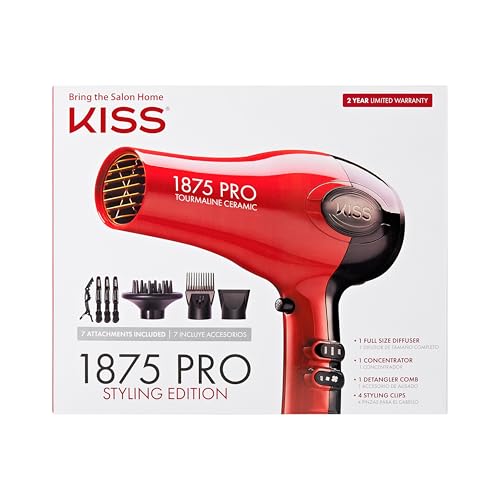
Live listings for the shortlist in this guide are pulled from Amazon below, so prices and availability are always current at the moment you look.

Matching the dryer to the head of hair in front of you
Every thread in this guide converges on a personal inventory: how thick each strand is, how densely the hair grows, which pattern it follows when left alone, how it has been coloured or treated, and how many mornings a week the dryer will actually run. A machine chosen against that inventory disappears into the routine, doing its work without negotiation, complaint, or ceremony.
Put motor strength and independent controls at the top of the list, attachments matched to your usual finish next, and weight and noise character immediately after. Let ionic and tourmaline features refine a decision between two otherwise equal finalists rather than leading the search from the start. Keep the filter clean, the nozzle moving, and the heat no higher than the section in front of you genuinely requires.
Do that, and a good dryer for coarse hair becomes less a purchase than a long arrangement with your mornings: dense sections surrender their water quickly, curls keep the shape they grew in, blowouts survive the commute, and the whole dense, stubborn, magnificent head of hair finally dries on your schedule instead of its own.