What's inside
- Quick picks: best house slippers for inside hot climate
- What Makes a Slipper Good for a Hot Climate?
- Quick Comparison
- How to Choose a House Slipper for a Hot Climate
- Common Mistakes When Buying Slippers for a Hot Climate
- Sizing and Fit for Hot Climate Slippers
- Caring for Hot Climate Slippers
- Frequently Asked Questions
- Conclusion
As an Amazon Associate I earn from qualifying purchases. This post may contain affiliate links at no extra cost to you.
Quick picks: best house slippers for inside hot climate
| # | Product | Where to buy |
|---|---|---|
| 1 | Glerups Wool Slipper | Check on Amazon |
| 2 | Birkenstock Arizona EVA | Check on Amazon |
| 3 | OOFOS OOriginal | Check on Amazon |
| 4 | Acorn Spa Thong | Check on Amazon |
| 5 | Vionic Tide | Check on Amazon |
What Makes a Slipper Good for a Hot Climate?
A slipper for a hot climate must do the opposite of a winter slipper: it must let heat out, not keep it in, and it must let moisture escape, not trap it. A heavy shearling slipper in a hot house will make the feet sweat within minutes, while a light, breathable slipper will keep them cool and dry, and the slippers in this guide are chosen because they breathe. They have open backs, light uppers, wool or mesh linings that wick moisture, and soles that do not trap heat, and they are the ones that wearers in hot climates reach for, when other slippers are too warm.
The first thing that makes a slipper good for a hot climate is airflow. A slipper with an open back lets heat escape, a slipper with a loose fit lets air circulate, and a slipper with a wool or mesh lining lets moisture escape, while a slipper with a synthetic lining traps it. The Glerups wool slipper in this guide is the best for airflow, since wool breathes, and the Acorn Spa Thong is the best for openness, since it is a thong. A buyer should choose a slipper that lets air move, since a slipper that traps heat will not be worn, whatever else it offers.
The second thing is the material. Wool is the best material for a hot climate, because it breathes and it wicks moisture, so the foot stays dry, while synthetic materials trap heat and make the foot sweat. The Glerups in this guide is wool, and it is the one for a wearer who wants a natural slipper that breathes, while the Birkenstock Arizona EVA is synthetic, but it is open, so it lets air move. A buyer should choose a natural material, or an open design, since both will keep the foot cooler than a closed, synthetic slipper.
The third thing is the sole. A slipper for a hot climate will be worn on tile and stone floors, which are cool, and a thin sole will let the cool through, while a thick one will insulate the foot from it. The Birkenstock Arizona EVA and the OOFOS OOriginal in this guide have soles that are comfortable on cool floors, and they are the ones for a wearer who wants to feel the cool floor. A buyer should choose a sole that is comfortable on the floor it will be worn on, since a slipper that is too thick will be hot, and one that is too thin will be cold on a stone floor in winter, though that is less of a concern in a hot climate.
Each slipper below is described with its strengths, its trade-offs and the wearer it fits, plus a guide to choosing between them, the mistakes that waste money, and answers to the questions shoppers ask most. The descriptions are based on the makers’ published specifications and on widely reported owner experience, and no prices are given because prices change with size, colour and retailer.
Quick Comparison
| Slipper | Materials | Standout features | Best for |
|---|---|---|---|
| Glerups Wool Slipper | Felted wool | Breathable, natural, cool in heat | Best breathable wool slipper |
| Birkenstock Arizona EVA | EVA, moulded footbed | Open, light, waterproof | Best open hot-climate slipper |
| OOFOS OOriginal | OOfoam, soft sole | Soft, cushioned, recovery feel | Best cushioned hot-climate slipper |
| Acorn Spa Thong | Terry, cloud contour | Open thong, arch support, plush | Best spa thong for hot homes |
| isotoner Microterry Scuff | Microterry, memory foam | Light, soft, washable | Best light scuff for hot homes |
| Vionic Tide | EVA, contoured footbed | Arch support, thong, durable | Best supportive thong for hot homes |

Glerups Wool Slipper
Felted wool from Denmark: the most breathable slipper in this guide, cool in heat and warm in cold.
The Glerups Wool Slipper is the most breathable slipper in this guide, because it is made from felted wool, and wool is the material that handles temperature best. Glerups makes its slippers in Denmark from New Zealand wool, with no synthetic lining, no foam insole, and no plastic, just wool and a sole in leather or rubber. The slipper is simple, breathable, and biodegradable, and it is the one for a wearer in a hot climate who wants a natural slipper that stays cool.
The Glerups works because wool is the material that handles temperature and moisture best, without any synthetic help. Wool fibres trap air when it is cold and release moisture when it is warm, so the slipper keeps the foot comfortable in a wider range of temperatures than any other slipper here, and it does so without a lining, a foam insole or any synthetic layer. Owners report that Glerups slippers can be worn barefoot for hours without the clammy feeling that synthetic linings give, and that they stay comfortable in a hot house, which is more than can be said for a heavy shearling slipper.
The trade-offs are that wool is not waterproof and the slipper is not a shoe. The leather-soled version is for indoor use only, and the rubber-soled version can go outside but should not be worn in rain or mud, since wet wool takes a long time to dry and can lose its shape. The slipper is also a slip-on with no fastening, so it suits a wearer who likes a loose, easy fit rather than a snug, structured one, and it is sold in European sizes, so a buyer should check the maker’s size chart carefully.
One practical note: Glerups slippers are made in Denmark from New Zealand wool, and the felted wool will stretch slightly with wear, so a snug fit at first is normal. The slipper should be aired out rather than washed, and a wool-safe spot clean is better than a machine wash, which can shrink the felt.
Strengths:
- Felted wool with no synthetic lining or foam
- Breathes; cool in heat, warm in cold
- Made in Denmark from natural materials
- Simplest, most natural slipper in this guide
Trade-offs:
- Not waterproof; wet wool dries slowly
- Loose slip-on fit with no fastening
- European sizing needs a careful check
Who it fits: Wearers in hot climates who want a natural, breathable slipper.
Check price on Amazon: Glerups Wool Slipper

Birkenstock Arizona EVA
The moulded EVA sandal with a deep heel cup: open, light, and waterproof, for hot homes.
The Birkenstock Arizona EVA is the open slipper in this guide, and it is the one for a wearer in a hot climate who wants a sandal that can be worn indoors and out. It is made from EVA, with a moulded footbed that copies the cork footbed of the classic Arizona, a deep heel cup, a raised arch, and two straps, and it is made by Birkenstock, the maker known for contoured footbeds. The Arizona EVA is the slipper for a wearer who wants a Birkenstock that can get wet, and who wants it to keep her feet cool, not just to support them.
The Arizona EVA works because its footbed is moulded, not flat. The footbed shapes itself to the foot over weeks of wear, with an arch that matches the wearer’s own, and the deep heel cup holds the heel in place. Owners report that it is the most comfortable sandal they own once broken in, and that it is the one they wear for years, since the EVA is durable and waterproof, and the footbed does not wear out the way foam does. The sandal is open, so air circulates, and it can be worn in the shower, at the pool, or on the beach, which is what a hot climate needs.
The trade-offs are the break-in and the care. The Arizona EVA needs several weeks before the footbed moulds, and it feels hard and uncomfortable at first, which puts off a wearer who wants instant comfort. The EVA is waterproof, but it can get hot in the sun, and the sandal is sized in European sizes, so a buyer should check the size chart carefully. It is also a simple sandal, with no cushioning beyond the footbed, so a wearer who wants softness should choose the OOFOS instead.
One practical note: the Arizona EVA is sold in narrow and regular widths, and most wearers take the regular width. A buyer should take her usual size, and should expect the sandal to feel snug at first, since the EVA will not stretch, and the footbed will mould to the foot over weeks.
Strengths:
- Moulded footbed that shapes to the foot
- Deep heel cup and raised arch
- Open design; air circulates, feet stay cool
- Light, waterproof EVA; can get wet
Trade-offs:
- Needs weeks to break in; hard at first
- EVA can get hot in the sun
- European sizing needs a careful check
Who it fits: Wearers in hot climates who want an open, waterproof sandal.
Check price on Amazon: Birkenstock Arizona EVA

OOFOS OOriginal
The soft, shock-absorbing recovery thong: the best cushioning in this guide, for hot homes.
The OOFOS OOriginal is the recovery thong in this guide, and it is the one for a wearer in a hot climate whose feet ache after standing, walking, or running. It is made from OOfoam, a closed-cell foam that absorbs shock, with a contoured footbed, a deep heel cup, and a soft thong, and it is made by OOFOS, the maker known for recovery footwear. The OOriginal is the thong for a wearer who wants the softest possible thong, and who wants it to ease tired feet, not just to cover them.
The OOriginal works because OOfoam absorbs more shock than ordinary EVA, and the footbed is contoured to support the arch. The foam is soft underfoot, the heel cup holds the heel, and the thong is soft, so the thong feels gentle from the first wear, with no break-in needed. Owners report that it is the thong they wear after a long day on their feet, and that it is the one they reach for when their feet ache, since it cushions each step and spreads the pressure. The foam is also closed-cell, so it does not absorb water, and it can be washed, which is what a hot climate needs, since the feet sweat more.
The trade-offs are that the OOriginal is very soft, and a very soft sole will not support the arch as firmly as a structured one like the Vionic. A wearer who needs firm arch support should choose the Vionic instead, and a wearer who wants softness should choose the OOFOS. The thong is also more expensive than a flat one, though it is the softest thong in this guide, and it is worth the cost for a wearer whose feet ache.
One practical note: OOFOS thongs are sized in whole sizes, and the fit is roomy, so most wearers take their usual size. A buyer who wears thick socks should consider sizing up, and the thong should be washed with soap and water, and air dried, since heat can damage the foam.
Strengths:
- OOfoam that absorbs shock better than EVA
- Contoured footbed with a deep heel cup
- Soft from the first wear; no break-in needed
- Closed-cell foam that does not absorb water
Trade-offs:
- Very soft; less firm arch support than Vionic
- More expensive than a flat thong
- Open thong; no heel support
Who it fits: Wearers in hot climates whose feet ache and who want softness.
Check price on Amazon: OOFOS OOriginal

Acorn Spa Thong
The plush spa thong with cloud contour: open, soft, and supportive, for hot homes.
The Acorn Spa Thong is the spa thong in this guide, and it is the one for a wearer in a hot climate who wants a thong that is soft and supportive. It has a terry upper, a cloud-contour footbed, a plush lining, and a rubber outsole, and it is made by Acorn, the maker founded in Maine that has been building slippers for decades. The Spa Thong is the slipper for a wearer who wants a soft, open thong for the house, the pool, or the spa, and who wants it to support the arch as well as cushion the foot.
The Spa Thong works because its cloud-contour footbed is soft and supportive, and its terry upper is gentle against bare skin. The footbed cushions the foot, the thong is soft, and the rubber outsole has enough tread for a quick trip outside. Owners report that the Spa Thong is the thong they wear most often in summer, because it is the softest one they own, and that it is the one they recommend to friends who want a comfortable thong for a hot house. The thong is also machine washable, which is a real advantage for a thong that will be worn every day in the heat.
The trade-offs are that the Spa Thong is a thong, so it has no heel support, and it is less secure than a closed-back slipper, especially on stairs. The terry upper is soft but it is not as durable as suede, and it will show wear sooner, and the thong is a simple design, with no extra features. It is a soft, open thong for hot homes, not a structured slipper, and it should be bought for that reason.
One practical note: Acorn thongs are sold in whole sizes, and the fit is roomy, so most wearers take their usual size. A buyer who wears thick socks should consider sizing up, and the thong should be washed on a gentle cycle and air dried, since heat can damage the footbed.
Strengths:
- Soft terry upper that feels gentle on skin
- Cloud-contour footbed that cushions the foot
- Open thong; air circulates, feet stay cool
- Machine washable; easy to keep fresh in the heat
Trade-offs:
- No heel support; less secure on stairs
- Terry less durable than suede
- Simple thong with no extra features
Who it fits: Wearers in hot homes who want a soft, open thong.
Check price on Amazon: Acorn Spa Thong
isotoner Microterry Scuff
The light, soft scuff with memory foam: the lightest slipper in this guide, for hot homes.
The isotoner Microterry Scuff is the light scuff in this guide, and it is the one for a wearer in a hot climate who wants a slipper that is light and soft. It has a microterry upper, a memory-foam insole, an open back, and a rubber outsole, and it is made by isotoner, the maker that has been building slippers for over a century. The Microterry Scuff is the slipper for a wearer who wants a light, soft, everyday scuff, and who wants it to be cool enough for a hot house.
The Microterry Scuff works because microterry is light and soft, and the memory foam cushions the foot without adding weight. The open back lets heat escape, the microterry breathes, and the rubber outsole has enough tread for a quick trip outside. Owners report that the Scuff is the slipper they wear most often in summer, because it is the lightest one they own, and that it is the one they recommend to friends who want a comfortable scuff for a hot house. The slipper is also machine washable, which is a real advantage for a slipper that will be worn every day in the heat.
The trade-offs are that memory foam compresses with wear, and the slipper will feel flatter after a year or so of daily wear. The microterry upper is soft but it is not as durable as suede, and it will show wear sooner, and the slipper is a simple design, with no arch support. It is a light, soft scuff for hot homes, not a premium one, and it should be bought for that reason.
One practical note: isotoner scuffs are sold in whole sizes, and the fit is roomy, so most wearers take their usual size. A buyer who wears thick socks should consider sizing up, and the slipper should be washed on a gentle cycle and air dried, since heat can damage the memory foam.
Strengths:
- Light microterry upper that breathes
- Memory-foam insole that cushions the foot
- Open back that lets heat escape
- Machine washable; easy to keep fresh
Trade-offs:
- Memory foam compresses with wear
- Microterry less durable than suede
- No arch support
Who it fits: Wearers in hot homes who want a light, soft scuff.
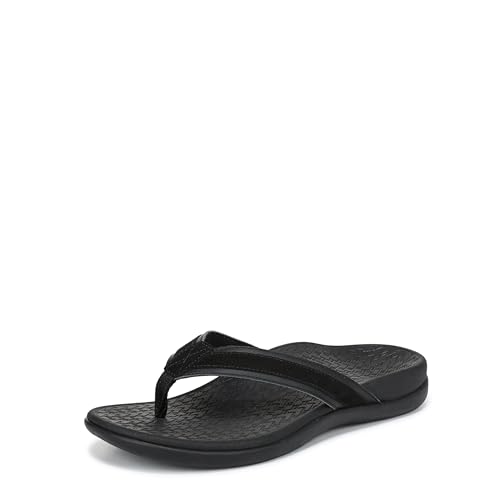
Vionic Tide
The podiatrist-designed thong with a contoured footbed: the best arch support in this guide, for hot homes.
The Vionic Tide is the arch-support thong in this guide, and it is the one for a wearer in a hot climate who needs support most. It has a contoured EVA footbed with a raised arch, a deep heel cup, and a thong that is soft against the skin, and it is made by Vionic, the maker known for podiatrist-designed footwear. The Tide is the thong for a wearer whose feet ache, whose arches collapse, or who has been told to wear supportive footwear, and it is the one that podiatrists recommend most often.
The Tide works because its footbed is shaped, not flat. The raised arch supports the foot, the heel cup holds the heel in place, and the forefoot is cushioned, so the pressure is spread across the foot rather than concentrated on the heel and the ball. Owners report that it takes a few days to get used to the firm arch, and that after that, it is the most comfortable thong they own, and that it is the one they wear when their feet ache. The thong is soft, the sole is durable, and the thong is open, so air circulates, which is what a hot climate needs.
The trade-offs are the break-in and the look. The Tide is firm when new, and it needs a few days before it feels comfortable, which frustrates a wearer who expects instant softness. It is also a structured thong, which looks more like a sandal than a beach thong, and it is the most expensive thong in this guide. The thong is sized in whole sizes, so a buyer between sizes should size up, and a wearer with wide feet should check the width, since the Tide is a medium width.
One practical note: Vionic thongs are sized in US sizes, and the fit is true to size, so a buyer should take her usual size. A wearer who has never worn a contoured footbed should expect a few days of adjustment, and should wear the Tide for short periods at first, building up to a full day, since the arch needs time to get used to the support.
Strengths:
- Contoured footbed with a raised arch
- Deep heel cup that holds the heel firmly
- Open thong; air circulates, feet stay cool
- Podiatrist-designed; recommended most often
Trade-offs:
- Firm when new; needs a few days to break in
- Structured look; not a beach thong
- More expensive than flat thongs
Who it fits: Wearers in hot homes who need real arch support.
Check price on Amazon: Vionic Tide
How to Choose a House Slipper for a Hot Climate
Start with airflow, because it decides the coolness. A slipper with an open back lets heat escape, a slipper with a loose fit lets air circulate, and a slipper with a wool or mesh lining lets moisture escape, while a slipper with a synthetic lining traps it. The Glerups wool slipper in this guide is the best for airflow, since wool breathes, and the Acorn Spa Thong is the best for openness, since it is a thong. A buyer should choose a slipper that lets air move, since a slipper that traps heat will not be worn, whatever else it offers.
Next, check the material. Wool is the best material for a hot climate, because it breathes and it wicks moisture, so the foot stays dry, while synthetic materials trap heat and make the foot sweat. The Glerups in this guide is wool, and it is the one for a wearer who wants a natural slipper that breathes, while the Birkenstock Arizona EVA is synthetic, but it is open, so it lets air move. A buyer should choose a natural material, or an open design, since both will keep the foot cooler than a closed, synthetic slipper.
Then consider the sole. A slipper for a hot climate will be worn on tile and stone floors, which are cool, and a thin sole will let the cool through, while a thick one will insulate the foot from it. The Birkenstock Arizona EVA and the OOFOS OOriginal in this guide have soles that are comfortable on cool floors, and they are the ones for a wearer who wants to feel the cool floor. A buyer should choose a sole that is comfortable on the floor it will be worn on, since a slipper that is too thick will be hot, and one that is too thin will be cold on a stone floor in winter, though that is less of a concern in a hot climate.
Fit is the fourth decision, and it matters for a hot-climate slipper as much as for any other. A slipper should fit snugly, since it has no fastening, and a loose slipper will slip off the heel, especially when the foot is sweaty. Most slippers in this guide are sold in whole sizes, so a buyer between sizes should size up, and a buyer who wears thick socks should size up as well, though most wearers in a hot climate go barefoot, which is cooler.
Finally, think about care. A slipper that can be machine washed, like the Acorn Spa Thong or the isotoner Microterry Scuff, is easier to keep fresh in the heat, since the feet sweat more, than one that must be aired, like the Glerups, which needs care. A buyer who wants the easiest care should choose a washable slipper, and a buyer who wants the most breathable should choose a wool one, since the breathability is worth the extra care.
Common Mistakes When Buying Slippers for a Hot Climate
The most common mistake is buying a heavy shearling slipper for a hot house. A shearling slipper will make the feet sweat within minutes, and a wearer who is given one will leave it unworn. The fix is to choose a light, breathable slipper, like the Glerups or the Birkenstock Arizona EVA, which will keep the feet cool, rather than a heavy one that is made for winter.
The second mistake is buying a closed, synthetic slipper. A synthetic lining traps heat and moisture, and a closed slipper traps more, so the combination is the worst for a hot climate. The fix is to choose a natural material, like wool, or an open design, like a thong or a sandal, since both will let air move, and a slipper that lets air move will be worn, while one that does not will not be.
The third mistake is buying a slipper with a thick sole for a cool tile floor. A thick sole insulates the foot from the cool floor, while a thin one lets the cool through, so a buyer with tile floors should choose a thinner sole, like the Birkenstock or the OOFOS, which are comfortable on cool floors, rather than a thick one, which will be hot.
The fourth mistake is forgetting to wash. Feet sweat more in a hot climate, and a slipper that is not washed will develop odour within days. The fix is to choose a washable slipper, like the Acorn Spa Thong or the isotoner Microterry Scuff, and to wash it regularly, on a gentle cycle, and air dry it, since a slipper that is washed will stay fresh, and one that is not will smell.
Sizing and Fit for Hot Climate Slippers
Hot climate slippers should be fitted snugly, since they will be worn barefoot and the foot will sweat, which makes a loose slipper slip. A slipper that feels snug at first will usually fit well after a week, while a slipper that feels loose on day one will only get looser, and a loose slipper will slip off the heel, especially when the foot is sweaty. Most slippers in this guide are sold in whole sizes, so a buyer between sizes should size up, and a buyer who wears socks should size up as well, though most wearers in a hot climate go barefoot.
Feet swell in the heat, and a hot-climate slipper should be fitted in the late afternoon, when the feet are at their largest and warmest. A slipper tried on in the morning may feel tight by dinner time, and a slipper that feels comfortable in the evening will feel roomy in the morning. Fitting in the afternoon gives a fit that works for the whole day, and a slipper that fits in the afternoon will not pinch in the evening, when the feet are hottest.
A hot-climate slipper should be tried on barefoot, since that is how it will be worn. A wearer who tries it on with socks will get the wrong fit, since the sock takes up room, and a slipper that fits with socks will feel loose barefoot. A buyer should try the slipper on barefoot, and should expect it to feel snug at first, since the foot will swell in the heat, and a snug fit will become a good fit.
Caring for Hot Climate Slippers
Hot climate slippers last longer when they are washed regularly. Feet sweat more in the heat, and a slipper that is not washed will develop odour within days, and the lining will break down sooner. Most slippers in this guide can be washed with soap and water, and air dried away from direct sun, since sunlight can damage the material and make it brittle.
Wool slippers should be aired out rather than washed, since heat and agitation can shrink wool, and a wool slipper that is washed will wear out sooner than one that is aired. A Glerups slipper should be spot cleaned with a damp cloth, and dried away from direct heat, since a radiator can shrink wool. A slipper that is cared for will last for years, and one that is neglected will wear out within months, whatever it is made from.
Frequently Asked Questions
What is the best slipper for a hot climate?
The Glerups Wool Slipper, for most wearers, since wool breathes and wicks moisture, so the foot stays cool and dry, even in a hot house. A wearer who wants an open slipper should choose the Birkenstock Arizona EVA, which is a sandal, and a wearer who wants a thong should choose the OOFOS OOriginal, which is soft and cushioned. A buyer should choose a slipper that lets air move, since a slipper that traps heat will not be worn.
Do wool slippers work in hot weather?
Yes, surprisingly well, since wool breathes and wicks moisture, so it keeps the foot cool in heat and warm in cold. A wool slipper like the Glerups will stay comfortable in a wider range of temperatures than a synthetic one, which traps heat. A wearer who has never worn wool in the heat should try it, since it is cooler than expected, and it does not make the feet sweat the way synthetic linings do.
Should I wear socks with slippers in a hot climate?
Usually not, since socks add a layer that traps heat, and bare feet are cooler. A wearer who goes barefoot should choose a slipper with a soft lining, like the Glerups or the Acorn Spa Thong, which are gentle against bare skin, and a wearer who wears socks should choose a wool sock, which wicks moisture, rather than a synthetic one, which traps heat.
How do I keep slippers from smelling in hot weather?
Wash them regularly, and air them out after every wear. Feet sweat more in the heat, and a slipper that is not washed will develop odour within days. A washable slipper, like the Acorn Spa Thong or the isotoner Microterry Scuff, can be machine washed on a gentle cycle, which is the easiest way to keep it fresh, while a wool slipper should be aired out and spot cleaned, since heat can shrink wool.
Can I wear slippers outside in a hot climate?
Yes, if the slipper has a rubber outsole. The Birkenstock Arizona EVA and the OOFOS OOriginal in this guide have rubber soles and can be worn outside, while the Glerups with a leather sole should stay indoors. A slipper with a fabric sole should stay indoors, since it will wear through quickly on rough ground, and a wearer who wears slippers outside should choose one with a real sole.
Conclusion
The best house slippers for inside hot climate are the ones that breathe, that let air move, and that keep feet cool and dry, and the Glerups Wool Slipper leads this guide for breathability while the Birkenstock Arizona EVA leads for openness. The OOFOS OOriginal is the cushioned choice, the Acorn Spa Thong is the spa choice, the isotoner Microterry Scuff is the light choice, and the Vionic Tide is the supportive choice. Any of the six will serve well, and the right one is the one whose airflow, material and sole match the wearer’s hot home.
Choose a slipper that lets air move, pick a natural material or an open design, go barefoot for coolness, and wash the slippers regularly. A slipper bought with those rules in mind will keep feet cool in a hot house, which is the real test of a hot-climate slipper.
