What's inside
- Quick picks: best home slippers for pregnant
- What Makes a Good Slipper for Pregnancy?
- Quick Comparison
- How to Choose a Home Slipper for Pregnancy
- Common Mistakes When Buying Slippers for Pregnancy
- Sizing and Fit for Pregnancy Slippers
- Caring for Pregnancy Slippers
- Frequently Asked Questions
- Slippers for Pregnancy: Third Trimester Tips
- Conclusion
As an Amazon Associate I earn from qualifying purchases. This post may contain affiliate links at no extra cost to you.
Quick picks: best home slippers for pregnant
| # | Product | Where to buy |
|---|---|---|
| 1 | Orthofeet Charlotte Slipper | Check on Amazon |
| 2 | Vionic Relax Slipper | Check on Amazon |
| 3 | Propet Cush ’N Foot Slipper | Check on Amazon |
| 4 | Drew Bloom II Slipper | Check on Amazon |
| 5 | Acorn Moc Slipper | Check on Amazon |
| 6 | UGG Scuffette II | Check on Amazon |
What Makes a Good Slipper for Pregnancy?
Pregnancy changes the feet, and a slipper that fitted before may not fit now. The feet swell, the arches flatten, the balance shifts, and bending down to put on shoes becomes harder, so a slipper for pregnancy must be roomy, supportive, easy to step into, and safe on smooth floors. The slippers in this guide are chosen because they meet those needs: they have roomy toe boxes, adjustable straps or stretchy uppers, contoured footbeds, and rubber soles that grip, and they are the ones that pregnant wearers reach for when their feet change.
The first thing that matters is room. Swollen feet need a roomy toe box, a wide width, and an upper that stretches, since a narrow slipper will pinch, and a slipper that pinches will not be worn. The Orthofeet Charlotte and the Propet Cush ’N Foot in this guide are sold in wide widths, with roomy toe boxes and stretchy uppers, and they are the ones for swollen feet. A buyer should check the width before any other feature, since it is the part that decides whether the slipper fits, and a slipper that does not fit will not be worn, whatever else it offers.
The second thing is ease. Bending down becomes harder as pregnancy progresses, and a slipper that needs a hand to put on, or a strap to adjust, will be left unworn, while a slip-on that can be stepped into will be worn every day. The UGG Scuffette II and the Acorn Moc in this guide are slip-ons, and they are the ones for a wearer who wants to put her slippers on without bending down. A slipper that is easy to put on is worth more than one that is not, whatever else it offers, especially in the later months.
The third thing is support. The arches flatten during pregnancy, and the feet ache, so a slipper with a contoured footbed and a raised arch will help, while a flat one will not. The Vionic Relax and the Orthofeet Charlotte in this guide have contoured footbeds, and they are the ones for a wearer whose feet ache. A slipper with support will be worn all day, and one without will be left unworn, so the support matters as much as the room.
Each slipper below is described with its strengths, its trade-offs and the wearer it fits, plus a guide to choosing between them, the mistakes that waste money, and answers to the questions shoppers ask most. The descriptions are based on the makers’ published specifications and on widely reported owner experience, and no prices are given because prices change with size, colour and retailer. Nothing in this guide is medical advice: a pregnant wearer should talk to a doctor, who can advise on the right footwear for her.
Quick Comparison
| Slipper | Materials | Standout features | Best for |
|---|---|---|---|
| Orthofeet Charlotte | Stretch, wide widths | Roomy, adjustable, orthotic-friendly | Best roomy slipper for pregnancy |
| Vionic Relax Slipper | Microterry, contoured | Arch support, soft, washable | Best supportive slipper |
| Propet Cush ’N Foot | Suede, wide widths | Wide, cushioned, secure strap | Best wide slipper |
| Drew Bloom II | Leather, wide widths | Firm, durable, roomy | Best durable slipper |
| Acorn Moc Slipper | Wool, microsuede | Soft, warm, easy slip-on | Best soft slip-on slipper |
| UGG Scuffette II | Suede, wool lining | Softest, plush, slip-on | Best soft premium slipper |

Orthofeet Charlotte Slipper
The roomy, adjustable slipper for swollen feet: stretchy, wide, and made for changing feet.
The Orthofeet Charlotte Slipper is the roomy slipper in this guide, and it is the one for a pregnant wearer whose feet have swollen. It has a stretchy upper, a roomy toe box, a wide width option, an adjustable strap, and a removable insole that fits orthotics, and it is made by Orthofeet, the maker known for comfort footwear. The Charlotte is the slipper for a wearer who needs room, softness, and adjustability, and it is the one that podiatrists recommend most often for swollen feet.
The Charlotte works because its upper stretches, so it gives where the foot needs room, and its strap adjusts, so it can be loosened when the foot swells and tightened when it goes down. The insole is removable, so an orthotic can be fitted, and the footbed is cushioned, so the foot is supported. Owners report that the Charlotte is the slipper they wear when their feet swell, and that it is the one they recommend to friends who need a roomy slipper, since it fits when others do not. The slipper is also machine washable, which is a real advantage for a slipper that will be worn every day.
The trade-offs are that the Charlotte is a practical slipper, not a pretty one, and it looks more like a comfort shoe than a soft scuff. It is also more expensive than the Acorn or the UGG in this guide, though it is the roomiest, and it is sold in wide widths, so a buyer should check the width carefully. It is a roomy slipper, and it should be bought for that reason.
One practical note: Orthofeet slippers are sold in medium and wide widths, and a pregnant wearer should choose wide, since the feet swell. A buyer should measure the foot and check the size chart, since a slipper that is too narrow will pinch, and one that is too wide will slip, so the width should be chosen for the swollen foot, not for the usual size.
Strengths:
- Stretchy upper that gives where the foot swells
- Roomy toe box and wide width options
- Adjustable strap for changing feet
- Removable insole that fits orthotics
Trade-offs:
- Practical look; not a pretty slipper
- More expensive than soft slippers
- Wide widths need careful sizing
Who it fits: Pregnant wearers whose feet have swollen.
Check price on Amazon: Orthofeet Charlotte Slipper
Vionic Relax Slipper
The supportive slipper with a contoured footbed: the best choice for aching feet in pregnancy.
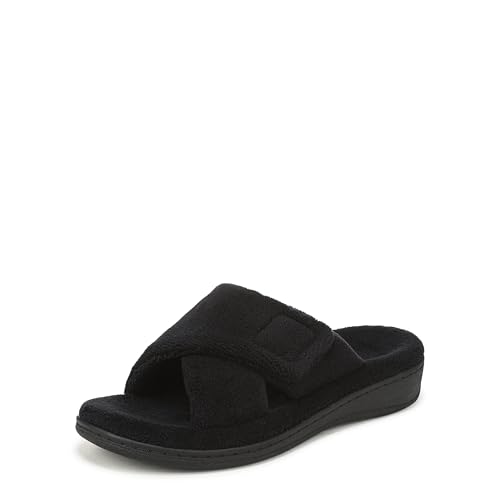
The Vionic Relax Slipper is the supportive slipper in this guide, and it is the one for a pregnant wearer whose feet ache. It has a microterry upper, a contoured footbed with a raised arch, a deep heel cup, and a rubber outsole, and it is made by Vionic, the maker known for podiatrist-designed footwear. The Relax is the slipper for a wearer who wants a soft slipper with real arch support, and it is the one that podiatrists recommend most often for home wear.
The Relax works because its footbed is shaped, not flat. The raised arch supports the foot, the heel cup holds the heel in place, and the forefoot is cushioned, so the pressure is spread across the foot rather than concentrated on the heel and the ball. Owners report that it takes a few days to get used to the firm arch, and that after that, it is the most comfortable slipper they own, and that it is the one they wear when their feet ache. The microterry upper is soft, the slipper is machine washable, and the rubber outsole has enough tread for a quick trip outside.
The trade-offs are the break-in and the look. The Relax is firm when new, and it needs a few days before it feels comfortable, which frustrates a wearer who expects instant softness. It is also a structured slipper, which looks more like a shoe than a soft scuff, and it is the most expensive slipper in this guide. The slipper is sized in whole sizes, so a buyer between sizes should size up, and a wearer with wide feet should check the width, since the Relax is a medium width.
One practical note: Vionic slippers are sized in US sizes, and the fit is true to size, so a buyer should take her usual size, or size up if her feet have swollen. A wearer who has never worn a contoured footbed should expect a few days of adjustment, and should wear the Relax for short periods at first, building up to a full day, since the arch needs time to get used to the support.
Strengths:
- Contoured footbed with a raised arch
- Deep heel cup that holds the heel firmly
- Plush microterry upper that feels soft
- Machine washable; easy to keep fresh
Trade-offs:
- Firm when new; needs a few days to break in
- Structured look; not a soft scuff
- Medium width; may be narrow for swollen feet
Who it fits: Pregnant wearers who need arch support.
Check price on Amazon: Vionic Relax Slipper
Propet Cush ’N Foot Slipper
The wide, cushioned slipper with a secure strap: the best choice for wide, swollen feet.
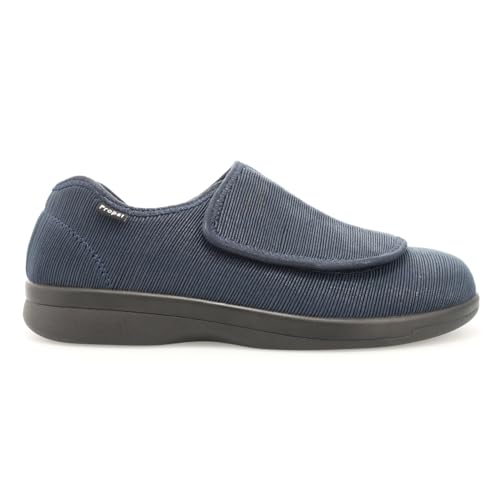
The Propet Cush ’N Foot Slipper is the wide slipper in this guide, and it is the one for a pregnant wearer with wide, swollen feet. It has a suede upper, a cushioned footbed, a roomy toe box, a wide width option, and a secure strap, and it is made by Propet, the maker known for wide-width footwear. The Cush ’N Foot is the slipper for a wearer who needs width and a secure fit, and it is the one that podiatrists recommend for wide feet.
The Cush ’N Foot works because it is wide, and its strap holds the foot securely, so it does not slip, even when the foot is swollen. The suede upper is soft, the footbed is cushioned, and the slipper is durable, so it lasts for a whole pregnancy, which is more than can be said for a soft slipper. Owners report that the Cush ’N Foot is the slipper they wear when their feet swell, and that it is the one they recommend to friends who need a wide slipper, since it fits when others do not.
The trade-offs are that the Cush ’N Foot is a practical slipper, not a pretty one, and it looks more like a comfort shoe than a soft scuff. It is also heavier than the Acorn or the UGG in this guide, and it is sold in wide widths, so a buyer should check the width carefully. It is a wide slipper, and it should be bought for that reason.
One practical note: Propet slippers are sold in medium, wide, and extra-wide widths, and a pregnant wearer should choose wide or extra-wide, since the feet swell. A buyer should measure the foot and check the size chart, since a slipper that is too narrow will pinch, and one that is too wide will slip, so the width should be chosen for the swollen foot.
Strengths:
- Wide and extra-wide widths available
- Secure strap that holds a swollen foot
- Cushioned footbed that supports the foot
- Durable suede upper that lasts
Trade-offs:
- Practical look; not a pretty slipper
- Heavier than soft slippers
- Wide widths need careful sizing
Who it fits: Pregnant wearers with wide, swollen feet.
Check price on Amazon: Propet Cush ’N Foot Slipper

Drew Bloom II Slipper
The firm, durable leather slipper: roomy, supportive, and made to last through pregnancy and beyond.
The Drew Bloom II Slipper is the durable slipper in this guide, and it is the one for a pregnant wearer who wants a firm, supportive slipper that will last. It has a leather upper, a contoured footbed, a roomy toe box, a wide width option, and a removable insole, and it is made by Drew, the maker known for comfort footwear. The Bloom II is the slipper for a wearer who wants a leather slipper with room and support, and it is the one that podiatrists recommend for a firm, durable fit.
The Bloom II works because its leather is durable, its footbed is contoured, and its toe box is roomy, so the toes can spread, which is what swollen feet need. The insole is removable, so an orthotic can be fitted, and the slipper is firm, so it supports the foot, rather than letting it collapse. Owners report that the Bloom II is the slipper they wear when their feet ache, and that it is the one they recommend to friends who want a firm slipper, since it lasts for years, which is more than can be said for a soft one.
The trade-offs are that the Bloom II is firm when new, and it needs a week or two to break in, since the leather is thick. It is also a practical slipper, not a pretty one, and it is more expensive than the Acorn or the UGG in this guide, though it is more durable. It is a firm slipper, and it should be bought for that reason.
One practical note: Drew slippers are sold in medium and wide widths, and a pregnant wearer should choose wide, since the feet swell. A buyer should measure the foot and check the size chart, since a slipper that is too narrow will pinch, and the leather will stretch slightly with wear, so a snug fit at first is normal.
Strengths:
- Durable leather upper that lasts for years
- Roomy toe box that lets the toes spread
- Contoured footbed with real support
- Removable insole that fits orthotics
Trade-offs:
- Firm when new; needs a week or two to break in
- Practical look; not a pretty slipper
- More expensive than soft slippers
Who it fits: Pregnant wearers who want a firm, durable slipper.
Check price on Amazon: Drew Bloom II Slipper

Acorn Moc Slipper
The soft wool moc slipper: cloud comfort, warm, and easy to step into without bending down.
The Acorn Moc Slipper is the soft slip-on in this guide, and it is the one for a pregnant wearer who wants a slipper she can step into without bending down. It has a wool and microsuede upper, a cloud-contour footbed, a plush lining, and a rubber outsole, and it is made by Acorn, the maker founded in Maine that has been building slippers for decades. The Moc is the slipper for a wearer who wants a soft, warm slipper, and who wants one that is easy to put on in the later months.
The Acorn Moc works because its cloud-contour footbed is soft and supportive, and its wool lining is warm without being hot. The microsuede upper is soft, the footbed cushions the foot, and the rubber outsole has enough tread for a quick trip outside. Owners report that the Moc is the slipper they wear most often, because it is the softest one they own, and that it is the one they recommend to friends who want a comfortable slipper. The slipper is also easy to step into, which is the feature that matters most in the later months, when bending down is hard.
The trade-offs are that the Moc is a soft slipper, not a structured one. It has no arch support, the wool lining needs airing, and the slipper is sold in whole sizes, so a buyer between sizes should size up. It is a soft, comfortable slipper, not a supportive one, and it should be bought for that reason, though it is the easiest to put on in this guide.
One practical note: Acorn slippers are sold in whole sizes, and the fit is roomy, so most wearers take their usual size, or size up if their feet have swollen. A buyer who wears thick socks should consider sizing up, and the slipper should be aired out rather than washed, since the wool lining needs airing to stay fresh.
Strengths:
- Soft wool and microsuede upper
- Cloud-contour footbed that cushions the foot
- Easy slip-on; no bending down needed
- Warm without being hot
Trade-offs:
- No arch support
- Wool lining needs airing, not washing
- Soft slipper, not a structured one
Who it fits: Pregnant wearers who want an easy slip-on slipper.
Check price on Amazon: Acorn Moc Slipper

UGG Scuffette II
The softest slipper in this guide: suede, wool lining, and a plush collar that hugs the ankle.
The UGG Scuffette II is the softest slipper in this guide, and it is the one for a pregnant wearer who wants a slipper that feels like a hug. It has a suede upper, a wool lining, a plush collar, and a moulded rubber outsole, with a low profile that suits a wearer who wants a slipper she can wear to the door, to the car and around the house without changing footwear. The Scuffette II is the slipper for a wearer who likes the UGG feel, the soft wool and the cushioned footbed, and who wants the softest slipper available.
The Scuffette II works because its wool lining does not flatten the way faux fur does, its suede upper is sturdy, and its rubber outsole is moulded, not glued, so it does not separate. Owners report that the Scuffette II is the slipper they wear most often, because it is the one that works in the most situations, and that it holds its shape well over time, which is not true of every soft slipper. The wool lining breathes, so the slipper stays comfortable in mild weather, and the rubber outsole has enough tread for wet porches and garden paths.
The trade-offs are the ones that come with suede and with a premium slipper. The suede upper needs a protector spray before it meets rain, and the slipper is not a walking shoe, so it should not be worn for long distances or on rough ground. The footbed is cushioned but flat, so a wearer who needs real arch support should add an insole or choose a structured slipper. The Scuffette II is also sold in whole sizes, and it fits snugly at first, loosening slightly as the lining compresses, so a pregnant wearer whose feet have swollen should size up.
One practical note: UGG slippers are widely copied, and the copies use synthetic linings that do not last. A buyer should buy from a known retailer and check that the upper is suede, the lining is wool, and the sole is rubber, since those three things are what make the Scuffette II worth its place in this guide.
Strengths:
- Suede upper with a breathable wool lining
- Plush collar that hugs the ankle
- Moulded rubber outsole that does not separate
- Cushioned footbed that stays comfortable for hours
Trade-offs:
- Suede needs protector spray in wet weather
- Flat footbed with little arch support
- Snug fit; size up if feet have swollen
Who it fits: Pregnant wearers who want the softest, plushest slipper.
Check price on Amazon: UGG Scuffette II
How to Choose a Home Slipper for Pregnancy
Start with room, because swollen feet need it most. A roomy toe box, a wide width, and a stretchy upper are the features that matter, and a slipper that is too narrow will pinch, whatever else it offers. The Orthofeet Charlotte and the Propet Cush ’N Foot in this guide are sold in wide widths, with roomy toe boxes and stretchy uppers, and they are the ones for swollen feet. A buyer should check the width before any other feature, and should choose wide if the feet have swollen, since a slipper that fits the swollen foot will be worn, and one that does not will not be.
Next, consider ease. Bending down becomes harder as pregnancy progresses, and a slipper that needs a hand to put on, or a strap to adjust, will be left unworn, while a slip-on that can be stepped into will be worn every day. The UGG Scuffette II and the Acorn Moc in this guide are slip-ons, and they are the ones for a wearer who wants to put her slippers on without bending down. A slipper that is easy to put on is worth more than one that is not, whatever else it offers, especially in the later months.
Then think about support. The arches flatten during pregnancy, and the feet ache, so a slipper with a contoured footbed and a raised arch will help, while a flat one will not. The Vionic Relax and the Orthofeet Charlotte in this guide have contoured footbeds, and they are the ones for a wearer whose feet ache. A slipper with support will be worn all day, and one without will be left unworn, so the support matters as much as the room.
Fit is the fourth decision, and it changes during pregnancy, since the feet swell and then go down. A slipper that fits in the morning may be tight by dinner time, and a slipper with an adjustable strap, like the Orthofeet Charlotte, can be loosened when the foot swells and tightened when it goes down, which is the feature that makes it wearable for feet that change size. A buyer should choose a slipper that can adjust, or should size up, since a slipper that is a little large will be worn, while one that is too small will not be.
Finally, think about safety. A slipper with a rubber sole that grips will not slip on smooth floors, while a slipper with a smooth sole will, and a pregnant wearer should not risk a fall. The slippers in this guide all have rubber outsoles with tread, and they are the ones to choose, since a slipper that grips is safer than one that does not, and safety matters more than any other feature during pregnancy.
Common Mistakes When Buying Slippers for Pregnancy
The most common mistake is buying the usual size, and not accounting for swelling. Feet swell during pregnancy, and a slipper bought in the usual size will be too tight within weeks. The fix is to size up, or to choose a wide width, since a slipper that is a little large will be worn, while one that is too small will not be, and a slipper with an adjustable strap can be loosened as the feet swell.
The second mistake is buying a slipper that is hard to put on. Bending down becomes harder as pregnancy progresses, and a slipper that needs a hand, a zip, or a strap will be left unworn. The fix is to choose a slip-on, like the UGG Scuffette II or the Acorn Moc, which can be stepped into without bending down, and which a pregnant wearer will wear every day, even in the later months.
The third mistake is buying a flat slipper with no support. The arches flatten during pregnancy, and the feet ache, so a flat slipper will tire the feet, while a contoured one will support them. The fix is to choose a slipper with a contoured footbed, like the Vionic Relax or the Orthofeet Charlotte, which support the arch and hold the heel, and which will be worn all day, rather than a flat slipper that will be left unworn.
The fourth mistake is forgetting safety. A slipper with a smooth sole will slip on a smooth floor, and a pregnant wearer should not risk a fall. The fix is to choose a slipper with a rubber sole that grips, like the ones in this guide, and to avoid a smooth, flat sole, which is the worst choice for a pregnant wearer, since a fall during pregnancy is more serious than at other times.
Sizing and Fit for Pregnancy Slippers
Pregnancy slippers should be fitted to the swollen foot, not to the usual size. A slipper that fits the swollen foot will be comfortable, and one that fits the usual foot will be too tight, so a buyer should measure the foot when it is swollen, in the late afternoon, when the feet are at their largest, and should choose the size and width that fit then. Most slippers in this guide are sold in whole sizes and in wide widths, so a buyer should size up and choose wide if the feet have swollen.
Feet change size during pregnancy, and a slipper with an adjustable strap is the best answer, since it can be loosened when the foot swells and tightened when it goes down. The Orthofeet Charlotte in this guide has an adjustable strap, and it is the one for a wearer whose feet change size during the day. A slipper that can adjust will be worn for the whole pregnancy, while one that cannot will fit only sometimes, and a buyer who chooses an adjustable slipper will get more wear from it.
A pregnant wearer should try the slipper on with the socks that will be worn with it, since a thick sock changes the fit, and the feet may be swollen. A wearer who goes barefoot should take her usual size, or size up if her feet have swollen, and a wearer who wears socks should consider sizing up as well, since the sock takes up room. A slipper that is bought for the swollen foot will be worn, and one that is bought for the usual foot will not be, so the fitting should match the swollen foot.
Caring for Pregnancy Slippers
Pregnancy slippers last longer when they are aired out after each wear. The lining holds moisture, and a slipper that is shut away damp will develop odour and the lining will break down sooner. Leave the slippers in a ventilated spot, and they will dry, the lining will recover, and the slipper will stay fresh for months longer than one that is stored damp.
Suede and leather need protection before they are worn. A suede protector spray keeps water and stains out of the fibres, and a leather conditioner keeps the upper supple and prevents cracking. Both should be applied before the first wear and reapplied every few months, and both are cheaper than replacing a slipper that has been stained or dried out. A machine-washable slipper, like the Orthofeet Charlotte or the Vionic Relax, should be washed on a gentle cycle and air dried, since heat can damage the footbed.
Frequently Asked Questions
What size slipper should I buy during pregnancy?
Size up, and choose wide if your feet have swollen. Feet swell during pregnancy, and a slipper bought in the usual size will be too tight within weeks. A buyer should measure the foot when it is swollen, in the late afternoon, and should choose the size and width that fit then, since a slipper that is a little large will be worn, while one that is too small will not be.
Are slippers safe during pregnancy?
Yes, if they have a rubber sole that grips, and they fit well. A slipper with a smooth sole will slip on a smooth floor, and a pregnant wearer should not risk a fall, so a slipper with a rubber outsole and tread, like the ones in this guide, is the safe choice. A wearer with any concern should talk to a doctor, who can advise on the right footwear for her.
Should I wear arch support slippers during pregnancy?
Many wearers find them helpful, since the arches flatten during pregnancy and the feet ache, and a contoured footbed supports the arch. The Vionic Relax and the Orthofeet Charlotte in this guide have contoured footbeds, and they are the ones for a wearer whose feet ache. A wearer should talk to a doctor or a podiatrist, who can advise on whether arch support is right for her.
How do I put on slippers when I cannot bend down?
Choose a slip-on, like the UGG Scuffette II or the Acorn Moc, which can be stepped into without bending down. A slipper with a strap or a zip will need a hand, and a pregnant wearer in the later months will find it hard to reach her feet, so a slip-on is the best answer. A long-handled shoe horn can also help, and it is worth having in the later months.
When should I buy new slippers during pregnancy?
When the old ones no longer fit, usually in the second trimester, when the feet start to swell. A wearer should not wait until the old slippers are painful, since a slipper that pinches will not be worn, and a new pair that fits the swollen foot will be more comfortable. A wearer should also expect to need a different size after the baby is born, since the feet may not return to their usual size immediately.
Slippers for Pregnancy: Third Trimester Tips
The third trimester is when the feet change most, and a slipper that fitted in the second trimester may not fit now. The feet swell more, the balance shifts further, and bending down becomes hardest, so a slipper for the third trimester must be roomier, easier to put on, and safer on smooth floors than one for earlier months. The Orthofeet Charlotte in this guide is the best for the third trimester, since its strap adjusts as the feet swell, and its toe box is roomy, while the Acorn Moc and the UGG Scuffette II are the easiest to step into, since they are slip-ons that need no bending down. A wearer in the third trimester should choose a slipper that adjusts, or should size up, since a slipper that is a little large will be worn, while one that is too small will not be.
Safety matters most in the third trimester, since a fall is more serious than at other times, and a slipper with a rubber sole that grips will not slip on a smooth floor, while one with a smooth sole will. A wearer should check the sole before buying, and should choose a slipper with tread, like the ones in this guide, and should avoid a smooth, flat sole, which is the worst choice for a pregnant wearer. A wearer should also keep the floors clear, since a slipper that grips will still slip on a rug that moves, and a rug that is not secured is a hazard, whatever the slipper. A wearer with any concern about footwear, balance, or swelling should talk to a doctor, who can advise on the right choice for her.
Conclusion
The best home slippers for pregnant women are the ones that are roomy, easy to put on, supportive, and safe, and the Orthofeet Charlotte leads this guide for roominess while the Vionic Relax leads for support. The Propet Cush ’N Foot is the wide choice, the Drew Bloom II is the durable choice, the Acorn Moc is the easy slip-on choice, and the UGG Scuffette II is the soft premium choice. Any of the six will serve well, and the right one is the one whose room, ease and support match the wearer’s changing feet.
Size up for swollen feet, choose a slip-on that is easy to step into, pick a contoured footbed if the feet ache, and make sure the sole grips. A slipper bought with those rules in mind will be worn every day through pregnancy, which is the real test of a pregnancy slipper.

