What's inside
- Key Takeaways
- Quick Picks
- How Did We Choose the Best 60-Inch Air Jet Bathtubs?
- How Does an Air Bath Actually Differ from a Whirlpool?
- What Electrical and Plumbing Work Does an Air Tub Need?
- How Do the Six Options Compare?
- Where Does a 60-Inch Air Tub Fit Best in Real Homes?
- Which Air Tub Features Are Worth Paying For, and Which Are Theatre?
- How Do You Care for an Air Tub So It Stays Fresh?
- What Changes About Bath Night Once an Air Tub Moves In?
- How Should You Test an Air Tub Before Committing?
- What Mistakes Do Air Tub Buyers Keep Making?
- Final Recommendation
- Frequently Asked Questions
- Related Guides
As an Amazon Associate I earn from qualifying purchases. This post may contain affiliate links at no extra cost to you.
cottageverdict.com is reader-supported. When you buy through links on our site, we may earn an affiliate commission.
Where to buy: The four orderable models below are sold on Amazon; a linked name leads to the listing where you can check price on Amazon, confirm the blower and drain configuration, and review freight delivery terms.
There is a particular quiet that comes with the best 60-inch air jet bathtubs, and it starts with what they are not. They are not whirlpools. Instead of a pump driving water through a handful of forceful jets, an air tub pushes warmed air through dozens of tiny openings in the basin floor and walls, wrapping the bather in a rising curtain of fine bubbles. The massage is gentler, the plumbing is simpler, and — the detail experienced owners mention most — the system can blow itself dry after the bath, so nothing stagnant sits in hidden lines between soaks.
Why the 60-inch fixation? Because sixty inches is the length of the standard American alcove, which means an air-jet tub in this size drops into the footprint millions of bathrooms already have. You keep the three-wall layout, keep the shower overhead if you want it, and gain a bathing experience that used to require a dedicated spa room. Two of our four linked picks are exactly that: alcove-sized air tubs. A third is a compact freestanding model a whisker under the mark, and the fourth is a deliberate step up in size for readers whose remodel is not bound by the alcove at all — we flag it honestly as the larger alternative rather than pretending it measures sixty inches.
The final two seats on the list are prose-only, and deliberately so. The big legacy plumbing brands sell their alcove air baths mainly through showrooms and trade channels, with listings that appear and vanish too unpredictably to link responsibly. Rather than invent links, we discuss those tubs generically: what they do well, what they cost in tier terms, and when the showroom route beats ordering online.
One promise before the details: this guide will not pretend that bubbles are medicine. An air bath is a comfort appliance — a very good one — and its honest benefits are relaxation, warmth, and a bathing ritual people actually keep. Readers managing genuine joint or circulation conditions should take their questions to a clinician and treat any tub, this guide’s favourites included, as furniture for comfort rather than equipment for treatment.
Key Takeaways
- Air jets massage with warm bubbles rather than pumped water, giving a softer, quieter, more hygienic soak than classic whirlpool systems.
- The WOODBRIDGE 60 by 30 alcove model is the headline buy: true alcove dimensions, whirlpool and air modes combined, heated soaking.
- Freestanding air luxury exists near this size in the WOODBRIDGE 59-inch air bubble tub, at the cost of a floor-standing filler and more floor.
- The Empava 67-inch is the honest step-up: bigger in every direction, chosen when the alcove limit does not apply.
- Legacy-brand alcove air baths remain showroom products; we cover them prose-only instead of linking to unstable listings.
- Budget a dedicated electrical circuit into any air tub project — blowers and inline heaters are not plug-and-play appliances.
Quick Picks
| Pick | Badge | Why it made the list |
|---|---|---|
| WOODBRIDGE 60 x 30 Alcove Whirlpool and Air Tub | Best true 60-inch alcove | Whirlpool and air systems in one standard alcove footprint, with heated soaking and trim included. |
| WOODBRIDGE 59 Inch Whirlpool and Air Heated Tub | Best compact spa spec | Sixteen jets, adjustable blower speed, and a control panel in a slightly smaller freestanding-friendly shell. |
| WOODBRIDGE 59 Inch Air Bubble Freestanding Bathtub | Best pure air freestanding | A sculptural freestanding tub whose only trick is air — gentle bubbles in a clean oval form. |
| Empava 67 Inch Whirlpool Heated Tub | Best step-up size | Sixty-seven inches of heated whirlpool and air bathing for remodels free of the alcove’s limits. |
| Legacy-Brand Alcove Air Baths | Showroom route | The big plumbing names sell excellent 60-inch air baths through dealers rather than stable online listings. |
| Builder-Spec Air Tubs via Trade Suppliers | Prose-only value route | Plumbing-supply houses stock plain, durable air tubs that rarely surface as consumer listings at all. |
How Did We Choose the Best 60-Inch Air Jet Bathtubs?
We began by policing the category’s vocabulary, because listings blur it shamelessly. A true air tub has a blower and a field of small air injectors; a whirlpool has a pump and a few large water jets; many modern tubs, including two picks here, combine both systems in one shell. Every model below is labelled by what it actually contains, and the pure-air freestanding pick is there for readers who specifically want bubbles without pumped water.
Size discipline came second. The brief was sixty inches, so alcove-true models lead the list, the 59-inch models are admitted as the nearest honest neighbours — a single inch that changes nothing about how they fit a room — and the one larger tub is quarantined in its own clearly-labelled seat. A shortlist that quietly mixes 71-inch tubs into a 60-inch search helps nobody standing in a five-foot alcove with a tape measure.
We applied the same discipline to our own temptations. Several handsome air tubs at 66 and 72 inches auditioned for this page and were turned away, not for any fault of theirs, but because a guide that respects its reader’s tape measure earns the right to be trusted on the harder questions — hygiene, heaters, and electrical work — where the answers cannot be checked at a glance.
We then weighed the ownership details that listings underplay: whether the blower offers speed control, whether a heater maintains bath temperature or merely warms the air, how the system dries itself after use, and what electrical service the tub demands. Air tubs are appliances as much as furniture, and their spec sheets deserve the same sceptical reading you would give a washing machine.
Certification and support formed the last filter. The linked models carry recognisable safety listings and come from brands with an established catalogue of jetted tubs, so parts and documentation exist beyond the product page. The prose-only seats acknowledge the other half of the market honestly: excellent tubs exist that we simply cannot link to with a straight face, and pretending otherwise would serve the link, not the reader.
We also listened for the ownership stories behind the specifications. Air tubs fail socially before they fail mechanically: a blower exiled to a noisy spot, a control panel placed where a reclining bather cannot reach it, a purge cycle so fiddly that owners abandon it. Models whose layouts showed evidence of having been lived with — reachable controls, sensible blower placement, panels a hand can actually open — ranked above models with longer feature lists and shorter thinking.
How Does an Air Bath Actually Differ from a Whirlpool?
Climb into a whirlpool and the water itself is the masseuse: a pump draws bathwater in and drives it out through a small number of adjustable jets, each producing a firm, directed stream you can aim at a sore back or tired calves. It is targeted, vigorous, and — because the same water recirculates — it carries an obligation: the lines must be flushed and cleaned on schedule, or the system ages badly.
An air bath inverts the arrangement. A blower, usually with a heater to take the chill off, pushes air through check valves into dozens of tiny ports. The bubbles rise everywhere at once, producing a champagne-like effervescence that massages by movement and buoyancy rather than pressure. When the bath ends, most systems run a purge cycle that blows the air lines dry, which is why owners describe air tubs as the low-maintenance branch of the jetted family.
There is also a difference in how the two systems age. A whirlpool’s performance fades as its pump wears and its lines accumulate history; an air system’s blower either blows or it does not, and its failure is honest, diagnosable, and usually a single component swap through the access panel. Owners who plan to keep a tub for twenty years should weigh that simplicity heavily, because the second decade of ownership is mostly a story about maintenance, not first impressions.
The sensations suit different bathers. Whirlpool pressure pleases people who want a tub to work on specific muscles the way a masseuse’s thumbs would. Air pleases people who want to float in lively water, readers and thinkers and long-soak relaxers who find directed jets distracting. Combined tubs — both systems in one shell — exist precisely because households contain both temperaments, and two of our picks take that diplomatic route.
Noise is the honest caveat. A blower is a fan, and a fan makes sound; good systems insulate it well, and the bubble noise itself masks much of it, but an air bath will never be the silent object a plain soaker is. If your bathroom shares a wall with a nursery, run the display model in the showroom, or accept the gentle hum as part of the ritual the way vinyl listeners accept surface noise.
Temperature behaviour differs between the systems in a way listings rarely explain. A whirlpool’s pump adds a whisper of heat through its own work and otherwise leaves the bath to cool at its natural pace. An air system actively fights you if its blower is unheated, because every bubble is a tiny parcel of room-temperature air expanding in your hot water — the champagne effect, paid for in degrees. This is why heated blowers and inline heaters recur throughout the picks above, and why a suspiciously inexpensive air tub should prompt one question before all others: what, exactly, warms the air?
What Electrical and Plumbing Work Does an Air Tub Need?
Every jetted tub is an electrical appliance that happens to hold water, and the installation plan should treat it that way from the first sketch. Blowers and inline heaters typically require a dedicated circuit with ground-fault protection, installed by an electrician who can also confirm the panel has capacity to spare. This is not an optional upgrade or a fussy formality; it is the difference between a spa and a hazard, and inspectors will ask about it by name.
Access is the second planning item rookies miss. Pumps, blowers, and control boxes eventually need service, so the install must leave a way to reach them: an access panel in the apron wall, a removable skirt, or an adjoining closet wall that can open. A tub entombed permanently behind tile is a tub whose first blower fault becomes a demolition project, and experienced installers raise this before the first bead of silicone, not after.
On the plumbing side, the work is familiar — supply, drain, overflow — with two air-tub footnotes. The blower wants a sensible home, usually within a few feet of the tub, sometimes in an adjacent cabinet or closet, with its air line routed to avoid low spots where water could settle. And the drain assembly must match the tub’s configuration exactly, since jetted shells sit deeper and route differently than the plain tub they may be replacing.
Timing the trades matters as much as hiring them. The electrician’s rough-in belongs before the tub is set and long before tile, the plumber’s drain work coordinates with the tub’s arrival, and the final connections happen with the access route still open for testing. A jetted tub should be filled and run through every system before the alcove is sealed — leaks and blower quirks are ten-minute fixes at that stage and weekend-ruining discoveries a month later.
Freestanding air models add one more consideration: everything must arrive through the floor. There is no wall cavity to hide in, so the drain, supplies, and electrical all coordinate below the tub’s footprint, which rewards a plumber and electrician who talk to each other early. Budget the trades as part of the tub’s real cost, and the project stays a pleasure instead of becoming a cautionary tale told at dinner parties.
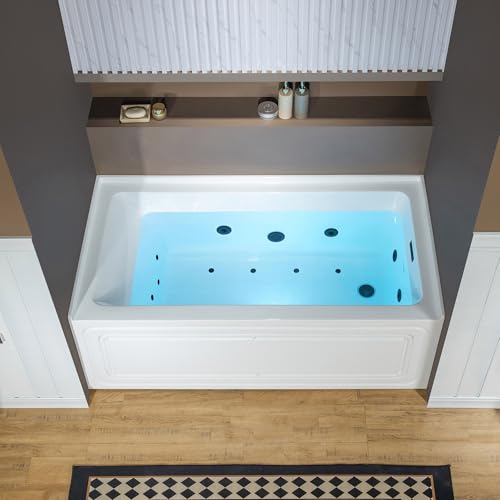
WOODBRIDGE 60 x 30 Alcove Whirlpool and Air Tub — Best true 60-inch alcove
Here is the tub this entire category exists for: a genuine 60 by 30 alcove model that brings both whirlpool and air bathing into the standard recess without asking the room to change shape. WOODBRIDGE builds it as a heated soaking tub, so the water you fill is the temperature you keep, and the matte black finish trim and drain kit arrive in the box rather than as a scavenger hunt through the plumbing aisle.
The dual-system layout is the thoughtful part. On evenings when your back wants persuasion, the whirlpool jets do the talking; on evenings when you want to read in lively water, the air system takes over at a murmur. Households rarely agree on which massage is better, and this tub settles the argument by refusing to have it. The right-drain configuration suits the most common alcove rough-in, though checking your own drain side remains the unskippable first step.
Alcove jetted tubs live or die by their installation planning, and this one is no exception: the blower and pump need their dedicated circuit and an access route, and the three-wall surround must be waterproofed as carefully as for any alcove build. Do that groundwork and the result is remarkable — a hall bathroom that showers the kids on weekdays and behaves like a spa on Sundays, all inside the footprint the house was born with.
There is a daily-life detail worth picturing before you buy: the shower over this tub still works exactly as it always did. The jetted systems wait silently during weekday showers, the apron face wipes down like any alcove front, and the bath’s spa identity only appears when someone fills it past the jets and reaches for the controls. That dual citizenship — ordinary on Tuesday, indulgent on Saturday — is precisely what an alcove jetted tub is for, and this model performs both roles without visible compromise.
- Format: alcove, 60 by 30 inches
- Systems: whirlpool jets plus air bath, heated soaking
- Drain: right-hand, matte black trim and drain kit included
- Material: white acrylic
- Install: dedicated circuit and service access required
Strengths
- True alcove dimensions, no remodel gymnastics
- Both massage systems in a single shell
- Trim and drain kit included in the purchase
Trade-offs
- Most complex install on this page
- Thirty-inch width is standard, not spacious
- Two systems mean two sets of maintenance habits
Best for: alcove remodels wanting the full spa menu in place. Not suited for: anyone hoping to avoid electrical work entirely.

WOODBRIDGE 59 Inch Whirlpool and Air Heated Tub — Best compact spa spec
One inch shorter than the headline size and considerably more theatrical, this WOODBRIDGE packs sixteen jets across its whirlpool and air systems, an adjustable blower, an LED control panel, and a chromotherapy light into a 59 by 31-and-a-half-inch shell. It reads less like a bathtub with features and more like a small spa that happens to be tub-shaped, which is exactly the energy some remodels are shopping for.
The adjustable air speed is the specification that matters most in practice. Air systems with a single blower setting force a take-it-or-leave-it massage; a variable blower lets a gentle evening stay gentle and a post-run soak turn genuinely vigorous. The heated soaking function supports both, holding temperature while the systems run, and the matte black drain continues the contemporary trim theme WOODBRIDGE uses across this range.
Its footprint sits between worlds: compact enough to anchor a modest primary bath, styled like a freestanding piece rather than an alcove insert. Plan its placement with the same care as any jetted appliance — circuit, access, blower position — and remember that a tub with this many systems rewards owners who actually use the purge and cleaning cycles. Bought by a household that loves a gadget-rich soak, it will be the most-used fixture in the house.
The chromotherapy light, easy to dismiss as decoration, earns a more sympathetic reading at night: a low coloured glow replaces the overhead glare that ruins the cave-like calm of a late soak, and households with teenagers report it becomes the household’s unofficial occupied sign. Whether or not your family adopts that ritual, the underlying point stands — this tub is engineered to be lingered in, and every control is placed to be reached from a reclined position rather than by sitting up and dripping on the panel.
- Format: compact tub, 59 by 31.5 inches
- Systems: whirlpool and air, 16 jets combined
- Controls: LED panel, adjustable blower speed
- Extras: chromotherapy light, heated soaking
- Drain: matte black finish
Strengths
- Richest feature set near the 60-inch size
- Variable blower suits different bathers nightly
- Heated soak keeps long baths at temperature
Trade-offs
- Feature density means more to maintain
- Styling will not suit traditional bathrooms
- Compact interior for a feature-led tub
Best for: gadget-loving soakers in compact primary baths. Not suited for: minimalists who want a tub to be a tub.
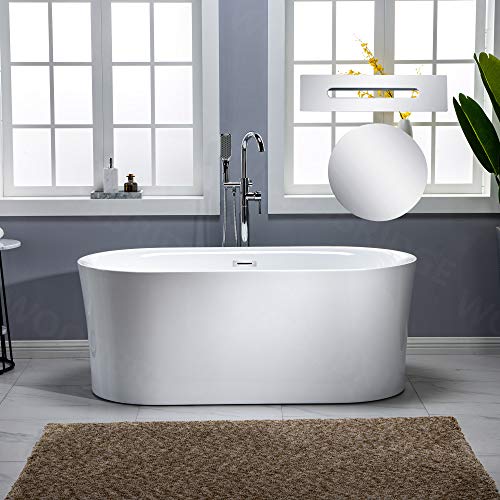
WOODBRIDGE 59 Inch Air Bubble Freestanding Bathtub — Best pure air freestanding
Every other linked pick hedges its bets with a pump; this one commits. The WOODBRIDGE air bubble tub is a clean freestanding oval whose basin floor is alive with air ports and nothing else — no water jets, no recirculating lines, just warmed air rising through the bath in a fine, even fizz. For readers who came to this category specifically for the air experience and its self-drying hygiene, this is the purest expression near sixty inches.
The freestanding form changes the room’s terms. At 59 inches it fits spaces that exclude the big ovals, yet it still stands as furniture, asking for a floor filler and clearance on all sides. The chrome drain and overflow on this variant keep the trim neutral, suiting bathrooms that have not gone over to black hardware, and the acrylic shell keeps the whole appliance light enough that the install conversation stays sane despite the blower hardware beneath.
Daily life with a pure air tub is the simplest in the jetted world: fill, soak, drain, let the purge cycle sigh the lines dry. There is no whirlpool plumbing to flush and no jet faces to scrub around. What you give up is the deep, directed pressure a pump provides, so households shopping for hydrotherapy with intent should look at the dual-system picks instead. For the bubble devotee, though, nothing else on the list is even the same product.
Consider, too, how the air-only design behaves with bath products and hard water. Without a pump circuit, there are no hidden water lines to harbour scale or residue, and the tiny air ports — protected by check valves — stay clear with nothing more than the purge cycle and an occasional wipe. Owners in hard-water regions, who watch whirlpool jets fur up over the years, will recognise this as the low-effort ownership path, and the freestanding shell’s smooth oval gives mineral deposits nowhere sneaky to hide.
- Format: freestanding, 59 inches
- System: air bubble only, no water jets
- Trim: chrome drain and overflow on this variant
- Material: white acrylic
- Care: self-purging air lines after each bath
Strengths
- Purest, gentlest air massage in the group
- Simplest hygiene routine of any jetted tub
- Freestanding presence in a compact length
Trade-offs
- No whirlpool pressure for targeted massage
- Needs a floor filler and full clearance
- Blower hum is part of the experience
Best for: air-bath purists and hygiene-first owners. Not suited for: anyone seeking firm hydrotherapy pressure.

Empava 67 Inch Whirlpool Heated Tub — Best step-up size
Honesty first: this Empava is a 67-inch tub, and it sits in a 60-inch guide as the declared exception — the answer for readers who arrived chasing air jets, discovered their remodel is not bound by an alcove, and would rather buy the roomier bath once. Seventeen hydro and air jets, an inline heater, dual waterfalls, and a handshower make it the most complete bathing appliance on the page, back-to-wall in format so it keeps one tidy edge against the wall.
The back-to-wall layout deserves emphasis, because it solves the freestanding category’s two frictions at once: plumbing reaches the tub from the wall side, and there is no dust-collecting gap behind it to clean. The 59-gallon capacity is generous without reaching the extremes that strain ordinary water heaters, and the ETL certification gives the electrical conversation a firm footing with your electrician and inspector.
Chromotherapy lighting and waterfalls will divide opinion — some bathers find them the soul of a home spa, others will use them twice and forget them — but the fundamentals underneath the theatre are sound: heated water, both massage systems, a long interior, and a shape that lets a tall bather actually submerge. If your tape measure says the room can take it, this is the pick that ends the search rather than extending it.
Its size also changes who the bath is for. Sixty-seven inches lets a tall bather submerge to the chin without the knee-island effect, and the wide interior lets a parent bathe a child alongside rather than leaning over a rim from outside. The waterfalls, theatrical as they are, fill the tub with a broad soft sheet of water that is noticeably quieter than a spout’s column — a small mercy in a house where someone is always asleep in the next room.
- Format: back-to-wall, 67 inches (step-up size)
- Systems: 17 hydro and air jets, inline heater
- Extras: dual waterfalls, handshower, chromotherapy LED
- Capacity: listed at 59 gallons
- Certification: ETL per the listing
Strengths
- Roomiest soak and fullest feature list here
- Back-to-wall format simplifies plumbing and cleaning
- Heater holds temperature through long sessions
Trade-offs
- Exceeds the 60-inch brief by design
- Largest electrical and water demands in the group
- Feature theatre will not charm traditionalists
Best for: alcove-free remodels wanting the complete spa. Not suited for: genuine 60-inch alcoves, obviously.
Legacy-Brand Alcove Air Baths — Showroom route
Walk into a plumbing showroom and the famous names will happily sell you a 60-inch alcove air bath: beautifully finished, whisper-quiet blower, controls like jewellery. What they will not reliably give you is a stable consumer listing we can link in good conscience — these models move through dealer networks, regional pricing, and model-year churn that leaves online pages stale or absent. So this seat is prose-only by design, a map to a showroom rather than a doorway to a checkout.
What the showroom route buys is service. A dealer measures your alcove, confirms the blower placement, arranges the electrician conversation, and answers the phone in year three when a control pad misbehaves. The tubs themselves sit in the premium tier, priced in words rather than figures here, and their air systems are typically the quietest in the business, with refined purge cycles and excellent fit and finish on every visible seam.
Choose this route if your remodel is already dealer-led — a designer, a contractor with trade accounts, a bathroom built as one contract — and the marginal convenience of a single delivered contract outweighs the savings of self-sourcing. Choose the linked WOODBRIDGE alcove instead if you are managing the project yourself and want the appliance ordered, specified, and documented on your own schedule.
One more showroom advantage deserves naming: you can sit in the dry tub. Air baths differ in how their ports are distributed — some concentrate bubbles along the back, others spread them evenly under the bather — and thirty seconds in a showroom shell tells you which pattern your spine prefers. No listing photograph conveys that, and it is the strongest argument for at least visiting a dealer before committing to any air tub, linked or not.
Best for: full-service remodels with dealer support. Not suited for: DIY project managers who buy everything online.
Builder-Spec Air Tubs via Trade Suppliers — Prose-only value route
There is a quieter shelf in the air-tub world: the plain, durable models stocked by plumbing-supply houses for builders and remodelers who need a dependable 60-inch air bath without showroom theatre. They rarely appear as consumer listings at all — no lifestyle photography, no marketplace page — which is why this seat, too, is prose-only. You buy them the old way, through a counter, with a part number.
It is worth saying plainly that prose-only does not mean second-class. Some of the most durable air tubs sold in North America travel this route, specified by contractors who stake their reputations on callbacks not happening. The prose-only label in this guide describes how a tub is bought, not how well it bathes, and readers with a trusted local supplier may find their best option here.
The appeal is specification honesty. Trade tubs are sold on blower ratings, shell thickness, and warranty terms rather than mood lighting, and their mid-tier pricing reflects the absence of marketing rather than an absence of quality. Contractors like them because the same model can be reordered for the next project, and parts follow trade distribution that has existed for decades.
The costs are convenience and romance. You will not comparison-shop them at midnight, delivery follows trade rhythms, and the designs are conservative to a fault. For a rental property, a guest-house bath, or a flip where the spa box must be ticked durably and without drama, that trade is often exactly right — and for a dream primary suite, the linked picks above will make your heart beat faster.
Trade counters offer one more old-fashioned benefit: the person selling you the tub has usually installed its cousins. Ask which models come back for parts and which never do, and you will receive an answer earned from service calls rather than marketing. In a category where the machinery hides behind walls, that kind of testimony is worth more than any specification sheet, and it is freely given to anyone who buys through the counter.
Best for: landlords, flippers, and contractor-led basics. Not suited for: design-driven primary suites.
How Do the Six Options Compare?
| Pick | Format | Systems | Best quality | Watch out for |
|---|---|---|---|---|
| WOODBRIDGE 60 x 30 Alcove Whirlpool and Air Tub | Alcove 60 x 30 in | Whirlpool + air, heated | True alcove fit, both systems | Install complexity |
| WOODBRIDGE 59 Inch Whirlpool and Air Heated Tub | Compact 59 in | Whirlpool + air, 16 jets | Feature density, variable blower | Maintenance of many systems |
| WOODBRIDGE 59 Inch Air Bubble Freestanding Bathtub | Freestanding 59 in | Air only | Pure bubbles, easy hygiene | No water-jet pressure |
| Empava 67 Inch Whirlpool Heated Tub | Back-to-wall 67 in | 17 jets, inline heater | Space and full spa spec | Bigger than the brief |
| Legacy-Brand Alcove Air Baths | Alcove 60 in | Air, dealer spec | Quiet blowers, dealer service | Premium tier, showroom only |
| Builder-Spec Air Tubs via Trade Suppliers | Alcove 60 in | Air, trade spec | Durable value through counters | Plain styling, trade buying |
The pattern across the table is a ladder of involvement. The linked WOODBRIDGE alcove asks the most installation effort and returns the most complete in-place upgrade; the freestanding air tub asks for floor and filler but rewards with simplicity; the Empava asks for room and returns scale; and the two prose-only routes ask for a different kind of shopping altogether — shoe leather instead of clicks.
If your household is still undecided between the systems, let the bather with the strongest opinion choose; the indifferent adapt happily to either massage, while the passionate never forgive the wrong one.
Where Does a 60-Inch Air Tub Fit Best in Real Homes?
The classic home for this size is the hall bathroom doing double duty: the family’s everyday shower-and-bath room that also hosts guests. An alcove air tub upgrades that room without stealing an inch from it, and because the shower remains overhead, nobody has to choose between the morning routine and the evening ritual. For households with exactly one full bathroom, this is not merely the convenient option — it is close to the only way jetted bathing fits at all.
Primary suites with a five-foot alcove left over from a builder’s plan are the second natural habitat. Many owners assume a spa bath requires a freestanding centrepiece and a remodelled floor, when the alcove at the room’s edge can quietly become the spa while the freed floor space goes to a larger shower or a linen tower. The WOODBRIDGE alcove pick exists for exactly this realisation, and it is why true-to-size models lead this guide.
There is a resale footnote here that pragmatic owners appreciate: a jetted alcove tub in the hall bathroom reads to buyers as a considered upgrade rather than a renovation risk, because it keeps the room’s familiar layout intact while adding one memorable feature.
Guest bathrooms are the sleeper case. A visiting grandparent or a friend recovering from a marathon will remember an air bath long after they forget the thread count of the towels, and a guest bath’s lighter duty cycle means the systems stay fresh with minimal attention. If the guest room shares the hall alcove, one installation quietly upgrades both rooms’ reputations.
Where this size does not fit is equally clear. A bathroom whose alcove is genuinely shorter than five feet — they exist in older cottages and city flats — should not be forced; the compact 59-inch dual-system pick or a freestanding corner arrangement serves better than a tub shoehorned against tile. Measure the alcove’s stud-to-stud reality, not the old tub’s apron, before assuming the standard size is yours.
Rental owners and innkeepers form a final, pragmatic audience. A 60-inch air tub is the rare upgrade that photographs like luxury, installs inside an existing alcove over a short vacancy window, and differentiates a listing the moment a traveller scrolls past a dozen identical bathrooms. The maintenance routine is simple enough to hand to a cleaner on a checklist, and the guest feedback effect is real enough that hospitality forums discuss these tubs the way restaurateurs discuss lighting.
Which Air Tub Features Are Worth Paying For, and Which Are Theatre?
Blower adjustability sits at the top of the worth-it list. A single-speed blower is a single opinion about massage, imposed on every bather every night, while a variable control lets the same tub serve a gentle pre-sleep soak and a vigorous post-garden recovery. If you compare only two specifications across air tubs, make them blower control and the purge cycle, because those two decide how the tub feels and how it ages.
The purge cycle itself is worth understanding before purchase. Better systems wait a few minutes after draining, then blow the lines dry automatically; simpler ones ask you to press a button, which households reliably forget by the second month. Automatic drying is the feature that protects the whole hygiene argument for owning an air tub, so treat its presence as close to non-negotiable, and ask specifically how the model you favour handles it.
Heating divides into two features that listings love to blur. A blower heater warms the air stream so the bubbles arrive neutral instead of cool — important, since thousands of cool bubbles will chill a bath surprisingly fast. An inline water heater goes further and maintains the water temperature itself, which is the difference between a forty-minute soak and a twenty-minute one followed by a hot top-up shuffle. Both are legitimate; just know which one a given price is actually buying.
Then there is the theatre: chromotherapy lights, waterfalls, pillow speakers, and aromatherapy canisters. None of it is fraudulent, and some households adore it, but it should be purchased as decoration, with decoration’s budget, after the blower, the purge, and the heating are settled. A tub with superb air and no lights will be loved for decades; the reverse arrangement becomes a punchline by spring.
Controls deserve a place on the worth-it list as well, because they are the part of the tub you touch every single bath. A simple, sealed, reachable panel beats a remote that migrates under towels, and physical buttons that can be found by feel beat a glossy touchscreen operated with wet fingers. When comparing finalists, mime the whole bath — reach the controls from a recline, imagine adjusting them mid-soak — and let that small theatre of the obvious break the tie.
How Do You Care for an Air Tub So It Stays Fresh?
The air system’s great hygiene advantage only counts if you let it work. After each bath, once the tub has drained, run the purge or drying cycle the manufacturer provides — many models start it automatically — because air lines blown dry are lines where nothing grows. Skipping the purge for months because the bath still smells fine is how owners slowly surrender the very advantage they paid for.
Cleaning the basin itself follows the acrylic rulebook: soft cloth, mild cleaner, no abrasive powders, no scouring pads. Around the air ports, a soft brush keeps soap film from narrowing the tiny openings, and a monthly soak with the manufacturer’s recommended line cleaner — or a plain hot fill and purge where the manual allows — keeps the system tasting of nothing at all, which is the correct flavour for bathwater.
Combined whirlpool-and-air owners carry one extra duty: the water lines of the whirlpool side need periodic flushing with a proper system cleaner, since they hold bathwater between uses in a way air lines do not. Put both cycles on the same monthly rhythm, tie them to a calendar event you already keep, and the whole appliance stays as fresh in year five as the week it was installed.
Hard water deserves its own sentence in this routine. Mineral scale gathers at air ports and jet faces alike, and in hard-water homes a quarterly descaling soak, following the manufacturer’s instructions, keeps bubble flow even across the whole port field. The symptom of neglect is subtle — a livelier fizz at one end of the tub than the other — and catching it early turns a potential service call into a ten-minute soak.
What Changes About Bath Night Once an Air Tub Moves In?
The first change is duration. A plain bath ends when the water cools or the bather’s patience does; an air bath with heated water keeps inviting you to stay, and households routinely report soaks doubling in length during the first month. That is the point of the purchase, but it has a planning consequence: the bather who once needed twenty minutes now wants forty-five, and in a one-bathroom home the evening schedule bends around the tub for a while.
The second change is who bathes. Air tubs recruit converts — the shower-loyal partner, the teenager, the visiting parent — because the bubble massage reads as an experience rather than a hygiene task. Guest books fill with comments about the bathroom. If your household already queues for the bath, an air tub will lengthen the queue before it shortens it, and the honest response is a rota, not regret.
The third change is ritual. Owners develop preferences the way coffee drinkers do: blower speed by mood, heater on for reading nights, lights low, a particular sequence of fill and soak. The tub becomes a small daily ceremony rather than a fixture, which is precisely the return these appliances promise and, when the installation groundwork is done properly, the one they deliver for years.
How Should You Test an Air Tub Before Committing?
You cannot fill a showroom tub, but you can learn more in five dry minutes than in an hour of listing photographs. Sit in the shell fully clothed and pay attention to where the air ports meet your back and legs; a port field that lands on your spine’s pressure points feels wonderful, while one concentrated under the seat can feel oddly insistent. Note, too, whether your shoulders rest below where the waterline will be, because a tub that fits sitting up may still leave tall bathers half out of the soak.
Ask the dealer or read the manual for three numbers: the blower’s speed settings, the heater arrangement, and the purge behaviour. Then ask the unglamorous fourth question — where is the access panel in a typical install, and how large is it? The answers separate tubs designed by people who service them from tubs designed by people who photograph them, and the distinction only grows more valuable across a twenty-year ownership.
If you are buying online without a showroom visit, recreate the test at home: tape the tub’s outline on the bathroom floor, sit inside the tape with a cushion at the backrest angle the listing describes, and have someone hand you an imaginary control panel from where the real one will sit. It feels faintly ridiculous for four minutes and has prevented more mismatched purchases than any specification table ever printed.
Finally, rehearse the install on paper with your actual bathroom: circuit route, blower home, drain side, door swing, and the path the tub travels from the street. Air tubs are heavier and more connected than plain shells, and the delivery crew will not improvise a route through a narrow stair turn with a jetted appliance on their shoulders. A page of measurements made now is the cheapest insurance in the entire project.
What Mistakes Do Air Tub Buyers Keep Making?
The most expensive mistake is electrical procrastination: ordering the tub, tiling the alcove, and only then discovering the panel cannot feed a dedicated circuit without an upgrade. Price the circuit when you price the tub. The second mistake is sealing away the machinery — a jetted tub without service access converts every future repair into surgery on finished surfaces, and installers who suggest skipping the access panel are optimising their afternoon, not your decade.
A subtler mistake is neglecting the water heater until the first disappointing fill. Jetted soaks run long and deep, and a household that upgrades the tub while keeping a tired, undersized heater will blame the bubbles for lukewarm water that was never the blower’s fault. Check the heater’s age and capacity during planning; if a replacement is coming within a few years anyway, doing both jobs in one plumbing visit is cheaper than two.
Buyers also confuse the two massage systems at the point of purchase, ordering a whirlpool when their household wanted gentle air, or an air tub when someone genuinely needed directed pressure on a bad back. The systems feel nothing alike; decide by sensation, not by which listing used the word “spa” more often. Finally, shoppers forget the blower’s address: it needs a home with airflow, within reach of its air line, and a tub planned without one ends with a blower exiled somewhere noisy, hot, or both.
Final Recommendation
For the standard alcove that inspired this search, buy the WOODBRIDGE 60 by 30: it is the only linked pick that honours the exact footprint while delivering both massage systems and heated water, and it turns an ordinary hall bath into the room everyone angles for. Freestanding romantics should take the pure-air WOODBRIDGE oval, feature hunters the 59-inch dual-system model, and remodels with room to spare should step up to the Empava without guilt. The showroom and trade routes remain honourable for dealer-led projects. One last piece of counsel for households split between the two massage philosophies: live with the argument a moment longer and count who bathes how. If the nightly bather craves calm and the weekend bather craves pressure, the dual-system alcove pick is not a compromise but the correct answer, and its extra install effort buys domestic peace for a decade.
Whichever you choose, plan the circuit and the access panel before the tile — because the best air bath is the one still blowing warm, dry, and quiet on the thousandth evening, not just the first.
Frequently Asked Questions
Are air jet tubs quieter than whirlpool tubs?
Neither is silent, but they sound different: a whirlpool’s pump produces a low mechanical hum, while an air blower sounds like a fan wrapped in rushing bubbles. Well-insulated air systems are generally perceived as gentler, though a showroom listen is worth more than any description, including this one.
Bathroom construction matters as much as the machine: a tub set into a well-insulated alcove with a solid apron transmits far less sound to the next room than the same tub in a hollow, echoing shell. If quiet is a deciding factor, ask your installer about insulation around the alcove during the build — it is inexpensive while the walls are open and nearly impossible to add later.
Can I use bath oils or bubble bath in an air tub?
Air systems tolerate bath products better than whirlpools because nothing recirculates through a pump, but heavy oils still film the basin and ports. Use products sparingly, rinse after soaking, and let the purge cycle run; the manual for your specific model has the final word.
Do air tubs need a heater?
A blower heater warms the air so the bubbles do not chill the bath, which matters more than it sounds over a long soak. Separately, an inline water heater maintains the bath’s temperature itself. The most comfortable tubs offer one or both; the picks above state which arrangement each uses.
How much electricity does an air tub use?
Blowers and heaters draw meaningful power while running, which is why they sit on dedicated circuits, but a bath is a short event and the running cost per soak is modest. The real electrical question is capacity and safety at installation, not the monthly bill afterwards.
That said, households on time-of-use electricity plans sometimes ask whether an evening soak is an expensive habit; compared with the water heating that dominates the bath’s true running cost, the blower’s share is small change. Worry about the circuit, enjoy the bubbles, and let the meter mind its own business for forty minutes.
Can an air tub replace my existing alcove tub directly?
Dimensionally, yes, if you choose a true 60 by 30 alcove model like the lead pick. Practically, the swap adds electrical work and access planning that a plain tub never needed, so “direct replacement” describes the footprint, not the whole job.
One more practical note: keep the old tub’s demolition in the plan. A jetted replacement often arrives with a deeper shell and different drain geometry, so the floor beneath the alcove may need attention the old tub was hiding. Discovering that with the new tub already in the room is normal; discovering it after the surround is tiled is the version everyone regrets.
Why are some picks in this guide not linked?
Because the legacy brands and trade suppliers sell their 60-inch air baths through showrooms and counters, where listings are unstable or nonexistent. We would rather describe those routes honestly as prose than attach a link that may not deserve your trust next month.
Related Guides
Air is only one bathing philosophy: compare it with the enamel tradition in Best 60-Inch Porcelain Bathtubs, keep the little bathers in mind with Best Baby Bathtubs for Infants, and dry off properly using Best Bath Mats for Cleanliness. When the bathroom is finished and the project energy moves outside, Best Above-Ground Pool Vacuums awaits the next free weekend.


