What's inside
- Key Takeaways
- Quick Picks
- How Did We Choose These Six Bathtubs?
- What Actually Makes the Best Bathtubs Feel Good to Soak In?
- Freestanding or Alcove: Which Layout Suits Your Bathroom?
- How Do the Six Compare Side by Side?
- How Should You Measure and Plan Before Ordering a Tub?
- What Should You Know About Fill Speed, Heaters and Everyday Plumbing?
- How Do You Balance a Deep Soak Against an Easy Step-In?
- What Should You Budget Beyond the Tub Itself?
- Which Bathtub Materials Age the Most Gracefully?
- How Do You Keep a New Tub Looking New for a Decade?
- What Mistakes Do Bathtub Buyers Keep Making?
- Final Recommendation
- Frequently Asked Questions
- Related Guides
As an Amazon Associate I earn from qualifying purchases. This post may contain affiliate links at no extra cost to you.
cottageverdict.com is reader-supported. When you buy through links on our site, we may earn an affiliate commission.
Where to buy: Every tub reviewed below is sold through Amazon; follow a linked name to its listing to check price on Amazon, confirm the drain side, and read the delivery terms before you commit.
A quick honesty note before anything else: the search that brought you here probably promised five, so let us be straight about the arithmetic. This guide to the best bathtubs reviews six models in full detail, not five, because cutting the sixth would have meant dropping either the best alcove option or the best compact one, and both earn their place. Six detailed reviews, six different answers to six different bathrooms — that is the deal on this page.
Why does a single shortlist need to stretch from a 55-inch freestanding oval to a steel-hearted alcove workhorse? Because “best” in a bathtub is mostly a question of fit. The finest soaking tub in the world is useless if your bathroom door is 28 inches wide, your floor joists are tired, or your household actually needs a shower over the tub every morning. So this list is organised around real constraints: room size, install type, body size, water-heater capacity, and how your household actually bathes.
Three of the six are freestanding, chosen for remodels where the tub is the visual centre of the room. Two are alcove models, chosen for the standard five-foot recess that most homes already have framed. One is a stone resin statement piece for buyers who want the cool, heavy, hotel-suite feel and have the floor to support it. Every pick below was checked against its manufacturer’s listing details, and every linked model is one you can actually order rather than a showroom ghost.
Read the reviews in whatever order your bathroom dictates. Alcove renovators can go straight to the Kohler and the American Standard and skip the freestanding drama entirely; dreamers planning a primary-suite centrepiece will live in the first three and the stone resin entry. Either way, the buying-guide sections between the reviews cover the shared ground — measurement, materials, plumbing, and care — that decides whether any tub, once installed, becomes a pleasure or a fixture-shaped regret.
Key Takeaways
- The WOODBRIDGE 67-inch acrylic freestanding tub is the safest all-round buy: generous length, moderate weight, and a shape that suits most primary bathrooms.
- Short bathrooms should look at the FerdY Tahiti, a 55-inch oval that keeps the freestanding look without eating the floor plan.
- Alcove shoppers split two ways: the Kohler Underscore for a deep, quiet soak, the American Standard Cambridge for a tougher, family-proof basin.
- Stone resin feels unmistakably premium, but the WOODBRIDGE stone resin tub needs a floor and a delivery plan that respect its weight.
- Measure your doorways and turning space before falling for any freestanding design; the prettiest tub loses to a staircase every time.
Quick Picks
| Pick | Badge | Why it made the list |
|---|---|---|
| WOODBRIDGE 67 Inch Acrylic Freestanding Bathtub | Best overall | A long, comfortable acrylic soaker with a clean oval silhouette and a weight most floors accept without drama. |
| Vanity Art 67 Inch Freestanding Bathtub | Best for tall bathers | Sixty-seven inches long and a full 32 inches wide, giving shoulders and knees genuine room to settle. |
| FerdY Tahiti 55 Inch Freestanding Bathtub | Best compact freestanding | The freestanding look in a 55-inch footprint that suits ensuites, guest baths, and careful apartment remodels. |
| Kohler Underscore 60 x 30 Alcove Bath | Best alcove soaker | A deep, lumbar-friendly basin that turns the standard five-foot alcove into a proper soaking spot. |
| WOODBRIDGE 67 Inch Stone Resin Freestanding Tub | Best premium feel | Solid-surface stone resin with a matte finish and the cool, grounded presence of a boutique hotel bath. |
| American Standard Cambridge Americast Bathtub | Best durable alcove | Americast construction pairs a porcelain-enamelled surface with far less weight than old cast iron. |
How Did We Choose These Six Bathtubs?
We started with the install types real bathrooms actually offer. Most homes have one five-foot alcove, already plumbed, already tiled, and a shortlist that ignores that reality is a fantasy catalogue. So two seats went to alcove tubs. The remaining four went to freestanding designs, because freestanding is where most remodel energy is right now, split across three sizes and two materials so the list covers small, standard, and statement bathrooms.
Within each seat we weighed soaking geometry first: interior length at the base, backrest angle, and overflow height, because those three decide whether a bath feels generous or cramped far more than the exterior dimensions printed in a headline. A 67-inch tub with a steep back wall can feel shorter than a well-shaped 60-inch tub, and we favoured shapes that let an adult’s shoulders slide below the waterline.
Material honesty mattered next. Acrylic, stone resin, and Americast each age differently, and each pick below is described the way it behaves after years of baths, not the way it photographs on delivery day. We also checked the unglamorous details: whether a drain and overflow are included, whether the tub is certified to common plumbing standards, and whether the listing states dimensions clearly enough to plan a room around.
Finally, we applied a household test. Every pick had to answer one plain question convincingly: which specific bathroom, owned by which specific kind of bather, is better with this tub in it than without it? Models that were merely fine at everything and right for nobody did not survive that conversation, however handsome their product photos looked.
We also read the fine print shoppers usually skip. Warranty terms on tubs vary from a token year to genuinely long coverage, and the difference matters on an object plumbed into your house. Drain inclusion, certification marks, stated capacity, and whether the listing’s dimensions describe the exterior or the basin all changed rankings during our review — a tub that hides its real soaking depth behind a flattering exterior number slid down the order, while models whose listings answered awkward questions plainly rose.
What Actually Makes the Best Bathtubs Feel Good to Soak In?
Comfort in a tub is geometry, not marketing. Start with the basin floor: the flat area where your body actually rests. Long exterior measurements shrink fast once sloped ends are subtracted, so a bather near six feet tall should look for a tub whose interior base runs well past four feet, or accept bent knees as a permanent feature of bath night.
Backrest angle is the second quiet factor. A near-vertical end wall forces you upright like a passenger seat; a gently reclined slope lets your shoulders drop and your neck rest. Neither is wrong — readers who soak with a book often prefer sitting up — but the angle should be a choice you make on purpose, not a surprise you discover at the first fill.
Then there is water depth, governed by the overflow. The overflow drain caps how high water can rise before it starts escaping, so two tubs with identical rim heights can offer very different soaking depths. If deep immersion is your whole reason for buying, compare overflow heights, not rim heights, and remember that your own body displaces water upward — a tub filled to the brim alone will overflow once you climb in.
Heat retention finishes the picture. Thick-walled materials and double-wall construction slow the cooling of bathwater, stretching a soak before you need a hot top-up. Thin single-wall tubs feel fine for a fifteen-minute bath and noticeably less kind at forty minutes, which is why long soakers should care about wall construction as much as length.
One more comfort factor hides in plain sight: the rim. You will lean on it, rest a forearm on it, set a glass near it, and grip it every time you stand. Wide, softly rounded rims are kind to all of that; thin, sharp-edged rims belong to tubs designed to be photographed. When two finalists are otherwise equal, choose the rim you would rather meet a thousand times.
Freestanding or Alcove: Which Layout Suits Your Bathroom?
An alcove tub installs between three walls, with an integral apron covering its front. It is the layout most homes were built around: plumbing hides in the wall, the shower can mount overhead, and the whole assembly is forgiving of modest budgets and modest rooms. If your household showers daily and bathes weekly, an alcove tub with a shower over it remains the most practical bathing machine ever designed.
A freestanding tub stands away from the walls as a piece of furniture. It asks more of a room — floor space on all sides for cleaning, a floor-standing or wall-mounted filler, a drain position you may need to move — and returns more presence. In a primary suite with the square footage to breathe, nothing else changes the character of the room as completely.
The middle paths deserve a mention. Back-to-wall freestanding tubs sit flush against one wall, keeping the sculptural look while simplifying plumbing and cleaning. Corner tubs reclaim dead space in square rooms. Both are legitimate, but for this shortlist we concentrated on the two dominant layouts so each pick could be compared honestly against its direct rivals.
One practical warning belongs here: a freestanding tub filled with water and a bather is a heavy, concentrated load, and it often lands mid-room where joists were never asked to carry a bath before. Older homes deserve a joist check before the tub arrives, not after the ceiling below starts to complain.
Cleaning deserves a vote in this decision as well. An alcove tub presents three sealed edges and one open side; a freestanding tub presents a full perimeter, including a narrow gap behind it that collects dust, hair, and the occasional runaway bath toy. Leave enough clearance behind a freestanding model to pass a cloth or a slim mop — a hand’s width at minimum — or choose a back-to-wall design that seals the gap away entirely. The five minutes this saves weekly becomes days across the tub’s life.

WOODBRIDGE 67 Inch Acrylic Freestanding Bathtub — Best overall
Some tubs win a shortlist by being exceptional at one thing; this WOODBRIDGE wins by being very good at nearly everything a freestanding soaker is asked to do. The 67-inch length is the sweet spot of the category — long enough for most adults to stretch, short enough to fit the primary bathrooms of ordinary houses rather than only showpiece suites. Its oval form is soft and contemporary without chasing a trend that will date the room in five years.
The acrylic construction keeps the tub light enough for a two-person carry and a straightforward set, which matters more than brochures admit: installation day is where remodel budgets quietly bleed. The surface is glossy, warm to the touch on first contact, and repairable in a way stone and enamel are not — a light scratch can usually be polished out rather than lived with forever. The listing includes a matte black drain and overflow, a finish choice that pairs well with the black fixtures so many remodels now use, though households committed to chrome should confirm the trim variant before ordering.
Owners of similar WOODBRIDGE ovals tend to praise the same unglamorous quality: the tub disappears into the routine. It does not demand special cleaners, it does not creak or drum underfoot once properly levelled, and its rim is wide enough to rest a book or a cup without a balancing act. The centre drain position also means two shorter bathers can share a soak facing each other, which the listing never advertises and households quietly appreciate. Set it on a properly prepared floor, pair it with a filler that clears the rim comfortably, and it simply does the job for years.
- Format: freestanding oval soaker, roughly 67 inches long
- Material: glossy white acrylic
- Drain: included, matte black finish on this variant
- Overflow: integrated, with matching trim
- Certification: listed to common North American plumbing standards
Strengths
- Length suits most adults without demanding a huge room
- Acrylic weight keeps delivery and placement manageable
- Surface scratches can typically be buffed rather than replaced
Trade-offs
- Acrylic flexes slightly underfoot compared with stone resin
- Matte black trim may clash with chrome-heavy schemes
- No lumbar shaping; the oval slope is gentle but plain
Best for: remodelers who want the freestanding look with the least installation drama. Not suited for: buyers who crave the cold, massive feel of solid stone.

Vanity Art 67 Inch Freestanding Bathtub — Best for tall bathers
Vanity Art’s 67-inch tub earns its seat with width. At a full 32 inches across, it gives broad shoulders and long legs a basin that does not feel like a compromise, and the interior reads as a place to sprawl rather than a slot to fit into. Couples shopping for a tub both partners can enjoy — at different times, this is a soaker, not a two-person tub — will find the extra width changes the experience more than extra length would.
The design is a clean contemporary rectangle-oval hybrid with a reassuringly thick rim, and the listing includes a pop-up drain and overflow, which saves the small but real annoyance of sourcing matching trim separately. The tub carries UPC certification, a detail worth checking on any imported freestanding model, because your plumber and your building inspector both care about it even if the product photos do not mention it.
In daily use the Vanity Art behaves like a well-made acrylic tub should: it fills quietly, holds heat respectably for a soak of ordinary length, and wipes clean with a soft cloth and mild cleaner. Its size is its only real demand — walk the route from your front door to the bathroom with a tape measure before ordering, because 67 by 32 inches is a large object to argue through a stairwell.
There is also a steadiness to the Vanity Art in use that its dimensions only partly explain. The walls feel thick when you grip the rim to lower yourself in, the base does not drum when you shift position, and the generous width means the waterline stays high on the shoulders without the tub being filled to the overflow. Bathers who read in the tub will appreciate the broad, flat rim sections at each end, which hold a paperback more securely than the knife-edge rims fashionable on slimmer designs.
- Format: freestanding soaker, 67 by 32 inches
- Material: white acrylic
- Drain: pop-up drain and overflow included
- Certification: UPC certified per the listing
- Style: contemporary, softly squared oval
Strengths
- Extra width genuinely helps tall and broad bathers
- Drain and overflow included in the box
- Certification simplifies the permit conversation
Trade-offs
- Large footprint needs a room that can spare it
- Heavier delivery to manoeuvre than 59-inch rivals
- Needs a big water heater to fill generously
Best for: tall bathers and couples who take turns soaking. Not suited for: narrow ensuites or small water heaters.

FerdY Tahiti 55 Inch Freestanding Bathtub — Best compact freestanding
The Tahiti exists for the bathroom that freestanding tubs usually ignore: the modest ensuite, the converted guest bath, the city apartment where every inch is negotiated. At 55 inches it keeps the sculptural oval presence of its bigger rivals while fitting floor plans they would overwhelm, and that restraint is a genuine design achievement rather than a shrunken afterthought.
Shorter bathers often prefer this size outright. In a 67-inch tub a petite soaker slides down the slope and braces their feet against the far end; in the Tahiti the proportions hold you in the recline the designer intended. The glossy white acrylic is finished with a brushed nickel drain and an integrated slotted overflow, giving the tub a tidy, unbroken rim line with no visible overflow plate interrupting the curve.
FerdY lists the Tahiti as cUPC certified, and the tub’s light weight makes it one of the few freestanding models a confident DIY remodeler might place without hiring a crew. What it will not do is stretch out a six-foot frame — tall shoppers should read this pick as a recommendation for their smaller bathrooms and their shorter household members, and look at the two 67-inch models above for their own nightly soak.
Small tubs live or die by their interior shaping, and the Tahiti’s oval keeps its slope continuous rather than pinching at the ends, so a shorter bather reclines instead of perching. The modest volume carries a practical dividend too: it fills quickly and asks far less of the water heater than a 67-inch model, which makes spontaneous weeknight baths realistic instead of scheduled events. In a guest bathroom it also leaves genuine floor space for a stool, a plant, or the laundry basket that migrates into every real bathroom eventually.
- Format: freestanding oval, 55 inches long
- Material: glossy white acrylic
- Drain: brushed nickel, included
- Overflow: integrated slotted design
- Certification: cUPC per the listing
Strengths
- Fits bathrooms that exclude most freestanding tubs
- Proportions flatter shorter bathers beautifully
- Light enough for an easier install day
Trade-offs
- Tall bathers will feel the short interior
- Smaller water volume means a shallower soak
- Brushed nickel trim is the stated finish; check variants
Best for: small primary baths and shorter soakers. Not suited for: anyone over about six feet who soaks daily.
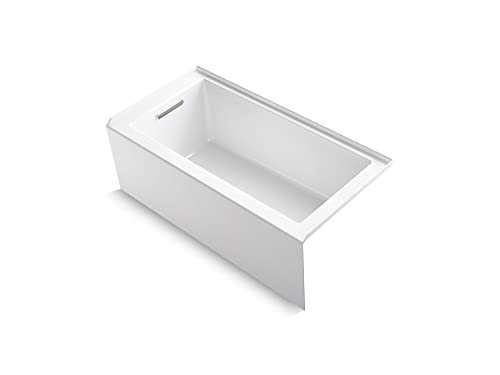
Kohler Underscore 60 x 30 Alcove Bath — Best alcove soaker
Most alcove tubs are shallow compromises built for showering first and bathing as an afterthought. The Underscore is the exception that proves how good the format can be: Kohler shaped its basin with a pronounced lumbar curve and enough depth that a bath in a standard five-foot alcove feels like an event rather than a rinse. If your bathroom cannot change its footprint — and most cannot — this is how you upgrade the soak anyway.
The tub arrives with an integral apron and integral flange, the two details that make an alcove install watertight and clean-looking: the apron finishes the front face, the flange tucks behind your wall material so water running down the wall lands in the tub, not behind it. This variant is the left-hand drain version, so confirm your plumbing rough-in side before ordering; the same model family offers the mirror configuration.
Kohler’s acrylic is reinforced and feels notably more solid underfoot than bargain alcove tubs, and the basin’s clean lines shed the visual fussiness that dates older alcove designs. Paired with a decent showerhead overhead, the Underscore covers the full daily routine — fast weekday showers, slow weekend soaks — in the footprint your house already has.
What surprises first-time Underscore bathers is how un-alcove-like the soak feels once the water is in. The moulded lumbar support meets the small of the back rather than leaving a cold gap, the armrest shaping gives your arms somewhere natural to rest, and the depth means knees stay submerged instead of poking out as cooling islands. It is the rare alcove tub that converts shower-first sceptics, and in resale terms a recognised Kohler bath in the hall bathroom is a line a listing agent can say out loud.
- Format: alcove, 60 by 30 inches, integral apron
- Drain: left-hand on this variant
- Flange: integral tiling flange
- Basin: lumbar-support backrest shaping
- Material: reinforced acrylic
Strengths
- Unusually deep, comfortable soak for an alcove tub
- Integral flange simplifies a watertight install
- Brand support and parts availability are strong
Trade-offs
- Drain is sold separately on many configurations
- Thirty inches wide is standard, not generous
- Premium pricing within the alcove category
Best for: footprint-locked remodels that refuse to give up soaking. Not suited for: bathers who need a wide two-person basin.

WOODBRIDGE 67 Inch Stone Resin Freestanding Tub — Best premium feel
Pick this WOODBRIDGE up by the rim — metaphorically, because you will want help — and the difference from acrylic is immediate. Stone resin, a solid-surface blend of mineral and resin, is dense, cool, and still in the hand, and the matte white finish reads as carved rather than moulded. In a calm, minimal bathroom it is the single object that makes visitors ask what the room is built around.
The material earns its keep beyond looks. Solid surface holds bath heat well, shrugs off the flexing that thin acrylic allows, and can be spot-sanded if the surface ever dulls or marks, because the material is consistent all the way through rather than a coating over something cheaper. The integrated slotted overflow keeps the silhouette unbroken, and the drain is included in the package.
Respect the logistics, though. A 67-inch stone resin tub is a serious object to deliver, carry, and set, and it concentrates real weight on the floor once filled. Plan the route, plan the crew, and give older joists an honest assessment. Buyers who do that groundwork get the most luxurious soak on this page; buyers who skip it get a very beautiful problem sitting in their hallway.
Evening soaks are where this tub justifies its logistics. Stone resin releases the day’s cold slowly, so the first touch against your back is cool rather than shocking, and once the water is hot the thick walls hold the temperature with a patience acrylic cannot match. The matte surface also behaves kindly under candlelight and low bathroom lighting, absorbing glare instead of reflecting it, which is precisely the mood most buyers of a tub like this are purchasing. It is a considered object, and it rewards considered ownership.
- Format: freestanding oval, 67 inches
- Material: stone resin solid surface, matte white
- Overflow: integrated slotted, drain included
- Surface: renewable by light sanding if marked
- Install note: plan for substantial filled weight
Strengths
- Unmatched cool, solid, premium hand feel
- Excellent heat retention for long soaks
- Surface can be refreshed rather than replaced
Trade-offs
- Heavy: delivery and floor structure need planning
- Matte finish shows oily bath products more readily
- Costs more than comparable acrylic ovals
Best for: design-led primary suites with sound floors. Not suited for: upstairs baths in older homes with doubtful joists.

American Standard Cambridge Americast Bathtub — Best durable alcove
The Cambridge is the tub for households that are hard on things. Its Americast construction bonds a porcelain-enamelled surface to a strong engineered core, delivering the glossy, chip-resistant face people associate with old cast iron at a fraction of the iron’s back-breaking weight. In a family bathroom that hosts baths, showers, dog rinses, and the occasional dropped shampoo bottle, that surface shrugs off a decade of Tuesdays.
At 60 by 32 inches the Cambridge is two inches wider than the standard alcove footprint’s usual basin, a small number that reads as real elbow room in the water. The integral apron gives it a finished, traditional face that suits the classic bathrooms Americast tubs usually serve, and this variant is the right-hand outlet configuration, so check your rough-in before ordering.
There is an acoustic bonus nobody advertises: Americast tubs sound solid. Water hits them with a muted thud rather than a hollow ring, and the basin feels planted underfoot. For a hall bathroom shared by kids and guests, where the tub must simply work, quietly and for years, the Cambridge is the least regrettable purchase on this list.
The Cambridge also suits a particular kind of remodel: the one keeping the home’s original character. In a bathroom with beadboard, hex tile, or a pedestal sink, a sculptural freestanding tub can look like it wandered in from a different house, while the Cambridge’s apron-front profile belongs to the architecture. Its enamel surface pairs naturally with the porcelain fixtures already in the room, and because Americast has been in production for decades, replacement trims and parts follow a supply chain that is not going anywhere.
- Format: alcove, 60 by 32 inches, integral apron
- Material: Americast with porcelain-enamel surface
- Drain: right-hand outlet on this variant
- Feel: quiet, solid underfoot
- Style: traditional, suits classic bathrooms
Strengths
- Enamel surface resists chips and stains well
- Far lighter than cast iron to install
- Extra width over standard alcove basins
Trade-offs
- Heavier than acrylic alcove alternatives
- Traditional styling will not suit minimal rooms
- Soaking depth is family-practical, not luxurious
Best for: busy family bathrooms and classic remodels. Not suited for: deep-soak devotees chasing maximum immersion.
How Do the Six Compare Side by Side?
| Pick | Format | Material | Best quality | Watch out for |
|---|---|---|---|---|
| WOODBRIDGE 67 Inch Acrylic Freestanding Bathtub | Freestanding 67 in | Acrylic | Balance of size, weight, looks | Slight flex underfoot |
| Vanity Art 67 Inch Freestanding Bathtub | Freestanding 67 x 32 in | Acrylic | Width for tall bathers | Delivery route and heater size |
| FerdY Tahiti 55 Inch Freestanding Bathtub | Freestanding 55 in | Acrylic | Small-room fit | Short interior for tall users |
| Kohler Underscore 60 x 30 Alcove Bath | Alcove 60 x 30 in | Acrylic | Deep lumbar soak | Drain often separate |
| WOODBRIDGE 67 Inch Stone Resin Freestanding Tub | Freestanding 67 in | Stone resin | Premium feel, heat retention | Weight and floor planning |
| American Standard Cambridge Americast Bathtub | Alcove 60 x 32 in | Americast | Durability and quiet feel | Moderate soaking depth |
Read the table as a map of trade-offs rather than a ranking. Every row gives something up: the stone resin tub surrenders easy installation, the Tahiti surrenders length, the Cambridge surrenders soaking depth. The right purchase is the row whose sacrifice your household will never notice.
Notice, too, how the six divide by household rhythm. Daily shower households live in the two alcove rows; dedicated soakers live in the freestanding rows; and the household that genuinely does both in one bathroom should weight the Underscore heavily, because it is the only pick here designed from the start to serve a morning shower and an evening bath with equal conviction. Rhythm, more than taste, is the honest predictor of whether a tub gets used or merely admired.
How Should You Measure and Plan Before Ordering a Tub?
Begin with the room, not the catalogue. Measure the bathroom’s clear floor area, then measure every doorway, hallway turn, and stair the tub must pass through, writing the numbers down rather than trusting your eye. A freestanding tub that fits the room but not the route is a return shipment waiting to happen, and tubs are among the most awkward returns in all of home improvement.
Next, locate the drain. Alcove replacements usually inherit the existing drain position, which decides left-hand versus right-hand models. Freestanding tubs offer more freedom but may need the drain moved, which ranges from trivial on an open ground floor to genuinely involved on a slab or a finished ceiling below. Ask your plumber to look before the tub arrives, while options are still cheap.
Then do the water arithmetic. Large freestanding tubs can hold more water than a standard water heater keeps hot, leaving the last third of the fill running lukewarm. Check your heater’s capacity against the tub’s volume, and if the numbers are tight, either choose a smaller tub or budget the heater upgrade into the same project rather than discovering the problem at the first bath.
Finally, plan the floor. Confirm the subfloor is sound, level, and able to carry the filled weight where the tub will stand. Freestanding models concentrate load on small feet or a plinth; alcove models spread it along the rim and apron. Ten minutes with a level and a flashlight now prevents the creaks, cracks, and regrets that otherwise arrive in year two.
While the tape measure is out, record the small numbers too: the height of the window sill if the tub sits beneath it, the swing of the bathroom door, and the distance from the proposed tub position to the toilet and vanity. A freestanding tub placed a few inches too close to a vanity makes both objects feel wrong for a decade, and these clearances are free to fix on paper and expensive to fix in porcelain, acrylic, or stone.
What Should You Know About Fill Speed, Heaters and Everyday Plumbing?
A beautiful tub fed by tired plumbing disappoints twice a day. Fill speed is governed by your supply lines and the filler’s flow rating, and a large freestanding tub on a lazy supply can take long enough to fill that the first water in is cooling before the last arrives. If your current bath fills slowly, ask the plumber about the supply sizing while the walls are open; it is the cheapest moment in the next twenty years to improve it.
The heater question returns here in practical dress. A tank heater gives up roughly two-thirds of its stated capacity as usable hot water before the temperature sags, so a household filling a large soaker should compare that usable figure, not the badge number, against the tub’s volume to the overflow. Homes that routinely run out are not imagining a flaw in the tub — they are meeting arithmetic — and the honest fixes are a bigger tank, a tankless unit, or a smaller tub chosen with open eyes.
Drain speed matters more than shoppers expect, too. A tub that empties briskly rinses its own residue down and leaves less of the tide-mark that becomes weekend scrubbing. Finally, confirm that your chosen filler and the tub’s overflow are compatible in reach and height before rough-in day; a spout that lands short of the basin or a filler that cannot clear a tall rim are small mismatches that only announce themselves when changing them has become expensive.
How Do You Balance a Deep Soak Against an Easy Step-In?
Every tub on this page asks its bather to climb, and the height of that climb deserves more thought than it usually gets at the shopping stage. A deep soaker is a joy at thirty and a negotiation at seventy, and since a good tub is a twenty-year purchase, the household it must serve includes the future versions of the people buying it. Rim heights on the freestanding picks here sit in the low-to-mid twenty-inch range, noticeably higher than the step into a standard alcove tub.
There are graceful ways to keep both pleasures. A sturdy stool or a beautifully made step beside a freestanding tub changes the climb into a small staircase, and a grab bar installed into proper blocking — planned during the remodel, not screwed hopefully into tile later — gives every bather a steady hand. Households bathing small children should also think honestly about lean-over depth: washing a toddler in a tall freestanding tub is a back workout, while an alcove tub’s apron and shallower rim were practically designed for it.
None of this argues against deep tubs; it argues for matching the tub to the household’s next decade rather than its next photoshoot. The Underscore and Cambridge earn quiet credit here, because their alcove format keeps the step low while still delivering a respectable soak, and the Tahiti’s smaller scale makes it the gentlest freestanding climb of the three. Buy the deepest tub your household will still enjoy entering in ten years, and it will be used ten times as often as the dramatic one that slowly becomes furniture.
What Should You Budget Beyond the Tub Itself?
New bathers are often startled to learn the tub is frequently not the largest line in a bathing remodel. The fixture sets the style, but the money spreads widely around it, and a shopper who budgets only for the porcelain — or the acrylic — meets the rest of the bill as a series of surprises. Knowing the shape of the whole spend in advance is what separates a calm project from an argument conducted in a half-tiled room.
Start with the filler and drain hardware. Alcove tubs reuse much of what already exists, needing mainly a drain kit and trim, while a freestanding tub usually wants a dedicated filler: a floor-mounted column is the classic choice and a genuinely substantial piece of hardware, while wall-mounted spouts cost less and suit back-to-wall placements. Either way, finishes should be decided with the tub order, not after, so the metals in the room read as one decision.
Plumbing labour comes next, and its size depends almost entirely on whether anything moves. A like-for-like alcove swap, same footprint and same drain side, is among the cheapest plumbing jobs in a bathroom. Moving a drain for a freestanding centrepiece, by contrast, can involve opening floors or ceilings, and on a concrete slab it becomes a project in its own right. This is why the measuring section below insists on locating the drain before the tub is chosen.
Then come the surfaces around the tub. An alcove replacement usually means new wall surround or tile on three sides, fresh waterproofing, and often a new shower valve while the wall is open — sensible insurance, since accessing it later means breaking the new work. A freestanding tub shifts the spend to the floor: levelling, reinforcing, and finishing the area the old built-in used to hide. Neither path is wrong, but they are different cheques written to different trades.
Finally, hold back a contingency and mean it. Older bathrooms conceal their opinions — a soft subfloor patch, a drain run in a material no longer stocked, a wall that is not where the drawings promised. A reserve of patience and funds converts those discoveries from crises into anecdotes. The tubs on this page span a wide price range, and choosing one step down in fixture to fund the unglamorous work properly is, in our judgement, nearly always the wiser trade.
Which Bathtub Materials Age the Most Gracefully?
Acrylic’s great virtue is forgiveness. The colour runs through the material rather than sitting on it as a coating, so the small insults of bathing life — a dropped razor, a gritty scouring pad used in a moment of impatience — tend to polish out instead of becoming permanent scars. Its weakness is structural feel: stand in a thin acrylic tub and the floor gives slightly, a sensation some bathers never notice and others never forgive. Reinforcement quality varies enormously between brands, which is why two tubs with identical dimensions can feel like different products entirely.
Stone resin ages like a good countertop. The surface is hard, dense, and consistent through its full thickness, so a decade of use can be answered with a light sanding and the tub looks newly carved again. It asks for gentler cleaning habits — oily bath products can sit visibly on a matte finish if left unrinsed — but it repays the care with the longest visual life of any material on this page. It is also the least forgiving of installation errors, since a tub this heavy does not get nudged into place twice.
Americast and its enamelled relatives occupy the practical middle. The porcelain enamel face is genuinely hard, genuinely glossy, and genuinely resistant to the staining that slowly greys lesser surfaces, while the engineered core keeps weight within reach of a normal install crew. Enamel can chip if struck hard enough with something heavy and metal, and a chip should be repaired promptly before moisture reaches the core, but in ordinary family service these tubs routinely outlast the bathroom built around them.
Fibreglass, the fourth common material, appears on this list not at all, and that is deliberate. It is light and inexpensive, but its gelcoat surface dulls and flexes sooner than acrylic’s, and in a guide that must stand behind six names, fibreglass models kept losing their seats to better-built rivals. If budget forces the question, choose the thickest fibreglass tub you can find and treat its surface gently from day one.
How Do You Keep a New Tub Looking New for a Decade?
The routine is boring, which is exactly why it works. Rinse the basin after baths, especially after bath oils or coloured products, and wipe it with a soft cloth rather than letting residue dry into a film. Most tub grime is body oil and soap scum, and both surrender to warm water and a mild, non-abrasive cleaner applied weekly — long before the harsh chemicals people eventually reach for become necessary.
Match the cleaner to the material. Acrylic and stone resin both dislike abrasive powders and stiff brushes; Americast’s enamel tolerates a little more enthusiasm but rewards the same gentleness. Coloured bath products, hair dye, and self-tanning lotions deserve special suspicion on every material: rinse immediately, because pigments that sit overnight on a warm, wet surface are the ones that leave souvenirs.
Attend to the hardware while you are at it. Overflow plates and drain trims collect a dark ring of residue that makes a clean tub look tired, and a monthly wipe keeps them bright. Silicone seals around an alcove tub should be inspected yearly; a failing bead is a five-minute repair today and a water-damaged wall cavity next winter. Finally, teach the household the one rule that prevents most chips in enamelled and acrylic tubs alike: bottles live on the shelf, not balanced on the rim.
What Mistakes Do Bathtub Buyers Keep Making?
The classic error is buying by exterior length alone. Shoppers compare 67 inches against 60 inches and assume the longer tub soaks longer, ignoring basin shape, backrest slope, and overflow height, which together decide the experience. Always mentally subtract the sloped ends, and favour the tub whose interior geometry matches your body.
Ordering the wrong drain side is the second regular disaster in alcove remodels. Left and right are determined by facing the tub’s apron, and a mirrored mistake means either re-plumbing or a return. Photograph your existing drain position, compare it against the listing diagram, and only then order.
A third mistake is forgetting the filler. Freestanding tubs need a floor-mounted or wall-mounted filler tall enough to clear the rim, and that hardware is rarely included with the tub itself. Budget and select it alongside the tub so finishes match and the plumber roughs in the right supplies on the first visit.
People also chronically underestimate delivery. A tub arrives on a truck, in a crate, at the kerb — not carried to your second floor by considerate elves. Arrange the hands, clear the route, and inspect the crate before signing, because a cracked tub discovered after the driver leaves becomes your paperwork instead of the carrier’s.
A quieter mistake is matching the tub to the room’s current chapter rather than its next one. The bathroom being built around a toddler today will host a teenager’s forty-minute showers soon enough, and the serene spa suite planned now may need to serve an ageing parent later. Tubs outlast trends, tiles, and sometimes tenancies; choosing the adaptable design over the fashionable one is how a purchase stays right for the whole of its long service.
Final Recommendation
If one tub must be named for the most households, it is the WOODBRIDGE 67-inch acrylic freestanding model: long enough, light enough, handsome enough, and forgiving of both budgets and installers. Tall bathers should step sideways to the wider Vanity Art, small rooms to the Tahiti, and alcove remodels to the Underscore for soaking or the Cambridge for durability, with the stone resin WOODBRIDGE reserved for floors and tastes that want the premium object. Before you order, run one last check that has saved many remodels: sit in the dry tub, or its closest showroom equivalent, for a full minute. Dimensions argue; bodies vote. A backrest that looked perfect in a diagram will tell you the truth against your own shoulders, and a width that seemed excessive will either justify itself or not in the first ten seconds. Where a showroom visit is impossible, a cardboard outline taped on the bathroom floor is a surprisingly honest substitute for judging footprint and clearance.
Choose by your room’s measurements and your household’s habits, and any of the six will serve you well — because a bathtub chosen for the bathroom you actually have beats a showroom dream carried up the stairs and straight back down again.
Frequently Asked Questions
How long should a bathtub be for a tall adult?
Most bathers around six feet do well in a 67-inch freestanding tub with a reclined backrest, provided the interior base is long. In an alcove, a deep 60-inch model with good lumbar shaping is usually the practical ceiling, since the alcove itself fixes the length.
Is acrylic a durable bathtub material?
Quality acrylic is durable for everyday family use, resists chipping, and can be polished if it scratches. It will never feel as massive as stone resin or enamelled Americast, but for most homes its repairability and light weight are the smarter long-term bargain.
Can a freestanding tub include a shower?
It can, with a ceiling- or wall-mounted shower and careful waterproofing, but splashing is hard to contain without an enclosure. Households that shower daily usually bathe happier with an alcove tub and use a freestanding model in a second bathroom dedicated to soaking.
What does integral apron actually mean?
It means the tub’s front finished panel is moulded as part of the tub rather than built on site. An integral apron gives an alcove install a clean, watertight front face and removes the need to frame and tile a tub front during the remodel.
How much water does a large freestanding tub use?
Large freestanding soakers commonly hold several dozen gallons to the overflow. Compare the tub’s stated capacity with your water heater’s size; if the heater is modest, expect to fill in stages or upgrade the heater as part of the project.
Should I choose left-hand or right-hand drain?
Stand facing the tub’s apron or front: the drain side you see is the handing. Match it to your existing plumbing rough-in unless your remodel budget explicitly includes moving the drain, which your plumber should confirm before you order.
Do freestanding tubs need special floor drains?
They use ordinary drain plumbing, but the drain’s position must meet the tub where it stands rather than where a built-in used to sit. Many freestanding models include a flexible tailpiece that forgives small misalignments; large moves still mean opening the floor, which is why the drain location belongs in the very first measurement session.
How do I stop a freestanding tub from moving?
A properly levelled tub set on a sound floor stays put by weight and by its drain connection, and some installers add a discreet bead of silicone at the base. If a tub rocks, the floor or the levelling feet need attention — rocking is a symptom to fix, not a quirk to live with, because movement worries seals over time.
Related Guides
Once the tub is chosen, the rest of the room deserves the same care: our guide to Best 60-Inch Air Jet Bathtubs covers the bubblier branch of the family, Best Bathtubs Overall widens the field beyond this shortlist, and the linen closet gets its due in Best Bath Sheets and Large Towels. Readers planning the full floor-to-vent renovation may also enjoy Best Robotic Vacuums for Above-Ground Pools — no, that one is for the backyard; keep it for after the bathroom is finished and the pool becomes the next project.


