Our Top Picks
 BLACK+DECKER Portable Air Conditioner10,000 BTU (Without Heat)15.3 x 14 x 24.8 inches47.3 poundsCheck on Amazon


What's inside
- Reading the living room as a heat problem
- Capacity, output ratings, and the comfort of long gentle runs
- Archetype one: the generous window unit anchoring one wall
- Archetype two: the ductless wall split for quiet, settled comfort
- Archetype three: the portable floor unit that follows the household
- Archetype four: through-wall sleeves and casement-friendly designs
- Placement, throws, and the geography of a comfortable sofa
- Noise, conversation, and the soundtrack of an evening indoors
- Humidity, air quality, and the feel of a room beyond temperature
- Electrical supply, controls, and living with the machine daily
- Installation day: preparation, sequencing, and commissioning checks
- Maintenance across seasons: filters, coils, drains, and storage
- Costs of ownership without the fantasy figures
- Matching the archetype to the household: a decision walk-through
- Troubleshooting the complaints living rooms generate most
- Lounges in older houses, extensions, and rooms that changed purpose
- Sharing cooled air with dining areas, halls, and open plans
- Seasonal rhythms: first heatwave, high summer, and putting the room to rest
- Questions worth asking before any money changes hands
- Check prices on Amazon
- A final pass around the room before you decide
As an Amazon Associate I earn from qualifying purchases. This post may contain affiliate links at no extra cost to you.
For transparency: this living room cooling guide was researched from room measurements, installer conversations and manufacturer manuals gathered by the author, it carries no shopping links whatsoever, and no brand reviewed drafts or influenced a single judgement that follows.
The living room asks more of an air conditioner than any other space in an ordinary home. A bedroom door can close around a small pool of cooled air, and a study only needs to satisfy one seated person, yet the lounge must welcome arriving guests, absorb heat from cooking drifting through an open plan, forgive children sprawling across rugs, and still feel calm when six adults settle in for a film. Cooling that room well is therefore a design problem before it becomes a shopping problem, because the machine has to serve furniture, conversation, daylight, and traffic patterns all at once.
Begin by noticing how the room actually lives across a hot week. Morning sun may pour across one corner while the far sofa stays shaded until dusk. The television corner gathers bodies and electronics in the evening, precisely when residual heat stored in walls begins radiating back. A doorway toward the hall leaks cooled air every time somebody fetches a drink. Any honest sizing conversation starts from those observations rather than from a rectangle measured once with a tape and promptly forgotten.
This guide walks through the whole decision in the order a careful homeowner meets it: measuring the true load, understanding capacity without worshipping headline numbers, choosing among window, portable, split, and through-wall archetypes, placing the discharge so people benefit instead of dodging drafts, taming noise for conversation and music, and maintaining the result across many summers. Products appear only as descriptive types, because the right pattern fitted properly will outperform a fashionable badge fitted carelessly every single season.
Reading the living room as a heat problem
Floor area gives a starting figure, though living rooms routinely punish anyone who stops there. Ceiling height multiplies the volume that must be cooled, and many lounges in older houses stretch well above standard height, adding a deep layer of warm air that pools overhead. Two rooms with identical footprints can behave completely differently once one gains a lofty ceiling, a broad chimney breast radiating stored warmth, or a staircase opening that invites cooled air to spill away toward the landing.
Glazing deserves a slow audit of its own. Count not merely the windows but their orientation, their total glass area, and whether curtains or blinds genuinely close across them during the fierce part of the afternoon. A west-facing picture window can admit a startling share of the daily load all by itself, heating upholstery and flooring that then release that energy slowly through the evening viewing hours. North-facing glass, by contrast, contributes gentle daylight with comparatively little thermal penalty, which is why two lounges on the same street can demand noticeably different machines.
Occupancy swings the calculation further. Each seated adult adds roughly the warmth of a modest lamp, and living rooms are precisely where households concentrate people for birthdays, matches, and holiday gatherings. Design for the crowded evening rather than the quiet Tuesday, yet avoid overshooting so far that ordinary days suffer, a balance explored more fully when we discuss cycling behaviour and humidity below.
Internal gains accumulate from sources owners rarely tally. A large television, a games console, a soundbar, lamps kept on for reading, and a laptop charging beside the sofa all drip small amounts of heat into the same air the conditioner must then remove. Kitchens adjoining open-plan lounges contribute cooking pulses that arrive exactly at dinner hour. None of these loads dominates alone, although together they explain why a room that felt manageable at noon can feel stubbornly warm by eight in the evening.
Insulation and draughtiness form the quiet background to every estimate. A lounge above an unheated garage loses coolth downward through its floor, while a room beneath a poorly insulated roof gains heat from above all afternoon. Gaps around an old fireplace, a letterbox in a hall door, or a warped external door each provide escape routes for treated air. Sealing the worst leaks before upsizing any machine is unfashionable advice, yet it frequently delivers comfort that extra capacity alone never quite achieves.
Capacity, output ratings, and the comfort of long gentle runs
Cooling capacity is conventionally expressed in British thermal units per hour, a measure of how much heat the machine can extract from indoor air under stated test conditions. Shoppers meet the figure everywhere, although the number alone conceals how gracefully a unit behaves at partial load, how much moisture it removes while running, and how its output sags when outdoor temperatures climb beyond the test assumptions. Treat the headline figure as the opening bid in a longer conversation about behaviour across an entire evening.
Undersizing produces a recognisable misery: the machine runs without pause, the room approaches but never reaches the set temperature, and occupants begin negotiating with the thermostat as though pleading might help. Undersized equipment also struggles to dehumidify during mild but muggy weather, because the coil never stays cold long enough between demands. The temptation to save money by choosing the smaller cabinet is understandable, yet a living room that hosts gatherings will expose that economy within the first serious heatwave.
Oversizing carries subtler penalties that sales material rarely volunteers. A powerful fixed-speed unit satisfies the thermostat quickly, then shuts down while moisture remains suspended in the air, leaving skin feeling clammy despite a satisfactory thermometer reading. Frequent restarts also produce temperature swings that guests notice subconsciously, shifting between slightly chilly blasts and warm lulls. Sofas positioned near the discharge suffer most, since they receive the full force of each short, assertive cycle.
Variable-speed designs soften both failure modes by modulating output instead of alternating between full effort and silence. Once the room nears its target, such a machine can settle into a low, steady gear, wringing out humidity continuously while barely troubling conversation. That behaviour suits living rooms particularly well because occupancy and solar gain drift gradually through the day rather than arriving as a single sudden demand. Readers comparing whole-house strategies may also find our discussion of best air conditioners for large rooms useful, since lounges and great rooms share many of the same zoning headaches.
Efficiency labels reward a second look beyond the seasonal headline figure. Two machines with similar efficiency figures can differ in standby draw, in how their fans behave at low speed, and in whether their controls encourage sensible scheduling. Over a decade of summers those small differences compound, though they should never outweigh fit, placement, and installation quality, which dominate real-world consumption far more than brochure decimals suggest.
Archetype one: the generous window unit anchoring one wall
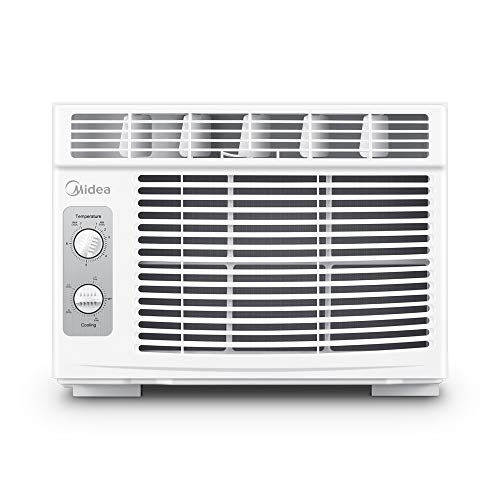
The classic living room solution remains a substantial window-mounted machine occupying the lower sash of a suitable opening. Its virtues are honest ones: the hot components sit outside the room, condensate drains outdoors by gravity, no floor area is surrendered, and the entire appliance can be removed for winter storage or eventual replacement without touching the fabric of the house. For renters and owners of modest lounges alike, that reversibility keeps the option permanently on the table.
Success depends on choosing the window with genuine care. The ideal opening sits on a shaded wall, distributes air along the longest dimension of the room, and avoids blasting directly onto the principal sofa. A unit centred on a short wall often leaves the far seating corner undertreated, whereas discharge travelling lengthwise mixes more evenly as it gradually loses momentum. Measure the opening in three places, because older frames settle out of square and a cabinet that fits at the top may bind stubbornly at the sill.
Support and sealing decide whether this archetype feels solid or makeshift. The cabinet should rest on a level, load-bearing arrangement that carries weight back into the frame rather than hanging from ageing sash timber. Foam panels and weatherstripping close the side gaps, an angled exterior support prevents any slow outward creep, and the whole assembly should resist a firm push from inside without rocking. A window unit that buzzes against loose filler panels will annoy the household far more than its fan specification ever predicted.
Consider also what the installation costs the room. That window loses its opening function for the season, daylight dims slightly behind the cabinet, and the view from a favourite chair may acquire a mechanical foreground. Households that prize a particular garden outlook sometimes prefer placing the unit in a secondary window even at some cost to airflow symmetry, accepting a marginally longer throw in exchange for preserving the outlook they bought the house for.
Archetype two: the ductless wall split for quiet, settled comfort
A ductless split separates the noisy refrigeration machinery outdoors from a slim indoor head mounted high on the living room wall. The separation transforms the acoustic character of cooling: conversation, music, and television dialogue no longer compete with a compressor sharing the room. Refrigerant lines and a condensate drain pass through a small wall penetration, which makes the installation semi-permanent and places a premium on choosing the position correctly the first time.
Placement of the indoor head rewards patience. High on a wall that faces the main seating, the unit can wash cooled air across the ceiling so it descends gently rather than falling in a cold column onto one unfortunate chair. Avoid mounting directly above the television, where condensate faults would threaten expensive electronics, and keep the head clear of tall bookcases that would obstruct the return airflow it breathes through its top surface. Installers who suggest the easiest wall rather than the best wall should be pressed, politely, for their reasoning.
Zoning is the deeper attraction for many households. A living room head can pair with smaller heads elsewhere under one outdoor unit, letting the family cool occupied spaces in the evening and bedrooms later at night. That flexibility suits open-plan homes where the lounge flows toward dining and kitchen areas, because capacity follows people rather than treating empty rooms with equal generosity. Our companion discussion of best air conditioners for bedrooms explores the night-time side of that same zoning puzzle.
The costs of this archetype arrive as professional installation, periodic deep cleaning of the indoor coil and blower wheel, and an outdoor unit that needs a sensible home with clearance for airflow and service. None of those burdens is unreasonable, though each argues for treating the purchase as household infrastructure rather than a seasonal appliance. Households planning to stay put for many summers usually extract the full value; households expecting to move within a year or two should weigh the investment more cautiously.
Archetype three: the portable floor unit that follows the household
A portable machine on casters asks nothing of the building beyond a window through which its exhaust hose can vent, and that humility explains its enduring popularity in lounges where drilling is forbidden or windows will not carry a cabinet. The unit rolls out during heatwaves, retreats to a cupboard in October, and can rescue a spare room or home office when guests arrive. Flexibility of that order has genuine value, provided expectations about performance remain firmly grounded in physics.
The exhaust hose is where portable units win or lose their reputation. Every metre of warm hose snaking across the floor radiates some extracted heat straight back into the room, and every kink or sag throttles the flow the compressor depends upon. Positioning the cabinet close to its window, keeping the hose short, straight, and insulated where possible, and sealing the window kit thoroughly will recover a surprising share of the capacity that careless setups surrender. Dual-hose designs, which draw intake air from outdoors instead of borrowing cooled room air, generally hold their temperature more convincingly during long evening runs.
Noise and footprint shape daily acceptance just as much. The entire refrigeration cycle lives inside the cabinet, so its hum accompanies films and conversation alike; households sensitive to sound should audition any candidate at night-time fan settings rather than trusting a brief midday demonstration. The cabinet also claims floor territory in precisely the room where floor territory matters, competing with side tables, plant stands, and the turning circle of a vacuum cleaner. Measure its parking spot with the hose connected, not merely the cabinet alone, before deciding the arrangement is livable.
Condensate management varies between designs in ways brochures understate. Some machines evaporate most collected moisture into their exhaust stream during ordinary weather, while humid spells overwhelm that trick and fill an internal tank that halts cooling until emptied. A lounge unit that stops at midnight because its reservoir brimmed teaches the household to check drainage before parties rather than after them. Continuous drain hoses solve the problem elegantly where a suitable low outlet exists nearby.
Archetype four: through-wall sleeves and casement-friendly designs
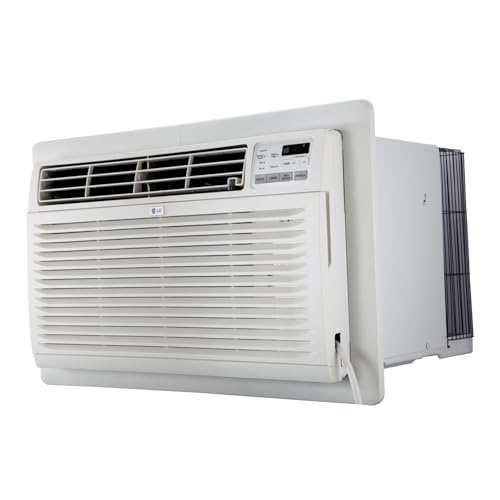
Homes with sliding or casement windows sometimes exclude both ordinary window cabinets and easy hose kits, which is where through-wall and specially shaped designs earn their place. A through-wall machine slides into a framed sleeve cut into an exterior wall, sitting flush, sealed permanently, and free of any claim on the windows at all. The building work is real, involving a lintel, weatherproof flashing, and a slight outward slope for drainage, yet the result looks intentional in a way seasonal window installations rarely manage.
Narrow vertical cabinets designed for casement openings offer a less invasive cousin of the same idea. They occupy the cranked-open section of a hinged window using tailored sealing panels, preserving the rest of the glazing and most of the daylight. Capacity from such specialised shapes tends to suit modest lounges rather than sprawling open plans, although for a small sitting room in an apartment block with strict facade rules, a modest machine that is permitted beats a powerful machine that is not.
Either route rewards early consultation with whoever understands the building: a landlord, a management company, or a builder familiar with the wall construction. Cavity walls, solid masonry, and timber framing each present different obstacles, and discovering a hidden pipe run halfway through cutting a sleeve is an experience worth purchasing only in stories told by other people. Photograph the wall interior during installation if the opportunity arises, because future tradespeople will thank you for the record.
Placement, throws, and the geography of a comfortable sofa
Cooled air behaves like a slow river poured into the room at height: it travels outward, gradually mixes, sinks as it warms, and returns along the floor toward the machine that made it. Arranging furniture to cooperate with that circulation matters more than most specification sheets admit. A tall dresser parked immediately in front of a discharge grille dams the river at its source, while a sofa backed against the return path starves the coil of the room air it needs to sample and treat.
Walk the room after installation with comfort, not temperature, as the instrument. Sit in every regular seat for several minutes, including the reading chair in the corner and the floor cushions children claim during films. Note where ankles feel a persistent chill, where a curtain stirs constantly, and where the air still feels stagnant despite the machine working hard. Louvres adjusted by small degrees, a deflector fitted thoughtfully, or a bookcase shifted a handspan can correct imbalances that no thermostat setting will ever reach.
Doors deserve attention in open-plan homes where the lounge borrows and lends air all day. Cooling the combined space as one volume usually works better than attempting to defend the lounge boundary with a closed door that nobody remembers to close. Where a door does separate the room, an undercut or transfer gap prevents the unit from pressurising the space and whistling through the keyhole, a small acoustic flaw that becomes maddening during quiet scenes in late-night films.
Ceiling fans, used wisely, extend the reach of any archetype by stirring stratified layers back together. Running a fan so it pushes air downward in summer spreads cooled air across seating without demanding lower setpoints, and many households find they can relax the thermostat a touch while feeling equally comfortable. The fan does not cool an empty room, so switch it off when everyone leaves, a habit that trims waste without costing anyone a moment of comfort.
Noise, conversation, and the soundtrack of an evening indoors
Living rooms are judged by ear as much as by skin. A machine that cools brilliantly while forcing guests to raise their voices will be remembered as a failure at every dinner party it attends. Manufacturers quote sound figures measured under laboratory conditions that rarely match a furnished lounge, so treat published numbers as comparative hints rather than promises, and always ask how a unit sounds at the fan speed it will actually use during a film rather than at its gentlest showroom whisper.
Different archetypes produce different acoustic signatures. Window cabinets concentrate compressor and fan together at one opening, which localises the sound but places it firmly inside the room envelope. Splits exile the compressor outdoors and leave only moving air indoors, although a poorly mounted outdoor unit can conduct vibration through a wall into the very sofa it serves. Portables keep everything close at hand, which makes their character the most intimate of all, for better and for worse.
Installation quality writes much of the soundtrack. Cabinets seated on resilient pads, panels sealed so they cannot rattle sympathetically, refrigerant lines clipped without touching studwork, and outdoor units standing on level, damped mounts all subtract noises that owners otherwise blame on the machine itself. During commissioning, run the system through every fan speed while the house is quiet, and fix buzzes immediately, because small vibrations seldom heal themselves and usually worsen as fixings relax across a season.
Night modes and sleep timers translate surprisingly well from bedrooms to lounges. A household that dozes on the sofa during long films benefits from controls that dim display lights, soften fan transitions, and avoid abrupt compressor restarts. Bright status lamps deserve a mention of their own: a glowing panel that seems trivial at noon can dominate a darkened room during a tense cinematic scene, so favour designs whose displays can be extinguished completely.
Humidity, air quality, and the feel of a room beyond temperature
Comfort in a crowded lounge depends on moisture removal almost as heavily as on temperature drop. Bodies, breath, cooking steam, and houseplants all humidify the air, and a room cooled without adequate dehumidification feels like a cave in the unflattering sense: chilly surfaces, heavy air, and upholstery that never quite feels dry. Long, gentle compressor runs wring out more moisture than short assertive blasts, which is another argument for sizing honestly rather than heroically.
Filters guard both lungs and machinery, yet living room filters accumulate a distinctive burden of pet hair, carpet fibre, pollen tracked in through garden doors, and dust raised by active children. A clogged filter throttles airflow, raises noise, and can ice a coil during humid weather. Choose an archetype whose filter slides out without tools and survives washing, then tie the chore to a monthly household rhythm so it happens automatically rather than when performance has already sagged noticeably.
Households troubled by pollen or city dust sometimes pair cooling with dedicated purification, and the interplay between the two is covered in best air purifiers for large living rooms for readers weighing combined strategies. Keep expectations ordered correctly, though: an air conditioner filter protects the coil first and the room second, and no cooling appliance should be asked to double as a medical-grade purifier simply because its marketing photographs show it beside a vase of lilies.
Ventilation remains the forgotten sibling of cooling. A lounge sealed tightly for an evening of films with eight occupants will grow stuffy in ways temperature cannot fix, because exhaled air accumulates while the machine merely recirculates what is already indoors. Cracking a shaded window briefly between gatherings, or using trickle vents where fitted, refreshes the room at a modest thermal cost that the system recovers within minutes. Comfort is a blend, and fresh air is one of its ingredients.
Electrical supply, controls, and living with the machine daily
Large living room units ask respectfully but firmly for electrical headroom. A substantial window cabinet or portable may approach the practical limit of a shared household circuit once a television, lamps, and a vacuum cleaner join it, and repeated breaker trips are the circuit performing its protective duty rather than being awkward. Before purchase, identify which sockets belong to which circuit, note what else habitually runs alongside, and consider a dedicated line where an electrician advises one, especially for through-wall or split installations that will serve the house for many years.
Controls shape satisfaction out of proportion to their cost. A readable thermostat, a remote that survives being lost inside sofa cushions, and scheduling that matches the household rhythm all reduce the daily friction of ownership. Setback schedules shine in lounges used mainly in evenings: the machine can begin its work before the family returns, coast gently through occupied hours, and rest overnight without anyone conducting the process manually. Smart features help only when they remain optional; a unit that becomes useless when a network fails has confused convenience with dependency.
Thermostat placement quietly governs the whole performance. A sensor bathed in discharge air will short-cycle the system, while one trapped behind a curtain or above a lamp reads a fictional room. Built-in sensors on wall heads and window cabinets inherit the compromises of their mounting position, which is why many households prefer a remote control with its own sensor resting near the main seating. Experiment during the first week, comparing readings at sofa height against the machine display, and trust the seat rather than the cabinet.
Children and pets add practical footnotes. Controls at toddler height invite creative reprogramming, floor cabinets attract investigative fingers toward grilles, and condensate hoses tempt cats in ways nobody predicts. None of this disqualifies any archetype, although it does argue for lockable controls, secure hose routing, and a family conversation about the machine being furniture that breathes rather than a toy that happens to blow cold air.
Installation day: preparation, sequencing, and commissioning checks
Good installations begin before any box is opened. Clear the working area, protect flooring along the route from door to window, confirm where condensate will travel, and agree with the installer, or with yourself, exactly which window, wall, and circuit the project will claim. Photograph the chosen opening and the electrical panel beforehand, because those images settle most later disagreements about what was originally agreed and what changed along the way.
During fitting, watch for the unglamorous details that decide longevity. Window cabinets should sit with a slight outward tilt so condensate escapes rather than pooling inside the case. Split line sets deserve gentle bends, proper insulation along their full length, and a drain that falls continuously without sagging bellies where algae will later flourish. Through-wall sleeves need flashing that sheds rain beyond the siding, not into the cavity. Each of these details is invisible in advertising and decisive in August.
Commissioning is a distinct task from installation, and skipping it wastes much of the money just spent. Run the machine through cooling at several fan speeds, confirm the condensate actually appears at the intended outlet, check that louvres sweep without clicking, and measure the temperature difference between return and discharge air once the system settles. Sit in the principal seats while it runs. Sign nothing, metaphorically or literally, until the room itself reports that the arrangement works.
Keep the documentation together from the first day: manuals, warranty registration confirmations, the installer’s notes about refrigerant line length and circuit allocation, and a photograph of the specification plate. Households that file these together in one envelope or folder solve future service visits in minutes. Households that scatter them across drawers solve the same visits in weekends, usually during the hottest spell of the year.
Maintenance across seasons: filters, coils, drains, and storage
Routine care for any living room archetype follows a forgiving rhythm once it is attached to the calendar. Filters want inspection monthly during heavy use and washing or replacement whenever they grey over. Exterior coils on window and split systems benefit from a gentle rinse that removes the felt of pollen and dust without folding delicate fins. Drain paths deserve a flush before the humid peak arrives, because a blockage discovered by a ceiling stain has announced itself far too late.
Indoor coils and blower wheels accumulate a slower film that eventually perfumes the discharge with a musty note guests notice before owners do. Split systems in particular reward periodic professional deep cleaning, since their blower wheels hide behind panels that casual maintenance cannot reach. Portable and window units stored over winter should be drained, dried thoroughly with a fan-only run, covered against dust, and kept upright so residual moisture does not settle into bearings or electronics.
Listen to the machine as part of maintenance, because sound changes are diagnostic gifts. A new rattle suggests a loosening panel, a gurgling undertone can betray drainage trouble, and a fan that labours before reaching speed may be announcing a failing component while repair is still cheap. Note the date each new sound appears; service technicians reason far better from a timeline than from a worried summary delivered months after the fact.
Refrigerant circuits, by contrast, should remain sealed and untouched by household experimentation. A system losing cooling gradually across seasons needs professional diagnosis, not hopeful tinkering, and reputable installers welcome early calls because small leaks repaired promptly protect compressors that would otherwise run hot and die young. The owner’s craft lies in observation and housekeeping; the sealed system belongs to licensed hands.
Costs of ownership without the fantasy figures
Purchase price is merely the entry ticket to a longer financial story, and wise households budget the whole narrative. Installation can rival appliance cost for split and through-wall routes once electrical work, wall repairs, and permits join the invoice. Running costs then depend on climate, tariff structure, insulation, and how disciplined the household is about setpoints during unoccupied hours, which is why any guide quoting a universal seasonal figure should be read with cheerful scepticism.
Longevity spreads those costs across very different horizons. A portable rolled out for three heatwaves a year may serve a decade while delivering modest comfort, whereas a split working daily from May to September earns its keep through thousands of hours. Comparing archetypes fairly means comparing cost per comfortable evening in your actual pattern of use, not cost per unit of headline capacity in a catalogue. Households that gather often will value quiet and zoning; households that gather rarely may rationally choose flexibility instead.
Repairability deserves a line in the ledger as well. Designs with accessible filters, standard components, and local service networks tend to age gracefully, while sealed bargain cabinets can become disposable the first time a control board fails. Asking who services a brand locally, before buying it, is a five-minute enquiry that can rescue an entire purchase. The living room is too central to household life to host equipment that nobody nearby knows how to mend.
Matching the archetype to the household: a decision walk-through
Start with tenure and permission, because those facts eliminate options faster than any technical comparison. Renters and short-stay owners lean naturally toward window and portable designs that leave with them, subject to building rules. Long-term owners can amortise split or through-wall installations across many summers and should weigh them seriously, particularly where the lounge serves as the social heart of the home and quiet carries a premium.
Next, interrogate the windows themselves. A broad, shaded, double-hung opening on the long wall is an engraved invitation to a window cabinet. Sliding or casement glazing pushes the conversation toward portables, specialised narrow designs, or wall work. No suitable opening at all, combined with permission to alter the wall, makes the split or sleeve conversation unavoidable. Readers whose lounges shade toward the generous end of the scale will find the sizing discussion in best 10000 btu window air conditioners a practical companion when window capacity becomes the deciding question.
Then weigh the social calendar honestly. A lounge hosting weekly gatherings, elderly relatives sensitive to heat, or children with asthma will repay investment in steady, quiet, well-filtered cooling far sooner than a room used by two adults on occasional evenings. Conversely, there is no virtue in overbuilding for a lifestyle the household does not lead. The best machine is the one whose strengths align with evenings that actually happen, not with imaginary parties staged to justify a larger cabinet.
Finally, revisit the room itself one last time before committing. Stand where the machine would live and look at what it will displace: a window seat, a plant collection, a stretch of wall reserved for art, a corner where the tree stands in December. Cooling succeeds when the household accepts the machine as a permanent citizen of the room rather than resenting it as an intruder tolerated only during heatwaves. Choose the archetype you can live beside in February as happily as you will lean on it in July.
Troubleshooting the complaints living rooms generate most
When one end of the lounge stays warm, suspect distribution before capacity. Check for closed louvres, obstructed returns, furniture migrated in front of the discharge, and doors whose usual position has changed since installation. A small fan moving air toward the neglected corner often cures what feels like a sizing failure, and repositioning a single bookcase has rescued more than one installation from an unjust reputation.
When the room cools but feels damp, lengthen the runs rather than lowering the target aggressively. A gentler fan setting, a dehumidification mode where fitted, and patience through the first hour of operation usually restore the dry, settled feel occupants actually want. Verify also that a portable unit is not borrowing its intake air from the room it just cooled, a single-hose quirk that quietly undermines both temperature and humidity control during muggy spells.
When noise intrudes, isolate its origin methodically. Run the fan alone to separate airflow sound from compressor sound, press gently on panels to find sympathetic rattles, and inspect outdoor mounts for a pad that has slipped or perished. Most living room noise complaints trace back to contact points and loose fixings rather than to the refrigeration cycle itself, which is fortunate, because contact points yield to felt pads, patience, and a screwdriver.
When odours appear, follow the water. A sour note at startup usually means condensate lingering where it should have drained, or a filter and coil carrying a film of the season’s dust and moisture. Clean what is cleanable, flush what is flushable, and run the fan after cooling cycles to dry internal surfaces. Persistent smells after honest cleaning deserve professional attention, since hidden drain pans and duct liners can harbour growth beyond the reach of household tools.
When bills disappoint, audit behaviour before blaming hardware. Setpoints that drift downward degree by degree across a party, doors standing open to a hot hall, and machines left cooling empty rooms during holidays all inflate consumption invisibly. A week of deliberate scheduling often reveals that the machine was obeying instructions the household never realised it had given. Comfort kept intentionally is almost always cheaper than comfort kept by accident.
Choose patiently, install carefully, and judge the result from the sofa rather than the specification sheet, because a living room cooled in harmony with its furniture, its people, and its evenings will still feel right long after the details of the purchase have faded from memory.
Lounges in older houses, extensions, and rooms that changed purpose
Period homes present living rooms with high ceilings, single-glazed sash windows, solid walls, and fireplaces that were designed to move air rather than preserve it. Cooling such a room begins with respect for its original ventilation logic: a chimney draws continuously, which can either assist stale air removal or siphon away treated air depending on how the system is arranged. Blocking a flue safely during the cooling season, with a removable device intended for that purpose, sometimes improves performance more noticeably than any adjustment made at the machine itself.
Extensions create a different puzzle, because the new lounge often combines a modern insulated shell with a glass-heavy garden elevation that behaves almost like a conservatory at noon. Roof lanterns and broad sliding doors admit wonderful light and punishing heat in the same gesture. External shading, where planning rules allow it, outperforms internal blinds by stopping energy before it crosses the glass, and households planning both an extension and its cooling should discuss shading, glazing specification, and machine placement in one conversation rather than three separate ones held months apart.
Rooms that changed purpose carry hidden assumptions from their former lives. A former dining room turned lounge may have its only sensible window occupied by a sideboard that cannot move, while a converted garage lounge may have superb insulation but no opening window whatsoever. Survey the room as it is used today, not as the floor plan labels it, and let present furniture, present doors, and present habits dictate where cooled air can realistically enter and how it will travel once inside.
Listed buildings and conservation areas add a layer of permission that should be explored before any enthusiasm hardens into a purchase. External condensers, wall sleeves, and even visible window cabinets may require consent, and the acceptable solution is sometimes a portable unit precisely because it leaves no trace when removed. Early dialogue with the relevant authority, armed with photographs and a reversible proposal, tends to succeed more often than a retrospective apology delivered after installation day.
Sharing cooled air with dining areas, halls, and open plans
Open-plan living dissolves the boundary that traditional sizing assumes, so the honest unit of analysis becomes the whole connected volume rather than the rug-defined lounge within it. Measure the kitchen and dining zones too, tally their heat sources, and accept that the machine serves a small landscape rather than a single room. Attempts to cool only the sofa corner inside an open volume usually disappoint, because air respects physics rather than furniture arrangements, and the untreated zones continuously lend their warmth back across the invisible border.
Zoning within openness can still be nudged rather than commanded. A ceiling fan over the seating area concentrates perceived comfort where people linger, while a machine placed to wash air across the lounge first and the dining area second establishes a gentle hierarchy of coolness. Curtains or open shelving used as soft dividers slow mixing enough to matter during parties, even though they could never substitute for a wall. Households often discover that cooling the whole volume to a moderate level feels better, and costs less, than chilling one corner aggressively while the remainder simmers.
Stairwells attached to open plans act as chimneys for cooled air, which sinks happily toward lower floors or, when the layout reverses, escapes upward as warm air displaces it. A door habit at the stair foot, a curtain across an archway during peak hours, or simply acknowledging the loss inside the sizing estimate all prevent the familiar complaint that the lounge machine seems to cool the landing more faithfully than the sofa. Physics is not being rude; it is merely being consistent, and planning that expects its consistency fares better.
Party conditions deserve a rehearsal in the imagination before the first invitation is sent. Twenty guests, an oven working since afternoon, doors opening every few minutes, and candles adding their small flames create a load profile nothing like a quiet evening for two. A system sized with gatherings in mind will idle contentedly on ordinary days if it can modulate, whereas a system sized only for ordinary days will spend every celebration visibly losing ground. Decide which evening you are designing for, and be honest about how often it truly occurs.
Seasonal rhythms: first heatwave, high summer, and putting the room to rest
The first hot spell of the year catches more households unprepared than any midsummer peak, because filters carry winter dust, drains may have dried or clogged, and last September’s small faults have had months to mature quietly. A rehearsal run on a mild spring afternoon, long enough to produce condensate and reveal strange sounds, converts potential emergencies into routine errands. Batteries for remotes, a spare filter washed and ready, and the installer’s number saved in the household phone all belong to that same spring ritual.
High summer rewards steadiness over heroics. Keep setpoints consistent through a heatwave rather than chasing comfort with dramatic swings, close shading before sun strikes the glass rather than after rooms have absorbed the blow, and let the machine begin work earlier in the day when outdoor temperatures still allow it an easier contest. Pre-cooling a well-insulated lounge during the cooler morning can carry the room through the fiercest afternoon hours with the system running gently instead of desperately.
Autumn shutdown deserves the same deliberation as spring startup. Clean and dry every component before storage or dormancy, because a machine put away damp will greet its owners with a musty exhale the following year. Window cabinets removed for winter should travel upright, rest somewhere dry, and have their openings weatherproofed the same day rather than during the first storm. Splits left in place benefit from a final inspection of the outdoor unit, clearing leaves from its coil and confirming that its condensate path still falls freely.
Across all three seasons, keep a small notebook of the room’s behaviour: the dates of the worst afternoons, the settings that restored comfort, the sounds that appeared and vanished, and the visits any technician made. That modest record transforms future decisions from guesswork into evidence, and it is the single cheapest upgrade any household can give its cooling system. Memory flatters and forgets; paper simply remembers, which is why experienced owners write things down while the room is still cool enough to think clearly.
When the cushions are plumped after the last guest has gone home and the room holds its cool, even temper without a sound worth naming, the lounge has quietly proved that every measurement, seal, and patient adjustment scattered across this guide was time spent exactly where it mattered most.
Questions worth asking before any money changes hands
Ask who measured the room and what that measurement included besides length and width, because an answer mentioning ceiling height, glazing orientation, and occupancy signals a sizing process worth trusting. Ask where the condensate goes on the rainiest, most humid night of the year, and listen for a route described in physical detail rather than a wave toward the outdoors. Ask which circuit will carry the load and what else shares it, since electrical honesty at the quoting stage prevents theatrical breaker trips during the first family gathering the machine attends.
Ask how the machine behaves at half load on a mild evening, not merely how powerfully it performs at full stretch, because most living room hours are mild hours. Ask what cleaning the owner can perform, what cleaning requires a technician, and how often each is expected, then picture your household actually sustaining that rhythm. Ask about the quietest setting in plain language, about display lights in a darkened room, and about whether the remote control can be operated by a grandparent without a tutorial, since usability questions asked early prevent irritation repeated nightly.
Ask what happens when something fails in the third summer: who answers the telephone, which parts are stocked locally, and whether the warranty covers labour or merely components. Ask what the installation leaves behind if the machine is ever removed, a question that matters to sellers preparing a house for market and to renters guarding a deposit. Finally, ask the simplest question of all and insist on a concrete answer: given this exact room, with its glass, its sofa, and its Sunday gatherings, which archetype would the person selling it choose for their own lounge, and why.
Record the answers beside the spring notebook habit described earlier, because quotes blur together within a fortnight while written replies remain comparable. A household that buys on recorded reasoning rarely regrets the purchase even when a heatwave tests it, whereas a household that buys on a hurried impression tends to relitigate the decision every uncomfortable evening. Deliberation is not delay; in a room this important, deliberation is the difference between equipment that serves the family’s life and equipment the family’s life must continually accommodate.
Check prices on Amazon
Live listings for the shortlist in this guide are pulled from Amazon below, so prices and availability are always current at the moment you look.


A final pass around the room before you decide
Make one last circuit of the lounge at the hour it feels worst, notebook in hand, and write down what the heat is actually doing rather than what you assume it does. Note which cushion becomes uninhabitable first, which corner stays mercifully shaded, where the dog relocates to find the cool floor, and which window turns the rug into a warm plate by mid-afternoon. Animals, in particular, are honest instruments: they vote for the coolest square metre in the house with complete indifference to anybody’s marketing, and their chosen spot often reveals the natural cold-air pooling pattern your new machine should reinforce rather than fight.
Photograph that circuit as well, because installers and retailers reason better from images than from descriptions offered days later in a showroom. A photograph shows the radiator beneath the candidate window, the curtain track that limits cabinet height, the socket that looks available until the television plug is noticed, and the bookcase whose top surface will collect the return air’s dust. Small obstacles discovered in a photograph cost nothing; the same obstacles discovered mid-installation cost time, temper, and occasionally the entire plan for that wall.
Then sleep on the shortlist, literally, because living rooms reveal their truths in the evening and a decision that still feels right after a hot night on the sofa is usually the correct one. Households rarely regret choosing the quieter, better-sealed, honestly sized option whose placement they thought about twice. They regret the hurried bargain that rattles through every film, the oversized cabinet that chills ankles while leaving the air damp, and the elegant machine installed on the wrong wall because nobody walked the room at dusk. Your lounge deserves the slower decision, and so does every evening you will spend inside it.
Bring the notebook, the photographs, and those dusk observations together on the kitchen table, and let them argue with the catalogues for a while. Where the evidence and the specifications agree, confidence follows naturally; where they quarrel, trust the room, because the room is the only participant in this purchase that will be present for every single performance the machine ever gives in your home, season after season, gathering after gathering, long after the packaging has been recycled and forgotten.