Our Top Picks


What's inside
- A peninsula where cooling is infrastructure, not a luxury
- Sizing for fierce sun, warm nights and rooms that never rest
- Archetype one: the high-efficiency central system for whole-house duty
- Salt in the air: corrosion, coatings and the coastal penalty
- Archetype two: the ductless system for lanais, additions and stubborn rooms
- Archetype three: the rugged window unit for rentals, condos and spare rooms
- Humidity during the mild months, when cooling barely runs
- Hurricane season: anchoring, flooding and the days after the storm
- Outages beyond hurricanes: generators, surge defence and heat safety
- Reducing the load before buying a single BTU
- Maintenance on a salt, pollen and storm calendar
- Garages, pool houses and the screened lanai problem
- Condominiums, high-rises and cooling you do not fully control
- Choosing the contractor: the decision inside the decision
- Living with the choice through one full calendar
- Thermostats, zoning and the geography of a long Florida house
- What the monthly bill is really telling you
- Resale, insurance and the paperwork life of a Florida system
- Refrigerants in transition, and buying with the next decade in mind
- Check prices on Amazon
- A Florida checklist to carry into every quote and showroom
As an Amazon Associate I earn from qualifying purchases. This post may contain affiliate links at no extra cost to you.
How this Florida guide was put together: Cottage Verdict relied on published manufacturer data, coastal installation guidance and state building practice, took no placement money from any brand, and left shopping links out of the article entirely.
There is a particular hour in a Florida August, usually just after a thunderstorm has boiled off the driveway, when the air outside feels less like weather and more like a warm bath being poured slowly over the whole street. Air conditioning in this state is not the seasonal accessory it is in milder places. It runs in February. It runs at midnight. It decides whether a house is habitable, whether an elderly parent is safe, whether a newborn sleeps, and whether the interior of a home stays dry enough to resist the mould that waits permanently in the wings of a humid peninsula.
That intensity changes the buying question. In Ohio, a mediocre choice costs comfort for a few weeks a year; in Florida, the same choice compounds daily — corroding a little faster in the salt air, struggling a little harder against west-facing glass, losing a little more ground every time a summer storm drops the power and the indoor humidity surges into the walls. So this guide organizes its recommendations as archetypes defined by compressor behaviour, coil protection and installation practice, and it treats corrosion, storms and outages as first-order design inputs rather than footnotes.
A peninsula where cooling is infrastructure, not a luxury
Geography explains the relentlessness. Florida is a narrow strip of land with warm water on three sides, so almost every address sits within reach of sea breezes carrying both moisture and salt. The sun rides high for much of the year, striking roofs at an angle that northern states never experience, and the cooling season stretches so long that the concept of a season itself starts to blur. Systems here accumulate running hours at a pace that wears equipment out years earlier than identical hardware installed in a temperate climate, which is why durability arguments carry unusual weight in every comparison that follows.
Humidity, more than peak temperature, is the defining opponent. A Jacksonville afternoon at 92 degrees with saturated air after rain can stress a house more than a dry 100-degree day in the desert Southwest, because the air conditioner must condense enormous quantities of water out of the indoor air before the temperature even begins to fall. Every door opened to a lanai, every load of wet beach towels, every shower taken by visiting grandchildren adds to that latent load. Equipment that cools quickly and switches off — impressive on a showroom floor — leaves Florida rooms feeling like a cave at the beach: cold surfaces, damp air, and a smell that returns no matter how often the floors are mopped.
The state’s housing stock amplifies the challenge. Stucco over concrete block, low-pitched roofs over shallow attics, slab foundations, and expanses of sliding glass opening onto screened pools describe a huge share of Florida homes. Block walls store heat and release it into the evening, shallow attics bake ductwork that runs through them, and those beautiful glass walls admit a river of solar gain whenever their orientation faces the afternoon. Understanding your own house’s version of these traits matters more than memorizing any brand hierarchy, because the right archetype for a shaded inland ranch may be entirely wrong for a glass-fronted condo two streets from the Gulf.
Sizing for fierce sun, warm nights and rooms that never rest
Florida sizing errors lean in a predictable direction: too big. Installers responding to a homeowner’s memory of one brutal afternoon, or to a sales culture that equates tonnage with quality, fit equipment that satisfies the thermostat in a sprint and then idles while humidity rebuilds. The correct calculation accounts for orientation, window area and shading, roof colour, attic insulation, duct location and the number of occupants, and it often lands on a figure that sounds modest — until its long, steady runtime proves itself by holding both temperature and humidity through the worst week of the year. A system in the range of 24,000 to 36,000 BTU serves many mid-sized Florida homes; sprawling or glass-heavy houses climb from there, but the number should come from a load calculation, never from a rule of thumb recited in a driveway.
Warm nights remove the safety valve that northern systems rely on. Where a Minnesota house coasts through the evening on stored coolness, a Tampa house at midnight may still face outdoor temperatures in the low eighties with humidity to match, so the equipment works a genuine second shift. Variable-speed and inverter machines suit this pattern beautifully, settling into a low gear that runs nearly continuously, sipping power while wringing moisture from the air hour after hour. Two-stage equipment offers a middle path, spending most of its life on the gentler stage and reserving full output for the hours when the sun, the cooking and the visiting family all peak at once.
Internal loads deserve the same respect here as they do anywhere, with a Floridian accent. A pool pump room venting into a garage, a lanai kitchen with a grill under cover, an aquarium with heated water and bright lighting, or a home business running servers in a spare bedroom each adds heat in places a central thermostat cannot see. Zoning, a separate ductless head, or simply acknowledging the load during the main calculation prevents the familiar outcome where one room never reaches the temperature promised to the rest of the house. Homeowners comparing whole-house strategies for steamy regions will find useful context in best air conditioners for humid climates, which approaches the same physics from the climate side rather than the state side.
Archetype one: the high-efficiency central system for whole-house duty
For most detached Florida homes, the default answer remains a central split system: an outdoor condenser, an indoor air handler, and ductwork distributing cooled air to every room. The archetype to seek within that family is the variable-speed or inverter-driven model with a communicating air handler, because its ability to run long and low addresses the state’s humidity problem at its root. Matched components matter here — an outdoor unit paired with the air handler it was designed for, controlled by a thermostat that can command dehumidification by slowing the blower, extracts moisture that a mismatched pairing leaves behind.
Ductwork decides how much of that promise survives delivery. Florida attics routinely exceed temperatures that would cook a roast, and ducts running through them leak, sweat and gain heat unless they are sealed with mastic, insulated properly and tested. A homeowner replacing a condenser while ignoring twenty-year-old flex duct with crushed runs and disconnected joints is buying a racehorse and feeding it through a kinked hose. Ask for a duct inspection as part of any major replacement quote; the repairs are unglamorous, invisible and frequently the difference between the performance on paper and the performance in the bedroom at the end of the run.
Installation day practices separate careful contractors from hurried ones. Refrigerant lines should be brazed with nitrogen flowing to keep the interior clean, the circuit pulled into a deep vacuum and verified with a micron gauge, and the charge weighed or measured by the manufacturer’s method rather than guessed by the temperature of a pipe. The condensate drain from the air handler needs a trap, a cleanout and a safety float switch that shuts the system down before a clogged line overflows into the ceiling below — in Florida’s climate that drain carries a startling amount of water, and its failure is among the most common causes of interior water damage in the state.
Salt in the air: corrosion, coatings and the coastal penalty
Drive a few streets back from any Florida beach and the evidence of salt is written on every older condenser: fins crumbling like pastry, cabinet paint bubbling from beneath, fan grilles freckled with rust. Salt spray travels surprisingly far inland on storm winds, deposits on the outdoor coil, and begins an electrochemical feast that thins the aluminium fins until they can no longer transfer heat. A corroded coil makes the whole system work harder for less cooling, so the machine runs longer, consumes more, and still loses ground on humid afternoons — a slow failure that homeowners often misread as the house suddenly becoming harder to cool.
Defences exist at several levels. Manufacturers offer coastal variants or factory-applied coil coatings that isolate the metal from salt and moisture; aftermarket coatings can be applied to standard equipment before installation. Cabinets with galvanized or composite construction resist cabinet rot, stainless fasteners avoid the rust streaks that betray cheaper hardware, and a top discharge design with a protected fan motor sheds the driving rain that arrives horizontally during summer storms. Ask specifically what the quoted model does for coastal duty, and be wary of answers that amount to a shrug — the difference between a protected and an unprotected coil can be measured in years of service life within sight of the water.
Maintenance is the other half of the corrosion bargain, and it is mostly a garden hose. Rinsing the outdoor coil gently with fresh water on a monthly rhythm during the saltiest, stormiest months washes deposits away before they concentrate; harsh pressure and bent fins do more harm than the salt itself. Keep landscaping trimmed back so air reaches the coil freely and sprinklers — especially reclaimed-water sprinklers, whose mineral and salt content is higher — do not spray the cabinet daily. A condenser that is rinsed, breathing freely and coated appropriately can serve a coastal street for a span that would astonish the owner of an identical neglected unit three houses down. Buyers cross-checking independent roundups of the category may also consult best air conditioners consumer reports for a second perspective on durability claims.
Archetype two: the ductless system for lanais, additions and stubborn rooms
Florida houses grow in characteristic ways: the garage becomes a workshop, the lanai gains a roof and screens, a mother-in-law suite appears over the driveway, and each new space arrives without ductwork. The ductless mini-split archetype serves exactly this geography. A compact outdoor unit feeds one or more wall-mounted heads through small refrigerant lines, each head with its own temperature control, so the converted garage can sit at workshop comfort while the main house follows its own schedule. Inverter operation suits the state’s humidity as well in miniature as it does at whole-house scale.
Some rooms in unconverted houses also belong to this archetype. A primary bedroom that bakes under a west-facing roof slope while the living areas stay pleasant, or a sunroom whose glass makes it a greenhouse by noon, can be rescued by a single head without resizing the central system for one problem area. The arithmetic often favours the targeted fix: instead of buying capacity for the entire house to satisfy its worst room, the household buys a small, efficient machine for that room and lets the central system loaf. Multi-zone outdoor units can serve several such spaces, though a failed outdoor unit then idles all of them at once, a concentration of risk worth weighing against separate smaller systems.
Installation quality governs this family even more visibly than most. Linesets should run protected from weed trimmers and sunlight, condensate from each head needs a real destination rather than a drip onto the patio pavers, and the outdoor unit’s placement should respect both the neighbours and the flood line. On the coast, elevate and anchor the condenser as local practice dictates, and choose coated coils here with the same seriousness as for a central system, because a ductless condenser breathes the identical salt air through a smaller, more delicate coil.
Archetype three: the rugged window unit for rentals, condos and spare rooms
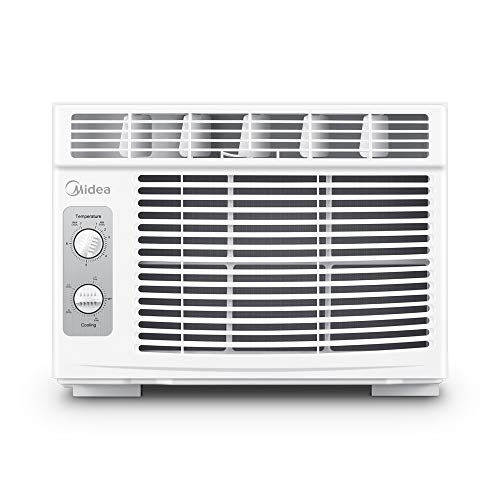
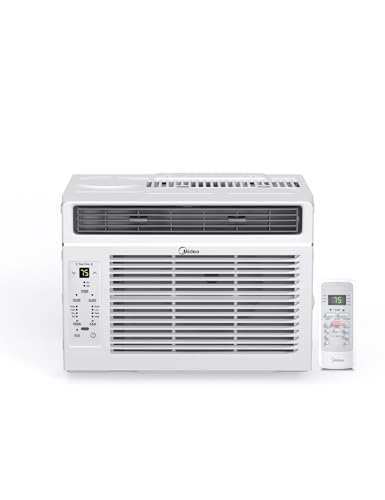
Not every Florida cooling problem justifies a contractor and a permit. A rented bungalow whose landlord maintains the central system on geological time, a condo spare room that hosts grandchildren for a month each winter, a home office carved from a porch — these call for the window archetype, chosen in a size honest to the room, typically somewhere between 8,000 and 14,000 BTU for a single space. Modern inverter window models run far more quietly and gently than the rattling boxes of memory, and their ability to keep running at low speed helps with the perpetual dampness of a closed-up spare room.
Florida-specific cautions apply even to this simple family. Storm exposure matters: a unit mounted in a window that faces the prevailing hurricane winds should be secured beyond the standard accordion panels, and owners in evacuation zones should know how the machine comes out and how the opening gets shuttered or boarded when a serious storm approaches. Condensate dripping from the chassis should fall somewhere deliberate — not onto a walkway where algae turns it treacherous, and not against a wall where constant wetting feeds staining and decay. Where a homeowners association governs exterior appearance, confirm the rules before installation day rather than after the complaint letter.
Used seasonally, a window unit also serves as the household’s insurance policy. When a central system fails in August — and in Florida, failures choose August with uncanny reliability — a stored window machine cooling one bedroom transforms a miserable, hotel-or-relatives scramble into a manageable week of sleeping in the cool room while parts are ordered. That contingency value rarely appears in efficiency comparisons, yet families who have lived through one such week seldom sell the backup unit afterwards.
Humidity during the mild months, when cooling barely runs
Florida’s shoulder seasons expose a gap in purely temperature-driven cooling. A drizzly week in November can hold outdoor temperatures in the seventies while the air stays saturated; the thermostat sees nothing to do, the system rests, and indoor humidity climbs until mirrors fog, leather belts in the closet grow spots, and the house develops that closed-up smell returning snowbirds know instantly. Houses occupied year-round can ride through with occasional manual cooling runs, but part-time residences suffer worst, sitting sealed and damp for months while their owners are in Michigan or Ontario.
Several defences combine well. A thermostat or humidistat that permits cooling for dehumidification — deliberately overcooling by a small margin to wring out moisture — handles occupied homes neatly, and many modern central systems build this logic in once it is enabled and configured. A standalone dehumidifier draining into a sink or a condensate pump serves smaller homes and single problem zones, at the cost of adding its modest heat to the space. For seasonal homes, remote monitoring earns its place: a connected sensor that reports temperature and humidity lets an owner or a house-check service catch a failed air conditioner in July rather than discovering, in October, a interior colonized by mould.
Building habits reinforce the machinery. Bathroom exhaust fans that actually vent outdoors, run for twenty minutes after showers; a kitchen range hood used during the pasta boil rather than after it; wet swimsuits and pool towels dried on the lanai instead of over interior doors — each small discipline removes moisture at its source. The goal is a house that hovers in the mid-forties to low-fifties of relative humidity through the damp months, dry enough to protect furnishings, documents and lungs, without heroic energy expenditure. Owners of larger open-plan spaces can extend these principles with the room-by-room discussion in best air conditioners for large rooms, since big volumes of humid air behave differently from small closed rooms.
Hurricane season: anchoring, flooding and the days after the storm
From June through November, every Florida cooling system lives under a second job description: survive. Outdoor condensers should be anchored to their pads or stands as local code requires, both because wind tries to move them and because a shifted unit kinks refrigerant lines and tears electrical connections. In flood-prone streets, elevation is the governing decision — a condenser or air handler raised on a stand above expected water survives the surge that drowns a pad-mounted neighbour, and many coastal jurisdictions now mandate heights that older installations never contemplated. If your equipment predates those rules, ask about elevation at replacement time, when the incremental effort is smallest.
Preparation in the forty-eight hours before landfall is simple and worth rehearsing. Cool the house a few degrees deeper than usual while power is certain, since a well-chilled, well-insulated interior coasts longer once the grid fails. Switch the system off as the storm arrives if flooding or violent voltage swings threaten, because a compressor trying to start against brownout conditions can damage itself quietly. Photograph the outdoor unit, the electrical disconnect and the air handler beforehand; after a storm, those images help an insurer or a contractor understand what changed. Clear the area around the condenser of anything the wind could convert into a missile aimed at the coil.
The restart deserves patience. Do not energize a unit that has stood in floodwater until it has been inspected — silt, salt water and electrical equipment are a dangerous mixture, and a flooded condenser may be a replacement rather than a repair. Once power returns and holds steady, run the system and watch the condensate drain, listen for new grinding or clicking, and check that the outdoor fan spins freely after its involuntary season as a debris catcher. Expect appointment books across the region to fill instantly; households with a maintenance agreement, a relationship with a local contractor, or that humble window unit in the garage will wait in considerably more comfort than those starting the search from zero.
Outages beyond hurricanes: generators, surge defence and heat safety
Florida power fails for smaller reasons all year — a lightning strike two streets away, a palm frond across a line, a summer grid straining under an entire region’s afternoon load. Lightning in particular is a year-round resident here, and the voltage spikes it injects into household wiring destroy control boards with depressing regularity. A whole-home surge protective device at the panel, supplemented by protection at the air handler and condenser, is among the cheapest insurance a Florida homeowner can buy for a modern system whose electronics cost more to replace than many entire appliances of a generation ago.
Generator planning must be honest about what air conditioning demands. A compressor’s starting surge dwarfs its running draw, so a portable generator that happily powers lights, a refrigerator and fans may still fail to start a central system. Options scale from there: a soft-start kit fitted to the condenser can bring the starting surge within reach of a mid-sized generator; a standby generator with an automatic transfer switch can carry the whole house, at a level of investment that makes sense for medically vulnerable occupants or homes that double as the family’s storm refuge. Whatever the arrangement, the connection belongs in professional hands, with an interlock or transfer switch that makes back-feeding the grid impossible — lineworkers restoring power after a storm should never meet electricity travelling the wrong way from a house.
Heat safety planning completes the outage picture, because some households should not simply endure a hot, powerless interior. Infants, elderly residents and anyone whose medication or condition impairs temperature regulation can move from uncomfortable to endangered during a multi-day outage in September, when nights offer little relief. Identify the coolest room in the house, know which relative or hotel inland can take the household, and treat the decision to leave as logistics rather than defeat. A window unit that can run from a modest generator, cooling a single bedroom through the emergency, is for many families the pragmatic middle path between a full standby installation and no plan at all.
Reducing the load before buying a single BTU
The cheapest capacity is the heat that never enters. Florida roofs absorb a punishing share of the day’s energy, and the attic beneath them becomes the house’s hot ceiling; adequate insulation there, a radiant barrier where appropriate, and sealed penetrations around light fittings and the attic hatch all slow the transfer downward. Light-coloured roofing reflects meaningfully more than dark shingles under a subtropical sun, a consideration that belongs in any re-roofing decision even when the cooling system is not being touched. Attic ventilation helps where it is designed correctly, though powered attic fans are a mixed blessing in humid climates, since they can pull conditioned air out through ceiling leaks faster than they remove attic heat.
Glass is the second front. West and south windows drive the late-afternoon peak that sizes most systems, and exterior shading defeats interior blinds every time, because it stops the energy before it crosses the glass. Awnings, shutters, shade screens and the humble, fast-growing palm planted in the right spot all pay for themselves in reduced runtime; low-emissivity replacement windows belong in the same conversation when frames are due for renewal anyway. Inside, cellular shades or lined curtains still help, particularly in rented homes where the exterior is not yours to modify.
Only after the envelope has been tightened does the equipment conversation reach its proper scale, and households routinely find that the load calculation shrinks by enough to step down a size, with all the humidity benefits that a smaller, longer-running system brings. The seasonal savings discussion in best air conditioners for energy saving extends this logic to operating habits — steady setpoints instead of deep setbacks, ceiling fans permitting a slightly higher thermostat setting, and fan modes chosen deliberately rather than left on automatic assumptions. In a state where the machine runs most of the year, those small percentages accumulate into the largest single lever most households control.
Maintenance on a salt, pollen and storm calendar
Florida equipment ages in dog years, and its upkeep should be scheduled accordingly. Filters in a house that opens its doors to the pool deck all summer load faster than the monthly rhythm printed on the packaging; check them on the first of each month and replace or wash without negotiation. The condensate drain needs preventive attention before it demands emergency attention — a wet switch tripping on the hottest Saturday of the year is the standard story — so clear it at the start of the season and consider a drain treatment routine if biofilm has clogged the line before. Keep the area around the air handler dry and inspect its insulation; a sweating handler in a garage can drip onto stored belongings for weeks unnoticed.
Outdoors, the rhythm described earlier for coastal rinsing applies in softened form everywhere in the state, because pollen, oak tassels, grass clippings and construction dust all find the coil. Trim vegetation to preserve breathing room on every side, keep mulch below the pad line, and after any storm, walk the unit before restarting it: fronds wedged in the fan grille and plastic bags plastered against the coil are small things that become expensive at compressor temperatures. The disconnect box and its wiring deserve a glance for the ant colonies and lizard casualties that Florida electricians recount with weary familiarity.
Professional service once a year, timed for spring before the appointment books fill, should cover refrigerant performance, electrical connections and capacitor health, blower cleanliness, drain function and a thermostat conversation. Keep the paperwork. In a state where homes change hands frequently and warranties often transfer, a documented service history is a genuine asset at sale time, and it gives the next technician a baseline instead of a guessing game. More importantly, the spring visit is when small findings — a weakening capacitor, a coil beginning to pit, duct insulation slipping in the attic — can still be addressed on a schedule the household chooses.
Garages, pool houses and the screened lanai problem
Every Florida neighbourhood has a garage that stopped housing a car years ago and now hosts a workshop, a band practice, a gym or a small business, all of it simmering through the summer behind a metal door that radiates heat like a griddle. Cooling such a space begins with the door itself — insulated panels or a fitted insulation kit change the room’s baseline dramatically — and continues with a decision between extending the house ductwork, which building rules often discourage for garages because of fumes and fire separation, and installing an independent ductless head. The independent route usually wins on both compliance and control, letting the space stay warm when empty and reach comfort within the hour when the project resumes.
Pool houses and cabana bathrooms present a wetter version of the same puzzle. Their air arrives saturated from the pool, their doors open constantly, and their small volumes tempt owners toward oversized window units that blast cold air and stop, leaving the tile perpetually damp. A modest ductless head running steadily, or a small central zone with a dedicated dehumidification strategy, keeps these rooms pleasant and protects the stored cushions, towels and electronics that otherwise mildew by midsummer. Exhaust ventilation in the bathroom portion is not optional decoration here; it is the cheapest moisture control in the entire structure.
The screened lanai itself cannot be air conditioned in any honest sense — the screens that keep the mosquitoes out let the climate straight through — yet owners constantly try to extend the cooled season there. The realistic tools are shade cloth or a roof over the screen enclosure, ceiling fans sized generously for outdoor duty, and misting used sparingly where humidity permits, which in Florida is less often than retailers suggest. What does work is conditioning the rooms that open onto the lanai so well, with sliding doors that seal properly, that the transition between inside and outside stays comfortable and the household drifts between the two all evening. Spend the money on the door seals and the indoor side; the lanai will repay you in October, when the peninsula finally exhales.
Condominiums, high-rises and cooling you do not fully control
A large share of Floridians cool homes stacked on top of one another, where the archetype menu narrows and the association’s rulebook joins the conversation. Many towers rely on building chilled water or shared condenser loops, leaving the unit owner responsible only for an interior fan coil and its filter, its drain and its thermostat. In that arrangement, the most valuable skills are knowing where your condensate line runs, keeping its trap primed and its pan clean, and reporting building-side problems early, because a tower’s cooling failure in August is a communal emergency measured in hundreds of households.
Where a condo does carry its own condenser — on a balcony, in a closet-sized mechanical alcove, or on a shared roof — replacement becomes an exercise in logistics. Dimensions are fixed by the alcove, noise limits are enforced by neighbours on every side, crane or freight elevator bookings govern the schedule, and coastal corrosion attacks balcony equipment with special enthusiasm. Measure the existing installation obsessively before shopping, photograph the data plate, and choose the replacement by fit and sound as much as by efficiency. A slightly less efficient unit that installs cleanly and runs quietly will out-please a flagship model shoehorned into a space it resents.
Renters in Florida houses and apartments hold a shorter lever but not an empty hand. The portable and window families, used within lease terms, can rescue a bedroom from a failing landlord-maintained system; blackout curtains on the west windows, a fan moving air between rooms, and a thermostat schedule negotiated rather than endured all shift comfort meaningfully. Document cooling failures in writing and promptly — in this climate, a non-functioning system is a habitability issue, not a lifestyle preference, and the paper trail matters if the repair conversation stalls while the indoor thermometer climbs.
Choosing the contractor: the decision inside the decision
Florida’s demand for cooling supports excellent contractors and opportunists in equal abundance, and telling them apart is a learnable skill. The careful ones measure before they quote, ask about hot rooms and humidity complaints, inspect the ductwork and the drain, and put the load calculation and the equipment match in writing. The hurried ones quote a tonnage from the driveway, promise installation tomorrow, and treat questions about vacuum levels or float switches as impertinence. After a hurricane, when demand explodes, this distinction sharpens further: travelling storm-chasing outfits install quickly and vanish before the first warranty claim, while established local firms answer their phones in the following season.
Permits and paperwork are the visible surface of invisible quality. A permitted installation gets inspected, which disciplines everything from electrical connections to condenser anchoring, and it creates the record that insurers and future buyers will ask for. Confirm that the quoted price includes the permit, the thermostat, the drain safety switch, the pad or stand, and the disposal of the old equipment, because the gap between a bare quote and a complete one hides in exactly those line items. Ask how warranty registration will be handled and who performs warranty work; a manufacturer warranty serviced reluctantly by a different company is worth less than the same warranty backed by the installer standing in your kitchen.
Get more than one complete quote, but compare them as systems rather than as numbers. One proposal may include duct sealing that another omits; one may specify the coastal coil treatment that explains its higher figure; one may quietly substitute a single-stage machine for the variable-speed equipment discussed on the doorstep. Lay the documents side by side, interrogate the differences, and let each contractor explain the other’s omissions — the conversation that follows teaches more about Florida cooling than a month of reading, and it usually identifies, beyond reasonable doubt, the firm you want holding your condensate line.
Living with the choice through one full calendar
The first summer with new equipment teaches the household its real patterns. Notice which rooms drift warm at four in the afternoon, whether the humidity reading settles where the brochures promised, and how the outdoor unit’s voice carries to the patio where people actually sit in the evening. Small corrections belong to this season: a balancing damper adjusted, a thermostat schedule rewritten around the family’s genuine hours, a shade sail finally hung over the one window that defeats the whole west wall. Contractors expect a callback conversation of this kind and good ones schedule it themselves, because a system tuned after a month of living beats a system abandoned at installation.
Autumn brings the storm-season audit and the shoulder-season humidity test described earlier, and it is also when Floridians discover whether their dehumidification strategy works or merely exists. Walk the closets, the garage storage and the space behind the washer in November, breathing deliberately; the nose detects a failing moisture regime before any sensor reports it. Winter, such as it is, offers the maintenance window for duct repairs and insulation upgrades that nobody tolerates in July, and a few genuinely cold nights in the northern half of the state remind owners of heat-pump systems to confirm that auxiliary heat and defrost cycles behave as they should.
Spring closes the loop with the professional visit, the drain clearing, the coil rinse after pollen season, and a review of the year’s electricity pattern while the memory of summer is still honest. Households that keep this gentle annual rhythm find that Florida cooling fades into the background of life, which is the highest compliment infrastructure can earn. The machine becomes like the roof or the plumbing: noticed at purchase, appreciated in a crisis, and otherwise simply there, holding the line against a climate that never entirely sleeps.
Thermostats, zoning and the geography of a long Florida house
Ranch houses stretch, and a single thermostat in a hallway cannot know that the western bedrooms have spent the afternoon absorbing sun while the eastern kitchen stayed mild. Zoning answers with dampers and multiple sensors, dividing the house into territories that receive cooling according to their own readings. Done well, zoning ends the nightly negotiation in which one end of the house freezes so the other end can sleep. Done carelessly — dampers closing against a blower with nowhere to push its air — it strains equipment and creates noise, which is why zoning belongs in the design conversation with the contractor rather than in a later impulse purchase.
Simpler tools solve a surprising share of the same problem. Remote room sensors that let the thermostat average several locations, or prioritize the bedroom at night and the living area by day, correct the worst distortions of a single hallway reading without touching a duct. Ceiling fans extend the truce, moving air across skin so occupants accept a thermostat setting a few degrees warmer; in Florida’s long season those few degrees, held for thousands of hours, are worth real money, though fans cool people and not rooms, and spinning one in an empty space only warms the motor’s pride. Smart thermostats add scheduling, humidity awareness and outage-era alerts, but their value depends on honest programming — a learning algorithm trained on a holiday week will faithfully reproduce the wrong life.
Setback habits deserve one clear warning for this climate. Letting the house drift far upward during a workday, then demanding a deep recovery at six in the evening, forces the system to fight the day’s accumulated humidity at the very hour when outdoor conditions are worst and electricity most expensive. Shallow setbacks, or none at all during the wettest months, usually serve Florida homes better than the aggressive schedules recommended for dry climates, because the moisture that infiltrates an uncooled house all day must be condensed out again before comfort returns. The thermostat is a humidity instrument here whether its owner thinks of it that way or not.
What the monthly bill is really telling you
Cooling dominates the Florida electricity bill to a degree that surprises newcomers from temperate states, routinely claiming the largest share of household consumption across the long season. That dominance cuts both ways: it makes efficiency differences between systems genuinely consequential over a decade of service, and it makes behavioural waste — a thermostat set far below comfort in an empty house, a pool-room door standing open, a clogged filter strangling airflow for a season — expensive in a way that identical habits in a mild climate never become. Reading the bill as a diagnostic, month against month and year against year, often reveals a failing system a full season before comfort collapses, because rising consumption with unchanged weather is the earliest symptom of a coil corroding, a charge drifting or ducts parting in the attic.
Utility programmes in the state periodically reward demand reduction, off-peak operation or equipment upgrades, and a household planning a replacement should ask what is currently on offer before signing anything, since the paperwork windows are unforgiving. Time-of-use rates, where they apply, reward the household that pre-cools in the morning and coasts through the expensive late afternoon, a strategy that pairs naturally with a tight envelope and a variable-speed machine. Solar generation belongs in this conversation for Florida more honestly than almost anywhere else in the country: the same roof that bakes the house can power its cooling, and the hours of strongest generation coincide cruelly and conveniently with the hours of greatest load.
None of these strategies rescues a fundamentally wrong installation, and that ordering matters. Seal the ducts, protect the coil, size the machine by calculation, and the bill becomes a fair price for a habitable house in a subtropical summer. Skip those foundations, and no thermostat programme or rate plan will disguise the waste; the meter simply records, with great precision, the cost of cooling the attic, the crawlspace and a portion of the outdoors. Floridians who internalize that hierarchy stop asking how to pay less for the same mistake and start removing the mistake.
Resale, insurance and the paperwork life of a Florida system
In a state where buyers tour homes in August, the cooling system is a headline feature of any sale, and its age, documentation and visible condition shape offers as surely as the kitchen does. A permitted, recently serviced system with transferable warranty paperwork reads as one less emergency awaiting the new owner; a corroded condenser of mysterious vintage reads as an imminent five-figure negotiation. Sellers preparing a house should service the equipment, clear the drain, rinse the coil and assemble the documents before listing, because the home inspector will test the temperature drop across the coil and photograph the data plate regardless of what the listing claims.
Insurers, for their part, increasingly regard the roof and the mechanical systems as a household’s risk biography, and in coastal counties the elevation and anchoring of outdoor equipment can enter the conversation after major storms reshape underwriting. Photographs of the installation, the permit record and proof of anchoring or elevation are worth filing alongside the policy itself, where they can be found when a claim is being assembled under stress. After a storm damages equipment, document before touching anything beyond safety measures, and be skeptical of unsolicited replacement offers arriving ahead of the adjuster; the storm-chasing pattern described earlier feeds on exactly that interval of confusion.
Finally, keep the system’s own archive as the years pass: installation documents, service notes, filter sizes, the refrigerant type, the contractor’s number, and a line recording when the drain was last cleared. Florida households move, inherit, rent out and take in family with unusual frequency, and the archive is what allows a new occupant — perhaps an adult child settling a parent’s house from another state — to maintain the machine intelligently instead of starting from archaeology. In a climate where cooling is infrastructure, that folder is part of the house, as surely as the deed.
Refrigerants in transition, and buying with the next decade in mind
The fluid inside the pipes has become a moving target. Successive generations of refrigerants have been phased down for environmental reasons, and equipment sold today may use a different refrigerant from the system it replaces, with its own handling rules, safety classifications and long-term service outlook. For the Florida buyer, the practical questions are simpler than the chemistry. Is the refrigerant in the quoted system current enough that parts, trained technicians and the refrigerant itself will be easy to find in ten years, when a August breakdown leaves no time for a research project? Does the contractor’s team hold the certifications the newer, mildly flammable blends require, and does the installation include the sensors or ventilation provisions those blends call for in enclosed spaces?
Mismatched marriages between old and new components deserve special suspicion in this era. Pairing a new outdoor unit with an elderly indoor coil designed for a different refrigerant invites inefficiency at best and incompatibility at worst, and it can void the performance figures that justified the purchase. In a mild climate, a compromised pairing might limp along unnoticed; in Florida, where the system runs most of the year, the penalty compounds monthly and the weaker component tends to fail during the season when replacement is slowest and most expensive. Replacing matched components together costs more on the day and less across the decade, an arithmetic this state teaches its homeowners repeatedly.
Future-proofing also means thinking about the house’s electrical future. A replacement installed today will likely share the panel with tomorrow’s electric vehicle charger, induction range or pool heat pump, so confirming spare capacity now, while an electrician is already involved, is cheaper than discovering the constraint later. Similarly, a thermostat control platform chosen today should not lock the household into a discontinued ecosystem; open, widely supported controls age more gracefully. None of this requires predicting the future in detail. It requires only refusing to optimize the purchase so narrowly for this summer that the next ten summers inherit the compromises.
One habit ties every theme in this guide together, and it costs nothing: pay attention to the house while the weather is still forgiving. The rattling that begins in March becomes the breakdown of July; the drain that drips slowly in spring becomes the ceiling stain of the first humid week; the coil that looks slightly dull at Easter is quietly losing the corrosion war by Labor Day. Floridians who walk their equipment monthly, notebook or phone in hand, convert most emergencies into appointments, and appointments are the cheapest, calmest way to buy anything in a state where the whole region tends to need the same technician on the same afternoon. That rhythm of attention, more than any single product decision, is what separates the households that endure the climate from the households that merely react to it, season after season, storm after storm, without ever quite understanding why their neighbours seem calmer when the forecast turns ugly and the air goes still.
Check prices on Amazon
Live listings for the shortlist in this guide are pulled from Amazon below, so prices and availability are always current at the moment you look.

A Florida checklist to carry into every quote and showroom
Begin with the load, not the logo: insist on a calculation that reflects your glass, your orientation, your attic and your occupancy, and treat any tonnage offered without one as a guess wearing a uniform. Within the size that calculation supports, favour equipment that runs long and gently — variable-speed first, two-stage second — because humidity control in this state is a runtime achievement. Specify the moisture defences explicitly: a thermostat or control that can command dehumidification, a trapped and cleanable condensate drain, and a safety switch that stops the system before water finds the ceiling.
Then interrogate the installation as a coastal installation, wherever in Florida you live. Ask what protects the outdoor coil from salt and what the rinsing routine should be; ask how high the unit will sit, how it will be anchored, and where its condensate and the air handler’s condensate will actually go. Ask about surge protection at the panel and at the equipment, about soft-start options if a generator figures in your storm plan, and about the duct repairs the quote includes rather than assumes. Write the answers down. A contractor who welcomes the list is telling you something; so is one who waves it away.
Finish with the ownership questions: warranty registration handled before the crew leaves, a spring service visit scheduled or at least described, documentation for the permit and the equipment match left in your hands, and a clear account of what the first call costs if the system falters in its first August. Choose on the whole of that record rather than on a single figure, and the peninsula becomes a great deal easier to live on. The reward is a house that stays dry through the dripping months, calm through the storm season, and cool at the exact hour when the thunderheads build over the water and the whole street smells of rain — a Florida home on its own terms, at last.