Our Top Picks
 BLACK+DECKER Portable Air Conditioner10,000 BTU (Without Heat)15.3 x 14 x 24.8 inches47.3 poundsCheck on Amazon



What's inside
- How apartment suitability was judged here
- Sizing cooling power for rented rooms
- The classic compact window unit for an uncomplicated bedroom
- The U-shaped window unit that gives the window back
- The over-sill saddle design for fragile frames and fussy leases
- The inverter window unit for people who sleep lightly
- The single-hose portable for windows that defeat window units
- The dual-hose portable for bigger rooms and longer heat waves
- The compact portable for studios and rooms that change jobs
- Reading your lease before you read another product page
- A no-drill installation routine that protects the frame
- Electrical reality in older rental buildings
- Quiet operation in buildings where everyone hears everything
- Humidity, drainage, and the mold question
- Daily habits that make a modest unit feel powerful
- Care, cleaning, and storing the machine for winter
- Troubleshooting the complaints renters actually file
- Questions apartment renters ask most
- Check prices on Amazon
- Matching the archetype to your actual lease
As an Amazon Associate I earn from qualifying purchases. This post may contain affiliate links at no extra cost to you.
When a landlord hands back your deposit depends partly on screw holes you never made, this guide earns a small commission from qualifying purchases you choose after reading, at no added cost to your rent-burdened budget.
Cooling an apartment is a negotiation disguised as a shopping trip. You are not only buying cold air; you are also bargaining with a lease, a window frame that predates you, a breaker panel shared with a microwave, and neighbors who can hear a rattling compressor through thin walls. The machine that delights a homeowner with a drill, a helper, and permanent brackets can become a liability for a renter who must leave every sash, sill, and screen exactly as found. That difference shapes every recommendation below.
This guide treats removability as a performance metric equal to cooling power. A unit earns its place here only if a single person, or at most two careful adults, can install it without cutting, drilling, or permanently altering the building, run it through a hot season without annoying the floor below, and then take it out again on moving day without a repair bill. Portables that roll away, window boxes that lift out, and newer shapes that straddle the sill all compete under those rules.
Renters also live with stranger room geometry than product photos suggest. Studios put the bed three feet from the kitchenette. Railroad flats funnel air down a hallway that never quite cools the back room. Top-floor units collect roof heat all afternoon, while garden-level flats stay damp and shaded. Rather than pretend one model solves every layout, this guide organizes the field into archetypes, the recurring designs you will meet under many brand names, and explains which floor plan each one actually serves.
How apartment suitability was judged here
Five filters decided whether an archetype belonged in a renter-focused roundup. Installation reversibility came first, because a cooling win that costs you a deposit is not a win. Noise followed closely, since apartment bedrooms double as offices, nurseries, and the only quiet room available. Third came fit across window styles, from double-hung sashes to sliders and crank-out casements. Fourth was electrical politeness, meaning modest draw on older circuits. Storage footprint rounded out the list, because a machine you cannot closet in October will colonize your living room all winter.
Weight matters more in walk-ups than spec sheets admit. A window unit that seems manageable in a showroom becomes a different object on a fourth-floor landing in August humidity. Throughout this guide, heavier archetypes are flagged for two-person lifts, and any design that asks you to lean a heavy box outward over a sidewalk gets an explicit caution. Safety straps, foam seals, and support methods that avoid screws receive preference over hardware that penetrates the frame.
Condensate handling separates thoughtful designs from puddle generators. Window units drip outside, which is fine above a yard and awkward above a downstairs neighbor’s balcony. Portables collect water internally or evaporate it through the exhaust hose, a distinction that decides how often you are emptying a tank at midnight. Apartment readers should weigh drainage behavior as seriously as cooling output, especially in humid coastal or river-valley climates where a portable can fill its reservoir surprisingly fast.
Finally, this guide refuses to treat smart features as decoration. Scheduling, sleep curves, and remote shutoff genuinely help renters who pay their own electric bill and leave home for irregular shifts. A timer that lets the bedroom pre-cool for twenty minutes before you return beats raw power you forget to switch off. Connectivity only counts here when it changes a daily habit, lowers waste, or saves a trip across the room at two in the morning.
Sizing cooling power for rented rooms
Undersizing is the most common apartment mistake, and oversizing is the second. A unit too small runs flat out, never wrings moisture from the air, and still leaves the pillow warm. A unit far too large blasts the thermostat into satisfaction within minutes, shuts down, and leaves humidity untouched, so the room feels clammy at a temperature that looks correct. Matching output to the actual room, not the whole lease, is where comfort begins.
Start with the room you sleep in, because nighttime recovery drives most purchases. Measure length and width honestly, including the alcove where the bed sits but excluding a hallway you cannot close off. Sun exposure then adjusts the picture: a west-facing studio with unshaded glass needs noticeably more capacity than an identical north-facing room under a mature tree. Kitchens add heat from cooking, and top-floor ceilings radiate the day back at you long after sunset.
Ceiling height quietly changes the math in older buildings. Pre-war apartments with tall ceilings hold a larger volume of warm air than the floor area suggests, and ceiling fans can either rescue a modest unit or merely stir a hot layer around. If your room combines high ceilings, big windows, and afternoon sun, step up one size class within the archetypes below rather than gambling on the smallest box. If your room is a shaded interior bedroom with a single modest window, the opposite advice applies.
Renters cooling a studio face a special version of the sizing puzzle. One open space must serve sleeping, working, and cooking, yet the only window may sit beside the bed. A mid-size unit placed there can freeze your shoulder while the desk stays warm. In that layout, airflow direction, oscillation, and a portable you can reposition between day and night zones often matter more than a bigger compressor. The archetype sections return to this studio problem repeatedly because it is so common.
Do not forget the human load. Two sleepers, a large dog, a gaming PC, and a television turn a small bedroom into a modest furnace by midnight. A home office with dual monitors adds a steady trickle of warmth all day. When you tally the room, count the heat sources you actually run during the hours you want cooling, not the empty room a sizing chart imagines.
The classic compact window unit for an uncomplicated bedroom
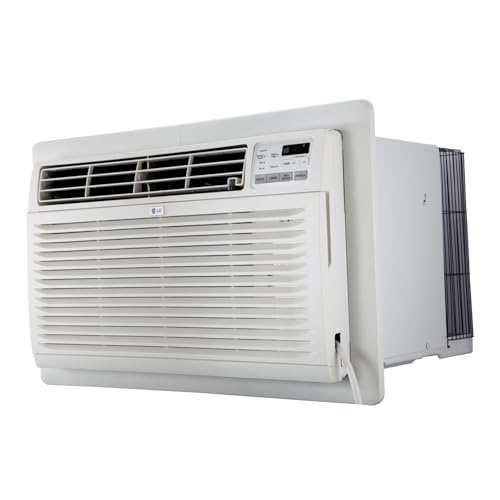
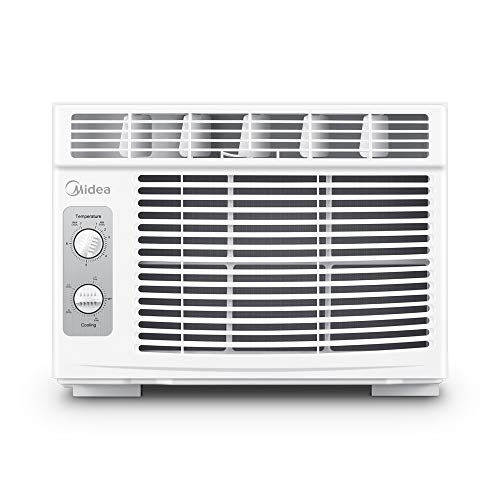
The archetype: a rectangular box, roughly as wide as a carry-on suitcase is tall, with mechanical or simple electronic controls, accordion side panels, and a front grille that blows straight into the room. This is the design most people picture when they imagine a window air conditioner, and it remains the default answer when the window is a standard double-hung sash, the room is a single bedroom, and the lease allows a unit that simply rests in the opening.
Its virtues are unglamorous and decisive. Because the compressor sits half outside, heat and most noise leave with it, and the sealed separation between indoor and outdoor air makes this format more efficient than any portable of similar output. Purchase complexity is low, the controls survive a decade of dusty summers, and replacement foam costs almost nothing. For a renter with one cooperative window and a room of modest size, this archetype usually delivers the coolest night per unit of hassle.
Installation without drilling is entirely possible here if you work slowly. The lower sash holds the unit’s top rail, dense foam strips seal the gaps, and the accordion panels close the sides without screws in many frames. Some renters add a removable support ledge that braces against the exterior wall with pressure rather than fasteners. Photograph the frame before you begin, keep every original screen and stop in a labeled bag, and the whole arrangement reverses in under an hour at move-out.
Drawbacks deserve equal honesty. The window is occupied for the season, daylight shrinks, and the view becomes a humming appliance. On upper floors, the lift into place is the riskiest moment of ownership, and no renter should attempt it alone from inside a wobbly chair. Units in this class can also transmit a low vibration into old wooden frames, which a strip of dense foam beneath the chassis often calms. If your building fronts a busy street, remember that the open, unit-filled window admits more traffic sound than a closed pane did.
Choose this archetype when the bedroom window opens vertically, the sill is sound, and you can store the box under a bed or in a closet come autumn. Readers comparing bedroom-specific layouts will find a useful companion in our bedroom-focused coverage best air conditioners for bedrooms which looks at placement beside beds and dressers in more detail. For everyone else, the classic box remains the baseline against which fancier shapes must justify themselves.
The U-shaped window unit that gives the window back
The archetype: a window unit split into indoor and outdoor halves joined by a narrow bridge, so the sash closes down into the channel between them. From inside, the visible portion is slim and comparatively quiet; from outside, the compressor half hangs where a conventional box would. The window can often still open on milder days, and the closed sash plus glass restore a layer of sound insulation that a traditional installation sacrifices.
Quiet is the headline benefit, and it is structural rather than electronic. With the sash lowered into the gap, the noisiest machinery sits beyond a pane of glass and a sealed frame, so conversation, podcasts, and sleep survive at settings that would make a classic box intrusive. Light sleepers, shift workers sleeping through daytime, and parents cooling a room shared with an infant tend to feel the difference immediately. The design also suits street-facing rooms where sealing out traffic noise matters almost as much as cooling.
The renter-specific catch is fit. The bridge depth must match your wall and frame geometry, and some vinyl or unusually thick sills complicate the seating. Most kits include a bracket that can be assembled with minimal or no frame penetration, but you should confirm the bracket style before ordering rather than after unboxing. Measure the sill depth, the sash travel, and the clearance below the window outside, because a fire escape or awning can block the outdoor half entirely.
Removal is straightforward once the bracket is released, though the unit’s awkward shape makes it less stackable in storage than a plain rectangle. Wrap the bridge area so it does not scuff paint, and keep the foam blocks with the unit rather than in a kitchen drawer. In buildings where the lease restricts visible exterior equipment, check whether the lower profile changes the conversation with management; it sometimes does, because the outdoor portion reads as less bulky from the sidewalk.
Pick the U-shape when noise is your chief complaint and your window geometry cooperates. It is rarely the cheapest route into cold air, yet renters who have endured one rattling season often judge the premium differently in the second summer. If your sash is a slider or a casement, skip ahead, because this design still belongs to the double-hung world.
The over-sill saddle design for fragile frames and fussy leases
The archetype: a unit shaped like an inverted U in cross-section, draping over the sill so most of its weight hangs inside and outside the wall rather than resting on the window frame itself. The indoor half sits low, near the floor line of the sill, blowing upward across the room. Because the sash barely participates, this layout appeals to renters whose frames are painted shut, warped, or explicitly protected by a preservation-minded landlord.
Load distribution is the clever part. A conventional box concentrates its mass on a narrow sill that may already be soft with age, while the saddle spreads contact along the wall faces. Installation typically involves positioning, leveling, and foam, with no bracket screwed into anything. For ground-floor and second-floor renters, the lower center of gravity also makes the lift feel less precarious, although the total weight still demands respect and usually a second pair of hands.
Inside the room, the low profile changes furniture planning. A saddle unit occupies the wall strip beneath the window, exactly where a radiator, a low bookcase, or a cat’s favorite sun patch may already live. Measure that floor zone before committing, and leave breathing room on both sides so intake air is not strangled by curtains or bedding. Long drapes are a particular enemy here; they can pool cooled air behind fabric while the rest of the room stays warm.
Cooling delivery feels different from a high-mounted box. Air enters low and rises as it warms, which can make ankle-level comfort excellent and bunk-bed comfort slower to arrive. A small fan across the room, angled upward, helps distribute the output in tall spaces. In a bedroom where the bed sits opposite the window, the arrangement works beautifully; in a room where the bed hugs the same wall, you may feel less direct relief.
Consider the saddle when your lease language is strict, your frames are delicate, or a property manager has already said no to conventional units once. It is a niche answer rather than a universal one, and its price tier reflects specialized engineering. Still, for the renter whose only obstacle is permission, a design that leaves literally nothing behind can reopen a conversation that seemed closed.
The inverter window unit for people who sleep lightly
The archetype: a window box whose compressor varies its speed continuously instead of lurching between full blast and silence. Once the room reaches the target, the motor settles into a low, steady hum and trims output up or down in small steps. The result is a flatter temperature curve, fewer wakeful clicks and surges, and often gentler humidity control because the coil stays cold for longer stretches.
Nighttime is where this technology earns loyalty. Traditional compressors announce every restart, and in a quiet apartment at three in the morning that announcement carries. An inverter’s steady state fades into background awareness the way refrigerator hum does, present if you listen for it and absent when you do not. Roommates in the next room benefit too, because the vibration profile is smoother and less likely to travel through a shared frame.
Energy behavior follows the same logic. Long, low-speed runs sip rather than gulp, which matters in buildings where cooling is billed directly to the tenant and summer bills are a genuine anxiety. The savings are not magic, and a poorly sealed window will waste them, but paired with decent foam work and a sensible setpoint, an inverter unit tends to be the archetype tenants describe as affordable to actually use, not just to own.
Sizing guidance shifts slightly here. Because variable-speed machines handle part-load conditions gracefully, the penalty for choosing the upper end of a size range is smaller than with a fixed-speed box. Renters torn between two capacities for a sun-baked room often do better with the larger inverter, which will loiter at low speed instead of short-cycling. That flexibility is handy when you expect to move and the next bedroom may be bigger than this one.
Shoppers weighing a mid-size inverter against room dimensions can cross-check capacity classes in our mid-range output guide best 8000 btu air conditioners before deciding. Choose the inverter archetype when sleep quality, bill predictability, and steady comfort rank above the lowest possible entry cost. Avoid it only if your building’s power is so unstable that sophisticated electronics already struggle, a rare but real situation in some very old properties.
The single-hose portable for windows that defeat window units
The archetype: a floor-standing cabinet on casters, roughly the height of a kitchen stool, with one flexible hose that vents hot air through a panel fitted into a window opening. Nothing heavy leaves the floor, nothing hangs outside, and the window panel can be cut to fit sliders, casements with adapters, and even some horizontal openings that no window box could ever use. For renters locked out of the window-unit world, this is usually the door back in.
Mobility is the emotional selling point. The same machine can cool the living room during a Saturday heat peak and roll to the bedroom before sleep, serving two zones at different hours. In a studio, that repositioning solves the frozen-shoulder problem described earlier. When the lease ends, the entire system packs into its own footprint, panels and hose nested alongside, and leaves the window exactly as the landlord’s photos show it.
Physics imposes the tax. A single hose exhausts indoor air outside, which pulls replacement air through every gap in the apartment, from under the door to the bathroom vent. The unit therefore fights a gentle headwind of its own making, and its effective cooling in a real room trails its headline rating. Sealing the window panel carefully, keeping the hose short and straight, and closing doors to unused rooms all claw back some of that loss.
Noise and heat also stay indoors with this format. The compressor lives in the room with you, so even a well-damped cabinet is more present than a window unit at the same output. The hose itself radiates warmth, and draping it with an insulating sleeve or routing it away from the bed improves the experience more than most owners expect. If you are a very light sleeper, audition this archetype mentally against the inverter section before committing.
Water management needs a plan. Many single-hose models evaporate most condensate into the exhaust stream during ordinary humidity, then fall behind during a muggy spell and ask for draining. Learn where the drain port sits, keep a shallow tray that fits beneath it, and never discover the auto-shutoff during a heat wave night. Renters in arid regions may drain rarely; renters near the Gulf or the Great Lakes should expect a routine.
Reach for the single-hose portable when window geometry, building rules, or a fear of lifting make window units impractical, and when the room is modest enough that the efficiency penalty stays tolerable. It is the flexibility champion of this guide, not the efficiency champion, and choosing it with open eyes is what separates satisfaction from buyer’s remorse.
The dual-hose portable for bigger rooms and longer heat waves
The archetype: a larger floor cabinet with two hoses, one drawing outdoor air in to cool the condenser and one expelling the heated result. By keeping its breathing separate from the room’s air, it avoids the negative-pressure problem that hobbles its single-hose sibling. Output feels closer to the rating on the box, and sustained cooling during a multi-day heat dome is noticeably steadier.
Living rooms are its natural habitat. A dual-hose machine can hold a combined kitchen and seating space at a civilized temperature through an evening of cooking and guests, a task that overwhelms smaller portables. Home workers who have claimed the living room as an office also appreciate that the unit can stay parked in one corner all season, hoses dressed neatly to the window, rather than migrating daily.
The costs are bulk and setup fuss. Two hoses need a wider window panel, more sealing attention, and a larger clear zone behind the cabinet. The footprint can crowd a small apartment, and the weight, while on casters, still matters when the elevator is broken or the storage closet is up a flight. Measure doorways and the closet you intend for winter storage before falling for the performance numbers.
Noise remains a portable-family trait, though the larger cabinets often run their fans at lower relative effort for the same cooling. Placement helps: a rug under the casters, a few inches of clearance from the wall, and a hose run without tight bends reduce rumble and whistle. If the machine will share a room with a television, siting it on the opposite wall from the speakers keeps dialogue intelligible at moderate fan speeds.
Renters comparing larger portable options and their room-size claims can dig deeper in our large-space portable roundup best affordable portable air conditioners for 500 square feet which stress-tests coverage promises. Choose the dual-hose archetype when the target space is genuinely big, the heat is relentless, and you have the floor area to give a serious machine a permanent summer corner. In a small bedroom, its advantages shrink while its footprint does not.
The compact portable for studios and rooms that change jobs
The archetype: a smaller single-hose portable, lighter and narrower than the mainstream cabinets, intended for one modest room rather than an open-plan sweep. Output is limited, the hose is shorter, and the whole machine can tuck beside a wardrobe without dominating the floor. Think of it as a personal climate appliance for a studio bed zone, a tiny second bedroom turned nursery, or a rented room in a shared house.
Shared housing is where this design quietly shines. If you rent a single room and control nothing beyond your door, a compact portable asks only for a window to vent through and an outlet to feed it. Housemates cannot complain that you have monopolized a shared window unit schedule, and when you move rooms or houses, the machine follows like a suitcase. The same logic serves traveling nurses, semester subletters, and anyone whose housing is measured in months.
Expectations must scale with the cabinet. This archetype takes the edge off a small, closed room; it does not transform a sunlit loft. Closing the door is non-negotiable, and pre-cooling before bed works far better than arriving in a hot room and demanding instant relief. Pair it with blackout curtains and a door sweep, and the little machine’s job becomes achievable. Leave the door open to a warm hallway, and no compact unit on earth will save the night.
Because these models are often bought quickly during the first heat wave, build quality varies widely between examples. Favor a cabinet with a washable filter that slides out easily, a hose connection that locks rather than friction-fits, and casters that roll on hard floors without chattering. Those mundane details decide whether the third summer feels as good as the first. A remote is a genuine bonus at this scale, since the bed is usually within the same small room.
Pick the compact portable when your territory is one small room, your stay may be short, and portability between addresses matters more than maximum output. It is also the gentlest way to test whether portable life suits you before investing in a dual-hose machine. If the room is large or the climate extreme, treat this archetype as a stepping stone rather than a destination.
Reading your lease before you read another product page
Lease language about cooling hides in several places. The obvious clause may ban window units outright, often citing appearance, water damage, or liability for falling objects. Less obvious restrictions live in rules about exterior alterations, noise hours, or electrical modifications. Read the house rules and any building handbook as well as the lease itself, because the document that matters in a dispute is sometimes the one you skimmed at signing.
When the paperwork is ambiguous, ask in writing and keep the reply. A short email describing the exact archetype, its no-drill installation, and its removal at move-out gives a property manager something concrete to approve. Managers refuse abstractions more readily than specifics; a photograph of a similar installation in another unit can help. If approval comes with conditions, such as a drip pan or a specific window, those conditions become part of your installation plan.
Historic buildings and homeowners-association-governed rentals add another layer. Rules may dictate what is visible from the street, which quietly favors low-profile saddle and U-shaped designs over a classic box with a support bracket. Ground-floor renters should also ask about security, because a window held open by a unit or a vent panel needs a locking strategy that the building accepts.
Insurance is the topic nobody raises until something drips. A slow condensate leak can stain the ceiling below, and responsibility clauses in many leases assign that damage to the tenant who installed the machine. A shallow pan under a portable, a moisture alarm costing very little, and a habit of checking the exterior drip line after the first week of use are cheap defenses. Document the wall and floor condition near the window with dated photos before installation day.
Condo-style rentals deserve a mention of their own, because owners and associations split authority in confusing ways. Our condo-focused guide best air conditioners for condos untangles who approves what in that setting. Apartment renters with a single landlord have it simpler, but the habit of written permission travels well to any housing type.
A no-drill installation routine that protects the frame
Preparing the opening
Clean the sill and tracks first, because grit trapped under a unit grinds finishes all season. Vacuum the weep holes, wipe the sash meeting rail, and test how the window moves before any weight is involved. If the sash sticks or the lock barely engages, solve that now or choose a portable; forcing a reluctant window around an air conditioner invites the kind of damage landlords photograph. Lay out foam strips, panels, and the manual on the bed so nothing is fetched mid-lift.
Sealing without adhesives you will regret
Compression foam is the renter’s best friend because it seals by pressure and releases without residue. Use it between the unit and the frame, around portable vent panels, and anywhere a gap would whistle. Avoid permanent caulk, expanding spray foam, and aggressive tapes on painted wood; all three can pull finish away during removal. Where tape is unavoidable on a portable panel, choose a low-tack painter’s variety and replace it if it bakes in the sun for months.
Lifting, leveling, and the first hour
Window units need a slight outward tilt so condensate drains outside rather than pooling in the pan, but the tilt should follow the manual rather than improvisation. Recruit your second person for the lift, agree on the sequence out loud, and rest the unit on the sill before anyone lets go. Once seated, close the sash firmly into the top rail, extend the side panels, and check from outside that nothing looks strained or improvised. Run the fan first, listen for rattles, and fix contact points while the compressor is still off.
Securing the sash and staying safe
A window held by a unit is a window that may not lock normally, so add a removable sash lock or a simple dowel in the track where the design allows. These measures cost little, require no holes, and answer the security question a landlord is entitled to ask. On upper floors, confirm the unit cannot slide outward if a panel flexes; a safety strap anchored indoors is cheap insurance. Never lean out to adjust the exterior side, and never install above a walkway without a second person spotting below.
Electrical reality in older rental buildings
Many apartments offer fewer usable circuits than the outlet count suggests. A bedroom and living room may share one breaker, which means the air conditioner, a microwave, and a hair dryer cannot perform simultaneously. Learn your panel before the heat arrives: label which breakers feed which rooms, and note anything already loaded, like a refrigerator on the same run. A unit that trips the breaker nightly will be hated by August regardless of its cooling talent.
Extension cords are not a solution. Air conditioners draw sustained current that cheap cords handle badly, and manuals across the industry forbid them for good reason. If the only suitable window sits far from an outlet, that is an argument for a different window, a different archetype, or a conversation with the landlord about an electrician, not for a cord coiled under the rug. Power strips with surge protection are likewise not a loophole unless the manufacturer explicitly allows them.
Smaller archetypes suit marginal wiring. A compact window unit or compact portable on a low setting can coexist with lights, chargers, and a laptop where a large dual-hose machine cannot. Inverter designs help again here, because their soft start avoids the brief surge that fixed-speed compressors demand at every cycle. If your lights dim noticeably when a neighbor’s unit starts, mention your plans to the building manager; they may know which circuits are healthiest.
Smart plugs deserve a caution. Many cannot handle compressor loads safely, and using one to schedule a unit can void warranties or worse. Prefer the timer built into the machine itself, or a plug explicitly rated for air-conditioner duty. The goal is a bedroom that cools itself before you get home without introducing a new weakest link into the circuit.
Quiet operation in buildings where everyone hears everything
Manufacturer noise figures are measured in conditions your bedroom will never reproduce, so treat them as comparisons between models rather than promises. The character of the sound matters as much as its volume. A smooth fan wash disappears into sleep; a tonal compressor whine, a rattling panel, or a cycling click pattern keeps announcing itself. When you shop, read owner comments for words like buzz, rattle, and drone, which describe character, rather than relying on a single laboratory number.
Placement is your cheapest noise treatment. A window unit centered in a frame with foam on all contact surfaces vibrates less than one wedged against bare wood. Portables quiet down on rugs, away from corners that amplify low frequencies, and off hollow closet doors that act like drum skins. Even rotating a portable a few degrees can break a resonance with the wall behind it, a trick worth trying before concluding the machine is simply loud.
Sleep modes earn their keep by changing more than fan speed. Better implementations lower the display brightness, soften the beep vocabulary, and nudge the setpoint upward across the night as your body cools naturally. That last behavior saves energy while preventing the four a.m. chill that wakes people under a fixed setting. If you share the room with a baby or a partner on a different schedule, a genuinely dark, quiet sleep mode stops being a luxury.
Neighbors experience your cooling as sound through the floor and through the courtyard. A unit that drips rhythmically onto a metal awning below can generate a complaint no decibel reading predicts. Check where your condensate lands during the first run, and adjust the tilt or add a small diverter if it drums on anything resonant. Courtyard-facing windows bounce compressor noise back at every surrounding flat, so the quieter archetypes buy goodwill there as well as sleep.
Humidity, drainage, and the mold question
Cooling and drying are siblings, but they are not twins. A correctly sized unit running long, steady cycles pulls moisture onto its coil and sends it away, leaving the room feeling cooler than the thermostat alone explains. Short, oversized blasts skip much of that drying work. In muggy climates, renters sometimes pair a modest air conditioner with the building’s bathroom fan discipline and a door kept closed, achieving comfort that a bigger machine alone did not deliver.
Portable owners must know their machine’s water personality. Some designs evaporate nearly everything in dry weather and only ask for help during storms. Others collect steadily and shut down when full, which is honest behavior that still ruins a night if it happens at three in the morning during a heat wave. A continuous drain hose into a nearby sink or tub solves the problem where layout allows, but route it so a dislodged end cannot quietly soak the floor.
Mold grows where renters forget to look. The drip pan under a window unit, the filter cavity of a portable, and the foam seals around both can stay damp for months. At season’s end, run the fan alone to dry the internals, wash or replace filters, and let seals dry fully before bagging them. During the season, a monthly filter rinse keeps airflow honest and prevents the musty exhale that makes guests ask questions.
Window units drip by design, and that drip needs a destination. Above soil or a balcony you control, it is a non-event. Above a neighbor’s terrace, a fire escape used as storage, or a sidewalk, it becomes diplomacy. Some buildings provide drain guidance in their rules; follow it. A small hose extension that carries water to a downspout or a planter can settle the matter without any permanent fitting.
Daily habits that make a modest unit feel powerful
Pre-cooling beats rescue cooling. Starting the machine an hour before bed, with the door closed and curtains drawn, lets it remove the day’s stored heat from walls and bedding gradually. Arriving to a room already at target means the unit can idle through the night instead of roaring until midnight. Renters on time-of-use electricity plans can shift that pre-cool into cheaper hours with a simple timer.
Curtains are a cooling appliance in disguise. A west-facing window can admit more heat in an afternoon than a small unit removes in the same period, so blocking that gain is equivalent to buying capacity. Thermal or blackout curtains on a removable tension rod respect the no-drill rule and pay for themselves in comfort. Exterior shading is even better where a balcony awning or a landlord-approved film is possible.
Internal heat discipline matters at apartment scale. Cooking with lids on, running the oven early or not at all, and venting the bathroom after showers all reduce the load your machine must fight. A gaming marathon or a clothes dryer in the same small space can undo an hour of cooling. None of this requires sacrifice so much as sequencing: do the hot things while the bedroom door is closed and the unit is working on a smaller volume.
Ceiling fans and small circulators multiply a single unit’s reach. In a railroad layout, a fan at the hallway threshold, aimed to push cooled air toward the back room, can narrow the temperature gap between rooms dramatically. Fans do not cool empty rooms, so switch them off when you leave, but while you are present they let you raise the setpoint and feel the same. That raised setpoint is where much of the real energy saving in apartments actually happens.
Care, cleaning, and storing the machine for winter
Filters are the whole maintenance story for most renters, and they are a short story. A clogged filter starves airflow, lengthens run times, and can frost a coil. Rinse or vacuum the filter monthly during heavy use, more often with pets or nearby construction dust. The task takes minutes, requires no tools on most designs, and is the single habit that separates owners whose units age gracefully from those shopping again in year three.
Coils and fins benefit from gentleness. A soft brush lifts surface dust from a window unit’s outdoor face before installation, when access is easy. Bent fins are cosmetic in small numbers and should not invite aggressive straightening from a renter who must return everything unharmed, including the appliance to its own storage box. Keep the area around a portable’s intake clear all season; a laundry pile against the grille is a silent performance cut.
Removal day deserves the same planning as installation day. Let the unit dry on fan-only for an hour, drain any residual water outside or into a tub, and wipe the pan before it goes into a closet where a forgotten puddle becomes a smell. Coil the cord loosely, bag the remote and screws that came with the product itself, and tape the window kit pieces to the cabinet. Photograph the restored window from inside and out for your move-out file.
Storage position matters for compressor health. Window units and portables should rest upright, as they sat in use, rather than on their sides for a winter. If space forces a choice, the top of a closet or a corner behind a door beats a damp basement locker where cardboard softens and pests investigate. Note the filter’s condition on a piece of tape on the cabinet, so spring-you knows whether to wash or replace before the first hot night.
Renters who move mid-lease cycle should treat the air conditioner as furniture with feelings. Original packaging is worth keeping if any closet corner allows it, because molded inserts protect fins and corners better than blankets. If the box is long gone, wrap the unit in a moving blanket, keep it upright in the vehicle, and let it stand for several hours at the new address before the first start, so internal oil settles where it belongs.
Shared apartments add a diplomatic layer that solo renters escape. Decide in advance who controls the setpoint in common space, how overnight bedroom cooling affects a shared electricity split, and whether a portable may migrate into the living room during a heat wave or belongs to one tenant’s lease on life. A brief hallway conversation in June prevents the passive-aggressive thermostat war of August, in which settings drift upward and downward by invisible hands. If one roommate works nights, their daytime sleeping room deserves the same cooling priority as everyone else’s midnight, and the quieter archetypes become a household peace treaty rather than a personal indulgence.
Troubleshooting the complaints renters actually file
The room cools, then warms, then cools again
Short cycling usually traces back to capacity, placement, or a thermostat being fooled. A unit blowing directly onto its own sensor, or sitting in a pocket of its own cold output behind a curtain, will declare victory early and quit. Move obstructions, aim the louvers across the room rather than downward beside the cabinet, and give the machine a few cycles to prove the fix. If the pattern persists in a tiny room with a large unit, the honest answer is a smaller archetype next season.
Water appears where water should not be
Indoor dripping from a window unit almost always means the tilt drifted inward or the drain path clogged with summer grime. Power down, check the level from outside if you can do so safely, and clear the drain opening with a soft implement rather than a screwdriver. For portables, confirm the drain cap is fully seated and the cabinet is level; a caster sunk into carpet pile can tilt a machine enough to find a seam. Catch trays buy time, not solutions.
The breaker trips on the hottest evenings
Heat waves load every circuit in the building at once, and a breaker that behaved in June may surrender in August. First, remove other loads from the circuit during cooling hours and see whether the problem vanishes. If trips continue with the unit alone, stop resetting and involve the landlord, because a breaker that protests a normal appliance is reporting a wiring condition, not a personality flaw. Never substitute a higher-rated breaker or a dubious workaround.
A sour smell arrives with the cold air
Odor points to moisture lingering where air passes over it. Wash the filter, inspect the visible coil area for slime or dust mats, and run the fan after cooling cycles to dry the interior. Portable owners should drain fully and leave the cap off for a day in a dry room before storage. Persistent smells after cleaning can signal growth deeper inside, which is a service visit, not a scented spray; masking fragrances only perfume the problem.
Questions apartment renters ask most
Can I cool a bedroom with the living room unit and an open door?
Sometimes, in small flats with a straight path between rooms, a larger living room machine plus a threshold fan keeps a bedroom tolerable. The bedroom will always lag by several degrees, and privacy suffers with the door open. Most renters who try the arrangement for a summer end up adding a small bedroom unit the following year, keeping the big machine for shared space. Treat the open-door plan as an experiment with a fan before treating it as a system.
What if my windows slide sideways or crank outward?
Sliders rule out classic boxes unless a purpose-built kit and a very understanding landlord enter the picture, so portables become the practical default. Their vent panels adapt to horizontal openings with trimming and foam, and casement windows can often accept a fabric sealing kit that zips around the hose. Measure the fully open aperture before ordering any adapter, because crank handles and latches steal inches that catalog diagrams ignore.
Is a portable worth it in a humid climate?
Yes, with drainage discipline and realistic expectations about efficiency. Choose the strongest sealing you can achieve at the window, prefer dual-hose designs for primary rooms, and plan the water route on day one rather than during the first muggy night. A portable that runs steadily and dries as it cools still transforms sleep in a sticky climate, even if a window unit would do the same job with less effort where one fits.
How do I handle a landlord who says no to everything?
Start by learning which specific harm the refusal protects against: appearance, water, noise, or falling risk. Then answer that harm with a design whose whole identity avoids it, whether that is an indoor-only portable with a discreet panel or a saddle unit that touches nothing structural. Put the proposal, the product’s weight, and your removal commitment in one calm email. Some refusals are final, and a fan plus blackout shading is the fallback, but many soften when the abstract fear becomes a concrete, reversible plan.
Should I buy now or wait for autumn sales?
Heat does not negotiate, and a machine bought during the first brutal week often costs a season of bad sleep in deliberation. That said, renters with a tolerable fan setup can absolutely buy off-season, test the installation on a cool weekend, and store the unit ready for spring. Whichever timing you choose, measure windows and circuits before ordering, because returns of large appliances are a special misery in walk-up buildings.
Check prices on Amazon
Live listings for the shortlist in this guide are pulled from Amazon below, so prices and availability are always current at the moment you look.


Matching the archetype to your actual lease
If your window is a healthy double-hung sash and your lease is relaxed, the classic compact box remains the simplest path to a cold bedroom. If noise has already cost you sleep or goodwill, the U-shaped and inverter designs answer with structure and electronics respectively, and choosing between them is mostly a question of frame geometry. Fragile frames and strict managers point toward the saddle, while impossible windows point, as they always have, toward the floor-standing family.
Within that family, let room size arbitrate. A single-hose machine serves a modest bedroom or a movable studio role with grace, a dual-hose cabinet earns its footprint in a big living space during serious heat, and the compact portable covers the single-room, short-stay, shared-house cases that nothing else fits. None of these is a consolation prize; each is the correct tool for a defined set of walls, windows, and lease clauses.
Whichever archetype follows you home, the renter’s closing ritual stays the same: photograph the window, save every original part, seal with foam rather than anything permanent, and learn the drain and filter routine in the first week. Do those four things and the machine becomes what it should have been all along, a guest in the apartment rather than a renovation. When the next lease begins under a different roof, may your chosen unit roll, lift, or straddle into place there and leave this summer’s window frame telling no tales at all.