Our Top Picks
 BLACK+DECKER Portable Air Conditioner9,000 BTU (Without Heat)16.5 x 26 x 11.5 inches45.8 poundsCheck on Amazon


What's inside
- Why the lower level feels chilly and clammy at the same time
- Reading the room before you read any specification sheet
- Sizing for a room that starts cool and stays wet
- Archetype one: the compact window unit in a small opening
- Archetype two: the U-shaped and saddle designs that keep the view
- Archetype three: the single-hose portable, useful but easy to misuse
- Archetype four: the dual-hose portable that respects air pressure
- Archetype five: the ductless mini-split, the finished-basement favourite
- The dehumidifier question: partner appliance or built-in mode
- Condensate: the water every machine makes and every owner forgets
- Keeping mould, odours and dust from undoing the comfort
- Low ceilings, short walls and the geography of cold air
- Electricity, noise and living with the machine daily
- Archetype six: the through-wall unit for a permanent, window-free answer
- Heat from the same machine: shoulder seasons and the chilly-evening problem
- The world outside the wall: window wells, covers and curious weather
- A maintenance rhythm matched to a damp, dusty level
- Special rooms downstairs: gyms, cinemas, offices and spare beds
- Warning signs that the room, not the machine, needs attention first
- Check prices on Amazon
- A decision path that starts with the drain, not the brand
As an Amazon Associate I earn from qualifying purchases. This post may contain affiliate links at no extra cost to you.
A quick word on how this guide was assembled: Cottage Verdict wrote it from manufacturer documentation, installation manuals and building-science references, without accepting placement fees and without embedding any shopping links in the text that follows.
Stand at the bottom of the stairs on a July afternoon and the temperature drop hits you within three steps. Yet that natural coolness deceives many homeowners into skipping air conditioning downstairs entirely, right up until the sofa cushions feel damp, the books on the low shelf curl at the corners, and a faint earthy smell settles into the carpet. A basement is not simply a colder version of the ground floor. It is a concrete box pressed into soil, fed by laundry moisture, bathroom steam drifting down the stairwell, and whatever humidity the upper house generates during cooking and showers. Cooling it well means solving a moisture problem that happens to wear a temperature disguise.
Every recommendation below is presented as an archetype — a recognizable family of machines defined by shape, airflow and drainage behaviour — rather than as a branded model. That approach suits basements particularly well, because the winning choice usually depends on unglamorous facts: the width of your one small window, the height between floor and joist, the distance to a drain, and whether the room serves as a guest suite, a workshop, a home cinema or a teenager’s den. Match the archetype to those facts first, and brand comparisons become a much shorter conversation afterwards.
Why the lower level feels chilly and clammy at the same time
Soil a metre or more below the surface holds a remarkably steady temperature through the year, and your foundation walls borrow that steadiness. In midsummer the concrete might sit far cooler than the air in the kitchen above, which sounds like free air conditioning until you consider what happens when warm, wet indoor air touches those cool surfaces. Moisture condenses on the wall the way it beads on a cold drink, sometimes visibly, more often inside the wall assembly where nobody notices until paint blisters or skirting boards soften. The air itself can register a pleasant number on the thermometer while carrying enough water vapour to make skin feel sticky and bedding feel heavy.
Relative humidity explains the paradox. Cool air holds less moisture than warm air, so the same absolute amount of water vapour that feels comfortable upstairs pushes the downstairs percentage much higher. A hygrometer reading in the low sixties downstairs, while the living room sits in the forties, is an everyday pattern in houses with unfinished utility corners, exposed slab edges or a sump pit breathing damp air into the room. Air conditioners remove water as a side effect of chilling their coils, but a machine that satisfies the thermostat in ten minutes and then rests for forty removes very little. That short runtime problem shapes almost every sizing and equipment decision in this guide.
Air movement adds another quirk. Cool air is dense and reluctant to climb, so the pleasant pool created by a basement unit tends to stay downstairs instead of mixing with the rest of the house, while warm air from above slides down the stairwell and hugs the ceiling below. The result is a layered room: ankles cold, head warm, and a thermostat mounted at chest height reporting something in between. Ceiling fans rated for low mounting heights, or a split head positioned to throw air along the ceiling, can break up that layering far more effectively than simply choosing a bigger machine.
Reading the room before you read any specification sheet
Start with a cheap hygrometer and a week of patience. Move the sensor between the seating area, the corner behind the stairs and the wall nearest the water heater, jotting down morning and evening readings along with the weather outside. Patterns emerge quickly. Humidity that spikes after laundry day points at the dryer vent or a washing machine drain. A corner that stays wet while the rest of the room improves suggests groundwater finding its way through a crack or a cold water pipe sweating onto the floor. No appliance purchase fixes a plumbing leak, and discovering one at this stage saves a frustrating return trip later.
Measure the floor area honestly, including alcoves and the space under the stairs if it opens into the room, then note the ceiling height at its lowest obstruction rather than its highest. Duct trunks, boxed-in beams and plumbing runs often steal twenty centimetres or more along one side, and that lower line decides whether a tall portable unit fits beneath a shelf or whether a window machine clears the frame. Sketch where people actually sit and sleep. A unit blasting directly onto a sofa or a pillow will be switched off at night regardless of its efficiency, so the map of furniture matters as much as the map of walls.
Finally, audit the openings. Many basement windows were designed for light and emergency escape rather than for appliances: horizontal sliders, small hopper windows that tilt inward, or glass block panels that cannot open at all. Photograph each candidate window with a tape measure held against the frame, inside and out, and check what sits on the exterior side — a window well with a metal cover, a gravel bed, or a walkway where exhaust heat would annoy passers-by. Readers weighing how the same moisture logic plays out across an entire house may also find best air conditioners for humid climates useful background before narrowing to a single room.
Sizing for a room that starts cool and stays wet
Conventional sizing charts assume above-grade walls baked by sun, which is why blindly following them overshoots in a basement. A shaded, earth-sheltered room of modest size may need only 5,000 to 8,000 BTU of cooling even when a similar upstairs bedroom calls for more, because the surrounding soil absorbs heat instead of radiating it inward. The exceptions are easy to spot: a walkout basement with a wall of south-facing glass behaves like a ground floor, a gym adds the heat of exercising bodies and equipment, and a server rack or a pair of gaming computers can pour a surprising thermal load into a small den around the clock.
Oversizing carries a specific penalty downstairs. A powerful unit drags the temperature down quickly, satisfies the thermostat, and stops — leaving its coil warm and wet and the room’s humidity barely touched. Within an hour the temperature creeps back, the machine roars again, and the occupants experience a clammy rollercoaster along with higher running costs. A smaller unit, or an inverter machine that throttles down and keeps crawling along at low speed, wrings moisture from the air for far more minutes of every hour. When torn between two sizes, the lower one usually serves a basement better, provided it can still hold the room during the hottest week of the year.
Heat sources inside the room deserve a line in the calculation too. A dehumidifier, often recommended as a companion appliance, exhausts warm air as part of its process; a tumble dryer with a tired vent seal leaks both heat and steam; even a large television and a games console raise the load during evening use. None of these individually justifies jumping a size class, but together they explain why two identical floor plans can behave differently. Trust your week of hygrometer notes more than any generic chart: a room that struggles to drop below sixty percent humidity needs runtime and drainage, not raw capacity.
Archetype one: the compact window unit in a small opening
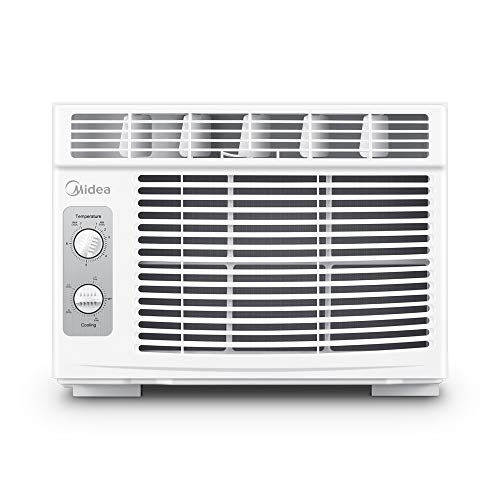
The classic small window air conditioner remains the simplest answer where a suitable window exists. Models in the 5,000 to 8,000 BTU band are light enough for one person to lift, slide into a vertical sash opening, and secure with the accordion panels supplied in the box. Their great basement virtue is that condensate mostly stays outside, dripping from the rear of the chassis into the window well rather than collecting in a bucket indoors. Their limitation is equally plain: many basement windows are too short, too narrow or hinged the wrong way, and a hopper window that tilts inward cannot accept a machine designed to hang in a sash frame.
Installation details decide whether this archetype feels like a bargain or a rattle trap. The chassis should tilt very slightly toward the exterior so water migrates outward instead of pooling at the front lip, foam strips should seal the gaps where the sash meets the top of the unit, and a support bracket under the outer sill is worthwhile even when the instructions call it optional — window wells collect the debris that a vibrating, unsupported unit shakes loose. Once sealed, check the well itself. A well that holds rainwater against the foundation will now receive a steady extra drip, so confirm it drains to gravel rather than ponding against the wall.
Live with its compromises honestly. A window machine occupies the room’s best source of daylight and emergency escape, which building rules in many places restrict for sleeping rooms, so never block the only egress window of a basement bedroom. Noise arrives directly into the room because the compressor sits in the window plane, and winter means either removing the unit for storage or fitting an insulated cover that genuinely seals, since a bare chassis leaks cold air all season. For a workshop, office or playroom with a spare window, though, nothing else delivers dry, cool air with so little plumbing or wiring.
Archetype two: the U-shaped and saddle designs that keep the view
A newer family bends the window concept, literally. U-shaped units straddle the sill so the window can still open and close, while saddle designs hang over the wall beneath the sill like a riding saddle, keeping most of the glass free. In a basement, where a single small window may provide the room’s only daylight, preserving that light changes how the space feels far beyond what the specification sheet suggests. These designs also move the compressor farther from the interior pane, which softens the noise reaching a desk or a bed placed nearby.
The fit requirements are fussier than the classic box. Sill depth, wall thickness and the clearance below the window all matter, and a thick foundation wall can defeat a saddle design that expects a standard framed wall. Measure the distance from the interior floor to the sill as well: a saddle unit hangs low, and in a room with a ceiling barely above two metres, its indoor section may intrude into headroom along that wall. Window wells complicate the outdoor half again, because the exterior portion needs room to breathe and to drip without splashing straight back against the glass.
Choose this archetype when daylight and window function rank high and the wall geometry cooperates. It suits a basement study where the desk faces the window, or a guest room where blocking the escape route is not acceptable and local rules allow the window to remain operable. It suits fewer workshops and utility spaces, where the premium spent on the clever shape buys nothing the room values. As with any window appliance, plan the winter answer before the summer purchase: removal, storage space, and a panel or cover that restores the insulation the glass provided.
Archetype three: the single-hose portable, useful but easy to misuse
Portable units on casters tempt basement owners because they ask for no permanent installation: roll the machine near a window, fit the exhaust hose into a panel, and plug in. The single-hose variant, however, carries a physics problem that matters more downstairs than anywhere else. It blows indoor air out through its one hose to carry away heat, and that expelled air must be replaced. Replacement air infiltrates from every gap available — under the door from the warmer upstairs, around pipes, and through any crack in the foundation — arriving warm and humid, partially undoing the cooling the machine just produced.
That negative-pressure effect explains why single-hose portables often carry impressive capacity numbers yet struggle in practice, and why the room near the unit feels pleasant while the far corner stays muggy. In a basement the infiltrating air may also pull soil gas or musty odours from wall cavities and the sump area into the living space, an unwelcome bonus nobody advertises. If this archetype is the only option — a rental, a room with glass block windows and a vent panel solution, a short-term need during a heatwave — keep expectations modest, seal the hose panel meticulously, shorten and insulate the hose run, and close the door so the machine at least wins its battle in one contained room.
Drainage is the other daily reality. In cool-only mode on a dry day the unit may evaporate most of its condensate through the exhaust, but a humid basement defeats that trick quickly, and the internal tank fills, the machine stops, and the room warms until somebody empties it. Models offering a continuous drain hose deserve strong preference downstairs; route that hose to the floor drain or the laundry standpipe from day one rather than treating the bucket routine as a temporary phase. Temporary phases in basements have a habit of lasting until the first overflow soaks a rug.
Archetype four: the dual-hose portable that respects air pressure
Adding a second hose fixes the core flaw described above. One hose draws outdoor air in to cool the condenser, the other expels it, and the indoor air simply recirculates through the cold coil without being thrown away. Room pressure stays neutral, infiltration drops, and the cooling delivered starts to resemble the cooling promised. For a finished basement with a window that can accept a two-hose panel but cannot carry the weight of a window unit, this is often the most honest portable compromise.
The trade-offs are physical rather than conceptual. Two hoses are bulky, stiff and determined to occupy floor space, and the machine itself tends to be larger and heavier than its single-hose cousins, which matters when it must be hauled up the basement stairs for winter storage or servicing. Hose insulation matters too, because the exhaust hose radiates heat back into the room along its length; a short, straight, gently routed pair outperforms a long looping run draped over furniture. Keep the intake and exhaust openings outside from drawing each other’s air — a window well can trap a pocket of hot exhaust that the intake then recycles, quietly eroding performance on still days.
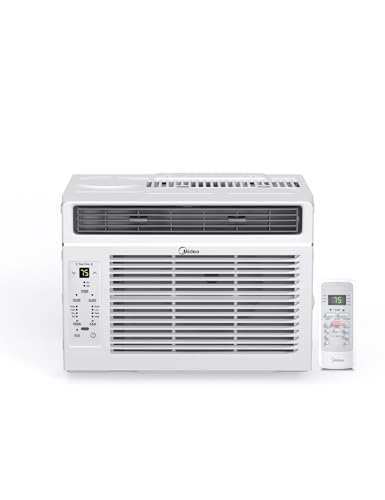
Noise deserves a blunt mention for both portable families. The entire refrigeration circuit lives inside the room, so even a well-made dual-hose machine produces a presence somewhere around ordinary conversation level and upward when the compressor works hard, with figures near 50 to 55 decibels commonly quoted for the class. A bedroom used nightly may tolerate that as masking sound; a recording corner or a light sleeper may not. Judge this archetype as the flexible, reversible choice: excellent for renters, spare rooms and spaces awaiting renovation, acceptable for daily sleeping only if its voice suits the sleeper. Homeowners comparing floor coverings for the same damp level might browse best rugs for basement floor alongside these cooling notes, since rugs and condensate planning interact more than most people expect.
Archetype five: the ductless mini-split, the finished-basement favourite
When a basement has been properly finished — drywall, flooring, a ceiling that hides the joists — the ductless split earns its reputation as the grown-up solution. An outdoor condenser connects through a small wall penetration to a slim indoor head mounted high on the wall, and the system cools, dehumidifies in a dedicated dry mode, and in heat-pump form adds efficient shoulder-season warmth. Inverter compressors modulate instead of slamming on and off, which delivers exactly the long, gentle runtimes that pull moisture steadily from below-grade air.
Placement of the indoor head rewards thought. Mounted on an exterior wall, the refrigerant and drain lines take the shortest route outside; mounted on an interior partition, the condensate needs a small pump to lift it to a drain or out of the building, adding a component that must be serviced and can fail noisily if neglected. Throw distance matters in long rooms: a head at one end of a twelve-metre recreation space will leave the far end noticeably warmer unless a second head or a ceiling fan assists. High placement suits cooling, since chilled air falls naturally through the room, but keep the head clear of boxed duct trunks that would block its swing vanes.
The honest costs of this archetype are installation complexity and permanence. Drilling the foundation or rim joist, running linesets, vacuuming the circuit and charging refrigerant belong to professional territory in most jurisdictions, and the outdoor unit needs a home that respects clearances and the neighbours’ ears. In exchange, the basement gains the quietest indoor operation of any family in this guide — the compressor lives outside — plus filtration that runs whenever the fan circulates, and a dry mode that can maintain the room during humid weeks when little sensible cooling is required at all.
The dehumidifier question: partner appliance or built-in mode
Some basements need so much moisture removal that asking the air conditioner to do both jobs becomes awkward. A standalone dehumidifier rated around 50 to 70 pints per day can hold a large, damp lower level at a steady level through spring and autumn, when temperatures are mild and the air conditioner barely runs. It also protects the space during winter thaws and plumbing mishaps that no cooling appliance would ever switch on for. The catch is heat: a dehumidifier returns its energy to the room as warm air, so in high summer the two appliances can fight, one drying while heating, the other cooling while drying, both consuming power.
Sequencing solves most of that friction. Let the air conditioner lead during genuinely hot weather, since its coil removes moisture whenever it cools, and bring the dehumidifier forward during humid but mild stretches when the thermostat has nothing to say. Many split systems include a dry mode that runs the coil cold with a slow fan, prioritizing water removal over temperature change; used overnight, it can keep a guest room crisp without overcooling the sleeper. Whichever combination you choose, give the collected water a permanent exit — a hose to a drain, a pump to a sink — because a dehumidifier with a full bucket is simply furniture.
Set a target and defend it. Indoor guidance for below-grade spaces generally clusters around keeping relative humidity somewhere in the forties to low fifties: dry enough to discourage mould growth on paper, leather and drywall backing, yet not so parched that wooden instruments, books and throats complain. Chasing the thirties wastes energy and can crack woodwork; drifting into the sixties invites the musty smell returning within weeks. A hygrometer with a memory function, checked weekly, turns this from guesswork into a small household habit, and sudden changes in its readings often flag a new leak or a failed drain before visible damage appears.
Condensate: the water every machine makes and every owner forgets
Cooling humid air manufactures water continuously, litre after litre on a sticky day, and every archetype in this guide must send that water somewhere deliberate. Gravity is the reliable servant: a drain line that slopes steadily downhill to a floor drain, a laundry tub or an exterior exit will work silently for years. Problems begin where the route must climb. A condensate pump solves the climb by collecting water in a small reservoir and lifting it periodically to a drain line, but it introduces a float switch, a motor and a discharge tube that can kink, clog with biofilm or freeze where it passes through an unheated wall.
Fit a pump with an overflow safety switch wired to stop the cooling unit if the reservoir stays high, and the worst outcome becomes a warm room instead of a soaked floor. Test the arrangement at installation by pouring water into the collection point and watching a full cycle: reservoir fills, pump runs, discharge clears, pump stops without chattering. Repeat the test each spring. Where the line exits the building, protect the opening from insects and from winter blockage, and never let the discharge pour onto a walkway where algae will make the surface slick by August.
Trays and tanks deserve equal respect on the simpler machines. A window unit’s internal channels can clog with dust paste, sending water forward over the sill instead of backward out of the case; a portable’s tank switch can fail silently. After the first week of operation, inspect behind and beneath the machine with a torch, looking for the telltale darkening of skirting boards or the first white bloom of mineral deposit. Catching a misdirected drip in week one is a towel and an adjustment. Catching it in month three can mean replacing flooring — one reason the drainage conversation in guides like best air conditioners for small homes matters for compact lower levels as much as for whole houses.
Keeping mould, odours and dust from undoing the comfort
Mould needs moisture, food and time, and a basement generously supplies the first two in the form of humid air and paper-faced drywall, cardboard storage and upholstery. Cooling alone does not sterilize anything; it simply tilts the moisture balance so colonies stop expanding. Support that tilt with housekeeping choices: store belongings in lidded plastic bins rather than cardboard, hold furniture a few centimetres off exterior walls so air can wash the cold surface, and resist finishing a wall with impermeable layers that trap vapour against cool concrete where it condenses unseen.
Filtration on the cooling unit helps with the airborne share of the problem. Washable mesh filters on window and portable machines clog quickly in a dusty lower level, and a clogged filter strangles airflow, ices the coil and paradoxically reduces moisture removal, so rinse it on the schedule you would use for a lint trap, not the schedule you use for gutters. Split systems often accept finer filter media and run their fans on a low circulation setting between cooling calls, scrubbing the air that stirs up from carpets and workshop corners. None of this replaces fixing a wet wall, but it keeps the air smelling neutral while the real moisture defences do their work.
Ventilation plays a supporting role with a seasonal twist. Opening basement windows on a dry, breezy autumn day flushes stale air beautifully; doing the same on a humid July night imports water vapour that condenses on the cool walls, actively making things worse. Judge outdoor air by its dew point rather than its temperature — if the night air feels muggy on skin, keep the windows shut and let the machine handle the room. Bathroom fans and a properly vented dryer deserve a mention here too, since every litre of steam they expel outdoors is a litre the cooling system never has to condense.
Low ceilings, short walls and the geography of cold air
Basement ceilings commonly sit between two and two and a half metres once ducts and finishes take their share, and that compressed height changes how every machine behaves. A window unit mounted at the top of a short window may blow its stream barely above head level, producing a chilly stripe across the room at standing height while the seating zone stays warm. Angling the louvres upward so the jet rides the ceiling and descends gradually at the far wall usually evens things out. A portable parked in a corner shows the opposite fault: its discharge, starting near the floor, pools cold air around ankles and struggles to reach the far side.
Door undercuts and the stairwell door quietly govern circulation between zones. A finished basement divided into a bedroom, a bathroom and an open recreation area will not share one machine’s output evenly unless air can return as freely as it is supplied. Transfer grilles, a generous gap beneath doors, or simply leaving the connecting doors ajar during the hottest hours can matter more than a capacity upgrade. Where a split head serves the open area, a small, quiet fan pushing air toward the bedroom doorway at night often solves the one complaint — a stuffy sleeping room — without cooling the entire level to cinema temperatures.
Furniture placement finishes the geography lesson. Bookcases and wardrobes parked against exterior walls create still, cold pockets where condensation forms on the wall behind them; wardrobes in particular can hide a season of mould growth on their backs. Pull tall pieces slightly forward, avoid pushing a sofa flush against the wall beneath a window unit’s drip path, and keep stored textiles off the slab on shelving or pallets, since the floor is the coldest surface in the room and the first to collect moisture when humidity control lapses for a weekend.
Electricity, noise and living with the machine daily
Basement circuits often serve more than the room being cooled: a freezer, a sump pump, laundry equipment and a dehumidifier may already share the wiring of an older lower level. A portable or window unit drawing near the limit of a shared circuit will announce the problem by tripping a breaker at the worst moment — usually when the sump pump starts during a storm while the air conditioner runs. Before buying, identify which outlets belong to which circuit, and give the cooling machine a circuit with genuine headroom. Extension cords are not an acceptable permanent answer for an appliance of this draw; if the only suitable outlet sits far from the window, that fact alone may push the decision toward a professionally installed split.
Noise tolerance is personal, but the pattern by archetype is predictable. Window units place a compressor in the room’s boundary, portables place everything beside the sofa, and splits exile the machinery outdoors, leaving only fan whisper indoors. For a cinema room, fan noise competes with dialogue at low volume, so a split or a U-shaped window design earns its premium there. For a workshop where power tools dominate the soundscape, a portable’s hum disappears into the background and its flexibility wins. Record a shortlist, then stand in the room at night and honestly picture sleeping, reading or watching a film beside each option’s characteristic sound.
Running costs follow runtime more than nameplate efficiency downstairs, because the loads are modest and the hours are long. An inverter split sipping power through a humid night can cost less across a season than a cheaper machine cycling hard in bursts, and it treats the room’s moisture better while doing so. Readers focused on that seasonal arithmetic will find the deeper discussion in best air conditioners for energy saving relevant, especially the sections on standby draw and fan-only operation. Whatever the archetype, a programmable schedule that relaxes cooling when the level sits empty for days, while still capping humidity, beats both constant operation and complete shutdown — a fully shut-down basement in a humid climate can undo a season of mould prevention in a fortnight.
Archetype six: the through-wall unit for a permanent, window-free answer
Some basements have no usable window at all, yet their owners still want the simplicity of a self-contained machine. The through-wall archetype answers by living in a metal sleeve set into an opening cut through the wall itself, usually just above grade where the foundation transitions to framed construction. Because the sleeve stays behind when the chassis is serviced or replaced, this family suits owners who expect to keep the arrangement for many years and prefer swapping a slide-in unit over repeating construction work. The outdoor side sheds condensate beyond the wall line, and the indoor face sits flush, freeing every window for light and escape duties.
Cutting the opening is the serious part of the project. A framed wall needs a proper header to carry loads around the hole, a masonry wall needs cutting equipment and patience, and in both cases the sleeve must sit level side to side while sloping a whisper toward the exterior so water travels the intended direction. Flashing and exterior sealing decide whether the installation sheds storms or invites them, and the work often falls under local permit rules because it alters the building envelope. Owners comfortable with that one-time disruption gain an unusually tidy result; owners in rented property or in houses they plan to sell soon rarely recover the effort.
Compare this family honestly against the split before committing. A through-wall machine still houses its compressor in the wall plane, so its indoor noise resembles a window unit, while a split of similar capacity whispers. Its efficiency also tends to trail inverter equipment, since most models in this class run fixed-speed compressors. The counterargument is serviceability: a failing through-wall chassis slides out and a replacement slides in within the hour, with no refrigerant work, no lineset and no outdoor unit to site. For a street-facing wall where an outdoor condenser would attract attention or violate a neighbourhood rule, that self-contained character can settle the debate.
Heat from the same machine: shoulder seasons and the chilly-evening problem
Basements misbehave at the edges of the year as much as in midsummer. A room that needs cooling in August may feel raw and cold in October, because the soil has not yet stored autumn warmth and the house heating system, sized for the floors above, often sends little heat downward. Heat-pump versions of split systems handle this swing gracefully, reversing their cycle to deliver gentle warmth exactly where the family actually gathers for films and games. Window and portable models with a heating mode exist as well, though many rely on simple electric resistance elements that warm the room at noticeably higher running cost.
Deciding whether heating capability matters means remembering how the level is used in November, not just July. A basement bedroom occupied year-round benefits enormously from independent temperature control in both directions, since its occupant no longer depends on the thermostat upstairs being set for somebody else’s comfort. A storage and laundry level, by contrast, may need nothing beyond frost protection and humidity control, and paying for heating capacity there buys a feature that will idle for a decade. Guest rooms fall between the stools: heating earns its keep during holiday visits, precisely when the house is fullest and the main system most stretched.
One caution applies to heat pumps in very cold snaps. Their outdoor units lose capacity as temperatures plunge, and a basement relying solely on a modest heat pump during an exceptional freeze may drift cooler than intended. The earth-sheltered nature of the space softens this risk — the room rarely needs much heat — but a small backup source, even the existing house system with its vents opened, should remain part of the plan. Treat heating as a comfort bonus layered on top of a sound cooling and drying decision, never as a reason to accept a machine whose drainage or noise already fails the room.
The world outside the wall: window wells, covers and curious weather
Every basement cooling decision eventually meets the outdoors at one unglamorous point, and that point is frequently a window well. These galvanized pits collect leaves, mulch, snow and the occasional tennis ball, and any machine exhausting into one or dripping into one inherits its maintenance schedule. A well cover that keeps rain out may also trap exhaust heat around a window unit’s outdoor coils, strangling performance on the hottest afternoons; a ventilated cover, or a unit positioned so its rear breathes past the cover’s edge, avoids quietly cooking the machine in its own waste heat.
Drainage at the bottom of the well deserves a probe with a trowel before installation day. Many wells drain through a gravel column connected to the foundation drainage, but older ones simply end in soil that saturates during storms. Adding a condenser drip or a split’s condensate discharge to a well that already ponds is asking the foundation to absorb water it demonstrably cannot handle. Where doubt exists, route the water elsewhere — along the wall to a splash block, into an existing downspout drain, or to the interior floor drain — and leave the well to do only its original job of holding back the garden.
Wildlife and weather finish the exterior checklist. Gaps around a window unit invite wasps to nest in a warm, sheltered cavity, and a foam seal inspected each spring prevents discovering the colony in July. Split condensers placed at grade beneath a basement window should sit on a pad that lifts them above mulch and drifting snow, with the lineset entry sealed against mice that regard foam insulation as nesting material. None of these details appears in capacity charts, yet together they decide whether the installation still works gracefully in its fifth summer or becomes a recurring weekend chore.
A maintenance rhythm matched to a damp, dusty level
Below-grade appliances age by a different calendar than their upstairs relatives. Filters load faster because workshops, litter trays, laundry lint and storage dust share the air; drain lines grow biofilm faster because they stay cool and wet; and exterior coils near ground level collect cottonwood fluff, grass clippings and soil splash that a rooftop or wall-mounted unit escapes. A rhythm of small attentions suits this reality better than an annual heroic clean. Rinse or vacuum the filter monthly during the cooling season, pour a cup of water through the condensate path every few weeks to confirm it runs free, and glance at the outdoor discharge after storms to be sure nothing has shifted or clogged.
Once a year, go further. Clean the visible coil faces with a soft brush, check that the window unit still tilts the right way after a winter of frost movement, inspect pump reservoirs for the jelly-like growth that precedes a blockage, and run the machine on a mild day before the first heatwave demands it at full power. Splits deserve a professional visit on a longer cycle to check refrigerant pressures, electrical connections and the condition of the wall penetration seals. Keep a dated note of each task on the folder started at installation; patterns in those notes — a filter suddenly loading twice as fast, a pump cycling more often — often announce a change in the house, from a new pet to a failing dryer vent, earlier than any other signal.
Storage discipline closes the year for the removable families. A window unit pulled in autumn should be cleaned before it is shelved, not after, since a season of dust paste hardens into something closer to cement over winter, and it should rest upright in a dry corner rather than on its side in a damp one. Portable hoses and window panels store best together in one labelled bin, because the small plastic adapters that vanish into a general junk drawer are, without exception, the parts that cannot be improvised in the first heatwave of the following year.
Special rooms downstairs: gyms, cinemas, offices and spare beds
A basement gym generates its own climate in miniature. Two people on treadmills can raise a closed room’s temperature and humidity faster than a summer afternoon does, and the moisture they exhale condenses on the coolest surfaces available, which are usually the mirrors and the foundation wall behind the equipment. Cooling for this room should be sized with the workout in mind rather than the floor plan alone, and ventilation matters as much as refrigeration: a machine that recirculates without any fresh air leaves the room feeling used even at a pleasant temperature. Rubber flooring tolerates the occasional condensate drip, but electronics on the treadmill console do not, so keep the discharge stream angled away from the equipment line.
The cinema or media room asks for the opposite emphasis. Here the cooling load is modest — people sitting still, a projector adding its modest warmth — while darkness and quiet dominate the wish list. A split head with a display that can be dimmed or extinguished suits the room better than a window unit whose control panel glows through every film, and fan noise that seems trivial during a football match becomes intrusive during a whispered drama. Blackout blinds on the small windows also cut the solar gain through glass block or well windows, occasionally shrinking the required capacity by a full class in a walkout room.
Home offices downstairs fail in a subtler way: they feel fine at nine in the morning and stuffy by three, because the occupant, the monitors and the closed door slowly stew the air while the rest of the level stays comfortable. A dedicated small machine with its own thermostat inside the office solves what a larger shared unit cannot, since the shared unit obeys a sensor in the open area and knows nothing of the closed room’s afternoon. Video calls add a final practical test — any machine whose compressor thumps audibly through a microphone will be switched off during the meeting that matters, so judge office candidates by their sound at the desk chair, not at the showroom door.
The occasional guest room needs flexibility more than power. It may sit unused for three weeks, then host grandparents for ten days in the hottest month, and its cooling arrangement must wake from idleness without smells, leaks or a filter archaeological with dust. Before guests arrive, run any long-idle machine for an afternoon, check its drain, and air the bedding, because a room held at steady moderate humidity all season greets visitors far better than one rescued at the last minute. For the nursery or the grandchild’s sleepover corner, add the ordinary cautions about cords, stable placement and keeping the cold stream off the cot, plus one basement-specific check: confirm the room’s escape window remains fully operable after any installation, every single time, without exception.
Warning signs that the room, not the machine, needs attention first
Sometimes the honest conclusion of a basement survey is that no air conditioner should be bought yet. Efflorescence — the white, powdery mineral crust blooming on concrete — announces water migrating through the wall, and cooling that wall further can worsen condensation inside it. Black staining at the base of drywall, a skirting board that crumbles at a fingernail’s pressure, or a floor drain that gurgles when the washing machine empties all describe plumbing and waterproofing problems whose repair will change the room’s humidity more than any appliance. Spend the first money on gutters that discharge well away from the house, on soil graded to fall from the foundation, and on sealing the crack that admits the spring melt, then reassess the cooling question in the drier room that results.
Electrical and safety warnings belong on the same pause list. A panel with no spare capacity, outlets that run warm under load, or a sump pump and freezer already arguing over one circuit describe a level that needs an electrician before it needs refrigeration. Similarly, a fuel-burning furnace or water heater in a closed utility room raises combustion air questions when a powerful portable starts pulling the house into negative pressure; that interaction alone justifies professional advice for tightly sealed homes. None of these detours wastes the cooling budget. Each one removes a hidden load or hazard that would otherwise be billed, month after month, to the machine bought to fix the symptom.
Renters and condo owners face one extra filter that homeowners can ignore: permission. A window unit may breach a lease clause about exterior appearance, a split requires drilling that no landlord will authorize, and even a portable can fall foul of a building rule about hoses visible from the street. The dual-hose portable survives most of these restrictions because it leaves the building exactly as it found it, which is why it appears so often in rented lower levels despite its bulk. Where permission is granted for something more permanent, get it in writing and photograph the wall, window and sill before work begins, so the condition of the property at move-in is never a matter of competing memories. Owners planning to sell within a few years should weigh the same permanence question from the other side: a neatly installed split reads as a finished-room asset to buyers, while a through-wall sleeve in an odd position reads as a puzzle they will price into their offer.
One last measurement separates careful buyers from hopeful ones: revisit the room during the worst weather, not the mildest. A basement that holds its humidity through a rainy, windless week in August, when the soil is saturated and the laundry is running, has told you its true load; a room surveyed on a dry spring morning will flatter every undersized machine on the shortlist and betray you precisely when guests, heat and moisture all arrive together.
Check prices on Amazon
Live listings for the shortlist in this guide are pulled from Amazon below, so prices and availability are always current at the moment you look.

A decision path that starts with the drain, not the brand
Work through the choice in the order the room imposes it. First, the water: identify exactly where condensate will go on the wettest day of the year, and eliminate any archetype whose drainage plan ends in good intentions. Second, the opening: measure the window or the wall route honestly, and strike out machines that cannot physically fit or that would block a required escape route. Third, the use: a nightly bedroom demands quiet and steady humidity, a workshop demands robustness and flexibility, a cinema demands darkness and low fan noise, and a rental demands reversibility. Only after those three filters have done their work does it make sense to compare capacities within the surviving family, choosing the smaller end of the plausible range and favouring machines that can run long and gently rather than short and hard.
Then plan the first fortnight as a commissioning period rather than assuming the job finished at installation. Check the hygrometer morning and evening, inspect the drain path twice, feel the wall behind the furniture, and listen for new sounds — a pump that cycles too often, a hose panel that whistles, a window frame that buzzes at one particular compressor speed. Small corrections made in that window, a re-sloped drain line or a resealed panel, prevent the slow faults that owners usually discover by smell months later. Keep the manuals, the filter schedule and a note of the circuit used in one folder, because the person servicing the machine in three years will be grateful, and that person is probably you.
A basement cooled this way stops feeling like a compromise floor. The air smells like nothing at all, the sofa stays dry to the touch, and guests sent downstairs in August stop asking whether the room is supposed to feel like a cave. That is the real prize on offer here: not the coldest air in the house, but a lower level that finally behaves like the rest of your home — comfortable, healthy and quietly unremarkable, in the best possible sense.