Our Top Picks
 MEKOH 20” Heavy-Duty Pressure Washer Surface Cleaner with20 x 20 x 65 inches17.3 poundsCheck on Amazon
 Westinghouse PWSC12 12" Pressure Washer Surface Cleaner Attachment12" Surface Cleaner12 x 12 x 3 inchesCheck on Amazon
 Westinghouse Universal 16.5” Pressure Washer Surface Cleaner Attachment16.5 x 16.5 x 4 inchesCheck on Amazon



What's inside
- Pressure, flow, and the number that actually cleans
- Nozzles, fan angles, and the turbo tip
- Surface cleaners: the disc attachment that changes the job
- Electric convenience against petrol stamina
- Hoses, reach, and water supply realities
- Protecting pavers, joints, and delicate edges
- Detergents, pre treatment, and stubborn stains
- A cleaning sequence that avoids stripes and swirls
- Pumps, motors, and build quality signals
- Storage, winter care, and pump protection
- Noise, neighbours, and timing the work
- Safety habits that separate careful operators from lucky ones
- New concrete, old concrete, and knowing the difference
- Runoff, drains, and being a decent neighbour downstream
- Three driveways, three sensible machine choices
- A maintenance calendar for the machine itself
- Questions driveway owners ask most often
- Slopes, drainage falls, and working with gravity
- A shortlist method grounded in your own slab
- Bringing it together before the first spring clean
- Accessories that earn their shelf space, and those that rarely do
- Check prices on Amazon
- What a first session teaches that no guide can
As an Amazon Associate I earn from qualifying purchases. This post may contain affiliate links at no extra cost to you.
A driveway collects evidence of everything a household does with vehicles: tyre tracks, oil drips, muddy boot prints, leaf tannins, moss in the shaded corner, and the pale dust that washes off a roof each autumn. A power washer promises to lift that history in an afternoon, yet the wrong machine or the wrong nozzle can etch concrete, strip asphalt binder, blast sand from between pavers, and leave zebra stripes that stay visible for years. This guide explains the category through specifications, manufacturer guidance, and surface care principles, so the machine you choose matches the slab you actually own.
Driveways differ more than product pages admit. A fresh poured concrete pad with a broomed finish tolerates a firm spray pattern, while older concrete with exposed aggregate and hairline cracks needs restraint. Asphalt behaves like a bound gravel mat and softens in heat, so aggressive jets dig into it on a summer afternoon. Block paving adds joints full of kiln dried sand that hold the pattern together, and resin bound surfaces add yet another set of limits. Any advice that treats these surfaces as interchangeable invites damage, which is why the sections below keep returning to surface type before machine power.
A note before the spray patterns begin: links on this site may earn a commission that funds our research at no added cost to readers, and manufacturers never review, approve, or soften the cautions published in this driveway guide.
Pressure, flow, and the number that actually cleans
Pressure, quoted in pounds per square inch, describes how hard the jet strikes a small area, while flow, quoted in gallons per minute, describes how much water arrives to carry loosened dirt away. Cleaning performance grows from the partnership between them. A high pressure machine with a thin flow can cut a narrow line through grime yet take forever to rinse a whole bay, whereas a generous flow at moderate pressure sweeps broad areas clean and forgives minor technique errors. Manufacturer literature sometimes multiplies the two figures into a combined cleaning unit score, which helps compare models inside one brand family but follows no universal standard across the industry.
Concrete driveways generally respond well to moderate pressure paired with steady flow, because the dirt sits in surface texture rather than bonded paint or industrial coatings. Pursuing headline pressure beyond that point mostly raises the risk of etching, especially when the operator holds the lance close to remove a stubborn spot. Asphalt asks for noticeably gentler treatment: lower pressure settings, wider fan patterns, and more distance between nozzle and surface. Where a machine offers adjustable pressure or interchangeable nozzles, that flexibility protects delicate areas while still handling the concrete apron near the road.
Electric models cluster at the calmer end of the performance range, drawing power through a cord and suiting typical suburban driveways, patios, and paths. Petrol models deliver higher flow and freedom from cables, at the cost of engine noise, exhaust, fuel storage, and more involved upkeep. For a single car concrete driveway cleaned twice a year, a mid range electric unit usually covers the work comfortably. For long rural drives, farmyards, or frequent cleaning after muddy vehicle use, the petrol category earns its complexity honestly.
Readers who already know their ceiling is modest cleaning around a home garage can compare the lighter category in the guide to best 2000psi electric power washers, which focuses on compact electric machines for routine household surfaces. That narrower shortlist helps when storage space is tight and the driveway is short, because a smaller unit with a tidy hose reel may see more use than a bulky machine that nobody wants to drag out of a crowded shed.
Nozzles, fan angles, and the turbo tip
Nozzle colour codes and angle markings follow broad conventions across many brands, although checking the manual for a specific machine remains essential. Wide fan tips spread the jet across a broader strip and lower the impact on any single point, making them the default choice for general driveway washing. Narrower fans concentrate energy for stubborn patches on robust concrete, used sparingly and never lingered over one spot. A zero degree pinpoint jet has almost no place on a residential driveway, because it can carve lines into concrete, slice through asphalt, and injure skin before the operator reacts.
Turbo nozzles, sometimes called rotary nozzles, spin a concentrated jet in a tight cone so the impact sweeps a small circle rapidly. On sound concrete they lift ingrained grime and tyre marks faster than a plain fan tip, and many owners treat them as the secret weapon of the category. The cautions are real though: the rotating jet can roughen soft or deteriorating concrete, lift loose aggregate, and chew the edges of cracks. Sensible practice keeps the turbo tip moving, maintains distance, starts on an inconspicuous corner, and reserves the attachment for the toughest central areas rather than delicate borders.
Distance is the invisible nozzle setting. Halving the gap between tip and surface does not merely double the effect; impact rises sharply as the jet stays coherent, and damage can appear in seconds. Experienced operators begin farther away than instinct suggests, move closer gradually, and watch the cleaned strip for any change in surface texture or colour beyond the dirt lifting. A driveway should look uniformly cleaner after a pass, not brighter in a way that signals the top layer of cement paste has been stripped away.
Quick connect fittings make nozzle changes fast, which encourages using the right tip instead of forcing one tip to do everything. Fittings should click positively and be checked with a tug before the trigger is pulled, because a loose nozzle can launch under pressure. Rinsing grit from couplers before assembly protects the seals inside them, and a drop of suitable lubricant on rubber rings, where the manual recommends it, keeps connections smooth through a season of muddy work.
Surface cleaners: the disc attachment that changes the job
A surface cleaner is a disc or bar housing with rotating jets underneath, connected to the lance like a hover mower for hard ground. It holds the nozzles at a fixed height, moves on small wheels or a skirt, and produces an even finish across wide slabs without the striping that freehand lance work often leaves. For double width driveways the time saving is dramatic, and the enclosed spray also reduces the mist and grit thrown toward the operator and nearby planting. Diameter matters: wider discs cover ground faster but demand more flow to spin and clean properly, so pairing a broad disc with a low flow machine yields disappointing, streaky results.
Technique with a disc differs from lance habits. Slow, overlapping passes at walking pace let the jets dwell long enough to lift grime, while rushing leaves circular swirl marks that only appear once the surface dries. Working in lanes from the highest point of the slope toward drainage keeps dirty water moving away from cleaned areas. Edges, steps, and the strip against a garage door still need careful lance work, because the disc housing cannot reach into corners or tight against walls.
Compatibility deserves checking before purchase. The disc must suit the pressure and flow range of the machine, its inlet fitting must match the lance connection, and its maximum ratings must exceed what the washer can deliver. Some discs include a handle and trigger assembly of their own, effectively replacing the lance, while lighter versions clip onto the existing wand. Storage is bulkier than a nozzle set, so garage shelving or a wall hook should be planned rather than discovered after the box arrives home.
After using a disc, a broad rinse pass with a plain fan tip reveals the true result and floats away loosened sediment before it dries back into the texture. Many disappointing driveway cleans are actually unfinished rinses, where loosened dirt resettled in stripes as the water evaporated. Working on an overcast day or in sections that stay damp until rinsed prevents that trap, and cleaning early in the morning gives the operator comfortable light for spotting missed patches.
Electric convenience against petrol stamina
Electric washers start instantly, run quietly enough for conversation nearby, and need little beyond pump care and cable management. Their limits show on very long driveways where the cord tethers the work, and on properties where outdoor sockets are scarce or poorly placed. Output figures for electric models sometimes quote peak pressure achieved under narrow conditions, so flow at working pressure gives a fairer picture of driveway pace. Thermal cut outs protect motors during long sessions, which means a big job on a hot day may include enforced pauses that the schedule should anticipate.
Petrol machines suit properties where the driveway doubles as a work yard. Higher flow drives larger surface cleaners properly, rinses mud from long stretches quickly, and keeps working far from any socket. Ownership includes engine oil, air filters, spark plugs, fuel stabiliser during storage, and the discipline of running the carburettor dry or treated before winter, depending on maker guidance. Noise carries across a quiet lane, exhaust rules out use inside a garage, and the machine weighs noticeably more when a slope or steps sit between shed and driveway.
Households weighing the strongest common electric class against petrol ownership can use the guide to best 3000 psi pressure washers to see what that pressure band offers across fuel types. The comparison often surprises buyers, because technique and flow explain more of the finished result than the badge on the housing, and many concrete driveways never need the upper reaches of that category at all.
Cordless battery models have entered the edges of this market with modest pressure suited to rinsing cars, bikes, and small patios rather than restoring a neglected driveway. They shine for quick jobs where setting up a corded machine feels disproportionate, such as washing mud from a short paved apron or cleaning a balcony slab. Expecting them to renovate a large stained driveway leads to frustration and half finished work, so they belong in the toolkit as a convenience tier rather than the main machine for most homes.
Hoses, reach, and water supply realities
Hose length quietly decides how pleasant a cleaning session feels. A longer high pressure hose lets the machine stay parked near the tap and socket while the operator covers the whole driveway, instead of repeatedly stopping to drag the unit across wet concrete. Length brings its own penalties though: pressure drops slightly through extended hose, coils tangle more enthusiastically, and cheap hose material kinks at the same favourite spot until it weakens. Steel braided or rubber hoses flex better in cold weather than stiff plastic ones that fight every turn on a frosty morning.
The supply side matters as much as the pressure side. Most washers need a garden tap delivering steady flow, and long runs of narrow supply hose or partially closed valves starve the pump, causing surging and shortened pump life. Some models can draw from a bucket or water butt through a suction arrangement described in the manual, useful where outdoor taps are absent, but the lift height and priming steps must be followed carefully. Air in the supply line should be purged before starting the motor, a small ritual that protects seals and produces a steadier jet from the first pull of the trigger.
Cable and hose management across a wet driveway is a safety topic disguised as tidiness. Electric leads should run behind the operator, never through puddles where a damaged sheath could meet water, and connections belong in weather resistant housings rated for outdoor use. Keeping the work area closed to children and pets during cleaning removes the temptation for small hands to chase the spray, which can injure eyes and skin at close range even from household machines. Sturdy footwear with grip replaces sandals, because wet algae patches turn slick long before they look clean.
Protecting pavers, joints, and delicate edges
Block paved driveways depend on jointing sand for their structural lock, and a careless jet strips that sand out in ribbons. Once joints empty, blocks rock, edges spread, and weeds colonise the gaps within a single season. The safe approach uses a wide fan held at a shallow angle, sweeping along the joints rather than firing into them, with pressure reduced where the machine allows. After cleaning and thorough drying, fresh kiln dried sand brushed into the joints restores the lock, and that follow up job should be planned as part of the cleaning project rather than treated as an optional extra.
Pattern imprinted concrete carries a sealed coloured surface that a harsh jet can breach, leaving pale patches where the seal and pigment lift together. Older sealant already flaking at the edges signals a surface that wants the gentlest wash or professional attention instead. Gravel driveways, obviously, should never meet a pressure jet at all except perhaps on a concrete threshold strip, because the stones scatter and the membrane beneath tears. Resin bound gravel tolerates light washing when the manual for that surfacing allows it, though heat softened resin on a summer afternoon argues for postponement.
Expansion joints in poured concrete often hold soft filler or timber strips that a jet will excavate if aimed directly. Working parallel to joints, shielding them with the edge of the fan pattern, and accepting slightly slower cleaning along those lines preserves materials that are tedious to replace. Cracks deserve similar respect: water driven into a crack at pressure can lift the edges and widen the damage, especially where freeze and thaw cycles will follow in winter. A driveway with widespread cracking may benefit more from repairs first and washing second.
Borders and thresholds concentrate risk. Painted lines, door thresholds, rendered plinth walls, and the bottom of timber gates all sit within splash range of driveway work and tolerate pressure poorly. Masking or simply keeping the fan pattern disciplined near edges prevents a clean driveway framed by damaged surroundings. Rinsing plants and lawn edges with plain water before and after the session dilutes any detergent drift, and directing runoff away from ponds or watercourses is both courteous and, in many places, a legal expectation.
Detergents, pre treatment, and stubborn stains
Plain water handles most driveway dirt when technique and patience are right, so detergent should enter the plan for specific problems rather than by default. Oil spots respond to oil lifting products applied ahead of washing, given dwell time out of direct sun, and agitated with a stiff brush before the washer arrives. Rust marks from furniture or fertiliser granules need chemistry aimed at mineral deposits, and algae on shaded sections often yields to a treatment applied days earlier, so the washer merely rinses away dead growth instead of scattering live spores across clean areas.
Application method matters because many washers draw detergent only at low pressure through a dedicated bottle or tank, applying a foam or spray that must rest before rinsing at higher pressure with a different nozzle. Reading that sequence in the manual prevents the common error of expecting cleaning solution to emerge through a high pressure tip. Products should be chosen for compatibility with the surface and with local drainage rules, and bleach heavy mixtures deserve particular caution around planting, pets, and coloured paving where they can leave pale ghosts of their own.
Tyre marks and chewing gum and paint spots each behave differently. Warm days soften gum for scraping before any washing begins, paint overspray on concrete may need a specialist remover and a test patch, and tyre polymer marks sometimes fade only partially even after careful turbo nozzle work. Honest expectations protect both the surface and the operator temper: an older driveway can look dramatically fresher without returning to the uniform colour it had on the day it was poured, and pursuing that last shade of perfection is exactly how etching happens.
Budget conscious readers can compare value oriented machines in the guide to best affordable pressure washers, keeping in mind that savings should come from simpler accessories rather than flimsy pumps or hose fittings. A modest machine with sound core components and a surface cleaner added later often outlasts a feature packed bargain whose seals fail during its second spring. Detergent economy follows the same logic, since concentrated products diluted correctly cost little per session compared with replacing a damaged slab.
A cleaning sequence that avoids stripes and swirls
Preparation starts dry. Sweep the whole area, lift loose stones that could become projectiles, remove vehicles and bins, and scrape any thick mud or leaf mulch into a pile for the compost or the bin. Wetting the surface before detergent work is normal, but the initial sweep decides whether the washer spends its energy on dirt bonded to the slab or on loose debris that a broom handles in minutes. Clearing the drainage path matters too, because the session will move a surprising volume of dirty water toward the lowest corner.
Work from the top of the slope downward in lanes, overlapping each pass by a third, and keep the nozzle at a steady height and angle so the cleaned band has even edges. With a lance, smooth pendulum movements beat jabbing at spots, and stopping mid lane to attack a stain leaves a visible halo, so stubborn marks are better noted and revisited after the main pass. Rinse each completed section before it dries, pushing the dirty water ahead of the clean area rather than across it.
Drying reveals the truth. As concrete dries it lightens unevenly, and patches that looked uniform while wet may show missed strips, swirl marks from a rushed disc, or areas where the surface itself differs. A second targeted pass on a still slightly damp driveway blends those patches more easily than waiting a week. Photographing the dry result in flat light gives a baseline for next year, showing which corners green up first and where oil tends to land, so future sessions can start where the need is greatest.
Pumps, motors, and build quality signals
The pump is the heart of the machine and the part whose quality most separates durable washers from disposable ones. Axial pumps with metal housings serve household duty well, while heavier triplex designs with ceramic pistons appear in machines built for frequent or semi professional schedules. Listings do not always name the pump type clearly, so weight, housing material, and the availability of replacement seals offer indirect clues. A washer that feels suspiciously light for its claimed output usually hides compromises somewhere in this department.
Motor types divide along similar lines. Universal motors in many electric models are compact and powerful but comparatively loud, with brushes that wear over years of service. Induction motors run quieter, last longer, and add weight and cost, suiting owners who clean often and dislike noise. Thermal protection, total stop systems that shut the motor down when the trigger is released, and pressure relief valves all protect the pump from the heat and stress that build during pauses in the work, and their presence in a specification is a reassuring sign.
Wheels, handles, and hose storage sound like trivial details until a heavy machine must cross gravel or climb a shed step. Large wheels roll over thresholds without tipping the unit, a balanced handle keeps the lift comfortable, and an onboard reel or tidy hooks decide whether the hose gets stored in loose coils that kink or in orderly loops that survive. Small quality signals accumulate: brass or metal threaded fittings outlast plastic ones, strain reliefs protect cable ends, and a filter on the water inlet that can actually be removed and rinsed will be maintained instead of ignored.
Storage, winter care, and pump protection
Water left inside a pump through a frost can crack housings and split seals, turning a healthy machine into a leaking one by spring. Storage routines therefore begin with draining: disconnect the hoses, run the machine briefly only if the manual permits that method, tip out trapped water, and store the unit somewhere frost free where possible. Pump saver fluids or antifreeze procedures recommended by some manufacturers protect internal passages during long lay ups, and following the brand specific instructions beats generic internet rituals that may conflict with seal materials.
Hoses store best in broad loops without tight bends, hung rather than heaped, and kept out of sunlight that hardens plastic over seasons. Nozzles and lances benefit from a quick rinse and dry before storage, because grit left in a coupler scores the mating surface next time. Petrol machines add fuel discipline to the list, since stale fuel gums carburettors during winter and causes the classic spring failure to start. Electric machines ask mainly for a dry shelf, a cable inspected for nicks, and a filter cleaned before the first job of the year.
Garage corners flood, sheds condense, and mice explore warm motor housings, so storage position deserves a moment of thought. Raising the machine off a cold floor on a board, covering it with a breathable sheet rather than sealed plastic, and checking it once mid winter catches problems while they are still small. Owners who follow that routine routinely get many seasons from a mid range washer, while neglected premium machines fail early, which says more about water and frost than about badges.
Noise, neighbours, and timing the work
Petrol washers announce themselves to the whole street, and even electric models produce a penetrating hum plus the hiss of the jet striking concrete. Choosing a sociable hour, warning immediate neighbours before a long session, and grouping driveway work into one thorough visit rather than weekly blasts keeps goodwill intact. Some localities restrict noisy equipment on Sundays or public holidays, and checking those rules costs less than a complaint during the first big clean after winter.
Weather selection improves results and relations alike. Wind blows spray and detergent mist toward laundry, windows, and parked cars belonging to other people, while strong sun dries detergent streaks onto hot concrete before rinsing. A calm, overcast morning offers the best working light, keeps surfaces damp long enough for even cleaning, and leaves the afternoon for the driveway to dry before vehicles return. Frozen mornings are for postponement entirely, since spray turns to ice on the very surface being cleaned and on paths everyone then walks across.
For quick rinses between deep cleans, the smaller cordless category surveyed in the guide to best battery powered pressure washers can handle light mud and dust without the full setup ritual. Using the light tool for light work and reserving the main machine for spring restoration keeps both in better condition, and it shortens the total setup time across a year of small jobs that would otherwise be postponed until they became big ones.
Safety habits that separate careful operators from lucky ones
The jet from a household washer can break skin at close range, drive grit into eyes, and inject water and dirt into a wound in a way that demands medical attention rather than a plaster. That reality shapes simple rules: never point the lance at people, pets, or your own feet; never brace a surface with one hand while spraying it with the other; and treat the trigger lock as a parking brake whenever the machine is set down. Gloves and eye protection look excessive to some owners until the first ricochet of grit off a kerb edge settles the argument permanently.
Slips cause more driveway injuries than the jet itself. Wet concrete covered in loosened algae becomes a skating surface midway through the job, exactly when the operator is concentrating on spray patterns rather than footing. Routes across the work area should be rinsed and squeegeed early, footwear needs deep tread, and the lance hose should never be looped where a backward step will find it. Working alone is common, but telling someone at home that the job is underway and keeping a phone within reach is a cheap precaution on properties where a fall might go unnoticed.
Electrical safety for corded models rests on a residual current device protecting the socket circuit, a cable inspected before use, and connections kept off wet ground. Extension leads, where unavoidable, must be rated for the load and fully unwound, because a coiled lead under sustained draw heats quietly inside the reel. Petrol models shift the hazards rather than removing them: fuel handling away from ignition sources, refuelling only a cool engine, and ventilation that keeps exhaust out of garages and out of the operator breathing zone during long sessions in still air.
New concrete, old concrete, and knowing the difference
Fresh concrete gains strength over weeks, and washing too early or too hard can damage a surface that has not finished curing. Builders usually advise a gentle rinse only during the early period, with full pressure cleaning postponed until the slab has matured and any curing compounds have weathered. The exact waiting period depends on the mix and climate, so the installer guidance for that specific pour outranks general rules found online. A driveway laid this season should be treated as a patient, not a project.
Older concrete tells its condition through surface clues. A hard, dense slab with tight texture tolerates normal driveway technique, while a soft, sandy surface that scratches under a coin is already losing its cement paste and will erode further under any jet. Spalling patches, where the top layer flakes away in shallow sheets, mark areas to avoid or treat at the gentlest settings from a distance. Washing cannot restore lost material, and owners of deteriorating slabs sometimes do better with a broom, a hose, and a mild cleaning solution than with pressure they cannot safely use.
Salt and de icing residue complicate northern driveways. White efflorescence blooms where moisture carries minerals to the surface, and pressure washing alone may brighten it briefly before it returns as the slab dries from within. Addressing drainage, letting the slab dry thoroughly between attempts, and accepting that some mineral staining fades over seasons matters more than repeated aggressive sessions. Winter grit ground into the texture, by contrast, lifts readily in spring and gives one of the most satisfying transformations of the year.
Runoff, drains, and being a decent neighbour downstream
Everything lifted from a driveway travels somewhere. Oil, detergent, paint flakes, and fine sediment washed into a storm drain typically reach a watercourse untreated, which is why many municipalities restrict what may enter those drains and expect solids to be collected or filtered. Practical steps include sweeping up the loosened sludge at the drain edge, using a drain cover or filter mat during the session, choosing detergents labelled for outdoor hard surface use, and keeping the volume of chemical products to the minimum the stains actually require.
On properties with septic systems or private drainage, keeping wash water out of areas where it could overload or contaminate the system deserves the same attention. Gravel traps and grass verges filter a surprising amount of sediment when runoff is directed across them slowly rather than channelled at speed. Talking to neighbours before a first major clean also prevents misunderstandings when slightly cloudy water crosses a shared boundary line on a sloped street, and offering to rinse their frontage afterwards costs minutes and buys durable goodwill.
Three driveways, three sensible machine choices
Picture a compact suburban home with a single width concrete drive, a small patio, and a garage already crowded with bikes and garden tools. The owner cleans twice a year, values quiet operation for a baby sleeping indoors, and stores everything along one wall. A mid range electric washer with a modest surface cleaner, a hose long enough to park the unit by the tap, and nozzles covering wide and medium fans fits that life precisely. Extra pressure would sit unused, while the tidy storage footprint gets appreciated every single week.
Now consider a rural property where a long asphalt and gravel edged drive meets a concrete yard used for trailers and firewood. Mud arrives daily in wet months, the nearest outdoor socket sits inside the barn, and cleaning sessions stretch across whole mornings. A petrol machine with strong flow, a wide surface cleaner for the yard, and the discipline to treat the asphalt sections gently earns its place here. The owner also budgets for engine servicing and stores fuel properly, accepting those chores as the price of untethered power.
Finally, imagine a townhouse with a block paved frontage shared visually with neighbours on both sides. The paving is sound but the joints are precious, the owner is meticulous, and the work happens on quiet weekend mornings. A variable pressure electric model, used at restrained settings with a wide fan and followed by careful re sanding of the joints, suits that brief better than any powerhouse. The finished result depends on patience and follow through rather than specification bravado, which is true of most delicate surfaces.
A maintenance calendar for the machine itself
Before each session, a two minute inspection prevents most mid job failures: check the inlet filter for debris, look along the hose for cuts or bulges, confirm every nozzle is present and undamaged, and verify the oil level on petrol engines. After each session, rinse the detergent system with clean water where fitted, drain hoses, wipe grit from couplers, and let accessories dry before they go back into a closed box where mould and corrosion breed quietly.
Monthly during the cleaning season, inspect the cable or fuel lines, tighten any fitting that weeps, and run the machine briefly to confirm it reaches a steady note without surging. Surging usually points to air leaks, a starved supply, or a partially blocked nozzle, all cheaper to cure early than after a pump has run dry and hot repeatedly. Keeping a small kit with spare seals, a nozzle cleaning pin of the type the maker supplies, and the manual in a waterproof folder beside the machine turns most faults into ten minute fixes.
Annually, usually at the start of spring, the machine deserves a deeper review: engine service where applicable, pump oil change on models that require it, replacement of tired seals, and honest assessment of hose condition. This is also the moment to check that safety devices still function, including trigger locks and thermal cut outs. A washer maintained on that rhythm commonly outlives two neglected machines, and its cleaning performance stays consistent instead of fading so gradually that the owner blames the driveway.
Questions driveway owners ask most often
How often should a driveway be washed?
Most homes suit one thorough clean each year, usually in spring, with spot treatment of oil or algae as needed between times. Shaded, damp driveways may justify a second lighter pass in autumn before leaf fall mats down for winter. Washing very frequently at high settings wears the surface for little visual gain, so restraint is both a surface care strategy and a time saving one.
Will washing remove oil stains completely?
Fresh spills lift well when treated promptly with an oil lifting product, dwell time, brushing, and then careful washing. Old stains that have soaked deep into porous concrete often fade to a shadow rather than vanishing, and repeated aggressive attempts risk visible etching around a mark that would otherwise keep softening with weather and time. Setting that expectation early prevents surface damage done in pursuit of perfection.
Can a washer damage a driveway even at household pressure?
Yes, when the jet is held close, fitted with a pinpoint tip, or lingered over soft, cracked, or poorly cured areas. Damage also follows when a turbo nozzle meets crumbling edges or when joints in block paving are fired at directly. Distance, wide fans, movement, and a test patch in a hidden corner keep household machines firmly in the safe zone for sound surfaces.
Is a surface cleaner worth buying for a single driveway?
For anything beyond a small single bay, most owners find the even finish and reduced session time justify the attachment quickly, provided the machine flow can drive the disc size chosen. Single narrow drives with many obstacles gain less, because edges and corners dominate the work and the disc spends its day parked. Borrowing or hiring one for the first big clean is a sensible trial before committing storage space.
Slopes, drainage falls, and working with gravity
Driveways are built to shed water, and that fall dictates the order of work more than any other single factor. Dirty water always travels downhill, so cleaning uphill sections first and letting the runoff cross ground that has not been finished yet prevents the demoralising sight of muddy streaks crawling across a completed bay. On steep drives the operator also stands on wet, loosened algae while working, which argues for cleaning a dry footing lane first and keeping the escape route back to the house rinsed and grippy throughout the session.
Garage thresholds complicate the picture because water driven toward the door finds the gap beneath it and carries grit inside. Working away from the garage, or shielding the threshold with a rolled towel or a temporary barrier, keeps the interior floor clean and the door seal grit free. Where the driveway falls toward the house due to settlement or poor original grading, washing should proceed in small sections with frequent squeegee work, and rescheduling to a dry, breezy day reduces the volume pooling against the building.
Drains at the bottom of a slope collect everything the session mobilises. Clearing the grate beforehand, and again midway through a heavy clean, stops sediment from damming the flow and flooding the finished surface with dirty water. A shovel and a bucket at the drain turn the sludge into a controllable pile for disposal rather than a slurry that migrates into the road. That unglamorous detail often decides whether the bottom third of the driveway looks as good as the top.
A shortlist method grounded in your own slab
Begin the buying process at the driveway, not at a product page. Measure its length and width, note the surface material and condition honestly, count the obstacles, and identify where water, power, and storage sit relative to the work. Those five facts eliminate most of the catalogue immediately, because a machine too weak for the area, too strong for the surface, or too bulky for the shed fails regardless of its other virtues. Only after that filter should brands, accessory bundles, and warranty terms enter the comparison.
Next, decide how the machine will earn its keep across a whole year. A washer that also cleans patios, fences, garden furniture, and a car spreads its cost across many jobs and justifies a step up in build quality. One bought purely for an annual driveway session can be simpler, or even hired instead, since hire fleets offer well maintained machines with the right surface cleaner included for a weekend. Ownership wins when the property generates frequent, varied work; hiring wins when storage is precious and the need is rare and predictable.
Finally, weigh the ownership ecosystem around each candidate. Spare seals on a local shelf, a service agent within sensible distance, a manual written clearly, and accessories that follow common fitting standards all predict a calmer decade than a glamorous specification attached to an orphan product. Read the warranty for what it excludes about pumps and hoses, because those clauses reveal where the maker expects wear to appear. A machine bought with those checks done rarely disappoints, because the surprises left are the pleasant kind.
Bringing it together before the first spring clean
The pattern running through every section is simple: surface first, power second, technique always. Sound concrete forgives a mid range machine in careful hands and rewards it with a bright, even finish. Fragile asphalt, loose joints, and tired slabs punish excess pressure no matter how refined the equipment delivering it. Flow, fan angle, distance, and patience do the real cleaning, while headline pressure mostly sets the ceiling of both capability and risk.
Choose the washer that matches the driveway measured honestly, add a surface cleaner sized to its flow if the area justifies one, protect joints and edges as deliberately as you attack the centre, and store the machine dry and frost free when the season ends. Do that, and the annual clean becomes a satisfying morning ritual rather than a gamble, with neighbours admiring the result instead of wincing at striped concrete.
Accessories that earn their shelf space, and those that rarely do
Beyond the surface cleaner, a handful of accessories repay their cost on driveway work. A foam bottle or detergent tank matched to the machine speeds pre treatment of large areas, an extension lance saves the operator back on long sessions by improving posture, and a stiff outdoor broom with a squeegee edge remains undefeated for moving sludge and standing water. A spare set of seals and nozzles costs little, weighs nothing, and rescues a planned session from ending at the first perished ring discovered on a Saturday morning.
Other accessories promise more than driveway reality delivers. Rotating brush attachments scrub gently and suit vehicles or delicate cladding, but on rough concrete they polish the dirt rather than lifting it and wear their bristles quickly. Extremely long aftermarket hoses tempt owners of large properties, yet pressure drop and handling weight grow with every added metre, and a machine positioned thoughtfully usually beats a hose stretched to its limit. Buying accessories after the first full clean, guided by what actually felt missing, produces a kit shaped by experience instead of by a bundle designer imagination.
Storage for accessories deserves the same discipline as storage for the machine. A ventilated crate or wall panel keeps nozzles visible and accounted for, detergent bottles upright and labelled, and the lance off the floor where it gets stepped on. Small parts vanish into garage entropy with remarkable speed, and a nozzle lost in autumn is always the exact size needed in spring. Photographing the full kit laid out once, and keeping that picture on a phone, makes auditing the collection a thirty second job.
Check prices on Amazon
Live listings for the shortlist in this guide are pulled from Amazon below, so prices and availability are always current at the moment you look.
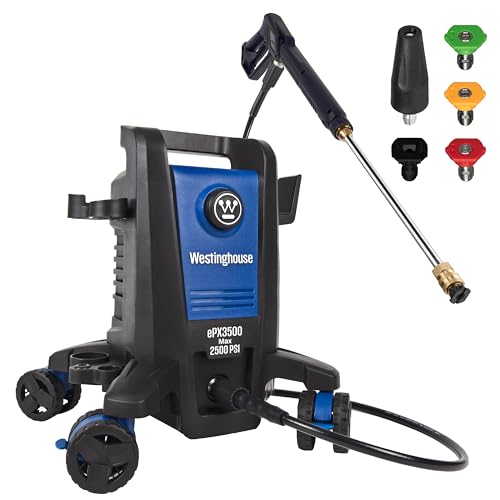

What a first session teaches that no guide can
Every driveway has a personality that reveals itself during the first thorough clean. One corner stays damp and green because a downpipe drips there, another bakes pale because it catches afternoon sun, and a shallow hollow near the gate holds silt after every storm. Noting those behaviours turns future sessions into targeted maintenance rather than full scale restoration, because the operator learns where to pre treat, where to rinse longer, and where a brush and bucket will do the whole job in five minutes.
Timing records help as well. Knowing that the full clean took ninety minutes last spring, used a certain detergent quantity, and needed the joints re sanded afterwards transforms planning from guesswork into a checklist. Households that keep those notes also spot change early: a new oil spot pattern may signal a vehicle leak worth fixing, while fresh cracking or sinking near a drain deserves attention before water starts undermining the slab edge. In that sense the washer becomes a diagnostic habit for the whole frontage, not merely a cleaning tool brought out under protest.
Confidence grows with that familiarity, and technique improves almost without effort. The operator stops gripping the lance like a weapon, settles into even lanes, and reads the surface the way an experienced cook reads a pan. That calm competence is the real endpoint of all the guidance above, because a relaxed operator makes fewer mistakes, notices damage sooner, and finishes with energy left to put everything away properly, which is where the next successful session quietly begins.
There is also a quieter satisfaction in understanding the limits of the tool itself. A washer cannot level a sunken slab, heal a crack, or restore colour that years of weather have carried away, and expecting it to do so leads owners toward the very overuse that harms surfaces. What it can do, reliably and repeatedly, is remove the accumulated film of ordinary life so the true condition of the driveway becomes visible and honest. That visibility has value beyond appearance, because decisions about sealing, repairing, or eventually resurfacing a driveway should rest on what the slab actually looks like beneath the grime, not on guesses made through a layer of algae and road dust. Clean first, judge second, and spend money third is a sequence that serves almost every hard surface around a home, from the front step to the rear patio, and it keeps improvement projects anchored in evidence rather than in frustration with a dirty weekend view.
Households that adopt that sequence usually find their standards settling into a comfortable place. The driveway does not need to look newly poured; it needs to drain freely, grip safely underfoot, present a cared for face to the street, and last as many years as its materials allow. A well chosen washer, used with restraint and stored with care, delivers exactly that outcome season after season, without drama, without damage, and without turning a simple chore into a cautionary tale shared with neighbours over the fence.
Before ordering anything, stand at the end of the driveway with a notebook and write down what a successful clean would look like in plain words: the moss gone from the shaded corner, the tyre arcs faded, the joints intact, the drain running clear, and the surface safe to walk on in smooth soled shoes after rain. That small definition of success, written before any catalogue browsing begins, protects the purchase from drifting toward machinery chosen for its numbers rather than for the place it will serve. It also gives the first session a finish line, because the operator can compare the dry result against those written hopes instead of pursuing an undefined perfection across an entire afternoon. Owners who skip that step often end the day tired and vaguely dissatisfied despite a visibly transformed driveway, simply because no clear standard ever existed in their minds. Owners who take the five minutes usually finish earlier, damage nothing, and know precisely which small corners deserve attention next time the machine comes out of its corner.
Keep the notebook page from that planning moment with the machine manual, adding the date of each clean, the nozzle chosen for each surface, and any spot that resisted treatment. Within two or three seasons those brief notes become a personal handbook for the property, written in the only vocabulary that truly matters: what worked here, on this slab, under these trees, with this water supply. No catalogue can supply that knowledge, and no future owner of the house could fail to appreciate receiving it.
Long after the foam has rinsed away and the last puddle has dried in the afternoon sun, a well washed driveway keeps quietly welcoming its household home.