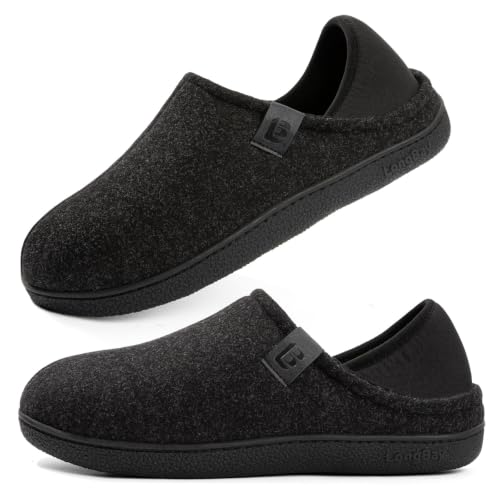
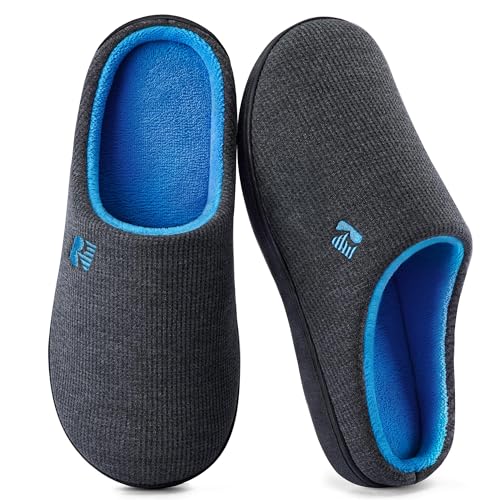
Our Top Picks
 Earthquake and the Shuffling Gait: Ninja Vs Parkinson’s7.2 x 0.46 x 10.2 inchesLarge PrintCheck on Amazon


What's inside
- Why a shuffling step asks different things from a slipper
- How low toe clearance changes the risk at the front edge
- Low, thin soles and the value of feeling the floor
- An outsole that glides at the toe and grips at the heel
- Closed toes and a heel that actually holds
- Weight, counted in grams per slipper
- Why thick memory foam and tall soles work against a low step
- Uppers that breathe, stretch, and forgive a changing foot
- Closures that weak or stiff hands can manage
- Floors, thresholds, rugs, and the routes between rooms
- Choosing a size and trying a pair without drama
- Washing, drying, and knowing when the bevel has gone
- The main shapes on offer, weighed for a low step
- Standing still, turning, and other underestimated moments
- Seasons, night routes, and visitors’ floors
- Reading a listing like an engineer, not a poet
- When footwear questions belong in a professional conversation
- A calm buying sequence for this particular gait
- Check prices on Amazon
- Disclosure
As an Amazon Associate I earn from qualifying purchases. This post may contain affiliate links at no extra cost to you.
Why a shuffling step asks different things from a slipper
A shuffling gait moves the foot forward with very little lift, so the toes travel close to the floor instead of clearing it by a comfortable margin. That single mechanical fact rearranges the priorities for indoor footwear. A slipper that suits a brisk, high-stepping walker can present a thick front edge, a soft collapsing toe, or a loose heel that a low-clearance step meets as an obstacle. This guide stays firmly on the footwear side of the question. It compares sole height, toe shape, weight, closure, and upper construction for people whose steps stay low, whether that pattern comes with ageing, with rebuilding movement after illness or injury, or with a long-term condition that shortens stride. It offers no diagnosis, no exercise programme, and no promise that any pair of slippers will change a gait.
The practical goal is narrower and more honest. A well-matched slipper should pass over familiar indoor floors with as little catching, dragging, and surprise as possible, stay attached to the foot without toe gripping, and give the sole enough information about the surface below to support confident placement. Those three aims, clearance, retention, and feedback, recur through every section that follows. A design that scores well on one and badly on another deserves a cautious reading, because a low shuffling step exposes weaknesses that a higher step simply steps over. Shoppers who keep those three aims in view will find listings easier to judge, even when marketing language points toward plushness alone.
Indoor routes deserve respect in this discussion because they are repeated hundreds of times each week. The path from bed to bathroom, from armchair to kettle, from hallway to front door is walked in low light, in haste, and while carrying cups, laundry, or post. Each crossing involves thresholds, rug edges, chair legs, and changes of flooring that a raised toe would clear without thought. When clearance is measured in millimetres rather than centimetres, the slipper becomes part of the route itself, and its front profile matters as much as the floor plan. Choosing it carefully is not fussiness about footwear. It is a sensible adjustment of one small, controllable part of a daily environment.
How low toe clearance changes the risk at the front edge
During a typical step the swinging foot lifts, moves forward, and sets down heel first, with the toes held clear of the ground during the swing. In a shuffling pattern the swing is flatter, the heel may contact early, and the front of the foot can skim or brush the surface before placement. Any raised lip at the front of a slipper therefore meets the floor sooner and more often. A squared toe bumper standing twelve millimetres proud of the sole is unremarkable for most wearers, yet for a skimming step it is the first structure to strike a rug fringe, a raised tile edge, or the metal strip where two floorings meet.
Manufacturers describe the helpful alternative with several terms, including beveled toe, tapered forefoot, and toe spring, and the geometry matters more than the label. A bevel that rises gradually over the front twenty to thirty millimetres lets the slipper ride up and over a small obstruction instead of stopping against it. A rounded plan shape, wider across the ball and softly curved at the corners, avoids the pointed corners that hook on carpet pile. Photographs taken from directly above reveal that outline, while side photographs reveal whether the front edge is a cliff or a ramp. For this gait pattern, the ramp is the safer piece of engineering.
Carpet deserves separate attention because its resistance changes with pile depth and direction. Short, dense pile allows a smooth skim, while deeper pile grips a rubber toe and slows the front of the slipper while the leg continues forward. That mismatch, foot delayed while body momentum continues, is precisely the sequence fall-prevention guidance warns about in general terms. A slipper front with a smoother finish and a shallower tread at the very toe can reduce that grab on pile, provided the heel and midfoot retain proper grip for the set-down phase. The balance between gliding at the toe and gripping at the heel is the central outsole puzzle for this category.
Low, thin soles and the value of feeling the floor
Stack height measured in millimetres, not adjectives
Sole height under the forefoot, often listed as stack, determines how far the foot sits above the floor and how much material can roll or compress during a low step. Supportive walking shoes commonly place the forefoot fifteen to twenty-five millimetres above the ground. For a shuffling indoor step, a thinner platform in the region of eight to fourteen millimetres at the forefoot keeps the centre of the foot lower, shortens the lever that an edge can catch against, and reduces the sideways wobble that thick soft foam introduces. Listings rarely print stack figures for slippers, so a side profile against a familiar object, or a maker answer stating forefoot thickness, carries unusual value here.
Thin does not mean paper-like or punishing. A dense foam layer of ten millimetres still separates the foot from cold tile, spreads pressure across the ball, and damps the small shock of a flat set-down that shuffling steps often produce. What matters is firmness relative to thickness. A thin firm sole transmits the floor honestly, while a thin soft sole collapses to almost nothing under the ball and leaves the foot meeting the midsole board. Shoppers pressing a thumbnail into a display pair should feel resistance building quickly rather than a slow sink toward a hard base. That quick build of resistance is the tactile signature of a sole that will still be working after months of use.
Heel height relative to forefoot height, the drop, also shapes a low step. A slipper with a tall cushioned heel and a thin forefoot tilts the foot downhill, encouraging the toes to lead and drag. A near-level platform, with heel and forefoot within about four millimetres of each other, keeps the foot flatter during swing and set-down alike. Published footwear guidance for steadier walking frequently favours low, level profiles for exactly this reason. When a listing shows a dramatic wedge silhouette borrowed from fashion slippers, the profile itself is information, and for a shuffling wearer it usually argues against the pair regardless of how soft the lining feels.
Ground feedback through a firm, flexible-enough platform
The sole of the foot reads the floor through whatever lies beneath it, and that stream of pressure information helps the body judge placement, slope, and surface change. Thick gel-like cushioning muffles the stream, which is why very padded slippers can feel like walking on a mattress and why a wearer may notice a threshold only after the whole foot has mounted it. A thinner, firmer platform preserves more of that signal. The edge of a rug registers as a small rise, a change from timber to tile registers as temperature and hardness, and the foot can adjust before weight fully commits to the step.
Flexibility needs the same measured approach as thickness. A sole that bends easily at the ball lets the front portion fold upward when it brushes an obstruction, which can be forgiving, yet a sole that folds too readily also collapses during set-down and offers little stable platform. A sole that refuses to bend at all turns every small floor change into a rocking event. The middle ground is a platform that flexes gradually across the forefoot rather than folding sharply at one line. In a listing, that quality hides behind phrases about flexible rubber outsoles paired with structured midsoles, and in person it shows as a smooth curve when the toe is pressed upward by hand.
Barefoot-style indoor footwear sits at the extreme of this philosophy, with soles only a few millimetres thick and almost no heel elevation. Some shuffling wearers appreciate the direct floor contact and the absence of any front lip worth catching. Others find such minimal protection tiring on hard floors and cold in winter houses. The useful lesson from that extreme is not that everyone should adopt it, but that sole thickness is a dial with real consequences at both ends. Most households land between the extremes, choosing enough material to soften tile and enough thinness to keep the step low, informed, and free of a tall leading edge.
An outsole that glides at the toe and grips at the heel
Outsole design for a low step is a study in zones. The front fifteen percent of the sole mainly needs to arrive without drama, sliding over smooth timber, vinyl, and tile, and riding over small edges thanks to its bevel. Deep lugs, aggressive tread blocks, and sticky soft rubber at the toe all increase the chance of an abrupt stop mid-swing. A shallow, closely spaced pattern, or an almost smooth toe zone with fine sipping lines, suits the arrival phase better. Shoppers should examine the front of the outsole in photographs as carefully as they examine the heel, because makers photograph the grippy heel proudly and leave the toe zone unexamined.
The heel and midfoot carry the opposite duty. Once the foot sets down and accepts weight, those zones must resist sliding on polished wood, glazed tile, and the smooth worn patch in front of a sink. Rubber compounds grip those surfaces better than hard plastic or leather soles, and a tread pattern with edges in several directions gives the set-down something to key against micro-texture in the floor. Wet patches complicate everything, since a thin film of water on tile defeats many patterns, which is why the bathroom discussion later in this guide treats that room separately. For dry everyday rooms, a full rubber outsole with shallow multi-directional tread remains the dependable baseline.
Wear changes the bargain over time, and a shuffling step wears the toe zone faster than a lifting step does. The front bevel that began life as a smooth ramp can roughen, flatten, or develop a lip of compressed material after months of skimming contact. Turning a pair over monthly and running a fingertip across the toe zone reveals that change early. When the bevel has worn into a squared, grabby edge, the slipper has quietly become a different product from the one that was bought, and replacement deserves consideration even if the upper still looks tidy. Outsole inspection is therefore part of ownership, not a shop-floor ritual performed once and forgotten.
Wet bathroom tiles punish any toe drag that ends in a slide, so the grip logic surveyed in best anti slip bathroom slippers is worth reading alongside this guide before a pair is trusted on glazed floors.
Closed toes and a heel that actually holds
An open toe exposes the front of the foot to furniture legs, door edges, and dropped objects, and it also allows the foot to slide forward until the toes overhang the sole. For a wearer whose toes already travel close to the floor, that forward slide places unprotected skin at the very point of contact. A closed toe box keeps the foot registered over the sole, shields the toes during the small collisions that low steps produce, and prevents the upper from becoming a loose flap that folds under the forefoot. The toe box should still be roomy in height, because a low ceiling that presses the nails downward adds discomfort without adding any security.
At the back, retention decides whether the rest of the design can do its work. A backless mule depends on toe gripping and friction, and a shuffling step provides little of the heel lift that keeps a mule seated. The result is a familiar domestic soundtrack of slap and drag, with the slipper trailing, twisting, or occasionally staying behind on a rug while the foot continues bare. A full heel cup, a raised heel collar of at least twenty millimetres, or a heel strap converts the slipper into something the foot carries rather than chases. That conversion matters more for this gait than almost any cushioning claim printed on a box.
Between the full heel and the open mule sits the low-lip clog, and its usefulness depends on lip height and footbed shape rather than on the category name. A lip of only a few millimetres is decoration. A sculpted heel seat, deeper in the middle and rising at the sides and back, can hold a slow indoor step securely while still allowing the step-in convenience that stiff hands and bent backs appreciate. Trying that style involves walking, turning, and pausing on carpet and hard floor alike, because a heel seat that holds on timber may still release on pile. Security should be judged in motion, never from a standing photograph.
Support under the arch only stays registered beneath a shuffling foot when the heel is held, and the contour designs compared in best arch support bedroom slippers illustrate how a cupped seat keeps that support in position.
Weight, counted in grams per slipper
Every gram at the end of a swinging leg is lifted, or in this case barely lifted, thousands of times a day. Heavy slippers tax a low step twice: they demand more effort to move forward, and their mass encourages the foot to hang lower during swing, reducing the little clearance available. Lightweight construction is therefore a functional specification rather than a comfort extra. As a working guide drawn from maker weight tables, a single indoor slipper in a mid size often falls between one hundred eighty and three hundred twenty grams. Pairs below roughly two hundred thirty grams per slipper feel noticeably easier to shuffle in, while pairs above three hundred fifty grams usually owe their weight to thick rubber, dense foam, or heavy leather that this gait rarely needs indoors.
Weight listings require careful reading because makers report them inconsistently. Some publish a pair weight, some a single shoe weight, and many state the figure for one reference size, commonly a mid-range size, while larger sizes weigh more. A stated two hundred sixty grams can therefore describe either one slipper or half of a much heavier pair. The size basis matters too: a design quoted at two hundred ten grams in a small size may reach two hundred eighty grams in the largest size, simply because every dimension grew. When a maker states weight per single slipper and names the size, that transparency helps a shuffling wearer compare candidates on equal terms.
Construction choices explain most of the spread between light and heavy designs. A molded foam slipper formed as one piece can be remarkably light because it has no separate heavy outsole, though it may wear faster at the toe. A fabric upper on a thin rubber outsole lands in the middle, trading a little weight for grip and durability. A leather upper on a thick lugged sole sits at the heavy end and belongs more naturally to doorstep and garden use. For purely indoor shuffling routes, choosing the lighter construction that still offers a bevel, a heel hold, and heel grip is the balanced decision, and any weight saved at the toe is worth more than weight saved at the heel.
- Choose a closed toe with a rounded outline and a visibly beveled front edge rather than a squared bumper.
- Prefer a forefoot stack near eight to fourteen millimetres, firm enough that a thumb press meets quick resistance.
- Look for shallow tread at the toe, stronger rubber grip under the heel and midfoot, and a near-level heel-to-toe profile.
- Weigh the pair if possible, favouring lighter constructions that still hold the heel securely through turns.
Why thick memory foam and tall soles work against a low step
Memory foam earns its popularity honestly in seating and bedding, where slow moulding around a still body is the whole point. Under a moving foot its behaviour changes. The material compresses deeply under the ball, recovers slowly after the step, and can leave the foot sitting in a shallow well of its own making. For a shuffling wearer that well has two costs. The effective edge around the compressed area becomes a rim the toe must exit at the start of the next step, and the delayed recovery means the cushioning may still be flattened from the previous step when the next set-down arrives a second later. The sensation is often described as walking in sand, pleasant for a few steps and quietly exhausting across a morning.
Thickness magnifies the problem when the foam is soft. A thirty-millimetre slab of slow foam allows the foot to pitch and roll as weight shifts, because the surface keeps changing shape beneath it. Balance corrections that a firm floor would answer immediately arrive late through a deep soft layer, and a wearer whose steps are already cautious may feel less steady rather than more protected. Fall-prevention footwear guidance published for general audiences repeatedly favours firm, low soles over soft, thick ones for steadier walking, and the reasoning transfers directly to slippers. Cushioning for this gait should be a thin, responsive layer that takes the sting out of tile, not a deep mattress that rewrites the floor.
Tall soles add a separate geometric penalty beyond softness. Raising the foot twenty-five or thirty millimetres above the floor raises the height of every edge the slipper presents to thresholds and rug borders, and it increases the distance the foot drops when it leaves a rug for bare floor. A rigid tall platform can also catch and pivot when only its front corner contacts an obstruction, turning a brush into a twist. None of this condemns supportive footwear with structured soles for outdoor walking, where terrain justifies the build. Indoors, on known flat routes travelled with a low swing, the tall soft stack gives away clearance and information while returning mainly a first impression of plushness in the shop.
Uppers that breathe, stretch, and forgive a changing foot
Feet that move slowly often spend long hours in the same pair, and many swell modestly between morning and evening. An upper for this wearer needs to accommodate that daily change without either squeezing at breakfast or flapping by supper. Knitted uppers with elastane woven through the vamp stretch over the instep and recover overnight, while felted wool offers gentler give paired with natural temperature regulation. A stretch panel placed over the forefoot helps when toes need room, whereas stretch placed only at the collar helps entry but does little for a foot that widens under load. Reading where the flexible material actually sits is more useful than counting the word stretch in a description.
Breathability decides whether long wear stays kind to skin. Wool and wool-blend knits move moisture vapour away from the foot and resist odour build-up across a day, while cotton canvas breathes well in warm houses but dries slowly after washing. Sealed synthetic uppers with plush linings feel cosy for an evening yet can leave feet damp after hours, and damp skin rubs more readily inside any shoe. For a wearer who may not notice early rubbing because attention is on walking itself, that friction management matters. A smooth lining without internal seams over the toes, sometimes described as a seamless toe interior, removes one common rub point entirely.
Structure still has a place in the upper, mainly at the sides and heel. A completely unstructured sock-style slipper stretches kindly but lets the foot drift sideways off the footbed during turns, and a shuffling turn often involves pivoting on a planted foot. Light reinforcement through the midfoot, a firmer heel counter area, or a strap crossing the instep keeps the foot centred while the forefoot remains free to spread. The ideal upper therefore behaves like two materials in one garment: forgiving across the toes and instep, quietly disciplined at the heel and waist of the foot. Listings that describe zones, rather than a single fabric for the whole shoe, are usually describing that deliberate split.
Closures that weak or stiff hands can manage
A closure only helps if it gets closed, every time, including on tired mornings. Hook-and-loop straps lead this category for hands with reduced grip strength because they need a press and a peel rather than pinch, twist, or threading. A wide strap, thirty to forty-five millimetres across, spreads its hold over the instep and tolerates imprecise placement, which matters when the wearer is fastening by feel while seated. The tab end should be long enough to grasp with a whole-hand grip rather than fingertips alone, and a rounded tab corner peels more comfortably than a sharp square corner that digs into the thumb.
Placement changes the effort involved. A strap that fastens on the outer side of the foot can be reached without crossing the body or bending as far forward, while a top-centre strap suits wearers who fasten both feet from a seated position with the foot on a low stool. Elastic gussets remove fastening altogether and pair well with a heel cup for wearers who can step in hands-free, provided the elastic is firm enough to still hold after a year of stretching. Makers rarely state elastic tension, so a design combining a gusset for entry with one hook-and-loop strap for adjustment covers both needs and forgives the gradual softening of either component.
Small hardware deserves suspicion in this category. Tiny buckles demand fingertip precision, narrow laces demand two coordinated hands, and magnetic closures, while easy to engage, can release when a shuffling toe catches and pulls the upper sideways. If a design uses a buckle, it should be large, fixed in position, and adjustable once rather than daily. The daily routine is the real specification: whatever opens and closes the slipper will be operated in low light, with cold hands, sometimes with one hand occupied by a rail or stick. A closure that passes that imagined morning, not just a bright shop demonstration, is the one worth buying.
The wider bedroom category repays a slower browse as well, because the step-in shapes gathered in best bedroom slippers show how heel lips and collars differ across otherwise similar-looking pairs.
Floors, thresholds, rugs, and the routes between rooms
A slipper cannot be chosen apart from the floors it will cross, and most homes mix at least three surfaces on a single route. Timber and laminate reward the gliding toe and punish a sole with no heel grip when dust makes the surface slick. Tile adds grout lines, which a very soft thin sole transmits as a washboard and a slightly firmer sole smooths out. Vinyl sits between the two, forgiving in texture yet capable of high friction against soft rubber, which is why some grippy outsoles squeak and grab on vinyl during a shuffle. Naming the dominant floor on the wearer’s main routes narrows the outsole choice more honestly than any general comfort claim.
Thresholds and flooring transitions are the fixed obstacles of indoor life. A raised metal strip of six millimetres is trivial to a lifting step and significant to a skimming one, especially where the strip’s edge has been left square. The beveled slipper toe handles the crossing better, yet the household can help too, by choosing low-profile transition strips during any flooring work and by keeping the strips free of grit that increases friction. Door bars between carpet and hard floor deserve the same audit. None of these small carpentry details requires renovation; several are single-screw replacements that change a daily crossing from a catch point into a non-event.
Rugs require the most honest conversation in this guide. A loose rug with a curling corner is a hazard to any gait, and to a shuffling gait it is close to a trap, because the toe arrives at floor level exactly where the corner lifts. Deep pile slows the toe, fringes tangle around a bevel, and a rug that slides on timber removes the floor itself from under the set-down. Fall-prevention checklists published by health and housing organisations consistently advise securing or removing loose rugs on main routes. Where a rug stays for warmth or noise, it should be low pile, fully backed or taped at the edges, and large enough that its border does not sit in the middle of a walking line.
- Walk the main indoor routes and note every raised strip, rug edge, and change of flooring before choosing an outsole.
- Secure rug corners and edges on those routes, or move loose rugs away from the walking line entirely.
- Keep a clear width along bed-to-bathroom and chair-to-kitchen paths, moving chair legs and cables out of the shuffle line.
- Improve lighting on night routes so floor changes can be seen as well as felt through a thin sole.
Choosing a size and trying a pair without drama
Sizing for a shuffling wearer begins in the afternoon, when the foot is at its daily largest, and with the socks that will actually be worn indoors. Length should leave roughly eight to twelve millimetres beyond the longest toe, enough that the toes never strike the front during a flat set-down, but not so much that the foot slides forward into the empty space. Width should let the forefoot rest without the upper bulging over the sole edge, since an overhanging foot loses the protection of the bevel on that side. Between sizes, the adjustable strap design usually wins, because its volume can be tuned while its length stays correct for the sole geometry.
The trying-on routine matters as much as the measurements, and it should imitate real indoor life at a safe scale. Put both slippers on while seated, fasten them fully, and stand beside a counter or rail before taking any step. Walk the length of that support first, then turn slowly at the end using several small steps rather than a pivot, then cross from hard floor onto any carpeted area available. Pay attention to three signals: whether the toe brushes or catches, whether the heel stays seated through the turn, and whether the toes are gripping inside the shoe. Gripping is the quiet failure, because it means the upper and heel are delegating their job to the forefoot.
Stairs, if the home has them, deserve a separate and cautious introduction rather than inclusion in the first walk. Use the handrail, take one step at a time in the pattern the wearer already trusts, and judge whether the slipper’s heel holds when the foot is placed on a tread shallower than a full stride. Some wearers reasonably decide that slippers are for level floors and that a firmer outdoor shoe is their stair footwear; that household rule is entirely respectable. What matters is that the decision is made deliberately during a supervised trial, not discovered accidentally during a hurried descent with laundry in both arms.
A short settling period helps judgement too. Wear the new pair for the morning routine only, then compare the feet at midday: redness over the toes suggests a low toe ceiling, a rubbed heel suggests collar shape rather than size, and an ache under the ball suggests the sole is softer or thinner than its description implied. Keep packaging until several routines have passed, because a reputable seller expects indoor trial wear and a shuffling wearer needs more than a two-minute shop walk to learn anything true. Write the purchase month inside the heel area with a fabric marker, since outsole wear at the toe will later be judged against that date.
Washing, drying, and knowing when the bevel has gone
Slippers worn all day collect skin, dust, and moisture faster than outdoor shoes, and a shuffling pair additionally grinds its toe zone against the floor with every step. Hygiene care therefore protects both the wearer and the geometry. Fabric and knit uppers often tolerate a gentle machine wash inside a mesh bag on a cool cycle, with straps fastened so the hooks do not tear the lining of the other slipper. Molded foam pairs usually prefer hand washing in lukewarm water and a thorough rinse, since hot water and long soaking can warp the very bevel the design depends on. Maker care labels vary enough that the label, not habit, should set the method for each pair.
Drying deserves patience because a damp footbed compresses more easily and a damp lining rubs skin. Air drying away from radiators preserves foam structure and elastic alike, and stuffing the toe with a dry cloth for the first hour helps a closed upper keep its shape. Rotating two pairs solves the drying problem while also resting the foam, and the second pair need not be identical; a lighter summer-weight design and a warmer winter design rotate naturally with the seasons. What rotation cannot fix is outsole wear, and that wear concentrates exactly where this gait works the shoe hardest, at the front bevel and the outer heel.
Retirement signs for a shuffling pair are specific. The bevel has worn square or developed a rough lip, the toe tread has polished smooth while the heel tread remains, the heel collar has stretched until the foot slaps again, or the strap’s hooks no longer hold through a turn. Any one of those changes quietly converts a chosen design into a generic loose slipper. Because the wear is gradual, a monthly overturn-and-inspect habit, thirty seconds beside the bed, catches the change while it is still information rather than incident. Replacement at that point is not extravagance; it is maintenance of a piece of safety equipment that happens to be soft.
The main shapes on offer, weighed for a low step
The molded foam clog with a closed toe and a sculpted heel seat is the shape many shuffling wearers settle on first. Its one-piece construction keeps weight low, its toe can be generously beveled, and stepping in requires no fastening at all. Its weaknesses appear on carpet, where a wide foam toe can drag, and in summer, where a closed foam upper breathes poorly. Better examples add a thin rubber outsole layer at heel and toe, gaining grip and wear life for a modest weight increase. For hard-floored homes with short routes, this shape offers the simplest daily routine in the whole category.
The adjustable strap slipper built like a soft shoe answers a different set of needs. A fabric or leather upper on a thin rubber sole gives the closest floor feel, the strap tunes volume across the day, and the full heel holds through turns and carpet crossings. It asks more of the hands each morning, though wide hook-and-loop tabs keep that demand modest, and it usually weighs slightly more than a foam clog of the same size. For mixed floors, longer routes, and feet whose volume changes noticeably, this is often the most adaptable design, and its shoe-like outline also behaves better on a doorstep or a single garden step.
Knit bootie slippers with a structured sole occupy the warm end of the range. The high collar holds the heel by embracing the ankle, the knit accommodates swelling gracefully, and the style suits wearers who feel the cold and move between bed and chair for much of the day. Their risks are heat in mild weather and a collar that gradually loosens until the embrace becomes a suggestion. A bootie whose sole is a glued layer of felt rather than a real rubber outsole should be treated as a sock with ambitions, not as walking equipment. Read the sole description first and the warmth story second, in that order, for every bootie listing.
Men who prefer a minimal, low-profile fit for short indoor routes sometimes land on the designs collected in best barefoot slippers men, whose thin soles show the extreme end of ground feedback discussed earlier.
Standing still, turning, and other underestimated moments
Walking straight ahead is only part of indoor movement, and several risky moments happen at almost no speed. Standing at a sink involves small weight shifts, reaching, and occasional pivots on one foot while the other searches for a new position. A slipper with a very soft deep sole makes those shifts spongy and late, while a firm thin platform answers immediately. A sole that is slightly wider than the foot at the heel, without protruding at the toe, adds a margin during those shifts. That asymmetry, stable at the back and tapered at the front, is a quiet hallmark of designs drawn for steadiness rather than for appearance.
Turning deserves its own technique and its own footwear demand. A pivot grinds the forefoot against the floor inside the slipper, so the upper must hold the midfoot firmly enough that the foot and shoe rotate together. If the foot rotates inside a loose upper while the outsole grips, the twist travels to skin and toes instead. Multiple small steps around a turn reduce that grind, and a moderate-grip toe zone helps rather than hinders the manoeuvre. This is another reason the outsole bargain favours restraint at the front: the toe that glides during a turn is performing the same kindness as the toe that glides over a threshold.
Sitting down and standing up load the slipper in a third way, through the push of the forefoot against the floor as the body rises. A collapsing toe section wastes some of that push and can let the foot slip forward inside the shoe at the exact moment weight is transferring. A firmer forefoot platform and a heel that stays seated make the rise feel ordinary, which is the goal. Chair height and armrests do more for this moment than any slipper can, yet the footwear contribution is real and easily overlooked because nobody markets a slipper for standing up from an armchair. Shoppers should still press the toe of a candidate pair firmly by hand and watch whether it folds or holds.
Seasons, night routes, and visitors’ floors
Winter changes the equation through cold floors and thicker socks. A pair fitted in summer with thin socks may squeeze in January, and a squeezing toe box lowers the toes and increases drag. Seasonal sizing honesty helps: fit the winter pair with winter socks, or choose the adjustable design whose strap absorbs the difference. Warmth should come from the upper and lining rather than from a thicker sole, because adding stack for insulation spends the clearance this gait cannot spare. Wool felt linings insulate impressively at only a few millimetres, which is why they appear in so many cold-climate indoor designs.
Night routes compress every challenge into a few metres: low light, urgency, a cold floor, and a body not yet fully awake. The bedside pair should therefore be the most forgiving design in the house, step-in if possible, impossible to put on the wrong foot in the dark, and stable on the bathroom’s smooth floor. Some households keep a dedicated night pair with a slightly stronger heel grip for tile and leave the daytime pair by the chair. That duplication looks indulgent until the first winter night it serves, after which it reads as plain planning. A small plug-in light along the route completes a system the slipper alone cannot provide.
Other people’s houses present unfamiliar thresholds, polished floors, and the social pressure to accept whatever footwear a hallway offers. A shuffling wearer who visits family regularly may keep a familiar pair in the car or in a tote, because a known bevel and a known heel hold are worth more than politeness about borrowing slippers shaped for someone else’s stride. Hosts who know the situation can help by clearing the route from door to chair. None of this requires ceremony. It is the same principle as bringing one’s own reading glasses: the equipment is personal because the need is specific, and indoor footwear for a low gait is exactly that personal.
Reading a listing like an engineer, not a poet
Product pages for slippers are written to be stroked, not measured, so the useful shopper hunts for the few hard facts hiding in the soft language. Weight per slipper with its size basis, forefoot thickness, outsole material, heel collar height, strap width, and wash instructions are all facts a maker can state plainly. A page that states several of them respects the reader. A page that offers only adjectives about clouds and hugs is telling the reader, indirectly, that its design cannot survive measurement. For this gait, where millimetres decide whether a toe catches, the measurable page deserves the benefit of every doubt.
Photographs can be interrogated with equal discipline. The side view reveals bevel, drop, and stack. The top view reveals toe outline and whether the widest point sits at the ball, where a foot is widest, or further forward in a fashion taper. The sole view reveals tread zoning between toe and heel. The rear view reveals whether the heel is a real cup or a flat seam. A listing missing the sole view is missing the photograph that matters most for a shuffling wearer, and asking the seller for one is a reasonable pre-purchase step. Owner photographs in comments often supply these angles accidentally and are worth more than polished studio shots.
Comments from other buyers help when they are read for circumstances rather than scores. A remark about a parent who shuffles across laminate, a partner recovering movement who needed a strap their hands could manage, or a pair retired after the toe wore square carries transferable detail. Remarks promising that a slipper transformed someone’s mobility should be read kindly and discounted heavily, because footwear supports a routine; it does not rewrite the condition behind the gait. The pattern worth trusting is ordinary and repeated: the pair stayed on, the toe did not catch, the floors felt manageable, and a second pair was bought when the first wore out.
When footwear questions belong in a professional conversation
This guide compares products, and it is important to mark where product comparison ends. A physical therapist, an occupational therapist, or another clinician who has watched the wearer walk can judge questions no listing can answer: whether a particular sole height suits that person’s balance, whether an ankle or hip pattern changes the footwear advice, and whether a walking aid or a home adjustment would help more than any shoe. Bringing the current slippers, or clear photographs of their soles, to such an appointment gives the professional something concrete to assess. Indoor footwear is worn for more hours than outdoor shoes in many lives, yet it is rarely mentioned in those conversations unless the wearer raises it.
Certain changes should prompt that conversation sooner rather than later, stated here in neutral terms and without any attempt at interpretation. A gait that is changing noticeably over weeks, new difficulty with turns or stairs, repeated stumbles on familiar routes, or a foot that has begun catching in footwear that previously behaved all deserve in-person professional attention. So does any pain, swelling, or skin breakdown on the foot itself. A new slipper may still be part of the eventual picture, chosen with professional input, but it should not be the only response to a changing pattern. Treating footwear as one element among several is not a disclaimer ritual; it is how the subject actually works.
Households supporting a relative through recovery will recognise a related point about timing. Movement patterns can shift across a rehabilitation period, sometimes month by month, so the slipper that suits an early stage, perhaps a step-in clog needing no hands at all, may give way later to an adjustable shoe-style design as bending and fastening become easier. Buying one modest pair for the current stage, rather than an expensive pair intended to serve every stage, respects that movement. The same logic applies in reverse for a slowly changing long-term pattern: reassess the fit and the outsole at each replacement, because the wearer the new pair must suit is the present one, not the one from three winters ago.
A calm buying sequence for this particular gait
Order prevents the common failure of falling for a lining before checking a sole. Begin with the routes: list the floors, thresholds, and rugs between bed, bathroom, chair, and kitchen, because that list decides outsole grip and bevel importance. Next measure both feet late in the day and note the longer and wider measurements. Third, choose the retention system honestly, step-in clog, full heel with gusset, or strap, based on the wearer’s hands and habits rather than on appearance. Fourth, set the sole budget in millimetres and grams, thin and firm and light, and only then allow uppers, colours, and warmth to argue their case.
After purchase, introduce the pair in stages beside support, as the fitting section described, and keep the household’s previous pair available during the first days rather than banishing it in a burst of tidiness. Note the three signals again after a week: toe contact, heel behaviour in turns, and any toe gripping. If the pair passes, it becomes the route footwear, and the older softer pair can retire to pure sitting duty where its flexibility harms nothing. If it fails on one clear point, that point is valuable information for the exchange or the next candidate, because it names the dimension, length, collar, strap placement, or sole firmness, that the next choice must change.
Finally, treat the purchase as the start of a small maintenance rhythm rather than a solved problem. Monthly sole inspection, prompt washing when grip dulls with dust and skin oils, strap checks for weakening hooks, and a standing willingness to replace a pair whose bevel has worn away all keep the original decision true over time. The households that manage this well describe it as no more burdensome than checking smoke alarms. That framing is worth borrowing: a low, light, secure slipper is a modest safety device worn for thousands of steps, and it deserves the same unglamorous, regular attention as any other device the house relies on.
One last household habit ties the footwear choices together neatly. Keep the chosen pair in exactly the same place every night, toes pointing toward the first route of the morning, straps loosened ready for tired hands, and the floor immediately around that spot swept clear of shoes, bags, cables, and yesterday’s post each evening without exception.
Check prices on Amazon
Live listings for the shortlist in this guide are pulled from Amazon below, so prices and availability are always current at the moment you look.


Disclosure
This guide was prepared from published fall-prevention and footwear guidance, maker specification sheets, and care documentation, and it discusses slipper design only, without assessing any reader’s health or gait. As an Amazon Associate we earn from qualifying purchases. That relationship does not add height to a sole in these descriptions, does not soften a firmness judgement, and does not turn a household comfort product into a medical promise.
Choose the low, light, closed-toe pair whose beveled front glides over your familiar floors and whose heel stays with you through every turn, and a shuffling step can cross its own home with a little less negotiation at every threshold.