Our Top Picks



What's inside
- Why a cat face turns plain house footwear into something people actually wear
- Three silhouettes, three different relationships with your heel
- Ears, whiskers and faces: embroidery, print and appliqué compared
- Uppers and linings: what touches skin for sixteen waking hours
- Soles that grip without announcing every step
- Sizing by insole length, not by habit
- Washing plush without wrecking its shape
- What changes when the wearer is seven, not thirty-seven
- When a firm sole beats plush underfoot
- Common buying mistakes and the quiet fixes for each
- A short checklist before you settle on a pair
- Warmth ratings that are not really ratings
- How the category handles sustainability claims
- Fit clinics: diagnosing problems after the pair arrives
- A note on colour, dye and the first wash
- Cat slippers for long spells standing on hard kitchen floors
- Check prices on Amazon
- Disclosure
As an Amazon Associate I earn from qualifying purchases. This post may contain affiliate links at no extra cost to you.
Why a cat face turns plain house footwear into something people actually wear
Most indoor footwear fails in a dull way. Pairs get bought during a cold snap, worn for a fortnight, then abandoned beside a sofa because the lining feels clammy, the sole squeaks, or the back keeps folding under the heel. Adding a cat face sounds like decoration layered over those problems, yet the better designs use the theme to solve practical details. Raised ears give owners a small tab to pull when hands are full. A stitched nose marks the front clearly in dim hallways, so nobody puts the left shoe on while half asleep. Contrasting inner fabric makes lost pairs easier to spot beneath beds, inside blanket boxes and under radiators.
None of that rescues a badly shaped last. Comfort still begins with room for toes to spread, a footbed that does not collapse into a thin mat after three weeks, plus an upper that holds the midfoot without squeezing it. Whimsy earns its keep only after those basics work. Readers who treat the cat motif as the whole buying decision usually end up with a novelty gift rather than dependable footwear for kitchens, studies, nurseries and draughty cottages where floors stay cold long after central heating clicks off.
Context matters in another sense too. Someone padding between bedroom and bathroom on carpet needs very little structure. Another person carries laundry downstairs, answers the door on wet paving, feeds an actual cat on a tiled utility floor and spends evenings at a desk with feet resting on timber boards. Both shoppers type the same search words, although their priorities barely overlap. This guide separates those needs instead of pretending one plush product suits every household routine.
Manufacturers describe these products with loose vocabulary. One brand calls any closed heel a bootie, another labels a low mule as slip-on even when a deep heel cup is present, and a third uses plush to describe both the outer pile and the padding beneath the foot. Reading specifications therefore means translating marketing language into construction details: where fabric ends, how thick the midsole feels, whether decoration is stitched through the upper or merely glued onto its surface, and what material touches the floor.
Colour deserves a brief mention before shape takes over. Pale pink and cream show biscuit crumbs, coal dust and muddy paw prints almost immediately. Charcoal, tabby stripes and mottled grey hide everyday marks between washes, which suits homes where footwear gets worn during cooking and quick trips to a bin store. Bright colours help children claim ownership of their own pair and reduce morning arguments when siblings receive matching gifts in different sizes.
Three silhouettes, three different relationships with your heel
Slip-on mules leave the back of the foot open. That openness makes them quick during night feeds, short kitchen tasks and warm evenings when enclosed shoes feel stifling. Air moves freely around the ankle, sweat dries faster, and wide feet rarely feel trapped. The trade-off appears on stairs and during hurried movement: the shoe can lag behind the foot, forcing toes to claw slightly for retention. Over an evening that grip becomes tiring, especially for people with hammer toes, reduced sensation, or a habit of shuffling.
Closed-back plush styles sit between mule and bootie. A shallow heel counter cups the rear foot, keeping alignment steadier while preserving an easy step-in shape. Look for a counter that springs back after gentle pressure rather than folding flat. Flimsy counters crease permanently, then rub the Achilles area. Generous padding around the collar helps during the first week, though overly bulky foam can push the foot forward and crowd the toes, a fault often blamed on sizing when pattern cutting is the real culprit.
Bootie versions rise above the ankle bone and behave more like soft indoor boots. They shine in stone cottages, converted barns and upstairs flats where draughts slide across floor level. Elastic side panels or a short zip ease entry for swollen feet, while higher fabric protects skin from chair castors and low table legs. Warmth is the obvious benefit; overheating is the predictable drawback. Anyone who runs hot, wears thick socks indoors, or lives in a well-insulated apartment may find booties splendid in January and unbearable by April.
How heel height inside the shoe changes posture
Catalogue photographs rarely reveal internal heel lift. Some plush footbeds stack considerably more foam beneath the rear foot than under the forefoot, tilting the wearer forward in a subtle way. Others feel almost flat, which devotees of barefoot shoes prefer. Neither arrangement is universally superior. A modest lift can relieve tight calves during long standing on hard kitchen tiles. A flatter profile may feel steadier for people who dislike being pitched toward their toes. Product pages seldom publish drop measurements for slippers, so descriptions mentioning contoured support, memory foam or orthotic shape deserve careful reading rather than automatic trust.
Arch contouring raises a similar point. Soft bumps moulded into foam feel reassuring during a first try-on, yet position matters more than height. Support placed too far forward presses into the midfoot; support placed too far back does little beyond filling space under the heel. People using prescribed insoles need a removable footbed or enough internal volume to accommodate their own device without lifting the heel out of the shoe. If an insole raises the foot so high that the upper strains across the instep, stability disappears even though cushioning improves on paper.
Toe-box geometry completes the silhouette picture. Pointed cat faces sometimes narrow the front of the shoe to preserve a cute outline. That shaping can cramp the little toe and encourage the big toe to drift inward during prolonged wear. Rounded or anatomical fronts look less dainty but allow natural splay. Check photographs taken from above rather than side views alone, and favour designs where the widest part of the sole aligns with the ball of the foot instead of tapering sharply ahead of it.
Ears, whiskers and faces: embroidery, print and appliqué compared
Embroidery is the durable option for facial features. Thread sits slightly raised, survives repeated flexing, and rarely peels when a shoe bends at the toes thousands of times. Dense stitching can stiffen a small patch of upper, which matters when a nose lands exactly over a bunion or a scar. Fine whiskers worked in contrasting thread read clearly at conversational distance but stay subtle enough for adult wearers who want charm without costume energy. Loose thread ends inside the shoe signal rushed finishing, because those ends catch toenails and unravel during washing.
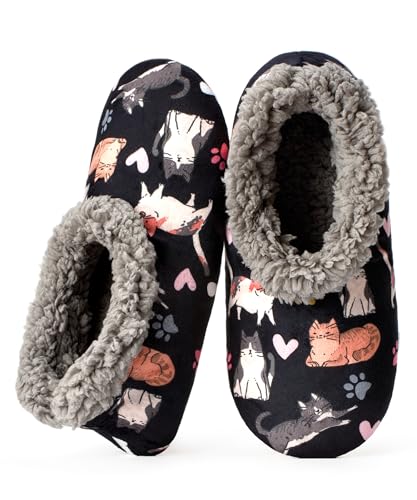
Printed faces behave differently. Modern textile printing produces crisp pupils, blush marks and striped foreheads that stitching cannot match for detail. The weakness is abrasion. Prints fade where toes rub against furniture, where a washing machine drum tumbles the pair, and where sunlight falls across a favourite chair each afternoon. A printed design spread across the entire upper ages more gracefully than one concentrated on the toe, since local wear looks less obvious. Matte prints also hide fold marks better than glossy transfers, which split along flex lines and shed tiny flakes onto socks.
Appliqué takes a third route, sewing separate fabric pieces onto the upper to build cheeks, muzzles and inner ears. Done well, appliqué creates genuine depth: a velvet nose, felt ears backed with stiffer cloth, or a muzzle padded just enough to feel distinct under a thumb. Done cheaply, edges lift after a few washes and the layers trap moisture. Run a fingernail gently along seams in product photographs zoomed close; visible glue squeeze-out, uneven spacing and raw felt edges predict early failure better than any marketing adjective.
Ears deserve structural scrutiny of their own. Tall ears need internal reinforcement, otherwise they flop sideways and the pair looks tired within weeks. Wire is occasionally used, but wire ends can work through fabric and complicate machine washing. Layered felt, bonded interfacing or short plush over foam usually lasts longer and feels safer around babies who grab anything within reach. Ears positioned far apart read as alert and kittenish; ears set closer together with a flatter angle suggest a sleepy adult cat, a distinction gift buyers often care about more than recipients admit.
Tails, paws and other extras extend the theme beyond the face. A small tail at the heel amuses children and helps them orient left and right, though it can catch under chair legs and tear. Paw prints moulded into the outsole leave charming marks in dust while adding functional tread texture. Dangling pom-poms, bells and ribbon bows look festive in photographs yet create snag points, noise and choking concerns for very young children. For everyday adult pairs, restraint usually wins: strong ears, a well-placed face, clean finishing.
Shoppers drawn to broader animal themes can compare this focused category with best animal slippers before deciding whether feline styling truly fits their household. That comparison helps clarify whether the appeal is cats specifically or novelty footwear generally, and it often reveals construction features, such as moulded soles or washable linings, that matter across species-themed designs.
Uppers and linings: what touches skin for sixteen waking hours
Plush uppers typically use polyester pile because it dries quickly, holds dye well and resists the flattening that pure cotton sometimes suffers. Pile length changes character dramatically. Short dense pile looks tidy, sheds less and slides easily under trouser hems. Long shaggy pile feels luxurious on day one, then mats along pressure lines and traps crumbs deep near the seams. Brushing with a soft clothes brush after washing restores some loft; nothing fully revives fibres crushed by months of body heat and weight.
Cotton-rich uppers breathe better in mild weather and suit wearers who dislike synthetic shine. They absorb spills rather than beading them, so tea splashes and cooking splatters need prompt blotting. Cotton also dries slowly inside a thick padded shoe, creating a musty interval if pairs go back into a closed cupboard too soon. Blended fabrics attempt a compromise, pairing a cotton lining against skin with a synthetic outer that shrugs off marks. Read composition labels carefully, because a product advertised as cotton blend may contain only a small share of natural fibre.
Wool and wool-mix linings regulate temperature in a way synthetics struggle to imitate. Feet feel warm without the clammy film that sometimes develops inside deep polyester pile during a whole evening. Wool costs more, demands gentler washing, and can irritate sensitive skin when coarse fibres are used. Fine merino linings avoid much of that scratchiness, although they pill where heels pivot on floors. People with wool sensitivity should check lining composition rather than assuming only the outer fabric matters.
Moisture management sounds technical for slippers, yet anyone with persistently warm feet knows the problem. Perforated footbeds, mesh side panels and thinner summer linings all reduce internal humidity. Removable insoles can be aired overnight on a windowsill, extending freshness between washes. Antimicrobial treatments are commonly advertised; their benefit fades gradually, and regular airing plus rotation between two pairs achieves more over a year than any finish applied at a factory.
Seams you feel and seams you never notice
Internal seam placement separates thoughtful patterns from careless ones. A seam crossing the top of the toes will announce itself within minutes, particularly when socks are thin or absent. Flatlock stitching, offset seams and seamless toe socks principles all appear in better house footwear, described in listings as comfort seams or smooth interiors. The centre seam on some loafer-style uppers sits deliberately along the top and can rub the big toe joint; a side-stitched construction moves that ridge away from bony prominences.
Binding around the opening also shapes first impressions. Elastic binding hugs the ankle and keeps booties secure, but tight elastic leaves marks on swollen legs by evening. Soft jersey binding feels kinder, though it stretches permanently after months of being yanked during hurried dressing. A small pull loop at the heel reduces that strain and helps wearers with limited reach, arthritis in the fingers, or bandaged hands after kitchen mishaps.
Soles that grip without announcing every step
Hard floors punish two opposite faults. A sole can be too slick, turning polished boards and wet bathroom tiles into hazards, or too aggressive, squeaking and sticking so abruptly that knees absorb small twists. Rubber outsoles with shallow, closely spaced tread usually strike the sensible middle. Their edges deform slightly under weight, creating contact across a wide area, while siping cuts channel tiny amounts of water away from the surface. Deep lugged soles borrowed from outdoor shoes feel unnecessary indoors and collect grit that later scratches timber.
Felt and suede soles belong to a quieter tradition. They glide almost silently over boards, suit upstairs flats with thin floors, and feel wonderfully light. Their weakness emerges near sinks, pet bowls and entrance mats where moisture turns glide into slide. Some makers add rubber dots or a partial heel pad to felt, a hybrid that preserves quietness on dry floors while adding a measure of security on damp patches. Full felt remains best reserved for carpeted homes and wearers who move slowly and deliberately.
Foam soles, often EVA, deliver the plush landing many buyers expect. Thick foam absorbs the jar of heel strike on tiles and insulates against cold slabs. Density decides longevity: very soft foam bottoms out quickly under heavier wearers, leaving a permanent heel crater, whereas firmer grades keep shape but feel less cloud-like initially. Dual-density designs place resilient foam beneath the heel and a thinner, stabler layer under the forefoot, helping balance during quick direction changes while carrying cups or children.
Noise deserves measurement in plain language rather than decibels few shoppers can interpret. Hard rubber taps on stone. Sticky tread chirps on sealed vinyl when the wearer pivots. Thick plush uppers swish against trousers. In homes with a sleeping baby, a night-shift partner, or thin party walls, the quietest combination tends to be a flexible rubber or fabric sole, minimal heel stack and an upper that does not rustle. Walking to a kitchen at midnight should not sound like a small parade.
Wet grip, pet hair and the entrance-door problem
Bathroom trips introduce steam, splashes and smooth tiles into a product otherwise chosen for bedroom comfort. A dedicated wet-area pair often makes more sense than expecting one shoe to excel everywhere, and readers comparing that specialised route may look at best anti slip bathroom slippers alongside feline styles. Cat designs with open mule backs and deep pile uppers absorb bathroom water readily, then stay damp for hours, so keeping them as dry-zone footwear protects both hygiene and lifespan.
Pet hair weaves itself into plush with enthusiasm. Short pile releases hair during a shake outside or a lint-roller pass; long pile hides hair visually while holding it against the foot. Households with shedding dogs may prefer smooth microfibre uppers shaped with cat ears, sacrificing some teddy-bear softness for easier cleaning. Outsoles also gather hair along tread edges, and a stiff brush kept near the shoe rack prevents that felted fringe from spreading across clean floors.
Doorsteps blur the indoor boundary. Many wearers step onto a porch to accept parcels, shake a mat or call a pet inside. Lightweight plush soles tolerate a dry doorstep occasionally, but repeated outdoor contact crushes pile, embeds grit and voids the cosy purpose of the shoe. If doorstep trips happen daily, a firmer rubber outsole with sealed edges handles them without drama, a topic returned to later when hard soles get their own discussion.
Sizing by insole length, not by habit
Shoe size labels vary wildly between brands, and slipper sizing varies more than most because soft uppers forgive sloppy grading. One label covers two conventional sizes in many ranges, stretching the same shell across feet that differ by nearly a centimetre. The reliable anchor is insole length, sometimes called footbed length or internal length, published in centimetres by better manufacturers. Measure your own foot in the evening, standing, with weight spread naturally, then compare that figure rather than the size printed on your trainers.
Tracing remains the simplest method. Stand on plain paper, shift weight onto the foot being measured, outline it with a pencil held vertically, then measure from heel centre to the longest toe. Repeat on the other foot, because asymmetry is normal and the longer foot governs the choice. Add a modest margin for toe movement and sock thickness: enough that toes never press the front during a downhill-feeling stride on stairs, but not so much that the heel lifts out with every step. Thick winter socks can consume the entire margin a bare foot enjoyed in September.
Width hides inside many sizing complaints. Listings that publish only length assume an average forefoot, yet bunions, wide metatarsals and high insteps all change fit. Stretchy knit uppers accommodate width generously but may feel sloppy on narrow feet. Structured plush holds narrow feet securely while punishing wider ones along the seams. When between sizes in a closed-back style, extra length usually causes fewer problems than compression, because foam relaxes slightly with wear whereas stitched seams rarely gain meaningful room.
Half sizes, unisex grading and the gift-buyer trap
Unisex ranges often grade from a men’s last or a women’s last without saying which, producing surprises for buyers who convert sizes using generic charts. Reading the centimetre column sidesteps conversion errors entirely. Gift buyers should ask for a foot measurement disguised as a craft project or borrow a well-fitting shoe to measure its insole, rather than guessing from a size seen years earlier. Feet change with age, pregnancy, weight shifts and certain medical conditions, so old information misleads confidently.
Returns data in footwear generally shows a familiar pattern: exchanges cluster around styles with narrow toe boxes and dual-size labels. Cat slippers add a decorative wrinkle, since the face occupies the very area where extra room is needed. A design whose embroidered nose sits on a reinforced patch may feel firmer across the toes than an undecorated equivalent in the same size. Ordering the larger option when measurements sit near a boundary is usually the calmer decision for closed styles, while open mules tolerate extra length more gracefully.
Children require a different margin logic, covered later in detail, but one adult point belongs here. Swelling across the day means a pair that feels perfect at breakfast may pinch by evening if the fit began snug. Trying new slippers late in the day, wearing the socks you actually use at home, gives a fairer verdict than a morning test on fresh feet.
Washing plush without wrecking its shape
Care labels split this category sharply. Some pairs tolerate a gentle machine cycle inside a mesh bag; others demand hand washing because glued soles, appliqué layers or tall ears cannot survive drum agitation. Ignoring that distinction is the fastest route to a lopsided shoe with one ear folded forever. Before a first wash, photograph the pair from above. That snapshot becomes a reference for reshaping later, showing ear angle, toe width and collar height as the maker intended.
Preparation matters more than detergent choice. Shake loose debris outside, lift dried mud with a dry brush, and treat small marks with a damp cloth before committing to a full wash. Many pairs need only that local attention. When a full wash is justified, close any fastenings, place each shoe in its own protective bag, and select cool water with a mild detergent free of fabric softener. Softener coats fibres and foam, reducing absorbency in linings and making some soles feel oddly slick during the next few wears.
Hand washing offers control for delicate faces. Lukewarm water, a brief soak and gentle squeezing through the pile clean effectively without twisting the shoe. Pay attention to the footbed, where skin oils accumulate and odour begins. A soft brush along the heel area lifts grime from dense pile. Rinse until water runs clear and no suds remain trapped in thick padding, because residual detergent stiffens fibres as they dry and can irritate bare skin.
Drying, reshaping and reviving flattened pile
Heat is the enemy after washing. Radiators, tumble dryers and direct sun warp foam, crack printed faces and curl thin rubber edges. Instead, press water out with a towel, reshape the shoe by hand, then stuff the toe lightly with clean dry cloth so air can still circulate. Stand the pair upright in moving air, turning them after several hours so the sole side dries too. Tall ears may need gentle propping with folded card during the first hour, removed once the fabric holds its angle unaided.
Odour that survives washing usually lives in the footbed foam rather than the upper. Airing insoles separately helps when they remove cleanly. A light sprinkle of bicarbonate of soda, left overnight and shaken out thoroughly outdoors, can freshen a dry shoe between washes, although it should never be applied to damp foam where it clumps. Persistent smell despite cleaning often signals that internal padding has reached the end of its useful life, however charming the face still looks.
Natural-fibre devotees weighing everyday washability sometimes compare plush synthetics with best all cotton slippers to see how cotton uppers handle laundering and drying. Cotton pairs may need longer airing after a wash, yet their simpler construction often tolerates reshaping with less fuss than layered appliqué designs.
Storage between seasons influences shape as much as washing does. Clean pairs should be stored dry, unstacked under heavy boots, away from moth-prone wardrobes if wool is present. Placing one shoe inside a soft bag prevents ears snagging on neighbouring footwear. Avoid sealed plastic in humid homes, since trapped moisture invites mildew spots that appear as grey freckles across pale fabric and resist later cleaning.
What changes when the wearer is seven, not thirty-seven
Children’s versions are not simply scaled-down adult shoes. Proportions differ: younger feet are wider relative to length, heels are less defined, and gait includes running indoors despite every household rule ever announced. Secure backs matter far more for children, because a loose mule flying off mid-chase becomes a hazard on stairs and a trip risk for whoever follows. Low booties or closed-back styles with elastic collars keep the shoe attached during play while still allowing independent dressing.
Decoration safety tightens for small wearers. Sewn features are strongly preferable to glued eyes, plastic noses or detachable bows, since toddlers pull, chew and twist anything raised. Embroidery wins again here, offering a face that cannot be detached. Ears should be soft enough to fold under a fall without hurting, and soles need genuine tread because children rarely slow down for polished surfaces. Bright interior colours help youngsters distinguish right from left when a cat face is paired with mirrored paw marks under each sole.
Growth changes buying maths. A snug decorative pair bought for a birthday may last only months before toes reach the front, so expensive construction brings less value than in adult sizes. That said, very cheap children’s slippers often use thin soles that wear smooth quickly, turning savings into a fall. A middle path works well: secure shape, stitched face, washable upper, and a sole thick enough to protect feet from toy bricks scattered across a playroom floor at midnight, a pain every parent recognises instantly.
Sizing for children should leave growing room without creating clown shoes. Measure both feet standing, choose for the longer one, and recheck fit every few months by feeling where the longest toe sits while the child stands upright. Red marks along the forefoot, reluctance to wear the pair, or toes curling to keep a loose heel in place all signal that the current size has stopped working. Hand-me-downs deserve caution too; a footbed moulded by an older sibling rarely supports a younger child’s heel in the right place.
Schools, sleepovers and shared floors
Many children wear house shoes beyond their own home: nursery settings, after-school clubs, sleepovers and holiday cottages all introduce unfamiliar floors. Non-marking soles matter in those places, because dark rubber can streak pale vinyl and create unwelcome cleaning work for hosts. Name labels inside the collar prevent mix-ups when several children own similar animal designs. Machine washability rises in importance after illness, travel or a muddy garden incident, so carers often favour simple printed or embroidered pairs over elaborate appliqué that needs special handling.
Adult wearers in shared houses face a lighter version of the same problem. Distinct colours per person prevent accidental sharing, which is more than a courtesy when someone is recovering from a fungal infection or a verruca. Washable pairs should be laundered separately during such episodes, dried thoroughly, and kept apart until treatment finishes. Cute styling does not exempt footwear from ordinary hygiene.
When a firm sole beats plush underfoot
Plush cushioning feels like the point of the category, yet firm soles solve real problems. Anyone standing through long cooking sessions on stone or concrete subfloors may prefer a structured footbed that distributes pressure rather than letting heels sink into foam. Stability also improves: a firmer platform resists sideways roll when the wearer reaches into high cupboards, carries a toddler, or navigates a cluttered garage doorway. People recovering from foot injuries are often advised by clinicians to avoid very soft unsupportive house shoes, and a firm cat slipper lets them keep some cheer while following that guidance.
Outdoor-adjacent tasks tip the decision further. Homes with a wood store, a porch, a paved yard or a chicken run involve brief excursions that destroy delicate soles. A moulded rubber unit with sealed sidewalls shrugs off damp paving and gravel dust, then wipes clean at the door. Weight rises, flexibility falls, and the shoe feels less like a bedroom comfort item, but for rural routines that exchange is worthwhile. Urban flat-dwellers who never cross a threshold in slippers gain little from that ruggedness.
Firm does not have to mean board-stiff. Cork and cork-latex footbeds mould gradually to the wearer’s footprint while holding an arch shape, and many readers exploring structured house footwear look toward best acorn slippers for women for that style of contoured support. In cat designs, firmness usually arrives through a denser foam core or a thin shank under the midfoot rather than cork, yet the principle is identical: controlled compression instead of a deep sink.
Reading sole specifications like a sceptic
Manufacturer specifications for slippers are thinner than those for running shoes, but useful clues exist. Outsole material is usually named, even when hardness is not. Rubber and thermoplastic rubber promise grip and abrasion resistance. Pure foam outsoles promise lightness and quiet, with faster wear. A fabric-wrapped midsole looks elegant while hiding construction; check whether the wrap is stitched or glued at the heel, a common separation point. Photographs of the sole edge reveal layer count better than lifestyle images of models on sofas.
Flex testing by hand, once a pair arrives, tells more than squeezing the toe. Bend the shoe where toes naturally bend; the sole should crease there rather than midway under the arch. Twist gently: some torsional give is normal in soft styles, while a shoe that wrings like cloth offers little support on uneven floors. Walk on the hardest surface in your home during the returns window, not just carpet, because faults hide on soft ground and declare themselves on tile.
Replacement timing is the final firm-sole topic. Outsoles worn smooth at the heel, midsoles that stay compressed after a night of rest, uppers stretched so wide that feet slide forward, and persistent odour after washing all mark retirement. Keeping a beloved pair beyond that point turns a comfort purchase into a fall risk, particularly on stairs where a worn heel edge can skate across a nosing.
Common buying mistakes and the quiet fixes for each
Ordering by clothing size logic is the first mistake: assuming a usual shoe size transfers cleanly into dual-sized slipper ranges. The fix is boring and effective, namely measuring feet and reading centimetre charts. A second error is choosing the deepest pile available for a warm house, then blaming the product for sweaty feet that a lighter lining would have prevented. Match insulation to the building, not to a photograph of a snowy cabin.
Ignoring household flooring causes equal regret. Pale felt soles in a home with black slate, rubber tread in a flat where downstairs neighbours hear everything, and open mules for someone who climbs ladders to reach loft storage all represent mismatches between product and place. Listing your three most common indoor surfaces before ordering sounds pedantic until it prevents a return. Stairs deserve explicit thought, since closed backs and secure collars outperform loose mules there by a wide margin.
Gift buyers make a distinct set of errors. They prioritise the funniest face over washable construction, guess sizes optimistically, and remove tags before presenting the pair, complicating exchanges. Keeping packaging until fit is confirmed preserves options. A gift receipt tucked inside the box feels less romantic than a surprise reveal, but a wearable pair in the correct size delivers more delight across winter than a hilarious pair that pinches from day one.
Another recurring problem involves wearing new plush pairs outdoors just once on wet ground. That single trip can drive moisture and grit deep into foam, after which the shoes never feel clean again. Keeping a separate pair of sturdy shoes by the door breaks the temptation. Similarly, rotating two indoor pairs extends foam life noticeably, because compressed padding recovers between wears and linings dry fully, reducing odour without any special product.
Questions readers ask, answered in plain terms
How long should a good pair last? With daily wear, quality plush typically gives a year or two of comfortable service before foam fatigue and sole wear accumulate, while lightly used evening pairs can last considerably longer. Longevity depends on body weight, floor abrasiveness, washing habits and whether the shoes ever venture outside. Treat lifespan claims with suspicion when no construction details accompany them.
Can cat slippers help cold feet caused by poor circulation? They can reduce heat loss and make floors feel less hostile, which many people experience as real relief. They cannot treat an underlying medical condition, and anyone with diabetes or reduced foot sensation should be cautious with thick seams, tight collars and very soft soles that mask pressure points. Checking feet regularly matters more than any footwear feature, and medical advice outranks shopping guidance whenever symptoms persist.
What about allergies to animal fibres or latex? Synthetic plush avoids wool and dander concerns, although some rubber soles and elastic components contain latex-derived materials. Manufacturers vary, so checking composition and contacting the maker about specific components is the prudent route for sensitive buyers. A patch of irritation that mirrors the collar shape points toward contact sensitivity rather than simple friction, especially when both feet react symmetrically.
Are matching adult and child sets a sensible purchase? They can be, provided each size is chosen on its own measurements and the child’s version uses stitched features with a secure back. Matching colour hides a multitude of construction differences, so inspect the smaller pair independently rather than assuming it shares the adult build. Photographs will look adorable either way; safety and fit decide whether the set gets worn after the first weekend.
Which style suits someone who works from home at a standing desk? A closed back, moderate cushioning and a sole that stays quiet during small weight shifts usually serve best. Deep pile can feel marvellous for the first hour, then hot and unstable by mid-afternoon. A firmer footbed with a soft lining splits the difference, supporting posture during calls while still feeling like a deliberate step away from outdoor shoes.
A short checklist before you settle on a pair
Start with the building: floor surfaces, heating habits, stairs, pets, doorstep routines and whoever sleeps below your evening footsteps. Move next to construction, naming the silhouette, lining fibre, outsole material and face technique you actually want. Then measure feet late in the day and translate those numbers through the maker’s centimetre chart instead of memory. Finally, read the care label as a promise you must keep, because a beautiful pair that needs hand washing will not suit a household that launders everything by machine on Sunday night.
Budget reasoning fits here too, without quoting figures that date quickly. Money spent on denser foam, stitched decoration and a real rubber outsole tends to show up as extra months of comfortable wear. Money spent purely on elaborate accessories, oversized ears and gift packaging adds theatre rather than service. Neither priority is foolish; birthdays justify theatre. Everyday purchases for a cold house justify service, and confusing those two purposes explains many disappointed reviews in this category.
Repairability is rarely discussed for slippers, yet small interventions extend life. Re-stitching a loosened ear, replacing a tired insole, or adding a thin grip pad beneath a worn heel can rescue a pair whose upper remains sound. Cobblers sometimes decline soft footwear repairs because glued construction limits what they can do, but a local tailor can often secure appliqué or binding neatly. Ask before discarding, especially when the fit was unusually good and replacements in that size have vanished from current ranges.
Warmth ratings that are not really ratings
Listings love describing a pair as extra warm, winter weight or suitable for cold floors, yet no shared standard sits behind those phrases. Warmth emerges from several variables acting together: lining thickness, upper coverage, footbed insulation, how much air the pile traps, and whether the wearer’s feet run cold in the first place. A bootie with a medium lining can out-warm a low mule with extravagant pile simply because ankles stay covered and draughts never reach skin. Judging by coverage first and pile second gives a more honest prediction than trusting adjectives.
Cold floors themselves differ. A suspended timber floor above a ventilated void chills feet through moving air as much as through surface temperature. A stone slab on solid ground feels icy at first touch but changes little across the day. Underfloor heating reverses the problem entirely, making deep insulation uncomfortable and turning some foam footbeds unpleasantly warm. Slipper choice for heated floors should favour thinner soles, breathable linings and lower coverage, even in midwinter, a point buyers in newly renovated homes often learn only after ordering the plushest pair available.
Sock pairing alters warmth as much as slipper construction does. Thin cotton socks inside a plush lining add little insulation but improve hygiene by absorbing sweat. Chunky knitted socks transform fit, sometimes converting a comfortable pair into a tight one, so seasonal sock habits belong in sizing decisions made during autumn. Some wearers prefer bare feet for the soft sensation against pile; others find direct contact makes linings wear faster along the heel, where skin oils and friction combine.
Left-right confusion, reflective details and other small design choices
Symmetrical novelty footwear creates a minor daily puzzle: many cat pairs look nearly identical from above, so owners put them on the wrong feet regularly. Soft uppers forgive the error, but footbeds moulded with arch contour should sit under the correct foot. Makers solve this with subtle cues such as a tail on the outer heel, differing whisker counts, or a coloured thread inside one collar. Shoppers who value shaped support should look for those cues in photographs, because swapping feet repeatedly also evens out the moulding benefit the footbed was designed to deliver.
Visibility during night walks to a bathroom or kitchen is rarely considered. Pale uppers show up well under low light, while black pairs vanish against dark floors and become trip hazards for other household members when left mid-hallway. A small reflective thread woven into an ear or heel is occasionally offered on children’s versions and would serve adults equally well. Households with elderly relatives visiting regularly might keep a brightly coloured spare pair by the guest bed, reducing both confusion and the temptation for visitors to walk on cold floors in socks alone, which is a well-known fall pattern.
Weight per shoe sounds trivial until travel enters the picture. Plush booties with rubber soles can weigh as much as light trainers, eating luggage allowance and bag space. For overnight stays, low mules with fabric soles pack flatter and lighter, though they offer less protection on unfamiliar stone floors in rental cottages. People who travel frequently sometimes keep a dedicated lightweight pair in a wash bag, chosen for packability rather than maximum home comfort, and that separation of roles prevents compromise purchases that satisfy neither setting.
How the category handles sustainability claims
Recycled polyester pile, reclaimed wool linings and natural rubber soles all appear in current ranges, usually highlighted prominently. Such materials can reduce reliance on virgin inputs, but durability remains the larger environmental variable for a product worn daily against skin and floor. A pair lasting three winters generally beats a recycled pair replaced every season, whatever its fibre story. Construction that permits insole replacement, resoling of fabric soles, or simple stitch repairs therefore deserves as much attention as recycled content percentages printed on packaging.
Packaging claims deserve the same scepticism applied to warmth adjectives. Compostable bags, soy inks and plastic-free boxes are welcome, yet they say nothing about the shoe inside. Buyers who care about this side of a purchase can favour brands publishing full material breakdowns for upper, lining, foam and outsole separately, rather than a single vague percentage for the whole product. End-of-life options are limited for mixed-material footwear everywhere, which strengthens the case for buying fewer, better-fitting pairs and wearing them until genuine retirement signs appear.
Second-hand novelty slippers surface in charity shops regularly, often barely worn because sizing disappointed the original owner. Inspecting such pairs for sole smoothness, internal odour and ear stitching can yield excellent value, and a thorough wash before use is essential. Footbeds already moulded to a stranger’s gait are the main compromise; replacing the insole, where the design allows, refreshes both hygiene and support in one step.
Fit clinics: diagnosing problems after the pair arrives
Heel slip in a closed-back style usually points to length without matching volume. The foot is long enough for the shoe, yet the heel is narrow or the collar sits too low to hold it. A thin tongue pad meant for outdoor shoes can sometimes be adapted inside the collar, though a purpose-made heel grip designed for soft footwear sits better against pile. If the heel still lifts clear with every stride after such adjustments, the size or the last shape is wrong for that foot, and persisting rarely ends well.
Pressure across the instep tells a different story. Deep pile plus a low-cut upper concentrates contact on a narrow band, leaving a red line where the opening ends. Styles with a notched front, elastic gore or adjustable strap spread that contact over a wider area. Wearers with high insteps should treat a smooth, unbroken band across the foot as a warning sign in product photographs, particularly when the pictured model has visibly slender feet.
Forefoot ache after standing often traces back to foam that feels delightful under a thumb but collapses under body weight. Thumb pressure applies a fraction of standing load, so shop-floor softness misleads. A better home check is standing still on the hardest floor available for ten minutes while preparing a drink or sorting post. Genuine support keeps its character across those minutes; tired foam announces itself through a growing awareness of the floor beneath the heel and the ball of the foot.
One shoe feeling different from its partner happens more often than brands admit. Hand-finished embroidery varies slightly, foam inserts get seated at marginally different angles, and ears are stitched with small asymmetries. Minor visual differences are harmless. A perceptible difference in collar height, footbed contour or sole flexibility justifies an exchange, because feet adapt unevenly to mismatched support and the wearer may start favouring one side without noticing why a knee or hip has begun to complain during long indoor days.
Finally, consider the break-in myth. Soft house footwear should feel broadly comfortable immediately. Pile compresses a little, knit uppers relax a touch, and stiff new rubber gains flexibility, but none of those changes will rescue a toe pressed against the front or a seam grinding across a joint. Expecting transformation invites weeks of discomfort followed by the same return that day one already justified. Comfort now, with small allowances for settling, is the standard worth holding.
A note on colour, dye and the first wash
Deep reds, navy blues and black pile can release loose dye during an initial wash, staining pale socks and any lighter garments sharing the load. Washing a new dark pair separately, in cool water, removes most surplus colour safely. Colour-catcher sheets offer extra insurance when a mixed wash cannot be avoided. Conversely, white and pastel pairs pick up dye from other clothing with equal enthusiasm, emerging faintly grey or pink after one careless cycle alongside new denim.
Fading patterns also reveal sun exposure habits at home. A pair habitually left beside a south-facing window will lighten unevenly, with the window-side shoe ageing faster. Rotating which shoe sits where sounds fussy, yet it keeps a favourite pair looking matched for longer. None of this affects comfort, but appearance drives how long novelty footwear stays in regular use rather than being demoted to a cupboard, so small habits genuinely extend the enjoyable life of the purchase. Tabby patterns hide uneven fading particularly well because their stripes already vary in tone, which is one more reason patterned designs suit bright rooms, busy households and owners who would rather spend attention on comfort than on keeping pale fabric pristine through every season of the year.
Cat slippers for long spells standing on hard kitchen floors
Plenty of cooks spend an hour or more planted at counters, hobs and sinks, shifting weight between feet while pans demand attention. Thin plush mules built for sofa evenings offer little help there, because their soft padding flattens quickly and lets heels meet tile. A kitchen-minded cat design instead carries a thicker, firmer sole that spreads pressure across the whole foot and softens each small step between work zones. Gentle arch support matters too, holding the midfoot steady rather than letting it roll inward as legs tire. Look for closed backs, wipe-clean uppers and tread that grips flour dust without squeaking.
Check prices on Amazon
Live listings for the shortlist in this guide are pulled from Amazon below, so prices and availability are always current at the moment you look.


Disclosure
Some links on this page may earn this site a commission when readers buy through them, at no extra cost to the buyer. That relationship never decides which constructions get criticised here: glued faces that lift, foam that collapses early and soles that skate on wet tile are called out regardless of who sells them. Product details in this guide come from manufacturer specifications, published size charts, care labels and our research into owner reports, gathered so readers can compare construction rather than rely on photographs alone. Availability and colour ranges change across seasons, so checking current listings before ordering remains wise.
Choose the pair your floors, feet and washing habits can live with happily, and the cat will keep grinning long after novelty fades.