What's inside
- Key Takeaways
- Quick Picks
- How Did We Choose These All Cotton Slippers?
- The Six Best All Cotton Slippers in Detail
- Comparison Table
- Why Does Cotton Feel Cooler Than Fleece on Warm Feet?
- What Is the Difference Between Terry Cotton and Woven Cotton Slippers?
- How Should You Wash Cotton Slippers Without Wrecking Them?
- Which Pair Should You Choose If Your Feet Sweat?
- How Long Do Cotton Slippers Take to Dry, Honestly?
- Can Cotton Slippers Handle Trips to the Garden or Bin?
- What Sizing Traps Catch Buyers of Cotton Slippers?
- Are Cotton Slippers a Sensible Choice for Guest Rooms?
- What Are the Most Common Mistakes When Buying Cotton Slippers?
- How Do Cotton Slippers Compare With Linen and Bamboo Alternatives?
- When Should You Replace a Pair of Cotton Slippers?
- How Does a Cotton Slipper Behave Through a Whole Working Day at Home?
- What Should You Look for in the Sole of a Cotton Slipper?
- Why Do Hotels and Spas Trust Terry Cotton Above Every Other Fabric?
- How Should You Store Cotton Slippers So They Stay Fresh?
- What Role Can Cotton Slippers Play in a Warm-Climate Wardrobe?
- Cotton Slippers After a Shower: The Bath-to-Bed Route
- What Happens to Cotton Slippers After Fifty Washes?
- Choosing Cotton for a Household That Keeps Synthetics Out
- Final Recommendation
- Frequently Asked Questions
- Related Guides
As an Amazon Associate I earn from qualifying purchases. This post may contain affiliate links at no extra cost to you.
cottageverdict.com is reader-supported. When you buy through links on our site, we may earn an affiliate commission.
Where to buy: the six pairs reviewed here are all sold on Amazon, where you can check price on Amazon, confirm the size range printed for each listing, and read the care instructions before a pair goes into your basket. Cotton footwear rewards a slow purchase, because weave, terry depth and sole construction matter more than colour.
Finding the best all cotton slippers starts with a small act of honesty about your own feet. Some feet run hot by ten in the morning. Some sweat through socks during a single load of laundry. Some simply dislike the clammy, sealed-in feeling that synthetic fleece creates after an hour on a warm floor, however soft that fleece felt in the shop. Cotton answers those feet differently from every foam-and-plush rival: it breathes, it absorbs a little moisture instead of trapping it against the skin, and the whole slipper can usually go through a washing machine when the week has been unkind to it.
That honesty cuts both ways, and this guide will keep returning to it. A cotton slipper dries slowly once it is properly wet, because the fibres hold water rather than shedding it. A cotton upper will never feel like a sheepskin hug in January. What you gain instead is a cooler, fresher, washable kind of comfort that suits warm houses, warm climates and warm-blooded people, plus the particular pleasure of stepping into footwear that smells like laundry rather than like feet.
The six pairs below split into two families that are worth telling apart from the start. The first family is woven cotton house footwear: an open-toe linen-style pair from EitCaton, a quiet Japanese-style pair from Fadezar, and a cushioned open-toe design from shevalues. The second family is terry cotton, the looped, towel-like cloth of hotel and spa slippers: two Turkish terry pairs from Arus, one cut for women and one for men, and a seafoam terry bath slipper from ESKYMODE. Woven cotton behaves like a light shoe. Terry behaves like a towel you can walk in. Choosing between those two feelings is most of the decision.
Key Takeaways
- Cotton uppers breathe and absorb light perspiration, which makes these pairs the natural choice for feet that overheat in fleece or faux fur.
- Every pick here can be washed, but cotton dries slowly, so owning a second pair to rotate is practical rather than indulgent.
- Terry cloth pairs from Arus and ESKYMODE feel softest straight after a bath, while woven pairs from EitCaton, Fadezar and shevalues hold their shape better for all-day wear.
- Open toes are a feature in this category, not a compromise: they are where most of the airflow that keeps cotton comfortable actually happens.
- Memory foam appears inside several of these cotton shells, so read each review for the sole, not just the fabric headline.
Quick Picks
| Pick | Badge | Why it earns its place |
|---|---|---|
| EitCaton Linen House Slippers Coffee | Breeziest Open-Toe | A coffee-coloured cotton-fabric slide with memory foam underfoot and nothing covering the toes at all. |
| Fadezar Japanese Slippers Washable | Quietest on Hard Floors | A low, light Japanese-style pair built for silent steps across wood, tile and tatami-like surfaces. |
| shevalues Open Toe Cotton House Slippers | Softest Cushioned Step | Ultra-soft cotton over a memory foam bed, in a teal colourway that hides household dust gracefully. |
| Arus Turkish Terry Cotton Slippers Women White | True Spa Terry | Turkish terry cloth in white, cut wide, in the tradition of hammam and hotel slippers. |
| Arus Men Cotton Terry Slippers White | Men’s Terry Counterpart | The same towel-soft idea sized and shaped for men, in a medium white edition. |
| ESKYMODE Cotton Bath Slippers Terry Seafoam | Bathroom-First Terry | Seafoam terry made for the bath-to-bedroom route, gentle on damp skin and easy to rinse clean. |
How Did We Choose These All Cotton Slippers?
We began by excluding anything that merely wore a cotton label on a mostly synthetic shoe. Plenty of slippers advertise a cotton sock liner or a cotton-blend trim while the upper, lining and padding are polyester from end to end. For a guide with all cotton in its title, the fabric doing the touching had to be cotton in substance: woven cotton uppers, cotton terry cloth, or cotton fabric shells where cotton is plainly the working material against the skin.
Washability came next, because washability is half the reason to buy cotton at all. A slipper that cannot be cleaned eventually becomes a slipper you avoid wearing barefoot, which defeats the entire category. Each pair here is presented by its maker as washable, and the reviews below note where hand care or air drying is the wiser route even when a machine cycle is permitted.
Then we looked at what sits underneath the cotton, because fabric alone does not make a slipper comfortable for more than ten minutes. Memory foam beds, soft flat soles and non-slip finishes all appear in this line-up in different combinations, and those differences decide who should buy what. A spa terry pair with a thin sole is a lovely thing after a shower and a poor thing for an afternoon of cooking. We also kept one eye on sizing honesty: several of these listings use combined women’s and men’s ranges or numbered foot lengths, and we flag where reading the chart matters more than trusting your usual shoe size.
The Six Best All Cotton Slippers in Detail
Read the six reviews as a spectrum. At one end sits open woven cotton that barely qualifies as footwear at all, light as a pair of socks with soles. At the other end sit looped terry pairs that wrap the foot the way a good bath towel wraps shoulders. Your place on that spectrum depends on when you wear slippers most: all day, or in the damp, warm minutes around bathing.

EitCaton Linen House Slippers Coffee — Breeziest Open-Toe
The EitCaton pair is the one to study if your feet complain about heat before anything else. It is an open-toe slide built from cotton fabric in a linen-style weave, coloured a practical coffee brown, and sized across a combined range that the listing expresses as women’s 11-12 or men’s 9-10. Nothing covers the toes, nothing wraps the heel, and air moves through the whole arrangement with every step. On a July evening in a house without air conditioning, that openness is not a styling choice; it is the entire product.
Underneath, EitCaton fits memory foam into a soft bottom, so the step feels cushioned rather than papery, and the sole carries a non-slip finish intended to cope with kitchen tile and the occasional step outdoors. The listing describes the pair as machine washable and suitable for casual home wear beyond the bedroom, and that breadth suits it: this is the pair that lives by the back door in summer, ready for watering pots, fetching post and padding around a warm kitchen. The coffee colour is quietly forgiving of the dust and garden specks that such a life collects.
- Fabric: cotton fabric upper in a linen-style open weave
- Shape: open-toe slide, backless
- Footbed: memory foam over a soft bottom
- Sole: non-slip finish for indoor and light outdoor steps
- Care: machine washable per listing
- Sizing note: combined women’s and men’s range; check the chart
Strengths
- Maximum airflow of any pair here, with toes completely uncovered
- Foam underfoot softens hard summer floors without adding bulk
- Coffee colour hides the marks of doorway and garden use
Trade-offs
- Backless slides can slip forward on stairs if you hurry
- The linen-style weave looks plainer than terry or plush rivals
- Combined sizing demands a careful chart check before ordering
Best for: hot-footed wearers who want a washable summer house shoe. Not suited for: anyone who needs heel coverage or warmth in a cold house.
Fadezar Japanese Slippers Washable — Quietest on Hard Floors
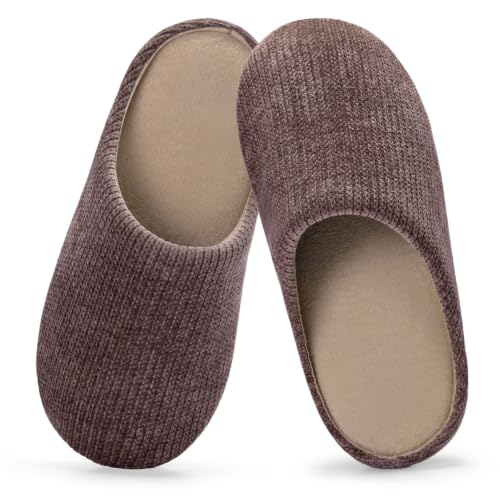
Fadezar’s Japanese-style slipper takes the opposite approach to noise. Where foam-soled Western house shoes can slap and squeak across hard flooring, this low, light pair is designed to move quietly, and its listing says so plainly. The brown colourway in a women’s 10-11 and men’s 8-9 range keeps the profile understated: a breathable lining, a flat flexible sole, and a silhouette that tucks under a bed or into a suitcase without argument.
That travel quality deserves emphasis. A cotton slipper this light folds into the corner of a weekend bag and earns its space in hotel rooms, guest houses and hospital bags, anywhere bare feet on an unfamiliar floor feel wrong. At home it suits early risers in houses where someone else is still asleep, and anyone whose floors are wood or tile throughout, because the soft sole neither scratches nor announces each trip to the kitchen. The listing confirms machine washability, which matters doubly for a pair that will spend time in luggage and guest rooms.
- Fabric: breathable cotton-style lining and upper
- Shape: low Japanese-style slip-on
- Footbed: light padding rather than deep foam
- Sole: soft, quiet, non-slip
- Care: machine washable per listing
- Sizing note: brown edition listed at women’s 10-11, men’s 8-9
Strengths
- Genuinely quiet on wood and tile during early-morning movement
- Packs almost flat for travel, guests and hospital stays
- Simple shape washes and dries with minimal fuss
Trade-offs
- Thin padding tires feet during long standing jobs
- Low sides offer little warmth once autumn arrives
- Not the pair for wet floors or outdoor errands
Best for: light sleepers’ households, travellers and hard-floor homes. Not suited for: cooks who stand for hours or anyone wanting deep cushioning.

shevalues Open Toe Cotton House Slippers — Softest Cushioned Step
The shevalues pair is where cotton meets the memory foam slipper mainstream. Its listing leads with ultra-soft, comfortable cotton in an open-toe bedroom shape, sized here in the teal 260 edition, roughly a women’s size 8, and aimed at both women and men. The cotton keeps the foot’s climate dry and breathable while the foam bed underneath does the cushioning work that woven cotton alone cannot.
In daily use this is the pair for people who love the idea of cotton but have been disappointed by flat spa slippers before. The step has give. The open front keeps toes cool and makes the pair easy to slide into from the side of a bed, half awake. A non-slip sole extends its territory from bedroom carpet to bathroom tile and the odd step onto a porch, and the teal colour is a small pleasure in itself, deep enough to look deliberate rather than medicinal. Because the cotton is soft rather than looped, it feels smoother against skin than terry, closer to a favourite washed T-shirt than to a towel.
- Fabric: soft cotton upper, open at the toes
- Shape: slip-on bedroom shoe for women and men
- Footbed: memory foam cushioning
- Sole: non-slip, rated by the maker for indoor and outdoor steps
- Care: follow listing guidance; air dry to protect the foam
- Sizing note: numbered foot-length sizing, 260 edition shown
Strengths
- Combines cotton breathability with real underfoot cushioning
- Smooth cotton surface suits skin that finds terry loops scratchy
- Teal colourway looks cheerful without showing every speck
Trade-offs
- Foam inside slows drying after a full wash
- Numbered sizing confuses buyers used to letter ranges
- Open toe leaves toes exposed to stubbing on furniture legs
Best for: cotton lovers who still want a cushioned, modern slipper feel. Not suited for: purists who want fabric and nothing synthetic-feeling underfoot.
Arus Turkish Terry Cotton Slippers Women White — True Spa Terry
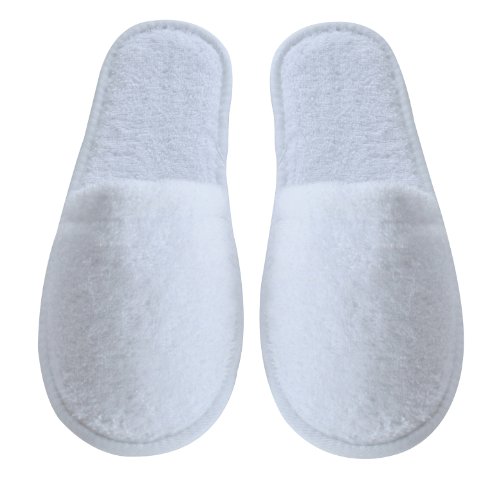
Arus makes the most traditional object in this guide: a women’s slipper in Turkish terry cotton cloth, white, cut in a wide one-size edition spanning roughly sizes 6 to 9.5. Terry cloth is cotton woven into loops, and those loops do three useful things at once. They feel plush without any synthetic pile, they drink up the dampness on feet fresh from a shower, and they let air circulate through the loops as the foot dries. This is the slipper of hammams, spas and good hotels, refined over a very long time.
The wide cut is the detail to respect. Arus describes this edition as one size fitting most, wide, and that generosity suits swollen evening feet, thick socks and post-bath comfort, while a narrow foot may find the fit drifting. White terry also makes a promise and a demand: it looks immaculate and spa-clean on day one, and it shows every subsequent week honestly, which is precisely why terry devotees wash theirs often and happily. Treat this pair as you would a good white towel, in regular rotation through the laundry, and it rewards you with that clean, looped, absorbent feel that no microfibre imitation quite reproduces.
- Fabric: Turkish terry cotton cloth, looped pile
- Shape: wide slip-on bath and spa style
- Footbed: terry-covered, lightly padded
- Sole: light spa sole for indoor use
- Care: wash like white towels; expect gradual softening
- Sizing note: one size, wide, listed for women’s 6-9.5
Strengths
- Looped cotton absorbs post-shower dampness better than smooth weaves
- Wide fit welcomes socks and end-of-day feet without pinching
- Pure spa character, with nothing plush or synthetic about the feel
Trade-offs
- White terry shows soil quickly and needs frequent washing
- One-size width will feel loose on narrow feet
- Thin spa sole is not built for driveways or garden paths
Best for: bath-time routines, spa days at home and wide feet. Not suited for: narrow feet or anyone who washes slippers rarely.

Arus Men Cotton Terry Slippers White — Men’s Terry Counterpart
Men are usually offered terry slippers only as an afterthought, in whatever size the hotel left behind, so a dedicated men’s edition from Arus is worth its own review rather than a footnote to the women’s pair above. This is Turkish terry cloth again, white, in a men’s medium with a wide fit, made for the spa and bath side of life: stepping out of a shower, crossing a tiled bathroom, and settling somewhere with a book while your feet finish drying inside loops of cotton.
The character matches its sibling but the proportions differ, and proportions are what men’s slippers so often get wrong when they are merely enlarged women’s shapes. The wider last gives toes room to spread, which matters in terry because the loops themselves take up a little space inside the shoe. Warm-climate wearers will also appreciate what this pair refuses to be: no fleece collar, no faux fur, no insulated anything. On a humid evening, a looped cotton slipper is the difference between feet that feel bathed and feet that feel baked.
- Fabric: men’s Turkish terry cotton cloth
- Shape: wide slip-on, spa and bath orientation
- Footbed: terry surface with light padding
- Sole: light indoor sole
- Care: launder with towels; white shows wear honestly
- Sizing note: men’s medium, wide fit per listing
Strengths
- A men’s terry option that is actually cut for men’s feet
- Loops manage shower dampness without any synthetic pile
- Cool and breathable where fleece-lined pairs would overwhelm
Trade-offs
- White colourway needs the same laundry discipline as towels
- Limited cushioning for long periods of standing
- Wide fit may wander on a narrow, low-volume foot
Best for: men who want a genuine bath slipper rather than a winter house shoe. Not suited for: cold floors in unheated houses or heavy outdoor use.

ESKYMODE Cotton Bath Slippers Terry Seafoam — Bathroom-First Terry
ESKYMODE closes the line-up with a women’s cotton bath slipper in terry, finished in seafoam, a pale green that belongs in bathrooms the way white belongs in spas. The design intent is narrow and clear: this pair exists for wet-room life. Terry cloth against damp skin, a shape that slips on without hands while you are holding a towel, and a presence light enough that rinsing the pair under a tap feels like a normal part of the routine rather than a special project.
Colour turns out to be a practical feature here. Seafoam hides the faint water marks and bathroom dust that make white terry look tired between washes, while still reading as fresh and clean. The pair also travels well between roles: guest bathroom duty, a swimming bag, a caravan or a small flat where one pair must cover bath, bedroom and balcony. What it will not do is impersonate an all-day house shoe. Like the Arus pairs, its comfort is about absorbency and softness in short, damp intervals, and judged on those terms it is a well-aimed little product.
- Fabric: cotton terry cloth upper
- Shape: women’s slip-on bath slipper
- Footbed: terry-covered, lightly cushioned
- Sole: light sole suited to bathroom floors
- Care: rinse or wash regularly; terry appreciates air flow while drying
- Sizing note: women’s sizing per listing; check before ordering
Strengths
- Seafoam colour stays presentable longer between washes than white
- Purpose-built for the bath-to-bedroom route most slippers only tolerate
- Soft looped cotton feels kind on skin straight after bathing
Trade-offs
- Single-purpose design gives limited support for all-day wear
- Terry holds water, so a soaked pair stays heavy until it dries
- Less structured than the woven EitCaton or shevalues shapes
Best for: dedicated bathroom duty, guests and small-space living. Not suited for: anyone wanting one pair to cover every hour of the day.
Comparison Table
| Pick | Fabric character | Footbed | Best territory |
|---|---|---|---|
| EitCaton Linen House Slippers Coffee | Woven cotton fabric, open weave feel | Memory foam | Warm rooms, back door, summer kitchens |
| Fadezar Japanese Slippers Washable | Light breathable lining | Thin padding | Hard floors, travel, quiet mornings |
| shevalues Open Toe Cotton House Slippers | Smooth soft cotton | Memory foam | Bedroom to porch, cushioned daily wear |
| Arus Turkish Terry Cotton Slippers Women White | Looped Turkish terry, wide | Terry-covered light pad | Bath, spa and post-shower routines |
| Arus Men Cotton Terry Slippers White | Looped Turkish terry, men’s cut | Terry-covered light pad | Men’s bath and warm-climate wear |
| ESKYMODE Cotton Bath Slippers Terry Seafoam | Terry cloth in seafoam | Light cushioning | Bathrooms, guests and swim bags |
Why Does Cotton Feel Cooler Than Fleece on Warm Feet?
The short answer is that cotton and fleece manage moisture in opposite directions. Synthetic fleece is a superb insulator precisely because it traps still air and shrugs water off its fibres, which is wonderful in a cold hallway and miserable on a foot that is already warm and slightly damp. The dampness has nowhere to go, so it sits against the skin, and the foot feels hotter and less fresh with every hour.
Cotton fibres absorb water into themselves. A cotton upper pulls light perspiration away from the skin surface and spreads it through the fabric, where moving air, especially through an open toe, can evaporate it. The foot feels drier, and a drier foot feels cooler even at the same temperature. This is also why cotton loses in winter: that same absorbency holds cold moisture against the foot outdoors or on a freezing floor. Judge cotton as warm-weather equipment and it stops looking like a compromise and starts looking like the correct tool.
What Is the Difference Between Terry Cotton and Woven Cotton Slippers?
Terry is cotton with its surface woven into tiny loops, the same construction as a bath towel. Those loops multiply the surface area, so terry absorbs more water, feels plusher, and dries a foot faster after bathing. The cost is bulk and drying time: a saturated terry slipper is a small wet towel, and it needs air and hours before it feels fresh again.
Woven cotton, the flat cloth of the EitCaton and shevalues uppers, behaves more like clothing. It is thinner, holds its shape better, slips into bags more easily and feels smoother against skin that dislikes texture. It absorbs less, which hardly matters during ordinary dry wear around a house. As a rule of thumb, choose terry for the wet half hour around bathing and woven cotton for the dry hours that fill the rest of the day.
How Should You Wash Cotton Slippers Without Wrecking Them?
Treat a cotton slipper wash like washing the good towels. Shake the pair out first, because grit trapped in a sole will grind through fabric in the drum. Use a gentle or normal cycle with similar colours, remembering that white terry from Arus can join a white towel load happily while the coffee EitCaton and teal shevalues pairs belong with mid-tone laundry. A mesh bag is a kindness for open-toe shapes, stopping straps and edges from catching.
Drying is where patience pays. Cotton slippers, especially foam-filled ones like the EitCaton and shevalues, should air dry away from radiators, ideally stuffed loosely with a dry cloth for the first hour to pull moisture out of the footbed. Tumble heat can warp foam and shrink cotton unevenly, leaving one slipper subtly smaller than the other. In humid weather, a spot near moving air matters more than warmth. And because drying takes time, this is the honest argument for owning two pairs: rotation is built into the material.
Which Pair Should You Choose If Your Feet Sweat?
Start with the most open shape your routine allows. The EitCaton slide leaves toes entirely bare and moves the most air, making it the strongest answer for feet that sweat during ordinary activity. The shevalues open-toe design follows closely, trading a little airflow for cushioning. If your sweating happens mainly after showers or exercise, terry is actually the better tool, because absorption matters more than airflow in those first damp minutes, and the Arus pairs excel there.
Two habits multiply whichever pair you choose. Wear them barefoot rather than over socks, since cotton against skin is where the absorption happens, and wash them on a rhythm rather than waiting for odour to force the issue. Cotton’s great virtue is that it tolerates this washing cheerfully for a long time. A sweaty-footed wearer who launders weekly will get a fresher year from a modest cotton pair than from an expensive synthetic one that never quite comes clean.
How Long Do Cotton Slippers Take to Dry, Honestly?
Longer than you hope, and planning around that fact prevents most disappointment with this category. A woven pair rinsed and wrung out on a breezy day can feel dry by evening. A terry pair soaked through in a wash may need a full day, and a foam-cored pair can hold a whisper of dampness in its footbed into the second day, especially in a humid flat without outdoor space.
You can shorten the wait without shortening the slipper’s life. Press the pair in a dry towel before hanging it, open the shape up so air reaches the inside, and keep it near circulation rather than heat. What you should not do is seal a damp cotton slipper in a cupboard or gym bag, because cotton plus darkness plus moisture is an invitation to mustiness that even a later wash struggles to reverse. Dry them like towels, in the open, and they behave like towels: reliably, for years.
Can Cotton Slippers Handle Trips to the Garden or Bin?
Briefly, some of them, with conditions. The EitCaton and shevalues pairs carry non-slip soles their makers rate for indoor and outdoor steps, and a dry dash to a bin, a porch or a mailbox is squarely within their brief. The terry trio is different. Spa soles are made for smooth indoor floors, and a wet terry slipper on gravel or grass comes back muddy, saturated and slow to forgive you.
There is also a moisture trap to respect. Cotton that gets wet outdoors stays wet, and walking back inside in soaked slippers spreads water across your floors while chilling your feet. Keep a genuinely outdoor shoe by the door for rainy jobs, and let the cotton pairs do the dry, short errands they were built for. Used that way, the soles last far longer, because grit is the quiet enemy of every soft sole in this guide.
What Sizing Traps Catch Buyers of Cotton Slippers?
The first trap is the combined range. Several listings here express one physical size as a women’s number and a men’s number together, and buyers who read only the half meant for someone else end up a full size adrift. The second trap is numbered foot-length sizing, as on the shevalues 260 edition, where the number describes the intended foot length rather than any familiar shoe size. Converting your foot measurement honestly, in centimetres, measured standing in the evening, dissolves most of this confusion.
The third trap is cotton itself. Cotton relaxes slightly with wear and washing, so a pair that feels snug on day one often fits perfectly by week two, while a pair that feels perfect on day one can drift loose by month two, particularly in wide one-size terry like the Arus women’s edition. If you sit between sizes in a woven pair, the smaller option usually ages better. In terry, where socks and post-bath swelling enter the picture, a touch of generosity is the safer error.
Are Cotton Slippers a Sensible Choice for Guest Rooms?
They may be the most sensible guest footwear of all, because they solve the hygiene problem that makes hosts hesitate about lending slippers. A cotton pair can be washed hot, dried fully and folded into a drawer between visits, emerging genuinely clean rather than merely aired. The Fadezar pair packs and stores flattest, the ESKYMODE terry feels most like a boutique-hotel gesture, and the Arus white terry reads as unmistakably fresh when it is fresh.
Buy one size generously if the pair is truly for guests, since a loose slipper on an unknown foot is a comfort while a tight one is an embarrassment, and keep the guest pair out of your own daily rotation so its whiteness survives. Hosts who travel often will recognise the reverse pleasure: arriving somewhere that offers a clean cotton slipper instead of expecting bare feet on cold tile is a small luxury that costs the host almost nothing per stay.
What Are the Most Common Mistakes When Buying Cotton Slippers?
The commonest mistake is buying cotton for a cold problem. A draughty house in January needs insulation, and no weave of cotton will substitute for fleece, wool or shearling when floors are genuinely cold. The second mistake is the mirror image: choosing a plush synthetic pair for a warm house because it looked cosier in photographs, then abandoning it by June when feet begin to cook inside it.
Buyers also underestimate drying time, purchase a single foam-cored pair, wash it on Sunday night and face damp slippers on Monday. And they ignore the sole, falling for a spa slipper’s softness before discovering it cannot cope with their kitchen tile, their stairs or their morning routine. Match the pair to your floor, your climate and your laundry habits, in that order, and cotton rarely disappoints.
How Do Cotton Slippers Compare With Linen and Bamboo Alternatives?
Linen, which appears in the styling of the EitCaton weave, is cotton’s sterner cousin: crisper, stronger when wet, faster to dry, and less soft against skin until it has been washed many times. A linen-forward upper suits wearers who prioritise structure and quick drying over plushness. Bamboo-derived fabrics feel silky and market themselves on freshness, though most are rayon in substance, processed heavily from the plant, and they can feel slick where cotton feels honest and grippy.
Cotton sits between them as the balanced, familiar choice. It is softer than young linen, sturdier in the wash than most bamboo fabrics, and available in both flat weaves and true terry, which neither rival matches for bath use. If your skin knows and likes cotton towels and cotton T-shirts, your feet are very likely to agree with the same fibre under them.
When Should You Replace a Pair of Cotton Slippers?
Cotton rarely fails dramatically; it fades, thins and relaxes. The clearest signal is underfoot: when the padding, foam or otherwise, has compressed so that you feel the floor’s hardness through the middle of the step, the slipper has stopped doing its main job. Terry gives a second signal, loops that lie flat and grey no longer absorb, and a slipper that cannot absorb is just a warm rag with a sole.
Soles set the hard limit. Once a non-slip surface has worn smooth, especially at the heel and ball where your weight lands, the pair becomes a hazard on tile regardless of how beloved it is. Finally, trust your nose after a wash: cotton that still smells stale straight out of a proper laundering has absorbed more than washing can retrieve, and replacing it is hygiene, not indulgence.
How Does a Cotton Slipper Behave Through a Whole Working Day at Home?
Morning is cotton’s easiest hour. Feet wake slightly warm and occasionally puffy, and a breathable slipper that gives across the width feels immediately right where a structured shoe would argue. The shevalues pair earns its keep here, because foam that felt merely pleasant at bedtime feels genuinely kind under a foot that has been horizontal all night and now meets cold tile. Terry, meanwhile, belongs to the shower’s aftermath, absorbing the last of the water that a towel missed between the toes.
By midday the differences sharpen. A home worker crossing between desk, kitchen and doorstep accumulates thousands of steps on hard surfaces, and thin spa soles begin to report every one of them through the heel. This is where the woven pairs with real soles justify themselves, and where rotating away from terry stops being fussiness and becomes plain ergonomics. Cotton also shows a quiet advantage over synthetics during these long indoor days: because it absorbs and releases moisture gradually, the inside of the slipper at four in the afternoon smells like fabric rather than like a sealed plastic bag that once contained feet.
Evening reverses the priorities again. Feet are at their largest, the house is at its warmest from cooking, and openness matters more than structure. An open-toe pair that felt almost too airy at breakfast now feels exactly calibrated. Understanding this daily rhythm explains why so many cotton devotees own two dissimilar pairs rather than one perfect one: the category rewards a small wardrobe, matched to hours, far more than it rewards a single expensive purchase.
What Should You Look for in the Sole of a Cotton Slipper?
Begin with grip pattern rather than thickness. A sole covered in shallow, varied texture will hold on kitchen tile and bathroom floors far better than a smooth slab twice as deep, because water and dust need channels to escape from beneath your weight. Flex the pair mentally through its listing photographs: a sole that bends at the ball of the foot lets your step roll naturally, while a rigid board under a soft cotton upper creates a strange, clomping gait that tires ankles by evening.
Then consider where the sole’s edge sits. Cotton uppers are soft, and on a narrow sole the fabric can roll over the edge when you turn quickly, which is how people end up walking on the side seam of a beloved pair. A sole that extends a fraction beyond the upper all round protects the cotton and stabilises the step. Finally, think about noise and neighbours. Soft soles like Fadezar’s keep peace in flats and terraced houses, where a hard-soled slipper announces every nocturnal trip downstairs to the people below as clearly as to the people within.
Why Do Hotels and Spas Trust Terry Cotton Above Every Other Fabric?
Because terry solves the hospitality problem perfectly: one material that feels luxurious to a stranger, absorbs bathwater instantly, survives industrial laundering at high temperatures and folds flat for storage by the hundred. A synthetic plush slipper may feel softer for the first ten minutes, yet it cannot be boiled clean between guests, and it holds odours in a way that housekeeping departments learned to hate long ago. Cotton terry can be washed back to a genuinely neutral state, which is the entire basis of trust when footwear passes from guest to guest.
Your home can borrow the same logic at a smaller scale. A household terry pair washed with the towels inherits that spa cycle of freshness, and the ritual itself, clean white or seafoam loops waiting folded by the bath, changes how a bathroom feels to use. The Arus and ESKYMODE pairs are domestic versions of a professional system, and they work best when you actually run the system: wash often, dry fully, store openly, replace when the loops lie down and stop drinking water.
How Should You Store Cotton Slippers So They Stay Fresh?
Air is the whole secret. Cotton that rests in moving air between wears dries completely, and a completely dried slipper starts each day neutral. Stand pairs upright or on an open rack near, not on, a heat source, and resist the tidiness that stuffs them into a closed box or the bottom of a wardrobe while they still hold the day’s moisture. In small bathrooms, a hook or rail beats a floor corner, because floor corners are where humidity settles and stays.
Rotation is storage’s partner. Two pairs alternating days will each last longer than two pairs worn in sequence until each dies, because cotton fibres recover their loft while resting and foam regains a little of its shape. This is familiar from towels and bedding, the other cotton goods in your house, and slippers obey the same textile rules. Treat them as part of the linen cupboard rather than part of the shoe rack, and their freshness stops being a problem you manage and becomes a property they simply have.
What Role Can Cotton Slippers Play in a Warm-Climate Wardrobe?
In genuinely warm climates the question reverses: not which slipper keeps feet warm, but which covering protects feet from hot tile, rough courtyards and sun-baked thresholds without cooking them. Cotton answers better than any synthetic, because it shades skin while letting heat escape, and because a pair rinsed in the evening is ready, if not bone dry, then at least honest and wearable by morning in dry-season air. The EitCaton slide’s open shape was plainly designed with this life in mind.
Travellers to warm places can steal the same idea. A light cotton pair in a suitcase covers hotel floors, temple-adjacent guesthouses, overnight trains and rented villas where the floors are beautiful, hard and entirely unknown. Fadezar’s flat, quiet design is the traveller’s pick of this six for exactly those journeys. Cotton will never be the glamorous choice in a holiday photograph, yet it is very often the pair still being worn, comfortably, on the last day when flashier footwear has been abandoned to blisters and heat.
Cotton Slippers After a Shower: The Bath-to-Bed Route
The minutes after a bath or shower are a small, specific climate: warm skin, damp feet, a cool floor, and a short journey to bed or sofa. Cotton — terry cotton above all — is the fibre that journey was made for, because it absorbs the remaining moisture instead of sealing it against the skin the way a synthetic lining does. The Arus pairs in this guide are quite literally built from the fabric of bath towels, and slipping them on after a shower feels like the bathrobe’s logic extended to the feet.
The routine matters more than the purchase: a cotton pair kept by the bathroom door, used for the damp minutes and then left open to dry, will serve for years; the same pair worn all evening on top of its bath duty will feel clammy by nine and get blamed for a scheduling error. Give the bath pair its narrow job and it is the most satisfactory footwear in the house — a small, daily luxury that costs almost nothing and asks only for a hook by the door.
Households with a bath-night rhythm for children discover the same trick one size down: terry slippers as part of the routine become a signal the evening is ending, and signals of that kind are worth more than warmth to the adults running the schedule.
What Happens to Cotton Slippers After Fifty Washes?
Fifty washes is roughly a year of weekly laundering, and cotton’s report card at that mark is distinctive: the fabric will be softer than new, the colours a half-shade calmer, the terry loops slightly flattened where the heel lands, and the structure — if the pair was honestly made — essentially intact. Cotton does not pill into plastic bobbles or shed microfibres as it ages; it thins gracefully and evenly, which is why old cotton slippers feel familiar rather than failed.
The components around the cotton decide the actual retirement date. Foam footbeds compress on their own schedule regardless of the upper’s health, soles polish smooth with indoor miles, and elastic — where a pair uses it — tires first of all. The pairs in this guide were chosen partly for how their non-cotton parts age, because a cotton upper that outlives its sole by two years is a promise the rest of the shoe has to keep.
When retirement comes, cotton makes the exit gracefully too: the old pair descends to garden and garage duty, and at the very end it is, fittingly, a rag — the fibre’s whole biography, from towel to slipper to cloth, lived inside one household.
Choosing Cotton for a Household That Keeps Synthetics Out
Some households run a deliberate materials policy — natural fibres where the budget allows, synthetics where it must — and slippers are an easy win for that policy because the all-cotton category genuinely exists at every price point in this guide. The honest caveat is the fine print: soles are rubber or EVA on every pair here, memory foam hides inside two of them, and “all cotton” in this guide’s title describes the uppers and linings that touch the skin, which is where the fibre argument actually lives.
For the household refining its policy rather than perfecting it, that is the right granularity: skin-contact natural, structure synthetic where structure demands it. The shevalues and EitCaton pairs come closest to the purist reading; the Arus terry pairs are the traditional spa answer; and none of the six asks the household to pretend a sole can be woven.
The policy’s payoff is mostly tactile and partly olfactory — natural fibres simply smell less over a season of wear — and partly the quiet satisfaction of a purchase that matches a principle. Cotton slippers are where that satisfaction costs least and repeats daily.
Final Recommendation
Choose by the hour of day when your feet suffer most. For hot, busy daytime wear, the EitCaton slide and the cushioned shevalues pair cover the most ground, with Fadezar waiting quietly for travel and hard-floor mornings. For the damp, unhurried minutes around bathing, the two Arus terry pairs and ESKYMODE’s seafoam edition do something no synthetic slipper imitates convincingly. Readers weighing a warmer, plusher direction for winter should look at Best Alternatives to UGG Slippers before deciding that cotton must answer every season. Own the pair that matches your climate, wash it without fear, and let a second pair dry in peace — cotton rewards households that treat slippers like towels, in rotation, and quietly outlasts every trend that tries to replace it.
Frequently Asked Questions
Are all cotton slippers really made only from cotton?
Not always, and the honest reading is that the fabric touching your foot should be cotton while soles and foam padding are usually other materials. In this line-up the uppers and terry cloth are the cotton story; the memory foam inside the EitCaton and shevalues pairs is a comfort layer underneath it. If absolute fibre purity matters to you, the flat terry pairs come closest to a single-material experience.
Can I put cotton slippers in the tumble dryer?
You can with plain terry, on a gentle heat, much as you would towels, though air drying keeps the shape kinder for longer. Foam-cored pairs are the exception worth protecting: repeated tumble heat can warp memory foam and shrink a cotton upper unevenly. When in doubt, press the pair in a towel, open it up and let moving air finish the job overnight.
Do cotton slippers stretch out over time?
Yes, gently. Cotton relaxes with warmth, moisture and washing, so woven pairs give a little across the width and wide terry editions can feel looser after a month. This is why a snug first fit is usually the right purchase in this category, and why rotating two pairs, each resting between wears, slows the relaxation considerably.
Which of these pairs is best for sweaty feet?
The EitCaton open-toe slide, because nothing covers the toes and air reaches the whole foot with every step. The shevalues open-toe pair runs it close with better cushioning. For sweat that arrives after bathing or exercise rather than during activity, terry’s absorption wins, and the Arus pairs are the strongest choice in that specific window.
Are terry cotton slippers slippery on tile?
The cloth itself is not the issue; the sole is. Spa-style terry pairs carry light soles intended for indoor floors, and they behave well on dry tile while deserving caution on wet, soapy surfaces. Walk rather than stride in any freshly washed bathroom, and replace any pair whose sole texture has worn smooth, whatever its fabric.
How often should cotton slippers be washed?
Weekly is a sensible rhythm for a pair worn barefoot every day, and after any illness, guest use or soaking. Cotton’s advantage is that it tolerates this frequency without complaint, unlike delicate lined slippers that dread the drum. If a pair begins to smell within a day of washing, it is telling you its absorbent life is over.
Can men and women share the unisex pairs here?
The EitCaton, Fadezar and shevalues designs are listed for both, with combined size ranges, so sharing is realistic if your feet are close in size. Terry is split deliberately: Arus cuts its women’s edition wide in smaller sizes and its men’s edition in a men’s medium. Read the combined ranges carefully rather than assuming one household size fits both of you.
Do cotton slippers work in winter at all?
In a well-heated house, yes, particularly layered over socks in the evening, and terry after a hot bath is a winter pleasure in its own right. In a cold house with unheated floors, cotton alone will feel thin and chilly, and a wool or fleece pair should take the season instead. Cotton is honest warm-weather equipment that can visit winter, not winter equipment pretending otherwise.
Related Guides
Continue exploring footwear and natural fibres around the house with Best Ballet Slippers for a very different kind of soft shoe, Best Boot Slippers for Women when the weather turns and ankles need covering, and Best All-Cotton Rugs to carry the same breathable fibre underfoot into the rooms themselves.



[…] the highest state a slipper can achieve. For the feet at the other end of the family’s day, Best All-Cotton Slippers covers the breathable extreme this guide’s centre compromises […]