Our Top Picks


What's inside
As an Amazon Associate I earn from qualifying purchases. This post may contain affiliate links at no extra cost to you.
A soft cooler promises easy carrying, light weight, and storage that does not take over a closet, a trunk, or the corner of a cottage kitchen. A hard cooler promises structure, a sealed interior, and a surface you can scrub clean after a long weekend. A soft cooler with a hard liner tries to give you both in one bag, and for many households that middle path is the most practical one of all. The outside stays flexible and comfortable to carry. The inside gains a rigid, leak proof liner that holds its shape, keeps meltwater where it belongs, and lifts out or rinses clean when the trip is over.
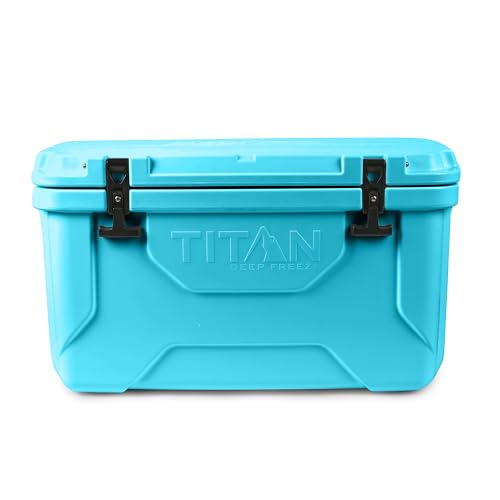
This guide looks closely at one clear family of designs and one useful alternative. The main line is the Titan Zipperless HardBody range, offered in 16 can, 30 can, and 48 can sizes. The 16 can version appears in Seagrass, Sharkskin Gray, and Marine Blue, and those three listings are colors of the same model, not three different coolers. The 30 can version appears in Sharkskin Gray and Jungle Hunt, again two colors of one model. The 48 can version in this guide is listed in Sharkskin Gray. Alongside them is the MIYCOO No-Zipper Hard Liner Cooler Bag, an insulated 22 can soft cooler with a removable leakproof liner and divider made for quick rinsing. Together, those four sizes cover a solo lunch, a family picnic, a boat day, a campsite weekend, and the kind of grocery run that turns into an afternoon out.
Our research for this guide focused on the questions buyers actually ask before choosing. How does a hard liner change daily use? What does a zipperless lid do well, and where does a traditional zipper still make sense? How should you read can counts and ice retention claims in a product title? Which size fits which job without buying far more cooler than you need? The answers matter because a cooler is not a decorative purchase. It protects food, drinks, medicine carried cold, bait, picnic ingredients, and the interior of your car. A poor choice leaks, sags, smells after one spilled drink, or proves so awkward to open that nobody wants to use it.
Why a hard liner changes a soft cooler
A conventional soft cooler is usually a fabric shell, a layer of insulation, and a flexible inner lining. That construction can work well, but the lining moves with the load. Cans shift, corners fold, and a sharp carton edge can press into seams. Meltwater finds low spots. When you reach inside for the last drink, you often have to hold the bag open with one hand while fishing with the other. A hard liner answers those small frustrations with structure.
Leak protection you can picture
The Titan listings describe a leak proof hard liner, and the MIYCOO listing describes a removable leakproof liner. The practical meaning is straightforward. Ice melts. Condensation forms on cans and bottles. A container of cut fruit can tip. In a liner with a solid form, that liquid stays inside a defined basin instead of soaking into insulation or finding a stitched seam. No cooler should be treated as a bucket you can tip on its side in a car, and care still matters, but a hard basin gives you a margin that a loose fabric lining rarely offers. For cottage use, that margin protects car seats, boat cushions, picnic blankets, and wooden floors when a cooler is set down indoors for unpacking.
Shape that stays open and upright
A rigid liner holds the walls apart. The cooler stands upright on a dock, a tailgate, or a kitchen floor instead of slumping into its own contents. Loading becomes a two hand job in the good sense: you can arrange drinks in rows, place food containers flat, and see what is inside at a glance. Unloading is just as orderly. Instead of digging through a collapsing bag, you lift items out of a defined box. That structure also protects softer food. Sandwiches, berries, cheese, and baked goods are less likely to be crushed by shifting cans when the interior keeps its geometry.
Cleaning that actually gets finished
Cleanup is where a hard liner earns its keep most clearly. Sticky soda, brine, melted ice cream, and picnic spills happen. With a smooth hard surface, you can wipe the liner, rinse it, and let it dry before the next use. The MIYCOO design makes that idea explicit with a removable liner and divider for quick rinsing. The Titan liner includes a shelf, discussed below, and its hard surface serves the same household purpose: a cooler that can be returned to a clean, neutral state instead of carrying last weekend into the next one. A cooler that is easy to clean is a cooler people reuse. A cooler that stays damp and stained in a garage is one people quietly avoid.
- A hard liner contains meltwater in one basin rather than letting it wander through seams.
- A rigid interior keeps the cooler standing open for faster loading and unloading.
- A smooth surface wipes and rinses clean, which helps prevent lingering odors.
- Structure protects food containers from shifting cans and bottles.
- A defined interior makes it easier to see what you packed and what is left.
None of this removes the advantages of the soft exterior. The shell can still flex slightly in a packed trunk, the carry handles and shoulder strap can still sit comfortably against the body, and the whole cooler can still weigh far less than a rigid chest of similar capacity. The hard liner is best understood as the skeleton and the wash basin combined, hidden inside a bag that remains pleasant to carry.
What zipperless really means in daily use
Both the Titan HardBody models and the MIYCOO bag avoid a conventional zipper around the main opening. Titan calls the design Zipperless, and MIYCOO calls its bag No-Zipper. The shared idea is quick access through a lid that opens without working a zipper pull around corners, often with cold, wet, or sandy hands. If you have ever tried to open a stiff cooler zipper while holding a plate, a child by the hand, or a fishing rod, the appeal is immediate.
Speed at the moment you need a drink
A cooler gets opened far more often than people expect when they buy it. Every drink, snack, condiment, and ice check is another opening. A lid designed for easy access shortens each of those moments. The Titan 16 can listings describe a soft cooler with an easy access lid, language that matches the way these coolers are used at a sideline, on a porch, or in the back of a car during a road stop. You reach in, you take what you need, and you close the lid again. Less time open also means less cold air spilling out, which supports the ice you packed that morning.
Fewer stuck pulls and sandy teeth
Zippers have real strengths, including a familiar, secure closure, but cooler zippers live a hard life. Sand, salt, dried drinks, and grit collect in teeth. Pulls get yanked at angles. A zipperless lid removes that particular failure point from the main opening. That does not make the cooler maintenance free, and hinges, latches, straps, and fabric still deserve care, but it does simplify the part of the cooler you touch most. For beach and cottage use, where sand seems to travel into everything, that simplicity is more than a novelty.
Access for everyone sharing the cooler
A shared family cooler should be easy for grandparents, teenagers, and guests to open without instruction. A lift style lid is intuitive. People do not have to ask which way the zipper runs or use two hands to work it past a corner. That matters at gatherings, where the cooler is effectively a small self serve station. Set it in shade, keep the lid closed between uses, and let everyone help themselves. The easier a cooler is to open and close properly, the more likely it is to be closed properly, and a closed lid is what keeps cold in.
There is a trade off to name honestly. If you need a cooler to ride for hours tipped in a crowded cargo area, or you prefer the familiar sealed feel of a zipper for long transport, think carefully about how you travel. A zipperless hard liner cooler shines in upright, access heavy use: day trips, picnics, campsites, boats, porches, job sites, and car travel where the cooler sits flat. That is a broad and common set of uses, and it is the use case this guide is built around.
Check prices on Amazon
Live listings for the shortlist in this guide are pulled from Amazon below, so prices and availability are always current at the moment you look.


The Titan HardBody line at a glance
Titan offers the clearest way to understand this category because the same basic idea is repeated across three sizes. All three sizes in this guide are Zipperless HardBody coolers with a hard liner. The 16 can model is listed as keeping ice for 2 days. The 30 can and 48 can models are listed as keeping ice for 3 days. Those figures come directly from the product titles, and they should be read as the maker stated figures for those models, under the conditions the maker used. Real results in your yard, boat, or car will vary with heat, sun, how often the lid opens, how much ice you start with, and whether food and drinks were cold before packing. The useful takeaway is relative: within this line, the two larger models carry the longer stated retention, and the smallest model carries a shorter stated figure paired with the smallest, most portable size.
- Titan 16 can: listed as keeping ice 2 days, with a leak proof hard liner with shelf, a Backsaver shoulder strap, and an easy access lid. Colors in this guide: Seagrass, Sharkskin Gray, and Marine Blue.
- Titan 30 can: listed as keeping ice 3 days, with a leak proof hard liner with shelf and a Backsaver shoulder strap. Colors in this guide: Sharkskin Gray and Jungle Hunt.
- Titan 48 can: listed as keeping ice 3 days, in Sharkskin Gray. The largest Titan option here, aimed at groups and longer outings.
- MIYCOO 22 can: listed at 48H cold, expandable, with a removable leakproof liner and divider for quick rinsing. A distinct alternative that sits between the Titan 16 and Titan 30 in stated capacity.
Reading the line this way prevents a common shopping mistake. The three 16 can listings are not competing models with hidden differences. They are one model in three colors. The two 30 can listings are likewise one model in two colors. Choose size first, based on people, drinks, food, and trip length. Choose color second, based on taste, visibility, and how the cooler will look in the places you use it. That order keeps the decision simple and honest.