Our Top Picks
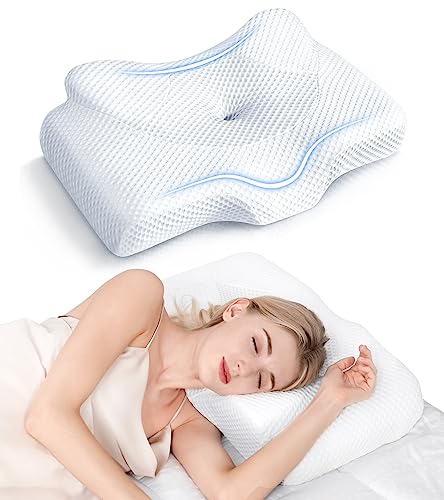
 ComRola Ergonomic Cervical Neck Pillow for Neck Pain23.6 x 16.9 x 0.1 inches3.6 poundsCheck on Amazon


What's inside
As an Amazon Associate I earn from qualifying purchases. This post may contain affiliate links at no extra cost to you.
Sleep is often the hardest part of the day after anterior cervical discectomy and fusion, usually shortened to ACDF. During the day you can shift in a chair, stand up, walk a little, and remind yourself to keep your head level. At night, for hours at a time, your neck has to stay in one supported position while you are barely aware of it. A pillow that was perfectly comfortable before surgery can suddenly feel too tall, too flat, too soft around the edges, or too eager to let your head roll to one side. The goal after ACDF is not a special medical pillow in the strict sense. The goal is a pillow, or a small arrangement of pillows and wedges, that helps you keep your head, neck, and upper back in a neutral line, that does not push your chin down toward your chest or tip your head back, and that you can actually rest on night after night while healing takes its course.
This guide looks at eight products that fit the main shapes people consider after neck surgery from the front of the neck: contoured cervical memory foam pillows, an adjustable cervical pillow, a face-up neck stabilizer wedge designed for post-surgery positioning, and two four-piece orthopedic wedge sets for inclined sleeping. Each type solves a different part of the problem. A contour pillow cradles the neck while you lie on your back. A stabilizer wedge limits side-to-side drift. A wedge set lifts the whole upper body so you are not lying completely flat. None of them replaces the instructions you were given at discharge, and none of them can promise a particular recovery outcome. What a well-chosen pillow can do is remove avoidable strain from the hours you spend in bed, so that the position your surgeon wants you to keep is also the position that feels most natural to stay in.
A note before we go further, because it matters more than any product detail in this article. Only your surgical team knows your fusion levels, your imaging, whether you were sent home in a cervical collar, and how long that collar should stay on, including during sleep. Some people are told to sleep in the collar for a set period. Some are told to remove it in bed. Some are given a firm rule about sleeping only on their back at first, while others are allowed careful side sleeping sooner. If anything in this guide conflicts with what your surgeon, nurse, or physical therapist told you, their instruction wins, every time. Use this article to understand pillow shapes and questions to ask at your follow-up visit, not as a substitute for that advice. If you develop new weakness, trouble swallowing that gets worse, fever, drainage from the incision, severe pain that changes in character, or any symptom your discharge papers tell you to report, contact your care team promptly rather than adjusting pillows and waiting.
Why Sleep Feels Different After ACDF
ACDF is performed through a small incision at the front of the neck. A damaged disc is removed, the space is restored, and the vertebrae above and below are prepared to grow together into one solid segment. While that fusion is forming, the neck is less forgiving of awkward angles than it used to be. Muscles at the front of the throat may feel tight or sore from the approach itself. Shoulder and upper back muscles often ache because they have been guarding the neck all day. Stiffness in the morning is common, and many people describe a narrow comfort zone: a little too much pillow height and the chin feels pressed down, a little too little and the head tips back and the front of the neck feels stretched.
Neutral alignment is the phrase you will hear most often, and it is worth picturing clearly. Lying on your back, neutral means your forehead and chin are roughly level, your ears sit over your shoulders rather than in front of them, and the natural curve at the back of your neck is filled in by support instead of hanging over a gap. The pillow should support the head and the neck as one unit. A very soft pillow that lets the head sink while the neck floats unsupported can leave you sore. A very thick pillow that props the head up like a reading pillow can flex the neck forward for hours. Neither extreme is restful, and after surgery neither is a good idea to persist with simply because the pillow was already in the house.
Back sleeping is usually the starting point after ACDF because it is the easiest position in which to keep that neutral line and to keep a collar, if you wear one, sitting as intended. Side sleeping changes the geometry completely. On your side, the pillow has to fill the distance between the side of your head and the mattress, a distance set by the width of your shoulders. Too thin and the head drops toward the bed, bending the neck sideways. Too thick and the head is pushed up and the neck bends the other way. Stomach sleeping twists the neck to one side for prolonged periods and is generally the position people are told to avoid early on, but again, the timing and the rules are your surgeon’s to set, not ours.
Height, often called loft, is therefore the single most important pillow measurement in this context, and it is personal. It depends on your shoulder width, the firmness of your mattress, whether you are on your back or your side, and whether a collar adds bulk behind or under your neck. That is why dual-height and adjustable designs appear so often in this guide. They give you two or more chances to land in the neutral zone without buying a second pillow, and in the first weeks at home, when swelling, soreness, and sleep position are all still settling, that flexibility is genuinely useful.
The Main Pillow Shapes to Know
Contour cervical memory foam pillows
The classic post-surgery pillow shape is the contour cervical pillow. Instead of a flat or gently puffy surface, it has a raised ridge that sits under the neck and a dip, sometimes called a hollow or valley, where the back of the head rests. Used on your back, the ridge fills the curve behind the neck so the head does not roll back into empty space, and the dip keeps the head from being pushed forward. Many contour pillows can be turned around so a higher or lower edge is under the neck, which effectively gives you two lofts in one pillow. Memory foam is the usual material because it softens slightly with body heat, spreads pressure over a wider area, and then holds its shape rather than springing back the way a bouncy latex or fiberfill pillow can. The trade-off is that memory foam can feel warm and can have an odor when new, which is why several products in this guide specifically describe an odorless foam or a cooling case.
Adjustable cervical pillows
An adjustable cervical pillow keeps the contour idea but adds a way to change the height, typically by adding or removing a layer or insert. After surgery this matters because the height that feels right in week one, when you may be sleeping in a collar and mostly on your back, may not be the height that feels right later when the collar comes off or side sleeping returns. Adjustability turns a single purchase into a small range of options. It also helps households where the pillow may later be used by someone with a different build, although during your own recovery the pillow should be set up for your neck, your mattress, and your surgeon’s position guidance, and left that way rather than reshaped nightly.
Face-up stabilizer wedges
A stabilizer pillow is a different tool. Rather than a full bed pillow, it is a shaped wedge, often triangular, designed to position the head and neck while you lie face up and to discourage the head from turning or tipping to the side in sleep. For someone who keeps waking with their head rotated, or who has been told to stay strictly on their back, that physical guidance can be more valuable than softness. Stabilizers are usually firmer and more structured than contour pillows, and they are best understood as positioning aids for the back-sleeping phase rather than all-night, all-position pillows for the long term.
Four-piece wedge sets for inclined sleep
The fourth category is the orthopedic bed wedge set. These sets include several foam pieces, typically a large incline wedge for the back, a smaller wedge or cushion for the head and neck area, and pieces that go under the knees or legs. Arranged together, they let you rest with the upper body raised at an incline while the legs are also supported, which many people find easier than lying flat in the first days at home, and which can also make getting in and out of bed a more controlled movement. Two of the products in this guide are sets of this kind from different brands. They are similar in concept and piece count, and we present them that way, as two versions of the same general arrangement rather than as entirely different inventions. A wedge set takes up a lot of bed space and suits back sleeping, so it is a deliberate choice, often for the early recovery period, rather than a permanent replacement for a normal pillow.
best gel pillows for side sleepers
The Eight Pillows and Sets, One by One
Osteo Cervical Pillow for Neck Pain Relief, Hollow Design Odorless Memory Foam Pillow with Cooling Case
The Osteo pillow is built around a hollow center. That dip is the defining feature: the back of the head settles into the hollow while the surrounding foam supports the neck and the sides of the head. For a back sleeper after ACDF, that arrangement addresses two common complaints at once. It reduces the feeling of the head being pushed forward, because the head is sitting in a recess rather than on top of a mound, and it gives gentle lateral guidance, because the raised sides make rolling the head far to one side less likely in sleep. It is not a restraint and it will not hold your head in place against real movement, but as a passive cue toward staying centered, the shape makes sense.
The foam is described as odorless memory foam, which is a practical point rather than a luxury one. New memory foam often has a manufacturing smell for the first day or two, and after throat and neck surgery many people are more sensitive to smells and to anything that makes breathing feel less pleasant at close range. An odorless formulation lowers that barrier to using the pillow straight away, although airing any new foam pillow in a ventilated room before the first night remains a sensible habit. The cooling case is the other comfort feature named in the title. Memory foam holds body heat, hospital-style rest often involves blankets pulled high, and a case designed to feel cooler against the skin can make the difference between keeping the supportive pillow and kicking it onto the floor at two in the morning.
Ultra Pain Relief Cooling Pillow for Neck Support, Adjustable Cervical Pillow, Odorless Ergonomic
The second pillow puts adjustability at the center of its pitch, alongside cooling and an odorless ergonomic build. For ACDF recovery, adjustability is arguably the most useful single feature a pillow can offer, because your needs are not static across the recovery period. Early on you may be sleeping only on your back, possibly in a collar, on a body that is stiffer and sorer than usual. Weeks later the collar may be gone, side sleeping may be permitted again, and the loft that once felt protective can start to feel like too much. An adjustable cervical pillow lets you change the height in steps instead of starting a new search at each stage.
In practice, adjusting a pillow after neck surgery should be a slow, deliberate process, not a nightly experiment. Change one thing, sleep on it for a couple of nights unless it is clearly wrong, and judge the result by simple morning questions. Is my chin level rather than tucked? Is the back of my neck supported rather than suspended? Did I wake with new shoulder ache or a headache pattern that was not there before? Keep notes if your memory of broken nights is fuzzy. That kind of patient, one-change-at-a-time approach is exactly what an adjustable design is for, and it pairs well with the questions your physical therapist is likely to ask about your sleep setup.
ComRola Ergonomic Cervical Neck Pillow for Neck Pain Relief, Ergonomic Memory Foam Pillow
The ComRola pillow is the straightforward member of this group: an ergonomic cervical neck pillow in memory foam, presented without the extra systems of inserts, hollows, or multi-piece arrangements. There is real value in that simplicity during recovery. A classic contour shape, with a neck ridge and a lower area for the head, is easy to understand, easy to position correctly when you are tired and moving carefully, and easy for a partner or family member helping you set up the bed to get right without instructions.
Memory foam’s general behavior is the story here. It compresses where you load it, distributes that load, and recovers its shape when you get up. For a neck that dislikes pressure points, that even distribution can feel kinder than a lumpy fiberfill pillow that shifts its filling to the corners overnight. A contour in foam also keeps its geometry through the night in a way soft pillows do not: the ridge stays under the neck instead of migrating. If your main problem before surgery was waking with a stiff, aching neck on an ordinary pillow, and your surgical team is happy with a standard cervical contour for your recovery, this is the kind of uncomplicated design that covers the brief.
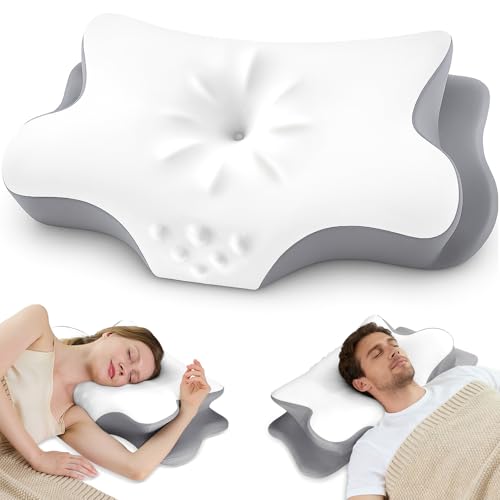
VYLEE Cervical Neck Pillow, Memory Foam Contour Pillow (Grey), Ergonomic Dual-Height Neck Support
The VYLEE pillow answers the fit problem in a different way from the adjustable model above. Its dual-height design means the two long edges of the contour are not the same height. Turn the pillow one way and the higher edge supports your neck. Turn it around and the lower edge does. Two lofts, one pillow, no inserts to store and nothing to assemble at bedtime. For a recovering patient, that simplicity has a genuine advantage: changing height is a ten-second rotation you can do sitting on the edge of the bed, rather than a project involving zips and spare foam pieces.
Dual height maps neatly onto the two positions most people alternate between after ACDF. A lower edge often suits back sleeping, where the distance to fill behind the neck is modest. A higher edge often suits side sleeping, where the pillow must fill the wider gap created by the shoulder. We say often rather than always, because shoulder width, mattress softness, and collar use all shift the answer, and the only reliable check is lying on the pillow on your own bed. But having both edges available means the experiment costs nothing, and many people find that one edge clearly feels neutral while the other clearly does not, which is exactly the information they needed.
best 4 extra firm king pillows
Cervical Neck Pillow for Pain Relief, Ergonomic Memory Foam Pillow for Side Sleeper Contour Orthopedic Bed Pillow
This pillow is the one in the group that names the side sleeper directly in its title, so it deserves an honest discussion of side sleeping after ACDF rather than a simple recommendation. Side sleeping is not automatically forbidden after this surgery, but it is the position with the most conditions attached. Your surgeon may allow it from a certain point, may want you to keep a collar on for it, or may want you on your back for longer. Ask specifically. A pillow marketed for side sleepers does not change that medical timeline. What it can do, once side sleeping is permitted for you, is fill the shoulder gap properly so the neck stays in line with the spine instead of sagging toward the mattress.
The relevant design ideas are the contour and the orthopedic shaping. On your side, support needs to be firm enough at the edge that your head does not slowly sink and bend the neck as the night goes on, which is a common failure of soft conventional pillows. Memory foam’s slow, even compression is well suited to holding that height. Many side sleepers also find that what they do with the rest of the body matters as much as the pillow itself: a pillow between the knees keeps the hips level, and hugging a pillow can stop the top shoulder from rolling forward and dragging the neck with it. Those are general comfort arrangements to discuss with your therapist, who can look at your whole sleep posture rather than just the pillow under your head.
AOSSA Neck Stabilizer Pillow for Sleeping, Face Up Triangle Wedge for Head and Neck Positioning, Post Surgery
The AOSSA product is the specialist in this lineup. It is a neck stabilizer in the form of a face-up triangle wedge, described for head and neck positioning and for post-surgery use. Where the contour pillows above are general bed pillows with supportive shapes, this is a positioning device first. Lying face up on a triangular wedge shape places the head and neck in a defined cradle and makes turning the head to either side a more deliberate movement, which is precisely what some discharge instructions ask for and what some sleepers cannot manage on a flat pillow, because the moment they fall asleep their head rolls to the familiar old angle.
Think about who that helps. If you wake repeatedly with your head turned sharply, your chin dropped, or your collar, if you wear one, shifted out of place, a stabilizer addresses the actual problem, which is drift during unconscious hours. If, by contrast, your head stays where you put it and your discomfort is about height or pressure, a stabilizer’s firmer, more structured feel may be more apparatus than you need, and a contour pillow will likely be the more comfortable nightly choice. Neither answer is a failure. They are different tools, and naming your main problem honestly is the fastest way to pick between them.
A stabilizer also raises a question worth taking to your follow-up appointment: how it sits alongside a cervical collar, if a collar is part of your recovery. Any positioning aid that contacts the neck should be checked against your collar instructions, because the collar’s job and the wedge’s job overlap in the same small area. Bring the product name or a photo to the appointment and ask directly. Surgeons and therapists would much rather approve or rule out a specific item in advance than troubleshoot a sore, poorly rested patient weeks later. Used with that clearance, the AOSSA wedge is the most purpose-built option here for the strict back-sleeping phase.
Yojoker 4PCS Orthopedic Bed Wedge Pillow Set for Sleeping, Post Surgery Foam Pillow for Body, Back and Leg
The Yojoker set moves the discussion from the neck alone to the whole bed. It is a four-piece orthopedic wedge set in foam, described for post-surgery use and for supporting the body, back, and legs. In a typical arrangement, the largest wedge goes behind the back and creates an incline for the upper body. A smaller piece supports the head and neck area at the top of that incline. The remaining pieces go under the knees or lower legs, which takes tension out of the lower back and stops you sliding slowly down the slope during the night, a real and underrated problem with single wedges used alone.
Sleeping on an incline suits some ACDF recoveries well in the early period. Getting up from flat can be an awkward, neck-straining maneuver in the first days, and starting from a raised position makes the log-roll to the edge of the bed and the push up through the arms easier to control. Some people also simply breathe and swallow more comfortably slightly raised while the front of the throat is still sore. None of that makes incline sleeping mandatory, and the angle and duration are again matters for your own team’s advice. But if you already know flat sleeping is miserable for you, a set that inclines the whole torso is a more coherent answer than stacking three ordinary pillows, which bend the neck while leaving the back flat, the opposite of what you want.
4PCS Orthopedic Bed Wedge Pillow Set for Sleeping, Post Surgery Foam Support Pillows for Back, Neck and Leg
The second wedge set in this guide is, in concept, the same kind of product as the Yojoker set above, and we want to be straightforward about that rather than invent differences. It is also a four-piece orthopedic bed wedge set in foam, also described for post-surgery sleeping, and also intended to support the back, neck, and legs in combination. Two brands offering a similar four-piece arrangement is normal in this category, and for the shopper the practical implication is simple: you are choosing between two versions of one idea, not between two different ideas.
Whichever set you choose, setup technique matters more than brand. Build the incline so the wedge supports your back from the hips upward, with no gap at the lower back for you to slump into. Place the head and neck piece so your neck stays in line with your inclined torso rather than flexing forward off the top of the slope, which is the most common wedge mistake and an easy one to make when tired. Put a piece under the knees before you settle, not after. Then test the whole arrangement for a short daytime rest before committing a full night to it, so adjustments happen while you are alert and help is nearby.
How to Choose: The Criteria That Actually Matter
Loft and neutral alignment come first
Every other feature in this guide is secondary to one test: lying in your prescribed position, does the pillow hold your head and neck in a neutral line without effort from you? Effort is the key word. If you have to tense your shoulders, tuck your chin deliberately, or stack a folded towel on top to make a pillow work, it does not fit, whatever its label says. Judge fit on your own mattress, because a soft mattress lets your shoulders sink and effectively lowers the pillow height you need, while a firm mattress does the opposite. Judge it wearing your collar if you sleep in one, because the collar changes the space behind your neck. And judge it in the morning as well as at bedtime, since a pillow that feels fine for five minutes can reveal itself over six hours.
Dual-height and adjustable designs reduce risk
If you cannot test pillows in person, and most recovering patients cannot, choose the design that gives you more than one height. That is the practical argument for the adjustable pillow and the dual-height VYLEE contour in this group. They convert a single guess into two or three chances, across a recovery in which the right answer may itself change. A fixed-height contour like the ComRola or the side-sleeper model can be an excellent fit, but it is one fit, so measure your current setup first. A simple method is to lie on your current pillow in your sleep position and note whether your head tips up, drops down, or sits level, then choose and set your new pillow to correct that specific fault rather than shopping in the abstract.
Back sleeping, side sleeping, and being honest about both
Match the pillow to the position you are actually cleared for now, not the position you hope to return to eventually, while keeping the future in mind if the budget allows. Strictly back sleeping for now points toward the contour pillows used on their back-sleeping edge, the centered hollow of the Osteo, or, if drift is your problem, the AOSSA stabilizer. Cleared side sleeping points toward a higher, supportive contour edge and the side-sleeper design. Inclined back sleeping points toward the wedge sets, with a contour or head piece at the top of the slope. Many households end up with a small rotation, a wedge arrangement for the earliest phase and a contour pillow for the longer phase after it, and there is nothing wasteful about that if each piece is used for the weeks it suits.
Collar compatibility and incision comfort
If you were discharged in a cervical collar, treat the collar and the pillow as one system. The pillow must not push the collar up into your jaw, tilt it, or create a pressure point where the collar’s edge meets foam. Soft contours can sometimes accommodate a collar more forgivingly than firm wedges, while a stabilizer needs the explicit check we described earlier. Also consider the front of your neck. The incision is at the front, so nothing in a normal pillow arrangement should press on it directly, but high bedding, tight top sheets, and pillows that flex the chin down can all increase front-of-neck discomfort indirectly. If a setup leaves you aware of the incision all night, change the setup and mention it at your next appointment.
Heat, odor, and the realities of foam
Memory foam’s strengths are pressure distribution and shape retention. Its known weaknesses are warmth and new-foam smell. After surgery, both weaknesses loom larger, because you may be sleeping in a collar, spending far more hours in bed than usual, and feeling generally more sensitive. That is why the cooling cases and odorless claims in several titles in this guide are worth weighting more heavily than you normally would. Air any new foam pillow out before first use, use the case or cover provided, and follow the maker’s care instructions, which for memory foam typically means spot-cleaning the foam itself and washing the removable cover rather than soaking the foam.
Setting Up the Bed for the First Weeks
A good pillow can be undone by a chaotic bed, so spend one daytime session, ideally with help, arranging the whole sleep station before you need it at midnight. Put the pillow or wedge arrangement in its final position and rehearse the route in and out of bed while you are alert. Many surgical teams teach a log-roll technique: roll as one unit onto your side, lower your legs over the edge as you push up through your arms, and keep the neck in line throughout rather than sitting straight up with the neck flexed. Practice makes that sequence far less daunting at three in the morning. Keep the path to the bathroom clear, put water, medication, and your phone within reach of the bed so you are not twisting to a distant nightstand, and consider a small night light so a half-asleep trip does not become a fall risk.
Frequently Asked Questions
Can a pillow replace my cervical collar at night?
No. A pillow, wedge, or stabilizer is bedding, not a medical device prescribed to you, and it cannot substitute for a collar your surgeon has told you to wear, including during sleep. If the collar is disturbing your sleep badly, raise that with your surgical team, who can check its fit or revisit the instruction. Do not swap the collar for a firmer pillow on your own judgment.
How high should my pillow be after ACDF?
High enough that, in your cleared sleep position, your forehead and chin are roughly level, the curve behind your neck is filled with support, and your shoulders remain on the mattress. That height is different for every body and mattress, which is why dual-height and adjustable pillows are so practical in this situation. If you are unsure whether your setup is neutral, ask your therapist to review a side-on photo of you lying on it.
Is it better to sleep flat or on an incline after ACDF?
Both are used, and neither is universally better. An incline, such as the four-piece wedge sets in this guide provide, can make getting in and out of bed easier and can feel more comfortable while the front of the throat is sore. Flat back sleeping on a contour pillow suits many people and takes less space. Follow any specific instruction your team gave you, and otherwise choose the arrangement in which you can keep neutral alignment most consistently through the night.
When can I go back to side sleeping?
Only your surgical team can answer that for your case, because it depends on your fusion, your collar plan, and your progress. Ask the question directly at follow-up rather than inferring an answer from how good you feel, and when side sleeping is cleared, use a contour with enough height to fill the shoulder gap so your neck does not bend toward the bed.
Why does memory foam get mentioned so often for neck pillows?
Because of how it behaves under load. Memory foam softens with warmth, spreads pressure over a wider area, holds a molded contour such as a neck ridge or a head hollow through the night, and returns to shape afterward. Those traits suit cervical pillow design. Its drawbacks are warmth and new-foam odor, so cooling cases and odorless formulations, both of which appear in this guide, are sensible things to look for.
What should I do if I keep waking up with my head turned?
Mention it to your care team, especially if you were told to stay face up. In bedding terms, a centered hollow design can gently discourage drift, and the AOSSA face-up stabilizer wedge is designed specifically for head and neck positioning after surgery. Neither replaces medical advice about position, and a stabilizer used alongside a collar should be cleared with your team first.
Can I use one of these pillows long term, after recovery?
Contour cervical pillows are ordinary bed pillows with supportive shapes, and many people keep using the one that fit them well long after the recovery period ends. Wedge sets and stabilizers are more specialized and often return to the cupboard once flat, unrestricted sleeping resumes, though some people keep a wedge set for reading or for nights when reflux or congestion makes an incline welcome. Follow your team’s guidance on when restrictions end.
Check prices on Amazon
Live listings for the shortlist in this guide are pulled from Amazon below, so prices and availability are always current at the moment you look.


Our Closing Take
If we had to reduce this guide to a shopping order, it would be this. Start with alignment, not branding: pick the shape that matches the position your surgeon has cleared and the problem you actually have at night. Choose a contour memory foam pillow if your problem is height and pressure, and favor the adjustable model or the dual-height VYLEE if you are unsure of your height or expect it to change as a collar comes off. Consider the Osteo’s hollow center if you drift off-center, and the side-sleeper contour when, and only when, side sleeping is cleared for you. Look at the AOSSA stabilizer if staying face up is the specific challenge, and at one of the two similar four-piece wedge sets if inclined, supported sleep for the whole body is what the early weeks call for. Then check the setup on your own bed, in daylight, with help, and take any remaining doubts to the people who performed your surgery. A pillow cannot heal a fusion. It can give you aligned, repeatable, genuinely restful nights while healing happens, and after ACDF that is a contribution worth choosing carefully.
Disclosure: As an Amazon Associate we earn from qualifying purchases. This article contains affiliate links, and if you buy through them we may earn a commission at no additional cost to you. Our research for this guide was based on product listings, manufacturer descriptions, and general information about cervical pillow design; inclusion here is not a medical endorsement, and this content is educational only and is not a substitute for advice from your own surgical team.