Our Top Picks
 Marineland Bio-Wheel Penguin 200 GPH Power Aquarium FilterUp to 40 gallons9.5 x 6.25 x 8 inches2.3 poundsCheck on Amazon
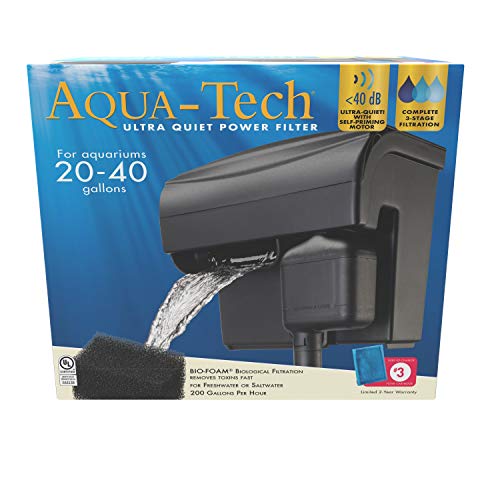 Aqua-Tech Ultra Quiet Power Filter For Aquariums20 to 40 Gallon (Pack of 1)9.25 x 6 x 8.5 inchesCheck on Amazon
 Tetra Whisper 200 GPH Internal Power Aquarium Filter20 - 40 Gallons5.85 x 5.09 x 10.29 inches1.5 poundsCheck on Amazon


What's inside
- How Filter Sizing Works for a 40 Gallon Tank
- The Three Stages of Filtration, Explained Simply
- Hang-On-Back vs Internal Filters for This Tank Size
- The Eight Filters, One by One
- Matching a Filter to Your Stocking and Room
- Setting Up Your New Filter, Step by Step
- Maintenance That Keeps Flow and Bacteria Healthy
- Noise, Flow Problems, and Simple Fixes
- Frequently Asked Questions
- Disclosure
- Check prices on Amazon
- The Bottom Line
As an Amazon Associate I earn from qualifying purchases. This post may contain affiliate links at no extra cost to you.
A 40 gallon aquarium sits in a sweet spot. It is large enough for a real community of fish, a school that actually behaves like a school, and aquascaping with some depth to it, yet it still fits on a sturdy stand in a living room, bedroom, or home office without taking over the space. That balance only holds, though, when the water stays clear, stable, and safe, and that job belongs almost entirely to the filter. Choosing the best 40 gallon fish tank filter is less about chasing the biggest number on a box and more about matching flow, filtration stages, and format to the way your tank is stocked and where it lives.
This guide walks through eight filters that genuinely fit a 40 gallon setup: seven hang-on-back power filters and one space-saving internal model. Seven of them are rated by their makers for tanks in the 20 to 50 gallon range, which is exactly the band a 40 gallon aquarium falls into, and one is a 60 gallon model included deliberately as an oversize option for heavily stocked tanks. Along the way we explain how gallons per hour ratings work, what mechanical, chemical, and biological filtration each do, how the nitrogen cycle depends on your filter media, and how to keep whichever model you choose running quietly and reliably for years.
Every filter below was selected because its stated tank range covers 40 gallons and because it offers something distinct: a particular flow rate, a different take on biological filtration, an internal format for tight spaces, adjustable flow for gentle swimmers, or extra capacity for a crowded tank. Read the sizing sections first if you are new to the hobby, or skip straight to the individual filter profiles if you already know you want a hang-on-back unit and simply need to narrow the field.
How Filter Sizing Works for a 40 Gallon Tank
Filter packaging leads with two numbers: a tank-size range and a flow rate in gallons per hour, usually shortened to GPH. The tank range is the manufacturer’s guidance for the aquarium sizes the unit is built to serve. For a 40 gallon tank, the natural matches in this guide are the models rated up to 40 gallons, up to 45 gallons, or across a range such as 20 to 50 gallons or 30 to 50 gallons. A filter rated for up to 60 gallons also works, and many keepers prefer that headroom, but it is an oversize choice rather than the baseline, and the sections below treat it that way.
Flow rate describes how much water the pump moves through the filter in an hour when conditions are ideal. A common rule of thumb in the hobby is to turn the tank volume over several times per hour, which for a 40 gallon aquarium points toward filters in roughly the 200 GPH class and upward. The filters in this guide span 200 GPH to 317 GPH in their stated ratings, which is why they cluster so well around this tank size. Higher flow is not automatically better, though. Real-world flow drops as media loads with debris, and some fish, shrimp, and plants prefer gentle current. That is why adjustable flow, offered on two models here, can matter as much as the headline GPH figure.
Stocking changes the equation more than tank dimensions do. A lightly stocked 40 gallon with a small school of tetras and some plants produces far less waste than a 40 gallon breeder full of goldfish or a busy cichlid community. Waste becomes ammonia, ammonia feeds the workload of your biological media, and the filter has to process the full volume steadily to keep up. If your stocking plan leans heavy, choosing a model at the upper end of the range, or the oversize 60 gallon option, gives your beneficial bacteria more media space and your water more passes through that media each hour.
Tank shape matters a little too. A standard 40 gallon breeder is wider and shallower than a tall 40 gallon, so circulation patterns differ. Hang-on-back filters return water at one end of the tank, and in a long, shallow aquarium that return current travels well. In a tall tank, an internal filter positioned thoughtfully can help move water in a corner a hang-on-back return does not reach. None of this changes which filters qualify for the size, but it can tip a close decision between two otherwise suitable models.
The Three Stages of Filtration, Explained Simply
Mechanical filtration
Mechanical filtration is the strainer stage. Water passes through a pad, floss, sponge, or cartridge that physically traps uneaten food, fish waste, plant fragments, and the fine particles that make water look cloudy. It is the stage you can see working, and it is the stage that clogs first. When mechanical media clogs, flow slows, water may bypass the media entirely, and the trapped debris keeps breaking down inside the filter. Rinsing or replacing this stage on schedule is the single most frequent maintenance task on any of the filters in this guide, whether the maker describes the system as multi-stage, 3-stage, or 4-stage filtration.
Chemical filtration
Chemical filtration uses media, most often activated carbon inside a cartridge, to adsorb dissolved compounds that mechanical media cannot catch: the yellow tint that builds up in aquarium water, odors, and residues from medications after a treatment course ends. Not every keeper runs chemical media all the time. Planted-tank keepers sometimes skip it, and it should always come out while medication is in the water, since carbon would remove the medicine before it can work. The Fluval AquaClear 50 in this guide explicitly lists chemical filtration alongside mechanical and biological stages, and cartridge-based systems generally include a carbon element inside the cartridge itself.
Biological filtration
Biological filtration is the stage that keeps fish alive. Beneficial bacteria colonize porous media surfaces and convert toxic ammonia, produced by fish waste and decaying food, into nitrite, and then into far less harmful nitrate. This is the nitrogen cycle, and in a running aquarium most of it happens inside the filter, where oxygen-rich water constantly flows over the bacteria. Several filters here call out biological filtration directly in their names and descriptions: the Aqua-Tech filter highlights biological filtration that removes toxins fast, the hygger model pairs biological filtration with its 4-stage design, and the Marineland Penguin is built around its Bio-Wheel, a rotating wheel that gives bacteria a large, well-oxygenated surface to colonize.
The practical lesson of the nitrogen cycle is simple: never replace or scrub all of your biological media at once, and never rinse it under hot tap water. When you maintain the filter, swish biological media gently in a bucket of water you have just removed from the tank during a water change. That keeps the bacterial colony intact while clearing the sludge that slows flow. A cycled filter is a living thing, and treating the media with a little respect is what keeps a 40 gallon tank stable through stocking changes, holidays, and the occasional overfeeding.
Hang-On-Back vs Internal Filters for This Tank Size
Seven of the eight filters in this guide are hang-on-back models, often shortened to HOB. The motor and media box sit outside the back glass, an intake tube dips into the tank, and filtered water cascades back over a spillway. The advantages are real: the media box is easy to reach without wet hands in the tank, the equipment takes almost no swimming space, and servicing a cartridge or tray takes minutes. The trade-offs are a visible box behind the tank, a return splash that can be audible if the water level drops, and the need for a few inches of clearance between the tank and the wall.
The one internal filter here, the Tetra Whisper Internal Power Filter, flips that arrangement. The whole unit clips on inside the tank, submerged, which makes it exceptionally quiet in operation since the water itself muffles the pump, and it needs no space behind the aquarium at all. That suits a tank pushed close to a wall, a setup in a child’s room where external plumbing invites curious fingers, or a stand with no rear access. The cost is a little in-tank real estate and slightly wetter maintenance, since the unit comes out of the water for media changes. For a 40 gallon tank, either format can do the job well; the choice is about your room, your stand, and your tolerance for splashing sounds.
Noise deserves its own word, because a 40 gallon tank often lives where people relax or sleep. Nearly every model in this guide is described by its maker as quiet or ultra-quiet, and in practice most filter noise comes not from the motor but from installation details: a return stream falling too far into low water, a lid vibrating against the box, or an intake strainer partly blocked so the pump strains. Keeping the tank water level topped up, seating lids firmly, and cleaning intake strainers during routine maintenance does more for silence than any specification can.
The Eight Filters, One by One
Tetra Whisper IQ Power Filter, 215 GPH, for tanks up to 45 gallons
The Tetra Whisper IQ rated at 215 GPH and sized for fish tanks up to 45 gallons is about as direct a match for a 40 gallon aquarium as this category offers. The 45 gallon ceiling means a 40 gallon tank sits comfortably inside its intended range rather than at the very edge of it, and the 215 GPH flow gives a full tank turnover pace that suits a typical community stocking. Tetra describes the Whisper IQ line as whisper quiet and suitable for freshwater or marine fish, so the same unit can follow you if a freshwater setup later becomes a small saltwater project.
The feature Tetra highlights for this line is Stay Clean Technology, which the maker associates with healthy pH levels. Stable pH is one of those unglamorous water parameters that matters enormously over months: fish tolerate a steady pH far better than a swinging one, and anything in the filter design that supports stability is welcome in a tank that will run for years. In daily use, expect the familiar hang-on-back routine: an intake drawing water up into the media box, cartridges doing the trapping work, and a quiet return over the spillway. For a first 40 gallon tank, or a straightforward community setup where you want a recognized name and a rating that lands right on your tank size, this is a sensible default choice.
Marineland Bio-Wheel Penguin Power Filter, 200 GPH, for aquariums up to 40 gallons
The Marineland Bio-Wheel Penguin is a hang-on-back filter rated at 200 GPH for aquariums up to 40 gallons, so a 40 gallon tank is exactly its stated maximum. Marineland describes it as ultra-quiet with multi-stage filtration, but the defining feature is in the name: the Bio-Wheel. As filtered water returns to the tank, it turns a pleated wheel that is continually wetted and exposed to air. That combination of moisture and oxygen is ideal habitat for the beneficial bacteria of the nitrogen cycle, which is why the Bio-Wheel concept has such a loyal following among keepers who prioritize biological capacity.
In practice, the wheel also acts as a simple visual indicator. A wheel that turns steadily tells you flow is moving; a wheel that slows or stalls tells you the cartridge is loading up or the intake needs attention, often before the water itself shows any change. The multi-stage system handles the mechanical and chemical work in the media box while the wheel carries much of the biological load, a division of labor that makes maintenance forgiving: changing a cartridge does not remove the bacteria living on the wheel. If your 40 gallon holds a moderately heavy stocking and you like the idea of biological filtration you can literally watch working, the Penguin earns its place on this list.
Aqua-Tech Ultra Quiet Power Filter, for 20 to 40 gallon aquariums
The Aqua-Tech Ultra Quiet Power Filter is sized for aquariums from 20 to 40 gallons, placing a 40 gallon tank at the top of its range, and it is built for freshwater or marine fish. Aqua-Tech leads with two claims: ultra quiet operation, and biological filtration that removes toxins fast. That second point speaks directly to the nitrogen cycle. In a newly stocked tank, or after you add a group of fish at once, ammonia production rises before bacterial colonies expand to meet it; a filter designed around fast biological processing is aimed squarely at smoothing out those transitions.
Because a 40 gallon sits at this filter’s ceiling rather than in the middle of its range, it fits best with sensible stocking: a community tank, a planted setup, or a species group of modest size rather than a maximal crowd. Within that brief it is an appealing, simple hang-on-back unit for keepers who want quiet running in a bedroom or office and who value biological performance over raw flow numbers. Pair it with disciplined feeding and regular partial water changes, and it will keep a sensibly stocked 40 gallon in good shape.
Fluval AquaClear 50 Power Filter, for 20 to 50 gallons
The Fluval AquaClear 50, identified as the older model A610, covers tanks from 20 to 50 gallons and is the most explicitly complete filtration package in this guide. Fluval lists all three stages by name: mechanical, chemical, and biological filtration, in a quiet, energy efficient pump design that the maker describes as easy to install and maintain. The 20 to 50 gallon range puts a 40 gallon aquarium in the comfortable middle, with headroom above for heavier stocking and no sense that the filter is straining at its limit.
The AquaClear design philosophy differs from sealed-cartridge systems. The media sits in an open basket in distinct layers, so you can rinse the mechanical sponge, refresh the chemical media, and leave the biological media untouched, each on its own schedule. That separation is exactly what good nitrogen-cycle practice calls for, and it also reduces waste, since you replace one component at a time instead of discarding a whole cartridge. For keepers who enjoy a degree of control over their media, who run planted tanks and may want to adjust the chemical stage, or who simply prefer maintaining components rather than swapping cartridges, the AquaClear 50 is the enthusiast’s pick of this group.
Tetra Whisper Internal Power Filter, 200 GPH, for aquariums up to 40 gallons
The Tetra Whisper Internal Power Filter is the different-format option here: a 200 GPH internal unit with 3-stage filtration, rated for aquariums up to 40 gallons, that clips on inside the tank rather than hanging on the back. Tetra describes it as whisper quiet and space-saving, and both claims follow naturally from the design. A submerged pump is muffled by the water around it, and a tank can sit nearly flush to the wall because there is no external media box behind the glass.
That makes this filter the natural answer for specific rooms: a 40 gallon on a stand with no rear clearance, a setup in a rental where you cannot easily shift a filled tank to reach behind it, or a quarantine and hospital tank that needs competent filtration without extra furniture space. The 3-stage system still covers mechanical, chemical, and biological duties, so you are not trading water quality for the compact format. Maintenance means lifting the unit from the tank, so keep a small towel and a bucket in the routine. For the right room, this is not a compromise pick at all; it is the only style that fits, and it happens to filter properly too.
AQQA Quiet Hang on Back Aquarium Filter, for 30 to 50 gallons, 200 GPH
The AQQA Quiet Hang on Back Aquarium Filter is built for 30 to 50 gallon tanks, runs at 8W with a stated 200 GPH flow, and adds two conveniences that experienced keepers appreciate: adjustable flow and an auto start function. Adjustable flow lets you tune the current to the inhabitants, stronger for active community fish that enjoy movement, gentler for long-finned varieties, fry, or a planted corner you do not want flattened. Auto start matters after power cuts: a filter that restarts itself reliably when electricity returns protects the tank during outages that happen while you are at work or away for a weekend.
AQQA positions this model for freshwater aquariums and describes it as easy to install with powerful filtration. The 30 to 50 gallon band is well judged for a 40 gallon tank, leaving margin on both sides. If your household experiences the occasional flickering power supply, or your stocking mixes fish with different flow preferences in different zones of the tank, the combination of adjustability and self-restarting behavior makes this a very practical hang-on-back choice.
hygger Quiet Hang-On-Back Aquarium Filter, 4-stage, for 20 to 40 gallons, 317 GPH
The hygger Quiet Hang-On-Back Aquarium Filter posts the highest stated flow in this guide at 317 GPH, runs at 12W with adjustable flow, and is sized for 20 to 40 gallon tanks. Its 4-stage filtration adds an extra stage beyond the usual three, and the design uses detachable trays, so each stage can be lifted out, rinsed, or refreshed independently. Biological filtration is part of the stated design, and hygger names planted, shrimp, and goldfish tanks among its intended uses, three setups with quite different needs that all benefit from strong, organized media capacity.
The flow figure deserves context. At 317 GPH, this unit turns a 40 gallon tank over rapidly, which suits goldfish and other messy stockings that produce waste at a pace gentler filters struggle with, and the adjustable flow lets you dial that pace back for shrimp or delicate plants. Detachable trays make the higher maintenance tempo of a messy tank less of a chore, because the mechanical stage comes out on its own without disturbing the biological trays beneath. If your 40 gallon leans heavily stocked, or you keep fish famous for their appetites, this is the high-capacity hang-on-back to look at first.
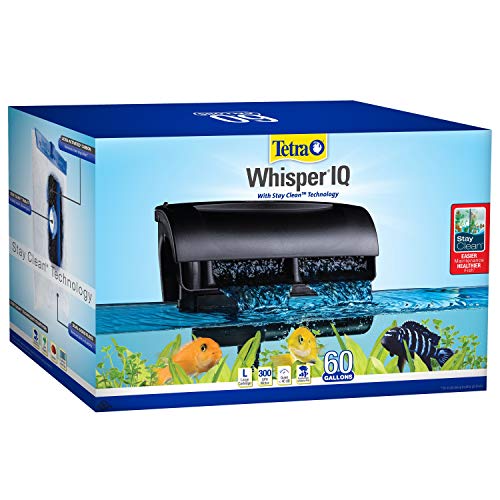
Tetra Whisper IQ Power Filter, 300 GPH, for tanks up to 60 gallons: the oversize option
The second Tetra Whisper IQ in this guide is the 300 GPH model rated for fish tanks up to 60 gallons, and it is here on purpose as the oversize option. Fitting a 60 gallon filter to a 40 gallon tank is a long-standing keeper strategy for heavily stocked aquariums: more flow, more media volume, and more bacterial surface than the tank strictly requires, so the system coasts through feeding accidents, new additions, and holiday care by a neighbor. Like its 45 gallon sibling, it is described as whisper quiet, works for freshwater or marine fish, and carries the line’s Stay Clean Technology associated with healthy pH levels.
Oversizing has limits worth respecting. Stronger return current can push around small or long-finned fish, and a big filter cannot substitute for water changes; nitrate still leaves the tank mainly through the siphon hose. But for a crowded community, a goldfish setup in a 40 gallon footprint, or a keeper who simply prefers generous margins, stepping up to this 60 gallon model is a rational, popular move. Think of it as buying capacity you may grow into rather than power you must use at full tilt every day.
Matching a Filter to Your Stocking and Room
With eight capable filters on the table, the decision becomes personal. Start with stocking. A peaceful community of small schooling fish, a few bottom dwellers, and live plants asks for steady, moderate filtration: the Tetra Whisper IQ for up to 45 gallons, the Marineland Penguin, or the Aqua-Tech all fit that life well. A tank built around goldfish, larger cichlids, or a generous headcount asks for capacity and media volume: the hygger at 317 GPH, the AquaClear 50 with its layered basket, or the oversize Tetra Whisper IQ for 60 gallons answer that brief. A breeding or fry tank, or a betta in a divided setup, asks for gentleness, which points to the adjustable flow on the AQQA and hygger models, turned down to a calm return.
Then consider the room. A tank in a bedroom or study rewards the quietest installation you can manage, and any of these models can run quietly if the water level is kept high and lids are seated well; the internal Tetra removes motor sound from the equation almost entirely by working underwater. A tank against a wall with no rear access points to that same internal filter. A tank on a stand you can walk behind makes hang-on-back maintenance at its easiest, and cartridge or tray changes become a two-minute job. Renters who cannot risk a drip behind furniture often prefer internal units for the simple reason that all the water stays inside the glass.
Cleaning around the tank matters more than people expect, because a healthy aquarium still sheds water, algae, and debris during routine care, and pairing your filter choice with a good gravel routine using best aqua vacuums keeps the substrate from becoming a hidden source of waste between water changes. The filter handles what floats; the siphon handles what settles, and a 40 gallon tank stays at its best when both jobs are done on schedule.
Think about the wider room environment too. Many fish rooms and living rooms are shared with other pets, and the same household habits that keep a tank stable, like managing airborne hair and dander with best air purifiers for home with pets, also reduce the dust and fluff that would otherwise settle on the water surface and end up in your mechanical media. Small environmental wins compound: cleaner room air means slower-clogging filter pads, and slower-clogging pads mean steadier flow week after week.
Setting Up Your New Filter, Step by Step
Setup begins before the box opens. Decide where the filter will sit: hang-on-back units usually ride the back glass, positioned so the intake reaches well below the surface and the return does not fight the output of any other equipment. Rinse all media in clean, dechlorinated water before installation. New cartridges and sponges carry manufacturing dust, and a thorough rinse keeps that dust out of your tank and prevents a cloudy first day that looks like a problem but is only residue.
If the tank is already running with fish, never swap filters abruptly. The old filter holds your bacterial colony, and removing it entirely can restart the nitrogen cycle in a stocked tank, which is the classic route to ammonia spikes. Run the new filter alongside the old one for a few weeks if space allows, or move some seasoned media from the old unit into the new one to seed it. On cartridge systems, even tucking a piece of the old pad beside the new cartridge transfers a meaningful colony. Patience during this overlap is the difference between an invisible upgrade and a stressful fortnight of water changes.
Prime and start the filter according to its design. Many hang-on-back units need their media box filled with tank water before the pump will draw properly, and an internal filter simply needs to be fully submerged and clipped securely. Watch the first minutes closely: confirm the intake is drawing, the return is flowing, and no fitting is weeping water down the back glass. Then check again an hour later, and again the next morning. Most leaks and stalls announce themselves early, and catching a slow drip on day one is a trivial fix compared with finding it on day ten.
After baths, water changes, and the occasional splashed cleanup, you will want something reliable within reach for wet hands and drips, and many keepers keep a stack from a guide like best absorbent dog towels beside the stand because those towels handle aquarium spills just as happily as muddy paws. It sounds like a small detail until the first time a return hose slips mid-water-change; then it becomes the most important item in the room.
Maintenance That Keeps Flow and Bacteria Healthy
Every filter in this guide settles into the same rhythm once installed. The mechanical stage needs the most frequent attention: rinse pads and floss when you see flow soften or the media darkens, which in a typical 40 gallon community tank lands somewhere in the every-few-weeks range. Rinse in removed tank water when the pad also hosts bacteria you want to keep, or under the tap for purely mechanical pads you intend to replace soon after. Cartridges that combine stages get replaced on the maker’s cadence, but stagger any change so it never coincides with a deep gravel cleaning or a big restocking; changing one variable at a time keeps the nitrogen cycle boring, and boring is good.
Biological media should be disturbed as little as possible. A gentle swish in a bucket of tank water during a water change, a few times a year, is enough. The Bio-Wheel on the Marineland Penguin should never be scrubbed or replaced as a routine; if it turns unevenly, check first for a clogged cartridge or a low water level rather than blaming the wheel. Tray systems like the hygger’s make this discipline easy, because the biological trays lift out separately from the mechanical tray that needs the frequent rinsing. Basket systems like the AquaClear reward the same separation. The design of your filter either helps or hinders good habits, which is worth weighing if you know your own maintenance style.
Do not forget the hardware itself. Intake strainers clog with plant leaves and debris and are the most common hidden cause of falling flow. Impellers accumulate grit and benefit from a gentle clean a few times a year; a pump that rattles after months of silence is usually asking for exactly that. Keep the water level in the tank topped up between changes, because a falling level makes hang-on-back returns splash, adds noise, and can expose return streams to air in ways that stress the pump. Evaporation top-offs with dechlorinated water take two minutes and quietly prevent half the complaints people have about their filters.
The floor around a 40 gallon stand deserves a thought in the maintenance plan as well, since drips during media changes are inevitable over years of ownership, and a washable surface chosen with help from best dog friendly rugs shrugs off the occasional splash far better than a delicate carpet does. Protecting the room is part of protecting the tank: a keeper who is not worried about the floor does water changes on time instead of postponing them.
Noise, Flow Problems, and Simple Fixes
Most filter complaints trace back to a short list of causes. A new rattle or hum usually means a lid or cover is vibrating, an impeller has picked up grit, or the unit is not seated level on the glass. A return that suddenly sounds like a waterfall means the tank water level has dropped; top it up before investigating anything else. Weak flow almost always means loaded mechanical media or a blocked intake strainer, in that order. Gurgling in a hang-on-back often means the intake is drawing air at a joint above the waterline, which a firm reseat of the tube sections fixes.
Cloudy water has its own logic. White cloudiness in a new or recently disturbed tank is typically a bacterial bloom, the nitrogen cycle rebalancing itself, and it resolves with time, light feeding, and restraint; changing all the media in a panic makes it worse. Green water is an algae bloom fed by light and nutrients, answered by checking light duration and feeding rather than the filter alone. Debris cloudiness after a big clean is mechanical and clears as the pads catch up. In each case the filter is part of the system, not a magic box, and the calm response is to identify which kind of cloud you are looking at before changing anything.
Fish behavior is your early warning system. Fish lingering at the surface, rapid gill movement, or a sudden loss of appetite across the whole tank all say check the water now: confirm the filter is running, confirm flow is normal, and check ammonia and nitrite with a liquid kit. A filter that stopped overnight is an emergency with a simple shape: restore filtration and aeration first, then partial water changes to dilute whatever built up. This is also where the AQQA’s auto start feature earns quiet appreciation, because the most dangerous filter failure is the one nobody notices for a day.
Frequently Asked Questions
Can I use a 60 gallon filter on a 40 gallon tank?
Yes, and the Tetra Whisper IQ rated for up to 60 gallons is included in this guide for exactly that reason. Oversizing gives you extra media volume and flow headroom, which helps heavily stocked tanks. Watch the return current with small or long-finned fish, and remember that a bigger filter does not replace water changes, since nitrate removal still happens mostly at the siphon.
How much flow does a 40 gallon tank really need?
The filters gathered here run from 200 GPH to 317 GPH, and that span brackets what most 40 gallon setups need. Moderate community tanks do well at the lower end; messy or crowded tanks benefit from the higher end or from adjustable models you can tune. Judge by results: clear water, steady parameters, and fish that swim comfortably everywhere in the tank, not just by the number on the box.
Is an internal filter strong enough for 40 gallons?
The internal model in this guide, the Tetra Whisper, is rated at 200 GPH for aquariums up to 40 gallons with 3-stage filtration, so yes, a correctly sized internal unit handles this tank size. Internals trade a little in-tank space for silence and zero rear clearance, which is the right trade in the right room.
How often should I replace filter media?
Mechanical media gets rinsed regularly and replaced when it no longer comes clean or holds its shape. Chemical media such as carbon exhausts fastest and is commonly refreshed on a monthly rhythm when used. Biological media is the exception: it is not replaced on a schedule at all, only rinsed gently in tank water, because it houses the bacteria your tank depends on.
Freshwater or saltwater: does it change the choice?
Several models here, including both Tetra Whisper IQ units and the Aqua-Tech, are described as suitable for freshwater or marine fish. Small saltwater setups often add separate equipment such as protein skimmers, so the filter becomes one part of a larger system, but the sizing logic in this guide, matching the stated gallon range to your tank, stays the same.
Disclosure
As an Amazon Associate we earn from qualifying purchases. This guide was written to help you compare filters for a 40 gallon aquarium, and if you buy through links connected with our site, the price you pay is not increased by the commission that supports our work.
Check prices on Amazon
Live listings for the shortlist in this guide are pulled from Amazon below, so prices and availability are always current at the moment you look.

The Bottom Line
For most 40 gallon aquariums, the decision narrows quickly. Choose the Tetra Whisper IQ for up to 45 gallons or the Marineland Bio-Wheel Penguin if you want a proven hang-on-back matched squarely to this tank size, the AquaClear 50 if you want distinct mechanical, chemical, and biological media you control layer by layer, or the hygger if high flow and detachable trays suit a busy, heavily stocked setup. Pick the internal Tetra Whisper when the room demands quiet and zero rear clearance, the AQQA when adjustable flow and auto start solve real problems in your home, the Aqua-Tech for a quiet, biologically focused filter on a sensibly stocked tank, and the 60 gallon Whisper IQ when you deliberately want capacity to spare. Match the filter to your fish, your room, and your maintenance habits, keep the media schedule steady, and a 40 gallon tank will reward you with the clear, calm water that makes the whole hobby worthwhile.