What's inside
- Where to buy these picks
- Quick Picks
- How these picks were chosen
- The picks in detail
- Loft, firmness and fill: the six Dunlop pillows compared
- How to choose a Dunlop latex pillow that fits your sleep?
- Dunlop and Talalay: why the process name matters
- Covers, cases and keeping latex at its best
- Reading a latex pillow listing like an auditor
- The first fortnight: letting a latex pillow settle in
- When the pillow is not the problem
- Latex and the warm sleeper
- Pillows for two: when partners need different answers
- How firmness labels translate across this row
- A final word on returns, trials and pillow humility
- Storing the spare pillow and the winter rotation
- The pillow and the posture of the whole day
- A bedtime postscript
- Common mistakes
- Final recommendation
- Frequently asked questions
As an Amazon Associate I earn from qualifying purchases. This post may contain affiliate links at no extra cost to you.
As an Amazon Associate, cottageverdict.com earns from qualifying purchases.
The best dunlop latex pillows share a manufacturing story most listings only half tell. Dunlop is the original latex foaming process, in which liquid latex is whipped, poured into a mould and baked in one piece, producing a pillow that feels denser and springier at the base than its Talalay rivals. That density is exactly why back and side sleepers who find memory foam soggy end up here, and why choosing badly, too high, too firm, too soft for your frame, is so easy.
All six picks below are Dunlop-process latex, though they arrive at that fact differently: two state Dunlop in the main title, and four state it in the specification tail of the listing, including GOLS-certified organic versions. One pick is a blend, mixing Dunlop latex with kapok fibre, and its review says so plainly rather than letting it borrow the purity of its neighbours. Certifications are repeated only where the titles print them.
Loft and firmness decide whether a latex pillow feels like support or like a brick, so the reviews dwell on the numbers the titles actually give: a 5.5-inch profile here, a five-inch high loft there, medium and soft ratings stated by the makers. Where a title leaves a measurement out, the review notes the gap instead of filling it with a guess.
Where to buy these picks
Sleep On Latex opens with the purist’s pick: a two-zone Dunlop pillow in a standard size, medium firmness, with organic latex and an organic cotton cover under GOLS and GOTS certification.
TalatexHome follows with a lower-profile queen, its title aimed squarely at neck and shoulder pain and at buyers avoiding memory foam entirely.
Latex for Less brings a solid organic Dunlop pillow made in the USA, standard size, with a five-year warranty stated in its title.
Turmerry’s king is the soft, high-loft entry, five inches of GOLS-certified Dunlop with a pinhole design the listing aims at side sleepers.
The Organic Shredded pillow breaks the solid mould, literally: shredded Dunlop fill inside a zippered quilted cotton cover, so the loft adjusts by handfuls.
Avocado’s Green Pillow closes the row as the certified blend, Dunlop latex with kapok, adjustable, carrying GOTS, GOLS and GREENGUARD Gold in its title.
Quick Picks
| Pick | Best for | What the listing title puts up front |
|---|---|---|
| Sleep On Latex Dunlop 2-Zone Standard | Purists wanting certified organic Dunlop in a classic standard size | 2-Zone Dunlop, medium firmness, GOLS/GOTS certified organic latex |
| TalatexHome Dunlop Latex Pillow | Neck-and-shoulder sufferers who need a lower profile in queen size | Medium-low profile queen at 5.5 inches, medium firm Dunlop |
| Latex for Less Solid Organic Pillow | Buyers wanting solid organic Dunlop, made in the USA, with a warranty | Solid GOLS organic Dunlop, organic cotton cover, 5 year warranty |
| Turmerry Organic Latex Pillow King | Side sleepers wanting a soft, high-loft king with breathable pinholes | King, 5 inch high loft, soft GOLS Dunlop with pinhole design |
| Organic Shredded Latex Pillow Queen | Undecided sleepers who want to tune the loft by adding or removing fill | Shredded Dunlop fill, zippered quilted cotton cover, adjustable loft |
| Avocado Organic Green Pillow Standard | Adjustable-loft fans who accept a latex and kapok blend for top certifications | Adjustable Dunlop latex and kapok fill; GOTS, GOLS, GREENGUARD Gold |
How these picks were chosen
Dunlop verification came first, and it required reading whole titles rather than headlines. Two picks declare Dunlop in the title proper; the others declare it in their specification text, Latex for Less and Turmerry through their GOLS organic Dunlop wording, the shredded pillow through its shredded Dunlop fill, and Avocado through its latex and kapok description. Talalay-only pillows were excluded from the row entirely, as was a Dunlop mattress topper that wandered into the search results wearing the wrong product category.
Construction variety formed the second filter. Solid pillows dominate, in zoned, standard and high-loft forms, but a shredded adjustable model had to be present because it answers the loft problem differently, by letting the sleeper remove fill rather than choose correctly once. The blend pick earned its place on certifications and adjustability while being labelled a blend everywhere it appears.
Certifications were treated as title facts, not vibes. GOLS, GOTS and GREENGUARD Gold appear only beside the picks whose titles print them. A pillow with no certification in its title may still be excellent latex, and the TalatexHome review treats it on its stated merits, profile, firmness and intended sleepers, without borrowing organic language from its neighbours.
The picks in detail

Sleep On Latex Dunlop 2-Zone Standard
This is the reference pillow of the row, the one against which the others define themselves. The title stacks its credentials in order: one hundred percent Dunlop latex, a two-zone build, a cotton cover, medium firmness, organic latex under an organic cotton cover, and GOLS plus GOTS certification. The two-zone idea is the engineering worth understanding: zones of differing density let the pillow support the head’s weight and the neck’s curve with different answers, rather than forcing one firmness to do both jobs badly.
- Process: 100% Dunlop latex, 2-Zone
- Size: Standard, 1-Pack
- Firmness: Medium
- Cover: Organic cotton cover
- Certifications: GOLS/GOTS Certified, per the title
- Loft: None stated in the listing title
Strengths
- Two-zone construction varies support across the pillow instead of one uniform slab
- Organic latex and organic cotton cover are both stated, not implied
- GOLS and GOTS certification appear in the title for buyers who audit such things
Trade-offs
- Standard size only in this listing; king and queen sleepers must look elsewhere
- Medium firmness will feel unyielding to committed soft-pillow sleepers
- No loft measurement is printed, so height must be judged from the firmness class
The listing closes with a comparative claim, calling the pillow more resilient than the ordinary latex pillow. That is the maker’s framing, repeated here as a claim, but it points at something true about the Dunlop process generally: a Dunlop pillow pushes back. Sleepers arriving from memory foam notice it immediately, because the head rests on top of this pillow rather than sinking into a mould of itself. Back sleepers and combination sleepers tend to love that buoyancy; dedicated stomach sleepers often find medium firmness in any loft a negotiation. The standard size keeps the pillow compatible with existing cases, and the one-pack listing is honest about what arrives. No loft figure is printed in the title, so buyers between sizes should treat the medium rating and the zone design as the guide and expect a substantial, supportive pillow rather than a slim one.
Choose this pick if your pillow research keeps ending at certification pages. It is the row’s most documented organic Dunlop in a conventional shape, suited to a main bed rather than a guest room experiment. Sleepers who already know they need a low profile for stomach sleeping, or a king width for a wide bed, will be better served by the TalatexHome or Turmerry below, but as the straightforward certified Dunlop standard, this is the benchmark the rest of the guide measures itself against.
A note on pairing: a zoned pillow performs best on a mattress that is itself supportive, since a sagging mattress tilts the whole spine and no pillow can zone its way out of that geometry. On a sound mattress, the two-zone design’s logic shows nightly, the head cradled, the neck filled, the shoulders free. The standard size also makes this the easiest pick to gift or to trial in a guest room that later becomes the main bed’s pillow, a migration path many households follow once the sleeper reports back after a week. Certified, conventional and quietly engineered, it is the pillow this guide would hand to a sceptic who believes pillow research is overthinking.
Best for: certification-led buyers wanting a medium, two-zone, standard-size Dunlop pillow for back or combination sleeping.
Not suited for: stomach sleepers who need a genuinely low, soft pillow, and king-bed owners shopping by width.
See the price of the Sleep On Latex 2-Zone pillow on Amazon

TalatexHome Dunlop Latex Pillow
TalatexHome’s pillow is the most dimensional-honest listing in this guide: queen size spelled out as 28 by 16 by 5.5 inches, medium firm, medium-low profile. That 5.5-inch height is the story. Pillow discomfort is more often a height error than a material error, and a medium-low Dunlop profile targets the back sleeper whose tall pillow has been flexing their neck forward all night, and the slighter side sleeper for whom a high loft overshoots the shoulder gap.
- Process: Dunlop latex, 100% natural premium latex per the title
- Size: Queen, 28 x 16 x 5.5 inches
- Profile: Medium low profile
- Firmness: Medium Firm
- Positioning: Aimed at relieving pressure, neck and shoulder pain
- Certifications: None stated in the listing title
Strengths
- Full dimensions are printed, a rarity in this row: 28 by 16 by 5.5 inches
- The medium-low profile suits back sleepers whose current pillow pushes the chin down
- The title draws a clear line against memory foam for buyers avoiding it
Trade-offs
- Neck and shoulder relief is the maker’s positioning, not a medical finding
- No organic certification appears anywhere in its title
- Medium firm at a low profile may still feel dense to side sleepers wanting sink
The title aims the pillow at pressure, neck and shoulder pain, and that aim should be read as the maker’s positioning rather than a clinical promise; no pillow in this guide is a medical device. What can be said from the listing is structural: Dunlop latex at medium firmness holds its height through the night instead of collapsing by degrees, and consistent height is the mechanical half of neck comfort. The no-memory-foam wording signals the audience precisely, sleepers who dislike the slow sink and warmth of foam and want resilient natural latex instead. Certification is where this pick steps back: no GOLS or organic claim appears in its title, so buyers for whom certified organic material is the first requirement should rank the Sleep On Latex, Latex for Less or Turmerry above it, while buyers shopping on dimensions and profile will find this the clearest specification in the row.
This is the pillow for the sleeper who has measured their current pillow, found it too tall, and wants the correction in a natural latex that will not flatten by spring. Queen width suits most double and queen beds without the overhang of a king. Side sleepers with broad shoulders should check the arithmetic carefully, shoulder width minus mattress softness, because a medium-low profile is a deliberate step down in height and the wrong direction for a wide frame.
The printed dimensions invite one more practical exercise: compare them against your current pillow before ordering, length, width and especially the 5.5-inch height against the compressed height of the pillow you sleep on now, which is always less than its shelf height. If the TalatexHome stands a centimetre or two lower, that difference is the product you are buying, a deliberate reduction in neck flexion for back sleeping. Queen width also future-proofs the purchase against a bed upgrade from double to queen, a common migration this pillow survives without replacement, unlike standard sizes that end up looking lost on a wide mattress.
Best for: back sleepers and smaller-framed side sleepers whose current pillow is measurably too high.
Not suited for: broad-shouldered side sleepers needing maximum loft, and buyers who require organic certification in writing.
See the TalatexHome queen Dunlop pillow on Amazon

Latex for Less Solid Organic Pillow
Latex for Less builds its case on provenance and permanence. The title describes a solid organic latex pillow in an organic cotton cover, then the specification tail adds the facts shoppers usually hunt for in footnotes: GOLS organic Dunlop latex, made in the USA, and a five-year warranty. Solid is the operative word for feel. A one-piece Dunlop pillow has no fill to migrate, no zipper to adjust and no lumps to redistribute; the support you feel on night one is the support the mould made, which is precisely what some sleepers want and others find inflexible.
- Process: Solid organic Dunlop latex, GOLS organic
- Size: Standard
- Cover: Organic cotton cover
- Origin: Made in USA, per the title
- Warranty: 5 year warranty, per the title
- Firmness options: Not given in the listing title
Strengths
- A five-year warranty is printed in the title, the only explicit warranty in the row
- Made in USA is stated for buyers who shop on origin
- Solid one-piece Dunlop gives the classic resilient feel without fill to shift
Trade-offs
- Standard size is the listed option, limiting wide-bed shoppers
- The title does not state a firmness rating to compare against rivals
- No loft figure is printed either, so height is a judgement call
The warranty deserves emphasis because pillows are usually sold as consumables. Five years of cover, stated in the title, signals a maker expecting the latex to hold its resilience across a timespan in which foam pillows typically tire. Dunlop latex’s reputation for longevity supports that confidence, though the warranty’s exact terms live on the listing rather than in its title. Against the Sleep On Latex benchmark, this pick trades the two-zone design for a uniform solid build and adds the warranty and domestic manufacture. It does not print a firmness grade or a loft in its title, an honest gap this review leaves open: buyers choosing strictly on a stated medium or soft rating will find clearer labels on neighbouring picks, while buyers choosing on organic certification, origin and warranty will find this the most complete package in the row.
Put this pillow on the main bed of a household that buys durable goods slowly and keeps them long. It suits back and side sleepers who prefer a uniform, springy surface and who would rather trust a warranty than a firmness adjective. Adjustability seekers should continue to the shredded and Avocado picks below, where the loft can be tuned by hand; this one asks you to choose well once and then simply sleep.
The five-year warranty invites a cost-per-year calculation that flatters this pillow. Spread across five guaranteed years, even a premium latex pillow resolves into a modest nightly figure, and latex that outlasts its warranty, as Dunlop commonly does when kept from sun and water, improves the arithmetic further. That framing suits the household that buys bed goods the way it buys furniture, rarely and deliberately. The solid construction also makes this the set-and-forget option among the certified picks: no zones to orient, no fill to manage, just a pillow placed on the bed in any direction, doing the same work every night of its long life.
Best for: long-term buyers who value GOLS organic Dunlop, US manufacture and a stated five-year warranty.
Not suited for: shoppers who need a printed firmness rating or an adjustable loft before they can commit.
Find the Latex for Less solid organic pillow on Amazon
Turmerry Organic Latex Pillow King
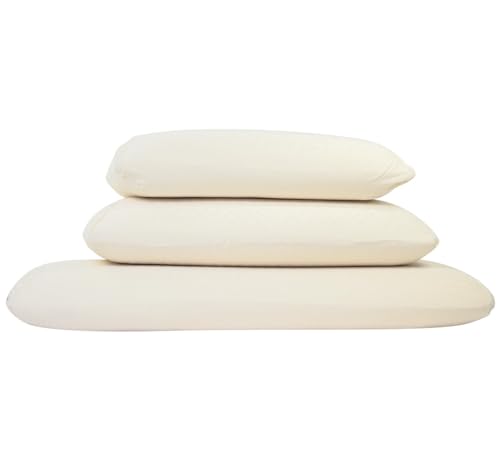
Turmerry occupies the corner of the row nobody else wanted: soft, tall and wide. The title specifies a king pillow with a five-inch high loft and a soft, plush feel, built from GOLS-certified Dunlop latex under a zippered organic cotton cover. That combination matters because side sleepers with broad shoulders need height to fill the shoulder gap, yet many high-loft latex pillows achieve that height with a firmness that feels like a wedge. A soft five inches promises the fill without the fight.
- Process: GOLS Certified Dunlop Latex
- Size: King
- Loft: High Loft 5 Inch
- Firmness: Soft, plush feel
- Cover: Zippered organic cotton cover
- Design: Breathable pinhole design, aimed at side sleepers
Strengths
- Soft and high-loft is a rare pairing; most high pillows in this row run medium or firmer
- The pinhole design is listed as breathable, addressing latex warmth worries
- A zippered organic cotton cover removes for washing, unlike fixed covers
Trade-offs
- Soft plus high loft is wrong for stomach sleepers almost by definition
- King width overwhelms twin and smaller double beds
- Side-sleeper aim is the maker’s positioning in the title
The pinhole design is the second idea in the title, described as breathable and aimed at side sleepers. Pinholes are native to moulded latex production, and channelling them deliberately through the pillow gives warm air somewhere to go; sleepers who run hot and have rejected latex as stuffy should note the claim as the maker’s, stated in the listing. The zippered cover is a practical grace, removable for washing where several rivals’ covers are not described as such. Certification matches the leaders here, GOLS Dunlop under organic cotton, so the softness does not cost the pillow its organic credentials. The honest boundary is sleeper type: stomach sleepers will find five soft inches still five inches, pushing the neck into extension, and back sleepers with narrow frames may find the loft more than their curve needs.
This is the pillow for the broad-shouldered side sleeper in a king bed who has tried firm high-loft pillows and woken with an earache and a stiff shoulder. It also suits couples standardising on king pillows across a wide bed, where its width looks intentional rather than excessive. Everyone else should treat its specialisation as a signpost pointing back up the list, which is what a well-built row of picks is for.
King pillows change a bed’s appearance as much as its sleep, and the Turmerry’s five-inch loft makes a bed look hotel-generous before anyone lies down. That visual generosity has a domestic cost worth naming: king pillows need king cases, more laundry volume and a bigger airing space, small logistics that households should accept knowingly. In return, the side sleeper gets the row’s most considered package, certified Dunlop, softness at height, a breathable pinhole story and a zippered cover that washes. For couples where one partner is a broad side sleeper and the other is not, a single Turmerry on one side and a medium standard on the other is a legitimate, asymmetric solution the bed police will not arrest you for.
Best for: broad side sleepers in king beds who need five inches of loft without firm resistance.
Not suited for: stomach sleepers, narrow-framed back sleepers, and anyone furnishing a twin bed.
View the Turmerry king organic latex pillow on Amazon

Organic Shredded Latex Pillow Queen
Every solid pillow in this guide asks the buyer to guess a height correctly in advance. The shredded pillow refuses that bargain. Its title describes shredded Dunlop latex, handmade per the listing, inside a quilted cotton cover with a zipper, and the entire design follows from that zipper: open it, remove a few handfuls of fill, and a high pillow becomes a medium one; remove more and the stomach sleeper’s low profile appears. Queen size keeps it compatible with most beds, and the listing addresses side, back and stomach sleepers in a single breath, which for once is credible, because the fill quantity is what changes between those positions.
- Process: Shredded Dunlop Latex, described as 100% handmade
- Size: Queen, 1Pk
- Loft: Adjustable via zippered cover
- Cover: Quilted cotton
- Sleeper positions: Side, back and stomach, per the title
- Firmness: Set by the sleeper through fill quantity
Strengths
- Adjustable loft solves the height-guessing problem that sinks other pillow purchases
- Shredded fill moulds around the head more than any solid slab here
- The title addresses side, back and stomach sleepers in one listing
Trade-offs
- Shredded fill can feel uneven until it is fluffed and settled into place
- Support is less uniform than a solid Dunlop pillow by construction
- Removed fill needs a bag and a home, or it migrates around a wardrobe
The trade for that freedom is texture. Shredded latex moulds and cuddles in a way a solid Dunlop slab never will, closer to a traditional pillow’s scrunch, but it can feel lumpy straight from the box and rewards a minute of fluffing and arranging each evening. Support is also less architectural: the two-zone and solid picks hold a engineered shape, while this one holds the shape you give it, which restless sleepers occasionally undo by morning. The organic wording in its name and the Dunlop identity of the fill are stated in the title, though no GOLS or GOTS acronym appears there, so certification-led shoppers should weigh that absence against the Sleep On Latex and Turmerry listings. As a problem-solving purchase for a sleeper burned by two wrong solid pillows, though, its logic is hard to beat.
Buy this pillow when the sleeper is between categories, a back sleeper who sometimes ends up on their side, a teenager still growing into their frame, a guest bed that must serve every visitor shape. Keep the removed fill in a labelled bag, because tastes change with mattresses, and a firmer, thinner mattress next year may want those handfuls returned. Purists who love the unbroken spring of solid Dunlop should stay with the first three picks; tinkerers will wonder why all pillows are not built this way.
The zipper changes the pillow’s relationship with its owner in a way worth one more paragraph. A solid pillow is a verdict; a shredded pillow is a conversation. Sleepers who adjust theirs across a month, a handful out during a hot week when they sleep lower, a handful in when a firmer mattress arrives, report the peculiar satisfaction of a product that fits better in month six than in week one. Keep a small labelled bag of the removed Dunlop shreds with the spare bedding, note roughly how much came out, and the pillow becomes tuneable in both directions forever, an insurance policy against every future mattress and shoulder.
Best for: combination sleepers and the chronically between-sizes, who will actually use the zipper.
Not suited for: sleepers who want an engineered, unchanging support shape and zero nightly arranging.
On Amazon, check the shredded latex pillow price in queen
Avocado Organic Green Pillow Standard
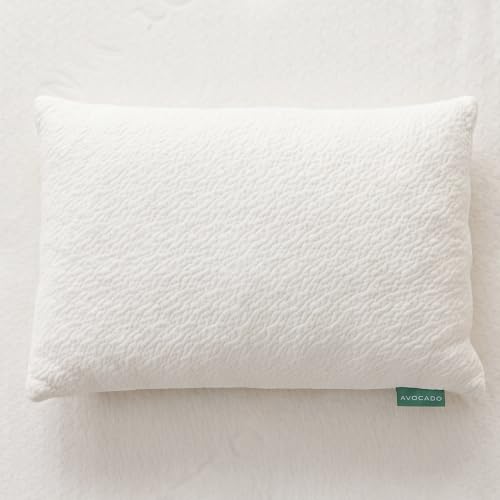
Honesty first, because this pick demands it: the Avocado Green Pillow is a blend. Its title states Dunlop latex and kapok fill, adjustable by adding or removing material, at a medium-firm character in a standard size. Kapok, a silky plant fibre, softens the fill’s hand-feel and lightens it, so this is not the pillow for a buyer whose requirement is latex and only latex. What it offers instead is the most credentialled listing in the row, GOTS, GOLS and GREENGUARD Gold all printed in the title, wrapped around an adjustable design.
- Fill: Dunlop Latex and Kapok Fill — a blend, not latex alone
- Size: Standard
- Loft: Adjustable; add or remove fill
- Firmness: Medium Firm
- Certifications: GOTS, GOLS and GREENGUARD Gold Certified, per the title
- Positions: Back, side and stomach sleepers, per the title
Strengths
- Three certifications are printed in the title, the longest credential list in the row
- Adjustable fill with a stated medium-firm character gives both tuning and a baseline feel
- Kapok adds a down-like softness that pure latex fills do not have
Trade-offs
- The fill is a latex and kapok blend, the weakest Dunlop purity in this row
- Standard size only in this listing
- Blend feel differs from solid Dunlop; latex purists should choose accordingly
That combination reframes the purity question. A sleeper whose priority is a certified, low-emission bedroom may rationally prefer the blend with three certifications over a purer pillow with none stated, while a sleeper whose priority is the Dunlop process itself should rank the solid picks higher. The adjustable loft works like the shredded pillow’s, by handfuls in or out, but the starting character is stated as medium firm, giving the tuning a known centre. The title addresses back, side and stomach sleepers together, which the adjustability makes plausible, though stomach sleepers will be removing a good deal of fill to reach a safe height. Neck support is the maker’s stated aim, and like all such aims in this guide it is positioning from the listing rather than a clinical result.
Choose the Avocado when the bedroom project is bigger than one pillow, when the whole room is being audited for materials and emissions and the pillow must present its paperwork. Choose it also when two partners share a standard-size pillow spec but disagree on height, since the fill can be tuned per pillow across a pair. Latex purists, and shoppers who read blend as compromise rather than design, have three solid Dunlop picks above that will suit them better, and this guide would rather lose the sale than blur that distinction.
Kapok deserves its own honest sentence, because it is the ingredient that makes this pillow different rather than deficient. Harvested from the seed pods of the kapok tree, the fibre is silky, light and naturally buoyant, and blended with shredded Dunlop it produces a fill that feels closer to a luxury hotel pillow while keeping latex’s resilience in the mix. Sleepers whose complaint about pure latex is its rubbery pushback may find the blend’s diplomacy exactly right. The certifications then do the rest of the persuading, three of them, the most paperwork any pillow in this row can show a materials auditor at the bedroom door.
Best for: certification-first shoppers who want adjustable loft and accept kapok in the fill.
Not suited for: latex purists who require an unblended Dunlop pillow, whatever the paperwork says.
See the Avocado Green Pillow in standard on Amazon
Loft, firmness and fill: the six Dunlop pillows compared
| Pick | Size from the title | Firmness or loft stated | Fill construction |
|---|---|---|---|
| Sleep On Latex Dunlop 2-Zone Standard | Standard | Medium firmness | Solid 2-zone Dunlop latex |
| TalatexHome Dunlop Latex Pillow | Queen 28 x 16 x 5.5 in | Medium firm, medium-low profile | Solid Dunlop latex |
| Latex for Less Solid Organic Pillow | Standard | Not given in the title | Solid organic Dunlop latex |
| Turmerry Organic Latex Pillow King | King | Soft, high loft 5 inch | Solid GOLS Dunlop latex |
| Organic Shredded Latex Pillow Queen | Queen | Adjustable loft | Shredded Dunlop latex |
| Avocado Organic Green Pillow Standard | Standard | Medium firm, adjustable | Dunlop latex and kapok blend |
The table exposes how unevenly pillow listings report themselves. Only TalatexHome prints full dimensions; only Turmerry prints a loft number; Latex for Less prints neither a firmness nor a height, asking to be chosen on certification, origin and warranty instead. The fill column carries the deepest divide: four solid pillows with engineered shapes, one shredded fill that takes the shape you give it, and one blend whose kapok content is a feature to choose knowingly rather than a detail to discover later.
How to choose a Dunlop latex pillow that fits your sleep?
What loft does your sleeping position actually need?
Loft is the distance your head must be held from the mattress to keep the spine straight, and it changes with position. Side sleepers need the most, filling the shoulder-to-mattress gap; the Turmerry’s stated five inches serves broad shoulders, while the TalatexHome’s 5.5-inch medium-low profile serves narrower frames. Back sleepers need a moderate cradle, and stomach sleepers need the least height of all, which is why adjustable fills earn their keep for anyone who rotates.
Mattress softness quietly edits the arithmetic. A sleeper sinking deep into a soft mattress needs less pillow than the same sleeper on a firm slab, because the shoulder has already descended. When replacing a pillow alongside a mattress, expect to revisit the loft decision, and consider whether an adjustable pick, the shredded or the Avocado, insures you against guessing wrong during the transition.
Solid, shredded or blended: which construction suits you?
Solid Dunlop pillows, four of this row, offer engineered consistency: zones, heights and firmness grades built into a mould, identical every night, with nothing to arrange. They suit sleepers who know their position and want the pillow to disappear from thought. Their risk is binary; the height is either right or the pillow is wrong, with no adjustment between those outcomes.
Shredded and blended fills trade that certainty for control. The shredded Dunlop and the Avocado’s latex-kapok mixture can be raised or lowered by handfuls, moulded by hand and re-fluffed nightly, at the cost of a less uniform surface and a minute of arranging. Combination sleepers, guest beds and the previously disappointed are their natural market, while position-loyal sleepers usually prefer the solid engineering.
How much should certifications steer the choice?
GOLS certifies organic latex, GOTS covers organic textiles such as covers, and GREENGUARD Gold addresses chemical emissions; the titles here print them selectively, and this guide repeats them only where printed. If a low-emission, audited-materials bedroom is the project, the Avocado’s three certifications and the GOLS/GOTS wording on the Sleep On Latex and Turmerry listings are legitimate deciding evidence.
If certifications are a preference rather than a requirement, let fit lead. A certified pillow at the wrong loft will still hurt your neck, while the uncertified TalatexHome at the right 5.5-inch profile may sleep better than all of them. The mature order of operations is position and loft first, construction second, paperwork third, price last, and any pillow bought in the reverse order tends to be bought twice.
Dunlop and Talalay: why the process name matters
Two processes make nearly all latex pillows. Dunlop, the older method, whips latex and bakes it in a mould, producing a denser pillow that is often slightly firmer toward its base where particles settle. Talalay adds vacuum and freezing steps for a more uniform, airier crumb. Neither is better in the abstract; Dunlop reads as supportive and durable, Talalay as plush and even, and this guide’s row is deliberately all-Dunlop so that comparisons stay within one feel family.
That density explains the recurring theme in the reviews above: Dunlop pillows rest the head on top of the surface rather than letting it sink. Sleepers fleeing memory foam’s slow mould usually want exactly that pushback, while sleepers who love being cradled should test a Dunlop pillow with an easy return path or start with the soft Turmerry or the mouldable shredded fill, the two gentlest interpretations of the process here.
Shoppers building the whole bed around natural materials often continue from pillows to the cooling gel category for a partner with different tastes, and Best King Size Cool Gel Pillows covers that neighbouring shelf with the same title-first discipline.
Covers, cases and keeping latex at its best
Latex hates two things: prolonged direct sunlight and being treated like foam. Keep pillows in their covers, the organic cotton ones several titles here specify, wash covers rather than the latex itself, and air the pillow in shade when it needs freshening. A zippered cover, named on the Turmerry and shredded listings, turns that maintenance from a wrestle into a routine.
Pillowcases deserve a thought on king and queen widths. The Turmerry king and the two queens here will swallow standard cases poorly, bunching the fill and changing the loft you paid for; matching case sizes preserve the geometry. Households standardising a whole bedroom sometimes extend the same materials audit to the living room floor, where Best Security Blankets is not the relevant read, being a guide to adult comfort and weighted blankets for the sofa rather than the bed.
Finally, longevity is latex’s quiet argument. A Dunlop pillow that holds its resilience for years, backed in one case here by a stated five-year warranty, asks to be judged on cost per year of sleep rather than ticket price, a framing the final section of this guide returns to. Readers furnishing a whole house may also need the heating shelf, where Best Furnace Filters 16x25x1 covers the standard size most homes actually use.
Reading a latex pillow listing like an auditor
Pillow listings reward the same scepticism as food labels. Find the process word first, Dunlop or Talalay, and distrust any listing that will not say which it sells. Find the fill’s purity next, one hundred percent latex, a blend, or shredded fill with partners like kapok, each a legitimate product and each a different purchase. Then look for numbers, dimensions and loft, and notice how few listings print them; the TalatexHome’s full measurements and the Turmerry’s stated five inches are the exceptions that expose the rule.
Certifications come last in the reading order, deliberately. GOLS and GOTS acronyms certify real things about latex and textiles, and GREENGUARD Gold addresses emissions, but a certified pillow at the wrong height remains the wrong pillow. Audit in the order your neck experiences the product: height, firmness, construction, paperwork. This guide’s reviews are written in that order for the same reason.
The first fortnight: letting a latex pillow settle in
Latex arrives with a natural scent that fades across days, and a loft that can feel assertive for the first week as the sleeper’s neck relearns its geometry. Judging any pick here on night one is the most common evaluation error in the category. Air the pillow out of direct sun before first use, sleep on it for a full fortnight unless it causes genuine pain, and change one variable at a time; swapping pillow and mattress in the same week makes every conclusion unreliable.
Adjustable owners have homework the solid owners skip: tune in small handfuls, sleep two nights between changes, and write down what you removed. The shredded and Avocado picks reward that patience with a fit no fixed pillow can promise, while the solid picks reward the opposite temperament, the sleeper who wants the decision finished at the checkout and the pillow identical for years.
When the pillow is not the problem
A honest guide ends its advice with the limits of its own category. Neck pain that persists across two correctly fitted pillows belongs to the mattress, the sleeping position or a clinician, in roughly that order of investigation. A mattress that sags at the shoulder will defeat a king’s ransom of latex, and a stomach sleeper’s twisted neck will complain under any loft low enough to breathe through.
Check the mattress with a straight edge, check the position with a partner’s observation, and only then spend again on pillows. The six picks here cover the realistic pillow-side solutions thoroughly, from a 5.5-inch measured profile to a fully adjustable fill, so if the answer is purchasable in this category, it is very likely already on this page.
Latex and the warm sleeper
Heat is the complaint that follows every pillow material, and latex’s answer is structural: an open-cell foam that does not wrap the head in a moulded pocket the way memory foam does, so air keeps a path around the sleeper. The Turmerry’s pinhole design pushes that logic furthest in this row, channelling air through the pillow’s core, while the shredded fills let warmth escape between pieces whenever the sleeper moves. None of this makes a latex pillow cold, and this guide will not pretend otherwise; it makes it neutral, which for most warm sleepers is the actual requirement.
Covers and cases finish the system. The organic cotton covers named across these titles breathe with the core instead of sealing it, and a household that wraps a latex pillow in a waterproof protector should expect to surrender some of that neutrality for the protection, a trade worth making consciously for children’s beds and not by accident on the main bed.
Pillows for two: when partners need different answers
Shared beds routinely contain incompatible necks: a broad side sleeper beside a slight back sleeper, a stomach sleeper beside everyone. The mature solution is asymmetry without apology, different pillows on the two sides, matched only in case fabric so the bed still looks composed. This row supports that strategy neatly, a Turmerry king on the broad side, a TalatexHome or Sleep On Latex standard on the other, or a pair of adjustables, shredded and Avocado, tuned to two different heights behind identical covers.
Buy the pair in one decision even if the models differ, because pillow heights interact visually and physically across the bed’s middle, where arms and arguments both cross. And keep the receipts of the experiment: note each side’s final loft, especially for the adjustable pair, so that replacements in five years start from knowledge rather than from the same expensive guessing this guide exists to end.
How firmness labels translate across this row
Firmness adjectives are the least standardised words in bedding, and this row contains the full vocabulary: medium on the Sleep On Latex, medium firm on the TalatexHome and the Avocado, soft on the Turmerry, and silence from Latex for Less. Read them as positions within each maker’s own range rather than as points on a universal scale, and lean on the structural facts instead, height, zones, adjustability, which do not depend on adjectives. A medium Dunlop will feel bouncier than a medium foam at the same nominal rating, because the material answers pressure with pushback rather than moulding.
The sleeper’s own weight edits the translation further: a slight sleeper experiences a medium pillow as firm because they barely dent it, while a heavier sleeper compresses the same pillow into its softer depths. Couples of different builds sharing a pillow model should therefore expect different verdicts from identical products, one more argument for the adjustable pair in this row, whose firmness is set per pillow, per person, by hand.
A final word on returns, trials and pillow humility
Pillows are the most returned category in bedding for a structural reason: the product is a relationship between a mould and a spine, and no listing can fully predict it. Buy accordingly, from listings whose return terms you have read, keeping packaging through the trial fortnight and judging on the second week rather than the second night. The adjustable picks soften the risk by forgiving a wrong first guess; the solid picks concentrate it, which is the price of their engineered consistency.
Humility completes the method. A sleeper’s needs migrate across a decade, with mattresses, injuries, pregnancies and age, and the pillow that is perfect this year is a draft of an answer rather than a final one. The six Dunlop options here span that future generously, from a measured low profile to a fully tuneable fill, so whichever direction your sleep travels, this row probably contains the pillow it will ask for next.
Storing the spare pillow and the winter rotation
Households with guest rooms rotate pillows the way they rotate tyres: the main bed’s pair, once a year or two old, migrates to the guest bed, and a fresh pair takes the high-mileage position. Latex suits that cascade better than foam, since its resilience survives the demotion with dignity, and the guest bed quietly upgrades in the process. Store any pillow out of service in a breathable bag, away from sun and compression, never vacuum-sealed into a pancake, because latex remembers insult longer than it remembers kindness.
The pillow and the posture of the whole day
Sleep posture does not start at bedtime. A neck held forward over screens for ten hours meets the pillow with the day’s tension already installed, and even the finest Dunlop in this row works better in a household that occasionally stretches, raises its screens and lets the shoulders drop before bed. Buy the pillow for the geometry of sleep, certainly, but give it a fair shift by loosening the geometry of the day, and the pair of habits together will outperform either one alone.
A bedtime postscript
Rotate the pillow head-to-foot on sheet-change day, a five-second habit that evens the wear across its zones and surfaces. Over years, that tiny rotation is the difference between a pillow that ages uniformly and one that develops a favourite hollow with a stranger’s firmness at the other end.
Common mistakes
Buying loft by bed size instead of shoulder width
A king pillow is wider, not automatically taller in the way your neck needs. Loft should follow your frame and position; the sleeper who buys the biggest pillow on the shelf often buys a neck ache in a larger size.
Assuming organic in the shop name means organic in the title
Certifications count only where they are printed. Two picks here state GOLS in their titles and one adds GREENGUARD Gold; repeating those credentials beside a pick whose title omits them would be a fiction, however natural its latex feels.
Treating a blend as pure latex
The Avocado’s kapok content changes its feel and its claim on the Dunlop name. Blends can be excellent pillows, but they should be bought as blends, with eyes open, not discovered as blends on the first night.
Judging Dunlop firmness by foam standards
Medium in Dunlop latex pushes back more than medium in memory foam, because the material rests you on its surface. Sleepers between ratings should start softer than their foam history suggests, or choose an adjustable fill.
Washing the latex itself
Water and agitation damage latex foam. The covers on these pillows, several of them organic cotton and one zippered, exist to be washed in the latex’s place; the core needs shade, air and patience, not a machine cycle.
Skipping the case-size check
A queen or king pillow forced into a standard case compresses into a different, lumpier pillow. Match the case to the pillow’s stated size so the loft you selected is the loft you sleep on.
Final recommendation
For the classic Dunlop purchase, certified, medium and standard-sized, the Sleep On Latex 2-Zone is the guide’s benchmark, with Latex for Less pressing it hard on warranty and domestic manufacture. Side sleepers in king beds should go straight to the soft, high-loft Turmerry, and back sleepers with a too-tall current pillow to the TalatexHome’s measured 5.5-inch profile.
When the risk of guessing wrong feels high, because it often is with pillows, the adjustable pair close the argument: shredded Dunlop for the pure-latex tinkerer, the Avocado blend for the certification-led buyer who accepts kapok in exchange for the longest credential list here. Decide your loft from your shoulders, not your bed, and Dunlop’s dense, buoyant support will do the rest for years.
Frequently asked questions
What is Dunlop latex, and how is it different from Talalay?
Dunlop is the original latex process: whipped liquid latex is poured into a mould and baked, giving a denser, springier pillow, often slightly firmer at its base. Talalay adds vacuum and flash-freezing for a more even, airier feel. All six picks here are Dunlop-process, verified from their listing titles, so the row compares within one feel family.
Are all six pillows in this guide organic?
No, and the reviews keep the distinction visible. Sleep On Latex, Latex for Less and Turmerry state organic latex with GOLS wording in their titles, and Avocado adds GOTS and GREENGUARD Gold. TalatexHome and the shredded pillow make no organic certification claim in their titles, so none is made for them here.
Which pick is best for side sleepers?
The Turmerry was designed for the question: king size, a stated five-inch high loft, soft feel and a pinhole design its title aims at side sleepers. Narrower side sleepers may prefer the TalatexHome’s medium-low queen profile, and combination sleepers who also roll onto their backs should consider the adjustable shredded pillow.
Is the Avocado pillow pure latex?
No. Its title states a blend of Dunlop latex and kapok fill, adjustable by adding or removing material. It is the most certified listing in the row, carrying GOTS, GOLS and GREENGUARD Gold, but buyers who require unblended latex should choose one of the solid Dunlop picks instead.
How long should a Dunlop latex pillow last?
Latex is among the longest-lived pillow fills, and one pick here, Latex for Less, prints a five-year warranty in its title. Lifespan depends on care: keep the core out of direct sun, wash the cover rather than the latex, and rotate the pillow so wear distributes evenly across its surface.
Measure your shoulders, honour your sleeping position, and a Dunlop pillow chosen on those two facts will repay you every single night for years.


