What's inside
- Quick Picks
- How We Chose These Picks
- Key Takeaways
- Detailed Reviews
- Comparison Table
- How to Choose a Pillow for a Child Between Toddler Size and Adult Size
- Common Mistakes Parents Make in the Children’s Pillow Aisle
- How Does a Children’s Pillow Wardrobe Grow With the Child?
- How Do Sleepovers and Camps Change What a Child Needs?
- What Should You Do When a Child Outgrows the Word Youth?
- How Do You Keep a Child’s Pillow Fresh Between Washes?
- What Is the Difference Between Down-Like, Down-Alternative and Pearl Fiber?
- How Should Grandparents Choose a Pillow for the Spare Room?
- Why Do Children’s Pillows Come in So Many Almost-Sizes?
- How Do You Introduce a Bigger Pillow When a Child Moves Up a Size?
- What Role Does a Reading Pillow Play in a Child’s Room?
- Final Recommendation
- Frequently Asked Questions
- Related Guides
As an Amazon Associate I earn from qualifying purchases. This post may contain affiliate links at no extra cost to you.
As an Amazon Associate, cottageverdict.com earns from qualifying purchases made through links in this guide — at no extra cost to you.
Where to buy: the six children’s pillows below are all Amazon listings, linked in the Quick Picks table, in each review heading and in the comparison table, so a parent can check price on Amazon and confirm the stated size and age range on the listing before anything is ordered. Households looking for the best hypoallergenic pillows for kids are usually trying to keep a child’s bed simple and washable, and this guide opens, as its toddler companion does, with the age framing that governs every pillow on the page.
These are pillows for children, at the ages their listings state: four to twelve, five to ten, seven and older, and the toddler-bed stage for the smallest option. None of them is a pillow for a baby, and no pillow of any kind belongs in a crib with an infant under twelve months. The word hypoallergenic itself needs the same calm treatment. It appears in these titles as the makers’ description of their fills and fabrics, and this guide repeats it strictly as listing language: we make no claim that any pillow prevents, treats or improves any allergy or condition, because a pillow listing cannot carry that promise and neither can a review of one. What a parent can shop for, honestly, is a pillow with a stated fill, a stated size, a washable arrangement and an age range that fits their child, and those are the facts the reviews below are built from.
Sizes here are children’s sizes, smaller than adult pillows and larger than the toddler format in the companion guide: sixteen by twenty-two inches appears twice, a low-profile fourteen by twenty-two once, a compact twelve by twenty once, and two listings leave their dimensions to the full page. Fills divide into down-like and down-alternative fibres, a pearl fibre fill in an adjustable design, and one adjustable memory foam model that breaks the fibre pattern entirely. Certifications appear where makers print them, and each is quoted exactly as printed, attached to the listing that printed it.
Quick Picks
| Pick | Badge | Why it earns its place |
|---|---|---|
| Little Sleepy Head Pillow | Best Classic Youth Pillow | A soft, supportive youth pillow with a down-like fill and the hypoallergenic description in its title, sold singly. |
| LOFE Adjustable Kids Pillow | Best Adjustable for Ages 4-12 | An adjustable 16×22 pillow in organic cotton with two certifications named and a washable cover. |
| Kinder Fluff Children Pillows | Best Pair for Ages 7 Plus | Two children’s pillows with a 300 thread count pure cotton shell and down-alternative fill, no pillowcase needed. |
| Little Sleepy Head Youth Pillow | Best Sized for Ages 5-10 | A 16×22 youth pillow with a cotton pillowcase in its description, aimed squarely at the five-to-ten years. |
| cutie pumpkin Kids Pillow | Best Low Profile | A low-profile 14×22 machine washable pillow in soft cotton, sized for a toddler bed or a small child. |
| MLILY Kids Pillow | Best Foam Option | An adjustable memory foam kids pillow in purple, 12×20, with certified foam wording and a cooling description. |
How We Chose These Picks
The entry rule was the keyword’s own word, used honestly: every pick carries hypoallergenic wording in its assigned title, attached by its maker to a fill, a fabric or the pillow as a whole, and the reviews keep that wording attached to its maker rather than adopting it. Beyond that, we required a children’s product in fact as well as in name, a youth or kids pillow with a stated age range where the maker offers one, a stated size where the maker offers one, and a spread of fills and formats so that a parent is choosing rather than merely confirming. Two listings come from the same maker at different sizes of commitment, a single classic and a cased youth model, and both stay because households meet that maker early in any search of this shelf.
Facts in the reviews trace to the titles, and the sources file quotes each fragment. Certifications are reported exactly as printed: one listing names CPSC and OEKO-TEX 100 wording, one names CertiPUR-US for its foam, and the rest print none, which the spec boxes record without commentary. Where a title gives no age, the review says so and directs the parent to the full listing, because the age question is the one question in this category that should never be answered by assumption.
Key Takeaways
- Hypoallergenic in this guide is always the maker’s word for their own product, reported as listing language and never as a health promise.
- Age ranges are printed on three listings, four to twelve, five to ten and seven plus; the others require a check of the full listing before a child uses them.
- No pillow here is for a baby, and no pillow belongs in a crib with an infant under twelve months.
- Sizes run smaller than adult pillows: 16×22, a low-profile 14×22 and a compact 12×20 are the stated footprints.
- Two designs are adjustable, letting a parent set the height as the child grows rather than replacing the pillow at every stage.
Detailed Reviews
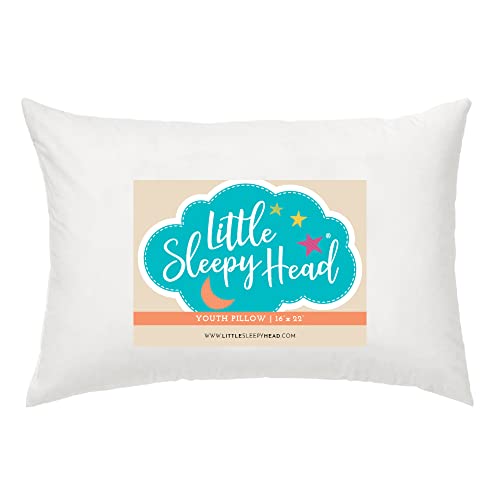
Little Sleepy Head Pillow
The original Little Sleepy Head youth pillow is the classic entry in this category: a bed pillow described by its maker as soft and supportive, hypoallergenic in the title’s wording, filled with a down-like fill, and sold as a single youth pillow. Down-like is a fill description worth pausing on, because it tells the parent the pillow aims at the feel of down, soft, mouldable and light, without being down, which matters in a category where many families are specifically avoiding natural fill for their children’s room. The pillow’s simplicity is its identity: no adjustment, no stated certifications, no named dimensions in the title, just a youth-sized pillow with a soft fill and a supportive description.
That simplicity cuts both ways, and the review should say where. A parent who wants the paperwork, an age range, a size in inches, a washable claim, will find this title quiet on all four, and should read the full listing before ordering, particularly for the age and size, since this guide will not guess at either. A parent who wants the category’s standard object, a soft youth pillow from the maker whose name is practically synonymous with it, will find the quiet title sufficient and the pillow’s reputation carried by the brand rather than by specifications. Youth in the title does at least place the product in the children’s world rather than the nursery’s, and the guide’s framing stands: a pillow for a child in a bed, never for an infant in a crib.
Choose this one as the straightforward gift or the straightforward first kids pillow for an older child whose household already knows the size it needs. Grandparents furnishing a grandchildren’s room often land here, and reasonably: one pillow, a soft down-like feel, a maker’s hypoallergenic description, and nothing to assemble, tune or explain. Parents who need their facts printed should read the LOFE and the second Little Sleepy Head below, where the same shelf speaks in numbers.
- Fill as titled: down-like fill
- Feel as titled: soft and supportive
- Maker wording in title: hypoallergenic pillow
- Format as titled: youth pillow, 1 pack
- Age range: not stated in the listing
- Dimensions: not given
Strengths
- Down-like fill gives a soft, mouldable feel without natural down
- Simple single pillow with nothing to tune or assemble
- Youth format from the category’s best-known children’s maker
Trade-offs
- No age range or dimensions printed in the title
- No washability claim in the title either
- Fixed softness offers no height adjustment as a child grows
Best for: a simple first youth pillow for an older child, or a grandparents’ spare room. Not suited for: babies, or parents who need every fact printed before ordering.

LOFE Adjustable Kids Pillow
LOFE’s kids pillow is the specification leader of this set, and its title reads like a parent’s checklist answered line by line: adjustable, for ages four to twelve, sixteen by twenty-two inches, described as a toddler pillow in the title’s own broad wording though its stated ages are a child’s rather than a toddler’s, in organic cotton in the maker’s description, with CPSC and OEKO-TEX 100 certified wording, a hypoallergenic pearl fiber fill in the maker’s phrasing, and a washable cover, aimed at preschool nap, camping and travel as well as the bed. Adjustability is the headline feature for a growing child, because a pillow whose height can change can serve a five-year-old and then a nine-year-old without being replaced at the growth spurt, which is the economic argument for the whole adjustable idea at children’s scale.
The certifications deserve their plain reading. The title prints two labels, and we quote them exactly as printed, as the maker’s statements about its product; the guide does not independently verify certifications and does not expand them into claims about any child’s health. The organic wording attaches to the cotton in the maker’s description, the same reporting rule used throughout this batch. Pearl fiber is the fill’s name in the title, a fibre fill presented in small rounded form, and the hypoallergenic word attaches to it as the maker’s description of that fill.
Practically, this is the pillow for the parent who reads listings the way this guide writes them. The washable cover answers the hygiene rhythm of children’s bedding, the stated size fits the sixteen-by-twenty-two cases a household can actually buy, and the wide age band makes it the one purchase in this set that can plausibly serve a child from preschool to the edge of the teenage years. Its cautions are the adjustable format’s own, a tuning process to learn and spare fill to store, plus the discipline of honouring the stated floor: a child under four is outside this listing’s address, whatever the title’s stray toddler word suggests.
- Age as titled: ages 4-12
- Size as titled: 16 x 22 inches
- Design as titled: adjustable kids pillow
- Fill as titled: hypoallergenic pearl fiber fill (maker’s wording)
- Certifications as titled: CPSC and OEKO-TEX 100 certified
- Cover as titled: washable cover; organic cotton (maker’s description)
Strengths
- Fullest specification in the set, ages and inches included
- Adjustable height grows with the child across years
- Washable cover suits children’s laundry reality
Trade-offs
- Not for children under four, despite a toddler word in the title
- Tuning and spare fill storage come with the format
- Certification wording must be taken as the maker’s statement
Best for: parents of four-to-twelve-year-olds who want one pillow for years. Not suited for: toddlers under four, and never for infants.

Kinder Fluff Children Pillows
Kinder Fluff aims at the older child and says so: children pillows in a two-pack, no pillowcase needed, for ages seven and up, with a three hundred thread count pure cotton shell and a hypoallergenic down alternative fill in the maker’s wording, in white. The no-pillowcase-needed design is the practical idea here, a pillow whose own shell is finished to be slept on directly, which removes a laundry component and a nightly wrestling match with a loose case. For a seven, eight or ten-year-old making their own bed, a pillow that is complete as it stands is a small independence the household will feel every morning.
The title also carries a phrase that needs honest handling: it describes the product with award and baby wording that sits oddly beside its own seven-plus age statement. We report the age the listing prints for the product’s use, seven and up, and treat the rest as the maker’s marketing language, because the safety-relevant number in any children’s listing is the age floor, and here the maker has printed a clear one. A parent should follow that floor: this is a pillow for a school-age child in a bed, and the baby word in the title changes nothing about that, in either direction.
The pure cotton shell at a stated thread count is the other substantive fact, giving the pillow a smooth, finished face that suits the caseless design, and the down-alternative fill keeps the feel familiar and the care simple. What the title omits is dimensions, so a household with existing youth cases should confirm the size on the full listing, although a caseless pillow cares less about that omission than any rival here. As a pair, it also solves the two-bed problem, siblings, or bed plus reading corner, in one order, for the oldest children in this guide.
- Age as titled: 7+
- Shell as titled: 300TC pure cotton shell
- Fill as titled: hypoallergenic down alternative fill (maker’s wording)
- Design as titled: no pillowcase needed
- Pack as titled: 2 pillows
- Dimensions: none stated in the listing
Strengths
- Caseless design simplifies bed-making for older children
- Pure cotton shell at a stated thread count
- Pair format covers siblings or two beds at once
Trade-offs
- Oldest age floor here, seven and up only
- Title’s marketing wording muddles its own clear age statement
- No dimensions printed for case-minded households
Best for: school-age children of seven and older who make their own beds. Not suited for: younger children, whatever the title’s stray wording implies.
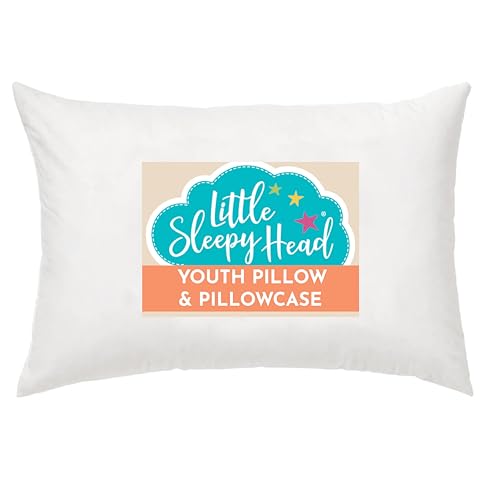
Little Sleepy Head Youth Pillow
The second Little Sleepy Head in this guide is the specified sibling of the first: a youth pillow at sixteen by twenty-two inches, with a hypoallergenic cotton pillow case in the title’s wording, for ages five to ten, described as snugly designed for sleeping, travel, school and bedtime, in white. Where the original listing trusts the brand, this one prints its homework, and a parent comparing the two can see the maker’s range clearly: same youth idea, one sold on simplicity and one sold on measurements. The included case in the description answers the question the first listing leaves open, and the stated age band, five to ten, is the most precisely aimed in this set.
Sixteen by twenty-two is the youth size this guide meets twice, here and in the LOFE, and it is worth a parent’s attention as the de facto standard for the stage between toddler pillows and adult ones. A child of five to ten rests their head and shoulders on a footprint that leaves room to turn without offering the acreage of an adult pillow, and cases in this size are a normal purchase rather than a hunt. The travel and school destinations in the title suit the age, when sleepovers and trips multiply, and a pillow that can go to a grandparent’s house or a school camp and come home to the wash is a pillow earning its shelf space.
The hypoallergenic wording here attaches to the cotton pillowcase in the maker’s phrasing, a narrower placement than the first pillow’s whole-product description, and the review reports it exactly there. What the title does not state is the fill, so a household choosing on fill should read the full listing, and a household choosing on size, age and case will find this the most completely answered listing of the fibre pillows here. It is the natural upgrade path from the toddler guide’s thirteen-by-eighteen world, and the natural pair to the LOFE for a parent deciding between a fixed pillow with its facts printed and an adjustable one with its future built in.
- Size as titled: 16 x 22 inches
- Age as titled: age 5-10
- Included as titled: hypoallergenic cotton pillow case (maker’s wording)
- Use as titled: travel, school and bedtime
- Colour as titled: white
- Fill material: not stated in the listing
Strengths
- Size and age both printed, the complete fibre-pillow spec
- Case included in the listing’s description
- Youth footprint suits sleepovers and school trips
Trade-offs
- Fill is not named in the listing title
- Fixed height, so growth means replacement eventually
- White case joins the category’s laundry burden
Best for: children of five to ten graduating from a toddler pillow. Not suited for: children under five, and never for a baby’s crib.

cutie pumpkin Kids Pillow
The cutie pumpkin pillow is the low-profile option, and its title makes the profile the headline: a kids pillow for sleeping at a low profile of fourteen by twenty-two inches, machine washable, in soft hypoallergenic cotton in the maker’s wording, described as a standard size pillow for a toddler bed. Low profile is the children’s-scale version of the lesson the toddler guide taught: a small sleeper needs a pillow that stays modest under the head, and a fourteen-inch width at a low height suits a child moving up from the thirteen-by-eighteen toddler format who is not yet ready for a full youth pillow’s presence. The machine washable claim, printed outright, suits the pillow’s likely life exactly.
Two cautions belong to this listing. The first is age: the title names a toddler bed without printing an age, and the parent must take the age from the full listing and from the guide’s standing framing, which is that pillows serve children of the stated toddler-and-older ages and never infants under twelve months. A toddler bed implies a toddler, and a toddler, in every other listing in this batch, means two and up; treat that as the working floor and confirm it on the page. The second caution is vocabulary: standard size in the title describes the pillow’s place in the children’s range, not an adult standard pillow, and the stated inches, fourteen by twenty-two, are the authority when the words and the numbers seem to disagree.
On its merits, this is the gentlest step up in the set, washable, low, cotton-faced in the maker’s description, and sized for the bed the child is probably already sleeping in. Families whose toddler pillow has begun to feel small but whose child is nowhere near a youth pillow’s bulk will find the cutie pumpkin aimed at exactly their hallway between stages, provided the full listing’s age guidance matches their child.
- Size as titled: 14 x 22 inches, low profile
- Care as titled: machine washable
- Material wording in title: soft hypoallergenic cotton (maker’s wording)
- Bed as titled: toddler bed
- Age range: not given — confirm on the listing
- Fill specifics: none stated in the listing
Strengths
- Low profile suits the step up from a toddler pillow
- Machine washable claim printed in the title
- Fourteen-inch width fits the toddler bed it names
Trade-offs
- No age is printed, so the listing page must supply it
- Standard size wording could mislead a skimming buyer
- Growing children will outgrow the low profile sooner
Best for: a child stepping up from a toddler pillow, at the listing’s confirmed age. Not suited for: infants, or buyers who skip the age check on the full page.

MLILY Kids Pillow
MLILY brings the foam idea into the children’s room: an adjustable kids memory foam pillow in purple, twelve by twenty inches, described as a cooling pillow with a breathable soft cover and CertiPUR-US certified foam, for a child’s bed set, for boys and girls in the maker’s phrasing. It is the smallest footprint in this guide and the only moulded-material entry, and both facts follow from the foam. Memory foam gives a child the settled, slow-response feel some children love and some find strange, and the adjustable design lets a parent set the height rather than accepting a factory’s guess about a growing neck and shoulders. The purple colour is the other honest headline: a pillow a child can identify as theirs at a glance, in a category of white.
The title prints no age range, which for a children’s foam pillow is the first thing a parent should remedy on the full listing, and this guide’s framing applies with full force: the pillow serves a child of whatever age the maker states there, in a bed, and it is not a product for an infant under any reading. The cooling wording is the maker’s comfort description, reported as such without a mechanism, and the breathable cover is likewise the maker’s description of its own cover. The CertiPUR-US wording attaches to the foam as printed, quoted exactly, as this batch always quotes certifications.
Choose the MLILY when the child in question has already shown a preference for foam’s settled feel, perhaps on a parent’s pillow, and when the household values the adjustable height enough to manage the tuning. Its compact size suits smaller beds and bunks, and the colour solves the sibling-identification problem that white pillows create. Households new to foam should perhaps start with a fibre pillow’s familiarity and keep the MLILY as the second-stage experiment, because a child’s verdict on memory foam is swift, personal and not negotiable by adults.
- Material as titled: memory foam, adjustable kids pillow
- Size as titled: 12 x 20 inches
- Cover as titled: breathable soft cover
- Certification as titled: CertiPUR-US certified foam
- Colour as titled: purple
- Age range: not stated in the listing
Strengths
- Only foam option, with an adjustable height for growth
- Purple finish ends sibling pillow disputes at sight
- Compact size suits bunks and smaller children’s beds
Trade-offs
- No age printed in the title, so verification is essential
- Foam’s settled feel divides children as it divides adults
- Smallest footprint gives a restless sleeper least room
Best for: a foam-loving child whose parent confirms the maker’s stated age. Not suited for: any infant, or a first pillow for a child new to foam.
Comparison Table
Ages first, because in this category the age column outranks every other fact on the page, and a dash in it is an instruction to check the listing, not a detail to skip.
| Pick | Age in title | Size in title | Fill in title | Adjustable |
|---|---|---|---|---|
| Little Sleepy Head Pillow | Not in title | Not in title | Down-like fill | No |
| LOFE Adjustable Kids Pillow | 4-12 | 16 x 22 in | Pearl fiber fill | Yes |
| Kinder Fluff Children Pillows | 7+ | Not in title | Down alternative fill | No |
| Little Sleepy Head Youth Pillow | 5-10 | 16 x 22 in | Fill not in title | No |
| cutie pumpkin Kids Pillow | Not in title | 14 x 22 in | Cotton in title | No |
| MLILY Kids Pillow | Not in title | 12 x 20 in | Memory foam | Yes |
How to Choose a Pillow for a Child Between Toddler Size and Adult Size
Start with the child’s age and let it veto before it chooses. The printed bands in this set, four to twelve, five to ten and seven plus, overlap heavily, and a six-year-old is addressed by all three, which means age alone will not finish the decision for the middle childhood years; it will only, and importantly, exclude the pillows whose floors the child has not reached and every pillow in the guide for a child under two. Where a title prints no age, the full listing is part of the purchase, and a parent should treat finding that number as step one rather than as fine print.
Then choose by growth strategy. A fixed pillow, the Little Sleepy Heads, the Kinder Fluff, the cutie pumpkin, is bought for the child as they are, with replacement expected as they grow, and its virtues are simplicity and a lower commitment. An adjustable pillow, the LOFE or the MLILY, is bought for the child as they will be, its height changing with them, and its virtues are longevity and fit at the price of a parent’s tuning attention. Finally, let the child’s own material preference vote if they are old enough to have one: fibre’s familiar bounce against foam’s settled hold is a preference children hold as firmly as adults do, and a pillow the child likes is a pillow the child will actually sleep on.
Common Mistakes Parents Make in the Children’s Pillow Aisle
The first is the oldest one in this batch, and it bears the repetition: a pillow given too young. These are children’s pillows for beds, and a baby under twelve months in a crib needs none of them, whatever a title’s stray marketing word suggests. The second is buying the adult pillow in a smaller mood, choosing a standard bed pillow for a six-year-old because it was on the same shelf, when the youth sizes in this guide exist to match a child’s smaller frame. Third, parents read hypoallergenic as a medical assurance rather than as a maker’s description of a fill or fabric, and relax the ordinary washing rhythm that actually keeps a child’s bed fresh; the word changes nothing about laundry, and the washable covers and pillows here are the practical feature to lean on. Fourth, the age floor gets rounded down for a child who seems mature, when the printed floor is the maker’s guidance and deserves to be honoured as printed.
How Does a Children’s Pillow Wardrobe Grow With the Child?
Think of the pillows in this batch, toddler guide included, as a staircase rather than as rivals. The thirteen-by-eighteen toddler pillow serves the two-to-five stage at a low, flat profile. The low-profile fourteen-by-twenty-two and the youth sixteen-by-twenty-two serve the middle years, with the adjustable designs stretching their usefulness by changing height as shoulders broaden. The seven-plus caseless pair and the compact foam pillow serve the older child’s own room, where bed-making independence and personal taste enter the decision. A household that sees the staircase clearly buys each step once, at the right moment, instead of buying an adult pillow early and waiting years for the child to grow into it.
Handing down works along the same staircase, with the checks the toddler guide described: wash, inspect, confirm the next child’s age against the listing’s floor. The adjustable pillows hand down best of all, because their height resets for the new owner, while a fixed pillow hands down its one height and its accumulated softness together. None of this requires a spreadsheet; it requires only that the parent treat the printed ages and sizes as the product’s biography and let each pillow retire when its stage ends.
How Do Sleepovers and Camps Change What a Child Needs?
A school-age child’s pillow starts travelling, to grandparents, to friends’ floors, to camps with bunks and rules of their own, and the listings here that name travel and school among their destinations are acknowledging a real second life. A travelling pillow should be the household’s second pillow rather than the bed’s only one, washable without drama, and identifiable at twenty paces in a pile of other children’s bedding, which is where the MLILY’s purple quietly outperforms every white rival in this guide. Label the case regardless of colour, because camps run on labels, and choose the pillow you would least mind losing, since travel’s arithmetic includes loss as a standing possibility.
There is a comfort argument for the travelling pillow too, and it is the same one the toddler guide made at a smaller scale: a familiar pillow carries home into a strange bed, and a child who sleeps well at camp is a child who goes back to camp. Parents should still check each destination’s bedding rules, since some camps supply pillows and forbid outside ones, and some grandparents keep a grandchildren’s pillow of their own choosing, like the classic Little Sleepy Head single, waiting in the spare room. The travelling pillow is a small diplomacy between households, and like all diplomacy it works best when nobody’s rules are surprised.
What Should You Do When a Child Outgrows the Word Youth?
Eventually the sixteen-by-twenty-two footprint starts to look small against a teenager’s shoulders, and the household graduates to the adult guides in this batch, with their standard, queen and king sizes and their firmer vocabularies. The graduation is a good moment to involve the young person in the choosing, because a teenager who picks their own pillow, fibre or foam, fixed or adjustable, owns the decision and sleeps on it without a parental campaign. The children’s pillow retires to the spare room, where its smaller size serves guests’ children and reading corners, a dignified second career for an object that did its first job well.
Resist graduating early out of impatience or aesthetics. An adult pillow on a small child’s bed is not a harmless head start; it is the wrong tool at the wrong scale, surrounding a small head with material it does not need. The sizes in this guide exist in a sequence because children do, and honouring the sequence, toddler, youth, adult, each at its printed ages, is the whole wisdom of the children’s pillow aisle compressed into one sentence.
How Do You Keep a Child’s Pillow Fresh Between Washes?
The case is the front line, and it should be treated as weekly linen without exception, because a child’s pillowcase collects the evidence of small faces, small colds and the occasional midnight snack more faithfully than any adult’s. Air the pillow itself on sheet day, standing it where the room’s air moves, and give it a shake that redistributes fibre fills and reminds foam of its shape. A washable protector under the case extends the pillow’s own life in this category more than in any other, since children’s pillows meet more illness per year than the rest of the house’s bedding combined, and two of the designs here, the LOFE’s washable cover and the cutie pumpkin’s washable build, build that defence into the product itself.
After illness, step the rhythm up without drama: case and protector into the wash, the pillow aired thoroughly or washed where its maker permits, and the spare pillow promoted from the cupboard so the bed is never held hostage by a dryer. Households with two children should keep the pillows’ identities separate through all of this, by case colour or by label, because a fresh pillow returned to the wrong bed restarts the very sharing the laundry was meant to interrupt. None of this is advanced hygiene science; it is the ordinary discipline of children’s textiles, and it matters more to a child’s comfort than any adjective printed on a box.
What Is the Difference Between Down-Like, Down-Alternative and Pearl Fiber?
Three fills in this guide carry three different names, and a parent is entitled to ask whether the names describe different things or the same thing in different coats. Down-like, on the first Little Sleepy Head, describes an intention: a synthetic fill tuned to imitate down’s soft, mouldable feel. Down-alternative, on the Kinder Fluff, is the category’s general term for a synthetic fill standing in for down, without the specific promise of imitation being its headline. Pearl fiber, on the LOFE, names a form: fibre produced in small rounded units, which gives the fill its particular loft and its suitability for an adjustable design, since rounded units pour and redistribute more obediently than a continuous batt.
For the parent at the shelf, the practical translation is simpler than the vocabulary. All three are synthetic fibre fills, all three will feel more alike than their names suggest, and the differences that will actually reach the child are the pillow’s size, its height behaviour and its cover. Choose among them on those facts, and let the fill names serve as the makers’ signatures rather than as a chemistry lesson. The one genuinely different fill in this guide is the MLILY’s memory foam, which is why its review treats material as the headline and the fibre trio are compared on format instead.
How Should Grandparents Choose a Pillow for the Spare Room?
A grandchildren’s room hosts a rotating cast of ages, which makes it the hardest pillow assignment in the house and the one where printed age bands earn their keep. A grandparent who stocks one pillow per likely guest does best with the middle of the staircase: a youth pillow at sixteen by twenty-two with an age band that covers the grandchildren who actually visit, kept with a washable case and a protector, serves a seven-year-old one weekend and a ten-year-old the next without either child meeting a pillow sized for a toddler or swallowed by an adult’s. The classic Little Sleepy Head single is the traditional choice for this room, and its unspecified title matters less where the household already knows the children’s ages and sizes from life rather than from listings.
What the spare room should never contain is a pillow pressed into service below its age: a toddler grandchild visiting a room stocked for teenagers sleeps without a pillow or with the family’s own brought from home, and the visit is none the worse for it. Grandparents who keep a toddler pillow as well, from the companion guide’s shelf, cover the whole staircase between them, and the two pillows together will host a decade of grandchildren with nothing more dramatic than laundry between visits.
Why Do Children’s Pillows Come in So Many Almost-Sizes?
Sixteen by twenty-two, fourteen by twenty-two, twelve by twenty: the youth shelf looks untidy beside the adult world’s standard, queen and king, and the untidiness reflects a real disagreement among makers about how fast children grow and how their beds are furnished. Bunk beds, trundles, daybeds and the smaller twins of children’s rooms all argue for a pillow below adult scale, while makers split on whether the step from toddler size should be taken in one jump or two. The parent’s defence against the muddle is the habit this guide has practised throughout: shop by the printed inches and the printed ages, never by the size word alone, because a youth, standard or kids label means whatever its maker decided it means this year.
The muddle has one kind consequence. Because the sizes overlap, a household can usually find a pillow that fits an unusual bed, a narrow bunk, a vintage child’s bed with modern bedding ambitions, somewhere in this range, and the compact MLILY and the low-profile cutie pumpkin exist for exactly those furniture problems. Measure the bed, measure the child against the age bands, and let the almost-sizes become a selection rather than a confusion.
How Do You Introduce a Bigger Pillow When a Child Moves Up a Size?
Graduation works best as a nonevent. Put the new pillow on the bed with its fresh case a few nights before the old one retires, let the child handle it, read on it and treat it as furniture before it is asked to be a sleeping surface, and keep the old pillow within reach for the first week in case the verdict needs more time. Children judge pillows the way adults do, by accumulation rather than by announcement, and a size change smuggled in among familiar routines is accepted in a way a ceremonial upgrade sometimes is not. If the child migrates back to the old pillow repeatedly, believe them for a while; the staircase has no deadlines, and a youth pillow bought a season early will fit a season later without having lost anything but cupboard space.
One practical detail deserves attention at graduation: the case supply. Toddler cases fit nothing in this guide, and youth cases at sixteen by twenty-two fit only two of these six listings exactly, so the case purchase belongs in the same basket as the pillow, every time the size changes. Households that standardise on the sixteen-by-twenty-two youth size for the middle years, choosing between the LOFE and the second Little Sleepy Head on adjustability, gain a small economy: one case size, several pillows, and a linen cupboard that makes sense at midnight.
What Role Does a Reading Pillow Play in a Child’s Room?
Many children’s rooms quietly run two pillows per bed, one for sleeping and one for the propped-up hour of reading, drawing or screen time that precedes it, and the second pillow’s job description is different enough to change what a household should buy. A reading pillow takes angled compression against a headboard, gets dragged to the floor for cushion duty, and ages faster than the sleeping pillow it protects. The caseless Kinder Fluff pair is almost designed for this division of labour, one pillow for the night and its twin for the reading hour, while households with a single pillow per child can draft the retiring toddler pillow into reading service when the youth pillow arrives, extending its career honourably.
The arrangement also protects the sleeping pillow’s hygiene and shape, since the reading hour is when pillows meet snacks, library books and the floor. Keep the roles labelled by case colour if the pillows are the same size, and let the child enforce the boundary, which children generally do with more rigour than adults once the system is explained as theirs. A household that separates the two jobs will find both pillows lasting longer, and the bedtime swap, reading pillow off, sleeping pillow on, becomes one of those small rituals that tells a child’s body the day is changing gear.
Final Recommendation
For the widest span of childhood in one purchase, the LOFE Adjustable Kids Pillow prints its ages, its inches, its certifications and its washable cover, and adjusts as the child grows. For a fixed pillow with its facts equally in the open, the Little Sleepy Head Youth Pillow serves the five-to-ten years with a case included, while older children of seven and up who make their own beds will use the Kinder Fluff Children Pillows exactly as designed. Match the pillow to the child’s age as printed, keep the laundry rhythm the washable designs invite, and let the word on the box stay what it is, a maker’s description, while the comfort does the convincing.
Frequently Asked Questions
What does hypoallergenic mean on a children’s pillow?
On these listings it is the maker’s description of a fill, a fabric or the pillow as a whole, and this guide reports it in exactly those terms wherever it appears. It is not a medical assurance, and no pillow in this guide is presented as preventing or treating any allergy or condition. Parents managing a child’s health should take their guidance from their clinician and treat pillow wording as product description, while using the washable designs here to keep the bed’s textiles on a fresh rhythm.
Which of these pillows suits a five-year-old?
On printed ages alone, three listings address a five-year-old: the LOFE at four to twelve, the second Little Sleepy Head at five to ten, and, from the companion toddler guide’s shelf, the two-to-five toddler pillows at the top of their band. The Kinder Fluff’s seven-plus floor excludes a five-year-old, and the listings without printed ages require the full page’s number before any decision. Size and the child’s own preference between fibre and foam finish the choice.
Can these pillows be machine washed?
Some say so outright: the LOFE offers a washable cover, the cutie pumpkin claims machine washable in its title, and the others leave care to their full listings or their labels. Follow the instruction attached to the pillow you own rather than borrowing a rival’s, wash cases and protectors more often than pillows, and let everything dry completely before it returns to a child’s bed.
Why are kids pillows smaller than adult pillows?
Because children are smaller, and the pillow’s job is to support a smaller head and narrower shoulders without surrounding them in spare material. The youth sizes here, sixteen by twenty-two chief among them, sit deliberately between the toddler format and an adult standard pillow, and a child who looks lost on their pillow or crowded off it is giving you sizing information worth acting on at the next purchase.
Is an adjustable pillow worth it for a child?
For a child in the long middle years, often yes, because the adjustment converts growth from a replacement schedule into a tuning habit, and a pillow that fits at five and at nine has earned its place twice. The cost is a parent’s attention at each growth spurt and a bag of spare fill in the cupboard. Households that prefer simplicity should buy the fixed pillows and accept the staircase; households that enjoy fit will find the LOFE and the MLILY designed for them.
When should a child move from a toddler pillow to a youth pillow?
When the thirteen-by-eighteen format starts to crowd them: head and shoulders reaching its edges, the child folding or stacking it, or the top of the toddler listings’ age bands arriving. The step up in this guide is the low-profile cutie pumpkin or the sixteen-by-twenty-two youth pillows, chosen by the printed ages, and the move needs no ceremony beyond a new case and the child’s own verdict after a week of nights.
Should siblings have identical pillows or their own kinds?
Their own, whenever ages or tastes differ, because a pillow is fitted equipment at this scale and siblings are rarely the same size in the same season. Identical pairs make sense for twins of the same age or for a household stocking a spare room, and the Kinder Fluff pair serves that household neatly. For siblings years apart, let the staircase assign each child their step, the toddler pillow, the youth pillow, the older child’s caseless pair, and use case colours to keep the ownership as clear to the children as the sizes are to you.
How do I know if a youth pillow is too big for my child?
Watch the child on it rather than measuring the pillow in isolation. A pillow that dwarfs its sleeper leaves the child’s head in a hollow of spare material, gets pushed off the bed or folded double by small hands making their own adjustments, and each of those behaviours is the child voting for the smaller step. Drop back to the low-profile or toddler format for a season and try the youth size again later; pillows keep, children grow, and the order of those two facts is the whole secret of this aisle.
What should we pack for a child who needs their pillow at a sleepover?
The pillow itself, in its case, inside a clean bag or a spare case turned carrier, with a label where a host parent will see it at pickup time. Send the household’s second pillow rather than the bed’s only one, warn the host that it is coming home with your child, and wash case and protector on its return as a matter of routine rather than suspicion. Children who carry their own pillow to sleepovers sleep more like themselves away from home, and the small logistics are the entire price of that comfort.
How many pillows does a school-age child actually need?
One for sleeping is the honest minimum, and two is the comfortable household number once sleepovers, reading hours and laundry days enter the arithmetic, as the reading-pillow section above describes. A third pillow belongs to the travelling life or the spare room rather than to the child’s own bed, where a crowd of pillows mostly migrates to the floor by morning. Buy for the beds and the journeys the child actually has, keep the sizes consistent where you can so the cases interchange, and let the staircase, not a sale, decide when the next pillow joins the house.
Related Guides
The trail from here runs to the grown-ups’ heated blankets, the cast iron tubs and the indoor outdoor rugs.
Best Heated King Size Blankets
Best Cast Iron Freestanding Tubs



[…] Best Hypoallergenic Pillows for Kids […]