What's inside
- Where to Buy a Purifier That Can Keep Up With a Dog
- Key Takeaways
- Quick Picks
- How Did We Choose These Picks for Dog Owners?
- Comparison Table
- What Is the Difference Between Dog Hair, Dander, and Dog Smell?
- Where Should a Purifier Stand in a House With a Dog?
- How Do You Keep a Purifier Alive in a Shedding Household?
- What Changes With Puppies, Senior Dogs, and Multiple Dogs?
- What Mistakes Do Dog Owners Make When Buying a Purifier?
- How Does Shedding Season Change What Your Purifier Has to Do?
- Can Cleaner Air Do Anything for the Dog Itself?
- How Do You Match a Purifier to Your Dog’s Size and Breed?
- What If the Dog Lives in an Apartment or a Small House?
- Why Does the Dog Bed Deserve Its Own Paragraph in an Air Guide?
- How Should You Introduce a Purifier to a Nervous or Curious Dog?
- What Does a Year of Purifier Ownership Look Like in a Dog Home?
- Final Recommendation
- Frequently Asked Questions
- Related Guides
As an Amazon Associate I earn from qualifying purchases. This post may contain affiliate links at no extra cost to you.
cottageverdict.com is reader-supported. When you buy through links on our site, we may earn an affiliate commission.
Where to Buy a Purifier That Can Keep Up With a Dog
All six machines below are sold through Amazon, where you can check price on Amazon and confirm filter availability before ordering, a detail that matters when a shedding dog will load those filters faster than the box assumes. Shopping for the best air purifiers for dogs means solving three problems at once: the hair you can see, the dander you cannot, and the smell that announces your dog to visitors before he does. A good dog-household purifier needs a pre-filter that catches hair before it chokes the expensive stages, enough airflow to patrol a room where a dog shakes, naps, and sheds around the clock, and manners quiet enough to run beside a sleeping puppy. These six were chosen against exactly that brief.
Key Takeaways
- Hair is a pre-filter problem, dander is a HEPA problem, and dog smell is a carbon problem; a machine for dog homes has to staff all three posts.
- Washable or easily vacuumed pre-filters are the unsung heroes of pet ownership, because they protect the costly filter behind them.
- Placement near where the dog actually sleeps and shakes beats raw power in a far corner of the house.
- Shedding seasons will shorten filter life; budgeting for an extra change a year is the honest cost of a dog and clean air.
- No purifier replaces grooming, vacuuming, and washing the dog bed, and the households happiest with their machines do all four.
- Quiet operation matters twice over in dog homes, because a startled or curious dog and a loud machine are a poor combination.
Quick Picks
| Pick | Badge | Why it is here |
|---|---|---|
| Levoit Vital 200S | Best Overall for Dog Homes | A pet-focused large-room machine with a washable pre-filter and an extra-wide intake designed to pull in hair and dander. |
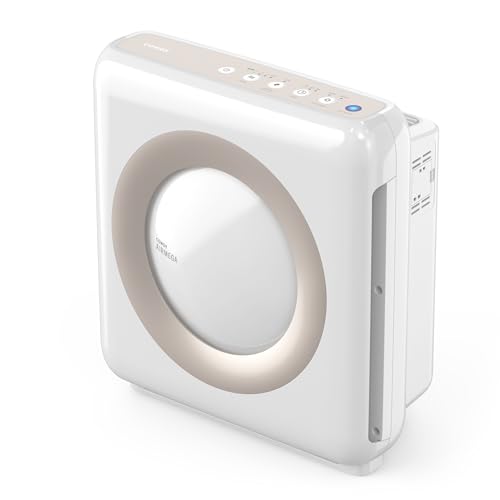
| Coway Airmega 250 | Best for Heavy Shedders | Strong airflow and a washable pre-filter in a design that handles the daily output of double-coated breeds. |
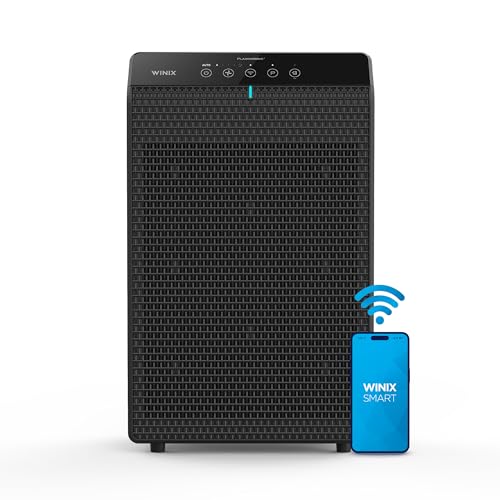
| Winix 5520 | Best Sensor-Driven Helper | An air-quality monitor that notices shake-offs and zoomies, plus a deodorization carbon filter for dog smell. |
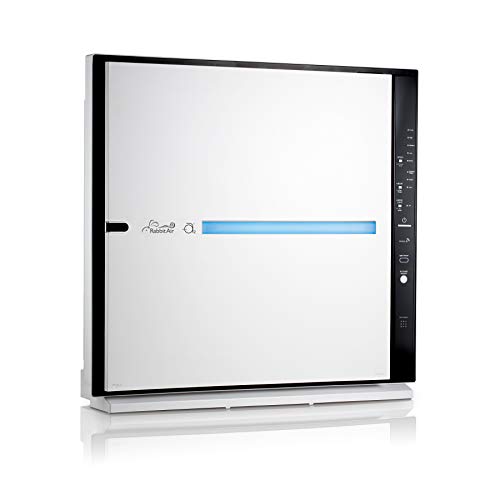
| Rabbit Air MinusA2 SPA-780N | Best for Pet-Allergy Households | A wall-mountable, ultra-quiet panel with a dedicated pet-focused filter configuration and Wi-Fi control. |
| MOOKA PR1 | Best Budget Dog Pick | A large-room machine with a pet mode and an air-quality display at a price that leaves room in the treat budget. |
| Blueair Blue 311i Max | Best Quiet Performer | High delivery at low volume with a washable fabric pre-filter that shrugs off hair between laundry days. |
Every pick assumes a real dog: shedding, shaking, occasionally muddy, and entirely uninterested in your air-quality goals. The sections below judge each machine on how it copes with that reality rather than with a showroom.
How Did We Choose These Picks for Dog Owners?
We began with the hair, because hair is what kills purifiers in dog homes. A fine HEPA element asked to catch floating coat directly will load and choke, so we favored machines with a genuine first line of defense: a washable or vacuumable pre-filter, a wide intake that does not concentrate hair in one corner, and airflow strong enough to keep working as that pre-filter accumulates its daily harvest. Any model whose design ignored hair was cut early, however elegant its other credentials.
Dander came second. The proteins that make some people react to dogs ride on microscopic flakes, and capturing them is a HEPA-grade job that all six picks can do. Odor came third, and here we were honest about the spread: some picks carry meaningful carbon for the wet-dog and dog-bed smells, while others treat odor as a secondary feature and rely on their particle work. We flagged that difference in each section rather than pretending every machine is an odor champion.
The final lens was life with an animal. Machines were judged on noise at sleeping speeds, on whether a curious nose or paw could tip or open them, on cord and filter access, and on how gracefully they handle the seasonal shedding surge that turns April into a second winter indoors. A purifier in a dog home is not a laboratory instrument; it is a household appliance working in a fur storm, and this list respects that.

Levoit Vital 200S — Best Overall for Dog Homes
The Vital 200S is the rare purifier that appears to have been designed by someone who has actually lived with a dog. Its intake wraps a wide area rather than hiding behind a narrow grille, which matters because dog hair arrives in clouds, not in a neat stream. In front of its HEPA and carbon stages sits a washable pre-filter, the single most valuable feature a dog household can buy, because every gram of hair rinsed out of that screen under a tap is a gram that never shortens the main filter’s life. Levoit rates the machine for rooms up to about 1,875 square feet on the hourly convention, with verified standing behind its delivery claims.
Daily manners reinforce the design story. The 200S runs quietly enough for a bedroom at its sleep setting, offers a dedicated pet mode in its smart controls that leans into higher airflow when the house is active, and reports air quality in terms a busy owner can glance at while holding a leash. During shedding season, the routine that emerges is simple: vacuum or rinse the pre-filter weekly, let the machine patrol continuously, and replace the main cartridge on a schedule modestly shorter than the box suggests.
Its compromises are the usual Levoit ones. The carbon portion of the combination cartridge helps with everyday dog smell but will not erase a wet Labrador’s signature from a small room unaided, and the app-centric controls will not charm minimalists. As an overall answer to the dog question, though, nothing else here balances hair handling, verified delivery, quiet, and price as completely.
- Filtration: washable pre-filter plus HEPA and carbon cartridge
- Coverage: rooms up to about 1,875 sq ft in one hour, AHAM Verifide line
- Format: smart floor unit with pet mode and air-quality display
- Ownership note: rinse the pre-filter weekly during shedding season
Strengths
- Washable pre-filter built for hair loads protects the expensive stages.
- Wide intake and strong airflow suit rooms where dogs actually live.
- Quiet sleep operation works in bedrooms shared with a dog.
Trade-offs
- Carbon stage is moderate; heavy wet-dog odor needs ventilation’s help.
- Smart features assume a phone and a Wi-Fi password.
- Shedding season shortens the main cartridge’s comfortable life.
Best for: most dog households, especially single-dog homes with shedding breeds. Not suited for: multi-dog kennels or anyone wanting a purely mechanical machine.
Check price on Amazon.

Coway Airmega 250 — Best for Heavy Shedders
Some dogs shed politely. Others, the double-coated northern breeds, the shepherds, the retrievers in spring, produce a volume of hair that reads less like shedding and more like weather. The Airmega 250 is our pick for those homes because Coway built it around strong, sustained airflow and, critically, a washable pre-filter in front of its HEPA stage, in a cabinet compact enough to stand guard in the room where the dog actually spends the day. Its coverage runs to about 1,860 square feet on the hourly convention, and its smart and rapid modes give it a gear for post-walk shake-offs.
The 250’s design language is calmer than most, a smooth case with a clear air-quality display and a timer, which helps in homes where the purifier shares a room with guests who do not need to know about the fur situation. In rapid mode it visibly earns its keep after a grooming session or a rainy-day towel-off, pulling the suspended fraction down while you sweep the settled fraction up. Owners of heavy shedders consistently describe the same discovery: the machine does not end the vacuuming, but it changes the vacuuming from a losing war to a winning routine.
Coway’s filter pricing sits in the middle band, and the washable pre-filter stretches the main filter’s life in exactly the homes that would otherwise burn through cartridges. The carbon element handles everyday dog smell respectably without pretending to be a deodorizing specialist. For a household measuring its dog’s output in tumbleweeds, this is the sturdiest mainstream answer in the guide.
- Filtration: washable pre-filter, HEPA stage, deodorizing element
- Coverage: rooms up to about 1,860 sq ft in one hour
- Format: compact floor unit, smart and rapid modes, AQI display
- Ownership note: pre-filter care is the key to its shedding-season stamina
Strengths
- Airflow and pre-filter pairing built for serious hair volume.
- Rapid mode answers shake-offs, grooming, and wet-dog arrivals.
- Refined design suits living rooms, not just utility spaces.
Trade-offs
- Purchase price sits above the budget end of the dog category.
- Odor work is competent rather than class-leading.
- Very large open spaces may still want a second unit.
Best for: heavy-shedding breeds and multi-dog living rooms. Not suited for: tiny bedrooms or the tightest budgets.
Check price on Amazon.
Winix 5520 — Best Sensor-Driven Helper
A dog’s air-quality events are sudden: the full-body shake at the door, the zoomies lap that launches a week’s dust off the rug, the grooming session that snows the room. The Winix 5520 is built for exactly that pattern because its air-quality monitor notices the spike and its auto mode answers without being asked. Between events it idles down to a whisper, which in a dog home translates to a machine that works hardest precisely when the dog has done something, and rests when the house is calm.
The filtration pairing suits the brief too. True HEPA media handles the dander fraction, and Winix’s high-deodorization carbon filter gives it more odor game than most sensor-led rivals, useful for the dog-bed corner and the post-rain smell that drifts off a sleeping retriever. Coverage is rated for large rooms up to about 1,882 square feet on the hourly basis, comfortably in family-room territory where most dogs spend their evenings.
Two honest notes. The sensor reads particles, not smells, so auto mode responds to shake-offs better than to odor, which builds silently and is better handled by a baseline continuous speed. And the PlasmaWave feature, which some owners love and others prefer off, can be disabled, leaving a purely mechanical filtration machine. With those understood, the 5520 is the set-and-forget pick for owners who know they will not remember to press buttons on a dog’s schedule.
- Filtration: true HEPA plus high-deodorization carbon filter
- Coverage: large rooms up to about 1,882 sq ft in one hour
- Format: floor unit, air-quality monitor, auto mode, optional PlasmaWave
- Ownership note: run a baseline speed for odor; let auto handle particle events
Strengths
- Sensor and auto mode answer sudden dog-made dust events automatically.
- Deodorization carbon gives it real standing on dog smell.
- Quiet idle suits homes where the machine shares the evening room.
Trade-offs
- Sensor cannot smell odor, so auto mode under-serves the smell problem.
- No washable pre-filter, so hair care means more frequent filter checks.
- Feature set may exceed what a minimalist owner wants.
Best for: busy owners who want the machine to react to the dog on its own. Not suited for: anyone wanting washable pre-filter hair handling above all.
Check price on Amazon.
Rabbit Air MinusA2 SPA-780N — Best for Pet-Allergy Households
When someone in the home reacts to the dog they love, the purifier stops being a comfort appliance and becomes part of how the household keeps its arrangement livable. The MinusA2 is our pick for that serious brief. Rabbit Air offers it with a pet-focused filter configuration within its multi-stage system, the machine runs with exceptional quiet, and its slim panel can mount on a wall, safely above paw height and out of the tail-sweep zone entirely. Wi-Fi control completes a package aimed at bedrooms and living rooms where dander control matters nightly.
The wall-mount option deserves emphasis in dog homes. Floor units get investigated, leaned on, occasionally knocked, and in multi-dog homes sometimes treated as furniture to be claimed. A mounted MinusA2 breathes the room’s air from a position no dog can obstruct, and its intake stays clear of the hair drifts that collect along baseboards. On its stand it is equally composed, with a washable pre-filter and a customizable filter slot that lets the household tune the stages toward pet dander or odor as their priorities shift.
Price is the barrier, as it is for most design-led machines, and we will not pretend otherwise. But for the specific household where a family member’s comfort around the dog is the daily question, the MinusA2’s quiet, placement discipline, and tailored filtration justify it. Anyone with health concerns tied to pet dander should, of course, discuss management strategies with a medical professional; the machine is one layer of a household plan, not a medical answer.
- Filtration: multi-stage with customizable filter, pet configuration available
- Coverage: bedrooms and living rooms, wall-mount or stand
- Format: slim panel, Wi-Fi enabled, ultra-quiet operation
- Ownership note: washable pre-filter keeps hair off the tailored stages
Strengths
- Pet-focused filter option within a serious multi-stage system.
- Wall mounting removes it from paw, tail, and hair-drift territory.
- Among the quietest machines here for sensitive sleepers’ rooms.
Trade-offs
- Premium pricing, including its tailored replacement filters.
- Coverage suits rooms rather than whole open floors.
- Mounting asks for a small installation commitment.
Best for: households where a member reacts to dog dander and quiet matters. Not suited for: budget shoppers or very large open-plan spaces.
Check price on Amazon.

MOOKA PR1 — Best Budget Dog Pick
The PR1 makes the dog-owner case at a price that acknowledges the dog has already claimed most of the household budget. MOOKA rates it for large rooms up to about 2,200 square feet, fits an H13-grade true HEPA filter, and, the detail that earns its place here, includes a pet mode that raises airflow for the hours when the dog is active and shedding into the room’s circulation. An air-quality display keeps the owner informed without an app’s ceremony.
Expectations should be set with budget-tier honesty. The PR1’s pre-filter is a basic screen rather than the washable engineered defenses of the Levoit and Coway above, its carbon work is light, and its plastics feel like its price. What it does well is move a lot of air through genuine HEPA-grade media in a big room for very little money, and for a first purifier in a dog home, that core competence matters more than any refinement it lacks. Many households will start here, learn how much purification their dog actually demands, and upgrade with knowledge rather than hope.
Its sleep mode is respectably quiet for the class, which extends its usefulness to bedrooms, and its footprint is modest. If your dog is a moderate shedder and your rooms are large, the PR1 may be all the machine you ever need. If your dog is a fur factory, treat it as an affordable reconnaissance unit and budget accordingly.
- Filtration: H13-grade true HEPA with basic pre-filter and carbon element
- Coverage: large rooms up to about 2,200 sq ft
- Format: floor unit with pet mode and AQI display
- Ownership note: check the pre-filter often; it is a light defense
Strengths
- Large-room HEPA performance at a genuinely low price.
- Pet mode acknowledges how dog homes actually use airflow.
- Display and sleep mode cover the bedroom basics well.
Trade-offs
- Pre-filter and carbon stages are light for heavy shedders and strong odor.
- Build quality and finish trail the premium picks plainly.
- Filter ecosystem is smaller brand, so stock spares ahead.
Best for: first-time buyers and moderate shedders in large rooms. Not suited for: heavy-shedding multi-dog homes wanting a decade-long machine.
Check price on Amazon.

Blueair Blue 311i Max — Best Quiet Performer
Dogs sleep lightly and so, often, do their owners, and the Blue 311i Max is the pick for homes where the purifier must patrol all night without joining the household’s dreams. Blueair’s HEPASilent approach delivers verified large-room performance, with hourly coverage up to about 2,107 square feet, at sound levels that undercut conventional designs, because its hybrid filtration does not need brute fan pressure. In a bedroom shared with a dog, that quiet is not a luxury feature; it is the difference between a machine that runs all night and one that gets switched off at midnight.
The dog-specific virtue is its washable fabric pre-filter, which wraps the unit and catches the coat before it reaches the main filter. It vacuums clean in seconds and launders when needed, and in a shedding home that outer layer becomes a visible diary of the machine’s work. Wi-Fi and auto mode handle the scheduling, and the design, a soft cylinder rather than an appliance box, sits more gracefully in a finished room than most of its rivals.
The trade-offs mirror its larger sibling: hybrid filtration will not suit mechanical-only purists, and replacement filters are priced at the premium end. Its carbon capacity is modest, so dog smell is managed rather than conquered. For households whose dog problem is primarily hair and dander in rooms where people sleep, the 311i Max is the most civilized tool in this guide.
- Filtration: HEPASilent hybrid with washable fabric pre-filter
- Coverage: up to about 2,107 sq ft hourly, AHAM Verified line
- Format: cylindrical floor unit, Wi-Fi and auto mode
- Ownership note: vacuum the fabric pre-filter as part of weekly cleaning
Strengths
- Verified delivery at bedroom-friendly sound levels.
- Washable fabric pre-filter is ideal for hair interception.
- Graceful design and simple controls suit shared living spaces.
Trade-offs
- Premium filter pricing over the machine’s life.
- Carbon stage is light for strong dog odor.
- Hybrid filtration approach is a matter of principle for some buyers.
Best for: bedrooms and quiet homes with shedding dogs. Not suited for: odor-led problems or strict HEPA-only shoppers.
Check price on Amazon.
Comparison Table
| Pick | Hair defense | Coverage | Strongest suit |
|---|---|---|---|
| Levoit Vital 200S | Washable pre-filter, wide intake | Up to ~1,875 sq ft/hr | All-round dog duty |
| Coway Airmega 250 | Washable pre-filter, strong airflow | Up to ~1,860 sq ft/hr | Heavy shedders |
| Winix 5520 | Standard pre-filter, sensor response | Up to ~1,882 sq ft/hr | Automatic event handling |
| Rabbit Air MinusA2 SPA-780N | Washable pre-filter, wall placement | Rooms, mounted or standing | Sensitive households, quiet |
| MOOKA PR1 | Basic screen, pet mode airflow | Up to ~2,200 sq ft | Budget large rooms |
| Blueair Blue 311i Max | Washable fabric pre-filter | Up to ~2,107 sq ft/hr | Quiet bedrooms |
The hair-defense column is the one to read first. In dog homes, purifiers rarely fail at filtration chemistry; they fail at housekeeping, choked by the coat they were never designed to swallow. Choose the defense your dog’s shedding honestly requires.
What Is the Difference Between Dog Hair, Dander, and Dog Smell?
These three exports of a dog behave so differently that treating them as one problem guarantees disappointment. Hair is the visible fraction: long, light, and prone to drifting into corners, onto upholstery, and into any intake foolish enough to sit unprotected at floor level. It barely floats for long, which is why vacuuming and pre-filters, the mechanical defenses, do most of the work against it. A purifier’s role in the hair war is catching the suspended fraction during shake-offs and play, before it lands somewhere new.
Dander is the invisible fraction and the one that matters to people who react to dogs. It consists of microscopic skin flakes carrying proteins, small enough to remain airborne for extended periods and to penetrate deep into a room’s soft furnishings. This is HEPA’s home turf: a sealed machine with genuine HEPA media, run continuously in the rooms where the dog and the sensitive person both spend time, measurably lowers the airborne load. It does not make a dog hypoallergenic, a word with no honest application to living animals, and anyone managing a real sensitivity should build their plan with a medical professional, with the purifier as one supporting layer among grooming, cleaning, and room habits.
Smell is the social fraction. Dog odor comes from skin oils, ears, the bed, and the occasional regrettable rolling incident, and it is carried by gases and by the dander itself. Carbon stages adsorb part of it, ventilation dilutes it, and washing the dog and the bedding removes it at the source. The households that conquer dog smell are the ones that work all three levers, and they are also the households whose visitors stop performing the polite sniff at the door.
Where Should a Purifier Stand in a House With a Dog?
Put the machine where the dog is, not where the floor plan looks tidy. The room where the dog sleeps and spends its evenings generates the overwhelming majority of hair, dander, and odor, and a purifier two rooms away, however powerful, is filtering a rumor. In practice this means the living room for most households, the bedroom for dogs who sleep with their people, and occasionally a second, smaller defense in the room of a family member who reacts most strongly.
Within the room, height and clearance decide performance. Intakes need open air on all sides the manufacturer specifies, and the unit should stand clear of the drifts that collect along walls and under furniture, or it will spend its strength vacuuming the corner’s hair tumbleweeds through its pre-filter. Keep it out of the direct shake zone beside the dog’s bed if you can; a few feet of distance lets the cloud disperse into the room’s circulation, where the machine can patrol it evenly, instead of slamming the pre-filter with every nap’s-end shake.
Cord discipline is a dog-specific concern. A trailing cable invites chewing from puppies and tripping from everyone, so route it along walls, use the shortest sensible path to the outlet, and never let a young dog treat the machine’s cord as part of the toy collection. Wall-mounted designs like the Rabbit Air exist partly to retire this entire category of worry.
How Do You Keep a Purifier Alive in a Shedding Household?
The maintenance rhythm of a dog home is set by the dog, not the manual. Pre-filters in shedding season may need vacuuming or rinsing weekly, and the honest way to discover your interval is to look: when the screen wears a visible sweater, it is overdue. Main filters follow behind, and most dog households should expect to replace them somewhat sooner than the manufacturer’s average-home estimate, with spring and autumn shedding surges doing most of the damage.
Grooming is the purifier’s upstream ally. A dog brushed outdoors twice a week exports a remarkable share of its loose coat directly to the garden instead of to your filters, and a bath on a sensible schedule reduces both dander load and odor at the source. The dog bed deserves equal billing: wash it and its cover regularly, because a bed that has absorbed months of oils will re-emit dog smell into freshly purified air all night, and owners will blame the innocent machine humming beside it.
Finally, vacuum like you mean it, with attention to the soft furnishings where dander settles. A purifier can only clean air that reaches it, and the settled fraction on sofas and rugs re-enters the air with every sit and step. The four-part routine, groom, wash, vacuum, purify, is unglamorous and completely effective, and no single element of it, including the machine this guide exists to recommend, can carry the whole job alone.
What Changes With Puppies, Senior Dogs, and Multiple Dogs?
A puppy changes the brief toward safety and accidents. Young dogs chew, investigate with their mouths, and have housetraining incidents that test a room’s air in ways no filter anticipates. Machines for the puppy months should be stable, hard to tip, free of chewable cords, and easy to clean around, and expectations should be set for odor events that are cleaning problems first and air problems second. The good news is that the puppy phase is temporary, and a machine bought for it will serve the adult dog for years.
Senior dogs bring a quieter set of changes: more sleeping hours in one beloved spot, sometimes a stronger odor as skin and ears age, and occasionally medications or conditions that a veterinarian should guide. The purifier’s job concentrates around that sleeping spot, and a quiet machine placed thoughtfully nearby improves the corner for dog and household alike. Comfort, not performance metrics, is the right lens for this stage of a dog’s life.
Multiple dogs multiply everything except subtlety. Two dogs are not twice one dog in air terms; they wrestle, they synchronize their shedding to no known calendar, and their combined odor has a compounding quality. Multi-dog homes should size up a class, consider the heavy-shedder picks seriously, and in large homes accept that two machines in the two doggiest rooms outperform one hero unit in a hallway. The arithmetic of dog ownership is never linear, and air care is no exception.
What Mistakes Do Dog Owners Make When Buying a Purifier?
The first mistake is buying for the dog in the advertisement: a serene, short-haired model animal who sheds a tasteful handful of hair per season. Owners of real dogs, particularly the magnificent double-coated kind, should buy for the animal asleep on their own rug. The second mistake is the opposite despair, assuming nothing can help and buying the cheapest box available, which then fails and confirms the despair. The middle path, a machine with real hair defenses sized honestly for the room, is where satisfaction lives.
Placement errors follow. The purifier exiled to a hallway because it clashed with the living room’s look, the unit sealed in a closet-adjacent corner, the intake blocked by the dog’s own crate: each converts a capable machine into decor. Filter neglect is the fourth error, and in dog homes it arrives early, because a pre-filter blinded by hair in month two makes a fine purifier perform like a broken one.
The final mistake is expecting the machine to absolve the household of grooming and cleaning. A purifier in an unvacuumed, unwashed-bed dog home is a violinist on a sinking ship, playing beautifully and changing nothing. Owners who pair the machine with the routine described in this guide are the ones who write the reviews that sound like miracles; the miracle is the routine, with the purifier as its hardest-working member.
How Does Shedding Season Change What Your Purifier Has to Do?
Twice a year, most double-coated dogs perform the event owners call blowing the coat, and for several weeks the house receives a daily snowfall of undercoat that no single appliance was designed to greet calmly. During the blow, the purifier’s job quietly changes character: it stops being a dander instrument and becomes a hair-management system whose pre-filter is the front line. Owners who understand the shift increase their pre-filter care to a twice-weekly rhythm, run the machine a speed higher than usual, and accept that the vacuum works overtime too. Owners who do not understand it conclude their purifier has failed, when it has merely been outnumbered.
The season also argues for sizing honesty earlier in the year. A machine bought in the calm of winter at exactly its room’s rating will spend April at its limit, loud and losing. The picks in this guide with headroom, the Coway for stamina and the Levoit for its hair-hungry intake, earn their premiums in those weeks. If your dog’s breed is famous for the blow, shop in winter with April in mind, and let the quieter months be the machine’s holiday rather than its trial.
There is a grooming corollary worth its weight in filters: a thorough outdoor brushing during the blow exports hair by the bagful before it ever becomes airborne indoors. Professional groomers earn their spring fees partly as air-quality contractors in disguise. However you schedule it, coat management outside the house is the cheapest purification that exists, and the purifier’s filters will file their gratitude in extended life.
Can Cleaner Air Do Anything for the Dog Itself?
Owners naturally wonder whether the machine benefits the animal as well as the household, and the honest answer is a modest yes with clear limits. Dogs breathe the same room air people do, and a home with lower dust and particle loads is a pleasanter breathing environment for every set of lungs in it, particularly in wildfire season or in homes where cooking and traffic pollution are part of the background. Brachycephalic breeds, the flat-faced dogs who work harder for every breath, are often cited by owners as seeming more comfortable in well-managed indoor air on smoky or high-pollen days.
The limits matter as much as the benefit. A purifier is not a treatment for any canine condition, and breathing changes in a dog, coughing, wheezing, lethargy, belong to a veterinarian, not to an appliance purchase. Similarly, a purifier does not protect a dog from household hazards like cleaning-product fumes in the moment; ventilation and keeping chemicals away from animals do that work. Think of clean air as good husbandry, in the same category as clean water and a washed bowl, worthwhile precisely because it is ordinary.
One dog-specific caution belongs here: scented extras. Some owners add fragrance oils or scented attachments near machines to perfume a dog home, and dogs, with noses orders of magnitude more sensitive than ours, experience those choices at an intensity we cannot imagine. A purifier’s purpose is removing things from air. Let it do that job unscented, and let the dog’s extraordinary nose enjoy a neutral room for once.
How Do You Match a Purifier to Your Dog’s Size and Breed?
Start with the coat, not the weight. A large short-haired dog may export less airborne material than a small long-coated one, and the breed’s shedding reputation predicts your filter’s workload better than the animal’s scale. Non-shedding and low-shedding breeds shift the brief almost entirely toward dander and odor, where a quieter, smaller machine with good HEPA credentials serves beautifully and the hair defenses become a minor consideration. At the other extreme, the celebrated heavy shedders justify the guide’s stamina picks on their own.
Energy level is the second variable. A young, athletic dog generates air events all day: arrivals, departures, wrestling matches with toys, and the post-walk shake that functions as a domestic weather system. Sensor-driven machines like the Winix earn their keep in those homes by answering events automatically. A placid senior dog generates a steadier, gentler load concentrated around one sleeping place, where a quiet constant machine, thoughtfully placed, is the whole answer.
Finally, count the humans’ sensitivities honestly, because they often outweigh the dog’s contribution to the decision. A non-shedding dog in a home with a reactive teenager may need the MinusA2’s tailored seriousness more than a shedding dog in a home of the unbothered needs anything at all. The dog sets the workload; the household sets the standard; the right machine is the one that satisfies both ledgers at once.
What If the Dog Lives in an Apartment or a Small House?
Small homes concentrate everything a dog produces, which cuts in the owner’s favor more than expected. In a one-bedroom apartment, a single well-placed purifier genuinely patrols the dog’s whole world, because the dog’s whole world is a few hundred square feet with the machine at its center. The apartment dweller’s challenge is not coverage but intensity: the dog bed is near the sofa, the sofa is near the kitchen, and there is no spare room where smells go to fade. Continuous running at a modest speed, the rhythm this guide keeps recommending, is precisely the apartment strategy, and the quieter picks repay their price in spaces where the machine is never more than a room away from a sleeping human.
Neighbors add a diplomatic dimension. Dog odor that escapes under a door into a shared hallway becomes a building-relations issue, and a purifier near the dog’s main area, paired with a door sweep, keeps the household’s air its own business. Landlords, too, notice the difference at inspection time between a dog home that managed its air and one that merely housed a dog, and the deposit conversation tends to reflect it.
Small-space owners should also respect the machine’s physical claim on the floor. In a compact apartment, a purifier competes with the dog bed, the water bowl, and the humans’ feet for the same square footage, which makes the slim and wall-mounted formats more than aesthetic choices. Measure the corner before ordering, and remember the dog will vote on the placement with its body, daily, by sleeping wherever it pleases regardless of your plan.
Why Does the Dog Bed Deserve Its Own Paragraph in an Air Guide?
Because in most dog homes, the bed is the single largest odor reservoir in the room, and it sits, by design, exactly where the dog spends a third of its life breathing. Months of skin oils, outdoor residue, and the occasional damp paw print accumulate in foam and fabric that no surface wipe reaches. A purifier beside an unwashed dog bed is engaged in an unwinnable negotiation, removing odor from the air while the bed calmly re-supplies it, and owners experiencing that stalemate often upgrade their machine when they should have laundered their bedding.
The fix is cheap and transformative: a bed with a removable, washable cover, washed on the same rhythm as the household’s own sheets, and a foam core aired outdoors on dry days. Homes that adopt the habit report that the purifier’s odor problem shrinks to the dog itself, a far more tractable source that baths and time manage well. Some owners keep two covers in rotation so the bed is never out of service, a small logistics trick borrowed from hotels and nurseries.
Placement interacts here too. A purifier a few feet from the bed, drawing the corner’s air across its carbon stage through the night, gives a sleeping dog and a sleeping household the cleanest shared air in the home. That corner, bed washed and air patrolled, is where the whole dog-and-purifier project quietly succeeds or fails, and it deserves the attention this paragraph exists to demand.
How Should You Introduce a Purifier to a Nervous or Curious Dog?
The appliance arrives as a stranger in the dog’s territory: a humming box with moving air and interesting smells of warm electronics. Most dogs investigate it for an afternoon and file it under furniture, but the introduction is worth doing deliberately. Let the dog sniff the unplugged machine, reward calm indifference, and run it first at its lowest speed while the household is present and relaxed. A machine that appears during a calm weekend becomes background; a machine that roars to life at full speed during a thunderstorm risks a lasting association in a sensitive dog’s mind.
Curiosity management matters for the machine’s sake as much as the dog’s. Puppies and adolescents may paw at grilles, nose at displays, or test whether the unit tips, and a stable, heavy, or wall-mounted design survives this audit better than a tall lightweight tower. Keep the filter door’s latch out of the puzzle-solving reach of clever breeds, route the cord beyond chewing range, and never let the purifier become the household’s most interesting object by reacting dramatically when the dog studies it. Boredom is the goal for everyone involved, and it usually arrives within a few uneventful days.
Sound sensitivity deserves a specific mention, because a few dogs genuinely dislike fan noise at particular pitches. If your dog avoids the room after installation, experiment with speed settings before concluding the machine must go; often a lower constant speed sits in a frequency the dog ignores, while a cycling auto mode’s changes are what unsettled it. The household’s air and the dog’s peace are both legitimate requirements, and the right settings usually satisfy both.
What Does a Year of Purifier Ownership Look Like in a Dog Home?
Month one is the honeymoon, when the difference announces itself to visitors and the pre-filter’s first harvest provides grim satisfaction. Months two and three settle into the routine this guide has described: pre-filter care on a rhythm set by the dog, a baseline speed humming under the household’s life, and the slow realization that the entryway no longer smells like the kennel at a motorway service station. This is also when owners learn their machine’s true voice at each speed and stop noticing it entirely, which is the appliance’s definition of success.
The shedding seasons write the year’s dramatic chapters, and the first one teaches the household its real filter intervals. Owners who marked installation dates and kept a spare filter in the cupboard sail through; owners who did neither learn the lesson once, at the price of a week of diminished performance while a delivery travels. By the second season the household runs like a small, competent facilities department, and the dog, who never asked for any of this machinery or management, sleeps through all of it in noticeably fresher air, dreaming whatever it is that well-kept, well-walked, well-loved dogs dream about on their very best, deepest, most contented nights of the whole long year ahead.
Year’s end brings the honest accounting: filters bought, electricity spent, guests who stopped sniffing, and a dog bed that gets washed without being asked. Against that ledger, most owners in this category renew their commitment without drama, often promoting the first machine to a second room and buying its successor for the dog’s headquarters. That quiet upgrade path, from one room to the dog’s whole world, is how purifiers become permanent furniture in the homes of people who share their lives with animals.
Final Recommendation
Most dog households should start with the Levoit Vital 200S: its washable pre-filter, wide intake, verified delivery, and pet-aware controls answer the hair, dander, and everyday-smell questions in one fairly priced machine. Homes with heavy shedders should step up to the Coway Airmega 250’s stamina, busy owners to the Winix 5520’s automatic responses, sensitive households to the Rabbit Air MinusA2’s tailored quiet, and quiet bedrooms to the Blueair Blue 311i Max. The MOOKA PR1 remains the honorable budget door into the category, best for moderate shedders and large rooms.
Whichever machine joins your household, give it the routine that lets it win: groom the dog, wash the bed, vacuum the soft things, and let the purifier patrol what’s left. Do that, and the house starts to smell like a home that has a dog, rather than a dog that has a house. Your visitors will notice the difference before your dog does, and your dog, unbothered and beloved, will go on shedding into a cleaner world.
A word about expectations at the shelter end of the story, because many readers meet this guide while preparing to bring a dog home for the first time. Set the purifier up before the dog arrives, in the room the dog will live in, and let it be part of the furniture the animal discovers on day one rather than a novelty introduced during the fragile first week. Stock the first spare filter at the same time as the very first bag of food and the first roll of waste bags. The household that treats air care as a settled, ordinary part of the adoption paperwork, right alongside the vet visit and the fence check, starts the whole relationship on the right side of the shedding curve, and the dog, who will never know any of this happened, benefits from it every night it sleeps in its new home.
Travel deserves a footnote in the same spirit. Dogs who holiday with their families carry their air signature into rental homes and relatives’ spare rooms, and a compact machine is not part of most packing lists, which is perfectly fine in practice: a week away is a cleaning and courtesy matter, handled with sheets over furniture, a borrowed vacuum, and a dog bed of your own rather than the host’s rug. The purifier’s kingdom is the home base, and it will be waiting, filters rested, when the traveling circus returns with its cargo of new smells and excellent stories.
Frequently Asked Questions
Can an air purifier make my home safe for a guest who reacts to dogs?
It can lower the airborne dander load substantially, especially run continuously in advance of a visit alongside thorough cleaning, but it cannot guarantee a reaction-free visit. Sensitivities vary enormously, and guests with significant reactions should be consulted honestly rather than reassured by an appliance. Many households combine purification, a dog-free guest room, and advance warning with good results.
How often will my filters need changing with a dog?
Sooner than the box says. The manufacturer’s interval assumes an average home, and a shedding dog is not average. Expect to care for the pre-filter weekly to monthly and to replace main filters somewhat ahead of schedule, with shedding seasons doing most of the loading. When airflow or odor performance fades, the filter is telling you its news.
Should the purifier run all day, or only when the dog is indoors?
Continuous running wins, because dander settles and re-launches with activity all day, including the hours the dog spends outside leaving its residue behind. A baseline speed with automatic boosts, where available, balances electricity and effect. At minimum, run it through the evening and overnight in the rooms the dog favors.
Will a purifier help with wet-dog smell after a walk?
It will shorten the smell’s visit considerably, especially a model with a real carbon stage and a rapid mode, but the fastest fix is still toweling the dog and ventilating the entry area. Think of the purifier as clearing the aftermath over the following hour rather than canceling the event, and dry the dog’s bed if it took the damp with it.
Is one large purifier or two smaller ones better for a dog household?
Follow the dog. If the dog’s life centers on one room, one strong machine there beats two diluted ones. If the dog divides its day between a living room and a bedroom, two right-sized machines, one in each, will outperform any single unit. Hallway placements serve neither room and satisfy no one.
Do I still need to vacuum if I own a good purifier?
Yes, and the purifier’s existence makes vacuuming more effective rather than less necessary. The machine handles the airborne fraction continuously; the vacuum removes the settled reservoir that would otherwise re-launch into the air indefinitely. Households that do both notice the compounding benefit within a fortnight.
Related Guides
Brand loyalists curious about the design-led end of the market should read Best Dyson Air Purifiers next. For the deeper dive into dander science and household routines, Best Air Purifiers for Allergies and Pet Dander is the natural companion. And if damp is adding a musty layer to the dog smell, Best Air Purifiers for Mold covers the moisture side of the problem.