Our Top Picks
 ENGEL 60 QT Ultra-Light Injection Molded Cooler60 quarts18 x 29.5 x 17 inches21.5 poundsCheck on Amazon
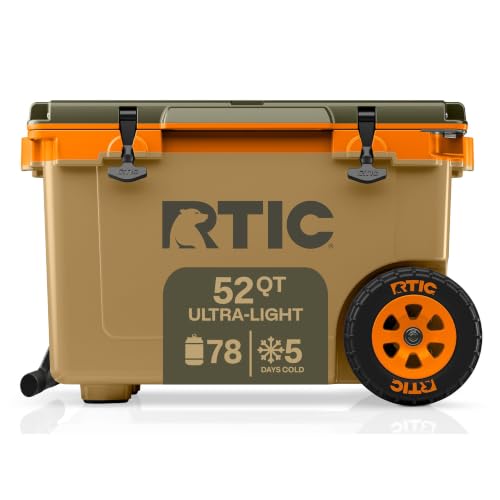 RTIC 52 QT Ultra-Light Wheeled Hard Cooler52 QT17.72 x 26.5 x 17.33 inches28.5 poundsCheck on Amazon


What's inside
As an Amazon Associate I earn from qualifying purchases. This post may contain affiliate links at no extra cost to you.
A cooler that still has solid ice on day four changes what a trip can be. It changes the menu, because perishable food stays cold instead of becoming a worry by the second morning. It changes the route, because you do not need to detour for a bag of ice every day. It changes the mood at camp, at the lake house, at a tailgate that turns into a full weekend, or on a long drive where the nearest store is not close at all. The coolers that hold ice the longest are not magic boxes, though. They are the result of insulation, lid design, how you pack, and how often warm air is allowed inside. This guide looks closely at eight hard coolers ranging from 50 quarts to 150 quarts, explains what actually decides ice retention, and helps you match a size and style to the length of trip you really take.
Our research focused on a single axis: multi-day cold holding. That means we checked the product titles and the details given there first, and we were careful not to assign a day count where a title does not state one. Only three models in this group carry an explicit retention claim in their titles. The ENGEL 60 QT model says it keeps ice up to 7 days. The KOTEK 74 QT wheeled model and the Coleman Classic 150-Quart model each say up to 6 days. For the other five coolers, the titles describe capacity, insulation, wheels, handles, or features, but they do not promise a specific number of days, so this guide does not invent one for them. Instead, for those models we discuss the construction and practical traits that tend to support longer ice life, and we leave the day count unstated, because an honest guide is more useful than a tidy but made-up ranking.
That distinction matters for cottage and camp use in particular. A cooler that lives on a shaded porch, gets opened a handful of times a day, and starts the weekend pre-chilled and packed correctly will behave very differently from the same cooler sitting in full sun on hot pavement and being opened every few minutes by a crowd. Any up-to figure assumes favourable conditions and good packing. Your job as the owner is to create those conditions. The second half of this guide is devoted to exactly that: pre-chilling, ice ratios, block ice versus cubes, draining habits, shade, and lid discipline. Buy a capable cooler, then give it a fair chance, and the gap between a two-day disappointment and a genuinely long hold often closes.
What Actually Decides How Long Ice Lasts
Ice melts because heat gets in. That simple fact organises everything else. Heat moves through the walls and lid by conduction, it leaks through gaps around the lid seal, it arrives as warm air every time the lid opens, and it radiates from sun-heated surfaces. A long-hold cooler slows all four routes. Thick, continuous insulation in the walls and especially in the lid slows conduction. A well-fitting lid and a flexible gasket reduce air exchange. A light exterior colour reflects more sunlight than a dark one. And a full, tightly packed interior leaves less warm air trapped between items in the first place. No single feature wins on its own. Retention is a system, and the weakest part of the system, often the lid or the packing, sets the real limit.
Insulation in the walls and lid
Insulation is the headline factor, but thickness alone is not the whole story. What matters is how much insulating material surrounds the cold space on all sides, including the top, and whether there are thin spots or gaps where heat can shortcut through. Heat rises, and the lid is also the part most exposed to sun, so a lid with meaningful insulation matters at least as much as the walls. One model in this group, the Igloo Trailmate 50 Qt, makes the point concrete in its title: it lists 1.5-inch foam walls and lid. That kind of specific detail is helpful because it tells you insulation was treated as a whole-box property, not just a side-wall property. Other titles in this group use more general language, such as insulated or Ultratherm insulation in the case of the Igloo Polar 120 Qt, which signals an insulated body without giving a thickness figure in the title, so we do not assign one.
Construction method also plays a role in how a cooler feels and ages. Injection-moulded and other hard-sided builds aim for a rigid shell that protects the insulation and keeps the lid seating true over years of use. If a lid warps or a corner is damaged, the seal suffers and retention falls, even if the insulation itself is unchanged. When you compare models, think about insulation and structural honesty together: a cooler that stays square, closes cleanly, and keeps its shape in a loaded car boot or truck bed will hold ice more consistently in its third season than it would if the lid no longer sat flush.
The lid, the seal, and warm air
Every opening trades cold air for warm air. Cold air is dense and spills out when a lid is lifted wide, and the replacement air that rushes in must then be cooled by your ice, which spends some of that ice in the process. A gasket, the flexible seal around the lid, helps when the lid is closed by reducing slow leakage, and a lid that latches or seats firmly helps the gasket do its work. You can support this at home: keep the sealing surfaces clean, do not store the cooler with something wedged in the lid, and avoid overpacking so the lid has to be forced down. A lid that closes easily and evenly is not a small detail. It is the difference between a sealed cold space and a box with a warm leak running around its rim all weekend.
Lid discipline is the behavioural half of the same factor. Decide what you need before you open the cooler, take out several items at once, and close the lid promptly. On group trips, a separate smaller drinks cooler that gets opened constantly can protect the main food cooler, which then only opens at mealtimes. Several models in this group include cup holders in the lid or nearby, including the VEVOR 74 QT and the KOTEK 74 QT, which sounds like a convenience detail, and it is, but it also hints at how these coolers are used in real life: as tables, seats, and gathering points. The more a cooler doubles as furniture, the more important it becomes to keep the main opening brief and purposeful.
Colour, sun, and where the cooler sits
Exterior colour influences how much solar heat the shell absorbs. A pale grey or light finish will generally run cooler in direct sun than a dark finish left in the same spot. One model here, the ENGEL 60 QT in Haze Grey, wears a light tone, while the Coleman Classic 150-Quart in Twilight suggests a darker presentation, and the KOTEK 74 QT is listed in grey. Colour should not override capacity or construction when you choose, because shade is a stronger lever than colour: moving any cooler out of direct sun, off hot ground, and into moving air or under a canopy will do more than colour alone. Still, if two suitable models are otherwise close for you and one will live in an exposed, sunny spot, the lighter exterior is a sensible tiebreaker.
The ice-to-contents ratio and packing density
A widely used rule of thumb in the category is to aim for roughly twice as much ice as contents by volume for the longest holds, sometimes described as a two-to-one ice ratio, with a lower ratio being acceptable for shorter or less demanding trips. The logic is straightforward: ice is your cold battery, and food and drink that start warm will spend that battery just getting cold. A half-empty cooler is also a cooler full of air, and air warms the load each time it circulates. Pack tightly, fill gaps with ice or with cold items, and avoid leaving a large empty headspace under the lid. If you do not have enough contents to fill a big cooler, a smaller cooler packed full will often outperform it. That is one reason this guide includes a genuine spread of sizes, from 50 quarts up to 150 quarts, rather than assuming bigger is always better.
The form of ice matters too. Block ice melts more slowly than the same weight of small cubes because it has less surface area exposed to warmer air and meltwater, so blocks or large frozen bottles are a good foundation for multi-day trips. Cubes and crushed ice chill quickly and fill gaps well, so many experienced campers use both: blocks at the bottom and around the sides, cubes worked into the spaces between items, and a layer on top, because cold sinks and the top layer protects the load below as the lid opens. Frozen water bottles have the added benefit that the meltwater stays contained and becomes drinking water later. Whichever form you choose, start with as much of the load already cold as you can. Ice should be maintaining cold, not creating it from room temperature on the first evening.
Pre-chilling the cooler and the load
Pre-chilling is the most skipped step and one of the most effective. A cooler stored in a warm garage has warm walls, and your first ice will spend itself cooling the box instead of the food. The remedy is to bring the cooler indoors or into shade the day before, and to sacrifice a small amount of ice, or use frozen bottles, to pull the interior temperature down before the real pack. Chill or freeze the contents in advance as well. Drinks that go in cold, meat that goes in properly chilled or frozen where appropriate, and produce that is already cool all preserve the ice budget for holding, rather than spending it on the initial pull-down. On a long trip, this single habit, repeated calmly the night before, is worth more than anxious ice buying on the road.
Drainage is the related judgement call. Meltwater is cold, and a closed cooler with some meltwater around sealed containers is not automatically a problem. However, standing water can also transfer heat to items and can compromise packaging, and many campers prefer to drain excess water through the drain plug once a day while keeping the lid opening brief, or to leave the water if the load is well sealed and the trip is short. There is no single rule that fits every load. What is consistent is this: do not open the lid repeatedly just to check the water, do not leave the drain open, and keep raw food sealed and separated so meltwater never becomes a food-safety issue. Food safety always outranks ice economy. Keep perishables properly cold, and discard anything that has spent too long in the danger zone rather than trying to rescue a packing plan.
best beach chairs with canopy and cup holders
The Eight Coolers, Reviewed One by One
The eight models below fall into natural groups. There are the mid-size 50 to 60 quart coolers that suit a couple or a small family for a long weekend, the 74 quart wheeled models built for heavier loads and longer stays, and the very large 120 and 150 quart chests for groups, boats, and base camps. Each review sticks to what the product title states, plus general category knowledge, and flags clearly where a day count is stated and where it is not.
ENGEL 60 QT Ultra-Light Injection Molded Cooler
The ENGEL is the clear headline model in this group for stated retention, because its title says it keeps ice up to 7 days, the longest explicit claim among the eight. At 60 quarts, it sits in the versatile middle: large enough for a family long weekend or a small group, without becoming a two-person lift as a matter of routine when fully loaded. The title describes it as ultra-light and injection moulded, a pairing that will appeal to anyone who has to move a cooler between a vehicle, a dock, and a cottage porch several times in a trip. A lighter empty weight means more of what you carry is ice and food, not box.
The included accessories in the title are practical rather than decorative: a wire basket, a divider, and a built-in bottle opener. A basket that sits above the main load helps keep smaller or delicate items out of meltwater and makes them reachable without digging, which in turn shortens lid-open time. A divider helps organise the interior so food and drinks are not a single jumbled mass, again making each opening faster and more targeted. The bottle opener is a small thing until the first evening when nobody can find one. In Haze Grey, the finish is light in tone, which as discussed is a modest advantage in sunny placements. If your priority is the strongest stated multi-day claim in a manageable size, and you value organisation inside the box, this is the model our research would put at the top of the shortlist for comparison. As with any up-to claim, reaching the upper end will depend on pre-chilling, a generous ice ratio, shade, and restraint with the lid.
VEVOR 74 QT Portable Cooler with Wheels
The VEVOR 74 QT model is described in its title as a portable, insulated wheeled cooler with ice retention, heavy-duty handles, and a cup holder. The title does not state a specific number of days, so we do not assign one. What it does state is a useful combination for longer stays: a larger 74 quart capacity, wheels for moving a heavy load without carrying it, and heavy-duty handles for the moments when wheels are not enough, such as steps, soft ground, or lifting into a vehicle. Anyone who has loaded a cooler of this size with ice knows that transport, not capacity, is often the limiting factor. Wheels change who can move the cooler and how far from the car it can sensibly live.
At 74 quarts, this size suits extended weekends, larger families, and trips where drinks and food travel together in one chest rather than being split. The cup holder signals picnic and campsite use, and the overall proposition is value in space and mobility. To get the best retention from a cooler in this class, treat the packing fundamentals seriously: pre-chill the large interior, which has more wall area to cool than a small box, use block ice as a base, and avoid using the big lid as a constantly opened drinks station. Consider keeping the most frequently wanted drinks near the top or in a separate small cooler, so the main chest stays closed. Handled that way, a 74 quart wheeled cooler is a strong base-camp choice, even without a headline day figure in its title.
KOTEK 74 QT Portable Cooler with Wheels
The KOTEK, also at 74 quarts and in grey, makes an explicit claim in its title: ice retention up to 6 days. That puts it alongside the Coleman 150-Quart as one of only three stated multi-day claims in this group, and it does so in a wheeled, rolling format. For many buyers, that combination is the sweet spot: a stated long hold, a size that can serve a family or small group for most of a week, and wheels to move it. The title also lists two ice packs included, a fish ruler, and phone and cup holders. The ice packs are a welcome starting point, though on a true multi-day pack they will supplement rather than replace a full load of ice. The fish ruler points to angling use, where keeping a catch cold and measuring it at the cooler are both everyday needs, and the phone and cup holders point to the cooler as a social hub at camp or on a dock.
In practical terms, think of the KOTEK as the fishing and family-week option in the 74 quart class. The rolling design helps on paths, ramps, and hard ground, while the stated 6-day ceiling gives you a clear expectation to plan around, provided you pack for it. Anglers in particular should note the lid discipline point: a cooler opened repeatedly to add fish will not hold like a cooler left sealed, so plan the day so the food load and the catch are managed thoughtfully, with food safety first. If you want a stated retention figure without stepping up to the very large chests, this model deserves close attention.
Coleman Classic Insulated Portable Cooler, 150-Quart
The Coleman Classic at 150 quarts is the largest cooler in this group, and its title states that it keeps ice up to 6 days. It also states a distinctive secondary use: the Have-A-Seat lid supports up to 250 pounds. That tells you two things about the intended role. First, this is a group, event, and base-camp chest, built to hold food and drink for many people over many days. Second, the lid is built to be sat on, which at a crowded site, a boat, or a sports sideline is genuinely useful and saves chairs. The colour listed is Twilight.
Size this large is a commitment. Filled with ice and contents, a 150 quart cooler is a heavy, bulky object that needs a suitable vehicle, a clear place to live at the destination, and ideally wheels or help for any distance, neither of which the title claims for this model, so plan the carry honestly. The reward for that commitment is headroom: you can achieve a strong ice ratio without crowding out food, you can use generous block ice, and you can open the lid for a group meal without the interior being a tight puzzle. For a cottage week with a full house, a reunion, a team weekend, or a hunting or fishing camp feeding many people, the stated 6-day claim at this scale is compelling. For a couple on a two-night trip, it is almost certainly more cooler than you need, and a smaller box packed full would serve you better.
Igloo Polar 120 Qt. Cooler
The Igloo Polar at 120 quarts is the second-largest model here, and its title emphasises capacity in a different unit: it holds 188 cans. It names Ultratherm insulation and swing-up handles, and it describes the cooler as an insulated ice chest. The title does not state a day count, so we do not provide one. The can count is a useful translator for event planning, because it lets organisers picture drinks volume for a party, a tournament day, or a large family gathering without converting quarts in their heads. Swing-up handles are a classic, straightforward carrying solution on a large chest, giving a firm grip on each side for a two-person lift.
Think of the Polar as the high-volume workhorse for gatherings where drinks are the main load and the cooler will be positioned once and then used in place. At this size, your retention strategy is mostly about starting conditions: pre-chill if you can, load cold drinks rather than warm ones wherever possible, because chilling a very large quantity of warm cans will consume a great deal of ice regardless of the box, and keep the cooler shaded. A pale, practical event cooler of this scale is not trying to be a precision expedition tool. It is trying to keep a lot of refreshment cold for a lot of people, and judged on capacity, named insulation, and simple handles, that is exactly the role its title describes.
RTIC 52 QT Ultra-Light Wheeled Hard Cooler
The RTIC 52 QT model, in the Trailblazer presentation, is described as an ultra-light wheeled hard cooler and an insulated ice chest box. Its title does not state a number of days, so none is claimed here. At 52 quarts, it sits at the compact end of this group alongside the two 50 quart models, but it distinguishes itself by combining that size with wheels and an ultra-light description. That pairing is aimed at a very common frustration: even a mid-size cooler becomes awkward when full, especially over grass, gravel, or a long path from a car park to a picnic area or pitch. Wheels on a 52 quart box mean one person can manage the whole load, which changes where you are willing to set up.
This is a natural choice for couples and small families who want a single cooler for long weekends, road trips with frequent stops, and days out where the cooler travels a distance on foot. The hard cooler format supports stacking and packing around it in a vehicle, and the insulated description confirms its purpose without overstating a figure. To maximise its hold, exploit its size: a 52 quart interior is easy to pack completely, easy to pre-chill, and well suited to a mix of block and cube ice with very little wasted air. If portability is your deciding factor and you do not need the volume of a 74 quart or larger chest, the RTIC makes a focused, sensible case.
Igloo Trailmate 50 Qt Cooler, Sportsman
The Igloo Trailmate 50 Qt, in the Sportsman presentation, gives two concrete details in its title that our research valued: it holds 81 cans, and it has 1.5-inch foam walls and lid. As noted earlier, a stated insulation thickness for both walls and lid is unusually informative, because it confirms the top of the box was insulated with the same intent as the sides. The title does not state a day count, so we do not invent one, but the construction detail gives a reasoned basis for expecting a serious effort at retention in a 50 quart format. The can capacity helps picture the load: this is a full weekend drinks-and-food cooler for a small group, not a personal lunch box.
The Trailmate name and Sportsman presentation suggest outdoor, field, and waterside use, and the 50 quart size is easy to live with: it fits in most vehicles without dominating the load space, it can be carried by one or two people depending on the load, and it suits a shaded spot beside a camp kitchen without taking over the site. If you are comparing the three roughly 50 quart options in this guide, use this distinction: the Trailmate is the one whose title gives you a measurable insulation specification to weigh, while the RTIC leans on wheels and light weight, and the VEVOR 50QT leans on an ultra-light, leak-resistant description. None of those is the right answer for everyone. They are three different answers to the same size question.
VEVOR Hard Cooler, 50QT Portable Cooler
The second VEVOR in this group is a 50QT hard cooler described as portable, ultra-light for camping, and a leak-resistant coolbox. Its title does not state a day count, so none is given here. The leak-resistant point deserves attention, because meltwater management is a real ownership concern: a cooler that resists leaking protects vehicle interiors, cottage floors, and boat decks, and it makes the drive home with a part-melted load far less stressful. Ultra-light at 50 quarts also matters for campers who move sites, carry gear any distance, or load and unload alone.
Position this model as the tidy, camp-focused option at the compact end. It suits solo campers, couples, and anyone whose trips are frequent and varied rather than enormous. A 50 quart box rewards good habits disproportionately: pre-chill it the night before, freeze bottles to line the base, pack food in sealed containers in the order you will use it so the lid is open for seconds rather than minutes, and keep it in shade at the pitch. Leak resistance then handles the inevitable melt gracefully. If your worry list includes a wet car boot as much as warm drinks, this is the model in the group whose title speaks most directly to you.
Choosing the Right Size for the Trip You Actually Take
Size is the decision buyers most often get wrong, usually by buying for the biggest trip they can imagine rather than the trips they take most often. A cooler that is too large for the load carries excess air, needs more ice to perform, and is harder to move, store, and fit in the vehicle. A cooler that is too small forces warm additions, overpacking that prevents the lid closing properly, or a second cooler anyway. Use the trip length and group size together. For a solo traveller or a couple on a two or three night trip with mainly drinks and simple food, the 50 to 52 quart models in this group, the Igloo Trailmate, the VEVOR 50QT, and the RTIC 52 QT, are the natural starting point. They pack full easily, which helps retention, and they remain manageable when loaded.
For a family or a small group on a long weekend to most of a week, the 60 to 74 quart band is the versatile centre. The ENGEL 60 QT brings the strongest stated claim in the group, up to 7 days, with organisation accessories. The two 74 quart wheeled models, from VEVOR and KOTEK, add volume and rolling transport, with the KOTEK stating up to 6 days. This band also suits cottage use where the cooler supplements a fridge during a full house, holding drinks and overflow food so the kitchen fridge is not opened constantly. For large groups, events, boats, and base camps, the 120 quart Igloo Polar and the 150 quart Coleman Classic exist for a reason. The Coleman states up to 6 days and adds a seat lid, while the Polar states a 188-can capacity. Buy at this scale when the headcount is real and recurring, and when you have the vehicle space and storage space to match.
A Packing Playbook for the Longest Possible Hold
Start the day before. Bring the cooler into a cool space, wipe the interior, and pre-chill it with frozen bottles or a small amount of sacrificial ice. Chill everything that will go inside. Freeze suitable items where the menu allows, and group food by day and by meal so you can retrieve a whole meal in one opening. Plan the ice in layers. Put block ice or large frozen bottles at the bottom, add the heaviest and least frequently needed items first, work cube ice into the gaps, place delicate items in a basket or on top where they will not be crushed or soaked, and finish with a top layer of ice. Leave as little air as you can without forcing the lid. If the lid does not close easily, the pack is wrong, no matter how much ice is in it.
Common Mistakes That Shorten Ice Life
The most common mistake is loading warm contents into a warm cooler and expecting a headline figure. The second is choosing a cooler far larger than the load. The third is treating the main food cooler as a drinks fridge for a whole group. Others are quieter: leaving the cooler in full sun because that is where it was unloaded, packing so loosely that cold air spills and warm air circulates, opening the lid to check progress, adding warm drinks mid-trip without adding ice, and draining all of the cold meltwater and replacing it with warm air space on a short trip where the water was helping to keep sealed items surrounded by cold. None of these require a different cooler to fix. They require a plan made the night before, a shaded spot chosen on arrival, and a little restraint during the trip.
Frequently Asked Questions
Which cooler in this group states the longest ice retention?
The ENGEL 60 QT states the longest figure in its title, keeping ice up to 7 days. The KOTEK 74 QT and the Coleman Classic 150-Quart each state up to 6 days. The other five models in this guide do not state a day count in their titles, so no figure is assigned to them here.
Does a bigger cooler always hold ice longer?
No. A bigger cooler holds more ice, which can help, but only if it is packed well and reasonably full. A large cooler with a small load and a lot of air inside can underperform a smaller cooler packed tightly. Match the size to the group and trip length, and aim to fill the space you have with ice and cold contents rather than air.
Is block ice better than cubes?
For duration, block ice generally melts more slowly because of its lower surface area relative to its volume. For fast chilling and filling gaps, cubes are more effective. A layered combination is the common practical answer for multi-day trips: blocks for endurance, cubes for coverage, and frozen bottles where contained meltwater and later drinking water are useful.
How much ice should be packed?
A common category rule of thumb for the longest holds is roughly two parts ice to one part contents by volume, with less being reasonable for shorter or lighter trips. Treat it as a planning guide rather than a promise. Pre-chilled contents, shade, and lid discipline all change how far a given amount of ice will go.
Which size suits a week at a cottage for a full house?
Start with the 74 quart wheeled models if the cooler is a supplement to a fridge, and consider the 120 or 150 quart chests if the cooler is carrying most of the food and drink for a large group. The Coleman 150-Quart states up to 6 days and a seat lid, which suits a busy house. A two-cooler system, with drinks separated from food, often serves a full house better than any single box.
Check prices on Amazon
Live listings for the shortlist in this guide are pulled from Amazon below, so prices and availability are always current at the moment you look.


Conclusion
If stated retention is your first filter, the order in this group is clear: the ENGEL 60 QT states up to 7 days in a manageable, organised, ultra-light format, while the KOTEK 74 QT and the Coleman Classic 150-Quart state up to 6 days at wheeled family size and at full group scale respectively. If your first filter is portability, the RTIC 52 QT wheeled model and the ultra-light VEVOR 50QT make compact cases, and if it is a stated insulation specification, the Igloo Trailmate 50 Qt names its foam walls and lid directly. The VEVOR 74 QT offers wheeled volume without a day figure, and the Igloo Polar 120 Qt offers event-scale can capacity. Choose on the trip you take most, pack with pre-chilling, a generous ice ratio, and lid discipline, and any of these coolers will give you a fairer, longer hold than the same cooler packed in a hurry.
Disclosure: As an Amazon Associate, cottageverdict.com earns from qualifying purchases made through links in this article, at no additional cost to you. That support helps us keep publishing independent buying guides for home and outdoor living. Product details in this guide are drawn from the listings and titles available during our research, and details can change, so please check the current listing before you buy and follow the maker guidance for food safety and care.