What's inside
- Where to buy these picks
- Quick Picks
- How these picks were chosen
- Comparing the six hand-driven machines
- What should a first-time manual buyer weigh most carefully?
- Dialling in a lever shot without losing your mind
- Manual espresso in a small or shared home
- The supporting cast: kettle, grinder and water
- Hosting with a lever: turning slowness into theatre
- Keeping a manual kit in working order for years
- Reading a shot: the five clues your senses already own
- Beans for a lever: choosing coffee that forgives learning
- Common mistakes
- Final recommendation
- Frequently asked questions
As an Amazon Associate I earn from qualifying purchases. This post may contain affiliate links at no extra cost to you.
As an Amazon Associate, cottageverdict.com earns from qualifying purchases.
Before a single pick is named, the phrase best manual espresso machines for home use needs rescuing from the way shops misuse it. Search shelves are crowded with pump machines wearing a manual badge because they ask you to stop the shot yourself, and with stovetop pots that never make espresso at all. Neither belongs here. Every machine in this guide is genuinely hand-driven: a lever you pull, a plunger you press, or a handle you work, with your arm supplying the pressure that a pump would otherwise provide. No motor decides the shot. You do, for better and for worse.
That honesty cuts both ways, and readers deserve it plainly. A lever or hand-press machine will not rescue a rushed weekday the way a pod unit can, because grinding, dosing, tamping, heating water separately and pulling the shot is a small ceremony measured in minutes. What it returns for that time is involvement: the resistance through the lever tells you whether the grind is right, a pressure gauge on some models shows the shot building, and the learning curve, while real, teaches more about espresso in a month than years of pressing a button.
The six machines below span that manual world widely. Two Flair lever makers anchor the home-bench end, one with two portafilters and one built around a 49mm handled portafilter with no plastics in the brew path. La Pavoni’s Europiccola brings a chrome lever machine with a 0.8 L boiler and Italian heritage. Wacaco’s Minipresso GR shrinks the idea to a hand-operated travel tool for ground coffee, Bincoo’s S3 adds dual-lever pressure profiling at a claimed 12Bar with pre-infusion, and SUPERKOP closes the set as a non-electric wall-friendly tool holding 18 grams. Pick by where and how you will actually pull shots, not by romance alone.
None of the six asks for a plumbed line, a service contract or a software update, which already separates this category from most modern kitchen technology competing for attention, budget and bench space in a contemporary home today.
Bring curiosity, a kettle and a little patience, and this category will meet you more than halfway from the very first week onward, shot after satisfying hand-pulled shot daily.
Where to buy these picks
Six hand-driven machines follow, ordered from bench levers toward portable presses.
Flair’s Classic arrives with a pressure gauge and two portafilters, a starter bench for learners who want feedback from the very first pull.
Flair’s PRO 49mm version keeps the gauge, adds a handled portafilter and removes plastics from the brew path for purists watching materials.
La Pavoni’s EPC-8 Europiccola is the chrome traditionalist, a lever machine with 0.8 L of water capacity and decades of Italian design behind it.
Wacaco’s Minipresso GR leaves the bench entirely, a hand-operated portable for ground coffee aimed at camping and hiking days.
Bincoo’s S3 works through dual levers with claimed 12Bar profiling and pre-infusion in stainless steel. SUPERKOP finishes the line as a maintenance-free, non-electric tool with an 18 gram capacity. Readers outfitting the rest of a small kitchen can size up Best Slim 2 Slice Toasters once the coffee bench is planned.
Quick Picks
| Pick | Best for | Highlight from the listing |
|---|---|---|
| Flair Classic Manual Lever | Learners wanting gauge feedback | Pressure gauge included, two portafilters, all-manual lever |
| Flair PRO 49mm Lever | Material-conscious home baristas | 49mm handled portafilter, gauge, no plastics in brew path |
| La Pavoni EPC-8 Europiccola | Traditionalists with a permanent bench | Chrome and silver, 0.8 L capacity, Italian craftsmanship |
| Wacaco Minipresso GR | Travellers and campers | Hand operated, ground coffee, portable travel format |
| Bincoo S3 Manual Hand Press | Tinkerers chasing profile control | 12Bar profiling claim, dual lever, pre-infusion, stainless steel |
| SUPERKOP Manual Espresso Tool | Minimalists avoiding electricity | Non-electric, 18 gr capacity, maintenance free claim, retro styling |
How these picks were chosen
The first filter was class purity, applied without mercy. Pump machines marketed as manual were excluded, however handsome, as were moka pots and immersion brewers that produce strong coffee by entirely different means. What survived had to generate espresso pressure from human effort alone: a lever arm, a hand press or a manually worked mechanism, with ground coffee rather than pods or capsules.
Feedback features came next, because a manual machine without any way to read a shot can frustrate a beginner into abandoning it. Pressure gauges on both Flair models and the profiling claim on the Bincoo S3 give learners something to watch while their hands learn. La Pavoni counters with boiler capacity and thermal mass, Wacaco with portability, and SUPERKOP with radical simplicity, so the set balances measurable feedback against other virtues rather than crowning one philosophy.
Materials and capacities were taken only from the titles. Stainless steel is credited to Bincoo because its listing says so, the plastic-free brew path to Flair PRO because its listing says so, and the 18 gram dose to SUPERKOP because its listing states it. Where a title stays silent about dose, boiler or materials, the review leaves the gap open instead of borrowing specifications from a different model in the same brand family.
Finally, the six had to cover genuinely different lives: a learning bench, a purist bench, a heritage boiler machine, a rucksack, an experimenter’s press and a wall-mounted minimalist tool. A reader should finish this guide knowing which of those lives resembles their own, because in manual espresso the match between machine and routine decides satisfaction far more than any single specification.
A note on vocabulary before the reviews begin: pressure figures quoted anywhere in this guide are the makers’ own claims, reported as claims, because a hand-driven machine’s true pressure lives in the operator’s arm and changes from shot to shot. That variability is not a defect to apologise for. It is the entire premise of the category, and the reviews judge each design by how well it helps an owner manage it.
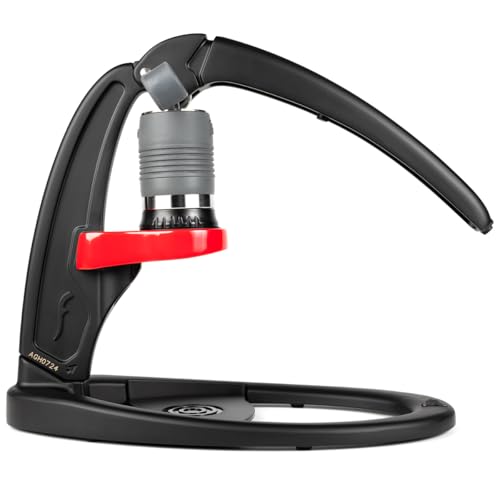
Flair Classic Manual Lever
Flair’s Classic is the friendliest doorway into lever espresso because it refuses to let you guess blindly. The included pressure gauge translates the invisible heart of the shot into a needle you can watch while pulling, so a choked shot and a gushing shot stop being mysteries and become readings you can connect to grind size and dose. For a learner, that feedback loop shortens the frustrating early weeks more than any accessory could.
Two portafilters in the box sound like a small thing until you pull shots for two people, or pull a second shot immediately to test a grind adjustment while the first is still being tasted. Swapping a prepared basket in keeps the rhythm moving and the comparison honest, because the variable you changed is fresh in your mouth. The Classic is described as an updated model, and its all-manual lever design means the machine itself asks for no electricity, though your kettle certainly will.
- Drive: all-manual lever, no pump
- Feedback: pressure gauge included
- Portafilters: two included in the box
- Power source: none stated, hand operation
- Dose figure: not given in the listing
Strengths
- Gauge turns guesswork into a visible learning curve
- Two portafilters allow back-to-back shots while learning
- Fully manual build means no pump or element to fail
Trade-offs
- Kettle, grinder and scale are separate purchases you must own
- Two portafilters still need cooling and cleaning between heavy use
- Shot quality depends entirely on the operator’s developing technique
Bench reality deserves spelling out. A Flair lives as a small ritual station: kettle heating, beans grinding, basket dosing and tamping, then the pull. Counter owners should picture that whole choreography, not just the machine’s silhouette, and leave room for the grinder that manual espresso quietly demands. Pre-ground coffee can start the journey, yet the gauge will quickly show why a grinder becomes the next purchase, since grind adjustment is the main steering wheel this machine hands you.
The Classic also travels better than its bench manner suggests. A lever press with no boiler can pack down for a holiday let or a camper van in a way the La Pavoni never will, provided hot water exists at the destination. That dual life, home learner by winter and travel companion by summer, gives it a flexibility the chrome traditionalist cannot match, even if the Europiccola wins on ceremony and presence.
Choose the Classic when you want to learn espresso rather than merely receive it. Its gauge, spare portafilter and honest simplicity form the most forgiving teaching kit in this group, and its ceiling rises with your skill instead of capping it. Buyers wanting a boiler’s steam or a heritage silhouette should keep reading, but first-time lever owners will struggle to find a better tutor.
Best for: beginners who want a gauge-guided lever and a spare portafilter for learning in pairs of shots.
Not suited for: a household expecting push-button speed on workdays, since every drink here is ground, tamped and pulled by hand from start to finish.
Inspect the Flair Classic kit on Amazon

Flair PRO 49mm Lever
Flair’s PRO takes the Classic’s teaching formula and hardens it for the material-conscious. The headline is the brew path: no plastics where hot water meets coffee, a claim the listing states outright and one that matters to buyers who have grown wary of hot liquids travelling through polymer on their way to the cup. Pair that with a handled 49mm portafilter and the familiar pressure gauge, and the PRO reads as the same school with stricter building standards.
The handled portafilter changes the feel of the shot more than its photograph suggests. Under lever load, a confident grip keeps the basket steady and the wrist aligned, and across a morning of multiple shots that ergonomics difference accumulates into comfort. The 49mm size defines the accessory world you will shop in for tampers and spare baskets, a smaller pond than the widest standards, so committed tinkerers should browse that ecosystem before committing.
- Basket size: 49mm portafilter, handled
- Brew path: no plastics in the brew path, per the maker
- Feedback: pressure gauge included
- Drive: all-manual lever
- Colour: black
Strengths
- Plastic-free brew path answers a growing materials concern directly
- Handled 49mm portafilter gives a secure grip under load
- Gauge included for the same feedback that helps learners improve
Trade-offs
- 49mm accessories form a smaller ecosystem than wider standards
- Black finish is the only presentation in this listing
- Still needs a separate kettle and a capable grinder alongside
Black gives this model a workshop seriousness the Classic’s presentation lacks, suiting benches built around dark steel and timber. Like its sibling, the PRO is fully manual, so the wider ritual applies unchanged: kettle on, beans ground fine, basket prepared with care, lever pulled with a steady arm. The gauge remains the conscience of the process, exposing a rushed tamp or a stale grind without any electronics intervening.
Comparing the two Flairs directly, the PRO justifies itself through materials and handling rather than through a different drink. If the plastic-free path matters to you, the decision is already made, and if it does not, the Classic’s second portafilter may serve a learning household better than the PRO’s refinements. That is a values choice, not a quality ladder, and this guide refuses to pretend otherwise.
The PRO suits the home barista who has moved past dabbling. Its audience knows why brew-path materials matter, expects to dial in a grinder properly, and wants a lever tool that will not feel like a starter kit within a year. In this group it is the purist’s bench press, deliberately narrow in appeal and stronger for it.
Best for: committed home baristas who want a plastic-free brew path and a handled 49mm basket.
Not suited for: a casual drinker hoping accessories will be everywhere, since the 49mm format supports a narrower range of add-ons than common larger sizes.
Compare the Flair PRO specification today

La Pavoni EPC-8 Europiccola
Europiccola is the name many people picture before they know any other, and the EPC-8 in chrome and silver carries that heritage openly. Unlike the Flair pair, this lever machine brings its own boiler of 0.8 L, so water heats inside the machine and the ritual centres on one appliance rather than a kettle partnership. The listing leans on authentic Italian craftsmanship, a maker’s claim this guide reports as such, and the design’s longevity in the market lends the claim a context the reader can weigh.
A boiler changes the morning in practical ways. Warm-up becomes part of the ceremony, the machine’s thermal mass steadies repeated shots, and 0.8 L supports several drinks before anyone discusses refilling. It also introduces responsibilities the boilerless levers escape: water quality matters to an enclosed tank, heat lingers after the last shot, and a chrome body near a busy hob will collect the splashes of real cooking. Owners who relish tending a machine will call that character; owners who wanted an appliance may call it work.
- Style: lever machine in chrome and silver
- Water capacity: 0.8 L, per the listing
- Origin note: authentic Italian craftsmanship, as the maker phrases it
- Drive: manual lever over a boiler
- Basket details: none stated in the listing
Strengths
- Boiler brings its own hot water, unlike the kettle-dependent levers here
- Chrome Europiccola silhouette is the classic lever-machine image
- 0.8 L capacity supports a run of drinks without refilling theatre
Trade-offs
- Boiler machines demand warm-up time and more attentive care
- Chrome shows every fingerprint and water spot in a working kitchen
- Heritage design assumes an owner willing to learn its temperament
The lever experience itself differs in feel from the Flair presses. A boiler machine’s lever works against steam-assisted pressure, giving the pull a distinct resistance curve that devotees describe with genuine affection and beginners describe, at first, as moody. Shots improve as the operator learns the machine’s temperature moods across a session, which is precisely the apprenticeship this design has demanded from generations of owners. Nobody buys an Europiccola for convenience, and the machine repays that honesty.
Placement becomes a statement with chrome. This is the one machine in the group that guests will ask about, and the one that anchors a coffee corner visually the way a good range cooker anchors a kitchen. Readers planning the wider room might note how morning light treats polished metal, and anyone furnishing a wake-up corner for visitors could pair the thought with Best Dual Alarm Clocks for the bedroom end of the routine.
Choose Europiccola when the bench is permanent, the ritual is the point and a boiler’s self-sufficiency appeals. It asks the most of its owner among the home models here and gives back the richest sense of occasion. Impatient households should admire it the way they admire a vintage car: sincerely, and from someone else’s driveway.
Best for: traditionalists with a fixed coffee bench who want a boiler-fed chrome lever and enjoy learning a machine’s moods.
Not suited for: a renter needing to pack the kit away after each use, because a boiler machine belongs out on display rather than in a cupboard.
View the Europiccola in chrome on Amazon

Wacaco Minipresso GR
Minipresso GR abandons the bench entirely, and that is its genius. Wacaco built a hand-operated espresso maker for ground coffee that travels in a rucksack, a glovebox or a boat locker, asking only for hot water from whatever source the journey provides. Campers who have endured instant coffee at a beautiful viewpoint understand instantly why such a tool exists: the setting deserves a better cup, and this is how one arrives.
Ground coffee compatibility keeps travel simple in a way capsule portables cannot. Anywhere beans or grounds can be bought, borrowed or carried, the Minipresso can work, and the user controls dose and grind within the limits of a hand device. The pumping action is the engine, so expect honest physical effort per drink and a modest yield each round; this is a personal ritual tool, not a device for serving a tent full of companions in rotation.
- Format: portable espresso maker, hand operated
- Coffee type: ground coffee, per the listing
- Setting: travel, camping and hiking, as the maker suggests
- Drive: manual hand pumping
- Boiler: none stated in the listing
Strengths
- Genuinely portable, turning a rucksack into a coffee kit
- Ground coffee format avoids capsule hunting while travelling
- Hand operation needs no power at a campsite or trailhead
Trade-offs
- Small format means one modest drink per round of effort
- Hot water must still be carried or heated separately
- Bench households will find it a supplement rather than a main machine
At home, the Minipresso finds a quieter second career. It is the office-drawer machine, the workshop shelf machine, the one pulled out when the main bench is occupied or the power is out. Its scale keeps expectations calibrated: nobody compares its output with a boiler-fed Europiccola and finds a contest, because the contest was never the point. Portability this complete is a feature category of its own.
Care on the road is straightforward in principle. Grounds must be knocked out and the parts rinsed whenever water allows, because coffee residue dries unpleasantly inside small chambers, and a device stored damp in a pack will remind you of the oversight at the next camp. Treated with that basic respect, a hand tool with no electronics and no boiler has remarkably little to go wrong far from home.
Buy the Minipresso as a traveller first and a curiosity second. Hikers, anglers, van travellers and field workers gain the most, while home drinkers should see it as a companion to a bench machine rather than a replacement. Among these six, it alone can claim that its best drinks happen outdoors.
Best for: campers, hikers and travellers who want real hand-pumped espresso from ground coffee away from any socket.
Not suited for: a family seeking its only home machine, since one small hand-pumped drink at a time cannot carry a household’s mornings.
See the Minipresso GR travel format
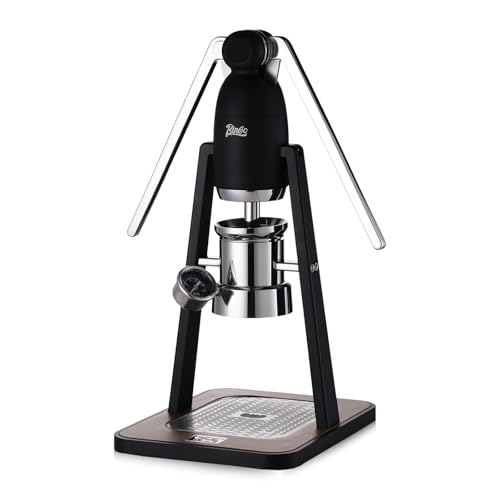
Bincoo S3 Manual Hand Press
Bincoo’s S3 is the experimenter’s entry, a dual-lever hand press in stainless steel whose listing talks the language of profiling and pre-infusion. Those two ideas separate it from every other machine here. Pre-infusion lets water meet the grounds gently before full pressure arrives, and profiling means the operator varies pressure through the shot rather than simply pulling hard. In hand-press terms, your arms become the profile, easing in, pressing through and relaxing at the end.
The claimed ceiling is 12Bar, stated by the maker, and the dual-lever layout spreads the work so that ceiling feels reachable without a wrestling match. Two hands also steady the device through the shot, which matters when the whole machine is portable and lacks a boiler’s anchoring weight. Stainless steel in black gives the S3 a tool-like seriousness, and the material shrugs off the knocks of a press that may live partly in transit.
- Pressure claim: 12Bar pressure profiling, in the maker’s wording
- Mechanism: dual-lever manual press with pre-infusion
- Build: stainless steel, black
- Format: portable hand press
- Gauge detail: none stated in the listing
Strengths
- Profiling and pre-infusion give experimenters variables to play with
- Dual levers spread the effort across both arms
- Stainless steel build promises sturdy travel and bench use
Trade-offs
- Profiling freedom can overwhelm a beginner seeking one repeatable shot
- Black stainless will show dried drips if wiped carelessly
- No gauge is named, so profiling is judged by feel and timing
Freedom, though, is a workload. A beginner given profiling control often produces a different shot every time and cannot tell which change helped, because everything changed at once. The S3 rewards a notebook habit: same dose, same grind, one deliberate variation per session. Drinkers willing to work that methodically will extract real insight from this press, while drinkers seeking a repeatable morning routine may find the Flair Classic’s gauge a kinder teacher.
Portability places the S3 between the Minipresso and the bench levers. It travels more readily than a Flair station yet offers a more deliberate extraction than a pocket pump, a middle territory that suits demonstrators, small-event caterers and home users who brew in more than one room. Hot water, as with every boilerless design here, remains an external problem the kettle or flask must solve.
Choose the S3 when curiosity is the brief. It is the only model in this group that invites you to shape a shot’s pressure curve by hand and taste the consequences, and that invitation defines both its thrill and its demand. Routine-first households should pass it by with respect rather than buy it and resent its questions.
Best for: tinkerers who want pre-infusion and hand-shaped pressure profiles from a stainless dual-lever press.
Not suited for: a first-time buyer wanting one dependable result repeated daily, since open profiling variables multiply inconsistency until technique settles.
Examine the Bincoo S3 lever layout

SUPERKOP Manual Espresso Tool
SUPERKOP strips manual espresso to a toolmaker’s essentials and dresses the result in retro styling. The listing describes a non-electric manual machine for commercial and home purposes, with an 18 gram espresso capacity and a maintenance-free claim from the maker. That combination sketches a very particular object: a fixed, deliberate brewing instrument that asks for hot water and ground coffee, then stays out of the way of everything else in life, with no elements, pumps or electronics ageing inside it.
The stated dose is a quiet gift to the methodical. Knowing the basket is built around 18 grams gives a new owner a firm starting point for grinding and tamping experiments, instead of the vague small-versus-large guessing that vaguer listings impose. Combined with the non-electric design, the SUPERKOP becomes the machine most likely in this group to still be working, unchanged, in a decade, because there is so little inside it that can stop.
- Power: non-electric, per the listing
- Dose: 18 gr espresso capacity
- Upkeep: maintenance free, as the maker claims
- Design: retro styling, black
- Use: commercial and home purposes, per the maker
Strengths
- Non-electric design works anywhere hot water can be made
- Stated 18 gram dose gives a clear basket target
- Maintenance-free claim suits owners allergic to servicing rituals
Trade-offs
- Retro tool format assumes a fixed, deliberate brewing spot
- No gauge or profiling feedback is mentioned for learners
- Commercial wording should not be read as high-volume cafe speed
Retro styling divides opinion in a useful way. In a kitchen leaning into enamel, timber and old-school fittings, this black tool looks native; in a laboratory-sleek space it may look like a museum piece that wandered in. The listing also mentions commercial purposes, which readers should interpret as sturdiness of intent rather than cafe throughput, since any hand-worked single shot sets its own pace regardless of the building it stands in.
Feedback is the honest gap. No gauge is named and no profiling system is described, so the operator judges by time, resistance and taste alone, the oldest method in espresso and still a valid one. Experienced hands may prefer that purity, while learners comparing notes with Best Eight Cup Coffee Makers readers who favour set-and-forget brewing should recognise that this tool asks for palate-led patience.
SUPERKOP suits the minimalist who distrusts appliances. It promises a dose, a lever-driven shot and a life free of descaling schedules and service worries, at the cost of every modern feedback comfort. If that exchange sounds like freedom rather than deprivation, this is the most characterful purchase in the group.
Best for: minimalists and off-grid brewers who want a non-electric tool with a defined 18 gram dose.
Not suited for: a learner who needs visible feedback to improve, because no gauge or guided system appears in this listing to correct early mistakes.
Look at the SUPERKOP retro tool on Amazon
Comparing the six hand-driven machines
Lay the six side by side and the manual category stops looking like one product type and starts looking like six answers to six different questions.
| Machine | Drive | Water | Defining trait |
|---|---|---|---|
| Flair Classic Manual Lever | Lever | Kettle needed | Gauge plus two portafilters |
| Flair PRO 49mm Lever | Lever | Kettle needed | No plastics in brew path |
| La Pavoni EPC-8 Europiccola | Lever | 0.8 L boiler | Chrome heritage design |
| Wacaco Minipresso GR | Hand pump | Flask or kettle | Travel format |
| Bincoo S3 Manual Hand Press | Dual lever | Kettle needed | Profiling with pre-infusion |
| SUPERKOP Manual Espresso Tool | Manual tool | Kettle needed | Non-electric, 18 gr dose |
Boilers divide the field first: only the Europiccola heats its own water. Feedback divides it second, with gauges on both Flairs, profiling on the Bincoo and feel alone on the Wacaco and SUPERKOP. Portability divides it third, from the rucksack-ready Minipresso to the bench-bound chrome of La Pavoni. A buyer who names their priority among those three axes will find the table below narrows to one or two names immediately.
What should a first-time manual buyer weigh most carefully?
Are you buying a ritual or a result?
Manual espresso sells involvement, and involvement is either the reward or the problem. If the five quiet minutes of grinding, tamping and pulling sound like the best part of a weekend morning, every machine here can delight you. If they sound like an obstacle between sleep and caffeine on a workday, buy accordingly: keep a faster method for weekdays and let the lever own the weekends, a split many households adopt happily rather than forcing one machine to serve two moods.
Be honest about the learning curve as well. Early shots from any lever will disappoint, and the disappointment is tuition, not failure. Gauges and spare portafilters shorten the course; patience finishes it.
Do you already own the supporting cast?
A manual machine is the visible tip of a kit. A kettle is mandatory for every boilerless model here, a grinder capable of fine, consistent grounds is close to mandatory for all six, and a scale and tamper turn guesswork into repeatability. Budget for that cast before upgrading the headline machine, because a modest lever fed by an excellent grinder will out-brew a flagship lever fed by stale pre-ground coffee every single morning.
Where will the shots actually happen?
Place decides class. A permanent bench with room for the ritual suits Flair and La Pavoni; a rucksack, boat or site cabin suits Wacaco; a studio where the machine must justify its footprint daily suits Bincoo or SUPERKOP. Measure the bench, picture the storage and count the sockets you will not need, since non-electric designs free the one resource small kitchens never have enough of.
Which feedback style matches how you learn?
Some learners trust instruments, others trust repetition. Gauge readers should start with Flair, profile tinkerers with Bincoo, and palate-led traditionalists can start anywhere, including the gauge-free SUPERKOP. There is no shame in any route, but buying an instrument-free tool while craving data is a mismatch that ends in a cupboard, so choose the teacher whose language you actually speak.
How long until the shots become reliably good?
Most owners describe the same arc. The first week produces curiosity and a few sink shots, the first month produces a recognisable house style with occasional relapses, and by the third month the hands know things the mind no longer supervises. Gauges compress that timeline by explaining failures early, while gauge-free tools stretch it in exchange for a deeper feel once it arrives. Either way, the tuition is measured in beans rather than money, and every failed shot costs pennies of coffee and a minute of pride.
Households that brew daily climb the curve fastest, because yesterday’s lesson is still in their fingers. Weekend-only brewers should expect a slower, perfectly respectable apprenticeship, and should lean harder on written notes, since a notebook remembers what a week of other breakfasts makes the hands forget.
Dialling in a lever shot without losing your mind
Change one thing at a time. That single discipline separates owners who improve weekly from owners who chase their tails for months. Fix the dose first, weigh it if you can, then adjust grind until the shot’s timing and resistance feel right, and only then experiment with pressure or pre-infusion where your machine allows it. Write the result down in a notebook or a phone note, because memory edits the past generously and a record does not.
Taste in a deliberate order. Note the first sip for brightness, the middle for sweetness and body, and the finish for bitterness that lingers too long. Sour and thin usually means the water passed too easily, bitter and harsh usually means it struggled, and both clues point back to grind before they point to the machine. Lever owners hold an advantage here, because the arm feels what the tongue later confirms, joining two senses into one diagnosis.
Finally, defend one house recipe. Once a combination of dose, grind and pull produces a shot you genuinely enjoy, record it and return to it whenever experiments wander. A home base turns exploration into play instead of drift, and it guarantees that a tired morning can still produce a known good cup without a single decision.
Manual espresso in a small or shared home
Lever machines are unusually considerate housemates. They make almost no noise, they occupy modest footprints compared with pump machines and boilers, and several models here need no socket at all, which frees the one outlet every shared kitchen fights over. A Flair station can live on a tray and slide aside for cooking, while a Minipresso vanishes into a drawer, arrangements no chrome boiler machine can imitate.
Shared use needs ground rules rather than more equipment. Agree where grounds are knocked out, who rinses the basket, and how the kettle rota works when two people brew in sequence, and the ritual stays charming instead of becoming a source of small resentments. Manual machines reward households that treat the coffee corner as a tiny workshop with shared tools, cleaned as you go.
The supporting cast: kettle, grinder and water
Ask experienced lever owners what actually improved their coffee and few will name the machine. They name the grinder they finally bought, the kettle that pours where they aim it, or the morning they started weighing the dose. That pattern should shape a new buyer’s budget from the start. A lever press is a pressure instrument, and pressure only reveals what the preparation gives it, so preparation tools are not accessories in the decorative sense; they are half the machine, sold separately.
Kettle choice matters more than kettle glamour. Any vessel that boils water works in principle, yet a spout that pours in a controlled stream makes filling small brew chambers calmer and safer, especially with the compact Flair and Bincoo designs. Temperature control is a luxury rather than a requirement at this level, because boiling water left to stand for a short while lands in a workable range for most palates, and consistency of routine beats chasing a degree on a display.
Grinder expectations need honesty. Espresso-fine, evenly ground coffee is demanding work, and a grinder that struggles there will make every lever in this guide feel temperamental when the fault sits in the grounds. Hand grinders suit the manual philosophy and travel beautifully with a Minipresso or a Flair, while electric grinders repay their counter space in speed for daily bench use. Either route succeeds if the grind quality is genuinely up to the task.
Water is the ingredient nobody photographs. Coffee is mostly water, so a supply that tastes strongly of chlorine or chalk will speak through every shot, whatever lever produced it. A simple filter jug tames many supplies, and in hard-water districts it also slows scale inside the one boiler in this group, the Europiccola’s. Soft, clean-tasting water will not save a bad grind, but it stops sabotaging a good one.
Hosting with a lever: turning slowness into theatre
A dinner party changes the manual calculation completely. One guest’s espresso is a ritual; six guests’ espressos are a queue, and the host vanishes into the kitchen while the table talks without them. Experienced lever owners solve this socially rather than technically. They make the coffee corner part of the evening, pulling shots in the open where guests can watch, ask and even try a pull themselves under supervision, converting the wait into the entertainment it secretly always was.
Preparation before guests arrive does the heavy lifting. Beans weighed into doses, cups warmed, the kettle filled and the bench laid out like a small stage means each shot takes a fraction of the fumbling time of an improvised round. Two portafilters, as supplied with the Flair Classic, suddenly look less like a learning aid and more like a hosting strategy, because one basket can be prepared while the other is still being pulled.
Menu honesty helps too. Offer espresso and one longer variation you have practised, rather than an ambitious list that multiplies variables under pressure. Guests remember a confident, delicious short drink far longer than an apologetic experimental one, and the host who stays at the table between pulls enjoys their own party, which is rather the point of having one.
There is also no shame in a hybrid evening. A boiler machine or a simple filter brewer can carry the crowd’s first round while the lever handles requests from the curious, a division of labour that keeps both quality and company intact. Manual espresso is a pleasure to share at the pace it sets, and trouble only starts when a host promises it a pace it never claimed.
Keeping a manual kit in working order for years
Manual machines age gracefully because so little inside them can wear out, yet gracefully is not the same as effortlessly. Seals and gaskets are the quiet consumables of lever life, drying and hardening over years until a shot weeps where it should not. Owners who learn early which seals their model uses, and keep a spare set in the drawer, turn a future fault into a ten-minute job instead of a week of waiting for parts while the kettle mocks them.
Cleaning rhythm is simpler than on any pump machine. Knock out the puck promptly, rinse the basket and portafilter while they are still warm, wipe the shower area where grounds cling, and let parts dry in the open rather than sealed inside a damp machine. The Europiccola adds boiler care to that list, because an enclosed tank concentrates whatever the local water carries, and periodic attention there protects both flavour and the machine’s working life.
Storage habits matter for the travellers in this group. A Minipresso or Bincoo stored clean and dry in its case will greet the next trip kindly, while the same tool stored with yesterday’s grounds inside will announce the neglect before the kettle boils. Bench levers ask for even less: a dry cloth over the group when the kitchen turns smoky or dusty, and a bench wiped often enough that the ritual always begins in a place that feels cared for.
Perhaps the deepest maintenance is social. A lever machine thrives in a home where its small demands are shared knowledge rather than one person’s burden, so teach a partner or a teenager the routine early. Two competent operators double the machine’s value, halve its idle time and guarantee that the knowledge survives holidays, illnesses and every other ordinary interruption of household life.
Reading a shot: the five clues your senses already own
Long before instruments enter the story, a lever shot announces its health through ordinary senses. Watch the stream’s colour as it leaves the basket, pale and hurried suggesting a shot that ran too easily, dark and dripping suggesting one that fought its way through. Listen to your own arm as well, because a pull that offers almost no resistance is telling the same story as a pale stream, in a language your shoulder learns quickly.
Time is the cheapest instrument in the room. Counting seconds from the first drops to the end of the pull, even roughly, turns a vague feeling that a shot seemed fast into a number you can compare with yesterday’s attempt. Owners of gauge-free machines lean on timing hardest, pairing it with a weighed dose so that two of the main variables stay pinned while grind does the adjusting.
Smell arrives before taste and should not be ignored. A shot that smells sharp and thin rarely redeems itself in the cup, while a deep, sweet aroma usually signals grounds that gave up their best willingly. None of these clues requires equipment beyond attention, and together they explain why experienced lever users can diagnose a stranger’s machine within two pulls, to the mild alarm of its owner.
Keep the diagnosis kind. A flawed shot is information, not evidence of personal failure, and the households that improve fastest treat every cup as a small experiment with a drinkable result attached. That mindset is the real accessory manual espresso demands, and fortunately it is the one thing no shop needs to sell you.
Beans for a lever: choosing coffee that forgives learning
While technique develops, bean choice can quietly stack the odds. Fresher roasts with a little rest behind them behave more predictably under a lever than very old supermarket stock, whose staleness shows up as thin, fast shots no grind setting seems to rescue. Medium roasts forgive small errors more gracefully than the lightest roasts, which demand precision a new lever owner is still building, so the first month is a sensible time to buy drinkable and forgiving rather than rare and demanding.
Buy in quantities your household will finish while the bag still smells alive. A lever routine uses modest amounts per drink, which tempts owners toward giant bags that fade before the bottom, and fading beans sabotage the learning process by changing the target every week. Smaller bags, finished and replaced, keep the variable steady and the notebook honest, which matters more during an apprenticeship than any saving per bag.
Keep one familiar bag as a reference even while exploring. Returning to a known coffee after trying something new separates the machine’s mood from the bean’s character instantly, because the reference has nowhere to hide. That habit, borrowed from every tasting discipline, costs one extra bag in the cupboard and repays it in clarity every time a shot surprises you.
Common mistakes
Expecting cafe speed from a hand lever. Every stage is manual, so a round for four guests is a performance, not a button press. Embrace the theatre or choose a faster machine for gatherings.
Blaming the machine for a neglected grinder. Inconsistent grounds defeat any lever ever built. Manual espresso exposes grind quality ruthlessly, so the grinder budget is part of the machine budget.
Changing dose, grind and pressure in the same shot. Three changes produce one mystery. Adjust a single variable, taste, record, and let improvement compound visibly.
Storing a portable press while it is still damp. Hand tools packed away wet develop stale odours that flavour the next trip’s first drink. Dry the parts before the rucksack closes.
Buying a boiler machine for a cupboard. The Europiccola belongs on display, warmed and ready. If storage space is the plan, a boilerless lever fits that life far better.
Treating the first week as the verdict. Every owner in this category has a story about a dreadful first dozen shots and a turning point they can date. Judge a lever after a month of honest practice, not after a weekend of first impressions.
Final recommendation
For most first-time manual buyers, the Flair Classic is the recommendation that survives scrutiny. Its gauge teaches, its spare portafilter encourages experimentation, and its boilerless design fits real benches and real storage. It asks for a kettle and a grinder, as all honest manual machines do, and in return it offers the clearest path from first sour shot to a drink you would serve proudly.
The alternatives each own a clear territory. Flair PRO serves the materials purist, Europiccola the heritage bench, Minipresso the road, Bincoo S3 the profiler and SUPERKOP the electricity-free minimalist. Manual espresso rewards buyers who choose their territory deliberately, because the machine you love using is the only kind that ever gets used.
Budget a thought for resale and longevity as well, because manual machines hold their appeal unusually well. A simple lever with sound seals and a clean basket remains desirable to the next learner long after electronic rivals feel dated, which means a careful owner can start with the Classic, graduate toward a boiler machine later, and pass the first tool onward instead of sending it to landfill. Few kitchen purchases offer that kind of second life.
There is one more quiet dividend worth naming before the reviews close. A manual routine slows the start of the day on purpose, in a household culture that rarely slows anything on purpose, and many owners come to guard those minutes fiercely. The espresso is the excuse; the pause is the prize, and it arrives free with every one of these machines.
Frequently asked questions
Is a manual machine really able to make true espresso?
Yes, when the design generates espresso-range pressure through the coffee bed, which is exactly what these lever and hand-press designs exist to do. The difference from a pump machine is the power source, your arm instead of a motor, not the category of drink in the cup.
Which pick is kindest to a complete beginner?
The Flair Classic, because its pressure gauge converts mistakes into information and its second portafilter makes comparison shots easy. Beginners improve fastest when every failed shot explains itself, and the gauge is the only teacher in this group that never gets tired.
Do these machines need electricity?
The machines themselves are hand-driven, and SUPERKOP states non-electric operation outright. In practice every boilerless model still needs hot water from a kettle, a hob or a flask, while the Europiccola’s boiler is the exception that heats its own 0.8 L supply.
What else must be bought alongside a lever machine?
A kettle for the boilerless five, a grinder suited to fine espresso grounds, and ideally a small scale and a tamper that fits your basket. Those supporting tools decide shot quality as much as the lever itself, so they belong in the first budget, not on a later wishlist.
Which model travels best?
The Wacaco Minipresso GR is the only design here created for travel, working from ground coffee wherever hot water exists. The Bincoo S3 and the Flair models can journey with planning, while the boiler-fed Europiccola is happiest living permanently on one bench.
Can a lever machine handle milk drinks for the family?
None of these six listings describes a steam wand, so milk drinkers should plan separately, with a hob-heated jug and a hand frother or a small standalone frothing device. Many lever households happily build lattes that way, while others keep espresso as the lever’s sole job and let a different appliance handle milky drinks on demand.
How much bench space does a lever station really need?
Plan for the ritual, not the silhouette. Beyond the machine itself, leave elbow room for a grinder, a kettle, a knock container and a small scale, arranged so each sits where the hand expects it mid-routine. A tray beneath the whole station lets renters and small kitchens slide the setup aside for cooking, and many Flair owners brew happily from exactly such a movable base.
A lever pulled by your own hand teaches you espresso in a way no button ever will, and the right one of these six will still be teaching you gladly years from now.


