What's inside
- Quick Picks
- How We Chose These Picks
- Key Takeaways
- Detailed Reviews
- Comparison Table
- How Do You Tell Oxford from Percale and Sateen When You Shop?
- Why Is Genuine Oxford So Rare in Sheet Sets?
- Common Mistakes When Shopping for Oxford Sheets
- How Do You Wash and Keep Oxford Cotton Sheets?
- What Does an Oxford Sheet Actually Feel Like on the Bed?
- Matching Oxford Sheets With the Rest of the Bed
- A Short History of Oxford Cloth, From Shirt to Sheet
- What Should You Do When Your Size Has No Oxford Option?
- Which Rooms Suit Oxford Sheets Best?
- Final Recommendation
- Frequently Asked Questions
- Related Guides
As an Amazon Associate I earn from qualifying purchases. This post may contain affiliate links at no extra cost to you.
As an Amazon Associate, cottageverdict.com earns from qualifying purchases made through links in this guide — at no extra cost to you.
Where to buy: the four true oxford sets below are sold on Amazon, and their names link to their listings in the Quick Picks table, in their review headings and again in the comparison table, so you can check price on Amazon and confirm the size and colour before ordering; the last two entries are discussed in prose only, for reasons this guide explains openly. Anyone searching for the best oxford sheet sets deserves to know the awkward truth first: genuine oxford weave sheets are rare on Amazon, and half of this shortlist exists to show what shoppers are usually offered instead.
Oxford cloth began life as a shirting fabric, a basket weave in which paired threads cross to make a cloth that is sturdier than a plain weave, softly textured rather than glossy, and famously slow to look worn. Turned into sheets, it promises a bed that feels like a well-made shirt: crisp without being stiff, matte without being dull, and durable through years of weekly washing. That promise is easy to type into a search box and surprisingly hard to fulfil, because most sheet production long ago standardised on percale and sateen, leaving oxford as a niche woven by few makers.
This guide therefore does something unusual. Four of its six entries are genuine oxford sheet sets as titled: a cotton oxford stripe set from Lands’ End in twin, and three pinpoint oxford sets from Tommy Hilfiger in full, king and twin. The remaining two entries are included as clearly labelled prose-only comparisons, a Tommy Hilfiger percale queen set and a California Design Den sateen queen set, because they are the sort of result a shopper actually meets when hunting oxford, and understanding why they are not oxford is half the education this category requires. They carry no links and no photographs in this guide, deliberately, because they are here as context rather than recommendations of oxford.
Pinpoint oxford deserves a sentence of its own, since three of the four true picks carry the term. Pinpoint is a finer, tighter variation of the oxford weave, using finer yarns to produce a smoother, dressier cloth than the classic, heavier oxford of casual shirts. In sheets, that translates to the texture and durability of the oxford family with a surface refined enough for a main bedroom. The Lands’ End entry, described simply as cotton oxford with a stripe, is the more classic expression, and its twin size makes it the natural pick for a child’s room, a single bed or a guest room built around a single frame.
Size coverage across the true oxford picks is uneven, and honesty requires naming it. Twin appears twice, full and king once each, and no true oxford queen appears in this group at all, even though queen is the size most shoppers want. The two prose-only entries are both queen, which is precisely the pattern that makes this category frustrating: the popular size is served by adjacent weaves while the genuine article hides in less common sizes. Read the reviews with your bed’s size in hand, and let the weave question and the size question be answered separately rather than compromising both at once.
Quick Picks
| Pick | Badge | Why it earns its place |
|---|---|---|
| Lands’ End Oxford Stripe Sheets | Best True Oxford Stripe | A cotton oxford sheet set in twin, in a Silver Lake Blue Stripe, from a maker long associated with oxford cloth. |
| Tommy Hilfiger Pinpoint Oxford Full | Best Oxford for Full Beds | A pinpoint oxford sheet set in blue for a full size bed, the only full size true oxford in this group. |
| Tommy Hilfiger Pinpoint Oxford King | Best Oxford for King Beds | The king entry in the pinpoint oxford family, in blue, for the largest beds that still want a true oxford weave. |
| Tommy Hilfiger Pinpoint Oxford Twin | Best Oxford in a Colour | A pinpoint oxford twin set in Donegal Red, the warmest colour among the true oxford picks. |
| Tommy Hilfiger Percale Queen Sheets | Prose-Only: Percale, Not Oxford | A queen percale set discussed for comparison only; it is not oxford and carries no link in this guide. |
| California Design Den Sateen Sheets | Prose-Only: Sateen, Not Oxford | A queen cotton sateen set discussed for comparison only; sateen is a different weave and earns no link here. |
How We Chose These Picks
We applied one test before all others: the title must say oxford. Four titles pass it, two of them with pinpoint oxford and one with a cotton oxford stripe, and those four became the linked recommendations of this guide. The two remaining titles were retained only as prose-only comparisons because they represent the neighbouring weaves, percale and sateen, that dominate the shelf space oxford shoppers are searching, and a guide that pretended they were oxford would betray the keyword. Their presence is labelled in their headings, their reviews and the comparison table, and they receive no product links or images.
Within the true oxford four, we weighed size, colour and pattern as the titles state them. The Lands’ End title names its size, twin, and its colour, Silver Lake Blue Stripe, making it the most completely described listing here. The three Tommy Hilfiger pinpoint titles name size and colour too, and carry an old pattern note in the title itself, which we repeat rather than hide, since a shopper should know the listing describes the pattern that way. Thread counts, pocket depths and piece counts are not printed in the four oxford titles, and this guide writes them as unstated rather than borrowing figures from other listings, a discipline the two prose entries make vivid, because their titles do publish such figures for their own, different weaves.
Key Takeaways
- Only four of the six entries are true oxford as titled, and only those four carry links and images in this guide.
- The two prose-only entries are a percale set and a sateen set, included to show what oxford shoppers usually meet instead.
- No true oxford queen set appears in this group; the oxford picks cover twin twice, full once and king once.
- Three of the four oxford picks are pinpoint oxford, the finer and smoother variation of the weave.
- The oxford titles state size and colour but give no thread count, pocket depth or piece count.
- Oxford’s appeal is its basket-weave texture and durability, a shirting character quite unlike sateen’s sheen.
Detailed Reviews

Lands’ End Oxford Stripe Sheets — Best True Oxford Stripe
Lands’ End is the name in this group most closely tied to oxford cloth as a heritage fabric, and its title is admirably plain: cotton oxford stripe bed sheet set, twin size, in Silver Lake Blue Stripe. A woven stripe in blue is the classic oxford shirt pattern translated to a bed, and in a twin it suits the rooms twins actually live in, a child’s bedroom where a stripe forgives the chaos, a guest single where it looks deliberate rather than plain, or a daybed that doubles as seating and needs a cloth with some structure to it.
The title’s restraint is also its limitation. It states cotton and oxford and stops there: no thread count, no pocket depth, no piece count and no fitted sheet dimensions are given in the title, so a buyer with a deep twin mattress should confirm those details on the listing before ordering. What the title does guarantee is the thing this whole guide is about, a genuine oxford weave in cotton, which none of the queen-sized alternatives below can claim. For a twin bed, this is the most straightforward true oxford purchase in the group, in a colourway that has looked right for decades.
- Weave: cotton oxford, as titled
- Size: twin
- Colour: Silver Lake Blue Stripe
- Thread count: not stated in the listing
- Pocket depth: not printed
- Piece count: none stated in the listing
Strengths
- Genuine oxford weave stated plainly in the title
- Classic woven stripe suits many rooms
- Cotton fibre named in the title itself
Trade-offs
- Twin only in this listing, so larger beds look elsewhere
- No thread count appears in the title
- Fitted depth must be confirmed on the listing
Best for: twin beds in children’s rooms, daybeds and single guest beds. Not suited for: queen or king shoppers, who must look at the pinpoint picks or compromise on weave.
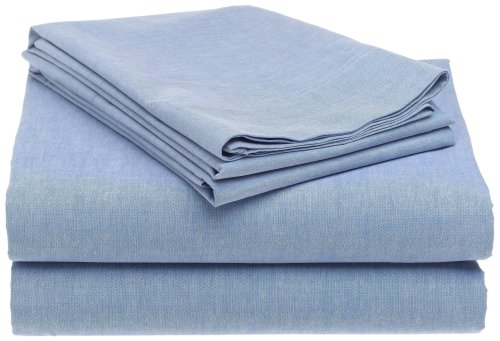
Tommy Hilfiger Pinpoint Oxford Full — Best Oxford for Full Beds
Full size beds are the forgotten middle of the sheet market, too large for twin listings and too small for the queen sizes every brand prioritises, so a genuine pinpoint oxford set titled for a full bed fills a real gap. The title states pinpoint oxford, blue colour and full size, and adds an old pattern note in its own wording, which a careful buyer should register: the listing describes this as an older pattern, and the listing’s images are the place to confirm that the blue and the pattern treatment match what you expect before the set goes on the bed.
Pinpoint’s finer weave suits a full bed in a main or guest bedroom, where the sheet is seen and touched daily and a smoother face reads as more finished than a rugged classic oxford would. As with its siblings, the title gives no thread count, pocket depth or piece count, so the practical homework is identical: confirm the fitted sheet’s depth against your mattress, particularly if a topper has added inches. Within those checks, this is the only route in the guide to true oxford on a full bed, and scarcity of that kind is worth more than a longer feature list in a weave that is not oxford at all.
- Weave: pinpoint oxford, as titled
- Size: full
- Colour: blue; title notes old pattern
- Thread count: not given
- Pocket depth: none stated in the listing
- Piece count: not stated in the listing
Strengths
- Only true oxford here sized for a full bed
- Pinpoint weave gives a smoother, dressier face
- Colour and size are both named in the title
Trade-offs
- Old pattern wording deserves a look at listing images
- No fitted depth appears in the title
- Full is the only size in this particular listing
Best for: full size beds in guest rooms and smaller main bedrooms. Not suited for: anyone who needs published pocket depth before ordering.
Tommy Hilfiger Pinpoint Oxford King — Best Oxford for King Beds
King beds usually get the newest sheet ranges first, which makes it quietly remarkable that the king route to true oxford here runs through the same pinpoint family as the full and twin. The title states pinpoint oxford sheet set, blue, king size, with the same old pattern note as its full sibling. A king bed shows more sheet than any other size, across the wide flat sheet and two pillowcases, so the pinpoint weave’s fine, even texture has the largest canvas in the house to prove itself on, and its matte, shirt-like character suits the tailored, layered look most king beds wear.
The cautions scale with the bed. A king set is the most expensive mistake in the group if the fitted depth is wrong, and depth is not given in the title, so measuring the mattress and confirming on the listing is essential rather than fussy. The old pattern wording likewise deserves the same image check as the full size. Neither caution diminishes the central fact: if your bed is a king and your brief is genuine oxford, this title is the one entry in the guide that answers both halves of the brief at once, and that combination is rarer than any thread count.
- Weave: pinpoint oxford, as titled
- Size: king
- Colour: blue; title notes old pattern
- Thread count: none stated in the listing
- Pocket depth: not stated in the listing
- Piece count: not given
Strengths
- Only true oxford here for a king bed
- Fine pinpoint texture suits a tailored king bed
- Same family as the full and twin for matching rooms
Trade-offs
- King sets punish a wrong depth guess hardest
- Old pattern note calls for an image check
- No piece count appears in the title
Best for: king beds whose owners want genuine oxford rather than a substitute weave. Not suited for: shoppers unwilling to confirm fitted depth on the listing.

Tommy Hilfiger Pinpoint Oxford Twin — Best Oxford in a Colour
The second twin in the true oxford four takes the opposite colour path from the Lands’ End stripe. Donegal Red is a warm, heathered-looking red in the pinpoint oxford weave, sized twin, with the family’s old pattern note in the title. In a child’s room, a college room or a cabin bunk, a red sheet set does decorative work that blue and white sets leave to the rest of the bedding, and oxford’s matte texture keeps a strong colour looking like cloth rather than shine, which is precisely why coloured oxford shirts have survived every fashion cycle since they were invented.
Choosing between this twin and the Lands’ End twin is a matter of taste and room, since both titles are similarly restrained: weave and size and colour are stated, and thread count, pocket depth and piece count are not given in either title. The pinpoint weave here is the finer of the two surfaces, the stripe there is the more classic pattern, and the red here is the bolder commitment. Confirm depth on the listing as with every pick in this guide, look at the images with the old pattern note in mind, and a twin bed gains a true oxford set with genuine character.
- Weave: pinpoint oxford, as titled
- Size: twin
- Colour: Donegal Red; title notes old pattern
- Thread count: not stated in the listing
- Pocket depth: not given
- Piece count: none stated in the listing
Strengths
- Warm red colour is unique among the oxford four
- Pinpoint weave keeps a bold colour matte
- Twin size suits bunks, cabins and college rooms
Trade-offs
- Strong colour will not suit every room scheme
- Old pattern wording needs the same image check
- Specification detail in the title is minimal
Best for: twin beds that need colour and character, from cabins to college rooms. Not suited for: rooms built around pale, neutral bedding only.
Tommy Hilfiger Percale Queen Sheets — Prose-Only: Percale, Not Oxford
This entry exists to be read, not bought through this guide, and its heading says why: the set is percale, not oxford. Its title describes a queen size sheet set with fitted sheet and pillowcases, in one hundred percent cotton percale at a T200 thread count, lightweight, with a deep pocket fitted sheet, a flat sheet and pillowcases included, and machine washable care. As a percale listing, that is a complete and informative title, fuller than any of the oxford titles above, which is exactly the trap this entry is here to expose.
Percale is a plain weave, one thread over and one under, giving a matte, crisp cloth that many sleepers love and that this guide has no quarrel with. It is simply a different cloth from oxford’s basket weave, with a smoother, flatter hand and none of oxford’s characteristic texture. A shopper who orders it believing they have bought oxford will feel the difference the first night and may blame the fabric family for a mismatch created by a search box. If you want percale in queen, this is the kind of title to look for on its own terms; if you want oxford, its queen size does not change its weave.
- Weave: cotton percale, T200 per its title — not oxford
- Size: queen
- Included per title: fitted sheet, flat sheet and pillowcases
- Pocket wording: deep pocket fitted sheet
- Care: machine washable per its title
- Status in this guide: prose-only comparison, no link
Strengths
- Fullest specification of any title in this group
- Queen size, the size the oxford picks lack
- Percale is a fine weave on its own terms
Trade-offs
- It is percale, not oxford, despite appearing in oxford searches
- Buying it for oxford texture guarantees disappointment
- Included here for education, not as an oxford recommendation
Best for: teaching the eye to separate weave from size when a search mixes them. Not suited for: anyone whose brief is a genuine oxford weave, at any size.
California Design Den Sateen Sheets — Prose-Only: Sateen, Not Oxford
The second prose-only entry makes the same point from the opposite direction. Its title describes a one hundred percent cotton sateen queen bedding sheets set in white, at four hundred thread count, backed by a Good Housekeeping Seal according to the title, as a six piece set with a sixteen-inch deep pocket. Sateen is woven to expose more thread on the surface, which produces its familiar smoothness and soft sheen, and as sateen this is a generously specified listing with piece count, depth and thread count all published, everything the oxford titles leave unstated.
None of that makes it oxford, and the contrast is the lesson. Sateen’s surface is the furthest in this group from oxford’s matte basket-weave texture: one cloth is chosen for lustre and drape, the other for structure and a shirt-like hand. A buyer who wants the sheen should buy sateen proudly under its own name, and a buyer who wants oxford should recognise that a higher thread count in a different weave is not a better oxford, it is a different sheet. This entry therefore closes the guide’s argument: on Amazon, oxford shoppers are surrounded by well-specified neighbours, and the discipline of reading the weave word first is the whole skill.
- Weave: cotton sateen, 400 TC per its title — not oxford
- Size: queen
- Colour: white
- Set size per title: 6 piece
- Pocket depth per title: 16 inch deep pocket
- Status in this guide: prose-only comparison, no link
Strengths
- Publishes thread count, depth and piece count in its title
- Queen size with a stated deep pocket
- Sateen sheen is a legitimate preference, honestly labelled
Trade-offs
- It is sateen, not oxford, and feels entirely different
- Its full specification can seduce oxford shoppers off-brief
- Included for comparison, with no link or image by design
Best for: showing how a complete specification still fails the oxford test. Not suited for: any buyer who came for basket-weave texture and durability.
Comparison Table
| Pick | Listing highlights | Size or format | Standout trait |
|---|---|---|---|
| Lands’ End Oxford Stripe Sheets | Cotton oxford, stripe | Twin | Most classic oxford expression here |
| Tommy Hilfiger Pinpoint Oxford Full | Pinpoint oxford | Full | Sole full-size oxford pick |
| Tommy Hilfiger Pinpoint Oxford King | Pinpoint oxford | King | Sole king-size oxford pick |
| Tommy Hilfiger Pinpoint Oxford Twin | Pinpoint oxford | Twin | Donegal Red colourway |
| Tommy Hilfiger Percale Queen Sheets | Cotton percale, T200 — not oxford | Queen | Prose-only comparison entry |
| California Design Den Sateen Sheets | Cotton sateen, 400 TC — not oxford | Queen | Prose-only comparison entry |
How Do You Tell Oxford from Percale and Sateen When You Shop?
Read the weave word before any number. A sheet title can offer a thread count, a piece count, a pocket depth and a seal of approval, and none of those facts changes the weave, which is the single word that decides how the cloth feels. Oxford is a basket weave, with threads crossing in pairs, and it shows a subtle, even texture and a matte surface. Percale is a plain weave, flat and crisp. Sateen is woven for surface smoothness and a gentle sheen. If the word in the title is percale or sateen, the sheet may be excellent, but it is not an oxford sheet, and no other number in the title can make it one.
Understand pinpoint before you meet it in a title. Classic oxford uses heavier yarns and has the sturdy, slightly textured hand of a casual shirt. Pinpoint oxford uses finer yarns in the same family of weave, producing a smoother and dressier cloth, closer to a formal shirt. Three of the four true picks here are pinpoint, which suits sheets well: the texture is present but refined, and the cloth lies flatter on a bed. A shopper expecting the rugged hand of a classic oxford should look for the plain oxford wording of the Lands’ End title and set expectations accordingly.
Then solve size separately, because this category will not solve it for you. The true oxford titles here cover twin, full and king, and no queen, while queen is lavishly served by other weaves. If your bed is a queen and oxford is non-negotiable, your search will take longer and may end at a maker’s own store rather than a marketplace listing, and that is a fact about the market, not a failure of your searching. If size is non-negotiable and weave is flexible, buy the best percale or sateen you can find under its own honest name rather than a mislabelled compromise.
Finally, fill the specification gaps deliberately. The oxford titles here state weave, size and colour, and leave thread count, pocket depth and piece count unstated, so those three facts must be gathered from the listing page before ordering, with pocket depth checked against a measured mattress, topper included. A shopper who does that homework gets the rare thing they searched for. A shopper who assumes the gaps fill themselves is how a king set ends up shallow on a deep mattress, in any weave, on any site.
Why Is Genuine Oxford So Rare in Sheet Sets?
The short answer is industrial habit. Modern sheet production is built around percale and sateen because those two weaves cover the two sensations most buyers describe, crisp and cool or smooth and silky, and factories can run them at enormous scale in every size and colour. Oxford cloth grew up in a different trade, shirting, where its durability and texture were the point, and only a handful of bedding makers with roots in that world, of the kind represented in this guide, ever carried the weave across to sheets. Rarity followed naturally: few looms, few sizes, little marketing, and a product that hides behind its neighbours in search results.
Search behaviour deepens the scarcity. When a shopper types oxford sheets and mostly buys the percale and sateen results that surface, the marketplace learns to surface more of those, and the genuine oxford listings, often in less popular sizes and colours, sink further from view. The two prose-only entries in this guide are not villains in that story; they are well-specified sheets whose titles honestly name their weaves. The lesson is that finding oxford requires reading past the first screen of results and past every number in a title, down to the one word that names the weave itself.
There is a consolation for the persistent. Because oxford sheets are a niche, the makers who produce them tend to be cloth people rather than trend followers, and the weave itself is forgiving to own: a basket weave with paired threads wears evenly, hides minor creasing in its texture and keeps its character through years of washing in a way that flatter weaves sometimes do not. The shopper who finds the right size, as the twin, full and king picks here allow, is buying into a small, durable tradition rather than a season’s range, and that is worth the extra ten minutes the search demands.
Common Mistakes When Shopping for Oxford Sheets
The defining mistake of this category is buying a neighbouring weave while believing you have bought oxford, and it happens to careful people because everything else about the wrong listing can be right: right size, right colour, published thread count, deep pocket, a famous seal. This guide built two prose-only entries out of that mistake so it can be recognised on sight. Before ordering any sheet from an oxford search, find the weave word in the title and read it aloud. If it says percale or sateen, you are looking at a different cloth, however complete the rest of the specification sounds.
The second mistake is treating thread count as a quality ladder that outranks weave. Thread count describes density within a weave; it cannot convert one weave into another, and a four hundred count sateen is not a finer oxford, it is not an oxford at all. The true oxford titles here publish no thread count, which unsettles number-led shoppers, but the weave word they do publish is the more important fact. Third, shoppers ignore the old pattern wording carried in the three pinpoint titles. That phrase is the listing being candid, and the correct response is to study the listing’s images rather than to assume the pattern matches a current catalogue photograph.
Fourth, buyers guess at fitted depth, the specification no oxford title here provides, and discover the guess on the first bed-making. Measure the mattress, add the topper, and confirm the depth on the listing. Fifth, queen shoppers, finding no true oxford in their size, sometimes buy a twin or king and improvise, which never works; a sheet is a tailored object. The honest options are to keep searching beyond the marketplace, or to choose a neighbouring weave knowingly, under its own name, with eyes open about the texture they are accepting instead.
How Do You Wash and Keep Oxford Cotton Sheets?
Oxford cotton rewards the plainest laundry routine in the sheet drawer. Wash it as you would a good cotton shirt, in warm water with a normal detergent, and expect the cloth to soften gradually over its first season while keeping the basket weave’s texture, which is the quality that distinguishes it in the first place. The weave’s paired threads give it an even, forgiving surface, so minor creasing reads as texture rather than neglect, one reason oxford bedding suits households that make beds quickly and dislike ironing pillowcases into submission.
Dry it thoroughly and fold it without ceremony. Oxford’s sturdiness tolerates regular tumble drying better than delicate weaves do, though line drying remains the gentlest option for any cotton, and rotating two sets so each rests between uses will extend the life of either. Store sets together, fitted sheet folded into a pillowcase if you like that trick, because the rarest thing about an oxford set is finding another one, and a set that stays together stays in service. Treat it as the shirting it descends from and it will outlast trendier sheets in the same drawer.
A note for households mixing weaves, which after reading this guide may include percale or sateen bought knowingly for other beds: keep the care habits separate in your head if not in the wash. Sateen’s surface appreciates gentler handling to protect its sheen, percale’s crispness needs nothing special, and oxford asks only not to be bleached into harshness. None of these is difficult. The difficulty in this category was never the laundry; it was finding the genuine weave in the first place, and that work is done at the listing, not the washing machine.
What Does an Oxford Sheet Actually Feel Like on the Bed?
First touch is where oxford separates itself from its neighbours, and a shopper who has only slept on percale and sateen should have the sensation described honestly. Oxford’s basket weave gives the cloth a fine, even texture under the palm, not rough, but present, the way a good shirt feels different from a silk blouse. It does not have sateen’s glide or percale’s papery flatness. It feels like cloth, in the oldest sense, and sleepers tend to divide into those who find that honest texture deeply comfortable and those who miss smoothness for a night and then convert, because the texture is also what keeps the sheet from feeling clammy or sliding around the bed.
Across a night, the weave’s structure shows in smaller ways. The sheet holds its place rather than creeping, its surface does not shine under lamplight, and the pillowcases keep a slight body that makes a made bed look tailored instead of draped. In the morning the bed still resembles the bed that was made the day before, because a cloth with structure forgives a restless sleeper’s archaeology. None of this is luxury in the hotel sense; it is the older virtue of a textile that behaves the same on the hundredth night as on the first, which is precisely what the guest rooms and family beds in this guide’s earlier sections ask of it.
Season by season, oxford sits in the temperate middle. It is cotton, with cotton’s familiar dry hand, neither brushed for winter nor engineered for cooling claims this guide does not make. Households that run one sheet weave all year will find oxford the least demanding tenant of the linen cupboard, and households that rotate weaves will find it the one they reach for when they want the bed to feel like a bed in a well-kept house rather than a spa, a hotel or a novelty. That register, domestic and composed, is the weave’s whole personality, and it is either what you are looking for or it is not.
Matching Oxford Sheets With the Rest of the Bed
Because oxford is matte and textured, it pairs most happily with bedding that shares its register: plain wool or cotton blankets, a quilt with visible stitching, a duvet cover in a flat weave rather than a glossy one. The stripe twin in this guide can carry a whole single bed’s decoration by itself, needing only a plain blanket folded at the foot. The blue pinpoint sets suit white or cream top layers, where the blue reads as the room’s single considered colour. The Donegal Red twin wants restraint around it, plain everything else, because a strong matte red is already the statement and patterns beside it will compete rather than converse.
Pillowcases deserve a specific thought, since a sheet set’s most seen element is the pillow at the head of the bed. Oxford pillowcases hold a crisper shape than sateen ones, standing a little rather than slumping, and in a guest room that small architecture reads as care. Hosts who mix sets, as the scarcity of oxford sometimes requires, should keep the pillowcases in the genuine weave even if a plain cotton flat sheet substitutes beneath a duvet, because the pillow is where a sleeper’s cheek actually meets the cloth and where the weave’s character is honestly judged.
Curtains, rugs and the rest of the room follow from the same principle of one texture leading. A room with oxford bedding, natural fibres elsewhere and no shine in its surfaces will feel coherent in a way visitors describe as restful without knowing why. The weave will not rescue a room fighting itself in every other material, but it will never be the element causing the fight, and a sheet that can promise neutrality, durability and a pleasant hand at once has earned its place in a small and stubborn category.
A Short History of Oxford Cloth, From Shirt to Sheet
Oxford cloth is generally placed in the nineteenth century, when Scottish mills wove a family of basket-weave shirtings and named them, with a marketer’s instinct, after famous universities. The cloth that took Oxford’s name outlasted its siblings because its structure solved a permanent problem: how to make a cotton cloth sturdy enough for daily wear, soft enough against skin and interesting enough in texture to look like more than a plain weave. Generations of shirts followed, then the button-down collar made the cloth a uniform of a certain kind of dressing, and the weave’s reputation for ageing gracefully was earned one laundry day at a time.
The move from shirt to sheet is more recent and less complete, which is the industrial story behind this guide’s scarcity. Bedding standardised around other weaves before oxford’s bedding moment arrived, and only makers with one foot in the shirting world, of the kind represented among these picks, carried the weave across. That history explains the pattern of the four true listings here: heritage colours, a stripe that belongs on a shirt, sizes that follow a maker’s existing range rather than the market’s centre, and titles that say the weave plainly and stop, as shirting titles have always done.
Knowing the lineage helps a buyer set expectations correctly. An oxford sheet is a shirt’s cloth scaled to a bed, with a shirt’s virtues of structure, wash tolerance and slow, dignified ageing, and a shirt’s limitations too: no sheen, no silkiness, no interest in being mistaken for luxury hotel bedding. Shoppers who want those virtues will forgive the category its small sizes and sparse specifications. Shoppers who want the hotel register should buy sateen under its own name and sleep happily, which is a better outcome than an oxford sheet bought under a misunderstanding and blamed for being itself.
What Should You Do When Your Size Has No Oxford Option?
The queen shopper’s dilemma runs through this guide like a watermark, so it deserves a direct answer rather than another sympathetic paragraph. The first move is to widen the search beyond the marketplace results that buried the genuine listings in the first place: makers of the kind represented here sell through their own stores, and a heritage brand’s own catalogue is likelier to carry an oxford sheet in a popular size than a search page trained by other shoppers’ compromises. The second move is patience with colour and pattern, accepting the stripe or the blue that exists rather than holding out for a white oxford queen that the market, at present, barely acknowledges.
The third move is to compromise knowingly and well if the bed must be dressed this week. A good percale in queen, bought under its own name with its depth and pieces published, as the prose-only entry in this guide illustrates, is a better sheet than a bad oxford in the wrong size, and a household can sleep happily on percale for years while the oxford search continues at leisure. What should never happen is the foggy middle: a sheet bought half-believing it might be oxford, in a size that almost fits, satisfying neither the weave brief nor the bed. Every element of that purchase was a hope, and bedding bought on hope is replaced at full price within the year.
The fourth move, for households furnishing several beds, is to mix honestly across rooms. Put the genuine oxford where it exists, on the twin, full and king beds this guide’s picks serve, and dress the queen in the best neighbouring weave, openly chosen. Guests will never audit the house for weave consistency, the family will know exactly what each bed is wearing, and the linen cupboard will contain no impostors. That is the mature settlement with a scarce category: take the genuine article where the market offers it, refuse the counterfeit comfort of a mislabelled one, and let the rest of the house be well dressed under honest names.
Which Rooms Suit Oxford Sheets Best?
A guest room built around a single or full bed is oxford’s natural home, and this guide’s sizes agree: the stripe twin, the red twin and the blue full all suit rooms that host visitors, children home from college and the occasional afternoon nap. Oxford reads as considered rather than luxurious, which is the exact register of a good guest room, where the aim is a bed that feels cared for rather than theatrical. A woven stripe or a warm red does the decorating work, so the rest of the room can stay simple.
The main bedroom case depends on size. King owners are served here by the pinpoint king, and a king bed in matte, shirt-textured cotton has a tailored calm that suits rooms with linen curtains, plain wood and no shine anywhere. Queen owners, as this guide has admitted throughout, are the underserved group, and their realistic paths are a wider search or a knowing compromise. There is no shame in the compromise; there is only a cost in pretending it is not one, which is why the prose-only entries exist.
Children’s rooms and cabins reward oxford’s durability story. A cloth descended from shirting, woven to be worn and washed weekly for years, is a sensible answer to beds that host fort-building, reading under torches and the occasional midnight spill. The red twin in particular earns its keep in such rooms, because a strong colour in a matte weave hides the evidence of childhood better than a pale, glossy cloth, while still looking like a deliberate choice when the room is tidy.
Rental and holiday homes sit between those cases. A host furnishing several twin and full beds can give every room the same cloth character with the stripe, red and blue picks, achieving a coherent house style from a weave most guests will register as simply good bedding. Durability matters commercially as much as domestically, since rental sheets are washed at a pace home sheets never face, and a basket weave that keeps its texture through that regime protects the host from the thin, tired look that ends a sheet’s working life.
A linen cupboard audit is the oxford shopper’s best friend, because it converts a vague wish into a list of beds, sizes and gaps. Count the beds, measure the two whose sizes you are least sure of, and write down which beds already have sheets you respect. The audit usually reveals that the house needs fewer sets than feared and different sizes than assumed, and it prevents the classic error of this category, buying a beautiful twin set for a house whose spare bed quietly became a full when nobody was measuring. Paper first, marketplace second, is the order that saves money in every weave.
For the twin beds in this guide, a word about doubling up. Two twin beds in one room, a common arrangement in children’s rooms, guest rooms and rental cottages, look best dressed as a pair, and the two twin oxford options here, stripe and red, allow either a matched pair in one design or a deliberate pairing of the two, one bed striped and one red, which gives a shared room a designed rather than duplicated feel. Hosts and parents furnishing twins should buy the pair in one order where possible, so dye and weave match across the room, and keep one spare set between the two beds for the rotation both will need.
There is a final, unfashionable virtue to record in oxford’s favour: repairability of reputation. A percale sheet that disappoints feels like a category error, and a sateen that loses its sheen feels like a broken promise, but an oxford sheet’s promise was only ever structure and service, and it keeps that promise visibly, wash after wash, in the texture a hand can verify. In a market of escalating claims, a cloth whose entire advertisement can be checked by touching it is a restful thing to own, and rest, after all, is the product every sheet in this guide is ultimately selling.
Shoppers who find a genuine oxford set in an unexpected size should consider the bed they will own next as well as the bed they own now. A twin set bought for a child’s room today becomes the guest single, the daybed and the cabin bed of the next decade, because twin is the size houses keep inventing uses for. Scarcity argues for buying the genuine article when it appears in a size with a future, rather than waiting for the perfect size in a category that has already demonstrated how rarely it obliges. The linen cupboard rewards opportunists in oxford more than in any other weave.
Final Recommendation
Start where the weave is genuine: the Lands’ End Oxford Stripe Sheets for a twin bed that wants the classic stripe, or the Tommy Hilfiger Pinpoint Oxford King if your bed is a king and you want the finer pinpoint surface at full scale. Full and red twin options sit between those poles in the reviews above. The percale and sateen sets discussed in prose are fine sheets under their own names, but they are not oxford, and this guide links only to the cloth it promises.
That discipline is the real recommendation here, worth more than any single set: in a category where the genuine article is outnumbered by its neighbours, the shopper who reads the weave word first will sleep in the cloth they actually chose. Somewhere in a quiet guest room, a blue stripe oxford sheet, washed a hundred times and softer than the day it arrived, is still doing the unshowy work its weave was invented for.
Frequently Asked Questions
What is the difference between oxford and pinpoint oxford sheets?
Both belong to the oxford family of basket weaves. Classic oxford uses heavier yarns and has a sturdier, more textured hand, like a casual shirt. Pinpoint oxford uses finer yarns for a smoother, dressier surface, like a formal shirt. Three of the true picks here are pinpoint and one, the Lands’ End stripe, is classic oxford wording, and the difference is one of refinement rather than of kind.
Why are there only four linked picks in an oxford guide?
Because only four titles in the group actually state oxford. The other two entries are a percale set and a sateen set, included in prose, without links or images, to show what oxford searches usually return instead. Linking them as oxford would mislabel their weave, and this guide would rather explain the market honestly than fill a table with the wrong cloth.
Is there a true oxford queen set among these picks?
No. The genuine oxford picks cover twin twice, full once and king once, and both queen entries in the group are other weaves, a percale and a sateen. That gap reflects the wider market, where queen is the best-served size for neighbouring weaves and the least served for oxford. Queen shoppers must either search beyond this group or choose another weave knowingly.
Does thread count matter for oxford sheets?
Less than the weave itself. The oxford titles here publish no thread count at all, yet their weave word tells you more about how the cloth will feel than a count would. Thread count measures density within a weave and cannot turn percale or sateen into oxford. For the oxford picks, spend your checking effort on fitted depth and piece count on the listing, which the titles also leave unstated.
What does old pattern mean in the pinpoint titles?
It is the listings’ own wording, carried in all three Tommy Hilfiger pinpoint titles, and it signals that the pattern is described as an older one. The practical response is to examine the listing’s images carefully and confirm the colour and pattern treatment suit your room before ordering. The phrase is a prompt to look, not a defect, and this guide repeats it rather than tidying it away.
Are oxford sheets a good choice for hot sleepers?
Oxford is a cotton basket weave with a matte, textured surface, and cotton bedding in general suits sleepers who prefer a natural fibre with a dry hand. This guide makes no cooling claims beyond the cloth’s character, because none of the titles here makes any. Sleepers choosing purely for a crisp, flat feel may prefer percale, while those who want texture and durability in cotton will find oxford’s shirt-like hand the most satisfying of the three weaves.
Related Guides
Bedding settled, the guides below carry the same read-the-title-carefully habit into two other rooms of the house.
Best Twin Kids Cotton Sheet Sets
Best Plus-Size Soaking Bathtubs


