What's inside
- Key Takeaways
- Quick Picks
- How did we choose washers for septic households?
- How the six compare on the septic axis
- What is the weekly-volume arithmetic every septic household should run?
- Which laundry habits protect a drain field?
- What about detergents and additives on a septic system?
- Errors septic households make when washer shopping
- How does a septic system actually process your laundry water?
- What changes when the household grows or starts working from home?
- How do you maintain a washer so it stays septic-kind?
- What should you ask the seller or servicer before buying?
- How do portables behave on septic in real homes?
- What does winter, rain and a high water table do to the equation?
- How should you brief a house-sitter, cleaner or new tenant?
- What does replacing an old deep-fill machine actually change?
- How do you read a specification sheet for this purchase?
- Is a laundromat ever the septic-wise answer?
- What records should a septic household keep with the washer paperwork?
- How do greywater ideas fit into this picture?
- A short word on lint, the septic system’s slow enemy
- What does a realistic septic-wise laundry week look like?
- How should you handle the first month after a new machine arrives?
- One more consideration: the sound of a healthy system
- Final Recommendation
- Frequently Asked Questions
- Related Guides
As an Amazon Associate I earn from qualifying purchases. This post may contain affiliate links at no extra cost to you.
cottageverdict.com is reader-supported. When you buy through links on our site, we may earn an affiliate commission.
Where to buy: four of the machines below carry Amazon listings where you can check price on Amazon; the remaining two are classes bought through ordinary retail and dealer channels, and their sections explain how to verify them. Begin with the sentence this entire guide hangs on: no washing machine is certified “septic-safe,” by any standards body, anywhere. Anyone searching for the best washers for septic systems will meet marketing that implies otherwise, and the honest translation of that marketing is narrower — some washers use less water per load, and less water per load is what a septic system actually cares about. Your septic tank and drain field process a volume of wastewater; every load you wash is a delivery into that volume. The washer question is therefore an arithmetic question: how much water does this machine send down the drain per load, how many loads a week does your household run, and does that weekly total sit comfortably inside what your system was designed to absorb?
That framing decides everything below. The strongest evidence a shopper can use is certification language in a listing itself — the Samsung in this pool carries ENERGY STAR in its verified title, and certified machines are tested for water consumption in a way that marketing adjectives are not. Load-size honesty is the other half of the axis: a household that runs right-sized loads sends less water and gets cleaner laundry than one that either packs a drum or runs token loads three times as often. The picks below were chosen on that axis — verified water-relevant evidence where the titles offer it, modest formats where they do not — and the guide closes with the weekly-volume arithmetic every septic household should do before ordering anything.
Key Takeaways
- “Septic-safe” is not a certification that exists for washers; water volume per load is the real, measurable axis.
- The Samsung WF45T6000AV carries ENERGY STAR in its verified title — the only pick here whose water credentials are printed in its own listing.
- Small-format machines like the Danby 2.11 and GODECOR 3.0 use small absolute volumes per load, suiting small households on modest systems.
- The Conserv washer-dryer combo condenses rather than vents its drying, and its compact loads keep per-load volume low for small spaces.
- Weekly volume — loads multiplied by gallons — matters more than any single load’s figure; spacing laundry across the week protects a drain field.
- Septic-safe-labelled cleaning tablets and additives are not picks in this guide; the machine and the arithmetic are the story.
Quick Picks
| Washer | Badge | Why it suits a septic household |
|---|---|---|
| Samsung WF45T6000AV Front Load Washer Energy Star | Certified-evidence pick | ENERGY STAR named in its own title, in a full-size 4.5 cu. ft. front-load format that meters water by design. |
| Conserv Front Load Washer and Condensing Dryer | Combo for small systems | A compact washer with condensing dryer in one cabinet — small loads, no vent, modest per-load volume. |
| Danby 2.11 Portable Top Load Washer | Small-volume portable | 2.11 cu. ft. of stainless-drum washing for apartments and small households whose total weekly volume is naturally low. |
| GODECOR 3.0 Portable Washer Stainless Drum | Water-level control pick | Five water levels across eight programs let you match each load’s water to its actual size instead of a default fill. |
| Certified high-efficiency impeller class | Full-size alternative | Impeller top-loaders with published certified water figures, verified on the maker’s specification sheet before purchase. |
| Compact laundry-center class | Stacked-space route | Stacked washer-dryer centres whose smaller drums naturally cap per-load volume for cottages and small homes. |
How did we choose washers for septic households?
The method began by refusing the label. Since no certification for septic safety exists, we ranked the verified pool by the evidence each title actually carries about water. The Samsung’s title prints ENERGY STAR, which anchors it first: certified front-loaders are independently tested on consumption, and front-load tumbling uses metered water rather than a filled tub. The two portables earn their places on absolute volume — a 2.11 or 3.0 cu. ft. machine physically cannot send a full-size flood down the drain — and the GODECOR adds five-level water selection, the control that turns load-size honesty from a virtue into a setting. The Conserv combo’s case is format: compact loads in a small-space machine, with condensing drying that avoids a vent run in tight septic-served cottages and cabins.
We deliberately excluded the “septic-safe” cleaning products that surface in searches for this topic. Tablets and additives are not washers, their claims are a separate argument, and no product of that kind appears as a pick here. Two prose classes round out the six: certified impeller top-loaders for households wanting full-size top-load convenience with documented water figures, and compact laundry centres for stacked spaces. Households whose water arrives from a well rather than a municipal main face the mirror-image problem — sediment instead of volume — and our companion guide to Best Washers for Well Water takes that side of rural laundry in full.

Samsung WF45T6000AV Front Load Washer Energy Star — Certified-evidence pick
The Samsung WF45T6000AV earns the lead position on evidence rather than adjectives: its verified title states a 4.5 cu. ft. front-load washer in black stainless steel carrying ENERGY STAR certification. That certification is the closest thing this topic has to an honest label, because certified machines are measured against water and energy consumption standards by a programme with published criteria — a shopper can look up what the mark required, which is more than can be said for any “septic-friendly” sticker. Front-load format reinforces the case mechanically: the drum meters water to the load and tumbles laundry through it, instead of filling a tub deep enough to submerge everything, so per-load volume sits in the efficient band by design rather than by user discipline.
For a septic household, the practical routine with this machine is about scheduling as much as settings. A 4.5 cu. ft. drum invites consolidated loads — good, because fewer, fuller loads usually beat many small ones on total volume — but consolidation should stop at the drum’s honest working fill, and laundry day should spread across the week rather than delivering a weekend flood to the drain field. Space the loads, let the tank settle between deliveries, and the system does the quiet biological work it was built for. The black stainless finish is a kitchen-magazine detail, but in a laundry room it simply means a surface that wipes clean and hides the scuffs of a working space.
What the title does not print, this guide does not claim: no gallon figure appears in the verified title, so anyone needing the exact water factor should pull the model’s certified listing and specification sheet, where the number lives. That homework is worth ten minutes, because it converts this purchase from a vibe into arithmetic — multiply the per-load figure by your household’s weekly loads and compare it honestly against your septic system’s design capacity, which your installer or local health department records can tell you.
- Format: full-size front-load washer, black stainless steel
- Capacity: 4.5 cu. ft. per the verified title
- Certification: ENERGY STAR named in the verified title
- Where to buy: the Samsung WF45T6000AV Front Load Washer Energy Star listing on Amazon — check price on Amazon
Strengths
- The only pick whose water credentials are certified and printed in its own listing title.
- Metered front-load washing keeps per-load volume in the efficient band automatically.
- Full-size drum consolidates family laundry into fewer, fuller loads.
Trade-offs
- Exact per-load gallons are a spec-sheet lookup, not a title claim — do the homework before ordering.
- Front-load format brings door-seal wiping habits with it.
- A big drum tempts marathon laundry days, which septic systems dislike more than any single load.
Best for: full-size households on septic who want certified water evidence in a mainstream machine. Not suited for: tiny households whose total volume is so low that a compact machine is the proportionate tool.
Conserv Front Load Washer and Condensing Dryer — Combo for small systems
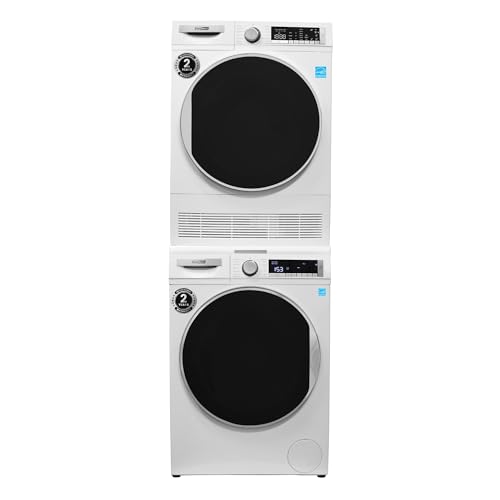
The Conserv entry is the pool’s quiet specialist: a front-load washer paired with a condensing dryer in white, sold as a combined unit. Its verified title is the briefest in this guide, so this review is correspondingly careful — the case for the machine rests on its format rather than on a feature list we cannot quote. A washer-dryer combo serves small households in small spaces: cottages, cabins, in-law suites and compact homes, which are disproportionately the homes on septic systems. Loads in such a machine are modest by design, and modest loads are the septic system’s friend — each wash delivers a small, manageable volume rather than a full-size surge.
The condensing dryer half deserves explanation for septic shoppers, because it is a water story too. A condensing dryer collects moisture from the load as liquid rather than exhausting it as vapour through a vent; that condensate is a small quantity of water that typically drains away, and the absence of a vent run simplifies installation in buildings where cutting a vent is awkward. The honest counterweight is cycle time: combos wash and dry in one drum sequentially, and a full wash-dry cycle is a long occupation of the machine. For a one- or two-person household washing a few loads a week, that rhythm is invisible; for a family, it would be a bottleneck, and this pick is not aimed at families.
Buyers should interrogate the listing and maker documentation for the specifications the title omits — capacity, water consumption and cycle details — before ordering, and this guide flags that homework rather than filling the silence with guesses. What can be said from the format alone is that the household profile it serves — small loads, low weekly volume, tight space — is precisely the profile a modest septic system handles happiest.
- Format: front-load washer with condensing dryer, white
- Installation: no dryer vent run required for the condensing design
- Load profile: compact loads for small households
- Where to buy: the Conserv Front Load Washer and Condensing Dryer listing on Amazon — check price on Amazon
Strengths
- One cabinet solves wash and dry in septic-served cottages where space and venting are scarce.
- Small loads keep each delivery to the septic system modest.
- Front-load washing meters water rather than filling deep.
Trade-offs
- Sequential wash-dry cycles are long; the machine is occupied for hours per load.
- The brief title leaves capacity and consumption figures to your own verification.
- Not a family-volume tool — weekly load counts climb fast in larger households.
Best for: couples and single occupants in compact septic-served homes needing one appliance to do both jobs. A poor fit for: families, whose load count turns a combo’s long cycles into a daily queue.

Danby 2.11 Portable Top Load Washer — Small-volume portable
The Danby DWM065A1WDB-6, to give it the model name its verified title carries, is a 2.11 cu. ft. portable top-load washer for apartments, small spaces and dorms, with a stainless steel drum and four wash cycles. Its septic case is pure arithmetic: a drum this size holds a modest load and uses a modest volume of water washing it, so a small household’s entire weekly laundry can total less water than two loads in a deep-fill full-size machine. For a cottage on an older, smaller septic system — the kind sized for a weekend cabin that now hosts full-time living — that arithmetic can be the difference between a system coping and a system complaining.
Portable ownership has its own texture, and this guide has described it in sibling articles: faucet hookups, supervised first fills, a machine that lives in a corner and works at a sink. The Danby’s four cycles are a short menu, but small-space laundry rarely needs more than a normal program, a gentle one and a quick refresh. The stainless drum again earns its line — small machines work hard for their size, and a drum surface that resists chipping and rust keeps a portable from becoming a disposable. Where this machine lives — a rental cabin, a tiny home, a granny flat on the family property’s septic — its smallness is not a compromise but the entire point.
Be clear-eyed about the ceiling, though. Bedding, bath sheets and a family’s weekly clothes exceed this format, and households that need those washed at home should read this pick as the small-load specialist alongside another arrangement, or step to the Samsung. Septic wisdom is matching machine scale to household scale; oversizing the washer oversizes every delivery the drain field must absorb.
- Format: portable top-load washer for apartments, small spaces and dorms
- Capacity: 2.11 cu. ft. per the verified title
- Drum: stainless steel; 4 wash cycles
- Where to buy: the Danby 2.11 Portable Top Load Washer listing on Amazon — check price on Amazon
Strengths
- Small absolute volume per load suits older, modest septic systems.
- Stainless drum gives a portable an unusually durable core.
- Top-load format is simple for guests and occasional users in a cottage setting.
Trade-offs
- Bedding and family bulk exceed it; it is a small-household machine.
- Faucet-hookup logistics are part of every washday.
- Four cycles is a basic menu with little specialty programming.
Best for: small households and septic-served cottages whose laundry is naturally light. Not the right match for: families washing bedding and bulk at home every week.
GODECOR 3.0 Portable Washer Stainless Drum — Water-level control pick
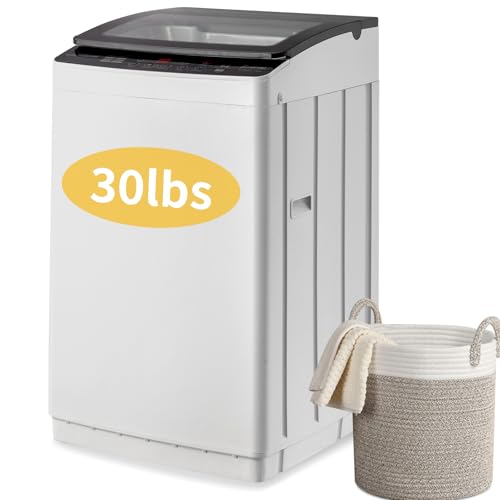
If the Danby is the arithmetic pick, the GODECOR 3.0 is the control pick. Its verified title describes a 3.0 cu. ft. portable washing machine, 30 lbs, full-automatic top-load, with a stainless steel drum, eight programs, five water levels, child lock and delay start. Those five water levels are the headline for a septic household: they convert water discipline from an intention into a dial. A small load of delicates can wash at a low level instead of sloshing in a default fill, and a full load can claim the water it genuinely needs. Over a year of loads, that matching — water sized to load, every time — is where real volume savings accumulate, far more than in any single heroic load.
The 3.0 cu. ft. capacity is generous for a portable, covering a small household’s ordinary laundry including a respectable share of towels and bedding for one or two people, and the eight programs give enough variety to separate delicates from workwear without menu sprawl. Child lock and delay start are domestic details, but delay start has a septic angle worth noticing: it lets a household schedule a load to finish at a spread-out hour, supporting the spread-the-week rhythm rather than the Saturday flood. Used thoughtfully, the timer is a drain-field kindness disguised as a convenience feature.
Full-automatic operation distinguishes this class of portable from twin-tub machines that demand attendance; set the program and level, and the machine fills, washes, rinses and spins in sequence. For a septic household in a small home — the exact overlap this pick serves — that unattended competence plus genuine water-level choice makes the GODECOR the most septic-literate portable in the pool.
- Format: portable full-automatic top-load washer
- Capacity: 3.0 cu. ft. / 30 lbs per the verified title
- Water control: 5 water levels across 8 programs
- Drum: stainless steel; child lock and delay start included
- Where to buy: the GODECOR 3.0 Portable Washer Stainless Drum listing on Amazon — check price on Amazon
Strengths
- Five water levels make load-matched water use a setting, not a hope.
- Largest portable capacity here, covering a small household’s real laundry.
- Delay start supports spreading loads across the week.
Trade-offs
- No certification language appears in its title; its case rests on volume control, not certified figures.
- Portable hookup routine still applies despite the full-automatic wash.
- Thirty pounds per load caps bedding ambitions for larger beds.
Best for: small septic households wanting genuine control over how much water each load uses. Poorly suited to: buyers who want certified consumption figures printed before purchase — that is the Samsung’s ground.
Certified high-efficiency impeller class — Full-size alternative
Some septic households want a full-size top-loader and are unmoved by front-load format. The honest route for them is the class of impeller top-loaders whose makers publish certified water figures — machines whose specification sheets carry the consumption numbers a shopper can multiply by weekly loads. No verified listing from this class sits in this guide’s pool, so it is covered in prose with the verification method stated plainly: choose the model, open the maker’s specification sheet and the certified directory listing, and confirm the water figure in both before money moves. A salesperson’s assurance is not a figure; a published specification is.
Impeller machines wash with a low-profile plate rather than a tall agitator, which frees drum space for bulky items and pairs naturally with metered fills. The septic-relevant discipline is identical to the front-load case: consolidate loads sensibly, spread them across the week, and resist the deep-fill nostalgia that sends a tub’s worth of extra water to the drain field for no cleaning benefit. Rental and multi-unit operators face a harsher version of this volume discipline, and our guide to Best Coin-Operated Washers and Dryers shows how commercial buyers spec machines when every load is counted.
- Format: full-size impeller top-load class, standard retail channels
- Verify before buying: published certified water figure on the maker’s specification sheet
- Where to buy: through the maker’s authorised retailers, with the specification sheet for the exact model checked first
Strengths
- Full-size top-load convenience with documented, checkable water figures.
- Impeller drums swallow bulky items that agitator posts obstruct.
- Published specifications turn the purchase into arithmetic.
Trade-offs
- The verification homework is yours; this guide links no model in the class.
- Metered fills disappoint deep-fill traditionalists at first sight.
- Figures vary widely within the class, so model choice matters more than class choice.
Best for: top-load loyalists on septic who will do the spec-sheet reading. A weak match for: buyers wanting a recommendation they can order tonight without documents.
Compact laundry-center class — Stacked-space route
The final class is the stacked laundry centre: a washer below and dryer above in one tower footprint, sold through mainstream appliance channels. Its septic logic is the Conserv’s logic at a larger scale — drums in this class are moderate, so per-load volume is capped by format, while the household gains a permanent, plumbed installation rather than a portable routine. For a small septic-served home with a laundry closet but limited floor area, that combination is often the realistic endgame: real hookups, real capacity for a small household’s week, and a drum size that quietly prevents the mega-load deliveries an older septic system dreads.
No verified listing for the class sits in this pool, so the shopping brief is documentary again: confirm the washer half’s water figure from the maker’s sheet, confirm the tower’s total footprint against your closet, and confirm the dryer half’s venting suits your wall. Centres lock the household into paired replacement down the road — one half’s failure raises a conversation about the whole tower — and that lifecycle fact belongs in the purchase decision, not in a later surprise.
- Format: stacked washer-dryer centre class, appliance retail channels
- Verify before buying: washer water figure, total footprint and dryer venting route
- Where to buy: through appliance retailers who deliver and install the tower as one unit
Strengths
- Permanent plumbed installation with a footprint small homes can spare.
- Moderate drums cap per-load volume by design.
- One delivery and installation solves the whole laundry corner.
Trade-offs
- Paired format complicates future replacement of a single half.
- Capacity will not serve a growing family for long.
- Specifications must be gathered model by model; none are quoted here.
Best for: small septic homes with a laundry closet and a stable household size. Not suited for: families expecting their laundry volume to grow into a full-size machine’s territory.
How the six compare on the septic axis
| Pick | Water evidence | Load scale | Household profile |
|---|---|---|---|
| Samsung WF45T6000AV | ENERGY STAR in title | Full-size | Families wanting certified evidence |
| Conserv combo | Compact format | Small | Couples in cottages and suites |
| Danby 2.11 | Small absolute volume | Small | Cabins and tiny households |
| GODECOR 3.0 | 5 water levels | Small-medium | Control-minded small households |
| Impeller class | Published certified figures | Full-size | Document-checking top-load fans |
| Laundry-center class | Moderate drum format | Medium | Closet laundry rooms |
What is the weekly-volume arithmetic every septic household should run?
Three numbers, multiplied honestly. First, your machine’s per-load water figure, from its certified listing or specification sheet — the homework this guide keeps assigning. Second, your household’s true weekly load count, counted for one real week rather than estimated from optimism; include towels, bedding and the mid-week extras everyone forgets. Third, your septic system’s design capacity, which lives in the installation records or with the local authority that permitted it. Multiply the first two, compare against the third with margin to spare, and you have the only “septic-safe” verdict that means anything: your laundry fits your system. If the product of your arithmetic is uncomfortably close to the system’s comfort, the fixes are behavioural before they are mechanical — spread loads across days, consolidate half-loads, and let the tank rest between deliveries. A quieter household rhythm also pairs well with the machines in our guide to Best Quiet Tumble Dryers when laundry spreads into evenings.
Remember that the washer is not the system’s only customer. Showers, dishwashers and guests all deliver volume, and the laundry is simply the load you can schedule most easily — which makes it the load to schedule thoughtfully.
Which laundry habits protect a drain field?
Spacing beats size. A drain field absorbs gradually, so five loads across five days are gentler than five loads on Saturday even at identical total volume. Avoid back-to-back marathon sessions, particularly after heavy rain when the field is already saturated. Keep lint out of the system where your setup allows — lint is slow to break down and a washer is a lint factory — and keep the machine’s own maintenance current, because a washer that fills or drains erratically delivers water in patterns nobody planned. Finally, know where your field is and keep vehicles, sheds and new plantings off it; the best washer choice cannot rescue a field crushed by a parked truck.
What about detergents and additives on a septic system?
This guide’s scope is machines, and it keeps a deliberate boundary: the “septic-safe” tablets and additives that appear in searches for this topic are not picks here, and no additive compensates for a washer delivering more water than the system can absorb. On detergent itself, the laundry-side advice is volume discipline — dose for the load, avoid chronic overdosing, since everything dissolved in the wash water rides along to the tank. Households wanting product-level septic guidance should take it from their septic servicer, who knows their tank, their field and their local rules, rather than from a washer guide generalising across thousands of different systems.
Errors septic households make when washer shopping
The headline error is believing the label that does not exist — choosing a machine because its marketing whispered “septic” while its water figure went unchecked. The second is sizing by drum envy: buying the largest capacity available and then delivering family-flood volumes to a modest field. Third is the Saturday marathon, a scheduling habit that defeats any machine’s efficiency. Fourth, forgetting that a growing household changes the arithmetic — a system coping with a couple’s laundry may not cope with the same couple plus two children plus a home business. And finally, ignoring the machine’s own signals: slow drains, gurgling and lush patches over the field are the system’s way of filing a complaint, and they warrant a servicer’s visit, not a new washer.
How does a septic system actually process your laundry water?
A short tour of the underground half of your laundry room clarifies every recommendation in this guide. Wastewater from the house enters the septic tank, where solids settle, oils float, and the liquid middle layer flows onward to the drain field — a network of perforated pipes in shallow trenches where the soil itself finishes the treatment as water percolates through it. Two failure rhythms follow from that design. Hydraulic overload is the volume problem: deliver water faster than the soil can absorb it and the field saturates, surfaces or backs up. Solids and lint carryover is the quality problem: material that should have settled in the tank instead migrates to the field and clogs the soil interface over years. A washer touches both rhythms — it is the home’s largest single source of pulsed water deliveries, and its discharge carries lint and detergent residue with it.
That is why this guide keeps returning to volume, spacing and load honesty rather than to any product claim. The tank needs quiet intervals to settle; the field needs dry intervals to absorb. Laundry scheduled like rain — spread across the week in modest events — suits the system. Laundry scheduled like a flood does not, whatever machine produced it. Understanding this also reframes efficiency: a certified low-water machine is not virtuous in the abstract, it is simply delivering smaller pulses to a system that prefers them.
What changes when the household grows or starts working from home?
Septic systems are sized for a household at a moment in time, and households refuse to stay sized. A baby adds a daily small-load rhythm; teenagers add sports kit and long showers; a home business — a salon chair, a holiday let, a dog-grooming tub — can add laundry volumes that dwarf the family’s. Each change rewrites the arithmetic from earlier in this guide, and the washer decision should be revisited at each change rather than treated as settled for the machine’s life. A household that was comfortable with a full-size machine as a couple may find, with children and a lodger, that the same machine’s weekly total has crept past the field’s comfort — at which point the fixes are scheduling, consolidation and, at replacement time, a move toward the certified or smaller-format picks in this guide.
Guest patterns deserve a specific mention because they are spiky rather than steady. A holiday week with a full house can deliver a month of ordinary laundry volume in days. The septic-wise host spreads the catch-up washing across the following week instead of restoring order in one heroic Sunday, and keeps a couple of spare towel sets so that hospitality never forces a midnight marathon load.
How do you maintain a washer so it stays septic-kind?
A neglected machine becomes an erratic water citizen. Inlet screens clogged with sediment make fills slow and can confuse level sensing; a worn pump or a partially blocked drain alters how discharge leaves; a machine that errors mid-cycle and refills delivers a load’s water twice. The maintenance that prevents all this is the ordinary liturgy this batch of guides repeats: clean inlet screens on a schedule suited to your supply, keep the drain path clear, wipe seals, run the maker’s maintenance cycle, and fix small faults promptly instead of living with workarounds. On a septic system, add one habit: know roughly how long a normal cycle’s fills and drains take, so a change in the machine’s water behaviour is noticed in weeks rather than discovered via the drain field’s complaint.
Hoses matter underground too. A burst supply hose in an unattended house is a flood anywhere, but on a septic-served property a slow, unnoticed leak from a laundry connection can also send a continuous trickle through the system for weeks. Braided hoses, accessible shutoffs and a habit of closing laundry valves during long holidays are cheap insurance with an underground beneficiary.
What should you ask the seller or servicer before buying?
Four questions do most of the work. What is this model’s published water figure, and where is it printed? — the answer separates evidence from patter instantly. What does the machine do on its normal cycle when the load is small: does it genuinely meter down, or fill to a default? Who services this model within a sensible distance, and are parts stocked or ordered? And what does installation include — new hoses, levelling, a test cycle — because a badly levelled machine that errors and refills is a septic cost as well as an annoyance. Write the answers down. On a purchase meant to serve a decade, the conversation you can refer back to is worth more than the one you remember fondly.
If you already own a septic system with known limits, bring those limits to the conversation: the system’s design capacity, any servicer advice on laundry volume, and your counted weekly loads. A seller who hears real numbers can steer you honestly; a seller who hears “something septic-safe, please” can only sell you a label that does not exist.
How do portables behave on septic in real homes?
The two portables in this guide earn a practical footnote, because their discharge pattern differs from plumbed machines. A portable drains into a sink or tub in pulses governed by its pump, and the household sees every gallon leave — a surprisingly educational experience that makes volume discipline tangible. Owners of portables on septic consistently describe becoming more conscious of load counts simply because the water is visible. The corresponding risks are domestic rather than mechanical: a drain hose that slips its sink sends a load’s water across the floor instead of into the system, and a portable’s convenience invites extra small loads whose totals quietly exceed the full-size machine they replaced. Count loads for the first month with any new machine, portable or plumbed; the tally usually teaches the household its real rhythm better than any estimate.
What does winter, rain and a high water table do to the equation?
A drain field’s appetite changes with the weather. Saturated soil after days of rain absorbs slowly, frozen ground absorbs barely at all, and a high seasonal water table shrinks the unsaturated zone the field depends on. The laundry response is scheduling humility: in a wet week, spread loads thinner, postpone the bedding marathon, and let the system ride the weather rather than fight it. Households in wet climates often find their septic’s personality is seasonal — generous in a dry summer, touchy in a sodden March — and the washer that suits them is the one whose household builds that seasonality into its habits. This is another reason the certified and smaller-format picks anchor this guide: they lower the baseline pulses so the weather has more room to be forgiven.
None of this requires anxiety, only rhythm. A septic system is a slow, patient piece of infrastructure; it asks the laundry to be slow and patient in return, and it rewards households that oblige with decades of invisibility.
How should you brief a house-sitter, cleaner or new tenant?
Systems fail at handoffs. The person who does not know the house rules runs the Saturday marathon innocently, and the field pays for the lesson. A one-page laundry card — maximum loads per day, spread them out, no deep-fill nostalgia, who to call if the drain gurgles — protects the system better than any machine feature. In rental properties on septic, that card belongs in the tenancy pack alongside the alarm code, written plainly and without alarmism: these are house rules, not hazards. Landlords should also count laundry capacity honestly when marketing a property; a cottage sleeping eight on a system sized for four is a complaint with a booking calendar.
What does replacing an old deep-fill machine actually change?
Many septic households arrive at this guide mid-transition: the old agitator machine that filled like a bath has died, and its replacement meters water in a way that looks wrong to eyes trained over twenty years. Expect an adjustment period and judge it by results rather than by the sight of the fill. Modern metered machines concentrate detergent solution on the fabric; clothes emerge clean from water that never covered them the way the old tub did. The septic dividend is immediate and structural — every load is a smaller pulse — and households typically see it first not in the laundry but in the system’s behaviour across a wet month, when the field stops complaining. Give the new rhythm a season before romanticising the old machine; nostalgia is a poor water engineer.
The reverse transition also happens: a household moving from a small flat’s portable to a full-size machine on a new septic property should notice the pulse change in the other direction and rebuild its scheduling habits accordingly. Machine changes are system changes on a septic property, and treating them that way — recounting loads, re-running the arithmetic — is the mark of a household that will never meet its drain field socially.
How do you read a specification sheet for this purchase?
Open the sheet with three lines highlighted in your mind: the water consumption figure and the standard it was measured under, the capacity in cubic feet, and the list of cycles with any eco or low-water programs named. Cross-check the consumption figure against the certified directory entry for the exact model — model suffixes matter, and a figure quoted for a sibling model is not evidence about yours. Note whether the sheet distinguishes load sizes; a machine that publishes small-load figures is telling you its metering is real. Finally, photograph or save the sheet with the purchase documents. Years later, when the household’s arithmetic needs redoing — a child arrives, a lodger moves in — that sheet is the difference between re-deriving your position in ten minutes and guessing at it.
Is a laundromat ever the septic-wise answer?
For occasional volume spikes, honestly yes. A seasonal duvet rotation, a post-holiday linen mountain or a renovation period’s filthy workwear can ride to a commercial machine whose water goes to a municipal system, sparing your field a pulse it did not need. This is not a failure of the home setup; it is load management, the same instinct as spreading loads across a week, extended across geography. Households that build the laundromat into their seasonal rhythm — spring bedding, autumn curtains — often find it the cheapest septic maintenance they ever buy.
What records should a septic household keep with the washer paperwork?
Keep a single laundry-and-septic folder and let it accumulate the documents this guide keeps mentioning: the washer’s specification sheet with its water figure, the septic system’s design and pumping records, the servicer’s contact and advice notes, and your counted weekly load tally from the first month. That folder converts every future question — a new machine, a household change, a servicer’s visit, a property sale — from archaeology into lookup. Buyers of septic properties should ask for exactly this folder and treat its absence as a prompt for a pre-purchase system inspection. Sellers who can produce it discover it is a quiet selling point: it proves the invisible infrastructure was understood, which is the thing every buyer of a septic home secretly fears it was not.
How do greywater ideas fit into this picture?
Some households ask whether laundry water can be diverted away from the septic system entirely, toward garden greywater use. The honest answer is that this is a plumbing and regulations question, not a washer question: rules vary sharply by jurisdiction, detergents and soil loads matter, and an unpermitted diversion can create more problems than the volume it saves. This guide’s position is deliberately narrow — choose a washer whose volume your system handles, schedule it kindly, and take greywater ambitions to your local authority and a licensed plumber rather than to an appliance review. The machine decision and the plumbing decision are cousins, not twins, and each deserves its own professional.
A short word on lint, the septic system’s slow enemy
Of everything a washer sends underground, water is the loudest and lint is the sneakiest. Synthetic fibres shed in every wash, and unlike the organic load a tank is built to settle, fine lint can ride the liquid layer toward the field and accumulate at the soil interface across years, slowly throttling absorption in a way no single load reveals. Households cannot wash without shedding some lint, but they can respect the accumulation: keep the tank pumped on its recommended schedule so settled and floating layers stay where they belong, avoid washing the lint-heaviest items — new fleece, fraying towels — in unnecessary extra cycles, and treat any servicer advice about effluent filtration as a system-specific conversation worth having at pumping time. The washer choice supports all this only indirectly, through volume and rhythm, which is precisely why this guide refuses to sell you a tablet and call the problem solved.
What does a realistic septic-wise laundry week look like?
Picture a four-person household on a mid-sized system with the Samsung running the show. Monday takes the school-and-work clothes accumulated over the weekend — one consolidated load, not three partial ones. Wednesday carries towels and bedding from the main bedroom. Friday handles the second clothes load and the sports kit, finishing before the weekend so the field rests while the household plays. Bulky one-offs — the guest bedding, the curtain wash — are slotted singly into quiet midweek slots rather than stacked onto an existing laundry day. Total: four to five considered deliveries, none of them doubled up, each separated by the settling intervals the tank appreciates. Nothing about that week requires sacrifice; it requires a calendar habit, which is why this guide treats scheduling as a machine feature on par with any printed specification. A smaller household on the GODECOR runs the same shape at smaller scale — three or four loads, water levels matched to each, the delay timer placing a finish where the week has room for it.
How should you handle the first month after a new machine arrives?
Treat the first month as measurement season. Count the loads — actually count them, on a note stuck to the machine — and note which days they ran on. Watch the plumbing for the first fortnight: fills, drains and any new gurgle in a sink or shower while the washer discharges. If the property has inspection access to the field, glance at it after the month’s heaviest laundry day and file the observation, even if the observation is “nothing to see,” because a baseline of nothing is what makes a later something meaningful. Adjust the schedule once, deliberately, at month’s end, and then let the rhythm settle into the background where good infrastructure belongs. Households that run this month of attention rarely think about their septic system again except at pumping intervals, which is the highest compliment either the machine or the system can be paid.
One more consideration: the sound of a healthy system
Experienced septic households develop an ear for their plumbing. A washer discharge that whooshes away cleanly, drains that keep their ordinary pace during a fill, and silence from the field are the background music of a system in balance. New sounds — a gurgle that was not there in spring, a drain that hesitates when the washer pumps out — are data, and the household that notices them early usually solves a small problem at small cost. Keep that ear trained after any change: a new machine, a new household member, a new work-from-home routine. The washer is the loudest water instrument in the house; let it report on the system it feeds, and act on the first verse rather than the chorus.
Final Recommendation
Households wanting evidence first should buy the Samsung WF45T6000AV: it is the pick whose water credentials are certified and printed in its own title, in a full-size format that consolidates family laundry into fewer deliveries. Small households on modest systems should match their scale — the GODECOR 3.0 for its water-level control, the Danby 2.11 for the smallest volumes, the Conserv combo where one cabinet must do everything in a tight cottage. Whichever machine arrives, remember that the septic system will judge your household not by the badge on the washer but by the gallons in your week — so do the arithmetic, spread the loads, and let an unglamorous, well-matched machine keep the whole arrangement invisible for years.
Frequently Asked Questions
Is any washer actually certified septic-safe?
No. No standards body certifies washers as septic-safe, and this guide says so plainly because the whole purchase should be reframed around measurable water volume. ENERGY STAR certification, which the Samsung in this pool carries in its title, is a real, published standard covering consumption — it is the honest evidence available, and it is about water use, not septic approval.
How many loads a week can a septic system take?
There is no universal number; it depends on your system’s design capacity and your machine’s per-load volume. Run the arithmetic in this guide — per-load figure times weekly loads, compared against your system’s documented capacity with margin — and spread loads across the week rather than concentrating them.
Should laundry wait during a septic service or pumping visit?
Yes — treat service days as rest days for the system. A pumping or inspection visit stirs the tank’s layers by design, and the servicer’s guidance afterward usually includes a gentle re-entry for water deliveries. Run the urgent load the day before, let the system settle after the visit, and resume the normal spread rhythm the following day. It is a small courtesy with a mechanical logic, and your servicer will confirm it.
Are front-loaders always better for septic systems?
They meter water by design, which helps, but a disciplined household with a water-level-controlled top-loader can match the weekly outcome. Format is a starting advantage, not a verdict; behaviour and arithmetic decide.
Should I buy septic-safe cleaning tablets for my washer?
Not on this guide’s recommendation — they are not picks here, and no additive offsets excess water volume. Product-level septic questions belong with your septic servicer, who knows your specific tank and field.
Does a bigger tank fix a laundry volume problem?
A larger tank buys settling room, not absorption: the drain field still receives every gallon the household produces, and it is the field that saturates first in most overload stories. Tank upgrades belong in a servicer’s system-wide conversation, not in a washer purchase. The cheaper, faster lever is almost always the laundry side — volume per load, loads per week, spacing between them — which is why a washer guide is a legitimate place to solve part of a septic problem.
What is the first sign my laundry is overloading the system?
Slow drains, gurgling plumbing and unusually lush or wet patches over the drain field are the classic early complaints. Treat them as a prompt to call a septic servicer and to audit your weekly laundry volume — in that order.
Related Guides
For the certified-efficiency angle across the wider top-load market, read Best Energy Star Top-Load Washers together with this guide.



[…] whose water comes from a private system rather than a municipal supply will also want our guide to Best Washers for Septic Systems, because frequent hot loads and septic capacity are a conversation worth having before the baby […]
[…] and readers managing whole-household volume may prefer the throughput thinking in our guide to Best Washers for Septic Systems, where low water per load is the organising […]