Key takeaways
- Best vacuums for pine needles: wide hoses, strong straight suction and bagged or shop-style designs that clear long needles without clogging.
What's inside
- Pine needles are not ordinary debris
- Why length changes everything
- Straight suction beats agitation for this job
- Hose diameter: the specification worth hunting for
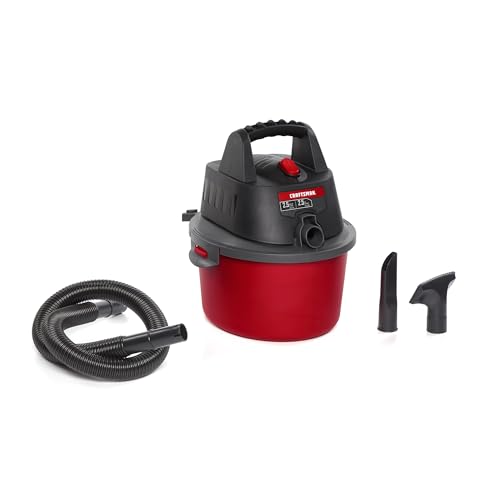
- The shop vacuum archetype: built for exactly this
- Bagged canisters: the indoor needle specialist
- Heads and nozzles: rubber, squeegees and tangle-free thinking
- Leaf vacuums and the outdoor end of the problem
- Indoors versus outdoors: two problems wearing one name
- Why robot vacuums struggle with pine needles
- Cordless sticks: useful, with two conditions
- What to do with the needles you collect
- Reading specifications like a pine owner
- Technique: working with the debris instead of against it
- Maintenance in a needle household
- Putting the choice together
- The indoor pine nobody planted: needles from seasonal trees
- Porches, decks and the architecture of drift
- Cars: the small, overlooked needle habitat
- Peak season playbook: the weeks when needles fall in earnest
- Needles, pets and children: the household layer
- Running costs and the unglamorous arithmetic
- Questions pine households ask most
- Check prices on Amazon
- A final note on expectations
As an Amazon Associate I earn from qualifying purchases. This post may contain affiliate links at no extra cost to you.
Heads up before you read on: this guide contains affiliate links, and if you purchase through one of them we may receive a commission from the retailer — it never adds anything to the price you pay.
Pine needles are not ordinary debris
Anyone who lives under pines learns quickly that the needles are a category of litter all their own. A pine needle is long, stiff, smooth and slightly curved, and those four properties combine to defeat machines that handle dust, crumbs and even pet hair without complaint. Dropped needles do not crumble into manageable fragments. They lie in interlocking mats on paths and decks, work their way deep into carpet pile and door mats, drift into garage corners, and accumulate in the seams of car footwells. A single mature pine can shed thousands of needles in a season, and in a dry autumn the fall can feel less like litter and more like weather.
The cleaning problem is mechanical, and it is worth understanding before spending anything. A needle that meets a spinning brush roll often does not enter the machine at all: it bridges across the brush housing, lying lengthwise over the intake like a log over a stream, while other needles stack behind it. Needles that do enter may align with the airflow and then jam where the hose narrows, at a bend, or at the junction between the floor head and the wand. Needles on hard floors can skate ahead of a fast brush, pushed by the very air and bristles meant to collect them. Every design recommendation in this guide follows from those three failure modes: bridging, clogging and skating.
What follows compares machine archetypes and published specifications — hose diameter, intake width, container capacity, suction figures stated by manufacturers — alongside patterns in owner feedback from households that live with pines year-round. We describe designs at the segment level rather than promising that any single model will behave a particular way on your porch, because needle species, needle length and flooring vary enough to change the outcome. The goal is narrower and more useful: to show which specifications predict success with this specific debris, and which familiar features quietly predict frustration.
Why length changes everything
Pine needles range from a few centimetres on some ornamental species to well over twenty centimetres on longleaf and similar pines, and length is the variable that decides which machines cope. Short needles behave almost like coarse dust: they tumble, they enter intakes at any angle, and they rarely bridge. Long needles behave like handfuls of dry spaghetti. They span openings instead of falling through them, they interlock into mats that resist being lifted one by one, and they turn every narrowing in the airflow path into a potential dam.
The practical consequence is that specifications which barely matter for ordinary cleaning become decisive here. The internal diameter of the hose and wand sets the largest bundle of needles that can pass without wedging. The width and internal height of the floor head’s intake channel decide whether needles can turn the corner from floor to duct. The shape of the path matters too: a short, straight route from head to container gives needles few chances to snag, while a path with tight bends and stepped reductions invites the classic mid-hose clog that owners of pine-shaded homes know intimately.
Species and setting shape the job further. Needles that fall on outdoor surfaces arrive mixed with cones, twigs, grit and damp leaf litter, which argues for machines built for coarse, wet-and-dry debris. Needles that migrate indoors on shoes and paws arrive mostly dry and alone, scattered across entry flooring and woven into mats and low-pile rugs. Those are two different cleaning tasks sharing one culprit, and many households under serious pine cover end up with a machine assigned to each: something rugged for the porch, deck, drive and garage, and something more domestic for the hallway and the rooms beyond it.
Straight suction beats agitation for this job
For carpet dust and ground-in dirt, a rotating brush roll is the hero of vacuum design. For pine needles, it is frequently the villain. The bristles catch needles crosswise and hold them against the intake instead of feeding them through; hair-style wrapping is replaced by a thatch of needles woven through the brush, which the owner then removes by hand, strand by strand. Machines that let you switch the brush roll off, or that offer a suction-only hard-floor head, convert that fight into a straightforward pass: the needles are drawn straight up by airflow before they have anything to bridge against.
This is why the strongest archetype for needle work is the high-airflow, straight-suction machine: a canister or shop-style unit whose floor tool is essentially a wide, smooth channel with strong draw behind it. On hard surfaces — tile, concrete, decking, laminate — such a head glides over needle mats and inhales them in overlapping swathes, provided the intake is tall enough to pass over the mat rather than bulldozing it forward. A head that rides too low pushes a bow wave of needles ahead of itself; a head with a slightly raised leading edge and good side channels lets needles slip under and in.
Carpet complicates the verdict, because needles in pile need some mechanical help to leave the fibres. The compromise used by many pine-country households is a brush roll at low aggression: a roll that can be switched on for the rug by the door and off for the hard floors around it, or height adjustment that lifts the head enough to stop the worst bridging while still worrying needles out of the pile. What rarely works is a fast, stiff brush at its lowest setting driven at speed — the setting that flings needles sideways and weaves the rest into the roll. Slow passes, suction first, agitation second, is the technique that matches the physics of the debris.
Hose diameter: the specification worth hunting for
If you read only one number on a specification sheet for this job, read the hose or wand diameter. Standard domestic machines route debris through hoses that narrow considerably at cuffs and junctions, and every reduction is a tollgate where a bundle of long needles can wedge sideways and stop the column behind it. Wider-diameter hoses, of the kind fitted to shop-style and some canister machines, let needle bundles stay aligned with the airflow and pass whole. Manufacturers do not always publish internal diameters prominently, but many publish hose dimensions or list compatible accessory sizes, and the accessory ecosystem is a useful clue: a machine built around wide utility nozzles is a machine whose whole path was designed for coarse debris.
Diameter interacts with length and bends. A wide but long hose with several tight curves can still trap needles at the curves, because a stiff needle resists turning corners and the bundle behind it compacts. Shorter, straighter runs are kinder. This is one reason canister machines with the hose carried in a gentle arc often handle needles better than designs that force debris through an upright’s internal maze of ducts, valves and diverters — the upright’s path exists to serve two modes, floor and hose, and each junction is another opportunity for a needle dam. When an upright does cope well with needles, it is usually because its floor-mode path is short and its intake channel is generous.
Intake width at the head deserves the same attention. A wide cleaning path is efficient on open floors, but what matters for needles is the internal channel: whether a needle lying crosswise can rotate into the airflow or is trapped spanning the opening. Heads with an unobstructed channel across most of their width, and without narrow gates at the centre where the wand joins, feed needles through far more reliably. Some utility heads add rubber squeegee edges that corral needles toward the channel on hard floors, a simple feature that owners in pine regions praise out of proportion to its cost.
The shop vacuum archetype: built for exactly this
The wet-and-dry shop vacuum is the machine most pine households eventually discover, because its design brief — construction debris, workshop waste, garage floors, the occasional flood — overlaps almost perfectly with the needle problem. Wide hoses are standard. Intakes are broad and simple. Containers are large, so a session’s worth of bulky needles, cones and grit fits without constant emptying. Filters are coarse enough not to blind instantly with fibrous debris, and many models accept bags that make disposing of a needle-heavy load a clean, sealed operation.
Capacity deserves emphasis, because needles are volume-rich and weight-poor. A container that looks generous by dust standards can fill with needles in a single pass of a needle-drifted porch, since the needles pack loosely and carry air with them. Large-capacity machines turn a big outdoor clean-up into one or two emptying trips rather than a dozen, and that difference decides whether the weekly porch routine survives the heavy-drop weeks of autumn. Bagged shop machines add a second advantage: the whole interlocked mass comes out as one contained bundle instead of being shaken loose over a bin, shedding needles back onto the floor you just cleared.
The trade-offs are equally clear. Shop machines are loud, blunt instruments: little filtration refinement, no pile-friendly finesse, and floor tools designed for concrete rather than for the good rug. They are the right answer outdoors and in garages, workshops and utility spaces, and a workable answer on hard indoor floors if the noise and handling suit the household. They are rarely the right only machine for a carpeted home. Think of the archetype as the outdoor half of a two-machine strategy, or as the single machine for households whose needle problem lives mostly on porches, decks, drives and hard floors.
Wet needles and damp litter
Needles rarely arrive alone or perfectly dry outdoors. Rain mats them into heavy layers mixed with ordinary leaves and grit, and a machine rated for wet pickup handles that mixture without the filter anxiety of a domestic vacuum. There are limits worth respecting: a mat of wet needles and leaves is dense, and even a strong machine will need the mat broken up — a rake or a blower pass first, then the vacuum for the residue — rather than being asked to inhale the whole sodden layer in one heroic attempt. Used that way, as the finishing tool after bulk removal, a wet-and-dry machine is in its element; asked to be the bulk remover of wet mats, it clogs like everything else.
Bagged canisters: the indoor needle specialist
Inside the house, the bagged canister is the archetype that best mirrors the shop vacuum’s virtues in domestic form. The airflow path is comparatively direct, the hose is the main route rather than a detour, and a suction-only floor head or a switchable brush head covers the mixed flooring of an entry hall in one session. The bag earns its place in a specific way: needles in a bag come out of the house as a sealed, self-contained parcel. Needles in a bagless bin tend to spring back out as an interlocked bird’s-nest that must be pulled free by hand, shedding strands across the bin area.
That said, bagless machines are not disqualified indoors; they ask for technique. Emptying into a large outdoor bag, reaching in with a gloved hand to lift the needle mass out in one piece rather than shaking the bin, keeps the process tolerable, and households that already own a capable bagless upright with brush shut-off may find it entirely adequate for the indoor scale of the problem. Comparisons among value bagless uprights, including which designs offer brush control and generous bins, appear in best affordable bagless upright vacuums. The deciding factors remain the same: can the brush stop, is the path wide and simple, and does emptying stay civilised when the contents are mostly long, springy needles?
Canister handling also suits the geography of indoor needles. The problem concentrates at thresholds: the mat inside the front door, the run of hall flooring, the boot tray, the step down to the garage. A canister’s head and wand work those edges, corners and stair treads precisely, and the crevice tool lifts the lines of needles that collect where flooring meets skirting. An upright can do this work through its hose mode, but in many designs the hose path is the narrowest in the machine — exactly where needle bundles jam — so the canister’s main-route hose is a structural advantage rather than a preference.
Heads and nozzles: rubber, squeegees and tangle-free thinking
The floor head is where needles are won or lost, and the features that matter are unglamorous. A smooth, wide channel with no internal ribs or narrow gates lets needles rotate into the airstream. Rubber squeegee blades or finned rubber edges drag needles toward the intake without the crosswise catching that bristles cause, and they double as excellent hard-floor edges generally. Parquet-style heads with soft, retractable bristle rows can work if the bristles part around needles rather than combing them into a mat, but the simplest utility heads — the kind sold for workshop and garage floors — are often the most needle-proof of all.
So-called tangle-free brush designs, built around rubber fins or combing structures instead of conventional bristle rows, deserve a balanced word. They genuinely reduce the woven-thatch problem on carpet, because there are no dense bristle beds for needles to thread through, and many owners of pet-heavy homes already favour them for hair. They do not repeal physics: a long needle can still bridge the intake if suction is modest, and finned rollers still need their accumulated debris cleared. Treat tangle-free as a meaningful advantage within the brush-roll category, not as a conversion of a brush machine into a straight-suction one.
Attachments decide the edges of the job. A wide utility nozzle handles porch boards and garage concrete. A crevice tool takes the needle lines along thresholds, between deck boards’ ends, and down the side of the car footwell. A soft dusting brush is the wrong tool here — needles laugh at it — but a stiff hand brush used alongside the nozzle, sweeping needles out of corners into the suction path, is the low-technology partnership that experienced pine households rely on. When judging a machine’s accessory kit for this purpose, count the wide, simple nozzles and ignore the delicate ones.
Leaf vacuums and the outdoor end of the problem
Beyond the porch lies the yard, and at yard scale the dedicated leaf vacuum enters the conversation. These machines — walk-behind, handheld blower-vacuum combinations, and towed or wheeled yard designs — are built to ingest leaves in volume and usually shred them on the way to the bag. Pine needles test them differently from broad leaves: needles pass through shredding mechanisms without being reduced much, they can wrap around impellers, and they pack into collection bags as a dense, springy mass. Models whose manufacturers explicitly rate them for needle pickup exist within the category, and that published rating is worth more than any general claim about leaf capacity.
The honest division of labour outdoors looks like this. For needles scattered across lawns, no vacuum of any domestic kind is the efficient tool; raking, blowing into windrows, or mowing over light falls handles volume at a speed suction cannot match. For needles on the hard outdoor surfaces — patios, paths, decks, drives, the garage apron — a shop vacuum or a leaf vacuum used on hard ground is genuinely effective, because the surface lets the intake work. And for the boundary zones where needles pile against walls, steps and door thresholds, the vacuum’s precision beats the blower’s habit of relocating the pile into the doorway you were trying to clear.
Seasonality governs all of this. Most pines drop the bulk of their needles in a defined peak — commonly autumn, when the oldest inner needles yellow and fall over a few concentrated weeks, though species and climate shift the window. During peak drop, outdoor surfaces can need attention every few days to stop needles migrating indoors on shoes, and a machine that lives ready in the garage, with an empty container and its wide nozzle fitted, will be used; a machine that needs assembly, filter changes and a hunt for its hose will be postponed until the porch is ankle-deep. Outside peak season, the same equipment settles into a lighter rhythm, and the indoor machines carry the smaller, steadier traffic of needles that ride in on footwear and dog paws all year.
Indoors versus outdoors: two problems wearing one name
It is worth stating the split plainly, because buying one machine to do both jobs at full strength is where most disappointment begins. The outdoor problem is volume, mixture and weather: needles by the bucketful, mixed with cones, twigs, grit and damp litter, on rough hard surfaces, often far from a power socket. The indoor problem is precision and manners: modest quantities of dry needles on finished flooring, in mats and low pile, around furniture, at hours when noise matters, with filtration and floor care as real considerations.
Shop-style and leaf machines win outdoors on capacity, hose width and indifference to grit. Canisters and good uprights win indoors on control, filtration and surface care. Cordless sticks occupy a useful middle for the daily indoor skirmish — the entryway sweep that stops needles spreading through the house — provided their intake and bin suit the debris, a qualification the next section examines. Households with a light indoor problem and hard floors throughout may genuinely need only one machine; households under heavy pine cover with carpet indoors and porches out usually end up happiest with the two-machine split, each tool matched to its half of the map. Flexible formats that convert between stick and handheld, surveyed in best 2 and 1 cordless vacuums, are one way households cover the indoor half without adding a full second machine.
Why robot vacuums struggle with pine needles
Robot vacuums are designed around a compact set of compromises: a low body, a small dustbin, a modest brush system and navigation that assumes debris will behave like dust and crumbs. Pine needles violate every one of those assumptions, and it is fairer to describe the result as a design mismatch than as a defect. The bin fills with loosely packed needles after a few metres of entryway. Long needles bridge the intake and are dragged around the room instead of collected. Needles wrap and wedge around the brush and side spinners, sometimes stalling the brush entirely, and the robot’s response to resistance is to move on, leaving the mat it failed to ingest spread thinner than it found it.
There is a narrower role where a robot can still help: light, daily maintenance of hard floors during the weeks when needle traffic is a trickle rather than a flood, keeping the hallway presentable between proper sessions. Even there, the owner inherits a maintenance rhythm — emptying the small bin and clearing the brush far more often than the same robot would need in a needle-free home. During peak drop, or in any home where needles arrive by the shoe-full, a robot as the primary tool will disappoint, and the disappointment is predictable from its published bin capacity and brush design alone. Our survey of full-size stick machines in best 10 stick vacuums covers the manual alternative most households use for that daily entryway work.
Cordless sticks: useful, with two conditions
A cordless stick is the natural tool for the indoor needle skirmish — grab, sweep the entry, return — and many do it well. Two conditions decide success. The first is the head: a soft-roller or suction-friendly head on hard floors collects needles cleanly, while a stiff, fast brush at floor level skates them forward; brush control or a dedicated hard-floor head is the specification to seek. The second is the bin and the path into it. Needles must pass the head’s neck, which on many sticks is the narrowest point in the whole machine, and then occupy a bin that is usually sized for dust. A stick that clogs at the neck with long needles will do so every session, no matter how strong its motor, so published intake design and owner reports mentioning needle-like debris deserve close reading.
Battery window matters less here than in whole-house cleaning, because the stick’s needle duty is usually measured in minutes: entry, hall, kitchen door, the mat by the back step. Where the stick also serves as the car-interior tool — footwells collect needles impressively — a handheld conversion and a crevice nozzle extend its usefulness. For the garage and car combined, some households instead keep a compact vehicle-focused machine on hand, a niche examined in best 12 volt wet dry car vacuums.
What to do with the needles you collect
Disposal deserves a paragraph of honesty, because pine needles do not behave in the compost heap the way other garden litter does. They decompose slowly — their waxy coating and acidity resist breakdown — so a season’s vacuumings tipped onto a working compost pile will still be recognisably needles long after leaves added at the same time have vanished. Gardeners do use them deliberately: as a loose mulch around acid-tolerant plantings, as a path surfacing that knits together and suppresses mud, or dried as a fire-starting material where local rules allow. Each use has its cautions — keep dry needle mulch away from building walls and ignition sources, and check local guidance on garden waste and burning — but the shared point is that needles are a material to place intentionally, not a material that disappears politely.
For households without a use for them, municipal green-waste collection is the straightforward route where available, with the vacuum’s contents bagged rather than loose. Bagged machines, again, make this transfer cleanest. One more practical note: needles collected from garages and drives carry grit and sometimes glass or metal fragments from those surfaces, so that fraction belongs with general waste rather than on garden beds, whatever the needles’ own virtues as mulch.
Reading specifications like a pine owner
Translate every specification sheet into the three failure modes. Against bridging: brush shut-off or a suction-only head, a wide and tall intake channel, tangle-resistant roller design if a roller is unavoidable. Against clogging: hose and wand diameter, the narrowest point in the debris path, the number of bends and junctions, and container capacity relative to the volume needles occupy. Against skating: strong sustained suction rather than headline peak figures, squeegee or finned head edges, and the weight of the head keeping its seal on the floor instead of riding up over mats of needles.
Then read owner feedback with a filter for your own conditions. A reviewer under short-needled ornamental pines on a tiled porch is solving an easier problem than yours if you face long needles on carpet; praise and complaints only transfer when species, needle length and surfaces roughly match. Feedback that mentions clogging frequency, where exactly clogs form, and how unpleasant emptying is, tells you more about needle ownership than any general verdict on suction. Manufacturers’ published figures for airflow and suction are useful for ranking within a brand’s own range; across brands, treat them as orientation rather than verdict, and let the path-and-head design questions carry the decision.
Technique: working with the debris instead of against it
Even the right machine rewards the right handling. Work needle mats from the edge inward, letting the head ingest the loose boundary needles first rather than driving into the centre of a drift, where the head rides up and loses its seal. Slow down: a pace that lets airflow lift and align needles collects more per pass than a brisk sweep that outruns the suction. On porches and decks, vacuum across the boards as well as along them, because needles lodge in the grooves and a single direction leaves the groove-lines behind; the second direction, at a slower pace, takes them.
Indoors, sequence the rooms so needles travel toward the door, not away from it. Start at the room’s far edge and finish at the threshold, then do the entry mat last of all, because every pass through the house deposits its stragglers there. Door mats themselves deserve a specific method: lift and shake them outside first — the majority of trapped needles leave voluntarily — then vacuum both sides and the floor beneath, which is where the shaken-loose fraction has been quietly accumulating. Boot trays and the well of the shoe rack repay the crevice tool in the same session.
Clogs, when they come, should be cleared at the point they announce themselves: a change in motor note and a drop in pickup mean a dam has formed, usually at the head neck, a cuff or the first bend. Switching off and clearing that point immediately takes seconds; pushing on compacts the bundle behind the dam and turns a fingertip job into a dismantling job. A slim, blunt tool kept with the machine — many owners use a wooden dowel or the handle of a brush — clears hose dams without the risk that a sharp implement poses to the hose wall. Making peace with this thirty-second ritual is part of needle ownership; machines differ in how often they demand it, not in whether they ever do.
Maintenance in a needle household
Needles are kinder to filters than fine dust is, but harsher to everything mechanical they touch. Brush rolls, where used, need their woven needle thatch removed before it hardens into a felt; end caps and axle points collect needles that work sideways into the mechanism. Hose cuffs should be checked for the partial dam that has not yet announced itself — a ring of crosswise needles at a junction silently taxing suction for weeks. Containers and bags fill on volume rather than weight, so judge fullness by eye, not by the machine feeling heavy.
Shop machines ask for their own rhythm: rinse or shake the coarse filter after heavy outdoor sessions, let wet-pickup components dry before storage so the container does not sour, and inspect the wide nozzle’s edge for the grit scoring that garage work inflicts. None of this is burdensome individually; the failure mode is seasonal, when peak drop makes sessions daily and maintenance slips, so performance fades exactly when the household needs it most. A five-minute reset at the end of each peak-season week — brush, cuffs, filter, container — keeps the machine at the standard its first session set.
Putting the choice together
Begin with the map of your problem. If needles are overwhelmingly an outdoor and garage burden with hard surfaces, a wide-hose shop vacuum with generous capacity is the centrepiece, and the indoor tail can be handled by whatever domestic machine you already own, provided its brush can be stilled on hard floors. If the burden is mainly indoors — entryways, mats, low pile, thresholds — a bagged canister with a suction-friendly head is the most complete single answer, with a cordless stick as the daily-skirmish layer if the traffic justifies it. If both halves are heavy, accept the two-machine split early rather than after a compromise machine has disappointed you twice.
Within any archetype, let the needle-specific specifications arbitrate: hose and neck diameter over motor theatre, intake channel design over cleaning-path width, brush control over brush power, container volume over container cleverness. Check what the manufacturer publishes about debris path and accessory sizes, and weight owner feedback from households whose pines resemble yours. Pine needles are an unusually honest test of vacuum design, because their failure modes are visible within one session; a machine that passes that test on your porch and your hallway has earned its place by the only measure this category really offers.
When the autumn drop is at its height and the porch is gold with fallen needles again, the right machine will not make the season shorter — but it will make the clearing of it a ten-minute routine instead of a standing grievance.
The indoor pine nobody planted: needles from seasonal trees
For many households the pine needle problem arrives not from the garden but through the front door in December, strapped to the roof of a car. A cut seasonal tree sheds from the moment it is installed: needles drop as it is carried in, shaken into its stand, decorated, watered, admired, and finally dragged out again in January, leaving a trail that maps the tree’s entire journey through the house. The needles of common seasonal species are shorter than those of the long-needled garden pines, which makes them kinder to domestic machines — they bridge less and pass necks more willingly — but they compensate in volume and in their talent for embedding in the one good rug the tree stood beside.
The technique that contains a seasonal tree is mostly choreography. A sheet or tree-removal bag under the stand from day one catches the steady fall and makes the final exit a wrapped operation rather than a needle broadcast. Daily passes around the tree’s perimeter during its stay — a stick machine’s natural job — stop the fall from being walked through the house on socks. After removal, the rug beneath deserves the full treatment: shake and vacuum the tree skirt and any protective sheet outside, then slow passes with the main machine, because the needles that fell through the branches over several weeks have had time to work deep into pile where quick passes leave them.
Dried-out trees shed far more than fresh ones, so the household’s watering discipline is, indirectly, a vacuuming issue: a tree kept watered holds its needles longer and drops a fraction of what a neglected tree drops in its final week. When the end comes, speed matters less than containment — wrap or bag the tree before moving it, carry it out along the shortest route, and only then vacuum the path, rather than vacuuming first and then dragging a shedding tree across clean floors.
Porches, decks and the architecture of drift
Outdoor needles do not distribute randomly; they drift. Wind piles them against walls, in the inside corners of steps, along the lee side of planters and in the channel where decking meets the house. Those drift lines are where a vacuum outperforms every other tool, because they are exactly the places a broom cannot reach cleanly and a blower simply relocates. Working a porch methodically means following the drift architecture: corners first with a crevice or utility nozzle, then the wall lines, then the open boards, finishing at the steps so the last needles leave the structure rather than being carried back across it.
Decking adds its grooves. Needles settle into the gaps between boards, aligned with them, and a vacuum pass along the boards lifts the surface fraction while leaving the groove fraction sitting visibly in its lines. The cross pass described earlier is the remedy, ideally with a head narrow enough to concentrate suction along each groove when the accumulation is heavy. Raised decks also drop needles through the gaps onto whatever lies beneath — a stored mower, a woodpile, patio furniture in winter storage — and a periodic pass under the deck with the shop machine, unpleasant as it is, prevents a compacted needle layer that holds moisture against everything it touches.
Garages deserve their own sentence in the drift map, because they combine every needle route: driven in on tyres, blown in under the door, carried in on boots and firewood. The garage is also where needles meet their most hazardous companions — oil drips, grit, screws and glass — which is why the shop vacuum, indifferent to all of it, owns this territory outright, and why garage needles should be treated as general waste rather than garden material, as noted in the disposal section above.
Cars: the small, overlooked needle habitat
A car that parks under pines collects needles in places its owner rarely inspects: the channel below the windscreen where the wipers rest, the boot seals, the door sills and the footwells where needles arrive on shoe treads and then work into the carpet. The windscreen channel matters beyond tidiness, because a packed layer of needles holds moisture and debris against drainage points designed to shed water; clearing it with a crevice tool a few times each season is preventive maintenance, not cosmetics. Footwell needles behave like indoor needles in miniature — dry, scattered, embedded in short pile — and respond to the same formula of strong suction and a narrow nozzle worked slowly.
The choice of tool for the car usually follows the household’s existing equipment rather than justifying a purchase alone: a canister’s hose and crevice tool on an extension lead, a cordless stick converted to handheld, or a compact wet-and-dry machine kept in the garage. What does not work well is the coin-operated forecourt vacuum used in a hurry — its nozzle is wide, its hose end is often worn, and needles in footwell carpet need slower, closer work than a timed session encourages. The garage-kept machine, used unhurriedly at home, clears in ten minutes what the rushed session leaves behind.
Peak season playbook: the weeks when needles fall in earnest
Every pine household knows its peak weeks, and the households that cope best treat them as a distinct operating mode rather than a surprise. Before the peak, service the machines: empty containers, check filters, clear brush rolls and hose cuffs, and stage the outdoor machine in the garage with its widest nozzle fitted. During the peak, little and often beats the weekend blitz outdoors as well as in — a five-minute pass of porch, steps and entry every second day prevents the drift lines from compacting into mats that later need raking before any vacuum can touch them.
Wet weather during peak drop changes the order of operations. Needles that fall onto wet surfaces stick there, and vacuuming them while everything is sodden is slow, clog-prone work; the better sequence is to let surfaces dry where the climate allows, or to lift the worst wet mats by hand or rake first and vacuum the residue. After storms, add the windscreen channels, gutters’ reachable ends and the drainage grates at the drive’s low points to the round, because storm-driven needles collect exactly where water needs to flow, and a vacuum clears those points more precisely than any other household tool.
After the peak, one thorough reset session closes the season: porches and decks in both directions, under-deck and garage corners, the entry system indoors, car channels and footwells, and the machines themselves cleaned and inspected before returning to their ordinary rhythm. Households that run that closing session find the following spring’s starting point noticeably cleaner, because needles left in corners over winter compact, stain decking tannins into the surface and seed the next season’s drift lines in the same places.
Needles, pets and children: the household layer
Pets are needle distribution systems. Dogs carry needles in paw fur and between pads, depositing them along their routes from door to bed; cats rolling on a needle-dusted porch bring the porch indoors on their coats. A mat system that actually works — a coarse outdoor mat that strips the worst, a washable indoor runner that catches the rest — reduces the vacuum’s indoor load more than any specification upgrade, and both mats should themselves be shaken outside and vacuumed in the weekly round. Check paws after walks in peak season as a kindness as much as a cleaning measure: a needle worked between pads is uncomfortable and easily removed when spotted early.
For children, the considerations are simpler and mostly about floors they play on. Needles are not a dramatic hazard, but they are sharp enough to make crawling and bare feet unpleasant, and dried needles in a play rug are worth the slow-pass treatment rather than the quick sweep. The entry-to-playroom route deserves the same priority in a family home that the pet’s route deserves in an animal household, because small feet, like paws, are transport. None of this requires special equipment; it requires the household map — who travels where, carrying what — to be drawn honestly when deciding which rooms get the machine’s best attention.
Running costs and the unglamorous arithmetic
Needle duty changes a machine’s running-cost profile in predictable ways. Bags fill faster than in dust-only homes because needles pack loosely; a bagged household under heavy pines should expect to change bags on volume well before the bag feels heavy, and should factor that cadence into the true cost of the bagged convenience. Bagless households pay instead in time: more frequent emptying, the gloved-hand removal of the needle mass, and filters that need attention when the fine fraction of outdoor debris — grit dust and pollen-heavy spring fall — accompanies the needles indoors.
Belts and brush components wear faster in homes where the brush is run over gritty porch-adjacent flooring, and hoses age at their cuffs where needle dams are repeatedly cleared. None of these costs is large; all of them reward the household that keeps a spare bag, a spare belt where the design uses one, and a basic familiarity with its machine’s debris path. The most expensive outcome in this category is not any consumable — it is the compromise machine bought twice: once when it was chosen for general specifications, and again when a needle-shaped machine replaced it. Reading the path, the head and the container before buying is the entire defence against that double purchase.
Questions pine households ask most
Can one machine really do the porch and the living room?
It can, within limits that should be chosen knowingly. A strong canister with a wide hose, a suction-friendly head and a brush that switches off will clean a porch respectably and a living room properly, and for households with modest outdoor area it is the sensible single purchase. What it will not match is a shop machine’s appetite for volume, grit and damp mixture at the height of the drop, nor a shop machine’s indifference to being stored in a cold garage. The question is therefore not capability but dose: how many buckets of needles, on how many days, across how much hard outdoor surface. Small doses suit one machine; large doses justify the split.
Why does my vacuum keep clogging in the same place?
Because that place is the narrowest or sharpest turn in its debris path, and needle bundles fail at geometry, not at random. Find the recurring point — commonly the head neck, a hose cuff, or the junction where a wand meets a body — and you have found the machine’s true needle limit. Slowing the feed rate at mats, breaking drifts up before vacuuming, and clearing that point the moment the motor note changes will reduce the frequency, but a machine whose path necks down severely will always tax a long-needle household. When replacing a machine, that single observed fact about the old one is the most valuable specification guidance you own: buy a path that is wider at exactly that point.
Are needles bad for the machine itself?
Needles are mostly a nuisance rather than a danger to a vacuum: they clog, wrap and fill rather than damage. The exceptions are secondary — grit travelling with outdoor needles scours hoses and scores nozzle edges over years, damp needle masses left in a container sour and corrode, and a jammed brush left straining against a woven thatch stresses belts and motors. All three are prevented by the same habits this guide keeps returning to: empty after outdoor sessions, dry what got wet, clear jams when they happen rather than after. A machine maintained that way will serve a pine household as long as it serves any other.
What about just blowing everything off the porch?
A blower is a legitimate partner tool with a defined weakness: it relocates rather than removes, and its favourite destinations for relocated needles are door thresholds, garage interiors, the neighbour’s side of the fence and the planting beds against the house, where needles accumulate against walls. Many households blow the open surfaces toward a corner and then vacuum the corner, getting the blower’s speed and the vacuum’s finality in one sequence. Used alone as the whole strategy, blowing tends to convert a porch problem into a perimeter problem that returns on the next wind — which is why the vacuum, the only tool in the shed that actually takes needles out of circulation, anchors this guide.
Living under pines is a bargain most owners would strike again: shade, scent, privacy and a garden that dresses itself in gold each autumn, in exchange for a litter that never quite stops. The households that stay at peace with that bargain are not the ones with the most powerful machines, but the ones whose machines match the shape of the debris and whose routines match the rhythm of the trees. Choose for diameter, path and head; keep the entry defended; respect the peak weeks — and the needles become what they should have been all along, a chore with an end each day rather than a tide coming in.
Check prices on Amazon
Live listings for the shortlist in this guide are pulled from Amazon below, so prices and availability are always current at the moment you look.
A final note on expectations
No vacuum, whatever its hose diameter or container size, changes the fundamental arithmetic of a pine household: the trees will keep supplying needles for as long as they stand, and the work of removing them is a rhythm to be adopted rather than a problem to be solved once. That is not a counsel of despair. It is the reason the buying advice in this guide leans so heavily on ease — on machines that start without ceremony, clear their own clogs in seconds, empty without a wrestling match and store where the work is. A machine that respects the rhythm gets used at the rhythm’s pace, and a porch or hallway cleaned little and often never reaches the state that makes the job feel endless.
It is also why the honest measures of success in this category are so modest and so satisfying: an entryway that stays clear through the worst week of October, a garage floor you can cross in socks, a car footwell that no longer crunches. Judge any machine you buy by those outcomes across one full season, not by its first impressive afternoon, and you will know — as every pine household eventually learns — whether the tool fits the trees.
The pines will drop their needles on their own schedule; yours is simply to be ready, briefly and often, broom optional and vacuum first.