What's inside
- Key Takeaways
- Quick Picks
- How Did We Choose These Picks?
- Comparison Table
- Why Does the Exhaust Matter as Much as the Intake?
- What Does a Sensible Weekly Routine Look Like?
- How Should You Vacuum a Bedroom When Dust Bothers You?
- Which Rooms Deserve the Most Careful Attention?
- How Do Bags, Filters and Seals Work Together as One System?
- What Are the Most Common Mistakes with Allergy-Focused Vacuuming?
- What Should Renters and Shared Households Do Differently?
- Final Recommendation
- How Do You Handle Soft Furnishings, Curtains and Mattresses?
- When Should a Canister Be Serviced Rather Than Replaced?
- How Does Cleaning Frequency Change the Dust Equation?
- Frequently Asked Questions
- Related Guides
As an Amazon Associate I earn from qualifying purchases. This post may contain affiliate links at no extra cost to you.
cottageverdict.com is reader-supported. When you buy through links on our site, we may earn an affiliate commission.
Where to buy: the four linked machines below lead to their Amazon listings, where you can check price on Amazon and confirm the bag type, the exhaust filter fitted and the floorheads in the box before you order. The two remaining entries are not products at all. They explain, in plain terms, the sealed-system design and the bag-changing discipline that decide whether any canister actually keeps fine dust out of the air you breathe afterwards.
Choosing among the best canister vacuums for allergies is mostly a question about what happens to air after it leaves the floor. Every vacuum moves a river of air through the machine and blows it back into the room, and that exhaust stream is where a poorly sealed cleaner quietly undoes its own good work. A canister built around a sealed pathway, a proper bag and a high-grade exhaust filter can pick up pollen, dust and dander and keep nearly all of it inside. A canister with gaps at the hose cuff, a thin paper bag and a foam pad pretending to be a filter will collect the visible dirt while returning the finest fraction to the room as a faint, sneezy haze.
There is a second, quieter reason canisters suit this brief so well. The motor and bag sit in a body that trails behind you at floor level, while the cleaning head travels at the end of a wand, so the exhaust leaves the machine some distance from the surface being cleaned and from your face. An upright, by contrast, keeps its motor, bin and exhaust in the same vertical column you are pushing through the dust cloud. The canister layout is not magic, yet its geometry gives filtration an easier job, and easier jobs get done properly.
That is why this guide reads differently from a general canister roundup. Suction still matters, because a weak machine leaves debris behind for feet to grind into smaller particles later. Floorheads still matter, because a brush that scatters dust ahead of itself helps nobody. But the ranking below weighs containment first: how completely the machine seals, how its bag closes when removed, how its exhaust is filtered, and how calmly it runs on the hard floors where most household dust actually settles. Nothing here is a medical device, and nothing here promises to treat or prevent any condition. Filtration is about cleaner air and tidier rooms, and for health questions a clinician is the right source, not a vacuum review.
Key Takeaways
- A sealed airflow path matters more than any single filter label on the box.
- Self-closing bags keep captured dust contained during the messiest moment, the bag change.
- The Miele Complete C3 Marin leads where carpet and containment must coexist.
- Quiet running encourages slower passes, and slower passes capture more fine dust.
- The Simplicity Jill proves disciplined containment does not require a premium tier.
- Bag discipline and seal care, covered as prose-only entries, protect every machine equally.
Quick Picks
| Pick | Badge | Why it earns its place |
|---|---|---|
| Miele Complete C3 Marin Canister | Best Overall Containment | A sealed C3 body, a powered electrobrush for carpet and layered filtration suit homes mixing rugs with hard floors. |
| Sebo AIRBELT K2 Kombi Canister | Best for Bare Floors | S-class filtration, a hospital-minded build and a combination nozzle make it a calm specialist for hard surfaces and area rugs. |
| Soniclean WhisperJet C2 Canister | Quietest Deep Clean | ULPA-grade filtration paired with unusually hushed running suits bedrooms, nurseries-adjacent spaces and noise-sensitive households. |
| Simplicity Jill Bagged Canister | Best Value Containment | A certified HEPA filter, adjustable suction and a light body bring sealed bagged cleaning to a friendlier tier. |
| Sealed-System Design, Explained Generically | Essential Knowledge | Understanding where air can escape teaches you more than any badge printed on a carton. |
| Bag Discipline and Seal Care, Explained Generically | Essential Habit | Timely bag changes and intact gaskets preserve containment long after purchase day. |
How Did We Choose These Picks?
We started from machines whose filtration claims could be traced to a described system rather than a slogan. A claim meant something when the maker could say where the bag sits, what closes it, what the exhaust passes through and how the body is gasketed. Models that advertised a famous filter name while leaving the rest of the pathway vague slid down the list, because a superb filter inside a leaky housing performs like an ordinary one.
Floor coverage shaped the final four. Allergy-conscious homes are rarely carpeted wall to wall; they tend toward hard floors with a few rugs, precisely because hard surfaces release less dust when disturbed. So the list needed a bare-floor specialist, a mixed-floor all-rounder with a powered brush for the rugs that remain, a quiet machine for sleeping areas, and an accessible model for smaller flats. The two prose-only entries then carry the science and the habits, because the best hardware still fails in careless hands.
Noise and exhaust placement received more attention than usual. A machine that bellows encourages short sessions, and short sessions leave the deepest dust undisturbed. Exhaust direction matters too: a canister that vents upwards or backwards, away from the floor just cleaned, stirs less settled material than one that blasts its outflow across the boards at ankle height. These are small engineering choices with outsized consequences in a dust-sensitive home, and they separated several otherwise similar candidates.
Finally, we considered the honesty of each maker’s filtration language. Descriptions that named the bag closure, the filter housing and the sealing approach earned trust; descriptions that leaned on a single famous acronym while saying nothing about the pathway did not. Readers deserve to know that this guide applied the same scepticism to every brand, including the ones ranked highest, and that the ranking reflects systems rather than slogans throughout.
We also weighted ownership friction. Bags that are easy to find, filters with sensible change intervals and bodies that trail smoothly behind you all sound mundane, yet each one decides whether the machine gets used weekly or abandoned in a cupboard. A vacuum that stays in the cupboard filters nothing at all.
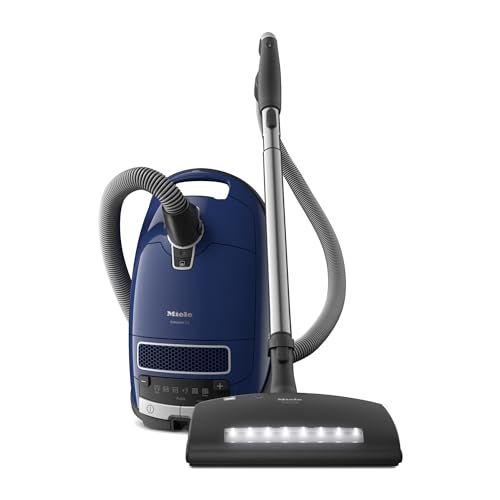
Miele Complete C3 Marin Canister — Best Overall Containment
The Marin sits at the top because it treats containment as an architecture rather than an accessory. Inside the Complete C3 body, air travels from floorhead to bag to motor protection filter to exhaust filter along a path the manufacturer describes as sealed, and the bag itself closes with a hygienic shutter as you lift it out. That shutter sounds like a small thing until you have carried a full open bag across a kitchen and watched a grey puff escape at the bin. Here, the dust you spent twenty minutes collecting stays collected through the riskiest ten seconds of the whole process.
The electrobrush floorhead is the other half of the argument. Rugs and carpet hold fine particles deep in the pile, and a suction-only head skims the surface while leaving the reservoir below. The Marin’s powered brush agitates the pile so the airstream can lift that buried fraction out and into the bag, which is exactly where an allergy-conscious household wants it. On hard floors the same machine calms down nicely, with suction adjustable from the body, so a washable kitchen rug and the oak boards beside it can share one unhurried pass.
Consider how the Marin behaves across a whole Saturday clean rather than a single room. The suction range is wide enough that the same body can feather across a silk-blend rug at low pull, then open fully for the hallway carpet where outdoor grit gets ground in by shoes. That adjustability protects delicate textiles while reserving full extraction for the places harbouring the heaviest particle load. The wand and hose balance well in the hand, so long sessions under beds and behind sofas do not turn into a wrestling match, and tired arms are not a trivial matter: people clean more carefully when the tool is not fighting them.
The bag volume also plays a quiet role in containment economics. A generous bag that fills over weeks rather than days gets changed calmly and on schedule, whereas a tiny bag constantly at bursting point tempts owners to squeeze one more room out of it. With the Marin, the change interval feels civilised, the collar mechanism stays clean because the shutter closes before the bag leaves the chamber, and the exhaust filter is treated as a scheduled service item rather than an afterthought discovered years later, grey and exhausted, behind a panel nobody opened.
Daily life with the Marin feels considered. The body follows on castors without arguing at door thresholds, the hose handle puts controls under your thumb, and the whole machine parks its wand upright in a slot so storage takes a coat-cupboard corner rather than a room. It is a premium-tier purchase and its bags and filters are continuing costs, yet for a home where carpet remains and dust control is a genuine priority, it is the most complete answer in this guide.
- Format: bagged canister with powered electrobrush floorhead
- Filtration approach: sealed system with layered bag, motor and exhaust filtration
- Bag behaviour: self-closing hygienic collar on removal
- Best surfaces: mixed homes with real carpet plus hard floors
- Ownership note: premium tier; genuine bags and filters are recurring costs — check price on Amazon
Strengths
- Sealed pathway keeps the exhaust stream from undermining the cleaning.
- Powered brush extracts the fine fraction buried inside carpet pile.
- Self-closing bag makes disposal a contained, one-handed job.
Trade-offs
- Premium pricing places it beyond casual or occasional use.
- Full-size body asks for more storage room than compact rivals.
- Peak containment depends on genuine bags rather than bargain substitutes.
Best for: households keeping their carpet who want containment engineered into every stage of the clean.
Not suited for: shoppers wanting a featherweight machine for a tiny studio flat.

Sebo AIRBELT K2 Kombi Canister — Best for Bare Floors
Sebo builds machines the way commercial cleaners are built, and the K2 Kombi shows it in the details that matter for dust control. Its filtration is described as S-class, a standard the company associates with hospital-grade thinking, and the air path runs through a multi-layer bag and exhaust filtration inside a body ringed by the soft Airbelt bumper. That bumper is not decoration: it cushions furniture legs and door frames as the canister trails behind you, which means fewer knocked skirting boards and fewer clouds of settled dust knocked loose by collisions.
The Kombi nozzle is deliberately honest about its territory. It is made for bare floors and area rugs, not for deep carpet, and on those surfaces it glides flat and close, drawing fine grit from grout lines and board gaps without a spinning brush to scatter anything ahead of the suction. A long operating radius means the body stays parked in the middle of a room while you work the edges, reducing the number of times you drag the machine through dust you have not yet collected.
There is a particular pleasure in how the K2 handles transitions. Timber to tile, tile to a flat-weave rug, rug back to boards: the Kombi head rides over each change without the clatter and lifting that break the rhythm of a clean. Rhythm matters for dust work because the nozzle seals best against the floor while it is moving steadily, and every interruption is a small chance for debris to escape sideways. The machine’s controls stay simple, the suction slider is easy to nudge with a thumb, and the body tracks behind like a well-trained dog rather than a shopping trolley with one rebellious wheel.
Filtration servicing follows the same no-nonsense pattern. Bags drop in without origami, the exhaust filter is accessible rather than buried, and the whole interior wipes clean because the surfaces are smooth and sensibly shaped. Owners who keep a small notebook of bag and filter dates will find the K2 rewards that organisation with years of consistent behaviour. It is equipment thinking applied to a domestic problem, and households tired of appliances that feel disposable tend to recognise the difference within the first month.
Ownership is where Sebo quietly wins people over. The build feels mechanical in the best sense, parts are made to be serviced rather than glued shut, and the machine carries itself like equipment expected to last. If your home is mostly timber, tile and stone with washable rugs, and carpet cleaning power is simply not your problem, the K2 Kombi may be the most rational machine on this page.
- Format: bagged canister with combination floor nozzle
- Filtration approach: S-class multi-stage filtration with layered bag
- Reach: generous operating radius for fewer body moves per room
- Best surfaces: hard floors, tiles, stone and low area rugs
- Ownership note: commercial-minded build; serviceable design — check price on Amazon
Strengths
- Filtration pedigree aimed at fine-particle capture and retention.
- Combination nozzle hugs hard floors without scattering debris.
- Bumper ring protects furniture while the body trails behind.
Trade-offs
- No powered brush, so thick carpet sits outside its talents.
- Utilitarian styling will not win any beauty contests.
- Bag and filter ecosystem is brand-specific by design.
Best for: hard-floor homes wanting commercial-grade containment without carpet machinery they will never use.
Not suited for: anyone whose main rooms carry deep-pile carpet.

Soniclean WhisperJet C2 Canister — Quietest Deep Clean
Noise is an allergy topic in disguise. A loud vacuum gets used quickly, in rushed passes, often while other people leave the room and stir the air by moving around. A quiet one invites the opposite routine: slow, overlapping strokes, furniture legs worked around carefully, the nozzle lingering where dust gathers. The WhisperJet C2 was designed around that calmer style, pairing unusually hushed running with filtration the maker grades at ULPA level, a step of fineness beyond the HEPA benchmark most shoppers know.
In practice the machine feels like it was tuned for bedrooms and living spaces rather than workshops. The body rolls softly, the exhaust note stays low enough for conversation, and the cleaning head handles hard floors and modest rugs without drama. For households with a baby sleeping in the next room, a partner on night shifts, or simply a low tolerance for racket, that temperament changes how often vacuuming happens, and frequency quietly beats intensity in dust control.
The WhisperJet also changes the social pattern of cleaning. A loud machine banishes everyone from the room, and those departures stir curtains, cushions and clothing, shedding fresh particles onto floors mid-clean. A quiet machine lets a partner keep reading on the sofa and a child keep building a tower on the rug while you work around them, so the room’s dust stays where it fell until the nozzle arrives. That sounds like a lifestyle detail; measured across months of real homes, it is a genuine capture advantage earned through temperament rather than wattage.
Its filtration story deserves a moment of plain explanation. Filter grades describe the size of particle a medium can capture, and the ULPA grade cited for this model addresses a finer fraction than the familiar HEPA benchmark. Finer capture only counts when the housing seals, which is why this machine’s inclusion here rests on the whole design rather than the filter name alone. Used on finished floors with its seals intact and its elements replaced on schedule, it offers the most fastidious exhaust behaviour in this line-up.
There are honest limits. This is not the tool for shaggy carpet or renovation debris, and its filtration elements deserve the genuine replacements the maker specifies, since the entire proposition rests on that final filter stage. Treat it as a precision instrument for finished rooms and it rewards you; ask it to behave like a builders’ vacuum and you are shopping in the wrong chapter.
- Format: compact bagged canister tuned for quiet running
- Filtration approach: ULPA-grade final filtration as described by the maker
- Temperament: low exhaust note suited to occupied rooms
- Best surfaces: hard floors, low rugs, bedrooms and living areas
- Ownership note: genuine filter elements protect its core promise — check price on Amazon
Strengths
- Exceptionally fine final filtration for a domestic canister.
- Quiet character encourages thorough, unhurried cleaning sessions.
- Gentle manners suit sleeping areas and shared living spaces.
Trade-offs
- Not built for deep carpet or heavy construction dust.
- Replacement filtration is a specialist purchase, not a supermarket item.
- Compact body means bags fill sooner in large homes.
Best for: noise-sensitive households wanting the finest filtration grade in a calm, room-friendly machine.
Not suited for: homes needing one vacuum to handle workshops and thick pile too.

Simplicity Jill Bagged Canister — Best Value Containment
The Jill answers a fair question: how much containment can a household get without entering premium territory? Quite a lot, it turns out. Simplicity fits this light little canister with a certified HEPA filter and a bagged interior, which already puts it ahead of the many budget machines that rely on a washable foam pad and optimism. Adjustable suction lets you soften the pull on curtains, upholstery and lightweight rugs, then open it up again for the hallway runner where gritty dust accumulates.
Its personality is grab-and-go. The body is compact enough for flats and smaller houses, easy to carry up a flight of stairs, and simple to park in a broom cupboard. For a first home, a rental, or a second machine kept upstairs, those manners matter as much as filtration figures, because the vacuum that lives within reach gets used on the dusty day rather than the planned day.
Do not underestimate what the Jill does for cleaning frequency in a small home. A full-size canister in a flat often lives in the one awkward cupboard, behind the ironing board, under the coats, and every use begins with an excavation. The Jill can live in a hall closet or even a deep kitchen cupboard, out in thirty seconds, and that accessibility converts directly into passes per week. Dust control is a game of intervals: the home vacuumed twice briefly usually carries less settled dust than the home vacuumed once heroically, and the Jill is built squarely for the twice-briefly pattern.
Its manners on delicate things deserve credit too. Renters inherit curtains, landlords’ rugs and the occasional antique chair that should not meet full suction, and the Jill’s adjustment range lets you clean around all of them without drama. Add bags that are easy to source and a filter story that is honestly certified rather than vaguely implied, and the little machine makes a persuasive case that containment is a design choice available at many budgets, not a luxury reserved for flagships.
Compromises arrive where you would predict. The accessory set and reach are modest beside the German machines above, deep carpet is beyond its brief, and its filtration story, while genuinely good, is not wrapped in a fully engineered sealed narrative. Judge it as the accessible end of serious containment and it looks excellent; judge it against the Marin and the comparison was never fair.
- Format: lightweight bagged canister
- Filtration approach: certified HEPA filter with bagged capture
- Control: adjustable suction for delicate and everyday tasks
- Best surfaces: hard floors, low-pile rugs, flats and smaller homes
- Ownership note: friendly tier with straightforward consumables — check price on Amazon
Strengths
- Real HEPA filtration at an approachable ownership tier.
- Light body encourages frequent, spontaneous cleaning.
- Suction adjustment protects curtains and loose-weave rugs.
Trade-offs
- Reach and tool set trail the larger premium canisters.
- Deep-pile carpet exceeds what its floorhead can manage.
- Smaller bags mean more frequent changes in bigger homes.
Best for: smaller households wanting genuine filtration discipline without a flagship budget.
Not suited for: large carpeted houses needing powered-brush deep cleaning.
Sealed-System Design, Explained Generically — Essential Knowledge
This entry sells nothing, because the most important allergy feature is a concept rather than a product. A sealed system means every joint between floorhead and exhaust is gasketed, so the airstream has exactly one way through the machine: in at the nozzle, through the bag, past the motor protection stage, out through the final filter. Air is lazy and opportunistic. Given a loose hose cuff, a warped lid or a gap around a filter frame, part of the stream will slip through the gap carrying its dust with it, and the finest particles are precisely the ones that travel furthest on that escaping air.
You can assess sealing without laboratory gear. Bags should seat on a collar that clicks or locks rather than resting loosely. Filter frames should sit in rubber-edged housings, not rattling in bare plastic slots. Lids should close with even pressure all round. When a maker publishes filtration figures for the complete machine rather than for the filter material alone, that wording signals the system was considered as a whole, and that distinction is worth more than any single impressive-sounding filter grade.
A useful mental image is a chain of custody for dust. At the nozzle, material enters custody. The hose, wand and body are the transport, and the bag is the secure store. Every hand-off in that chain either preserves custody or loses it. A brush head that leaks at its neck loses custody at the door. A hose that has split under the cuff loses it in transit. A bag collar that never quite seats loses it at the store entrance. When a home smells dusty straight after vacuuming, one of those hand-offs has usually failed, and the failure is mechanical and findable rather than mysterious.
Manufacturers signal their seriousness in small print worth hunting for. Look for language about filtration tested on the complete appliance, for bags described as self-sealing or hygienic on removal, and for exhaust filters housed in frames with gaskets rather than dropped into open slots. None of those phrases is glamorous, and together they separate machines engineered for containment from machines merely decorated with a respected filter trademark bought in as a component.
Understanding this changes how you shop and how you maintain. It explains why a mid-priced sealed machine can leave a room feeling fresher than a powerful leaky one, and why a cracked hose or a perished gasket deserves repair rather than tolerance. Containment is a chain, and the chain is only ever as honest as its weakest joint.
- Concept: gasketed joints from nozzle to exhaust
- Key test: filtration described for the whole machine, not the filter alone
- Warning signs: rattling filter frames, warped lids, split hoses
- Applies to: every bagged canister in this guide and beyond
- Tier note: a design principle, available at several price tiers
Strengths
- Explains real-world differences that specification sheets hide.
- Gives shoppers simple physical checks to perform in store.
- Applies equally to machines at every budget level.
Trade-offs
- True sealing is hard to verify from photographs alone.
- Seals age, so the advantage needs occasional inspection.
- Marketing language borrows the vocabulary loosely at times.
Best for: any reader comparing filtration claims across brands and wondering which numbers to trust.
Not suited for: shoppers who want a single score to settle the question.
Bag Discipline and Seal Care, Explained Generically — Essential Habit
The second prose-only entry covers the habits that keep a good machine good. Bags are not merely bins; the bag wall is the first and largest filtration surface in the system, and as it loads with dust its pores narrow, suction falls and the motor works harder while capture efficiency shifts. Changing a bag when it is properly full rather than bursting preserves both performance and containment. With self-closing designs, pause before removal, let dust settle for a minute after switching off, then lift the bag straight into a bin liner held around the collar.
Seal care is the quieter half. Once a season, run a fingertip around lid gaskets and hose cuffs feeling for grit, cracks or flattened rubber. Wipe mating surfaces with a dry cloth so dust does not hold a joint open. Check the exhaust filter on the interval the maker suggests, and replace rather than wash any filter not explicitly sold as washable, because water can damage the fine fibre structure that does the capturing.
Build the routine around triggers rather than dates and it becomes nearly automatic. A fresh bag goes in, and the exhaust filter’s age gets checked at the same moment, because the body is already open. A season changes, and the gaskets get their fingertip inspection while windows are being opened or closed for the first time. A bag is carried out, and the bin liner trick becomes habit after a single dusty failure teaches its value. Small rituals attached to events survive; elaborate schedules pinned to a calendar quietly die.
There is also a storage lesson hiding here. Keep spare bags beside the machine, not in a different cupboard across the house, because the distance between noticing a full bag and having a replacement in hand is where good intentions evaporate. Store filters flat and dry, keep the spare hose cuff or collar clips if the maker supplies them, and note the bag type on the machine itself if several vacuums share one home. Discipline thrives on convenience, and convenience can be arranged in advance.
None of this is glamorous, and all of it compounds. A household that changes bags on time, keeps seals clean and treats filters respectfully will get allergy-grade behaviour from a mid-tier machine for years. A household that neglects those small rituals can slowly turn a flagship into an expensive dust recirculator without ever noticing the change.
- Habit one: change bags at proper fullness, never bursting point
- Habit two: let dust settle briefly before opening the body
- Habit three: inspect gaskets, cuffs and lids each season
- Habit four: replace non-washable filters instead of rinsing them
- Tier note: costs little; protects machines at every tier
Strengths
- Preserves factory containment performance across years of use.
- Keeps suction strong, which itself improves fine-dust pickup.
- Prevents the dusty bag-change cloud that undoes careful cleaning.
Trade-offs
- Demands a small stock of genuine bags and filters at home.
- Requires remembering intervals rather than reacting to failure.
- Benefits are gradual and therefore easy to undervalue.
Best for: owners of any sealed bagged canister who want its first-year performance to last.
Not suited for: readers hoping maintenance can rescue a fundamentally leaky design.
Comparison Table
| Pick | Type | Filtration story | Strongest surface | Watch out for |
|---|---|---|---|---|
| Miele Complete C3 Marin Canister | Bagged canister, powered brush | Sealed system, self-closing bag | Carpet plus hard floors | Premium tier and consumable costs |
| Sebo AIRBELT K2 Kombi Canister | Bagged canister, combination nozzle | S-class multi-stage filtration | Bare floors and area rugs | No deep-carpet capability |
| Soniclean WhisperJet C2 Canister | Compact bagged canister | ULPA-grade final filtration | Bedrooms and hard floors | Smaller bags, specialist filters |
| Simplicity Jill Bagged Canister | Lightweight bagged canister | Certified HEPA filter, bagged capture | Flats and low-pile floors | Modest reach and tool set |
| Sealed-System Design, Explained Generically | Knowledge entry | Whole-machine containment principle | Every floor type | Hard to verify from photos |
| Bag Discipline and Seal Care, Explained Generically | Habit entry | Maintenance that preserves filtration | Every floor type | Needs consistency over time |
Why Does the Exhaust Matter as Much as the Intake?
Stand behind a running vacuum and you are standing in its weather system. Everything the nozzle collects travels through the machine, and whatever the system fails to retain leaves with the exhaust, often at ankle height where it drifts across the floor you just cleaned. In a well-sealed bagged canister that stream has been filtered repeatedly, so the air leaving is cleaner than the air that entered. In a leaky machine the exhaust becomes a redistribution service, lifting the finest settled dust back into circulation where it hangs longest and travels furthest through the home.
This is also why cleaning order matters. Work from the furthest corner towards the door, vacuum before dusting surfaces so anything knocked down gets collected rather than wiped around, and give the air a few minutes to settle before declaring the room finished. The machine does the capturing; your routine decides whether the room keeps the benefit.
What Does a Sensible Weekly Routine Look Like?
Anchor the week with one thorough session and one light pass. The thorough session covers bedrooms completely, including under-bed territory and upholstery, then works through living areas and the hall. The light pass, perhaps midweek, targets only the high-traffic corridor from door to kitchen and the rug zones where debris visibly gathers. Each session begins with a glance at the bag indicator or a squeeze of the bag through the chamber wall, because suction honesty underpins everything that follows.
Sequence the thorough session from cleanest to dirtiest territory, bedrooms before halls, so the machine never carries corridor grit into sleeping areas on its wheels and head. Empty nothing indoors that can be emptied at an outside bin, and let the machine rest a minute before opening it, so suspended dust inside the chamber settles onto the bag rather than into your face. Finish by wiping the floorhead’s underside, where hair and fibre mats quietly throttle airflow between sessions.
Across a month, add one deeper ritual: a slow pass over mattresses and sofa cushions, a crevice-tool tour of skirting boards and radiator gaps, and a check of the exhaust filter’s date. None of these tasks is large, and together they keep the whole system, machine and home alike, in the condition where filtration claims remain true rather than nostalgic.
How Should You Vacuum a Bedroom When Dust Bothers You?
Start with the soft furnishings, because disturbing them sheds particles onto the floor you are about to clean. Use an upholstery tool on the mattress surface and headboard, work curtains gently with suction reduced, then move to the floor with slow overlapping passes, especially under the bed where dust accumulates undisturbed for weeks. Edges deserve the crevice tool, since skirting lines collect a dense band of fine debris that a floorhead bridges over.
Finish by leaving the room closed and quiet for a short while, letting anything still airborne settle before beds are made. Wash bedding on its own regular rhythm, keep the vacuum’s bag fresh enough that suction stays honest, and remember the limits of the exercise: this is household hygiene that supports comfort, not a treatment, and persistent symptoms belong in a conversation with a medical professional.
Which Rooms Deserve the Most Careful Attention?
Bedrooms come first, because we spend long, still hours there breathing whatever the room holds, and because bedding, mattresses and soft furnishings generate and collect fine particles continuously. The under-bed zone is the single most neglected dust reservoir in most homes; a canister’s low wand and flat head reach it without moving furniture, which is one of the format’s natural advantages over an upright. Wardrobe floors, where clothing fibres shed and settle, repay a slow pass more often than most owners expect.
Entry halls rank second, since they receive everything shoes carry in from pavements, gardens and public transport. A washable mat, a shoe tray and a twice-weekly canister pass along that corridor intercept the load before it migrates. Living rooms follow, with upholstery as the priority surface: sofa fabric holds a remarkable quantity of fine debris that a floor-only routine never touches. Kitchens matter less for dust than for grit, yet their hard floors show exactly how much a good bare-floor head can gather from grout lines and kick-plate edges.
How Do Bags, Filters and Seals Work Together as One System?
Think of the three elements as successive sieves with different jobs. The bag does the heavy lifting, trapping the overwhelming majority of material across a large surface area so airflow stays strong for weeks. The motor protection stage guards the machine itself from whatever escapes the bag, keeping the motor clean and its cooling honest. The exhaust filter polishes the outgoing stream, catching the finest fraction before the air rejoins the room. Remove or degrade any one stage and the others inherit work they were not sized for, which is why a torn bag or a missing filter frame matters far beyond its small size.
The seals are the mortar between those bricks. Every stage sits in a housing, every housing meets another part, and each meeting point is a potential bypass. When reviewers praise a machine’s containment, they are praising the unglamorous sum of rubber gaskets, tight collars and well-fitted lids as much as the headline filter. Shoppers can honour the same logic: maintain all three stages and their seals together, on one schedule, and the system behaves as its designers intended.
What Are the Most Common Mistakes with Allergy-Focused Vacuuming?
The classic error is buying filtration by the label and ignoring the pathway, ending with a famous filter inside a housing that leaks at every joint. Close behind comes stretching bags far beyond full, which strangles airflow, overheats motors and forces dust through seams that were never meant to carry it. Owners also undermine themselves by emptying or changing bags indoors beside the freshly cleaned room, releasing at the bin exactly what they removed from the floor.
Another recurring mistake is treating the exhaust filter as immortal. Filters load gradually and invisibly, and a clogged final stage forces air to hunt for other exits, which is how a sealed machine slowly becomes an unsealed one without any dramatic failure. The same households often store the vacuum in a damp cupboard, where gaskets perish and bags absorb moisture, quietly degrading every element the containment story depends on.
Speed causes quieter damage. Fast passes let a brush scatter as much as it gathers and give the airstream no time to lift embedded particles from pile. Finally, many households vacuum the middle of rooms faithfully while skipping edges, under-bed territory and upholstery, which is rather like locking the front door and leaving every window open.
What Should Renters and Shared Households Do Differently?
Renters face two constraints owners escape: floors chosen by somebody else, and machines that may serve several unrelated people. The practical answer is versatility with discipline. Choose a canister whose suction adjusts widely, since you cannot predict whether the next flat brings boards, tiles or a landlord’s beloved carpet. Keep your own stock of bags rather than relying on a shared cupboard, and agree a simple rule with housemates that the bag gets changed by whoever fills it, noted on a scrap of tape stuck inside the lid.
Shared machines also suffer shared neglect of seals and filters, so a brief monthly glance inside the bag chamber is worth more in a rental than in a single-owner home. When you move, the canister moves with you, which is another argument for the format: a good bagged canister bought once can serve three successive flats, containing dust faithfully in each, provided its gaskets travel as carefully as its body does.
Final Recommendation
One last consideration before the verdict: buy the machine your household will actually maintain. A flagship whose bags feel painfully expensive will be run on bursting bags, and a sealed marvel stored somewhere inaccessible will be used monthly instead of weekly. The honest best choice is the most contained machine that fits your floors, your storage and your habits without friction, because containment only exists on the days the vacuum comes out.
For most mixed-floor homes the Miele Complete C3 Marin is the recommendation to beat, because its sealed build, self-closing bag and powered brush handle both halves of the problem in one machine. Hard-floor households should look hard at the Sebo K2 Kombi, noise-sensitive readers at the WhisperJet C2, and smaller homes at the Jill, which delivers genuine filtration manners at a friendly tier. Whichever you choose, the prose-only lessons decide the long-term result, since seals and bags quietly govern what the brochure promised. Choose the machine whose containment you can maintain without resentment, keep its bags fresh and its gaskets clean, and the Marin, Kombi, WhisperJet or Jill will repay that small discipline every single week.
How Do You Handle Soft Furnishings, Curtains and Mattresses?
Soft surfaces are dust banks: they deposit fine particles into the air whenever they are sat on, shaken or slept in, and they accept deposits back the moment the air settles. A canister with adjustable suction and a proper upholstery nozzle can draw interest from those banks without damaging the fabric. Work slowly, in overlapping bands, and let the airstream rather than pressure do the job; pressing hard seals the nozzle against the textile and paradoxically reduces what it can lift from the fibres beneath.
Curtains deserve a gentler ritual. Reduce suction, support the fabric with one hand behind the nozzle, and draw downwards in the direction dust naturally travels. Heavy drapes that cannot be vacuumed safely can be taken outside and shaken on a still day, well away from open windows. Mattresses respond to the same upholstery tool used on sofas, with extra attention to seams and piping where fine debris concentrates in the stitching lines.
Rotate these soft-furnishing sessions through the month rather than attempting everything in one exhausting day. A household rhythm that touches each textile regularly keeps the total reservoir low, which means each vacuuming of the floors afterwards starts from a cleaner baseline. The floor machine and the fabric routine are partners; neither reaches its best result alone.
When Should a Canister Be Serviced Rather Than Replaced?
Containment faults are often cheap faults. A perished lid gasket, a cracked hose, a filter frame missing its rubber edge or a bag collar worn smooth can each masquerade as a machine that has lost its touch, and each is replaceable on the serviceable brands in this guide. If suction remains strong and the motor sounds healthy, investigate the seals before shopping for a successor. Conversely, a motor that smells hot, bearings that grind, or a body with structural cracks around the bag chamber are honest signals that the appliance has finished its working life.
Servicing also protects the investment logic of premium canisters. Machines like the Marin and the K2 are priced on the assumption of a long life with periodic attention, and skipping that attention forfeits the very value the price promised. Treat the annual once-over as part of ownership: seals wiped and checked, filters dated, brushes cleared of wound hair, wheels freed of grit. Twenty unhurried minutes a year is a small rent for a decade of contained cleaning.
How Does Cleaning Frequency Change the Dust Equation?
Dust behaves like interest in reverse: small regular payments keep the balance trivial, while neglect lets it compound into a deep-clean debt. A room vacuumed briefly twice a week rarely develops the thick settled layer that a monthly marathon must disturb, and disturbing a thick layer is precisely what launches particles airborne. Frequent passes also catch tracked-in material near the door before shoes distribute it through the home, shrinking the territory each session must cover.
This is where canister manners earn their keep. A machine that trails quietly, parks neatly and lives within easy reach lowers the activation energy of every session. Households often discover that the right canister changes their habits more than their hardware, and the habits, repeated across a year, move the dust balance further than any single specification ever could.
Frequently Asked Questions
Does a HEPA filter alone guarantee cleaner exhaust air?
No. The filter can only treat the air that actually passes through it, which is why the sealing of the whole pathway matters so much. A top-grade filter in a leaky housing performs far below its potential, while a well-sealed machine gets full value from its filtration stages.
Think of it as the difference between a water filter fitted to a sealed pipe and the same filter held loosely under a running tap. The medium is identical, yet most of the flow simply bypasses it in the second case. Vacuum marketing understandably celebrates the medium, because it is easy to name and grade, but the pipework decides your real result, so inspect housings, gaskets and bag collars with the same attention you give the filter specification.
Are bagged canisters better for dust containment than bagless models?
Generally yes for this purpose. A bag adds a large filtration surface and, in self-closing designs, keeps captured dust contained during disposal. Emptying a bagless bin, by contrast, usually releases a visible puff of fine dust at exactly the wrong moment.
The bag also protects suction consistency. As a bagless bin fills, its cyclone and screens load with fine material and performance drifts, tempting owners to shake the bin over the rubbish and breathe the result. A bagged machine declines more predictably, announces its fullness through the indicator or a noticeable suction change, and swaps its entire capture surface for a fresh one in a single motion, which suits a containment-first household very well.
How often should the bag be changed in a dust-sensitive home?
Change it when it reaches proper fullness rather than waiting for suction to collapse, and consider changing slightly earlier during heavy pollen weeks or after a big clean. A fresh bag restores airflow, which improves pickup of the finest particles.
A simple habit helps: keep one spare bag taped inside the cupboard door where the machine lives, so the change never waits on a shopping trip. Mark the date on each new bag with a pen as you fit it, and within a few cycles you will know your household’s true interval, which is more useful than any generic schedule printed in a manual.
Can vacuuming replace an air purifier or medical advice?
No. Vacuuming removes settled dust from surfaces, which complements other measures, but it does not treat any health condition and does not substitute for ventilation, purifiers where wanted, or guidance from a clinician about symptoms.
Do washable rugs and door mats really help?
Yes, because they move dust capture out of the air and into the laundry. A washable rug at the entry intercepts grit and pollen at the door, and regular washing removes that load entirely rather than redistributing it. The same logic applies to machine-washable throws and cushion covers in living rooms, which is why hard floors plus washable textiles form such a cooperative strategy with a sealed canister.
Which floorhead suits hard floors in an allergy-focused routine?
A flat, close-gliding hard-floor or combination nozzle without aggressive brush action works well, because it draws debris in rather than flicking it ahead. Reserve powered brushes for carpet and rugs, where agitation is needed to free embedded particles.
Related Guides
Whichever machine comes home with you, give it one honest month of the routine described above before judging it, because containment rewards consistency and the difference shows itself gradually, in rooms that stay fresher for longer between cleans.
Readers comparing containment strategies may also enjoy Best Canister Vacuums for Carpet, while those auditing dust across the whole house often continue to Best Bagged Upright Vacuums with Strong Suction and Best Bargain Vacuums. For the airborne side of the same project, see Best Air Purifiers for Allergies.



[…] canister shelf continues in several directions. Compare containment strategies in Best Canister Vacuums for Allergies, browse the sealed classics in Best Bagged Canister Vacuums, and weigh value in Best […]