Our Top Picks
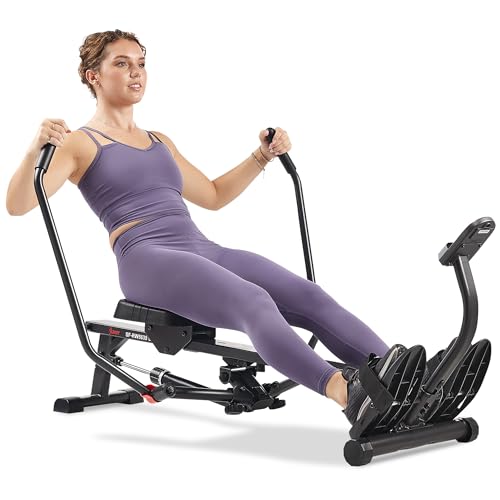
 Sunny Health & Fitness Smart Compact Hydraulic RowerStandard58.1 x 20.1 x 24.8 inches22.4 poundsCheck on Amazon



What's inside
- Rowing at home in later life: what actually makes a machine suitable
- Why rowing suits many older bodies
- Air resistance: the fan flywheel design
- Magnetic resistance: quiet, adjustable, predictable
- Water resistance: paddles, tanks, and the sound people love or leave
- Hydraulic resistance: the compact budget design
- Seat height, rails, and the business of getting on and off
- Footplates, handles, and the small parts that touch the body
- Joint by joint: knees, hips, back, shoulders, wrists
- Monitors: what the numbers mean and whether you can read them
- Noise, floors, and living with the machine daily
- Folding, storage, and room planning
- Assembly, maintenance, and warranty realities
- Building a gentle routine that lasts
- Check prices on Amazon
- A decision checklist for the final shortlist
As an Amazon Associate I earn from qualifying purchases. This post may contain affiliate links at no extra cost to you.
Rowing at home in later life: what actually makes a machine suitable
A rowing machine asks the body to work seated, with feet fixed and hands pulling a handle toward the ribs in a rhythm the user controls completely. There is no treadmill belt moving underfoot, no standing balance to manage, and no impact through the heels when the session ends. Those traits explain why physiotherapists so often mention rowing when older adults ask for a home exercise format that trains legs, back, and arms together. The catch is that machines sold under the same broad label differ enormously in seat height, rail length, resistance behaviour, and noise, and a model that suits a fit sixty-year-old may frustrate an eighty-year-old with a replaced knee. Suitability lives in measurements, not in marketing photographs.
Four resistance families dominate the home market. Air rowers spin a fan flywheel whose drag rises with effort. Magnetic rowers brake a metal flywheel with magnets whose gap the user adjusts on a dial. Water rowers paddle a small tank, producing drag that also rises with effort and a swishing sound many people enjoy. Hydraulic rowers use one or two oil-filled piston cylinders borrowed from compact budget designs, trading stroke smoothness for a tiny footprint. Each family behaves differently at the gentle intensities where most older users actually train, and that low-effort behaviour matters more than the maximum resistance printed on a specification sheet. The sections below examine each family, then turn to seats, rails, joints, storage, and monitors.
Readers deserve to know how this page supports itself, so the arrangement is stated early and briefly. This guide contains affiliate links; when a reader buys through one, Cottage Verdict may receive a commission from the retailer, and the reader pays nothing extra for that arrangement. Commissions do not select the machine families covered here. For this guide we compared published specifications from manufacturer dimension diagrams and manuals — seat heights in centimetres, rail lengths, stated user capacities, folded footprints — and set those figures against general exercise guidance for older adults published by public health and physiotherapy bodies. No specification in the following sections comes from a sales brochure summary alone.
Expectations deserve calibration before any hardware discussion. Rowing rewards consistency at modest intensity far more than occasional heroic sessions. A machine that gets used for fifteen unhurried minutes on most days will do more for circulation, leg strength, and mood than a technically superior machine that feels awkward to mount and stands folded in a corner. Comfort features therefore carry unusual weight in this guide: how high the seat sits, how the footplates adjust, whether the handle returns smoothly, how loudly the machine speaks to the room. Readers with a specific medical condition, a recent operation, or new joint pain should treat the general guidance here as background and take individual advice from their own clinician or physiotherapist before starting.
Why rowing suits many older bodies
The rowing stroke divides into two phases that manuals name the drive and the recovery. During the drive, the legs push the seat backward along the rail, the trunk swings from a slight forward tilt to a slight backward lean, and the arms finish the movement by drawing the handle to the lower ribs. During the recovery, arms extend first, the trunk tilts forward from the hips, and only then do the knees bend to slide the seat forward again. That sequence distributes work across the quadriceps, glutes, latissimus dorsi, and the smaller muscles between the shoulder blades, while the heart and lungs respond to the large muscle mass involved. Because the seat carries body weight throughout, knees and hips move through their range without bearing the full load they carry when standing.
Intensity scales in an unusually forgiving way. Pulling gently produces gentle resistance on air and water machines, because drag on those systems grows with the speed of the fan or paddles; there is no minimum weight stack to lift and no belt speed to keep up with. A deconditioned user can begin with strokes so light they barely register, then add effort by pulling slightly harder rather than by changing machine settings. Stroke rate offers a second, independent control: rowing at 18 to 22 strokes per minute with moderate pressure raises the heart rate steadily, while the same pressure at 28 strokes per minute feels dramatically harder. New users often discover that slowing the rate, not reducing effort per stroke, is the adjustment that makes a session sustainable.
Seated exercise also removes the fall risk that rules out many formats. The feet strap onto fixed plates, the seat travels on a rail a fixed distance above the floor, and the user can stop at any point simply by letting the handle rest in its hooks; the flywheel spins down on its own and the seat stays where it stopped. Getting on and off remains the one moment of genuine balance demand, which is why seat height receives its own section later. Homes where the machine stands near a wall or a sturdy chair give the user a handhold for that transfer. Some families place a folded rower beside the television and unfold it daily, a routine that works only when unfolding takes under a minute and needs no tools — another practical filter applied throughout this guide.
- The stroke trains legs, trunk, and arms in one seated movement with no foot impact.
- Effort rises or falls with how hard the user pulls on air and water designs.
- Stopping is instant and requires no controls: the user simply stops pulling.
- Mounting and dismounting, not the rowing itself, is where support and seat height matter most.
Joint range sets the honest limits. A user whose knees cannot bend beyond roughly 100 degrees will not reach a full compression at the front of the stroke and should row with a shortened slide, which most machines permit naturally since nothing forces the seat to travel the rail’s full length. Hip replacements sometimes carry surgeon-imposed flexion limits, commonly keeping the hip from bending past 90 degrees during early recovery, and the forward reach at the catch position must respect whatever limit applies. Shoulder problems narrow the comfortable handle path. None of these limits automatically rules rowing out, but each one converts into a specific measurement or trial the buyer should make, and the joint-by-joint section below spells those out.
Air resistance: the fan flywheel design
An air rower connects its handle, through a chain or strap, to a flywheel cage containing fan blades. Each pull spins the fan faster, and air resistance against the blades rises roughly with the cube of rotational speed, which is why a small increase in effort produces a large increase in drag. A damper lever on the cage, usually numbered 1 to 10, opens or closes vents that change how much air the blades move. Beginners routinely misread that lever as a resistance dial. In truth it adjusts the feel of the stroke — how quickly drag builds — while actual workload still comes from how hard and fast the user pulls. A lower damper setting with brisk pulling can exceed a high setting with lazy pulling, a point manufacturer manuals state plainly and sales pages rarely do.
For older users, the air design’s virtues are smoothness at low intensity and mechanical honesty. There is no minimum drag floor, so the first stroke of a gentle warm-up costs almost nothing, and the flywheel’s momentum carries the handle return without snatching. The vices are noise and size. A fan moving air makes a whooshing sound proportional to effort; at easy pace it resembles a household fan, at hard pace it competes with conversation and television volume. Rail length on full-size air rowers commonly runs near 2.4 metres overall machine length, the longest footprint in this guide, though the rail typically folds upward or the machine separates into two pieces for storage. Seat height on classic air models sits around 36 cm off the floor, with some brands offering raised legs that lift it to about 51 cm — a difference that decides comfort for users with stiff hips, as a later section explains.
Maintenance on an air rower is light but specific. Dust accumulates inside the fan cage and on the blades, gradually dulling the drag, so the cage needs vacuuming or a wipe-down every few months in a dusty room. The chain benefits from a few drops of light oil every 50 hours of use according to typical manual schedules, worked in with a cloth. Seat rollers run on the aluminium rail and pick up grit that makes the slide feel sandy; wiping the rail with a damp cloth weekly keeps the glide quiet. None of these tasks needs a technician, but each involves bending or kneeling beside the machine, so households sometimes delegate them to a visiting family member. Batteries in the monitor usually last a year or more because the flywheel’s generator or simple cells carry little load.
Air machines also dominate the second-hand market, which tempts budget-conscious buyers. A used fan rower with a worn chain, cracked rollers, or a dim monitor can still be a sound purchase because those parts are standardised and replaceable, but the buyer should sit on the machine and row twenty strokes before paying. Resistance that surges and fades within one stroke points to a damaged fan or slipping clutch, a repair beyond most households. A smooth, even pull with a clean whoosh and a seat that rolls silently indicates a machine with life left in it. Stated user weight capacities on quality air rowers often reach 150 kg or beyond, reflecting frames built for athletic clubs, which gives larger users a margin that compact designs rarely match.
Magnetic resistance: quiet, adjustable, predictable
A magnetic rower brakes its flywheel with permanent magnets or electromagnets positioned near the rim. Turning the resistance dial — commonly 8 or 16 marked levels — moves the magnets closer to or farther from the wheel, changing drag without any contact or wear. Because drag comes from the magnet gap rather than from flywheel speed alone, the machine can offer firm resistance at a slow, deliberate stroke rate, which suits users who row gently but still want to feel their muscles work. The same mechanism makes effort repeatable: level five today equals level five next month, a property that helps users follow a written programme from a physiotherapist with specific level instructions.
Quietness is the family’s headline virtue. With no fan and no water, the loudest sounds are the seat rollers on the rail and the strap unwinding, both modest. Apartment dwellers and anyone rowing while a partner sleeps in the next room benefit directly. Magnetic machines also tend toward compact rails and folding designs aimed at homes rather than gyms, with overall lengths nearer 1.9 to 2.2 metres. The trade-offs appear at the extremes: maximum drag on many magnetic models falls short of what a strong user can generate on air or water, though that ceiling rarely matters for the readership of this guide, and the drag curve can feel flat or unresponsive to users who enjoy the surge of a fan. Some models need mains power for their electromagnet and console; others use a manual dial and battery monitor, which frees placement from socket hunting.
The strap and flywheel arrangement shapes stroke feel in ways worth understanding. Most magnetic rowers use a fabric strap rather than a chain, and straps stretch microscopically over years, softening the catch where each stroke begins. A quality machine keeps that stretch negligible for a long service life. The catch — the moment the drive begins — should engage without a dead zone where the handle moves but nothing resists. A long dead zone usually signals a worn return mechanism or a strap fitted loosely, and it disrupts rhythm precisely where older users value smoothness. Trying the first ten centimetres of pull, slowly, reveals more about a magnetic rower than any hard stroke does.
Resistance dials invite a programming habit that serves older users well. Starting every session at a low level for three minutes of warm-up, moving to a working level for the middle portion, then dropping back down for a cool-down mirrors the structure physiotherapists recommend for joint-friendly exercise. Because the dial changes drag instantly, those transitions take one hand movement, mid-session, without stopping. Users tracking progress can note the level and duration in a paper log and watch one variable change at a time. That measurability is the magnetic family’s quiet advantage over feel-based systems: when the log shows level six held for twelve minutes where level five used to tire the legs at eight, the improvement is documented rather than imagined.
best captain chairs for exercise
Water resistance: paddles, tanks, and the sound people love or leave
A water rower replaces the fan with a horizontal tank, usually a polycarbonate drum of roughly 40 to 50 cm diameter, inside which paddles on the flywheel shaft stir the water. Drag follows the same physics as the air fan: pull harder and resistance climbs steeply, pull gently and the stroke stays light. There is no adjustment dial on most models; the user changes intensity by changing effort, exactly as in a boat. Fill level offers the only mechanical adjustment, since more water in the tank means more mass for the paddles to move and a heavier baseline feel. Manufacturer guidance typically marks minimum and maximum fill lines on the tank and warns against exceeding the upper line, which would strain seals and the recoil mechanism.
The sensory character divides opinion. Supporters describe the swish and surge of water as the closest a machine comes to the feel of rowing on a river, and the sound rises and falls with effort in a way many find meditative rather than intrusive. The wooden rails fitted to several well-known models, often ash or beech, make the machine furniture-like enough to live in a sitting room without apology. Critics counter that the tank demands occasional care: purification tablets on a schedule the manufacturer specifies, often every six months or so, prevent algae and cloudiness, and the machine should sit out of prolonged direct sunlight, which accelerates water degradation. A siphon pump, usually included, handles filling and emptying, and the tank should be drained before any move of house because a full tank adds well over 10 kg positioned high in the frame.
Dimensions and seat geometry on water rowers follow the classic pattern: overall length around 2.1 to 2.2 metres, seat height commonly near 36 cm, with optional riser kits from some makers lifting the seat for users who struggle with low seating. Storage is the family’s party trick. Most water rowers tip upright onto their tank end and stand in a footprint of roughly half a square metre, secured against a wall. The manoeuvre requires lifting the rail end and walking the machine up, a task whose effort depends on the model’s weight, often 30 to 45 kg dry. A user who cannot safely tip that weight needs either a helper’s standing arrangement or a different storage plan, and honesty about that point at purchase time prevents the common outcome where the machine simply never gets put away and the room reorganises around it.
Stroke feel at very low intensity is worth a closer look for this readership. Water needs a moment to start moving, so the first pull after a pause feels slightly heavier than subsequent pulls once the tank is swirling. Users with painful shoulders sometimes find that initial surge uncomfortable and prefer the magnetic design’s even drag. Conversely, the water design’s resistance fades gracefully at the end of each stroke, sparing the joints the abrupt stop some systems impose. Trying both families, even briefly in a showroom, settles the question faster than any description. Where a showroom visit is impossible, return terms become the trial mechanism, and buyers should confirm them before ordering a machine in this weight class.
Hydraulic resistance: the compact budget design
Hydraulic rowers abandon the long flywheel entirely. The handle connects to one or two piston cylinders filled with oil, and pulling forces oil through a small orifice, generating resistance that a knob on the cylinder adjusts by changing the orifice size. Many designs attach the handle to a pair of outrigger arms rather than a central rail-and-seat arrangement, and some keep the seat fixed while the arms move. The result is a machine that can fold to the size of a large suitcase, weigh under 15 kg, and cost a fraction of the rail-based families. For a small flat with no spare two metres of floor, that compactness is not a compromise but the whole point.
The compromises, however, land exactly where older users feel them. Piston resistance typically peaks early in the stroke and fades as the cylinder extends, the reverse of the leg-driven power curve a rail machine teaches. The stroke length is shorter, the seat may not slide at all on the cheapest designs, and the leg contribution shrinks accordingly; the exercise becomes predominantly an arm and shoulder movement. Cylinders also heat up during long sessions, and hot oil thins, so resistance drifts downward across twenty minutes of continuous rowing — manuals for such machines sometimes specify rest intervals for the pistons. Adjustment knobs on the cylinders require reaching down and turning a stiff dial, occasionally with a numbered scale that bears little relation between the two sides, leaving left and right arms unevenly loaded.
None of this makes hydraulic machines useless. For a user whose goal is gentle arm and shoulder mobility, whose space forbids a rail, and whose budget is firm, a piston rower used in short bouts delivers movement that would otherwise not happen. The buyer’s task is to enter with accurate expectations: this is a seated arm exerciser with rowing-like motion, not a substitute for the full-body stroke of a rail machine. Checking the cylinder warranty matters, because a leaking piston ends the machine’s useful life and replacements are model-specific. Buyers should also confirm the seat height and whether the seat slides even a short distance, since those two details decide whether knees and hips participate at all.
Seat height, rails, and the business of getting on and off
Seat height is the single measurement most likely to decide whether a rower gets used daily or abandoned within a month. A standard dining chair places its seat near 45 cm from the floor. Many rowers sit lower, around 30 to 36 cm, because a low rail keeps the machine stable and compact. Rising from 30 cm demands substantially more knee and hip effort than rising from 45 cm, and the difference compounds when the user is tired at the end of a session. Manufacturers of senior-friendly models have responded with raised rails and leg extensions lifting the seat to 48 or 51 cm. Shoppers should measure the height of a chair they rise from comfortably at home and treat that figure as their personal minimum, then compare it against the specification sheet rather than the product photographs, which conceal height artfully.
The transfer itself follows a sequence worth rehearsing mentally before purchase. The user approaches from the side, places one hand on the seat and the other on a nearby support — a wall, a heavy chair, or the machine’s own frame where the design allows — lowers onto the seat, then swings each foot onto its plate and secures the straps. A seat that rolls freely makes this sequence precarious, since it slides away under sideways pressure. Better designs include a seat lock, or rollers with enough friction to stay put, or a rail the user can straddle before sitting. Some users place the machine so the seat parks against the rail’s rear stop during mounting, using the stop as a brake. Any machine under consideration should be interrogated on this point, because brochures never mention it and it governs daily safety.
Rail length determines who fits at the front of the stroke. The seat must travel far enough forward that the user’s shins reach roughly vertical without the seat running out of rail, and far enough back that the legs extend nearly straight. Taller users with long legs need rails at the generous end of the market; overall machine lengths near 2.4 metres exist largely to serve them. Shorter users face the opposite, milder problem: footplates positioned for long legs may place the stretchers too far away, solved by adjustable footplate positions or by heel cups that move along the stretcher board. The specification to seek is the maximum inseam the maker states, or the rail’s usable travel in centimetres, compared against the user’s inside-leg measurement taken in the shoes they will row in.
Seat shape and rollers shape comfort across a twenty-minute session. Contoured seats with sit-bone depressions spread pressure better than flat slabs of foam, and a slightly textured surface prevents slow sliding during the drive. Rollers — usually four to eight wheels running on or under the rail — should spin freely and quietly; a gritty or clicking roller announces wear or trapped debris. Dual-rail designs support the seat between two tracks and feel planted under heavier users, while single monorail designs dominate the air and water families and rely on roller quality for stability. The stated user weight capacity, printed in every manual, should exceed the user’s weight by a comfortable margin rather than by a whisker, because capacity interacts with roller life and frame flex over years of use.
best chair risers too low chairs
Footplates, handles, and the small parts that touch the body
Footplates carry the entire force of the leg drive, so their adjustment range matters more than their appearance. Most plates pivot to match the natural angle of the foot and offer several heel-cup positions along the board, changed by lifting the cup and re-seating it in a different slot. The correct position leaves the strap crossing the foot at its widest part, roughly over the ball of the foot, with the heel seated snugly. A strap that crosses the toes lets the heel lift and wastes leg power; a strap over the ankle restricts the ankle’s natural flex. Users with swollen feet, orthopaedic shoes, or an ankle brace should check plate width and strap length against their footwear, since some racing-derived plates are narrow. Fixed, oversized plates with simple hook-and-loop straps serve most older users better than intricate racing shoes systems borrowed from on-water rowing.
The handle is the other contact point, and its details are easy to overlook in a photograph. A slight bend or ergonomic contour lets the wrists stay neutral rather than cocked backward at the finish of the stroke. Diameter matters for arthritic hands: a very thin bar concentrates pressure, while a moderately padded grip of around 30 mm spreads it. Some handles offer two grip widths or a rotating sleeve that reduces friction blisters during the recovery. The connection between handle and machine — chain on air rowers, strap on most magnetic and water models — changes feel subtly. Chains transmit a direct, slightly mechanical sensation and last decades; straps feel smoother and quieter but are a wear item replaced every few years. Either is acceptable; a frayed strap or a stiff, kinked chain on a used machine is not.
Grip strength itself can limit sessions before the legs tire, particularly for users with arthritis in the fingers. Rowing gloves or simple padded cycling gloves reduce the grip force needed by adding friction, and they protect skin that tears more easily with age. Users who find even a padded handle difficult can look for handles with a wider, flatter profile that rests against the fingers rather than demanding a full fist closure. What should be avoided is wrapping straps or bands around the wrists to bypass grip entirely; that practice transfers load to structures not built for it and complicates a quick release if the user needs to stop suddenly. A handle that can simply be let go, dropping safely into its rest, is a safety feature in its own right.
Joint by joint: knees, hips, back, shoulders, wrists
Knees flex deeply at the front of each stroke, reaching their tightest angle at the catch when the seat slides closest to the feet. For a healthy knee that angle is unremarkable, but a knee with advanced arthritis or a recent replacement may not own that range, and forcing it under load invites a flare that costs a week of activity. The practical workaround is a shortened slide: the user simply stops the forward travel earlier, accepting a shorter stroke. Nothing on a standard rower prevents this, and some users place a physical stop — a block clamped to the rail, or the manufacturer’s limiter where offered — to make the shortened range consistent. Pain that is sharp, localised, or accompanied by swelling afterward is information to take to a clinician, not a challenge to push through.
Hips govern both the catch position and the transfer onto the seat. At full compression the hip flexes deeply as the trunk tilts forward from the pelvis, and users with hip replacements must respect the precautions their surgical team issued, which in early months often limit exactly that combination of flexion and inward rotation. The trunk tilt should come from hinging at the hips with a straight back, not from curling the spine; users whose hips are stiff tend to substitute spinal curling, which loads the lower back poorly. A shorter slide plus a smaller trunk swing reduces both hip flexion and back strain simultaneously, and the exercise remains worthwhile. Seat height, covered earlier, does more for hip comfort than any other single specification, because a higher seat reduces the flexion needed to sit and stand.
The lower back experiences the rowing stroke as repeated, moderate loading, which strengthens it when technique is sound and irritates it when technique collapses. The sound pattern keeps the spine in its natural curves throughout: the trunk rocks between roughly one o’clock and eleven o’clock positions, the pelvis tilts with it, and the handle finishes at the ribs rather than being hauled in by a collapsing torso. Fatigue late in a session degrades that pattern, which is one reason shorter, fresher sessions suit older backs better than marathon rows. Users with spinal stenosis often find the slight forward tilt comfortable, while those with disc problems aggravated by flexion may need the trunk held more upright and the slide shortened. A back support or cushion strapped to the seat is a legitimate adaptation some manufacturers offer, though it should not become a prop that allows slumped posture.
Shoulders and elbows finish each stroke, and their complaints usually trace to handle path. The elbows should track backward close to the body, finishing with the handle at the lower ribs and the shoulder blades drawn gently together. Finishing high at the chest, or shrugging the shoulders toward the ears, recruits the neck muscles and provokes next-day soreness there. Rotator cuff histories argue for lighter resistance and a slightly narrower grip, keeping the upper arm closer to the torso where the joint is strongest. Wrists should remain flat, in line with the forearms, throughout the pull; a wrist that bends backward at the finish is usually compensating for a handle arriving too high. Reducing resistance one level often corrects the whole chain of compensations at once, because most of them are the body bargaining with a load it cannot quite manage.
Monitors: what the numbers mean and whether you can read them
A rowing monitor typically displays session time, stroke rate in strokes per minute, a distance estimate, and either a split time — the projected minutes per 500 metres — or a wattage figure. For the readership of this guide, time and stroke rate are the workhorses. Time structures the session: ten minutes today, twelve next week. Stroke rate guards against the most common beginner error, rushing the slide and rowing frantically at high rate with little power, which exhausts quickly and jolts the joints. Distance and split figures are estimates computed from flywheel behaviour, useful for comparing one’s own sessions on the same machine and meaningless across different brands, whose algorithms differ. Calories, where shown, are the roughest estimate of all and should be treated as entertainment rather than data.
Legibility decides whether a monitor helps or decorates. Digits for the main readout should be large — the better consoles display time in characters over 20 mm tall — with strong contrast and, ideally, a backlight for dim rooms. Buttons should be few, large, and operable by touch, since the user reaches for them while seated with feet strapped in. A monitor mounted on an adjustable arm that tilts toward the user’s eyes beats a fixed console angled for a standing viewer. Battery-powered units free the machine from sockets; generator-powered units wake when rowing starts and never need cells, but they also go dark the moment rowing stops, which frustrates users who pause to check their numbers. A memory function that retains the last session’s totals helps users keep the paper log mentioned earlier without memorising figures while unstrapping their feet.
Heart rate monitoring appears on mid-range and premium consoles, either through a chest strap receiver or, less reliably at this price class, through handle sensors. Older users prescribed a target heart range by their clinician are the group who genuinely benefit; for them, a chest strap’s accuracy justifies its minor fuss, and the console should display heart rate in the largest digit field, not the smallest. Connectivity features — applications, Bluetooth links, online racing — matter to a minority of this readership and should never be paid for at the expense of seat height or roller quality. A simple, readable console on a comfortable machine will be used; a dazzling console on an awkward machine will be admired briefly and then ignored along with the machine beneath it.
Noise, floors, and living with the machine daily
Noise comparisons between families are stark enough to drive the purchase in shared housing. Magnetic machines whisper. Water machines murmur at a level most people compare to a washing machine’s gentle phase. Air machines announce themselves, rising from a soft whoosh to a roar that will carry through a flat’s internal doors at hard effort, though at the gentle pace typical for this guide’s readers the sound stays near the lower end of that range. Hydraulic pistons hiss faintly. The user’s own schedule interacts with these facts: a machine used at seven in the morning in a terraced house argues for magnetic resistance, while a detached house with a garage gym forgives an air fan entirely. Television viewing during rowing needs either a quiet machine, headphones, or subtitles — many users settle happily on subtitles.
Floors need protection from two directions. The machine’s feet can mark polished wood during the small rocking motions of vigorous rowing, and sweat drips corrode and stain. An exercise mat of 6 to 8 mm dense rubber or PVC, sized to extend beyond the machine’s footprint, solves both problems and slightly damps vibration transmitted to the floor below, which neighbours downstairs appreciate. On carpet, a mat or a sheet of plywood under the machine prevents the feet from digging in and the rail from tilting as the pile compresses unevenly. Machines should sit level; most have adjustable end caps on the stabilisers that screw in or out to take the wobble out of an uneven floor, and eliminating that wobble also eliminates a surprising share of mysterious squeaks.
Vibration and movement during use reveal setup faults. A rower that walks forward across the floor during a session is usually on a slippery surface, is being rowed with a jerky recovery, or has its stabilisers uneven. The mat fixes the first cause, technique practice the second, and the levelling caps the third. Squeaks localise their own causes with patience: a squeak early in the stroke often comes from the footplate pivot, at the back from a dry roller, and a rhythmic clicking from the strap or chain path. A drop of the lubricant the manual specifies, applied to the named part, outperforms the spray-everything approach, which coats the rail in dust-attracting film and makes the seat rollers slip rather than roll.
Folding, storage, and room planning
Every rower in this guide claims to store compactly, and the claims use incompatible definitions. Some fold the rail upward against the flywheel housing. Some separate into two pieces at a joint near the seat rail. Water rowers stand on end. Hydraulic models collapse flat. The honest comparison is the stored footprint measured in the buyer’s own hallway cupboard or spare-room corner, plus the effort of the transformation. A fold that requires removing bolts, or lifting a 20 kg rail section to shoulder height, will happen exactly once. A fold completed by pulling one pin and lifting the rail with one hand happens daily. Specification sheets list folded dimensions; buyers should act them out mentally with the actual weights involved, which the same sheets provide.
Transport wheels appear on the flywheel end of most rail machines, engaging when the far end is lifted to about knee height. On smooth floors they make relocation genuinely easy. Across thresholds, garden paths, or gravel to an outbuilding, they are nearly useless, and the machine becomes a two-person carry. Weight figures cluster between 20 and 45 kg for rail machines, with wooden water rowers at the upper end. A user who plans to move the machine alone between a living room and a storage nook should weigh that plan against the heaviest figure, not the lightest. Wall clearance matters in use as well as storage: the user needs space behind the machine for the seat’s travel and their own lean-back, and space in front for mounting from the side, so a room plan should reserve roughly 2.7 metres of length and a metre of width for a full-size rail machine in working position.
Ceiling height enters the calculation only for standing water rowers, which need roughly their own length in vertical clearance — around 2.1 metres — plus room for the user’s hands during the tipping motion. Most rooms manage this; low-beamed cottages and garage conversions sometimes do not, and discovering it after delivery is an avoidable misery that one minute with a tape measure prevents. Dust covers, often sold as accessories, earn their keep in garages and outbuildings where the machine shares air with a workshop. In a spare bedroom they matter less, though a cover also discourages the household habit of draping laundry over the rail, a habit that ends with clothes tangled in seat rollers.
Assembly, maintenance, and warranty realities
Most rail rowers arrive in one large box with the rail, flywheel housing, seat, and footplates partly pre-assembled. Typical assembly involves eight to twenty bolts, an hour of unhurried work, and two stages where a second pair of hands genuinely helps: lifting the housing from the box and aligning the rail joint. Instructions in better manuals use exploded diagrams with numbered parts bags matched to numbered steps. A buyer who cannot kneel or lift comfortably should budget for the retailer’s assembly service or recruit family help on delivery day, and should confirm that the delivery itself reaches the room of use rather than the doorstep, since a 40 kg boxed rower does not move itself upstairs. Keeping the box for the return window is prudent; repacking a rower into a discarded box is a special kind of sorrow.
Routine maintenance divides by family but stays modest everywhere. Rails want a weekly wipe. Seat rollers want inspection monthly and replacement when they develop flat spots or wobble, a job involving a single bolt per roller on most designs. Straps and chains want the checks described in their own sections. Water tanks want their purification schedule. Magnetic machines want almost nothing beyond dusting and battery changes, which partly explains their popularity with users who have maintained enough machinery for one lifetime. Every family’s manual lists a schedule, and following the maker’s schedule rather than internet folklore protects the warranty, since manufacturers can and do ask whether scheduled care was performed when a claim arrives.
Warranties reward close reading. Frame coverage of five to ten years is common on quality machines, while parts such as rollers, straps, and pistons may carry only one or two years, and consoles often sit in the shortest tier. Labour coverage, where offered, is usually the briefest element of all. The exclusions matter as much as the durations: commercial use voids most home warranties, water damage to a console from a leaking bottle is rarely covered, and hydraulic cylinders sometimes count as consumables excluded entirely. A buyer comparing two machines at similar prices can reasonably treat a longer parts warranty on wear items as the tiebreaker, because those are the components actuarially certain to need attention. Registration, where the maker requests it, should be completed within the stated window rather than left in the box with the packing foam.
Building a gentle routine that lasts
The first fortnight with a new rower should feel almost too easy. Five to ten minutes at a conversational effort, on alternate days, teaches the stroke sequence while tendons and skin adapt — palms and sit-bones both need a breaking-in period that haste turns into blisters and bruising. Warm-up is not a separate ritual; the first two minutes of gentle rowing are the warm-up, raising temperature and lubricating joints before the working pace begins. The session’s shape can then grow by adding a minute or two per week to the middle, keeping the gentle opening and closing intact. That progression, roughly ten percent weekly, is the pace public health guidance for older exercisers generally endorses, and it is slow enough that motivation survives it.
Technique checkpoints fit naturally into the early minutes. Legs drive first while the arms stay straight. The trunk hinges from the hips rather than curling. The handle finishes at the ribs, not the chin. On the way forward, hands extend before knees bend, so the handle clears the knees without a detour upward. A user rowing alone can audit these points one at a time, devoting each session’s first minutes to a single checkpoint. Filming one session on a phone propped nearby, where that is practical, reveals more in thirty seconds than a month of guessing; the camera is a neutral observer with no feelings to spare. Local rowing clubs and physiotherapy practices sometimes offer a single technique session to home users, an hour that can correct habits before they fossilise.
Company changes the arithmetic of adherence for many households. A spouse rowing alternate intervals on the same machine turns a solitary chore into a shared appointment, and the monitor’s memory function lets each person compare against their own previous session rather than against each other. Some couples keep two paper logs on a shelf beside the rail and note time, level, and how the knees felt the following morning; that third column, unglamorous as it sounds, is the one that predicts whether the routine survives its second month, because it catches the pattern of overdoing a good day and paying for it with two skipped days. Matching effort to the morning-after report, rather than to enthusiasm in the moment, is the quiet skill that separates routines still running in month six from routines abandoned by week five.
Stopping rules deserve the same clarity as starting rules. Chest pain, unusual breathlessness that does not settle within a minute of slowing down, dizziness, palpitations, or a sudden sharp joint pain all end the session immediately, and several of them warrant prompt medical advice rather than a wait-and-see approach. Ordinary muscle warmth and mild breathlessness that allows broken conversation are the expected sensations of useful work. Users on beta blockers or similar medication may find heart rate targets misleading, since the medication caps the pulse response; perceived effort and the conversation test serve them better, a point their prescribing clinician can confirm. Hydration is unglamorous and necessary: a bottle within reach, sipped during the cool-down, suits most users unless a fluid restriction applies for cardiac or renal reasons.
Check prices on Amazon
Live listings for the shortlist in this guide are pulled from Amazon below, so prices and availability are always current at the moment you look.

A decision checklist for the final shortlist
By this stage a shortlist usually holds two or three machines, and a fixed set of questions separates them more reliably than further browsing. Does the seat height meet or exceed the height of a chair the user rises from comfortably? Does the stated maximum inseam cover the user’s legs with margin? Which resistance family matches the household’s noise tolerance and the user’s preference for dialled or effort-based intensity? Can the user perform the fold or stand-up storage unaided, at the machine’s real weight? Is the monitor’s main digit large enough to read at arm’s length without glasses? Do the footplates accept the user’s actual shoes, including any brace or orthotic?
- Measure seat height against a chair at home that already works for the user.
- Confirm rail travel or maximum inseam against the user’s inside-leg measurement.
- Choose the resistance family by noise, intensity style, and maintenance appetite.
- Test the storage transformation mentally at the true weight, not the advertised ease.
- Check parts warranty length for rollers, straps, pistons, and the console.
- Verify delivery reaches the room of use, and keep the packaging through the return window.
Price comparisons should be made on the complete installation, not the headline figure. A mat, delivery to the room, assembly help where needed, and any riser kit for seat height all belong in the same arithmetic. So does the cost of the alternative: a machine bought cheaply that hurts a knee or stands unused is the most expensive outcome available, while a dearer machine rowed four hundred times becomes inexpensive per session. Retailers’ own-brand models sometimes undercut famous names with near-identical geometry; where the measurements match and the parts warranty is comparable, the sensible buyer follows the measurements. Where they differ, the differences — seat height, roller quality, monitor size — are exactly the ones this guide has flagged, and they should be paid for knowingly rather than discovered.
Rowing offers older adults something rare in home exercise: a complete, seated, joint-sparing workout whose intensity the user governs stroke by stroke, on a machine with no belt to outrun and no weights to rack. The right choice is rarely the most powerful or the most decorated model; it is the one whose seat sits at a kind height, whose rail fits the user’s legs, whose sound the household can live with, and whose controls make sense at seven in the morning. Measured against those plain criteria, the decision usually makes itself — and the machine that results tends to be rowed on an ordinary Tuesday in March, which is precisely where its value lies.