Our Top Picks
 BestQool Red Light Therapy Panel1 Count (Pack of 1)8.4 x 2.1 x 13.1 inches4.82 poundsCheck on Amazon
What's inside
- Wavelength: what 660 and 850 nanometres actually describe
- Irradiance, dose and why distance changes everything
- Panels: the default format and its variations
- Belts, wraps, masks and handheld formats
- Eye safety and the cautions that come before convenience
- Setting up a room, a distance and a repeatable session
- Power, build quality and the specifications behind the glow
- Maintenance, storage and keeping output consistent
- Common mistakes when buying and using these devices
- Matching a format to a realistic goal
- What the published evidence does and does not say
- Value, warranties and the cost of ownership
- When a routine disappoints, and how to troubleshoot honestly
- Routines across seasons, ages and shared homes
- Check prices on Amazon
- A final comparison habit for a confusing shelf
As an Amazon Associate I earn from qualifying purchases. This post may contain affiliate links at no extra cost to you.
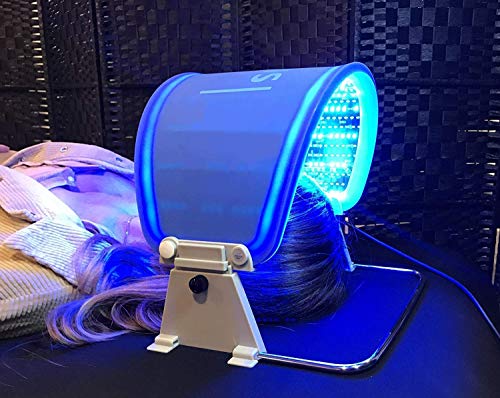
A red light therapy machine is, in physical terms, a carefully arranged set of light-emitting diodes delivering specific wavelengths of red and near-infrared light at a stated intensity over a stated area. That plain description is the right place to begin, because the category is surrounded by language that runs far ahead of the hardware. Strips of glowing panels appear in bedrooms, bathrooms and home gyms, accompanied by claims that range from modest cosmetic hopes to sweeping medical promises. The machine itself knows nothing of those promises. It produces photons at wavelengths its maker selected, at an intensity that depends heavily on how far away you stand, for as long as its timer allows. Choosing well means learning to read those three facts, wavelength, intensity and format, and to treat everything else as a question for evidence rather than for a product page.
This guide explains home red and near-infrared devices as optical equipment first. It works through the meaning of 660 nanometre red light and 850 nanometre near-infrared output, the irradiance figures quoted in milliwatts per square centimetre, the arithmetic that connects intensity, distance and session length, and the practical differences between full panels, targeted belts and wraps, face masks and handheld units. It draws on manufacturer specification sheets, published photobiomodulation research summaries, and safety guidance issued for light-based devices used at home. Where the science is still developing, the guide says so plainly. Nothing here should be read as a promise that a device will treat, cure or prevent any condition, and anyone considering light exposure for a medical concern belongs in a conversation with their own clinician, with the device manual open beside them.
Terminology needs one early clarification. Red light therapy, low-level light therapy and photobiomodulation are overlapping labels used for devices that deliver red or near-infrared light at intensities far below surgical or ablative lasers. The light is non-ionising, it does not cut or burn in normal use, and it is not ultraviolet, so it should not be confused with tanning equipment or with the light used for vitamin D related purposes. Near-infrared output around 850 nanometres is largely invisible to the eye, which creates a particular home-use quirk: a panel can appear half dark while switched on, because the near-infrared diodes glow only faintly or not at all to human vision. Makers often add a small indicator or arrange a few visible diodes so the user can tell the array is live, and understanding that design choice prevents both needless returns and the opposite error of assuming an invisible output is harmless to stare into.
Wavelength: what 660 and 850 nanometres actually describe
Wavelength, measured in nanometres, describes the colour and energy of the light each diode emits. Output near 660 nanometres sits in the visible red range and is absorbed relatively close to the surface of the skin, which is why device makers commonly associate that band with skin-focused routines and cosmetic applications in their published material. Output near 850 nanometres lies just beyond visible red in the near-infrared, is mostly invisible in use, and penetrates more deeply into tissue before being absorbed, which is why makers associate that band with larger body areas and deeper structures in their descriptions. Those associations describe where light is absorbed; they are not, by themselves, proof of a clinical outcome, and careful reading means keeping the physics and the promise in separate columns.
Many home panels combine both bands in a single array, sometimes in equal numbers of diodes, sometimes with independent switches so red, near-infrared or both can run together. Independent control has practical value. A user following a conservative routine for the face may prefer visible red alone at a modest intensity, while the same household may run both bands for a post-training session aimed at a thigh or back. Where a device offers only a combined output, the specification to find is the ratio between the bands and whether the quoted irradiance covers both together. A single headline intensity for a dual-band panel can hide a split in which neither band alone reaches the figure a buyer assumed.
Other wavelengths appear across the category and deserve a level-headed reading. Red output is also offered near 630 nanometres, near-infrared near 810, 830 or 940 nanometres, and some arrays add small amounts of other colours for unrelated cosmetic positioning. Research literature on photobiomodulation discusses several of these bands, with the strongest published attention historically on the red range around the 630 to 670 span and near-infrared around 800 to 860. A device using a neighbouring wavelength is not automatically inferior, but a buyer should ask what documentation the maker provides for that exact band, in that exact device, at the distance they recommend. Precision in the number printed on a box is easy; evidence and measurement behind the number are the parts worth paying for.
Tolerance matters as much as the headline figure. Diodes are manufactured to a peak wavelength with a spread around it, and output can shift slightly with temperature and age. Reputable specification sheets state the peak and sometimes the tolerance band, the diode count per wavelength, and the total optical output in watts for the array. Those details let a buyer compare a dense panel of modest diodes with a sparse panel of stronger ones on something closer to equal terms. Where a listing gives only a total wattage for the electrical consumption of the whole unit, remember that wall power is not optical power: a substantial share becomes heat, driver losses and fan work, and the conversion efficiency varies between designs.
Irradiance, dose and why distance changes everything
Irradiance is the intensity of light arriving at a surface, quoted for this category in milliwatts per square centimetre. It is the single most abused number in red light marketing, because it depends dramatically on distance. Light spreads as it leaves a panel, so intensity falls as distance grows, steeply at the close ranges used at home. A figure measured at the surface of the diodes, or at a few centimetres, can be several times higher than the intensity at the thirty or forty centimetres where a person actually stands. Any irradiance claim without a stated measurement distance is incomplete, and comparisons between devices are only meaningful when the distances match. When reading a specification, write down the distance beside the number every time; an intensity without its distance is a story without a setting.
Dose connects intensity to time. In this field dose is commonly expressed in joules per square centimetre, and the arithmetic is straightforward: irradiance in milliwatts per square centimetre, multiplied by session seconds, divided by one thousand, gives the dose in joules per square centimetre at that distance and on that surface. A modest intensity held for longer can therefore deliver the same nominal dose as a stronger intensity held briefly, at least on paper. Published research protocols vary widely in the doses they use, and more is not established as better; some research discussions describe a biphasic response in which excessive dose may be less useful than a moderate one. For a home buyer the practical lesson is restraint and consistency: choose equipment that lets you set time and distance repeatably, follow the conservative end of the maker’s guidance, and resist the instinct to treat a timer as a challenge.
Coverage is the third leg of the dose question. A panel irradiates the area it faces, with intensity highest near the centre of the array and lower toward the edges where light leaves at wider angles. Standing very close increases intensity but shrinks the evenly lit area, so a large target such as a back may receive a patchy exposure with a hot centre and dim margins. Standing further back evens the field while lowering intensity, which the session length can partly offset. This trade-off explains why full-body routines with a modest panel take patience and repositioning, and why makers publish beam angle figures for their diodes. Narrower beam angles concentrate light forward; wider angles spread it sooner. Neither is universally better, and the right match depends on panel size, target area and the working distance your room allows.
Measurement honesty separates serious makers from the rest. Some publish irradiance measured with a spectroradiometer or a calibrated meter at stated distances across the panel face, sometimes as a grid rather than a single centre reading. Others quote figures derived from diode datasheets, which describe the diode alone rather than the assembled device in a room. Home users rarely own suitable meters, and inexpensive general light meters are not designed for narrow-band red and near-infrared measurement, so their readings can mislead in either direction. The realistic buyer strategy is to prefer makers who state method and distance, to be sceptical of round, enormous numbers offered without either, and to remember that a plausible, documented figure is worth more than a spectacular undocumented one.
Panels: the default format and its variations
The freestanding or door-hung panel is the category’s reference design. A rectangular housing carries rows of diodes behind a clear cover, a controller sets time and band selection, and cooling fans manage the heat that any dense diode array produces. Panels divide roughly into small targeted sizes covering an area like a knee, a shoulder or part of the face; mid-size panels suited to a torso, a back section or both thighs from a standing position; and tall full-body arrays or modular combinations of panels joined into a wall of light. The correct size is a function of the target area and the user’s patience. A small panel used faithfully on one area will serve better than a large array bought for whole-body ambitions that collapse into storage behind a door.
Mounting deserves more attention than it usually receives. Door-hung systems save floor space but place the panel at a height set by the door, swing if the door is used during a session, and concentrate weight on hinges never designed as gym equipment. Floor stands allow angle adjustment and keep the panel independent of doors, at the cost of a base footprint and a trip consideration in a darkened room. Wall mounting gives the most stable result and the least daily friction, provided the wall structure, fixings and cable routing are planned and the household accepts a permanent glowing fixture as part of the room. Modular panels add linking hardware and synchronised controls; check that a joined set can still be controlled as one unit, because adjusting two timers and two band switches at every session is exactly the kind of friction that ends routines.
Cooling and noise shape the lived experience of a panel more than most specifications suggest. Fans protect diode life and hold output steadier as the array warms, but a loud fan in a quiet bedroom at close range changes a relaxing routine into an endurance event. Makers rarely publish noise figures for these devices, so manual language about fan behaviour, vent placement and duty cycles is worth reading closely. Heat output also matters in small rooms and warm climates: a large array is an electric heater of meaningful wattage pointed at the user, and session comfort in summer may require the room cooling that winter users never think about. Vent clearance in the manual is a safety instruction, not a suggestion, and panels should never be draped, covered or run inside enclosed cabinets.
Controls range from a simple power switch and mechanical timer to digital panels with pulsing options, saved programmes and remote controls. Pulsing, where output cycles on and off at a set frequency, is discussed in some research contexts and offered on some devices at frequencies such as ten hertz; the published evidence for specific pulsing patterns in home use is not settled, and a buyer should treat pulsing as an extra feature to evaluate calmly rather than a requirement. What genuinely matters in controls is repeatability: a clear timer in one-minute steps, band selection that can be set before the session starts, a display readable while wearing protective eyewear, and a memory of the last setting. Those mundane qualities determine whether the dose you intended is the dose you actually repeat each day.
Belts, wraps, masks and handheld formats
Flexible belts and wraps place diodes close to a curved body area such as the waist, a knee, a shoulder or the lower back, held by straps with the light source near the skin. Close placement changes the optics: intensity at the surface is high because distance is minimal, coverage is limited to the pad area, and heat builds in a way a distant panel does not produce. Good designs manage that heat with spacing, ventilation and automatic shutoff, and publish a maximum session length for contact use. Battery-powered wraps add portability and remove the cable, at the cost of limited runtime, charging discipline and output that may vary as the battery drains. When comparing wraps, look at diode count, the actual lit area in square centimetres rather than the strap size, strap length range, and whether the pad can be cleaned after contact with skin, lotions or sports clothing.
Face masks concentrate diodes in a shaped shell worn over the face, usually for cosmetic routines, with eye openings or shields built into the design. The fit of a mask decides its real coverage: a rigid shell that bridges over a prominent nose and hovers far from the cheeks delivers uneven exposure, while adjustable straps and flexible materials follow facial contours more closely. Weight matters over a ten or fifteen minute session, as does pressure on the bridge of the nose and the ability to breathe and blink comfortably. Because masks sit millimetres from the eyes, the maker’s eye safety design and instructions are not fine print for this format; they are the central specification, and a mask without clear guidance on eye protection and session limits should be passed over regardless of its diode count.
Handheld and small targeted devices trade coverage for precision and price of entry into the category. A compact unit can be moved slowly over a small area such as a jawline, a wrist or a single joint, and stores in a drawer rather than reorganising a room. The discipline cost is time and consistency: covering even a modest area by hand takes longer than standing before a panel, and holding a steady distance by eye introduces variation that a mounted panel removes. Some handhelds use a small number of stronger diodes or a lens arrangement that concentrates output into a spot; that concentration makes distance guidance and eye caution even more important, because a small bright source invites the mistake of looking directly at it to check whether the near-infrared section is working.
Full-body formats beyond panels include light beds and booth-style arrangements, which sit at the far end of home practicality in size, electrical demand and cost, and are more often found in commercial settings. For a household, the realistic full-body answer is usually a tall panel or a linked pair used with repositioning, accepting that front and back are separate sessions. That acceptance is healthy. The category rewards regular, moderate, well-documented use of modest equipment far more reliably than it rewards scale for its own sake, and the best format is the one whose setup you will still be completing willingly in the third month, not the one that photographed most impressively on delivery day.
Recovery corners often pair light sessions with seating and stretching equipment used on rest days. best massage chairs with stretch
Eye safety and the cautions that come before convenience
Eyes are the safety centre of this entire category. Red and near-infrared light at device intensities is bright enough to be uncomfortable and, with direct or prolonged exposure, potentially harmful, and near-infrared carries the added risk that the normal blink and aversion responses are weaker because the light is barely visible. Makers of panels commonly supply dark protective eyewear and instruct users not to look directly into the array; that eyewear should be treated as part of the device, stored with it, and worn for panel sessions, especially at close distances. Children and pets cannot be relied on to follow a household rule about not staring at the glowing panel, so session space should be managed accordingly, with doors, positioning and supervision doing the work that instructions alone cannot.
Certain circumstances call for medical advice before any home light routine begins. Published guidance for light-based devices commonly flags photosensitising medicines, which include some antibiotics, acne treatments and other prescriptions that increase sensitivity to light; active skin conditions in the target area; a history of skin cancer or suspicious lesions; eye disease; and pregnancy, where evidence is limited and caution is the norm. This guide cannot evaluate any individual’s situation, and a product listing is not the place to seek that evaluation. The sensible sequence is to read the contraindications in the manual for the exact device under consideration, compare them honestly with your own circumstances and medication list, and ask a clinician or pharmacist when anything overlaps. A device that is unsuitable for your household is not a bargain at any specification.
Skin response during early use deserves a calm protocol. Begin at the conservative end of the maker’s distance and time guidance, expose one area, and pay attention over the following day to redness, warmth, itching or discomfort beyond mild, transient warmth during the session itself. Light routines should never be used over broken skin, recent burns or areas a clinician is actively treating unless that clinician has agreed. Tanning, other light-based cosmetic devices and strong topical products interact with any routine in ways a single-device manual cannot fully predict, so spacing different treatments and introducing one change at a time keeps cause and effect readable. If a reaction occurs, stopping and seeking advice is the correct response; pushing through irritation to keep a schedule mistakes stubbornness for diligence.
Electrical and thermal safety complete the picture. Panels and wraps are mains-powered appliances with fans, drivers and heated surfaces, and the ordinary rules apply with full force: no use in baths or wet areas unless a device is explicitly rated for it, no damaged cables, no daisy-chained extension leads as a permanent installation, and no sessions while asleep with a contact wrap in place. Automatic shutoff timers are a genuine safety feature in this category rather than a convenience, particularly for belts and masks where falling asleep is plausible. Check that the timer cannot be defeated by a simple restart habit, and treat any device that becomes uncomfortably hot, smells of overheated electronics or flickers erratically as faulty until the maker says otherwise.
Setting up a room, a distance and a repeatable session
Repeatability is the quiet virtue that separates a routine from a series of improvisations. Choose a fixed position for the device, mark the standing or sitting distance on the floor or with the placement of a chair, and keep the eyewear, timer and any session notes in one place beside it. Distance should be measured from the face of the panel to the skin surface, not from the wall or the stand, and the same body posture should be used each time, because leaning in during a long session quietly changes the dose. Rooms with mirrors opposite the panel deserve a thought: reflections will not meaningfully add to a dose, but they can throw bright light toward eyes at unexpected angles, including those of someone entering the room.
Session length and frequency should come from the manual for the device and the conservative reading of published guidance for the area being covered, not from the most ambitious routine found in community discussion. Many home protocols described by makers fall in a broad range of roughly five to twenty minutes per area at their recommended distance, several times a week, with larger areas handled by repositioning rather than by extending a single exposure indefinitely. Those ranges are descriptions of common practice, not prescriptions, and the correct response to uncertainty is the shorter, more distant, less frequent end of the range while you learn how your own skin and schedule respond. Keeping a simple log of date, area, distance, band setting and minutes turns guesswork into information within a few weeks.
Clothing, lotions and skin state affect what reaches the surface. Light does not pass usefully through ordinary clothing, so target areas are normally uncovered, which has privacy implications for where a panel can sensibly live in a shared home. Heavy occlusive products applied immediately before a session can change surface behaviour and heat sensation, and makers commonly advise clean, dry skin for contact wraps in particular. Jewellery and watches in the light path should be removed, both for even exposure and because metal warms and presses uncomfortably during contact use. These details sound fussy in isolation; together they are the difference between the exposure described in a manual and the exposure that actually happened.
A rest-day corner built around heated seating can make a light routine easier to keep, since both habits live in the same unhurried part of the day. best massage and recliner and heated chairs
Power, build quality and the specifications behind the glow
Electrical specifications reveal more about a panel than its diode count alone. Compare the rated input power, the number and type of diodes, and any stated optical output, and be alert to the difference between a diode’s maximum rating and the level at which the device actually drives it. Makers sometimes advertise diode wattage classes that describe the component family rather than the operating point; a panel described with a large total derived from diode class arithmetic may deliver far less in use, run cooler and, in fairness, last longer for being driven gently. The honest indicators are measured irradiance at distance, stated by method, plus a thermal design that can sustain output through a full session without the array dimming as it heats.
Build quality shows in the housing, the lens or cover, the cabling and the stand hardware. Metal housings shed heat and survive knocks better than thin plastic shells, but they add weight that door mounting must carry. Covers should sit flat, resist the cleaning products the manual permits, and be removable or accessible where the maker intends dust to be cleared from vents. Internal fans are wear items; a design that allows the maker to service them, and a warranty that mentions fans and drivers rather than only the frame or housing, tells you the company understands its own product. For modular systems, linking cables and brackets are part of build quality too, because a joined array that sags or loses synchronisation will be separated into annoyed pieces within months.
Timers, displays and remotes should be judged by gloved-hand, eyewear-on usability. Buttons need to be distinguishable by touch, displays need characters large enough to read through dark glasses at the working distance, and a remote is useful only if its loss does not disable the device. Audible end-of-session signals help users who keep eyes closed or covered, while a silent finish suits households where a partner sleeps nearby; the better designs allow the signal to be configured. Small mercies of this kind decide long-term satisfaction in a category where the session itself is deliberately uneventful, and they rarely appear in headline comparisons, which is exactly why a careful buyer reads manuals before ordering rather than after.
Certifications and listings deserve a precise reading. Electrical safety marks relate to the appliance as an electrical product, which matters and should be present for mains equipment in your market. Other registrations or clearances that a maker cites relate to specific stated purposes for specific models, and the wording of those purposes is narrow by design. A buyer should match the exact claim to the exact model and purpose, and be wary of category-wide language that borrows credibility from a different product in a maker’s range. None of these marks, individually or together, converts a wellness device into a guaranteed medical treatment, and presenting them honestly is a sign of a maker worth trusting.
Maintenance, storage and keeping output consistent
Light output consistency depends on clean optics and healthy diodes. Dust on a cover or lens scatters light and, over months in a bedroom or gym, the film that accumulates is enough to matter at the margins of an already distance-sensitive dose. Clean covers only as the manual directs, with the device unplugged, using soft cloths and approved solutions, because solvents that cloud a clear cover permanently reduce and diffuse output. Vents and fan intakes need the same scheduled attention as any fan-cooled appliance in a home with pets or carpet fibres. A panel stored in a damp garage between uses risks both its electronics and its fixings; indoor, dry storage at ordinary room conditions is the baseline these devices are designed around.
Belts, wraps and masks add hygiene duties because they touch skin. Straps absorb sweat and skin oils, pads sit against lotions, and mask interiors share the user’s breath and cosmetics. Follow the maker’s cleaning method for each material, allow full drying before storage, and inspect strap stitching and hook-and-loop closures for the fatigue that changes fit and therefore distance and dose. Battery wraps need charging habits that suit their chemistry: avoid leaving them flat for months, store them partly charged if the manual advises it, and note a runtime that shortens markedly over a season, since that can indicate a battery reaching the end of its service life rather than a routine that needs extending to compensate.
Record keeping is maintenance for the routine itself. Note the purchase date, model and serial identifier, the manual version, and the settings used for each body area, then review the log monthly for drift: distances creeping closer, sessions lengthening, areas multiplying. Drift is natural enthusiasm, but in a field where published discussions warn that excessive dose may not help, the log is the brake that keeps a routine inside the maker’s envelope. Photographs of a cosmetic target area, taken in the same light at the same distance monthly, are a more honest progress record than daily mirror impressions, and they impose the patience that any gradual routine requires.
Evening routines often sit alongside sound and sleep equipment in the same room, so cable routing should keep the whole corner tidy rather than only the panel itself. best adult sound machines
Common mistakes when buying and using these devices
The commonest buying mistake is comparing irradiance figures measured at different distances as though they were laboratory constants. A modest figure honestly stated at a realistic working distance can represent more useful light than a spectacular figure measured at the diode face. The second mistake is buying coverage for a whole body when the actual goal is one knee, one shoulder or a facial routine, and then resenting the storage, setup and session time the large format demands. The third is the opposite: buying the smallest handheld for a back-sized ambition and discovering that the session length required makes the routine unsustainable. Format follows target area, in this category more strictly than in most home equipment.
In use, the recurring error is escalation. Sessions lengthen, distances shrink and frequencies multiply because the user feels nothing dramatic and assumes the dose must be insufficient. Light routines are not felt the way exercise is felt, and absence of sensation is not evidence of absence of effect or of safety at higher exposure. Staying inside published guidance, changing one variable at a time and allowing weeks rather than days before judging a cosmetic or comfort routine are unglamorous disciplines that protect both the user and the usefulness of their own observations. Another frequent error is combining a new light routine with several other new products or treatments at once, which makes any change, welcome or unwelcome, impossible to attribute.
Finally, buyers sometimes overlook the household around the device. A panel in a shared living room will be used less than its owner predicts, a mask stored in a humid bathroom will age faster than its manual assumes, and a wrap shared between several people raises hygiene and fit questions that should be settled before purchase. Eyewear for a second person who may be in the room, a storage place that keeps cables off the floor, and agreement about session times in a busy home are part of the buying decision. Equipment that respects the household gets used; equipment that fights it becomes an expensive, faintly glowing reminder behind the door.
Matching a format to a realistic goal
Start by writing the goal in one sentence that names a body area, a frequency you can keep and a time of day when the session will happen. A panel suits a goal phrased around a back, a torso or both legs from a standing position. A wrap suits a goal that names one joint or the waist and values the ability to sit, read or move gently during the session. A mask suits a facial cosmetic routine and nothing else, which is a strength when the face is truly the goal and a waste when it is not. A handheld suits a small, specific area and a user who enjoys deliberate, slow routines. This exercise sounds reductive until it is compared with the alternative, which is buying the format that looked most impressive and then inventing goals to justify its footprint.
Household sharing changes the calculation in favour of panels with independent band control and a wide height adjustment, because one device can serve a facial routine for one person at a long distance and a leg routine for another at a closer one, provided each person’s settings are logged separately and eyewear is available for both. Sharing a contact wrap or mask between people is a different proposition, hinging on cleaning method, strap range and simple comfort with the idea. Where sharing is planned, the manual’s cleaning instructions become a headline document, and replaceable strap or cover parts move from accessory trivia to deciding features.
Mobility and storage constraints deserve the same honesty as goals. A tall panel in a small flat may live in front of a wardrobe and be moved twice daily, which adds lifting, cable management and diode-knocking risk to every session. A smaller panel on a stand that stays assembled in a corner will deliver more actual sessions across a year. Renters should consider wall mounting restrictions before falling for a wall array, and anyone planning to travel with a wrap should check its power supply compatibility and battery rules for flights. The device that fits the dwelling and the calendar is the device whose specifications will ever get a chance to matter.
A weighted layer for the rest period after a session is another item households often keep in the same corner, so plan shelf space for both rather than letting accessories migrate onto the panel itself. best washable weighted blankets
What the published evidence does and does not say
Photobiomodulation has a genuine research literature, including laboratory work, animal studies and human trials of varying size and quality across applications such as wound care contexts, oral mucositis support in specific clinical settings, and a range of musculoskeletal and skin investigations. That breadth is sometimes borrowed by home-device marketing as though a finding in a supervised clinical protocol, with measured output and defined dosing, transfers automatically to a consumer panel used at an estimated distance in a bedroom. It does not. The responsible reading is narrower: the field is active, some applications have encouraging published results under controlled conditions, many questions about optimal dose, wavelength combinations and long-term home use remain open, and the evidence for any specific home routine should be described as developing rather than settled.
That position is neither dismissal nor endorsement, and it is the only one consistent with how the devices are actually regulated and sold in most markets as wellness or cosmetic products rather than as treatments for named diseases. A buyer who wants light exposure for a diagnosed condition should be discussing protocol, dose and monitoring with the clinician managing that condition, ideally with the device specifications in hand, rather than assembling a treatment plan from marketing summaries. A buyer whose goal is a cosmetic routine or general comfort can proceed on the more modest basis the category honestly offers, provided contraindications are respected, expectations stay proportionate, and any unexpected reaction is treated as a reason to stop and ask rather than to adjust and continue.
Reading research summaries for yourself is a skill worth developing in this category. Note whether a study used red, near-infrared or both, the dose in joules per square centimetre, the treatment schedule, the size of the group and whether a comparison group existed. Note also who funded the work and whether the device studied resembles anything sold for home use. A small, short, uncontrolled report can be interesting without being decisive, and a careful maker will describe findings with that kind of qualification intact. When promotional material removes every qualification and converts each tentative finding into a certainty, the removal itself is the most reliable information on the page.
Value, warranties and the cost of ownership
Value in this category is best judged per documented, usable feature rather than per diode. A panel with stated irradiance at working distances, independent band switches, a quiet fan, a real timer and replaceable parts can be better value than a larger array whose specifications dissolve under questioning, even where the larger unit carries more diodes. Ownership costs are modest but real: replacement eyewear, straps and covers for contact formats, batteries ageing in cordless wraps, and electricity that is noticeable for large arrays used daily. Warranty terms should be read for the parts that actually wear, namely fans, drivers, batteries and straps, and for whether diode output itself is covered or only complete failure.
Returns deserve attention before purchase because these are intimate, skin-contact or face-contact products in several formats, and return conditions for opened wellness devices vary. Confirm the trial and hygiene terms in writing, keep packaging until the routine is established, and run the device through its full timer, band and pulsing range in the first days so that a fault is found inside the easiest remedy window. Record the serial identifier and keep the manual digitally; specifications quoted at purchase have a way of vanishing from listings precisely when a warranty conversation needs them.
Questions worth asking before you commit
Ask at what distance the irradiance was measured, by what instrument, and whether the figure is a centre reading or an average across the array. Ask for diode counts per wavelength, the lit area of any wrap or mask in square centimetres, the maximum session the timer allows, and the automatic shutoff behaviour. Ask which eyewear is included, what the contraindication list says in full, and which parts can be replaced in two years. A maker who answers those questions from documents has already demonstrated the quality that matters most in this category, which is measurement discipline, and a maker who answers with adjectives has demonstrated something else.
Chosen that way, a red light device becomes what it should have been from the start: a known quantity of light, delivered at a known distance, for a known time, inside a routine a household can actually keep. Keep the goal modest, the log honest, the eyewear on and the expectations attached to evidence rather than to glow, and the machine will at least be judged on what it truly does. That clarity, in a category built on luminous promises, is worth more than any single specification printed in larger type than the rest.
When a routine disappoints, and how to troubleshoot honestly
The first troubleshooting step is to verify the routine that actually happened, using the log rather than memory. Distances drift closer or further as furniture moves, sessions shorten when evenings fill, and a panel quietly re-aimed by another household member can leave a target area at the edge of the lit field for weeks. Check the device settings against the original plan, confirm the timer still completes its full cycle, and inspect the array with the power off for failed sections, cracked covers or dust that cleaning missed. A band that appears dark may be the near-infrared section working as designed, which the manual or the maker’s indicator description can confirm without anyone staring into a live array to investigate.
Expectation is the second suspect. Cosmetic and comfort routines in this category are described even by careful makers as gradual, measured in weeks of consistent use, and many users abandon a sensible routine at the point where consistency was about to become informative. The honest remedy is a defined review date set at the start, a simple record kept without daily judgement, and a decision made on that date with the log open. If nothing has changed and the routine was genuinely followed inside the maker’s guidance, the proportionate conclusions are to stop, to change one variable with a new review date, or to seek professional advice about the underlying concern. Buying a larger panel in a burst of disappointment is rarely among the proportionate conclusions, because it changes intensity and coverage without answering whether light was the right tool at all.
Faults, by contrast, deserve prompt action. Flicker, uneven sections, a fan that grinds or stops, a wrap that heats unevenly, a battery that swells or a cable that warms at a connector are stop-and-report faults, not quirks to live with. Photograph the symptom where it is safe to do so, note the serial identifier and the settings in use, and contact the maker before attempting any repair beyond the cleaning and cable checks the manual describes. Optical devices with mains power and lithium batteries in some formats are not candidates for home modification, and an opened housing usually ends both the warranty and any argument about what caused a later problem.
Routines across seasons, ages and shared homes
Season changes a light routine more than most owners expect. Summer heat makes a large panel session in a small room genuinely uncomfortable, sweat changes contact wrap hygiene, and bright evenings remove the darkened-room atmosphere that makes winter sessions feel natural. Winter brings dry skin, more clothing layers to work around and, in some homes, a panel competing for the warmest corner with every other comfort device the household owns. Planning the routine’s home by season, with a summer position that has airflow and a winter position that respects heating and draughts, prevents the twice-yearly collapse that owners often blame on motivation. The log should note the move, because a new position is a new distance until it is measured.
Older users and users with limited mobility need the setup judged by reach and stability rather than by optics alone. Controls should be operable without bending to floor level, eyewear should be easy to put on with one hand if necessary, and a seated routine with the panel on a stable stand is safer than standing unsupported with eyes covered in a darkened room. Contact wraps can suit users who cannot stand for a panel session, provided strap fastenings are manageable and skin is checked regularly, since thinner or less sensitive skin may not report irritation as promptly. In every such case the conservative end of time and distance guidance is the right starting point, and involving the person’s own clinician or carer in the plan is a strength of the routine, not an excess of caution.
Shared homes benefit from a small set of visible agreements kept beside the device: who uses which settings, where the second pair of eyewear lives, what time sessions normally happen so nobody walks into a dark room mid-routine, and the rule that nobody adjusts another person’s distance or timer as a favour. Those agreements sound domestic rather than technical because they are, and they protect the repeatability that the whole routine depends on. A device used by three people with three undocumented habits is three uncontrolled routines sharing one power cable, and no specification sheet can rescue the conclusions drawn from it.
Check prices on Amazon
Live listings for the shortlist in this guide are pulled from Amazon below, so prices and availability are always current at the moment you look.


A final comparison habit for a confusing shelf
When two devices remain on a shortlist and the specifications refuse to separate them, compare the manuals side by side rather than the listings. Read the contraindication pages first, then the measurement notes, then the cleaning and parts sections, and notice which document treats you as an adult operator of optical equipment and which treats you as an audience. Check the timer range against the routine you actually plan, the stand or strap range against the bodies in your household, and the stated lit area against a tape measure held over the body area you named at the start. That ten-minute comparison, done with documents instead of photographs, resolves most ties in this category and occasionally dissolves both candidates, which is also a useful result.
Keep the receipt, the manual version and a note of the settings you settle on together, and revisit the decision after the first month rather than the first week. By then the fan noise, the eyewear comfort, the strap fatigue and the true session length will all have declared themselves, and the log will show whether the routine survived contact with ordinary life. A device that passes that month has earned its corner of the room. One that has not can be returned, resold or reassigned with an honest understanding of why, instead of joining the quiet museum of wellness equipment that every household swears it will use next month.
One small habit protects every other decision in this guide: photograph the setup once it is measured, with the tape visible, the eyewear in place and the timer showing the intended session. That single picture settles future arguments with yourself about where the stand stood, how far the chair sat from the panel face and which band combination the routine began with. When furniture moves or a second person adopts the device, the photograph restores the original geometry in seconds, and the log can note the restoration rather than recording a silent change. Repeatability, in the end, is not a laboratory virtue imported into the home; it is simply the discipline of doing the same modest thing the same way often enough to learn whether it suits you.
Because suitability depends on individual health circumstances, medicines and the exact device, confirm the contraindications and instructions in the manual for any model you are considering and seek professional advice where they apply to you. As an Amazon Associate we earn from qualifying purchases.
Set the panel at its measured distance, put the eyewear on before the room turns red, and let a modest routine repeated faithfully be the whole ambition for the first season.