Our Top Picks
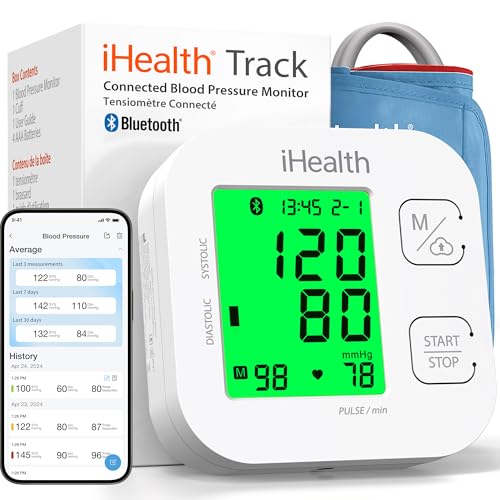 iHealth Track Smart Upper Arm Blood Pressure Monitor1 Count (Pack of 1)3.9 x 3.9 x 1.6 inches1 poundsCheck on Amazon
 OMRON Bronze Blood Pressure Monitor & Upper Arm9-17" Cuff Size | Single Unit5.5 x 3.3 x 4.3 inches1.23 poundsCheck on Amazon
 Dario Blood Pressure Monitor for Home Use Gen2Large7.63 x 5.13 x 3.13 inches0.6 poundsCheck on Amazon

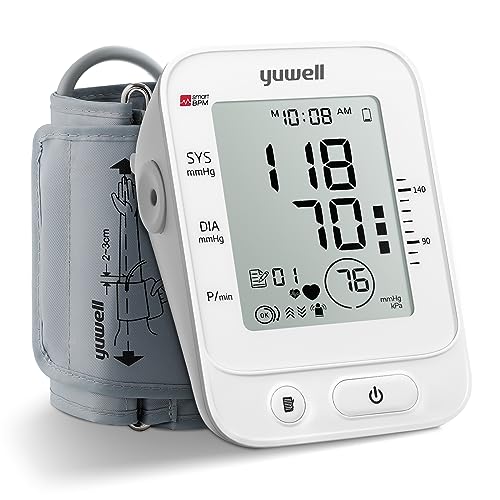
What's inside
- What the two numbers actually describe
- Upper-arm cuffs versus wrist devices
- Cuff size is a measurement, not a guess
- Validation: the word that separates evidence from marketing
- Technique: the five quiet minutes that decide everything
- White coats, masked patterns, and why home logs change decisions
- Memory, averaging, and the architecture of a useful record
- Irregular heartbeat flags: helpful signals with firm limits
- Apps, Bluetooth, and sharing the record without losing control of it
- Screens, buttons, and designing for real households
- Power, storage, and the unglamorous life of the device
- Common mistakes that quietly corrupt a record
- Accuracy over time: drift, checks, and when to replace
- Matching the monitor to the person who will live with it
- Understanding cost without chasing the cheapest box
- Check prices on Amazon
- A calm decision framework to close the search
As an Amazon Associate I earn from qualifying purchases. This post may contain affiliate links at no extra cost to you.
This guide draws on manufacturer specifications, independent validation records, printed instruction manuals, and aggregated feedback from long-term owners, and it explains each buying criterion in plain language so readers can judge a device on evidence rather than packaging. Some outbound links in the wider site may earn a commission that supports ongoing editorial work, yet that possibility never changes the standards described below, because a monitor earns a recommendation here only when its documentation, validation status, and everyday usability hold up under careful reading.
A home blood pressure monitor looks simple from the outside, since it is mostly a cuff, a small pump, and a screen that shows two numbers, but the simplicity is deceptive. Behind those two numbers sits a chain of decisions about sensor design, cuff construction, measurement algorithms, and the habits of the person sitting in the chair, and a weakness anywhere along that chain can shift a reading enough to confuse a treatment plan. Choosing well therefore means understanding the whole chain rather than chasing a single headline feature, and that is exactly what the following sections work through, one link at a time.
People usually start shopping after a prompt from a clinician, a pharmacy reading that seemed high, or a family history that suddenly feels closer than it used to. Whatever the trigger, the goal is rarely the gadget itself. The real goal is a trustworthy record built over weeks and months, a record calm enough to reveal patterns and consistent enough that a doctor can act on it without wondering whether the device invented half the variation. A monitor that supports that goal will feel almost boring in daily use, and boring, in this category, is a compliment worth seeking.
What the two numbers actually describe
Every reading pairs a systolic value with a diastolic value, and the pair describes two different moments inside a single heartbeat. Systolic pressure reflects the force in the arteries while the heart contracts and pushes blood outward, whereas diastolic pressure reflects the lower force that remains while the heart relaxes and refills between beats. Neither figure means much in isolation, because clinicians read them together, alongside pulse rate, medication timing, symptoms, and the broader story of a person’s health, which is why a home log that captures context alongside numbers becomes far more useful than a drawer full of isolated results.
Home devices estimate those pressures indirectly through a method called oscillometry, and understanding the method explains many of the quirks buyers encounter. As the cuff inflates and then slowly releases, the sensor listens for tiny pressure oscillations created by blood pulsing through the brachial artery beneath the cuff. Software then applies a proprietary algorithm to that oscillation pattern and derives systolic and diastolic estimates from the envelope of the signal. Because each brand tunes its algorithm differently, two reputable monitors can disagree by a few points on the same arm within the same minute, and that small disagreement is normal rather than alarming.
That algorithmic step also explains why positioning matters so much, since the sensor can only interpret the signal it receives. A cuff wrapped loosely, a tube kinked against the chair arm, or an elbow bent during inflation all distort the oscillation pattern before the software ever sees it. The device cannot know that the distortion came from posture rather than physiology, so it reports a confident-looking number built on compromised data. Good technique, covered in depth later, is therefore not fussy ritual but the foundation that lets the engineering do its job properly.
Readings also move naturally throughout the day, rising with activity, stress, caffeine, and conversation, then settling during rest and sleep. A single elevated result after climbing stairs or arguing with a parking ticket carries very different meaning from a pattern of elevated results gathered quietly at the kitchen table across two weeks. Home monitoring exists precisely to separate those two stories, and the monitors worth buying are the ones designed around pattern building: generous memory, automatic averaging, clear timestamps, and a routine the owner can repeat without dread or confusion.
Upper-arm cuffs versus wrist devices
The most consequential choice in this category is where the cuff sits, and the evidence consistently favors the upper arm for anyone who can use it comfortably. The brachial artery in the upper arm is large, close to heart level when the arm rests on a table, and surrounded by tissue that lets a properly fitted cuff compress it evenly. Wrist arteries, by contrast, are smaller, sit farther from the heart, and pass through anatomy that changes with every small rotation of the hand, so wrist readings swing more readily with position errors that most people cannot feel themselves making.
Cardiology guidance has reflected that difference for years, and validation registries tell the same story when their listings are compared side by side. Upper-arm models dominate the validated lists by a wide margin, while wrist models appear far less often and usually carry stricter positioning instructions to compensate for their inherent sensitivity. A wrist device also demands that the sensor rest exactly at heart height throughout inflation, a requirement that sounds trivial until someone tries holding that pose, unsupported, while staying perfectly still and silent for half a minute.
None of that makes wrist monitors useless for every household, because genuine exceptions exist and they deserve honest acknowledgment. Some people have upper arms outside the range of available cuffs, some have had surgery or treatment that makes one arm unsuitable, and some live with conditions that make upper-arm compression painful. For those readers, a validated wrist model used with disciplined positioning will produce a more useful record than an upper-arm model that sits unused in a cupboard, since the best monitor in any category is ultimately the one that actually gets used correctly and consistently.
Finger devices occupy a different position again, and shoppers should approach them with considerably more skepticism. The arteries in a finger are small, highly responsive to temperature, and heavily influenced by how tightly the hand is held, so readings from finger sensors tend to wander even when the person measuring feels careful. Most clinical guidance treats finger measurement as unsuitable for treatment decisions, and validation listings for finger products remain rare. A finger gadget might satisfy curiosity during travel, but it should never anchor a log that a clinician will use to adjust medication.
For readers building a calmer bedroom routine around better rest, our companion guide to best adult sound machines explores a different corner of home wellbeing, though anyone shopping primarily for measurement reliability should return here and settle the cuff question first. That decision shapes everything downstream, from which validation listings matter to which accessories make sense, and getting it right early prevents the familiar frustration of buying twice because the first purchase optimized for compactness instead of credibility.
Cuff size is a measurement, not a guess
If cuff placement is the first accuracy decision, cuff size is the second, and it is the one most often skipped because the box promises a universal fit. A cuff that is too small for the arm compresses the artery unevenly and tends to push readings upward, sometimes by a margin large enough to mimic a stage of hypertension that is not really there. A cuff that is too large creates the opposite problem, distributing pressure across too much bladder and tending to understate the true value. Either error follows the owner home and repeats at every session, quietly bending the entire record in one direction.
The fix begins with a tape measure rather than a guess based on clothing size or general build. Wrap the tape around the midpoint of the upper arm, halfway between shoulder and elbow, with the arm relaxed and the tape snug without indenting the skin, then write the circumference down before shopping. Manufacturers state cuff ranges in centimeters or inches on the packaging and in the manual, and the measured arm should fall comfortably inside that stated range, ideally not hugging either boundary. A result near the top of one range is a strong argument for choosing the larger cuff instead.
Many households need more flexibility than a single included cuff provides, particularly when two adults with different builds plan to share one monitor. Some brands sell wider-range cuffs that genuinely span small through extra-large arms, while others offer separate interchangeable cuffs that click onto the same unit and hose. Interchangeable systems cost more upfront but protect accuracy for both users, and they also solve the common problem of an arm that changes over time through strength training, weight change, or recovery from illness. Checking accessory availability before purchase is far easier than discovering later that a needed size was discontinued.
The bladder inside the cuff matters as much as the fabric outside it, although shoppers rarely see it mentioned outside the manual. Standards for cuff design describe the inflatable bladder as needing sufficient length to encircle most of the arm and sufficient width to compress the artery evenly along its length. Quality cuffs also include alignment markers, artery labels, or printed guides showing where the tube should sit relative to the inner elbow, and those small printed aids reduce wrapping errors for people who measure alone. A cuff that feels stiff, cracks at the folds, or loses its hook-and-loop grip within months will gradually sabotage technique no matter how good the electronics are.
Comfort deserves a mention here as well, because a cuff that hurts will quietly shorten a person’s patience for the full routine. Inflation should feel firm and even, not like a tourniquet biting into one narrow band, and repeated measurements in a session should not leave lingering marks or tingling fingers. People with sensitive skin often prefer cuffs with smoother inner linings and edges that do not curl, while people who measure without help often prefer contoured or pre-formed cuffs that hold a cylindrical shape and slide onto the arm with one hand. Manufacturers describe these designs differently, so the manual and owner feedback together give the clearest picture.
Validation: the word that separates evidence from marketing
Shoppers will see the word accurate printed on nearly every box in this category, yet accuracy only becomes meaningful when an independent protocol has challenged the device against a reference standard. Validation studies enroll volunteers across a spread of arm sizes and pressure ranges, compare device readings against trained observers using reference instruments, and publish whether the model passed the statistical criteria of the protocol. A monitor that passed such a study has earned a specific, checkable claim, while a monitor that merely says clinically proven in large type may be leaning on language that no registry can confirm.
Several registries collect those study results so buyers and clinicians can verify a model in minutes. International lists maintained by hypertension societies and independent review organizations record the exact model name, cuff configuration, and population studied, and the details matter because validation applies to the tested configuration rather than to an entire brand. A larger sibling model, a version bundled with a different cuff, or a refresh sold under a similar name may not share the original study result. Careful shoppers match the full model designation from the listing to the product page and the box, character by character, before treating the claim as settled.
Special populations deserve special attention during that check, because a device validated in general adults has not automatically proven itself for every body. Pregnancy, childhood, very large arms, and certain rhythm conditions can each change how an oscillometric algorithm behaves, and reputable registries flag models studied in those groups separately. A reader who is pregnant, buying for a teenager, or living with a rhythm disorder should look specifically for a listing that names that population, then raise the choice with the clinician who will interpret the readings. That short conversation prevents a common and avoidable mismatch between device evidence and personal circumstance.
Regulatory clearance and validation are related but distinct ideas, and confusing them leads many buyers astray. Clearance from a medical device regulator generally means the manufacturer demonstrated that the product is substantially equivalent to an existing device and safe to sell, which is a meaningful baseline but not the same as passing an independent accuracy protocol with published results. The strongest purchases satisfy both tests: lawful sale through proper channels and a registry listing that can be opened, read, and matched to the exact unit on the table. When only one of those can be confirmed, the validation listing is the one that speaks directly to measurement trust.
Owner feedback adds a useful third lens once the formal evidence checks out, because long-term users notice things a study cannot. They report whether the cuff fabric frays, whether the display dims, whether the app update broke a sync that used to work, and whether customer support answered when a unit drifted. Aggregated thoughtfully, those accounts help distinguish a validated monitor that ages gracefully from a validated monitor that becomes irritating by the second winter. Evidence first, experience second, and marketing last is a sound ordering for every section of this guide, and it applies with particular force to accuracy claims.
Technique: the five quiet minutes that decide everything
No monitor, however well validated, can rescue a hurried measurement, which is why experienced clinicians ask about routine before they question equipment. The preparation begins well before the cuff inflates: empty the bladder, avoid caffeine and exercise for a reasonable window beforehand, and skip the measurement immediately after a large meal or a stressful phone call whenever possible. Then sit down, start a timer, and rest quietly for a full five minutes with no phone scrolling and no conversation. That pause lets the cardiovascular system settle toward its resting state, which is the state home monitoring protocols are designed to capture and compare across days.
Posture during those minutes follows a pattern that feels formal at first and automatic within a fortnight. The back rests against the chair rather than hovering unsupported, both feet sit flat on the floor with legs uncrossed, and the cuffed arm rests on a table or cushion so the middle of the cuff aligns roughly with heart level. Sleeves should be removed or rolled without bunching, because the cuff belongs on bare skin rather than over fabric that folds unevenly under pressure. The tube runs down the inner arm without kinks, and the lower edge of the cuff sits a short distance above the elbow crease as the printed marker in the manual describes.
Silence and stillness during inflation sound like minor courtesies, yet both measurably influence the result. Talking engages muscles, changes breathing, and adds pressure fluctuations that the sensor cannot distinguish from arterial signals, while shifting in the chair or checking a watch introduces movement artifacts of a similar kind. The simplest discipline is to treat the half minute of measurement as a pause that belongs to the reading itself: breathe normally, keep the hand relaxed and open, and let the machine finish before speaking or standing. Couples who measure together often adopt a quiet hand signal for finished, which sounds quaint until the logs start looking noticeably steadier.
Most protocols then ask for more than one reading per session, because the first result of the day frequently runs a little high while the body finishes settling. A common pattern takes two readings a minute or so apart and records both, with some clinicians preferring a third when the first pair disagrees sharply. Morning sessions ideally happen before medication and breakfast, while evening sessions happen before dinner or at a consistent later hour, and consistency of timing matters more than the precise hour chosen. Readers who keep a small notebook beside the monitor for the first month usually find the rhythm sticks, after which the routine carries itself.
Clean indoor air will not change a cuff reading directly, but the room where measurements happen shapes how calmly the routine unfolds, and readers designing a healthier study or bedroom sometimes browse our notes on best air purifiers for home office while they set up a dedicated corner. That corner matters more than it might seem. A monitor that lives in its case, in a drawer, under a stack of post, demands setup effort at exactly the moment willpower is thinnest, whereas a monitor resting beside a supportive chair and a small table invites the routine to happen. Environment design is adherence design, stated in furniture rather than slogans.
White coats, masked patterns, and why home logs change decisions
Clinic readings carry an emotional charge that home readings avoid, and the difference has names that every buyer should understand. Some people produce elevated results in medical settings while their home records stay in a calmer range, a pattern clinicians call white-coat effect, and the stress of the appointment rather than everyday physiology drives the gap. Others show the reverse pattern, comfortable numbers during appointments but higher values across ordinary days at home, which is harder to spot without a home log and arguably more important to catch. A reliable monitor gives the care team the evidence needed to tell these stories apart.
That evidence changes decisions in both directions, which is precisely why accuracy and technique deserve the attention this guide gives them. Without home data, a clinician seeing repeated high office readings may understandably intensify treatment for someone whose everyday pressures never warranted it. With a careful home record, the same clinician can watch first, adjust lifestyle guidance, or schedule closer review instead. In the masked pattern, home data performs the opposite service, revealing risk that office visits kept missing and prompting timely treatment. Either way, the monitor functions less as a consumer gadget and more as a witness whose testimony needs to be dependable.
Building that testimony takes patience, because a weekend of readings cannot carry the weight of a treatment decision. Many clinicians ask for a structured week or two before an appointment: duplicate morning and evening sessions across most days, with the first day sometimes set aside since novelty inflates results while the routine is new. Owners should resist editing the log by deleting readings that look wrong or disappointing, since selective records mislead in ways that honest noisy records do not. If a session went badly because the dog barked through inflation, note the circumstance beside the result and measure again after settling, rather than erasing the attempt.
Symptoms belong in the margin of the log as faithfully as numbers belong in its columns. A brief note about dizziness on standing, a headache that arrived before the evening session, poor sleep, or a missed dose gives the reviewing clinician material that pure figures cannot supply. Several apps provide a notes field for exactly this purpose, and paper logs accomplish the same thing with a pencil. Readers sometimes worry that such notes make the record look messy, but clinicians generally welcome the context, because blood pressure is a living signal inside a lived life, not a laboratory abstraction.
Memory, averaging, and the architecture of a useful record
Storage capacity sounds like a dull specification until two people share a monitor or a review appointment covers three months of mornings. Basic models remember a few dozen readings for a single user, mid-range models hold a hundred or more per person across two profiles, and connected models offload history to a phone so the practical limit becomes the app account rather than the device. The right capacity depends on the rhythm of review: someone reporting weekly needs less onboard depth than someone whose clinician reviews quarterly and whose phone habits are unreliable. Buying memory is really buying freedom from transcription chores.
Averaging features deserve closer scrutiny than the raw count, because averages are what clinicians actually read first. Useful implementations let the owner view a morning average, an evening average, and a rolling average across the most recent week or fortnight, since each window answers a different question about control. Some devices calculate an average automatically from the duplicate readings in a session, discarding or flagging an outlying first attempt according to rules described in the manual. Readers should confirm how their chosen model handles that arithmetic before relying on its summary screen, because two brands can produce different headline averages from identical raw sessions.
Multi-user design separates thoughtful monitors from merely adequate ones in shared households. Separate profile buttons that are easy to tell apart by touch, clearly labeled memory banks, and a guest mode for a visiting relative all prevent the quiet disaster of merged records. Merged data is worse than missing data, because it manufactures a fictional patient whose pressures swing between two real people’s patterns. Households with a significant height, age, or treatment difference between users should treat distinct profiles as a requirement rather than a luxury, and should check that the app side of the system respects the same separation instead of pooling everything under one login.
Timestamps seem like a triviality until daylight saving changes, travel across time zones, or a battery swap resets the clock unnoticed. A log with wrong times can make a medication pattern look erratic when it was actually consistent, so owners should verify the date and time after any battery change and after long storage. Connected monitors usually inherit time from the phone and sidestep this chore, which is one of the underappreciated conveniences of the category. Paper transcribers should copy the timestamp as displayed rather than rounding to the nearest hour, since small timing details often explain why a particular session ran high or low.
Irregular heartbeat flags: helpful signals with firm limits
Many monitors now display a small heart symbol when the pulse rhythm during measurement looks uneven, and the feature is widely misunderstood in both directions. Some owners panic at a single appearance of the icon, while others treat its absence as proof that their rhythm is perfectly regular. The truth sits between those reactions: the flag is a screening observation gathered during a short inflation cycle, not a diagnosis, and it can be triggered by movement, a poorly fitted cuff, or a genuinely irregular pulse. Its value lies in prompting a conversation and perhaps further assessment, especially when it appears repeatedly across calm, well-performed sessions.
Oscillometric devices were designed primarily to estimate pressure, and rhythm interpretation stretches that design beyond its original purpose. During a reading the sensor sees pulse intervals through the same oscillation pattern used for pressure estimation, so anything that disturbs the pattern can masquerade as rhythm variation. A cough, a flinch as the cuff tightens, or an arm resting at the wrong height may all provoke the symbol on a healthy heart. Owners who see the flag should first repeat the measurement after several quiet minutes with posture corrected, then note whether the symbol returns, because a repeatable observation under good conditions carries more weight than a solitary one.
People who already live with a diagnosed rhythm condition face a subtler buying question, since pronounced irregularity can also undermine the pressure estimate itself. When pulse intervals vary strongly from beat to beat, the oscillation envelope becomes harder for standard algorithms to interpret, and some readings may be less reliable even though the screen displays them with equal confidence. Certain models have been studied specifically in this population, and those are the models such readers should shortlist, ideally after asking their clinician which devices the practice sees performing consistently. A general-purpose bestseller is not automatically the right instrument for a specialist situation.
Pulse rate display, by contrast, is a straightforward feature that every monitor should provide and every owner should glance at. Resting pulse trends alongside pressure add depth to a review appointment, revealing whether a period of higher readings coincided with illness, poor sleep, new medication, or unusual exertion. A pulse that seems persistently surprising in either direction deserves mention at the next appointment, recorded with the same calm specificity as the pressure figures themselves. The monitor cannot interpret these patterns, and this guide will not pretend otherwise, but a complete record gives the person who can interpret them far better material.
Apps, Bluetooth, and sharing the record without losing control of it
Connectivity divides the current market into two philosophies, and neither is automatically superior for every buyer. A standalone monitor with a generous memory and a legible screen serves people who dislike phones, distrust accounts, or simply want the fewest possible steps between cuff and confirmation. A connected monitor serves people who value automatic graphs, effortless backups, and tidy exports for appointments. Problems arise when buyers drift into connectivity without wanting its chores, or avoid it while secretly needing its record-keeping discipline, so an honest assessment of personal habits should precede the feature comparison.
When a connected model is chosen, the app deserves the same scrutiny as the cuff, because the owner will live in that software daily. Read the manual and aggregated owner accounts for answers to practical questions: does pairing survive a phone upgrade, can readings be corrected when a guest used the wrong profile, does the export produce a readable document a clinic can accept, and does the service require a subscription for features that were free at purchase. An elegant monitor tethered to a neglected app becomes an orphaned product, so the maker’s track record of maintaining software across operating system updates is a legitimate buying criterion.
Sharing functions work best when they are deliberate rather than automatic, and thoughtful owners set them up with that principle in mind. Most ecosystems let the user generate a report covering a chosen date range and send it to a clinician’s office, a family member, or a personal file, and choosing the range consciously keeps the recipient focused on the period that matters. Adult children supporting a parent from another city often value remote visibility, yet that arrangement should be agreed openly, with the person being measured controlling the account and understanding exactly what is shared. Convenience should never quietly convert a health record into a surveillance feed.
Privacy follows from those choices, and it merits a paragraph rather than a footnote because pressure logs are health data in every meaningful sense. Before creating an account, read how the maker describes storage, whether data resides on the phone or remote servers, and what deletion actually removes when an account closes. Readers who feel uneasy after that reading have a perfectly respectable alternative in the standalone monitor plus a paper log, a combination that served clinics for decades and still does. Readers keeping a bedroom comfortable for a partner who rests nearby may also appreciate our guide to best air conditioners for bedrooms, since a cool, quiet room supports the settled routine that good measurement depends on.
Bluetooth reliability, finally, is a mundane detail that determines whether connectivity feels magical or maddening by the third month. Owner feedback consistently distinguishes models that reconnect silently when the phone is nearby from models that demand fresh pairing rituals after every update or flat battery. The specification sheet will not reveal that difference, which is another reason aggregated long-term accounts earn their place beside formal validation evidence. A sync that fails occasionally is a nuisance; a sync that fails unpredictably is a threat to the record itself, because gaps cluster exactly around travel, illness, and busy weeks when the data would have mattered most.
Screens, buttons, and designing for real households
Readability decides whether a monitor serves its owner independently or turns every session into a request for help. Displays vary from compact digits that demand reading glasses to generously sized screens with strong contrast that remain legible in morning light, and the difference matters most to the older buyers who form a large share of this market. Backlighting helps in dim rooms but should not be so aggressive that it startles a household at dawn, while spoken results, offered on a minority of models, can be genuinely liberating for owners with significant vision loss. Trying the display mentally against the actual chair, lighting, and eyesight involved is a better test than admiring product photography.
Button design follows the same philosophy of honest simplicity, because a measurement taken half-asleep should not require navigating a menu tree. The best layouts give the start button a distinct size, shape, or position that a thumb can find without looking, keep profile switching obvious enough to prevent merged records, and reserve small recessed controls for rare settings such as date changes. Touch-sensitive panels look modern in photographs yet can frustrate users with tremor or dry fingertips, whereas a well-shaped physical button works with gloves off, patience low, and attention elsewhere. Durability reports from long-term owners often praise exactly this kind of unglamorous tactile clarity.
Households also differ in who performs the measurement, and a monitor that suits self-measurement may not suit assisted measurement equally well. When a spouse or carer wraps the cuff, a longer tube and a display that can be angled toward the helper become practical virtues rather than spec-sheet trivia. When an adult child measures a parent during weekly visits, portability between rooms and a case that keeps cuff, unit, and spare batteries together save repeated hunting through cupboards. Thinking through the actual choreography of a session, person by person and hand by hand, reveals requirements that star features often conceal.
Noise is another household consideration that rarely appears in marketing, although the pump is the one part of the device everyone hears. Inflation motors vary noticeably in volume and tone, and a unit used before a partner wakes or after a household settles will be judged on that sound whether the maker acknowledges it or not. Owner accounts mention this frequently enough that it deserves a line in any shortlist criteria. Readers outfitting a restful spare room sometimes pair such purchases with our notes on best bedroom slippers for the comfort side of the routine, but for the monitor itself the priorities remain a hushed pump, a clear screen, and controls that never require a manual at dawn.
Power, storage, and the unglamorous life of the device
Most monitors run on replaceable batteries, a mains adapter, or both, and the choice shapes daily friction more than buyers expect. Battery operation frees the unit to live beside the measuring chair without trailing a cable to the nearest socket, yet weakening batteries can lengthen inflation and, in some designs, subtly affect performance before the low-power warning appears. Owners who rely on batteries should keep a fresh set in the case and treat a change of season as a natural moment to check them. Adapter operation suits a fixed station with a nearby outlet and removes that variable entirely, at the cost of one more cable to manage.
Rechargeable designs are appearing more often, promising fewer disposable cells and a tidier case, but they introduce a different discipline. A monitor that is charging cannot measure, and a household that discovers a flat unit on the morning of a structured review week will feel the flaw in the concept immediately. For most homes the mature arrangement remains the least dramatic: standard replaceable batteries with a long service life, an optional adapter for a permanent station, and a clear low-battery indicator that appears with enough warning to act. Exotic power solutions solve problems this category mostly does not have.
Storage conditions protect the cuff and tubing, which age faster than the electronics when treated carelessly. Keep the assembled monitor in its case or a clean drawer away from direct sunlight, radiators, and bathroom steam, and avoid wrapping the tube tightly around the unit where repeated sharp bends can fatigue it. The cuff should be stored loosely rolled with its hook-and-loop fastener engaged so the surface does not collect lint from every fabric it touches. A quick monthly inspection for cracks in the tubing, fraying at the cuff edges, or a connector that no longer seats firmly will catch most wear before it starts bending readings.
Travel raises a smaller set of questions that are still worth answering before the first trip rather than at the airport. A hard or padded case protects the screen and prevents the start button being pressed repeatedly inside luggage, which drains batteries and can fill memory with phantom entries. Readings taken on holiday remain useful, though clinicians usually interpret them with the context of changed routine, different time zones, and restaurant meals in mind, so noting the travel dates in the log is enough. The monitor itself tolerates ordinary travel well; it is the routine that needs deliberate rebuilding in the new setting, ideally at the same local times as at home.
Common mistakes that quietly corrupt a record
The most frequent error in home measurement is also the most human: measuring at emotionally charged moments and treating those results as representative. A reading taken immediately after bad news, a difficult commute, or an argument captures a genuine physiological response, but it describes that moment rather than the person’s usual state, and filing it unlabelled among resting results distorts every average it joins. The remedy is not to suppress such measurements but to annotate them, or better, to wait until calm returns and measure under the standard conditions the log is built on. Consistency of circumstance is what turns scattered numbers into evidence.
Measuring over clothing runs a close second, partly because it feels harmless and partly because winter makes bare arms inconvenient. Thin fabric may appear to make little difference, yet folded seams and elasticated sleeves create uneven layers that change how cuff pressure reaches the artery, and the direction of the resulting error is not predictable enough to excuse. Rolling a sleeve into a tight band above the cuff creates its own constriction problem, so the correct solution is a loose sleeve pushed comfortably clear or a short-sleeved layer chosen for measuring days. Small wardrobe decisions, repeated daily, become part of measurement quality.
Talking through a reading, crossing the legs, letting the arm dangle, and checking the result mid-inflation form a familiar cluster of habits that creep back whenever attention wanders. Each one nudges the physiology or the signal in ways already described, and together they can move a session by more than the difference between two competing monitor models. Households that take accuracy seriously sometimes keep a small printed card beside the chair listing the posture points in plain words, not as a rebuke but as a shared memory aid. Within a few weeks the card becomes unnecessary for most people, though visitors being measured for the first time still benefit from it.
Chasing reassurance with excessive measurement is a subtler failure mode that good equipment can accidentally encourage. A monitor that is pleasant to use may tempt an anxious owner into session after session across a single evening, each result feeding the worry that prompted the next attempt, while the arm grows sore and the numbers grow less representative with every repetition. Clinicians generally prefer a defined schedule, commonly morning and evening across an agreed span of days, followed by rest from measurement until the next review approaches. Readers who notice measuring becoming a source of distress rather than information should raise that honestly at the next appointment, because the schedule can almost always be adjusted.
Finally, many records suffer from a device problem that is actually a fit problem revisited too late. Arms change, cuffs wear, and a setup that was correct at purchase can drift out of correctness across two years without any dramatic failure announcing the change. Re-measuring the arm annually, inspecting the cuff at battery changes, and repeating the validation check when a replacement cuff is bought will keep the system honest. Owners who bought a second cuff for a partner should also confirm which cuff belongs to which profile, since a swapped cuff silently imports the sizing error this guide warned about at the start.
Accuracy over time: drift, checks, and when to replace
Unlike a bathroom scale that can be checked against a known weight, a home monitor offers no simple household reference, so owners reasonably ask how they would ever know if theirs had drifted. The practical answer used by clinics is comparison: bring the device to an appointment, let staff measure with their equipment, then use the home unit on the same arm under the same conditions and compare the pattern across a few paired readings. Small differences are expected between any two devices, but a consistent large gap in one direction is a finding worth acting on, and many practices welcome the visit because it validates the log they are being asked to trust.
Manufacturers differ in what they offer when a comparison raises doubts, and that difference belongs in the purchase decision. Some provide a calibration or inspection service, some replace units within a warranty period that stretches several years for the main device, and some treat the product as effectively disposable once accuracy is questioned. The cuff usually carries a shorter warranty than the electronics, reflecting its harder physical life. Reading those terms before purchase, and keeping the receipt somewhere findable, converts a future worry into a known procedure, which is a recurring theme in this category: the paperwork is part of the product.
Replacement timing otherwise depends on condition and evidence rather than a fixed calendar rule recited by sales pages. A monitor with a cracked case, a display losing segments, a pump that strains audibly longer than it once did, or a cuff that will no longer hold its wrap has announced its retirement through observable facts. A quiet, intact unit that still agrees with clinic comparisons may serve reliably for years beyond the horizon a marketer would prefer. Owners should be equally wary of keeping a failing device too long and of discarding a sound one merely because a newer shell appeared, since continuity of equipment actually helps a long-term record stay comparable with itself.
Bringing the monitor to appointments also creates a natural moment to review technique with a professional eye. Staff can watch a measurement and spot the dangling arm, the cuff placed over a seam, or the conversation continuing through inflation, correcting in seconds what a manual failed to convey in chapters. Many owners describe that single observed session as the point where their home numbers settled down, because written instructions and physical habits are different kinds of knowledge. A device that travels well, in a case that also holds its cuff and a written log, makes that collaboration easy to repeat at every review.
Matching the monitor to the person who will live with it
A younger buyer managing a new diagnosis often prioritizes data richness, wanting graphs, exports, and pattern views that make an unfamiliar condition feel legible. That buyer should weight app quality and memory depth heavily, choose a validated upper-arm model with a cuff range confirmed by tape measure, and build the twice-daily routine into existing anchors such as morning coffee preparation and the evening wind-down. The technology serves best here as a learning instrument, and within a few structured weeks most such owners can describe their own patterns, triggers, and medication timing effects with a confidence that a single clinic reading could never have given them.
An older buyer, or one shopping for a parent, usually faces a different hierarchy in which independence outranks analytics. Large digits, a single obvious button, a cuff that can be applied one-handed, and a voice that announces results may matter more than any connectivity feature, and a standalone model often wins on exactly those grounds. When family members want visibility of the record, a weekly photograph of the memory screen or a simple paper log carried to appointments can provide it without imposing account passwords on someone who never wanted them. Respecting the user’s relationship with technology is not a soft consideration; it is the difference between a device used daily and one abandoned by February.
Couples measuring together should think like a small clinic rather than a single consumer, because their needs multiply rather than merely add. Two profiles, two correctly sized cuffs or one genuinely wide-range cuff verified against both arms, a memory deep enough for both records between reviews, and a household rule about whose session happens first all prevent the friction that erodes shared routines. Some couples keep separate paper logs even on a shared device as a belt-and-braces measure during the first structured month. The modest extra spending on a second cuff, where needed, buys accuracy for two people and is among the best-value decisions in the entire category.
Caregivers measuring someone else should prioritize tube length, a display that can be read from the side, and a cuff design that fastens securely without requiring the seated person to assist. They should also establish, with the clinician, exactly which schedule and thresholds govern when to call for advice, since the caregiver will be the one watching numbers appear in real time. A written plan kept with the monitor removes guesswork at anxious moments. That plan, the log, and the device together form the real product a caregiving household is assembling, and choosing the hardware with that whole system in mind produces calmer decisions than any feature ranking alone.
Understanding cost without chasing the cheapest box
Prices in this category span a wide range, but the more useful calculation concerns what the total purchase must include to work correctly from the first week. A monitor sold with the wrong cuff size is not cheaper than its rival once the correct replacement cuff joins the basket, and a connected model whose desirable features sit behind an ongoing subscription costs its owner more across three years than the shelf label suggested. Batteries, an optional mains adapter, a protective case, and eventually a replacement cuff all belong in an honest whole-ownership reckoning. None of that argues for buying the most expensive unit; it argues for pricing the complete working system rather than the headline box.
Value also hides in warranty length, accessory availability, and the maker’s history of supporting older models with replacement cuffs. A slightly older validated design with a long support record may serve a household better than a newly launched model whose accessory ecosystem has not yet proven it will persist. Conversely, a bargain unit from a maker with no visible validation listing, no replacement cuff pathway, and no reachable support channel concentrates risk in exactly the places this guide has identified as decisive. The rational middle ground is familiar by now: verified accuracy, correct fit, sustainable parts, and usability matched to the owner, purchased at whatever point in the range those criteria happen to be met.
Readers should also be wary of bundles that inflate apparent value with accessories nobody needs while skimping on the component that matters. A kit containing a thermometer, a pulse gadget of doubtful pedigree, and a decorative pouch is not thereby a better blood pressure purchase, and each extra item deserves the same validation question if its readings will ever be acted upon. The cuff, the validated core unit, and the record system are the purchase; everything else is packaging. Keeping that hierarchy clear protects the budget for the one upgrade that genuinely matters when it is needed, which is almost always the correctly sized, well-made cuff.
Check prices on Amazon
Live listings for the shortlist in this guide are pulled from Amazon below, so prices and availability are always current at the moment you look.


A calm decision framework to close the search
Start by measuring both arms’ circumference at the midpoint and writing the figures where they will not be lost, because that single step eliminates a surprising share of the catalogue honestly. Next, list validated upper-arm models whose cuff ranges contain those measurements with room to spare, checking the exact model designation against a registry rather than trusting a badge in a listing photograph. Then decide the connectivity question based on real habits: the phone-confident buyer gains from automatic records, while the phone-averse buyer loses nothing essential by choosing a legible standalone unit with deep memory and clear averaging views.
After that, walk through the daily choreography in imagination before committing, picturing where the monitor will live, which chair and table will host the routine, who else will use it, and how the record will reach the clinician. That rehearsal surfaces the practical requirements, from a second profile to a longer tube to a quieter pump, that specification tables bury. Finally, read the warranty and replacement-cuff pathway with the same care given to the feature list, and confirm the manual is available in a language and format the owner can genuinely use. A purchase that survives all five of those passes rarely disappoints, because each pass corresponds to a real failure mode observed in real households.
Once the monitor arrives, resist the urge to judge it by the first evening’s figures, which reflect novelty and imperfect technique more than the device or the person. Spend the first several days practicing the routine without treating the results as a verdict, compare the unit against a clinic or pharmacy measurement when a natural opportunity arises, and begin the structured log only when posture, timing, and cuff placement feel settled. Owners who grant themselves that apprenticeship end up with cleaner data and a calmer relationship with the numbers, and the clinician receiving the log receives a record built on demonstrated care rather than hopeful haste.
A home blood pressure monitor is, in the end, a modest instrument asked to do a serious job: to stand quietly in a kitchen or beside a bed and tell the truth, twice a day, for years. The models that do that job best are rarely the loudest in the marketplace, because their virtues are documentary and mechanical rather than theatrical, residing in a validation listing that checks out, a cuff that truly fits, a screen that can be read at dawn, and a record that a clinician can trust without reservation. Choose for those virtues, in that order, and the two numbers on the screen become what they were always meant to be: not a source of daily anxiety, but a steady, honest thread running through the story of a household’s health, gathered patiently by the person who knows that story best.