Our Top Picks
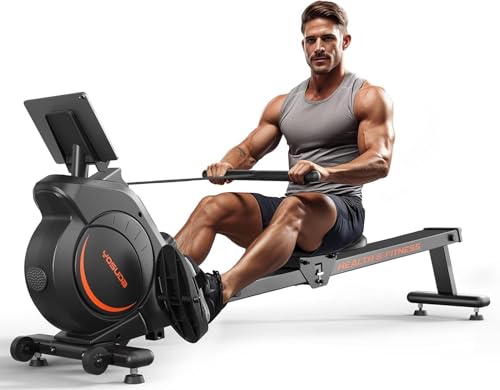
 FEIERDUN Hydraulic Rowing Machine for Home Compact Adjustable57.09 x 23.62 x 22.05 inches25.6 poundsCheck on Amazon


What's inside
- Starting on a Rower Without Starting Overwhelmed
- What Rowing Actually Trains, in Plain Terms
- The Four Resistance Families, Compared Honestly
- Noise, Floors, and Being a Good Neighbor
- Reading a Basic Performance Monitor Without Obsessing
- Technique for People Who Have Never Sat on a Rower
- Fit: Matching the Machine to Your Height and Weight
- Space, Folding, and the Reality of Storing a Long Machine
- Maintenance: Belts, Chains, Flywheels, and Rollers
- Building the First Weeks of Sessions
- How to Judge a Beginner Rower in a Showroom or Listing
- Where a Rower Fits Among Other Home Equipment
- A Shortlist Mental Model, by Household Type
- Assembly Day: What the First Hour With a New Rower Teaches
- Clothing, Hands, and the Small Comforts That Add Up
- Children, Pets, and Shared Rooms
- Check prices on Amazon
- Buying Used, and Knowing When a Bargain Is Not One
As an Amazon Associate I earn from qualifying purchases. This post may contain affiliate links at no extra cost to you.
Starting on a Rower Without Starting Overwhelmed
A rowing machine asks for coordination before it asks for strength. The legs push, the hips swing open, the arms draw the handle toward the ribs, and then everything reverses in a calmer order on the way forward. That full sequence is why rowing feels different from pedaling a bike or walking on a treadmill, and it is also why a beginner benefits from choosing equipment that makes the motion easy to learn rather than equipment that simply promises the hardest workout in the room. A forgiving machine gives you time to find rhythm. A harsh, noisy, or poorly sized machine turns every session into a negotiation, and most home routines quietly end when the equipment becomes the obstacle.
This guide is built from published manufacturer specifications, owner documentation, and editorial research into how entry-level rowers are designed. It does not ask you to chase a flagship model or to fill a spare room with a competition frame. Instead, it walks through the decisions that actually shape the first six months of use: which resistance system suits your home, how much noise a flywheel makes through a floor, what a basic performance monitor can and cannot tell you, how rail length relates to your inseam, and how a belt, a seat roller, or a folding joint should be cared for so the machine still feels smooth in year two.
Beginners often shop by maximum resistance, as if a harder top setting were proof of quality. In practice, the earliest progress comes from repeatable, moderate sessions where technique stays intact from the first stroke to the last. A machine that feels stable at an easy pace, tracks distance honestly, and stores without a wrestling match will do more for fitness than a heavier unit that gets skipped. Keep that standard in mind while reading: the best first rower is the one whose design removes friction from showing up.
What Rowing Actually Trains, in Plain Terms
Each stroke begins in the legs. The quadriceps and glutes drive the seat away from the footplates, the back transfers that force without rounding, and the lats and arms finish the pull. Because so many large muscles share the work, effort spreads across the body instead of concentrating in one joint, which is one reason rowing appeals to people who find running jarring or cycling monotonous. The spreading of effort also hides fatigue for a while; a beginner can feel comfortable for ten minutes and then discover that the lower back has been doing more than its share because the hip hinge faded.
The return half of the stroke matters as much as the pull. Hands move away first, the torso rocks forward from the hips, and only then do the knees bend to slide the seat up. Rushing that order, sometimes called shooting the slide or bending the knees too early, forces the handle into a little hop over the legs and breaks the rhythm that makes rowing sustainable. Equipment cannot fix sequencing for you, but a smooth rail, a handle that returns evenly, and a monitor that rewards steady pacing rather than frantic speed all make good sequencing easier to practice.
Rowing is seated and low to the ground, so balance is rarely the barrier it can be on other machines. The barriers are subtler: a seat that wobbles, foot straps that loosen, a handle that twists, or resistance that surges unpredictably. When those small annoyances stack up, concentration drains away from form. That is why this guide spends so much time on rollers, straps, belts, and noise. For a beginner, the details are not decoration; they are the difference between a stroke you can repeat five hundred times and one you abandon after fifty.
The Four Resistance Families, Compared Honestly
Air Resistance and the Flywheel Feel
Air rowers generate resistance with a fan flywheel. Pull harder and the blades bite more air, so resistance rises naturally with your own effort rather than with a dial. That self-scaling quality suits households where a strong teenager and a cautious grandparent might share the same machine, because neither needs to reset anything between turns. The stroke feels athletic and responsive, and the whoosh of the fan becomes a kind of audible metronome: louder when you rush, softer when you settle. Many long-running rowing designs use this approach, and parts such as chains, sprockets, and damper levers are well understood by service technicians.
The trade-offs are noise and airflow. An air rower at a vigorous pace is plainly audible in the next room, and it stirs a small breeze that some people enjoy and others find distracting during early-morning sessions. The damper lever on the flywheel housing, usually numbered from one to ten, does not set resistance directly; it changes how much air reaches the blades and therefore how heavy the stroke feels at a given speed. Beginners routinely crank the damper to ten and then wonder why their back aches, when a mid-range setting with quicker, cleaner leg drive would have produced better numbers with less strain. Drag factor, where a monitor displays it, is the more honest measure of that heaviness.
Magnetic Resistance and the Quiet Apartment Option
Magnetic rowers move magnets toward or away from a metal flywheel, creating resistance without physical contact between the braking parts. Because nothing rubs, the pull stays exceptionally smooth and the machine stays quiet, often little more than the soft travel of the seat and the whisper of the strap. Resistance changes come from a dial or buttons, typically across a numbered range, and the setting stays where you left it, which makes structured sessions easy to repeat: warm up on a low level, work at a moderate level, cool down where you began. For apartments, shared walls, and anyone rowing while a baby sleeps down the hall, magnetic resistance is usually the most considerate choice.
The feel differs from air in one important way. Magnetic resistance does not climb as steeply when you pull harder, so very strong rowers sometimes find the top settings less demanding than a fan at full effort. For a beginner, that ceiling is rarely a problem in the first year, and the predictability is a genuine asset. Magnetic systems also tend to pair with compact frames and electronic consoles, since the resistance control is already electronic. Check how the machine behaves if the console batteries die or the power adapter is unplugged; some models hold their last setting, others default to a middle level, and a few will not adjust at all until power returns.
Water Resistance and the Sound of the Tank
Water rowers place paddles inside a sealed tank, and the stroke moves against the drag of real water. The resistance rises smoothly with effort, much like air, but the sound is a low slosh rather than a fan’s rush, and many people find it the most pleasant audio signature of any rower. The frames are often built from wood or wood-look materials and are designed to stand upright for storage, doubling as a piece of furniture rather than hiding in a closet. For a living-room rower that will be seen every day, that visual calm matters more than spec sheets admit.
Water brings its own maintenance list. The tank needs purification tablets at intervals described by the maker, the water level affects feel, and the unit should be kept out of prolonged direct sunlight to protect the tank and discourage growth inside it. Moving a filled water rower is heavier work than moving an empty frame, though most stand on end without draining. Beginners who love the idea should also confirm how the monitor is powered and whether it measures with the same detail as fan-based performance monitors, because some water models prioritize a clean console over deep data.
Hydraulic Resistance and the Smallest Footprint
Hydraulic rowers replace the long rail and flywheel with one or two piston cylinders, similar in spirit to shock absorbers. They are the smallest and usually the least expensive route into rowing, small enough for a closet or the corner of a bedroom, and some designs fold nearly flat. Resistance adjusts by changing the piston setting or the position of the cylinder on the arm, and the motion often follows a slightly arcing path rather than the straight pull of a rail machine. For a beginner whose only real option is a tiny footprint, a hydraulic unit can still build the habit and train the broad movement.
Expectations should match the format. The stroke length is shorter, the feel can grow less consistent as the pistons warm during a long session, and the small displays on these machines tend to be simple counters rather than full performance monitors. Very tall users may find the geometry cramped, and the pivoting arms do not reproduce the exact sequencing of a sliding-seat rower. None of that disqualifies the category; it simply means a hydraulic rower is best viewed as a space solution first and a technique teacher second.
Noise, Floors, and Being a Good Neighbor
Noise ratings for rowers are rarely published in a comparable way, so think in layers instead. The first layer is the resistance source: fan loudest at high effort, water a moderate slosh, magnetic and hydraulic close to silent apart from moving parts. The second layer is the seat. Rollers traveling along a rail produce a rhythmic rumble that carries through floorboards more than through air, and a worn or dirty roller announces itself as a clicking or grinding that grows with every stroke. The third layer is the return mechanism; a chain has a faint metallic chatter, while a strap or belt runs almost silently but can slap lightly against guides if tension fades.
A dense rubber mat under the machine addresses several problems at once. It damps vibration before the floor can amplify it, keeps the frame from creeping forward during hard intervals, protects hardwood and tile from the frame’s feet, and catches the dust that flywheels shed. Mats marketed for rowers are typically longer than treadmill mats relative to width, because a rower is a long, narrow object. Measure your machine’s footprint rather than trusting a generic size label, and leave a few inches beyond the rail at the back, since the seat travels and your heels may extend past the frame at the catch.
Timing is a legitimate noise strategy too. Magnetic and water machines lend themselves to early sessions; air rowers are kinder to a household at midday. If your only window is dawn and your walls are thin, that single fact can outweigh every other feature in this guide, and choosing the quieter resistance family is not a compromise but the decision that keeps the routine alive. Conversely, a detached garage or a basement gym frees you to prioritize stroke feel, and many long-term rowers happily accept fan noise as the price of the most natural resistance curve.
Reading a Basic Performance Monitor Without Obsessing
Entry-level monitors usually report time, stroke count, distance, calories estimated by a formula, and pace, often shown as the time you would take to cover five hundred meters at your current output. That split pace is the number rowers live by, because it responds immediately: clean up the leg drive and the split improves within two strokes; let the technique unravel and it drifts the wrong way just as fast. Beginners do better watching pace and stroke rate than calories, which are rough estimates on every brand and should be treated as a diary entry rather than a measurement.
Stroke rate, shown as strokes per minute, teaches restraint. New rowers commonly rush at thirty or more strokes per minute with a weak pull on each one, exhausting themselves while traveling slowly. Settling near the low-to-middle twenties with a stronger drive and a slower, patient return usually produces a better pace at a lower heart rate, a combination that feels almost like cheating the first time it clicks. A monitor that displays rate prominently, rather than burying it in a rotating scan, quietly coaches that restraint every session.
Connectivity separates basic consoles from mid-range ones. Bluetooth pairing lets a session flow into a phone app where workouts accumulate, and a heart-rate receiver, whether built in or added through a chest strap, adds the context that pace alone cannot give. None of this is required to begin. A clear, backlit display you can read at arm’s length, buttons you can press with a fingertip mid-workout, and memory that does not erase itself when the batteries change will carry a beginner through the first year. Screens that demand a subscription before showing anything beyond a timer deserve a harder look at the total cost, because the machine and the membership are really one purchase.
Technique for People Who Have Never Sat on a Rower
The Four Positions, in the Order They Happen
Coaches break the stroke into the catch, the drive, the finish, and the recovery, and a beginner who can picture those four snapshots already owns most of the skill. At the catch, shins are roughly vertical, arms are long and straight, shoulders sit slightly ahead of the hips, and the torso leans forward from the hips at about the angle of a clock hand pointing to one. Nothing is curled or tucked; the body is a loaded spring, tall through the spine and relaxed through the hands. If the heels lift a little at this point, that is normal for many ankle shapes and no reason to force them down.
The drive begins with the legs alone. Push the footplates away as if standing up from a chair, keeping the arms straight and the torso angle unchanged while the seat and the handle travel together. Only when the legs are nearly extended does the torso swing open, pivoting from the hips toward a slight lean back, and only after that swing do the elbows bend to draw the handle to the lower ribs. That sequence, legs then body then arms, stacks the strongest muscles first and the smallest last, which is why a well-ordered stroke feels powerful without feeling frantic.
At the finish, the legs are down, the torso leans back a few degrees past vertical, and the handle touches the body around the height of the solar plexus with elbows drawn back rather than flared wide. Then the recovery reverses the order with deliberate patience: arms extend first, the torso rocks forward over the hips, and the knees stay down until the handle has passed them. Finally the seat slides forward under control, the shins rise toward vertical, and the next catch arrives without a lunge. Rowing people summarize the whole pattern as legs, body, arms on the way out and arms, body, legs on the way back, and repeating that phrase silently for the first few sessions genuinely helps.
Common Beginner Errors and Their Quiet Fixes
Pulling with the arms too early is the most universal mistake. It feels productive because the biceps burn, but it wastes the legs, which are far stronger, and it leaves nothing in reserve for the finish. The fix is a drill rather than a lecture: row for two minutes using only the leg push with straight arms, letting the handle travel a short distance, then add the hip swing for two minutes, then restore the full stroke and notice how much easier the complete motion feels. Short drills like this belong at the start of a session, while you are fresh enough to learn.
Rounding the lower back at the catch is the error with the longest shadow. It usually comes from reaching for extra length with the shoulders instead of rocking forward from the hips, and it loads the spine in exactly the position where it tolerates load worst. A useful image is a hinge, not a slouch: chest tall, belt buckle tilting toward the footplates, length coming from the hip fold. If flexibility limits that hinge, shorten the stroke slightly and let the heels rise rather than collapsing the torso to reach an imaginary extra inch. Length earned by rounding is borrowed from the back, and the interest comes due quickly.
Gripping the handle too tightly wastes forearm energy and invites blisters in surprising places. The fingers should hook around the bar like straps, thumbs resting lightly, wrists flat and level with the forearms rather than cocked upward. A bent wrist at the finish, sometimes called breaking the wrist, shortens the pull and strains small structures for no benefit. Relaxing the grip also relaxes the shoulders, and dropped shoulders keep the neck out of the workout. If calluses build at the base of the fingers, that is ordinary adaptation; torn skin usually means the handle was being squeezed and dragged rather than hooked and drawn.
For readers who like pairing floor work with rowing days, a sturdy seat for vertical pressing and core drills can round out a small home gym, and the considerations behind best captain chairs for exercise overlap with rower shopping more than you might expect, since both purchases reward stable frames, honest weight limits, and padding that survives daily use.
Fit: Matching the Machine to Your Height and Weight
Rail length decides whether a tall rower can use the full stroke. The seat must travel far enough that the legs extend without the seat hitting the end stops, and the user must be able to reach the catch without the rollers running off the front of the track. Manufacturers sometimes publish a maximum inseam or a suggested height range, and those figures deserve more trust than a generic weight limit printed in larger type. If you are well over six feet, look specifically for long-rail or extended models and be skeptical of compact frames whose folded dimensions are the headline feature, because the space saved usually comes out of the rail.
Weight capacity deserves a similarly careful read. The published limit reflects the frame, the seat rollers, and the rail acting together, and a machine used daily by someone near its ceiling will wear rollers and develop play faster than the same machine used by someone far below it. Choosing a rower rated comfortably above your weight is not vanity; it is a durability decision that also tends to bring a wider, more stable stance and a sturdier seat. Shorter and lighter users have the opposite concern: some heavy-duty frames place the handle return and footplates in positions that assume a longer reach, so check that the straps adjust small enough and that the seat height lets your feet rest flat when you step off.
Footplates sound trivial until they are wrong. Look for pivoting or generously sized plates with straps that cross the ball of the foot, not the toes, and that stay cinched for a full session. Shoes matter less than strap position; most athletic shoes work, and some rowers are designed for bare feet on textured plates, though socks alone tend to slip. Heel cups that adjust up and down let different household members set the strap at the widest part of the foot, and that small adjustment changes how securely the leg drive connects to the machine.
Seat shape is personal in a way specifications cannot capture. A contoured seat with modest padding suits most people, while a completely flat, hard seat can numb a long session and an over-padded one can feel unstable at the catch. Seat height off the floor affects anyone with cranky knees or hips, because a rower sits low and standing up from it is a small squat repeated at every break. If getting up from low chairs is already a project, note the seat height in the specifications and consider it a first-order feature, not a footnote.
Space, Folding, and the Reality of Storing a Long Machine
A rower in use is roughly eight to nine feet long in full-size designs, and it needs clearance beyond its own length: room behind for the seat’s travel and your posture at the finish, and room in front so the flywheel housing is not pressed against a wall where airflow and access suffer. Measure the actual floor you intend to use, including baseboards and the swing of any door, and then measure again with the mat included, because mats extend a little beyond the frame on every side. Ceiling height only matters for storage, but it matters decisively there, since many full-size rowers stand on end and a low basement ceiling can veto that plan.
Folding designs split into two families. Some frames fold the rail upward toward the flywheel housing, halving the footprint while leaving the unit at floor level. Others do not fold at all but stand vertically, resting on the front housing with the rail pointing at the ceiling, which uses the least floor of any option and is the signature storage trick of water rowers and many air models. Hydraulic and compact magnetic units simply get carried to a closet. Each approach has a catch: folding joints add a hinge that must lock positively and stay tight, standing storage requires the strength and height to tip the machine safely, and carrying a machine daily is a habit that fades, so be honest about which storage method your household will actually perform.
Transport wheels appear on nearly every model and are worth using properly. Lift only from the end the maker designates, usually the rear of the rail, until the front wheels engage, and move slowly over thresholds where a bouncing frame can jar the monitor or loosen a fastener. If the rower will live on carpet, expect the wheels to leave it slightly less level and the frame to settle over the first week; recheck the leveling feet after that settling rather than assuming the first setup was final. A machine that rocks almost imperceptibly still clicks at the catch, and that click will find you at minute fifteen of every session.
Sweat management belongs in a space discussion because it decides what survives under and around the machine, and anyone building a small training corner will eventually compare towel options such as best towels for gym bag for the simple reason that a rower session produces more perspiration than newcomers predict, especially in a warm room with a fan flywheel stirring the air.
Maintenance: Belts, Chains, Flywheels, and Rollers
Routine care for a rower is measured in minutes per month, but skipping it has a predictable cost: the stroke gets rougher in ways that creep up so gradually that owners blame their own fitness. Start with the rail. Wipe it with a soft cloth after dusty weeks and before long sessions, because grit on the rail is sandpaper under the seat rollers, and most of the black residue that appears there is a mix of dust, skin, and roller wear that cleans off easily when fresh. A drop of the lubricant the manufacturer specifies, where one is specified at all, goes further than any household spray chosen at random, and some rails are meant to run dry, so the manual outranks habit.
Drive systems divide into chains and straps or belts. A chain benefits from an occasional wipe and a light oiling with the type of oil the maker names, worked in by rowing slowly for a minute so the links carry it around the sprocket. A strap or belt needs no oil; it needs inspection. Look along its length for fraying at the edges, glazing where it passes over guides, and any twist that developed during storage. A strap that has begun to fray is a replacement part, not a repair project, and replacing it early is far cheaper than the handle assembly it can damage on the way out.
The flywheel housing collects dust the way a computer fan does, and a clogged housing changes airflow and therefore feel, particularly on air rowers where the fan is the resistance. Vacuum the exterior vents, open the housing only as far as the manual allows, and never reach inside while the flywheel can still be turning, since a fan coasts for a surprisingly long time after the last stroke. On magnetic models the flywheel area stays cleaner, but the same dust settles on sensors; a monitor that begins dropping strokes or showing erratic pace is often reporting a dirty or misaligned pickup rather than a failing computer, and a careful cleaning and sensor check is the sensible first step before ordering parts.
Seat rollers and their bearings wear in patterns that tell a story. Flat spots produce a rhythmic thump matched to seat travel. A roller that spins freely when flicked but grinds under load is announcing bearing wear that cleaning will not reverse. Most designs let owners replace rollers with ordinary tools, and doing them as a set keeps the seat level. While the seat is off, inspect the rail surface beneath for the polished tracks that show where the load actually runs; deep scoring there means the problem has been present longer than the noise suggested.
Fasteners loosen on anything that vibrates five hundred times per session. Once a month, work around the frame with the tools supplied at assembly: footplate bolts, the joint where rail meets housing, seat stop screws, and the folding lock if your model has one. Snug means firm without force; overtightening into thin frame tubing creates the cracks that later get blamed on metal fatigue. Keep the assembly tools with the machine rather than in a distant toolbox, because maintenance that requires a search party is maintenance that gets postponed.
Water rowers add the tank routine described earlier, and hydraulic models add a check for piston weep: a light film of oil at the cylinder rod is a warning worth watching, while drips or a piston that sinks under steady pressure mean the cylinder is done. Across every category, the storage environment matters. A damp garage corrodes chains, clouds water tanks, and swells wooden frames, while a dry room at ordinary temperatures asks almost nothing of the equipment. If a garage is the only option, a breathable cover and a mat that lifts the frame off cold concrete are worthwhile, and bringing the monitor’s batteries indoors during long disuse prevents the small corrosion that kills consoles quietly.
Building the First Weeks of Sessions
The most effective beginner plan is almost boring: frequent, moderate, and technique-led. Twenty minutes at a conversational effort, three or four times a week, teaches more than one heroic Saturday session that leaves the back stiff until Wednesday. Begin each workout with a few minutes of easy rowing and a short drill, perhaps legs-only strokes followed by legs-and-body strokes, then settle into steady work where the split stays even rather than heroic at the start and ragged at the end. Even pacing is a skill, and the monitor’s pace figure exists precisely to practice it.
Intervals can wait until the base feels ordinary, and when they arrive they should be modest: one minute a little brisker, two minutes easy, repeated a handful of times. The damper or resistance level stays moderate throughout; intensity on a rower comes from how forcefully and quickly you drive, not from cranking the setting and grinding. Finish every session with a few easy strokes and a minute of attention to what the body reports: hands, lower back, the fronts of the shoulders. Those notes, kept in a phone or a notebook, become the truest record of fit problems, because a strap that slips or a seat that numbs will appear in the notes long before it appears in any specification.
Rest days are part of the equipment decision too, in an indirect way. A machine that stores in forty seconds gets used on the days when motivation is thin, and thin-motivation days are where habits are actually built. This is why the earlier sections on folding and noise are not lifestyle garnish; they predict adherence better than maximum resistance ever will. Choose for the tired Tuesday version of yourself, not the enthusiastic Saturday version who does the shopping.
Households sharing one rower should agree on small courtesies that protect the equipment: reset the footplates loosely rather than leaving straps cranked tight, wipe the handle after use, and leave the resistance at a moderate setting so the next person does not begin with a surprise. Gyms learned these habits because shared machines fail socially before they fail mechanically, and a home with two or three rowers of different sizes benefits from the same understanding.
Anyone outfitting a recovery corner alongside the rower will notice how quickly towels multiply in that space, which is why comparisons like best microfiber gym towels come up among home rowers who want something that dries fast, packs small, and survives constant washing without turning stiff.
How to Judge a Beginner Rower in a Showroom or Listing
Start with the stroke, not the screen. Sit down, set your feet, and take twenty slow strokes. The pull should feel even from catch to finish, with no dead spot at the front where resistance vanishes and no surge in the middle where it suddenly bites. The handle should return smoothly without tugging your hands forward, and the seat should glide without a catch or a sideways wobble. If a floor model feels rough, remember that floor models lead hard lives; still, a design whose demo unit feels loose everywhere is telling you something about its tolerances and its rollers.
Next, examine the adjustment points you will touch daily. Foot straps should tighten with one hand and hold. The monitor should tilt or sit where your eye naturally falls, and its buttons should respond to a definite press. A folding lock should engage with a positive action you can verify by feel, not a hopeful alignment of painted marks. Pick the machine up by its moving end and roll it a few feet; the wheels, the balance, and the weight distribution in that short trip predict every future rearrangement of the room.
Read the warranty with a specific eye: frame coverage is usually the longest, while parts and labor are shorter, and wear items such as straps, rollers, and seat pads may be excluded or covered briefly. A generous frame warranty on a machine whose strap is a consumable is not a contradiction, but you should know which column your likely repairs fall into. Availability of replacement parts, stated plainly by the maker with diagrams and part numbers, is one of the strongest signals that a rower is designed for a decade rather than a season.
Finally, weigh the total footprint of ownership: the machine, the mat, any power adapter’s cord path, the membership if the console leans on one, and the storage maneuver in your actual room. A slightly less impressive rower that fits the room, the budget, and the household’s noise tolerance will out-train a superior machine that lives folded behind a door. Specifications start the conversation; living with the equipment finishes it.
Where a Rower Fits Among Other Home Equipment
A rower covers cardiovascular work and a large share of pulling strength in a single footprint, which is why it often anchors a small home gym instead of joining a crowd of single-purpose devices. What it does not provide is pressing, dedicated arm work, or the supported recline that some users need for genuine rest between sessions. Readers planning a combined training and recovery space sometimes look at best massage chairs for big and tall as the other large purchase in the room, and the shared lesson is identical: published dimensions and weight ratings should be checked against the actual people and the actual doorway before anything is ordered.
Budget sequencing helps too. The rower and a good mat come first, because they define the daily practice. A heart-rate strap can follow when steady sessions feel monotonous and data would genuinely change decisions. Extra handles, seat pads, and phone mounts are pleasant but optional, and none of them rescue a poor fit between rail length and inseam. Spending in that order keeps the money attached to the problems in the order the problems appear.
There is also a honest case for not buying yet. If the only available space is a damp corner, if a household member’s sleep would be wrecked by any resistance type you can afford, or if a medical condition affecting the back or knees has not been discussed with a clinician, waiting is a decision rather than a failure. Rowing rewards patience in technique, in pacing, and in purchasing alike, and the machine will still be there when the room and the routine are ready for it.
A Shortlist Mental Model, by Household Type
Apartment dwellers with thin walls should start with magnetic resistance, a quality mat, and a frame that folds or stands without drama, accepting a slightly less organic resistance curve in exchange for silence that keeps the habit legal in the building. Families sharing one machine across a wide range of sizes should look at air resistance for its self-scaling feel, a long rail, and footplates that adjust quickly, while agreeing that the damper lives in the middle of its range. People who care about how the room looks, and who will row in a living space rather than a gym corner, will gravitate to water resistance and furniture-grade frames, budgeting the small ongoing attention a tank requires.
Anyone whose space is measured in inches rather than feet can consider hydraulic designs with clear eyes about stroke length, or a compact magnetic frame whose folded size is honest. Taller and heavier beginners should filter first by rail length and rated capacity, letting those two numbers shrink the field before features are compared at all. And every beginner, regardless of category, should insist on the same short list: a smooth and even stroke, a monitor that shows pace and stroke rate clearly, straps that hold, a storage method they will genuinely use, and replacement parts that exist. A rower meeting those five tests, in whichever resistance family suits the home, is a sound first machine.
Assembly Day: What the First Hour With a New Rower Teaches
Most rowers arrive in a long box that looks more intimidating than the assembly inside it. The typical job joins the rail to the front housing, attaches the seat and footplates, mounts the monitor arm, and connects a sensor cable that must be routed where the folding joint or the seat travel cannot pinch it. Two people make the work calmer, not because any single part is enormously heavy, but because a rail is awkward to align while also starting a bolt by feel. Lay every fastener out in the order the manual uses, keep the supplied tools until the final tightening pass, and resist the urge to fully tighten each bolt as you go; frames settle into alignment when the last connection is made, and a joint tightened too early can hold a small twist that later appears as a seat that drifts to one side.
The sensor cable deserves a paragraph of its own because it causes a large share of first-week disappointment. If the monitor shows time but no distance, or counts strokes only intermittently, the cause is usually a connector that felt seated but was not, or a pickup that sits a fraction too far from the magnet it watches. Correcting that on assembly day, while the manual is open and the packaging has not yet been recycled, takes minutes. Correcting it a month later begins with finding the manual. Photograph the cable routing and the underside connections before the machine goes into its corner; that small archive settles most future questions about whether something has moved.
After assembly, row slowly for five minutes with no interest in pace at all. Listen for clicks at the catch, feel for any point in the rail travel where the seat hesitates, and watch whether the handle returns in a straight line or wanders toward one side. A new machine should feel mechanically boring in the best sense. Anything rhythmic and repeatable, a click once per stroke or a rumble once per seat pass, is information about a specific part, and noting its rhythm helps enormously if you later describe the issue to a support line. Only after that quiet inspection should the leveling feet, the mat position, and the monitor angle be finalized, because each of them interacts with how the frame sits under load.
Clothing, Hands, and the Small Comforts That Add Up
Rowing clothing has one unusual requirement: nothing loose should hang where the seat travels or where the handle finishes. Long drawstrings, flowing shirt tails, and open jacket pockets can catch under rollers or snag at the finish, so fitted athletic clothing that would suit cycling generally suits rowing. Shorts should allow the hip hinge without a waistband digging in at the catch, and fabrics that slide a little on the seat are more comfortable than grippy cotton, which can bunch and chafe as the seat moves beneath it several hundred times in a session. Shoes with a low, firm heel cup connect the leg drive better than tall cushioned trainers, whose soft heels compress at the push and return a small amount of energy too late to help the stroke.
Hands adapt over the first few weeks, and managing that adaptation keeps beginners from missing sessions for a sore palm. Blisters form where the handle moves against skin under pressure, which is why the hooked, relaxed grip described earlier matters more than any glove. If tenderness appears, shorten a session rather than gripping harder through it, keep the skin clean and dry, and let calluses build gradually at the base of the fingers. Lightweight rowing or lifting gloves are a reasonable preference for people whose skin tears easily, with the understanding that a glove changes the feel of the handle slightly and should be thin enough that the fingers can still hook rather than clutch.
Room comfort shapes session quality more than beginners expect. A fan aimed at the rower, a water bottle placed where it can be reached without unstrapping both feet, and a towel draped over the rail end turn a twenty-minute session into something that feels prepared rather than improvised. Air rowers move some air themselves, though not in the direction a hot rower most wants. Temperature matters because rowing recruits so much muscle at once; a room that feels pleasantly warm for stretching can feel oppressive at minute twelve, and a slightly cool room is usually the better starting point for steady work.
Children, Pets, and Shared Rooms
A rower looks harmless at rest, which is exactly why households should think about access. A flywheel that coasts after use, a seat that slides freely, and a handle under return tension can all surprise a small child who treats the machine as furniture, and a cat will find the moving strap interesting in ways nobody wants. Standing storage removes the rail from reach but introduces a tall object that must be stable and, in some homes, secured. Folding locks should be engaged every time, not only when guests visit, because habits protect better than intentions. When the session ends, a quick return of the handle to its rest, straps loosened, and the monitor off leaves the machine in the state you would want a curious visitor to find.
Pets also explain a surprising amount of maintenance. Hair works into seat rollers and flywheel housings, and a mat that extends beyond the frame gives paws a boundary that many animals respect on their own. Vacuuming around the machine weekly, a trivial job beside a laundry basket, keeps the rail cleaner than any deep monthly effort. In a shared room, agree where the rower lives when idle and where it travels when in use, because a machine that must be dragged across a doorway threshold twice a day will eventually be left out, and a machine left out in a walkway becomes the household’s least favorite furniture.
Check prices on Amazon
Live listings for the shortlist in this guide are pulled from Amazon below, so prices and availability are always current at the moment you look.


Buying Used, and Knowing When a Bargain Is Not One
A used rower can be an excellent first purchase because the category is durable and many machines are sold by people whose routines changed rather than by owners escaping a broken frame. Inspect the same points this guide emphasizes for new machines, in the same order: row twenty slow strokes and feel for dead spots, surges, and seat hesitation; examine the strap or chain along its full length; spin each seat roller and press on the seat to detect wobble; and read the monitor through a short piece that includes a pause, since some consoles wake cheerfully and then stop counting under way. A seller who rows the machine for you at a steady pace, rather than offering two demonstration pulls, is giving you the most useful information in the room.
Price the consumables before agreeing on anything. A worn strap, a set of rollers, fresh batteries, and a mat can quietly consume the difference between a used machine and a discounted new one, and a missing power adapter or monitor cable can be harder to replace than the headline parts. Ask whether the manual is present, whether the machine lived indoors, and whether it was stored standing, folded, or under cover in a garage, because storage history predicts corrosion and tank condition better than age alone. Water models deserve a look inside the tank for cloudiness, and hydraulic models deserve a longer row, since pistons that feel acceptable for one minute may soften noticeably as they warm.
Transport is the final hidden cost. A full-size rower fits awkwardly in many vehicles even when partly disassembled, and the rail should never be forced against a folded seat or a hatch edge. Measure the vehicle as honestly as the room, bring padding for the monitor and flywheel housing, and keep fasteners in a labeled bag taped to the frame rather than loose in a pocket. A bargain collected without damage and installed level on its mat is a genuine saving; a bargain with a bent rail is an expensive sculpture, and the difference is decided in the driveway rather than in the listing. Finally, confirm that replacement straps, rollers, and monitor parts remain available for that generation of machine, because discontinued support can turn a small future repair into a complete replacement.
Disclosure: This guide was prepared from manufacturer documentation, published specifications, and editorial research rather than from any program of product trials, and it is intended to help readers compare designs before purchasing. As an Amazon Associate we earn from qualifying purchases. Where a detail such as a weight rating, a rail dimension, or a maintenance interval matters to your decision, confirm it against the current documentation for the specific product you are considering, because manufacturers revise specifications over time.
Choose the rower that makes tomorrow morning’s first quiet stroke feel easy to begin, and the months of steady rowing that actually change fitness will follow from that simple start.