Our Top Picks


What's inside
- Three ways a home machine makes mist
- Particle size, MMAD, and where mist settles
- Session time and what cup volume really means
- Noise, vibration, and a small child’s reaction
- Masks by age, seal, and the mouthpiece transition
- Power at home and away from home
- Cleaning the cup, filters, and replacement cycles
- Sharing within a family and the limits of cleaning
- Signs a machine or its parts are wearing out
- Setting up a station that a child accepts
- Reading a listing without being misled
- Matching the machine to the child in front of you
- What good ownership looks like over a year
- How room conditions quietly change a session
- Understanding output claims and duty cycles
- Storage, spares, and the household supply shelf
- Check prices on Amazon
- Teaching an older child to run their own routine
As an Amazon Associate I earn from qualifying purchases. This post may contain affiliate links at no extra cost to you.
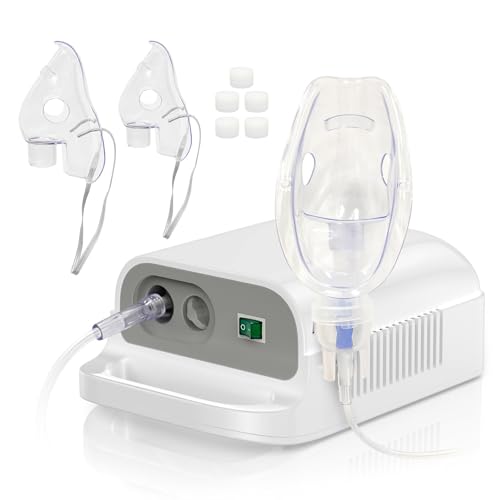
A home nebulizer machine for a child does one narrow job: it turns a liquid placed in a small cup into a fine mist that a child breathes in through a mask or mouthpiece over several minutes. That simplicity is deceptive, because the experience for a family depends less on the shape of the housing than on a chain of specifications that interact every single session. How fine the droplets are, how long the cup takes to empty, how loud the motor sounds in a quiet bedroom, how well a mask seals against a small face, and how many parts need washing afterwards together decide whether a routine feels manageable or becomes a daily struggle. This guide stays tightly within that scope. It covers home nebulizer machines for children only, explains the three main ways they generate mist, and works through the numbers and habits that published specifications actually reveal. It does not cover medicines, and it does not treat metered-dose inhalers as a substitute product to compare here, because those are separate decisions that belong with a clinician.
Reading a specification sheet for the first time can feel like reading a parts catalogue, so it helps to build a mental order. Start with the mist itself, because droplet size determines where in the airway the mist tends to settle. Then look at time, because session length shapes a child’s patience more than any other single factor. After that come noise, fit, power, and cleaning, which are the practical layers a parent handles with tired hands late in the evening. Keeping that order in mind turns a list of numbers into a sequence of questions you can ask about any machine in this class, and it prevents a single headline feature from hiding a weakness elsewhere in the chain.
Transparency about how this guide is funded belongs near the front rather than buried at the end. This page is reader-supported through affiliate links rather than through placement fees from manufacturers, and that arrangement shapes how product classes are discussed here. As an Amazon Associate we earn from qualifying purchases. Because of that, the emphasis stays on specifications and routines that a buyer can verify from manuals and published data, instead of on brand stories or promises that cannot be checked before a machine arrives at the door.
Three ways a home machine makes mist
Compressor machines, often called jet nebulizers, use a small electric pump to push a stream of air through a narrow opening inside the medication cup. The fast-moving air draws liquid up a tiny channel and shatters it into droplets, and a baffle inside the cup catches the larger droplets so they fall back and are broken up again. This recycling is why a compressor cup can produce a reasonably consistent mist from a fairly simple plastic part, and it is also why the cup design matters as much as the pump. A worn or mismatched cup can change the output of an otherwise healthy compressor, because the geometry of the jet and baffle is what does the fine work.
Vibrating mesh machines take a different route. A metal plate perforated with thousands of microscopic holes vibrates at high frequency, and liquid pressed against that plate is pushed through the holes as a soft, slow-moving plume. There is no jet of air, so the mist emerges gently rather than being carried on a strong airstream. That gentleness changes how a session feels for a small child, because there is less rushing air against the face, and it also changes the failure modes: the tiny holes can clog if cleaning is neglected, and a damaged mesh plate cannot be revived by scrubbing harder.
Ultrasonic machines use a piezoelectric element vibrating beneath a small reservoir to throw up a fountain of fine droplets from the surface of the liquid. They tend to be quiet and quick, and historically they have appeared in compact home units. Their output characteristics differ, however, because the energy that creates the mist also warms the liquid slightly during a session, and the droplet distribution from an ultrasonic reservoir does not behave identically to a jet cup. For a family, the practical point is not that one technology wins in the abstract, but that each one shifts the balance among noise, speed, cleaning burden, and sensitivity to neglect.
- Compressor systems separate the durable pump from the replaceable cup, so the wear part is cheap plastic rather than the whole machine.
- Mesh systems combine the mist-making element into a small head that needs gentle handling and prompt rinsing after each session.
- Ultrasonic systems keep the mechanism simple but tie performance closely to water level and reservoir condition.
It is tempting to rank the three technologies by a single figure such as output rate, yet output measured into open air is not the same as mist a child actually breathes. A compressor’s strong airflow can waste mist during exhalation unless the cup design manages the flow, while a mesh plume’s slow speed can lose less to the room but demands that the child breathe calmly near the outlet. Published specifications rarely capture that interaction, so the honest approach is to treat technology as a set of trade-offs to match against a child’s age, tolerance for noise and airflow, and a household’s willingness to follow a particular cleaning routine every day without exception.
Particle size, MMAD, and where mist settles
The figure most often quoted for droplet size is MMAD, the mass median aerodynamic diameter, expressed in micrometres. In plain terms, half of the mist’s mass travels in droplets larger than that value and half in droplets smaller. Many home machines publish an MMAD somewhere in the broad region of two to five micrometres, and that range matters because droplet behaviour in moving air is strongly size-dependent. Larger droplets carry more momentum and tend to impact in the mouth, throat, and upper airway, while smaller droplets follow the airstream deeper before settling. Extremely fine droplets can even ride the breath back out again without depositing at all.
What MMAD does not tell you is the spread around the median. Two machines can share a similar median while one produces a tight distribution and the other produces a wide mix of coarse and ultra-fine droplets, which is why some specification sheets also mention a geometric standard deviation or a fine-particle fraction. When those extra figures are absent, a careful reader treats the single MMAD number as a rough guide rather than a precise promise. Manuals sometimes state the test conditions used, including the liquid and flow settings, and those conditions are part of the number’s meaning; a value measured under one setup does not transfer perfectly to a different cup fill or a different breathing pattern.
For children, breathing pattern is the variable no laboratory figure can fix. A toddler breathes faster and more shallowly than an older child, takes more breaths through the nose when a mask is loose, and may cry, turn away, or breathe through a partly open mouth. Each of those behaviours changes how much mist reaches the lower airway far more dramatically than a small difference in published MMAD between two machines. That is why fit and calm routine, covered later in this guide, deserve at least as much attention as the droplet figure that tends to dominate marketing copy.
Particle size also interacts with session time. A machine that produces a finer mist but at a low output rate may keep a child sitting for much longer, and a restless final five minutes can waste more mist than a slightly coarser distribution delivered steadily while the child is settled. Thinking in chains rather than in isolated numbers is the recurring theme of this product class: droplet size, output rate, cup volume, and a child’s behaviour form one system, and optimising a single link in isolation often makes the whole session worse rather than better.
Session time and what cup volume really means
Manufacturers commonly quote a nebulization rate in millilitres per minute, and families can do simple arithmetic with it. A cup filled with a few millilitres, delivered at a modest fraction of a millilitre per minute, points to a session in the region of five to fifteen minutes for many home setups, with real times stretching longer when output slows near the end. The end of a session is rarely abrupt. Most cups sputter as the liquid level falls below the point where the mechanism can draw it up reliably, and that sputtering tail is a normal signal rather than a fault, provided it arrives at a consistent point session after session.
Cup capacity figures, often somewhere between about five and fifteen millilitres depending on the design, describe the maximum the cup can hold, not the amount a session should use. More relevant is the residual volume, sometimes called dead volume: the amount left behind in the cup when mist production effectively stops. Residual amounts in home cups are commonly a fraction of a millilitre to around a millilitre or more, and that leftover represents a meaningful share when the starting fill itself is small. A cup with a lower residual wastes less and finishes more predictably, which is one reason replacement cups from the same system should match the original design rather than merely fit the tubing.
Fill level changes behaviour in mesh and ultrasonic designs too. A mesh head works best within its intended fill range, and overfilling can slow output or cause leaking at seals, while underfilling can end a session so quickly that the pattern of delivery changes. Ultrasonic reservoirs have their own working levels marked for a reason. Treating the printed minimum and maximum lines on a cup as real operating limits, rather than as decoration, is one of the simplest habits that keeps session times stable from week to week.
- Time a session occasionally with a clock; a gradual lengthening is useful information about the machine’s condition.
- Note the amount typically left in the cup afterwards so a sudden change stands out.
- Keep the fill within the marked range instead of topping up mid-session, which resets the output pattern.
Temperature and posture add smaller effects. A cup held at a steep angle in a child’s hands may stop drawing liquid earlier than the same cup sitting level in a holder, and some cups are explicitly designed to work only upright while others tolerate tilting. Mesh designs often tolerate more movement, which is one reason they are marketed for younger children, but tolerance is not immunity. Checking the manual’s stated working angle before relying on a machine for a wriggling toddler prevents a class of frustration that has nothing to do with the machine being defective.
Noise, vibration, and a small child’s reaction
Compressor machines make the most sound in this class, because a pump moving air under pressure generates both a motor hum and the hiss of the jet itself. Published noise figures for home compressors commonly sit in a broad band around fifty to sixty-five decibels measured at a stated distance, roughly comparable to conversation or a household appliance running in the same room. Numbers are only comparable when the measurement distance matches, and many listings omit that distance, so treat a bare decibel figure with caution. What matters at home is less the laboratory value than where the machine sits: a compressor on a hard table amplifies its own vibration, while the same unit on a folded towel or a mat sounds noticeably softer.
Mesh machines are far quieter, often described in the region below fifty decibels and in practice close to a soft whisper of moving air, because there is no pump and no jet. Ultrasonic units also run quietly, with a faint hum rather than a hiss. For a child who is startled by sudden mechanical noise, or for sessions that happen when siblings are asleep, that difference can decide whether the routine stays calm. Quietness has a second effect too: a parent can hear the child’s breathing and the change in sound when a cup begins to sputter, which makes it easier to judge when a session is genuinely finished.
Reaction is not only about volume. Some children dislike the pulsing vibration of a compressor felt through a mask or through the surface the machine rests on, while others are unbothered by sound but resist the feeling of moving air on the face that a jet cup produces. A mesh plume feels gentler, yet its near-silence can make a toddler more interested in grabbing the small device itself. There is no specification for curiosity, so families should expect a short period of experiment: sitting the child in a familiar chair, letting them hold an unpowered mask during play, and keeping the first sessions as short and predictable as the routine allows.
Evening routines amplify everything. A tired child in a dim room reacts more strongly to noise and to a cold mask than the same child in the morning, so the placement of sessions within the day interacts with the machine’s sound profile. A louder compressor might be perfectly acceptable at breakfast and a poor choice at bedtime, which means households with more than one daily session sometimes value quietness more highly than households with an occasional session. Matching the machine to the hardest session of the day, rather than the easiest, is a practical rule that specification sheets cannot state but experience supports.
Masks by age, seal, and the mouthpiece transition
A mask that leaks turns a well-specified machine into a room humidifier. Children’s masks are sized in broad bands, typically described for infants, toddlers, and older children, and the correct size is the one whose cushion follows the contours of the face from the bridge of the nose to below the mouth without pressing on the eyes. Too large a mask leaks at the cheeks and directs mist toward the eyes; too small a mask leaves the mouth partly outside the seal and encourages the child to pull away. Soft, flexible edges conform better than rigid shells, and a strap that holds position without being tight is preferable to a parent pressing the mask in place by hand for ten minutes.
Fit changes as children grow, sometimes faster than families expect. A mask that sealed well at the start of a season of use may leak after a growth spurt, and straps lose elasticity with washing and time. Checking the seal is simple: visible mist escaping in clouds from the sides, or a child’s hair moving from escaping air, signals a poor fit. Some mist escaping on exhalation is normal in valved designs, so the judgement is about degree and about whether the escape happens on the inward breath, when mist should be drawn in rather than pushed out sideways.
Older children may graduate to a mouthpiece, which removes the fit problem of the face entirely and reduces mist lost to the nose and room. The transition depends on the child reliably keeping lips sealed around the mouthpiece and breathing through the mouth for the whole session, which many children manage somewhere in the early school years and some manage earlier. Until that reliability exists, a well-fitted mask usually delivers more than a mouthpiece that keeps slipping. Keeping both attachments that came with a system, cleaned and stored together, lets a family switch back on a difficult day without improvising.
For households also thinking about the air in the child’s bedroom between sessions, a separate look at room cleaning helps keep the two decisions distinct, since a machine that treats room air does different work from one that delivers mist directly. Families comparing those room options can start with best air purifiers asthma allergies before returning to the mask and cup questions that decide a nebulizer purchase.
- Choose mask size by seal on the face, not by the age printed on the packaging alone.
- Replace straps or masks that no longer hold position without hand pressure.
- Watch for mist escaping during the inward breath as the clearest sign of a leak.
- Keep the mouthpiece even if a mask is preferred now; readiness can change within months.
Power at home and away from home
Most compressor systems are mains-powered and expect a stable supply at a wall outlet, which suits a fixed station at home: same chair, same surface, same storage spot for parts. Their motors are built for repeated daily duty, and the machine’s weight matters little when it never travels. Battery questions enter when a family needs sessions in a car, at a grandparent’s house without a convenient outlet, or during travel where the routine must survive a hotel room. Portable mesh machines answer that need most often, running from internal rechargeable cells or replaceable batteries, and their small size lets them ride in a handbag rather than a separate case.
Battery specifications deserve the same scepticism as noise figures. A stated number of sessions per charge depends on session length, and a cell’s capacity fades gradually over months of charging cycles, so a machine that once handled a weekend away may later need a top-up each night. USB charging adds flexibility because the same cables and power banks used for phones can serve the machine, but charging speed and whether the device can operate while plugged in vary by design. Checking those two details in a manual tells a travelling family more than a headline battery figure does.
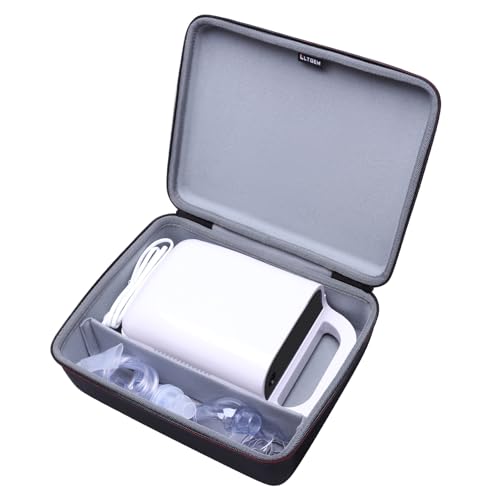
Mains adapters introduce a quieter risk: using the wrong adapter. Small medical-style devices expect a specific voltage and connector, and a similar-looking adapter from another gadget can underpower the motor or damage the electronics. Keeping the original adapter labelled and stored with the machine, and packing it in hand luggage rather than checked baggage, prevents the most common travel failure, which is not a broken machine but a machine separated from its one correct power supply. For compressor systems that travel occasionally, a purpose-made carry case that holds pump, cup, mask, and tubing together turns packing into a single check instead of a scavenger hunt.
Power choice also loops back to technology choice. A family whose life is mostly at home may gain little from paying for battery freedom and may be better served by a durable compressor with inexpensive replacement cups. A family that moves between two households may find that a quiet, battery mesh unit removes enough friction to be worth its stricter cleaning demands. Neither answer is universal, and the honest deciding question is where the hardest regular session happens and what power is reliably available in that place.
Cleaning the cup, filters, and replacement cycles
Every technology in this class asks for cleaning after each session, but the work differs. A compressor cup and mask are typically rinsed, washed in warm soapy water according to the manual, rinsed again, and left to air-dry completely on a clean surface, because moisture left in a cup or tube invites residue and odour. Some parts tolerate periodic disinfection by methods the manufacturer specifies, such as boiling for parts rated for it or soaking in a stated solution, while other parts, especially anything containing the mesh element, must never be boiled or scrubbed. The manual’s method list is part of the product; ignoring it shortens the life of the parts it was written to protect.
Tubing deserves a specific mention because it is easy to mishandle. In a compressor system the tubing carries air, not liquid, and it generally should not be washed inside, since trapped water is hard to remove and can reach the pump. If condensation appears, running the compressor briefly with the tubing attached but the cup detached, as many manuals direct, clears it. The air filter is the other small part with an outsized effect: a clogged or discoloured filter starves the pump, lengthens sessions, and strains the motor, and filters are inexpensive consumables meant to be replaced on the maker’s schedule or sooner when they look dirty or have become damp.
Replacement cycles turn cleaning from a chore into a calendar. Cups and masks are not lifetime parts; manufacturers commonly suggest replacing nebulizer cups after a period measured in months of regular use, and mesh heads have their own service life after which output falls away even if the plate looks intact. Writing the date a cup entered service on a piece of tape attached to its storage box removes guesswork. A family that replaces wear parts on schedule experiences a machine that behaves the same in month six as in week one, while a family that stretches parts indefinitely experiences a slow drift they may wrongly blame on the machine itself.
A workable daily rhythm
The rhythm that survives is the one that fits beside the sink rather than the one that looks thorough on paper. Rinse promptly so residue does not dry onto surfaces, wash as directed, shake off excess water, and leave parts separated to dry rather than reassembled wet in a closed box. Store dried parts in a clean, dry container, keep the machine’s air intake unobstructed, and give the whole kit a brief look each week for cracks, clouding, stiff tubing, or a mask cushion that no longer springs back. Small checks done weekly prevent the surprise of a part failing at the moment a session is due.
Bedroom air questions often sit alongside this cleaning routine, because both are about what a child breathes across a whole night rather than during a single session. Readers who want the combined-appliance angle on room air can follow a different thread in best air purifiers with humidifier and then come back to the stricter, part-by-part cleaning that a nebulizer kit demands.
Sharing within a family and the limits of cleaning
Households with more than one child sometimes ask whether a single machine can serve everyone, and the answer separates the machine from its attachments. The compressor unit or the main body, which never contacts the mist path directly in most designs, is a different case from cups, masks, and mouthpieces, which sit in the airstream and against the face. Manuals for this class commonly direct that cups and masks be kept for one person’s use, and that direction reflects the limits of home cleaning: washing and air-drying reduce residue and microbial load, but they do not turn a shared mask into a sterile one, and small scratches and joints in used plastic shelter material that a rinse cannot reach.
The practical arrangement in a multi-child home is therefore one base unit where the design allows it, with a clearly separated, labelled set of cup, mask, and tubing-side parts for each child, stored in separate containers so there is no ambiguity at a tired moment. Colour-coded storage boxes or a name written on the container, not on the mask itself, keep the separation effortless. When a child has been ill with a respiratory infection, extra care with that child’s set, and replacement of a cup that has been in heavy use through an illness, are proportionate steps that manuals and common sense both support.
Those limits also apply to borrowing and lending between households. A machine offered by a relative may be mechanically sound, yet its cup and mask carry an unknown history, and replacement consumables for an unfamiliar model may no longer be easy to find. Accepting the base unit while fitting a fresh, correct set of attachments for the child who will use it respects both generosity and hygiene. If correct parts cannot be identified for that model, the machine’s value is questionable regardless of its condition, because the mist is made in the cup, not in the housing.
Signs a machine or its parts are wearing out
Decline in this product class is usually gradual, which makes it easy to miss and easy to confirm once you know the signals. The clearest is time: sessions that once finished in a familiar span begin to stretch, first by a minute or two and then more noticeably, while the amount placed in the cup stays the same. The second signal is the mist itself, visible as a thinner plume from the mask vents or a weaker stream when the cup is held up to the light. The third is sound: a compressor that rattles, strains, or changes pitch under load is describing its own condition, and a filter check and cup replacement are the first responses before assuming the pump has failed.
- Sessions lengthening steadily at the same fill level.
- Mist visibly weaker, or sputtering starting much earlier than it once did.
- More liquid than usual left behind in the cup after sputtering begins.
- New vibration, rattling, or a motor that sounds laboured.
- A mesh head that produces mist in bursts despite careful cleaning.
Working through those signals in order saves money and worry. Replace or clean the filter, fit a fresh cup or mesh head as the design allows, check tubing for cracks and loose connections that leak air before it reaches the cup, and confirm the mask seal has not deteriorated. If session time and mist strength return to normal, the base machine was never the problem. If they do not, the base unit itself is approaching the end of its service life, and that conclusion has been reached by elimination rather than by guesswork. Keeping a spare cup in the house makes this kind of diagnosis possible on the day it is needed instead of a week later.
Cloudy plastic, lingering odour after washing, and fine cracks around the points where tubing pushes on are quieter warnings that belong to the parts rather than the machine. A cup that smells even after proper cleaning and drying is telling you its surface has degraded past the point where home methods refresh it. Replacing it is not wastefulness; it is the maintenance model this entire product class is built around, in which durable motors are paired with consumable mist-making parts on a planned cycle.
Setting up a station that a child accepts
Where sessions happen shapes how they feel. A fixed spot with the machine at a stable height, tubing routed so it does not drag the cup sideways, and a seat where the child can sit back with feet supported removes a dozen small annoyances. Stories, songs, or a short programme reserved for session time give the minutes a shape, and because session length varies with the factors covered earlier, choosing something that can pause without protest is wiser than something with a cliffhanger. The adult’s role is calmer when the kit lives assembled and ready rather than scattered across drawers.
For pet-owning households, the station question overlaps with dander and hair in the room, and keeping the kit stored closed and the intake filter checked more often is a sensible adjustment. The broader room-air side of that problem is explored from another direction in best air purifiers for allergies and pets dander, which is useful background even though it solves a different part of the breathing picture.
Children accept routines they can predict, so the sequence matters: same order of steps, same signal that the session is starting, same praise or small ritual at the end. When a session must happen away from the usual station, recreating even two or three of those cues in the new place carries the routine with the machine. That portability of habit is worth more than portability of hardware for many families, and it costs nothing beyond a little planning on the first trip.
Reading a listing without being misled
Listings for this class compress a system into a handful of numbers, and a careful reader expands them again. A fast nebulization rate means little without the cup it was measured with; a low noise figure means little without a distance; a small MMAD means little without a distribution or at least an acknowledgement of test conditions. Weight and dimensions, by contrast, are hard to exaggerate and genuinely useful for travel decisions, as are the stated contents of the box, which reveal whether a child-sized mask is included or is a separate purchase, and whether a second cup is provided or must be bought as a spare from the start.
Compatibility is the listing detail most often skimmed and most often regretted. Cups, filters, and mesh heads are model-specific far more often than they are universal, whatever a headline implies, and a machine whose consumables are easy to source in your country will be cheaper to keep performing well over years than a marginally faster machine whose cups must be hunted down. Checking that filters and cups for the exact model are readily available, before choosing it, is a form of research that pays out quietly for as long as the machine is in service.
Questions worth asking of any model
- What cup capacity, residual volume, and nebulization rate are published, and with which cup?
- What noise level is claimed, and at what measuring distance?
- Which mask sizes are included, and are replacements easy to obtain?
- What cleaning methods are approved for each part, and what must never be boiled or scrubbed?
- How often does the maker say the filter, cup, or mesh head should be replaced?
- Can it run from battery or USB power, and can it operate while charging?
Answers to those questions, taken together, describe a machine more honestly than any single headline figure. They also reveal the manufacturer’s attitude: a maker who publishes residual volume, filter intervals, and part-by-part cleaning instructions is a maker who expects the machine to be maintained, and whose numbers can be checked against your own experience within the first fortnight of use. Vague listings are not proof of a poor machine, but they shift the burden of discovery onto the buyer after purchase, which is the wrong moment to learn that a mesh head cannot be disinfected the way your household expected.
Matching the machine to the child in front of you
Age reorganises every priority in this guide. For an infant or young toddler, mask seal, gentleness of airflow, and tolerance for a tilted cup dominate, and a parent will be holding or closely supervising throughout. For a preschooler, noise reaction and the ability to sit through the session with a story become central, and small rituals carry real weight. For an older child, the mouthpiece option, personal responsibility for rinsing parts, and a machine that does not feel babyish can matter as much as any specification, because a routine a child resists delivers less than a routine a child owns.
Frequency reorganises priorities too. An occasional session forgives a louder compressor and a longer setup, while a twice-daily routine punishes every extra minute of cleaning and every consumable that is hard to find. Families should be honest about which pattern is theirs, including the difficult weeks when frequency rises, because a machine chosen for the easy pattern will be resented during the hard one. Durability of the base unit, availability of parts, and the simplicity of the daily wash are the qualities that survive contact with a hard week.
Not every buying decision in a child’s room is medical in character, and lightening the room’s mood has its own place in family life. On a completely different note, parents planning a party rather than a treatment routine might enjoy browsing best bubble machines kids as a reminder that the same household budget also funds joy.
What good ownership looks like over a year
Across a year, good ownership of a home nebulizer is mostly a set of small, boring habits performed consistently: rinsing before residue dries, drying parts fully before storage, replacing filters and cups on a written schedule, timing a session now and then to catch drift early, and keeping the correct adapter and a spare cup with the machine. None of those habits requires expertise, and together they keep the mist, the timing, and the child’s experience stable enough that any real change stands out promptly. That stability is the true product a family is buying; the machine is only the means of producing it.
It is worth returning, at the end, to the chain that opened this guide. Droplet size decides where mist tends to settle, output and cup design decide how long a child sits, noise and fit decide how calmly, power decides where the routine can happen, and cleaning decides whether next month’s sessions resemble this month’s. A machine that is merely adequate on each link but strong on none will usually serve a family better than a machine that is spectacular on one link and weak on another, because sessions fail at their weakest link, not at their strongest.
How room conditions quietly change a session
The room itself is an unlisted component of every session. A cold room cools the mist and can make a young child flinch when a chilled mask first touches the face, while a warm, dry room encourages the small amount of evaporation that slightly concentrates what remains in the cup over a long session. Neither effect is dramatic on its own, yet both explain why the same machine can feel different in January and in July, and why warming the mask briefly in your hands before fitting it is a small kindness that also improves the seal, because a child who does not pull away keeps the cushion where it belongs.
Humidity plays a subtler part. In a steamy bathroom after a bath, airborne moisture is already high and visible mist from the mask vents looks thicker than it really is, which can mislead a parent judging output by eye. In a very dry room the plume thins visually faster even when delivery is unchanged. Judging a machine by the look of its cloud is therefore unreliable across rooms and seasons, which is another reason the timed session and the amount left in the cup are better instruments. They measure what the machine did rather than how the room made it appear.
Air movement matters as well. A session beside an open window, a fan, or a heating vent loses mist sideways, especially the slow plume from a mesh device, which has little momentum of its own. Sitting a child with their back to the draught, or simply closing the window for ten minutes, recovers that loss without changing any setting. Compressor cups push mist out with more force and are less at the mercy of a breeze, but their vents still shed mist that a cross-draught can strip away before the next breath draws it in.
Lighting and seating sound trivial until a family tries to watch for the early signs of sputtering in a dim corner while a child slumps sideways in a soft armchair. A level, firm seat keeps the cup at its intended angle, a small lamp makes the mist and the cup markings easy to see, and a stable side table keeps tubing from sliding to the floor and tugging the mask. Arranging those three things once, and leaving them arranged, removes a fresh negotiation from every session and lets attention stay on the child rather than on the furniture.
Understanding output claims and duty cycles
Output figures are usually gathered in short, ideal runs, while family life asks for something different: the same performance on the third session of the day as on the first. Compressor motors generate heat as they work, and manuals sometimes specify a duty pattern, such as a period of operation followed by a rest, which matters in a household treating two children in sequence. Running back-to-back sessions without the stated rest can shorten a motor’s life and can also change output as the pump warms. Reading the duty note before purchase tells a multi-child household whether one base unit can realistically serve their evening sequence or whether the schedule needs spacing.
Mesh devices have their own version of the same limit, expressed less often in duty language and more in the condition of the mesh head and battery. Output falls as charge falls in some designs, so the last session before recharging may run longer than the first, a pattern a family can mistake for a failing head. Keeping a simple note of which sessions ran long, and whether a recharge restored normal timing, separates a power explanation from a parts explanation without any special equipment. That habit of separating causes before replacing parts is the cheapest diagnostic skill a household can learn.
Altitude and supply voltage are edge cases that occasionally stop being edge cases. Families who travel to mountain areas or use a machine in a country with a different mains standard may find a compressor performing below its familiar level, because pump output depends on the air and power it is given. An adapter that merely fits the socket does not convert voltage, and a machine rated for one supply should not be run on another without the conversion its maker specifies. Checking the rating plate before a trip is a thirty-second task that prevents a puzzling week of weak sessions far from home.
- Note any stated duty pattern and plan sibling sessions around it.
- Track whether long sessions coincide with low battery before blaming the mesh head.
- Read the rating plate for voltage before travel, not after arrival.
- Judge output by time and residue, not by how thick the cloud looks in a given room.
Storage, spares, and the household supply shelf
A machine’s life between sessions determines much of its reliability during them. Parts stored wet in a sealed bag deteriorate and smell; parts stored bone-dry, separated, and out of direct sunlight keep their flexibility and clarity. The compressor or main body wants a dry shelf with its air intake free of dust and pet hair, and a quick wipe of the housing keeps grit away from the points where tubing connects. Storing the whole kit at the height of a shelf a child cannot reach also ends the separate problem of a mask becoming a toy between sessions and returning to service carrying toothpaste and mystery debris.
Spares convert emergencies into inconveniences. One spare cup, one spare filter set, and, for mesh systems, a clear note of the head’s replacement interval cover the failures that actually happen: a dropped cup cracking on tile, a filter soaked by a spilled drink, a head reaching the end of its life on a Sunday evening. Buying those spares while the original parts are new also guarantees they are the correct items, chosen calmly against the model number rather than urgently against a photograph on a phone screen. The model number itself, photographed once and kept with household records, is the key to every future parts purchase.
Finally, there is the question of when to stop maintaining and replace the whole system. A base unit that still performs after its wear parts are renewed deserves to stay in service, but a machine whose maker no longer supplies cups or filters, whose tubing connections have loosened with age, or whose motor sound has changed despite fresh parts is asking to be retired. Planning that replacement before the old machine fails outright lets a family choose on specifications again rather than on urgency, and lets the child meet the new mask and routine on a calm day rather than in the middle of a difficult week.
Check prices on Amazon
Live listings for the shortlist in this guide are pulled from Amazon below, so prices and availability are always current at the moment you look.

Teaching an older child to run their own routine
Somewhere between dependence and independence there is a useful middle stage in which a child assembles the kit under supervision, and that stage teaches more than convenience. A child who has fitted the cup, connected the tubing, and checked that the mask cushion faces the right way understands the machine as a set of parts with jobs, and that understanding makes them a better reporter of change: they notice when the mist feels weaker, when the sound is different, or when a part no longer clicks into place as it should. Those observations, offered casually at breakfast, are often the earliest maintenance warnings a household receives.
The handover should be gradual and should keep cleaning standards explicit rather than assumed. A child can rinse promptly and lay parts out to dry long before they can judge whether a filter needs replacing or a cup has reached its limit, so the adult keeps the calendar decisions while the child owns the daily sequence. Writing the sequence as a short checklist kept with the kit removes the need for correction from memory, and a checklist also travels well to a grandparent’s house, where a different adult may supervise the same routine with the same expectations.
Independence also changes the buying picture for the next machine. A child who runs their own sessions may prefer a compact mesh unit they can hold and manage over a compressor station an adult operates, and their preference deserves weight because willingness is a delivery factor no specification can override. Asking the child what annoys them about the current setup, the noise, the waiting, the mask, or the washing, usually produces a precise answer, and that answer points directly at the link in the chain that the next purchase should strengthen.
A short note on cost of ownership
The purchase price of the base machine is only the opening entry in what a family will spend, and the quieter entries recur. Filters, cups, masks, straps, and mesh heads accumulate over years of service, and a system with modest parts prices and ready availability often costs less across its life than a cheaper machine whose consumables are scarce or short-lived. Estimating that ownership cost needs no spreadsheet: multiply the maker’s replacement intervals by the years you realistically expect to use the machine, note which parts your household tends to lose or damage, and compare the pattern between two candidate systems. The exercise also reveals which purchases deserve a spare bought in advance and which can safely wait until the original part shows wear.
Ownership cost includes time as well as money. A cleaning routine that takes a few unhurried minutes will be performed faithfully for years, while an elaborate routine will be shortened on busy evenings in ways that eventually show up as residue, odour, and falling output. When two systems otherwise meet a child’s needs, the one whose daily care fits the household’s real evenings is the more economical choice in every sense that matters, because a machine maintained as directed keeps its specifications, and a machine whose specifications drift must be replaced sooner.
Keeping a few dated notes beside the kit, recording filter changes, cup replacements, and any session that ran unusually long, turns memory into evidence and makes the next decision, whether that is a spare part or a new machine, a calm one based on the household’s own record.
When the cup is rinsed, the parts are drying in their row, and the machine sits ready in its familiar spot, a child’s breathing routine becomes ordinary in the best sense, and ordinary is exactly what a family needs it to be.