Our Top Picks
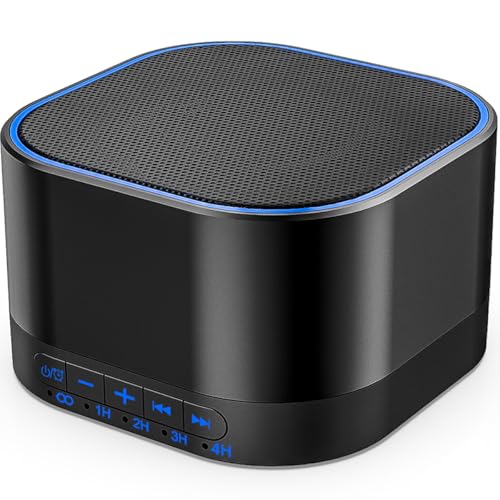 Magicteam Sound White Noise Machine with 20 Non1 Count (Pack of 1)2.64 x 2.64 x 2.83 inches0.36 poundsCheck on Amazon
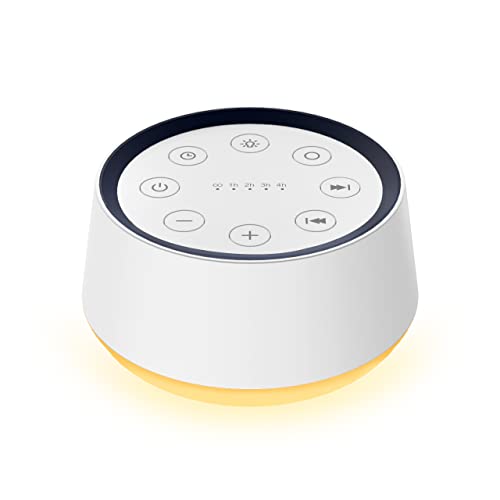 Brown Noise Sound Machine with 30 Soothing SoundsWhite4.25 x 4.25 x 2.16 inches0.4 poundsCheck on Amazon
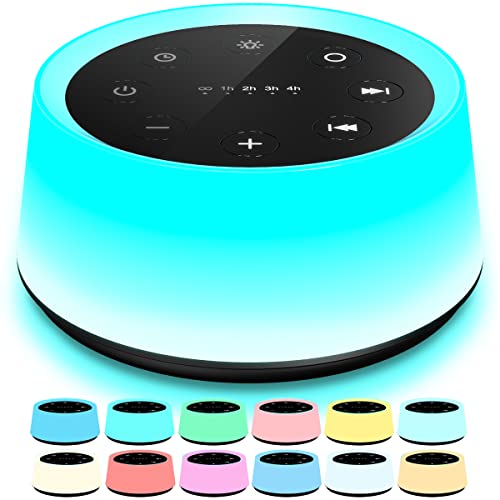 ColorsNoise Sound Machine and White Noise Machine withT-Black4.25 x 4.25 x 2.17 inches0.41 poundsCheck on Amazon
 Housbay White Noise Machine with 31 Soothing SoundsOak4.61 x 3.31 x 4.57 inches0.95 poundsCheck on Amazon


What's inside
- How to read this guide
- What sound fidelity means for a recorded voice
- Speaker driver size and why millimeters matter
- The speaker enclosure, the forgotten half of the sound
- Amplifier power, headroom, and clean loudness
- Volume range, maximum output in decibels, and distortion at the top
- Digital recording compression and what it does to a voice
- Recording memory in minutes and the quality trade-off
- Playback speed control and catching what you missed
- Tone controls, equalization, and shaping speech for your ears
- Speakerphone-style playback versus listening through a handset path
- Two-way recording and the fidelity of your own voice
- Placement, room acoustics, and the free improvements
- Battery backup and what an outage does to your messages
- Controls, displays, and the sound of usability
- How to compare two machines on paper without hearing them
- Check prices on Amazon
- Closing perspective on a small machine with one job
As an Amazon Associate I earn from qualifying purchases. This post may contain affiliate links at no extra cost to you.
How to read this guide
This guide stays narrow on purpose. It covers standalone digital answering machines, the small countertop units that record a caller’s message onto internal memory and play it back through a built-in speaker, and it judges them on one thing only: how faithfully that recorded voice comes back to you. Features that belong to telephones, handsets, call blocking, or senior-friendly button layouts sit outside the scope here, because none of them change the physics of a recorded voice leaving a small loudspeaker in a plastic cabinet. What changes playback quality is a short chain of parts and decisions: the microphone path that captured the call, the compression applied while storing it, the amplifier that drives the speaker, the driver itself, the cavity behind it, and the room where the machine happens to sit.
A note on how this site is supported belongs near the top, before any specifications: As an Amazon Associate we earn from qualifying purchases. That single sentence explains the commercial relationship behind guides like this one, and nothing in the pages that follow depends on it. Our research for this article draws on published specifications, manufacturer documentation, and owner manuals for this product class, read closely for the numbers that actually describe sound: driver dimensions, amplifier output, recording time, volume steps, and any stated frequency or distortion figures. Where a manual stays silent, this guide says so rather than guessing, because silence in documentation is itself useful information when two machines look identical on a shelf.
Reading order matters less than reading method. Each section below isolates one link in the playback chain, explains what it does to a human voice, gives the typical range you will encounter across this class of product, and finishes with a practical way to weigh that factor against your own hearing, your room, and your habits. A reader who mainly wants missed-call messages from family members will weight clarity at moderate volume heavily. A reader who listens from another room, or who lives with reduced hearing sensitivity, will weight maximum clean output and tone shaping more. Neither reader needs raw loudness alone, because loudness without control turns consonants into mush, and consonants carry most of the meaning in spoken English.
One habit will serve you throughout: separate capture quality from playback quality in your mind. A message can sound thin because the caller’s own connection was poor, because the recording stage compressed it hard, or because the speaker reproducing it is tiny and underpowered. Only the second and third causes belong to the machine you buy. The sections on compression and memory explain the recording side, while the sections on drivers, amplifiers, tone controls, and placement explain the reproduction side, and keeping those two families apart prevents a common shopping mistake, which is blaming a good speaker for a bad recording or crediting a loud speaker for a clean one.
What sound fidelity means for a recorded voice
Fidelity, for a spoken message, is a narrower and more forgiving target than fidelity for music. A voice on a telephone line already arrives band-limited, roughly confined to the frequencies between about 300 hertz and 3,400 hertz in traditional telephony, which means the deep bass of a chest voice and the airy top of sibilance were trimmed before your machine ever heard them. A playback system for messages therefore does not need concert-hall extension. It needs honest reproduction inside that speech band, enough output to lift the band above room noise, and low enough distortion that vowels stay distinct and consonants keep their edges.
Intelligibility researchers have long pointed to the middle frequencies, roughly 1,000 to 4,000 hertz, as the region where the cues separating one consonant from another live. The difference between “fifty” and “fifteen,” between “can” and “can’t,” between a callback number ending in three or eight, rides on brief bursts and transitions in that region. A small speaker that is naturally peaky in the presence region can actually help a listener catch words at low volume, while the same peak becomes harsh and fatiguing when the amplifier is pushed. Fidelity here is therefore a balance across volume levels, not a single measurement taken at one comfortable setting.
Noise matters as much as tone. Every digital answering machine stores a recording that contains the caller’s room noise, line hiss, and any hum picked up along the way, and playback adds a second layer: the hiss of an inexpensive amplifier and the buzz of a lightly built cabinet. At night in a quiet kitchen, that added layer may be inaudible. In a laundry room with a running dryer, the useful question becomes how much clean level the machine can produce before its own distortion becomes more masking than the room itself. This is why the guide treats volume range and distortion together rather than as separate bragging points.
Finally, fidelity includes consistency. A machine that renders the first ten seconds of a message clearly but sags, clips, or rattles during a louder passage fails the listener exactly when emphasis signals importance. Callers raise their voices for names, addresses, and urgent phrases. Playback that stays composed when the recording gets loud preserves precisely the words the caller most wanted understood, and that composure traces back to amplifier headroom and cabinet construction far more than to any feature listed in large type on a box.
Speaker driver size and why millimeters matter
Most standalone answering machines use a single small dynamic driver, commonly somewhere between about 40 and 70 millimeters in diameter, with paper, treated paper, or polypropylene cones. That range sounds modest, and it is, yet the difference between the small and large ends of it is not trivial. A larger cone moves more air per excursion, which means it reaches a given loudness with less frantic movement, and less frantic movement generally means cleaner reproduction of the lower speech frequencies where vowel body and warmth reside. A 40-millimeter driver asked to reproduce a deep male voice at room-filling volume works at the edge of its ability, while a driver nearer 65 or 70 millimeters handles the same passage with margin to spare.
Cone material shapes the character of the sound in ways listeners describe with everyday words. Paper cones, long used in small radios, tend toward a warm, forgiving midrange that flatters the compressed quality of telephone audio. Polypropylene resists humidity, a genuine consideration for a machine living in a kitchen, and often sounds a touch smoother at the top of the speech band, though sometimes slightly recessed where consonant detail sits. Neither material is automatically superior. What matters more is how the manufacturer voices the complete system, because a well-damped paper driver in a sensible enclosure will outperform a larger, poorly controlled driver every time a message plays.
Magnet size and voice-coil design hide behind the cone and rarely appear in consumer documentation, yet they govern control. A stronger motor keeps the cone following the electrical signal rather than continuing on its own momentum, which listeners hear as tighter, less smeared speech, especially on plosive sounds like p, t, and k at the start of words. Manuals almost never publish motor details for this product class, so the practical proxy is distortion behavior at higher volume settings, covered later in this guide. When documentation does mention a driver by diameter, treat that number as a useful first filter rather than a verdict, and keep reading for the amplifier and enclosure, which decide how much of the driver’s potential you actually hear.
Dual-driver layouts are rare in this category, and rarity itself deserves a sentence of explanation. A second driver adds cost, cabinet volume, and crossover complexity that a narrow speech band does not reward. Nearly every design choice in a standalone answering machine pours its limited budget into one driver done adequately, and for voice reproduction that allocation is defensible. Shoppers comparing spec sheets should therefore resist paying a premium for driver count and instead look for driver size, enclosure thoughtfulness, and honest volume figures.
The speaker enclosure, the forgotten half of the sound
Behind every small driver sits a cavity, and that cavity is an acoustic instrument whether the designer treated it as one or not. A sealed or lightly ported volume of air acts as a spring that controls cone movement at low frequencies. Too little internal volume and the driver sounds thin and strained, with male voices losing the chest resonance that makes them recognizable across a room. Too much uncontrolled volume, with thin cabinet walls and no internal bracing, invites rattles and buzzes that ride along under the voice and erode clarity even when the driver itself is blameless.
Cabinet material and assembly show up in playback as a kind of honesty. Dense, well-joined plastic with a firmly seated grille tends to disappear, leaving the voice alone. Lightweight shells with snap-fit panels can resonate at particular frequencies, adding a boxy coloration that listeners describe as sounding like someone speaking through cupped hands. That coloration concentrates in the lower midrange, exactly where vowel identity lives, so a boxy cabinet does not merely sound cheap; it actively blurs the differences between words like “dock,” “duck,” and “deck” when a message is already degraded by line quality and compression.
Grille design deserves more attention than it usually receives. A fine perforated grille with generous open area passes the speech band with little loss, while a decorative grille with narrow slots or a fabric layer can shave off high-frequency detail. The loss is small, often only a decibel or two near the top of the band, but consonant cues are fragile, and a listener straining to catch a name spelled letter by letter needs every one of those cues. If a manual or product description mentions an acoustic grille or a direct radiation path, that language signals attention to a detail many buyers never think to ask about.
Porting, where present, trades one set of compromises for another. A small bass reflex opening can extend the apparent warmth of a voice and let the machine sound fuller at low volume, which flatters nighttime listening. The same opening can produce chuffing or emphasis around its tuning frequency when a loud caller pushes the system, and it gives dust and kitchen grease a path inside. Sealed designs stay tidier and more predictable across volume levels. Neither approach is a defect; the point for a buyer is that enclosure choices explain why two machines with similar drivers can sound strikingly different on the same message, and why published driver size alone never tells the whole story.
Weight offers a rough, imperfect clue. A machine with a more substantial enclosure and a larger driver motor usually weighs noticeably more than a featherweight unit of similar footprint. Weight proves nothing by itself, since batteries and other hardware contribute, yet across this product class a very light cabinet paired with ambitious loudness claims should prompt skepticism. Sound at useful volume requires moving air with control, and control has historically required a little mass in the right places.
Amplifier power, headroom, and clean loudness
The amplifier in a standalone answering machine is a small affair, typically rated somewhere in the neighborhood of half a watt to about two watts into its built-in speaker, depending on design and power supply. Those numbers look tiny beside home audio figures, and for a single listener in a quiet room they are entirely adequate. What separates a satisfying machine from a strident one is rarely the headline wattage. It is headroom: the distance between the average level of speech and the ceiling where the amplifier begins to clip, flattening the peaks of loud syllables into a harsh, buzzy edge.
Speech is a peaky signal. Quiet connecting words sit far below the emphatic syllables a caller leans on, and a recording preserves much of that contrast. An amplifier with modest average power but sensible gain staging reproduces the contrast faithfully, so emphasis sounds like emphasis. An amplifier driven into clipping on every loud word compresses that contrast in the ugliest way, adding distortion products that spray across the speech band and mask the very detail the listener turned the volume up to hear. This is why a machine rated slightly lower on paper can sound clearer at full volume than a louder-rated rival with poorer headroom management.
Power supply design quietly shapes this behavior. Units powered by a wall adapter with decent current reserve tend to hold their composure during loud passages, because the amplifier’s supply voltage does not sag when the driver demands current. Machines running near the limit of a weak adapter, or running on aging backup batteries during an outage, may sound thinner and harsher on the same message. Manufacturer documentation occasionally notes adapter output in volts and milliamps, and a generous adapter rating paired with a modest amplifier claim is a reassuring combination, suggesting the design leaves margin rather than chasing a headline number.
Listeners should also understand what amplifier power cannot fix. Doubling power adds only about three decibels of potential output, a noticeable but hardly dramatic step. Moving a machine from a carpeted bedroom to a tiled kitchen changes perceived loudness and clarity far more than a watt here or there. The practical reading of an amplifier specification is therefore about cleanliness rather than brute force: look for any published distortion figure at rated output, favor designs whose documentation discusses output without superlatives, and treat maximum volume claims unaccompanied by distortion information as marketing rather than engineering.
Volume range, maximum output in decibels, and distortion at the top
Maximum playback level for machines in this class, measured at a typical listening distance of about one meter, commonly lands somewhere in the broad region of 70 to 85 decibels, with many designs clustering near the middle of that span. Context helps those numbers mean something. Ordinary conversation at one meter hovers around 60 decibels, a busy kitchen with an extractor fan running can sit near 65 to 70, and a level of 80 decibels at the listening position is genuinely loud for speech in a domestic room. A machine that reaches the upper part of the range cleanly gives a listener real margin against household noise, hearing loss, and distance.
The word “cleanly” carries the weight in that sentence. Distortion figures for this category, when published at all, are often given as total harmonic distortion at a stated output, and values under roughly one percent at moderate level indicate a tidy design, while figures climbing toward five or ten percent near maximum describe a machine that will sound strained exactly when a hard-of-hearing listener needs it most. Many manuals omit distortion entirely. In that case the honest inference is limited: the maker chose not to compete on that ground, and the buyer should weight other documented factors, such as driver size and tone control, more heavily instead of assuming the best.
For listeners with reduced hearing, maximum decibels interact with frequency in a way a single number hides. Age-related hearing change typically erodes sensitivity first at higher frequencies, the same region carrying consonant cues, so a machine that is merely louder overall may still leave speech muddy if its extra output concentrates in the midrange. This is where tone adjustment, discussed in its own section below, earns its keep: output shaped toward the frequencies a particular listener still hears well delivers more understanding per decibel than indiscriminate loudness. Households shopping for a listener with significant hearing difficulty often coordinate several loud, attention-getting devices at once, and readers planning that wider setup may also want our guide to best alarm clocks for deaf for the bedroom side of the same problem.
Minimum volume deserves a mention alongside maximum. A machine whose lowest step is still fairly loud can disturb a sleeping household when messages are reviewed late, and one whose lowest step drops to a near whisper suits a bedside table. Wide usable range, from genuinely quiet to genuinely forceful, is a mark of thoughtful gain design, and it is one of the few qualities a shopper can sometimes infer from a manual’s stated number of volume steps combined with any published output range.
Repeated listening at high level also raises a small practical point about the machine itself. Drivers and amplifiers in this class tolerate their rated output indefinitely under normal conditions, yet cabinets with marginal assembly may develop buzzes over months of loud use as panels loosen. A solidly built enclosure, again, is fidelity insurance. The listener who expects to run a machine near its ceiling daily should prioritize build solidity over almost every convenience feature, because a rattle that develops in month three will mask speech more reliably than any specification on the box predicted.
Digital recording compression and what it does to a voice
Every digital answering machine makes a bargain the moment a caller starts speaking. Storage is finite, so the incoming audio is encoded at a bit rate far below that of uncompressed audio, using speech-oriented coding that discards information the designers judged least necessary for understanding words. That judgment is mostly sound: intelligibility survives aggressive compression remarkably well. What thins out first is richness. Voices lose some individual character, background sounds in the caller’s room turn watery or metallic, and sibilant sounds can acquire a lispy, splashing quality that listeners notice even when every word remains understandable.
Compression interacts with the telephone network’s own limitations in a compounding way. The line already restricted the signal to the speech band, and the recorder then squeezes that band-limited signal further. Two callers leaving the same words can therefore produce noticeably different playback: a caller on a quiet landline with a good handset microphone gives the encoder clean material to work with, while a caller on a noisy mobile connection in a car hands the encoder a signal already full of wind noise and network artifacts, which the encoder dutifully preserves and sometimes exaggerates. When a particular message sounds poor, the machine’s share of blame may be small, and a fair evaluation of any unit rests on many messages from many callers rather than one disappointing recording.
Bit rate and recording time trade against each other inside a fixed memory, a relationship the memory section below develops fully. For fidelity, the buyer’s question is whether the manufacturer spent the memory budget on quality per minute or on total minutes. Documentation that states both total recording capacity and a quality or compression description lets a reader compute the implied bit rate, and a design offering a high-quality mode alongside an extended mode respects listeners who prioritize clarity for a modest number of messages. Designs that advertise only enormous capacity, with no quality language anywhere, have usually made the choice in the other direction.
Artifacts have signatures worth learning. A hollow, underwater quality on long vowels suggests very low bit rate coding. Chirping or warbling behind speech points to the encoder struggling with background noise. Harshness confined to loud passages, by contrast, more likely implicates playback clipping than recording compression, because encoders handle level with limiting that sounds different from amplifier distortion. Learning to attribute a flaw to its stage in the chain keeps a buyer from discarding a machine with a good speaker for a recording limitation shared by the entire product class, or from forgiving a weak speaker because one sample message happened to arrive from a pristine line.
Recording memory in minutes and the quality trade-off
Total recording capacity in standalone digital machines commonly falls somewhere between about 15 and 60 minutes, with some designs stretching beyond that and others deliberately staying small. That spread is the visible surface of the compression bargain. Inside a given memory chip, more minutes means fewer bits devoted to each second of voice, and fewer bits per second means the artifacts described earlier grow more prominent. A household that receives a handful of meaningful messages a week gains nothing from the largest capacity if the price is paid in clarity on every one of those messages.
How memory is shared also matters. On many machines the same pool holds the outgoing greeting, any memo recordings, and incoming messages, so a long personalized greeting quietly shrinks the space available for callers. Manuals that break down the allocation, or that state message capacity both in minutes and in an approximate count of typical messages, give a clearer picture than a single headline figure. Individual message length limits add another wrinkle: a caller cut off at one or two minutes leaves a different impression than one allowed to speak until silence detection ends the recording, and truncation is a fidelity issue of a blunt kind, since missing words cannot be clarified by any speaker.
Message retention behavior shapes real-world listening more than raw capacity suggests. Machines that organize recordings with audible time and day stamps help a listener navigate, and the stamp itself is usually a synthesized or recorded voice played through the same speaker, so its clarity is a small free sample of the playback chain. Skip, repeat, and slow-review functions, where provided, turn a fixed recording into something a listener can interrogate. A name or number missed at full speed often resolves on a second pass, and that second pass is worth more than a decibel of extra loudness for many households.
Storage technology in this class is mature flash memory, which holds recordings without power-hungry effort and survives the bumps of countertop life. The relevant buyer’s question is not the memory type but the manufacturer’s honesty about capacity under real conditions. Documentation that qualifies capacity as approximate, and that notes the effect of long greetings or memos, reads as more trustworthy than a round number presented without conditions. Fidelity-minded shoppers should treat memory as a budget to be spent on clarity first, and regard capacity beyond their genuine weekly need as a reserve with diminishing value.
There is also a housekeeping dimension. A nearly full memory on some designs forces older messages out or refuses new ones, depending on settings, and either behavior can ambush a household returning from a trip. The fidelity connection is indirect but real: a listener who trusts the machine keeps its memory managed, reviews promptly, and hears messages while details still matter. Capacity, retention rules, and warning indicators together form the practical memory story, and all three belong in a careful reading of any manual.
Playback speed control and catching what you missed
Variable playback speed, where offered, lets a listener slow a message down or hurry through a familiar one, and its effect on fidelity depends entirely on whether the design preserves pitch while changing tempo. Pitch-preserving slowdown stretches the timing of speech without dropping the voice into a deep, distorted drawl, keeping vowel identity and consonant cues recognizable. Simple resampling without pitch correction lowers everything, and at substantial slowdowns the result can be harder to understand than the original, particularly for listeners who rely on the higher-frequency cues that get dragged downward out of their most sensitive hearing region.
The useful range in this product class is usually modest, something like three-quarters speed to one-and-a-half speed in a few steps, and modest is appropriate. Callers who speak quickly, rattle off a number, or leave a message while distracted benefit from a gentle reduction that buys the listener processing time. Extreme slowdown magnifies compression artifacts, stretching every warble and chirp into prominence, so the feature serves best as a scalpel for a difficult ten seconds rather than a default setting for whole messages. Designs that remember the chosen speed per message, or that return automatically to normal speed for the next recording, reduce the fiddling that discourages use.
Fast playback has its own legitimate role. Screening a stack of routine messages, delivery notices, appointment reminders, and the like, goes quicker at a brisk tempo, and pitch-preserved acceleration keeps the screening intelligible enough to catch the one message that deserves a careful second pass at normal speed. Households that travel, or that share a machine among several busy adults, lean on this screening rhythm heavily. Travelers in particular often pair communication tools with waking tools that work without hearing, and anyone assembling that combination for a trip could look at best vibrating travel alarm clocks for hard of hearing alongside the playback questions covered here.
Implementation details separate thoughtful speed control from a gimmick. Stepless adjustment offers precision but can be fiddly; a few well-chosen steps cover nearly every real situation. Audible feedback confirming the selected speed helps listeners who cannot easily read a small display. Most importantly, the processing should apply cleanly without adding clicks at message boundaries or altering volume, because a speed feature that changes loudness forces the listener to ride two controls at once. Manuals describing speed control in plain operational terms, rather than as a headline bullet, tend to belong to designs where the feature genuinely works as described.
Tone controls, equalization, and shaping speech for your ears
A tone control on an answering machine is a modest circuit with outsized practical value. At its simplest it is a single knob or menu setting that tilts the balance between low and high frequencies. At its best, in this class, it offers two or three shaped presets or a small equalizer with separate adjustment for bass and treble regions. The purpose is not audiophile refinement. It is compensation: for a recording that arrived boomy, for a speaker that sounds thin, for a room that swallows high frequencies in curtains and upholstery, and above all for a listener whose hearing no longer matches the average curve the designer assumed.
Boosting the treble region, roughly the upper speech band, sharpens consonants and lifts speech out of background murmur, which is why listeners with high-frequency hearing loss often describe a treble-forward setting as the difference between guessing and knowing. The cost of excess is harshness and a magnification of hiss, both from the recording and from the amplifier, so the useful adjustment is usually a gentle shelf rather than a dramatic peak. Cutting bass, conversely, tames the boxiness that small cabinets and corner placement create, clearing the lower midrange so vowels stop crowding each other. Many listeners discover that reducing lows improves clarity more than adding highs, a counterintuitive result that makes sense once cabinet coloration is understood as masking energy.
Presets deserve a balanced word. A clearly labeled clarity or speech preset, if the manufacturer voiced it carefully, can deliver most of the benefit with none of the experimentation, and for listeners who dislike menus that convenience is decisive. The risk is vagueness: presets named with lifestyle words rather than described in frequency terms ask for trust without evidence. Documentation that explains what a preset actually does, even in one plain sentence about emphasizing voice frequencies, supports an informed choice, while documentation that merely lists preset names leaves the buyer guessing until the machine is home.
Tone shaping also compensates for placement sins that cannot be avoided. A machine that must live on a resonant wooden shelf, inside a kitchen with hard surfaces, or beside a wall that reinforces bass can be pulled back toward neutrality with patient adjustment. The workflow that works in practice is simple: play a familiar, well-recorded message, adjust in small steps, and judge by word recognition on names and numbers rather than by whether the voice sounds pleasant. Pleasant and intelligible overlap often, but when they diverge, intelligibility is the entire point of the device.
Speakerphone-style playback versus listening through a handset path
Standalone machines play messages aloud into the room, and that open-air mode is their defining listening experience, but it is worth understanding how it differs from the handset listening that telephone-based systems offer, because the contrast clarifies what a standalone unit must do well. A handset couples a small receiver directly to the ear, sealing out much of the room, delivering sound over a distance of millimeters, and needing only a whisper of power to reach comfortable level. Background noise barely competes. Intimacy and privacy come free, and even a mediocre receiver can sound clear because the acoustic problem it solves is easy.
Open-air playback solves a harder problem. The speaker must fill a space, overcome whatever the room is doing, and serve listeners at varying distances and angles, including listeners moving around while a message plays. The rewards match the difficulty: several people can hear a message together, hands stay free for writing down a number, and a listener with hearing aids often does better with a room speaker positioned well than with a handset pressed awkwardly against an ear and its microphone feedback. Households choose standalone machines largely for this shared, hands-free character, which makes the quality of that single speaker a make-or-break attribute rather than a detail.
Directivity plays a quiet role. A forward-firing speaker aimed at the usual listening position delivers the clearest consonant detail on axis, while a top-firing design spreads sound more evenly around a room at some cost to top-end clarity for any one listener. Neither orientation is wrong, yet the choice should match the room: a machine on a desk where one person sits favors forward firing, while a machine on a kitchen counter serving a moving cook may serve better with sound projected upward and outward. Product photographs and manuals usually reveal orientation, and matching it to the intended spot is a free fidelity gain that costs nothing but attention.
Some households keep both worlds in mind when arranging a room where rest and sound both matter, since the same bedroom that holds a message machine may hold devices that produce sound for sleep rather than for information; readers furnishing that kind of space might browse best adult sound machines after settling the clarity questions in this guide, keeping in mind that a machine optimized for masking noise pursues almost the opposite goal from one optimized for speech detail.
Two-way recording and the fidelity of your own voice
Many standalone units can record a conversation or a memo in both directions, capturing your voice through a built-in microphone alongside, or instead of, the caller’s side arriving by line. That built-in microphone changes the fidelity equation, because it hears the room rather than a direct electrical feed. Its placement on the cabinet, its sensitivity, and the machine’s automatic gain behavior decide whether your side of a recorded conversation sounds present and clear or distant and swamped by the refrigerator hum standing three feet away.
Microphone quality in this class is rarely documented beyond a mention that one exists, which puts the burden on design clues. A microphone opening positioned on the front face, away from the speaker grille, suggests the designer thought about separation between capture and playback. Designs that hide the microphone on the bottom or rear invite muffled memos and feedback-prone recording. Automatic gain control, nearly universal here, pumps quiet rooms upward and clamps loud voices down; on two-way recordings that pumping can make your voice surge and recede in a way listeners find tiring, even when every word survives.
Memo fidelity matters more than many buyers expect, because memos become the household’s spoken notebook: a medication instruction repeated back, a gate code, a grandchild’s dictated story. A machine that records memos through the same compression as messages, at the same quality, treats those uses with respect. Documentation that states memo recording time separately, or that describes two-way recording limits honestly, helps a buyer judge whether the feature is a genuine tool or a box-ticking extra with quality too poor to trust for anything important.
Legal and courtesy considerations ride along with two-way recording and deserve one plain sentence: recording conversations is regulated in many places, and consent rules vary, so owners should learn the rule where they live before using the feature on a call. Fidelity is the subject of this guide, but a clear recording made improperly serves nobody. Manuals for responsibly designed machines usually include a consent notice, and its presence is a small marker of a manufacturer that sweats details, the same habit of mind that tends to produce better audio paths.
Placement, room acoustics, and the free improvements
Where a machine sits can alter its sound as much as a step up in driver size, and placement costs nothing. Hard, parallel surfaces reflect speech frequencies back at the listener with tiny delays that smear consonants, a phenomenon heard as a slight echoey blur in tiled kitchens and bare hallways. Soft furnishings absorb those reflections. The same machine therefore sounds measurably clearer in a furnished living room than in a spare utility space, and a buyer dissatisfied with playback should rearrange the environment before concluding the hardware is at fault.
Surface choice under the machine matters in two directions. A solid, heavy surface gives the cabinet a stable footing that resists vibration and keeps bass coloration honest. A thin, hollow surface, such as the top of a lightweight cabinet or a resonant shelf, can act as a sounding board that adds boom and rattle, flattering loudness while taxing clarity. Placing the unit near a wall reinforces low frequencies, which can warm a thin-sounding machine or push an already warm one into muddiness; pulling it a few inches into the room often cleans up male voices noticeably. Corner placement amplifies that reinforcement further and suits only the smallest, thinnest designs.
Height and aim complete the picture. A speaker firing toward ear level, or angled toward the chair where messages are usually reviewed, delivers consonant detail that a machine firing into a countertop clutter loses. Elevating a unit on a stable stand or shelf, away from the splashes and steam of a sink zone, also protects the grille and cone from the kitchen grime that gradually dulls high frequencies. Dust on a grille is a slow, silent tone control turned the wrong way, and a soft brush across the perforations every few months restores detail owners often assume the machine lost permanently.
Electrical placement has an audio dimension too. A machine sharing a crowded strip with noisy chargers and switching supplies can pick up a faint hash or hum through its adapter, audible in quiet rooms during pauses in speech. Moving the adapter to a cleaner outlet, or separating it from the noisiest supplies, sometimes removes a background annoyance that owners misattribute to the recordings themselves. These environmental fixes, patiently applied, routinely recover more clarity than the difference between adjacent models in a manufacturer’s lineup, which is why this guide gives placement a full section rather than a footnote.
Battery backup and what an outage does to your messages
Power failures threaten an answering machine twice. The obvious threat is absence: while the power is out, most standalone units cannot answer at all, because the line interface and recorder need electricity. The subtler threat is amnesia. Designs differ sharply in whether stored messages survive an interruption, and the difference decides whether a storm that knocks out power for an afternoon also erases the message from the clinic that arrived that morning. Flash memory, now standard, retains recordings without any power at all, so survival is assured on modern designs; older or very inexpensive units relying on volatile storage depended on a backup battery to hold their memory, and a neglected battery meant a clean slate after every outage.
Backup arrangements in current machines typically use either a set of replaceable cells or a built-in rechargeable reserve, and each approach has a fidelity-adjacent consequence. Replaceable cells are easy to renew but easy to forget, and a machine whose settings, clock, and greeting live in backed-up memory can return from an outage with a wrong time stamp that confuses message order. A built-in reserve removes the chore but ages invisibly. Either way, the owner’s manual will state what the backup preserves: some preserve only settings, some preserve full operation for a limited window, and reading that sentence carefully is worth more than any assumption.
Playback during an outage, where supported, runs the amplifier from the reserve, and the sound tells the story of a shrinking budget. Volume may be capped, tone shaping may drop out, and the machine may ration features to stretch its reserve. None of that is a defect; it is triage. The practical takeaway for fidelity-minded buyers is to value retention above operation. A machine that cannot answer during a blackout but faithfully keeps everything recorded before it, and resumes cleanly when power returns, protects the information that matters. A machine that answers heroically for an hour and then loses its memory protects nothing.
Households in outage-prone areas can help any design. Keeping the adapter on a circuit that is restored early, replacing backup cells on a calendar rhythm rather than after a failure, and reviewing important messages promptly instead of letting them accumulate all reduce exposure. The clock matters too: after power returns, verify the day and time announcement, because a listener reconstructing a sequence of medical or travel messages depends on those stamps being right, and a wrong stamp is a quiet corruption of the record no speaker quality can repair.
Controls, displays, and the sound of usability
Fidelity is not only electroacoustic. A machine whose controls confuse its owner delivers worse real-world sound than a technically superior unit that gets misused, because a message played at the wrong speed, half-skipped, or reviewed at a volume set for a different room loses information just as surely as a weak amplifier loses it. Large, tactile playback keys with consistent placement, a repeat button reachable without looking, and a volume control that can be found by touch in a dark hallway all translate directly into messages actually understood on the first or second hearing.
Message counters and small displays support that understanding by telling the listener how much material awaits and where a review session stands. A clear count prevents the common failure of stopping after the first message and missing the urgent third one. Audible prompts, spoken by the machine through its own speaker, close the loop for listeners with limited vision, and their clarity doubles as a live demonstration of the playback chain: a machine whose own prompts sound crisp through its speaker is showing you its amplifier and driver working on a known-clean recording, undistorted by any caller’s bad line.
Older listeners are frequently the heaviest users of these machines, and households setting one up for a parent or grandparent will find the waking side of that same person’s routine covered in best alarm clocks for elderly people, a companion worth reading once the message clarity questions here are settled. Within this guide’s narrow scope, the relevant point is that control simplicity is an audio feature in disguise: every repeat press that lands correctly, every volume adjustment that overshoots nothing, preserves the meaning a caller took the trouble to leave.
Remote access, where a design offers it, extends the same logic beyond the room. Listening to messages by calling home from elsewhere routes playback through a telephone connection instead of the built-in speaker, substituting the network’s band limits for the speaker’s, and the fidelity questions change accordingly: prompt clarity, code entry reliability, and skip behavior matter more than driver size for that mode. Buyers who expect to rely on remote listening should weight the manual’s description of that flow accordingly, while remembering that at-home playback through the speaker remains the primary experience this guide evaluates.
How to compare two machines on paper without hearing them
Most buyers will choose between machines they cannot hear side by side, so a disciplined paper comparison is the realistic skill this guide can hand over. Start with the recording side: capacity in minutes, any statement about recording quality or compression, message length limits, and whether a high-quality mode exists. Move to the reproduction side: driver diameter, amplifier output with any distortion figure, maximum volume if stated, number of volume steps, and tone or equalization provisions. Finish with the physical story: cabinet dimensions and weight, speaker orientation, grille design, microphone position for memos, and backup arrangements. A machine whose documentation answers most of those points has been engineered by people expecting scrutiny.
Weight the answers by your listening reality. A quiet apartment and a listener with good hearing can thrive on modest output and should prioritize recording quality and control finesse. A noisy, open-plan home, or a listener with documented high-frequency loss, should prioritize clean maximum output, tone shaping, and a larger driver, accepting a smaller memory as the fair trade. A household expecting heavy message traffic from many callers should look hard at retention behavior and navigation, because a backlog badly managed wastes fidelity no specification can restore.
Beware the spec-sheet traps this category repeats. Wattage without a distortion figure or a load specified is nearly meaningless. Capacity without a quality statement hides the compression bargain. Driver size measured across the mounting flange flatters by millimeters. Battery claims without a statement of what is preserved invite false confidence. None of these traps makes a machine bad; each simply marks a place where the documentation chose persuasion over information, and a buyer who notices the pattern can still choose that machine with open eyes if its documented strengths match the household’s needs.
Finally, plan the first week as an evaluation you conduct with ordinary material. Keep the machine, save messages from several different callers, review them at different times of day and in different room noise, try the tone and speed controls on the hardest recording, and note which words still escape you. That lived evidence, gathered from your own callers in your own rooms, outweighs any generalized judgment, including the framework in this guide, which is why the framework aims to teach what to listen for rather than to crown a universal winner for every countertop.
Check prices on Amazon
Live listings for the shortlist in this guide are pulled from Amazon below, so prices and availability are always current at the moment you look.


Closing perspective on a small machine with one job
A standalone answering machine has a modest assignment: catch a voice, keep it safe, and give it back faithfully when asked. Everything in this guide, from cone diameter to corner placement, serves that single assignment, and the machines that honor it best are rarely the ones shouting the largest numbers. They are the ones whose designers balanced the recording bargain sensibly, gave a decent driver a quiet cabinet and an amplifier with headroom, shaped the sound for real ears in real rooms, and wrote documentation honest enough for a buyer to verify the balance before paying.
Listeners who internalize the chain, capture, compression, storage, amplification, driver, enclosure, room, ear, can diagnose almost any playback disappointment they will ever meet, because each flaw announces its origin to someone who knows the stages. A watery voice points to the encoder. A harsh loud passage points to the amplifier. A boxy blur points to the cabinet or its placement. A missing message points to memory management or power. That diagnostic habit outlasts any single purchase and transfers to every small speaker that will ever sit on the counter.
Choose, then, for the messages you actually receive and the rooms you actually live in, set the machine up with the care its designers hoped for, and let the quiet competence of a clear voice, replayed exactly as it was left, remind you that fidelity was never about spectacle; it was about a grandchild’s directions, a nurse’s callback number, and a friend’s voice arriving intact across the small distance between a countertop and a chair.