Our Top Picks
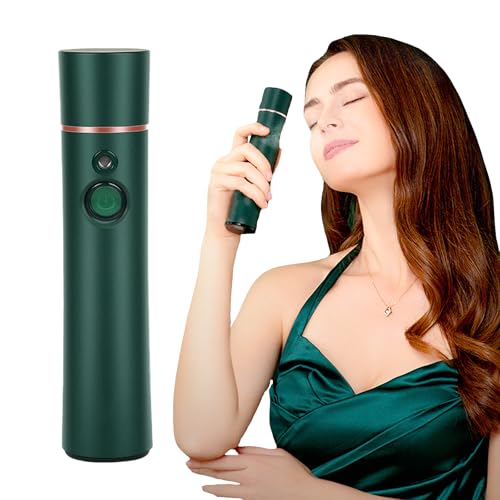
 Honoson 2 Pack Nano Facial Mister for Lash2 Count (Pack of 1)1.4 x 1.4 x 3.9 inches0.26 poundsCheck on Amazon



What's inside
- How to read this guide, and what it leaves out on purpose
- What a facial mister actually is
- Atomization: how the mist is made
- Tank capacity, spray time, and output rate
- Battery, charging, and indicator lights
- What to put in the tank: water, toner, and mineral trouble
- Switches, seals, weight, and carrying the device
- Cleaning, descaling, and knowing when a mesh is finished
- Where misting genuinely helps, and where it does not
- Choosing by habit rather than by headline specification
- Reading a specification sheet without being misled by it
- Check prices on Amazon
- Troubleshooting the three failures almost everyone meets
As an Amazon Associate I earn from qualifying purchases. This post may contain affiliate links at no extra cost to you.
How to read this guide, and what it leaves out on purpose
A handheld facial mister looks almost too simple to need a guide. It is a small tank, a tiny opening, a battery, and a switch, and yet the differences between a device that lays down a fine, even veil and one that spits, leaks, or clogs within a fortnight live entirely inside those four parts. This guide works through them in the order they affect daily use: how the mist is made, how much water the tank holds, how long the battery lasts, what you may safely put in the tank, how the device opens and seals, and how you clean it before mineral scale quietly ends its working life. If you read nothing else, read the sections on water and cleaning together, because in this product category those two topics are really one topic seen from opposite ends.
A note on how the recommendations here are framed may help. This is a research and specification comparison, written from manufacturer documentation, published technical descriptions of atomization methods, and the accumulated care guidance that makers repeat across their manuals. It compares classes of devices and ranges of specifications rather than crowning a single model, because handheld misters change frequently, listings are revised, and a specification sheet tells you more about your likely experience than a brand name printed on a glossy shell. Where a number appears, it describes a typical range for this class of product — a tank size, a battery capacity, a droplet size — so that you can place any individual device you encounter on a sensible scale.
One disclosure belongs at the front rather than buried at the back. If you are setting up a small home treatment corner and want seating built for longer sessions at a basin or mirror, our companion guide is a useful place to compare options: best chairs for facials As an Amazon Associate we earn from qualifying purchases. That relationship does not change the specification ranges described here, and it does not add any product to this guide; it simply means that a purchase made through a qualifying link may support the work of maintaining guides like this one at no separate step in your own checkout.
Scope matters as much as disclosure. This guide covers only small, handheld, cool-mist facial misters — the pocket-sized devices sometimes called nano misters or facial mist sprayers. It does not cover facial steamers, which are countertop appliances that heat water and release warm vapour, and it does not cover sonic cleansing brushes, which are a different tool entirely. Keeping that boundary firm is not pedantry. Steamers and misters are routinely shelved together online, described with overlapping language, and bought by mistake for one another, and the disappointment that follows is almost always a scope error rather than a defect. A mister will never open a steaming session, and a steamer will never slip into a handbag.
What a facial mister actually is
At its simplest, a facial mister takes a small volume of water — usually somewhere between about 20 and 40 millilitres in a handheld unit — and breaks it into an extremely fine spray that settles on the skin as a cool, damp veil rather than as droplets you can feel landing one by one. You hold it roughly 15 to 20 centimetres from your face, close your eyes, and move it slowly so the mist crosses your forehead, cheeks, and chin evenly. A single session often lasts between thirty seconds and a couple of minutes, depending on the output rate of the device and how dry the surrounding air feels.
The appeal is partly physical and partly situational. Physically, a fine mist wets the surface of the skin and the surface of makeup without the mechanical disturbance of touching, patting, or rubbing. Situationally, the device is instant: no kettle, no warm-up period, no cord trailing to a socket, no waiting for anything to cool afterwards. You slide a cover, mist, slide it shut, and put it back in a pocket. That immediacy explains why misters live in handbags, desk drawers, gym bags, and carry-on pouches rather than on bathroom shelves beside larger appliances.
How a mister differs from a facial steamer
The distinction turns on temperature and on purpose. A steamer heats water to produce warm vapour, and a steaming session is a stationary ritual: the appliance sits on a table, you position your face at a set distance, and you stay there for several minutes while the warm vapour softens the surface of the skin before cleansing or a mask. A mister produces cool mist at ambient temperature. Nothing inside it boils. The water leaves the device at roughly the temperature it had in the tank, atomized mechanically or ultrasonically rather than evaporated by heat.
That difference changes everything downstream. Steamers draw considerably more power, need a stable surface, and demand caution around heat and hot water. Misters run on a small rechargeable cell, work at any angle a steamer could not manage, and can be used over makeup — something warm vapour is poorly suited to, since heat and sustained moisture encourage makeup to move. Conversely, a mister cannot reproduce the warming, softening effect that people seek from steam before a deep cleanse. If your goal is warmth, a mister is the wrong purchase no matter how fine its spray is. If your goal is a cool, quick layer of moisture during the day, a steamer is equally the wrong purchase, however well made it is.
How a mister differs from a simple spray bottle
A trigger or pump spray bottle also puts water on your face, so the comparison is fair to ask about. The difference is droplet size and distribution. A basic spray bottle produces comparatively large, uneven droplets, delivered in pulses, with heavier wet patches where the jet lands and dry gaps between them. On bare skin that unevenness is a minor annoyance. Over makeup it can leave visible spots, streaks through powder, and damp patches that dry at different rates.
A mister atomizes the water far more finely and delivers it continuously while the device is on, so coverage builds as a uniform film. The practical result is that you can dampen a finished face without disturbing what is underneath, and you can add a very small amount of water at a time instead of committing to a full pump of spray. The trade-off is maintenance: a spray bottle has no mesh to clog, no battery to charge, and no seal to fail, while a mister has all three. You are paying, in care and attention, for fineness and control.
Atomization: how the mist is made
Two broad approaches dominate handheld misters, and the specification language around them is often vague, so it helps to know what each method involves physically. The first uses an ultrasonic mesh — a thin metal or polymer membrane pierced with microscopic holes, vibrated at ultrasonic frequency so that water is pushed through the holes and breaks into mist on the far side. The second uses a pressure nozzle, forcing water through a very fine aperture so that it emerges as a spray. Both can work. They fail differently, feel slightly different in use, and ask different things of the water you fill them with.
Ultrasonic mesh, explained plainly
In a mesh device, the vibrating membrane is the heart of the machine. Typical mesh apertures in this class are measured in single-digit microns, and the membrane vibrates tens of thousands of times per second. Water on one side is drawn through and released on the other as a cloud of very fine droplets. Because the energy goes into vibration rather than pressure, mesh misters tend to be quiet — many are effectively silent beyond a faint hum you notice only in a quiet room — and their output feels soft rather than driven. The mist drifts onto the skin instead of being projected at it.
The weakness of the mesh is its delicacy. Those microscopic holes are exactly the size that mineral deposits love to block. Hard tap water leaves calcium and magnesium behind as it passes and evaporates, and each session can add an invisible layer until output thins, turns uneven, or stops. Mesh membranes can also be damaged by poking, scrubbing, or ultrasonic cleaning attempts that sound plausible and are not. When a buying guide for this category repeats one instruction above all others — use clean, low-mineral water — it is usually mesh devices it has in mind.
Pressure nozzles and pump-driven spray
A pressure design forces water through a narrow nozzle, sometimes with a small pump assisting. The resulting spray is often slightly coarser and more directional than mesh output: you feel a defined cone of mist travelling toward your face, and distance matters more, because standing too close concentrates the spray in a smaller circle. Nozzle devices can be a little more tolerant of water quality, since a single aperture, while still blockable, presents less total surface for scale to colonize than a membrane full of holes.
Tolerance is not immunity. A nozzle can still narrow with deposits, spit as pressure builds behind a partial blockage, or produce an asymmetric spray pattern that wets one cheek more than the other. Nozzle devices may also produce a faint mechanical sound from the pump. Neither technology is categorically better; mesh generally wins on fineness and quiet, pressure designs generally win on robustness and simplicity, and your water supply at home may be the deciding factor between them.
Droplet size in microns, and why it matters
Manufacturers describe output in microns, one micron being a thousandth of a millimetre. Fine facial mists are commonly described in ranges from roughly 5 to 20 microns for the smallest droplets, with coarser sprays running larger. Numbers at the very bottom of advertised ranges should be read as best-case figures for part of the spray rather than a promise that every droplet is that small, because real sprays contain a distribution of sizes. Still, the direction of the claim is meaningful: smaller average droplets behave differently from larger ones in ways you can feel.
Very fine droplets stay airborne a fraction longer, spread more evenly, and land as a continuous dampness rather than as distinct wet points. On the skin, a fine film is more likely to sit across the surface and interact with whatever is already there — moisturizer, sunscreen, setting powder — without pooling. Larger droplets land with more water in each point, run more readily, and are more likely to leave marks in makeup or drip from the chin. There is a limit to the benefit of fineness, though. Extremely fine mist blown in a moving airstream, such as cabin air on an aircraft or a breeze outdoors, can drift away before it reaches your face at all, which is why technique — shorter distance, sheltered angle — matters as much as specification.
One more honest clarification belongs here. Fine droplets wet the outer surface of the skin; marketing language sometimes implies they carry water deep into tissue in a way larger droplets cannot. Droplet size changes how evenly and comfortably water is delivered to the surface, and surface hydration is a real and useful thing, but a mister is a surface device. Expect a finer mister to feel better and look better over makeup, not to perform a different category of physiological work.
Tank capacity, spray time, and output rate
Three numbers describe the water side of a mister, and they only make sense together. Tank capacity, usually between about 20 and 40 millilitres in a pocket device, tells you how much water you start with. Output rate, often expressed in millilitres per minute, tells you how quickly the device spends that water; rates around 1 to 2 millilitres per minute are common in this class, though gentler devices run lower. Continuous spray time per fill is simply the first number divided by the second, which is why a modest tank with a frugal output can outlast a larger tank attached to a thirsty nozzle.
Worked through with typical figures, the arithmetic is reassuring. A 30 millilitre tank spraying at roughly 1.5 millilitres per minute gives about twenty minutes of total mist, which nobody uses in one sitting. Divided into sessions of a minute or so, that single fill covers a week or more of daily use for many people. This is why tank size, within the normal range, is rarely the deciding specification for home use. It becomes decisive in two situations: long travel days with no easy refill point, and shared or professional-adjacent settings where the device is used repeatedly between cleanings.
Reading tank design, not just tank size
Capacity is printed on every box; design is not, and design is what you live with. Look for a tank that detaches or opens widely enough to rinse properly, because a narrow neck that only admits a filling nozzle also resists cleaning and drying. Translucent tanks earn their place by showing the water level at a glance and, just as usefully, showing cloudiness or residue early. Fully opaque designs hide both until performance drops.
The fill opening matters too. A wide opening fills cleanly from a bottle of distilled water without funnels and spills; a pinhole opening invites overfilling, wet hands, and water trapped around the seal — the exact conditions that encourage leaks later. Some tanks carry a maximum fill line that is easy to ignore and worth respecting, since an overfilled tank can weep through vents or the mesh housing when the device warms slightly in a bag or pocket. Finally, consider how the tank seats. A tank that clicks or threads positively into place, with a gasket you can see and eventually replace, will age better than one held by friction alone.
Output rate and the feel of a session
Output rate shapes the experience in ways the number alone does not announce. A high-output device saturates the skin quickly, which suits a bare face before moisturizer but can overwhelm a finished makeup look if you linger. A low-output device gives finer control — you build dampness gradually and stop at the point where skin looks refreshed rather than wet — at the cost of longer sessions when the air is very dry and you genuinely want more water delivered.
Consistency of output across the tank is a quiet quality marker. Better devices spray at a similar rate whether the tank is full or nearly empty. Lesser ones fade as the level drops, or surge when tilted. If a specification sheet or manual mentions a working angle or warns against inverting the device, take that seriously: many handheld misters are designed to work upright or at a modest tilt, and holding one upside down over your forehead can starve the mesh or flood it, depending on the internal layout. A device that matches how you naturally hold it will feel more reliable than its numbers suggest.
Battery, charging, and indicator lights
Handheld misters typically carry a rechargeable lithium cell somewhere in the region of 400 to 1,200 milliamp-hours, with many pocket models clustered around 500 to 800. That sounds small beside a phone battery, and it is, but the load is also small: a vibrating mesh or a tiny pump running for a minute at a time draws very little. The useful measure is not the raw capacity but what it translates into — how many tankfuls, or how many individual sessions, one charge supports. Figures in the range of a dozen to several dozen fills per charge are commonly quoted for this class, and even the lower end means charging is an occasional chore rather than a daily one.
USB charging and what the port tells you
Charging is almost universally by USB, though the connector varies: older and cheaper devices may still use micro-USB, while newer ones have moved to USB-C. The distinction matters practically rather than technically. A USB-C device shares a cable with most current phones and laptops, so one cable in your bag covers everything; a micro-USB device asks you to carry and keep track of a cable you may use for nothing else, and losing it can strand an otherwise working mister. Charging times in this class are commonly in the one-to-two-hour range from empty, and many devices can be topped up from a laptop port, a power bank, or a seat-back USB socket while travelling.
Check, before you rely on a device, whether it can spray while charging. Some models disable output when plugged in, which is a sensible safety and electronics choice but an annoying surprise if you planned to mist at a desk while the device charges beside you. Others allow it. Neither behaviour is a flaw; they simply suit different habits. Desk-based users may prefer a device that runs plugged in, while travellers may never notice the restriction.
Lights, warnings, and the end of a charge
Indicator lights on a mister do more work than their size suggests. A typical arrangement uses a single small light that changes colour or behaviour: one colour while spraying, another while charging, a steady glow when full, and a blink or colour shift when the battery runs low. Some devices add a separate warning when the tank is empty or when the unit has auto-stopped after a timed cycle — many misters run for a set interval, often around a minute, and then shut off to prevent dry-running the mesh or draining the cell unnoticed in a bag.
Auto-stop deserves a moment of appreciation. A device that switches itself off cannot empty its tank into the lining of your handbag if the cover shifts, and cannot run its mesh dry for an hour. When comparing models, treat a documented auto-stop and a clear low-battery signal as genuine features, not decorations. And learn your own device’s light language in the first week, at home, rather than trying to decode a blinking light in an airport when you cannot tell whether the problem is water, battery, or a clogged mesh.
What to put in the tank: water, toner, and mineral trouble
No section of this guide will extend the life of a mister more than this one. The consistent advice across manufacturers of mesh and nozzle devices alike is to fill with distilled or purified water — water with the dissolved minerals removed — and the reason is simple chemistry. Tap water carries calcium, magnesium, and other dissolved solids in amounts that vary by region. When that water passes through microscopic apertures and evaporates from surfaces, the minerals stay behind as scale. In a kettle, scale is a nuisance you can see. In a mesh with holes measured in microns, scale is a blockage you cannot see until output fails.
Why distilled and purified water prevent clogs
Distilled water has been evaporated and condensed, leaving nearly all dissolved minerals behind. Purified water, including most reverse-osmosis and deionized supplies, achieves a similar low-mineral result by filtration or exchange. Either deprives scale of its raw material. The practical effect is not that a mister becomes maintenance-free — you should still rinse and dry the tank — but that the interval between problems stretches from days or weeks to months, and the cleaning you do becomes preventive rather than rescue work.
If you live in a soft-water area, tap water may appear to work for a long time, and many owners do use it without immediate trouble. The honest framing is one of risk and reversibility. Soft tap water slows the process; hard tap water accelerates it dramatically; and mineral blockage, once established deep in a mesh, is often only partly reversible. Given that distilled water is inexpensive, widely sold for irons and humidifiers, and used here in spoonful quantities, the economical choice is also the protective one. Keep a small bottle where you fill the device, and the habit costs almost nothing.
Toner, essence, and diluted mixtures
Some misters are explicitly designed to accept more than water: a diluted toner or essence, mixed at a ratio the manufacturer specifies, often heavily diluted with water. This can be a pleasant feature — a favourite toner delivered as a fine mist rather than patted on with palms — but it comes with conditions that should be read literally rather than optimistically. Only use mixtures a given device explicitly permits. Only dilute at or beyond the stated ratio. And never improvise with oils, thick serums, suspensions with particles, or anything containing glitter, fibres, or undissolved powders, all of which can obstruct a mesh or nozzle immediately rather than gradually.
Residue is the second concern. Sugars, humectants, and botanical extracts that feel lovely on skin also leave films inside a tank and on a membrane, and films feed both blockage and microbial growth if the device sits closed and damp. If you use a toner mixture, use it promptly, empty what remains rather than storing it in the tank for days, and follow with a rinse and, ideally, a short spray of plain purified water to clear the pathway. Think of mixture use as an occasional mode with its own clean-up, not as the default fill.
What never belongs in a mister
A short negative list prevents most self-inflicted damage. Do not use hot water, which can warp seals and stress the membrane housing. Do not use alcohol-heavy solutions unless a manufacturer explicitly allows them, since alcohol attacks some plastics and gaskets. Do not use tap water that has sat in the tank for days as a top-up base; empty, rinse, and refill instead. And do not add fragrance oils or homemade infusions — flower waters with particulates, tea, or kitchen experiments — however natural they sound. A mesh aperture does not distinguish between mineral scale and organic debris; it simply blocks.
For readers furnishing a small treatment space at home rather than a single handbag, the textiles around a routine deserve the same residue-aware thinking as the tank itself, which is why our separate notes on washable, quick-drying options may be worth a look before you stock a shelf: best salon towels
Switches, seals, weight, and carrying the device
A mister earns its place by being carried, and carried devices are judged on unglamorous details: whether they switch on accidentally, whether they leak onto everything sharing the bag, and whether their weight is noticed at the end of a day. Two activation styles dominate. Sliding-cover designs wake the device when you push the cover down, exposing the outlet and starting the spray in one motion. Button designs keep the outlet covered or dormant until a press — sometimes a long press — starts a timed cycle. Each has a temperament.
Sliding covers versus buttons
The sliding cover is fast and one-handed. It suits the makeup-setting moment, the quick desk refresh, and any situation where the other hand is holding a mirror, a phone, or a boarding pass. Its risk is accidental activation: a cover that slides too freely can open against other objects in a bag, which is where auto-stop timing and a snug cover detent stop being specifications and start being the difference between a dry bag and a damp one. A good slide has a perceptible resistance and a defined end position, not a loose glide.
A button design separates carrying safety from readiness. With the outlet protected and the button recessed or requiring a deliberate press, accidental starts are rarer, and some buttons add a lock mode for travel. The cost is a fraction more effort and, on some models, a button small enough to be awkward with long nails or in a hurry. Neither mechanism is superior in the abstract; choose the slide if speed defines your use, the button if your device will live loose in a crowded bag and you would rather trade a second of effort for certainty.
Leak resistance and the handbag test
No handheld mister should be described as waterproof, and leak resistance is a property of the whole system — cap gasket, tank seating, cover fit, and how full the tank is — rather than a single seal. Devices resist leaking best when the tank is correctly seated, the fill cap is fully closed, and the unit is carried outlet-up or on its side rather than inverted. Overfilling undermines all of it, because water needs somewhere to go when temperature or air pressure changes, and the path of least resistance is outward.
Practical habits close most of the remaining risk. Carry the mister in a small zip pouch, ideally one you would not mind being damp; the pouch contains the worst case and keeps dust and fibres away from the outlet. Before a flight, consider travelling with the tank partly rather than completely full, since cabin pressure changes encourage seepage in many liquid containers, and top up on arrival. If a device weeps consistently despite correct seating and sensible fill levels, treat that as a gasket or fit problem to resolve rather than a personality trait to accommodate — seals that fail early rarely improve with age.
Weight and dimensions that disappear into a pocket
Most handheld misters weigh somewhere between about 50 and 120 grams filled, and measure roughly the length of a lipstick case to the length of a small phone. Within that band, differences are real but subtle. A device near the lighter end vanishes into a coat pocket or a small clutch; a heavier one often buys its weight with a larger tank or battery, which may be the right exchange for a long-haul traveller. Shape matters alongside weight: rounded, smooth bodies slide into pouches without snagging, while decorative ridges and protruding covers catch on linings and neighbouring objects.
Grip is worth a thought too. A mister is used with closed eyes, at arm’s length, sometimes with damp hands after filling. A body with a slight texture or a flattened side is easier to orient by touch — you can feel which way the outlet faces without looking — and less likely to rotate mid-session and mist your hair instead of your forehead. These are small ergonomic mercies, but a device used daily is a sum of small mercies.
Cleaning, descaling, and knowing when a mesh is finished
Cleaning a mister is short work done regularly, or long work done desperately. The regular version takes two minutes: empty the tank after use rather than storing water in it, rinse the tank with clean purified water, leave it open to dry, and wipe the outlet area gently with a soft, damp cloth. Drying deserves emphasis. A closed, damp tank is a warm invitation to musty odours and mould spots, especially in a bathroom cabinet, and most odour complaints in this category trace back to water stored in a sealed device, not to the device itself.
Caring for the mesh without damaging it
The mesh or nozzle outlet should be treated as the one part of the device you never scrub. Rinse it by spraying plain purified water through the device — running a short cycle with clean water after any toner mixture, and periodically even with water-only use, flushes the pathway before deposits harden. If output weakens, a manufacturer-approved soak of the outlet area in a mild descaling solution, or in diluted white vinegar where the manual permits it, can dissolve mineral buildup; follow any such soak with several plain-water cycles so nothing but water reaches your face next time.
What not to do is a list worth memorizing. Do not poke the mesh with a pin, needle, or toothpick, however satisfying the idea feels; a single enlarged or torn aperture can ruin the spray pattern permanently. Do not use stiff brushes, scouring pads, or cotton fibres pressed into the outlet, since fibres lodge where minerals would. Do not soak the whole device unless it is explicitly rated for immersion — the tank may be washable while the body, battery, and charging port are not. Patience and chemistry dissolve scale; force mostly relocates the damage.
Descaling rhythm and water hardness
How often to descale depends on the water you actually used, which loops the discussion back to fill choices. A device run exclusively on distilled water may need nothing beyond rinsing for months. A device run on hard tap water may need attention within weeks, signalled by a thinner mist, an uneven cone, spitting, or a longer delay before spray starts. Treat those signals as a prompt, not a verdict: descale once, properly, and judge the result. Output that returns to normal was a maintenance issue. Output that stays weak after a careful descale points elsewhere — to a failing membrane, a tired battery delivering low power, or a blockage beyond the reach of soaking.
Replacement and end of life
Some misters have replaceable mesh heads or tank assemblies; many inexpensive ones do not, and the device is effectively finished when the membrane is. A mesh is reasonably considered finished when it has been cleaned correctly, the battery is charged, the tank is filled with plain purified water, and the spray remains weak, crooked, or intermittent. At that point further soaking rarely helps, and continued use mostly produces frustration and uneven wetting. If a model you are considering offers spare heads at a sane cost, that is a genuine ownership advantage, particularly for daily users — it converts the most fragile component from a fatal failure into a consumable, like a brush head on an electric toothbrush.
Storage between periods of use follows the same logic as daily care, extended. Empty the tank, rinse it, run one short plain-water cycle, empty it again, and leave the tank open until fully dry before reassembling loosely for storage. Charge the battery partway rather than storing it completely flat if the device will sit for months, and keep it away from steamy heat. A mister put away dry and clean is almost always a mister that works on the first day you pick it up again.
Where misting genuinely helps, and where it does not
Honest use cases make a better guide than enthusiastic ones, so this section separates what a cool fine mist does well from what it is sometimes asked to do and cannot. The through-line is that a mister delivers a small amount of water, evenly, to the surface of the skin, at a moment of your choosing. Everything it does well follows from that sentence, and everything it cannot do follows from the words small and surface.
Setting and refreshing makeup
The most distinctive use is over makeup. A fine mist can settle powder so it looks less powdery, meld foundation and blush into a more skin-like finish, and revive a face that has gone flat and dry by mid-afternoon — all without touching it. Technique decides the result. Hold the device a little farther away than you would for bare skin, keep it moving, and stop while the face looks dewy rather than wet. Flooding a finished face recreates the problems of a coarse spray bottle: droplets gather, products shift, and mascara that was perfectly behaved may transfer.
Timing also matters. Misting immediately before applying powder gives the powder something to grip; misting after powder settles it. Misting over a freshly applied cream blush can soften its edges, while misting hours later mostly refreshes the surface. None of this requires much product knowledge — it requires restraint, because with a mister the difference between a finish and a flood is usually about ten extra seconds of spray.
Dry cabin air and travel days
Aircraft cabins run at low humidity, and skin notices within the first hour of a long flight: tightness across the cheeks, lips that keep needing attention, makeup that settles into lines it ignored on the ground. A mister suits this environment unusually well. It is small enough for a seat pocket, instant, silent, and usable without leaving your seat or splashing a washroom sink. Short, occasional sessions — rather than one long drenching — match how cabin air dries skin, which is continuously and gradually.
Two travel cautions apply. First, liquid limits and security rules treat the water in the tank like any other liquid you carry, so keep the device accessible with your other liquids if asked, and expect a nearly empty tank to attract no attention at all. Second, remember the pressure point from the carrying section: a completely full tank is the most likely to seep during ascent, so travel with a partial fill and refill at your destination. A mister that arrives dry on the outside and charged is doing its job.
If your travels tend to end in a rented cottage or a small spa break rather than another hotel corridor, the fixtures waiting at the other end shape the routine as much as the device in your bag, and our notes on compact bathing options for those settings sit alongside this guide here: best indoor spa tubs
After sun and heat, with care
A cool mist after time outdoors feels instinctively right, and within limits it is: cool water on overheated skin is soothing, evaporation carries warmth away, and a mister delivers that coolness without the friction of a cloth on tender skin. The limits matter, though. Misting is a comfort measure, not a treatment for sunburn. Skin that is blistered, broken, or severely burned needs proper care, not cosmetics, and spraying anything other than plain clean water onto compromised skin is a poor idea. Keep after-sun misting to plain water, gentle distances, and intact skin, and let it be what it is — relief while you get out of the sun, hydrate, and look after the burn itself by appropriate means.
The honest limits
A mister does not replace moisturizer. Water applied to the surface of the skin evaporates, and on its own, in dry air, that cycle can leave skin feeling no better and occasionally tighter than before. The effective pattern is mist plus seal: mist to dampen, then apply moisturizer or cream while the skin is damp, so the water is held rather than lost. Used that way, a mister improves how your existing products perform. Used alone as a substitute for them, it will disappoint, and the disappointment is predictable rather than a sign of a faulty device.
Nor is a mister a medical device. It does not treat eczema, rosacea, infections, or any other skin condition, and misting over active, broken, or infected skin risks spreading contamination from the outlet to the face and back again. Anyone managing a skin condition should take guidance from their own clinician about what belongs on their skin, and should treat a personal mister as strictly personal — never shared — for the same hygiene reasons you would not share a flannel or a lip product. These limits do not diminish the device. They locate it: a well-made convenience for surface hydration and makeup finishing, used on healthy skin, as part of a routine rather than as the routine itself.
Choosing by habit rather than by headline specification
Specification sheets rank devices by their largest numbers — biggest tank, longest battery, finest claimed droplet — but daily satisfaction follows habits, not headlines. The same mister that delights a frequent flyer can mildly annoy a daily makeup wearer, because their sessions differ in length, location, and tolerance for fuss. The three profiles below cover most buyers in this category, and each points to a different specification as the one that actually deserves priority.
For the daily makeup wearer
Your defining session is short, precise, and performed over finished work, so fineness and control outrank capacity. Favour a mesh device with a gentle output rate, because you need to stop at dewy, and an eager high-output spray makes that stopping point easy to overshoot. A sliding cover suits you if the device lives on a dressing table or in a dedicated makeup bag where accidental activation is unlikely and speed is welcome. Tank size can sit at the smaller end of the range without penalty — a few sessions a day at a minute each will not trouble a 20 millilitre tank — and the smaller body that comes with it will fit the bag you actually carry.
Your cleaning priority is product residue as much as mineral scale. Overspray lands on the outlet, powders settle on the body, and a device kept among cosmetics picks up films that a bathroom-kept device never meets. Wipe the outlet area after use, keep the cap or cover closed between sessions, and run the plain-water habit strictly, because the one thing a makeup-focused user cannot afford is a weakening, uneven spray — unevenness is precisely the failure your use case notices first.
For the frequent flyer
Your defining session happens in a seat, in dry air, far from a convenient refill or a charging socket, so endurance and sealing outrank fineness. Choose the larger end of the battery range and a tank toward 30 or 40 millilitres, accepting a little extra weight as the price of not managing either resource mid-trip. A button with a lock, or a notably firm sliding cover, earns its place in a bag that is lifted, stowed, compressed, and retrieved in the dark. USB-C charging matters to you more than to anyone, because the cable you already travel with should be the only cable the mister needs.
Your routine should include two habits others can skip. Travel with a partial fill to respect pressure changes, and empty and dry the device at the end of each trip rather than leaving the last inch of water sealed inside until the next one — hotel-room drying, with the tank left open overnight, prevents the musty start that otherwise greets the following journey. A small zip pouch dedicated to the device protects both the mister and the passport sharing its bag.
For sensitive skin
Your defining concern is what touches your face, so simplicity is your specification. Choose a device you will run on plain purified water only, whatever mixture permissions its marketing mentions, because every additive is one more variable when your skin reacts. A gentle, fine output at a comfortable distance suits you better than a forceful cone, and a tank that opens widely for thorough rinsing and complete drying matters more than an extra few millilitres of capacity, since residue control is your main defence.
Keep the device strictly personal, clean it on the shorter rhythm described in the care section, and replace or retire a mesh promptly when cleaning stops restoring it — a struggling outlet that spits and sputters delivers water unevenly and tempts you to hold it closer and spray longer, neither of which serves reactive skin. If your skin is under active care for a condition, let the clinician guiding that care have the final word on whether misting belongs in your routine at all; this guide can describe the device, but it cannot adjudicate your skin.
Readers building a fuller home setup around treatments at a basin, rather than a single handheld device, will find the plumbing-and-seating combinations in this companion piece closer to that project than anything in a handbag: best ceramic salon chairs and shampoo bowls
Reading a specification sheet without being misled by it
A final skill ties the whole guide together: reading the numbers on a listing in the right order and with the right scepticism. Start with the three that constrain each other — tank capacity, output rate, and battery capacity — and do the small divisions yourself. Capacity divided by output rate gives spray time per fill; that figure, divided into your likely sessions, tells you how often you will refill. Battery claims should be translated the same way, into fills or sessions per charge, and any listing that quotes battery life only in days, without defining a day of use, is telling you less than it appears to.
Treat droplet-size claims as directional rather than exact, for the distribution reasons explained earlier, and treat water-resistance language cautiously: splash-resistant, leak-resistant, and waterproof are three different promises, and only the last one involves immersion. Check the connector type, the auto-stop behaviour, and whether replacement heads exist, because those three facts predict your second year with the device better than any first-week impression. Finally, read the water instructions in the manual — most are available before purchase — and notice whether they are specific. A maker who states plainly which water to use, which mixtures are permitted and at what dilution, and how to descale, is a maker who expects the device to be maintained and has designed for it. Vague manuals correlate with vague engineering more often than shoppers expect.
A short pre-purchase checklist
- Confirm the device is a cool-mist mister, not a heated steamer described with overlapping language.
- Divide tank capacity by output rate to get spray time per fill, and judge that figure against your longest day away from a refill.
- Translate battery capacity into fills per charge, and check the charging connector matches the cables you already carry.
- Look for a timed auto-stop and a clear low-battery signal.
- Read the permitted-water and mixture rules, and be honest with yourself about whether you will follow them.
- Check whether the tank opens widely enough to rinse and dry, and whether replacement mesh heads are available.
- Decide between a sliding cover and a button based on where the device will actually be carried.
Check prices on Amazon
Live listings for the shortlist in this guide are pulled from Amazon below, so prices and availability are always current at the moment you look.


Troubleshooting the three failures almost everyone meets
Nearly every problem reported with handheld misters is one of three, and each has a diagnostic order worth following before concluding the device is broken. Weak or thinning mist comes first: check the charge, because a low battery can underpower a mesh; check the water, because an almost-empty tank starves the outlet at some angles; then descale, because mineral narrowing is the most common remaining cause. Only after those three should you suspect the membrane itself.
Spitting or an uneven cone is second, and usually means a partial blockage or an air bubble at the outlet. A few plain-water cycles, a proper descale, and a check that the tank is seated and not overfilled resolve most cases. Persistent one-sided spray after cleaning suggests physical damage to the mesh or nozzle, which no amount of soaking repairs.
Leaking is third, and the order is gasket, seating, fill level, orientation. Inspect the cap gasket for trapped fibres or grit, reseat the tank until it closes as designed, reduce the fill to the marked line, and change how the device is carried before blaming the seals. A device that still leaks after all four checks has a genuine fault, and pursuing a replacement while it is new is more productive than reorganizing your bag around it indefinitely.
Kept on purified water, rinsed and dried rather than stored wet, and chosen for the habit it will actually serve, a small mister is one of those rare inexpensive devices that can stay quietly useful for years — so pick the one whose tank, switch, and cleaning routine fit the bag you already carry, and it will still be misting evenly on the morning of a trip you have not planned yet.