Our Top Picks



What's inside
- What training the pecs actually involves
- The pec deck and fly machine family
- Cable fly stations and functional trainers
- Smith machines and guided pressing
- Leverage presses and plate-loaded chest machines
- Resistance curves, cams, and why machines feel different
- Seat height, back pads, and setting the range of motion
- Load ranges, increments, and planning progression
- Footprint, ceiling height, and fitting the machine into a home
- Form faults that steal the work from the chest
- Programming the machine into a week of training
- Assembly, cables, pulleys, and looking after the machine
- Training alone safely: stops, safeties, and sensible limits
- A short buying checklist for chest machines
- Matching the machine to the lifter in front of it
- Check prices on Amazon
- New, used, and the economics of a long-lived frame
As an Amazon Associate I earn from qualifying purchases. This post may contain affiliate links at no extra cost to you.
A machine built for the pecs has one job: to load the chest muscles through the movement they perform when the upper arms travel from out wide toward the centre line of the body, or when the hands press a resistance away from the chest until the arms straighten. That sounds narrow, and it is, which is exactly why the category rewards careful choosing. A pec deck, a cable fly station, and a smith machine all train the chest, but they load it at different points in the movement, demand different amounts of floor, fail in different ways when set up badly, and suit different stages of a training life. Buying the wrong one rarely means buying a useless machine; it means buying a machine whose strengths answer a question the household was not asking.
This guide compares the main machine families for chest training as home equipment: how each one produces resistance, where in the range of motion that resistance peaks, how the seat and pads should be set, what load ranges and increments are realistic, and how much room each design honestly needs once a person is sitting or standing in it. It is written from manufacturer specifications, published dimension and capacity data, and established coaching guidance on pressing and fly technique. It does not rank specific models, invent performance figures, or pretend that a machine removes the need for sensible programming; the chest responds to progressive work over months, and the machine is the delivery system for that work, not a shortcut around it.
The home setting changes the decision compared with a commercial gym. In a gym, a lifter uses whichever of a dozen chest machines happens to be free, and a mediocre fit costs nothing. At home, one machine must serve for years, fit through a doorway, stand on a floor that may be a spare-room carpet rather than poured concrete, and be pleasant enough to use at six in the morning without waking the house. Ceiling height, the swing of an arm or the travel of a bar, the noise of a weight stack at the bottom of a repetition, and the ability to train alone safely all become first-order questions, ahead of brand and finish.
Readers should also decide honestly what role the machine will play. For some households it is the main chest tool, chosen because free weights feel intimidating or because training partners are unavailable and safety under a heavy bar is a real concern. For others it is the second movement of the day, the controlled fly or press that follows barbell or dumbbell work and lets the chest be trained hard without a spotter. Both roles are legitimate, but they point to different machines: the main-tool buyer needs load capacity and progression headroom, while the accessory buyer needs a resistance curve that complements free weights rather than duplicating them.
What training the pecs actually involves
The pectoralis major moves the upper arm across the body and helps press it forward, and its two regions, the clavicular portion running from the collarbone and the sternocostal portion running from the breastbone, are emphasised differently by angle. Pressing on a flat surface works the whole muscle with an emphasis on the sternal portion; pressing on an incline shifts work toward the upper chest; fly movements, where the arms stay relatively straight and sweep in an arc, isolate the adduction function and remove most of the triceps contribution that pressing involves. A chest machine is therefore best understood by which of those patterns it reproduces and how faithfully it does so.
Range of motion is the second idea a buyer needs. In a fly, the chest is loaded most distinctively in the stretched position, arms wide, and contributes less at the very centre where the hands meet, because the line of force changes. In a press, the load is shared with the shoulders and triceps, and the chest’s share is largest in the first part of the push away from the body. Machines differ enormously in how they distribute effort across that range: some are hardest exactly where the chest is strongest, others peak awkwardly at the joint angles where the shoulder is most vulnerable, and the specification that reveals this, the resistance curve, is discussed in its own section below.
Stability is the quiet advantage machines hold over free weights. A fixed path or a guided cable lets the lifter direct attention to the working muscle instead of balancing a load, and it lets a set be taken close to the point where another full repetition is impossible without the safety question that a barbell over the chest raises. That is a genuine training benefit, particularly for the final sets of a session and for older lifters or those training around a cranky shoulder, provided the fixed path happens to agree with the lifter’s own joint geometry. When it does not agree, the same fixed path becomes the machine’s chief drawback, a theme that recurs throughout this guide.
Volume and progression complete the picture. The chest, like any muscle group, adapts to gradually growing demands: more load, more repetitions at the same load, or more total sets across the week. A machine supports that process only if its load increments are small enough to progress in steps the body can actually manage, and if its maximum capacity stays ahead of the lifter for years rather than months. Those two numbers, smallest usable jump and total ceiling, deserve as much attention as any measurement of the frame.
The pec deck and fly machine family
The classic pec deck asks the lifter to sit upright, back against a pad, with forearms pressed against two padded arms that pivot from above or behind. Squeezing the pads together in front of the chest performs the fly movement against the machine’s resistance. The design is compact, intuitive for beginners, and easy to load from a weight stack with a pin. Its weakness is anatomical: the forearm-against-pad position fixes the elbow angle and rotates the shoulder into a position some lifters find uncomfortable, and the resistance in many designs peaks near the squeezed position, where the chest contributes least, while offering relatively little load in the stretched position where the muscle works hardest.
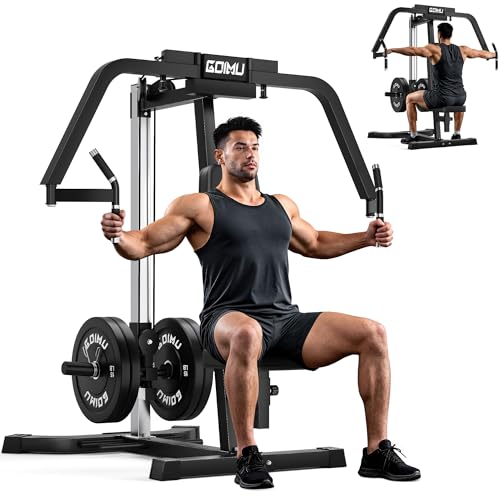
The rear-deltoid and pec fly combination machine, now the more common home and gym format, replaces forearm pads with long handles that the lifter grips with nearly straight arms, sweeping them forward in an arc. Turned around, the same machine trains the rear shoulders, which doubles its value in a small home gym where every frame must justify its footprint. The handle format lets the wrists and elbows find a more natural line, allows a deeper stretch at the start, and generally suits a wider range of shoulder structures. Buyers should check that the starting position can be adjusted in several steps, because the first setting decides how far behind the torso the arms begin, and an excessively wide start under load is the position most likely to irritate a shoulder.
Seat height on a fly machine is not a comfort detail; it is the setting that aligns the machine’s pivot with the lifter’s shoulder joint. With the seat correct, the handles travel in a level arc roughly at mid-chest height, and the pads or handles meet in front of the sternum. Sit too low and the arc climbs, shifting work toward the front of the shoulder; sit too high and the handles drag downward, shortening the effective range. Most machines offer five to eight seat positions on a telescoping post, and the buyer should confirm the range covers the household’s shortest and tallest users with the pivot alignment still correct, not merely reachable.
Capacity separates light home units from serious ones. Selectorized home fly machines commonly carry stacks in the region of sixty to ninety kilograms, which sounds ample until a strong lifter discovers that a fly, performed strictly, still progresses, and that the whole stack can become a working weight within a few years. Plate-loaded designs shift the ceiling to however many plates the horns hold, at the cost of buying and storing those plates. For a machine bought as the main chest tool, headroom is a form of future-proofing; for an accessory finisher used after pressing, a moderate stack is entirely rational, and the money saved buys a better bench or flooring.
Butterfly arms, pivots, and bearings
The moving arms of a fly machine pivot on bearings or bushings, and the difference is felt on the first repetition. Sealed bearings keep the arc silent and even for years with no attention; plain bushings can develop a gritty, notchy feel as dust and wear accumulate, and they ask for periodic lubrication. The pivot location matters as much as its smoothness: machines pivoting from a high central point produce an arc that drops as it closes, while shoulder-height pivots behind the seat track the body’s own geometry more closely. None of this appears in headline specifications, so a buyer comparing two machines should look for pivot position in the photographs and bearing type in the parts list, two unfashionable details that decide how the machine feels in year three.
Cable fly stations and functional trainers
A cable fly replaces the fixed arc with two pulleys and a pair of handles, so the arms still sweep across the body, but the path is chosen by the lifter rather than the frame. Standing cable flyes, performed between two high pulleys, are the most common form, and lowering the pulleys to mid or low positions changes the angle of the sweep and the region of the chest emphasised, giving one station the versatility of several fixed machines. The resistance stays nearly constant through the movement, because the cable pulls toward the pulley wherever the hand travels, which produces the category’s signature feel: meaningful load even at the fully squeezed position, where a fly machine’s leverage fades.
That constant tension is the cable station’s great strength and its honest limitation. It finishes the centre of the movement beautifully, which is why cable flyes are a favourite final exercise, but a cable cannot easily reproduce the very heavy loading of a press, and the standing position introduces its own skill: the lifter must brace the trunk, choose a staggered or square stance, and resist being pulled backward by the stacks. Households that want a chest machine for a beginner who needs guidance from the equipment should note that the cable offers the least guidance of any option in this guide, while experienced lifters often value exactly that freedom.
A functional trainer, the twin-stack tower with adjustable pulleys on two uprights, is the format most home buyers meet, and chest work is only part of its case; the same frame serves rows, pulldowns with suitable attachments, arm work, and cable exercises for the whole body. Judged purely as a pec machine it is excellent, but its footprint and cost should be charged against the whole training programme it enables, not against chest day alone. Readers planning the room around such a tower will find our guide to best basement workout rugs useful, because a trainer’s feet, a bench, and dropped attachments all treat flooring roughly, and the right surface underneath protects both the floor and the frame’s levelling.
Pulley height adjustment deserves scrutiny on any cable unit. The carriage should move through many closely spaced positions on its upright, lock positively without tools, and carry a pulley that swivels so the cable tracks the handle’s angle instead of sawing across a fixed cheek. Cable ratio also matters and is frequently misunderstood: a two-to-one ratio means the handle moves twice as far as the stack and delivers half the stack’s labelled weight, which gives fine increments and long cable travel for flyes, while a one-to-one ratio delivers the full weight with heavier, shorter pulls. Neither is better in the abstract; fly work generally suits the smoother, finer two-to-one arrangement, and the specification sheet, not the showroom, is where the ratio is stated.
Stack increments on cable machines are typically two to five kilograms per plate, and the top plates, where fly work for most lifters actually lives, benefit from smaller add-on weights that many makers sell as accessory shoes or magnetic increments. A buyer whose programme depends on patient progression should budget for those small additions from the start, because a five-kilogram jump on a thirty-kilogram fly is a seventeen percent increase, and no lifter progresses in steps that large for long.
Smith machines and guided pressing
The smith machine guides a barbell along fixed vertical or slightly angled rails, with hooks that let the lifter rack the bar at any height by rotating the wrists. For chest training it offers flat, incline, and decline pressing with a safety profile that suits solo training: set the safety stops a fraction below chest height, and a failed repetition ends with the bar resting on the stops rather than on the lifter. That single feature explains the format’s enduring popularity in home gyms, where the nearest potential rescuer may be a family member who cannot deadlift the bar off anyone.
The fixed path is the corresponding compromise. A free barbell press travels in a slight natural arc, back toward the face as it rises, while a smith bar travels in a straight line, so hand placement and bench position must be arranged to put that line over the mid-chest at the bottom of the movement. Set the bench a few centimetres wrong and the press becomes a shoulder exercise with a chest afterthought. Angled-rail designs, tilted a few degrees from vertical, approximate the natural path more closely and are generally preferred for pressing, while true-vertical designs suit squats and other movements better. The buyer should also confirm the bar’s starting weight, since a smith bar with its counterbalancing removed can weigh as much as a standard barbell, while counterbalanced designs can make the empty bar almost weightless, which changes the arithmetic of every working set.
As a pec machine specifically, the smith press sits between worlds: heavier and more progressive than any fly, less chest-isolating than a fly, and dependent on a good adjustable bench to offer incline angles. Households choosing it are usually choosing a general pressing station that also squats and rows, and the chest case should be argued on those terms. The detail that decides daily satisfaction is the hook and safety-stop system: stops that adjust in small increments and can be set from outside the frame, hooks that engage smoothly without a fight at the end of a hard set, and a bar that spins freely enough in the hands to feel like a bar rather than a pipe.
Plate storage on the frame is a practical virtue worth paying for in a home setting. Horns at the rear of a smith frame keep plates off the floor, balance the unit visually, and add ballast that steadies the whole structure during racking. A smith machine without storage demands a separate plate tree and more floor, which quietly erases the footprint advantage its brochure claims.
Leverage presses and plate-loaded chest machines
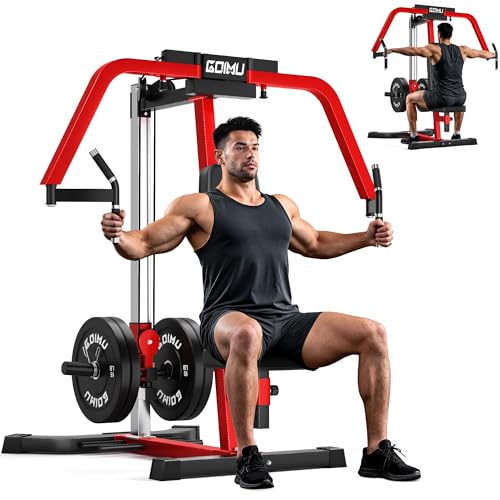
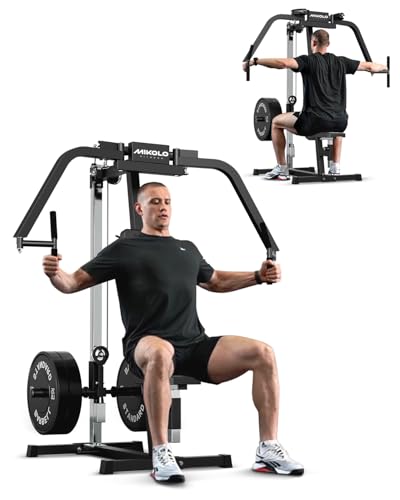
Leverage machines carry the load on arms that pivot from the frame, with the lifter pressing handles rather than a bar. The better designs use converging arms, which start wide and draw together as they are pressed, reproducing the natural tendency of the hands to approach each other during a strong press and giving the chest a fuller contraction than a straight push. Because the arms are independent on many models, each side works without help from the other, which exposes and gradually corrects the strength imbalance almost every lifter carries. Plate loading keeps the ceiling high and the increments as fine as the smallest plates owned.
The resistance curve of a leverage press depends on where the plates sit relative to the pivot, and well-designed machines arrange the geometry so the movement is hardest in the mid-range and slightly kinder at the very start, where the shoulder is most extended and least powerful. Poorly designed ones do the opposite, feeling impossibly heavy off the chest and trivial at lockout, and no specification sheet will confess to it; the clue is in the geometry of the arm and horn placement visible in photographs, and in whether the maker publishes anything at all about the curve. This is the category where buying from a maker with a long track record in strength equipment carries the most weight.
Dedicated plate-loaded chest press and fly machines, the kind built for commercial gyms, occasionally appear in serious home gyms, and their virtues are durability and feel rather than versatility: one movement, performed superbly, for decades. Their footprints are honest but large, their frames are heavy enough to make delivery and room placement a project, and they reward the household that has already decided, from experience, exactly which movement it wants to own. For most homes they are the second machine bought, not the first.
Resistance curves, cams, and why machines feel different
Two machines loaded with the same weight can feel like different exercises, and the resistance curve explains why. A simple pivot arm gives resistance that varies with leverage through the arc; a cam, the deliberately non-round pulley found in many selectorized machines, varies the cable’s leverage to shape the effort, ideally matching the chest’s own strength curve, which is weakest in the deep stretch, strongest through the middle, and moderate at full squeeze. When the match is good, every centimetre of the repetition feels productively loaded and no centimetre feels like a trap. When it is bad, the lifter learns to bounce out of the easy part and grind through a sticking point the machine created.
Buyers cannot measure curves from a listing, but they can read the signs. Makers who engineer curves talk about them, publish diagrams, and name the movement positions they were designing around. Makers who do not mention the subject have usually built a simple pivot and priced accordingly, which can still be the right purchase for an accessory movement. The error is paying a curve-engineered price for pivot-simple engineering, and the defence is to compare what each maker actually claims, in writing, rather than what the photographs imply.
Free weights remain the reference point: a dumbbell fly is hardest in the stretch and nearly unloaded at the top, a barbell press is hardest off the chest, and a cable fly is even throughout. A thoughtful home programme often pairs a machine that peaks mid-range with dumbbell or cable work that covers the extremes, which is another reason the accessory buyer’s machine should complement, not copy, the main lift’s profile.
Seat height, back pads, and setting the range of motion
Nearly every disappointing machine session is a setup failure rather than an equipment failure, and the settings take under a minute once they are understood. On fly and press machines the seat is set first: for flyes, the shoulders should align with the machine’s pivots and the handles should sit at mid-chest height; for seated presses, the handles should start level with the mid-chest to upper-chest line, never so low that the shoulders shrug toward the ears at the start. The back pad, where adjustable, sets how far the handles begin behind the torso, and therefore how deep the stretch is; the correct starting depth for most lifters is the position where the upper arms are roughly in line with the torso or a little behind it, with the chest open and no pinch at the front of the shoulder.
Grip position completes the setup. Fly handles that offer two grip heights, or rotating grips that let the wrists stay neutral, accommodate different arm lengths and shoulder preferences, and a neutral or slightly angled wrist is kinder over thousands of repetitions than a forced straight one. On presses, handles that allow both a pronated and a neutral grip let the lifter rotate emphasis and spare the elbows; fixed single-grip designs should at least place that grip where the forearms stay vertical at the bottom of the movement, which is the position of best leverage and least joint complaint.
Foot placement is the forgotten setting. Feet flat and slightly back, pressing into the floor, stabilise the pelvis and let the lifter maintain a firm arch of the upper back against the pad without the hips sliding. Machines with a foot lever that brings the handles forward for an easy grab, found on better press designs, remove the awkward loaded reach at the start and the risky reach to re-rack at the end; on machines without one, the lifter should set the starting position conservatively rather than begin every set from the deepest stretch under full load.
Recording your settings
Serious home lifters keep a card or a phone note with the seat number, back-pad setting, and starting-position notch for each machine and each movement, because the difference between a productive session and a mediocre one is often a single hole on the seat post chosen from memory. Writing the settings down also protects the programme when two household members share the machine: each person’s card ends the small daily ritual of rediscovering positions, and a set that begins correctly tends to be performed correctly throughout.
Load ranges, increments, and planning progression
A realistic chest programme progresses in the smallest steps available. On a fly performed with twenty-five kilograms, an ideal next step is twenty-six or twenty-seven, not thirty. Selectorized stacks with five-kilogram plates therefore need help: add-on increment weights, a small plate hung from the pin where the design allows it, or a deliberate repetition-progression scheme in which the lifter earns the jump by first adding repetitions at the current load. Any of these works; what fails is a programme that assumes five-kilogram jumps indefinitely, which stalls within months and convinces the lifter, wrongly, that the machine has stopped working.
Ceilings deserve the same realism in the other direction. A beginner pressing on a leverage machine may start with the empty arms, which themselves can weigh ten to twenty kilograms per side, and should confirm the unloaded starting resistance before purchase, because a machine whose lightest possible load exceeds the beginner’s strength is a machine that cannot be used at all. At the other end, a stack or horn arrangement should exceed the lifter’s realistic five-year strength on that movement; flyes progress slowly and forgive a modest ceiling, while presses, which recruit the triceps and shoulders, outgrow small stacks quickly.
Bodyweight-relative thinking helps households share equipment sensibly. A machine that serves a smaller lifter’s pressing and a larger lifter’s fly work may need its money spent on fine low-end increments rather than on maximum capacity, while a machine bought for one strong user needs the opposite allocation. The specification sheet supports both readings; the household’s actual training log, even a month of honest notes, is the document that should arbitrate between them. Readers equipping a shared space may also appreciate our overview of best captain chairs for exercise, since compact seated equipment often shares the same corner of a room with the chest machine and the same users across a week.
Footprint, ceiling height, and fitting the machine into a home
Manufacturers quote footprint as the frame’s rectangle on the floor, but the working footprint is larger: a fly machine needs room behind it for the arms at full stretch on some designs, a smith machine needs loading space at both ends of the bar plus standing room to set safeties, and a functional trainer needs a clear field in front roughly two metres deep for standing flyes and crossovers, plus side access to both stacks. The honest method is to mark the working outline on the floor with tape, including the bench and the lifter, and to live with the tape for a day before ordering. Rooms forgive many things, but a machine that blocks a door swing or a window will be resented daily.
Ceiling height binds hardest on smith machines and functional trainers, whose frames commonly stand between two and two point two metres, before the lifter’s own raised arms and any pull-up bar mounted on top are considered. A garage with a sectional door adds a subtle trap: the open door’s horizontal track and panels occupy ceiling space exactly where a tall frame wants to stand, so the machine’s position must be checked against the door in both positions. Basement buyers should measure to the lowest duct or beam, not to the general ceiling, and should remember that assembly often requires tilting a tall upright through a diagonal that exceeds its final height.
Floor loading is rarely a problem for a fly machine and worth a thought for a loaded smith or leverage frame standing on an upper floor: the machine, plates, and lifter together can concentrate several hundred kilograms on four small feet. Spreading that load with a platform of plywood over rubber matting is standard home-gym practice, protects the floor finish, and quietens the set-down of stacks and plates. Noise travels through structure more than through air, so the platform and mat decision is also the neighbour decision in flats and terraced houses.
Delivery and access decide more purchases than brochures admit. Selectorized machines ship in crates that may not pass a narrow hallway turn; plate-loaded frames arrive as manageable pieces but with total weights that make an upstairs room a two-person, half-day project. Confirming the largest single component’s dimensions and weight, and the maker’s assembly expectations, belongs on the checklist beside load capacity. A machine that cannot reach its room is not a bargain at any discount.
Form faults that steal the work from the chest
The commonest fault on fly machines is turning the fly into a press: bending the elbows deeply as the handles close, which recruits the triceps and front shoulders and lets the lifter move more weight with less chest. The correction is a nearly fixed, slight elbow bend held from stretch to squeeze, as if hugging a wide barrel, with the movement coming from the shoulder joint alone. The second fault is the opposite excess, locking the arms ramrod straight, which stresses the elbow and the biceps tendon at the stretch; the soft, fixed bend exists precisely between those two errors.
Shrugging is the press machine’s signature fault. As fatigue builds, the shoulders climb toward the ears and the upper trapezius takes over work the chest should be doing, while the shoulder blades lose their set position against the pad. The durable cue is to set the shoulder blades back and down before the first repetition, as if tucking them into the back pockets, and to end the set when that position can no longer be held, rather than grinding out extra repetitions in a shape that trains the wrong muscles and irritates the neck. Seat height feeds this fault: a seat set too high for a press almost guarantees shrugging, which is why the setup section of this guide precedes the programming advice.
Speed is the third thief. Fly and press repetitions performed with a bounce at the stretch and a heave through the middle train momentum more than muscle, and they load the shoulder at its most extended point with the least control. A deliberate tempo, roughly two seconds to open or lower, a brief pause in the stretch without resting, and a firm but controlled close or press, extracts more from less weight and is the single cheapest upgrade available to any machine owner. Partial repetitions at the end of a set, working only the stretched half of the range after full repetitions fail, are a legitimate advanced technique on a machine precisely because the machine’s stability makes them safe to control.
Breathing and bracing complete the form picture. A breath taken before the effort phase and released through it steadies the trunk on presses, while flyes benefit from a continuous, unforced rhythm that keeps the ribs from flaring and the lower back from arching off the pad. None of this requires talent; it requires the lifter to treat setup and execution as part of the exercise rather than as preliminaries, which is the habit that separates households that love their machines from households that sell them within a year.
Programming the machine into a week of training
A chest machine earns its keep inside a programme, and the simplest effective pattern for most home lifters is two chest exposures a week with different emphases: a heavier day led by pressing, whether smith, leverage, or free weight, followed by a machine fly for controlled volume; and a lighter day led by cable work through several angles, finishing with a press machine set taken close to the limit of good form. Total hard sets for the chest across the week commonly land between ten and sixteen for intermediate lifters, a range wide enough to require honest adjustment rather than blind copying, and the machine’s role is to make a good share of those sets precise and repeatable.
Order matters within a session. The movement that matters most goes first, while the lifter is fresh, and for most households that is the press; flyes and cable work follow, when the muscle is warm and the loads are lighter. The exception is the lifter whose chest lags because the triceps and shoulders dominate every press; for them, a strict machine fly performed first, sometimes called pre-exhaustion in older training literature, lets the chest arrive at the press already working, at the cost of lower pressing loads that day. Both arrangements are tools, and the training log, reviewed monthly, says which one a given lifter actually needs.
Rest periods on machine work can be shorter than on heavy free-weight lifts, since balance and setup demands are lower; ninety seconds to two minutes suits most fly and press machine sets, with longer rests reserved for the heaviest pressing. Keeping a towel and a water bottle at the machine sounds trivial until a session’s rhythm depends on it, and on that domestic note our roundup of best workout towels and the smaller options in best microfiber gym towels cover the unglamorous accessories that a home gym uses every single session.
Assembly, cables, pulleys, and looking after the machine
Assembly quality predicts ownership quality. A well-made home machine arrives with numbered hardware, frame pieces that align without persuasion, and instructions that sequence the build so cables are routed before the covers close access. The two rules that save the most grief are universal: leave every bolt finger-tight until the frame stands complete and square, because final tightening too early locks in small misalignments that later appear as uneven arm travel; and route cables exactly as diagrammed, checking each pulley spins freely before the stack is connected, because a cable crossed at one guide will saw itself quietly for months before anyone notices the fraying.
Cables are the main wear item on stack and cable machines. Their coated strands should be inspected along the full travel a few times a year, feeling for flat spots, cracked coating, or the whisker of a broken strand, and the inspection matters most where the cable bends over the smallest pulley. Replacement is a routine, inexpensive job on a documented machine and a research project on an undocumented one, which is another argument for makers who publish parts lists. Pulleys themselves wear at their bearings; a pulley that rocks on its axle or grinds through part of its rotation should be replaced before it starts damaging the cable that runs over it.
Upholstery and grips ask for the least effort and suffer the most neglect. Sweat left on pads degrades vinyl steadily, and a ten-second wipe after the final session of the day extends pad life by years; cracked pads can usually be re-covered or replaced as spare parts on established machines. Guide rods on smith machines and stack rods on selectorized units want a light wipe and the lubricant the maker specifies, no more; excess lubricant collects dust into an abrasive paste that accelerates the wear it was meant to prevent. Weight-stack bumpers and frame feet should be checked annually for the compression and cracking that age brings, since a perished bumper is the source of the mysterious new clunk at the bottom of every repetition.
A simple maintenance rhythm keeps all of this painless: wipe down after sessions, inspect cables and tighten the handful of frame bolts monthly in the first season while the machine settles, then quarterly, and keep the maker’s manual, the settings card, and the spare-parts list together in one folder near the machine. Machines in this category have no engines and no electronics beyond the occasional repetition counter, so nearly every failure announces itself early as a sound, a roughness, or a visible wear mark, and rewards the owner who investigates small changes instead of training through them.
Training alone safely: stops, safeties, and sensible limits
The home chest machine’s deepest virtue is that it can be used hard without a second person, but that virtue depends on the safety features being set, not merely present. On a smith machine the safety stops must be positioned for every exercise and every bench angle, because a stop height that suited flat pressing leaves a gap during incline work; the habit to build is stops first, plates second, in that order, every session. On selectorized machines the pin must pass fully through the plate, a half-engaged pin can walk out mid-set, and the lifter should never reach into a stack’s travel to adjust anything while load is suspended.
Fly and leverage machines fail more gently, since the load can simply be allowed to settle back to its start, but they have their own rule: never climb into or out of a loaded machine’s moving arms, and never let children treat the frame as furniture. A home gym shared with a family needs the same plain administration as any workshop: stacks pinned at rest, plates stored on horns rather than leaning on walls, and a household understanding that the machine is equipment, not a climbing frame, however inviting its bars and pads appear to a seven-year-old.
Joint sense is the final safety system. A pinch at the front of the shoulder during flyes, a grinding awareness during presses, or elbow pain that appears with one grip and vanishes with another are information, and machines offer enough adjustment, of seat, start position, and grip, to act on that information before a niggle becomes a layoff. Pain that persists across sessions, or any chest pain that is not plainly muscular effort, ends the experiment and starts a medical conversation; no programme in this guide outranks that rule, and a well-chosen machine will still be there, patiently, when training resumes.
A short buying checklist for chest machines
Begin with the role: main chest tool or accessory movement, decided honestly, because it sets the required capacity, the acceptable footprint, and the budget’s centre of gravity. Then fix the room: tape the working outline on the floor, measure the true ceiling height including doors and ducts, and confirm the delivery route can accept the largest component. Only after those two steps should the catalogue comparisons begin, since they eliminate half the market more honestly than any feature list.
Compare, in writing, the numbers that govern daily use: smallest load increment and how it is achieved, maximum capacity and the unloaded starting resistance, seat and start-position adjustment ranges against the household’s bodies, stack ratio on cable units, bar weight on smith machines, and the assembled dimensions against the taped outline. Look for bearing pivots, published parts lists, and cable specifications, and treat a maker who publishes none of these as a maker whose price should reflect the omission.
Finish with the ownership questions: spare cables, pads, and pulleys available for this exact model; warranty terms that name what counts as wear; assembly support that a real household can use. Then choose the machine whose compromises point away from your priorities, since every design in this guide compromises somewhere, and the art of the purchase is deciding which strengths you will use weekly and which weaknesses you will never meet.
Matching the machine to the lifter in front of it
A tall lifter and a short lifter can share a household and need different things from the same frame. Arm length decides whether a fly machine’s handles meet in front of the chest or run out of travel while still apart, and torso length decides whether the seat range places the pivot at the shoulder or somewhere near the ear. Makers publish seat travel and handle dimensions inconsistently, so a household with users at both ends of the height distribution should treat the adjustment ranges as headline specifications, equal in importance to capacity, and should prefer machines whose settings are numbered and repeatable over friction-fit arrangements that drift and cannot be recorded.
Shoulder history is the second personal variable. A lifter whose shoulders dislike deep stretch under load should favour machines with finely adjustable start positions and cable setups that let the stretch be rationed precisely, and should be suspicious of any fixed-path design whose starting point cannot be brought forward. A lifter with a history of elbow trouble generally fares better with neutral-grip press handles and fly handles that let the wrist sit in line with the forearm. These are not medical judgements but fit judgements, of the same kind as choosing a shoe by shape rather than by size alone, and they are best made before money moves, using the maker’s dimension sheets and, where possible, a session on a similar machine in a public gym.
Training age matters in the opposite direction from the one marketing assumes. Beginners benefit most from guidance, which argues for a pec deck or a press machine with an obvious path and a forgiving start position, while the cable station’s freedom, so prized by experienced lifters, mostly gives a beginner new ways to be inconsistent from one session to the next. Advanced lifters, meanwhile, are the ones who will find a light stack’s ceiling and a coarse increment, so the experienced household should spend on capacity and fine progression even at the cost of decorative features. Buying for the lifter of three years from now, rather than for the lifter of this month, is the cheapest form of future-proofing in the whole category.
Check prices on Amazon
Live listings for the shortlist in this guide are pulled from Amazon below, so prices and availability are always current at the moment you look.


New, used, and the economics of a long-lived frame
Chest machines are among the safer purchases on the used market, because their failure points are visible: cables fray in the open, pads crack where eyes can see them, bearings announce themselves by feel, and a frame either stands square or plainly does not. A buyer inspecting a used selectorized machine should run the stack through its full travel slowly, watching each pulley, work the arms through their arc unloaded and then loaded, and check the seat post for the wobble that betrays a worn bushing. Commercial-grade fly and press machines, built for a decade of daily gym use, often represent extraordinary value in a home, provided the household can solve the transport and doorway problems their size creates.
New purchases buy warranty, documented parts support, and delivery to the room rather than to the kerb, all of which have real value that used prices never quote. The honest comparison sets the used machine’s price against the new machine’s price minus the cost of the parts the used one will need within two years, cables and pads at minimum, and minus something for the labour of moving several hundred kilograms without a delivery crew. Households new to strength equipment usually do better buying the simpler machine new; households on their third home gym can judge used equipment with the fluency the discount assumes.
Resale value follows the same logic in reverse. Established makers’ frames, plate-loaded especially, hold value because the next buyer can still obtain parts, while unbranded machines with undocumented cables become nearly unsellable once the first consumable fails. A buyer who expects to move house, change programmes, or upgrade within a few years is therefore not wasting money on a recognised frame; they are buying the option to change their mind at a fair price, which in a category this bulky is worth a visible premium.
A word on benches, since most chest machines need one
Several designs in this guide, the smith machine above all, are only half a chest station until an adjustable bench joins them, and the bench deserves the same scrutiny as the frame. It should offer flat and several incline positions with a positive locking ladder or pin, a pad firm enough that the shoulder blades can set against it without sinking, and a rated capacity that counts the lifter and the load together with room to spare. The bench’s footprint inside the machine’s frame matters too: its feet must clear the frame’s base rails at every angle, and its length must place the lifter’s head supported, not hanging past the pad’s end, at the incline settings where the smith bar’s line demands a position further back than flat pressing does.
Households tempted to economise on the bench because the machine consumed the budget should reverse the order of thinking: the bench is the surface the body actually touches, its instability is felt on every repetition, and a mediocre bench under a good machine produces a worse session than a good bench under a simpler machine. Wheels and a handle on the bench, trivial details in a catalogue, decide whether it gets moved into position willingly several times a week or left wherever it last stood, quietly reshaping the programme around its location.
Keep the settings card, the manual, and a pencil together at the machine itself, because the best programme in this guide is the one that survives contact with an ordinary Tuesday: seat set in seconds, loads recorded without a search for a missing notebook, and the next session beginning exactly where the last one ended. Consistency is built out of such unremarkable conveniences far more reliably than out of motivation, which is fortunate, because conveniences can be arranged in advance and motivation cannot.
A note on how this guide was put together and supported: the comparisons rest on published manufacturer specifications, dimension and capacity documentation, and long-standing coaching guidance on pressing and fly technique, weighed for the realities of training at home rather than in a commercial facility. As an Amazon Associate we earn from qualifying purchases. That support is disclosed so readers can judge the advice plainly; it has not softened the warnings above about fixed paths, small stacks, or machines whose ceilings a determined lifter will meet sooner than expected.
Measure the room, respect the setup, progress in the smallest steps the machine allows, and the chest machine in the corner will still be quietly repaying its floor space long after flashier equipment has been sold on.