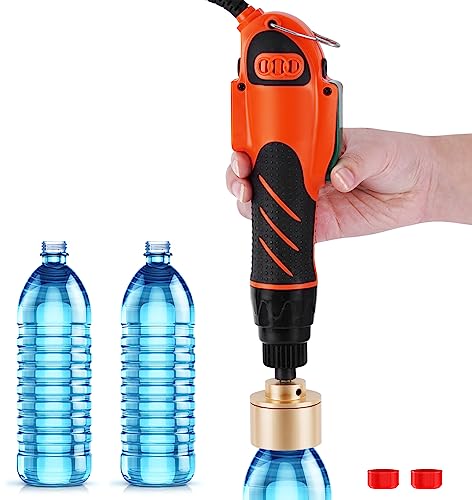
Our Top Picks
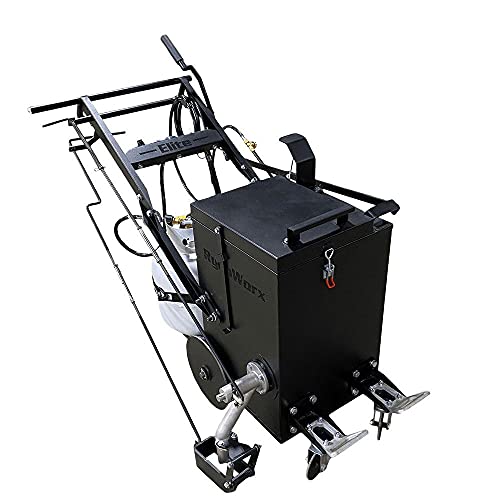 Asphalt Kingdom Crack Fill Melter Applicator: RynoWorx RY10MA-Elite49.9 x 29.3 x 48.8 inchesCheck on Amazon
 MIVA Asphalt Crack Sealing Machine with Gas Engine12.5 Gallon47.2 x 7.9 x 27.58 inches265 poundsCheck on Amazon


What's inside
- How hot-pour melter-applicators are built
- Working temperature ranges and why they matter
- Crack preparation decides whether any machine succeeds
- Crack width, depth and backer rod
- Cold-pour pumps, wands and pour pots
- Wheels, frames and getting the machine around a property
- Cure time, weather windows and scheduling
- Burn safety and working around hot material
- Cleaning and maintaining the applicator head
- Coverage maths: how much machine a property needs
- Matching machine classes to real properties
- Common failures and what they trace back to
- Sealant forms: blocks, boxed material and pre-melt handling
- Routers, lances and the support equipment list
- Environmental and disposal considerations
- Cost planning without shortcuts
- A worked example: planning one sealing day end to end
- Check prices on Amazon
- Disclosure
As an Amazon Associate I earn from qualifying purchases. This post may contain affiliate links at no extra cost to you.
An asphalt crack filler machine exists to solve a timing problem that a bucket and a trowel cannot. Sealant only bonds when the crack is clean, dry and shaped correctly, and hot rubberised material only stays workable for a short window after it leaves the kettle. The machine, whether it is a wheeled melter-applicator, a cold-pour pump or a simple pour pot, is the tool that keeps material at the right consistency and delivers it into the joint at the right rate. This guide compares the machine families using manufacturer documentation, published application standards and sealant makers’ technical bulletins, so every temperature, capacity and preparation step below traces to printed guidance rather than to workshop anecdote.
Three families dominate the category. The first is the direct-fire or oil-jacketed melter-applicator: a steel kettle on wheels with a burner, an agitator, a thermometer and a dispensing valve or shoe that lays a band of hot-pour rubberised sealant as the operator walks. The second is the cold-pour system: a pump, a hand wand or a squeeze applicator that places emulsion or silicone-style material without heating. The third is the gravity pour pot, an unheated or lightly heated container with a spout and shut-off that suits small runs of hot material carried from a separate melter. Choosing between them starts with the sealant chemistry a driveway or small lot actually needs, because the machine and the material are specified together in every manufacturer’s chart.
How hot-pour melter-applicators are built
The kettle is the heart of a melter-applicator, and its construction decides how evenly sealant heats. Direct-fire kettles expose the bottom of the tank to a propane burner, which is simple and light but creates a hot spot that can scorch rubberised sealant if the agitator stops moving. Oil-jacketed kettles surround the inner tank with a heat-transfer fluid bath, spreading the burner output across the whole wall; the jacket costs weight and warm-up time, yet it holds material temperature steadier during long runs and reduces the burnt, stringy residue that forms when sealant overheats against bare steel. Manufacturer literature states the distinction plainly, and it is the first specification worth reading on any candidate machine.
Capacity is quoted in gallons of molten material, and the useful range for property-scale work runs from roughly ten gallons on compact walk-behind units to thirty gallons and beyond on trailer or skid machines. A larger kettle is not automatically better. Sealant makers warn against reheating the same material through repeated cycles, because each melt degrades the rubber polymer that gives the finished joint its flexibility. A kettle sized so that one melt covers one planned session, with a small reserve, protects material quality better than an oversized tank that invites the operator to park half a load overnight and remelt it the next morning.
Agitation, thermometers and temperature control
Rubberised sealant separates as it sits: the rubber fraction and the asphalt fraction drift apart, and filler solids settle. A paddle agitator, hand-cranked on small machines and engine or hydraulically driven on larger ones, keeps the melt uniform so the first metre of joint and the last metre receive the same material. Documentation for professional units treats agitation as continuous during heating, not an occasional stir, and warns that a stationary paddle in a heating kettle is a scorch risk rather than a safeguard.
Temperature measurement deserves equal suspicion. A dial thermometer mounted in the kettle lid reads the vapour space or the upper layer, which can differ from the material at the dispensing valve. Better machines place the probe in the material stream or low in the tank wall. Sealant bulletins publish both an application range and a maximum safe heating temperature, and the gap between them is narrow enough that an optimistic thermometer can push a load past its limit without any visible sign until the sealant loses elasticity in the joint. Comparing the stated application range of the sealant with the control accuracy claimed for the machine is a specification exercise, not a guess.
Working temperature ranges and why they matter
Hot-pour rubberised sealants are generally applied in a band that manufacturer data sheets place around three hundred and seventy to four hundred and ten degrees Fahrenheit, with a stated maximum heating temperature only modestly above the top of that band. Below the band, the material is too viscous to wet the crack walls, so it bridges the top of the joint and peels away under traffic. Above the maximum, the rubber degrades, the sealant turns brittle, and the finished joint cracks early in cold weather. The machine’s job is to hold the middle of the band for hours, through wind, pauses and refills, which is why burner output, insulation and jacket design matter more than headline capacity.
Cold-pour materials work on a different clock. Emulsion sealants cure by losing water, so their application window is set by air temperature, humidity and the dryness of the pavement rather than by a burner. Silicone and some polyurethane joint sealants cure by reacting with moisture. A cold-pour pump or wand therefore needs no thermometer, but it does need a flow control that can lay a consistent bead in a narrow joint without flooding the surface, and it needs seals and hoses compatible with the chemistry being pumped, a compatibility point every pump manufacturer lists by material family.
Reading a sealant data sheet before choosing a machine
The data sheet decides the machine, in that order. It states the joint dimensions the sealant is formulated for, the application temperature if it is a hot material, the expected cure or skin time, and the movement capability of the cured joint, expressed as how much the joint can open and close without the sealant splitting or debonding. A machine that cannot hold the sheet’s temperature band, or a pump whose output cannot be throttled to the sheet’s joint size, is the wrong machine no matter how sturdy its frame looks. Buyers who start from the sealant intended for their climate zone, then shortlist machines rated for that sealant class, avoid the most common mismatch in this category.
Crack preparation decides whether any machine succeeds
Every sealant bulletin opens with the same warning in different words: sealant bonds to the crack wall, not to the dust sitting on it. Preparation therefore consumes more of a sealing day than application does. Loose debris, vegetation, old failed sealant and moisture all break the bond line, and no applicator, however precise, can compensate for a dirty joint. The preparation sequence in published guidance runs in a fixed order: rout or clean the crack to a sound shape, remove debris with oil-free compressed air, dry the joint if any dampness remains, place backer rod where depth requires it, and only then bring the applicator to the start of the run.
Routing is the step most often skipped on home driveways. A crack router follows the crack with a carbide blade and cuts it into a uniform reservoir with vertical walls and a consistent width and depth. That geometry matters because sealant performs best in a shallow, wide reservoir rather than a deep, narrow slot: the shape factor in the joint literature describes how a wider, shallower sealant bead stretches more safely as the pavement moves. Hairline cracks that will not be sealed are left alone; cracks wide enough to accept material but too narrow for a proper reservoir are the router’s exact use case.
Blowing, brushing and drying the joint
After routing, the joint holds a line of fine asphalt dust that looks harmless and behaves like a release agent. A hot-air lance both blows debris clear and dries the joint walls, which is why rental fleets pair lances with melter-applicators so often. A standard air compressor with an oil-free supply and a wand nozzle achieves the cleaning half of that job; a wire brush handles stubborn patches where vegetation roots have packed the crack. Guidance is consistent that sealing over visible moisture invites blistering in hot-pour work, because trapped water flashes to steam under material placed at application temperature and lifts the bead from inside.
Drying also has a seasonal dimension. Morning dew, a shaded run of pavement under trees and the north side of a building can stay damp hours after the rest of a lot is dry. Experienced crews described in trade guidance start application on the sunlit sections and reach the shaded sections last, letting the pavement’s own warming do part of the lance’s work. The machine schedule follows the pavement, not the clock.
Crack width, depth and backer rod
Joint geometry is specified with numbers, and the numbers are worth memorising before shopping. Sealant reservoirs are commonly cut to widths in the range of three eighths of an inch to three quarters of an inch for driveway-scale cracks, with depth held near the width or shallower for hot-pour rubberised material. A deep, narrow crack filled solid with sealant wastes material and, more importantly, bonds the sealant on three sides: both walls and the bottom. Three-sided adhesion prevents the bead from stretching freely, so the joint literature directs installers to break the bottom bond.
Backer rod is the tool for that job. It is a closed-cell foam rod, sized roughly a quarter wider than the joint so it wedges at the chosen depth, pushed into the crack before sealing. The rod sets the sealant depth, prevents bottom adhesion and gives the applicator operator a firm floor to fill against, which steadies the finished bead height. Rod diameter selection is printed on the packaging in joint-width ranges, and using an undersized rod that slips to the bottom of a deep crack is a documented failure: the sealant column ends up too deep, and the joint splits down the middle in its first winter.
Which cracks should not be sealed at all
Published guidance is equally clear about exclusions. Alligator cracking, where the surface breaks into interlocking small polygons, signals base failure beneath the asphalt; sealing those cracks paints over a structural problem and the sealant tears as the pieces shift. Cracks wider than roughly an inch, settlement cracks that step vertically between the two sides, and cracks at the edge of a slab where the shoulder has washed out all belong to patching or reconstruction, not to a filler machine. A buyer whose driveway is mostly alligator pattern does not need a bigger melter; the honest specification is a resurfacing conversation, and the machine budget is better held until the base is repaired.
Working cracks, the long thermal cracks that run across a driveway and open in winter and close in summer, are the opposite case: they are exactly what rubberised sealant exists for. Their movement is predictable, their walls are usually sound, and a routed reservoir with backer rod and a properly heated bead will ride that movement for years. Sorting the driveway into working cracks, dormant cracks and structural failures, on paper, before renting or buying any machine, is the single highest-value hour in the whole project.
Cold-pour pumps, wands and pour pots
Cold-pour equipment trades the kettle’s thermal discipline for simplicity. A diaphragm or piston pump draws emulsion sealant from a drum or tote and delivers it through a hose to a hand wand with a trigger valve; the operator walks the crack line and meters flow by trigger and walking pace. Because nothing is heated, start-up is immediate and clean-up is water-based for emulsions, which is why cold systems suit scattered small cracks across a large lot where firing a kettle for a dozen short joints would waste the day. The specification that matters is flow control at low rates: a pump that surges at trigger squeeze floods narrow joints and leaves a smear that tracks under tyres before it cures.
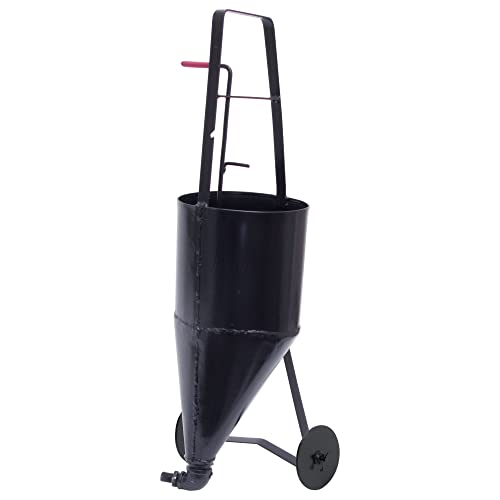
Pour pots occupy the smallest tier. A galvanised pot with a hinged spout valve and a carrying handle holds a few gallons, filled from a kettle or, for cold material, directly from a pail. Pots are slow and they cool quickly when used with hot sealant, so their documented role is touch-up work, short runs far from the melter and jobs where a wheeled machine cannot reach, such as steps, tight corners and the strip between a garage apron and a door track. Judged as a primary applicator for a full driveway they disappoint; judged as an accessory they earn their shelf space.
Applicator shoes, squeegees and banding
How material leaves the machine shapes the finished joint. A dispensing shoe on a melter-applicator straddles the crack and lays a band of sealant slightly wider than the reservoir, a style called banding, which feathers extra material over both edges. A squeegee head, flat or V-shaped, tools the bead into the joint and strikes the surface nearly flush. Flush finishes shed less under snowplough blades and tyres, while banded finishes tolerate slight underfilling and are more forgiving for occasional operators. Manufacturer catalogues offer both heads for the same machines, and the choice is regional as much as personal: plough country favours flush, mild climates accept banding.
While planning the wider driveway project, it is worth noting that surface water management and crack sealing are usually scheduled in the same maintenance week, and readers organising that work may also want guidance on best 3000 psi pressure washers for the wash-down stage that precedes inspection. Washing a week ahead, rather than the day before, lets the pavement dry fully so the cracks can be assessed honestly and the joints are not sealed over hidden moisture.
Wheels, frames and getting the machine around a property
A melter-applicator is pushed or towed at walking pace for hours, so its running gear is not a footnote. Pneumatic tyres roll over the very cracks being sealed without jolting the kettle; small solid casters transmit every joint and can splash molten material if the tank is filled to the brim. Wheel bearings rated for heat exposure matter because the kettle radiates downward all day. Handle height and the balance point of a full tank decide operator fatigue on a long lot, and a machine that is pleasant empty in a showroom can be a wrestling match at thirty gallons. Published specifications list shipping weight and operating weight separately; the operating figure is the one to plan around, including how the machine will be lifted onto a trailer or rolled up a ramp.
Burner and fuel arrangements vary with size. Compact units run on refillable propane cylinders mounted on the frame, larger kettles on vapour-withdrawal tanks or diesel burners. Propane systems need a regulator and hose inspection routine, and the documentation for every burner-equipped machine repeats the same instruction: leak-check connections with soapy water after every cylinder change, and never use a flame to find a leak. Fuel consumption figures in the manuals, quoted in hours per cylinder at full output, let a buyer estimate how many cylinders a full day of sealing consumes, which is the kind of unglamorous arithmetic that separates a finished job from a half-sealed driveway.
Storage, transport and tipping risk
Molten material raises the stakes of ordinary handling. A kettle should be moved only at the fill level and pace its manual allows, with the lid latched and the burner either off or set as the instructions direct for transport between sections. Tipping a melter is not like tipping a wheelbarrow: the load is hot enough to cause deep burns through clothing. Frames with a low, wide stance and a parking brake or chock arrangement are safety features, not conveniences, and they deserve weight in a comparison that buyers sometimes conduct purely on capacity and burner size.
Cure time, weather windows and scheduling
Hot-pour sealant sets by cooling, which makes its schedule forgiving in one direction and strict in another. A bead typically skins and firms enough for careful foot traffic within minutes to tens of minutes depending on bead size and pavement temperature, and it can usually accept traffic the same day once it has cooled to a firm, non-tracking state. The strict direction is the front end: pavement must be dry and, per most bulletins, above a minimum surface temperature, commonly around forty degrees Fahrenheit and rising, for the sealant to wet and bond to the joint walls. Sealing onto cold pavement chills the material on contact, producing the same poor wetting as underheated material from the kettle.
Cold-pour emulsions invert the problem. They need warmth and dry air to cure, and a bead laid late on a humid autumn afternoon may still be soft the next morning. Rain within the cure window can dilute an uncured emulsion bead and wash it out of the joint entirely. Manufacturer labels state a minimum application temperature and a rain-free interval; planning cold-pour work means reading a forecast for the whole cure period, not just the application hour. Silicone and polyurethane materials add a moisture-cure nuance, tolerating damp air but still demanding clean, sound joint walls.
Season timing and crack width through the year
Thermal cracks move on an annual cycle, widest in the coldest weeks and narrowest in high summer. Sealing when cracks are at a mid-range opening, typically spring or autumn, leaves the cured bead room to stretch further in winter without exceeding its movement capability and room to compress in summer without extruding above the surface. This timing advice appears in agency guidance for road maintenance and applies unchanged to a driveway: the calendar is a specification. A bead installed at the height of summer in a nearly closed crack has almost no compression reserve, and the excess material squeezes up and sticks to tyres; the same bead installed in mid-season sits through both extremes inside its rated movement.
For properties where winter access matters, sealing is also tied to snow clearing. Raised or banded beads catch plough blades, so lots that will be ploughed are sealed flush and early enough in autumn for the bead to be fully cured and inspected before the first storm. Cottage properties that sit empty in winter tolerate a different schedule, and their owners often seal in spring after inspecting what the freeze and thaw cycle actually did, rather than guessing in autumn.
Driveway work rarely happens in isolation, and the equipment shed that holds a melter usually holds the rest of the outdoor kit as well; owners comparing machines for lighter cleaning duties alongside sealing prep sometimes look at best battery powered pressure washers for rinsing tools and screens after a job. Keeping the wash equipment decision separate from the sealing decision matters, because the lance-drying step before hot-pour work needs dry, oil-free air, not water, in the final hour before application.
Burn safety and working around hot material
Material at application temperature causes burns faster than a person can react, and the safety sections of melter manuals are written accordingly. Long sleeves, long trousers, leather gloves and closed boots are the baseline clothing in every published procedure, with the specific warning that synthetic fabrics melt against skin and should not be worn around a kettle. The work area is kept clear of children, pets and bystanders, not as courtesy but because a walking applicator operator watches the crack line and the shoe, not the space behind the machine.
Burner safety layers on top of material safety. The kettle is lit only outdoors or in the ventilated conditions the manual specifies, fuel connections are checked before each session, and the burner is never left running on an unattended machine. A fire extinguisher rated for fuel fires belongs within reach of the kettle station, and water is never used on a sealant or fuel fire. First-aid guidance in the manuals is blunt: cool a burn with clean water and seek medical care, and do not attempt to peel solidified sealant from skin, because the material releases as it cools and medical staff are better placed to remove residue.
Fumes, ventilation and neighbourhood considerations
Heated asphalt sealant produces a noticeable odour and, when overheated, visible fumes that irritate eyes and lungs. Staying upwind of the kettle, keeping material inside its temperature band and avoiding unnecessary idling at full burner all reduce exposure, and the safety data sheets for sealants list the respiratory guidance for enclosed spaces, which is one more reason kettles belong outdoors. On a cottage lane with close neighbours, a courtesy conversation about the sealing day costs nothing and prevents the particular misunderstanding that arises when a neighbour mistakes kettle smoke for a fire; a scorched, overheating load is also the main source of heavy smoke, so good temperature discipline is good neighbour policy.
Cleaning and maintaining the applicator head
More melter-applicators are ruined by neglect after the job than by wear during it. Sealant left in a dispensing valve, shoe or hose solidifies into a plug that reheats unevenly next session, and forcing a valve against a plug bends linkages and tears seals. Manufacturer clean-out procedures generally direct the operator to drain the kettle as low as practical while the material is still molten, run the valve and shoe clear, and then scrape the applicator passages with the tools provided, all while the machine is still hot and the residue is workable. That sequence is written for the end of the sealing day, in the heat, with gloves on, and it is the least welcome and most valuable twenty minutes of the job.
Burner and kettle maintenance follows a calendar in the manuals: inspect the burner nozzle and ignition, clear soot from flue passages, check the agitator drive and its lubricant, examine the thermometer against a known reference, and inspect tyres, bearings and the frame for heat damage. Oil-jacketed machines add a jacket-fluid level and condition check, since low or degraded transfer fluid quietly removes the even-heating advantage the jacket exists to provide. A machine stored with a clean kettle, a checked jacket and a free-moving valve starts the next season as equipment; a machine stored dirty starts it as a restoration project.
Cold system clean-up and hose care
Pumps and wands fail differently. Emulsion left in a hose skins over and then breaks into flakes that clog the wand nozzle for the rest of the season, so the published routine is a full water flush immediately after work, with the wand tip removed and soaked. Seals and diaphragms are wear parts with stated service intervals, and chemical compatibility matters again at storage time: a pump flushed and stored wet per its manual survives winter, while a pump stored with residue in the head often needs a rebuild before its next use. Pour pots need only scraping and a light oiling of the valve hinge, which is part of their enduring appeal for small jobs.
Garages that store sealing equipment through winter usually store the cold-weather appliances in the same space, and the end-of-season sort-out is when many owners also review best garage ready refrigerators for keeping adhesives, drinks and workshop supplies at steady temperatures beside the tools. The storage principle is shared across the shed: equipment and supplies both last longer in a space whose temperature swings are understood and planned for, rather than discovered after damage is done.
Coverage maths: how much machine a property needs
Specification sheets quote kettle capacity, but jobs are measured in linear feet of crack. Estimating a property starts with walking it and tallying crack length by width class, because wide routed reservoirs consume several times the sealant per foot of narrow cracks. Sealant packaging states an approximate yield per block or per pound at a reference joint size, and scaling that figure by the reservoir dimensions gives a material total; the machine decision follows, since the kettle should melt that total in one or two batches without holding material at temperature for so long that it degrades. Long holding times are a hidden cost of oversizing: sealant bulletins limit how long material may sit at application temperature before its properties drift, and a kettle that takes all day to empty pushes its last gallons toward that limit.
Labour arithmetic matters as much as material arithmetic. Routing, cleaning and drying usually consume the majority of crew time, so a faster applicator rarely shortens a job that is preparation-bound. For a single operator working alone, the practical ceiling is set by how much crack can be prepared to standard in a day, and a modest machine that keeps pace with one person’s preparation is a better match than a professional kettle whose capacity will never be used before the light fails. Shared ownership between neighbouring properties changes the maths again, favouring a mid-size oil-jacketed unit whose steadier temperature control forgives a rotation of operators with different levels of experience.
Renting versus buying, honestly assessed
Rental fleets exist precisely because crack sealing is episodic. A property that needs one thorough sealing every several years, with sound pavement otherwise, is the textbook rental case: the machine arrives maintained, the correct sealant blocks are sold alongside, and the kettle leaves before storage becomes a question. Buying earns its case where a property has long private lanes, several outbuildings with aprons, or an owner who maintains multiple sites and can spread the machine across many sealing days each year. The purchase comparison should include the unglamorous line items the manuals imply: a hot-air lance or compressor, backer rod in several diameters, a router or rental allowance for one, protective clothing and a burn kit, and a dry, ventilated storage corner where a kettle can live without sharing air with living space.
Matching machine classes to real properties
A short suburban driveway with a handful of thermal cracks and a garage apron is pour-pot and rental territory, or the natural home of a compact ten-gallon direct-fire unit if the owner also maintains a rental property nearby. The work rewards preparation far more than application speed, and a small machine that heats quickly and cleans easily will be used on schedule, while an oversized kettle invites postponement. At this scale the sealant choice is usually a rubberised hot-pour block for the working cracks, with a small quantity of cold-pour material kept for a mid-season touch-up that does not justify firing the kettle.
A country property with a long lane, a turning circle and outbuilding aprons is the mid-size machine’s home ground. Crack totals run into hundreds of linear feet, the lane’s cracks are mostly working thermal cracks with sound walls, and an oil-jacketed walk-behind unit with a dispensing shoe lets one operator lay a consistent band at walking pace while a second person routes and blows ahead. The property’s crack map, drawn once and updated each spring, becomes the planning document: sections are rotated so the whole lane is never out of service on the same weekend, and material orders follow the map rather than memory.
Freezer and cold-storage buildings change the surface picture, because aprons in front of cold rooms cycle temperature harder than ordinary pavement; owners of such buildings who are also weighing indoor equipment choices may find best chest freezers for garage useful for the interior side of the same maintenance budget. Outdoors, those aprons deserve first place in the sealing queue, since water entering cracks at a cold-room threshold freezes, expands and lifts the slab edge in a way that ordinary driveway cracks rarely do.
Small lots, shared courts and light commercial use
A shared parking court or a small commercial lot adds traffic control to the technical list. Sealing proceeds in sections with cones and a curing interval before vehicles return, which favours hot-pour material for its same-day readiness and a machine with enough capacity to finish a section in one melt. Documentation for light commercial work stresses signage and a firm reopening check: a bead that feels set on a cool morning may still track if the sun warms it before it has fully firmed, so the responsible person walks the section and tests a bead edge before removing the cones. Cold-pour sections need a longer, clearly communicated closure, and scheduling them over a quiet weekend is the standard solution in property management guidance.
Common failures and what they trace back to
Sealant peeling away in ribbons traces to dirty or damp joint walls, or to material applied below its temperature band so it never wetted the asphalt. Sealant splitting down the centre of the bead traces to three-sided adhesion where backer rod was omitted, or to a reservoir cut too deep and narrow. Blisters trace to moisture sealed into the joint. Beads that stick to tyres trace to summer installation in closed cracks, overfilled reservoirs or traffic admitted before firming. Each failure mode is catalogued in the trade literature with its cause, and notably none of them trace to the brand of machine; they trace to preparation, geometry, temperature and timing, the four variables this guide has returned to throughout.
Machine-side failures have their own short catalogue. Scorched material traces to a stalled agitator or a direct-fire hot spot. Inconsistent bead width traces to walking pace varying against a fixed valve opening, which is why applicator shoes with a ground-driven or pressure-fed metering arrangement exist on better machines. Clogged valves trace to skipped clean-out. A buyer reading comparison material with these catalogues in mind can separate the specifications that prevent failures from the features that merely decorate a frame.
Inspection after the first winter
The honest verdict on a sealing job arrives after one full winter. Published maintenance guidance recommends a spring walk of every sealed crack, noting beads that have split, debonded at an edge or sunk below the reservoir, and distinguishing local touch-up spots from systematic failure. A few local repairs suggest isolated preparation misses; failure along entire runs suggests a temperature or timing problem that should change the next season’s procedure, not just its material order. Keeping the crack map annotated with these findings turns one season’s work into the next season’s specification, and it is the habit that separates properties whose pavement improves year by year from properties that reseal the same failures on a loop.
Sealant forms: blocks, boxed material and pre-melt handling
Hot-pour sealant reaches the buyer as solid blocks or as boxed, pourable material, and the form affects the working day more than newcomers expect. Blocks are split or cut to fit the kettle and melt from the outside in, which means the first material drawn from a fresh load may have spent longer against the kettle wall than the operator assumes. Manufacturer instructions direct that blocks be added gradually to an established melt rather than charged all at once into a cold kettle, because a solid charge insulates its own centre and tempts the operator to overfire the burner, scorching the outer layer while the middle is still firm. Keeping a working melt and feeding it steadily is the documented rhythm, and it is another reason kettle sizing matters: a right-sized kettle reaches its working melt quickly and then accepts additions at the pace the applicator consumes them.
Storage of unopened sealant is undemanding but not careless. Blocks are kept dry, off the ground and out of standing water, since surface moisture carried into a kettle flashes to steam and spatters. Boxes stored through a winter in an unheated shed are brought out and inspected before the season; material that has been crushed, soaked or contaminated with gravel is set aside rather than melted, because contaminants that enter the kettle leave through the applicator valve at the worst possible moment, mid-run, with a queue of prepared crack cooling behind the machine.
Melting discipline through a long run
Once application starts, the kettle enters a steady state that the operator’s habits either protect or erode. The agitator keeps turning, additions are small and frequent, the lid stays closed between additions to hold heat and keep debris out, and the thermometer is read as a trend rather than a snapshot. A falling trend warns that the burner setting or the addition rate needs attention before the material at the valve drops below the application band; a rising trend warns of the opposite error while there is still time to correct it gently. Sealant bulletins are explicit that overheated material cannot be rescued by letting it cool back into range, because the polymer damage is permanent, so the rising trend is the one that demands immediate action: burner down, agitation confirmed, and patience while the jacket sheds heat.
Pausing is part of real work. A machine left standing while the operator routes an extra section should be left in the state its manual prescribes, usually burner reduced and agitation maintained where the drive allows, rather than switched off in the hope of a quick restart. Restarting a kettle whose surface layer has skinned over invites the operator to stir the skin into the melt, distributing degraded material through the load. The manuals’ pause procedures exist because sealing days are interruptible and material is not, and following them is cheaper than discarding a load.
Routers, lances and the support equipment list
The applicator gets the attention, but the support kit decides whether the applicator’s day is productive. A crack router with the correct blade width for the chosen reservoir, a compressor or blower that delivers genuinely oil-free air, a hot-air lance where drying is expected, backer rod in the diameters the crack survey calls for, a rod insertion tool that sets depth without tearing the rod, hand scrapers, a stiff broom and traffic cones form the standard entourage in published crew lists. Each item maps to a preparation step already described, and a missing item does not merely slow the step; it tempts the crew to skip it, which converts an equipment gap into a bond failure three months later.
Blade condition deserves its own sentence in any plan. A worn router blade cuts a ragged reservoir with slumped walls, and ragged walls hold dust in their texture even after blowing, weakening the bond along the whole run. Blades are consumables with a stated service life in the router documentation, and a property that owns a router should own spare blades in the same way it owns spare agitator shear pins for the melter. The pattern is general: in this category, the inexpensive consumable quietly governs the expensive machine’s results.
Personal protective equipment and the burn kit
Protective equipment for hot-pour work is specified, not improvised: leather gloves long enough to cover the wrist, eye protection against spatter when adding blocks or clearing a valve, long natural-fibre clothing, and boots that molten material cannot enter. A burn kit with clean water capacity, sterile dressings and the sealant’s safety data sheet travels with the kettle, and every person on the crew knows where it is before the burner is lit. These arrangements read as bureaucracy on paper and as the difference between a bad minute and a catastrophe on the one day they are needed, which is why the manuals place them ahead of the operating instructions rather than behind them.
Environmental and disposal considerations
Sealant work leaves residues: scrapings from clean-out, failed old sealant routed from cracks, empty packaging and the occasional spill. Local rules govern disposal of asphalt materials, and the consistent guidance is to let hot residues cool and solidify fully, collect them rather than washing them toward drains, and keep uncured emulsion out of waterways, where its components harm aquatic life. Application planning includes a spill response as simple as a shovel and a metal bucket: molten material that escapes the joint is lifted while workable or left to cool and pried up, never hosed down, because water on a hot spill spreads it and adds a steam hazard to a housekeeping task.
Wind is an environmental variable with practical teeth. It cools the bead surface, carries lance flame and burner exhaust sideways, blows dust back into cleaned cracks and moves kettle fumes toward the operator or the neighbours depending on direction. Crews described in trade guidance resequence work on windy days, sealing sheltered sections and postponing exposed runs, and they treat a rising wind as a reason to stop routing ahead, since a routed crack left overnight collects debris and dew and must be cleaned again before it can be sealed. The applicator’s capacity is rarely the day’s limit; the environment’s cooperation is.
Working near wells, gardens and water
Cottage properties often place wells, vegetable beds and shoreline close to the lanes being sealed, and the planning response is distance and containment rather than anxiety. Material is staged on a hard surface away from wellheads, fuel is handled over a tray, and the strips beside garden beds are sealed with a shield board protecting the soil edge from stray banding. Fully cured hot-pour sealant is inert in the joint, which is where the material belongs; the entire environmental routine aims at keeping uncured material, fuel and wash water out of places they do not belong, a goal achieved with boards, trays and sequencing rather than with any specialised equipment.
Cost planning without shortcuts
A sealing budget built from the documents has four lines: the machine, whether purchased, rented or shared; the sealant, estimated from the crack survey and reservoir dimensions; the consumables, including backer rod, blades, fuel and protective equipment; and the disposal and clean-up allowance that keeps the last hour of the job from being rushed. Comparing machines on purchase price alone ignores the lines that recur every season, and comparing sealants on block price ignores yield differences at the reservoir size a property actually cuts. The crack map and the survey arithmetic, unglamorous as they are, produce the only budget numbers worth trusting, and they also produce the schedule: sections, order, material per section and the weather window each section needs.
There is also a cost to sealing badly that belongs in the comparison even though it never appears on an invoice. Water that enters an unsealed or failed joint freezes, widens the crack and undermines the base, converting a maintenance task into a repair project whose scale dwarfs the melter’s price. The economic case for doing the preparation properly is therefore not perfectionism; it is the arithmetic of pavement life, in which a well-bonded bead is the cheapest structural protection a driveway can be given.
A worked example: planning one sealing day end to end
Consider a representative property: a sixty-metre lane with four long thermal cracks, a turning area with a scatter of dormant cracks and a garage apron whose threshold crack takes meltwater every spring. The survey tallies roughly ninety metres of working crack to be routed to a reservoir, twenty metres of narrow crack for backer rod and direct sealing, and one patch of alligator cracking near the gate that is marked, in writing, as excluded and scheduled for a proper patch instead. Material is estimated from the reservoir dimensions with a margin for the apron, and the machine chosen is a mid-size oil-jacketed unit because the lane’s length justifies a steady melt and the property will repeat the work on a multi-year cycle.
The day itself is sequenced backwards from the weather. Sealing is set for a dry mid-autumn morning when the cracks stand at a middling opening and the forecast holds through the following day. Routing and blowing happen first along the whole route, with the apron threshold crack prepared last so it spends the least time open; the kettle is lit as routing begins so its melt is established, agitated and sitting mid-band when the first section is ready. Application runs from the far end of the lane back toward the road, so the operator never walks or wheels across fresh beads, and the turning area’s dormant cracks are sealed in the same pass. The gate patch is coned, not sealed, and the cones move to protect finished sections until the beads have firmed and been checked at their edges.
Clean-out begins while light remains, because the manual’s twenty hot minutes cannot be done after the material sets. The kettle is drained low, the shoe and valve are run clear and scraped, the burner is inspected while it is still warm enough to show soot patterns, and the crack map comes out for annotation: which beads ran wide, where the rod sat deep, which dormant crack looked worse open than it did closed. Those notes, plus the spring inspection to come, are the property’s real maintenance record, and they cost nothing but the habit of writing them. A property run this way finds that each sealing cycle is shorter than the last, not because the work shrinks but because the unknowns do.
What changes for a first-time buyer after the first season
Owners who complete one full cycle revise their equipment opinions in predictable directions. Capacity arguments fade, because the survey arithmetic proved more important than kettle size. Temperature control and clean-out design rise sharply in esteem, because both were felt in the hands. The support kit grows: a second rod diameter, spare blades bought before they are needed, a better lance. And the machine that emerges as the right one in hindsight is almost always the machine whose documentation was clearest, since clear documents are what carried the operator through melting discipline, pause procedure and end-of-day clean-out without improvisation. That is the final comparison criterion this guide offers: read the manual before purchase, and weight its quality as heavily as any figure on the specification sheet.
Keeping records across seasons
A single page of notes per sealing cycle, kept with the machine, outperforms memory within two years. The useful entries are plain: the date and weather, the sealant product and quantity used, the sections completed in order, any place the bead ran wide or the rod sat deep, the clean-out findings, and the spring inspection result for each run. Photographs of the crack map at survey time, taken from the same standing points each year, make widening or new cracking visible at a glance. When a section eventually needs professional attention, that page is also the brief handed to the contractor, who can price the work from documented history instead of from a fresh guess, and who can see that the excluded alligator patch was a known, monitored decision rather than a surprise. Records close the loop that preparation opens: survey, seal, inspect, annotate, and let the next cycle start from knowledge instead of from recollection. The same page also settles friendly arguments about when a crack first appeared, because the dated survey entry outranks anyone’s confident memory of a driveway they mostly drive over without looking down.
Check prices on Amazon
Live listings for the shortlist in this guide are pulled from Amazon below, so prices and availability are always current at the moment you look.


Disclosure
This guide was assembled from manufacturer documentation, sealant data sheets and published application guidance for the cottageverdict.com batch files, and it describes equipment classes rather than promising outcomes for any single driveway. As an Amazon Associate we earn from qualifying purchases. Readers should confirm temperature ranges, joint dimensions and safety procedures against the documents supplied with the specific machine and sealant they choose, because those documents govern the work.
Choose the machine that holds the right temperature for the sealant your climate demands, prepare each crack as if the bond depended on it, because it does, and your lane will meet the next freeze with its joints quietly closed.