Our Top Picks




What's inside
- How to read this guide
- Tray area, tray count, and what a batch really holds
- Batch weight in pounds, fresh and pre-frozen
- Cycle time, the 20 to 40 hour reality
- The vacuum pump, oil versus oil-free, and the maintenance bargain
- Chamber construction, door seals, and materials that touch food
- Electrical demands, the dedicated circuit question
- Noise, heat, and living with the machine for a day at a time
- Footprint, weight, and countertop versus floor placement
- Which foods freeze dry beautifully, and which resist
- Packaging the harvest, mylar, oxygen absorbers, and jars
- Defrosting, cleaning, and the rhythm between batches
- Judging dryness, the skill the machine cannot fully automate
- Food safety across the cycle, from raw handling to the sealed bag
- Running costs and consumables, the budget beyond the machine
- Check prices on Amazon
- Sizing the purchase to the household, a closing framework
As an Amazon Associate I earn from qualifying purchases. This post may contain affiliate links at no extra cost to you.
How to read this guide
Home freeze drying sounds simple when it is reduced to a slogan about removing water, yet the machines that do it well are asking a household to run a small, patient industrial process on a counter or a utility-room floor. A freeze dryer first freezes food solid, then lowers the pressure in a sealed chamber so the ice inside the food turns directly into vapor, a phase change called sublimation, and then captures that vapor as ice on a cold condenser while the food slowly dries. Every buying decision in this guide connects back to that sequence, because tray area decides how much food meets the cold, pump quality decides how deep and steady the vacuum holds, and cycle time decides how the machine fits into a real week.
Before the specifications begin, the supporting relationship behind this guide should be plain: As an Amazon Associate we earn from qualifying purchases. Readers deserve that sentence stated openly and early, and the rest of this guide stands on published specifications, manufacturer documentation, and owner manuals for home freeze dryers, read for the figures that govern batches rather than for slogans. Our research approach throughout is to translate each specification, square inches of tray, pounds per batch, hours per cycle, pump type, watts, decibels, into the practical question it answers for a household preserving a garden harvest, a bulk purchase, or a season of hunting and fishing.
Scope deserves the same plainness. This guide covers self-contained home freeze dryers intended for food preservation: countertop and floor-standing residential units with a vacuum chamber, a refrigeration system, and a vacuum pump, sold for drying fruits, vegetables, cooked meals, dairy, eggs, herbs, and similar foods for long storage. It does not cover laboratory lyophilizers built for pharmaceutical samples, commercial tunnels sized for a production facility, or ordinary dehydrators, which use warm air rather than vacuum and produce a fundamentally different, shorter-lived result. Readers who already understand that distinction can move quickly; readers who do not should linger, because confusing a dehydrator’s leathery apple chip with a freeze-dried apple slice that rehydrates close to fresh leads to disappointed expectations in both directions.
A final orientation: freeze drying rewards households that think in batches and seasons rather than in single servings. The economics and the effort make sense when a machine runs full, runs often during harvest or hunting season, and fills storage shelves with food the household genuinely eats. The sections below follow the order of a real decision, starting with capacity, moving through the pump and the power supply that dominate ownership, and ending with the unglamorous work, defrosting, cleaning, packaging, that determines whether a machine stays in service for years or gets pushed into a corner after one enthusiastic autumn.
Tray area, tray count, and what a batch really holds
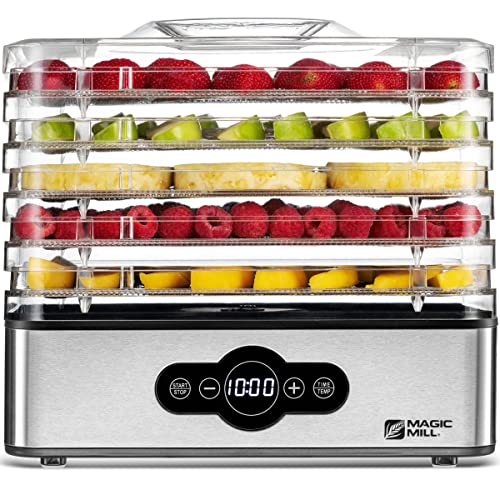
Tray area, expressed in square inches, is the most honest capacity figure a manufacturer publishes, because freeze drying is a surface process. Water vapor must escape from the food, travel through the chamber, and reach the condenser, and food spread in a thin, even layer dries far more predictably than food piled deep. Home machines in the current residential class commonly offer total tray areas in the broad neighborhood of 300 to 800 square inches, spread across three to seven trays depending on size class, with compact countertop designs at the lower end and large floor-standing designs at the upper end. More trays of moderate size generally serve a household better than fewer oversized trays, because separate trays let different foods share a cycle without sharing flavors or finishing times too awkwardly.
Tray dimensions matter alongside total area. A tray that accepts a standard silicone mat, a sheet of parchment, or a set of dividers without trimming saves minutes on every batch, and minutes compound across a season. Depth matters too: shallow trays suit sliced fruit, herbs, and cooked grains, while slightly deeper trays handle chunky stews, casseroles portioned into slabs, and thick yogurt drops without sloshing during loading. Stainless steel trays dominate this class for good reasons, since they tolerate freezing, resist staining from berries and tomato sauces, and clean without retaining odors, though their edges and welds deserve a look in documentation photographs, because a tray handled with cold, wet hands twice per cycle should have no sharp surprises.
Spacing between trays inside the chamber governs airflow and vapor movement in ways a total-area figure hides. Trays stacked too tightly can trap vapor around dense foods and lengthen the dry, while generous spacing wastes chamber volume that could have held another layer. Manufacturers rarely publish shelf spacing, so overall chamber height divided by tray count becomes the shopper’s rough proxy. A design that pairs its tray count with a chamber clearly proportioned for it reads as more coherent than one boasting an extra tray squeezed into the same shell as a smaller sibling model.
Loading discipline decides how much of the published area a household actually uses. Food pieces should sit in a single layer with small gaps, liquids should be pre-frozen in the trays or in molds before loading so they do not slosh under vacuum, and very wet foods benefit from a spell in a home freezer first, which also shortens the machine’s own freezing phase. Households deciding where frozen food waits before a cycle often coordinate a freeze dryer with ordinary freezer capacity, and readers planning that staging step may find best 10 upright freezers useful for the storage side of the workflow. The tray, in short, is not a shelf; it is the working surface of the whole process, and its area, finish, and spacing set the ceiling on everything the pump and refrigeration can achieve.
Batch weight in pounds, fresh and pre-frozen
Alongside tray area, manufacturers quote batch weight, typically as pounds of fresh food per cycle, and for home machines that figure commonly falls somewhere between about 6 and 16 pounds for mid-size designs, with compact units below that span and the largest residential units above it. The number needs careful reading. Fresh weight includes the water that will leave, so a batch of strawberries, which are mostly water, shrinks dramatically in the chamber, while a batch of cooked rice or shredded cheese starts denser and loses proportionally less. Two loads with identical fresh weight can therefore impose very different demands on the condenser, which must capture all that departing water as ice.
Pre-frozen weight is the second figure worth seeking, because many households load food already frozen, either to shorten the cycle or because the food was frozen at harvest and the dryer is catching up later. Some manuals quote a separate, often slightly lower, capacity for frozen loads, reflecting how densely frozen slabs pack and how their cold mass changes the early phase of the cycle. A manufacturer that publishes both figures, and explains the difference, is helping the buyer plan; a single unqualified pound figure asks the buyer to discover the limits by trial, usually at the cost of one under-dried batch.
Overloading is the classic beginner error, and its signature is instructive. An overloaded chamber dries unevenly: edges crisp while centers stay cold and damp, because vapor from the middle cannot escape past the surrounding food and the condenser ices toward its limit before the load finishes. Under-dried centers then reveal themselves days later in storage, when a sealed bag softens. The remedy is unglamorous, weigh the load, respect the published batch figure as a ceiling rather than a challenge, and run two honest cycles instead of one heroic one. Households that preserve in earnest keep a simple kitchen scale beside the machine for exactly this reason.
Batch weight also frames the household math that justifies the machine. A family preserving a orchard’s worth of apples, a hunter processing a season’s meat into shelf-stable meals, or a gardener facing a wall of zucchini can translate pounds per cycle and cycles per week into a realistic seasonal total, then compare that total with what the family will actually eat before the next harvest. Capacity bought beyond appetite is not harmless; it usually arrives attached to a larger pump, a larger power draw, and a larger footprint, each of which charges rent in daily life long after the harvest glut has passed.
Cycle time, the 20 to 40 hour reality
A full freeze-drying cycle at home typically runs somewhere between about 20 and 40 hours, and any household considering a machine should sit with that range until it feels concrete. A cycle is not an afternoon project; it is a day, sometimes a day and a half, during which the machine occupies its space, draws power, makes its sounds, and asks for almost no attention until the end. Food type drives the spread. Herbs and thin apple slices finish toward the shorter end. Dense, sugary, or fatty loads, thick slabs of cooked meals, and anything loaded generously push toward the longer end, and very wet foods can exceed the typical span when a cautious owner adds extra dry time, as manuals encourage.
The cycle divides into phases with different demands. Freezing comes first, when the refrigeration system pulls the food well below freezing, often into a deeply cold range, so that ice crystals form throughout. Then the pump evacuates the chamber and the drying phase begins, with gentle shelf warmth encouraging sublimation while the condenser, colder still, captures vapor as ice. A final dry period polishes off bound moisture that resists leaving. Controls on home machines increasingly automate the transitions and sense dryness, yet the physics sets a floor under total time that no control system can repeal: vapor moves at the pace the food’s structure allows.
Pre-freezing food in a separate freezer shortens the machine’s freezing phase and, just as importantly, evens it, because slabs frozen flat and hard load predictably. Households with garage storage often stage several future batches in a dedicated freezer beside the dryer, a layout that turns the pair into a small preservation line; readers arranging that kind of space may want best chest freezers for garage for the staging half of the system. The time saved per cycle, often a few hours, matters less than the rhythm gained: while one batch dries, the next freezes, and the machine rarely sits idle during a harvest push.
Planning around cycle time is the difference between a machine that serves a household and one that resents it. Loads started Friday evening finish across the weekend when someone is home to package the results promptly, and prompt packaging matters, because dried food left sitting in a humid kitchen begins reclaiming moisture from the air immediately. Owners learn to add extra dry time generously when a batch will be opened and checked, since breaking vacuum to inspect a tray costs little compared with sealing a damp batch. The honest summary is that freeze drying trades the owner’s patience for the food’s longevity, and households comfortable with slow processes, bread dough, smokers, garden seasons, tend to adapt to its tempo happily.
The vacuum pump, oil versus oil-free, and the maintenance bargain
If the chamber is the stage, the vacuum pump is the laborer, and it dominates ownership more than any other component. The pump must pull the chamber down to a deep vacuum and hold it there for many hours while vapor streams past, and two broad families serve home machines. Traditional oil-sealed rotary vane pumps use a bath of vacuum oil to seal, lubricate, and carry away contaminants. Oil-free designs, typically using dry scroll or diaphragm principles adapted for this duty, eliminate the oil entirely. Both can reach the vacuum levels freeze drying requires; they differ in temperament, upkeep, and noise far more than in the dryness of the finished food.
An oil pump’s virtues are proven performance, strong ultimate vacuum, and a purchase cost that has historically been lower for equivalent capability. Its price is paid in maintenance. Water vapor from every batch eventually contaminates the oil, turning it milky and degrading its sealing, so owners must filter or change the oil on a rhythm measured in batches, commonly somewhere in the range of every few cycles to every couple of dozen cycles depending on the pump, the food’s wetness, and whether an external oil filter is fitted. Filtering stretches intervals and saves oil; a filter accessory, where offered, usually pays for itself in a busy season. Oil changes are simple but unmistakably a chore: drain, refill to the sight-glass line, dispose of the old oil responsibly, and wipe up, because some always escapes.
An oil-free pump removes that entire chore list, which is why it tempts busy households and anyone placing the machine in a finished living space rather than a utility area. The trade-offs arrive elsewhere. Oil-free units have historically carried a higher purchase cost, may run with a different and sometimes more noticeable sound character, and eventually need service of their dry sealing elements after long service, a job less suited to a kitchen-table afternoon than an oil change. Neither family is the correct answer in the abstract. A household that will run the machine weekly and dislikes recurring chores leans oil-free; a household preserving in intense seasonal bursts and comfortable with small machinery leans toward the oil pump and banks the savings.
Whichever family a buyer chooses, pump placement and ventilation deserve forethought. Pumps reject heat, oil pumps can release a faint oil mist at the exhaust under some conditions, which an exhaust filter or a ventilated spot addresses, and all pumps vibrate enough to hum through a resonant floor or cabinet. Documentation that specifies oil capacity, change intervals, filter options, and exhaust handling in concrete terms signals a manufacturer who expects owners to keep the pump healthy for years, and pump health is machine health, because a weakening pump announces itself as longer cycles and, eventually, batches that never quite finish drying.
Vacuum depth and why the gauge reading matters
Home freeze drying operates at pressures commonly expressed in millitorr, with cycles typically running in the low hundreds as drying proceeds. A control display that reports chamber pressure lets an owner watch the cycle’s health: pressure falling steadily after the freezing phase, holding in its expected band during the long dry, and behaving oddly, spiking or stalling, when a door seal leaks or the condenser overloads. Buyers comparing models should value a readable pressure display and a manual that explains its normal patterns, because that single number diagnoses more faults than any other the machine reports.
Chamber construction, door seals, and materials that touch food
The chamber of a home freeze dryer is a pressure vessel working in reverse: instead of containing pressure pushing out, it resists the atmosphere pushing in, and its construction shows that duty. Stainless steel chambers dominate the residential class, valued for corrosion resistance against the acidic vapors of fruits and tomato products, for a surface that cleans without harboring odors, and for the stiffness that keeps a wide door opening true under vacuum. Wall thickness and weld quality rarely appear in consumer specifications, yet overall machine weight and the manufacturer’s description of the chamber material give partial clues, and a chamber described precisely, grade of steel named, earns more confidence than one described with adjectives.
The door and its seal do the daily work of holding the vacuum, and they deserve a buyer’s closest physical attention. Most home designs use a thick transparent door, commonly acrylic, so the owner can watch frost patterns and food condition without breaking the cycle, sealed against the chamber face by a rubber gasket. That gasket is a wear item and a cleanliness item at once: crumbs or a smear of sauce on its face can leak enough air to lengthen a cycle noticeably, so a routine of wiping the seal and the mating surface before every run belongs in any owner’s habits. Latching mechanisms that pull the door evenly against the gasket, rather than hinging all the closing force to one side, age better and seal more forgivingly when the gasket eventually softens.
Inside the chamber, shelf or tray supports conduct the gentle heat that drives sublimation, and their arrangement shapes drying evenness. Designs differ in whether heat reaches trays through fixed shelves or through the rack structure, and documentation that explains the heating approach in plain terms helps a buyer understand why one machine handles liquid-heavy loads more gracefully than another. Evenness matters because the batch is only as dry as its wettest piece; a chamber that runs one tray noticeably cooler than the rest forces the owner to extend every cycle for that tray’s sake, paying in hours and electricity for a design shortcut.
Condenser capacity, the amount of ice the cold trap can hold before it must be defrosted, hides inside the chamber story and limits batch ambition. A condenser sized honestly for the machine’s batch rating captures a full load’s water without its ice buildup insulating the cold surface so much that capture slows near the end. Manufacturers seldom publish condenser ice capacity directly, so batch weight ratings and defrost instructions become the practical evidence. A manual that warns against exceeding batch weight in terms of condenser behavior, rather than tray space alone, is teaching the owner the real constraint, and that teaching style correlates with machines that behave predictably in a home.
Electrical demands, the dedicated circuit question
Home freeze dryers are among the more demanding appliances a household plugs in, because refrigeration, vacuum pumping, and shelf heating can overlap for long stretches. Residential models typically draw somewhere in the broad region of 1,000 to 1,600 watts at peak on a standard 110-volt household supply in North America, with larger designs pressing toward the top of what a common branch circuit should carry continuously. Manufacturers of bigger home units commonly specify a dedicated 20-amp circuit, and mid-size units often recommend one, advice a buyer should treat as a genuine installation requirement rather than fine print, because a cycle that trips a breaker at hour nineteen wastes a day and can spoil the load’s schedule even if the food survives.
A dedicated circuit means the dryer does not share its branch with a refrigerator, a microwave, or a space heater competing for the same capacity. An electrician’s visit to add or verify such a circuit is part of the true cost of a larger machine, and households renting, or living in older homes with limited panel capacity, should settle the electrical question before choosing a size class, not after the machine arrives. Documentation that states running amperage, peak draw, and plug type plainly, including whether a special receptacle is needed, lets a buyer have that conversation with an electrician from facts rather than guesses.
Energy per batch follows from wattage and cycle length, and owners who track it usually find the figure meaningful against the value of the food preserved rather than alarming in isolation. A long cycle at moderate average draw still accumulates a noticeable number of kilowatt-hours, which is one more argument for running full batches: the electricity cost of drying a half load is barely lower than that of a full one, while the food gained halves. Households preserving garden produce they would otherwise lose, or bulk ingredients bought advantageously, generally find the arithmetic comfortable; households drying small novelty batches for amusement may not, and honesty about intended use belongs early in the decision.
Surge and outage behavior complete the electrical picture. A brief outage mid-cycle leaves food frozen in a sealed, cold chamber for a while, and most designs resume or hold safely through short interruptions, but a long outage in a warm room can thaw a load that then needs judgment rather than blind continuation. Owners in outage-prone regions learn to start cycles with weather in mind, much as they would a long smoke or a canning day. The machine’s own protections, and a manual that describes recovery behavior after power loss, are worth reading before the first storm teaches the lesson experimentally.
Noise, heat, and living with the machine for a day at a time
A freeze dryer is not loud in the way a blender is loud, but it is present in the way a refrigerator is present, multiplied by a vacuum pump and stretched across a full day and night. Sound levels for home units are commonly described in the broad region of 55 to 65 decibels at a nearby listening position during pump-active periods, with variation by pump family, mounting, and room. That level permits conversation in the same room and sleep in a different one, yet it will colonize a small apartment’s soundscape, and light sleepers should plan placement behind at least one closed door for overnight cycles.
Sound character matters as much as the decibel figure. Oil pumps tend toward a lower, steadier hum that many owners stop noticing, while some oil-free designs produce a more rhythmic or higher-pitched note that draws attention even at similar measured levels. Vibration transmitted into a floor or a hollow cabinet can add a sympathetic buzz that the machine itself never made, which is why a solid, level placement surface and intact rubber feet are acoustic features, not cosmetics. Buyers sensitive to noise should read owner documentation for any stated sound rating and treat the absence of a rating as information too, then plan the machine’s home, utility room, basement, garage corner with power, accordingly.
Heat rejection accompanies the noise. Refrigeration moves the food’s heat into the room, the pump adds its own, and a long cycle in a small closed room can raise that room’s temperature noticeably, which in turn makes the refrigeration work harder. Ventilation clearances in the manual, often a few inches on the sides and more where exhaust air leaves, exist for this reason and should be honored rather than treated as suggestions. A machine suffocating in a tight closet will run longer cycles and age faster than the same machine breathing freely in a laundry room, and no specification on a sales page can compensate for an installation that ignores airflow.
Footprint, weight, and countertop versus floor placement
Residential freeze dryers occupy more life than their photographs suggest. Compact countertop designs still commonly weigh somewhere around 60 to 90 pounds and stand tall enough to crowd upper cabinets, while larger floor-standing designs can weigh well beyond 150 pounds and claim a footprint comparable to a small dishwasher or a laundry appliance. Those figures decide practical questions that brochures skip: whether a counter can bear the weight plus a full load without flexing, whether the machine can travel up a flight of stairs with two adults and a hand truck, and whether its door swing clears the laundry tub it will inevitably be installed beside.
Countertop placement suits smaller machines and kitchens with a genuinely spare stretch of counter, which few kitchens have. Most owners migrate the machine to a utility room, a basement bench, a pantry, or a garage work surface within the first season, and planning that permanent home from the start avoids the discouraging ritual of hauling a heavy appliance between rooms each harvest. The chosen spot needs the circuit discussed earlier, ventilation, a drain or bucket arrangement for defrost water on designs that require one, and enough surrounding room to slide trays in and out without tilting them, because a tilted tray of pre-frozen soup announces itself immediately.
Carts and stands made for these machines, whether from the manufacturer or general utility stock, solve the mobility problem for households whose only suitable space is shared. A rated, locking-wheeled stand lets a large unit roll out for defrosting and cleaning, then park tightly when idle. Buyers should confirm weight ratings with the same care given to the machine itself, since a stand failure under a top-heavy appliance is a memorable kind of accident. Levelness matters too, for pump oil behavior on oil designs and for door sealing on all designs, so a stand that can be leveled on an uneven basement floor earns its keep.
Smaller households sometimes ask whether a compact machine is simply a worse large machine. It is not; it is a different bargain. A compact unit that runs twice in a week can out-produce a large unit that runs once because its owner dreads the loading effort, and the compact unit’s lower draw may fit an older home’s wiring without an electrician. The correct size is the one whose batch matches the household’s harvest rhythm and whose footprint matches a real, measured space, tape measure applied to the actual corner, rather than the one whose capacity flatters ambition in the abstract.
Which foods freeze dry beautifully, and which resist
Fruits are the ambassadors of home freeze drying, and they earn the role. Strawberries, apple slices, banana coins, mango, pineapple, and peaches emerge intensely flavored, crisp when eaten dry, and remarkably close to fresh when rehydrated, because their structure holds cells that release water willingly and their sugars, in moderate proportion, do not block drying. Vegetables follow closely: peas, corn, green beans, peppers, and cooked potato pieces all dry reliably and rehydrate into soups and skillets with little ceremony. Herbs keep color and aroma that air drying rarely matches, though their delicacy asks for gentle handling once crisp.
Cooked complete meals are where the process justifies itself for many households. Portions of chili, stew, pasta sauce, scrambled eggs, and casseroles, frozen in tray-sized slabs, dry into lightweight, shelf-stable servings that rehydrate with hot water into something recognizably itself. For campers, for emergency stores a family will genuinely eat, and for households cooking once for a busy month, that capability outweighs every fruit snack. The discipline it demands is portion honesty: slabs must stay thin enough for vapor to escape from the center, and fatty components within a meal must be modest, because fat does not dry, and it governs both the cycle’s difficulty and the finished meal’s storage life.
Sugar and fat are the two great limiters, and understanding them prevents most failures. Very sugary foods, candies, jams, syrups, and some ripe fruits in heavy syrup, resist drying because sugar binds water and can remain sticky or collapse structurally even after long cycles; some such foods are famous novelties in the freeze-drying community precisely because they transform oddly rather than dry conventionally. Very fatty foods, butter, fatty cuts, oily sauces, peanut-butter-heavy mixtures, dry poorly and store worse, since the fat remains, can turn rancid over time, and coats other components in a way that slows vapor escape. Lean, water-rich, structurally open foods are the natural subjects; rich foods need trimming, draining, rinsing where appropriate, or simply a different preservation method.
Dairy and eggs sit in a productive middle. Shredded cheese dries into a versatile ingredient, yogurt drops become a tart snack when made from low-fat yogurt, and raw eggs, beaten and dried, store as a powder that scrambles convincingly, a staple of serious home preservation. Ice cream sandwiches and similar novelties dry into the crisp astronaut-style treat, entertaining and genuinely shelf-stable, though their sugar and fat put them in the occasional-treat category rather than the pantry-staple one. Raw meats demand the same food-safety rigor as any raw handling, and most experienced households cook meats before drying or follow their manual’s guidance precisely, because freeze drying preserves whatever it is given, including mistakes.
Packaging the harvest, mylar, oxygen absorbers, and jars
Drying is only half of preservation; packaging decides whether the result lasts months or years. Freeze-dried food is hygroscopic to an almost comic degree, pulling moisture from room air from the moment the chamber opens, so the interval between a finished cycle and a sealed package should be measured in minutes, with packaging materials staged before the door opens. The standard long-storage answer in home practice is the mylar bag, a metallized film with an excellent oxygen and moisture barrier, heat-sealed after the air is pressed out, with an oxygen absorber packet inside sized to the bag’s volume.
Oxygen absorbers deserve a precise explanation, because they are widely used and widely misunderstood. The packets contain iron powder that reacts with oxygen inside the sealed package, pulling residual oxygen down to levels that stall oxidation, protect flavor and color, and discourage aerobic spoilage. They do not remove moisture, which is why the food must enter the bag fully dry, and they do not rescue a damp batch. Absorber capacity is rated in cubic centimeters of oxygen absorbed, and matching packet size to bag size and food type, with a fresh packet from a recently opened supply, since absorbers begin working on contact with air, is the kind of small exactness that separates stores that delight a year later from stores that disappoint.
Glass jars with tight lids serve beautifully for food destined to be used within months, for ingredients a cook reaches for weekly, and for anything whose condition the owner wants to inspect at a glance. Jars can be vacuum-sealed with suitable attachments for extra protection, and many households pair the two systems: mylar for the deep store, jars for the working pantry. Households that vacuum-seal extensively sometimes step up to chamber equipment for liquids and volume work, and readers weighing that tier of gear may look at best industrial vacuum sealers once the freeze-drying basics here are settled. Labels close the system: contents, date, batch weight, and any rehydration ratio discovered by experience, written on every package without exception, because memory is the one storage medium guaranteed to fail.
Storage conditions finish what packaging starts. Cool, dark, and dry is the whole doctrine, with temperature stability valued over chasing the coldest possible spot, and with bags protected from puncture by storing them in rigid bins where rodents, shelf edges, and household traffic threaten. Properly dried and packaged low-fat foods are commonly described in manufacturer guidance as keeping for many years, often quoted in ranges reaching toward two decades or more under ideal conditions, while fatty foods keep for a fraction of that span. A household should plan rotation around its own realistic horizon, eating the oldest stores first, rather than treating any number as a promise that excuses neglect.
Warranty and service networks form the quiet tail of the running-cost story, and they deserve a paragraph of their own because a freeze dryer is a refrigeration appliance, a vacuum appliance, and an electronic control system sharing one cabinet. When something falters in year three, the household’s experience depends on whether the manufacturer stocks pumps, gaskets, sensors, and control boards as ordinary parts, publishes troubleshooting guidance that respects the owner’s intelligence, and answers for its machines through a service channel a real person can reach. Documentation that includes a parts diagram and honest maintenance intervals hints at that support culture. Buyers comparing two otherwise similar models can reasonably let the stronger support story break the tie, since a machine designed to run thousands of hours across a decade should be bought from a maker visibly planning to stand beside it for that decade, with seals on the shelf and advice on record when the first unusual sound appears in the night.
Defrosting, cleaning, and the rhythm between batches
Between cycles, the condenser holds the previous batch’s water as a jacket of ice, and that ice must leave before the next batch can run well. Defrosting on home machines ranges from fully manual, door open, fan or room air, melt water collected or drained, to assisted modes that speed the melt. The time involved, commonly an hour to a few hours depending on method and room temperature, belongs in the household’s cycle planning just as drying time does, because a machine defrosting is a machine not drying, and back-to-back harvest batches need the turnaround counted honestly.
Cleaning follows defrosting in the same maintenance breath. The chamber wipes down with a soft cloth and mild cleaning solution, the door gasket gets its careful wipe and inspection, trays wash like the stainless cookware they resemble, and the drain, where fitted, gets flushed so melt water never leaves a stale residue to perfume the next batch of peaches. Strong solvents and abrasive pads have no place near food surfaces or gaskets, and manuals for this class are consistent on that point. Owners who build the wipe-down into the defrost wait find the machine stays neutral-smelling indefinitely; owners who skip it eventually meet the ghost of an old fish dinner inside a batch of strawberries.
The pump rejoins the rhythm here as well. Oil designs want their oil condition checked on the schedule the manual sets, with the sight glass read like a dipstick, and filtering or changing done while the machine rests rather than as an emergency mid-season. Door seals want occasional inspection for nicks and compression set. The vacuum hose connections want a firm hand check. None of these tasks is long; together they form a fifteen-minute liturgy between batches that protects the next forty hours of unattended running, and households that adopt it rarely experience the mysterious long cycle that turns out to be a crumb on a gasket.
Record keeping, unfashionable as it sounds, elevates the whole practice. A simple notebook or phone note per batch, food, fresh weight, pre-frozen or not, cycle length, extra dry time added, result, teaches an owner their machine’s dialect within a single season. Which foods needed two extra hours, which tray runs slowest, how the pump sounds when its oil is due: these are knowable things, and the household that writes them down stops relearning them. Manufacturers’ guidance gives the starting settings; the owner’s log gives the truth for one kitchen, one harvest, and one machine.
Judging dryness, the skill the machine cannot fully automate
Modern home machines estimate dryness with sensors and algorithms that weigh temperature and pressure patterns, and those estimates have grown genuinely useful, yet the final judgment still belongs to the owner, because the cost of error is asymmetric. Extra hours of drying cost a little electricity and time. Insufficient drying costs the whole batch, discovered weeks later as softened pieces, off odors, or worse inside a sealed bag. Experienced owners therefore treat the machine’s finished signal as an invitation to verify: open, handle the thickest pieces from the coolest tray, break one open, and feel for any coolness, which betrays evaporating moisture, or any flexibility where crispness should be complete.
Warmth fools beginners reliably. Food leaving the chamber can feel dry because the final phase warmed it, while residual moisture hides in dense centers, which is why a short rest and a second check, sometimes after weighing, protects a batch. Weighing is the quantitative ally: a tray weighed before drying and again near the end, showing no further loss across an added interval, has given up the water it is going to give up. Households preserving high-value food, a season of berries or a hunter’s careful processing, adopt the scale habit readily. Households drying herbs for the month’s cooking can afford a lighter touch, and matching verification effort to the value and intended storage life of the batch is simple rationality.
Rehydration behavior provides the retrospective grade. A piece that returns close to its original texture and flavor in water confirms the cycle; a piece that stays leathery at the center while its surface softens confesses it was under-dried or loaded too thick. Owners should let those verdicts adjust the next batch’s slicing, loading, and extra-time habits rather than treating each cycle as an isolated event. Freeze drying skill compounds quietly, and by the second season most owners run their machines with a confidence no manual alone could have given them, because their own batches have become the reference library.
Food safety across the cycle, from raw handling to the sealed bag
Freeze drying preserves food; it does not purify it, and that distinction should govern every batch. The process removes water so effectively that bacteria, yeasts, and molds cannot grow in the finished product, yet it does not reliably destroy the microorganisms present at loading, many of which simply wait, dormant, for moisture to return. Food that enters the chamber clean, fresh, and handled with ordinary kitchen hygiene leaves the chamber worthy of long storage. Food that entered questionable leaves equally questionable, merely lighter, and the sealed bag will not improve it during its years on the shelf. The machine is a pause button of extraordinary length, not a reset button.
Preparation habits carry most of the safety burden. Produce should be washed, inspected, and trimmed of damaged portions, because bruised and decaying tissue carries heavier microbial loads and dries unevenly besides. Meats deserve the strictest discipline: many experienced households cook meat fully before drying, season it as a finished dish, and treat raw-meat drying as an advanced practice governed closely by their manual and by established food preservation guidance, with attention to fat content as well, since fatty meat stores poorly even when dried thoroughly. Eggs, similarly, are usually dried cooked or as a well-handled beaten raw preparation destined to be cooked after rehydration, and the household’s ordinary rules about cross-contamination, separate boards, washed hands, and clean trays apply with full force on loading day.
The hours after a cycle ends are the second critical window. Dried food exposed to humid kitchen air begins absorbing moisture immediately, and warm food sealed too quickly can create condensation inside a package, undoing dryness from within. The working rhythm that protects a batch is unhurried but purposeful: verify dryness, let pieces settle to room temperature, package in staged materials with absorbers ready, seal, label, and move the finished bags to storage rather than leaving them on the counter for a day of admiration. Gloves or clean, dry hands matter here too, because the oils and moisture of skin are exactly what the process spent forty hours removing.
Rehydration day completes the circle of responsibility. Dried food returned to water should be treated with the respect due to its original form: meals rehydrated and heated thoroughly, ingredients added to cooked dishes where the recipe allows, and any package showing a broken seal, unexpected softness, off odor, or visible mold retired without debate. The long storage lives quoted for freeze-dried food assume intact packaging and honest dryness at sealing; a household that inspects its stores periodically, squeezes bags gently to confirm they remain crisp within, and rotates stock will catch the rare failure early, when it is a disappointment rather than a hazard.
Running costs and consumables, the budget beyond the machine
The purchase price opens the account rather than closing it, and a household planning honestly should sketch the recurring costs before the first harvest arrives. Electricity per cycle, governed by the wattage and hours discussed earlier, is the steadiest expense and the easiest to estimate from a local utility rate. Packaging runs second: mylar bags in several sizes, oxygen absorbers bought in quantity and stored sealed until use, labels, and replacement seals for jars accumulate into a modest but real per-batch figure. None of these costs is hidden, yet buyers who price only the machine sometimes flinch at the first restocking order, which is simply the process asking to be fed.
Pump upkeep divides by family, as the pump section explained, but both families have a line in the ledger. Oil designs consume vacuum oil and filter elements on their batch rhythm, small sums that reward buying ahead so a milky sight glass never waits a week for a delivery while a ripe harvest waits with it. Oil-free designs defer their cost into less frequent, larger service events. Trays and accessories add their share over time: extra tray sets that let the next load be prepared while the current one runs, silicone mats and dividers that speed loading, a spare door gasket bought before the original needs replacing. Each accessory should justify itself in batches actually run, and the household that buys the full catalog on day one usually discovers that two or three humble items do nearly all the work.
Against those costs stands the value side, which households should calculate with equal honesty. Food preserved is food not purchased later at retail, garden produce rescued from the compost glut of August, bulk ingredients divided and stored at the quality the household chose, and prepared meals banked against busy weeks and emergencies alike. The households that report the deepest satisfaction tend to run their machines often, keep batches full, and eat what they store in regular rotation, so the machine’s output displaces real grocery spending week after week. A machine run twice a year for novelty snacks will never justify its shelf of consumables, and no specification in this guide can rescue that arithmetic, which is why intended use, stated plainly at the start, remains the most important figure in the entire purchase.
Check prices on Amazon
Live listings for the shortlist in this guide are pulled from Amazon below, so prices and availability are always current at the moment you look.


Sizing the purchase to the household, a closing framework
The decision, gathered into one framework, asks five questions in order. How much food, honestly weighed, will this household preserve in a year? That answer sizes the tray area and batch weight, with the caution that appetite for preserving usually grows once the machine proves itself, but rarely grows past the garden, orchard, or hunting reality feeding it. Where will the machine live, measured, with its circuit, ventilation, drainage, and door swing confirmed? That answer eliminates models no specification can save. Which pump temperament suits this household, the lower entry cost and small recurring chore of oil, or the quieter conscience and higher entry cost of oil-free? That answer shapes daily satisfaction more than any other single choice.
The fourth question concerns time: does this household’s week contain recurring day-long windows when a cycle can run and be packaged promptly at the end? A machine whose cycles finish at three in the morning to be discovered at noon has been scheduled against its owner, whatever its specifications promise. The fifth question looks past the machine to the system around it: freezer space for staging, which for many households means choosing a mid-size freezer companion such as those covered in best 7 cu ft freezers, shelving for the finished store, a stock of bags and absorbers, and a scale and notebook for the working rhythm. A freeze dryer bought as a system succeeds; bought as an isolated appliance, it often idles.
Documentation quality ties the framework together as the buyer’s final screen. Manuals that state tray area and batch weight in both fresh and pre-frozen terms, that give pump maintenance intervals in numbers of batches, that specify circuit requirements without hedging, and that describe defrost and cleaning as the normal rhythm they are, come from manufacturers who expect their machines to be used hard for years. Sales material that leads with wonder and omits every maintenance noun is selling a honeymoon. Households should buy for the marriage: the Tuesday in February when the machine, defrosted, wiped, oiled or effortlessly oil-free, loaded with the last of the frozen garden tomatoes, settles into its long quiet hum and turns a season that would have been lost into shelves of summer, waiting patiently for water to become dinner again.