Our Top Picks
 OSLTWI Ultrasonic Jewelry Cleaner Machine: 48KHz Ultra Sonic8.35 x 4.21 x 2.83 inchesCheck on Amazon
 Steamfast SF-1000 JULE Steam Jewelry CleanerTabletop6.08 x 10.43 x 10.06 inches4 poundsCheck on Amazon
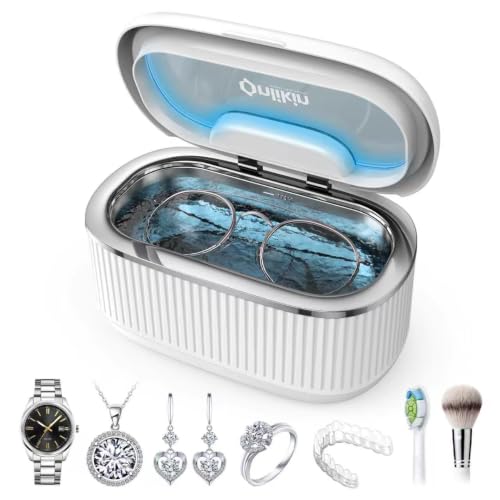 onlikin 35W Ultrasonic Jewelry Cleaner8.78 x 5.24 x 4.17 inches8.7 x 5.2 x 4.5 inches1.61 poundsCheck on Amazon


What's inside
- Two different machines hide behind one shopping phrase
- Ultrasonic frequency: what the kilohertz figure really tells you
- Tank size, baskets, and the geometry of what fits
- The stones and materials that must stay out of an ultrasonic tank
- Metals, settings, and the pieces that clean beautifully
- Cleaning solutions: plain water, household mixtures, and formulated products
- Steam cleaners: pressure, nozzles, and a different kind of care
- Cycle length, repetition, and knowing when to stop
- Maintaining the machine itself: tanks, transducers, and boilers
- What these machines clean beyond jewellery, and where to be careful
- Reading a product listing with a jeweller’s scepticism
- A calm, repeatable session routine from start to finish
- Children, pets, and shared bathrooms: household realities
- When cleaning reveals a problem rather than solving one
- Choosing between ultrasonic, steam, or both for your collection
- Environmental and practical details of everyday ownership
- Check prices on Amazon
- Travel, gifting, and the second-order questions buyers forget
As an Amazon Associate I earn from qualifying purchases. This post may contain affiliate links at no extra cost to you.
Two different machines hide behind one shopping phrase
Home jewelry cleaner machines divide into two families that work by entirely different means, and confusing them is the most common buying mistake in this category. An ultrasonic cleaner fills a small stainless tank with water and a cleaning solution, then vibrates that liquid tens of thousands of times per second. The vibration creates microscopic bubbles that form and collapse against every surface of a submerged ring, chain, or bracelet, loosening the film of soap residue, skin oil, lotion, and ordinary grime that dulls metal and clouds the undersides of stones. A steam cleaner does the opposite job in the open air: it heats water in a pressurised reservoir and releases a focused jet of hot steam through a nozzle, blasting loosened dirt away from settings and drying the piece in the same motion.
Each method suits a different kind of dirt and a different kind of owner. Ultrasonic cleaning excels at the slow, invisible buildup that accumulates inside link chains, under stone settings, around earring posts, and in the engraved recesses of a band, places a cloth cannot reach and a brush reaches only with patience. Steam excels at the finishing stage, driving moisture and loosened debris out of a setting and restoring a bright, dry sparkle immediately before a piece is worn. Professional jewellers have long used both in sequence, which is why some home units combine the functions, but a household buyer should first decide which problem they actually have: jewellery that is structurally dirty in its crevices, or jewellery that is clean but dull and in need of a quick revival before an evening out.
Neither machine performs repair, and setting expectations there matters. Cleaning will not tighten a loose stone, straighten a bent prong, remove deep scratches, restore worn plating, or reverse tarnish chemistry on every metal in the same way. What it can do, done correctly and on suitable pieces, is remove the layer of accumulated film that prevents light from entering and leaving a stone, which is why a properly cleaned ring often looks dramatically brighter even though nothing about the piece itself has changed. Editorial research across manufacturer instructions and jeweller guidance returns repeatedly to that distinction: these are maintenance appliances, and their value lies in regular, gentle upkeep rather than rescue of neglected or damaged pieces.
Ultrasonic frequency: what the kilohertz figure really tells you
Ultrasonic cleaners for home jewellery commonly operate around forty to forty-five kilohertz, and that number describes how many times per second the transducer vibrates the tank. Lower frequencies produce larger, more energetic bubbles that collapse with greater force, which suits robust, heavily soiled items. Higher frequencies produce smaller bubbles that penetrate finer crevices and treat delicate surfaces more gently, which is why specialised equipment for fragile work runs higher still. For the mixed reality of a home jewellery box, the common band around forty-two kilohertz represents a deliberate compromise: energetic enough to shift dried lotion from a chain, yet moderate enough for routine use on hard stones and precious metals when the manufacturer’s guidance is followed.
Frequency should not be read as a simple quality score where more is better. A machine advertising a much higher figure is not automatically superior for a wedding band caked with garden soil, and a lower, stronger action is not automatically dangerous for every piece. What matters is the match among frequency, cycle length, solution, and the specific item being cleaned. Some home models offer more than one power level or a gentler mode for sensitive pieces, and that adjustability is often more useful in practice than a headline frequency, because the same household may clean a sturdy silver bracelet one day and a fine, intricately set ring the next. Reading the manual’s own examples of suitable and unsuitable items tells you more than the kilohertz number alone ever will.
Sweep or varying-frequency designs add another nuance worth understanding. A fixed frequency can leave quiet zones in a tank where the bubble activity is weaker, so some machines vary the frequency slightly during a cycle to move those zones around and clean more evenly. Degas functions, found on more advanced units, run the liquid briefly to drive out dissolved air so the bubbles form more efficiently. Heating elements in the tank warm the solution, which helps dissolve greasy films. None of these features is essential for basic home use, yet each addresses a real physical behaviour of the process, and a buyer who understands them can judge whether a particular model’s extras solve problems they will actually encounter or simply lengthen a feature list.
Tank size, baskets, and the geometry of what fits
Tank capacity in home ultrasonic units is usually stated in millilitres, with compact jewellery models commonly falling somewhere between roughly four hundred and eight hundred millilitres, and larger multi-purpose tanks extending well beyond that. The raw volume, however, matters less than the tank’s internal dimensions and the size of the removable basket that holds your pieces. A long chain necklace needs width more than depth. A chunky bracelet needs clearance so it does not rest against the tank wall. Sunglasses, watch straps, dentures, razors, and other household items that manufacturers often list as secondary uses each impose their own shape, so a buyer planning to clean more than jewellery should measure their largest intended item rather than trusting a volume figure.
The basket deserves more attention than it usually receives. Pieces should rest in the basket, suspended in the solution, rather than sitting directly on the tank floor, because contact with the vibrating surface can cause wear, rattling damage, and uneven cleaning. A basket with a fine enough mesh to retain earring backs and small pendants, handles that stay cool and reachable, and a shape that lifts pieces clear of the liquid for draining will shape daily satisfaction far more than an extra hundred millilitres of capacity. Some units include watch holders or specialised racks that keep a watch case above the waterline while its metal bracelet is submerged, a thoughtful detail for households that intend that use and a pointless extra for those that do not.
Placement and waterline discipline complete the sizing picture. Tanks have a maximum fill line, and exceeding it weakens cleaning, invites spilling when pieces are added, and can damage the unit if liquid reaches electrical components. Running a tank too low is equally unhelpful, since pieces must be fully submerged for the bubbles to reach every surface. The machine itself needs a level, water-resistant surface near a sink, room for its lid to open, and enough distance from the edge that a vibrating unit cannot walk itself toward a fall during a long cycle. Because these appliances live where water and cleaning tasks already happen, many owners settle them into the same utility rhythm as other sink-side jobs, much as a household might keep best baby tubs for kitchen sinks stored nearby for an entirely different kind of careful washing, and that shared, water-aware corner of the home suits an ultrasonic tank well.
The stones and materials that must stay out of an ultrasonic tank
The single most important page in any ultrasonic cleaner’s manual is the list of what not to put in it, and that list exists because the same vibration that loosens dirt can loosen, crack, or cloud vulnerable materials. Pearls head the exclusions: their nacre is soft, organic, and easily dulled or damaged by vibration, heat, and cleaning chemicals, and pearl strands are also knotted on silk that weakens when soaked. Opals contain water within their structure and can crack or craze under vibration and temperature change. Emeralds are famously included and are frequently treated with oils or fillers that ultrasonic action and solutions can strip, leaving the stone looking worse and potentially worsening its fractures. Turquoise, lapis, malachite, and other porous stones can absorb solution and change colour or surface.
The caution list continues beyond the famous names. Tanzanite, topaz in some conditions, peridot, and other stones with cleavage planes can be vulnerable to energetic vibration. Coral, amber, jet, and ivory are organic and porous. Any stone that is glued into its setting rather than mechanically held risks having that adhesive softened or the stone shaken loose, which includes many fashion pieces, some doublets and triplets, and assembled stones whose layers are bonded. Enamel surfaces, painted details, and antique pieces with delicate foil backing behind stones all belong outside the tank. Costume jewellery with glued crystals is a particularly common casualty, because owners assume a sparkling appearance implies durability, when in fact its construction is among the most fragile in a jewellery box.
When in doubt, the safe method for excluded pieces is the oldest one: lukewarm water, a drop of mild soap, a very soft brush used without pressure, a rinse, and patting dry with a lint-free cloth, followed by air drying before storage. That gentle routine, performed occasionally, keeps pearls and soft stones presentable without risking their structure. A buyer whose collection is dominated by pearls, opals, emeralds, and antique pieces should question whether an ultrasonic machine serves them at all, or whether a steam unit used cautiously at a distance, or simply good cloths and professional servicing, fits their jewellery better. The honest answer depends on the contents of your own box, inventoried piece by piece, rather than on the average collection imagined by a product page.
Metals, settings, and the pieces that clean beautifully
Against that caution list stands the group of pieces for which home ultrasonic cleaning is genuinely well suited. Solid gold in its common jewellery alloys, platinum, and sterling silver are structurally robust, and hard, durable stones such as diamond, sapphire, ruby, and spinel tolerate the process when their settings are sound. Plain bands, sturdy chains, hoop earrings, and bracelets with secure clasps emerge noticeably brighter, because the bubbles reach the inner curves and link junctions where cloth polishing never touches. Moissanite and cubic zirconia, being hard and stable, are also commonly cleaned this way, though their settings deserve the same inspection as any other piece before a cycle begins.
That inspection is not optional decoration; it is the step that prevents a cleaning session from becoming a search through dirty tank water for a lost stone. Before any cycle, hold each piece close, look along its prongs, and press very gently around stones with a fingertip or a soft tool to sense movement. Check clasps by opening and closing them, examine chain links near the clasp where wear concentrates, and look for bent prongs, cracked shanks, or stones that sit unevenly. A piece with any of those faults goes to a jeweller for repair first and cleaning afterwards, ideally in that order and often as part of the same visit. Discovering a loose stone over a soft towel at home is a gift; discovering its absence in a drained tank is a small disaster.
Tarnished silver deserves a specific note, because owners often expect an ultrasonic tank to reverse tarnish and are disappointed when pieces emerge clean but still darkened in recesses. Tarnish is a chemical surface change, not a layer of dirt, so bubbles alone do not remove it. Polishing cloths treated for silver, or a jeweller’s attention for valuable pieces, address tarnish directly, after which ultrasonic cleaning can maintain the result by keeping recesses free of buildup. Similarly, plated jewellery of every kind should be treated gently and briefly if cleaned ultrasonically at all, since worn plating exposes base metal and vigorous or repeated cycles can accelerate the visible wear. Knowing which problem you are solving, dirt or chemistry, keeps the machine in its proper role.
Cleaning solutions: plain water, household mixtures, and formulated products
What fills the tank changes results as much as the machine does. Plain warm water with a small amount of mild dish soap is the baseline recommended across much manufacturer and jeweller guidance for routine jewellery cleaning, because it loosens oils and everyday film without aggressive chemistry. Formulated jewellery cleaning solutions, sold for ultrasonic use, add surfactants and sometimes ammonia-based ingredients intended to cut heavier grease and restore brightness on suitable metals and hard stones. Concentrates are diluted according to their own labels, and that dilution matters: too weak and the cycle underperforms, too strong and residues, odours, and material risks all increase without any gain in cleanliness.
Household improvisation needs firm boundaries. Bleach, chlorine products, acetone, boiling water poured over stones, abrasive powders, and toothpaste have no place in an ultrasonic tank or on jewellery generally, and each carries a documented capacity to damage metals, stones, coatings, or the tank itself. Vinegar and other acidic mixtures, sometimes suggested online for household objects, can attack soft stones, plated surfaces, and certain metals, and should not be transferred casually from a kettle-descaling context to a jewellery context. If a solution is not described by its maker as suitable for the material in your hand, the conservative answer is mild soap and water, which handles the overwhelming majority of home cleaning needs without drama.
Solution hygiene between sessions is the unglamorous detail that separates careful owners from disappointed ones. Dirty liquid cleaned nothing ever again; once a cycle has lifted grime from a batch of pieces, that same liquid deposits a share of it onto the next batch. Change the solution when it looks cloudy, after cleaning notably soiled items, and at the start of any session where the previous fill has sat for days collecting dust. Rinse pieces under clean running water after their cycle, over a bowl or a closed drain rather than an open plughole, and pat them dry rather than leaving solution to evaporate into spots. The sink area where this rinsing happens benefits from the same orderly approach a household applies to other delicate washing, and afterwards a quick wipe-down keeps residue from building on surrounding surfaces, in the same spirit as the routines gathered under best cleaners for blanco diamond composite kitchen sinks for owners whose utility sink does double duty across the home.
Steam cleaners: pressure, nozzles, and a different kind of care
A home steam jewelry cleaner replaces the tank with a boiler. Water heats inside a sealed reservoir until it reaches pressure, and a trigger or button releases it as a concentrated jet through a narrow nozzle, sometimes with a brush or tweezers supplied to hold the piece in the stream. The force and heat together dislodge softened dirt, rinse away loosened solution after an ultrasonic cycle, and leave the piece hot and dry within moments. Because nothing is submerged, steam avoids prolonged soaking, which appeals to owners of pieces that tolerate brief heat and moisture better than immersion, though steam brings its own exclusions and is never a universal safe alternative.
Pressure is the specification to read carefully here, along with reservoir capacity and heat-up time. A small home reservoir produces a limited working window of steam before it must cool, refill, and reheat, and that rhythm suits an owner cleaning a few pieces before an occasion far better than one processing an entire collection in a sitting. Nozzle design shapes control: a focused jet reaches beneath stone settings and into chain links, while a poorly shaped outlet sprays diffusely and mostly makes noise. Tweezers or a holding tool are close to essential, because a small ring held in fingers directly in front of a steam jet is a burn waiting for a distracted moment, and pieces should be held over a towel or mesh so a dropped item lands softly and visibly rather than bouncing across a hard floor.
Steam safety habits mirror those of any pressurised hot appliance. Never open a reservoir cap while the unit remains hot or pressurised, follow the cooling interval the manual specifies before refilling, keep the jet directed away from skin, eyes, and anyone nearby, and treat the nozzle zone as hot for a while after the trigger is released. Stones with fractures, fillings, glue-set pieces, pearls, opals, and other heat- or shock-sensitive materials should stay away from steam as firmly as from ultrasonic tanks, because thermal shock can crack a stone that vibration would have spared. Used on sound, hard-stone pieces, though, steam delivers the immediate, visible transformation many owners actually want: moisture blown from under a stone, surfaces dried streak-free, and sparkle restored in under a minute per piece.
Cycle length, repetition, and knowing when to stop
Home ultrasonic machines typically offer preset cycles measured in minutes or in preset second counts, and longer is not a synonym for cleaner. Most routine jewellery cleaning completes within a short cycle, after which additional cycles in the same dirty solution accomplish little beyond extra vibration exposure for settings and stones. A better sequence for a neglected piece is a first cycle, inspection under good light, a solution change if the water has clouded, gentle attention with a soft brush to a stubborn recess, and only then a second short cycle if the inspection justifies it. That rhythm respects both the jewellery and the physics, since the bubbles do their best work when the liquid is clean and the dirt has already been loosened.
Frequency of cleaning across a year deserves the same moderation. Pieces worn daily, such as wedding bands and everyday earrings, collect film quickly and benefit from regular brief cleaning, perhaps every few weeks depending on lotions, work, and habits. Pieces worn occasionally need attention mainly before and after wear, and a quick inspection matters more than a full cycle each time. Over-cleaning is a real if modest risk: repeated vibration of a marginally loose stone hastens its escape, repeated soaking of strung or glued pieces weakens their construction, and repeated chemical exposure dulls vulnerable surfaces gradually enough that the owner blames age rather than routine. A calendar of gentle, appropriate cleaning beats an enthusiastic habit applied indiscriminately to everything that sparkles.
Drying and storage after cleaning close the loop. Pieces should be fully dry before returning to a closed box, because trapped moisture encourages tarnish on silver and mildew-like odours in padded compartments. A soft, lint-free cloth, a few minutes of air on a clean towel, and separation of pieces so hard stones do not scratch softer metals in storage preserve the brightness the machine just restored. That towel on the counter does quiet double duty during a session, catching drips and giving finished pieces a safe landing place, which is why absorbent, washable cloths like those covered in best absorbent kitchen hand towels tend to migrate permanently into the jewellery-cleaning kit of households that clean pieces at a kitchen or utility counter rather than a dressing table.
Maintaining the machine itself: tanks, transducers, and boilers
An ultrasonic tank that is never cleaned gradually becomes a source of the film it exists to remove. After a session, empty the tank, rinse it, wipe it with a soft cloth, and leave it dry with the lid open or ajar according to the manufacturer’s guidance. Hard-water deposits can accumulate on the tank floor and walls, especially in homes with mineral-heavy water, and they should be addressed with the method the manual permits, commonly a mild descaling approach kept well away from jewellery itself. Never scrape the tank floor with metal tools or abrasive pads, because the surface and the transducer bond beneath it are part of how the machine works, and damage there degrades every future cycle in ways that look like declining cleaning power.
Steam units ask for a parallel discipline centred on mineral scale inside the boiler and nozzle. Using distilled or demineralised water where the manual recommends it slows scale formation dramatically, and following the maker’s descaling schedule keeps pressure and jet quality consistent. A steam cleaner that sputters, spits droplets, or takes longer to reach pressure is usually reporting scale or a tired seal rather than a mysterious decline, and the manual’s maintenance section should be the first consultation. Store either type of machine empty and dry, with its cord loosely coiled and its accessories together, so the next session begins with assembly rather than archaeology through cupboards.
Electrical care around water needs stating plainly because these appliances live at sinks. Keep plugs and control panels dry, run the machine on a stable surface where splashes are unlikely to reach an outlet, unplug before filling or emptying where the manual instructs, and never immerse the body of the unit in water for cleaning. Inspect cords periodically for damage, particularly on machines stored in crowded utility cupboards where edges press and bend them. These habits are ordinary, yet they are the difference between a small appliance that serves for years of weekly use and one that fails early for reasons entirely unrelated to its cleaning ability. A few minutes of maintenance after each session is, in effect, part of the cleaning cycle, performed for the machine rather than by it.
What these machines clean beyond jewellery, and where to be careful
Manufacturers commonly list secondary uses for ultrasonic tanks, and many are legitimate: metal watch bracelets with the watch head kept out of the water, eyeglasses where coatings and the manual permit, razor heads, dental appliances, combs, and small metal household items all respond well to the same bubble action. Each addition, though, should pass the same two questions applied to jewellery: is the material structurally sound and non-porous, and does any coating, adhesive, or assembly method object to vibration and soaking? Eyeglass lens coatings, glued sunglass components, and painted or lacquered items fail those questions more often than product photographs suggest, and a separate, gentle hand wash serves them better.
Mixing categories in one session is poor practice even when each item is individually suitable. Jewellery should not share a cycle with greasy tools or heavily soiled hardware, because the solution becomes a soup of whatever the dirtiest item released. Group pieces by soil level and fragility instead: a batch of sturdy daily-wear rings and chains, then a separate gentler batch for finer pieces, with fresh solution between groups when the water clouds. Keeping the counter around the tank as orderly as the process itself helps, and a final wipe of surrounding surfaces with the sort of product thinking collected under best cleaner for kitchen counters and sinks leaves a utility area ready for its next, entirely different job, since the same counters host food preparation once the jewellery session ends.
Sentimental and high-value pieces deserve a category of their own that sits outside routine machine use. Antique jewellery, inherited pieces with unknown repair histories, items with documentation or appraisal conditions, and anything whose loss would be genuinely distressing should be cleaned by a professional jeweller, who can inspect settings under magnification, identify stones and treatments an owner may not know about, and choose methods accordingly. Home machines serve the robust majority of an everyday collection admirably, and recognising the minority that should travel to a workbench instead is not a failure of the appliance. It is the same judgement a careful owner applies everywhere else: match the method to the object, not the object to the newest tool.
Reading a product listing with a jeweller’s scepticism
Product listings for these machines lean heavily on transformation photographs, and those images deserve the same scepticism a jeweller would apply to them. A before photograph taken under flat, dim light and an after photograph taken under a bright, directional lamp will show a dramatic difference even if cleaning contributed only part of it, because sparkle is as much a property of lighting as of cleanliness. More informative are the specifications a listing cannot flatter: tank dimensions, frequency, cycle options, whether the tank heats, basket design, reservoir volume and pressure for steam models, cord length, and the contents of the exclusion list. A seller willing to publish a thorough list of unsuitable materials is, paradoxically, more trustworthy than one claiming universal safety, because the physics of these machines guarantees that exclusions exist.
Warranty and parts information complete the picture. Tanks, lids, baskets, seals, and steam nozzles are the components that wear, stain, or break, and a manufacturer that sells or supplies replacements expects the machine to remain in service. Basket dimensions and availability matter surprisingly often, since a lost or cracked basket tempts owners into resting pieces directly on the tank floor, with the wear that follows. For steam units, check how the reservoir cap seals and whether that seal is replaceable, because a perished seal converts a pressure appliance into a sputtering kettle. None of these checks requires expertise, only the willingness to read past the photographs to the documents and details underneath them.
Size claims need translating into your own space and collection. Measure the counter or shelf where the machine will live, allow room for the lid to open and for pieces to be staged on a towel beside it, and count the pieces you genuinely expect to clean in a typical session. A compact tank that handles your six everyday pieces in one batch is a better purchase than a cavernous one that must be filled deeper, uses more solution, and crowds a small utility area for the sake of a hypothetical marathon session. Conversely, a household cleaning pieces for several family members, or maintaining a rotation of watches and bracelets, may find a mid-sized tank’s second and third batches tedious enough to justify stepping up. Fit the machine to the session you will actually repeat.
A calm, repeatable session routine from start to finish
A good cleaning session begins before water touches the tank. Gather the pieces, inspect each setting and clasp over a soft towel, set aside anything doubtful for professional attention, and sort the remainder by fragility and soil. Fill the tank to its line with warm water and the chosen solution at its stated dilution, place pieces in the basket without crowding or stacking, and lower the basket so everything is submerged and nothing touches the walls. Crowding is the quiet enemy of even cleaning, because pieces shield one another from the bubble action and can scratch each other as the tank vibrates, undoing in one session the careful separation that storage provides.
During the cycle, resist opening the lid repeatedly to check progress, since the process is not improved by observation and the solution does its work undisturbed. Use the minutes productively instead: lay out the rinsing bowl, the soft cloths, and the drying towel, and prepare a small tray lined with a clean cloth for finished pieces. When the cycle ends, lift the basket, let it drain briefly over the tank, rinse each piece under gentle running water over a protected drain, and inspect it under the best light available. A piece that still shows a stubborn deposit in one recess earns targeted attention with a soft brush and perhaps a second short cycle in fresh solution, not an automatic marathon in the old liquid.
Steam finishing, where a household uses both methods, follows rinsing: hold each piece with tweezers over a towel, pass it through the jet with attention to the undersides of settings, and set it down to cool and dry completely. Then comes the part owners skip and later regret: emptying and rinsing the tank while its contents are fresh in memory, wiping the exterior, and returning dry pieces to separated storage rather than a communal heap on the tray. Written as a sequence it sounds elaborate, yet in practice the whole routine for a handful of everyday pieces occupies a small part of an afternoon, and its repeatability is precisely what keeps a collection bright without ever subjecting it to heroic, risky deep-cleaning interventions.
Children, pets, and shared bathrooms: household realities
These machines usually operate in shared domestic spaces, and their routines should account for the household as it is rather than as a product photograph imagines it. An ultrasonic tank filled with solution is an open container of liquid at a height curious children and pets can investigate, and a steam unit’s jet is attractive precisely because it looks like a toy. Run sessions when interruptions are unlikely, keep the area closed or supervised while a tank is filled or a boiler is hot, and store solutions with the same care given to other household chemicals, out of reach and clearly in their original labelled containers. A cleaning session postponed to a quieter hour is always preferable to one conducted while managing a crowd.
Shared bathrooms and utility rooms add scheduling and hygiene considerations. A tank session monopolises a sink for filling, rinsing, and draining, and leaves splashes that should be wiped before the room returns to ordinary use. Households that clean jewellery at a kitchen sink should be especially deliberate about separating the session from food preparation in time, washing hands and surfaces afterwards, and never letting solution or rinse water contact food, utensils, or preparation boards. These are ordinary domestic disciplines rather than special hazards, but stating them matters because the marketing of these appliances presents them as effortless, and effortlessness is exactly the frame of mind in which small contaminations and small accidents happen.
Storage in a shared home should also keep the machine’s accessories together and its tank dry, so the next user does not inherit a half-filled unit of unknown solution and unknown age. A simple household convention, that the machine is always left empty, dry, and unplugged with its basket inside and its manual nearby, prevents most misunderstandings between family members. If several people clean their own pieces, the exclusion list deserves to live with the machine in physical form, because the person most likely to drop a pearl necklace into the tank is the person who never read the manual and assumes the appliance is as universal as a sink. Shared tools need shared knowledge, briefly and visibly recorded.
When cleaning reveals a problem rather than solving one
Occasionally a session’s most valuable outcome is a discovery. A stone that rattles faintly after cleaning was loose before it, hidden by the very grime that was cushioning it. A clasp that no longer closes crisply, a chain that shows a thinned link near its end ring, a prong worn to a knife edge, or plating that has worn through at a band’s base all announce themselves most clearly on a clean, dry piece inspected under good light. Owners sometimes feel cleaning caused these faults, when in fact it merely ended their concealment, and that distinction matters because it directs the response toward timely repair rather than away from future cleaning. A jeweller can often tighten, rebuild, or re-tip a setting economically when the wear is caught early.
Knowing when to stop a home routine is part of competent ownership. If a piece sheds a stone, a fragment, or a section of enamel during inspection or a cycle, retrieve everything, place all parts together in a small sealed container, and take the complete set to a jeweller rather than attempting reassembly with household adhesives, which contaminate settings and complicate professional repair. If a metal piece emerges discoloured in a way that rinsing does not resolve, further cycles and stronger solutions are the wrong instinct; the change may be a reaction involving plating, an underlying alloy, or a previous repair, and it needs diagnosis before further exposure. Restraint after a surprise preserves options that enthusiasm would spend.
Records help here as they do elsewhere in careful ownership. A brief note of when valuable pieces were last professionally inspected, what repairs were made, and which stones a jeweller identified as treated or fragile turns future cleaning decisions from guesses into references. Photographs taken in consistent light after a cleaning session create a simple visual history against which gradual changes in colour, wear, or setting condition can be judged months later. None of this record-keeping needs to be elaborate; a dated note in the jewellery box itself serves. Its purpose is continuity, so that the knowledge gained in one session is still available when the next session, perhaps a season later, asks the same questions again.
Choosing between ultrasonic, steam, or both for your collection
The deciding exercise is an inventory, not a feature comparison. Spread the pieces you actually wear on a towel and sort them into three honest piles: sturdy pieces with hard stones and sound settings, delicate or porous pieces that need hand care, and pieces whose construction you simply do not know. If the sturdy pile dominates and its main affliction is grime in recesses, an ultrasonic tank is the natural centre of your routine. If most pieces are fundamentally clean but emerge from storage dull and moisture-laden, steam may serve better. If the unknown pile is large, the first purchase should arguably be a jeweller’s inspection visit, after which the machine decision often makes itself with information no listing can provide.
Combination units promise both processes in one footprint, and for households with a varied, mostly sturdy collection and limited storage, that consolidation has genuine appeal. The compromises to examine are whether either function has been thinned to fit the shared housing: a smaller tank than a dedicated ultrasonic model, a smaller reservoir and shorter steam window than a dedicated steam unit, and controls that make each process slightly less adjustable. For a moderate home workload those compromises may be invisible in practice. For an owner who cleans many pieces at once or steams an entire collection before events, separate dedicated machines, bought perhaps at different times as the routine proves itself, usually deliver the calmer experience.
Budget reasoning in this category should include the consumables and the counterfactual. Solutions, replacement baskets or seals, distilled water for steam boilers, and eventual servicing are modest but real costs, while the alternative to home cleaning is not free either: professional cleaning visits, commercial polishing services, and the slow replacement of pieces damaged by neglect all carry their own totals. The strongest economic case belongs to the household with a substantial everyday collection worn in rotation, where regular gentle maintenance visibly extends the intervals between professional services. The weakest case belongs to a small, delicate collection, where the machine would sit idle beside pieces it should never touch, and a soft cloth plus an annual jeweller visit does the whole job.
Environmental and practical details of everyday ownership
Water and solution use in these machines is small per session, yet habits still matter across a year of regular cleaning. Filling a tank only to the level a batch requires, changing solution when it is spent rather than by reflex after every brief cycle, and choosing concentrates at their stated dilution all reduce waste without compromising results. Dispose of used solution according to its label and local guidance for household chemicals rather than treating every fill as plain water, particularly where formulated products with active ingredients are involved. Steam units sip water by comparison, though their preference for distilled water adds a stored bottle to the cupboard and a small recurring purchase to the household list.
Noise and vibration are modest but worth anticipating in flats and shared houses. An ultrasonic tank produces a faint high-pitched hum and a gentle fizzing audible in a quiet room, and it should sit on a surface that does not amplify the sound through a hollow cabinet. Steam units hiss assertively during each burst, which is startling the first time and unremarkable by the third session. Neither rivals a kitchen’s louder appliances, yet timing a session for when a baby is sleeping in the next room or a household member is on a call in an open-plan space is the kind of small courtesy that determines whether a routine survives contact with real domestic life or gets quietly abandoned.
Longevity follows the pattern of most small appliances that involve water, heat, and minerals: the machines that last are the ones dried after use, descaled on schedule, and stored with their seals relaxed and their tanks empty. Buying decisions that favour a legible manual, available replacement seals and baskets, and a manufacturer that publishes maintenance guidance are, in effect, decisions about the machine’s fifth year rather than its first week. Jewellery itself is bought for decades, and there is a fitting symmetry in choosing its care equipment with the same horizon in mind, rather than treating the cleaner as a disposable gadget serving objects meant to outlast generations of owners.
Check prices on Amazon
Live listings for the shortlist in this guide are pulled from Amazon below, so prices and availability are always current at the moment you look.

Travel, gifting, and the second-order questions buyers forget
Portability occasionally matters more than owners expect. A compact ultrasonic unit travels easily to a second home or a long seasonal stay, provided its voltage suits the destination and it can be packed dry with its basket protected. Steam units travel less happily, since boilers prefer to remain upright, scale schedules follow them, and a reservoir must be completely emptied and dried before packing. For a single trip or a destination wedding, professional cleaning before departure, or a simple travel routine of cloth, mild soap, and careful drying, usually beats transporting an appliance. Machines earn their keep through repetition in one place, and recognising the occasions where they should stay home is part of using them sensibly.
As a gift, a jewelry cleaner is thoughtful only when the giver knows the recipient’s collection well. Given blindly, it risks becoming an elegant hazard, because the recipient may reasonably assume that a machine presented for their jewellery is safe for all of it, including the pearl strand and the antique brooch it should never meet. A responsible gift pairs the machine with its manual, a conversation about the exclusion list, and ideally a formulated solution the manufacturer endorses, so the first session begins from guidance rather than enthusiasm. Where that knowledge of the collection is missing, a jeweller’s service voucher or a set of quality polishing cloths suited to the recipient’s metals makes the safer present, and the machine can follow later once its role is clear.
Second-hand purchases deserve a final word of caution. A used ultrasonic tank should be inspected for a damaged or stained tank floor, a cracked basket, a frayed cord, and a lid that still seats properly, and it should be run with plain water first so its sound, heating behaviour where fitted, and cycle timing can be observed before any jewellery is committed. A used steam unit adds boiler questions: whether it reaches pressure without leaking, whether the cap seal is supple, and whether the nozzle passes a clean, steady jet rather than spitting. Manuals for older models are often available from manufacturers, and obtaining one matters more for a second-hand unit than for a new one, because the exclusion and descaling guidance is exactly what a missing box would have contained.
One last distinction: cleaning is not polishing
Owners sometimes chase a mirror finish with longer cycles and stronger solutions, and that pursuit misunderstands what these machines do. Polishing removes a minute layer of metal to level scratches, which is why it belongs to abrasive cloths, compounds, and professional wheels used sparingly over a piece’s lifetime. Cleaning removes only what does not belong on the surface. A machine that has done its work perfectly will still leave every honest scratch, dent, and worn edge visible, now unobscured by grime, and that visibility is a sign of success rather than failure. Accepting the distinction protects jewellery from over-treatment and owners from disappointment, and it frames the appliance correctly: a caretaker of brightness, not an eraser of history.
Building the habit without building anxiety
The households that benefit most from these machines share a recognisable pattern: cleaning is attached to an existing rhythm rather than scheduled as a separate project. A session follows the return from a holiday, precedes a family celebration, or occupies a quiet Sunday afternoon a few times a season, and between those occasions pieces rest in separated storage where they stay cleaner for longer. Gloves for gardening and manual work, removing rings before swimming, applying lotions and fragrance before dressing rather than after, and wiping pieces briefly when they come off all reduce what any machine must later remove. Prevention is unglamorous and remarkably effective, and a buyer who adopts even two of those habits will find a modest machine performing like a far more elaborate one.
Anxiety is the failure mode at the opposite extreme, where an owner begins to see every outing as contamination and every week as an overdue cycle. Jewellery is made to be worn, and the gradual accumulation of ordinary life on its surfaces is not damage but evidence of use, most of which a brief, occasional session reverses completely. If a routine starts to feel like vigilance, lengthen the interval, shorten the session, and reserve the machine for the pieces whose brightness genuinely lifts an occasion. The appliance should return jewellery to the centre of a household’s pleasures, not convert adornment into maintenance debt, and the right cadence is the one an owner can sustain cheerfully for years without thinking about it between sessions.
That sustainable cadence is also the fairest basis on which to judge a purchase months later. Not by a single dramatic transformation, and not by how often the machine ran in its first enthusiastic fortnight, but by whether, a year on, the everyday pieces are simply brighter as a matter of course, the delicate pieces are undamaged because they were routed around the tank, and the machine itself still sits clean, dry, and ready in its corner. Judged that way, success in this category looks quiet, and quiet, for an appliance that cares for objects meant to last a lifetime, is exactly the right register.
One practical tip closes the gap between reading about cleaning and doing it well: rehearse the first session with a single sturdy, inexpensive piece whose loss would not distress anyone. That rehearsal teaches fill levels, basket handling, cycle sounds, rinsing logistics, and drying arrangements at no emotional cost, and it reveals whether the counter layout, lighting, and storage you planned actually work in sequence. Only after that calm first run should the wedding band, the good chain, and the inherited bracelet take their turns, by which point the routine is familiar enough that full attention can go where it belongs, to inspecting each piece rather than operating the machine.
Keep that rehearsal mindset for the first month generally. Note which pieces you cleaned, which solution and cycle you chose, and how each piece looked afterwards under the same light, because those brief records quickly reveal your collection’s real patterns: which chains soil fastest, which settings trap the most residue, and which pieces never needed the tank at all. A routine tuned by a month of small observations will outperform, for years, a routine copied wholesale from a generic chart.
Disclosure: For readers comparing models at home, this article draws on manufacturer manuals, published specifications, and editorial research into jewellery care rather than any claim of personal use. As an Amazon Associate we earn from qualifying purchases. Always confirm a stone or material against the current guidance for the specific machine you are considering before placing it in a tank or in a jet of steam.
A clean ring catches light differently at breakfast the next morning, and that small, ordinary brightness is the real promise these machines keep.