Our Top Picks
 Tiger Corporation SMJ-B18U Rice Cake Mochi Maker11.2"L x 9.8"W x 13.9"H11.2 x 9.8 x 13.9 inches15.4 poundsCheck on Amazon
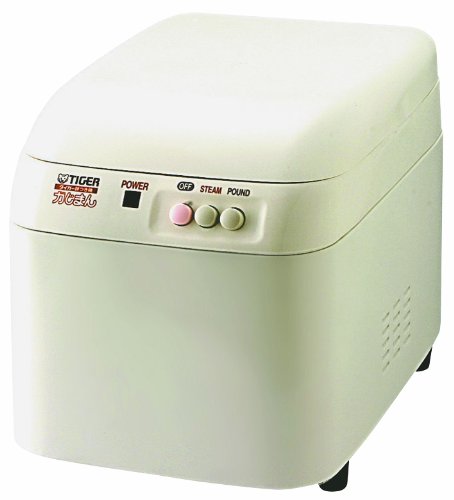 Tiger Corporation SMJ-A18U 10-Cup Rice Cake Mochi Maker9.8 x 16.3 x 11.2 inches15.2 poundsCheck on Amazon
 Koalalko Commercial semi automatic mochi/ring/ball different mold Donut41.3 x 27.6 x 25.6 inches77 poundsCheck on Amazon


What's inside
- What a home mochi machine actually does to a bowl of steamed rice
- Dedicated pounding machines versus bread-machine mochi cycles
- Capacity is measured in dry rice, and that number decides everything
- The rice itself: variety, soaking, and water discipline
- How pounding motion shapes texture, chew, and smoothness
- Nonstick bowls, pestles, and the reality of cleanup
- Steam, heat, and the safety habits this appliance demands
- Reading a specification sheet without being misled by it
- Shaping, filling, and cutting: what happens after the cycle ends
- Fresh, stored, grilled, and frozen: planning around mochi’s short prime
- Accessories and supporting tools that genuinely earn their place
- Troubleshooting the batches that do not turn out
- How often you will make mochi should decide the budget tier
- Regional styles and the dishes that shape machine choice
- A practical shortlist method before you commit
- Care across seasons: keeping a single-purpose machine ready
- Learning curve: what the first three batches teach
- Check prices on Amazon
- Value, honestly assessed, for a food with inexpensive ingredients
As an Amazon Associate I earn from qualifying purchases. This post may contain affiliate links at no extra cost to you.
What a home mochi machine actually does to a bowl of steamed rice
Mochi begins as ordinary short-grain glutinous rice, often labelled sweet rice or mochigome, and it becomes something entirely different only after heat, water, and repeated mechanical work transform its starch. A home mochi making machine, sometimes called a mochi tsuki machine, is built around that transformation. The rice is first soaked, drained, and steamed until each grain turns translucent and tender, then a motor-driven pestle, paddle, or rotating arm folds and pounds the hot mass again and again. Every pass stretches the starch network, traps tiny pockets of air, and presses loose grains into a single glossy, elastic sheet. Without enough pounding the result stays grainy and tears when pulled. With patient, even work it turns smooth, bouncy, and capable of being pinched around ice cream, sweet bean paste, or fresh fruit without splitting.
Understanding that sequence helps explain why product descriptions can sound similar while the machines behave quite differently on a counter. Some appliances only pound, expecting you to steam the rice separately in a pot or rice cooker and transfer it while it is still steaming hot. Others combine steaming and pounding in one vessel, so the rice never cools during the handoff. A third group is not a dedicated mochi appliance at all, but a bread machine offering a mochi or rice-cake cycle that kneads a smaller batch with a bread paddle. Each route can produce good mochi, yet the labour, timing, batch size, and cleanup differ enough that the right choice depends less on novelty and more on how often you plan to make it and how much counter work you welcome.
Temperature sits at the centre of the whole process. Glutinous rice starch gelatinises as it steams, and it stays pliable only while warm. Let a batch sit while you hunt for a spatula or clear a board, and the surface begins to firm, the mass resists the paddle, and the motor works harder against a dough that no longer wants to fold. Machines that steam and pound in the same container remove that vulnerable transfer window. Machines that only pound demand a brisk, organised cook who has the receiving bowl, dusting starch, and tools laid out before the rice finishes. Neither approach is wrong, but a first-time buyer should be honest about which rhythm suits their kitchen, because mochi rewards preparation and punishes hesitation more than most home baking projects do.
Dedicated pounding machines versus bread-machine mochi cycles
A dedicated mochi tsuki appliance is a single-purpose tool, and its advantages flow from that narrow focus. The bowl is shaped for pounding rather than loaf baking, the pestle or arm reaches into corners where a bread paddle leaves untouched ridges, and the motor is geared for slow, forceful, repetitive work against a dense and sticky load. Manufacturers publish cycle details in their manuals, and those documents are worth reading closely before purchase, because they reveal whether a machine steams in place, how long the pounding phase runs, and whether the bowl lifts out for serving. For households that make mochi for New Year celebrations, family gatherings, or regular weekend cooking, that specialisation usually translates into larger batches and a texture closer to the hand-pounded tradition the appliance imitates.
A bread machine with a mochi setting trades some of that specialisation for versatility you may already own. If a bread maker already lives in your kitchen, its rice-cake cycle costs no extra storage space and no second appliance to wash, store, and maintain. The trade-offs are real, though. Bread pans are tall and narrow, the paddle is designed to knead wheat dough rather than pound steamed grains, and the maximum rice quantity is often smaller because the pan must also accommodate expansion during steaming. The finished mochi can still be soft and enjoyable, particularly for filled sweets eaten the same day, but it may show slightly more grain or less stretch than a batch from a purpose-built pounder. Editorial research across manufacturer guidance consistently frames the bread-machine route as a sensible entry point and the dedicated route as the step up for frequent makers.
There is also a middle path worth naming: a stand mixer or food processor used briefly on freshly steamed rice, finished by hand on a starch-dusted board. That improvisation appears in many home kitchens, yet it brings its own cautions. Mixer bowls and blades are not designed for a mass this sticky and dense, motors can strain, and the mochi cools quickly once spread across room-temperature equipment. A buyer comparing dedicated machines against attachments should weigh that strain and cooling honestly. Purpose-built appliances control heat and motion together, which is precisely the combination mochi needs, and that control is what you are paying for when you give up counter space to a single-task machine.
Capacity is measured in dry rice, and that number decides everything
Mochi machine capacity is usually stated as a quantity of uncooked glutinous rice, sometimes in cups, sometimes in grams, and sometimes using the traditional Japanese unit called go or sho for larger machines. That dry figure matters more than the finished weight because steamed rice absorbs water and swells, and pounded mochi occupies the bowl differently again. A compact home model might handle roughly three to five cups of dry rice in a batch, while larger family machines accept considerably more. Reading the manual figure rather than the marketing headline protects you from a common disappointment: a bowl that looks generous when empty can be nearly full once soaked rice has steamed and expanded inside it.
Overfilling is not a minor error with this food. An overloaded bowl leaves no room for the mass to fold over itself, so the centre pounds smooth while the edges stay coarse, and sticky rice can climb the pestle shaft or press against the lid. Underfilling causes a different problem, because too small a batch slides around beneath the arm instead of being trapped and stretched, and the motor runs through its cycle without ever gathering the rice into a unified sheet. Manufacturers generally state both a maximum and a practical minimum, and staying inside that window is one of the simplest ways to improve results. If your household usually cooks for two, a mid-sized bowl used near its intended fill will outperform a large machine run nearly empty almost every time.
Think, too, about how finished mochi gets used in your home before choosing a size. A batch destined for ozoni soup or grilled mochi cakes can be divided and frozen in portions, so a larger machine used occasionally may suit a family that cooks ahead. Fresh filled mochi, by contrast, is best shaped and eaten promptly, and its soft skin dries and toughens with storage, so making exactly what a gathering will eat matters more than raw capacity. Consider also the soaking stage: the rice quantity you choose commits fridge or counter space for a bowl of soaking grains hours before the machine even starts. Capacity, in other words, is a planning decision that reaches backward into preparation and forward into serving, not just a number printed beside a bowl dimension.
The rice itself: variety, soaking, and water discipline
No machine compensates for the wrong rice. Long-grain varieties, jasmine rice, and ordinary short-grain table rice lack the starch profile that gives mochi its stretch, because glutinous rice is dominated by amylopectin, the starch branch that turns sticky and cohesive when cooked. Product labelling can confuse shoppers, since glutinous rice contains no gluten despite the name; the word describes texture, not a protein. Buy rice sold specifically for mochi or labelled sweet or glutinous, rinse it until the water runs clearer, and soak it for the period the machine manual recommends, commonly several hours or overnight. Soaking lets water penetrate to the centre of each grain so steaming cooks evenly, without hard cores that survive pounding as gritty flecks.
Draining deserves the same care as soaking. Rice that enters the steamer dripping with surface water dilutes the batch and produces a slack, wet mass that sticks to everything and refuses to hold a shape when cut. Rice drained too aggressively or left sitting until its surface dries can steam unevenly. Many manuals specify a draining interval in a colander, and following that interval is a quiet but genuine quality lever. The water added for steaming, where a combined machine asks for it, should be measured rather than guessed, because the margin between supple and soggy mochi is surprisingly narrow. Experienced home makers often keep brief notes on rice brand, soak length, and water quantity for each batch, adjusting one variable at a time until the texture matches their preference.
Freshness of the rice also plays a part that buyers overlook. Very old, dried-out rice absorbs water unevenly and may need a longer soak to reach the same tenderness, while newly purchased rice from a freshly opened bag behaves more predictably. Storing glutinous rice in a sealed container away from heat and strong odours keeps it ready for spontaneous batches. None of this requires special equipment, yet it explains why two owners of the identical machine can report different results. The appliance supplies heat and motion; the cook supplies grain selection, hydration, and timing, and mochi quality emerges from the partnership rather than from the motor alone.
How pounding motion shapes texture, chew, and smoothness
The character of finished mochi is largely a record of how it was worked. A true pounding action lifts and drops, folding the outer layer into the centre and stretching the mass with each cycle, which builds the long, elastic quality that lets a piece be pulled thin without tearing. A kneading or stirring action, by contrast, pushes the rice around the bowl and gradually crushes grains against the wall and paddle. Both methods can reach smoothness, but pounding tends to incorporate air more evenly and develop chew faster, while kneading may need a longer cycle to erase the last visible grains. When comparing machines, look for descriptions and diagrams of the moving parts in the manual rather than relying on adjectives, because the geometry of the arm tells you more than promotional language does.
Cycle length interacts with motion in ways that affect serving plans. A longer pounding phase generally yields a finer, more uniform sheet, yet every extra minute is a minute in which the mochi is also cooling slightly and firming, even in a heated bowl. Some machines allow the cook to stop the cycle early for a softer, looser result suited to immediate serving in soup, or to run the full programme for firm mochi that will be cut into blocks, dried briefly, and grilled later. If a model offers adjustable timing or a choice of programmes, that flexibility maps directly onto different dishes. A household that mainly makes filled sweets needs a supple, shapeable finish, while one that grills mochi for breakfast may prefer a denser set that slices cleanly.
Sound is a practical clue to motion that showroom shoppers and reviewers often mention. Pounding machines produce a rhythmic thumping that can be surprisingly assertive in a small apartment, especially early in the cycle when the rice is still loose and the arm strikes with little cushioning. Kneading-style machines tend toward a steadier mechanical hum. Neither noise profile indicates quality by itself, but the timing of your cooking might make it matter: a batch started late at night in a home with thin walls deserves consideration. Placing the appliance on a stable, level surface away from the counter edge reduces vibration travel, and a folded mat beneath the base, kept clear of vents, can soften the percussion without affecting the work inside the bowl.
Nonstick bowls, pestles, and the reality of cleanup
Fresh mochi may be the stickiest substance a home kitchen produces, and cleanup design therefore decides whether a machine becomes a pleasure or a chore that quietly discourages use. Most home models rely on a nonstick-coated bowl and a coated or smooth resin pestle, and the quality of that coating matters more here than in almost any other appliance, because the food actively tries to bond with every surface it touches. A bowl that releases the finished sheet in one pull, leaving only a film behind, can be wiped and washed in minutes. A scratched or worn coating grips the starch, and the cook ends up soaking, scraping, and coaxing residue from seams while the rest of the meal waits.
Protecting that coating is mostly a matter of utensil choice and patience. Use the soft spatulas and plastic or wooden tools the manufacturer supplies or recommends, keep metal implements away from the bowl, and never attack dried residue with abrasive pads. Warm water and time dissolve mochi residue far more effectively than force, since the starch softens and releases as it hydrates. Removing the bowl and pestle promptly after serving, then filling them with warm water while you eat, turns a dreaded scrub into a simple rinse later. Dried mochi left overnight hardens into a stubborn cement, so the single most valuable cleanup habit is a quick soak started before the meal rather than after it.
Pay attention, when reading specifications, to which parts detach and which are fixed. A removable bowl that can go to the sink is far easier to manage than a fixed vessel you must wipe in place around a drive shaft, and a pestle that twists off its spindle lets you clean the underside where starch loves to hide. Check whether the manufacturer describes any part as dishwasher suitable, and treat that guidance as specific rather than general: a bowl may tolerate a dishwasher while its coating lasts longer with hand washing, and small parts can warp or lose their finish in high heat. Steam vents, lid seals, and the rim where the lid meets the bowl also collect starchy moisture, and a design that lets you reach those areas with a cloth will age more gracefully than one with hidden channels.
Dusting starch is the other half of the release story once the mochi leaves the machine. Potato starch, sold as katakuriko in Japanese shops, and cornstarch both serve as the traditional dusting that lets you handle, roll, and cut the hot sheet without it welding itself to the board, the rolling pin, and your fingers. Rice flour behaves differently and can feel gritty, while wheat flour introduces a raw taste if the mochi is served without further cooking. Keep a shallow tray of starch ready before the cycle ends, turn the sheet out onto it in one confident motion, and dust the top before touching it. Working on a surface that is easy to wipe afterwards helps too, and after shaping, a nearby sink area benefits from the same discipline you would use for any sticky dough work when you reach for best cleaner for kitchen counters and sinks as part of your general counter routine rather than scrubbing starch paste with whatever happens to be at hand.
Steam, heat, and the safety habits this appliance demands
A combined mochi machine is, among other things, a steam generator, and it deserves the respect given to any appliance that boils water in a sealed space. Steam escapes from vents during cooking, the lid and bowl reach temperatures that can scald, and the finished mochi itself stays dangerously hot long after it looks harmless, because its dense starch holds heat the way a poultice does. Open the lid away from your face, use oven mitts or thick dry towels on handles, and keep children and curious guests at a distance during the pounding phase, when opening the machine to peek also releases a concentrated plume. Dry hands and dry mitts matter, since a wet cloth conducts heat quickly and can turn a secure grip into a burn.
The transfer step in pound-only machines concentrates several risks into a few seconds. You are moving a pot of steaming rice, often at counter height, into a second appliance, with starch dust, tools, and possibly other cooking competing for space. Clear the path before the rice finishes, set the receiving machine close to the steamer, and use a heatproof spatula rather than tipping a pot at an angle near your body. If the batch must be carried across the kitchen, reconsider the layout rather than the recipe. Many home layouts place the sink, steamer, and machine in a triangle that crosses a walkway, and rearranging that triangle for one cooking session is a small effort compared with a scald or a dropped pot of boiling grains.
Electrical and placement safety complete the picture. Mochi machines draw sustained power through a long steaming and pounding cycle, so plug them directly into a suitable outlet rather than a lightweight extension lead, keep the cord clear of the steaming vent and hot bowl, and never operate the appliance beneath low cabinets where trapped steam can damage finishes and swell timber. Leave clearance around vents, set the machine on a heat-resistant, level surface, and let it cool fully before wiping the exterior or storing it. If a model includes boil-dry protection or an automatic shutoff, those features are worth valuing in a comparison, but they supplement rather than replace attention, particularly during the first few batches while you are learning how a particular machine behaves.
Reading a specification sheet without being misled by it
Specification sheets for mochi machines mix genuinely useful numbers with context-free claims, and separating the two is a learnable skill. Start with the rice capacity range, the overall dimensions, and the weight, because those three facts decide whether the machine fits your counter, your cupboard, and your household size. Then look for cycle information: whether steaming is included, how long a full programme runs, and whether the pounding phase can be adjusted or repeated. Power consumption in watts tells you about electrical demand but very little about pounding quality, since gearing and bowl design matter more than raw wattage against a sticky load. A modest motor with good leverage can outwork a stronger motor spinning a poorly shaped paddle.
Materials deserve a careful read as well. Bowls may be aluminium with a nonstick coating, stainless steel with a coated interior, or other constructions, and the manual will state how each should be cleaned and what utensils are permitted. Lids range from simple covers to locking designs with viewing windows, and a window is more useful than it sounds, because it lets you judge smoothness without opening the machine and losing heat. Pestle and paddle materials, spare part availability, and whether replacement bowls can be purchased separately all speak to how long the appliance can stay in service. A machine whose bowl coating eventually wears is a better long-term prospect if a replacement bowl exists than one that must be discarded whole when its surface tires.
Finally, treat translated manuals and imported models with extra care. Mochi machines have a long history in Japan, and some home models sold internationally were designed first for a domestic market with different voltage, rice measures, and programme names. Verify that the version you are considering suits your household electrical supply, that its instructions are available in a language you read comfortably, and that its capacity figures use units you can reproduce with your own measuring cups and scales. A kitchen scale removes most of that ambiguity, since weighing dry rice in grams is more repeatable than scooping cups of a grain that settles differently each time. Precision at the buying stage prevents the slow frustration of owning a capable machine whose documentation never quite matches your kitchen.
Shaping, filling, and cutting: what happens after the cycle ends
The machine finishes its work at exactly the moment your own work becomes most time-sensitive. Hot mochi begins setting as it cools, so the board, starch, fillings, and a bench scraper or kitchen scissors should be ready before the lid opens. Turn the sheet out, dust it, and decide its destiny quickly: rolled flat and cut into squares for grilling, pinched into rounds around sweet red bean paste, wrapped around strawberries in the style of ichigo daifuku, or stretched over small scoops of ice cream that must be frozen firm in advance and enclosed rapidly before they melt. Each use asks a slightly different thickness from the sheet, and learning to judge that thickness by eye and touch is the craft that no appliance can supply on your behalf.
Filling technique rewards a light, starch-dusted touch. Flatten a portion between your palms rather than rolling it thin with pressure, place the filling in the centre, and gather the edges upward, pinching the seam closed and rolling the ball gently to smooth it. Too much dusting starch at the seam prevents sealing, so brush excess away before pinching. Work in small batches, keeping the remaining sheet covered with a clean, slightly damp cloth or a sheet of baking paper so its surface does not skin over while you shape. Hands get coated quickly, and pausing to rinse and re-dust is normal; keeping towels within reach keeps the rhythm going, which is why many home makers stage a small stack similar to best absorbent kitchen hand towels beside the board before the machine even starts, rather than crossing the kitchen with sticky fingers mid-batch.
Cutting set mochi calls for a different approach than shaping fresh mochi. Once a sheet has cooled and firmed, a knife drags and sticks unless it is dusted, oiled very lightly where a recipe permits, or replaced by kitchen scissors or a starch-dusted bench scraper pressed straight down. Pieces intended for soup should be cut generously, since they soften and swell in hot broth, while pieces for grilling benefit from even thickness so they puff uniformly and develop crisp, blistered surfaces without raw centres. If you plan to freeze cut pieces, separate them with starch and space them on a tray until firm before bagging, or they will fuse into a single block that must be thawed whole. Labelling the bag with the date and the rice quantity used helps you repeat a successful batch size later.
Fresh, stored, grilled, and frozen: planning around mochi’s short prime
Fresh mochi occupies a brief and glorious window. Within hours of pounding it is at its softest and most fragrant, and filled pieces in particular should be eaten the same day, since refrigeration hardens the starch through retrogradation and turns a tender skin chewy and opaque. Leaving filled mochi at room temperature for long stretches raises its own food-safety questions, especially with fresh fruit or dairy fillings, so plan quantities around appetites rather than optimism. Unfilled cut pieces keep better: they can rest, covered, for a day, or be frozen for later grilling and soup, where reheating restores much of their character. A machine large enough to make freezing worthwhile changes how often you need to run it, which loops back to the capacity decision made at purchase.
Reheating method matters as much as storage. Grilling or toasting cut mochi over moderate heat lets the exterior crisp while the interior expands and softens, and a watchful cook turns pieces as they puff to avoid scorching. Simmering in soup softens pieces through, though adding them too early can dissolve their edges into the broth, so they usually join the pot near the end of cooking. Microwaving is fast but unforgiving, heating unevenly and toughening quickly if overshot by even a short burst; short intervals and a small splash of water under a cover give more control. Pan-frying with a little oil produces crisp, golden surfaces suited to both savoury soy-based glazes and sweet kinako dusting, and it revives frozen pieces particularly well when they start from a brief thaw.
These serving realities should shape buying decisions more than they usually do. A household that loves grilled mochi on winter mornings will value a machine that produces a firm, sliceable sheet and a bowl size matching a weekly grilling supply. A family that gathers for filled sweets at festivals needs suppleness, speed of shaping, and a batch that disappears in an afternoon. Neither preference is more authentic than the other; they simply point toward different programmes, capacities, and accessories. Reading a product page with a specific dish in mind, rather than a general idea of mochi, turns vague feature lists into concrete answers about whether a given model will serve the food you actually intend to cook.
Accessories and supporting tools that genuinely earn their place
Beyond the machine itself, a short list of supporting tools does most of the real work in a smooth mochi session. A reliable kitchen scale anchors rice and water measurements. A fine colander drains soaked grains evenly. Heatproof spatulas, a bench scraper, and kitchen scissors handle the hot sheet without threatening nonstick surfaces. A wide, shallow tray holds dusting starch for turning out and coating pieces. Small bowls stage fillings so shaping never pauses. None of these items is exotic, and most kitchens already own versions of them, but gathering them in advance is the difference between a calm production line and a scramble conducted with sticky hands while the mochi sets.
Some accessories marketed alongside mochi machines deserve a cooler assessment. Elaborate moulds can produce uniform shapes, yet hand-shaped pieces carry the soft irregularity most home cooks want, and a mould adds another sticky surface to dust and wash. Replacement paddles and bowls, by contrast, are unglamorous and genuinely valuable, extending the working life of the appliance when coatings wear. A spare bowl also lets one batch cool while another is shaped, though few home makers need that throughput. Storage covers and fitted cases matter only if the machine lives in a dusty or crowded cupboard. Judge each extra by whether it solves a problem your own kitchen has actually presented, rather than by the completeness of a bundle.
The wider kitchen environment plays a supporting role too. Pounding and steaming release moisture and warmth into the room, and a small kitchen can feel humid by the end of a long session, with condensation gathering on cool surfaces. Ventilation, an open window where weather allows, or attention to lingering cooking moisture afterwards keeps the room comfortable; households already mindful of airborne cooking residue sometimes pair that awareness with the thinking behind best air purifiers for kitchen smells when planning where steamy, aromatic projects happen in the home. Likewise, the towels you cook with become part of the process, catching drips, insulating hands in a pinch when proper mitts are across the room, and wiping the inevitable starch smears from handles and switches before they dry into a film, which is one reason absorbent, washable options such as those discussed under best absorbent cotton kitchen towels suit a mochi day better than thin decorative cloths that smear more than they absorb.
Troubleshooting the batches that do not turn out
Grainy mochi almost always traces back to one of three causes: rice that was under-soaked, rice that was under-steamed, or a pounding cycle that ended before the grains fully surrendered. Hard cores cannot be rescued by longer pounding alone once the mass has cooled, so the fix belongs to the next batch rather than the current one: extend the soak, confirm the steamer water and timing, and let the machine complete its programme. Wet, slack mochi points in the opposite direction, toward excess surface water on drained rice or too much steaming water in a combined unit. Measure more carefully, drain for the full interval the manual specifies, and resist the temptation to add water mid-cycle because the mass looks stiff early on, since pounding loosens it considerably as the starch develops.
A batch that climbs the pestle, escapes the bowl’s working zone, or leaves a coarse ring around the edge is usually a fill-level problem rather than a mechanical fault. Too much rice overwhelms the folding action, and too little escapes it. Return to the manufacturer’s stated range and weigh the rice rather than estimating by eye. A motor that strains, slows, or stops mid-cycle deserves a pause and an inspection once the machine has cooled: the load may be too large, the rice may have cooled and stiffened during a delayed transfer, or residue from a previous batch may be fouling the drive. Forcing a stalled cycle risks the motor and the bowl coating alike, and most manuals describe exactly this situation as one where the batch should be reduced or restarted warm rather than pushed through.
Texture preferences complicate troubleshooting because one cook’s defect is another’s ideal. Mochi destined for soup can be softer and less worked than mochi meant to be grilled, and filled sweets sit between those poles. Keep a small notebook for your first several batches recording rice brand, soak time, water quantity, programme used, and a sentence about the result. Patterns emerge quickly from even brief notes, and they personalise the manufacturer’s general instructions to your water, your rice supply, and your taste. That notebook habit, unglamorous as it sounds, is the closest thing home mochi making has to a shortcut, because it converts each imperfect batch into information rather than discouragement.
How often you will make mochi should decide the budget tier
Frequency of use is the most honest sorting tool a buyer has. A household that makes mochi twice a year for celebrations can justify borrowing the bread-machine route, accepting a smaller batch and slightly less refined texture in exchange for zero additional storage. A family that cooks it monthly will feel the limits of that compromise repeatedly, in capacity, in cleanup around a bread pan never shaped for this food, and in texture that never quite matches the occasion. For them, a dedicated machine earns its cupboard space through repetition. A truly enthusiastic maker, producing mochi for gatherings, gifts, and seasonal sweets across the year, should prioritise bowl durability, spare parts, and a capacity that matches their largest regular gathering rather than the smallest.
Storage deserves a sentence of its own in that calculation. Dedicated mochi machines are not small, and a model that must be retrieved from a high shelf or a distant cupboard will be used less than its owner expects. Measure the intended storage space as carefully as the counter footprint, account for the lid and any separate steaming components, and consider whether the cord wraps or stores neatly. An appliance that lives within easy reach gets used for small, spontaneous batches; one that requires a furniture rearrangement becomes a festival-only tool regardless of its owner’s intentions. Honest storage planning, done before purchase, predicts satisfaction more reliably than any feature comparison.
Longevity expectations complete the budget picture. Nonstick coatings are consumable surfaces, and a machine used weekly will need bowl care, and eventually perhaps a replacement bowl, sooner than one used seasonally. Motors and drive components in well-made units are built for the repetitive, high-resistance work mochi demands, but they still reward owners who respect fill limits and keep vents and seals clean. Reading the warranty terms and checking whether the manufacturer sells bowls, paddles, and seals separately tells you whether the company expects the machine to be serviced or discarded. For a single-purpose appliance, that expectation is a meaningful part of its value, because the whole purchase rests on doing one job well for a long time.
Regional styles and the dishes that shape machine choice
Mochi is not one food but a family of preparations, and the style your household favours quietly dictates which machine traits matter. Fresh daifuku, filled with bean paste, custard, or fruit, needs a pliable sheet that stays soft long enough to shape a dozen pieces without cracking. Kirimochi, the firm blocks that are dried, stored, and later grilled or simmered, needs thorough pounding and a clean, dense set that slices without crumbling. Warabi-style and other soft, spoonable variations tolerate a looser finish. A machine with programme flexibility serves a household that moves among these styles, while a single-cycle appliance suits a family devoted to one preparation it performs reliably. Naming your primary dish before shopping converts abstract specifications into a practical shortlist.
Seasonal cooking adds another layer. New Year preparations in many households involve larger quantities, helpers gathered around the board, and a festive tolerance for noise, steam, and starch dust across the kitchen. A big batch made once a year justifies staging, teamwork, and a thorough cleanup afterwards. Weeknight mochi, by contrast, must fit between dinner and bedtime, which favours a combined steam-and-pound machine with minimal transfers and a bowl that soaks clean while the family eats. The same appliance can serve both occasions, but its programme length, batch range, and cleanup design will feel very different in each setting, and imagining both honestly helps a buyer avoid choosing solely for the festival and resenting the machine in February.
Fillings and coatings available in your local shops also influence how much mochi you will realistically make. Sweet red bean paste, kinako roasted soybean flour, sesame, matcha, and frozen ice cream scoops each turn plain pounded rice into a distinct sweet, and a household with easy access to those ingredients tends to experiment more often. Savoury directions, from soy sauce and nori wraps to cheese-filled grilled pieces, widen the repertoire further. None of this changes the machine itself, yet it predicts usage, and usage remains the strongest argument for or against a dedicated appliance. A buyer who can already picture six dishes they want to try is describing a pattern of use, not a passing curiosity, and should weight durability and capacity accordingly.
A practical shortlist method before you commit
Begin a shortlist on paper with four fixed facts: the dry-rice quantity your typical batch needs, the counter and storage dimensions available, whether you already own a bread machine with a suitable cycle, and the dish you will make most often. Those facts eliminate most of the market immediately and honestly. Against the survivors, compare bowl construction, whether steaming is built in, the stated minimum and maximum rice range, programme adjustability, and the availability of replacement bowls and paddles. Read the actual instruction manual for any finalist, which most manufacturers publish, because the manual reveals draining times, cleaning prohibitions, error behaviours, and the true sequence of steps you will follow on a real cooking day.
Within that manual, search for the details marketing pages omit. Does the machine pause for additions, and if so, at what stage? How does it signal the end of steaming and the start of pounding? What does it advise when the mass climbs the shaft or the motor labours? How are the lid seal and vent cleaned, and are they replaceable? Answers to those questions describe ownership far better than a feature grid. Also confirm the plug, voltage, and frequency suitability for your home if the model originates overseas, and check the physical weight if you will lift it from storage while it is still warm from use or loaded with a finished batch.
Resist comparing machines solely by their largest advertised batch. A headline capacity achieved only under ideal conditions, with a specific rice and a full programme, may not match the smaller, quicker batches you will actually run. The minimum fill figure is often the more revealing number for small households, because it determines whether a couple can make a modest amount without waste. Similarly, a shorter programme is not automatically better: speed gained by shortening the pounding phase is paid for in texture. The most useful comparison is the one anchored to your own dishes, batch sizes, and patience, recorded plainly and checked against each manual in turn.
Care across seasons: keeping a single-purpose machine ready
A mochi machine spends much of its life stored, and storage conditions decide whether it emerges ready or musty. Clean and dry every component thoroughly before putting it away, since trapped moisture in a seal or beneath a paddle invites odours that transfer to the next batch of plain rice. Store the bowl with its coating protected from contact with metal utensils or other cookware that could scratch it in a crowded cupboard. Leave the lid ajar or follow the manufacturer’s storage guidance so air circulates, and keep the manual with the appliance rather than in a separate drawer, because programme details and draining intervals are exactly the facts memory blurs between seasonal uses.
Before the first batch after a long rest, inspect the cord, plug, seals, and bowl surface, rinse the removable parts, and run a plain steaming cycle with water alone if the manual permits, to freshen the interior. Check that the paddle or pestle seats firmly on its drive and that the lid closes as designed. Rice bought for a festival batch should be checked too, since grains stored since the previous season may need a longer soak. These small rituals take minutes and prevent the particular disappointment of a flawed batch on the one day guests are waiting. A machine treated this way settles into the background of a household’s celebrations, reliable enough to be planned around rather than worried about.
When something does wear, address it early. A coating that has begun to grip can sometimes be managed for a while with extra care and prompt soaking, but flaking or deeply scratched surfaces should retire a bowl from food use, and a replacement should be sourced from the manufacturer rather than improvised. Seals that no longer sit flat affect steaming efficiency and can stretch a programme’s timing. Keeping a note of the model designation and purchase details with the manual simplifies ordering the correct parts years later. Single-purpose appliances justify themselves through longevity, and longevity is mostly the accumulated result of small, unglamorous acts of care performed consistently between celebrations.
Learning curve: what the first three batches teach
The first batch with any new machine is best treated as tuition rather than a verdict. Rice hydration, transfer speed, dusting habits, and shaping confidence all improve visibly between a first attempt and a third, and judging an appliance on its debut outing alone mistakes the cook’s learning curve for the machine’s character. Choose a forgiving preparation for the opening run, such as plain pieces for grilling or soup, where small texture imperfections disappear in cooking, and save filled sweets, with their unforgiving seams and timing, for once the programme’s rhythm feels familiar. Keep the notebook mentioned earlier open on the counter, and write down what surprised you while the details are still warm in memory.
By the second batch, attention shifts from survival to adjustment. Perhaps the sheet needs another minute of pounding for the smoothness your family prefers, or the soak should lengthen because your rice is older than the manual assumes. Change one variable, note it, and resist rebuilding the whole method at once, because mochi responds to several inputs at once and scattered changes hide which one mattered. The third batch usually settles into a repeatable household method: a known rice quantity, a known soak, a known programme, and a shaping routine that other family members can join without instruction. That repeatability, more than any single spectacular result, is what a good machine purchase actually buys.
Teaching another person to help is the final stage of settling in, and it reveals whether your method is written down or merely felt. A helper can dust the board, portion fillings, roll finished pieces in kinako, or manage the tray of cut squares, freeing the cook to handle the hot sheet continuously. Children, kept safely away from steam and hot surfaces, often enjoy the coating and portioning jobs at a separate, cool station. Dividing the work this way turns mochi making from a solitary performance into the communal activity it has traditionally been, where the pounding was shared labour and the shaping gathered everyone around the board. A home machine changes who supplies the force, but it need not change who shares the table.
Check prices on Amazon
Live listings for the shortlist in this guide are pulled from Amazon below, so prices and availability are always current at the moment you look.


Value, honestly assessed, for a food with inexpensive ingredients
Glutinous rice, starch, and common fillings are modest ingredients, so a mochi machine never justifies itself through ingredient savings the way some appliances claim to. Its value lies elsewhere: in texture that hand methods struggle to reproduce without considerable strength and practice, in batches large enough for gatherings, in the reliability that lets a family schedule a celebration around a food rather than hope it succeeds, and in the pleasure of serving something warm and freshly pounded that shops cannot replicate hours later. Weighing the purchase against those experiences, rather than against the price of the rice itself, gives a clearer answer about whether it belongs in your kitchen.
That framing also clarifies when not to buy. If the appeal is a single experiment, a bread-machine cycle, a borrowed appliance, or a session with friends who already own one will teach you more than a purchase made on curiosity. If the appeal is a recurring place in your household’s cooking, hesitation costs more than the machine does, because every season spent improvising around a food your family loves is a season of grainier texture and harder cleanup. The honest question is not whether mochi can be made without this appliance, since generations made it with far simpler tools, but whether you will make it often, and well, and together, once the right tool is within reach.
A note on serving sizes and appetite planning
Fresh mochi is richer than its size suggests, and hosts routinely make more than a table can finish. A small filled piece carries the satisfaction of a much larger pastry because the rice is dense, sweet fillings add concentration, and the chew itself slows eating. Plan roughly two or three pieces per person alongside other food, more only when mochi is the entire occasion, and remember that grilled pieces served with a meal play a supporting role rather than a main one. Scaling the batch to appetite protects texture as well as appetites, since the pieces eaten within the hour are the ones everyone remembers, and a modest batch made fresh again next week will always outshine a heroic batch eaten reluctantly over several days of declining softness.
Finally, keep expectations for colour and aroma realistic. Plain mochi should look softly white and smell faintly of warm rice, nothing more dramatic, and any browning, sour odour, or off flavour signals a storage or ingredient problem rather than a stylistic variation worth serving. Trusting those plain signals, and discarding a doubtful batch without regret, is part of cooking with a fermented-adjacent, moisture-rich staple food, and it protects the enthusiasm that makes the next batch happen at all.
Disclosure: This guide was prepared from manufacturer documentation, published specifications, and editorial research into home mochi preparation, and it contains no claim of personal product use. As an Amazon Associate we earn from qualifying purchases. Links and recommendations should be checked against the current manual for any model you consider, because capacities, programmes, and care instructions vary between versions.
Choose the machine that matches the mochi your household truly gathers around, and its bowl will rarely stay in the cupboard for long.