Our Top Picks
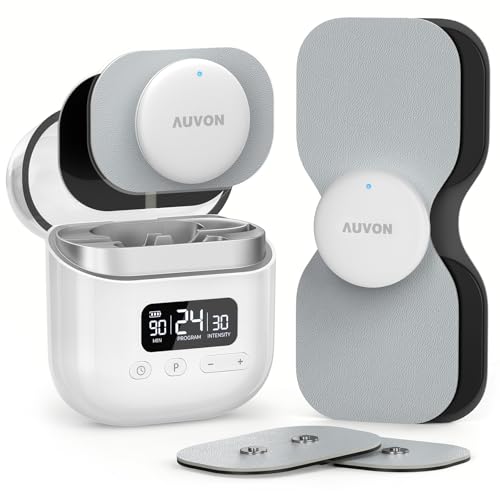
 AUVON 24 Modes TENS Unit Muscle Stimulator for16 Piece Set5.87 x 3.19 x 2.44 inches0.4 poundsCheck on Amazon


What's inside
- How to read this guide
- Microcurrent versus classic TENS: the central distinction
- Frequency ranges and what they change
- Channels, leads, and pad counts
- Pad sizes, shapes, and placement logic
- Preset programs versus manual control
- Session length, frequency of use, and routine building
- Battery, charging, and published runtime
- Skin preparation, gels, and pad replacement
- Safety limits and clear contraindications
- An honest account of the evidence
- Who should choose micro over classic TENS
- Common mistakes buyers and users make
- A sample day with a micro-amp routine
- Intensity steps, ramps, and output stability
- Wearing the device: clothing, work, and travel
- Cleaning, storage, and keeping the system working
- Choosing by user type
- Frequently asked questions
- Check prices on Amazon
- Conclusion
As an Amazon Associate I earn from qualifying purchases. This post may contain affiliate links at no extra cost to you.
Micro TENS machines sit at the confusing border of two different electrical traditions, and the confusion begins with the name itself. Classic transcutaneous electrical nerve stimulation, shortened to TENS, works in milliamperes and produces a clear tingling or buzzing sensation that the user is meant to feel. Microcurrent equipment works far lower, in microamperes, at levels usually below the threshold of sensation, so the user may feel nothing at all during a session. Products marketed as micro TENS borrow vocabulary from both worlds. This guide separates them carefully, because choosing between a barely felt micro-amp routine and a strongly felt milli-amp routine is the single most important decision in the category, and it should be made on published output figures rather than on packaging language.
The likely reader for micro-amp equipment is someone who dislikes the assertive tingling of conventional stimulation, who wants longer and more regular sessions woven into ordinary days at home, and who is comfortable with modest, honestly stated goals. The equipment suits readers who will prepare skin properly, rotate pads, keep sessions timed, and accept that the published evidence for these devices is mixed rather than settled. It also suits readers managing a simple home comfort routine alongside, not instead of, whatever professional guidance they already follow for an ongoing condition.
Other readers should step away from this category, and the safety section later in this guide explains why in full. Anyone with a pacemaker or an implanted defibrillator, anyone who is pregnant, anyone with epilepsy, and anyone considering pad placement on the front of the neck or throat should not treat this as a casual purchase. Readers with broken or irritated skin at the intended pad site, and readers with any implanted electronic device, belong in the same cautious group. Readers looking for a cure for a diagnosed condition should also pause: the honest framing for this equipment is temporary comfort support for some users, within clear limits, and any product or guide that promises more than that is asking for trust it has not earned.
How to read this guide
Output figures in this category are easy to inflate and hard to compare, so this guide reads every specification against the micro-amp and milli-amp divide first. As an Amazon Associate we earn from qualifying purchases. Stated current range comes before program counts, channel counts, and battery claims, because a device whose maximum output sits in milliamperes is a conventional stimulator whatever its name suggests, while a device publishing a range inside roughly ten to six hundred microamperes belongs to the microcurrent family this guide is actually about. Frequency range, pad sizing, and session timing follow in that order, and where a listing omits its output units entirely, this guide treats the omission as a reason to choose a more transparent archetype instead.
Units deserve one plain explanation before the comparisons begin. A milliampere is a thousand microamperes, so the gap between the two families is not a small step in intensity but a difference of orders of magnitude. A conventional unit publishing output up to sixty or one hundred milliamperes is working at levels a hundred times higher than a microcurrent device publishing a few hundred microamperes. That scale difference explains the sensory difference: milli-amp stimulation crosses sensory nerve thresholds and announces itself, while micro-amp output generally stays beneath them. Readers should check every listing for the unit symbol as carefully as for the number, because a missing or blurred distinction between mA and the micro-amp symbol is where most buying mistakes in this category begin.
Microcurrent versus classic TENS: the central distinction
Classic TENS was designed around sensation. Its milli-amp pulses travel through surface pads, stimulate sensory nerves, and produce tingling, tapping, or buzzing that can feel strong enough to compete with other sensations from the same area. Sessions are usually relatively short, intensity is adjusted to a level the user clearly feels but does not find painful, and the working idea most often described is that the stimulation interferes with how discomfort signals are perceived while the unit is running and for a period afterwards. Whether a given reader likes that bargain is partly a matter of taste: some find the strong sensation reassuring and distracting, others find it irritating, tiring, or simply unpleasant over repeated days.
Microcurrent work starts from the opposite sensory premise. Output in the micro-amp range, commonly published somewhere between about ten and six hundred microamperes for home facial and body devices in this family, sits below the level most people can feel. There is no buzzing to turn up and no tingling to chase. Sessions therefore tend to be longer, quieter, and more routine-driven, with the user reading, working, or resting while the device runs its timed program. The claims made for microcurrent in published material are correspondingly different in tone, often framed around supporting normal tissue environment and comfort over repeated use, but the evidence base is thinner and more contested than marketing suggests, and this guide returns to that honesty point before any reader is encouraged to spend money.
Hybrid products blur this line deliberately, offering a micro mode alongside conventional modes in one housing. A hybrid can be a sensible purchase for a household where one person prefers sensation-free sessions and another prefers classic stimulation, but only when the maker publishes the output range of each mode separately and labels them unambiguously. A single vague range spanning both families, with no statement of which program uses which level, leaves the reader unable to know what a session actually delivered. Mode labelling, units, and per-program output statements are therefore purchasing criteria in their own right, not fine print.
Why below-sensation does not mean below-importance
Readers sometimes assume that a current they cannot feel cannot matter, or conversely that feeling nothing means a device is broken. Neither inference is safe. Sub-sensory output is the design point of microcurrent equipment, and the correct checks are procedural rather than sensory: confirm the device powers on, confirm the program timer is running, confirm pads are adhered across their full surface, and confirm the battery is not near empty. Judging a micro session by sensation leads either to abandoning working equipment or to choosing a milli-amp device while believing it is something gentler. The archetypes in this category should be judged on specification transparency and routine fit, precisely because the usual sensory feedback loop has been designed out of them.
Frequency ranges and what they change
Frequency, stated in hertz, describes how many pulses or cycles a device delivers per second, and published microcurrent archetypes span a wide band, from fractions of a hertz at the slow end through tens and hundreds of hertz in faster programs. Lower frequencies produce slower, more separated pulses, while higher settings deliver a denser stream that, in milli-amp equipment, changes the character of the tingling noticeably. In micro-amp equipment the user will not feel that difference directly, which makes the maker’s program descriptions more important, not less: a transparent listing explains which frequency each program uses and what routine that program is intended for, instead of presenting a long program list with poetic names and no figures at all.
Some archetypes allow direct manual frequency selection across a stated range, while others lock frequency inside preset programs. Manual selection suits experienced users who keep a session log and want to reproduce an exact routine week after week. Presets suit beginners and anyone who values a device that can be started in seconds without a reference card. The risk with presets is sameness disguised as variety: twenty programs that differ only in duration are not twenty therapies. Readers should look for program tables that state frequency, waveform description where offered, and default duration per program, and should treat a high program count with no table as a warning sign rather than a feature.
Waveform language appears frequently in this category, with terms such as square, biphasic, and modulated used to describe pulse shape and symmetry. At micro-amp levels, waveform differences are part of the published design and may influence how a program is intended to be used across a longer session, but readers should be sceptical of waveform claims presented as breakthroughs without any accompanying output figures. A maker willing to publish current range, frequency range, and program durations has given the reader the substance; waveform adjectives without those numbers are decoration. Comparison in this guide therefore ranks archetypes by the completeness of their published figures first and by waveform vocabulary last.
Channels, leads, and pad counts
A channel is an independently controlled output circuit, and the distinction between single-channel and dual-channel archetypes shapes what a session can cover. A single-channel device drives one pair of pads at one setting, which suits a single focused area such as one knee, one shoulder, or one side of the lower back. A dual-channel device drives two pad pairs, either at the same setting or, in better designs, at independently adjusted levels, allowing both knees, both shoulders, or a larger back area to be covered in one timed session. Independent control matters when the two sides differ in sensitivity or pad size, because a shared setting forces a compromise that usually ends with one side under-served.
Pad count in the box is a weaker figure than channel count, and readers should not confuse them. Four pads supplied with a single-channel device may simply be two in use and two spares, while four pads on a dual-channel device can genuinely treat two areas at once. Lead quality also deserves attention: thin leads with fragile connectors are the most common mechanical failure in this category, and a device whose leads cannot be replaced separately turns a minor break into a full replacement. Readers comparing archetypes should check whether leads and pads are standard, replaceable, and sold openly, because a stimulator is a small system of consumables around a control unit, not a single sealed object.
Households comparing this equipment often place it alongside larger powered furniture for recovery corners at home, and the two categories solve very different problems at very different scales. Readers curious about the furniture end of that spectrum, where a full chair handles the session mechanically, can start with a broad overview of powered reclining massage designs here: best electronic massage chairs
Pad sizes, shapes, and placement logic
Pads are the interface where specifications become physical. Common archetypes supply self-adhesive pads in sizes ranging from small rounds of roughly five centimetres across, suited to a wrist, ankle, or elbow point, through medium rectangles for knees and shoulders, to large rectangles intended for the lower back or thigh. Larger pads spread output across more skin and generally feel gentler at a given setting, while smaller pads concentrate the same output and reward careful placement. A sensible starter set includes at least two sizes, because a household’s real needs rarely match a single pad geometry, and replacement pads in the same sizes should be easy to source.
Placement follows anatomy rather than guesswork. Pads belong on clean, intact skin over or around the area of focus, positioned according to the maker’s diagrams, never touching each other, and never placed so current crosses the chest, the front of the neck, or the head. For limb joints, pads commonly sit either side of the joint rather than directly on a bony point where contact is poor. For the back, pairs are usually placed symmetrically either side of the spine rather than on the spine itself. Readers should photograph or note a placement that worked, because repeatability is a genuine advantage of pad-based routines: the same placement, program, and duration can be reproduced exactly, session after session.
Pad condition quietly determines session quality. Adhesive gels dry out with use, pick up skin oils and fibres, and gradually lose both stick and even contact, producing edges that lift and concentrate output on the remaining attached area. Makers commonly describe pad life in terms of a limited number of applications, often in the range of fifteen to thirty uses with careful handling, though real life varies with skin preparation and storage. Storing pads on their plastic liners, keeping them away from heat, and reviving a tired surface only by methods the maker approves all extend useful life. A pad that no longer adheres across its whole face should be replaced, not pressed down by hand for a session.
Preset programs versus manual control
Preset programs package frequency, duration, and sometimes a ramping pattern into a single selection, and for most home readers they are the sensible default. A well-designed preset library for this category might include a small set of clearly differentiated routines: a shorter gentle program for a first week of use, a standard mid-length program for regular sessions, a longer low-frequency program for evening use, and a small number of area-oriented options whose differences are stated in figures. The test of a library is differentiation, and readers can apply it in seconds by asking whether the maker can explain, in numbers, how any two programs differ. If the answer is only that their names differ, the library is decoration.
Manual control serves a different temperament. Readers who log sessions, who are following a structured routine suggested by a clinician, or who share a device between two people with different preferences may value direct adjustment of frequency, intensity within the micro-amp range, and session length. Manual archetypes should still offer sensible guardrails: a maximum timer, a gradual ramp at session start rather than an abrupt full-output onset, and a memory that does not restart at the last high setting when the device is switched on again. Control without guardrails is not sophistication; it is unfinished design transferred to the user.
Displays and controls influence real-world consistency more than most comparison tables admit. A small screen that shows program, elapsed time, and battery state in readable figures helps a reader reproduce a routine, while a single button cycling blindly through modes invites error, particularly for a device used in the evening or by someone with limited vision. Physical buttons that can be operated by touch, a lock function that prevents pocket or waistband changes mid-session, and an audible or vibrating end-of-session signal all belong on the checklist for archetypes intended to be worn under clothing during ordinary activity.
Readers whose main difficulty with any home routine is physical fit rather than electronics may find their bottleneck elsewhere entirely, since a session is only comfortable when the user can sit or recline properly for its full length. Those arranging seating for larger frames as part of a home recovery setup may want a specialised overview written for that fit question: best massage chairs for big and tall
Session length, frequency of use, and routine building
Published microcurrent routines generally run longer than classic stimulation sessions, because the output is gentler and the programs are designed around sustained, quiet use. Home guidance for this family commonly places individual sessions somewhere between about twenty minutes and an hour, with some programs extending longer, and with daily or near-daily use presented as the normal pattern for readers building a routine. Beginners should still start at the short end: a first week of brief sessions at the gentlest program establishes skin tolerance at the pad sites, confirms that adhesives agree with the user’s skin, and teaches the handling routine before duration grows.
Consistency matters more than intensity in this category, and the equipment should be chosen to make consistency easy. A device that takes ten minutes to set up will be skipped on busy days, while one that can be applied, started, and worn under a shirt will accumulate the regular use its own instructions assume. Readers should think in terms of a realistic week: which days, which times, which area, which program, and where the device will charge in between. Writing that plan before purchase exposes mismatches, such as a dual-area ambition paired with a single-channel shortlist, far more reliably than feature comparisons alone.
Response should be judged over a fair trial rather than a single session. A sensible pattern is two to three weeks of logged, regular use, noting comfort during and after sessions, skin condition at pad sites, and whether the routine is addressing the temporary comfort goal it was bought for. If nothing useful is happening by the end of a fair trial, the honest options are to review placement and pad condition once, to discuss the goal with a clinician, or to accept that this category does not suit the individual case. Extending sessions indefinitely, stacking multiple programs back to back, or drifting toward stronger milli-amp equipment without guidance are not logical next steps; they are signs the original goal needs rethinking.
Battery, charging, and published runtime
Most current home archetypes in this family use internal rechargeable batteries charged over USB, and published runtimes commonly range from several hours of active use to figures spanning multiple days of typical sessions per charge. Runtime claims should be read against session length: a device offering ten hours of output supports roughly twenty half-hour sessions, which for a daily user means charging every two to three weeks, while a compact unit offering three hours needs attention most weeks. Neither is automatically better, because battery size trades directly against the size and weight of a unit meant to clip to a waistband or sit in a pocket.
Charging behaviour deserves the same scrutiny as runtime. Readers should check whether the device can be used while charging, since many designs cannot, and an empty battery then means a missed session rather than a tethered one. Standard USB charging is preferable to proprietary cables, which are easily lost and sometimes expensive to replace, and a clear battery indicator is preferable to a single light that changes colour only at empty. For travel, a device that charges from the same cable family as a phone simplifies packing, and any lithium battery should be carried and stored according to ordinary airline and maker guidance.
Long-term battery health is the quiet ownership issue. A sealed internal battery that fades after a few years can end the useful life of an otherwise sound control unit, so readers planning long-term daily use may reasonably favour archetypes whose makers state battery expectations, offer service or replacement pathways, or at minimum have a track record of supporting older units with pads and leads. Consumable availability over years, not launch-day accessories, is what separates equipment bought for a routine from equipment bought for a season.
Skin preparation, gels, and pad replacement
Pad adhesion and even contact begin with skin preparation, and the published routine is consistent across serious makers: wash the intended area with mild soap and water, rinse away residue, and dry the skin completely before applying pads. Skin should be free of oils, lotions, and balms, which interfere with adhesive and create uneven contact, and free of sweat, which lifts pad edges as a session warms the area. Hair at the site can be trimmed if it prevents adhesion, following the maker’s guidance. Alcohol preparation appears in some protocols, but readers should follow their own device’s instructions and their skin’s tolerance rather than assembling a routine from several sources at once.
Conductive gels play a smaller role here than in facial galvanic work, because most pads in this category carry their own adhesive gel layer that serves as the conductive interface. Separate gel becomes relevant for non-adhesive electrode styles, for certain reusable pad systems, and where a maker specifies a gel to restore surface tack. The rule is to use only products the maker approves for its pads, since household substitutes can degrade adhesive, irritate skin under occlusion, or alter contact in unpredictable ways. A thin, maker-approved approach beats improvisation with whatever happens to be in the bathroom cabinet.
Replacement rhythm should be planned as part of the purchase. Pads are consumables with a finite life measured in applications, leads fatigue at their connectors, and a realistic annual budget for a daily user includes several sets of pads in the sizes actually used. Readers should confirm pad prices and availability before choosing an archetype, and should favour standard pad connections over proprietary fittings that lock the household to one supplier. When a pad’s gel layer looks dry, patchy, or discoloured, when its edges curl within minutes of application, or when output feels uneven at a familiar setting, replacement is due, and continuing on worn pads teaches the user to distrust equipment that is actually being failed by its cheapest component.
Smaller-framed readers often discover that standard pad spacing and standard furniture both assume a larger body, and that fit adjustments solve problems that settings cannot. For those researching seating scaled to a petite build as part of the same home comfort project, a guide devoted to compact Japanese designs addresses that specific geometry: best japanese massage chairs for petite frames
Safety limits and clear contraindications
The contraindications for this equipment must be stated plainly, because micro-amp output feels like nothing and that gentleness can create a false sense that no rules apply. Do not use this equipment if you have a pacemaker or an implanted cardioverter defibrillator, or any other implanted electronic device, unless the clinician responsible for that implant has explicitly approved the specific use. Do not use it during pregnancy. Do not use it if you have epilepsy, unless a clinician who knows your history advises otherwise. Never place pads on the front of the neck or over the throat, where stimulation can affect sensitive structures, and never place pads so that current crosses the chest, passes through the head, or runs over the eyes. Do not use pads on broken, cut, infected, sunburned, or actively irritated skin, and do not place them over areas of reduced sensation where feedback is unreliable.
Further cautions deserve equal clarity. Readers with a history of cancer at or near the intended site, readers with circulatory disorders or a history of thrombosis, and readers recovering from recent surgery should take individual clinical advice before using electrical stimulation of any family. Children should not use this equipment. Sessions should stop for dizziness, nausea, unusual sensations away from the pad site, skin reactions under a pad, or any discomfort that feels wrong rather than merely unfamiliar. The device should never be used while driving, while operating machinery, in the bath or shower, or while sleeping unless a specific device is explicitly designed and instructed for overnight use, which most are not.
Electrical housekeeping completes the safety picture. Inspect leads and pad connectors before sessions, retire frayed leads, keep the control unit dry, and charge it with the cable and supply type the maker specifies. Do not modify pads, leads, or output in any way, and do not combine stimulation with a heating pad or topical product over the same site unless the maker explicitly permits it, because layered interventions make reactions hard to attribute and manage. This guide summarises published cautions for comparison purposes; it does not diagnose any condition, and it cannot clear any individual reader for use. When in doubt, the correct purchase decision is no purchase until a clinician has answered the specific question.
An honest account of the evidence
Readers deserve the evidence picture without varnish. For classic milli-amp TENS, published research supports short-term relief of perceived discomfort for some users and some conditions, with effects that vary widely and often fade after stimulation stops. For microcurrent equipment, the picture is thinner and more mixed: small studies and clinical reports point in different directions, protocols differ between studies, and strong general claims outrun the data. That does not make the category fraudulent, and many users report that a gentle, regular routine helps them feel more comfortable and more in control of a daily management plan. It does mean that certainty is not for sale at any price point in this category, and that a maker or guide promising cures, regeneration, or guaranteed outcomes is misrepresenting the state of knowledge.
The fairest expectation a reader can hold is temporary comfort support: sessions that some users experience as soothing, a routine that encourages rest and attention to an area, and a sensation-free format that suits people who cannot tolerate classic stimulation. Measured against that expectation, a well-chosen device can succeed. Measured against promises of structural repair or disease treatment, every device in this guide would fail, because those promises were never the equipment’s to make. Readers with persistent, worsening, unexplained, or function-limiting symptoms should treat those symptoms as a reason to seek diagnosis first and equipment second, in that order, without exception.
Who should choose micro over classic TENS
The clearest case for the micro-amp family is sensitivity to sensation itself. Readers who have tried classic stimulation and abandoned it because the tingling annoyed them, distracted them at work, or made them tense rather than relax are the natural audience, provided they pass the safety screening. For them, a sensation-free session that can run quietly during a desk job, a train journey, or an evening of reading removes the very barrier that ended their previous routine. The second clear case is the long-term, regular user: someone whose plan involves frequent, moderate sessions over months, who values a device that disappears into the day, and who will judge it over a logged trial rather than a first impression.
Classic stimulation remains the better fit for readers who actively want strong sensory feedback, who prefer shorter sessions with an unmistakable on-and-off feel, or who are following a clinician’s specific recommendation for a milli-amp protocol. Neither family is the upgraded version of the other; they are different tools separated by a thousand-fold unit gap, and a household may reasonably contain both for different people. What no reader should do is choose a milli-amp device while believing its output is micro-amp, or pay a premium for the word micro on a listing that publishes no micro-amp range. The unit check described at the start of this guide is the entire defence against that mistake, and it takes less than a minute.
Commercial and shared settings raise a different set of questions, from hygiene between users to duty cycles across a full working day. Readers evaluating stimulation equipment as a small part of a broader shared wellness space may also be weighing powered seating bought for continuous public use, and a dedicated overview of that commercial furniture category covers the durability side of the decision: best commercial massage chairs
Budget reasoning in this category should include the full system rather than the control unit alone. A modestly priced single-channel archetype with open, standard pads may serve a focused single-area routine for years at low running cost. A dual-channel archetype with independent controls costs more at purchase and consumes pads twice as fast when both channels run, but it can halve the time needed to cover two areas. Proprietary pads, short published pad life, and unreplaceable leads are the three recurring sources of unexpected ownership cost, and all three are visible in listings before purchase for readers who know to look.
Common mistakes buyers and users make
The most damaging mistake is the unit mistake: buying on the word micro without confirming a published micro-amp range, and ending up with a conventional milli-amp device or an unlabelled hybrid. The second is pad neglect, running dried, curling pads for months and concluding the equipment is weak or erratic when the interface has simply worn out. The third is placement improvisation, putting pads wherever seems logical, including forbidden areas such as the front of the neck, instead of following the maker’s diagrams. Each of these mistakes is preventable with a minute of reading, which is precisely why this guide repeats its checks in several forms.
Routine mistakes follow close behind. Starting at long durations on the first day, before skin tolerance at the pad sites is known, invites adhesive reactions that get blamed on the current. Skipping skin preparation produces lifting pads and uneven sessions. Increasing session counts indefinitely when a fair trial shows no benefit converts a reasonable experiment into an unexamined habit. Sharing pads between household members is unhygienic and shortens pad life. Using the equipment to postpone assessment of a worsening symptom is the most serious error of all, and no convenience of home equipment justifies it.
A subtler mistake is comparing archetypes by program count, accessory count, or the length of a feature list rather than by published output, channel independence, pad standards, and timer behaviour. Manufacturers respond to how buyers compare, and a market that rewards long lists gets long lists. Readers who compare on the figures that determine a session will find the honest archetypes easy to spot, because those makers publish their numbers prominently and write their cautions in the same size of type as their claims.
A sample day with a micro-amp routine
A realistic day shows how this equipment earns or loses its place. In the morning, the user washes and dries the skin at the intended site, applies two medium pads either side of a knee from a placement noted in a small log, connects the leads, and starts a standard mid-length program before dressing, with the control unit clipped at the waistband and the leads routed so they will not catch on clothing. The session ends with its signal while the user is making breakfast, the pads come off and go straight back onto their liners, and the skin underneath is checked briefly for redness before the day begins. Nothing about the sequence requires privacy, a treatment table, or a free half hour of stillness, and that is the point: the routine was designed around ordinary life rather than asking ordinary life to stop.
An evening session might target a different area entirely, perhaps the lower back after a day of desk work, using the larger pads and a longer, lower-frequency program while reading. Splitting areas across the day is generally more sensible than stacking long sessions on one site, because pad sites benefit from rest and skin under adhesive deserves inspection between applications. The log entry for the day takes under a minute: date, area, program, duration, pad set used, and one line on how the area felt afterwards and the next morning. Over three weeks those entries build the evidence on which an honest keep-or-return decision can rest, replacing the vague impression that accumulates when sessions go unrecorded.
Rest days and skipped days belong in the picture too. Travel, illness, a skin reaction at a pad site, or simple forgetfulness will interrupt any real routine, and equipment chosen for a routine should tolerate interruption gracefully: pads that survive a week in their liners, a battery that does not demand constant topping up, and a program structure simple enough to resume without rereading a manual. A device that only suits a perfect streak of days suits nobody for long.
Intensity steps, ramps, and output stability
Within the micro-amp family, intensity adjustment works differently from the classic category, because there is no sensation dial to ride by feel. Published archetypes divide their micro-amp range into steps, sometimes a handful and sometimes twenty or more, and the user selects a step by program guidance and by log history rather than by chasing a tingle. Finer steps help readers who found a neighbouring setting provoked skin sensitivity under the pads or who are working on smaller areas with smaller pads, where the same output is spread over less skin. Coarser steps are acceptable when programs are well mapped, but a device with only two or three widely spaced levels across its whole range asks beginners to make large jumps blind.
Ramping describes how output rises at the start of a session and falls at the end. A gentle ramp over several seconds, or a program that begins at a lower level and settles to its working level, is kinder design than an abrupt start, even at sub-sensory levels, because it also protects against the startle of a mis-set program beginning at full output. Better archetypes publish or describe their ramping behaviour; at minimum, readers should favour devices that default to their lowest step on power-up rather than resuming wherever the last session ended, a behaviour that matters when a device is shared or when a waistband button gets pressed in a pocket.
Output stability across a session is the third electrical quality worth seeking. As pads warm, as adhesive settles, and as battery charge falls, skin contact and resistance change, and a regulated design holds its intended micro-amp level steadier through those changes than an unregulated one. Makers rarely publish regulation data directly, but consistent program behaviour, honest runtime figures, and a low-battery warning that appears before output becomes erratic are practical signs of considered engineering. A session that behaves identically on a full battery and a half battery is what a logging routine depends on, because otherwise the log is recording the battery as much as the body.
Wearing the device: clothing, work, and travel
Because micro-amp sessions are long and sensation-free, wearability becomes a specification in its own right. Control units in this family range from pocket-sized rectangles to slim designs intended to disappear under a shirt, and the differences show up by the second hour of a working day. Weight, clip security, and lead length decide whether a unit stays where it was put or migrates, tugs at pads, and eventually pulls an edge loose. A lock or hold function that prevents accidental program changes from clothing contact is worth more in daily use than an extra dozen preset programs, and a display that can be dimmed or that turns itself off while the program continues running suits both offices and evening use at home.
Workplace practicality also includes discretion and interruption handling. A session that can pause cleanly when a meeting starts, and resume or restart without a complicated sequence, fits professional life better than one that must run uninterrupted or be abandoned. Readers in physical jobs should think harder about lead routing and pad adhesion under movement and sweat, and may find shorter sessions between shifts more realistic than long ones during them. No stimulation device should be worn during activities where a snagged lead or a moment of distraction creates a hazard, and driving remains off the list entirely, as the safety section states.
Travel favours the simpler archetypes: USB charging shared with a phone cable, a hard or padded case that keeps pads flat and leads untangled, and a control unit small enough for a carry-on pouch. Readers travelling across time zones with a daily routine should expect the routine to bend, and a device whose programs are easy to restart in a new rhythm will be used on the far side of the trip rather than left in the case. Spare pads travel well and weigh little; a trip longer than the remaining life of the pad set in use is a predictable problem that a spare set solves for almost no packing cost.
Cleaning, storage, and keeping the system working
The control unit itself needs little cleaning beyond a wipe with a dry or barely damp cloth, kept away from solvents and from any liquid ingress at its ports and seams. Leads should be inspected at their connectors, coiled loosely rather than wrapped tightly around the unit, and stored where they will not be pinched by a case lid or crushed under heavier equipment. Pads live on their liners in a cool place, sealed away from dust; a pad stored face-up on a shelf collects fibres that no amount of careful skin preparation can compensate for. These habits sound minor because they are minor, and they are also the difference between a system that behaves identically in month six and one that becomes erratic for reasons its owner never identifies.
Storage between routines matters for battery health as well. A rechargeable unit stored for months at a completely flat battery may not recover its published runtime, so readers pausing a routine should leave the device partly charged and top it up occasionally, following the maker’s storage guidance where given. When a routine resumes after a long break, the first session should be treated like a first session again: short program, lowest step, fresh or inspected pads, and a skin check afterwards, because both the skin and the consumables may have changed during the pause even though the control unit looks exactly as it did.
Record-keeping ties the whole system together, and a simple log kept with the device outperforms any app-based diary that goes unopened. Note pad set changes, lead replacements, programs used, and any skin response, dated plainly. When something feels different, the log usually contains the explanation: a new pad set, a longer session, a site used twice in one day, a program changed the previous week. Equipment in this category rewards methodical owners, and the method costs almost nothing beyond the habit itself.
Choosing by user type
The desk worker with a single recurring area of end-of-day tension is the simplest case: a single-channel archetype, one pair of medium pads matched to the area, a standard USB charge, and a program library with two or three honestly differentiated routines will cover the need without surplus. Money saved on an unused second channel is better spent on a year of replacement pads. The deciding features are wearability under clothing, a lock function, and a display that can be checked at a glance in a meeting room corridor.
The active reader managing two areas, perhaps both knees after training days or a knee and a shoulder, has a genuine case for dual channels with independent adjustment, because the two sites rarely want the same step or the same duration. This reader should also budget honestly for doubled pad consumption and should favour archetypes whose leads and pads are standard and separately replaceable, since a two-channel system with a proprietary, discontinued pad line becomes an expensive paperweight. A clear per-channel display matters here as well, because confusing which channel is running which program is an easy error with real consequences for a logged routine.
The sensation-averse reader returning after abandoning classic stimulation should choose on gentleness of design rather than on program abundance: the lowest published starting step, a soft ramp, short beginner programs, and instructions that say plainly what cannot be promised. This reader’s trial should be the most carefully logged of all, because the question being answered is not whether the equipment tingles correctly but whether a quiet routine earns a permanent place in the week. If, after a fair trial, the answer is no, that is a successful experiment rather than a failed purchase, provided the device was bought at a sensible archetype level rather than at the premium end of the category.
The household sharing one device between two eligible adults should prioritise hygiene and reset behaviour: separate pad sets per person, clearly labelled, a unit that returns to its lowest step at power-up, and programs simple enough that neither user needs the other’s notes to run a session safely. Shared use also doubles the value of a written household log, since patterns that belong to one person’s routine should not silently become the other person’s settings.
One final archetype deserves a mention: the minimalist single-program unit, which offers one published micro-amp routine, one timer, and almost nothing to adjust. For a reader who values certainty over choice, and whose clinician or log has already settled the routine they intend to repeat, that simplicity can be a virtue rather than a limitation, provided the single program’s figures are published as openly as those of any larger device in this category.
Frequently asked questions
If nothing can be felt, how can a user tell the device is working?
By procedure rather than sensation: the power indicator, the running program timer, the session-end signal, and a battery that depletes over days of use all confirm operation. Pads adhered fully to prepared skin complete the picture. Sub-sensory output is the design of this family, so the absence of tingling is expected and is not, by itself, evidence of a fault. A device that will not power on, will not hold a program, or loses output intermittently has a fault worth pursuing; a device that runs its full timed program in silence is behaving as designed.
Can micro equipment and classic TENS be used in the same household routine?
They can exist in the same household for different people or different purposes, but they should not be blended casually in one person’s session plan without guidance, and never used simultaneously on the same area. Keep the equipment, pads, and logs separate, and be clear about which family any given session belongs to. A reader following a clinician’s protocol should follow that protocol’s specified family and settings rather than substituting the other on the assumption that gentler is interchangeable.
How often do pads actually need replacing?
When they stop adhering evenly, not on a fixed calendar date. With clean, dry, oil-free skin preparation and careful storage on their liners, a set commonly lasts somewhere in the range of fifteen to thirty applications, but heat, sweat, hair, and hurried removal shorten that life. Curling edges, patchy gel, and uneven sensation at familiar settings are the practical signals. Replacing pads on time is the cheapest performance upgrade available in this category.
Is a dual-channel device always better than a single-channel one?
No. Dual channels help when two areas genuinely need simultaneous coverage or when two sides need independent adjustment. For a single focused area, a single-channel device is simpler, cheaper to run, and easier to wear. The better question is whether the second channel will be used weekly in real life; an unused channel is weight, cost, and pad consumption with no return.
What is the most important check before buying anything in this category?
Confirm the published output range in microamperes, and confirm that you are not inside any group named in the contraindications. The first check ensures the device is actually the kind of equipment this guide describes. The second ensures the category is appropriate for you at all. Together they take minutes and prevent the two mistakes that no return window or accessory bundle can undo.
Check prices on Amazon
Live listings for the shortlist in this guide are pulled from Amazon below, so prices and availability are always current at the moment you look.

Conclusion
Micro TENS machines make sense only when their name is held to account: genuine micro-amp output, published in figures a reader can verify, delivered through sound pads on prepared skin, inside sessions whose length and frequency are planned rather than improvised. Judged that way, the category offers something real but modest, a sensation-free routine for temporary comfort that suits readers whom classic milli-amp stimulation drove away, supported by evidence that remains mixed and by limits that remain absolute for anyone with an implant, a pregnancy, epilepsy, or broken skin. The right purchase is the transparent one, with standard pads, honest program tables, and cautions printed as boldly as claims. Chosen on those terms and logged over a fair trial, a small quiet device can take its place in a household routine without pretending to be more than it is, and its silence during a session becomes a feature to plan around rather than a mystery to solve.