Our Top Picks
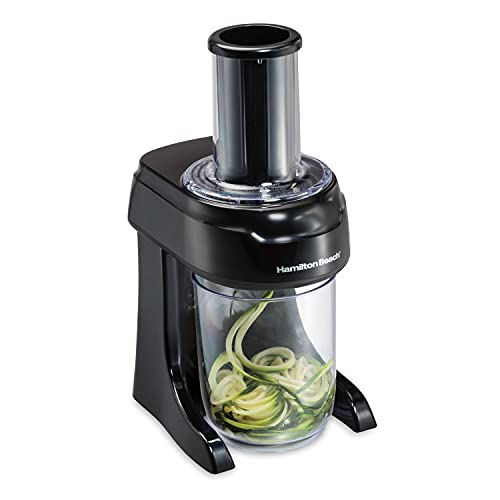 Hamilton Beach 3-in-1 Electric Vegetable Spiralizer for Veggie6-cups7.8 x 6.7 x 9.5 inches4.4 poundsCheck on Amazon
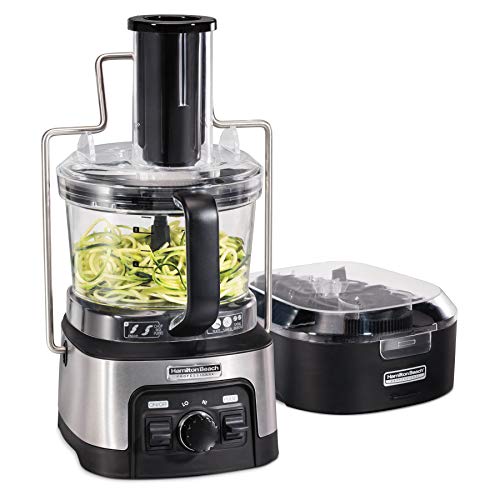 Hamilton Beach Professional Stack & Snap Food Processor12 Cup Spiralizing10.25 x 9.5 x 18.28 inches11.8 poundsCheck on Amazon
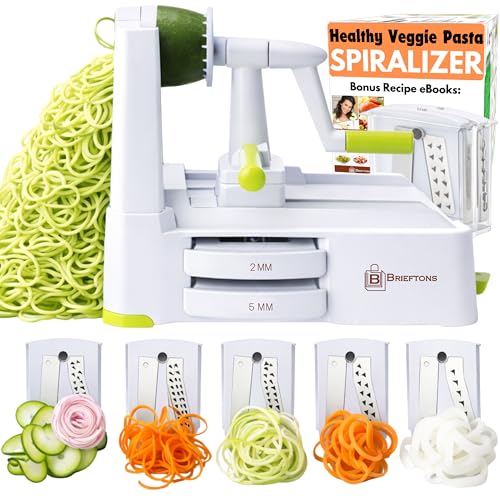 Brieftons 5-Blade Countertop Vegetable Spiralizer and Veggie Noodle5 Blades2.1 poundsCheck on Amazon
 Brieftons 10-Blade Countertop Vegetable Spiralizer and Veggie NoodleStandard3.5 poundsCheck on Amazon

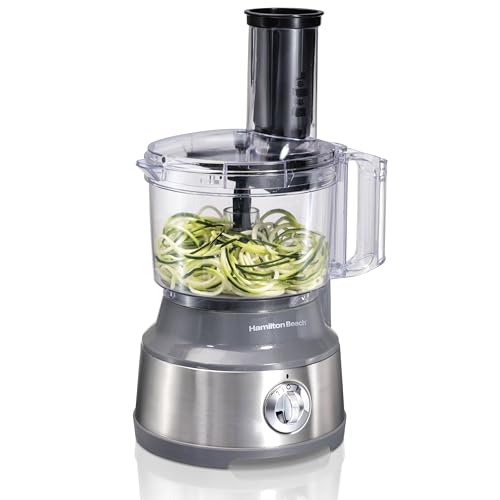
What's inside
- How to read this guide
- Countertop electric designs and how they differ from attachments
- Blade widths and what each strand actually does
- Motor power, dense vegetables, and honest limits
- Feed tube diameter, piece preparation, and strand length
- Setup, counter footprint, and everyday use
- Cleaning starch, pigments, and blade housings
- Choosing by kind of cook
- Common mistakes
- Frequently asked questions
- Check prices on Amazon
- Conclusion
As an Amazon Associate I earn from qualifying purchases. This post may contain affiliate links at no extra cost to you.
A countertop electric spiralizer earns its place only when it turns a repetitive, wrist-heavy job into a calm, repeatable batch routine. Instead of cranking a handle while holding a vegetable steady with the other hand, you feed prepared pieces through a vertical or horizontal tube, guide them with a pusher, and collect continuous strands in a container below or beside the blade. That simple change in posture and force matters most for households that spiralize several times a week, for cooks preparing vegetables for a larger table, and for anyone whose grip tires quickly on a manual crank. It matters far less if you make a small bowl of courgette strands once a month, where a compact hand tool takes less cupboard room and washes in seconds.
This guide compares electric countertop designs by the published details that actually shape the result: blade widths from roughly two to nine millimetres, feed tube diameter, motor behaviour under dense vegetables, container capacity, and how completely the parts separate for washing. No single configuration suits every vegetable or every eater. A narrow spaghetti-style cut behaves differently in a pan from a flat fettuccine-style strand or a wide ribbon, and a machine that handles courgette effortlessly may slow, strain, or produce short broken pieces when it meets sweet potato or beetroot. Reading those differences in advance is the difference between a tool you reach for and one that migrates to the back of a cupboard.
Who should consider one, and who should skip it? Consider an electric model if you prepare vegetables in batches, if several people in the household eat lower-starch vegetable strands in place of some pasta or noodle portions, if you regularly work with firm produce that makes a hand crank slip, or if holding and turning at the same time is uncomfortable. Skip it, for now, if your counter and storage are already crowded, if you dislike washing multi-part assemblies, if you mostly spiralize soft produce in tiny amounts, or if you expect any machine to rescue watery, overripe vegetables. Electricity adds consistency and speed; it does not change the water content or structure of the ingredient itself.
How to read this guide
Start with the blade and tube figures, then check the cleaning path, and only then think about motor size, because a strand you dislike or a blade housing you dread washing will end the habit long before a motor wears out. As an Amazon Associate we earn from qualifying purchases. Every width, diameter, and capacity in the sections that follow is described as a commonly published range for this class of machine rather than a promise about one particular unit, so use the ranges to frame your own shortlist: measure the vegetables you buy most often, note the strand width your household actually eats, and match the tube, blade set, and container to those ordinary weeks rather than to an occasional ambitious recipe.
A useful way to read the specification sections is to keep three ordinary meals in mind. Picture a weeknight pan of courgette spaghetti-style strands that must stay distinct rather than collapse, a weekend batch of sweet potato flat strands for roasting, and a raw beetroot or cucumber ribbon salad where appearance matters. Each meal stresses a different part of the machine. The first rewards a clean narrow cut and a container that does not crush the pile. The second rewards steady torque and a tube wide enough to avoid awkward halving. The third rewards a sharp ribbon blade and a feed path that keeps the vegetable centred. If a design looks strong for only one of those meals, that may still be right for you, provided it is the meal you cook most.
Countertop electric designs and how they differ from attachments
Standalone countertop spiralizers carry their own motor, feed tube, blade housing, and collection container in one footprint. Attachments, by contrast, borrow power and stability from another appliance, usually a stand mixer or a food processor base, and add a spiralizing head to a machine you already own. The standalone route gives you a single purpose, a feed geometry designed only for strands, and controls that do nothing else. The attachment route saves a motor and some storage, but the strand path, tube angle, and container position are compromises shaped by the host machine. Neither route is automatically better; the honest comparison is about feed angle, blade access for cleaning, and whether the host appliance is already on your counter or buried in a cupboard.
Within standalone designs, feed orientation divides the field. Vertical-feed models drop the vegetable down onto a horizontal blade disc, using gravity plus pusher pressure, and strands fall into a container beneath. Horizontal-feed models hold the vegetable on a central axis and advance it toward a vertical blade, closer in spirit to a lathe, and strands emerge to the side. Vertical designs tend to be simpler to load and to suit shorter pieces. Horizontal designs can support longer pieces and sometimes keep a firmer grip on tapered vegetables, but they ask for more counter depth and more care when centring a crooked piece. In both cases the pusher is a safety part, not an accessory: it keeps fingers away from the blade while applying even pressure during the last centimetres, when temptation to push by hand is strongest.
If your vegetable prep already centres on a processor for slicing and grating on other nights, the comparison in best food processors for indian food helps you judge whether a separate spiralizer still adds anything beyond what a processor-led kitchen already covers.
Blade changing is the second dividing line. Some designs use flat interchangeable plates or discs, each carrying one cut, stored in a lidded box or a slot in the base. Others use cone-shaped or cartridge blades that click into a housing. Plates are easy to inspect, dry, and stack, but each plate is a separate item to wash when you switch cuts mid-batch. Cartridges can feel tidier in storage yet hide residue in seams that need a brush. Whichever system you consider, count the blades you will genuinely use. A set spanning roughly two to nine millimetres sounds generous, but many households settle on one narrow and one flat cut and rarely touch the rest, so storage and cleaning for unused blades is a real, if quiet, cost.
Blade widths and what each strand actually does
The narrowest common cuts, around two to three millimetres, produce spaghetti-style strands. They cook fastest, tangle most readily, and suit light sauces, garlic and oil dressings, brothy soups added at the end, and raw preparations where a fine strand softens quickly in a dressing. Their weakness is fragility: a soft vegetable or a dull blade tears them into short lengths, and a crowded hot pan steams them into a single mass. If fine strands are your main goal, blade sharpness, centring, and a feed tube that stops the vegetable wobbling matter more than raw motor size, because wobble widens and weakens a fine cut with every rotation.
Mid-width flat cuts, around four to six millimetres, behave like fettuccine. They hold a sauce without disappearing, roast with edges that can brown before the centre softens, and give a more substantial chew that many households find closer to a main course rather than a garnish. This is often the most forgiving width for firm vegetables such as sweet potato, carrot, and the neck of a butternut squash, because the strand is thick enough to survive handling yet thin enough to cook through evenly. If you are uncertain which blade set to prioritise, prioritise a clean, well-supported flat cut in this range; it covers weeknight pans, tray roasts, and cold salads with the fewest disappointments.
Wide cuts, around seven to nine millimetres and dedicated ribbon blades, produce broad flat strands and continuous ribbons. Ribbons are the presentation cut: layered into salads, draped over grains, or used as wide vegetable sheets in place of some pasta sheets in a baked dish. They demand the steadiest feed, because any tilt shows as a varying thickness along the ribbon, and they expose the limits of tube diameter most clearly, since a wide ribbon needs a wide, well-centred piece to begin with. A ribbon blade on a small, soft courgette yields a narrow, apologetic strip. The same blade on a firm, straight, wide vegetable yields the dramatic result shown in recipe photographs, which is a reminder that ingredient selection, not the machine alone, sets the ceiling.
Blade material and edge condition deserve plain language. Published descriptions for this class usually refer to stainless steel cutting edges set in plastic plates or housings. The practical points are edge retention, corrosion resistance during washing, and whether the edge is exposed when the plate is handled. A blade that is awkward to hold safely will be washed carelessly, and a blade washed carelessly dulls and accumulates residue faster. Look, in descriptions, for plates that can be gripped by a rim or tab away from the edge, for a storage box that keeps edges from knocking against each other, and for housings that open fully so a brush can reach the back of the edge where starchy films collect.
Readers weighing a processor attachment against a dedicated unit may find the assessment approach in best food processors america test kitchen useful for separating feed-tube claims from the strand quality those claims are supposed to deliver.
Motor power, dense vegetables, and honest limits
Published motor figures for countertop spiralizers sit in a modest range compared with blenders or processors, because the job is slicing a rotating or descending vegetable rather than crushing ice or kneading dough. Wattage alone tells you little. More revealing is behaviour: does the machine maintain a steady pace when a sweet potato replaces a courgette, does it slow gradually and recover, does it stall and require a reset, and does the housing flex or walk on the counter under load? A machine that slows slightly but keeps cutting usually produces better strands than a stronger machine that surges and grabs, because even speed keeps strand thickness even along its length.
Dense and pigmented vegetables expose different stresses. Sweet potato is hard and starchy, and it punishes a wobbling feed with snapped strands. Beetroot is firm and wet, stains housings and boards, and reveals whether seals and seams trap coloured juice that later flavours a pale vegetable. Carrot is dense but narrow, so it tests centring more than power. The solid neck of a butternut squash, with no seed cavity, is among the best firm ingredients for wide cuts, while the hollow bulb end cannot be spiralized in the same way at all and belongs in a soup or roast instead. Preparing these vegetables well means peeling where the skin is tough, trimming a flat end so the piece seats squarely, and cutting lengths that fit the tube without forcing.
Soft, watery vegetables are the honest limit of the category. Ripe courgette, cucumber, and soft summer squash release water as they are cut, and their strands can emerge limp, broken, or ragged regardless of motor or blade. Salting and draining helps a raw preparation, and cooking briefly in a wide, uncrowded pan helps a hot one, but no electric drive restores firmness that the ingredient never had. Likewise, very hard, irregular pieces that rock in the tube will yield uneven strands, and tiny end pieces should be conceded to the knife or the stock pot rather than chased toward the blade with fingertips. A guide that promised otherwise would be selling, not informing, so plan menus around firm, straight, fresh produce and treat the machine as an amplifier of good ingredients.
Heat and duty cycle are quieter motor considerations. Small countertop motors are generally intended for household batches, not continuous catering use, and descriptions often imply short rests between large batches even when they do not state a strict limit. In practice, spiralizing is fast, so a family batch rarely strains a duty cycle, but a plan to process a whole market haul for freezing can. Work in sensible groups, empty the container before strands are crushed by their own weight, clear the blade between vegetables when starch builds up, and let a warm housing rest while you season or cook the batch you have just cut. That rhythm also improves quality, because strands left piled and waiting release water and soften.
Feed tube diameter, piece preparation, and strand length
Feed tube diameter decides how much knife work happens before the machine does anything. A wider tube accepts halved or whole medium vegetables with less trimming, keeps a broader face against the blade for ribbons, and reduces the tilt that ruins thickness. A narrower tube forces more pieces to be cut lengthwise, and each cut face must then be centred carefully or the strand emerges off-axis, thick on one side and torn on the other. Measure, honestly, the diameter of the carrots, courgettes, and sweet potatoes you actually buy. Supermarket produce varies, and a tube that suits slender vegetables may frustrate you every time a thicker sweet potato needs splitting and then slips because its cut face is flat on only one side.
Strand length follows piece length and continuity of feed. Longer, straight pieces fed without interruption give the long, twirlable strands that make vegetable noodles satisfying. Short pieces, pauses to reposition the pusher, and pieces with a seed cavity that collapses mid-cut all shorten the result. There is no fault in shorter strands for soups, frittatas, fritters, and salads, where they may even serve better, but if long strands are the point of buying the machine, buy straight produce, trim minimal flat ends, and choose a design whose pusher travels the full tube without leaving a long unusable stub. The final stub, in any design, should be treated as a knife-cut extra for another dish, not as a challenge to be pushed closer to the blade.
Container capacity shapes batch flow more than headline size suggests. A container that holds the output of two or three large courgettes lets you finish cutting before you cook. A smaller container needs emptying mid-batch, which interrupts feed rhythm and invites strands to tangle and break during transfer. Translucent containers help you see when the pile reaches the blade outlet, where strands begin to be compressed and cut short by the mechanism above them. If you regularly cook for a larger household or prepare vegetables for several meals, weight the container and tube figures heavily. If you cook for one or two, a compact container that stores inside the unit may serve you better than a generous one that lives separately in a cupboard.
For households that split vegetable prep between strands and blended soups or sauces in the same meal, the output and jar considerations in best blenders for smoothies ice round out the picture of how much counter equipment one dinner really needs.
Setup, counter footprint, and everyday use
Setup should take under a minute once the machine lives in a sensible place: base on a dry, level surface, blade plate or cartridge seated until it clicks or sits flush, container aligned with the outlet, pusher within reach. Suction feet or a weighted base help under the sideways pressure of firm vegetables, and a cord that reaches the socket without crossing the work area keeps the tube accessible from your natural standing position. Footprint figures in listings usually describe the base alone, so add working room for the container, a board for trimming, and a bowl for trimmings. A machine that technically fits a small counter but leaves nowhere to trim a squash will be used less than its dimensions predict.
Cord storage and part storage decide whether the machine reassembles willingly. Wrap-around cleats or a cord compartment keep the lead from tangling with other appliances, and a blade storage box that fits inside the container or clips to the base keeps the full set together. Loose blades stored in a general utensil drawer are a safety problem and an edge-damage problem at once. Before choosing, picture the machine put away, not just operating: total stored height with container stacked, whether the pusher has a home, and whether the blade box is labelled or shaped so you can identify widths without handling every edge. These unglamorous details predict long-term use more reliably than any single performance figure.
Noise in this category is generally moderate: a small motor, a cutting sound that rises with dense vegetables, and container rattle if the base sits on a hard, hollow surface. Early-morning or open-plan use may still favour a design described as using a lower-speed, higher-torque approach for firm produce, and a folded cloth under the base, used only where the manufacturer permits and stability is kept, can reduce transmitted vibration on a resonant worktop. What you should not expect is silence. Cutting a sweet potato makes noise in any format, including by hand, so judge noise comparatively across the class rather than against an unrealistic standard, and be wary of any description that promises quiet operation with no context about load or setting.
Cleaning starch, pigments, and blade housings
Cleaning is where spiralizers are won and lost. Starchy vegetables leave a pale film that dries hard on blade backs and housing seams, beetroot and carrot pigments stain pale plastics, and fine strands wrap around central cores and pusher teeth. The designs that clean best separate fully: blade plate out, pusher apart if it is built to separate, container empty and open, and no hidden chamber where juice collects. Published care notes for this class commonly describe many removable parts as dishwasher suitable, usually on a top rack, while the motor base is wipe-only. Treat dishwasher suitability as permission, not obligation; a prompt rinse and brush often clears starch faster than a full cycle, and blades in particular keep their edges longer when they are not rattling against other items.
A short, consistent routine beats an occasional deep struggle. Rinse parts immediately, before starch dries. Use a small brush, angled into the back of the blade and around the core, rather than a sponge pressed against an edge. Wash the pusher teeth where vegetable flesh packs in. Dry blade plates before returning them to their storage box, because trapped moisture in a closed box is unkind to edges and invites odours. For pigment, wash beetroot parts promptly and accept that some tinting on pale plastic may be cosmetic and permanent; cutting beetroot last in a mixed batch protects the appearance of paler vegetables and reduces the number of stained parts to one set.
Safety during cleaning deserves its own sentence of emphasis: handle every blade by its rim, tab, or housing, never by sweeping a cloth across the cutting edge, and never leave a loose blade hidden under suds in a sink. Load a dishwasher so edges face away from where hands reach in, and store blades in their box as soon as they are dry rather than leaving them on a draining rack among cups. Households with children or with several people sharing washing-up should weight these handling details as heavily as cutting performance, because the blade you handle twice per use, once dirty and once clean, is the part you will meet most often.
If a glass-jar blender already handles your sauces and you are deciding whether strand prep deserves its own machine, the jar and capacity notes in best glass blenders for smoothies offer a useful counterpoint on single-purpose versus multi-purpose prep.
Choosing by kind of cook
For the batch preparer, who spiralizes at the weekend for several weekday meals, the priorities are container capacity, a wide enough tube to reduce trimming, the flat mid-width blade for sturdy vegetables, and parts that wash quickly between different produce. Store strands uncooked, in a lined container that absorbs surface moisture, and expect softer vegetables to keep for a shorter window than firm ones. For this cook, a slightly larger footprint is a fair trade for fewer interruptions, and a second container, if the design offers one, can be worth more than an extra exotic blade width that will rarely leave its box.
For the household reducing some starch at the table, the priority is a strand the whole table will actually eat. That usually means the mid-width flat cut for hot dishes, the narrow cut for soups and light pans, and honest mixing: half vegetable strands and half conventional noodles is a sustainable pattern for many families, and a machine that supports that pattern weekly is succeeding even if it never fully replaces pasta. Involve hesitant eaters in choosing sauces and accompaniments, keep strands distinct by cooking them briefly and separately, and do not oversell the swap. A tool adopted without resentment, used twice a week for years, beats a dramatic overhaul abandoned by February.
For cooks with reduced grip strength or wrist discomfort, the electric format itself is the feature: the pusher replaces sustained gripping and twisting, the motor replaces crank force, and a stable vertical feed lets body weight assist gently rather than demanding hand strength. Prioritise a large, comfortable pusher grip, a tube that does not require forcing oversized pieces, controls that operate with a simple press rather than a twist held under load, and a total weight you can move to and from storage without strain. Also weigh assembly: a blade system that needs forceful clipping may quietly reintroduce the very strain the motor removed, so descriptions of one-handed or low-force assembly are worth reading closely.
For the small kitchen, the calculation reverses. Counter footprint, stored height, and part count dominate, and an attachment for an appliance already in daily use may be the rational choice despite its compromises. If you do choose a standalone unit for a small space, choose the one whose container nests, whose blade box stores internally, and whose blade set is edited rather than exhaustive. Then give it a fixed home. A spiralizer that must be excavated from behind other appliances will lose to the knife every busy evening, whatever its motor or blade figures promise on paper.
Common mistakes
The most common mistake is forcing the produce to fit the machine instead of preparing it to feed squarely: untrimmed round ends that rock, oversized pieces jammed into the tube, and hollow or seedy sections expected to cut like solid flesh. The second is crowding the pan afterwards, which steams strands into softness and is then blamed on the blade. The third is washing late, letting starch set like glue. The fourth is buying by blade count rather than by the two cuts you will use weekly. The fifth is pushing the final stub too far, risking fingers for a few centimetres of vegetable. Each mistake is understandable, each is avoidable, and none requires a more expensive machine to fix, only a calmer routine around the one you have.
A related mistake is judging a machine on a single glamorous vegetable. Courgette is cooperative and photographs well, but it is among the easiest ingredients in the category. Judge instead on your hardest regular ingredient, whether that is sweet potato for roasts, carrot for salads, or squash neck for wide cuts, and on your most common weeknight ingredient together. A design that handles the hard case steadily and the common case cleanly will satisfy you. A design that dazzles on the easy case and stalls, wobbles, or tears on the hard one will narrow your cooking to the ingredients it prefers, which is the opposite of what a prep tool should do.
Frequently asked questions
Can an electric spiralizer handle sweet potato and squash?
Yes, within the limits of tube diameter and piece preparation. Choose firm, straight pieces, peel tough skin, trim a flat seating end, and split pieces that exceed the tube rather than forcing them. The solid neck of a squash cuts far better than the hollow bulb. Expect a steadier, slightly slower pace than with courgette, and treat short broken strands from the first uneven centimetre as normal trimmings for soup rather than as failure.
How do I stop vegetable strands turning watery?
Start with firm, fresh produce, cut close to cooking time, and cook strands briefly in a wide pan with room for steam to escape. For raw dishes, a short rest on a clean cloth or with a light salting followed by gentle patting can reduce surface moisture. Avoid piling hot strands in a deep covered bowl, which traps steam and softens them. The machine affects cut consistency; moisture control happens in ingredient choice, timing, and pan management.
Are the blades and containers usually dishwasher suitable?
Published care information for this class commonly lists removable containers, pushers, and blade plates as dishwasher suitable, often top rack, while the motor base should only be wiped. Check the care notes for the specific design you are considering, wash pigmented vegetables promptly to limit staining, and consider hand washing blades to protect their edges and to keep handling deliberate and safe.
Which blade width should a beginner use first?
Begin with the mid-width flat cut, roughly four to six millimetres, on a firm vegetable such as carrot, squash neck, or sweet potato. It is the most forgiving combination of strand strength and even cooking, and it teaches you feed pressure and centring without the fragility of the finest cut. Add the narrow spaghetti-style cut once your feed is steady, and treat ribbon cuts as a presentation skill to practise on the widest, straightest produce you can find.
Is a standalone machine better than an attachment?
A standalone machine offers a feed path, container, and controls designed only for strands, plus a motor you do not have to share. An attachment saves storage and a motor if its host appliance already lives on your counter. The better choice is the one whose setup you will complete on a busy evening. Compare tube diameter, blade access for cleaning, and stored size, rather than assuming that either format wins by definition.
Consider also how the strand behaves after cutting, because the machine’s work ends at the container but yours continues at the hob. Fine strands carry heat almost instantly and should meet a sauce that is already seasoned, since there is no time to adjust while they cook. Flat strands tolerate a minute or two of tossing and can absorb a dressing as they cool slightly. Ribbons intended for a salad benefit from a brief rest in cold water only when the vegetable suits it, as carrot and courgette do, while beetroot ribbons are better dressed directly so their colour stays where you placed it rather than tinting a bowl of water.
Storage of cut strands rewards the same attention to moisture. A shallow container lined with a clean cloth, strands loosely piled rather than pressed, and a lid left slightly vented for the first hour in the refrigerator keeps surfaces drier than a sealed deep box. Firm vegetables such as carrot and squash hold their cut texture noticeably longer than courgette or cucumber, so a mixed batch is best cut in stages across the week rather than all at once. Freezing raw strands is generally disappointing for soft produce, because thawing releases their water and collapses the cut, whereas firm strands destined for soup tolerate freezing more forgivingly since their final texture matters less.
Seasoning interacts with strand width in ways worth planning. Salt draws moisture, so salt a raw strand salad close to serving and a hot strand pan at the end rather than the beginning. Acidic dressings soften fine strands quickly, which can be pleasant for a raw courgette preparation and disastrous for a cucumber ribbon meant to stay crisp. Oil coats and protects, so tossing hot strands with a little oil before saucing helps them stay separate. These are small decisions, but they explain why the same machine and the same vegetable can produce a dish one household praises and another finds soggy: the cut was identical, and everything after the cut was not.
The economics of the category are best judged per year of use rather than per feature. A machine used twice weekly for vegetable strands that genuinely replace some bought prepared produce, some takeaway sides, and some wasted whole vegetables that would otherwise soften unused in a drawer, repays its counter space in routine rather than in any single spectacular meal. A machine bought for a dietary intention that the household has not yet adopted carries a heavier burden of proof. If you are uncertain, borrow the habit first with a simple hand tool for a fortnight of ordinary dinners; if the habit sticks and the hand work irritates, the electric upgrade has a proven job waiting for it.
Finally, think about who else will use the machine. A second cook in the household may prefer a different strand width, assemble the blade differently, or wash parts with less care around edges. A design whose assembly only works one way, whose blade seats with an unmistakable click, and whose storage box makes the correct blade obvious, serves a shared kitchen better than a marginally stronger motor. Leave the blade box and the pusher where the machine lives, agree where the washed parts dry, and the tool becomes shared infrastructure rather than one person’s project, which is usually when a prep appliance survives its first year.
Vegetable selection at the shop is the last specification no listing can give you. Choose straight over curved for any cut where length matters, firm over merely large, and unblemished skin where you plan to leave a peel on for colour, as with courgette or carrot scrubbed rather than peeled. Avoid the very thick courgette with developed seeds, whose centre collapses during cutting, and the sweet potato with tapered, twisted ends that will never seat squarely. A moment of selection among loose produce does more for strand quality than any later adjustment of pressure, speed, or blade, and it costs nothing.
Blade geometry also affects how a strand releases. A plate that drops strands cleanly into the container keeps the pile loose and separate, while a housing that drags strands around the core before releasing them twists and weakens fine cuts. Watch for descriptions of outlet position and container alignment, and for a core design that ejects the central cylinder of the vegetable predictably rather than letting it wrap around the blade. That central core, incidentally, is not waste by default: sliced thinly it cooks like any other piece of the same vegetable, and reserving cores for soups and stir-fries is a small, sensible economy that also tells you how cleanly the machine centred each piece.
Pusher design repays closer reading than it usually receives. Teeth or ridges on the pusher face grip the vegetable end and resist rotation, which matters most for round, smooth produce such as courgette and cucumber. A pusher that travels smoothly without rattling keeps pressure even, while a loose pusher chatters and produces a strand of varying thickness that cooks unevenly. The handle end should fill the palm rather than pinch it, and its travel should end with a clear stop well before any contact with the blade. If a description mentions a pusher that doubles as a storage cap or a measuring guide, treat those as conveniences only; grip, travel, and the safety stop are the working virtues.
Rotation speed, where a description mentions it, interacts with vegetable firmness in a predictable way. A faster rotation on a soft vegetable can tear rather than slice if the feed pressure lags, producing ragged edges that release water quickly. A slower, steadier rotation on a firm vegetable gives the edge time to bite and the pusher time to keep the piece seated. Adjustable speed is uncommon in this category and is not necessary for good results, but a single speed chosen sensibly for mixed produce, neither frantic nor laboured, is a mark of a design aimed at real kitchens rather than demonstrations. Consistency of speed under load matters more than the headline speed on an empty machine.
The first centimetre of every piece deserves a plan, because the seating end is rarely flat and the first strands are often short, twisted, or uneven. Trim a deliberate flat, accept that the opening strands go to the soup bowl, and begin judging the cut only once the piece is fully seated and the strand runs continuous. The same realism applies to the last centimetre, where the pusher takes over completely. Building these two concessions into your expectations removes most of the disappointment new owners report, which is rarely about the middle of the cut at all. A machine judged on its middle eighty percent, which is where nearly all the eating is, is being judged fairly.
Pairing strands with the right cooking method protects the investment in cutting them. Fine strands suit raw dressings, brief broth immersion, and a minute in a hot, wide pan. Flat strands suit roasting on a single layer with space between piles, where edges can dry and colour. Ribbons suit raw salads, gentle folding through warm grains off the heat, and layering where their width is visible. Mismatches, such as roasting fine strands until they surrender all their water or boiling ribbons into tatters, are cooking errors that no blade choice can prevent. When a dish disappoints, change the pairing before changing the machine; the cut you already own usually has a method where it shines.
Households cooking for children or cautious eaters can use width strategically. Flat strands mixed through a familiar sauce read as a vegetable addition rather than a replacement, and their texture survives reheating for packed lunches better than fine strands do. Fine strands disappear into soups in a way that suits a child who objects to visible vegetables but accepts noodles. Ribbons, being unmistakably vegetable, work better as an opt-in salad element than as a surprise. None of this requires separate equipment, only a decision about which blade leaves its box for which eater, and that decision, made kindly and without commentary at the table, does more for long-term vegetable eating than any single recipe.
Water management continues after cooking. Drain strands briefly rather than pressing them, because pressing breaks the cut and squeezes out the very texture you worked to keep. Sauce strands in the pan or a warm bowl, not under a lid, and serve promptly, since a covered pile continues to soften in its own steam. For packed portions, cool strands spread out on a tray before boxing them, so residual heat escapes instead of condensing. These habits sound like general kitchen craft because they are, and that is the point: an electric spiralizer improves the cutting stage of a chain whose other links, selection, timing, moisture, and method, remain entirely in the cook’s hands.
A word about peeling is worthwhile, because peel affects both cut and cleaning. Tough squash and sweet potato skins should come off, since they resist the edge unevenly and appear in strands as chewy ribbons of their own. Carrot and courgette peels can stay when the produce is fresh and well washed, adding colour contrast that makes a bowl look deliberate. Beetroot peel is usually removed for appearance and to reduce earthy flavour at the strand surface. Whatever you decide, decide before the piece enters the tube; stopping mid-batch to peel a forgotten piece breaks rhythm, wets the board, and leaves cut strands waiting and softening while you correct an avoidable oversight.
When two cooks share one machine across a week, a small labelling habit prevents friction. Mark the blade box compartments by width in a way that survives washing, keep the two favourite blades in the front positions, and return every part to the same cupboard shelf after drying. It sounds administrative, yet shared tools fail socially before they fail mechanically: a blade that cannot be found, a pusher stored with another appliance, a container used for leftovers and unavailable at prep time. A modest, agreed system keeps the machine complete and ready, and completeness is a precondition for the quick, unthinking use that turns an appliance into a habit.
Think, too, about the vegetables you will spiralize only rarely and whether they justify any compromise. A design chosen entirely around an annual beetroot salad will serve the weekly courgette badly. Let the frequent ingredients dictate tube, blade, and container, and let rare ingredients be adapted with a knife, a peeler for ribbons, or a borrowed method. This ordering, frequent first and rare last, is the simplest defence against buying the wrong machine, and it applies equally to capacity: size the container for the weekly batch, not the holiday feast, and simply empty it twice on the rare large occasion rather than storing an oversized container all year.
Noise, footprint, and cleaning converge in one final practical test: the weekday evening test. Picture the machine used at the end of a working day, on your actual counter, beside the hob, with a meal due in half an hour and washing-up still to come. If setup, cutting, and rinsing fit that picture comfortably, the design will be used. If the picture involves moving two other appliances, hunting for a blade, and facing a stained, multi-part wash while dinner waits, it will not, regardless of specification. Run that mental rehearsal honestly for any design you consider, because it integrates every figure in this guide into the only metric that finally matters, which is use.
Ingredient temperature is a small variable with visible effects. Vegetables taken straight from a cold refrigerator cut more crisply and hold a fine strand better than the same vegetables after an hour on a warm counter, because their flesh is firmer. Frozen produce, by contrast, should not be spiralized in this class of machine at all; its structure is damaged by ice crystals and it emerges as fragments and liquid. Plan the order of preparation so spiralizing happens while produce is still cool, and let other components, grains, sauces, proteins, occupy the waiting time. It is a sequencing habit rather than a purchase criterion, yet it quietly raises the quality of every batch.
Leftovers made from strands behave differently from leftovers made from chunks, and planning for that difference reduces waste. Cooked fine strands soften further on reheating and suit being folded into eggs, soups, or a fresh sauce rather than reheated alone. Flat roasted strands reheat acceptably in a hot pan or oven for a few minutes and make a good base for a fried egg or a grain bowl. Raw ribbons keep their looks for a day if dressed lightly or not at all. Cooking slightly less than the table’s appetite, and cutting a fresh small batch the next day in two minutes, usually beats reheating a large, tired portion, and the machine’s speed is exactly what makes that fresh-batch strategy realistic.
Countertop stability during a firm cut is easy to overlook until a base rocks on an uneven surface or slides on a polished stone top. Check that the work surface is dry, that all feet sit flat, and that any suction mechanism is engaged on a clean area rather than over a grout line or a textured finish. A machine that moves even slightly changes the feed angle at the blade, and the strand records that movement as a thick and thin variation along its length. If a particular counter surface never holds the base securely, a thin, firm, non-slip mat made for appliances can help, provided the machine still sits level and the mat does not creep during use.
For cooks who spiralize for freezing into soups rather than for fresh dishes, expectations should be set differently from the start. Firm strands added to a soup from frozen will soften and shorten, which is acceptable where the strand is an ingredient rather than the presentation. Blanching is generally unnecessary for pieces that will be cooked again in liquid, and it adds water that the soup does not need. Freeze strands in flat, thin portions so they separate quickly in the pot, label them by vegetable and cut width, and use softer vegetables first. Judged as a soup ingredient strategy rather than as fresh noodle preparation, freezing is a reasonable use of a glut of firm produce.
A brief note on entertaining is practical rather than decorative. Vegetable strands wilt visibly between cutting and serving, so a spiralized element for guests should be cut as late as the menu allows, dressed at the table or immediately before it, and presented in a wide, shallow bowl where the cut can be seen rather than compressed. Prepare sauces, grains, and proteins earlier in the day and let the two-minute cutting be the final act. Guests reliably overestimate the effort involved, which is pleasant, but the real benefit is texture: a ribbon cut ten minutes before eating and a ribbon cut three hours before eating are, in every way that matters, different dishes.
Accessibility in the wider sense also includes instruction clarity. A design whose blade widths are marked in words or clear symbols, whose assembly arrows align visibly, and whose care notes state plainly which parts may be immersed, serves cooks with low vision, cooks working in poor evening light, and anyone assembling the machine while distracted by a meal in progress. These are not luxury features. They reduce the two commonest real-world errors, fitting the wrong blade for the intended cut and immersing a part that should only be wiped, and they do so at the exact moment the error would otherwise happen, which is the definition of good design in a kitchen tool.
Lastly, keep the knife skills this machine does not replace. Trimming, peeling, portioning, and cutting the conceded end pieces all remain knife work, and a cook who keeps those skills comfortable will prepare pieces that feed better, centre better, and waste less. The spiralizer’s role in a capable kitchen is narrow and valuable: one transformation, done consistently, with less effort than by hand. Kitchens that understand a tool’s narrowness tend to keep it for years, because it is never blamed for jobs outside its brief and never displaced by a gadget promising to do everything. That clarity, more than any specification, is what this guide has tried to give each design discussed here.
Check prices on Amazon
Live listings for the shortlist in this guide are pulled from Amazon below, so prices and availability are always current at the moment you look.


Conclusion
An electric spiralizer is a modest machine with a specific gift: it makes firm vegetables into consistent strands with less hand effort and more repeatability than a crank, provided the produce is firm, the piece is centred, the blade matches the dish, and the parts are washed before starch sets. Choose by tube and blade first, container and cleaning second, and motor behaviour third, and the choice will reflect your cooking rather than a feature list.
When the right cut turns an ordinary Tuesday courgette and a stubborn sweet potato into the same calm, twirlable supper, the machine has quietly earned its corner of the counter.