Our Top Picks


What's inside
- How to read this guide
- What a hose washer actually seals
- The standard size, stated precisely
- Measuring a washer you already own
- Materials, compared by behaviour rather than by name
- Temperature, chlorine and sunlight in daily service
- Durometer, explained without mystique
- Filter-screen washers and their double duty
- Not a shower gasket, not an aerator washer
- Diagnosing a leak at the coupling, step by step
- Replacement rhythm and visible ageing signs
- GHT, NPT and the thread traps between them
- Choosing by use case
- Storage, spares and simple habits that extend seal life
- Hard water, sediment and other local conditions
- A short post-installation routine
- Check prices on Amazon
- Final checks before buying any pack
As an Amazon Associate I earn from qualifying purchases. This post may contain affiliate links at no extra cost to you.
How to read this guide
A hose washer costs almost nothing, weighs almost nothing, and decides whether a threaded joint stays dry or sprays sideways every time the tap opens. This guide treats that small ring with unusual seriousness, because the ring is where garden hoses, washing machine inlets, pressure washer feeds and outdoor taps either seal cleanly or fail in familiar, preventable ways. Everything here stays inside a narrow boundary: the flat or slightly profiled gasket that sits inside a female hose coupling and presses against the flat face of a male fitting. Hoses themselves, spray guns, taps and valves appear only where they touch that sealing face.
As an Amazon Associate, this site earns from qualifying purchases, and that relationship shapes how products are presented here without changing the measurements, material notes or diagnostic steps set out below. Readers should expect comparisons built from published dimensions, compound descriptions, durometer figures and care instructions rather than claims about personal use. Where a maker lists a dimension as nominal, this guide says so. Where a figure varies between production runs, that variation is flagged instead of smoothed away. A washer that looks identical in a photograph can behave very differently once water pressure, heat and tightening torque act on it for a full season.
Read the sizing material first if a joint already leaks, because no compound upgrade rescues a ring with the wrong outside diameter. Read the material and durometer sections first if sizing is correct yet joints weep after hot afternoons or winter storage. The filter-screen sections matter most for laundry inlets and pressure equipment, where a washer does two jobs at once. Keep a ruler or caliper nearby while working through the numbers. A difference of one millimetre sounds trivial on paper and becomes obvious the moment a loose ring folds sideways inside a coupling nut.
What a hose washer actually seals
Threaded hose couplings do not seal on their threads. The helical thread pulls two parts together and provides mechanical strength, yet water finds the spiral path between thread flanks unless something blocks the flat annular face at the end of the male fitting. That blocker is the washer. When the coupling nut tightens, the male face advances into the soft ring, the ring compresses by a fraction of its thickness, and its material flows microscopically into scratches, casting texture and tiny flatness errors. The resulting contact band, not the thread, holds back pressure.
Understanding that geometry explains several common frustrations. Sealant tape wrapped around hose threads rarely fixes a face-seal leak, because tape addresses a different sealing mechanism used by tapered pipe threads. Doubling two thin washers rarely helps either, since the stack can slide, extrude unevenly and create a new leak path between the two rings. A single washer of correct thickness, seated flat in the nut recess, gives the male face one continuous surface to load. If that surface is nicked, hardened or permanently flattened, tightening harder usually accelerates damage rather than restoring the seal.
The washer also isolates dissimilar metals to a modest degree. Brass coupling faces pressed directly against aluminium or plated steel can corrode in damp storage, and a polymer or rubber ring interrupts that contact patch. This secondary benefit disappears once a ring cracks through, which is one reason an ageing washer sometimes reveals itself through green or white corrosion staining around a nut that previously stayed clean. The stain is a symptom worth reading, not merely a cosmetic flaw to polish away before fitting a fresh ring.
Pressure behaviour matters as well. Domestic outdoor taps commonly deliver static pressure that would surprise anyone who judges flow only by how a spray feels on skin. A washer must resist extrusion into the bore under that pressure while remaining soft enough to conform at modest hand torque. Those two demands pull in opposite directions, and much of this guide revolves around balancing them through thickness, hardness and compound choice rather than through brute tightening force.
Finally, consider movement. Hoses drag, twist and hang from their couplings, so the sealed face experiences small rocking loads in normal handling. A ring with some resilience follows those micro-movements and recovers. A ring that has taken a permanent set cannot follow, and a joint that was dry while hanging straight may mist when the hose pulls sideways. That is why leak checks should include a gentle repositioning of the hose, not just a static glance at a motionless connection.
The standard size, stated precisely
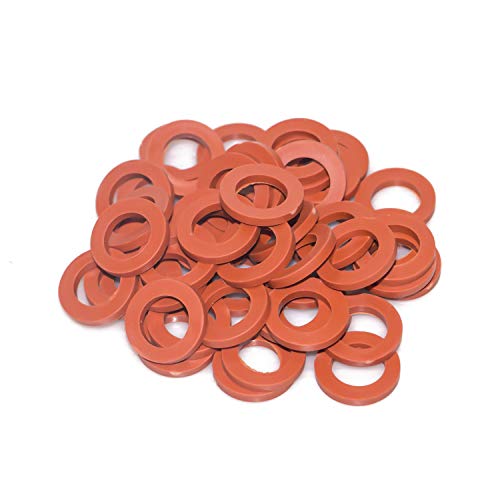
North American garden hose connections use the GHT pattern, a straight thread commonly described as three-quarter inch garden hose thread. The thread itself measures roughly 1.0625 inches in outside diameter with a coarse pitch suited to quick hand assembly, but the washer does not match that thread diameter. The washer lives inside the female nut, in a recess sized for a ring whose outside diameter is typically close to one inch, whose bore is roughly five-eighths of an inch, and whose thickness usually falls near one-eighth of an inch. Listings phrase those figures in several ways, so cross-checking all three dimensions matters more than trusting a headline size.
Nominal language causes trouble here. A pack labelled for three-quarter inch hose does not contain a washer three-quarters of an inch across. The three-quarter figure refers to the hose and thread family, not to any single washer dimension. Buyers who measure an old ring, find it near an inch wide, and then order three-quarter inch flat washers from a plumbing assortment often receive small rings meant for entirely different fittings. Those rings drop through the coupling recess or bunch to one side, and the resulting leak gets blamed on material quality instead of on a simple identity mistake.
Outside diameter and the recess fit
Outside diameter governs location. A ring that fits the nut recess with light snugness stays centred while the joint is offered up, which matters when a connection is made overhead, behind a machine or in fading light. A ring noticeably undersize drifts off centre, gets pinched at one edge during tightening, and leaves the opposite edge under-compressed. A ring oversize buckles, folds or shaves its edge against the recess wall, producing a wavy sealing face that no amount of careful torque will flatten evenly.
Recess dimensions vary slightly between coupling makers, especially between heavy cast brass nuts and lighter formed nuts on economy hoses. That variation explains why one brand of washer drops neatly into one hose and needs persuasion in another. Persuasion should mean fingertip pressure only. If a ring must be forced, stretched or trimmed, treat that as a mismatch signal. Trimming with scissors destroys edge integrity and almost guarantees a scalloped leak path, however tidy the cut looks before installation.
Bore diameter and flow
The bore needs to clear the waterway without intruding into it. An undersize bore can lip into the flow, flutter under pressure, erode at its inner edge and shed fragments downstream toward spray nozzles or inlet valves. An oversize bore reduces the width of the sealing band, leaving less material between bore and outside edge to resist extrusion. The familiar nominal bore near five-eighths of an inch balances those concerns for standard couplings, but screened variants and some heavy-duty rings use slightly different openings, so visual comparison against the fitting face remains worthwhile.
Flow restriction from a correct washer is negligible in garden use. Problems attributed to a washer choking flow usually trace back to a displaced ring, a clogged screen or a kinked hose. Checking the ring’s seating should therefore sit early in any low-flow investigation, before pressure calculations or tap repairs enter the picture. A two-minute inspection at the coupling often saves an afternoon of misdirected work elsewhere in the system.
Thickness and compression travel
Thickness provides the travel that lets a soft ring absorb face irregularities. Very thin washers suit precision faces and shallow recesses, yet they bottom out quickly on rough castings. Thicker rings forgive rougher faces and slightly bent fitting ends, but excessive thickness can hold the nut back so far that thread engagement feels short, tempting users to force the final turn. The common neighbourhood of one-eighth inch works because it compresses meaningfully under hand torque while leaving the nut with solid thread engagement on typical couplings.
When replacing a ring, compare thickness against the original rather than assuming uniformity across packs. A difference visible when two rings stand side by side on a bench will change how the joint feels during tightening. That changed feel matters because many people judge tightness by resistance alone. A thicker, softer ring reaches a deceptive sense of snugness early, while a thinner, harder ring may still be travelling toward full face contact when it already feels firm.
Measuring a washer you already own
Start with the old ring removed intact. Hooking it out with a fingernail or a blunt pick preserves its shape for measurement, whereas pliers crush one edge and distort thickness readings. Wash grit away, pat the ring dry and let it rest flat for a few minutes. Rubber that has just been peeled from a compressed joint may still be recovering, and immediate measurement can understate thickness. Photographing the ring beside a coin gives a rough scale record, though a coin cannot replace actual measurement when ordering spares.
Calipers give the cleanest figures, used gently so their jaws do not squeeze the specimen. Measure outside diameter across two perpendicular axes and note both values. A ring that reads round in one direction and oval in the other has been stored under load or distorted during removal, and its average diameter is less informative than the ovality itself. Measure the bore the same way, then take thickness at four points around the circumference. Wide thickness variation points to uneven loading in service, which in turn hints at a tilted fitting face or a recess that never held the ring squarely.
A steel ruler can still settle most replacement decisions. Lay the ring on the ruler under bright light and read the outside span at its widest honest point, ignoring any single whisker of flashing left from moulding. For thickness, stacking ten identical new rings and dividing the stack height by ten averages out reading error, a useful trick when a single soft ring defies precise reading. That stacking method works only with new, identical stock, not with a mixed handful rescued from a toolbox drawer.
Record compound clues during the same inspection. Note colour, surface finish, flexibility at room temperature and any smell typical of rubber compounds. Colour alone does not identify a material, since makers dye similar compounds differently, but colour plus flexibility plus service history narrows the field. Write the measurements on the storage bag rather than trusting memory. Six months later, the difference between a one-inch ring and a metric neighbour will no longer be obvious to the eye, and a labelled bag prevents the classic drawer full of almost-right washers.
If the old ring disintegrates during removal, measure the recess instead. The recess diameter sets the ceiling for outside diameter, its depth indicates workable thickness, and the male fitting face shows the sealing band width that the bore must respect. Take a close photograph of the face as well. Nicks visible in that image explain why a nominally correct new ring might still weep, shifting the remedy from washer selection toward face cleaning or fitting replacement.
Materials, compared by behaviour rather than by name
Natural rubber and general-purpose synthetic rubber blends remain the default for ordinary garden duty, and their appeal is straightforward: they are compliant at low torque, cheap to mould accurately and forgiving of mediocre fitting faces. Their weaknesses appear with heat, ozone and prolonged sunlight. A black ring that spends summers on a sunlit tap can surface-crack within a few seasons, and oils or petroleum-based sprays accelerate swelling in some blends. For a shaded connection that gets opened often, that trade-off is usually acceptable and replacement is painless.
EPDM earns its reputation in outdoor water service. This compound resists weathering, ozone and hot water far better than basic rubber blends, and it tolerates chlorinated potable water respectably. It dislikes petroleum contact, so it is a poor choice where oily machinery shares the same connection point. In laundry inlet service, where hot water and detergent splash combine with long static periods, EPDM rings often outlast generic stock noticeably. Their feel is slightly less tacky, and seating them benefits from a drop of clean water as a temporary lubricant during assembly.
Nitrile for oily or mixed-fluid corners
Nitrile, often listed under its older Buna-N name, handles oils and fuels that would swell EPDM, which makes it relevant around workshop pressure equipment, fuel-adjacent pumps and garage utility sinks. Its weathering resistance is less impressive, and prolonged outdoor exposure hardens it sooner than EPDM. Heat tolerance sits in a useful middle range for most domestic plumbing. Selecting nitrile for a sun-exposed garden tap purely because it sounds industrial is a category error; match the compound to the fluid and the exposure, not to the toughness implied by marketing adjectives.
Some nitrile rings are formulated harder for pressure resistance, so compound name and durometer must be read together. Two nitrile washers can behave quite differently if one is moulded soft for low-torque sealing and the other firm for extrusion resistance. Listings that name a compound without any hardness indication leave a genuine information gap. In that gap, thickness and intended application notes become the best available guides, and buying a small pack first is wiser than stocking up blind.
Silicone for temperature extremes
Silicone washers stay flexible across a temperature span that stiffens most rubbers, from hard frost through water hot enough to be uncomfortable on skin. That flexibility helps on connections that live outdoors through winter or feed from solar-warmed lines in summer. Silicone tears more easily than tougher compounds, so nicked fitting faces and careless removal with sharp tools shorten its life disproportionately. It also feels slippery, which aids assembly yet allows an undersize ring to wander inside a recess more readily.
Because silicone recovers well from compression, it suits joints that are opened and remade frequently, such as seasonal connections for portable equipment. The same resilience can mask over-tightening, since the nut keeps turning smoothly while the ring distorts. A disciplined quarter-turn habit protects silicone better than strength does. Where a joint will be assembled once and left for years under high static pressure, a firmer EPDM or nitrile ring may hold its shape more predictably.
Fibre, leather and plastic rings at the margins
Fibre washers appear in some plumbing contexts and swell slightly when wet, tightening their own seal. In hose couplings they are less common, less tolerant of repeated assembly and prone to shredding when a nut rotates against them. Leather, historically used in pump cups and some outdoor taps, needs moisture to stay supple and dries hard in storage. Rigid plastic rings serve as spacers or backup rings rather than primary seals in this application. Treat any of these as fitting-specific parts, correct only where the coupling maker specifies them, rather than as substitutes for a proper elastomer gasket.
Blended and proprietary compounds complicate every comparison above. Makers describe house blends with trade names that reveal little chemistry. In those cases the published service notes carry the real information: stated temperature range, potable water suitability, chlorine resistance claims and intended fitting type. A listing silent on all four points asks the buyer to gamble. Given how inexpensive these parts are, choosing the listing that documents its compound plainly is a rational preference, not pedantry.
Temperature, chlorine and sunlight in daily service
Cold stiffens elastomers gradually, then abruptly near their lower service limits. A joint assembled easily in September can resist hand tightening in January simply because the ring has lost compliance. Warming a cold washer indoors before fitting restores some flexibility and reduces the temptation to reach for pliers. Pliers on a hose nut multiply torque beyond what the ring and the coupling threads need, crush the sealing band unevenly and can crack plastic nuts outright. If a winter connection must be made, patience and warm water on the coupling serve better than force.
Heat works more slowly and less visibly. Hot water lines feeding laundry equipment cycle a washer through repeated expansion, and sun-heated hoses can hold surprisingly warm water against a ring for hours. Compounds respond by ageing faster, losing plasticiser or oxidising at the surface. The first sign is often a change in how the ring feels between finger and thumb: less spring, more set, a faint surface tackiness or its opposite, a dry papery texture. Either change justifies replacement before leakage begins, because sealing margin has already been spent.
Chlorine and chloramine in treated water attack some compounds during long, still contact. Laundry inlet washers sit immersed or damp for years, unlike garden rings that dry between uses. That duty difference explains why a compound that performs happily outdoors may perish early behind a washing machine. Potable-water-rated EPDM and silicone generally handle disinfectant exposure well. Unspecified bargain rubber is the gamble in this position, and the cost of failure behind an appliance is far higher than at an outdoor tap, where a leak announces itself on paving instead of under flooring.
Ultraviolet exposure rarely reaches a washer seated inside a nut, but storage exposure matters. Spares kept on a sunny windowsill or hanging on a nail in bright light age before they ever seal anything. Opaque bags or a closed drawer extend spare life considerably. Ozone from electric motors and workshop equipment also degrades susceptible compounds, so a spares hook directly beside a furnace blower or compressor is a poorer choice than a kitchen drawer, however convenient the hook seems.
Durometer, explained without mystique
Durometer expresses how resistant an elastomer feels to indentation, most often on the Shore A scale for materials in this hardness neighbourhood. Low numbers describe soft, easily squeezed rings. High numbers describe firm rings that hold shape under pressure. Garden hose washers commonly sit in a middle band where they conform readily yet resist being squeezed out of the joint. The exact figure matters less than the match between hardness, face condition and available tightening torque.
A soft ring seals rough faces at gentle torque, which suits plastic couplings, arthritic hands and delicate plated fittings. Its risks are extrusion into the bore under high pressure and nibbling damage when a hose drags the joint sideways. A hard ring resists extrusion and survives rough handling, but demands more torque to conform and may never fully seal a pitted brass face. When a joint with a hard ring weeps in a thin, even mist all around the nut, insufficient conformity is a likelier culprit than any crack or tear.
Matching hardness to the fitting face
Inspect the male face before choosing hardness. A smooth, flat, well-machined face pairs happily with a firmer ring and rewards it with long service. A cast face with visible texture, an older face with shallow pitting, or a face carrying one radial scratch needs softness more than it needs extrusion resistance. That single scratch becomes a canal across the sealing band unless the compound can flow into it under reasonable torque. Softer material, adequate thickness and a clean face together close such canals reliably.
Mixed situations call for compromise rather than extremes. Middle-hardness rings forgive moderate face flaws, tolerate typical household pressure and assemble without heroic effort. That is precisely why they dominate multipacks. Specialising toward either end of the scale makes sense only when a specific condition is known: documented high static pressure, a visibly rough face, a plastic nut with limited torque tolerance, or a joint remade weekly. Buying the hardest ring available as a generic upgrade misunderstands what hardness does.
Compression set, the quiet failure mode
Compression set describes how much thickness a ring fails to recover after long squeezing. Every elastomer takes some set. Quality compounds take less, and take it more slowly. A heavily set ring looks like a faithful record of its service: thin, wide, with the fitting face imprinted crisply on its surface. It may still seal if never disturbed, because it matches its mate perfectly. Disturb that joint, rotate the ring even slightly, and the imprint no longer aligns, so leakage follows a routine disconnection that should have been harmless.
This behaviour explains a familiar mystery, the hose that sealed all summer and drips after being reconnected for autumn watering. Nothing broke during storage. The ring simply could not resume its original shape and now meets the face in a slightly wrong posture. Replacement at reconnection time, rather than troubleshooting the tap, solves it. Keeping spares beside seasonal hoses turns that solution into a thirty-second habit instead of a shopping trip.
Heat accelerates set, pressure sustains it and time completes it. Screened washers behind laundry machines combine all three factors, which is why their replacement interval should be counted in years of service rather than in visible failures. A ring pulled during a hose replacement that shows deep imprinting has given fair warning. Reinstalling it to save a trivial sum risks a slow leak in the least observable location in the house.
Filter-screen washers and their double duty
A screened washer bonds or captures a fine mesh disc within the ring, so one part seals the joint and strains the flow. Debris that would otherwise reach a washing machine inlet valve, a pressure washer pump or a spray nozzle stops at that mesh. Grit from municipal repairs, flakes from ageing galvanised pipe, sand from well supplies and fragments of an upstream washer all collect there. The screen’s presence changes maintenance entirely: the washer becomes a service point that should be inspected, not merely a seal that gets replaced when it leaks.
Mesh fineness balances protection against clogging speed. Fine mesh guards small valve orifices but blinds quickly in silty water, causing the low-flow complaints that owners often misattribute to the machine. Coarser mesh flows freely longer yet passes particles large enough to hold an inlet valve slightly open, which can produce slow filling or unexpected seepage into a drum. Equipment makers specify screen types for their inlets for good reason. Substituting a plain washer where a screened one belongs removes protection the machine’s design assumed.
Laundry inlets, hot and cold
Washing machine supply hoses terminate in couplings where screened washers are standard practice. Both hot and cold inlets benefit, though their debris loads differ. Hot lines shed scale from water heaters, while cold lines carry distribution grit. A screen choked with scale on the hot side produces long fill times that look electronic to an owner watching a cycle stall. Pulling the hose, rinsing the screen and refitting a sound ring restores flow in minutes, provided the work begins with the supply valves closed and a towel ready for residual water.
Domed screens, which bulge slightly into the flow, offer more surface area than flat mesh and therefore more debris capacity before flow suffers. They need clearance inside the fitting to avoid being crushed flat during tightening. Flat screens suit shallow recesses. Either style should sit firmly in its ring; a loose mesh disc can tilt, bypass at its edge and then migrate downstream when the joint is next opened. If a screen rattles or rotates freely in a new washer, that part belongs in the reject pile.
Anyone comparing fittings for a freestanding bath filler will find a different sealing problem altogether, since those spouts rarely use hose couplings at all, and the guide below follows that separate thread.
best faucets for freestanding tubs
Pressure washer feeds and pump protection
Pressure washer inlets rely on screened washers because their pumps tolerate grit poorly. A single sand grain can score a sealing surface inside the pump and begin a decline that ends in pressure loss. The inlet screen is cheap insurance, but only while it remains intact and clean. Torn mesh is worse than no mesh in one respect: it creates false confidence while passing debris freely. Hold a screened washer up to light during inspection. Pinholes, separated edges and rust blooms on metal mesh all disqualify it.
Some screens use stainless mesh and others use nylon. Stainless resists heat and rough cleaning, while nylon tolerates flexing and will not corrode in damp storage. In freezing conditions a waterlogged screen assembly stored in an unheated shed can suffer ice damage that splits mesh from its ring, invisible until spring. Draining hoses and storing screened washers dry indoors protects both the seal and the strainer through winter.
Cleaning a screen without ruining it
Rinsing from the back side pushes debris out the way it arrived, which is more effective than blasting the dirty face and driving particles deeper into the weave. A soft brush lifts stubborn deposits; a pin or needle should never be used to clear individual holes, since enlarging even a few openings compromises the rating of the whole mesh. Vinegar soaks dissolve mineral crust on laundry screens, followed by thorough rinsing so no loosened flakes remain to travel downstream at the next fill.
Cleaning restores flow but does not restore the ring. If the elastomer around a freshly cleaned screen shows cracks, permanent flattening or edge damage, replace the entire part. Reusing a failed seal around a clean screen trades a minor saving for a leak at a pressurised, often unattended connection. That arithmetic is especially poor behind appliances, where a slow drip can run for weeks beneath a machine before surfacing as warped flooring or a musty wall.
Not a shower gasket, not an aerator washer
Several small plumbing seals look interchangeable in a drawer and are not. Shower hose washers resemble garden hose rings but often follow metric sizing or different thickness conventions tied to their own thread family. They may fit loosely, seal briefly and then blow out or creep under pressure because their recess geometry differs subtly. Aerator washers are far smaller, sit inside tap spout tips and serve a completely different fitting. Forcing either into garden hose duty invites leaks that appear random because the substitute ring shifts position between assemblies.
Undermount sink fittings raise a related point about keeping each seal matched to its own joint design, and readers tracing that distinction can continue here.
best faucets for undermount bathroom sinks
Bib washers, the small discs screwed onto the end of a tap stem inside a valve body, cause another common confusion. Those discs seal against a seat inside the tap when the handle closes, working under entirely different motion and load. They are thicker relative to their diameter, often bevelled and sometimes secured with a screw. A bib washer dropped into a hose coupling leaves an oversized bore obstruction and an unreliable face seal. Names matter in parts drawers, so labelling by joint rather than by vague shape prevents most mix-ups.
O-rings deserve a clear separation as well. A round-section ring seals by controlled squeeze in a groove, often against a cylindrical surface, and behaves poorly when flattened between hose faces without a groove to contain it. It rolls, extrudes and pinches. Some modern couplings do use captured O-rings by design, and those fittings should receive the exact ring profile their maker specifies. Converting a flat-washer coupling to an O-ring, or the reverse, because the drawer offered one and not the other, is improvisation with predictable results.
Diagnosing a leak at the coupling, step by step
Begin by drying everything. A joint cannot reveal its leak origin while old water clings to every surface, so wipe the nut, the fitting and a hand’s length of hose, then wait with the supply on and the outlet closed. Watch where moisture first appears. Water emerging from behind the nut, at the hose side, suggests the face seal. Water tracking along threads from the tap side may implicate the tap’s own connection or a cracked fitting. Water beading on the hose itself points to hose damage near the coupling crimp, a different repair entirely.
Timing refines the diagnosis. A leak present under static pressure but absent during flow behaves differently from one that sprays only when a nozzle closes and pressure spikes. Static weeping usually means marginal face contact. Spraying at pressure spikes suggests extrusion, a split ring or a face defect that opens under load. A drip that starts minutes after connection hints at a screen bypass, a slowly shifting ring or a hairline crack in a plastic nut that opens as material creeps under sustained torque.
The disassembly inspection
Close the supply, relieve pressure through the hose outlet, then unscrew the coupling by hand. Note how much resistance the nut offers. A nut that spins off with almost no effort was probably under-tightened or backed off under vibration. A nut that resists strongly yet leaked suggests distortion, grit or damage rather than insufficient force. Catch the washer if it drops, and examine both faces under good light. The fitting side often carries the clearest record: an even imprint signals square loading, while a crescent-shaped heavy mark reveals tilt.
Look for embedded grit before blaming the compound. A single sand grain pressed into a ring creates a local high spot and two leak channels beside it. Sometimes the grain can be picked out and the ring resealed, but the crater it leaves rarely recovers fully. Check the metal face with a fingertip as well as by eye, since a raised burr from a dropped fitting can be felt more readily than seen. A burr lifts the ring locally just as grit does, and no fresh washer will seal over it for long.
Cracks tell their own story by location. Cracks radiating at the bore suggest age hardening combined with extrusion stress. A clean circumferential split at the outside edge points to over-tightening or a recess edge cutting into the ring. Surface crazing everywhere indicates chemical or ultraviolet ageing. Each pattern argues for a different correction: compound change, torque discipline, or simply acknowledging that the part reached the end of a normal service life.
Cross-threading and the false start
Cross-threading begins when a nut starts at a slight angle and its first thread engages the wrong groove. The nut advances with gritty, uneven resistance and the washer meets the face tilted, compressing hard on one side while barely touching the other. Forcing the connection home damages both thread sets and guarantees an eccentric seal. The remedy is procedural: back the nut off completely, align the coupling squarely, turn the nut backwards slowly until a faint click signals thread drop-in, then advance it forwards by hand.
Heavy hoses hanging from a connection make square starts difficult, because their weight tilts the nut as threads engage. Supporting the hose weight with one hand while starting the nut with the other prevents most cross-thread events. In tight spaces behind appliances, connecting the hose before sliding the machine back gives both hands room to work and lets the installer confirm the washer is seated before the joint disappears from view for years.
Over-tightening, the well-meant destroyer
More torque feels like more safety and delivers less. Excess force thins the sealing band, squeezes material into the bore where flow worries at it, splits firm compounds and warps plastic nuts so their recess no longer holds a ring flat. Hand-tight, followed by a modest additional fraction of a turn where a maker advises it, seals a sound joint. If a joint needs tool force to stop dripping, something else is wrong: wrong size, damaged face, spent compound or a missing washer altogether. The missing-washer case is surprisingly common after a hose has been lent, stored or fitted in haste.
Contemporary kitchen tap connections sometimes hide their seals inside quick-connect bodies rather than open couplings, which is why that neighbouring topic sits in its own guide, linked just below for readers tracing the contrast.
best contemporary kitchen faucets
Replacement rhythm and visible ageing signs
No universal calendar governs these parts, because duty varies enormously between a shaded laundry connection and a hose dragged across gravel daily. Still, practical rhythms emerge. Garden rings on frequently moved hoses deserve inspection each spring and replacement at the first sign of set or surface cracking. Laundry screened washers merit replacement whenever hoses are replaced, and many hose makers print a similar interval on their own packaging. Pressure equipment screens should be checked whenever flow drops and at every season change.
Ageing announces itself through several channels. Flex a suspect ring gently: a healthy surface bends smoothly, while an aged one shows fine white stress lines or audible faint crackling in quiet surroundings. Compare thickness against a new ring from the same pack style. Smell can help with some compounds, as oxidised rubber develops a sharp note distinct from new stock. Colour fading matters less than texture, since dyes fade harmlessly while the polymer beneath remains sound.
Keeping a replacement log sounds excessive for such a small part until a household manages several properties, rental units or outbuildings. A dated note inside a utility cupboard, listing which connections received new rings and screens, prevents both neglect and pointless duplication. Landlords and caretakers benefit most, because appliance inlet failures carry outsized costs relative to the price of the ring that would have prevented them.
GHT, NPT and the thread traps between them
Garden hose thread is straight, coarse and designed for a face seal with a washer. National pipe thread, by contrast, tapers and seals through thread interference, usually aided by tape or paste. The two families can appear deceptively compatible during the first turn or two when adaptors and worn fittings enter the picture, then bind, gall or leak persistently. A washer cannot convert one system into the other. Where a hose must meet a pipe thread, a proper adaptor fitting with the correct face and washer seat is the only sound bridge.
British and metric hose threads add another layer for imported equipment. BSP threads differ in pitch and angle from their North American counterparts, and washers sized for one recess may sit imperfectly in another even when a connection can be persuaded together. Persuasion is the warning sign. Legitimate matched threads spin freely by hand for most of their travel. Resistance early in assembly means the parts are negotiating a mismatch with their flanks, and the washer at the face will inherit that misalignment.
Finish choices on metal fittings do not change thread identity, a point worth separating from purely decorative decisions about tap coatings and care, which are covered in the companion piece referenced here.
best finish for kitchen faucets
Quick-connect systems bypass threads for daily attachment but still rely on a threaded base fitted to the tap or hose end, and that base joint normally uses a standard hose washer. When a quick-connect setup leaks, owners often replace the click fittings repeatedly while the original threaded base and its aged ring cause the trouble. Inspect from the supply outward, in the order water travels, and the oldest seal in the chain gets its fair share of suspicion.
Choosing by use case
Everyday garden duty
For ordinary watering, a mid-hardness EPDM or quality rubber ring in correct dimensions covers nearly every situation. Buy packs from a maker that prints dimensions, keep them labelled and replace without sentimentality when a ring shows set. Households with several hoses benefit from standardising on one washer stock so every coupling in the shed draws from the same known supply. That uniformity removes the guesswork that creeps in when three similar but distinct rings circulate between toolboxes.
Laundry rooms and unattended connections
Unattended pressurised joints justify the most conservative choices in this entire guide: screened washers in a documented compound, replaced on a schedule, fitted to sound hoses with intact couplings. Burst-resistant hoses reduce one risk while the washer addresses another, and the two should not be confused. A premium hose fitted with a perished ring still leaks at the face. Conversely, a fresh ring cannot redeem a hose whose coupling is cracked or whose crimp weeps under pressure.
Pressure equipment and workshops
Workshop connections reward firmness and intact screens. Choose rings whose listings mention pressure equipment or inlet screening explicitly, verify mesh material, and keep a spare screened washer with the machine rather than across the building. Nitrile enters consideration where oily floors, solvents or fuel handling share the space. Recheck torque after the first pressurisation, because pump vibration works on joints in ways that garden taps never impose.
Seasonal, rental and shared properties
Where hoses are connected by many hands, washers suffer every abuse catalogued above: cross-threading, tool torque, grit left on faces and rings lost during swaps. Slightly softer rings tolerate this population better, since they seal at the modest torque most people naturally apply. Leaving a small labelled pot of spares at the tap, with a note asking users to replace a dropped ring rather than reconnect without one, prevents the most damaging improvisation of all, the deliberately washerless joint tightened hard in hope.
Storage, spares and simple habits that extend seal life
Store rings flat, cool, dark and away from solvents, fertilisers and electric motors. A sealed bag inside a drawer meets those conditions in most homes. Avoid hanging washers on nails through their bores, which stretches one edge over time, and avoid keeping them loose in a hot vehicle where summer cabin temperatures age rubber rapidly. Date each bag when it is opened. Elastomer stock has a finite shelf life even unused, and a bag that has circulated for a decade deserves scepticism however new its contents look.
Assembly habits matter as much as storage. Rinse grit from coupling faces before fitting, especially after a hose end has touched soil. Seat the ring with a fingertip press and confirm it lies flat before offering the nut up. Start threads squarely, tighten by hand, pressurise, inspect, and only then consider a small additional turn. Disconnect by relieving pressure first, which protects both the ring and the person holding the spray end when the joint breaks free.
During winterisation, removing washers from outdoor couplings and storing them indoors adds seasons to their life, while leaving them compressed in a freezing tap recess combines set, cold and moisture in the worst arrangement. If removal risks losing track of parts, bag each ring with a label naming its location. Spring recommissioning then becomes a fitting exercise with known parts instead of a scavenger hunt through every drawer in the house.
Hard water, sediment and other local conditions
Mineral-heavy water leaves its signature on washers as a gritty crust along the bore and a pale scale ring where the sealing band meets the fitting face. That crust acts exactly like embedded sand once the joint is remade, holding the new ring off its seat at dozens of tiny points. Households drawing from wells or living in limestone regions should expect to clean fitting faces more deliberately than households on soft municipal supplies. A wooden toothpick lifts scale from a brass face without scoring it, and a rinse under a tap carries the loosened grains away before assembly begins.
Sediment pulses after street repairs or hydrant flushing load screens and plain washers alike with a sudden burden of rust flakes and silt. A garden joint opened during such a pulse can trap debris that arrived in a single afternoon, which is why a washer that sealed in the morning may drip by evening without any ageing having occurred. Running an open hose to waste for a minute after supply disturbances, before reconnecting spray equipment or machine inlets, flushes that pulse past the coupling instead of into it. The habit costs little water compared with the cleaning and resealing work it prevents.
Coastal air introduces salt that creeps into stored couplings and crystallises on faces during dry weeks. A ring fitted over salt crystals inherits the same point-loading problem as one fitted over grit, plus accelerated corrosion of the metal beneath it. Rinsing couplings that live near the sea, drying them before storage and keeping spare rings in sealed bags rather than open trays all follow from that single observation. Inland households can ignore this paragraph safely; harbour-side sheds cannot.
A short post-installation routine
After fitting any new ring, pressurise the joint and leave it undisturbed for several minutes before judging the result. Some compounds seat progressively as pressure loads the face, and a faint initial dampness that vanishes should still be noted rather than celebrated, because it may return under different temperatures. Return after an hour, then again the following day for laundry connections, running a dry fingertip around the underside of the nut where drips gather before they fall. A fingertip detects moisture earlier than eyesight does, particularly on dark brass in dim utility spaces.
Flex the hose gently through the positions it will occupy in service while watching the joint. A seal that holds only while the hose hangs in one favoured direction is not yet a seal, merely a coincidence of alignment. If movement provokes misting, disassemble and look for tilt marks on the ring rather than adding torque. Correcting alignment at this stage, perhaps by supporting the hose weight or rotating the coupling to a natural resting angle, produces a joint that survives being knocked by feet, pets and garden furniture without complaint.
Document the change in whatever informal way suits the household: a phone photograph of the new ring beside its packaging, a note in a maintenance file, or a dated label on the spares bag. Documentation feels disproportionate until the same joint needs attention three years later and nobody remembers which size or compound finally solved its leak. At that point the note is worth more than the part it describes.
Check prices on Amazon
Live listings for the shortlist in this guide are pulled from Amazon below, so prices and availability are always current at the moment you look.


Final checks before buying any pack
Read the listing for three dimensions, a compound name, a hardness indication if available and an intended application. Absence of dimensions is the strongest reason to pass, because fit is the entire function of this part. Prefer sellers who distinguish plain rings from screened variants clearly and who state mesh material for the latter. Treat multipacks spanning many sizes with mild suspicion unless each size is separately identified; assortment trays are useful for workshops, less so for a household that needs one exact ring repeatedly.
Check pack quantity against realistic consumption. Rings are cheap, but enormous packs invite decade-long storage and the ageing problems described earlier. A modest pack, refreshed occasionally, beats a lifetime supply slowly perishing in a drawer. When a purchase arrives, test-fit one ring into each coupling type it is meant to serve before the return window closes, and note the fit in the storage bag. That small act converts an assumption into knowledge while correction is still easy.
Respect the boundary of the part. A washer seals a face; it does not repair threads, redeem cracked nuts, straighten bent fittings or substitute for an adaptor between thread systems. Diagnosing honestly which component owns a leak keeps spending focused and joints reliable. Most persistent drips at hose couplings yield to a correctly sized fresh ring, a clean face and disciplined hand torque, applied in that order.
When the last coupling of the season turns dry under pressure and stays dry after the hose is dragged sideways, the smallest part in the system has quietly done the whole job it was moulded for.