Our Top Picks
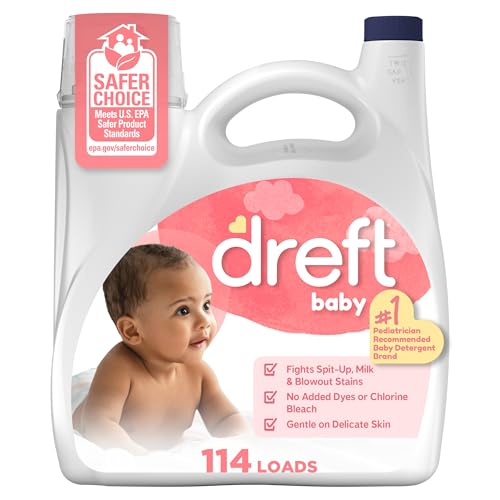 Dreft Liquid Laundry Detergent for Babies150 Fl Oz (Pack of 1)9.17 x 6.1 x 10.94 inches10.3 poundsCheck on Amazon
 Dreft Newborn Baby Liquid Laundry Detergent42 Fl Oz (Pack of 2)7.94 x 6.75 x 10.75 inches5.25 poundsCheck on Amazon
 ARM & HAMMER Baby Hypoallergenic Laundry Detergent Liquid100.5 Fl Oz (Pack of 1)6.3 poundsCheck on Amazon
 Babyganics 3X Baby Laundry Detergent60 Fl Oz (Pack of 1)7.25 x 5.5 x 14.75 inches5.15 poundsCheck on Amazon
 Noodle & Boo Baby Laundry Essentials Ultra-Safe Laundry64 Fl Oz (Pack of 1)4.75 x 4.75 x 10 inches4.58 poundsCheck on Amazon

What's inside
- How to read this guide
- Newborn skin and what residue really means
- The HE constraint: low water, low suds, longer cycles
- Formula axes that actually change a wash
- Fabric softener, towels, and a warning worth repeating
- Dosing math for small loads in low water
- Rinse behaviour: extra water where it counts
- Cloth diapers: the hardest load in the house
- Powder, liquid, and pods in a cold HE wash
- Check prices on Amazon
- When ordinary detergent is enough, and when it is not
As an Amazon Associate I earn from qualifying purchases. This post may contain affiliate links at no extra cost to you.
How to read this guide
Washing clothes for a newborn looks like ordinary laundry until you notice how different the loads actually are. The garments are tiny, the stains arrive in clusters, and almost everything touches skin for hours at a time. A sleeper that feels perfectly clean to an adult hand can still carry enough leftover scent or surfactant to bother a baby who sleeps with a cheek pressed against the fabric. That is why baby detergent deserves separate attention rather than a smaller scoop of whatever the household already uses.
High-efficiency washers add a second layer of difficulty. An HE machine cleans with far less water than an older top loader, tumbling clothes through a shallow pool instead of submerging them. Less water means every choice carries more weight. Too much detergent has nowhere to dilute, too many suds interfere with the tumbling action, and a rinse that would be generous in a deep tub can leave a concentrated film behind in an HE drum. The detergent, the dose, and the cycle have to work together.
This guide approaches the subject through research and specification comparison rather than through any claim of personal use. Formulas were read label by label, ingredient disclosures were compared across manufacturers, and machine guidance from HE washer makers was weighed alongside pediatric and textile-care advice. Where makers disagree, this guide says so and explains the practical consequence instead of pretending a single answer settles every nursery.
As an Amazon Associate, this site earns from qualifying purchases made through links in this guide, and that relationship does not change which formulas are discussed or how their trade-offs are described.
Read the sections in the order that matches your problem. New parents setting up a first wash routine should start with skin, residue, and the low-sudsing rule, because those three ideas explain most later decisions. Parents who already own a detergent they like may jump straight to dosing and rinsing, since a sound formula used at the wrong dose behaves like a poor formula. Families washing cloth diapers have the hardest job in the house, and their section deals with buildup, hot washes, and absorbency loss in detail.
One habit helps throughout: judge a detergent by what remains after the rinse, not by how the load smells when the door opens. A strong floral burst at the end of a cycle is evidence of something deliberately left on the cloth. For baby laundry, the more reassuring outcome is quieter. Fabric should feel supple without slickness, smell like almost nothing, and dry without stiffness or a grey cast. Those plain signals tell you more than any marketing word printed in pastel letters on a bottle.
Terminology matters here, and labels use it loosely. A product can call itself gentle, pure, natural, or baby-safe without meeting any shared standard for those words. The useful information sits further down the label: whether fragrance appears in the ingredient list, whether dyes are present, whether the formula is marked suitable for HE machines, and how the dosing chart changes with load size and soil level. This guide returns repeatedly to those concrete details because they predict wash-day behaviour far better than front-of-pack promises.
It also helps to separate two questions that are often blurred together. The first is whether a detergent cleans well enough in low water, which is a question about surfactants, enzymes, and soil suspension. The second is whether it leaves behind anything a particular baby reacts to, which is a question about that child’s skin and cannot be answered for every family at once. A formula can pass the first question with ease and still be wrong for one household. Keeping the two apart prevents both overbuying and false reassurance.
Newborn skin and what residue really means
Newborn skin is not simply a smaller version of adult skin. The outer barrier is thinner, loses moisture more readily, and is still developing during the first months of life. Clothing, blankets, and sleepwear sit against that barrier through feeds, naps, and long stretches of contact in a crib or carrier. Whatever survives the rinse cycle therefore gets prolonged exposure, warmed by body heat and sometimes dampened by drool, sweat, or a leaking diaper.
Residue is an unglamorous word for a mixture of possible leftovers. It can include unrinsed surfactant, fragrance compounds designed to cling to fibres, dye, and mineral deposits from hard water that trap other material in the weave. No single leftover explains every rash, and this guide does not claim otherwise. Heat, friction, drool, eczema, infection, and a dozen other causes can redden baby skin. Laundry residue is worth controlling because it is one of the few variables a parent can adjust precisely, cheaply, and without changing anything else in the routine.
Fragrance deserves particular scrutiny because it is engineered for persistence. Perfume ingredients in laundry products are chosen partly for their ability to survive rinsing and remain noticeable days later in a drawer. That staying power is pleasant on adult bedding and questionable on a onesie. Fragrance is also a blend rather than a single substance, and labels rarely name every component. For a baby with reactive skin, an undisclosed blend is harder to troubleshoot than a short, plain ingredient list.
Dyes play a smaller role but follow the same logic. Colour in a detergent adds nothing to cleaning performance; it exists so the liquid looks distinctive in the bottle. Most of it rinses away, yet a fragrance-free and dye-free formula removes one more unnecessary variable from fabric that will be chewed, slept on, and worn against healing skin in the early weeks. When parents are hunting for the cause of irritation, simpler inputs make the search shorter.
Fragrance-free is not the same as unscented
The distinction between fragrance-free and unscented is the single most misunderstood label point in this category. Fragrance-free means no fragrance material has been added to the formula, including material whose only job is to neutralise odour. Unscented, by contrast, describes how the product smells, not what it contains. An unscented detergent may include masking fragrance, a set of compounds added to cover the natural odour of the cleaning ingredients so the finished product seems neutral.
Masking fragrance explains a familiar frustration. A parent chooses a bottle labelled unscented, washes a load, and still notices a faint chemical sweetness on the dry clothes. Nothing has gone wrong with the machine. The formula was designed to smell like nothing while still depositing a small amount of scent-masking material on the fabric. For many babies that trace amount causes no difficulty at all, but for a family specifically trying to eliminate fragrance exposure, unscented is the wrong target.
Reading past the front label resolves the confusion. Look for the word fragrance, parfum, or perfume in the ingredient disclosure, and check whether the maker states plainly that no masking agents are used. Some brands publish full ingredient lists online with a function noted beside each component, which makes verification easier. If a label offers only comforting adjectives and no ingredient detail, treat the claim as unproven rather than as false, and choose a more transparent formula for the newborn period.
Scented products are not automatically forbidden for every baby, and this guide avoids that exaggeration. Plenty of infants wear clothes washed in ordinary scented detergent without any visible reaction. The case for fragrance-free in the first months is about uncertainty and exposure time, not about panic. Skin is at its most permeable, contact is nearly constant, and the baby cannot report itching or discomfort in words. Removing fragrance costs little cleaning power, so the trade favours caution until a child’s individual tolerance becomes clearer.
Essential oils sometimes appear as an apparently softer alternative, yet plant origin does not make a scent compound residue-free. Oil-based fragrance still clings to fibres, still varies from batch to batch, and can oxidise over time into compounds that bother skin more than the fresh oil did. A formula scented with botanical oils should be judged by the same standard as one scented in a laboratory: something aromatic has been added on purpose, and it will remain on the cloth after rinsing.
Parents who suspect laundry plays a part in a rash can run a simple, careful comparison without buying a shelf of products. Wash one set of sleepers in a fragrance-free formula with an extra rinse, keep everything else in the routine unchanged, and observe over several days. Changing detergent, soap, lotion, and fabric all at once destroys the information the experiment could have given. Pediatric advice should come first whenever a rash is widespread, blistered, infected-looking, or paired with fever, because laundry adjustments are household troubleshooting, not medical treatment.
The HE constraint: low water, low suds, longer cycles
High-efficiency machines earn their name by extracting cleaning action from motion rather than volume. Clothes lift and drop through a small amount of water, and sensors adjust fill levels to the weight and absorbency of the load. Because the water pool is shallow, detergent concentration rises quickly. A dose that an older machine would have diluted into a full tub becomes, in an HE drum, a strong solution coating every fibre.
Suds are the visible symptom of that concentration problem. Foam cushions the tumbling impact that HE cleaning depends on, so clothes glide instead of dropping and soil stays put. Excess foam can also confuse water-level sensors, trigger additional rinses, prolong the cycle, or produce a suds-related error code that stops the machine mid-load. Manufacturers therefore require low-sudsing formulas for HE use, usually identified by the HE symbol on the packaging.
A non-HE detergent in an HE washer rarely fails dramatically on the first load. The harm accumulates quietly. Repeated overdosing leaves surfactant in towels and diaper inserts, coats the outer tub where you cannot see it, and feeds the musty odour that owners often blame on the machine alone. By the time clothes emerge smelling stale from a freshly washed load, layers of old detergent and body soil may line parts of the drum and drain system.
Rinsing is where the HE design bites hardest for baby laundry. Low water use is an environmental and cost advantage, yet it leaves less margin for error when a load contains too much product. Residue that would have floated away in a deep rinse stays concentrated in the small volume of rinse water and redeposits across the load. This is why dosing discipline and rinse selection matter more for HE owners than any single brand choice discussed later in this guide.
Cycle length compensates for water savings. HE programmes often run considerably longer than the quick washes of older machines, using time and repeated tumbling to loosen soil. That length helps baby laundry, because dried milk and food stains respond well to sustained contact with enzyme-containing wash water. It also means a load started at bedtime may still be tumbling an hour later, so planning wash timing around naps and night feeds becomes part of the practical routine.
If you are also comparing the machines themselves rather than the detergents that go in them, the guide to machines sized and equipped for small, frequent baby loads is a useful companion read.
Drawer, drum, and where the detergent actually goes
Most front-loading HE machines route detergent through a dispenser drawer, diluting it gradually as water flushes the compartment. That design works well for liquids and for powders that dissolve readily. Trouble begins when powder sits in a damp drawer, clumps, and enters the drum in lumps late in the cycle, or when a sticky liquid coats the drawer and slowly builds into a residue trap of its own. Checking and wiping the drawer is unexciting maintenance that prevents a surprising share of wash problems.
Adding detergent directly to the drum is sometimes suggested for pods and occasionally for powder in machines without a suitable compartment, but the drawer remains the default for good reason. Product placed in the drum before clothes can concentrate against one garment, while drawer dispensing spreads it through incoming water. Follow the manual for your specific model, because drawer layouts differ and some compartments are reserved for prewash product that a baby load seldom needs.
Front loaders also carry a rubber door gasket with folds that collect moisture, lint, and undissolved granules. Powder that fails to dissolve can settle there, and the damp fold is exactly where mould establishes itself in a neglected machine. Wiping the gasket after the last load of the day and leaving the door ajar between washes are habits that protect both the machine and the next load of baby clothes waiting to go in.
Owners worried about that gasket problem when choosing a machine can read a comparison focused specifically on front loaders designed to resist mould growth in the seal area.
best front load washers that don t mold
Top-loading HE machines remove the gasket issue but introduce their own dispensing quirks. Loads are added from above, water levels sit low, and bulky items can float rather than circulate if the drum is overfilled. Baby loads are small and light, which suits these machines, yet a tiny load in a large tub may not generate enough movement for heavy soil. Adding a clean towel to balance an extremely small load is an old laundry trick that can improve tumbling without changing detergent at all.
Formula axes that actually change a wash
Surfactants do the central work of any detergent. They loosen soil from fibres and keep it suspended in wash water until it drains away instead of settling back onto clean cloth. In low-water conditions, suspension matters enormously, because the same soil load is concentrated into far less liquid. A well-built HE formula balances cleaning surfactants with anti-redeposition ingredients so that a grey wash does not emerge as a uniformly dingier grey load.
Builders and water-softening components support that main act. They bind minerals in hard water that would otherwise interfere with surfactants and leave deposits on fabric. In soft water areas, a formula heavy in builders may be more than the load requires, while in hard water regions those same components separate a detergent that copes from one that slowly loses ground. Later sections return to water hardness because it changes dosing more than most label charts admit.
Enzymes and the stains babies actually make
Enzymes are targeted tools rather than general cleaners. Protease breaks down protein-based soil such as milk, formula, egg, and the various substances a baby produces with impressive regularity. Amylase works on starch from cereal, pureed vegetables, and early weaning foods. Lipase addresses greasy marks from creams and ointments. A baby detergent without enzymes can still clean lightly worn clothes, but it will struggle with the dried, protein-rich stains that dominate a newborn laundry basket.
Enzyme performance depends on time and temperature. These ingredients work gradually, which suits the long HE cycle, and they lose effectiveness in very hot water that denatures them before they finish the job. Warm washes therefore tend to suit enzyme formulas better than the hottest setting, except where hygiene requirements point the other way, as with cloth diapers. Reading a stain before choosing a temperature prevents the common mistake of boiling an enzyme wash and wondering why the mark survived.
Enzymes carry one important fabric limitation. Protease cannot distinguish milk protein on a sleepsuit from the protein structure of wool or silk themselves, and prolonged exposure can weaken those fibres. Baby wardrobes contain little silk, yet wool sleep sacks, merino layers, and knitted gifts do appear in nurseries. Wash those items separately with a wool-specific product, keep enzyme detergent for cotton and synthetics, and the limitation never becomes a problem in practice.
Pre-treating changes enzyme results more than switching brands usually does. A small amount of liquid detergent worked into a dried milk stain, left to sit while the machine fills, gives protease a head start at full concentration. Rinsing a fresh stain promptly under cold water also helps, because hot water can set protein marks before the wash begins. These small handling habits explain many stories in which one family swears by a formula that disappointed another family using a different routine.
Optical brighteners: the contested ingredient
Optical brighteners do not clean anything. They are fluorescent compounds that deposit on fabric and convert ultraviolet light into visible blue light, making whites appear brighter and slightly masking yellowing. Clothes treated with brighteners look newer under daylight even though the underlying soil removal is unchanged. Adult laundry marketing leans heavily on that visual effect, which is why brighteners appear in so many mainstream formulas.
The debate around them in baby laundry is partly about residue philosophy and partly about skin. Brighteners work precisely because they stay on the cloth after rinsing, which places them in the same category as fragrance for parents trying to minimise deliberate leftovers. Some babies tolerate them without any issue, and evidence of widespread harm is not established, yet families following a leave-nothing-behind approach will prefer formulas that omit them. This guide treats brightener content as a disclosed choice rather than a scandal: check the ingredient list, decide which camp you are in, and buy accordingly.
Brighteners also complicate cloth diaper washing and the care of certain fabrics, since buildup can affect absorbency over time and some makers of technical textiles advise against them. They can shift the apparent colour of pastels and interfere with later dyeing, a niche concern that matters to parents refreshing hand-me-downs. None of these points is dramatic alone. Together they explain why many dedicated baby formulas leave brighteners out and accept a slightly less dazzling white as the honest result of cleaning alone.
Plant-derived and synthetic ingredients, judged by behaviour
Ingredient origin and wash behaviour are separate questions. A surfactant derived from coconut or corn can clean excellently or modestly depending on how the whole formula is built, and a synthetic surfactant can be mild, effective, and thoroughly rinsed. Origin tells you where a molecule came from. It does not, by itself, tell you how the finished product behaves in low water against dried formula stains at two in the morning.
Plant-based formulas have improved substantially and many now include enzyme systems that earlier generations lacked. Their historical weakness was heavy soil in cool water, where some blends needed longer cycles to match conventional products. Reading whether a plant-derived detergent includes protease and amylase matters more than counting the percentage of botanical content on the front panel. A high plant percentage with no enzymes will still lose to a modest one with a complete enzyme set on a basket of weaning stains.
Synthetic formulas, for their part, are not automatically harsh. Concentration, pH, fragrance load, and rinsing behaviour determine how a wash feels on skin far more than origin does. Parents should also note that plant-derived fragrance and essential oils remain fragrance, as discussed earlier. The sensible evaluation order is consistent across both camps: confirm HE suitability, check fragrance and dye status, look for the enzymes your stains require, then consider origin as a preference layered on top of performance.
Preservatives and stabilisers rarely feature in nursery conversations, yet they keep liquid formulas safe and consistent in the bottle. A detergent stored in a warm laundry room for months needs protection against microbial growth and ingredient separation. Short, transparent ingredient lists are appealing, and they are achievable, but every component removed has a function that something else must cover. Judging a formula means asking what each ingredient does, not simply counting how many there are.
Fabric softener, towels, and a warning worth repeating
Fabric softener works by coating fibres with a lubricating layer that reduces static and makes cloth feel smoother to the touch. That coating is the entire mechanism, and it creates two specific problems in a nursery. The first concerns absorbency. Towels, washcloths, burp cloths, and cloth diaper inserts are bought to soak up liquid, and a softener film makes fibres repel water instead of drawing it in. A towel that feels luxuriously soft while pushing bath water around a baby’s back has been softened at the cost of its job.
The second problem is more serious and less widely known. Children’s sleepwear in many markets is required to meet flammability standards, and some garments achieve this through the properties of the fabric itself. Softener coatings can reduce that flame resistance over repeated washes, and labels on infant sleepwear frequently warn against softener use for exactly this reason. Parents should read the care label on sleep garments and treat a printed warning there as decisive, whatever general laundry habits the household follows.
Dryer sheets deposit a similar coating and add fragrance in most formulations, so they raise the same absorbency and sleepwear questions in a different format. Households attached to softener for adult laundry can simply split the routine: baby towels, diapers, and sleepwear go through without it, while adult bedding follows household preference. Splitting loads by treatment rather than by owner also prevents the quiet error of a shared load receiving softener by default.
Vinegar is often proposed as a natural softening substitute, typically added to the rinse compartment. Opinions and machine-maker guidance vary, some manufacturers caution against regular use in dispensers and seals, and the softening effect is modest at best. This guide takes no strong position on occasional use in a bucket soak, but it does advise against treating any home remedy as automatically machine-safe. The dispenser and gasket were designed around detergent chemistry, and the manual remains the authority for what belongs in them.
Wool dryer balls offer a mechanical alternative that adds no coating at all. They separate items in the drum, shorten drying slightly, and soften by movement rather than chemistry. They will not replicate the slick feel of liquid softener, which is precisely the point for absorbent nursery textiles. Parents who miss scent in finished laundry can find it in their own load instead, keeping the baby’s towels and sleepsuits free of films that serve no purpose for the child wearing them.
Dosing math for small loads in low water
Most detergent overdosing in nurseries begins with the measuring cap. Dosing charts are printed for full loads of adult clothing, and a basket of onesies, bibs, and tiny socks may fill barely a third of an HE drum. Pouring a full-load dose over that small pile concentrates surfactant in very little water. The clothes may look clean, yet they carry the surplus through a rinse that was never sized to remove it.
A practical starting point is to think in teaspoons and tablespoons rather than capfuls. Many concentrated HE liquids clean a small, lightly soiled baby load with roughly a teaspoon to a tablespoon of product, adjusted for water hardness and soil level. The exact figure belongs to the label of the formula in your hand, because concentrations differ widely between brands. What transfers across brands is the habit: measure the load honestly, start at the low end of the chart, and increase only when results demand it.
Load size should be judged by drum volume after the clothes settle, not by the number of items. Forty baby garments sound like a mountain and compress into a modest heap, while six bath towels occupy more space than the entire nursery basket. HE machines sense weight as well as volume, and an underfilled drum of light items can receive very little water, intensifying the concentration problem. Waiting until a baby load reaches a reasonable size, without letting stains dry for days, balances water use against dosing accuracy.
Hard water pushes dosing in the opposite direction. Calcium and magnesium ions consume surfactant before it can work on soil, so a dose that performs beautifully in a soft-water city may underclean in a hard-water town. Signs of hard water trouble include dingy whites, stiffness that resembles overdosing, and mineral roughness on dark fabrics. The resemblance to overdosing is the trap: adding more detergent to mineral stiffness can worsen residue, while the real fix may be a formula with stronger builders or a water-softening approach for the laundry.
Overdosing announces itself in recognisable ways once you know the pattern. Dry clothes feel stiff or faintly soapy, whites drift grey because suspended soil redeposits, and a sour smell returns quickly after wearing because residue feeds odour-causing growth in the fibres. The drum may show foam long into the rinse, and towels lose absorbency even without softener. Any two of those signals together justify cutting the dose before changing the brand.
Underdosing has its own signature, and it is mostly about odour and gradual soil buildup. Clothes emerge looking acceptable yet smell stale once warmed by a body or a radiator. Collars, cuffs, and the underarm area of sleepers accumulate a grey shadow that a single wash no longer lifts. Bibs keep a ghost of every meal. The correction is a modest dose increase or a warmer, longer cycle, not a leap to the maximum line on the cap.
Pre-diluting liquid detergent is a trick some parents use for very small loads, dissolving the measured amount in water before adding it through the drawer. Machine guidance differs on this practice, and powders have their own dissolving rules covered later. The principle underneath is sound even where the trick is not recommended: distribution matters as much as quantity in low water. A small dose spread evenly outperforms the same dose pooled against three garments in one corner of the drum.
Keeping a simple wash log sounds excessive until a skin flare or an odour problem appears and nobody remembers what changed. Noting the formula, dose, cycle, and any new product introduced that week turns guesswork into a short list of suspects. Nurseries run on recorded information in every other domain, from feeds to naps. Laundry, which touches the baby all day and all night, deserves the same brief note when something goes wrong.
Rinse behaviour: extra water where it counts
The extra rinse setting is the most valuable button on an HE machine for baby laundry. It adds a further rinse stage after the main cycle, diluting and draining away the surfactant and loosened soil that the standard rinse left behind. For fragrance-free washing, extra rinsing is the partner feature that makes the whole approach work, because removing product completely matters as much as choosing a mild product in the first place.
Double rinsing goes a step further and suits specific situations rather than every load. Newborn clothing in its first weeks, garments washed after a detergent change, cloth diapers, and any load where foam was visible late in the cycle all justify the additional water. The cost is real, in time and in utility use, so reserving double rinses for the loads that need them keeps the routine sustainable instead of turning every wash into an event the household resents.
Clear rinse water is the oldest diagnostic in laundry, and it still earns its place. On machines with a visible drain or in a sink soak after washing, water clouded with bubbles indicates product still leaving the fabric. A load that releases heavy foam into a plain water soak was overdosed, under-rinsed, or both. That observation tells a parent more about the previous wash than the scent of the dry clothes ever will.
Spin speed interacts with rinsing in a way that is easy to miss. A thorough spin removes more detergent-bearing water before drying, while a gentle spin chosen to protect delicate knits leaves more moisture, and more dissolved residue, in the fibres. For sturdy cotton baby basics, a firm spin is an ally. For wool and delicate items washed separately, the residue question is smaller because those pieces usually receive a specialised product at a low dose anyway.
For a broader comparison of front-loading machines and the rinse options their cycles offer, the overview of front-load washers across sizes and price bands covers the ground beyond the baby-specific models.
best front load clothes washers
Powder residue deserves separate attention during rinse checks. Undissolved granules hide in seams, waistband elastic, and the folds of fitted sheets, then appear as white streaks on dark clothing after drying. Streaks that brush away easily are usually mineral or powder deposits rather than damage. Rewashing the affected items in plain water, without adding more detergent, distinguishes surface residue from a genuine fading problem and fixes the common case in one cycle.
The gasket and drawer belong in the rinse conversation too, because they return old product to new loads. A drawer crusted with dried detergent doses every wash with an unmeasured extra, and a gasket fold holding slimy water can recontaminate a carefully rinsed load during the final tumble. Monthly drawer removal and washing, where the design permits it, plus a gasket wipe-down, keep the machine from quietly undoing the dosing discipline described in the previous section.
Hot weather and closed laundry rooms accelerate mould growth in any damp machine, and baby households wash so frequently that the drum rarely dries fully. Leaving the door open between loads, removing finished laundry promptly, and running an occasional empty hot maintenance cycle with a machine cleaner or a suitable detergent dose all protect rinse quality. A musty machine cannot produce a clean-smelling load no matter how carefully the detergent was chosen.
Cloth diapers: the hardest load in the house
Cloth diapers combine every difficulty discussed so far and add human waste, high absorbency requirements, and repeated hot washing. A routine that works for sleepers can fail completely on diapers, and a routine built for diapers would be excessive for ordinary clothes. Parents using cloth should expect to run a distinct wash system for them rather than searching for one setting that treats the whole laundry basket equally.
The standard structure begins with a prewash or initial rinse without the main detergent dose. This first stage flushes away urine and loose soil so the main wash water is not overwhelmed before cleaning begins. Skipping it forces the main cycle to work in heavily soiled water, and no detergent performs at its best while suspended waste circulates around the load. A short, cool prewash with strong agitation and a complete drain accomplishes most of the benefit.
The main wash then runs hot, long, and with a full, properly measured dose of a detergent strong enough for the soil level. This is the one nursery load where the low end of the dosing chart is usually the wrong place to start. Diapers carry a heavier soil load than any clothing, and underdosing here produces the ammonia smell that experienced cloth users recognise instantly. Enzyme content helps with the organic load, though very hot water shortens enzyme activity, which is why cycle length and surfactant strength carry much of the work.
Buildup is the central long-term enemy. Detergent, minerals, and softener residue accumulate inside absorbent fibres until the diaper that once held several wettings begins to leak at the first one. The technical description is that liquid sits on the surface instead of drawing through, often called repelling, and a simple pour check over a clean, dry insert shows it clearly: water beads and runs off rather than soaking in. Buildup develops gradually, so absorbency should be checked whenever leaks appear before assuming a fit problem or a worn-out insert.
Stripping is the traditional remedy, involving extended hot soaking and repeated rinsing to clear accumulated material, though methods vary and some manufacturers advise against aggressive home treatments that can damage elastics and waterproof layers. The safer order of operations is to confirm buildup with the pour check, review the wash routine for the actual cause, and follow the diaper maker’s care guidance before attempting any intensive soak. A stripped diaper returned to a flawed routine simply builds up again on the same schedule.
Water hardness dominates cloth diaper outcomes in many regions. Minerals deposit inside the absorbent core wash after wash, trapping bacteria and producing odour that returns the moment the diaper is used. Families in hard water areas often need a formula with robust builders or an added softening strategy approved for diaper laundry. Soft water households face the opposite risk, where detergent rinses out so readily that the temptation to underdose leads to soil buildup instead.
Drying completes the system. Thorough drying matters for hygiene and odour control, and inserts benefit from the fullest drying the fabric tolerates. Elastic components and waterproof covers often prefer lower heat or line drying to preserve their lifespan, so separating inserts from covers at the dryer stage extends the life of the more delicate parts. A diaper routine is therefore a chain: prewash, hot main wash, adequate dose, honest rinsing, and drying matched to each component. Weak links announce themselves as smells and leaks, and the chain metaphor helps locate which stage failed.
Powder, liquid, and pods in a cold HE wash
Powder detergents have genuine strengths for baby laundry. They often deliver strong cleaning per wash at low cost, store without the water weight of liquids, and many powder formulas include oxygen-based stain helpers that liquids cannot keep stable in the bottle. In warm water with a full cycle, a good powder is difficult to beat on heavily soiled cotton. The weaknesses appear at the edges of the HE routine, in cold water and in the dispenser drawer.
Cold water slows powder dissolution, and HE cycles use so little water that granules may survive into the load or remain as paste in the drawer. Modern powders are finer and dissolve better than older formulations, yet the risk has not vanished, particularly in quick cycles and in machines fed by very cold winter supply lines. Parents committed to powder and cold washing should check the drawer after cycles, watch dark fabrics for white residue, and consider whether a warm wash solves the problem more simply than a formula change.
Liquids dissolve instantly at any temperature, which is why they dominate cold-water and quick-cycle washing. They also pre-treat stains neatly, since the same product can be applied directly to a mark before washing. Their disadvantages are quieter: liquids are easy to overdose because the cap pours freely, they may lack some of the stain-lifting ingredients that powders carry well, and a sticky spill in the drawer or on the bottle rim attracts grime in a warm laundry room. Measured carefully, a liquid remains the most forgiving format for small, frequent, cool baby loads.
Pods remove measuring error for standard loads and introduce two problems for nursery laundry. The first is dose rigidity. A pod contains a fixed amount formulated for a regular load, and a small pile of baby clothes in low water may receive far more detergent than it needs, with no way to use half a pod sensibly. The second problem is safety. Pods are concentrated, brightly coloured, and exactly the size a crawling baby or toddler wants to pick up and mouth.
Pod safety deserves plain language. Liquid laundry packets have caused serious injuries when young children bite or squeeze them and the concentrated contents reach eyes or mouths. Any household with a baby approaching mobility should store pods in a latched or high cabinet, never in an open basket beside the machine, and never allow a child to handle one as a distraction during loading. For many nursery households, the dosing argument and the safety argument point the same way: a measured liquid or powder gives control that a fixed pod cannot, during the years when loads are small and children are curious.
Compact machines add one more format consideration, because a smaller drum concentrates even a modest dose further and leaves less room for a pod to dissolve before it contacts fabric.
Readers choosing a machine in that size class can compare capacities and cycle options in the roundup devoted to smaller front-load models and their laundry rooms.
best 3 9 cu ft front load washers
Storage conditions affect every format more than packaging admits. Powder clumps in humid air and then doses unevenly, liquids can separate or thicken in a cold utility room, and pods grow tacky and may stick together when stored in steamy conditions. A sealed container in a dry cupboard preserves all three. In a nursery household, that cupboard should also be the locked or elevated one, because detergent in any format belongs in the same safety category as other household chemicals once a baby starts to explore.
Reading a label in the shop, in under two minutes
A detergent shelf presents dozens of near-identical promises, and a tired parent needs a sequence rather than a research project. Start at the HE symbol, because a formula unsuited to low water fails before any gentler virtue can matter. Turn next to the ingredient panel and search for fragrance wording, dye, and brighteners, in that order. Those three lines reveal how much material the maker intends to leave on finished cloth, which is the central question for garments worn against newborn skin through the night.
Move then to the dosing table and study the smallest load it describes. Some charts quietly assume a drum far larger than a typical nursery wash, so their lowest figure still overshoots a pile of sleepsuits. A maker who prints guidance for small and lightly soiled loads has at least acknowledged how these machines are actually used. Compare also the number of washes claimed for the container against its volume; concentrated products can look expensive on the shelf while costing less per measured spoon than a diluted bottle twice their size.
Finish with the stain system. Look for named enzymes rather than vague claims about lifting power, and note any warning about wool or silk that signals a genuinely active protease. Check storage directions and the closure design as well, because a cap that seals firmly and pours cleanly prevents the sticky over-pouring that undermines careful dosing at home. A parent who follows that order — machine fit, leftovers, dose realism, enzymes, packaging — can judge an unfamiliar bottle confidently without relying on colour, cartoon characters, or the word gentle printed larger than everything else on the front.
Check prices on Amazon
Live listings for the shortlist in this guide are pulled from Amazon below, so prices and availability are always current at the moment you look.


When ordinary detergent is enough, and when it is not
Baby-specific detergent is most valuable during the period when skin is newest, contact is longest, and the baby cannot move away from an irritating fabric. As months pass, the picture changes. A crawling, weaning toddler has tougher skin, spends waking hours in varied environments, and generates stains that may exceed what a gentle formula handles comfortably. Many families migrate gradually to the household detergent for most loads while keeping a fragrance-free option for sleepwear and any item linked to a flare.
Ordinary detergent is usually reasonable when a child has shown no reaction to it over repeated wearing, when the formula is low-sudsing and HE suitable, and when dosing and rinsing follow the discipline set out in this guide. A mainstream fragrance-free detergent often differs little from a baby-branded one in the respects that matter, and paying a premium for pastel packaging alone buys no additional rinsing performance. Compare ingredient disclosures rather than shelf categories and the overlap becomes obvious.
There are clear situations where caution should continue. Babies with eczema, a history of contact reactions, or skin under active medical treatment benefit from the simplest fragrance-free routine until their clinician advises otherwise. Premature babies and newborns in their first weeks sit at the cautious end by default. So do garments worn against broken or healing skin, where residue meets a barrier that is not intact. In those cases the conservative formula, the measured dose, and the extra rinse are cheap insurance with no meaningful downside.
Hand-me-downs and gifted clothing deserve a preparatory wash regardless of the detergent debate. Unknown washing history, storage odours, and shop finishes all argue for a clean start in a known formula before the garment touches the baby. The same applies to new clothes, which may carry finishing treatments from manufacture that a single wash largely removes. Starting from a known state makes later troubleshooting possible, because any reaction can be traced against a routine the family actually controls.
Travel and laundry away from home test any routine. A borrowed machine, an unfamiliar detergent, or a laundromat cycle with limited rinse options will not undo months of careful washing, and parents should treat occasional variation as normal life rather than failure. Returning to the home routine afterwards restores the baseline. The goal across this guide has never been sterile perfection. It is a repeatable system that keeps residue low, stains manageable, and the machine healthy, while leaving room for ordinary family chaos.
A decision checklist for the detergent shelf
- Confirm the HE symbol is present, since low-sudsing behaviour in low water is the non-negotiable starting point for every formula considered.
- Read the ingredient list for fragrance or parfum, and choose a genuinely fragrance-free product rather than an unscented one with masking agents when elimination is the goal.
- Check whether dyes and optical brighteners appear, and decide deliberately about each instead of inheriting them by default from a mainstream formula.
- Match enzymes to your stains: protease for milk and formula marks, amylase for weaning foods, and a separate wool-safe product for merino and knitted items.
- Set the first dose by the small-load line, measure it with a spoon or marked cap, and adjust only after observing stiffness, odour, or leftover foam.
- Reserve extra rinses for newborn loads, diaper washes, and any cycle where suds remained visible late, rather than doubling every rinse by habit.
- Keep softener away from towels, washcloths, diaper inserts, and any sleepwear whose label warns that coatings reduce its protective properties.
- Store every format, especially pods, sealed and out of reach, and recheck that storage spot each time your baby gains a new way of moving.
- Write down formula, dose, and cycle whenever you change one of them, so a rash or a smell can be traced to a specific alteration.
- Reassess at each stage: the right answer for a two-week-old in sleepers may differ from the right answer for a weaning toddler in muddy overalls.
None of these steps requires a particular brand, and that is deliberate. Brands reformulate, regional ranges differ, and a household’s water supply shapes results as powerfully as anything printed on a bottle. A parent who understands suds, residue, enzymes, and dosing can evaluate a new product on a shop shelf in two minutes, while a parent loyal to a discontinued favourite is stranded when it vanishes. Understanding outlasts any single recommendation, which is why this guide spent its length on mechanisms rather than on a ranked table.
The laundry will keep coming, in quantities that surprise every first-time parent, and the routine that survives is the one simple enough to run half-asleep. Measure small, rinse honestly, keep fragrance off the fabrics that matter most, and let the machine do the long, low-water work it was built for. When the drawer opens at the end of a cycle and the little clothes smell of nothing but warm cotton, that quiet nothing is the sound of the whole system working, and it is worth more than any scent a bottle could leave behind.