Our Top Picks



What's inside
- What an electric body groomer actually does differently
- Three constructions: dedicated trimmers, shaver attachments, and hybrids
- Blades, teeth, and materials
- Guards and combs, matched to each zone
- Cutting lengths and what the numbers mean in practice
- Motors, stroke rate, and pulling
- Battery chemistry, runtime, and charging
- Water resistance, IPX ratings, and wet or dry use
- Safety on sensitive skin, and why technique outweighs features
- Cleaning, drying, and the small maintenance that decides lifespan
- Replacement heads, foils, and the real cost of ownership
- Ergonomics, grip, and control when wet
- Matching a machine to a grooming pattern
- A specification checklist that can be used on any model
- Planning a session: order of work and small decisions that compound
- Where the category is strong, and where it still asks for patience
- Check prices on Amazon
- Disclosure
As an Amazon Associate I earn from qualifying purchases. This post may contain affiliate links at no extra cost to you.
What an electric body groomer actually does differently
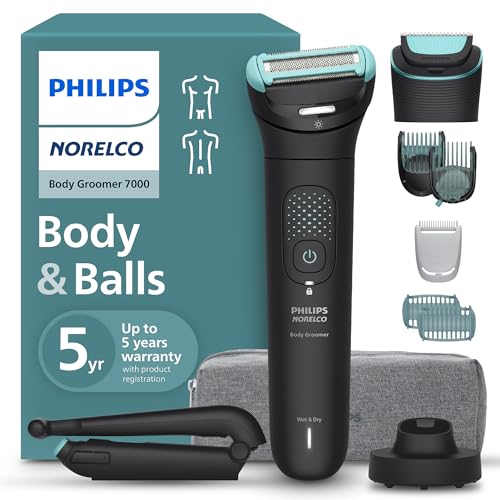
A body groomer is not a beard trimmer with a longer box. The distinction matters because hair below the neck behaves differently, skin folds differently, and the cost of a nick is felt in places where a small cut is far more than an inconvenience. Beard tools are built around a relatively flat, taut surface and coarse, densely rooted hair that grows in a fairly predictable direction. Body hair varies sharply by zone: chest hair can be wiry and sparse at the edges, underarm hair grows in several directions inside a concave hollow, back hair is fine but unreachable at full arm extension, and hair in the groin sits over loose, mobile skin that moves under a blade. A dedicated body machine answers those conditions with rounded blade tips, wider spacing between cutting teeth, guards that lift hair away from skin before it is cut, and housings shaped to stay in the hand when wet.
Published specifications tell a consistent story across the category. Most dedicated body groomers use a reciprocating cutter, where a moving blade slides side to side beneath a stationary foil or comb plate at several thousand strokes per minute. The hair enters slots or teeth, is trapped against the stationary edge, and is sheared rather than sliced. That shearing action, combined with tooth geometry that presents a rounded leading edge to the skin, is why a body groomer can glide over a curved surface with less tendency to dig in than an exposed T-blade designed for edging a jawline. The trade-off is closeness. A shearing system that protects skin will almost always leave a fraction more stubble than a rotary or foil shaver pressed firmly into the cheek, and manufacturer manuals are generally candid about that: body tools are described for trimming and for close grooming, not for the polished finish expected on a face.
Understanding that trade-off at the outset prevents the most common buying mistake, which is expecting one motor, one head, and one guard set to deliver identical results on the chest, the back, and the most sensitive skin on the body. The machines that handle the widest range do so by changing the interface between blade and skin, not by simply running faster. Interchangeable heads, snap-on combs of graduated length, bidirectional cutting edges, and in some designs a pivoting head that follows a contour all change what the cutter meets. Motor power matters, mainly for thick chest hair that can slow a small motor and cause pulling, but geometry matters more for safety and for an even result.
Terminology also needs care, because product pages use overlapping labels. Body groomer, body trimmer, and manscaping tool usually describe the same family of reciprocating machines with skin-protective heads. A hybrid may add a foil element for finishing. A multi-groom kit bundles a body head with beard, nose, and hair-clipping attachments on a shared handle. Each label signals a different compromise, and the sections that follow separate those compromises by construction rather than by marketing name, so that a specification sheet can be read for what it will actually change during use.
Three constructions: dedicated trimmers, shaver attachments, and hybrids
Dedicated body trimmers with a single-purpose head
The dedicated machine is built around one head that stays on the handle. Its cutter width is typically narrower than a hair clipper and wider than a detail trimmer, a middle dimension that suits long strokes down the torso while still fitting into the hollow of an underarm. Many designs cut in both directions, with teeth on both long edges of the head, so a back-and-forth pass removes hair without lifting and repositioning the tool. Bidirectional cutting sounds minor until it is applied to a large area such as the thighs or abdomen, where halving the number of repositioning movements noticeably shortens a session and reduces the chance of pressing harder out of impatience.
Because the head is not expected to edge a beard line, its teeth can be spaced and rounded more generously. Manufacturer literature for this class often highlights skin guards, hypoallergenic foils over part of the head, or a central foil flanked by trimmers that first reduce longer growth and then finish shorter stubble in the same pass. That flanking arrangement addresses a real mechanical sequence: long hair bends away from a foil and escapes, so reducing it first with the side trimmers lets the foil work on hair short enough to enter its apertures. Where a central foil is present, the result on the chest or abdomen can approach shaver smoothness while the surrounding teeth keep the head from behaving like a bare shaver on uneven skin.
The limitation of a dedicated unit is scope. It will not clip head hair efficiently, its narrow head makes large, flat areas slower than a wide clipper would, and it usually offers a modest range of fixed lengths rather than the long ladder of a hair kit. For a buyer whose only task is body hair, that narrow scope is an advantage: fewer joints, fewer small parts to lose in a shower caddy, and a head geometry that never has to compromise for a second job.
Trimmer heads carried on a shaver or multi-groom handle
The second construction borrows a handle. A body head clicks onto a foil or rotary shaver, or onto a multi-groom handle that also drives beard and hair attachments. The appeal is economic and spatial: one battery, one charger, one drawer footprint, several functions. Manuals for these kits list each attachment with its own guard set and its own cleaning instruction, which is a clue to the compromise involved. The handle’s motor, grip angle, and weight distribution were optimised for the face or for general clipping, and the body head inherits those decisions. A top-heavy shaver handle can feel clumsy when reaching behind a shoulder, and a grip shaped for a dry bathroom counter may be less secure under running water.
Attachment systems also introduce a mechanical interface that must stay tight. A head that rocks slightly on its mount changes the angle at which teeth meet skin, and over time the coupling collects hair and soap residue that a sealed dedicated head would shed more easily. None of this disqualifies the format. For travel, for a small bathroom, or for someone who grooms the body only occasionally and already owns a compatible handle, an attachment head is a rational choice. The point is to read the kit as a system: check whether the body head has its own dedicated guards or merely shares beard combs, whether the handle carries a water-resistance rating that covers shower use with that head fitted, and whether replacement body heads are sold separately, because a worn body cutter cannot be substituted with a beard blade of different tooth geometry.
Hybrid foil-and-trimmer machines
Hybrids try to close the closeness gap. They combine a reciprocating trimmer, often with guards for length work, and a foil element intended to take the remaining stubble down further once the bulk is gone. Some arrange both on one head, others supply two heads that swap on the same body. The foil side behaves like a small electric shaver: a thin perforated metal sheet vibrates over inner cutters, hair enters the perforations, and the cut happens below the foil surface, which is why a foil can feel smoother on flat, taut skin such as the upper chest.
Foil brings its own conditions. It works best on short, dry-ish hair held at an angle the perforations can capture, it dislikes long growth, and the foil itself is the most fragile component in the category, thin enough to dent if the machine is dropped onto tile or pressed into a wash bag against hard objects. Manuals routinely warn against pressing hard with a foil, because pressure deforms the sheet and increases friction heat without improving the cut. A hybrid therefore rewards a two-stage technique, trim first with the guarded side, then finish lightly with the foil, and it penalises anyone hoping to rush a full session in a single aggressive pass. Judged on published construction rather than promises, the hybrid is the closest-finishing option and also the one with the highest replacement-part cost and the shortest list of forgiving techniques.
Blades, teeth, and materials
Most cutters in this category are stainless steel, sometimes with a coating described as titanium or ceramic on one of the two blade elements. The practical differences are narrower than the labels suggest. Stainless steel resists corrosion in a wet environment, holds an adequate edge for the fine diameter of body hair, and can be rinsed without immediate rust anxiety. A coated blade may run with slightly less friction and may resist dulling at the very edge for longer, but coating does not change tooth shape, and tooth shape governs safety far more than metallurgy. Ceramic elements appear mainly in larger clippers; in compact body heads, steel dominates because the cutter must flex and vibrate in a thin profile that ceramic tolerates poorly.
Tooth geometry deserves close reading. Rounded or comfort tips present a blunt curve to the skin so the tooth slides rather than scrapes. Wider tooth spacing admits thicker or flatter-lying hair but offers skin more opportunity to bulge between teeth, which is why groin-oriented heads often use finer spacing or an added guard skin stretched over the cutter. Some heads place a protective bar or a fine mesh ahead of the cutting edge for use on loose skin; the bar flattens and tensions the surface a fraction ahead of the blade, mimicking what fingers do when they stretch skin manually. When a specification sheet mentions a skin protector, a comfort ring, or similar language, the underlying claim is about that tensioning and spacing, and it is worth more than a vague promise of gentleness.
Self-sharpening is another phrase that needs translation. In reciprocating cutters it usually means the moving blade is kept in light contact with a harder stationary surface so that normal operation hones the edge microscopically. It does not mean the cutter lasts indefinitely. Hair, skin oils, mineral deposits from hard water, and corrosion at a microscopic level all degrade the shearing interface, and manufacturers still publish replacement intervals for heads, commonly in the range of several months of regular use. A cutter that has begun to pull, to require repeated passes over the same patch, or to leave a pattern of missed hairs in one direction is signalling wear regardless of any self-sharpening description, and replacing the head restores performance more reliably than pressing harder or working faster.
Blade width interacts with body geography in ways a single number can reveal. A head around the width of two fingers tracks the sternum, the line of the abdomen, and the front of a shin efficiently. The same head is too wide to sit flat inside an underarm or against the curved crease where thigh meets groin, where only one edge makes contact and the rest bridges over hair. Narrower detail heads, sometimes supplied as a second attachment, solve that bridging but are tedious on the back or chest. Kits that include both widths are not padding the parts list; they are acknowledging that no single width sits flat on every surface the machine is expected to cover.
Guards and combs, matched to each zone
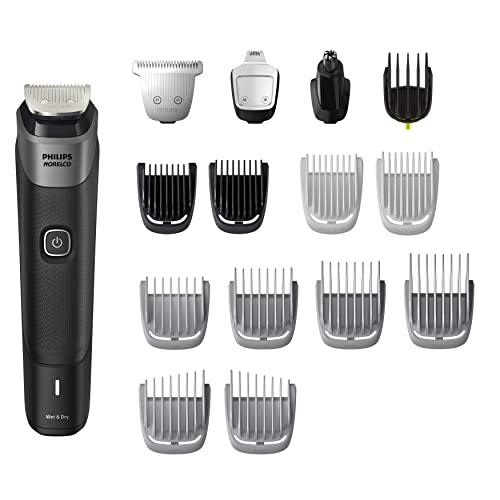
A guard, or comb, sets the distance between cutter and skin and therefore the length of hair left behind. Fixed snap-on combs give repeatable lengths and are simple to clean. Adjustable sliders, where one comb moves through a range on a dial or lever, reduce the number of loose pieces but can drift if the mechanism collects hair, and their intermediate settings are only as accurate as the detents that hold them. Published length ranges for body machines commonly start at a fraction of a millimetre with no guard fitted, sometimes described as a zero or sensitive setting, and climb in steps through short stubble lengths to around a centimetre or more with the longest comb. The exact ladder matters less than the spacing of its rungs: two closely spaced short settings are more useful for fading chest hair into a natural boundary than a single leap from very short to long.
Combs also do protective work that is easy to overlook. The teeth of a comb lift and align hair before it reaches the cutter, and they hold skin at a fixed remove along the whole width of the head, which is especially valuable where skin is loose. Using a short comb on the groin or scrotum, rather than a bare blade, is the single most consistent recommendation across manufacturer manuals for sensitive areas, even when a product is marketed as safe without one. The comb converts an uncontrolled contact into a measured one, and the small amount of length it leaves is the price of that control.
Chest, abdomen, and shoulders
The torso rewards length consistency more than closeness. Hair density changes from the centre of the chest outward, so a fixed comb keeps the visual result even where growth thins. Longer comb settings suit a trimmed rather than bare look and are more forgiving of pass direction, while a bare or foil finish on the chest demands attention to grain direction because chest hair often swirls near the sternum and points in opposing directions on either side of it. Shoulders add curvature; a pivoting head or a willingness to work in short overlapping strokes keeps the comb seated. Where chest hair is thick and coarse, slowing the stroke gives the reciprocating cutter time to shear each hair rather than fold it over, and that pacing change improves the result more than an extra pass at speed.
Back and hard-to-reach areas
The back is an access problem before it is a cutting problem. No guard design compensates for an arm that cannot place the head flat between the shoulder blades. Solutions in the category include long folding handles that extend reach, sometimes supplied with the machine and sometimes sold as an accessory, and wide heads that cover more area per stroke to reduce the number of blind passes. An extension handle changes leverage, so pressure control suffers; the head may press too lightly to cut or, at an awkward angle, dig an edge. Working by touch, using a mirror arrangement, and accepting a uniform comb length rather than a bare finish all suit the realities of the zone. Fine back hair also clogs combs less but escapes foils more, which is why a toothed trimmer generally outperforms a foil finish between the shoulders.
Underarms, groin, and other sensitive zones
Underarm skin is thin, often damp, and folded into a hollow where hair grows in multiple directions. Short strokes, skin held taut with the free hand, and a comb fitted for the first reduction all reflect that geography. Deodorant residue and moisture soften hair but also load the cutter, so rinsing the head mid-session restores cutting more effectively than repeating strokes over the same fold.
The groin and scrotum require the most conservative reading of any specification. Loose, wrinkled skin can be drawn toward a cutter in a way flat skin cannot, and that is the mechanism behind most nicks in this zone. Manufacturer guidance converges on a set of practices: fit a guard or use the head specifically designated for sensitive areas, stretch the skin flat and taut, move slowly with light pressure, work on dry or only lightly damp skin if the manual so advises, and never use a foil head or an edging blade there unless the manual explicitly names the area. Bidirectional heads should be used in short, controlled movements rather than long sweeps. A machine that offers a dedicated sensitive attachment with finer teeth and an added protective surface is offering a genuine mechanical difference, not a colour change, and for many buyers that attachment is the deciding component of the whole kit.
Legs and arms, by contrast, are the most forgiving territory: long, comparatively flat surfaces, hair of moderate density, and skin that tolerates a bare finish. They are useful as a first area for learning a new machine’s pressure and pace, because feedback there is honest without being punishing, and the long strokes reveal quickly whether a head pulls, skips, or leaves tramlines that indicate an uneven comb seat.
Cutting lengths and what the numbers mean in practice
Length settings are stated in millimetres, and converting them into appearance helps when comparing two ladders. Hair left at the shortest bare settings reads as stubble within a day. A few millimetres reads as deliberately trimmed and softens the contrast between groomed and ungroomed areas, which is why many men settle on a short comb for the torso and reserve the bare finish for smaller zones. Around a centimetre, hair retains visible texture and movement and the grooming reads as maintenance rather than removal. Because body hair grows at roughly a centimetre a month, with wide variation by zone and by individual, the chosen length also sets the maintenance interval: a bare finish shows regrowth contrast within days, while a longer comb length can go considerably longer before the boundary looks untidy.
Increment design matters as much as range. A dial offering many micro-steps sounds precise, but if the comb flexes, the delivered length varies with pressure and the precision is theoretical. Fixed combs with positive clicks deliver their stated length repeatably, at the cost of carrying and swapping pieces. Some machines split the difference with two or three fixed combs covering the most used lengths plus a bare head for finishing. When reading a specification, count how many distinct lengths fall in the short range most body grooming actually uses, rather than being impressed by a long maximum length borrowed from a hair-clipping attachment that will rarely touch the torso.
Length honesty also varies with hair type. A comb rating assumes hair is lifted perpendicular to the skin as it is cut. Fine hair that lies flat, curly hair that springs back after the comb passes, and damp hair that clings will all finish visually shorter or longer than the number suggests. That is not a defect in any particular machine; it is a property of measuring a flexible material with a rigid spacer. Consistent technique, similar dryness each session, and the same pass direction produce more repeatable results than pursuing a nominal half-millimetre between models.
Motors, stroke rate, and pulling
Reciprocating body groomers are driven by small rotary motors translated into side-to-side cutter movement, or in some designs by a magnetic drive. Published figures, where given, describe strokes or movements per minute in the thousands. A higher rate helps a cutter shear hair cleanly before it can bend away, and it is most noticeable on dense chest growth or when a comb is lifting a lot of hair at once. Rate alone, however, says nothing about torque. A motor that maintains its stroke under load feels entirely different from one that slows audibly when it meets thick hair; the slowing is what produces pulling, because a hair caught by a decelerating cutter is tugged before it is severed.
Battery state interacts with motor behaviour. Many machines hold near-constant speed until the charge is nearly exhausted, then drop off quickly, while simpler designs fade gradually through a session. A gradual fade is easy to misread as a dull blade, since both present as pulling and missed hairs. Charging before judging a head worn is a diagnostic step manuals quietly support, and it explains why a machine can seem to recover after a charge without any change of cutter. Corded operation, where offered, removes that variable entirely and also provides a fallback when a battery has aged, though a cord in a wet environment is restricted by the same water rating that governs the machine itself, and many wet-rated models deliberately disable running while charging for safety.
Noise and vibration are rarely headline specifications, yet they shape how carefully a machine gets used. A loud, buzzy handle encourages haste; a quieter, denser-feeling tool invites the slow, light strokes that sensitive areas require. Vibration also fatigues the hand during a long back or leg session and can blur the tactile feedback by which a user senses that an edge is beginning to catch. These qualities cannot be read off a numbers table, but weight, housing construction, and motor type hint at them: magnetic drives tend to run smoothly with modest power, while small high-speed rotary drives deliver more cutting energy with more buzz.
Battery chemistry, runtime, and charging
Lithium-ion cells dominate the current category, displacing older nickel-based packs that suffered from memory effects and shorter service life. The practical gains are longer runtime in a lighter handle, steadier power delivery across the charge, and the ability to accept a partial top-up without penalty. Published runtimes for dedicated body groomers commonly fall between roughly forty minutes and well over an hour, with some larger handles claiming considerably more. Those figures are measured under light, continuous load; real sessions are intermittent, so a stated hour usually covers several full grooming sessions spread over weeks, especially since body grooming is rarely a daily task.
Runtime should be matched to the largest job, not the average one. A machine used only for underarms and groin can live happily on a modest cell and a slow overnight charge. A machine expected to clear a full back, chest, and legs in one sitting needs both the minutes and the motor stamina for the longest continuous run, and it benefits from a charge indicator that reports more than a single warning light moments before shutdown. Multi-segment indicators or percentage displays reduce the chance of a session ending mid-zone, which matters because half-finished sensitive work invites rushed technique when the tool is revived.
Charging arrangements vary in ways that affect daily life. Proprietary docks keep contacts clean and present the machine upright to dry, but they add a fixed object to the counter and a unique cable to lose. Direct USB charging travels well and shares cables with other devices, though the port cover becomes a water-resistance weak point that must be seated properly after every charge. Quick-charge functions, where a few minutes of charging buys one short session, are genuinely useful for a forgotten device discovered minutes before it is needed. Full charge times range from about an hour on faster systems to several hours on basic ones, and that spread matters more to habitual users than a small difference in total runtime.
Battery longevity deserves a sober note. Sealed handles protect against water but make cell replacement impractical, so the machine’s service life is ultimately the battery’s service life. Storing a lithium cell partly charged, avoiding leaving it on a charger for weeks, and keeping it away from sustained heat all extend that life according to standard manufacturer guidance. A model with corded fallback or a replaceable pack sidesteps the issue, but for most sealed wet-rated designs, treating the battery gently is the only available strategy, and it is worth adopting from the first charge rather than after capacity has visibly faded.
Water resistance, IPX ratings, and wet or dry use
Water claims in this category range from a splash-resistant handle that can be rinsed at the tap to fully shower-rated machines, and the IPX scale is the reliable way to tell them apart. The digit after IPX describes the test the device passed. Lower ratings cover splashes and incidental spray. A rating of IPX5 indicates resistance to water jets, which in practice supports rinsing under a tap and use in a shower without immersion. IPX6 covers more powerful jets. IPX7 indicates the device survived temporary immersion at a specified depth and duration, which is the level that supports use in a bath and confident rinsing without hunting for seals. Where a product page says only waterproof or showerproof without a rating, the manual’s stated limits govern, and they are often narrower than the headline word implies.
Wet use changes cutting behaviour, not just convenience. Water weighs hair down and makes it lie flatter, which can help a comb lift it uniformly, and a wetting agent such as shower gel reduces friction so the head glides with less drag on skin. At the same time, wet hair clumps, loads a cutter faster, and can hide the skin surface the user needs to watch in sensitive zones. Dry use gives better visibility, easier hair disposal, and a clearer sense of the finish when a hand is run over the area, but friction is higher and skin that is dry and cool can catch more readily. Machines rated for both are not claiming both are equal; they are offering a choice, and many experienced users split the difference by doing bulk reduction dry, where progress is visible, and finishing in the shower, where glide and rinsing help.
Foam and gel compatibility is a separate question from water resistance. Some foil elements perform poorly under thick gel, which clogs perforations, while toothed trimmers generally tolerate gel well. Manuals that permit gel usually specify applying it thinly and rinsing the head during the session. After any wet session, the head should be rinsed, shaken clear, and left open or detached to dry as the manual directs, because a cutter stored wet in a closed cabinet corrodes and grows odour far faster than the electronics fail. The water rating protects the motor and battery during use; it does not protect the steel from the chemistry of being put away damp.
Electrical safety boundaries are printed plainly in manuals and should be treated as part of the specification. Wet-rated machines are battery devices during use; charging belongs outside the shower, with dry hands and a dry port. A model that can run while plugged in is generally intended for dry use in that mode. Extension of the rating to a charging dock should never be assumed: docks and adapters commonly carry no water rating at all, even when the handle they serve is fully immersible.
Safety on sensitive skin, and why technique outweighs features
No cutter design removes the need for technique where skin is loose, thin, or folded. The protective features described earlier, rounded teeth, fine spacing, tensioning bars, dedicated sensitive heads, reduce the probability that skin enters the cutting path. Technique controls the rest. Stretching skin taut presents a flat surface and prevents a fold from being drawn toward the teeth. Light pressure keeps teeth at their designed distance rather than compressing the guard. Slow, short strokes limit how much skin can gather ahead of the head. Working against or across the grain increases closeness and, in the same motion, increases the chance of irritation and ingrown hairs, so sensitive zones are usually groomed with or across the grain and left a fraction longer.
Irritation has several distinct causes that are worth separating, because each has a different remedy. Friction redness follows repeated passes and heavy pressure, and it fades quickly; fewer passes with a sharp, clean cutter prevent it. Folliculitis and ingrown hairs follow cutting below the skin’s surface or against a strong grain, especially with curly hair that can re-enter the skin as it regrows; leaving a short comb length rather than a bare finish is the standard countermeasure. Contact reactions follow gels, oils, or nickel in a foil for those sensitive to it; hypoallergenic foil materials exist for that reason, and a reaction that appears only where the foil was used points to material rather than method. Nicks, finally, are mechanical, almost always involving loose skin, haste, or a worn or damaged cutter, and a foil or blade with a visible dent should be retired immediately because a deformed edge concentrates exactly the risk the design exists to spread out.
Preparation and aftercare are described in manuals in modest terms, and they hold up. Warm water softens hair and relaxes skin before a session. Exfoliating on a prior day, not immediately before, reduces the dead skin that traps emerging hairs without leaving the surface raw for the cutter. Afterward, rinsing cool, patting dry rather than rubbing, and applying a plain, fragrance-light moisturiser support the barrier that any close cutting disturbs. Products with strong fragrance or high alcohol content sting on freshly groomed skin and add nothing to healing. Tight synthetic clothing immediately after a full session raises friction on disturbed skin; loose, breathable fabric for a few hours is a small concession with an outsized effect on comfort.
Certain situations call for postponement rather than care. Broken skin, active irritation, moles that sit proud of the surface, warts, and any area under medical treatment should be groomed around, not over, and manufacturer warnings say so explicitly. A groomer is a cosmetic tool, not a medical device, and its safety case rests on intact skin. Likewise, sharing heads between people is discouraged in manuals on simple hygiene grounds; where a machine is shared, each user having a personal head is the arrangement the replacement-head market quietly assumes.
Cleaning, drying, and the small maintenance that decides lifespan
Cleaning divides the category more honestly than cutting claims do. Fully rinsable heads can be held under a tap, sometimes while running briefly to clear the cutter, and that single convenience changes whether maintenance actually happens. Heads that tolerate only brush cleaning accumulate a compacted layer of hair dust, skin cells, and dried gel around the cutter springs, and performance declines in a way users often misattribute to a dull blade. A small brush is supplied with nearly every machine; its real job is the dry detail work around hinges, comb teeth, and the coupling where an attachment meets a handle, places water alone does not clear.
Some systems add a cleaning station or a self-cleaning cycle, more common on shaver-based hybrids than on simple body trimmers. A station washes, lubricates, and dries a foil head automatically, which suits a fragile foil that benefits from consistent care. The cost is counter space, proprietary cartridges or solution over time, and another device with its own maintenance. For a straightforward toothed body head, manual rinsing plus periodic lubrication achieves the same mechanical ends without the apparatus, and manuals for such heads usually specify a drop of light oil on the cutter at intervals, especially after frequent washing, because rinsing removes the factory lubricant film along with the debris.
Lubrication is small, specific, and frequently skipped. A drop of the supplied or specified oil, spread by running the motor for a few seconds, reduces friction heat, slows corrosion, and restores the quiet, even note of a healthy cutter. A head that has become noticeably louder or warmer during use is often asking for oil or a thorough clean before it is asking for replacement. Vegetable or heavy oils are not substitutes; they thicken, trap debris, and can degrade plastics. Where a manual says the head is lubrication-free, that instruction governs for that model, but the majority of steel reciprocating cutters benefit from the habit.
Storage completes the maintenance picture. A protective cap or case keeps teeth from bending against other objects in a drawer and keeps a foil from denting, which is the single most common accidental damage in the category. Storing the machine dry, with the head uncovered enough to air after a wet session and capped only once dry, balances protection against moisture. Travel locks, activated by holding the power button on many models, prevent a machine from switching on inside luggage, draining its battery and, in the worst case, overheating against fabric; checking for a lock is worthwhile for anyone who travels with the device, and where no lock exists, a hard case serves the same purpose.
Readers who keep a wider set of grooming and household guides bookmarked may also want the drying-hair companion piece filed alongside this one: best affordable hair dryers for curly hair.
Replacement heads, foils, and the real cost of ownership
Every cutter in this category is a consumable. Manufacturers publish replacement intervals that cluster around a few months for foils and cutters in regular use, longer for toothed trimmer heads used intermittently, and the interval shortens with coarse hair, hard water, and infrequent cleaning. The signal to replace is behavioural rather than calendrical: increased pulling, a need for extra passes, uneven results in one direction, visible damage, or a foil that feels rough to a fingertip. Continuing with a worn head costs skin comfort and session time, and it can convert a safe machine into an irritating one without any change in the handle or motor.
Availability is a specification in its own right. Before choosing a model, confirming that its heads and foils are sold separately, that they fit the exact variant in hand, and that they are not bundled only with a new handle protects against owning a healthy motor orphaned by a discontinued cutter. Proprietary heads vary even within a brand across generations, and a near-fit that rocks on its mount is worse than no fit. Third-party cutters exist for popular models, but tooth geometry and foil thickness are precisely the safety-critical dimensions, so an unverified substitute undermines the very properties the original head was chosen for.
Total ownership cost therefore includes a head or two per year at the rhythm of regular use, oil, and eventually the battery limitation of a sealed handle. A modestly specified machine with cheap, widely available heads can cost less over three years than a premium handle whose foils are scarce. None of those figures can be stated as a universal number, since intervals and availability shift, but the structure of the cost is stable enough to plan around, and it belongs in a buying decision alongside runtime and water rating rather than as an afterthought discovered at the first replacement.
For a contrasting look at powered comfort equipment at the opposite end of the size scale, the commercial seating roundup sits in a different part of the library: best commercial massage chairs.
Ergonomics, grip, and control when wet
A body groomer is used at arm’s length, behind the back, upside down in a shower, and at angles no beard trimmer ever meets, so handle design carries unusual weight. A rubberised or textured grip matters most exactly when the machine is wet and soapy, and smooth glossy handles that look refined on a shelf become liabilities under running water. Some handles add a loop or an extended body that can be held in a fist for back work, while compact handles favour precision in small zones. Weight distribution influences both: a head-heavy tool tips toward the skin and changes pressure without the user deciding to press, while a balanced tool holds its angle during long strokes.
Button placement is an ergonomic detail with safety consequences. A power switch that sits under the natural grip gets pressed accidentally mid-stroke, stopping the cutter while it is loaded with hair, or, worse, a sensitive control that changes length settings during use can alter a comb position unnoticed. Recessed or firm switches, and length adjustments that lock, suit a tool used blind behind a shoulder. Indicator lights should be visible from the angles the machine is actually held at, not only when it is admired upright on a counter.
Head articulation divides into fixed, pivoting, and flexible designs. A fixed head gives the most predictable pressure and the clearest feedback, and it suits flat zones. A pivoting head follows the curve of a shoulder, a calf, or the jaw of the hip with less wrist adjustment, at the cost of slightly vaguer feedback about how hard the teeth are engaging. Flexible foil surrounds on hybrids serve a similar contouring purpose for finishing work. None is universally superior; the match is between articulation and the zones a particular user grooms most, and a user who mainly grooms a flat chest may prefer the honesty of a fixed head over the adaptability of a pivot.
Matching a machine to a grooming pattern
The most reliable way to choose is to describe the pattern first and the product second. A pattern limited to the groin and underarms, performed every week or two, points to a compact dedicated trimmer with a strong sensitive head, a short comb set, and an honest water rating; runtime and head width barely matter. A pattern covering the full torso and legs monthly points the other way, toward motor stamina under load, a wider head, a battery that finishes the largest session with margin, and combs that keep long areas even. A pattern dominated by back hair points first to reach, handle or accessory, and only then to cutter details, because an excellent head that cannot be placed flat delivers poor results regardless of its teeth.
Frequency changes the arithmetic as well. Frequent short sessions keep hair near the chosen length, load the cutter lightly, and suit almost any competent machine. Infrequent full resets present long, dense growth that defeats foils, clogs combs, and exposes weak motors; a machine chosen for that pattern needs a trimmer-first design, easy mid-session rinsing, and the patience built into its guard ladder to reduce in stages rather than forcing a bare head through full growth. Staging, taking long growth down with a longer comb before a shorter finish, is recommended across manuals and is the technique difference between a comfortable reset and an irritating one.
Skin sensitivity, finally, should be weighted as a primary specification rather than a preference. A user who develops ingrown hairs readily will get more value from a machine whose strengths are comb length control and a gentle toothed finish than from a hybrid whose foil promises closeness that his skin will punish. A user with resilient skin who wants the smoothest torso finish can use the hybrid’s second stage as intended. Both are rational; they are simply different machines wearing similar boxes, and published construction, head, foil material, comb ladder, water rating, is the evidence that separates them.
Anyone comparing powered reclining and massage seating for a living room rather than a bathroom shelf will find the electronic models gathered separately here: best electronic massage chairs.
A specification checklist that can be used on any model
- Head type: dedicated toothed trimmer, attachment head, or hybrid with a foil stage, and whether a sensitive-area head is included or merely implied.
- Comb ladder: the distinct lengths supplied, how many fall in the short range used on the body, and whether combs are fixed and click positively or adjustable on a slider.
- Water rating: a stated IPX level rather than a general claim, plus whether gel use and running while charging are permitted or excluded by the manual.
- Battery: chemistry, stated runtime, full charge time, quick-charge provision, indicator detail, and whether corded use exists as a fallback.
- Replacement path: the published interval for heads or foils, whether they are sold separately for the exact variant, and what cleaning method the head actually tolerates.
- Reach and grip: handle texture when wet, weight balance, switch security, travel lock, and any extension for back grooming.
Working through that list against a manual takes minutes and reveals more than a feature banner, because each item corresponds to a moment in an actual session: the comb that will not stay seated, the port cover that must be dry before charging, the foil that needs replacing in a season, the shoulder blade that decides whether an extension handle matters. A machine that scores plainly and completely across the list, without superlatives in any single column, is usually the one that remains in regular use a year later, while a machine bought for one headline number often disappoints at the first task that number did not describe.
Households weighing heated, reclining massage seating as a larger purchase can keep the combined category within reach through this final cross-reference: best massage and recliner and heated chairs.
Planning a session: order of work and small decisions that compound
Sequence affects results more than most owners expect. Dry bulk reduction belongs first, while hair length is visible and the cutter is clean, beginning with the largest and least sensitive areas such as the legs, chest, and abdomen. The back follows while reach and patience remain fresh, because blind work deteriorates quickly once shoulders tire. Underarms come next, with the head rinsed clear of the longer hair collected earlier, since a loaded cutter behaves very differently inside a damp hollow than its clean first strokes suggested.
Sensitive areas belong last in the order, not because they matter least, but because they deserve the slowest pace, the cleanest head, and undivided attention, ideally with the guard fitted deliberately rather than left over from an earlier zone. Finishing work, whether a foil stage on the torso or a careful bare pass along a boundary, also belongs at the end, when every longer hair that could clog a foil or hide a boundary line has already been removed. Ending with a cool rinse, a check by hand for missed patches while correction is still easy, and a head cleaned before it is put away turns a collection of separate decisions into a repeatable order that improves simply by being followed unchanged.
Where the category is strong, and where it still asks for patience
Electric body groomers have settled into a mature design consensus: reciprocating steel cutters with rounded teeth, lithium power, genuine shower ratings, and guard systems that treat sensitive skin as a mechanical problem to be solved with spacing and tension rather than a slogan. Within that consensus, the meaningful differences are specific and checkable: tooth spacing, comb ladder spacing, foil construction, motor behaviour under load, charge indication, head availability. A buyer who reads for those specifics is largely immune to the category’s vaguer language, because every vague claim can be translated into a question about geometry, rating, or interval that a manual either answers or conspicuously does not.
The remaining limitations are equally concrete. No single head width suits both a back and a groin crease. No foil matches a trimmer for long growth, and no trimmer matches a foil for flat-skin closeness. Sealed wet-rated handles trade battery replaceability for water protection. Replacement heads are a permanent running cost, and their availability is a promise about the future that only a manufacturer’s track record can support. Naming those limits is not a counsel against buying; it is the basis for buying the configuration whose limits fall on the tasks a particular user does least.
Chosen that way, a body groomer becomes a quiet, durable routine rather than a recurring experiment: the right head for each zone, a comb that makes length repeatable, a battery that never ends a session early, and maintenance small enough to happen without resolve. The machine that fits the pattern disappears into the routine, and what remains is simply the standard a person set for himself, kept evenly from one month to the next without drama or guesswork.
Check prices on Amazon
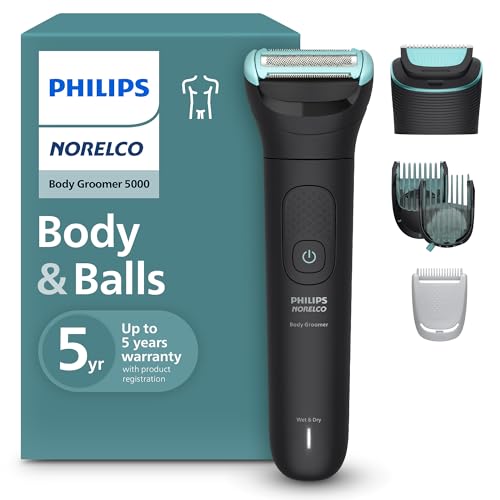
Live listings for the shortlist in this guide are pulled from Amazon below, so prices and availability are always current at the moment you look.


Disclosure
Nothing in the grooming guidance above depends on a commercial relationship, and the reasoning here stands on published specifications and manufacturer manuals alone. As an Amazon Associate we earn from qualifying purchases.