Our Top Picks
 VEVOR Auto Heat-Shrink Tube Cutter 34 m/min Cable31.9 x 12.3 x 14.8 inch17.72 x 12.2 x 12.01 inches59.5 poundsCheck on Amazon
 VEVOR Automatic Heat-Shrink Tube Cutter15.5 x 15.5 x 12.6 inch19.69 x 18.11 x 18.11 inches61.73 poundsCheck on Amazon


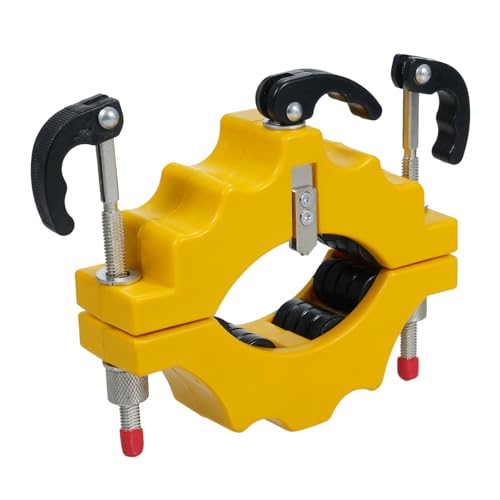

What's inside
- How Powered Cutting Differs From Hand Cutting
- The Main Machine Families
- Diameter Capacity, Read Properly
- Cut Speed and Cycle Time
- Squareness, Burr, and the Finished Edge
- Wheels, Blades, and Consumable Systems
- Battery Platforms and Corded Alternatives
- Working in Tight Spaces
- Material Guidance in Detail
- Safety Around Powered Cutting
- Maintenance That Keeps Cuts True
- Setting Up a Cutting Workflow
- Matching a Machine to Real Work
- Making the Final Choice
- Check prices on Amazon
- Disclosure
As an Amazon Associate I earn from qualifying purchases. This post may contain affiliate links at no extra cost to you.
Powered tube cutting machines exist to solve a problem that hand cutters handle poorly at volume: repetition. A manual tubing cutter asks the operator to rotate the tool around the pipe, advance the wheel a fraction at a time, and keep pressure even through dozens or hundreds of identical cuts. A motorised machine takes over the rotation, the feed, or both, and that change alters far more than effort. It alters how square the cut face ends up, how much burr the edge carries, how long each cut takes when the fiftieth pipe of the day feels exactly like the first, and how much clearance the work demands around the pipe itself. This guide works through the published specifications and manufacturer manuals for the main families of powered cutters, so the differences can be judged on measurable ground.
The category covered here is strictly the powered one. Rotary powered cutters clamp around copper, steel, or plastic tube and drive a cutting wheel around the circumference. Compact orbital saws swing a short blade around larger pipe in a guided arc. Miniature band and reciprocating designs serve demolition and rough work where squareness matters less. Cordless pipe shears close a hardened jaw through plastic tube with a trigger pull. None of these is a hand ratchet cutter with a bigger handle, and none should be compared with one on price or portability alone, because the mechanisms, the consumables, and the failure modes are entirely separate.
Three questions organise everything that follows. First, what diameter range does the machine genuinely cover in each material, since a rating for thin-wall copper rarely survives contact with schedule 40 steel. Second, what does the finished edge look like, because a fast cut that needs four minutes of deburring has not saved the time its cycle time promised. Third, what does ownership involve beyond the tool itself: replacement wheels and blades, battery platform commitments, guide accessories, and the maintenance rhythm that keeps a cutting wheel tracking true instead of spiralling down the pipe wall.
Readers approaching this equipment usually fall into recognisable groups. Plumbers and heating installers cutting copper and plastic all day care about one-handed operation in joist bays. Refrigeration technicians working with small-diameter copper care about clean, square faces that flare or braze predictably. Maintenance teams in plant rooms care about stainless and carbon steel capacity plus spark control. Home workshop owners building with PEX and PVC care about a single tool that covers domestic sizes without a bench full of single-purpose cutters. The right machine differs for each group, and the sections below are arranged so each reader can weight the trade-offs that matter to their own work.
How Powered Cutting Differs From Hand Cutting
In a hand cutter, the operator supplies three things at once: the rotation around the pipe, the inward feed of the wheel, and the judgement about when feed becomes force. Fatigue degrades all three together, which is why hand-cut work often drifts late in a long run. A powered rotary cutter separates those jobs. The motor supplies rotation at a governed speed, a spring or cam mechanism meters the feed, and the operator mainly positions the tool and holds it steady. Published manuals for this class describe the benefit in terms of consistency rather than raw speed, and that framing is honest: the first cut of the day may be no faster than a skilled hand cut, while the hundredth is dramatically more uniform.
Feed control deserves particular attention because it determines wheel life and edge quality. A wheel advanced too aggressively into copper work-hardens the track, raises a heavy external burr, and can oval thin-wall tube before the wall separates. A wheel advanced too gently polishes a groove without progressing, generating heat and glazing the edge of the wheel itself. Powered designs address this with spring-loaded slides, ratcheting feed cams, or fixed-geometry heads that close at a rate tied to rotation. When comparing models, look for manuals that describe the feed mechanism in mechanical detail rather than adjectives, because the mechanism predicts behaviour better than any marketing summary of cutting feel.
Rotation speed interacts with material in ways that published speed figures only partly reveal. Copper tolerates a wide speed band. Stainless steel work-hardens under a slow, rubbing wheel and prefers decisive feed at moderate speed. Plastics soften with frictional heat, so a fast wheel in PVC can melt a bead along the cut line that later interferes with solvent welding or push-fit insertion. Machines intended for mixed-material work sometimes offer two speed settings or an electronic control that holds wheel speed steady as load rises. Single-speed machines are not automatically inferior; they are simply tuned for a narrower band of work, and their manuals usually state that band plainly.
The last structural difference is guidance. A hand cutter follows a groove it has already scored, so an initially crooked start tends to correct itself or fail visibly. Powered tools commit faster. Orbital saws rely on guide rollers or a hinged frame to keep the blade perpendicular to the pipe axis. Rotary cutters rely on their roller bearings running against the pipe surface. Band-based tools rely on the operator. Understanding which guidance system a machine uses tells a buyer where its squareness comes from and what can go wrong when pipes are oval, scaled, painted, or coated, all of which disturb rollers and guides in different ways.
The Main Machine Families
Powered Rotary Wheel Cutters
The powered rotary cutter is the closest relative of the familiar hand tool. A cutting wheel, typically hardened steel and roughly the diameter of a coin, presses against the pipe while rollers support the opposite side. Instead of the operator walking the tool around the tube, a compact motor drives the head around the circumference inside a C-shaped or fully enclosing frame. Common published capacities for cordless versions in this family run from about 3 millimetres at the small end for refrigeration tubing up to roughly 28, 35, or 42 millimetres depending on the frame size, with the same tool often rated lower in stainless than in copper because wheel load, not frame opening, sets the practical ceiling.
Because the wheel scores and then separates the wall progressively, the rotary method produces no chips and very little noise, and it leaves the bore of the pipe unobstructed by swarf. That cleanliness explains its dominance in refrigeration and finished plumbing, where debris inside a line becomes contamination downstream. The trade-off is speed on thick walls: a schedule 40 steel pipe asks the wheel to displace considerably more metal per revolution than a thin copper wall, and cycle times stretch accordingly. Manuals for rotary models therefore list capacity by material and wall class rather than by diameter alone, and buyers should read those tables literally instead of extrapolating from the headline figure.
Orbital and Swing-Arm Saws
Orbital cutting machines clamp a frame around the pipe and drive a small circular blade, or in some designs an abrasive or diamond segment, around the circumference in a guided track. Diameters here start where rotary wheels become impractical, commonly around 50 millimetres, and extend through 110, 160, and in workshop or hire-fleet machines beyond 300 millimetres. The blade cuts rather than displaces, so wall thickness limits are expressed as maximum millimetres of wall for steel and plastic separately. A guided orbital cut on stainless can be strikingly square, which is why this family appears in food, pharmaceutical, and process work where weld preparation begins at the cut face.
The costs of the orbital approach are setup time, weight, and clearance. The frame needs room to close around the pipe and the blade needs room to travel, so working against a wall or inside a trench may be impossible even when the diameter rating fits. Blade changes involve guards and arbors rather than a single wheel screw. Coolant or cutting lubricant enters the picture for steel work, adding a consumable and a housekeeping duty that rotary copper work never demands. None of this diminishes the format; it simply places orbital machines in planned, repeatable cutting stations and installation runs rather than in reactive repair work.
Cordless Shears for Plastic Tube
Plastic pipe shears powered by a small motor or a geared trigger mechanism occupy a distinct niche. Instead of rotating anything, they advance a straight or slightly curved blade through PVC, CPVC, PEX, PE, and multilayer tube in a single closing stroke. Published capacities commonly reach 42 millimetres, with larger workshop models rated to 63 or 75 millimetres in plastic only. The cut is silent, instant, and free of the rotational clearance that rotary tools need, which makes shears the natural choice inside cabinets, under floors, and in ceiling voids where a pipe run hugs structure on every side.
Shear cuts carry their own compromises. A blade closing from one side can deflect slightly in thick or cold material, leaving a face that is flat but not perfectly perpendicular to the axis. Very cold PVC turns brittle and may crack ahead of the blade instead of slicing, a limitation manuals acknowledge by stating minimum working temperatures. PEX tolerates shear cutting well, though the slight ovality a closing jaw can impart needs the pipe to be re-rounded before a push-fit or press fitting seats. Buyers should therefore treat a shear as a specialist for plastic within its temperature and diameter envelope, not as a universal replacement for rotating methods.
Compact Reciprocating and Band Options
Small reciprocating saws fitted with fine-tooth metal blades, and compact band saws with a continuous loop blade, appear in tube work whenever demolition, mixed materials, or awkward access dominate. Their published tube capacities look generous because a blade can traverse almost anything that fits the throat or stroke, but the cut face tells the real story: reciprocating cuts wander, vibrate thin tube, and leave heavy burr, while a well-guided compact band saw can produce a respectable face on steel at the cost of both hands and considerable bulk. These tools earn their place cutting out old work, trimming mixed scrap, and handling sizes beyond dedicated machines. They rarely earn a place where the cut face itself becomes a joint.
Diameter Capacity, Read Properly
Capacity figures cause more disappointment than any other specification in this category, because a single headline number hides three separate limits. The first limit is physical opening: the largest pipe that fits between wheel and rollers or inside the frame. The second is wheel or blade travel: the deepest wall the cutting element can penetrate before its hub, slide, or guard fouls the pipe surface. The third is torque under load, which decides whether the machine completes the cut in the stated material or stalls partway and leaves the operator to finish by hand. A machine can satisfy the first two limits on paper and still fail the third in stainless or thick-wall steel, which is why reputable manuals publish a small matrix rather than a single diameter.
Copper tube illustrates the matrix clearly. Type L and type M copper in common domestic sizes, from 6 millimetre refrigeration lines through 15, 22, 28, and 35 millimetre plumbing sizes, present modest wall thicknesses that rotary wheels handle comfortably. Move to 42 or 54 millimetre copper and the wall grows, the circumference lengthens, and cycle time rises even though the mechanism is unchanged. A cordless rotary cutter rated to 42 millimetres in copper may therefore be entirely satisfactory for domestic and light commercial work while being the wrong choice for a workshop cutting 54 millimetre tube all week, not because it cannot close around the pipe but because each cut consumes time and battery at a rate the smaller work never reveals.
Steel and stainless demand a colder reading of the numbers. Carbon steel tube in schedule 40 carries walls several times thicker than copper of the same nominal size, and stainless adds work-hardening behaviour that punishes hesitant feed. Published capacities for powered rotary tools in stainless commonly stop around 28 millimetres even when the copper rating reaches 42, and orbital saws express steel capacity as a wall thickness, often in the region of 3 to 6 millimetres for portable machines, rather than as a diameter at all. Buyers working mainly in steel should start from the wall thickness column and treat diameter as secondary, reversing the order that copper buyers naturally use.
Plastic sizing introduces a naming trap. PVC and CPVC pipe sold by nominal bore does not measure what its name suggests, so a pipe labelled with a familiar fractional size may present an outside diameter several millimetres larger than a newcomer expects. PEX and polyethylene are generally sold closer to their true outside dimensions but vary by standard and region. The only safe comparison is outside diameter in millimetres against the machine’s stated outside-diameter capacity. Manuals for shears and rotary plastic cutters list capacity in outside diameter for exactly this reason, and a few minutes with callipers on the actual pipe stock prevents the classic mistake of a tool that almost closes around the pipe it was bought to cut.
Minimum diameter matters at the other end of the scale and receives far less attention. Very small tube, in the 3 to 8 millimetre band used for refrigeration, instrumentation, and brake or fuel lines, can slip, spin, or deform inside a frame designed for larger stock. Rollers spaced for 28 millimetre tube may not support a 6 millimetre line evenly, and the wheel can push the tube aside instead of tracking. Dedicated compact rotary models publish minimums around 3 or 4 millimetres and hold their rollers close together for this reason. Anyone whose work mixes capillary lines with domestic plumbing sizes should expect either a small dedicated cutter or an accessory roller set, not one frame that excels at both extremes.
Cut Speed and Cycle Time
Manufacturers quote cutting speed in two incompatible dialects, and confusing them leads to bad comparisons. Rotary cutter manuals often state a cycle time per cut at a reference diameter, such as a handful of seconds for a 22 millimetre copper tube, because the wheel must complete several revolutions and the count depends on wall thickness. Orbital saw manuals state blade speed and sometimes a time per cut at a reference wall. Shear makers state a single stroke time, which is nearly constant across their range. Comparing a shear’s stroke time with a rotary cycle time is meaningless; the honest comparison is total time per finished joint, including positioning, cutting, deburring, and any re-rounding the method requires.
Motor figures help explain where cycle time goes. Cordless rotary cutters use small geared motors whose published output is modest, because the wheel needs torque at low rotational speed rather than headline power. Battery voltage alone says little; a well-geared lower-voltage tool can out-cut a poorly geared higher-voltage rival in stainless while running cooler. Look instead for stated revolutions per minute at the cutting head, any electronic load control that maintains speed as the wheel bites, and the manual’s own cycle examples across materials. Those three data points, taken together, predict real pace far better than the voltage printed largest on the box.
Repeated cutting changes the arithmetic again. A machine that cuts quickly but needs its wheel changed every few dozen cuts in stainless, or its battery swapped every hour, may lose a working day to a slower machine with longer consumable life. Published wheel-life figures are rare and always conditional, yet manuals often hint at expectations through their maintenance intervals and the number of spare wheels packed with the tool. Treat the presence of multiple spare wheels in the case as information: the manufacturer expects wheel changes to be a routine part of the working week, and the cost and availability of those wheels belong in the purchase calculation from the start.
For readers planning bench or station work, duty cycle deserves a line in the comparison that field buyers can skip. Compact motors heat under continuous load, and some manuals specify rest intervals or a maximum number of consecutive cuts in steel before a cooling pause. A machine used for occasional installation cuts will never approach those limits. A machine cutting components for prefabricated assemblies, hundreds of identical lengths per shift, lives at them. Matching the tool’s thermal design to the intended rhythm of work is unglamorous and decisive, and it is one of the clearest dividing lines between domestic-grade and trade-grade designs in this category.
Squareness, Burr, and the Finished Edge
A square cut is one whose face sits perpendicular to the pipe axis within a tolerance the next operation can absorb. Press-fit and push-fit systems absorb very little: a visibly angled face shortens insertion depth on one side and can leave an O-ring partially unsupported. Brazed and soldered joints forgive slightly more because the fitting socket guides alignment, yet a crooked face still produces uneven capillary gaps. Compression fittings sit between the two. Published squareness claims, where they exist, are usually expressed as a small angular or millimetre deviation at a reference diameter, and they assume clean, round, unsupported-length-appropriate pipe. Real-world squareness depends as much on supporting the pipe near the cut and keeping the tool seated as on the machine itself.
Burr takes two forms and they need different remedies. External burr, the raised lip thrown up where the wheel displaced metal outward, interferes with fitting insertion and must come off copper and steel as a matter of routine. Internal burr, the lip folded into the bore, restricts flow, traps debris, and in refrigeration work can shed particles into a system that tolerates none. Rotary wheel cutting tends to produce a modest internal burr and a light external roll. Saw cutting produces swarf and a sharper, more even burr on both edges. Shear cutting of plastic produces little burr but can leave a slight chamfer irregularity or, in cold material, micro-cracks that should be trimmed before jointing.
Deburring provision is therefore part of the machine, not an afterthought. Many rotary cutters carry a fold-out deburring blade or a retractable reamer in the frame, adequate for light copper burr and useless on heavy steel edges. Separate deburring tools, with hardened blades sized to the bore, do the thorough work, and some offer an external chamfer edge as well. Orbital saw systems sometimes integrate a facing or bevelling step for weld preparation. When comparing total cost and total time, include the deburring method the workflow will actually use, because a machine whose edge needs a separate powered facing step belongs to a different workflow class than one whose edge goes straight into a fitting after a hand reamer passes through the bore.
Anyone building a workshop that cuts across plumbing, kitchen, and garage projects will find the equipment logic in this guide familiar from other powered categories, and for a heavier food-processing corner of that same workshop, the comparison of motor load and duty cycle continues naturally in best industrial electric meat grinders.
Wheels, Blades, and Consumable Systems
The cutting wheel is the heart of every rotary machine and the part most often bought blind. Wheels differ in diameter, bore, thickness, edge profile, and alloy. A wheel ground for copper carries a keen, thin edge that slices with modest pressure. A wheel intended for stainless is tougher, slightly thicker, and sacrifices some keenness to survive the harder, work-hardening surface. Plastic wheels are often toothed or deeply profiled to clear soft material. Fitting a copper wheel to stainless work is the most common consumable error in this category: the cut may succeed a few times, the edge then folds or chips, feed pressure rises to compensate, and squareness and burr both deteriorate before the operator suspects the wheel rather than the machine.
Replacement logistics matter as much as metallurgy. Wheels are small, easily lost, and specific to a frame’s arbor and diameter; a wheel a millimetre too large fouls the guard, and one too small never reaches through the wall. Before buying any rotary machine, confirm the wheel part family, how many wheels the case holds, whether the wheel screw needs a tool or turns by hand, and whether the same wheel serves the plastic rating or a second wheel type is required. Machines designed for trade use make wheel changes a one-minute, tool-free or single-driver task carried out with gloves on. Machines that bury the wheel screw behind a cover plate will, in practice, be run on dull wheels far longer than they should be.
Orbital saw blades follow parallel logic with higher stakes. Blade diameter, tooth form, and material must match pipe material and wall: fine teeth for thin-wall stainless, coarser forms for plastic, and specific blades for cast or thick carbon steel where the format supports it. A blade that has overheated once, visible as discolouration, rarely cuts truly again. Blade cost per cut becomes a genuine operating figure in production settings, and published blade-life estimates in metres of cut or cuts per blade at a stated wall give buyers a rare chance to compare running costs directly. Where a manufacturer publishes nothing about blade life, expect the consumable budget to be the unknown that dominates ownership cost.
Shear blades look simple and are not. The edge must stay keen enough to slice rather than crush, and most designs allow either sharpening within strict limits or outright replacement of the blade cartridge. A crushing blade announces itself through rising trigger effort, whitened stress marks on PVC, and faces that lean. Because shears are often bought for occasional domestic work and stored for months, corrosion on an unprotected blade edge is a real failure mode; a light oil film before storage, as manuals commonly advise, preserves the edge that makes the tool worth owning. Spare blade availability for an ageing shear model should be checked before purchase, not after the first dull season.
Battery Platforms and Corded Alternatives
Most field tube cutters now live on the major cordless platforms, and the platform decision often outweighs the tool decision. Compact rotary cutters commonly run on 12-volt class sub-compact batteries, which keep the tool light enough for overhead and one-handed work and still deliver hundreds of small copper cuts per charge under published test conditions in manufacturer literature. Larger rotary and shear models sit on 18-volt class platforms shared with drills and impact drivers, trading weight for torque headroom and for the convenience of batteries already in the van. Orbital saws split between high-capacity cordless versions for site work and corded versions for stations, where mains power removes both the weight and the interruption of battery changes during long runs.
Battery figures need the same sceptical reading as capacity figures. Cuts-per-charge claims always assume a stated material, diameter, and wall, usually the friendliest combination the tool handles, such as mid-size copper. The same battery in stainless at the top of the diameter range may deliver a fraction of that count. Cold weather reduces output further, a point manuals make for lithium packs generally and one that matters for site work in unheated buildings. A realistic plan assumes the published figure describes the best day, sizes the battery fleet for the worst regular day, and keeps one pack in reserve rather than discovering the shortfall with a pipe run half cut and a fitting already fluxed.
Corded machines deserve a fair hearing rather than dismissal as old-fashioned. A corded orbital saw or bench-mounted cutter delivers identical torque on the first cut and the five-hundredth, never pauses for a pack, and usually costs less for equivalent capacity because no battery ecosystem is bundled. For a fixed cutting station in a workshop, prefabrication bench, or hire depot, those are decisive virtues. The cord’s penalty appears on site, up ladders, and in occupied buildings where trailing leads across finished floors create their own hazards and delays. The choice is therefore about where the cutting happens, not about which power source is more modern.
Working in Tight Spaces
Clearance specifications decide more real-world purchases than capacity does, because pipes live against walls, inside ducts, between joists, and behind boilers. Two clearances matter. Swing or rotation clearance is the room the tool body needs around the pipe to complete its motion; fully enclosing rotary heads need the least, since the cutting happens inside the frame, while orbital frames and reciprocating tools need the most. Access clearance is the room needed to get the tool onto the pipe in the first place, including the space behind the pipe between it and the wall. Manuals that publish a minimum wall clearance figure, often in the region of 20 to 45 millimetres for compact rotary models, are giving buyers the single most useful number for repair work in finished buildings.
Installed-pipe cutting separates the families ruthlessly. A rotary cutter that opens, slips over an existing run, and closes again can sever a pipe in situ with centimetres of surrounding room. A shear can do the same for plastic where its jaw fits. An orbital saw generally cannot work where its frame cannot close, and a band saw needs the pipe brought to it. Repair and retrofit buyers should therefore weight in-situ ability above almost every other trait, even accepting a narrower diameter range, because the alternative on site is dismantling sound work to create room for the tool. New-build and prefabrication buyers, cutting loose lengths on a bench or trestles, face no such constraint and can choose purely on edge quality and pace.
Orientation adds a subtler difficulty. Overhead cuts test one-handed operation, tool weight, and whether the cut-off piece is retained or drops. Vertical runs test whether the tool stays seated without the operator fighting gravity through the whole cycle. Several compact rotary designs address this with a balanced grip, a low mass centred close to the pipe, and in some cases a spring that keeps the head closed on the tube so the tool effectively hangs on the work while the operator steadies it. Specifications rarely capture these qualities; weight in grams, stated plainly, plus the manual’s illustrations of intended grip positions, come closest. A tool that is light on paper but balanced far from the pipe will feel heavier in an overhead minute than a slightly heavier tool balanced at the head.
Spatial thinking of this kind transfers across a home workshop, and readers planning a sewing corner in the same constrained room often weigh machine footprint and frame rigidity along lines explored in best all metal sewing machines.
Material Guidance in Detail
Copper and Brass
Copper rewards correct wheel selection and punishes excess feed with ovality, especially in thin-wall tube and small diameters where the wall has little resistance to the closing frame. The published guidance across rotary manuals is consistent: seat the tool squarely, let the feed mechanism set the pace, and resist the temptation to squeeze or assist the head mid-cut. Annealed copper in coil form adds a preliminary step, because tube that is not straightened and supported will rock in the rollers and produce a helical score. Rigid straight lengths cut cleanly with minimal attention. Brass tube and fittings stock behave much like copper with slightly higher wheel wear, and the same wheels are normally specified for both.
Refrigeration work tightens every tolerance. Lines are small, walls are thin, and the finished face will be flared, swaged, or brazed into a sealed system. Internal burr control becomes the priority, and the correct sequence is a steady rotary cut followed by careful reaming that removes the internal lip without dropping shavings into the line. Many technicians cap or plug tube ends immediately after cutting for the same reason. Machines aimed at this trade emphasise minimum diameter, fine feed control, and clean separation without chips, and their manuals discuss contamination in a way general plumbing literature does not. Buyers in this field should read that discussion as the specification that matters most.
Steel and Stainless Steel
Carbon steel cuts willingly enough with the right wheel or blade, provided the machine has torque in reserve and the work is supported against vibration. The defining issues are heat, wheel or blade consumption, and the treatment of the finished edge where corrosion protection has been destroyed. Threaded steel work adds a sequencing point: tube is normally cut, reamed, and then threaded, and a cut face that is out of square produces a thread that starts crooked. Orbital and guided methods therefore dominate steel work that will be threaded or welded, while rotary wheel cutting serves smaller sizes and thinner walls where its cleanliness offsets slower progress through the wall.
Stainless steel is the material that exposes optimistic specifications. Its tendency to work-harden means a wheel or blade that rubs without cutting makes the surface harder for the next pass, so manuals for stainless-rated machines stress decisive feed, correct wheel grade, and sharp consumables, sometimes with a stated preference for cutting fluid on saw blades. Cycle times lengthen, consumable life shortens, and battery consumption rises, all at once. A buyer whose work is mainly stainless should select from machines whose manuals treat stainless as a primary application, with dedicated wheels listed and realistic capacity reductions printed, rather than from machines that mention stainless as an afterthought beneath a copper headline.
PVC, CPVC, and ABS
Plastics cut easily and joint unforgivingly. A shear or rotary plastic cutter parts PVC quickly, but the joint that follows, whether solvent-welded or push-fit, depends on a square face, a proper chamfer, and the absence of cracks. Cold material is the recurring hazard: below the temperatures manuals state, PVC and CPVC turn notch-sensitive, and a shear blade can start a crack that travels beyond the cut line. Warming the work environment or choosing a rotary method that scores progressively reduces the risk. Solvent-weld preparation then removes the outer edge with a chamfer so the pipe enters the socket without scraping cement ahead of it, a step that powered cutting does not eliminate however clean the face looks.
Wall class changes plastic behaviour as much as diameter does. Thin-wall waste pipe slices with minimal effort and minimal burr. Pressure-rated thick-wall pipe resists the closing jaw of a shear, can deflect the blade enough to lean the face, and may exceed the honest capacity of tools rated by diameter alone. Published shear capacities usually assume a stated wall class or pressure rating, and exceeding it produces exactly the leaning faces and stress whitening that signal overload. Rotary plastic cutters with toothed wheels handle thicker walls more evenly because the load is distributed around the circumference instead of concentrated along one closing line.
PEX, PE, and Multilayer
Flexible plastics forgive cutting method and remember deformation. PEX can be sheared, rotary-cut, or cut with dedicated plastic wheels, and in every case the end may leave the tool slightly oval. Cross-linked material recovers much of its shape with time, warmth, and the insertion of a fitting, yet conscientious installers use a re-rounding or calibration tool where the fitting system requires it, particularly with press and expansion systems whose tolerances are engineered rather than approximate. Manuals for multilayer pipe are stricter: the aluminium core must be cut in register with the plastic layers and then calibrated with the chamfering tool the system specifies, because the fitting seals against a prepared geometry, not merely a severed end.
Polyethylene for water service and irrigation adds diameter and coil memory to the problem. Large PE coils resist lying straight, spring against guides, and store enough energy to move at the moment of separation. Powered rotary cutters and large shears both serve here, with support and restraint of the coil being the real skill. The cut face then needs the same squareness discipline as any pressure pipe, since electrofusion and butt-fusion joints begin with two flat, aligned faces and a scraping step that powered cutting does not replace. Machines marketed for utility work publish capacities in the larger plastic diameters and are built heavier accordingly, a reminder that plastic does not automatically mean light-duty.
Safety Around Powered Cutting
Powered tube cutters are quieter and cleaner than angle grinders, which tempts operators to treat them casually, yet each family carries distinct hazards that manuals enumerate for good reason. Rotary heads can catch gloves, sleeves, and rags at the closing point. Orbital blades throw swarf and can bind if the pipe moves mid-cut, which is why workholding instructions insist the pipe be clamped or firmly supported rather than held by a second person’s hands. Shears close with enough force to injure a fingertip placed where a pipe should be, and their triggers deserve the same respect as any powered blade. Lockout habits, removing a battery or unplugging before wheel and blade changes, prevent the classic accident of a tool starting while its guard is open in the operator’s hands.
Eye protection requirements differ by method and should follow the method rather than habit. Wheel cutting of copper produces almost no airborne debris, while saw cutting of steel produces fine swarf that travels, and cutting old pipe of unknown history can release scale, rust, and residues from inside the bore. Manuals for saw-based machines specify eye protection without qualification. Hearing protection is rarely required by these comparatively quiet tools, though a workshop running several machines and extraction at once should judge the combined environment rather than each tool in isolation. Gloves present a genuine dilemma: they protect against sharp cut edges during handling, yet must stay clear of rotating heads during the cut itself, and the safe routine is gloves for handling, bare and dry hands or close-fitting protection for operating, exactly as most manuals phrase it.
The cut-off piece causes a disproportionate share of incidents and spoiled work. A short offcut can spin with the wheel, drop onto finished flooring, or fall inside a wall cavity and announce itself months later. Longer lengths whip slightly at separation if unsupported. Supporting both sides of the cut, planning where the offcut will go, and keeping the second hand on the tool rather than catching falling pipe are habits the better manuals teach explicitly. On overhead work the calculus reverses: a retained offcut that the operator controls is safer than a dropped one, and some compact heads are designed to grip the severed ring until the tool is opened deliberately.
Old and unknown pipe demands a pause before any powered cut. Legacy installations can contain asbestos-bearing insulation around the pipe, lead-based coatings, or lines that remain pressurised, charged, or connected to systems the operator has not isolated. Refrigerant lines, gas lines, and live water services each carry their own isolation procedures that sit entirely outside the cutter manual’s scope but entirely inside the operator’s responsibility. The machine will cut whatever is placed in it, including the wrong pipe, so identification and isolation checks precede tool selection on any work in an existing building. This is the one section of buying guidance where the correct specification is procedural rather than mechanical.
Maintenance That Keeps Cuts True
A powered cutter drifts out of truth gradually, through roller wear, wheel damage, and debris packed into the slide or frame, and the drift shows first as a score line that spirals instead of closing on itself. The maintenance routine in most manuals is short enough to perform weekly on trade tools: brush swarf and copper dust from the head, check that rollers spin freely and sit without wobble, inspect the wheel edge against light for chips or a folded lip, and confirm the feed mechanism travels its full range without grit. Five unhurried minutes of this attention prevents the majority of mysterious bad cuts, which are usually dirty rollers or a damaged wheel announcing themselves through the work.
Lubrication instructions are specific and should stay that way. A drop of light oil on roller pins and feed screws is the common prescription; grease packed into the head attracts swarf and becomes grinding paste. Cutting fluid belongs on saw blades cutting steel, applied as the blade manufacturer directs, and kept away from plastic work where residues can interfere with solvent joints. Stainless work may justify a dedicated wheel kept separate from copper duty, because a wheel used on steel can embed particles that later mark or contaminate more delicate work. Storage completes the routine: tools kept dry, blades and wheels protected from knocking against other steel in the case, and batteries stored at partial charge in line with general lithium guidance.
Calibration, where it exists, is simple and worth doing. Some orbital frames allow guide roller adjustment to restore perpendicular travel, and some rotary heads allow roller replacement as a matched set when wear makes the pipe sit unevenly. Replacing a single worn roller among sound ones can tilt the work as badly as the original wear did. Manuals that list roller sets, feed screws, and springs as service parts signal a machine designed to be maintained rather than discarded, and the price of those parts belongs in the same ownership calculation as wheels and blades. A machine with no listed service parts is a machine whose accuracy has a fixed and unknown lifespan.
Setting Up a Cutting Workflow
Good tube work begins before the cutter closes, with measuring and marking habits that powered speed makes more important, not less. A fast machine cutting confidently to a wrong mark produces scrap at an impressive rate. Marking around the full circumference with a fine line, rather than a single tick on the visible side, lets the operator confirm the wheel or blade is tracking the intended plane all the way around. Measuring systems that account for fitting insertion depth, so the marked length is the finished length rather than the bare span, prevent the slow accumulation of error that shows up when a run meets its last fitting a few millimetres short.
Support determines squareness as surely as the machine does. Loose lengths should rest on trestles, a bench, or a pipe stand at a height that lets the tool work without the operator stooping or reaching, with the cut point close to a support so the pipe cannot flex away from the wheel. Long lengths need support on both sides at the same height, or the weight of the falling side levers the cut open and pinches the blade or wanders the wheel in the final millimetres. Installers working in situ achieve the same stability by choosing cut points near brackets and hangers. The principle survives every context: the pipe must not move relative to the tool during the cut, and arranging that stillness is the operator’s craft.
Batch work rewards a stop or jig. Cutting twenty identical lengths by individual measurement invites drift; cutting them against a fixed stop, a marked bench line, or a length jig converts the task into repetition the machine is good at. Prefabrication benches formalise this with clamps and stops, but a clamped block on a trestle achieves most of the benefit for site work. Deburring and inspection then become a rhythm rather than an interruption: cut, ream, check the face against a square or a fitting, set aside. Grouping those steps per piece, instead of cutting everything and deburring everything afterwards, catches a wandering wheel or dulling blade at the second piece rather than the twentieth.
Cold storage planning follows the same logic of arranging the environment before the equipment, and households thinking about where cut lengths, tools, and bulk supplies live through winter may find a useful parallel in best chest freezers for garage.
Matching a Machine to Real Work
Domestic Plumbing and Renovation
The domestic workload centres on copper at 15, 22, and 28 millimetres, plastic waste and supply pipe up to about 42 millimetres outside diameter, and occasional flexible lines. A compact cordless rotary cutter covering that copper range, paired with a shear for plastic, handles nearly all of it with minimal clearance demands and minimal noise in occupied homes. Buyers in this group should weight one-handed operation, low wall clearance, and wheel availability at ordinary merchants above exotic capacity they will never use. A single platform battery shared with the household drill completes a kit that earns its shelf space without sprawling.
Heating and Refrigeration Work
Heating installers live at the larger end of domestic copper and add steel and multilayer in commercial plant rooms, so a mid-size rotary machine with an honest stainless rating and a powered shear for multilayer preparation covers the week. Refrigeration specialists invert the priorities: minimum diameter, fine feed, cleanliness, and burr discipline dominate, and a compact dedicated rotary cutter plus proper reaming tools outperforms any generalist. Both trades benefit from cases that organise spare wheels by material, because the costliest consumable mistake in either trade is the wrong wheel fitted in a hurry at the start of a long day.
Workshop Fabrication and Prefabrication
Station work justifies the machines that field work cannot. An orbital saw or a corded cutter on a bench, with proper clamping, stops, and extraction, produces weld-ready and thread-ready faces at a pace and consistency no handheld method matches. The buying criteria shift to wall-thickness capacity, blade economics, duty cycle, and service parts. Workshops should also budget for the facing, bevelling, or threading steps that follow the cut in their actual assemblies, since the cutter is one station in a chain and its output tolerance must suit the next station’s input requirements. Buying the chain, not the tool, is the discipline that separates a productive bench from an expensive one.
Rental, Hire, and Shared Fleets
Shared tools suffer shared neglect, so fleet buyers should privilege designs whose consumables are cheap, standardised, and inspectable at a glance, and whose manuals state maintenance in checklists a handover can actually follow. A machine that needs a proprietary wheel available from one distant supplier will spend its life either idle or running on a ruined wheel. Machines with tool-free consumable changes and visible wear indicators survive communal ownership best. Recording cuts and consumable changes per machine, as described earlier, turns anecdote about which model lasts into evidence the next purchasing round can use.
Making the Final Choice
A sound shortlist begins with the pipe diary of an ordinary month: the materials, outside diameters, and wall classes actually cut, written down rather than remembered generously. Match that list against capacity matrices, choose the mechanism whose edge quality suits the joints that follow, confirm that wheels or blades are stocked by suppliers already used, and check the clearance figures against the tightest recurring location. Garage-based readers who plan work space and appliances together may recognise the same discipline of measuring first and buying once in best garage ready refrigerators.
Everything in this category eventually reduces to respect for a thin circle of hardened steel, a blade edge, or a closing jaw, and for the unglamorous habits of support, marking, and cleaning that let that edge do its work; choose the machine whose published limits match the pipe in front of it, and each cut becomes a quiet, square, almost forgettable event, which is precisely what good tube work should be.
Check prices on Amazon
Live listings for the shortlist in this guide are pulled from Amazon below, so prices and availability are always current at the moment you look.


Disclosure
Guides on this site are produced from published specifications and manufacturer documentation, and the links that support that editorial work are identified here plainly. As an Amazon Associate we earn from qualifying purchases.