Our Top Picks
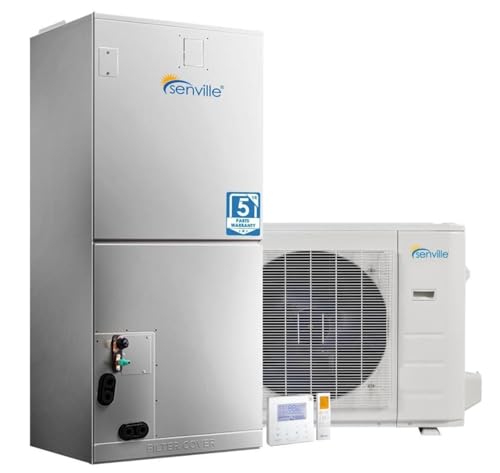
 ACiQ 2.5 Ton 14.3 SEER2 Central Air Conditioner2.5-Ton29.1 x 25 x 29.1 inches139 poundsCheck on Amazon
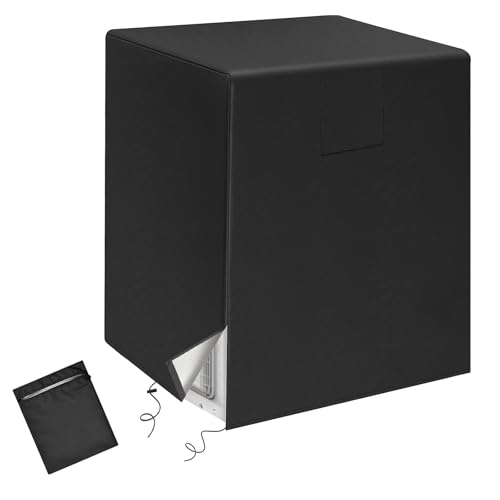
 Central Air Conditioner Covers for Outside Units 36''36" x 36"36 x 36 x 0.1 inches0.66 poundsCheck on Amazon
 Xeeol 36x36 Central Air conditioner Covers for Outside36'' x 36''36 x 36 x 1 inches0.8 poundsCheck on Amazon
 Zettum Air Conditioner Cover for Outside Units 3636 x 36 x 39 Inch39 x 36 x 36 inchesCheck on Amazon

What's inside
- Delivered capacity versus the number on the nameplate
- Sensible cooling, latent cooling and the feel of the air
- Airflow: the cubic feet per minute behind every ton
- Pull-down: how fast a hot house comes back
- Holding performance when the heat turns extreme
- Modulation: single stage, two stage and variable speed
- The matched system: why components are rated together
- Static pressure: the invisible resistance in the ducts
- Sizing: the performance cost of too much and too little
- Reading performance by segment
- Commissioning: where rated performance becomes delivered performance
- Keeping delivered performance through the season
- Questions that separate strong performers from weak ones
- Zoning and controls: directing performance where it is needed
- Performance differences between house types
- Observing performance in a house you already own
- Performance is not the same as efficiency
- Before a forecast heatwave: a short performance checklist
- Check prices on Amazon
- Bringing the performance picture together
As an Amazon Associate I earn from qualifying purchases. This post may contain affiliate links at no extra cost to you.
Cottage Verdict earns a small commission when readers use the retailer links on this page and buy something afterwards; that modest income keeps our cottage guides independent and lets us spend our time on airflow charts and capacity tables instead of chasing sponsorships.
Two central air conditioners can carry the same tonnage on the nameplate and cool the same house very differently. One pulls a hot, sun-baked living room down to the thermostat setting before dinner and holds it there through a week of extreme heat. The other runs all afternoon, leaves the upstairs bedrooms a few degrees behind, and lets indoor humidity creep upward until the air feels clammy even when the thermometer looks acceptable. The gap between those two experiences is cooling performance, and it is the only subject of this guide.
That focus needs one clarification before anything else, because this site also publishes a companion guide to central systems chosen for durability and long service life. Performance and durability are separate axes. Durability asks how a machine is built and how long it keeps working across many seasons. Performance asks what the machine delivers today, at full call, on the hottest afternoon of the year: how much cooling actually reaches the rooms, how fast temperatures fall, how steadily the system holds a setting, and how much of that ability survives when outdoor temperatures climb far beyond the standard test point. A system can be sturdily built and still be a mediocre performer if it is badly matched or starved of airflow, and a strong performer still needs competent installation to show what it can do. Nothing in these pages treats service life or coverage terms as evidence of cooling ability; the two judgements are kept apart on purpose.
Performance also is not a single number. It is a bundle of measurable behaviours that interact: delivered capacity against the rated figure, the split between temperature reduction and moisture removal, the volume of air moved across the indoor coil, the speed of the initial pull-down after a hot spell or a setback, the capacity retained at very high outdoor temperatures, and the steadiness of indoor conditions once the target is reached. Judging a central system well means looking at each of those behaviours and understanding which ones matter most for a particular house.
Delivered capacity versus the number on the nameplate
The tonnage printed on an outdoor unit describes capacity under one specific set of laboratory conditions: a defined outdoor temperature, a defined indoor temperature and humidity, and a defined airflow across a clean coil. Real houses rarely reproduce those conditions. The cooling a system actually delivers in a given home, on a given afternoon, is almost always lower than the laboratory figure, and the size of that shortfall is one of the clearest performance differences between installations.
Several forces eat into delivered capacity. Outdoor air hotter than the test point forces the compressor to work against a larger temperature lift, and capacity falls as that lift grows. Indoor humidity changes the picture too, because some of the coil capacity is spent condensing moisture rather than lowering air temperature. Dirty filters, a coil fouled with dust or pet hair, refrigerant charge that is slightly off, and ducts that leak cooled air into an attic all subtract from what the rooms receive. None of these is exotic; a typical real-world system gives back a noticeable share of its rated output to ordinary friction of this kind.
This is why headline tonnage is a weak way to compare systems. Two three-ton systems installed in two identical houses can deliver meaningfully different amounts of cooling if one is paired with a properly sized indoor coil and generous airflow while the other is choked by restrictive ductwork. The better question is not how much capacity the equipment claims but how much of that claim survives contact with the house. Installers who measure delivered performance, rather than assuming it, consistently find and fix losses that a nameplate comparison would never reveal.
Capacity also has a direction in time. A system that delivers close to its rated output in its first hour and then fades as the outdoor unit heat-soaks behaves differently from one that sustains output through a long afternoon. Sustained delivery matters most in climates where the peak lasts for hours rather than minutes, and it is one reason experienced buyers in hot regions pay attention to high-temperature capacity figures rather than the standard-condition headline alone.
Sensible cooling, latent cooling and the feel of the air
Cooling capacity divides into two parts. Sensible capacity lowers the temperature of the air, the part a thermometer registers. Latent capacity removes moisture, condensing water vapour on the cold indoor coil so it can drain away. The proportion between the two is often described as the sensible heat ratio, and it quietly shapes whether a house feels genuinely comfortable or merely cool and damp.
In a dry climate, nearly all the work a household wants is sensible: drop the temperature and comfort follows. In a humid climate, a system with a high sensible heat ratio can hit the thermostat setting quickly while leaving much of the moisture in the air. The result is the familiar clammy house, where surfaces feel cool, bedding feels slightly damp, and occupants lower the thermostat further to chase a dryness the system is not delivering, wasting energy in the process. Homes in sticky summer regions, including many cottages near lakes and coasts, need a meaningful share of capacity devoted to latent work, a theme explored further in our guide to best air conditioners for humid climates.
The sensible heat ratio is not fixed for a given machine; it shifts with airflow and coil temperature. Slower air movement across the coil gives air more contact time with the cold surface, so more moisture condenses and the latent share rises, at the cost of slightly less total capacity. Faster airflow raises total and sensible capacity but dries the air less. This trade-off is a genuine performance dial: the same equipment can be tuned toward temperature or toward dryness depending on how the blower is set up, and a good installer chooses the setting for the climate rather than leaving a factory default in place.
Run time matters as much as the ratio. Moisture only condenses while the coil is cold and air is moving, so a system that satisfies the thermostat in short bursts removes far less water over a day than one that runs in longer, steadier cycles, even if both hold the same temperature. This is the first place where modulation, discussed later, earns its keep on performance grounds alone: longer cycles at reduced output are a dehumidification strategy as much as an efficiency one.
Airflow: the cubic feet per minute behind every ton
If capacity is the headline, airflow is the delivery mechanism, and it is where central performance is most often lost. A common rule of thumb in the trade calls for roughly four hundred cubic feet of air per minute across the indoor coil for each ton of cooling, with a working range on either side depending on climate goals. Move much less air than that and the coil runs excessively cold, total capacity drops, and in the worst case moisture on the coil can freeze into ice that blocks airflow altogether. Move far more air and the coil warms, sensible capacity rises slightly, but moisture removal falls and the moving air itself can feel noisy and draughty.
Airflow shortfalls rarely come from the blower itself. Modern air handlers and furnaces can usually move more air than the duct system allows them to. The restriction lives in the ducts: runs that are too narrow, sharply bent flexible duct that was never pulled tight, registers that are too few or partly closed, and return paths that are undersized or missing entirely. A bedroom with a supply register but no return path and a closed door becomes a pressurised pocket that the system can barely push air into, which is why some rooms never cool no matter how strong the equipment is.
The performance consequences of low airflow compound. Delivered capacity falls, so run times lengthen. The compressor works against unfavourable conditions for more hours each day. Temperature differences between rooms widen because the branches with the least resistance take most of what air there is. When a homeowner reports that a system runs constantly yet never quite arrives, restricted airflow is at least as likely a culprit as weak equipment, and it is far cheaper to correct.
Measuring airflow is unglamorous work: reading pressures, checking blower settings against the duct system, sometimes measuring at the registers themselves. It does not appear in glossy brochures, yet it decides whether the capacity a buyer paid for shows up in the rooms. Spacious homes make the point clearly, since long duct runs and many branches multiply every restriction; our guide to best air conditioners for large rooms looks at the same delivery problem from the room side.
Pull-down: how fast a hot house comes back
Pull-down is the recovery phase, the period between a system starting at full call and the house reaching its setting. It is the performance quality people notice most directly, because it is measured in lived time: the hour after arriving at a cottage that has sat closed in the sun all week, the evening recovery after a thermostat setback during a workday, the first night of a heatwave when walls and furniture have absorbed a full day of heat and radiate it back into the rooms.
Pull-down speed depends on surplus capacity, the margin between what the system delivers and what the house is gaining from outside at that moment. On a mild day the surplus is large and recovery is brisk. During extreme heat the gain through walls, windows and roof can consume most of the delivered capacity, leaving little surplus, so the last few degrees arrive slowly even though the equipment is working at its hardest. This is physics, not failure, and it explains why recovery that takes forty minutes in June can take three hours in the middle of a severe August afternoon.
Thermal mass stretches pull-down further. A house is not just air; it is plaster, timber, masonry, furniture and flooring, all of which store heat and release it gradually. Cooling the air is the quick part. Cooling everything in the rooms takes sustained output, which is why the temperature can rebound noticeably during the first off-cycle after a pull-down: the warm fabric of the house re-heats the freshly cooled air. Systems with steadier, longer operation handle this gracefully, chipping away at stored heat without dramatic swings.
Practical expectations follow from this. Deep thermostat setbacks save less than people hope in very hot weather because the recovery demands a long full-output run, and the house spends part of the day uncomfortable. Modest setbacks, or none during a heatwave, often give a better lived result. For seasonal cottages opened on a Friday evening, starting the system earlier in the day where remote control allows, or accepting a staged arrival where bedrooms are prioritised first, turns pull-down from a frustration into a plan.
Holding performance when the heat turns extreme
Standard capacity figures are quoted at a moderate outdoor test temperature, around the mid-nineties Fahrenheit. Real heatwaves do not respect that boundary. As outdoor temperatures climb toward one hundred five or one hundred fifteen degrees, every air-cooled condenser loses capacity and draws more power to deliver what remains; the refrigerant cycle simply has to lift heat across a wider gap and reject it into hotter air. The performance question is not whether a system declines in extreme heat, since all of them do, but how gracefully.
Manufacturers publish extended performance tables showing capacity at higher outdoor temperatures for those who care to look, and the spread between product lines is real. Designs with larger outdoor coil surface can reject heat more easily and tend to hold a greater share of their capacity as temperatures rise. Generous coil area is unglamorous and adds bulk to the outdoor unit, but on the hottest afternoons it is one of the few design choices that directly buys retained cooling.
Installation details matter at the extremes too. An outdoor unit baking in direct sun against a hot wall, hemmed in by shrubs, or recycling its own discharge air because of a fence or deck overhead starts every cycle with a handicap that grows worse as the day peaks. Clearance and shade that keep the unit breathing cooler air preserve capacity exactly when capacity is scarcest. Two identical systems can diverge noticeably in a heatwave purely because one was placed in open air and the other in a sun-trap alcove.
For households in regions where extreme heat is routine rather than exceptional, the honest sizing conversation changes. A system chosen strictly by a standard load calculation for typical peak conditions will run at its absolute limit during the worst week of the year, with no surplus for pull-down and no margin for a dirty filter. Slight headroom, achieved without the oversizing that wrecks humidity control, is a performance feature in such climates, and it is best found in equipment whose high-temperature tables stay strong rather than in a simple jump to the next tonnage step.
Modulation: single stage, two stage and variable speed
The way a compressor delivers its capacity shapes nearly every performance behaviour discussed so far. A single-stage system has one output level: full. It runs at complete capacity until the thermostat is satisfied, then switches off. The virtues are simplicity and strong pull-down, since every run is a maximum-effort run. The costs show up in steadiness. Indoor temperature oscillates around the setting as the system cycles, humidity removal stops dead during each off period and partly reverses as the wet coil re-evaporates moisture into the airstream, and rooms furthest from the air handler drift more than rooms nearby.
A two-stage system adds a lower gear, typically somewhere around two-thirds of full output, where it spends the majority of its running hours. The lower stage lengthens cycles, which steadies temperature and gives the coil far more time to condense moisture, so humidity control improves out of proportion to the modest change in hardware. Full stage remains available for pull-down and for the hottest afternoons, so recovery ability is preserved. For many houses, two stages capture most of the lived performance benefit of modulation at a moderate step up in complexity.
Variable-speed and inverter-driven systems go further, adjusting output continuously across a wide range to match the load of the moment. On a mild morning the system can idle along at a fraction of its capacity, moving air gently and wringing out moisture for hours. As the afternoon builds it ramps upward without steps or swings, and it reserves its ceiling for genuine extremes. The performance signature is stability: smaller temperature swings, more even conditions between rooms, and humidity held in a narrower band. Matched with a variable-speed indoor blower, these systems also soften the airflow problem, because the blower can be commissioned to deliver a chosen volume rather than whatever a fixed tap happens to produce.
Modulation is not free of trade-offs. A variable-speed system sized generously for the worst day spends most of its life at low output, which is comfortable and quiet, but its pull-down from a deep setback relies on the controller recognising the demand and ramping fully, something most do well and some do sluggishly. Peak capacity at the very top of the range can also be slightly lower than a comparable single-stage unit of the same nominal size on some product lines, because the design optimises the broad middle of the range. Buyers who care about recovery speed should ask how a system behaves at full call, not only how gracefully it cruises.
It is worth repeating what modulation does not do, to keep the axes of this guide separate. Longer, gentler cycles are discussed here strictly as performance: steadier temperatures, better moisture removal, more even rooms. Whether gentler operation also changes how long components last is a durability question, and it belongs to the companion guide rather than this one.
The matched system: why components are rated together
Central air conditioners are not rated as lone outdoor units. Published capacity and efficiency figures belong to a specific combination: this condenser, with that indoor coil, moved by that air handler or furnace blower, at a stated airflow. The combination is the matched system, and its tested performance exists only for the combination as a whole. Swap one element for a nominally similar part from another line and the tested figures no longer describe what is installed in the house.
The indoor coil is the usual mismatch. A coil that is too small for the outdoor unit restricts refrigerant flow and heat transfer, trimming capacity and skewing the sensible heat ratio. A coil that is generously sized can actually add a little capacity and improve moisture handling, which is why some approved matches pair a larger coil with a given condenser. The point is not bigger or smaller in the abstract; it is that the pairing has been engineered and measured together, so the delivered result is predictable rather than hoped for.
Mixing generations creates subtler problems. An older indoor coil kept in service under a new outdoor unit may have different internal volume and pressure drop than the coil the new unit was designed around, and refrigerant charge that suits one pairing can be wrong for another. The system will cool, because refrigeration is forgiving up to a point, but it will cool below its potential, and the shortfall shows up precisely in the performance measures of this guide: slower pull-down, weaker latent removal, capacity that fades early on hot afternoons.
When replacing only a failed outdoor unit, the performance-honest options are to find an approved match for the existing indoor equipment, which manufacturers do publish for many combinations, or to replace the coil as part of the job. The second path costs more on the day and returns a system whose behaviour can actually be predicted from published data. For a buyer whose priority is delivered cooling, predictability is worth paying for, because every later diagnosis depends on knowing what the equipment ought to be doing.
Static pressure: the invisible resistance in the ducts
Every blower works against resistance, and the total resistance of the duct system, filter, coil and registers is expressed as static pressure. Blowers are rated to deliver their stated airflow at a stated pressure; as pressure rises beyond that point, delivered airflow falls, sometimes steeply. A system can therefore have a healthy blower, a clean coil and correct charge, and still underperform because the air has nowhere easy to go.
The usual contributors are mundane. High-efficiency pleated filters, excellent for air cleaning, add resistance, especially in the small filter slots fitted to many homes, and the resistance climbs as the filter loads with dust. Long flexible duct runs with sagging bends behave like much longer ducts. A wet indoor coil adds its own pressure drop. Each element is defensible alone; stacked together they can push the system well past the pressure at which the blower can sustain design airflow, and capacity quietly bleeds away.
Symptoms of high static pressure are easy to misread as equipment weakness: long run times, rooms that lag, a system that seems a size smaller than it is. The correct response is measurement before replacement. A technician reading total external static pressure and comparing it with the blower table can say within minutes whether the duct side is strangling the system, and the remedies, a larger filter area, corrected duct runs, an added return, are usually cheaper than new equipment and improve any equipment they serve. Compact cottages with ducts squeezed through shallow floors and low roof spaces are especially prone to this, a point worth remembering alongside our notes on best air conditioners for small homes.
Static pressure also explains why two installations of identical equipment diverge. The house is half the machine. Performance-minded buyers should treat a duct assessment as part of the purchase rather than an optional extra, because the finest condenser on the market still delivers its cooling through whatever pathway the house provides.
Sizing: the performance cost of too much and too little
Performance begins with load sizing, the calculation that estimates how much heat a house gains on a design day and matches equipment to that gain. A proper calculation counts window area and orientation, insulation levels, air leakage, internal gains from occupants and appliances, and the local climate. It is slower than the rule-of-thumb estimates based on floor area alone, and it routinely recommends smaller equipment than folklore expects, because modern houses are tighter and better insulated than the stock those folklore figures grew up with.
Oversizing is the more common error and its performance costs are specific. A system with far more capacity than the load satisfies the thermostat quickly, then stops. Short cycles mean the coil barely reaches full moisture-shedding temperature before the run ends, so latent removal suffers and indoor humidity floats upward. Temperature control feels coarse, with a chill during each run and a drift upward between runs. Rooms at the end of long duct branches, which need sustained airflow to arrive at temperature, stay behind because the runs never last long enough to deliver to them properly.
Undersizing shows the opposite signature. The system runs continuously through the peak and the indoor temperature creeps above the setting on the hottest afternoons. That sounds like failure, yet a slightly undersized system often delivers excellent humidity control and even temperatures for the great majority of the season, conceding a degree or two only during the extreme hours of the year. Whether that trade is acceptable depends on the household: a home office that must stay comfortable through a heatwave judges it differently from a cottage used mainly in the evenings.
Modulating equipment softens both errors, which is part of its performance appeal. A variable-speed system oversized on paper can run at partial output for ordinary days, avoiding the short-cycle penalties, and still call on its full range during extremes. This forgiveness is real but not unlimited; gross oversizing still costs more to buy and can still short-cycle at the bottom of its range in mild weather. The load calculation remains the foundation, and equipment choice builds on it rather than replacing it.
Reading performance by segment
Buyers comparing product lines will find the market arranged in broad tiers, and the tiers differ in performance terms in predictable ways. Entry-level central systems are typically single-stage with modest outdoor coil area. Their standard-condition capacity is honest, pull-down is strong because every run is a full run, and their limitations appear in steadiness, moisture handling during mild humid weather, and capacity retention at the highest outdoor temperatures.
Mid-tier systems commonly add two-stage compression and better indoor airflow control. This is where the lived experience changes most noticeably per step in the range: longer cycles, calmer temperatures, drier air. Coil sizes grow somewhat, and high-temperature capacity improves with them. For a great many houses, a well-installed mid-tier two-stage system, correctly sized and properly matched, delivers the bulk of what the premium tier offers in day-to-day cooling feel.
Premium systems centre on variable-speed compression, communicating controls and the largest coil surfaces in the range. Their performance case rests on stability and range: the ability to hold a setting within a narrow band for hours, to keep removing moisture on a grey humid day when there is little sensible load, and to retain useful capacity deep into extreme heat. They also tend to offer the most precise airflow commissioning, since the blower and the outdoor unit can be configured together rather than independently.
Across all tiers, one pattern repeats: the spread between a careful installation and a careless one is larger than the spread between adjacent tiers. A mid-tier system with verified airflow, correct charge and a matched coil will out-cool a premium system dropped onto restrictive ducts with a guessed charge. Segment choice sets the ceiling; installation decides how close the house gets to it. Shoppers weighing running costs alongside outright cooling will find the efficiency side of the same equipment covered in our guide to best air conditioners for energy saving.
Commissioning: where rated performance becomes delivered performance
Commissioning is the set of measurements and adjustments made after installation to confirm the system performs as designed. It is unglamorous, rarely advertised, and decisive. The core items are few: verify airflow against the target for the tonnage and climate, set the refrigerant charge by the manufacturer method rather than by feel, confirm the condensate drain actually carries water away, and check the temperature split across the indoor coil under stable running conditions.
Refrigerant charge deserves emphasis because its performance effects are asymmetric. A modest undercharge reduces capacity and moisture removal and can let the coil run cold enough to ice under low-load conditions. A modest overcharge also reduces delivered capacity and pushes pressures upward on hot days, exactly when headroom is needed. Both errors can hide behind the fact that the air from the registers still feels cool to a hand. Only measurement distinguishes a system that feels cool from one that is delivering its full rated output.
Airflow verification closes the loop with the duct discussion. The blower may leave the factory set to a speed tap intended for a different application, and the installer is expected to select and confirm the setting for this house, this coil and this climate goal. In humid regions the confirmed setting may deliberately sit toward the lower end of the acceptable range to deepen moisture removal; in dry regions it may sit higher to maximise sensible delivery. Either way, the decision should be made on purpose and recorded, not inherited from a default.
Buyers can ask for commissioning plainly. Questions that reveal a great deal include whether airflow will be measured or assumed, how charge will be set, and whether the final readings will be left in writing. An installer who welcomes those questions is describing a process that protects delivered performance. One who treats them as unnecessary is asking the buyer to accept the nameplate on faith, and the whole argument of this guide is that faith is not a measurement.
Keeping delivered performance through the season
Performance is not a fixed property set on installation day; it drifts with the condition of the air path and the outdoor coil, and the drift is recoverable. A filter loading with dust raises static pressure month by month, trimming airflow and capacity in small increments that occupants adapt to without noticing, until a heatwave exposes how much delivery has been lost. A filter chosen for fine particle capture needs either a larger surface area or more frequent attention, so that clean air does not come at the cost of starved airflow.
The outdoor unit gives back capacity in the same quiet way. Cottonwood fluff, grass clippings, dryer lint and plain dust mat against the coil fins and insulate the very surface that must reject heat. The effect is worst exactly when it matters most, on the hottest afternoons, because a fouled coil behaves like a smaller coil. Keeping the coil clean and the surrounding area clear is performance maintenance in the literal sense: it returns measured cooling that the system already owns.
Indoor coil cleanliness matters too, particularly in homes with pets or nearby renovation work. A film of dust on the coil and blower wheel reduces heat transfer and airflow together, and because the coil is also the moisture-collecting surface, a dirty coil drains poorly and can carry odours into the airstream. None of this requires specialist intervention to notice: a system whose pull-down has slowed compared with earlier summers, in similar weather, is reporting a delivery problem that cleaning and measurement can usually find.
The seasonal rhythm for a cottage adds one wrinkle. A house closed for weeks accumulates humid air and warm fabric, so the first run of a visit is a combined pull-down and drying exercise that will always feel slower than ordinary operation. Judging the system by that first evening is unfair; judge it by the second day, when stored heat and moisture have been cleared and the equipment is doing its ordinary work of holding conditions steady.
Questions that separate strong performers from weak ones
Specifications can be interrogated, and a handful of questions expose most of what matters. Ask for capacity not only at the standard test point but at the higher outdoor temperatures your climate actually reaches, and compare how much of the headline figure survives. Ask what the sensible heat ratio looks like at the airflow the installer intends to set, since that pairing decides whether a humid house will feel dry or merely cool. Ask which indoor coil and air handler form the rated match, and whether the published figures belong to exactly that combination.
- How much capacity does this combination deliver at the hottest outdoor temperatures in our area, not just at the standard rating point?
- What airflow per ton will the blower be set to, and will that setting be measured and recorded at commissioning?
- What is the sensible heat ratio at that airflow, and does it suit our summer humidity?
- Is the indoor coil an approved match for this outdoor unit, with published figures for the pairing?
- What is the total external static pressure of our duct system, and how does it compare with the blower rating?
- How does the system behave at part load on a mild, humid day when there is little temperature to remove but plenty of moisture?
Notice what is absent from that list. Nothing asks how long the equipment will last or what coverage stands behind it, not because those questions lack value, but because they belong to a different judgement with its own guide. Mixing the two produces muddled purchases: a long coverage term quoted as if it were cooling capacity, or a strong pull-down treated as proof of a durable machine. Keeping the questions separate keeps both answers honest.
Zoning and controls: directing performance where it is needed
A single thermostat governing a whole house imposes a compromise, because houses do not gain heat evenly. The west-facing rooms absorb the afternoon sun, the upstairs collects rising warm air, and the north-facing kitchen stays mild all day. One sensor in the hallway averages these into a single decision, and the system performs to that average, overcooling some rooms to rescue others. Zoning answers the problem directly by dividing the duct system into separately controlled areas, each with its own thermostat and dampers that direct airflow where the call originates.
Done well, zoning improves every performance measure that occupants can feel. Pull-down can be aimed at the bedrooms before night rather than spread across the whole house. A sun-loaded zone can receive extended runtime without freezing the shaded side. Modulating equipment pairs especially well with zoning, because it can run at low output for a single small zone instead of cycling at full blast. Done badly, zoning creates a new problem: when only one small zone calls, the blower may be pushing against mostly closed dampers, static pressure climbs, airflow falls, and the coil can run dangerously cold. Competent zoning designs include a strategy for that excess air, whether through damper leakage, bypass arrangements or blower control, and the need for that strategy is another reason design matters as much as equipment.
Controls contribute even without formal zoning. A thermostat that senses humidity as well as temperature can extend runtime slightly to wring out moisture on sticky days, trading a degree of extra cooling for noticeably drier air. Remote sensors placed in the rooms that matter most, rather than wherever the original wiring happened to run, correct the oldest measurement error in the industry: controlling the house from the one spot nobody sits in. For a cottage opened on weekends, a control that allows the system to begin pull-down before arrival converts the slowest performance phase into something that happens while the occupants are still on the road.
None of these refinements rescue a weak foundation. Zoning cannot create capacity that the equipment does not have, and clever controls cannot push air through ducts that are too small. They belong late in the performance conversation, after sizing, matching and airflow are right, where they refine a strong system rather than compensate for a compromised one.
Performance differences between house types
The same equipment performs differently in different buildings, and recognising the building half of the equation prevents misjudged purchases. A compact, well-insulated cottage with modest window area presents a small, stable load; even a basic single-stage system can hold it beautifully, and the performance frontier there is humidity control during mild, damp weather rather than raw capacity. A sprawling house with high ceilings, large west glass and long duct runs presents the opposite problem: delivery and extreme-heat capacity dominate, and the budget is better spent on coil area, duct correction and modulation range than on any other refinement.
Two-storey houses deserve their own note because stratification works against a single system. Warm air collects upstairs through every hour of the day, and the duct system, usually designed around the ground floor where the air handler sits, must push cooled air upward against that tendency. Upper floors that lag by several degrees on hot afternoons are the classic complaint, and the remedies are performance remedies: adequate return air upstairs, generous supply sizing to the top floor, and runtime long enough for delivery to arrive, which again favours modulating equipment that runs in extended cycles rather than brief full-power bursts.
Houses in humid coastal and lakeside districts live at the other end of the sensible heat discussion. Their loads carry a heavy latent share for much of the season, including long stretches when the temperature load is modest but the air is saturated. A system chosen purely for peak sensible capacity will short-cycle through those stretches and leave the house cool and damp. In such districts the performance specification should be written around moisture first: lower airflow settings, long runtimes, sensible heat ratios chosen deliberately, and controls that can call for drying without overcooling.
Finally, older houses with legacy ductwork impose a ceiling that no equipment tier can repeal. Ducts sized for heating only, or routed through unconditioned spaces with thin insulation, leak and gain heat in ways that tax delivered capacity every hour. In these homes the honest performance project often begins with the ducts themselves, sealing, insulating or resizing them, before a single equipment decision is made. Money spent there improves whatever system is installed, this year and at the next replacement alike.
Observing performance in a house you already own
Not every reader is buying a system; many are trying to understand the one already installed, and performance leaves readable traces. The simplest is the temperature split, the difference between the air entering the return and the air leaving the supply registers under steady operation. A healthy system in cooling typically shows a clear, substantial drop across the coil. A split that has narrowed compared with earlier seasons, in similar weather, suggests lost capacity from fouling, charge drift or airflow change, and it gives a technician a starting point rather than a vague complaint.
Runtime patterns tell a parallel story. On a genuinely hot afternoon, long runtimes are expected and healthy; a system that reaches the setting and rests has surplus, and one that runs steadily without losing ground is doing its job at the edge of its ability. The warning pattern is different: indoor temperature rising through the afternoon despite continuous running, in weather no hotter than the system has handled before. That is delivered capacity going missing, and the causes are the familiar ones from this guide, a matted filter, a fouled outdoor coil, a duct that has come apart in the attic, or charge that has drifted.
Humidity is the third observable, and the cheapest to track. An inexpensive indoor humidity gauge, read over a week of summer weather, reveals whether the system is controlling moisture or merely temperature. Readings that sit persistently high while the temperature holds at the setting point to short cycles, excessive airflow across the coil, or a sensible heat ratio mismatched to the climate. Readings that stay moderate through humid spells indicate that runtime and airflow are working together as they should, whatever the age or tier of the equipment.
Room-to-room differences complete the picture. A thermometer moved between rooms on a hot afternoon maps the delivery system more honestly than any brochure. Spreads of a degree or so are normal in real houses. Larger spreads that always punish the same rooms point to distribution: branch sizing, damper positions, missing returns, or doors closing off air paths. Distribution faults are performance faults with addresses, and they are usually the cheapest capacity in the whole system to recover, because the cooling already exists and merely needs a fair path to the room that wants it.
Recording these observations across a season turns guesswork into evidence. Note the outdoor temperature, the setting, the indoor humidity and which rooms lag, on the worst few afternoons of the year. If replacement eventually comes, that small log is the most useful document in the conversation with an installer, because it describes the load and the failures in the language of the house itself rather than in assumptions carried over from the old nameplate.
Performance is not the same as efficiency
One last distinction keeps the vocabulary of this guide clean. Efficiency describes how much cooling a system delivers for each unit of electricity it consumes. Performance, as the word is used here, describes how much cooling arrives, how quickly, how evenly and how dry the result feels, regardless of what it cost to run. The two are related, because both grow out of the same equipment and installation quality, but they are not interchangeable, and a buyer who confuses them will misread nearly every specification sheet.
The confusion matters most at the extremes. A system can be admirably efficient across a mild season yet run out of capacity during a heatwave, because seasonal efficiency figures are weighted toward the moderate weather that fills most of the calendar. Another system can hold a house perfectly through the worst week of the year while consuming more across the season to do it. Neither fact makes the other machine better in any absolute sense; they answer different questions, and the household that suffers through heatwaves should weight retained capacity and pull-down more heavily than the household whose summers are gentle.
Modulation blurs the line usefully, since part-load operation tends to be both steadier and more efficient, which is one reason variable-speed systems earn their place in discussions of either kind. Even there, though, the honest approach is to ask the two questions separately: what will this system deliver on the worst afternoon, and what will it consume across an ordinary season. A purchase that answers both, with numbers that belong to the actual matched combination being installed, is a purchase made with its eyes open.
Before a forecast heatwave: a short performance checklist
Extreme heat is announced days in advance, and a few small preparations protect delivered performance through it. None of them adds capacity to the equipment; all of them stop capacity leaking away at the moment it is scarcest.
- Fit a clean filter before the heat arrives, so airflow starts the week at its best rather than at the end of a dusty month.
- Clear the outdoor unit: trim back shrubs, remove matted leaves and debris from the coil faces, and confirm nothing stored nearby is blocking discharge air.
- Open every supply register and make sure interior doors can stand ajar where rooms lack return paths, so distribution does not strangle delivery.
- Lower the setting gradually ahead of the peak rather than demanding a deep pull-down at the hottest hour of the day.
- Close blinds on sun-facing glass before the afternoon, cutting the gain the system must fight during its hardest hours.
- Run ceiling fans in occupied rooms to widen the comfort band, while remembering they cool people rather than rooms and should rest when a room is empty.
Households that follow this small ritual rarely learn anything new about their system during a heatwave, and that is precisely the point: the worst afternoon of the year should be a demonstration of performance already verified, not an examination sat without preparation.
Check prices on Amazon
Live listings for the shortlist in this guide are pulled from Amazon below, so prices and availability are always current at the moment you look.
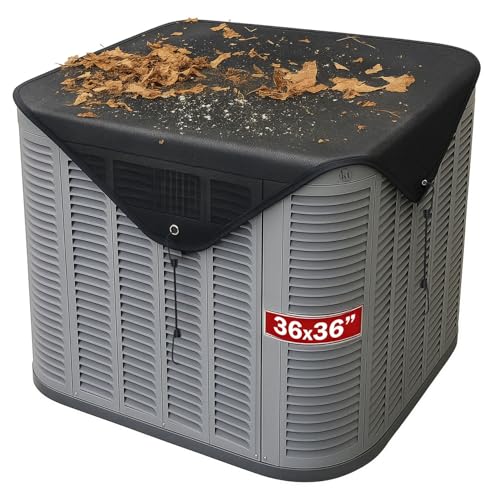
Xeeol 36x36 Central Air conditioner Covers for Outside, Larger Mesh AC Unit Covers Outdoor - Top Universal Defender


Bringing the performance picture together
A high-performing central air conditioner is best understood as a chain, and the chain is only as strong as its weakest link. The compressor and coils set the potential. The match between outdoor unit, indoor coil and blower determines how much of that potential is engineered in rather than left to chance. Sizing decides whether the capacity fits the load or fights it. Airflow and static pressure decide how much cooling physically reaches the rooms. Modulation decides how gracefully the system behaves across the long middle of the season, when the load is partial and the real enemy is humidity rather than heat. Commissioning verifies that all of it happened, and ordinary upkeep keeps it true.
It also helps to decide in advance what good enough means for the household in question. A family that works from home through the summer will judge steadiness and humidity control strictly, because they live inside the result all day. A weekend cottage household may care most about Friday-evening pull-down and forgive gentle unevenness elsewhere. A house in a severe-heat region should weight capacity retention at extreme temperatures above almost everything. Performance is measurable, but the weighting of its parts is a household decision, and naming that weighting early turns a confusing market of tiers and technologies into a short, answerable set of questions.
For the buyer, the practical order of operations follows from that chain. Start with the load calculation, choose the modulation level that suits the climate and the house, insist on a rated match, and treat duct assessment and commissioning as part of the purchase rather than favours. Then, on the hottest afternoon of the first summer, the system will do the thing that defines performance in the only court that matters: it will bring the house down to temperature, dry the air until it feels clean, and hold both there without drama while the heat outside does its worst.
Choose the system whose cooling you can verify on the worst afternoon, not the one with the boldest nameplate, and the house will feel right every ordinary day in between.