Our Top Picks
 BLACK+DECKER Portable Air Conditioner10,000 BTU (Without Heat)15.3 x 14 x 24.8 inches47.3 poundsCheck on Amazon
 Whynter Portable Air Conditioner Inverter 14000 BTU Smart14,000 BTU16.7 x 19.5 x 32.5 inches77.25 poundsCheck on Amazon



What's inside
- What self contained actually means in practice
- The exhaust problem, solved several ways
- Rentals, short stays and borrowed homes
- Events, gatherings and temporary workspaces
- Spare rooms and spaces that matter occasionally
- The picks: five self contained patterns
- Efficiency: the honest trade at the heart of the category
- Condensate, drainage and the puddle nobody wants
- Noise, neighbours and living alongside the cabinet
- Power, circuits and safety basics
- Moving, lending and the social life of a portable
- Questions stand alone buyers ask most
- A stand alone buyer’s final checklist
- Choosing capacity for a machine that can move
- Looking after a cabinet between deployments
- Three deployments that show the category at its best
- Check prices on Amazon
- When a stand alone machine is the wrong answer
As an Amazon Associate I earn from qualifying purchases. This post may contain affiliate links at no extra cost to you.
How this guide is funded: Cottage Verdict sometimes earns a referral fee when a purchase follows a link from our pages, though that arrangement never inflates the price a shopper pays. This particular roundup contains no shopping links at all, purely guidance you can use anywhere.
Some cooling problems arrive with a deadline attached. A heatwave lands during the fortnight your in-laws are visiting, a short let turns out to face due west, a village hall books a summer wedding, or a spare bedroom suddenly becomes a nursery for a month. Nobody in those moments wants builders, brackets or a six week wait for an installer. Stand alone air conditioners answer the deadline directly: one cabinet containing the entire refrigeration system, delivered to the door, plugged into an ordinary socket, and producing cold air before the kettle has boiled for tea.
Self contained is the defining idea, and it deserves unpacking because marketing blurs it. Inside a single enclosure sit compressor, coils, fans and controls, a complete cooling plant that asks the outside world for just two favours: electricity coming in, and a path for warm exhaust to leave. Satisfy those two requests and the machine owes nothing to the building itself. No refrigerant pipework threads through masonry, no outdoor box hangs from a bracket, no tradesperson needs to certify anything before the first cool evening arrives.
Freedom from installation reshapes who can use proper refrigeration at all. Tenants whose agreements forbid alterations, students in managed halls, military families posted somewhere for a single season, market traders, film crews, pop up clinics and anyone living through a renovation can all deploy the same cabinet. When circumstances change, the unit leaves on a trolley, enters storage, gets lent to a relative, or sells second hand in an afternoon. Permanence is a virtue in many purchases; in cooling, impermanence is sometimes the entire point of the product.
Honesty requires the counterweight early. A cabinet that does everything indoors pays for that convenience with noise beside your chair, bulk in your room, and efficiency that permanent systems comfortably beat. This guide does not disguise those costs. Instead it maps where flexibility outweighs them, explains how exhaust can escape even when no suitable window exists, and helps you pick the pattern of machine whose compromises align with a short tenancy, a one off event, or a secondary room that matters only part of the year.
What self contained actually means in practice
Every refrigerator moves heat rather than manufacturing cold, and a stand alone unit performs that relocation within arm’s reach of your sofa. Room warmth gets absorbed at the evaporator coil, carried by refrigerant to the condenser coil a few inches away, then blown out through a flexible hose as heated air. The proximity explains the breed’s character: the heat source and the cool source share a cabinet, so insulation, hose discipline and placement decide how much of the expelled warmth sneaks back before escaping the building.
Contrast that with a split arrangement, where the condenser lives outdoors and only quiet air handling remains inside. Splits win on silence and efficiency precisely because distance separates their hot and cold halves. Stand alone machines accept the handicap in exchange for needing nothing built. Understanding that exchange prevents the classic disappointment of expecting split manners from a box that has deliberately traded them away for the ability to arrive by courier and leave by car boot.
Within the self contained family, two technologies compete and should never be confused at checkout. True refrigeration models, the subject of most of this guide, use a compressor and can drop room temperature meaningfully even when outdoor air is fierce. Evaporative coolers, sometimes sold with similar styling, blow air across wetted pads and add moisture while shaving a few degrees in dry climates. In humid regions an evaporative box can leave a room feeling swampier than it found it, so confirm which technology a bargain cabinet actually contains before celebrating its price.
Wheels deserve a mention because they define daily reality. Nearly every stand alone cabinet rolls, yet rolling quality varies from smooth castors that glide over thresholds to tiny hard wheels that protest every rug edge. A unit destined to move between a daytime workspace and a night time bedroom will travel that route hundreds of times, and its owner will feel wheel quality in their wrists weekly. Test the roll in store if you can, and measure door widths along the intended route, because a cabinet that cannot pass the bathroom doorway is not portable in any sense that matters.
The exhaust problem, solved several ways
Heat removed from a room must cross the building envelope somehow, and the flexible hose is where stand alone ownership succeeds or fails. A hose dangling into another warm room merely relocates discomfort. A hose sealed into an opening, short, straight and unobstructed, lets the machine breathe out properly. Treat venting as the real installation this category claims to avoid: not permanent, not structural, but absolutely deserving of an hour’s thought before the first hot day rather than improvisation during it.
Windows remain the easiest exit when they cooperate. Sliding sashes accept adjustable panels that fill the gap and accept the hose cuff, casements need fabric seals that zip around the hose while the window rests ajar, and skylights have their own kits for roof rooms. Whatever the style, sealing matters as much as opening: gaps around a panel invite warm air inward at exactly the rate the hose expels it, and the machine ends up cooling the outdoors through a very expensive straw. Foam, tape and patience at this joint repay themselves daily.
Plenty of rooms, though, offer no cooperative window at all, and this is where resourceful venting earns its keep. A hose can discharge into a ceiling void through a removable tile in offices with suspended ceilings, provided building management agrees and the void genuinely vents onward rather than cooking the floor above. It can pass through a doorway fitted with a fabric door seal, exhausting into a ventilated corridor or stairwell in buildings where that is acceptable. It can use a purpose made wall vent installed previously for a tumble dryer, or a disused chimney flue whose draw carries warmth away beautifully in older houses, once a sweep confirms the flue is clean, open and legally usable.
Some routes must be refused despite their convenience. Sharing a vent with a gas appliance is dangerous and forbidden territory; exhaust belongs nowhere near boiler flues or cooker extraction that serves combustion. Discharging into a sealed loft merely moves the heat above your ceiling, where it radiates back down through the night. Venting into an enclosed cupboard or wardrobe accomplishes the same futility at smaller scale. The test is always destination: the warmed air must ultimately reach outside the thermal envelope of the dwelling, or the machine is running an elaborate and costly circle.
Short term improvisations have their place during genuine emergencies. A hose aimed through a letterbox style opening, a cat flap temporarily repurposed, or a panel of rigid insulation cut to fill a doorway with the hose mounted through it can carry a household through a dangerous heat spike for vulnerable occupants. Such arrangements look undignified and leak efficiency at every seam, yet they demonstrate the category’s deepest virtue: with imagination, almost any room can be given an exhaust path within an hour, using materials from a hardware shop, and removed without trace when the crisis passes.
Rentals, short stays and borrowed homes
Tenancy law and landlord goodwill shape rental cooling more than thermodynamics ever will. A stand alone cabinet typically requires no consent conversation at all, because nothing attaches to the property, nothing penetrates a wall, and departure restores the room precisely. That legal invisibility is priceless where agreements are strict or deposits large. Renters comparing options for longer lets may also enjoy the renter focused reasoning in best air conditioners apartment, while this guide concentrates on stays measured in weeks or months rather than years.
Short holiday lets present the mirror scenario, where the guest rather than the owner supplies the cooling. Travellers staying a month for work increasingly carry or courier a compact unit to a furnished flat whose owner never contemplated summer heat, transforming an unbearable booking into a comfortable base without negotiating alterations to someone else’s property. Hosts, in turn, have begun advertising the presence of such a cabinet as a booking advantage during peak season, since it can be provided for summer and stored away when autumn guests prefer the floor space.
House sits, guardianships and stays with relatives follow the same logic of reversible kindness. You can cool the spare room you occupy without asking your host to modify their home, then take the machine away when you leave, the visit having cost the building nothing. Families caring for an elderly parent through a hot spell often deploy a unit in the parent’s existing home for exactly this reason: relief arrives immediately, no contractor crosses the threshold of a person who finds strangers stressful, and the arrangement can be undone the day cooler weather returns.
Condos and managed blocks add communal rules about exterior appearance, balcony equipment and condensate, which is why the guidance in best air conditioners for condos pairs naturally with a self contained approach that keeps every component indoors. A cabinet that never shows a hose from the street, especially when vented through an existing vent or an internal route, sidesteps most appearance clauses entirely. Always check house rules about window panels visible from outside, though, because a temporary panel can still breach a strict facade policy during an inspection.
Events, gatherings and temporary workspaces
Event cooling operates on a brutal timetable: a marquee, hall or hired studio must feel pleasant for four hours on one specific afternoon, after weeks of indifference and before total dismantling by midnight. Stand alone units are practically the only refrigeration that fits that brief. Several cabinets distributed around a venue, each vented through a door gap, tent flap or window panel, can take the edge off a crowded celebration, and their uneven, localised effect matters little when guests circulate rather than sitting in assigned seats for hours.
Expectation management saves events. A wedding breakfast in a glass marquee during exceptional heat will not achieve restaurant chill from portable cabinets alone, and promising otherwise sets up complaints. What the machines deliver is moving, cooler air at head height around the edges, relief stations near seating, and protection for the cake, the flowers and elderly guests from the worst of the peak. Combined with shade, scheduling the hottest photographs earlier, and plentiful cold drinks, that contribution often separates a fondly remembered day from a cautionary tale told at other people’s weddings.
Temporary workspaces follow similar physics with longer hours. A pop up shop testing a location for one season, a site cabin on a building project, a polling station, an exam hall overflow or a home office decanted to the garden room during renovations all need cooling that arrives fast and leaves no legacy. Organisers should budget generously for numbers, because occupancy, equipment heat and constant door opening load a temporary space far beyond domestic assumptions, and one undersized cabinet whirring heroically in a corner helps nobody except as a fan with delusions.
Power planning at venues is the detail amateurs forget. Several cabinets plus catering equipment plus lighting can exceed what an older hall’s circuits happily supply, and a trip during the speeches helps no one. Map sockets, spread machines across circuits, keep extension leads out of the equation wherever possible, and run everything for an hour before guests arrive to prove the arrangement under load. Event professionals test in the morning precisely because portable cooling itself is reliable; it is the building’s electrics, asked to do unfamiliar work, that usually write the drama.
Spare rooms and spaces that matter occasionally
Many homes contain a room with an intermittent life: the guest bedroom used twenty nights a year, the hobby room that bakes under a south roof, the converted garage visited for exercise, the attic where teenagers retreat with friends during holidays. Permanently cooling such spaces wastes money every idle day, yet leaving them unusable during heatwaves wastes the space itself. A single cabinet migrating to whichever occasional room currently has occupants resolves the contradiction elegantly, which is why so many owners describe their unit not by room but as the house’s floating resource.
Budget hunters exploring this pattern should look at best affordable portable air conditioners for 500 square feet for the value end of the market, since occasional rooms rarely justify flagship spending. The arithmetic is forgiving: a modest machine that serves a guest room adequately for three weeks a year delivers its comfort at a tiny annual cost, even if a permanent system would beat it on efficiency during every one of those hours. Judging occasional use equipment by the standards of daily use equipment is how households overspend on rooms that are empty most of the summer.
Storage between deployments becomes part of the product, whether brochures admit it or not. Measure the cupboard, loft hatch or under stair void where the cabinet will spend winter before choosing its size, because a unit that cannot be stored gracefully will colonise a corner of a lived room for nine months as a monument to July. Covers keep dust from coils, hoses store best loosely coiled rather than folded sharply, and a note taped to the cabinet recording where its window panel and remote went will save a frantic search during the next sudden heatwave.
The picks: five self contained patterns
Archetypes below span the stand alone market from carry friendly compacts to heavy dual hose performers, each written without product links so the pattern can be matched to whatever reputable makers supply your region this season. Segments are noted honestly, because a budget cabinet and a premium one can share a silhouette while differing in compressor quality, hose design and control refinement. Identify your scenario first, tenancy, event, spare room or workspace, then let the archetype that mirrors it guide the shortlist you take to a retailer.
Archetype one: the single hose all rounder
This is the machine most people picture: a mid height cabinet, one insulated hose, a window panel in the box, castors beneath and a remote on top. It occupies the crowded mid range segment where most household purchases happen, and it handles a typical bedroom or study through a normal summer without drama. Setup genuinely takes under half an hour, the panel fits sliding windows in minutes, and the controls are simple enough for a guest to operate without a tutorial from the hallway.
Its physics carry the family’s signature compromise. By expelling indoor air, the cabinet lowers pressure slightly, and replacement air infiltrates from hallways, gaps and warmer rooms, diluting the chill it creates. In a closed bedroom overnight that effect stays modest and most sleepers remain perfectly content. In an open plan space with doors swinging all day, the same effect grows teeth. Choose this archetype for contained rooms and ordinary summers, and its convenience to performance ratio is genuinely hard to beat at its segment.
Archetype two: the dual hose performer
Two hoses let the cabinet inhale and exhale outdoors, keeping the room’s own air out of the exhaust stream entirely. The result is noticeably stronger cooling in larger spaces, faster pull down after a hot afternoon, and better behaviour when internal doors stand open. The cabinet grows wider, the window panel chunkier, and the price steps into premium portable territory, yet nothing about the arrangement becomes permanent, which keeps landlords and building managers equally calm.
Owners choose this pattern when a single hose predecessor disappointed them in the same room, or when the room itself is ambitious: a combined living and dining space, a conservatory office, a master bedroom with an ensuite adding humid load. The extra hose complicates storage and makes nightly relocation less appealing, so regard this archetype as transportable rather than truly portable. It moves between homes, seasons and major room changes splendidly; it does not want to commute between study and bedroom every single day.
Archetype three: the compact traveller
Small dimensions and a carry handle define this pattern, built for caravans, narrowboats, student rooms, single offices and anyone whose cooling must fit a car boot alongside luggage. Output is modest, the segment is budget to mid range, and the cabinet’s charm lies in going where larger machines cannot: up narrow stairs, into a rented studio for a month, across a festival site office. Some models in this family run happily on lower power draws that suit older wiring and shared circuits in managed accommodation.
Set expectations to personal and small room scale. The traveller will make a bunk, a desk nook or a compact bedroom sleepable during hot nights, and that is a triumph worth its modest cost. It will not rescue a family living room, and its small condensate capacity needs frequent attention in humid weather. Buyers who understand they are purchasing targeted relief, in the tradition of a fan upgraded to genuine refrigeration, tend to love these machines fiercely and recommend them accurately to friends with similar spaces.
Archetype four: the quiet bedroom specialist
Some makers tune a cabinet explicitly for night duty, with a sleep programme that raises the target temperature gradually as body metabolism falls, fans that step down to a whisper, displays that extinguish completely, and compressor mounting designed to soften start up vibration. Such models sit in the mid range to premium band and justify it in the only currency that matters at three in the morning: unbroken sleep during weather that would otherwise guarantee a wretched night and a useless following day.
No stand alone machine achieves the near silence of a split whose compressor lives outside, and this archetype should not pretend otherwise. What it offers is managed sound, steady rather than cycling, free of sudden clunks, at a level many sleepers can merge into background like rain on a window. Earplugs are a confession of failure; a well chosen bedroom specialist, positioned a few metres from the pillow and run continuously rather than in bursts, lets most households forget that compromise was ever part of the purchase.
Archetype five: the heat pump all season cabinet
A reversible refrigeration circuit lets one cabinet cool in July and warm in January, and for spaces with a year round intermittent life that duality is transformative. The garden office used three days a week, the annexe opened for guests in both summer and at Christmas, the workshop where winter fingers need warmth as much as summer brows need cooling: all benefit from a single appliance standing ready for either season. These models occupy the premium segment and carry controls and drainage arrangements reflecting their double duty.
Heating from a heat pump cabinet costs far less to run than a resistive fan heater delivering the same warmth, because the machine moves outdoor heat inward rather than converting electricity directly. Performance fades as outdoor temperatures plunge toward freezing, so regard it as shoulder season and moderate winter heating rather than a sole source during a severe snap. For the many temperate weeks when a spare space needs the chill taken off, though, owners find the heating mode quietly becomes the feature they use most across the whole calendar.
Efficiency: the honest trade at the heart of the category
Stand alone machines use more electricity per unit of cooling than permanent splits, and pretending otherwise insults the reader. Heat radiates back from the cabinet and hose, infiltration nibbles at single hose models, and compact coils cannot match the generous exchangers a fixed system can accommodate. Shoppers should therefore compare efficiency figures within the category, treat headline capacity claims cautiously, and remember that a dual hose design often delivers more real comfort from the same nominal rating than a cheaper cabinet boasting identical numbers.
Context, however, rehabilitates the trade. Cooling one occupied room for six weeks a year with a portable can consume less total energy than cooling a whole dwelling through fixed equipment, however efficient, for the same period. Intermittent use is frugal use. The household that deploys a cabinet only during heatwaves, only overnight, only in the room being slept in, may post a smaller summer electricity increase than the neighbour whose superbly efficient system conditions empty rooms out of habit. Efficiency per hour and efficiency per season are different ledgers, and stand alone ownership wins the second more often than critics concede.
Running technique squeezes the gap further. Precool while outdoor air is relatively mild rather than battling the afternoon peak from a standing start. Keep the hose short, shaded and as straight as the room allows, since every bend and sun baked metre returns warmth to the space. Close curtains on the sunny side, shut doors to unoccupied areas, and resist setting an ambitious target the machine will chase noisily for hours; a moderate setting reached and held feels better and costs less than a heroic setting pursued forever. Small disciplines, repeated daily, compound into a noticeably smaller bill.
Fan only and dehumidify modes extend the cabinet’s usefulness into hours when compression is unnecessary. Many uncomfortable evenings are humid rather than truly hot, and wringing moisture from the air at low energy cost restores comfort without refrigeration’s full draw. Shoulder season nights may need nothing beyond air movement. Owners who learn their machine’s gentler modes, rather than treating the power button as a binary choice between off and arctic, discover a more nuanced appliance than the one they thought they had purchased, and their electricity account notices the education.
Condensate, drainage and the puddle nobody wants
Cooling wrings water from air, and a self contained cabinet must put that water somewhere without the benefit of an installed drain. Most designs evaporate much of it into the exhaust stream, a neat trick that copes admirably in moderate humidity and falters when the air arrives saturated. Internal tanks catch the surplus, and a full tank stops the machine, usually at the least convenient hour imaginable. Learn your model’s tank behaviour during the first humid evening at home, not during a wedding, a heatwave night with a newborn, or any occasion when a silent shutdown would be discovered by discomfort rather than by observation.
Continuous drainage suits heavy duty deployments. A small hose from the cabinet’s drain point to a bucket, a floor drain, a sink reached by gravity, or a condensate pump for uphill routes transforms the machine from attended appliance to autonomous worker. Events and workspaces should default to continuous drainage from the outset, because nobody at a function wants responsibility for emptying a tank mid evening. At home, a bucket with a visible fill level in a utility corner beats a hidden arrangement whose overflow announces itself through a ceiling stain downstairs.
Dry mode deserves separate respect. Running a cabinet purely to dehumidify a damp spare room, a drying laundry space or a musty annexe produces water at rates that surprise owners used to cooling duty. Check the container before each session, keep the hose route unkinked, and remember that a machine busy drying a room is not simultaneously cooling it with full commitment. Households in humid climates often find this secondary talent worth the purchase alone across autumn, when cooling is forgotten but damp returns to every north facing wall in the building.
Noise, neighbours and living alongside the cabinet
Sound is the compromise owners discuss most, because the compressor shares their airspace. Typical cabinets produce a working hum comparable to a loud fan or a dishwasher in the next room, punctuated by fan changes and the occasional gurgle of refrigerant. For daytime living, television, conversation and work calls routed through a headset, most households adapt within a weekend. For sleep, placement becomes strategy: as far from the pillow as the hose permits, ideally with the cabinet’s body screened by furniture that absorbs rather than reflects its voice, without ever blocking its airflow.
Neighbours deserve consideration in flats and terraces. Exhaust panels are visually modest, but a cabinet run through the night in a room with an open window arrangement can carry sound to the property next door, and thin floors transmit vibration from a cabinet standing directly on boards. A rug or mat beneath the unit, used within the maker’s guidance, plus respect for reasonable hours during merely warm weather, keeps relations smooth. Ironically, the machine’s impermanence helps diplomacy here too: a neighbour annoyed by a permanent installation faces years of it, whereas a portable can be repositioned, rescheduled or retired after a conversation.
Vibration has a second victim, the cabinet itself. Standing on an uneven surface makes panels buzz at particular fan speeds, a maddening noise that owners misattribute to mechanical failure. Level the machine, check that the hose is not pressing it against a wall that acts as a sounding board, and confirm castors sit evenly before concluding anything is broken. A surprising share of returned units, retailers will tell you privately, suffered from nothing more than a wobbly floor and an owner who never thought to slide a folded card beneath one wheel as a diagnostic test.
Power, circuits and safety basics
A stand alone cooler is among the hungriest appliances in a home, drawing sustained current comparable to a kettle that never switches off. Plug it directly into a wall socket as makers instruct, avoid extension reels whose coiled cable overheats under load, and be thoughtful about what else shares the circuit during operation. Older properties, converted buildings and venues with long cable runs deserve particular respect. A circuit that trips repeatedly is delivering information, not persecution, and the answer is redistribution of loads or an electrician’s advice, never a larger fuse fitted in optimism.
Heat adds its own cautions. The exhaust hose surface grows warm, so keep it clear of curtains and bedding, and route it where children and guests will not grab it absentmindedly. The cabinet needs breathing space on every side, and its intake should never share a corner with a heater, a cooker or direct sun through glass if any alternative exists. Water and electricity meet inside these machines by design and are kept apart by engineering; respect that engineering by never operating a cabinet standing in a puddle, and by drying any spill around its base before switching on again.
Absence is the final safety scenario. A machine that can start itself on a timer, in an empty property, deserves a tidy room: nothing draped over it, hose secure, drainage proven, socket sound. Many owners prefer to run their cabinet only while someone is home, accepting a warm arrival as the price of complete peace of mind, while others rely on timers happily after weeks of supervised operation have built trust. Either philosophy is defensible; drifting into unattended running without ever deciding is the only genuinely careless option available.
Moving, lending and the social life of a portable
Few appliances develop a social life, yet stand alone cabinets routinely circulate among relatives and neighbours like a particularly bulky library book. The expectant daughter borrows it for the nursery during a hot month, the neighbour takes it for a houseful of guests, the unit returns smelling faintly of another home and carrying a different window panel setting. This circulation is a genuine economic feature: one purchase quietly serves a small community across a summer, and the cost per cooled night collapses in a way no fixed installation can imitate.
Lending works best with a little ceremony. Send the remote, the correct window panel and a note about the drainage routine together, because a cabinet without its accessories is a puzzle rather than a kindness. Photograph the hose connections before dismantling, agree who collects and who returns, and clean the filter between households as a courtesy that also protects performance. Owners who lend generously but organisedly find their machines come back promptly and intact; owners who wave a cabinet out of the door with half its kit tend to conduct a long, cooling free search for the missing panel the following June.
Transport itself has rules worth observing. Keep the cabinet upright during moves wherever possible, since its compressor oil prefers that orientation, and if it has travelled on its side, let it stand undisturbed for several hours before running it, allowing fluids to settle home. Protect the hose cuffs, which crack when crushed under other cargo, and carry the unit by its handles or body rather than dragging it by its exhaust. A machine treated gently in transit will start its next deployment with the same reliability it showed in the last, which is the entire promise of the category in miniature.
Questions stand alone buyers ask most
Can one cabinet cool an entire flat?
Occasionally, in a compact, well insulated flat with doors open and modest expectations, a large dual hose cabinet can take the edge off the whole dwelling. In most layouts, though, the honest answer is that it will cool its own room properly and lend gentle benefit to whatever connects through an open doorway. Buyers needing whole home transformation should either plan on moving the cabinet between zones across the day, accept a second unit for a distant bedroom, or reconsider whether a permanent system has quietly become the right answer to a question they keep asking portables.
What happens when a room has no window that opens?
The room needs another exhaust destination, and the earlier venting discussion lists the realistic candidates: an existing wall vent, a usable flue, a doorway sealed with a fabric kit leading somewhere ventilated, or a ceiling void with permission and a genuine onward path. If none of those exists, a refrigeration cabinet cannot perform there, and the truthful alternatives are an evaporative device in a dry climate, cooling an adjacent room and sharing its air, or improving the space with shading and ventilation until a venting route can be created. A hose recirculating into the same sealed room is theatre, not cooling.
How long should a cabinet last?
A well kept machine from a reputable maker commonly serves many summers, with fans, castors and hose cuffs ageing before the refrigeration circuit itself. Longevity correlates less with price than with storage and handling: upright winters in a dry cupboard, clean filters, gentle transport and hoses never crushed. Budget cabinets used brutally for a single event season may still represent excellent value even if retired afterwards, provided the buyer understood that transaction in advance. Judge lifespan against the job the machine was bought to do, not against the decades expected of built in infrastructure.
Is a second hand cabinet a sensible purchase?
It can be the smartest route into the category, because depreciation is steep and many units are sold after barely a season of use by people whose circumstances changed. Inspect in person, run the machine for at least twenty minutes, listen for rattles that rise with fan speed, check the hose and panel are present, empty the tank to confirm the float switch behaves, and confirm the remote exists or that onboard controls suffice. A cabinet that cools convincingly in a stranger’s garage will cool in your bedroom; one sold with excuses about why it cannot be demonstrated should remain unsold, however attractive its price appears.
Why does the room feel cool near the machine but warm elsewhere?
Distribution, not capacity, is usually the culprit. The cabinet chills air in its immediate neighbourhood while distant corners keep their heat, especially in long rooms or spaces with alcoves. Aim the discharge toward the far end rather than across the nearby seating, use oscillation if fitted, and consider a small separate fan purely to stir the room’s air between zones. Closing the door of the cooled room, counterintuitive during a sociable evening, also transforms results, because an open doorway to a hot hallway is a leak no portable can outrun indefinitely.
A stand alone buyer’s final checklist
Begin with the exit, not the appliance. Stand in the room, identify exactly where heated exhaust will leave the building, and confirm the hose, panel or seal for that route either comes in the box or can be obtained before delivery day. Next, measure the cabinet’s destination and its storage home, walk its rolling route between rooms counting thresholds and door widths, and check the socket it will use and everything sharing that circuit on a summer evening. Cooling purchases fail on logistics far more often than on refrigeration, and every item in this paragraph is a failure you can prevent with a tape measure.
Then match the archetype to the calendar. A tenancy of two summers justifies the dual hose performer; a fortnight of guests calls for the all rounder or a borrowed compact; a venue needs numbers and drainage planned like catering. Confirm which technology the cabinet uses, refrigeration or evaporation, in writing if necessary. Check the tank arrangements against your humidity, the sleep programme against your bedroom, and the heating mode against any winter ambitions you may be quietly harbouring for a garden room or annexe that currently freezes from November onward.
Finally, plan the farewell at the moment of purchase. Know where the machine stores, who might borrow it, what its second hand description would honestly say, and which room it serves next if this room’s need disappears. That farewell planning is not pessimism; it is the category’s genius acknowledged in advance. You are buying cooling that refuses to be trapped by circumstance, and the purchase only fulfils its promise when its next chapter is as easy as its first afternoon was.
Choosing capacity for a machine that can move
Sizing advice for fixed equipment assumes the room will never change, an assumption this category cheerfully breaks. A cabinet bought for a bedroom may spend August in a living room and September in a home office, so choose capacity for the largest space it will regularly serve, accepting that smaller rooms will simply reach their target sooner and cycle more gently. Buyers who size tightly for a tiny study and later demand performance in a double height lounge are asking physics for a favour it rarely grants, however premium the badge on the cabinet happens to be.
Occupancy and equipment loads deserve honest counting. A room holding one reader behaves nothing like the same room holding six gamers, two large screens and a mini fridge exhaling warmth behind the sofa. Kitchens in use, south facing glass without external shading, and ceilings warmed by an uninsulated roof all push the requirement upward in ways floor area alone never reveals. When a calculation lands between two sizes, the larger cabinet run at a moderate setting usually feels calmer and quieter than the smaller one straining at its limit through every hot afternoon of its working life.
Manufacturers’ capacity figures also deserve translation rather than trust. Different testing regimes produce different headline numbers for identical hardware, and seasonal or adjusted ratings often describe real rooms more faithfully than the bold figure printed largest on the carton. Compare like with like across a shortlist, favour makers who publish both measures, and treat any cabinet promising to govern a vast space from a tiny enclosure as a storyteller rather than an engineer. Your own room, measured and honestly described to a knowledgeable retailer, remains the most reliable specification sheet available anywhere.
Looking after a cabinet between deployments
Maintenance for this category is refreshingly domestic. Filters slide out, rinse under a tap, dry in the airing cupboard and return without tools or expense, and doing so monthly during heavy use preserves both airflow and the machine’s temper. The exterior wipes clean, castors benefit from a quick removal of wound hair and carpet fibre, and the hose interior should be inspected for dust build up whenever the unit emerges from storage. None of this requires a service contract, which is precisely why neglecting it is so common and so quietly costly.
Before winter storage, run the fan alone for an hour to dry internal moisture, empty every trace of condensate, and clean the tank so nothing biological spends the cold months cultivating itself in the dark. Store the cabinet upright under a breathable cover, keep its accessories together in one bag taped to the side, and note any fault observed during summer on a label where future you will find it in June rather than rediscovering it during a heatwave. Machines stored thoughtfully wake up cooperative; machines abandoned damp in a garage corner wake up smelling of their neglect and performing like it too.
Minor faults usually announce themselves early and politely. A new rattle often means a panel clip loosened in transit, reduced cooling frequently traces to a filter or a hose seal rather than lost refrigerant, and water appearing beneath the cabinet generally indicates a blocked drain or a tilted stance. Work through those household explanations before assuming the refrigeration circuit has failed, because sealed systems in domestic cabinets are surprisingly durable when their airflow is respected. Keep the manual, physical or digital, with the accessories, since error codes mean nothing to an owner reduced to guessing at midnight.
Three deployments that show the category at its best
The rented flat during a record breaking month
Imagine a top floor rental in a converted terrace, lease forbidding alterations, thermometer climbing daily while the tenant works from a desk beside the bed. A dual hose cabinet arrives by courier on a Tuesday, its panel sealing the sliding window by lunch, and by evening the room has become a workplace again rather than a endurance test. The landlord never receives a difficult request, the deposit remains unthreatened by drill holes, and when the tenancy ends the following spring the machine leaves in the same lift as the suitcases, its entire residency having altered the property not one bit.
The village hall wedding in high summer
Picture instead a hall committee facing a forecast that threatens months of planning. Four borrowed and hired cabinets arrive the evening before, each assigned a corner, a circuit and a doorway venting route rehearsed with gaffer tape and patience. On the day they labour audibly but effectively, grandparents settle near the coolest corner by unspoken agreement, the cake survives its photographs, and dancing guests treat the machines’ output as a feature, drifting through it between songs. By midnight the hall is empty, the cabinets are in a van, and nothing about the building records that refrigeration ever visited it at all.
The garden room that became a workplace
Finally, consider the insulated garden studio built for hobbies and conscripted as an office when working patterns changed forever. Its owner needs summer cooling and winter warmth, uses the space four days weekly, and cannot justify a permanent system for a building that may become a gym, a studio or a teenage den within five years. A heat pump cabinet stands in the corner answering both seasons, rolls aside when furniture changes, and will follow its owner to the next project whenever this one ends. Flexibility here is not a compromise accepted reluctantly; it is the correct engineering response to a building whose purpose refuses to sit still.
Check prices on Amazon
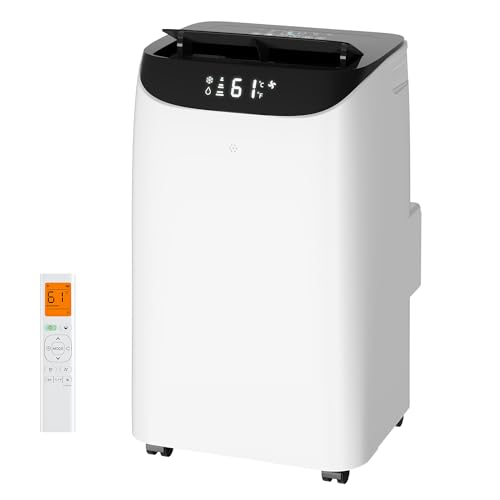
Live listings for the shortlist in this guide are pulled from Amazon below, so prices and availability are always current at the moment you look.



When a stand alone machine is the wrong answer
Advocacy should know its limits, and there are households this category should talk out of buying. A family building a permanent home in a fiercely hot climate, planning decades in the same rooms, will recover a fixed system’s cost many times over in efficiency and silence, and choosing portables there out of installation anxiety merely postpones the correct purchase while paying portable running costs in the interval. Likewise, a bedroom shared with an extremely light sleeper who has tried and rejected every managed noise strategy deserves the split conversation, not another hopeful cabinet promising quiet it cannot physically deliver from inside the room.
Whole house ambitions in a large, multi storey property also outgrow the format. Cabinets cool zones; they do not create a climate, and a dwelling needing six zones cooled simultaneously has described a ducted or multi split project whether its owner uses those words or not. Recognising that boundary early saves the familiar sequence of buying one portable, then a second, then a third, until the household owns a fleet whose combined cost approaches the fixed system it was avoiding, with worse results in every room. The category’s honesty about its zone by zone nature is a strength, provided buyers listen before the fleet assembles itself.
Timing can also argue against purchase. A cabinet bought in desperation during the season’s first heatwave commands peak pricing, arrives when delivery networks are strained, and gets chosen from whatever stock remains rather than from a considered shortlist. Households that suspect they will need one next summer buy best in the calm of autumn or early spring, when retailers clear lines, second hand supply swells with barely used machines, and there is leisure to measure windows, test circuits and plan venting without sweat running into anyone’s eyes. The machine itself is identical; only the circumstances of its acquisition, and the wisdom embedded in them, differ.
Renters sometimes ask whether running such a cabinet will upset a landlord who discovers it during a routine inspection, and the reassuring reality is that most property managers care about alterations, exterior clutter and water damage rather than appliances that plug in and roll away. Protect the floor beneath the unit from condensate accidents, keep the window panel tidy and removable, and retain the machine’s paperwork showing it is a domestic appliance used as designed. A tenant who can demonstrate that nothing was drilled, glued or permanently plumbed has answered every legitimate concern before it is raised, and can return the conversation to the rent being paid and the property being cared for, which is where both parties generally prefer it to remain throughout a peaceful tenancy.
Guests encountering such a cabinet for the first time often need thirty seconds of orientation rather than a manual: where the cooled air emerges, which button summons it, and why the hose behind the curtain must be left exactly as it lies. Hosts who give that tiny briefing at arrival prevent the midnight rearrangements, disconnected hoses and mysteriously opened windows that undo an evening of careful cooling, and they spare their visitors the embarrassment of apologising at breakfast for a warm night that was nobody’s fault and everybody’s small misunderstanding combined.
Years from now the cabinet may be cooling a grandchild’s first bedroom, a stranger’s studio bought in a hurry, or the same spare room it first rescued, and nobody will remember its specifications, only that one hot summer it arrived without ceremony and the nights became bearable again.